




Abstract
On-again/off-again cycling is prevalent, and partners in these relationships experience lower relational quality and more negative interaction patterns, increasing their risk for compromised relational and individual health. Conceptualizing relationship cycling as a chronic stressor, we assessed the association between cycling, relational stress, and compromised well-being (i.e., psychological and physical symptoms). Findings from four samples (Ns ranged from 99–383) showed: (1) cyclical partners reported more relational stress and psychological symptoms than non-cyclical partners, (2) the number of breakup-renewal cycles was positively associated with relational stress, (3) negative interaction patterns interacted with cycling to predict relational stress and (4) cycling was indirectly associated with compromised well-being (i.e., psychological and physical symptoms) through relational stress. Collectively, these suggest cycling is a chronic stressor, and partners’ cycling and negative interaction patterns may compound in creating relational stress. Consequently, additional research is warranted to test a proposed model integrating relationship and stress theories to unpack how cycling is associated with stress and well-being over time.
Keywords
Many adults have experienced at least one romantic relationship in which they experienced a minimum of one breakup and renewal (i.e., relationship cycling; Dailey et al., 2009; Halpern-Meekin et al., 2013a; Monk et al., 2014; Vennum et al., 2015). Partners in these relationships report lower relational quality compared to those who remain stably together (Dailey et al., 2009; Halpern-Meekin et al., 2013a; Vennum et al., 2013). Theories of stress and turbulence in relationships infer that these negative interaction patterns and the general upheaval of relationship instability (e.g., Halpern-Meekin & Turney, 2023; Solomon et al., 2016) could accumulate and adversely affect partners’ general health or well-being (Monk et al., 2018). Initial evidence suggests these negative interaction patterns and their resulting mental and physical health challenges are exacerbated by each additional cycle (Dailey et al., 2009; Monk et al., 2018, 2022; Vennum et al., 2013). Yet, despite the continued assumption that stress may be a key explanation of why breakups and renewals are particularly detrimental to well-being (e.g., Halpern-Meekin & Turney, 2023; Monk et al., 2021; Monk et al., 2022), there is limited direct, empirical evidence of the link between relationship cycling and relational stress. We analyzed the association between relationship cycling, relational stress, and compromised well-being (i.e., a general conceptualization of personal well-being to include impairment in both psychological and physical symptoms; e.g., Proulx et al., 2007) across several samples to provide a foundation for future theorizing and research.
Relationship cycling
Cyclical or on-again/off-again relationships are romantic relationships that breakup and renew at least once. Approximately two-thirds of adults have experienced a cyclical relationship (Dailey et al., 2013), and at least a quarter report their current or most recent relationship had a history of breakups and renewals (Clifford et al., 2017; Dailey et al., 2010; Halpern-Meekin et al., 2013a; Vennum et al., 2015). Most cyclical relationships have repeatedly ended and renewed (2-3 renewals on average; Dailey, 2020) and are often characterized as unstable. Additionally, research has firmly established that partners who break up and renew report lower relational quality compared to partners who are stably together (i.e., non-cyclical; see Dailey, 2020). For example, cyclical partners have lower satisfaction, less love, more relational uncertainty, and engage in less prosocial and more negative behaviors (Dailey et al., 2009; Halpern-Meekin et al., 2013a). Further, partners in cyclical relationships are twice as likely to experience psychological and physical abuse as non-cyclical partners (Halpern-Meekin et al., 2013b; Monk, 2017). Thus, cyclical relationships are prone to problematic interaction patterns that likely have adverse consequences for partners’ well-being.
Relationship cycling, stress, and well-being
Relationships can be a source of support (Ogan & Monk, 2025), but they can also be a source of stress when they are unstable or end (e.g., Kiecolt-Glaser et al., 2020). Based on previous research, we argue that cycling represents a chronic stressor to the partners involved in these relationships. Using Randall & Bodenmann’s (2009) distinctions of types of stress, we focus on internal stress, specifically related to interaction patterns between partners. Research on romantic relationships across social science fields (e.g., communication studies, family science, social psychology) has established links between stress internal to the relationship (e.g., as a result of detrimental interaction dynamics) and decreased relational quality and overall health or well-being (Beach et al., 2003; Kanter et al., 2022; Birditt & Orbuch, 2019; Proulx et al., 2007). This connection is illustrated by the research showing that the dynamics associated with cycling are linked with partners’ mental health, including increased depression and anxiety symptoms, even when accounting for aggression and structural factors (Monk et al., 2018, 2022). Additionally, mothers in cyclical relationships were more likely to experience mental health issues (similar to mothers who experienced permanent dissolution) than those who remained stably together with their partners (Halpern-Meekin & Turney, 2023).
Scholars consistently demonstrate that breakups alone can be distressing events (see Machia et al., 2023; Rhoades et al., 2011), and a prolonged pattern of entering and exiting the same relationship may be particularly stressful as it repeatedly disrupts standard patterns of behavior (e.g., Wade & Pevalin, 2004; Williams & Umbersom, 2004). Monk et al. (2018) argued that whereas the distress caused by one breakup might be fleeting, the cumulative effect of multiple breakups might have a stronger effect on well-being. Similarly, using the stress process perspective, Halpern-Meekin and Turney (2023) argued that repeated breakups and renewals foster uncertainty and impair adjustment. Dailey et al. (2012) also found that relational stress varied by how cyclical partners perceived the stability of their relationships; those who anticipated continued cycling reported more stress than those who believed they achieved stability (i.e., would not break up again). Thus, we argue that a pattern of cycling exacerbates relational stress over time.
Although cyclical relationships are assumed to be unstable and more stressful than those without a history of cycling (Dailey et al., 2012), only the few studies noted above have assessed this assumption. Additionally, no studies have specifically assessed the association between the internal, relational stress with cycling and compromised well-being. More generally, no specific theory explains this process, particularly with regard to fluctuations in relationship status (i.e., multiple breakups and renewals). As such, we propose a model to help explicate how cycling is associated with well-being (see Figure 1). The model generally depicts how negative interaction patterns are linked with relational stress (i.e., stress experienced due to dynamics internal to the relationship), which is then related to compromised well-being (e.g., psychological and physical symptoms resulting from stress). These associations between problematic interactions, relational stress, and well-being are modeled to become more entrenched and mutually compound with increasing breakup and renewal cycles (i.e., the thicker lines as the spiral descends in the figure). We explicate this model using previous stress theories and research as well as research on cycling relationships below. Proposed model of stress and well-being in cyclical relationships.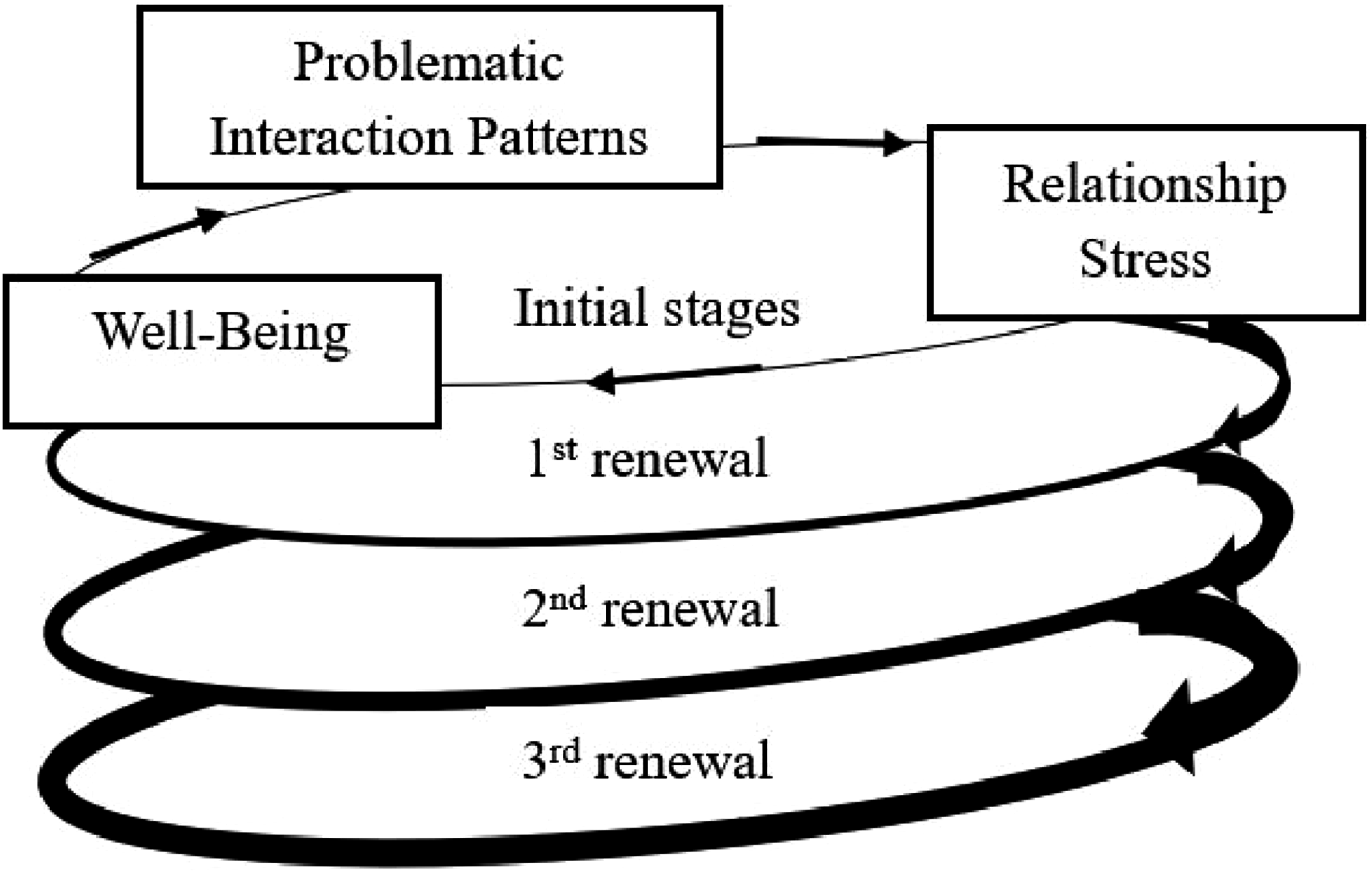
Because cyclical partners appear to have more negative interaction patterns and less relational quality even before these couples break up a first time (Dailey et al., 2009; Johnson & Leone, 2005; Monk et al., 2018; Vennum et al., 2013), the Vulnerability-Stress-Adaptation (VSA; Karney & Bradbury, 1995) and Cumulative Risk models (CR; Rauer et al., 2008) would suggest cyclical partners are likely bringing with them characteristics (i.e., enduring vulnerabilities or risks) that contribute to these negative interaction patterns. As such, cyclical partners’ interaction patterns are likely a potent cause of their relational stress (Dailey et al., 2009), especially as compared to non-cyclical partners, and a cause of their breakup-renewal cycling as well. The Stress Generation Model (SGM; Davila et al., 1997) suggests that partners with lower relational quality have fewer resources to navigate relationship challenges, contributing to less effective resolution of issues and greater relationship stress. Similarly, the Theory of Resilience and Relational Load (TRRL; Afifi et al., 2016) suggests that cyclical partners are accumulating less “capital” (i.e., positive dynamics) to buffer against relationship challenges, putting them at risk for a depletion of resources leading to less resilience. Consequently, in line with prominent stress theories (e.g., Aneshensel, 2015; Pearlin, 1989), the relational stress generated from problematic dynamics is likely a key mechanism in compromising cyclical partners’ overall health and well-being, as stress is a critical antecedent for psychological and physical well-being symptomatology (Davila et al., 1997; Kiecolt-Glaser et al., 2020, Robles et al., 2014).
These links between problematic interaction dynamics, relational stress, and compromised well-being are likely exacerbated with each breakup and renewal cycle. If partners carry unresolved issues or uncertainties as well as compromised well-being into a new renewal, they likely have an even greater depletion of resources with which to navigate problematic interactions. Applying Relational Turbulence Theory (RTT; Solomon et al., 2016), it is possible the increased uncertainty and fluctuating dynamics in cyclical relationships (Dailey et al., 2010; Vennum et al., 2013; Vennum & Johnson, 2014) may put these partners “on alert” and contribute to even less constructive communication (e.g., avoidance, conflict) and a greater sense of instability (i.e., turbulence). In cyclical relationships, greater relational uncertainty is indeed related to less efficacy in discussing relationship issues (Vennum et al., 2015). Further, these problematic relationship dynamics (more conflict, less support and validation; Dailey et al., 2009; Halpern-Meekin et al., 2013a) are exacerbated as the number of cycles increases (Dailey et al., 2009).
Although the theories reviewed above typically feature specific, and often external, threats to the relationship, we propose that, given the known characteristics of cyclical relationships, cycling in relationships presents an overarching internal, chronic stressor to the relationship. In summarizing our proposed model, we argue that cyclical partners have persistent vulnerabilities that compromise their ability to resolve the problematic issues or incompatibilities that their relationships present. These less effective or unfulfilling interaction patterns that create couples’ cyclical nature also create relational stress, which in turn, compromises their well-being. Further, with each renewal, cyclical partners are likely no better equipped to manage the unresolved issues and problematic patterns and have also accumulated additional relational stress. In other words, these partners have more stress in addition to less resources or reserves to manage them. As suggested by Karney and Bradbury (1995), there can be a “vicious cycle” in terms of partners’ enduring vulnerabilities and their adaptation (i.e., interaction patterns) that creates additional stress. These accrued negatives should thus lead to greater compromised well-being across additional relational transitions (Halpern-Meekin & Turney, 2023).
To test this model, we use data from four previous datasets. Although no individual dataset has all the variables to assess the full model and all are correlational in nature, we test different aspects of the model with each. Combined, our aim is to initially test this proposed model and provide a warrant and guidance for future research to more fully assess these associations over time.
First, to establish that cyclical partners experience more relational stress and compromised well-being, we assess this in two ways: comparing cyclical relationships to non-cyclical relationships (here termed cycling status) and through the number of (breakup and renewal) cycles, the latter of which taps into the cumulative effects of cycling. To address a more general sense of well-being, we assess compromised well-being through psychological (e.g., feeling anxious, depressed, irritable, alone) and physical symptoms (e.g., headaches, stomach aches, illness) that can result from chronic stress.
As compared to non-cyclical partners, cyclical partners will report (a) greater relational stress and (b) more compromised well-being (i.e., more psychological and physical symptoms).
The number of cycles (breakups and renewals) partners experience will be positively associated with (a) relational stress and (b) compromised well-being (i.e., more psychological and physical symptoms). To assess how repeated cycling exacerbates the association between problematic interaction patterns and relational stress, we propose the following:
Problematic interaction patterns and number of cycles interact to predict relational stress. With the existing data, we can also test whether cycling is indirectly associated with well-being through relational stress, a key mechanism that has been assumed but not assessed in previous research. Thus, we further propose:
Cycling is indirectly associated with compromised well-being (i.e., psychological and physical symptoms) through relational stress. The current study thus makes several contributions. First, we test a proposed model integrating previous theory and research explicitly incorporating relationship cycling to understand the connections between relational stress and well-being. Although current theories might accommodate fluctuations in relationship status, this has not been previously explicated (Monk et al., 2022). Second, we assess the role of relational stress which has been largely assumed based on cyclical partners’ lower relational quality. This allows us to better establish cycling as an internal, chronic stressor. Third, we focus on a more general sense of well-being (e.g., Proulx et al., 2007). Monk et al. (2022) assessed depression and anxiety, and Halpern-Meekin and Turney (2023) assessed depression, problematic drinking and mental health treatment; yet, neither assessed physical symptoms associated with cycling despite health literatures demonstrating the impact of relationships on physical well-being (e.g., Kiecolt-Glaser et al., 2020). Connecting the various findings from previous studies and integrating existing theories, we explore how relationship cycling is associated with partners’ relational stress and sense of well-being.
Method
Demographics of samples.
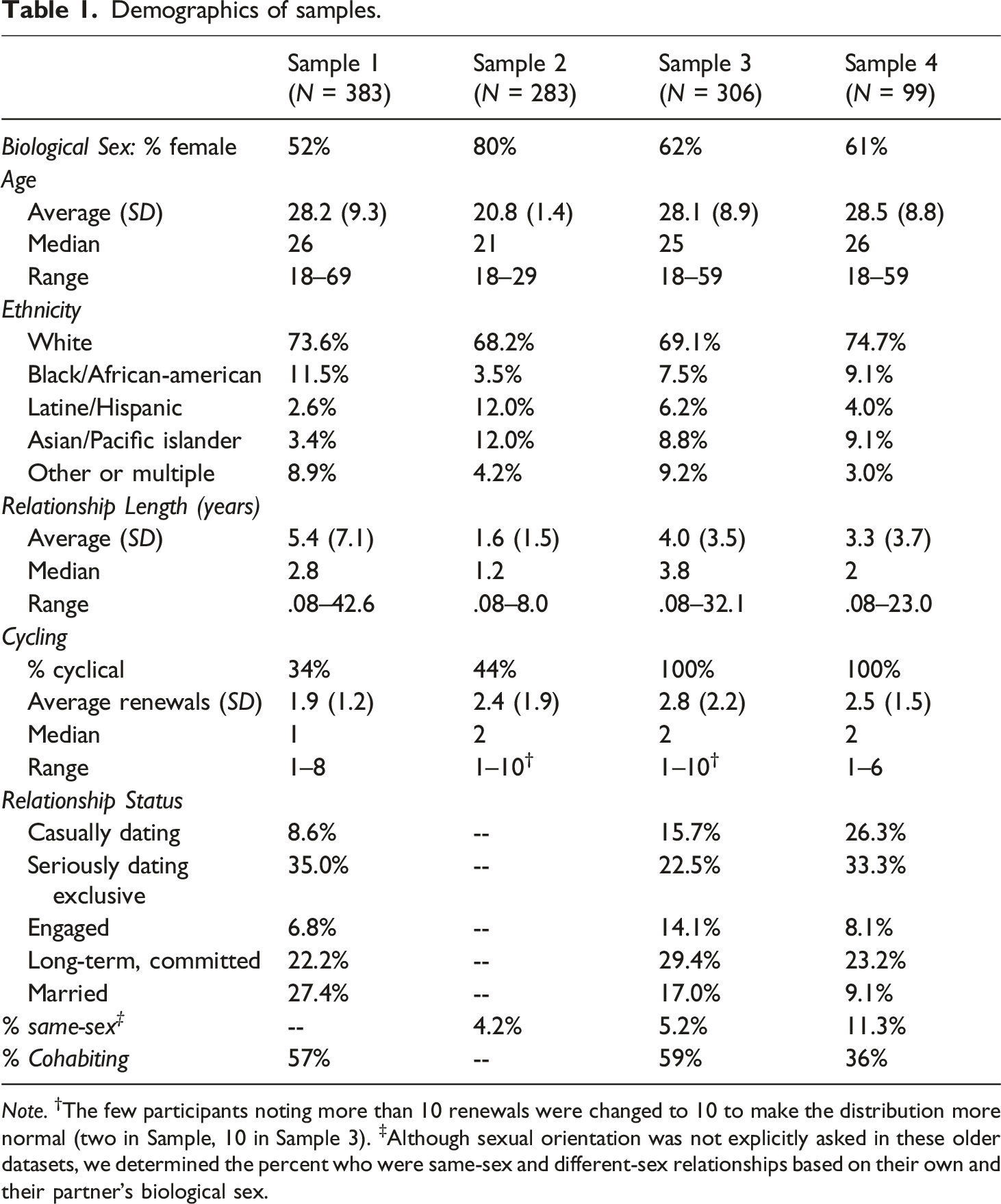
Note. †The few participants noting more than 10 renewals were changed to 10 to make the distribution more normal (two in Sample, 10 in Sample 3). ‡Although sexual orientation was not explicitly asked in these older datasets, we determined the percent who were same-sex and different-sex relationships based on their own and their partner’s biological sex.
Participants
Sample 1 included 383 MTurk participants in either cyclical (34%) or non-cyclical relationships (66%) from a larger dataset described in Dailey (2020). This sample was 48% female and 18–69 years of age (M = 28.2, Mdn = 26, SD = 9.3). Ethnicities included 73.6% white, 3.4% Asian/Pacific Islander, 11.5% African American/Black 2.6% Hispanic/Latinx, and 8.9% other or multiple ethnicities. Relationship lengths ranged from less than one to 42.6 years (M = 5.4, Mdn = 2.8, SD = 7.1). For those in cycling relationships, the average number of breakup-renewal cycles (measured as number of renewals) was 1.9 (SD = 1.2; Mdn = 1, range 1–8).
Sample 2 included 283 college students in either cyclical (44%) or non-cyclical relationships (56%) from a larger dataset recruited from communication courses in exchange for extra credit (see Dailey et al., 2010). The sample was 80% female and was 18–29 years of age (M = 20.8, Mdn = 21, SD = 1.4). Ethnicities included 68.2% white, 12.0% Hispanic/Latinx, 12.0% Asian/Pacific Islander, 3.5% African American/Black, and 4.2% other or multiple ethnicities. Relationship lengths ranged from one month to 8 years (M = 1.6, Mdn = 1.2, SD = 1.5). For those in cyclical relationships, the average number of cycles was 2.6 (SD = 2.8, Mdn = 2, range 1–20).
Sample 3 included 306 MTurk participants in current cyclical relationships (see Dailey et al., 2013 for details on the larger sample). The sample was 62% female and ranged in age from 18 to 59 years (M = 28.1, Mdn = 25, SD = 8.9). Ethnicities included 69.1% white, 8.8% Asian/Pacific Islander, 7.5% African American/Black, 6.2% Hispanic/Latinx, and 9.2% other or multiple ethnicities. Relationship lengths ranged from less than one year to 32.1 years (M = 4.0, Mdn = 3.4, SD = 3.5). The average number of cycles reported was 2.8 (SD = 2.2, Mdn = 2, range 1–10).
Sample 4 included 99 MTurk participants who were currently in cyclical relationships from a larger dataset (see Dailey et al., 2012). The sample was 60.6% female and 18–59 years of age (M = 28.5, Mdn = 26, SD = 8.8). Ethnicities included 74.7% white, 9.1% Asian/Pacific Islander, 9.1% African American or Black, 4.0% Hispanic/Latinx, and 3.4% other or multiple ethnicities. Relationship lengths ranged from less than one year to 23.0 years (M = 3.3, Mdn = 2.0, SD = 3.7). The average number of cycles was 2.5 (SD = 1.5, Mdn = 2, range 1–6).
Procedures
All data collection was IRB approved, and all data were collected through online surveys. Participants were informed that their participation in the surveys indicated consent. For all datasets, a brief definition of on-again/off-again relationships was provided to participants (i.e., a committed, romantic relationship in which they broke up and renewed with their partner once or more) and then asked if their current relationship fit within this definition. Participants were allowed to self-define what constituted a breakup and renewal. Those responding ‘yes’ were subsequently asked how many renewals they experienced with this partner. Thus, we measured cycling as a dichotomous variable (cyclical vs. non-cyclical; labeled herein as cycling status) as well as in terms of number of renewals for those whose relationships had a cyclical nature.
Measures
Relational stress
Stress specific to the relationship was measured in Samples 2, 3, and 4 using items described in Dailey et al. (2012) (e.g., “Worrying about this relationship has often interfered with my other activities,” “This relationship has worn me out”). Participants were asked to think about their relationships in general and rate the items on a 7-point Likert scale (1 = strongly disagree, 7 = strongly agree). This scale was based on general stressors related to cyclical relationships extracted from a qualitative analysis reported in Dailey et al. (2012). Although the number of items used in all three samples varied (i.e., 8 items in Sample 2; 6 items in Sample 3; 9 items for Sample 4), all showed high reliability: Sample 2 (ω = .91, M = 4.42, SD = 1.33), Sample 3 (ω = .91; M = 2.97, SD = 1.33), and Sample 4 (ω = .91; M = 3.67, SD = 1.35).
Compromised well-being: Psychological and physical symptoms
In Samples 1 and 2, using Dornbush et al.’s (1991) stress measure served as our assessment of compromised well-being. These items were initially developed to assess symptoms as a result of stressors. Participants were asked to think of the past month and report the extent to which they experienced 8 psychological symptoms (e.g., “felt over-tired,” “felt alone,” “lost your appetite”; Sample 1: ω = .77; M = 2.56, SD = .73; Sample 2: ω = .79; M = 2.69, SD = .65) and 5 physical symptoms (e.g., “had a headache,” “had a cold or other illness”; Sample 1: ω = .61; M = 1.89, SD = .57; Sample 2: ω = .59; M = 2.14, SD = .61). For consistency with the others measures within the datasets, these items were assessed on a 4-point scale (1 = never, 2 = once, 3 = twice, 4 = three or more times) for Sample 1 and on a 5-point scale (1 = never, 5 = frequently) for Sample 2.
Problematic interaction patterns
Problematic interactions were assessed in Sample 4 only. Participants were asked to think about their relationship in general for both of the following measures.
Transparency and openness
All data and output are available from the corresponding author. This study’s design and analyses were not pre-registered.
Results
Across the datasets, sex, age, and relationship length were associated with at least one of the variables of interest (e.g., relational stress, psychological symptoms) and were thus included as control variables in all the analyses for consistency. Preliminary analyses (for samples in which data was available) showed that cycling status and number of cycles were not associated with relationship stage (e.g., dating, married) or cohabitation status. Thus, we did not include these as potential moderators or control variables in the analyses.
Cycling status with relational stress and well-being (H1)
Regressions of cycling (status and number of cycles) predicting psychological and physical symptoms.
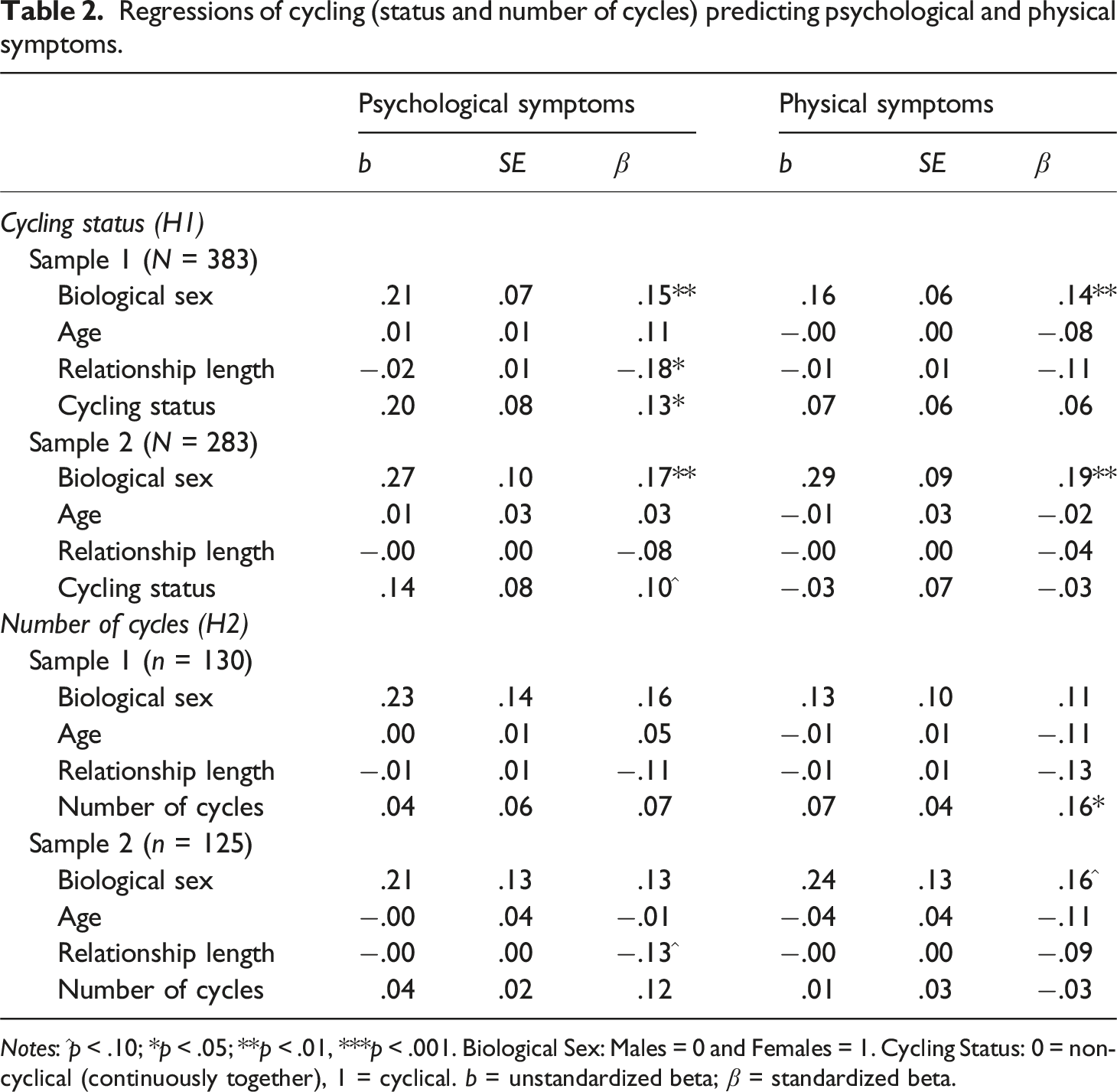
Notes: ^p < .10; *p < .05; **p < .01, ***p < .001. Biological Sex: Males = 0 and Females = 1. Cycling Status: 0 = non-cyclical (continuously together), 1 = cyclical. b = unstandardized beta; β = standardized beta.
Regressions for cycling (status and number of cycles) predicting relational stress.
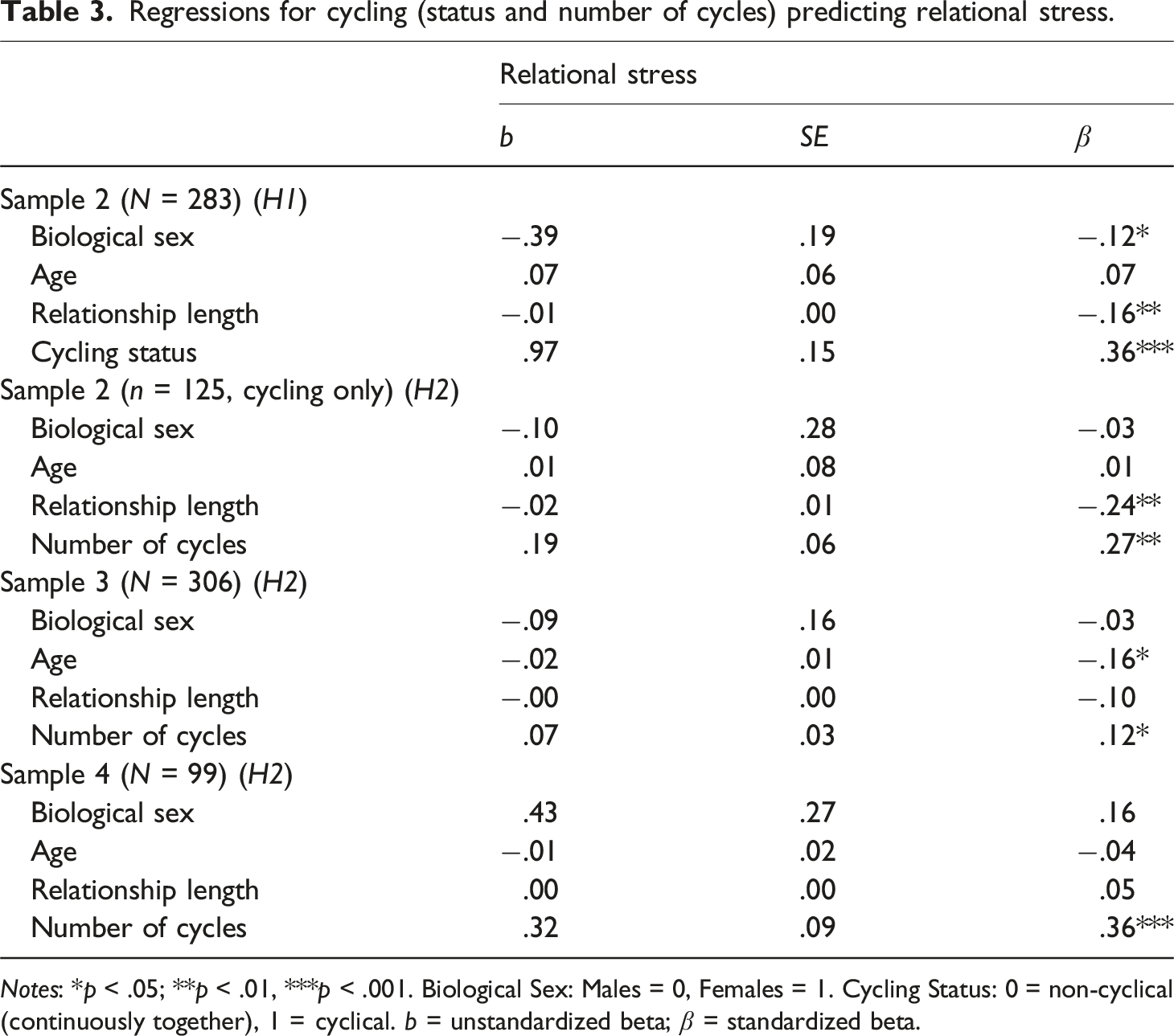
Notes: *p < .05; **p < .01, ***p < .001. Biological Sex: Males = 0, Females = 1. Cycling Status: 0 = non-cyclical (continuously together), 1 = cyclical. b = unstandardized beta; β = standardized beta.
Number of cycles with relational stress and well-being (H2)
H2 could be tested with all four samples. For H2a, results from Samples 2, 3, and 4 (see Table 3) show that the number of cycles was positively associated with relational stress even after controlling for demographic characteristics. Results for H2b from Sample 1 are provided in the bottom half of Table 2. Overall, there was only one significant association – the number of cycles was positively associated with physical symptoms. Thus, similar to H1, stronger support was found regarding relational stress (H2a) than well-being (H2b).
Cycling and problematic interaction patterns (H3)
With Sample 4, we assessed how cycling (i.e., number of renewals) combined with problematic interaction patterns in predicting relational stress. Bivariate correlations showed that number of renewals was positively associated with conflict ineffectiveness (r = .28, p = .005), aggression (r = .43, p < .001), and relational stress (r = .36, p < .001). Relational stress was also moderately associated with conflict ineffectiveness (r = .60, p < .001) and aggression (r = .55, p < .001).
Problematic interaction patterns X cycling in predicting relational stress (H3): Sample 4 (N = 99).
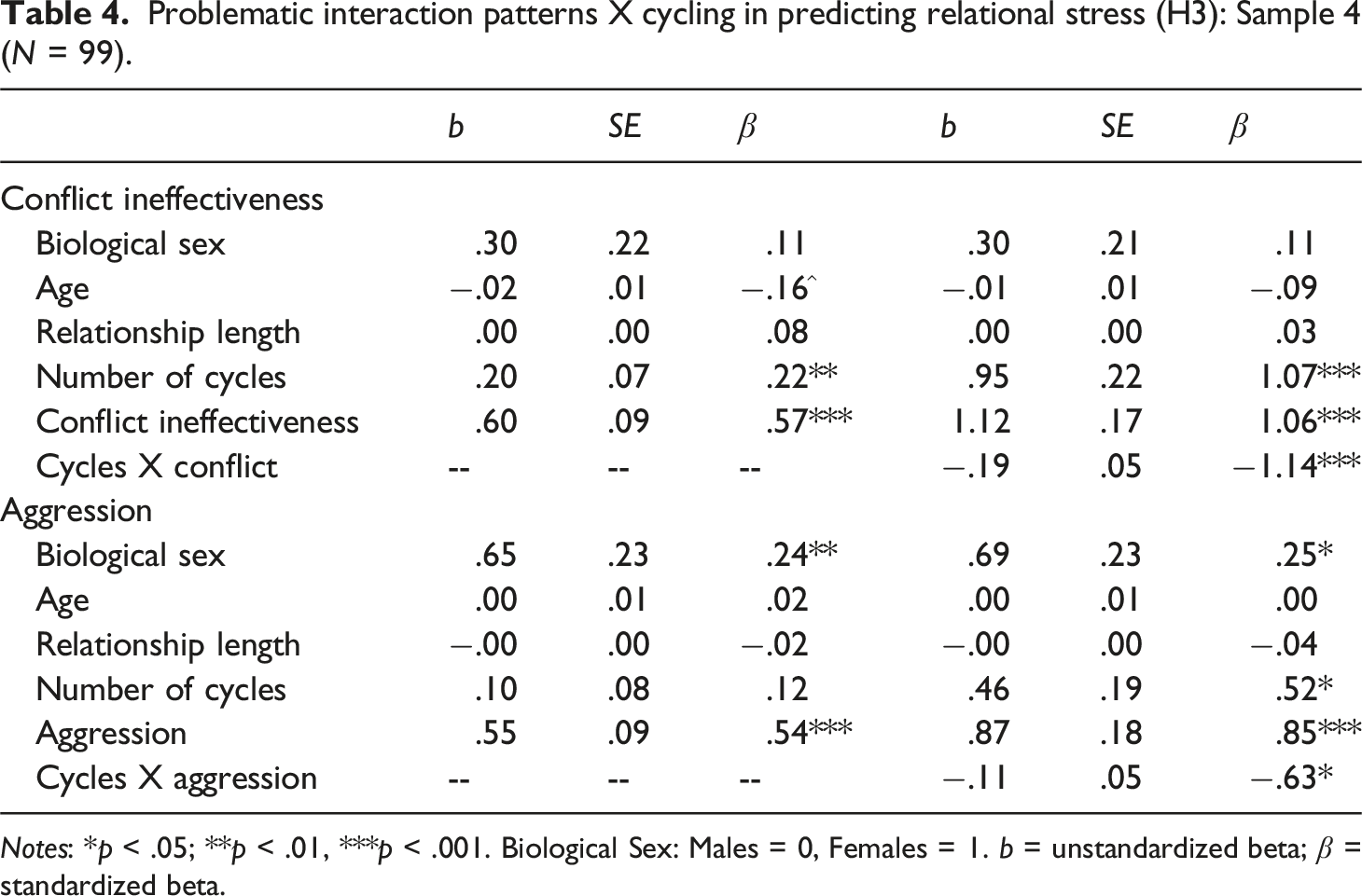
Notes: *p < .05; **p < .01, ***p < .001. Biological Sex: Males = 0, Females = 1. b = unstandardized beta; β = standardized beta.
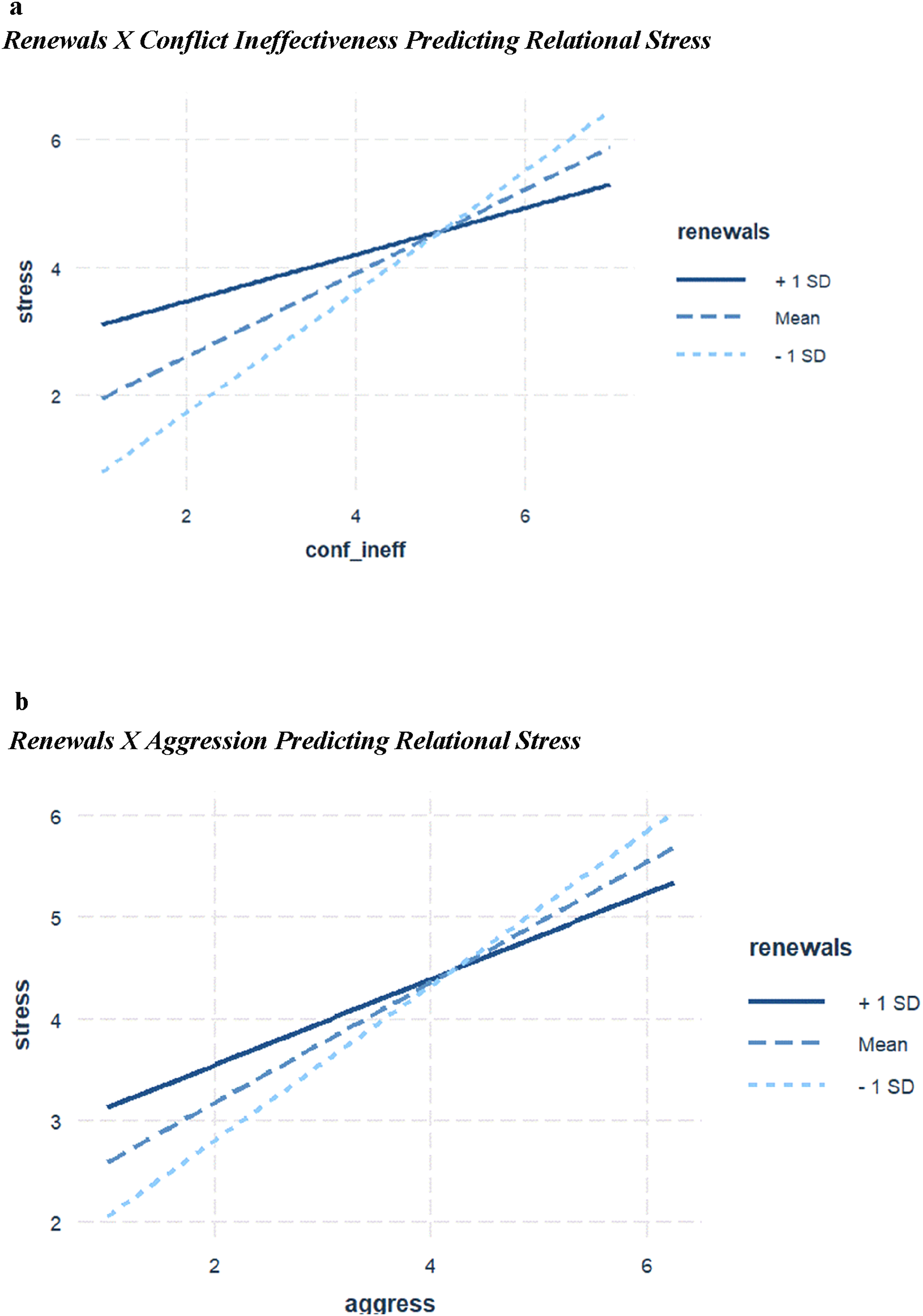
(a) Renewals X conflict ineffectiveness predicting relational stress. (b) Renewals X aggression predicting relational stress.
A similar set of regressions showed that while aggression was significantly associated with relational stress, number of renewals was not, F(5, 91) = 11.31, p < .001, R2 = .38. However, their interaction in a subsequent step was significant, F(6, 90) = 10.54, p < .001, R2 = .41. Decomposing the interaction (see Figure 2(b)) again shows significant positive associations between conflict and stress at low (b-1SD = .76, p < .001), average (bave = .59, p < .001), and high (b+1SD = .42, p < .001) numbers of renewals, but the slope decreases with a greater number of renewals. Overall, the results support an interactive effect of cycling and problematic interaction patterns proposed in H3.
Cycling, relational stress, and well-being (H4)
Indirect effects results for H4.
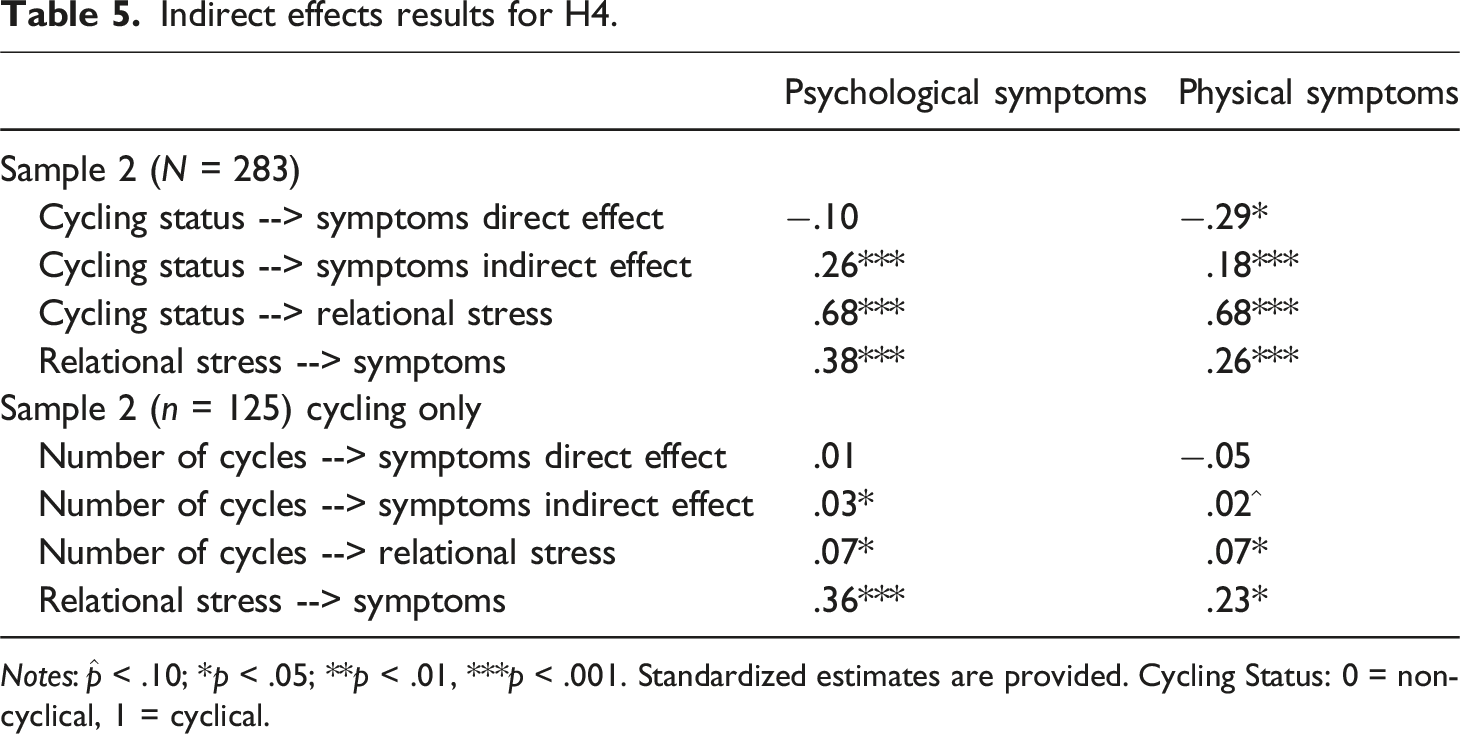
Notes: ^p < .10; *p < .05; **p < .01, ***p < .001. Standardized estimates are provided. Cycling Status: 0 = non-cyclical, 1 = cyclical.
Discussion
The aims of this paper were to initially test a proposed model examining the association between relationship cycling, relational stress, and well-being. Using four different samples, we found that: (1) cyclical partners reported more relational stress, and to a lesser extent, more compromised psychological well-being, (2) cycling (both cycling status and number of renewals) was associated with relational stress, (3) negative communication patterns interacted with cycling in predicting relational stress, and (4) relational stress and well-being were interrelated in ways to suggest an indirect effect between cycling and well-being through relational stress.
Relatively strong associations were found between cycling and relational stress in all samples assessed; cyclical partners reported more stress than non-cyclical partners, and a greater number of breakup and renewal cycles was associated with greater relational stress. The findings regarding number of renewals provides evidence for the cumulative effect of multiple breakup and renewal cycles as argued by Monk et al. (2022) and Halpern-Meekin and Turney (2023). Stress theories (e.g., SGM, Davila et al., 1997; TRRL, Afifi et al., 2016) and research on relational stress (Weigel & Shrout, 2020) purport that the stressor and the means with which partners navigate the stressor mutually compound so that lower relational quality and negative interaction patterns spiral into worse outcomes. Theoretically, the increased uncertainty and fluctuations in relational status (Halpern-Meekin & Turney, 2023; Monk et al., 2022; Vennum & Johnson, 2014) may create a continuous sense of turbulence, which typically leads to biased cognitions, stronger emotions, and more difficult interactions (Solomon et al., 2016). This also supports our integration of several theories (VSA, Karney & Bradbury, 1995; SGM, Davila et al., 1997; TRRL; Afifi et al., 2016) to suggest that cyclical partners enter each subsequent cycle at a deficit to manage the problematic dynamics or challenges that their relationships present. As such, cycling is likely a chronic stressor that ultimately may have compounding implications for partners’ well-being.
Although the current findings only showed weak links between cycling and psychological and physical well-being, this could be due to the generality of the symptoms measured (e.g., headaches, loss of appetite) rather than centering on depression or anxiety as in previous studies. Further, we only assessed the frequency of these symptoms and not their subjective severity or perceived increases over time. Yet, the proposed model suggests that relational stress mediates the link between relationship dynamics (i.e., cycling and problematic interaction patterns) and well-being. In support of this, the test of indirect effects suggested that greater relational stress is a potential mechanism driving compromised well-being. In addition, given that the presence or absence of cycling might be more connected with psychological well-being, whereas number of cycles might be more connected with physical well-being, psychological symptoms may be a more proximal outcome of relationship cycling, and physical symptoms of the stress stemming from these relationships might manifest later, similar to the allostatic load model (Juster et al., 2011). These suppositions, however, need to be substantiated with longitudinal research to test the proposed mediating role of relational stress with a variety of well-being measures.
Extending previous research (Dailey et al., 2009; Halpern-Meekin et al., 2013a; Monk et al., 2018), these findings also show that those who cycle and those with a greater number of cycles have more aggression and difficulties in navigating conflict. Cycling and problematic interaction patterns may be mutually exacerbating relational stress, with conflict and aggression potentially playing prominent roles. Specifically, although conflict and renewals made unique contributions in predicting stress as main effects, aggression may be explaining stress more as compared to number of renewals given the lack of main effect for renewals alongside aggression. Yet, the correlation between cycling and aggression could be masking the individual contribution of renewals. Regardless, the interactions between renewals and both conflict and aggression were significant suggesting that they combine in contributing to relational stress as hypothesized. The nature of these interactions showed that although all slopes were positive, the slopes were stronger with fewer renewals. This could suggest that conflict and aggression are more salient in relationships with fewer renewals. In other words, those experiencing fewer challenges in other areas of their relationship (i.e., fewer changes in relationship status) might be more affected by instances of conflict and aggression. A parallel explanation is that there is a ceiling effect for those with more renewals. These partners might consistently deal with relational challenges, and conflict and aggression might already be involved in the relationship status fluctuation process. Thus, additional conflict or aggression might not substantially increase their stress levels. Thus, the punctuation and progression of the interplay between cycling and problematic interaction patterns should be examined in future longitudinal research.
In general, the findings support the proposed model in suggesting the associations among problematic interaction patterns, relational stress, and well-being are exacerbated by repeated breakup and renewal cycles. Additional tests of this model should address the existing vulnerabilities that might both incite problematic interactions but also instigate cycling. Theories relevant to stress in relationships (e.g., VSA, Karney & Bradbury, 1995; CR, Rauer et al., 2008) suggest cyclical partners could have enduring vulnerabilities that make them less able to manage stressors. This would add to the existing proposed model to understand what prompts the development as well as the perpetuation of cyclical relationships and the relevant outcomes for these relationships and their partners. The current findings additionally support explicitly incorporating the number of cycles within a theoretical model of relational stress and well-being for these relationships.
Limitations
The findings should be interpreted within the context of additional methodological limitations. Although quality checks were conducted, the validity of crowdsourcing (i.e., MTurk) data cannot be confirmed (Chmielewski & Kucker, 2020), despite gaining a greater diversity of participants and being comparable to traditional data collection methods (Sheehan, 2018). Different ages, relationship lengths, and biological sex (except for the college students in Sample 2) were represented, but the samples were largely white and heterosexual. Further, specific data were not collected on gender identity or sexual orientation. As such, future samples should target a greater diversity of ethnicity/race, culture, socio-economic status (e.g., education, income), sexual orientations, and gender identities. Additionally, although we had data on cohabitation and relationship status (e.g., dating, engaged, married) for some of the samples but not all, future research should assess how the proposed associations vary by these stages of relationship. We also did not control for who initiated the transitions (i.e., breakups and renewals) in cyclical relationships; the data collected typically asked about only the most recent breakup and renewal even if there were multiple cycles. Yet, incorporating the degree to which participants initiate these transitions might yield additional insights about their stress and well-being.
The same measures were used but were assessed in slightly different ways across the samples. Further, not all variables were assessed in all four samples thereby limiting our ability to see trends across samples. The symptoms measures were also assessed on a different timeframe (in the past month) as compared to the other measures (across the relationship in general). Assessing all measures on the same timeframe and assessing the severity of the symptoms might yield stronger associations. Numerous analyses were conducted across the study and some only approached significance and should be interpreted with caution; additional research is needed to substantiate the existence as well as the strength of these associations. Finally, as noted above, all data were correlational, and causality cannot be established; longitudinal research would better test the progression of cycling and stress.
Conclusion
Given the prevalence of relationship cycling and its association with lower relational quality and more negative interaction patterns, these partners are at an increased risk for compromised psychological and physical well-being. Based on a proposed model, this paper provides a collective of analyses to show that relationship cycling (presence vs. absence as well as number of cycles) was associated with greater relational stress and, to a lesser extent, compromised well-being. Cycling, however, might have a more indirect effect on well-being through relational stress, and negative interaction patterns might fuel the relational stress associated with cycling. The current findings thus warrant future larger-scale, longitudinal research that builds on the proposed theoretical model to explicate these associations over time and repeated cycles.
Footnotes
Declaration of conflicting interests
The authors declared no potential conflicts of interest with respect to the research, authorship, and/or publication of this article.
Funding
The authors received no financial support for the research, authorship, and/or publication of this article.
Open research statement
As part of IARR’s encouragement of open research practices, the author(s) have provided the following information: This research was not pre-registered. The data and materials used in the research are available upon request by emailing
Ethical considerations
All data collection was approved by the first author’s institutional IRB (Proposal #s: 2007-03-0104; 2010-09-0040; 2011-06–0114). Consent information was provided to all participants, and because they were online surveys, a waiver of signatures was approved.

Data Availability Statement
Data will be made available upon legitimate request