




Abstract
How and why does the timing of texting after a first date impact people’s relationship intentions? Based on previous literature, we developed and empirically tested three competing predictions—a linearly positive, a linearly negative, and an inverted U-shaped effect—of text timing on relationship intentions, perceived chemistry, and motivation to translate their relationship into action. We also explored the underlying mechanisms (i.e., thoughts about the sender, relative mate value, perceived neediness of the other, reciprocity, and perceived reliability of the sender). Based on a pre-study (N = 100), we determined the experimental manipulation with texting (a) immediately after the date, (b) the next morning, or (c) after two days. The main experiment (N = 543) showed a curvilinear effect: texting the next morning led to the highest relationship intentions. Women were more sensitive to these text timing effects than men. Mediation analyses highlighted the roles of perceived reciprocity and reliability in influencing relationship intentions, perceived chemistry, and motivation.
I’m gonna call her right now. I’m gonna do that whole: “Hey, remember me? It’s been so long.” See, it’s funny because I just saw her. - Ted Mosby Dude, you can’t call her. You have to wait three days to call a woman. That’s the rule. - Barney Stinson
Pop culture often highlights the uncertainties around the timing of reinitiating contact after a date. A notable example comes from the TV series How I Met Your Mother, where Ted, after getting a woman’s number in a pub, wants to call her immediately. His friend Barney, however, strongly advises him to follow the “Three-Day Rule”, suggesting that one should wait three days before contacting a potential date to avoid appearing too eager and needy. Similarly, a substantial amount of anecdotal advice on when to reinitiate contact is available in pop cultural guidebooks and online, with 9.2 billion Google search results for “when to text after the first date”. Recommendations range from “to shoot them a text if you’re into them” (Keegan & McClure, 2021) to “follow up within 2–3 days to meet up again” (Drillinger & Rising, 2021). To the best of our knowledge, no empirical evidence supports any of these arbitrary claims. We thus intended to examine how the timing of texting impacts the chances of a desired partner being more (less) interested in entering a romantic relationship (i.e., relationship intentions), how much chemistry they perceive, and how motivated they are to translate the relationship intentions into action.
So, when do you best text after the first date? Immediately afterwards? On the next morning? Or play hard-to-get and wait a few days before writing? We conducted two studies with the aim to provide insights into (a) the optimal point in time to text after the first date to increase relationship intentions, chemistry, and motivation (b) the underlying psychological mechanisms (thoughts about the other person, relative mate value, perceived neediness, reciprocity, and perceived reliability) that can explain the effect of text timing on the outcome variables, and (c) the interpersonal characteristics that might moderate how individuals react to different message timing (gender, attachment style, uncertainty avoidance; Figure 1). This culminated in the following moderated mediation model. Moderated mediation model of the text timing on romantic outcomes. Note. The five mechanisms are expected to mediate the impact of text timing on relationship outcomes with potential moderating impacts of gender, attachment style and uncertainty avoidance.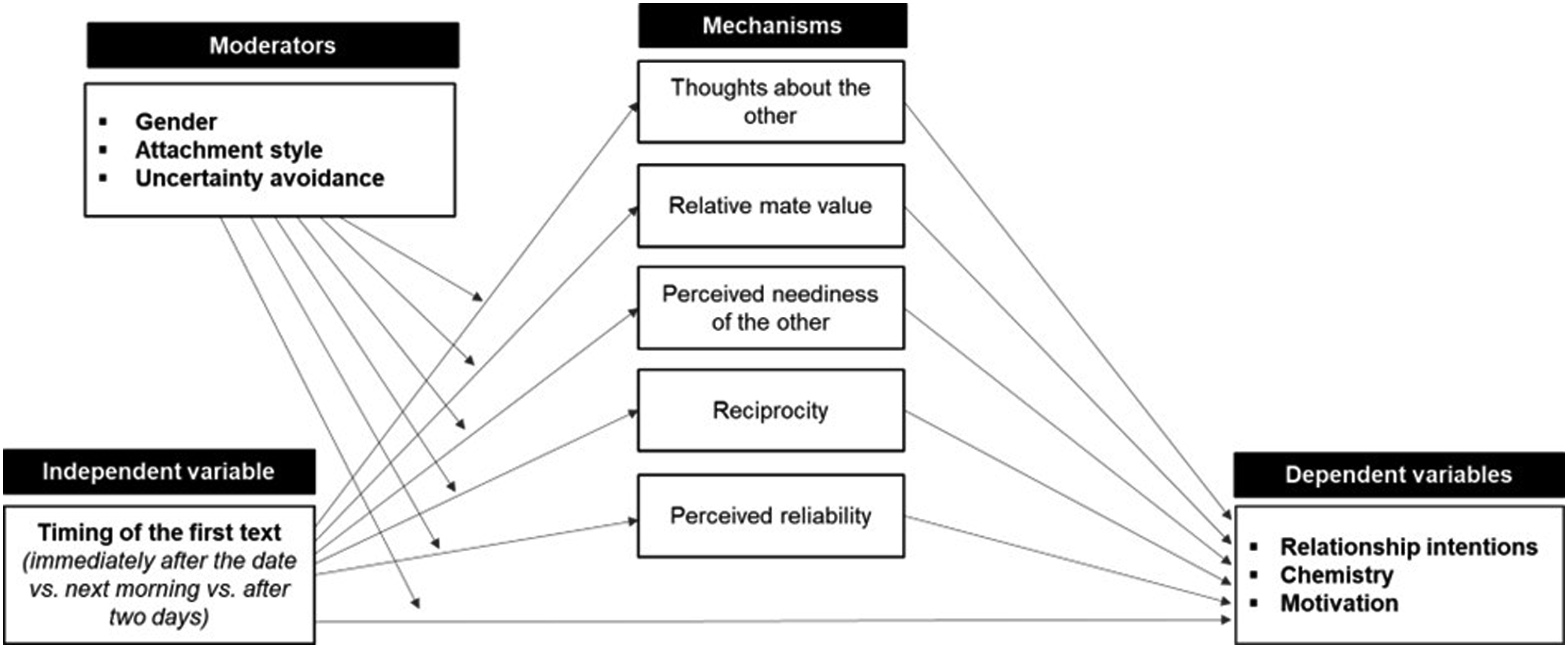
Theoretical background and competing predictions
Based on extant research and theorizing (see below), we can plausibly predict three different patterns of results for how the timing of texting after the first date impacts the relationship intentions, perceived chemistry, and motivation of the text receiver (Figure 2; see Loschelder et al., 2017): (a) a positive linear relationship—with waiting longer evoking higher relationship intentions, perceived chemistry, and motivation to engage in a romantic relationship Figure 2(a),
1
(b) a negative linear relationship—with waiting longer evoking less beneficial effects Figure 2(b), or (c) a curvilinear, inverted-U effect—with waiting a moderate amount of time having benefits but waiting for too long backfiring Figure 2(c). How text timing could impact relationship intentions, chemistry, and motivation. Note. The illustrated data points are fictitious to illustrate the possible types of effects. ‘Outcome Variables’ refer to relationship intentions, perceived chemistry, and motivation.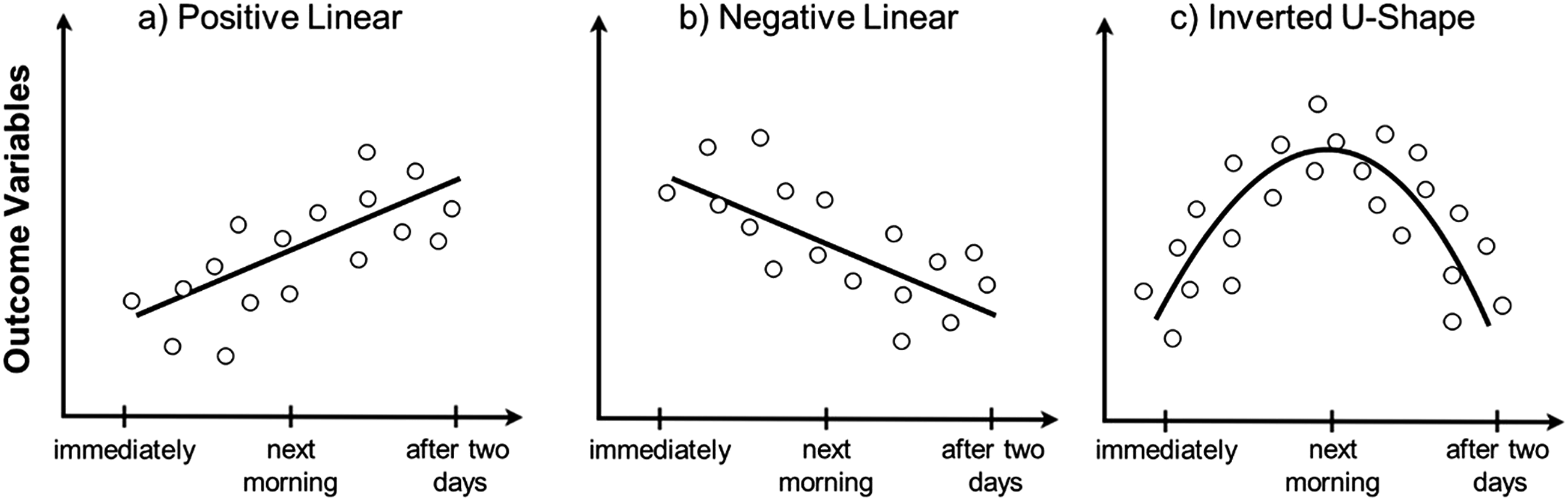
Predicting a positive relationship
A common dating strategy is “playing hard-to-get” to increase one’s own perceived attractiveness 2 and attracting potential mates (e.g., Birnbaum et al., 2020; Hudson, 2016; Merriam-Webster, 2022; Nicholson, 2016; University of Rochester, 2024; Wright & Contrada, 1986). For example, specific tactics of playing hard-to-get may be to take longer to initiate contact after dates, to take longer to respond to messages or to give sexual hints but withhold sexual activities (Crawford & Popp, 2003; Hazel et al., 2023; Jonason & Li, 2013). For readability and simplicity (see Dai et al., 2014), we will describe the person who applies this strategy as the initiator and the person who is the target of the strategy as the target (because the aim is to influence this person’s evaluation).
Why should waiting longer before reaching out after the first date increase the relationship intentions towards the initiator Figure 2(a)? First, by making use of this strategy, people could create uncertainty about their romantic or sexual interest toward a potential target, and hence, create a scenario where the interested mate must exert significant effort to gain their attention (Bowen & Gillath, 2020). This uncertainty can enhance excitement and curiosity about a potential partner (Birnbaum, 2018). Not knowing when the initiator will text after the date may lead the target to think more about the initiator. These recurring thoughts may be interpreted as feeling attracted to the other person (e.g., “The person continually comes to my mind. That must mean I have feelings for her”; Hazel et al., 2023). Bem’s established self-perception theory (1972) supports this, positing that targets associate more frequent thoughts about a particular person as a sign of attraction (Whitchurch et al., 2010).
Second, playing hard to get may also be beneficial because of the scarcity principle, in that something that is difficult to obtain is seen as more desirable (Aggarwal et al., 2011; Cialdini, 2009; Jang et al., 2015). Initiators who play hard-to-get intentionally aim to be romantically elusive to attract potential mates (Finkel & Eastwick, 2009). They bet on the assumption that having to work hard to convince a potential initiator must imply the best possible outcome for the target. Accordingly, people who are difficult to attract in dating are perceived as more desirable or having a potentially higher mate value (Birnbaum et al., 2020; Eastwick et al., 2007). Conversely, those who appear more needy of a relationship and generally show interest in multiple potential partners instead of being selective may be perceived as less desirable (Eastwick et al., 2007).
Predicting a negative relationship
In stark contrast, at least three streams of prior research suggest a potentially negative influence of text timing on relationship intentions Figure 2(b). First, people generally value reciprocity, also in the case of romantic relationships: we like those who like us back (Aronson & Worchel, 1966; Finkel & Eastwick, 2009; Gouldner, 1960; Koranyi & Rothermund, 2012; Luo & Zhang, 2009). The reciprocity of attraction occurs in the early stages of contact and people expect their attraction and flirting to be reciprocated; they feel discomfort when it is not (Back et al., 2011; Clark et al., 2019). Conversely, showing less affection or taking longer to reinitiate contact after a date might thus be perceived as a violation of reciprocity, leading to adverse effects on relationship intentions. Further, people feel most attracted to those that are clear and decided about their intentions and those who like us best (Birnbaum, 2018; Montoya et al., 2015; Spielmann & MacDonald, 2016). Hence, taking longer to text after a date may lead the target to perceive the initiator as being less interested and having more unclear intentions. In turn, the target could feel less attracted to the initiator.
Second, taking longer to respond may be perceived as being less reliable. Reliability is seen as a desirable trait in potential mates (Valentine et al., 2019), which may result in hard-to-get initiators being perceived as less attractive. In sum, these findings suggest a negative relationship in that texting later after the first date leads to impaired interpersonal perceptions, and relationship intentions (see Figure 2(b)).
Predicting a curvilinear Inverted-U relationship
Finally, there may “too much of a good thing” (Grant & Schwartz, 2011), resulting in an ultimately curvilinear effect in the form of an inverted-U: While there may be initial benefits of letting some time pass before texting, waiting for too long could backfire (see Loschelder et al., 2016; Nols et al., 2024). In all, a timing sweet spot for the ideal texting after the first date could exist. Supporting this notion, a goal becomes more attractive when it is moderately difficult to reach compared to when it is too easy or too difficult to reach (Richter et al., 2016). This is supported by motivational intensity theory (Brehm, 1999; Brehm & Self, 1989; Roberson & Wright, 1994; Wright & Brehm, 1984), which assumes that emotional intensity and goal attractiveness increase with difficulty of goal attainment but drop off if the task seems too costly or even impossible. For texting after the first date, an initiator that texts too soon might be perceived as undesirable and needy of a relationship. The goal would be too easy to attain and would not appear attractive enough to pursue. Conversely, an initiator texting too late might appear uninterested—a target might perceive that getting the initiator to like them is too difficult to achieve. Prior research also supports this reasoning: When targets knew that a potential partner was unattracted to them (i.e., possibly by playing too hard-to-get) or highly attracted to them (i.e., too “easy” to get), they felt less attracted to the partner (Reysen & Katzarska-Miller, 2013). Similarly, initiators who were described as moderately available (vs. unavailable or highly available) were preferred for dating and committed relationships (Jonason & Li, 2013).
Contrasting predictions
We empirically examine these competing predictions (Figure 2), assessing whether text timing after the first date exerts a positive linear, or a negative linear, or an inverted U-shaped effect on relationship intentions, chemistry and motivation. Although one can derive all three competing predictions from prior theorizing and findings, we deemed the inverted U-shape effect as most plausible and thus pre-registered the respective hypotheses (see section ‘Summary of Hypotheses’).
Exploratory moderators
Beyond the nature of the timing effects and their underlying mechanisms, we intended to examine possible moderating factors—namely, target’s gender, attachment style, and uncertainty avoidance (Figure 1).
Target’s gender
In general, men have a greater tendency to pursue initiators who play hard-to-get than women (i.e., men “enjoy the chase”; see Bowen & Gillath, 2020). This may be due to traditional sex and gender stereotypes that present men as relatively more active and dominant, whereas women are presented as relatively more passive and submissive (Siegel & Meunier, 2018). Specifically, these predictions align with the Sexual Scripting Theory, or sexual scripts (Simon & Gagnon, 1969). According to this theory, there are culturally shared guidelines for sexual behaviour that operate at cultural level, with men typically being more active in chasing a partner and sex, whereas women’s “gatekeeper” script suggests that women delay sexual activity and build boundaries that men should overcome (Sakaluk et al., 2014; Wiederman, 2005). These gendered scripts not only shape behaviors but also reinforce societal expectations, influencing how individuals interpret and respond to courtship dynamics. For instance, the “chase” narrative may serve to validate traditional notions of masculinity and sexual success, while the “gatekeeping” script reinforces perceptions of femininity tied to restraint and selectivity. Interestingly, these differences are not only based on societal guidelines but are widespread in the animal kingdom (e.g., Janicke et al., 2016).
Attachment style
Attachment style constitutes the patterns of expectations, needs, and emotions that individuals exhibit in interpersonal relationships (e.g., secure and anxious attachment, Shalit et al., 2010; Travis et al., 2001). Previous research indicates that anxiously attached targets pursue others who play hard-to-get for challenge reasons (see prediction for men), capturing their desire to find a partner representing the reward of long-term commitment, compared to more avoidant or securely attached targets (Bowen & Gillath, 2020).
Uncertainty avoidance
Uncertainty avoidance is defined as the extent to which individuals feel threatened by some unknown of an uncertain situation (Hofstede, 2011). Individuals who are more likely to avoid uncertainty could think less about and have fewer relationship intentions with initiators who play hard-to-get and who evoke uncertainty (see Richards, 2013).
Present study – contributions and overview
It is currently unclear how playing hard-to-get—operationalized as the timing of texting after a first date—impacts individuals’ relationship intentions, chemistry and motivation. Following the call for further research on this topic (e.g., Hazel et al., 2023), we examine when, how, and why the timing of texting after the first date is more versus less effective in fostering these outcome variables. We seek to expand prior research in three ways: First, we aim to establish the effect of text-timing after a first date on relationship intentions, chemistry and motivation and to assess whether this effect is positive, negative, or inverted-U-shaped. Second, we seek to explore multiple underlying mechanisms that could psychologically illuminate the respective relationship. Third, we investigate whether and how gender, attachment style, and uncertainty avoidance moderate the text-timing effect. In all, we aim to test a moderated mediation model (Figure 1) that comprises enhancing (thoughts about the other, relative mate value, perceived neediness of the initiator) as well as hindering mediators (reciprocity, perceived reliability) simultaneously.
To empirically test this moderated mediation model, as well as the nature of the text timing effects, we first conducted a pre-study to examine plausible time intervals for texting after the first date. Based on these data, we then conducted an Experiment 1 with a 3 (timing: text immediately after the date vs. next morning vs. after two days) × 2 (gender: men vs. women) between-subjects design.
Summary of Hypotheses
As mentioned, we deemed the quadratic inverted-U effect most plausible prior to conducting this experiment and pre-registered it accordingly. We thus proposed the main hypothesis that letting a moderate amount of time pass (texting the next morning) after the first date should be most beneficial: Individuals who receive the first text on the next morning should (H1a) report higher relationship intentions, (H1b) feel more chemistry, and (H1c) be more motivated to make a good impression on and build a romantic relationship with the initiator than participants who received the text immediately after the date or after two days.
Mediation hypotheses
For the mediators, we predicted: (H2): Delaying the text until the next morning will lead participants to think about the initiator more intensely than participants who received the text immediately after the date or after two days. (H3): Texting immediately after the date will lead to a divergent set of (both positive and negative) interpersonal perceptions. Specifically, participants who receive the first text immediately after the date perceive (a) a greater mate value imbalance between the initiator and themselves, perceive the initiator (b) to desire a relationship more, (c) to be liking the participant more, and (d) to be more reliable, compared to individuals who received the text on the next morning or after two days. (H4): We predict that the psychological mediators listed above would account for the effect of text-timing on the dependent variables as (see Figure 1).
Moderation hypotheses
We hypothesized the following moderation effects: (H5a): An anxious attachment style of the target is expected to strengthen the positive effect of texting after a moderate amount of time has passed, compared to an avoidant or secure attachment style. (H5b): Male targets are more influenced by the effects of text timing, hence strengthening the positive effects of texting after a moderate amount of time has passed, compared to female participants. (H5c): Targets who are uncertainty avoidant are less prone to the positive effects of texting after a moderate amount of time has passed, compared to not being avoidant of uncertainty.
Open science and transparency statement
We preregistered the present study. We made all data, analyses scripts, preregistration, and additional files publicly available in the Supporting Online Materials (SOM) on the Open Science Framework (OSF, see anonymized project: https://osf.io/kfdth/?view_only=bc9e006698b547efb0646ad8d87ffd1d). 3
Pre-study
Participants and method
To identify which timepoints for texting after the first date we should use for our experimental manipulations, we conducted a pre-study with N = 100 U.S. & UK participants (50 women and 50 men, Mage = 37.82 years, SD = 12.40, range: 18–68 years). We recruited participants via Prolific—a participant recruitment network with high data quality (Peer et al., 2022)—and asked them when their date should text for them to have the highest relationship intentions with the initiator. To explore the possibility of an inverted U-shaped effect (i.e., an initiator texting too early or too late), we also asked participants what would be ‘too soon’ and ‘too late’ for their date to text. Participants received the recommended hourly wage of above £6.00 at Prolific.
Results
On average, participants had the highest relationship intentions to an initiator who texted after approximately 6 hours (Mhours = 5.86, SD = 10.88). Participants also indicated that texting sooner than approximately 20 minutes after the date would be too soon, (Mhours = 0.30; SD = 2.96) and that texting later than 40 hours (almost 2 days) after the date would be too late (Mhours = 40.42, SD = 34.08). There were no significant gender differences in the indicated timepoints of texting too early, too late, or optimally (all ts < 0.39 and ps > .695).
Main experiment
Methods
Participants and sample size analysis
The target sample size of 508 resulted from an a priori power analysis using G*Power (Faul et al., 2007) for a 3 × 2 ANOVA (i.e., 2 dfs for main and interaction effects), with an assumed conventionally ‘small-to-medium’ effect size of f = 0.175 (d = 0.35), α = .05, 1−ß = .95. The final sample comprised 543 heterosexual participants from the U.S. and UK, collected via Prolific in April 2024 (gender: 270 identified as women and 273 as men, M age = 40.31 years, Mdn = 38, SD = 12.98, range: 18–79 years, native English speakers). 4 Of all participants, 178 (32.8%) identified as single, 357 (65.7%) identified as in a relationship, and 8 (1.5%) preferred not to answer. 5 Further, 73.52% were born in the UK, 13.52% were born in the U.S., and 12.96% were born in other countries, with 54.26% being employed full-time, 16.11% part-time, and 29.63% among “other”. On average, participants had completed 229.70 studies before. Participants were reimbursed with an average hourly wage of £8.44. We stored the data separately from any personal information to ensure complete data anonymity.
Experimental design and procedure
The experiment realized a 3 (timing: immediately after vs. on the next morning vs. after two days) × 2 (gender: male vs. female) between-subjects design. We administered the online questionnaire via SoSciSurvey. Participants read a fictitious scenario of a first date—dinner in a nice Italian restaurant (for the full verbatim description, see SOM). After immersing in this scenario, participants received, as a function of their randomly assigned between-subjects condition, the following information: After your date, the other person … (a) “… texted you immediately after having said goodbye at the end of your date”, (b) “… texted you on the next morning”, or (c) “… texted you after two days”. To isolate the effect of timing from potential confounds related to the message content (e.g., tone, emotionality, or length) and to prevent any ceiling effects, we deliberately omitted any specification of what the initiator texted. This design choice enabled us to examine pure temporal effects on psychological responses to post-date contact.
Dependent variables: Relationship intentions, chemistry, and motivation
We assessed three key dependent variables. First, participants reported their relationship intentions with their date (five items, 6 Cronbach’s α = .90; e.g., “I am willing to form a long-term relationship with my date”; adapted from Eastwick et al., 2007). Second, participants reported how much chemistry they perceived with their date (three items, Cronbach’s α = .93; e.g., “my date and I had a real connection”, also adapted from Eastwick et al., 2007). Finally, as adapted from Dai et al. (2014), participants reported how motivated they were to get in touch with the other again (three items, Cronbach’s α = .93; e.g., “how motivated are you to talk to your date again?”). All items were accompanied by a 9-point Likert scale.
Psychological mediators
Participants completed a questionnaire measuring the five mediators (see Figure 1) on 9-point-Likert scales ranging from not at all to very much. For mate value, the 9-point scale ranged from e.g., other more desirable (1) to yourself more desirable (9), depending on the item.
Thoughts about the other
Participants answered, “how intensively they would expect to think about the other person between the date and the other person’s text message” (single item; adapted from Whitchurch et al., 2010).
Relative mate value
They were asked how balanced they perceived their own and the other’s mate value (i.e., the relative mate value; four items, Cronbach’s α = .85; e.g., “overall, how would members of the opposite sex rate your level of desirability as a partner compared to your date?”, adapted from Edlund & Sagarin, 2014).
Perceived neediness of the other
We asked participants how needy they perceived the other to form a relationship (three items, Cronbach’s α = .88; e.g., “How much does the other person crave a romantic connection?”).
Reciprocity
Participants indicated how much they expected the other to reciprocally like him/her (five items, Cronbach’s α = .91; e.g., “My date really liked me”; adapted from Eastwick et al., 2007).
Perceived reliability
Participants rated how reliable they perceived their date (five items, Cronbach’s α = .94; e.g., “Do you feel confident relying on the other person in times of need?”).
Three potential moderators
For the moderated mediation model (see Figure 2), we also measured three potential moderators: (1) participants’ attachment style with the ECR-RS (eight items, Cronbach’s α = .88; adapted from Fraley et al., 2006; e.g., “I don’t feel comfortable opening up to this person” about their current, former, or prospective partner). We measured (2) uncertainty avoidance, particularly cognitive uncertainty (CU) and emotional uncertainty (EU), with the Uncertainty Response Scale (eight items, Cronbach’s α = .90 and .86; adapted from Greco & Roger, 2001; e.g., “I like to plan ahead in detail rather than leaving things to chance” [CU] and “I feel anxious when things are changing” [EU]). Finally, participants reported (3) which gender they identified with. The item order within batteries was randomized.
Results
Main analyses
Relationship intentions
In line with (H1a), a 3 (timing of text) × 2 (gender) ANOVA
7
showed that the timing of post-date texting significantly impacted the relationship intentions of the target, F (2, 537) = 11.27, p < .001, ηp2 = .040. As Figure 3 shows, those who received a text on the next morning reported greater relationship intentions (M = 6.15, SD = 1.26), compared to those who received the text immediately (M = 5.80, SD = 1.33), or after two days (M = 5.50, SD = 1.59). Post-hoc contrasts showed that all conditions differed significantly (all LSD ps ≤ .031). In addition, polynomial contrast analysis established a highly significant quadratic effect (b = −0.403, p < .001), in the shape of an inverted-U (see Figures 3 and 2(c); linear contrast: b = −0.244, p = .014). The effect of timing of the text × gender on relationship intentions. Note. Participants’ relationship intentions as a function of their date’s text timing and the participants’ own gender. The quadratic, inverted-U effect was more pronounced for women than it was for men, who, on average, reported markedly higher relationship intentions than women did. For the Bayesian tests, BF10 represents support for the alternative hypotheses, whereas BF01 represents the null hypotheses.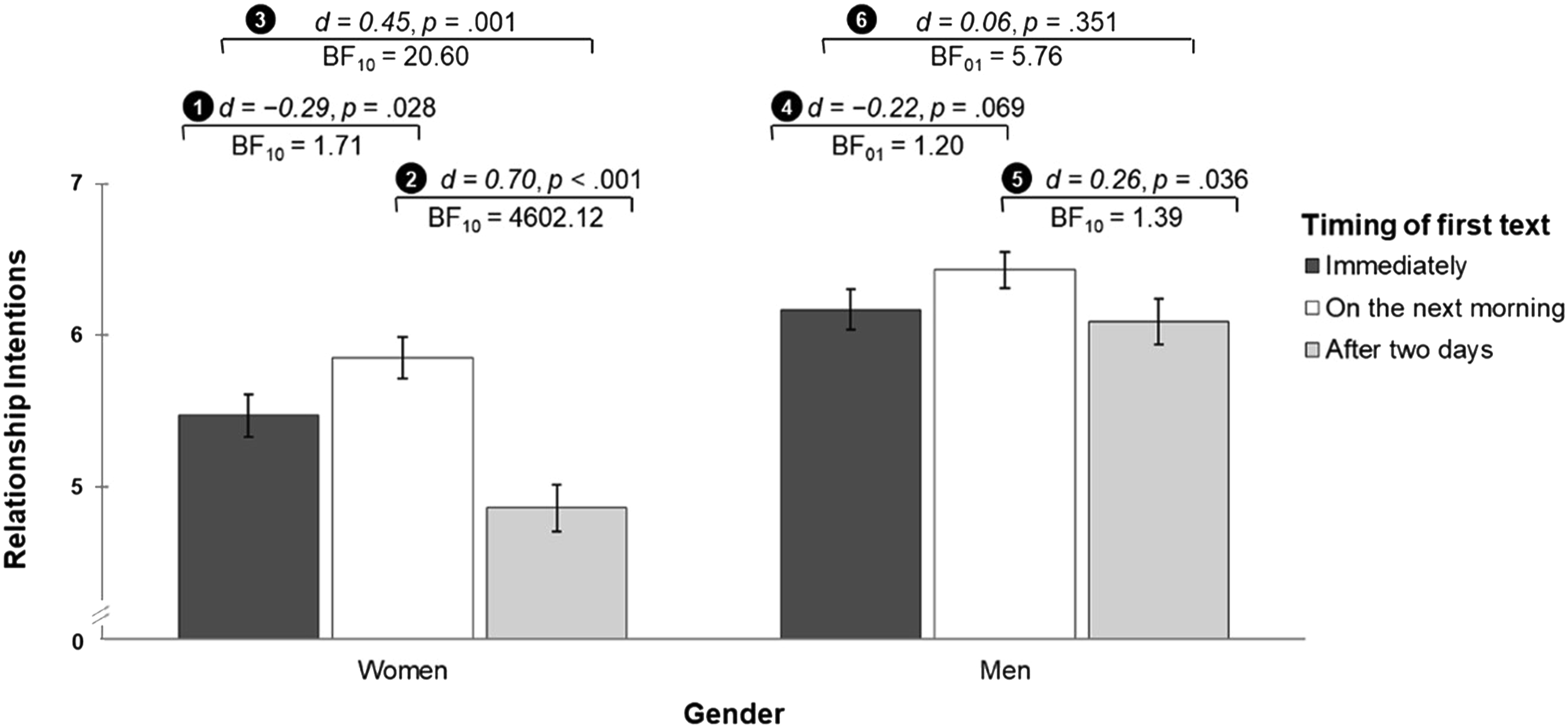
As Figure 3 also illustrates, the quadratic, inverted-U effect was more pronounced for women than for men, as reflected in a 3 (text timing) × 2 (gender) interaction effect, F (2, 537) = 2.97, p = .052, ηp2 = .011, that slightly missed conventional levels of significance (see H5b). We should disclose transparently that when excluding the three participants who did not pass the attention check, this interaction was significant—F (2, 534) = 3.06, p = .048, ηp2 = .011. To explore this interaction further, we next examined men and women separately.
Women showed a significant quadratic inverted-U effect (Figure 3, contrasts 1–3), b = −0.56, p < .001: their relationship intentions were highest, when men wrote the next morning, compared to immediately after the date (d = −0.29, p = .028; BF10 = 1.71; contrast 1) or after two days (d = 0.70, p < .001; BF10 = 4602.12; contrast 2). Women had even higher relationship intentions when men texted immediately vs. after two days (d = 0.45, p = .001; BF10 = 20.60; contrast 3). The reported Bayes Factors BF10 (and BF01) quantify how strongly the data support the alternative (and null) hypotheses, respectively.
In contrast to women, men were much less influenced by the timing of their date’s first text—both the quadratic and the linear contrast were not significant, b = −0.25, p = .066; and b = −0.06, p = .683. Still, we found that men had significantly higher relationship intentions when women texted the next morning vs. after two days, d = 0.26, p = .036; BF10 = 1.39; contrast 5, whereas the other contrasts were not significant (immediately vs. next morning; d = −0.22, p = .069; BF01 = 1.20; contrast 4, and immediately vs. after two days; d = 0.06, p = .351; BF01 = 5.76; contrast 6).
In general, men also reported an overall higher level of relationship intentions (M = 6.23, SD = 1.31) than women did (M = 5.39, SD = 1.42), with a gender main effect of: F (1, 537) = 52.97, p < .001, ηp2 = .090.
Perceived chemistry
The text timing also significantly impacted the target’s perceived chemistry, F (2, 537) = 15.57, p < .001, ηp2 = .055. Specifically, those who received a text on the next morning perceived more chemistry (M = 6.49, SD = 1.28) compared to those who received the text immediately (M = 6.41, SD = 1.32), or after two days (M = 5.77, SD = 1.57). For the individual contrasts, receiving a text after two days led to significantly lower chemistry compared to the other two conditions (immediately vs. two days: p < .001; next morning vs. two days: p < .001; immediately vs. next morning: p = .555), partially confirming (H1b). We found stronger evidence for a linear (compare Figure 2(b); b = −0.47, p < .001) than for a quadratic effect (b = −0.33, p = .002). Again, men perceived more chemistry (M = 6.45, SD = 1.41) than women did (M = 5.99, SD = 1.41), F (1, 537) = 16.05, p < .001, ηp2 = .029. Gender and timing did not interact on perceived chemistry (p = .522).
Motivation
The text timing also significantly impacted the target’s motivation, F (2, 537) = 16.56, p < .001, ηp2 = .058: those who received a text the next morning (M = 6.86, SD = 1.21) or immediately after the date (M = 6.80, SD = 1.32) had more motivation to translate their relationship intentions into action than those who received the text after two days (M = 6.12, SD = 1.71)—immediately vs. next morning (p = .682), immediately vs. two days (p < .001), and next morning vs. two days after (p < .001), partially confirming (H1c). Similar to the results for perceived chemistry, we found stronger evidence for a linear, negative effect on motivation, b = −0.50, p < .001 (see Figure 2(b); quadratic effect: b = −0.32, p = .002).
Again, men reported an overall higher motivation to meet up again and to build a relationship (M = 6.92, SD = 1.41) than women (M = 6.25, SD = 1.45), F (1, 537) = 32.11, p < .001, ηp2 = .056. Gender and text timing did not interact (p = .358).
No moderation of uncertainty avoidance and attachment style
We did not find moderating effects of uncertainty avoidance (ps ≥ .530; subcategories CU: ps ≥ .085 and EU: ps ≥ .653), or attachment style (ps ≥ .634) on the effect of text timing on relationship intentions, contradicting (H5a) and (H5c). Subsequent analyses thus concentrate on the moderating impact of participants’ gender.
Text-timing and gender effects on the five underlying mechanisms
Thoughts about the other
Contrary to (H2), the text timing did not significantly impact how intensely the target thought about their date before receiving the text, p = .060. For full transparency, however, please note that this effect became significant without the respective seven outliers, F (2, 530) = 4.03, p = .018, ηp2 = .015. Further, the target’s gender affected the thoughts about the other, F (1, 537) = 8.51, p = .004, ηp2 = .016. Men reported to think more intensely about their date while waiting for the first text (M = 6.62, SD = 1.44), than women (M = 6.26, SD = 1.52). The interaction was not significant (p = .559).
Relative mate value
No significant effects on relative mate value emerged for timing, F (2, 537) = 0.18, p = .837), gender, F (1, 537) = 2.22, p = .137), or their interaction, F (2, 537) = 1.17, p = .310) on relative mate value.
Perceived neediness of the other
Text timing impacted the perceived neediness of the initiator, F (2, 537) = 72.80, p < .001, ηp2 = .213: Initiators who texted immediately were perceived as more needy (M = 6.02, SD = 1.63) compared to those who texted the next morning (M = 5.05, SD = 1.54), or after two days (M = 4.05, SD = 1.47), confirming (H3b). All three timing conditions differed significantly (all ps < .001).
The target’s gender did not affect the perceived neediness, F (1, 537) = 0.56, p = .456, but we found a significant interaction effect, F (2, 537) = 4.01, p = .019, ηp2 = .015. As Figure 4 illustrates, women showed a stronger decline of perceived neediness (i.e., men texting sooner than later; left panel) than men perceived women who texted sooner (right panel). Specifically, women perceived men as significantly more needy when men texted immediately afterwards vs. the next morning (d = 0.81, p < .001; BF10 = 138,632.52; contrast 1) or after two days (d = 1.56, p < .001; BF10 = 5.671 × 10+17; contrast 3). Women even perceived men as more needy when texting the next morning vs. after two days (d = 0.82, p < .001; BF10 = 114,386.24; contrast 2). The effect of gender × text timing on neediness perceptions. Note. Participants’ perceived neediness of the texting initiator as a function of text timing and the participants’ own gender. The negative linear effect was stronger for women than for men. For the Bayesian tests, BF10 represents support for the alternative hypotheses, whereas BF01 represents the null hypotheses.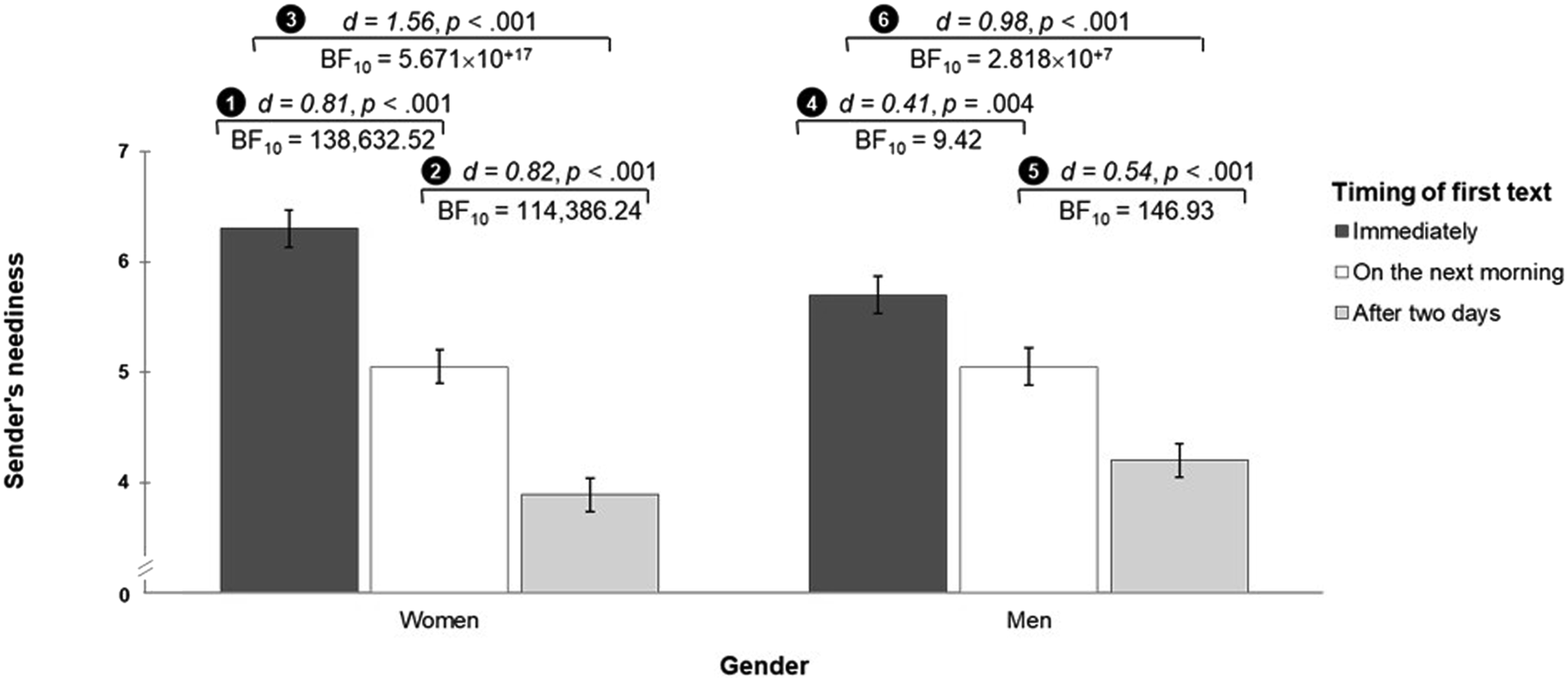
Despite the weaker timing effects for men, men also perceived women as more needy when they texted immediately afterwards vs. the next morning (d = 0.41, p = .004; BF10 = 9.42; contrast 4) or after two days (d = 0.98, p < .001; BF10 = 2.818 × 10+7; contrast 6). Men also perceived women as more needy when texting the next morning vs. after two days (d = 0.54, p < .001; BF10 = 146.93; contrast 5).
Reciprocity
Text timing impacted how much the target thought the initiator would like them, F (2, 537) = 73.50, p < .001, ηp2 = .215: Those who received a text immediately after the date thought the initiator liked them more (M = 6.54, SD = 1.31), compared to those who received the text the next morning (M = 6.10, SD = 1.31), or after two days (M = 4.86, SD = 1.51), confirming (H3c). All conditions differed significantly, all ps < .002.
While the target’s gender did not affect reciprocity, F (1, 537) = 0.33, p = .566, we found a significant interaction effect, F (2, 537) = 4.34, p = .014, ηp2 = .016 (see Figure 5): Men assumed that women who take two days to text liked them less compared to when women texted immediately (d = 0.86, p < .001; BF10 = 649,680.81; contrast 6) or the next morning (d = 0.65, p < .001; BF10 = 2283.90; contrast 5).
8
The effect of gender × timing of the text on liking reciprocity. Note. How much participants expected to be liked by the initiator as a function of their date’s text timing and the participants’ own gender. The negative linear effect was stronger for women than it was for men. For the Bayesian tests, BF10 represents support for the alternative hypotheses, and BF01 for the null hypotheses.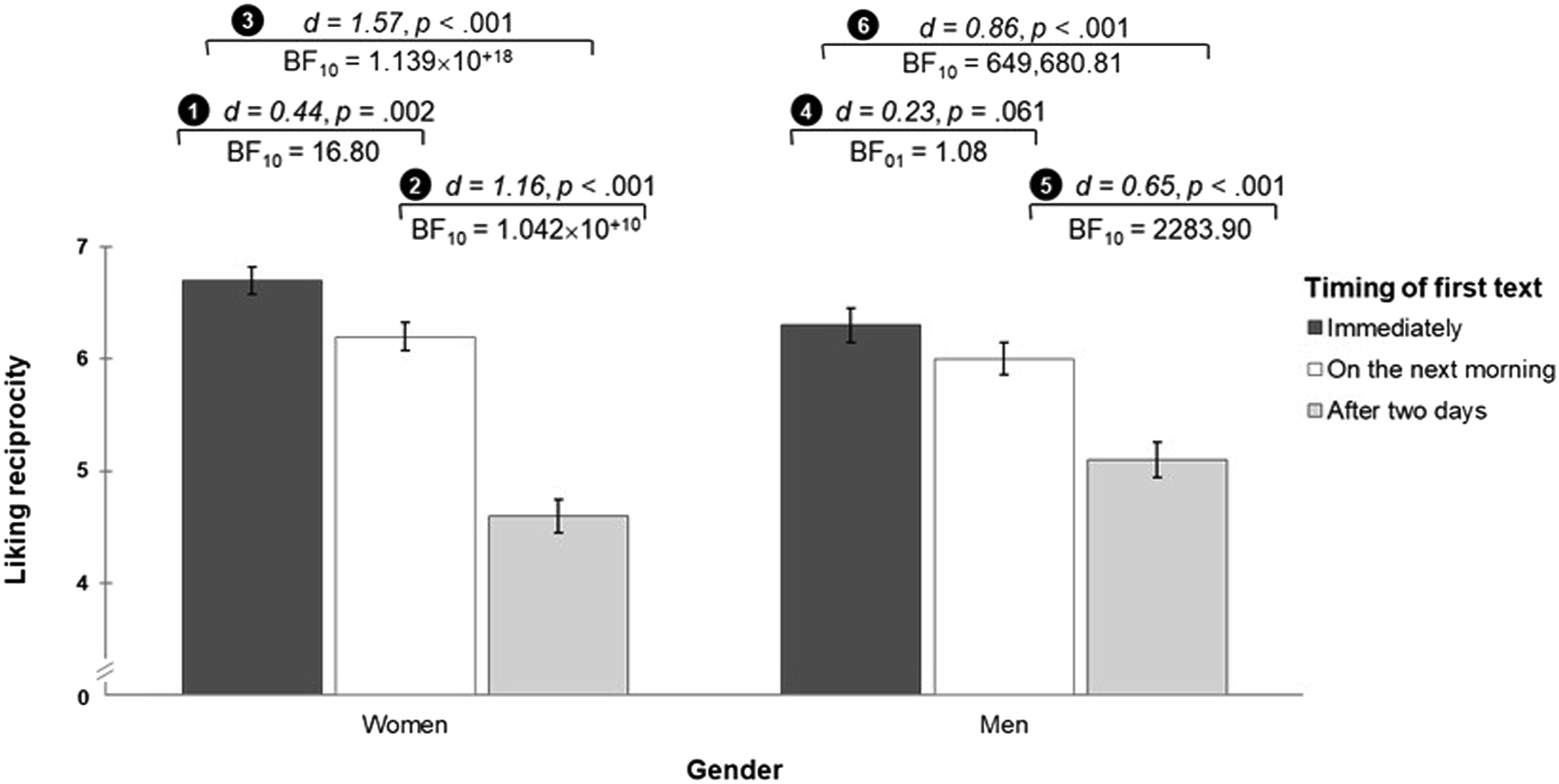
The same held for women, who showed even more pronounced effects (Figure 5, left vs. right panel): Women assumed that men who take two days to text liked them the least compared men texting immediately (d = 1.57, p < .001; BF10 = 1.139 × 10+18; contrast 3) or the next morning (d = 1.16, p < .001; BF10 = 1.042 × 10+10; contrast 2). The contrast for next morning vs. immediately afterwards was: d = 0.44, p = .002; BF10 = 16.80 (contrast 1).
Perceived reliability
Text timing significantly impacted reliability perceptions, F (2, 537) = 24.32, p < .001, ηp2 = .083. Those who received a text immediately (M = 5.48, SD = 1.34; p < .001), or the next morning (M = 5.56, SD = 1.51; p < .001), perceived the initiator to be more reliable compared to those who received a text after two days (M = 4.62, SD = 1.50), confirming (H3d). The target’s gender significantly affected reliability perceptions, F (1, 537) = 12.58, p < .001, ηp2 = .023. Male participants perceived their female dates as more reliable (M = 5.43, SD = 1.43) than female participants perceived their male dates (M = 5.01, SD = 1.56). The interaction was not significant, F (2, 537) = 1.64, p = .195.
Mediation analyses
Further, we aimed to explore why the timing of texting after the first date impacts the target’s relationship intentions with the PROCESS macro by Hayes (2023). For readability and because we found different patterns of results for men and women, we conducted and report separate mediation analyses per gender (PROCESS model 4). For transparency and as preregistered, we also ran a moderated mediation analysis (PROCESS model 8) and report significant indices of moderated mediation effects for gender. All models were run with 5,000 bootstrapped samples. We entered the text timing as the multi-categorical between-subjects factor (comparing next-morning against the immediate- [i.e., X1] and the two-days condition [i.e., X2]; see Figure 6). Relationship intentions served as the dependent variable. As multiple mediators, we entered thoughts about the other, status imbalance (mate value), perceived neediness of the other, reciprocity, and perceived reliability. The power analysis for indirect effects showed that our recruited sample was sufficiently large to detect small to medium effects for the a- and b-paths, which would have required a minimum sample of only N = 172 (see Fritz & MacKinnon, 2007). Note that even for small a- and b-paths, only N = 462 participants would be required, giving us sufficient power to even run mediation analyses that assume these conventionally ‘small’ effect sizes. (a) Women: Mediation model of text timing of text on relationship intentions. (b) Men: Mediation model of text timing on relationship intentions. Note. The figures display the respective coefficients for the effects on relationship intentions. We tested for the inverted U-shaped effect by submitting text timing as a multi-categorical between-subjects factor with three levels, contrasting the next-morning condition vs. the immediate (X1) and the two-days condition (X2). The corresponding significance values are marked with n. s. and dashed lines when non-significant (p > .05), versus with continuous lines and * <.05, ** <.01 and *** <.001, when significant.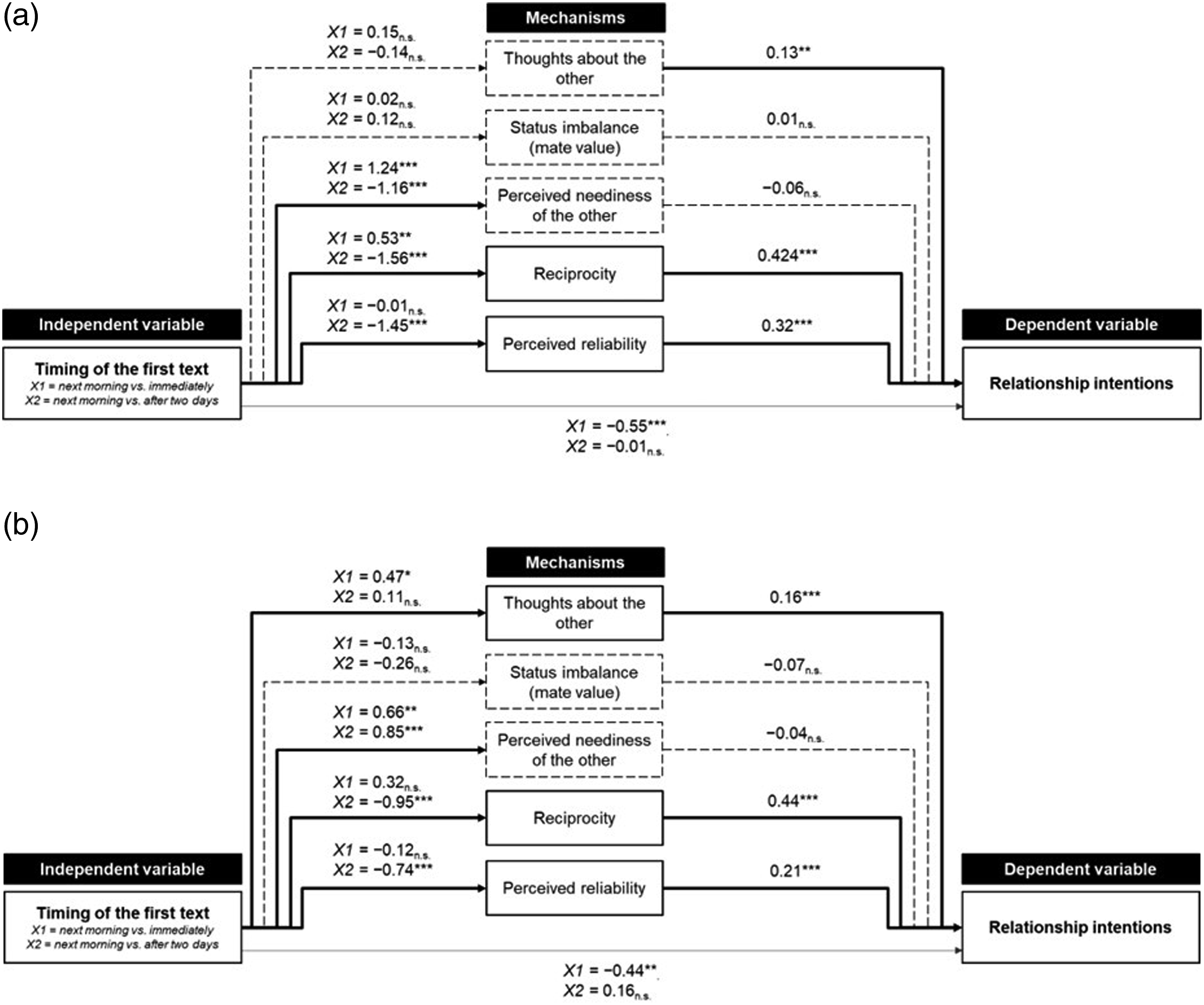
For women, we found an indirect effect via reciprocity when comparing texting on the next morning vs. immediately after the date, b = 0.23, SE = 0.09, and CI95% [0.072, 0.403] and for the comparison of next morning vs. after two days, b = −0.66, SE = 0.12, and CI95% [−0.915, −0.429], partially confirming (H4). The index of moderated mediation of gender was significant, b = 0.26, SE = 0.13, and CI95% [0.030, 0.521].
We also found an indirect effect via reliability when comparing next morning vs. after two days, b = −0.37, SE = 0.11, and CI95% [−0.605, −0.188], partially confirming (H4). Here, the index of moderated mediation of gender was not significant, b = 0.11, SE = 0.09, and CI95% [−0.053, 0.289] (Figure 6, top).
For men, an indirect effect via thoughts emerged when comparing next morning vs. immediately, b = 0.07, SE = 0.04, and CI95% [0.003, 0.178], as well as indirect effects when comparing next morning vs. after two days via reciprocity, b = −0.42, SE = 0.12, CI95% [−0.689, −0.210], and via reliability, b = −0.15, SE = 0.08, CI95% [−0.332, −0.032] (Figure 6, bottom).
Because the PROCESS macro allows testing only one dependent variable at a time, we conducted separate (moderated) mediation models for the dependent variables chemistry and motivation. Due to space constraints, these analyses are reported in the SOM. The overall pattern of mediation results closely mirrored those reported here for relationship intentions, although the moderated mediation effects were not significant.
Discussion
The present study examined how the timing of sending a text message after the first date impacts the target’s relationship intentions, the perceived chemistry, and motivation to translate these intentions into action. We thereby aimed to address the substantial amount of anecdotal evidence and competing predictions from previous literature on whether this effect is linearly positive, linearly negative, or quadratic, inverted U-shaped. Further, we aimed to establish a model that allows to psychologically explain why this effect occurs, including both facilitating and hindering mediators.
In line with our main hypotheses, we found evidence for an inverted U-shaped effect: Initiators who texted the next morning caused the targets to have higher relationship intentions compared to being texted immediately or after two days. This suggests that a moderate delay in texting strikes the right balance. This pattern emerged for relationship intentions. For chemistry and motivation, a negative linear relationship emerged, in that delaying the text after the first date for longer led targets to perceive less chemistry and to be less motivated to engage with the initiator.
In line with the gender moderation assumptions, our results showed that these effects were more pronounced for women than for men. Women were more susceptible to text timing and showed stronger differences when they were texted the next morning (vs. immediately and after two days). Men, on the other hand, showed overall higher relationship intentions and were less affected by text timing. This gender difference aligns with traditional gender roles and cultural expectations surrounding dating behaviors (Siegel & Meunier, 2018), with women being more selective (Baumeister & Vohs, 2004). Nevertheless, across both genders, men and women had the highest relationship intentions when texted the next morning and felt least attracted to those potential mates who texted after two days.
Our explanatory model sought to expand our understanding of the underlying effects. Men reported to think more intensely about their date while waiting for the first text compared to women. Yet, we did not find that the text timing after the date impacted how intensely the target would think about the initiator. Hence, romantic thoughts could not explain the timing-of-texting effect.
Initiators who texted immediately after the date were perceived as more needy. Again, women were more sensitive to this effect. However, perceiving the initiator as needy did not relate to relationship intentions. Hence, the present data do not confirm the hypothesis that more needy initiators are also perceived as being less attractive, thereby explaining the timing-of-texting effect. Finally, initiators who delayed their message were not perceived as having a higher mate value, plausibly because taking longer to respond is an indication of unreliability which people perceive as an undesirable trait in potential partners.
Interestingly, although we found that delaying a text after the first date leads to higher relationship intentions of the target, we also identified two factors that explain why it may be disadvantageous to delay texts. Results show that the sooner the initiator texted, the more the target thought that the initiator would like them, with women being more sensitive to this effect. In turn, how much targets think the initiator likes them positively affected how attractive they themselves found the initiator, and how strongly they intended to engage in a relationship. The principle of reciprocity appears to hold true when texting after the first date, with texting earlier leaving a stronger impression of interest and affection (Aronson & Worchel, 1966; Finkel & Eastwick, 2009; Gouldner, 1960; Luo & Zhang, 2009). In addition, those who received a text immediately or on the next morning perceived the initiator to be more reliable, compared to receiving a text after two days. In turn, this increased relationship intentions, with women perceiving their date to be less reliable in general.
Limitations and future research
The results indicate a direct beneficial effect of (moderately) delayed text messages. Our study did not find support that this may be caused by an increase in perceived mate value, or a decrease in perceived neediness, leveraging the principle of scarcity (Aggarwal et al., 2011; Cialdini, 2009; Jang et al., 2015). Although we tested how intensely the target would think about the initiator while waiting for the message as a proxy for uncertainty of whether the initiator feels attracted to the target, it may be that the uncertainty should be considered as a separate concept to be tested in future research. Specifically, uncertainty about whether the initiator likes the target due to the text delay may create excitement which, in turn, explains the increasing relationship intentions towards the initiator.
Contrary to prior research on playing hard-to-get, we did not find moderating effects of uncertainty avoidance and attachment style on the timing of the text (Bowen & Gillath, 2020; Richards, 2013). Although we tested trait attachment style as a predisposition, future research may manipulate and prime attachment style to attain a better understanding of its potential moderating effects.
While our definition of a “late” message was based on pre-study data (i.e., M = 40.42 hours), the large standard deviation (SD = 34.08) suggests considerable variability in when people perceive a message to be “too late.” As a result, our study may not fully capture reactions to longer delays, such as the popular “3-day rule” often cited in dating culture. Presumably, the prominent 3-day rule would have led to even lower perceived relationship intentions and possibly more adverse effects. Future studies should explore a wider temporal range to assess the generalizability and boundary conditions of the timing effect.
Another limitation of our design is the absence of information about the content of the initiator’s message. While this omission was intentional to isolate the effect of timing and to ensure experimental control, it also constrains the ecological validity of our findings. In real-life dating scenarios, message content could well interact with timing to shape impressions and intentions. Future research should therefore examine how these factors jointly influence relationship development. Additionally, for experimental control, we kept the quality of the first date constant (and relatively neutral) to prevent ceiling or floor effects. Also, the scenario did not explicitly state that it was a first date or rather a blind date with someone the participant had never met before. Even though the scenario implies a date, this was only stated explicitly in the subsequent instructions to evaluate this ‘date’. Future studies may further vary both the perceived quality of the date and the content of the follow-up message to test whether and how these variables strengthen or weaken the observed timing effects.
Relatedly, another limitation of this study is that participants rated chemistry-related constructs (e.g., had similar personalities) based on a fictional scenario with comparably few information about the dating partner. Although the scenario was intentionally kept neutral to cleanly isolate the text-timing effects, this may have restricted participants’ ability to meaningfully assess perceived similarities or chemistry. Future research should test the external validity of these findings in real-world dating contexts that allow for richer and more personal impressions to form.
We acknowledge that our demographic data did not include participants’ racial/ethnic background, disability status, or detailed socioeconomic indicators such as income or educational level. This limits the ability to fully assess the generalizability of our findings across diverse social groups. Future research should aim to collect and report more nuanced demographic variables.
Conclusion
Our study finds novel insights into the timing of texting after a first date and its impact on romantic relationship intentions, perceived chemistry, and motivation to translate these intentions into action. Our data suggest that while texting early is beneficial, delaying the text until the next morning not only maintains the positive effects of being perceived as interested and reliable but also enhances relationship intentions of the target. Waiting for too long, however, exerts detrimental, backfiring effects. In all, neither Ted Mosby nor Barney Stinson was right with their statements on when to reinitiate romantic contact. Instead, the balance between immediate and delayed texting seems to create an effective window that fosters romantic relationship intentions.
Supplemental Material
Supplemental Material - How the timing of texting triggers romantic interest after the first date: A curvilinear U-shaped effect and its underlying mechanisms
Supplemental Material for How the timing of texting triggers romantic interest after the first date: A curvilinear U-shaped effect and its underlying mechanisms by Lars Teichmann, Hannes Petrowsky, Lea Boecker, Meikel Soliman and David D. Loschelder in Journal of Social and Personal Relationships.
Footnotes
Acknowledgements
We wish to thank the members of the School of Management at Leuphana University Lueneburg for valuable comments.
Declaration of conflicting interests
The authors declared no potential conflicts of interest with respect to the research, authorship, and/or publication of this article.
Funding
The authors received no financial support for the research, authorship, and/or publication of this article.
Open research statement
As part of IARR’s encouragement of open research practices, the author(s) have provided the following information: The research was pre-registered. The aspects of the research that were pre-registered were the hypotheses, the research design, and the analyses. The registration was submitted to OSF;  . The data can be retrieved via the OSF link.
Ethics considerations
The present research was granted ethical exemption by the lead author’s institutional research committee.
Consent to participate
Participants gave their consent via the online participation platform Prolific.
Data Availability Statement
Supplemental Material
Supplemental material for this article is available online.
Notes
References
Supplementary Material
Please find the following supplemental material available below.
For Open Access articles published under a Creative Commons License, all supplemental material carries the same license as the article it is associated with.
For non-Open Access articles published, all supplemental material carries a non-exclusive license, and permission requests for re-use of supplemental material or any part of supplemental material shall be sent directly to the copyright owner as specified in the copyright notice associated with the article.
