




Abstract
This study examined similarities in adolescent sibling and friend relationship quality over an 8-month period during COVID-19. We hypothesized that youth would perceive the qualities of their friendships and sibships in similar ways and that these patterns would remain stable during this period. Participants included 312 adolescents (M = 15.75, SD = 1.20) who rated positive (e.g., companionship) and negative (e.g., conflict) aspects in both relationships at both times. Cross-sectional latent profile analyses supported two profiles, namely an ambivalent sibship/harmonious friendship (i.e., moderate sibling warmth and conflict, high friendship positivity, low friendship negativity) profile and an affect-intense (i.e., high positivity, high negativity) profile that were similar across both relationships. Latent transition analyses demonstrated that most adolescents fit into the ambivalent sibship/harmonious friendship profile (89% at T1, 91% at T2) relative to the affect-intense profile (11% at T1, 9% at T2). Most (97%) adolescents in the ambivalent sibship/harmonious friendship profile at T1 remained in the profile at T2, whereas 57% of youth in the affect-intense profile remained in the same profile at T2. Adolescents who remained in the affect-intense profile reported more frequent sibling and friend aggression perpetration and friend, but not sibling, aggression victimization than those who remained in the ambivalent sibship/harmonious friendship profile. These results highlight the contextual dynamics of adolescent relationships, especially the importance in recognizing the similarities among sibships and friendships.
Introduction
For adolescents, both sibling relationships and friendships are critical developmental contexts, each marked by positive (e.g., warmth, security) and negative (e.g., conflict, hostility) features, and having significant implications for adjustment (Buist et al., 2013; Schwartz-Mette et al., 2020). Although associations between the quality of each of these relationships and adolescents’ social and emotional adjustment (e.g., anxiety, aggression) have been well-documented (Buist et al., 2013; Schwartz-Mette et al., 2020), less work has examined these relationships simultaneously. Correspondingly, less is known about the potential overlap between adolescents’ experiences with their siblings and friends. Indeed, perceptions of the quality of these relationships may demonstrate congruence via relational internal working models (Bowlby, 1973). The issue of relational congruency, or incongruency, is particularly relevant given the unique circumstances of COVID-19, which significantly impacted adolescents’ lives globally, and may have shaped their close relationships. A social consequence associated with the required environmental shifts to home resulted in youth seeing friends less often and reporting more negative interactions and problems with both siblings and friends (Cassinat et al., 2021; Stevens et al., 2023). It is unclear whether adolescents simultaneously perceived their sibling relationships and friendships similarly while facing these social shifts, how these views changed over time, and whether such changes were linked to poorer social experiences. As such, this study examined distinct sibling-friend relationship profiles, their stability over an 8-month period during the initial waves of COVID-19, and their links to aggression within these relationships.
Siblings and friendships during adolescence
Although siblings and friends are different in important ways, they are similar in others. Notably, friendships are voluntary, while sibling relationships are not, and friendships tend to be between two peers of the same age, whereas sibling relationships are characterized by an age gap such that sibships with smaller age gaps are more peer-like and egalitarian (Howe et al., 2020). Both relationships can be a source of intimacy and companionship, and sibling relationships may come to resemble friendships more during adolescence, as these structural differences lessen (Campione-Barr & Killoren, 2019; Guo et al., 2023).
Previous research has documented prospective associations between the quality of both relationships and adolescent social and emotional adjustment (Dirks et al., 2015; Schwartz-Mette et al., 2020). Relationship quality comprises the provisions and interactions of an interpersonal relationship (Furman & Buhrmester, 1985). For adolescents, positive qualities of both relationships include warmth, security, intimacy, and companionship. Negative qualities include antagonism and conflict, the latter of which is most studied, and reflects how much youth fight and disagree with others (see Buist et al., 2013; Dryburgh et al., 2025). Critically, relational positivity and negativity are relatively independent (Banny et al., 2011; Buist & Vermande, 2014). Thus, relationships may be meaningfully distinguished based on varying levels of both features. How similar or different these patterns are across sibships and friendships remains unclear.
Prior research supports different typologies of sibling relationships (Buist & Vermande, 2014; McGuire et al., 1996). Harmonious relationships – the most common type –are high on positive features and low on negative features. Relationships may also be hostile (low positivity, high negativity) or affectively intense (high positivity, high negativity). McGuire et al. (1996) reported a fourth class, which they called uninvolved, and was defined by lower levels of both warmth and hostility (see Sheehan et al., 2004), although this is not consistently observed (Buist & Vermande, 2014).
Fewer studies have examined typologies of best friendships. Way et al. (2001) identified four groups of best friendships based on adolescents’ report of their positive and negative features. The first, and most common, was labelled ideal, and was characterized by high relational positivity (e.g., affection, intimacy) and low negativity (i.e., antagonism, conflict). This was followed by average (average positivity, high negativity), disengaged (low positivity, average negativity), and engaged clusters (high positivity, high negativity). Thus, these findings suggest that there is some similarity in profiles when siblings and friends are studied in isolation.
Congruencies and incongruencies in adolescent sibling and best friend relationships
The quality of adolescents’ relationships with siblings and friends may exhibit relational congruence (i.e., similarity) or incongruence (i.e., dissimilarity). Attachment theory (Bowlby, 1973) suggests that the quality of adolescents’ relationships may demonstrate congruence via internal working models of early relationships that provide guidance on how to predict and interpret the behaviours with partners in other relationships. Findings consistently demonstrate early parent-child attachments are linked to how youth perceive their peers (Furman et al., 2002) and siblings (Volling & Belsky, 1992). Given these links, youth may also hold similar internal working models of relationships across their sibships and friendships, suggesting congruence in positive and negative relational features (Oh et al., 2021).
Studies indicate congruence in youth perceptions of their sibships and friendships (Defoe et al., 2013; Sherman et al., 2006). For example, Updegraff and Crouter (2002) found that adolescents largely perceived similar decreases over three years in power and control across both relationships. Similarly, adolescents appear to experience similar provisions across several relationships, including siblings and friends, providing further support for relational congruence (Furman & Buhrmester, 1992). Thus, the limited research examining adolescents’ relationships with both siblings and friends simultaneously suggests that these partnerships exhibit some relational congruence.
Relational incongruence in sibships and friendships is also possible, where positivity and negativity differ across partners. For example, given that friendships are voluntary relationships, they are more likely to have more positivity and less negativity than sibling relationships, as adolescents can choose friends who are a good fit for them. Friends are also more likely to be closer in age and of the same gender than are siblings, both of which may contribute to greater positivity between friends than siblings (Hafen et al., 2011; Poulin & Pederson, 2007). Consequently, youth may also leave or dissolve friendships that have low positivity (Faur et al., 2024) or high negativity (Bowker & Weingarten, 2022). In contrast, the involuntariness of sibships may give rise to variations in relationship positivity and negativity (e.g., high-quality, affect-intense). Thus, discrepancies may be evident, especially in adolescence, when youth begin to focus more of their attention on peer relationships and friendships that may be higher in relationship quality than in their family relationships.
To our knowledge, only one study has examined relational typologies of sibships and friendships. Sherman et al. (2006) identified three clusters of young adult sibships and same-gender best friendships, which largely mirror McGuire et al.’s (1996) typologies. One congruent profile emerged, namely a harmonious profile, characterized by high warmth and low conflict in both relationships, which was the most common. Two incongruent profiles also emerged, an ambivalent sibling/harmonious friendship (i.e., moderate sibling warmth and conflict, high friend warmth, low friend conflict) and a harmonious sibling/ambivalent friendship (i.e., high sibling warmth, low sibling conflict, moderate friend warmth and conflict) cluster. These results suggest that although many adolescents show congruence across sibling and friend relationships, others show incongruence.
Sherman et al. (2006) examined clusters of sibling and friend relationship quality cross-sectionally, leaving open the question of how profile membership may change longitudinally. Specifically, we propose using person-centered approaches to study the presence of latent profiles that test the probability of adolescents’ memberships into those profiles. From there, we can consider how adolescents may shift over time based on the constellation of both positive and negative features of both relationships. Doing so can provide a way to understand whether and how adolescents experience enough change in those relationships over time to move to different profiles. For example, for adolescents who perceive their sibships and friendships to be high-quality, certain events (e.g., COVID-19) may have created a situation where negativity (e.g., conflict) increased with siblings and friends (e.g., Cassinat et al., 2021; Rogers et al., 2021). As such, relationships that were experienced as high-quality may show a qualitative shift towards more affect-intense relationships, due to increases in negativity while maintaining high levels of relational positivity. Although sibling relationships and friendships can and do experience increases and decreases in quality over time, changes in relational profiles could represent more important shifts in how adolescents view each of these relationships. Understanding these transitions, especially during significant events like COVID-19, could provide insights into the possible upward and downward changes that adolescents experience in their sibships and friendships.
Associations between relationship quality and aggressive behaviour
Another key feature of adolescents’ relationships with siblings and best friends is the extent to which aggression and victimization occur in the relationship. Although aggression and victimization correlate with negative relational features, including conflict, they are not synonymous (Gallagher et al., 2024). Specifically, conflict occurs when the wants, needs, or beliefs of two individuals are in opposition (Dryburgh et al., 2023), and is often operationalized by frequency (Furman & Buhrmester, 1985). In contrast, aggression is behaviour that harms another. Correspondingly, victimization involves being targeted aggressively by another.
Although aggression tends to decrease across adolescence (Gallagher et al., 2024), there are notable correlates and consequences associated with these experiences. For instance, closer-aged and younger siblings, especially boys, tend to report more victimization and aggression (Tucker et al., 2013). Moreover, experiences with aggression with siblings or friends are associated with poor youth adjustment (Mishna et al., 2008; Updegraff et al., 2005). For example, greater sibling and peer relational aggression is linked to increases in adolescent-reported depressive symptoms and risky behaviour use (Ellis et al., 2009; Gallagher et al., 2018). Therefore, it is important to understand how the features and experiences of these relationships may be linked to greater aggression and victimization. This is especially true for friendships, as aggression and victimization are rarely studied within this context (Dryburgh et al., 2025). This reflects a novel contribution of the current work.
It is apparent that aggression is more frequent in relationships characterized by greater negativity. For instance, Buist and Vermande (2014) showed that youth in affect-intense sibling relationships had more frequent aggression episodes than those in harmonious relationships. In relation to the interplay between siblings and friends, McElwain and Volling (2005) observed that children with low or moderate sibling relationship quality combined with high friendship quality showed lower levels of aggression, suggesting that friends play a buffering effect in the absence of high-quality sibships for young children. To date, no studies have examined associations between relationship profiles of sibships and friendships with aggression, but it is expected that profiles with greater relational negativity may also experience frequent aggression and victimization.
COVID-19, sibships, friendships, and aggression
Within Canada, young people experienced a significant upheaval in their regular routines during the COVID-19 pandemic, including shifting to remote learning and spending more time at home with family than with friends and peers. This shift is a marked deviation from the norm, where adolescents typically spend more time each day outside of the home. Findings from the initial waves of the pandemic on the role of sibling and friend relationship quality are mixed. For example, relational positivity from siblings and friends were linked to fewer internalizing difficulties (Buist et al., 2023) but also more problem behaviours, particularly when COVID-related stress was high (Campione-Barr et al., 2021). Given the significant lifestyle changes brought on by COVID-19, adolescents’ abilities to cope with the change varied. Interestingly, some findings also indicate stability in aggressive behaviour during the pandemic when compared to pre-pandemic levels (Mlawer et al., 2022), which could be due to the variety of online venues in which aggression can be exhibited. Altogether, it is apparent that the pandemic may have put youth in a position to shift how they viewed their sibships and friendships as well as cope with the circumstances. What remains unclear is what shifts occurred and how they were linked to aggression.
The present study
The current study had two aims. The first was to identify groups of youth based on positive and negative features of their sibling relationships and a best friendship across an 8-month period. We expected that positive and negative relational features would most often be similar across siblings and best friends (i.e., relationally congruent). Moreover, we hypothesized most adolescents would fit into a high-quality pattern (i.e., high positivity, low negativity) in both relationships. Given the documented incongruency across these two relationships (e.g., Sherman et al., 2006), we also hypothesized that profiles in which youth held different perceptions of their sibling and best friend relationships would also be present. For example, some adolescents may report higher-quality friendships (i.e., high positivity, low negativity) and lower-quality sibships (i.e., low positivity, high negativity). The second aim was to examine whether adolescents’ perceptions of their sibling relationships and friendships changed over an 8-month period within the context of the pandemic. In line with prior research (Hiatt et al., 2015; Oh et al., 2021), we predicted that most adolescents would remain in the same profile over approximately 8 months. Additionally, we investigated whether the remaining in a particular relational profile was related to adolescents’ experiences with aggression and victimization with both siblings and friends. Based on previous work (Buist & Vermande, 2014), we expected to see more frequent aggression among those in affect-intense (i.e., high positivity, high negativity) or low-quality relationships than in high-quality relationships.
Method
Participants
The data were part of an 8-month longitudinal study on adolescent social well-being across Canada during the COVID-19 pandemic, in which schooling was largely remote at both times. For this study, the original sample at Time 1 (T1) included 547 (53.2% girls, 45.7% boys, 1.1% non-binary) adolescents between the ages of 13 and 18 years (M = 15.82, SD = 1.26) who had at least one sibling within five years of their age (M age gap = 2.76, SD = 1.26). Median number of siblings was one and the range was between one and five siblings. Average sibling age was 15.50 (SD = 3.31), with comparable gender breakdown (50.6% brother, 49.4% sister). Using the Family Affluence Scale (FAS-III; Hartley et al., 2016), in which higher scores represented greater affluence, adolescents were mainly middle-class (M = 5.31, SD = 1.54, range = 1 – 9). Participants were mainly of White/European descent (67.6%), followed by East Asian (10.3%), South Asian (6.8%), African/Caribbean (5.9%), Southeast Asian (3.3%), Middle Eastern/West Asian (2.6%), Latin American (2%), Métis (2%), First Nations (2%), Inuit (0.1%) and other (2.9%). Boys (91.5%) and girls (83.3%) mostly reported on a same-gender best friend.
Due to attrition at Time 2 (T2), the final sample included 312 adolescents (54.2% girls, 45.8% boys) within the same age range (M = 15.75, SD = 1.20), socioeconomic background (M = 5.48, SD = 1.55, range = 1 – 9) and ethnicity (70.2% White/European). The ethnic breakdown of the remaining sample was comparable: East Asian (11.9%), African/Caribbean (5.1%), South Asian (4.8%), Middle Eastern/West Asian (3.5%), Southeast Asian (2.9%), Latin American (2.6%), Métis (1.9%), First Nations (1.6%), and other (2.9%). Average sibling age (M = 15.32, SD = 3.26) and age gap (M = 2.72, SD = 1.25) was also similar to the complete sample; sibling gender was analogous (52.9% brother, 47.1% sister) and most friendships were same-gendered (93% for boys, 92.2% for girls).
Procedure
Ethical approval was obtained from all universities involved in the study. Participants were recruited between August and October of 2020 by Environics during the initial waves of COVID-19. Specifically, provincial and federal authorities set various regulations and policies into place that strongly encouraged Canadians to stay at home, shift to remote work and school, and minimize social contacts (Detsky & Bogoch, 2021). A local sample of youth also participated in the study and were recruited via a participant list that was maintained by one of the authors. Adolescents younger than 18 years old required parental consent before taking part in the study. Once approved, adolescents were invited to participate and provided their assent/consent before starting the survey. At T1 (August-October 2020), participants completed online assessments of relationship quality for their closest-in-age sibling and their best friend. T2 took place approximately eight months later (April-June 2021), where they completed the same survey, but also asked whether they were still best friends with the same person that they identified at T1. If not, they reported on the quality of the relationship with their new best friend. Most participants reported on the same best friend (73.7%) and sibling (96.4%) at Time 2. Adolescents received a $20 Amazon gift card upon completing each survey at each time.
Measures
Relationship quality
Adolescents’ perceptions of their closest-in-age sibling relationship and best friend relationship were measured using the Network of Relationships Inventory – Social Provisions Version (NRI-SPV, Furman & Buhrmester, 1985). Adolescents reported on the same sibling and best friend at both times. This 30-item instrument assesses seven positive features (e.g., companionship, reliable alliance), two negative features (i.e., antagonism, conflict), and relative power (not examined in current study). Participants rated each item separately for the sibling and best friend they identified prior to beginning the survey. Items considered relational positivity (e.g., How sure are you that your relationship with your sibling/best friend will last?) and relational negativity (e.g., How often do you and your sibling/best friend argue with each other?) on a 5-point Likert scale ranging from 1 (little or none) to 5 (the most). Both dimensions had high internal consistency across relationships and time: sibling positivity (T1 α = .94; T2 α = .95), sibling negativity (T1 α = .93; T2 α = .93), friend positivity (T1 α = .95; T2 α = .96), friend negativity (T1 α = .92; T2 α = .92). Two one-way ANOVAs tested mean differences between positivity and negativity for same and new best friends at T2. There was a significant difference for positivity, F (1, 269) = 11.91, p < .001, η p 2 = .04 which was higher for same best friendships (M = 2.89, SD = 0.80) than new best friendships (M = 2.41, SD = 0.89), but not for negativity, F (1, 269) = 1.82, p = .18, η p 2 = .01.
Aggression victimization and perpetration
Aggression between siblings and friends were measured with an adapted measure by Dryburgh et al. (2025). This measure assessed how often participants were victimized (n = 27) or engaged in aggressive acts towards (n = 6) any sibling and any friend within the last two weeks on a 6-point Likert scale ranging from 0 (‘never’) to 5 (‘many times per day’). Participants responded to the same items with the target relationship changed from brother/sister to friend for relationally aggressive victimization (e.g., ‘In the last two weeks, has a [sibling/friend] said mean things to me or insulted me?’), physically aggressive victimization (e.g., ‘In the last two weeks, has a [sibling/friend] threw something at me’), and controlling behaviour (e.g., ‘In the last two weeks, has a [sibling/friend] got upset when I did really well on something’). Similarly items were assessed perpetration (‘In the last two weeks, how often have you yelled or screamed at a [brother or sister/friend]?’). Overall scores were computed, with higher scores suggesting more frequent aggression perpetration and victimization. Internal consistency was high: sibling aggression perpetration (T1 α = .89; T2 α = .87) and victimization (T1 α = .97; T2 α = .97), friend aggression perpetration (T1 α = .91; T2 α = .90) and victimization (T1 α = .98; T2 α = .98).
Analytic plan
All analyses were conducted using Mplus 8.7 using robust maximum likelihood estimation (Muthén & Muthén, 1998-2017). First, we ran cross-sectional latent profile analyses (LPA) to identify profiles among sibling and friend positivity and negativity concurrently at each time. We specified models with an increasing number of profiles (k) ranging from 2 to 6 profiles, and model fit was evaluated using the Akaike Information Criterion (AIC), the Bayesian Information Criterion (BIC), the sample-size adjusted BIC (ABIC), and entropy. We used the adjusted Lo-Mendell-Rubin likelihood ratio test (aLMR) and the Bootstrapped parametric Likelihood Ratio Test (BLT) to compare the current model with a model that had k – 1 profiles (Lo et al., 2001). We tested separate models where the indicator means were correlated and allowed to freely vary, as well as models where the means and variances were allowed to freely vary. We encountered several nonconvergent models, which might be due to having more parameters than can be estimated. Thus, we only considered models where only the indicator means were allowed to freely vary. All LPAs were estimated with 5000 random starting values and 1000 iterations. We evaluated model comparisons to determine the optimal number of profiles using 3000 random sets of start values, 100 iterations, and retained the 300 solutions for optimization. Second, we examined longitudinal invariance of the relationship quality indicators to ensure that the latent profiles represented the same constructs at both times. Following Morin et al. (2016), we systematically tested configural similarity (i.e., same number of classes at each time), structural similarity (i.e., similarity of within-profile indicator means at each time), and distributional similarity (i.e., same prevalence of relational profiles at both times). Invariance was indicated by lower information criteria values for the more restrictive model relative to the less restrictive model. Third, the latent transition analysis (LTA) examined how the latent relational profile memberships changed over time and the probability (i.e., stability and movement over time) that participants changed latent profiles eight months later (Nylund-Gibson et al., 2023). Fourth, profile differences in aggression were included as outcome variables in the distributional model. We used a manual 3-step approach to examine how aggression varied as a function of the profiles. The outcome variables were allowed to be freely estimated (see Asparouhov & Muthén, 2014; Nylund-Gibson et al., 2023).
Missing data
Of the original sample, 312 adolescents remained (57%) in the analyses. Attrition analyses showed no statistically significant mean-level differences on age (F (1, 476) = 2.30, p = .13) or gender (F (1, 484) = 0.37, p = .54). There were no significant differences in sibling relationship quality and friendship quality between our longitudinal sample and those who dropped after T1 (all ps ≥ .06). Minimal data were missing among the remaining subsample for all study variables (0.03% - 1.60%). We used Full information maximum likelihood (FIML) analysis in Mplus to handle missing data.
Results
Descriptive statistics
Descriptive statistics and correlations between sibling relationship quality, friendship quality, and aggression at T1 and T2.
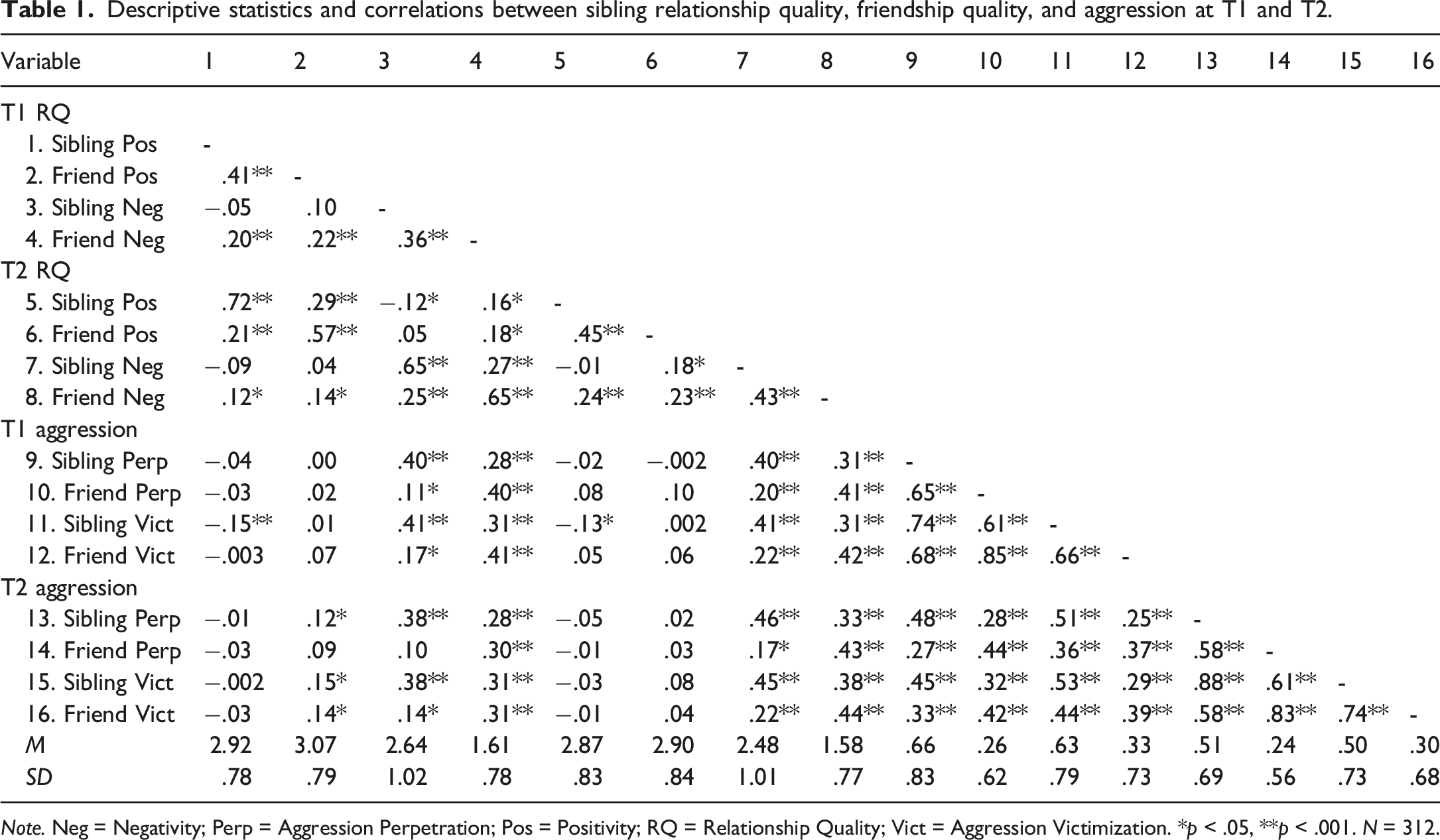
Note. Neg = Negativity; Perp = Aggression Perpetration; Pos = Positivity; RQ = Relationship Quality; Vict = Aggression Victimization. *p < .05, **p < .001. N = 312.
Cross-sectional LPAs of relationships
Results from latent profile analysis models estimated at each time.
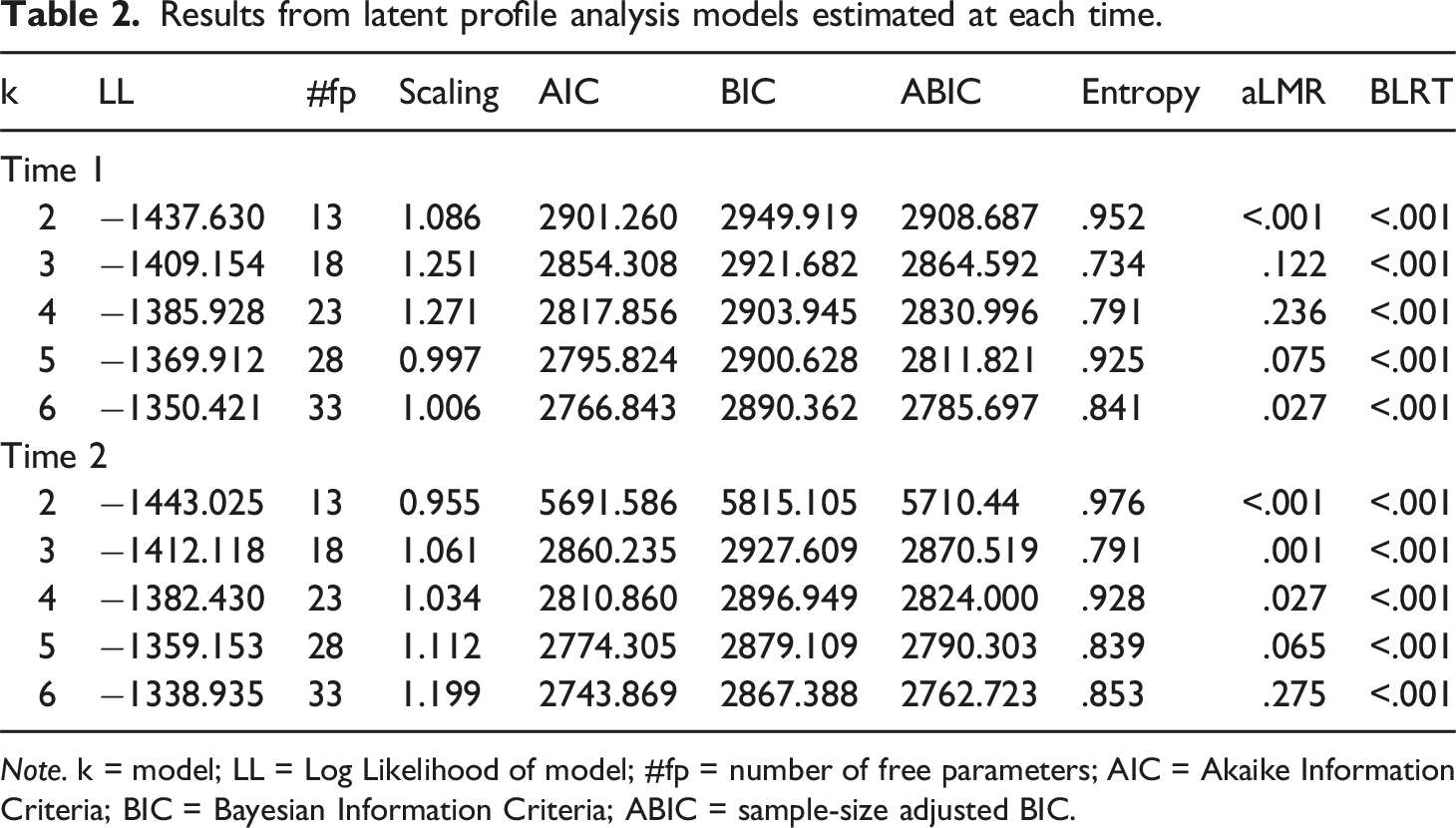
Note. k = model; LL = Log Likelihood of model; #fp = number of free parameters; AIC = Akaike Information Criteria; BIC = Bayesian Information Criteria; ABIC = sample-size adjusted BIC.
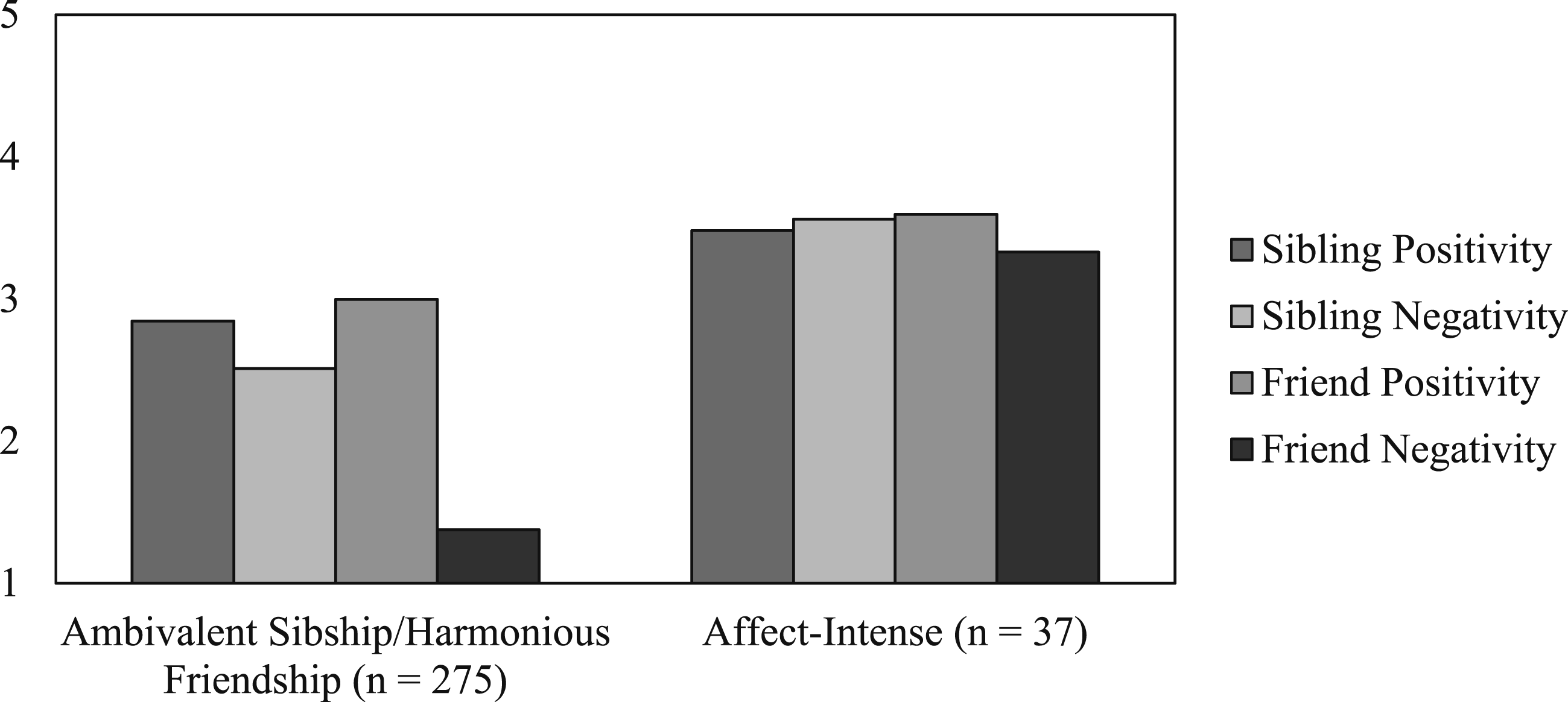
Latent profiles of sibling and best friend relationship quality at T1.
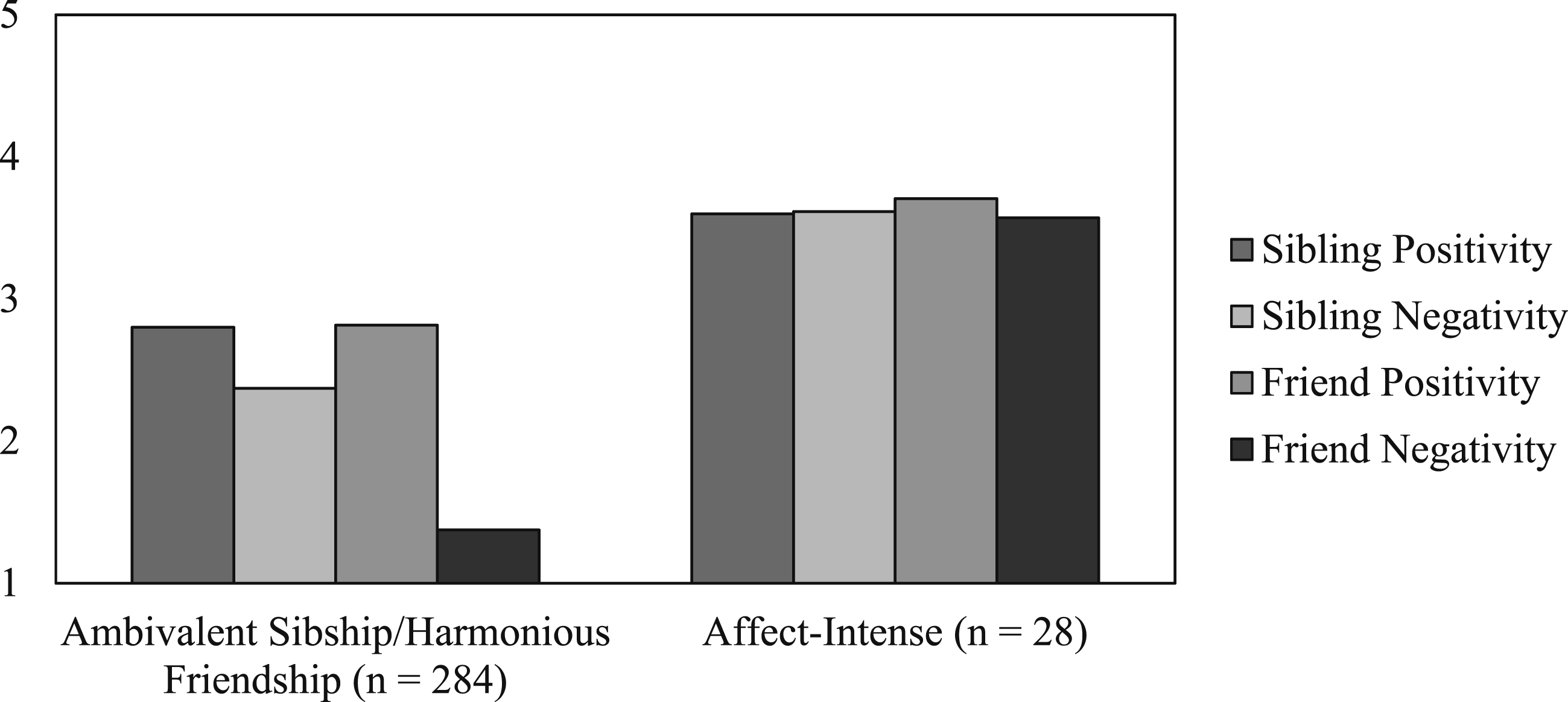
Latent profiles of sibling and best friend relationship quality at T2.
Means of relationship positivity and negativity across relationship profiles at T1 and T2.
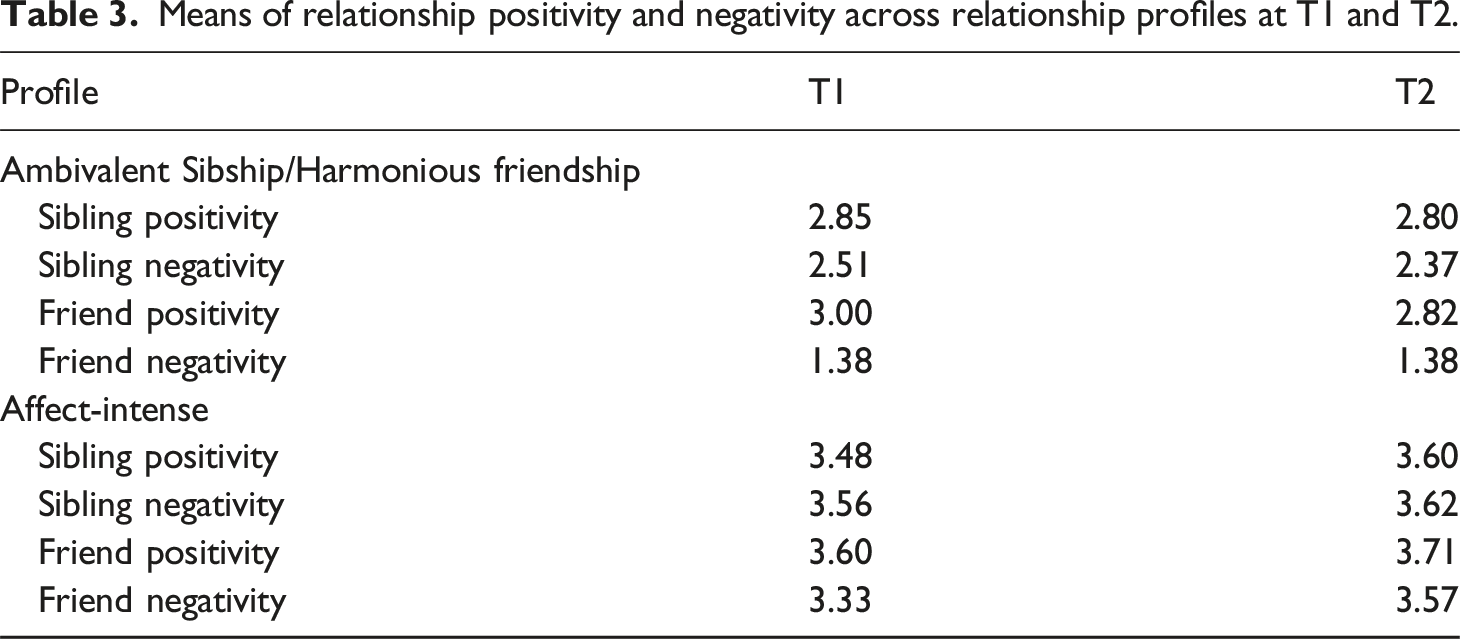
The second profile was defined as affect-intense, which had high positivity and negativity across both relationships. Paired samples t tests showed no statistically significant difference between sibling positivity and negativity at either time, T1: t (34) = −0.85, p = .40, d = −.14; T2: t (25) = −0.13, p = .90, d = .03. We also did not observe significant differences between friendship positivity and negativity at either time, T1: t (34) = 1.99, p = .06, d = .34; T2: t (27) = 0.88, p = .39, d = .17. Relationship positivity was not significantly different for siblings and friends, T1: t (34) = −1.43, p = .16, d = −0.24; T2: t (25) = −0.94, p = .36, d = −0.18, nor were there differences in relationship negativity across relationships at either time, T1: t (34) = 1.54, p = .13, d = 0.26; T2: t (25) = 0.56, p = .58, d = 0.11 (see Table 3). We tested whether age, gender, sibling gender or sibling age gap predicted profile membership, but none were significant (Table S1).
Longitudinal invariance of relationship quality
Model fit of latent transition analyses.
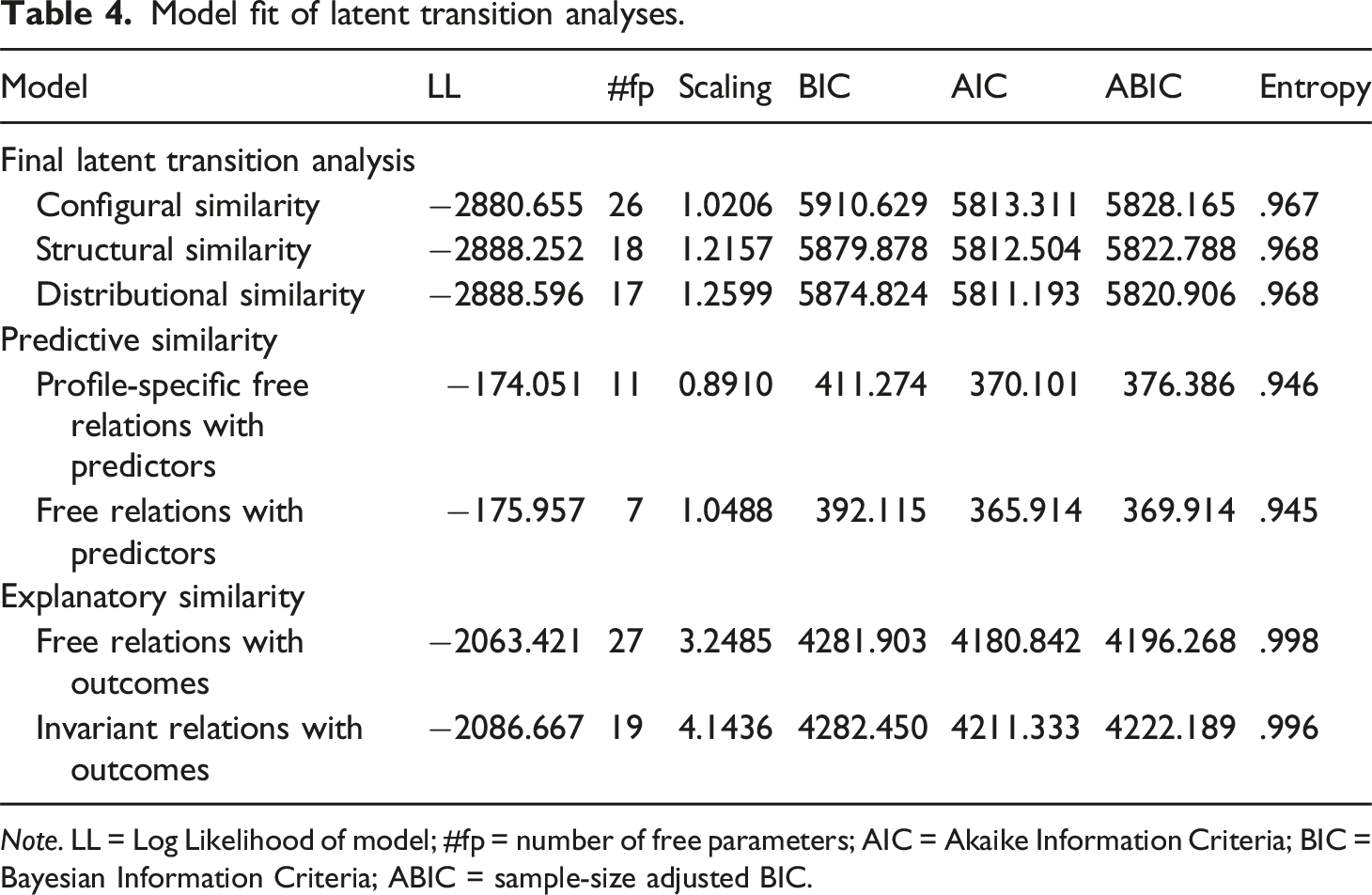
Note. LL = Log Likelihood of model; #fp = number of free parameters; AIC = Akaike Information Criteria; BIC = Bayesian Information Criteria; ABIC = sample-size adjusted BIC.
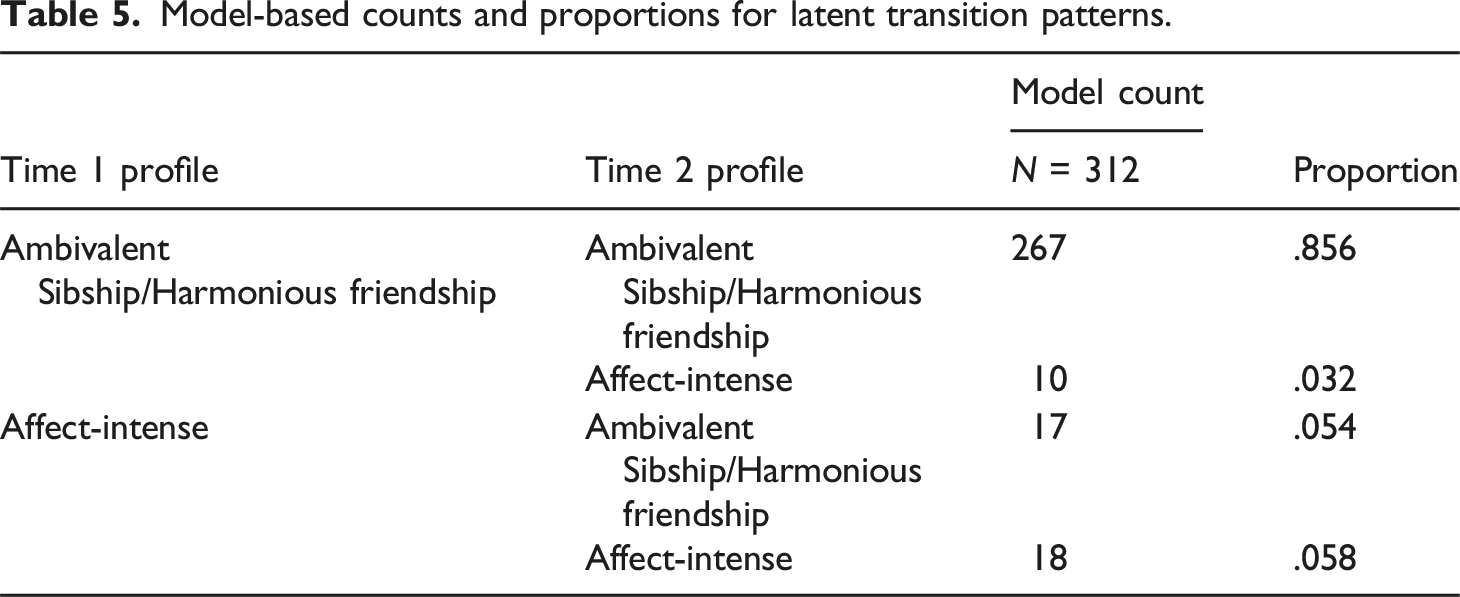
Latent transition analysis
Model-based counts and proportions for latent transition patterns.
Outcomes of latent profile membership
Time-varying associations between profile membership and aggression.
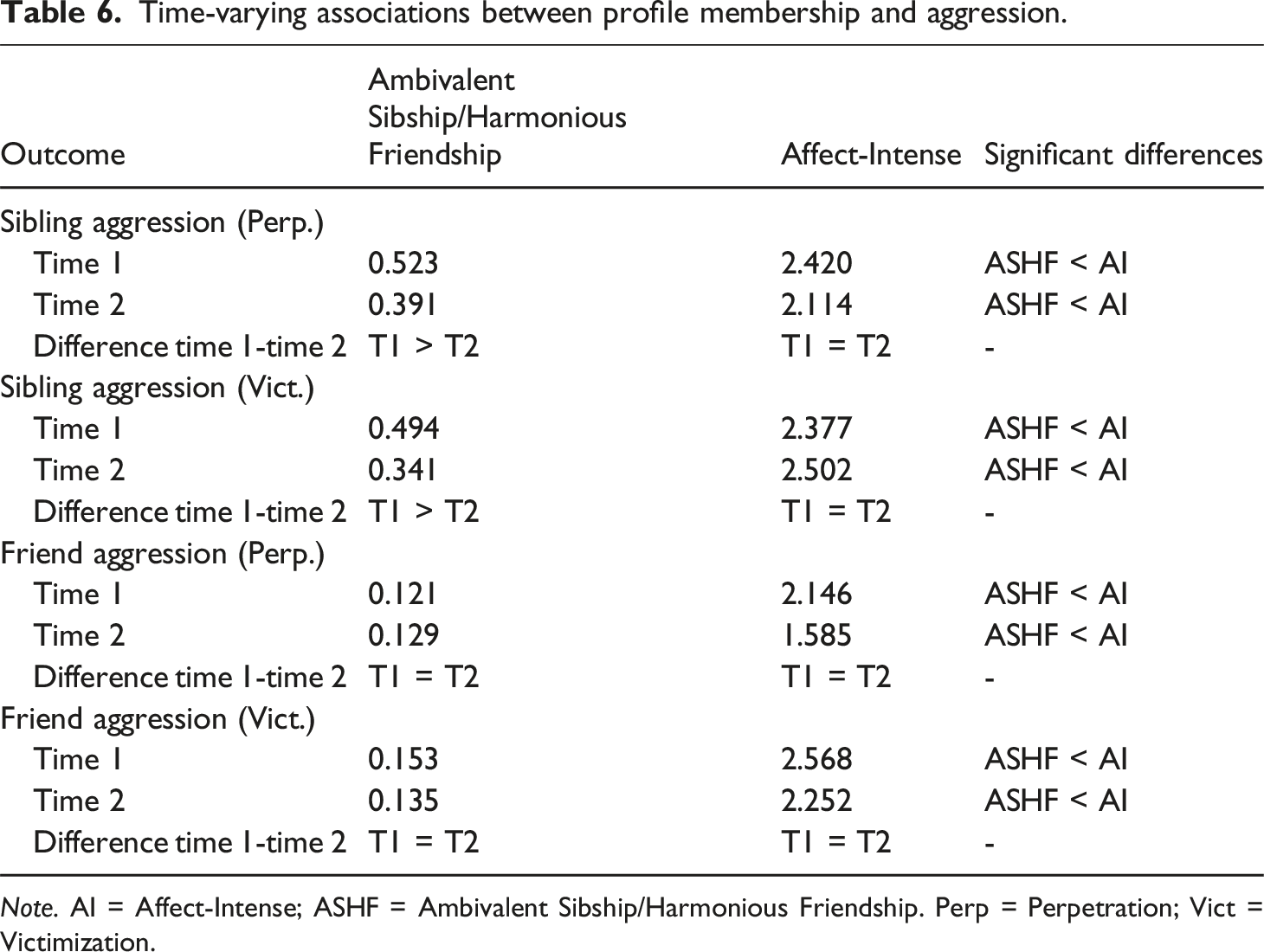
Note. AI = Affect-Intense; ASHF = Ambivalent Sibship/Harmonious Friendship. Perp = Perpetration; Vict = Victimization.
Sensitivity analyses
Given the friendship changes from T1 to T2, we reran our analyses on the sample of participants who reported the same friend at both times (see Table S2 for descriptive statistics and correlations). In line with our primary analyses, the cross-sectional LPAs indicated that a 2-profile solution best fit the data, with comparable fit and proportion of participants in each profile (see Table S3). The LTA also yielded similar transition probabilities among the ambivalent sibship/harmonious friendship and affect-intense profiles. Most youth in the ambivalent sibship/harmonious friendship profile at T1 remained there at T2 (n = 203, 88.1%), while most adolescents in the affect-intense profile at T1 stayed there at T2 (n = 13, 5.7%). Approximately 4.3% of participants who were in the affect-intense profile at T1 transitioned to the ambivalent sibship/harmonious friendship profile at T2 (n = 10), while 1.7% of participants who fit into the ambivalent sibship/harmonious friendship profile at T1 shifted to the affect-intense profile at T2 (n = 4) (see Table S4).
Discussion
The present study relied on the assumption that relationships do not exist in isolation of each other. Therefore, we examined the relational and longitudinal congruency in adolescents’ sibling relationships and friendships. Using longitudinal person-centered analyses, we investigated the presence of different relational profiles at both times and assessed the stability of profile membership an 8-month period. Finally, we examined whether aggression varied by relational profile.
Our results supported two distinct profiles, and partially align with prior work (McGuire et al., 1996; Sherman et al., 2006; Way et al., 2001). The first profile, defined as ambivalent sibship/harmonious friendship, was characterized with high positivity and low negativity across both relationships. Additionally, there was greater relational positivity with siblings at T1 than T2 and greater negativity with siblings than with friends at both times. Structural characteristics (e.g., age gap) did not predict class membership either, indicating that it may matter less for siblings during adolescence than in childhood (Campione-Barr et al., 2017) Although both relationships demonstrated the same pattern (i.e., high positivity, low negativity), differences in negativity support the notion of incongruence in both sibships and friendships. This similarity is comparable to Sherman et al. (2006), even though our participants were younger than those in that study. Among older youth, significant social transitions (e.g., moving away from home) might allow for greater variability in young adults’ experiences with their siblings and changes in best friendships. In turn, such transitions may allow them to be more open about disclosing or possibly having more incongruent relationships than adolescents. For adolescents, the involuntariness of sibships makes them rich in conflict, which also happens more frequently than with friends (Howe et al., 2020; Rafaelli, 1997). This is likely due in part to the high frequency of property disputes between siblings (Howe et al., 2020) as well as youth not wanting to potentially lose a voluntary friendship. As such, these findings are not entirely surprisingly. That said, future research should investigate these profiles across the adolescent and emerging adult years to better understand the stability of individuals’ relational perspectives.
The second profile that emerged was the affect-intense profile, which was characterized as having high sibling and friend positivity and negativity. Here, adolescents in the affect-intense profile perceived greater relationship negativity than those in the ambivalent sibship/harmonious friendship profile. Moreover, the lack of significant differences in the relationship positivity and negativity between siblings and friends align with notions of relational congruence, or perceptual similarity, across both relationships. Consequently, this congruence may suggest that early attachment experiences with parents may contribute to how youth construct an understanding of other relationships (Bowlby, 1973). For siblings and friends, we speculate that adolescents may seek out other relationships, including friendships, that may be familiar to them via their sibling relationships. Although adolescent friendships are mostly positive, a subset of youth may be motivated to continue in relationships that have elevated negativity because of similarity observed in their sibling relationship. This is clearly an avenue for future research.
Our findings should be considered within the context of COVID-19. Stay-at-home mandates and other restrictions imposed on the population resulted in qualitative shifts in adolescents’ social lives. For example, shifting to remote schooling meant that youth spent more time with siblings than friends, and communication with friends shifted to online methods (e.g., texting, social media; Ellis et al., 2020). We speculate that uncertainty and frustration surrounding the pandemic, especially during the initial months, and the social consequences to adolescents may explain some of these findings, such as increased negativity among siblings from T1 to T2. Specifically, it could be that as the months passed and the longer adolescents went without spending time with friends and only seeing siblings might have contributed to their frustrations and expressed as conflict. As the pandemic continued, families also had to adjust to new routines, which meant that siblings had to navigate how to live, go to school, and have their own time under one roof. Naturally, youth having little space or time for themselves at a pivotal development point may have resulted in them feeling more negativity toward their sibling.
Clearly, future research should aim to replicate these findings to better understand the patterns of youth sibling and friend relationships under more typical circumstances. That said, it is worthwhile to note that high-quality sibling relationships were more common despite the ongoing pandemic (Sun et al., 2021). Notably, even though there were higher levels of conflict in sibling relationships than with friends, there was little evidence for a conflictual typology of sibling relationships (low positivity, high negativity). Prior work has shown that siblings can experience hostile or conflicted types of relationships (high negativity, low positivity; McGuire et al., 1996). During the pandemic, however, it is noteworthy that sibling relationship positivity was higher than negativity at both times, despite spending nearly all their time together in the same household. This could suggest that siblings were able to navigate some of the difficulties associated with COVID-19 by supporting one another.
Stability and change in relational profile membership
Our analyses indicated the same profiles emerged at both time points; moreover, few participants moved to a different profile at T2. Shifts from affect-intense relationships to ambivalent sibship/harmonious friendship relationships were most common. A smaller proportion of adolescents shifted the other way. In both cases, the key indicator was relationship negativity; both profiles had high positivity but saw changes in negativity. The shifts from affect-intense to ambivalent sibship/harmonious friendship relationships, especially during COVID-19, might also be the result of adolescents relying on their siblings and friends more as sources of support. Close relationships are especially important during challenging times (Masten & Motti-Stefanidi, 2020), and the pandemic was clearly stressful for adolescents (Ellis et al., 2020). Thus, youth relying on their siblings and friends as support systems as the pandemic continued may have contributed to the affect-intense to ambivalent sibship/harmonious friendship shift.
Over eight months, some adolescents reported decreases in sibling negativity, but not with their best friends, which could have resulted in a shift to the ambivalent sibship/harmonious friendship profile. We did observe that a smaller proportion of youth experienced increases in negativity at T2 and therefore transitioned to the affect-intense profile. Although there is a general upward trend in relationship quality throughout adolescence (Kim et al., 2006), some youth may experience variability in these relationships. The ongoing nature of the pandemic may have contributed to this variability, where clear boundaries and routines may not have been established or effective in minimizing negativity with siblings and friends.
Associations between aggression and profile membership
Our results also showed that youth in the stable, ambivalent sibship/harmonious friendship profile reported less aggression with or victimization by any sibling or friend, which may suggest a link with fewer destructive relationship interactions. Within-profile differences highlighted greater sibling aggression perpetration and victimization at T1 compared to T2 in the ambivalent sibship/harmonious friendship profile. Although there are decreases in aggression from childhood to adolescence (Gallagher et al., 2024), the declines observed in this study may be particularly reflective of adjustments to home routines and sibling interactions because of the ongoing pandemic. For example, routines surrounding personal versus family time may have been established, which minimized opportunities for negativity to be present. It is also noteworthy that friend aggression did not significantly change during this period, which could be due to friends generally being less aggressive towards one another, especially when they perceive that they have a high quality and interconnected relationship with that friend (Andrews et al., 2018). These findings play a critical role in providing new insights into aggression between friends. Although aggression is commonly studied between peers (Ellis et al., 2009), less is known about how it appears between friends. Our findings are consistent with an emerging body of research indicating that greater friendship victimization is associated with negative relationship features of friendships (Dryburgh et al., 2023).
Implications
The present study has several theoretical and practical implications. There is a dearth of research examining sibling relationships and friendships at the same time. Our findings offer some support for the empirical contention that adolescents view the quality of their sibship and friendship in similar ways, as evidenced through relational positivity in both the ambivalent sibship/harmonious friendship and affect-intense profiles. Experiences with relational negativity, however, appear to show more incongruence between siblings and friends, particularly in those relationships that are deemed more ambivalent with siblings and of high quality with friends. Thus, prevention efforts that consider both sibling and friend contexts may provide insights into adolescents’ abilities to manage negative experiences across relationships. Relatedly, these findings provide some clarity on how relationships operate to enhance or hinder development and can thus have implications for prevention and intervention. Specifically, how youth interact in one relationship might provide some indications for how they interact with friends, and vice versa. As a result, identifying upward and downward changes in profiles over time can aid clinicians in better understanding both the stability and congruence observed in adolescents’ relationships with their siblings and best friends. Ultimately, identifying patterns in how adolescents interact with their siblings and friends can provide practitioners with targeted strategies for facilitating healthier social interactions (e.g., conflict management techniques), especially for those in affect-intense types of relationships.
Limitations and future directions
Limitations of the study must be noted. For example, the data were collected during the second and third waves of COVID-19 in Canada and may not generalize to other periods of time or national contexts. Changes in the frequency and ways youth interacted with others were clearly disrupted. As such, replication of these findings is warranted. Second, due to statistical limitations, specific model specifications (e.g., using starting values) can vary between samples. More research is needed using a larger sample and generalized modelling steps. Future research that also includes such variables, including friendship gender, would better clarify the pattern of results and how they varied for same- and mixed-gender dyads. Relatedly, our ability to test for outcome differences for the participants who shifted was limited due to the small percentage of youth whose profiles changed over the two time points. Furthermore, the aggression measure asked participants to report such experiences with any sibling or friend. Future research should map experiences of aggression and victimization in specific relationships to better understand the effects of these relationship types with experiences with the same partner.
Despite these limitations, this study is strengthened by our use of person-centered approaches rather than variable-centered approaches to measure changes in relationships over time. Although the only related study by Sherman and colleagues (2006) used person-centered analyses (i.e., cluster analysis) to identify groups of similar individuals (Laursen & Hoff, 2006), the present study built on this research by using profile analyses to account for the existence of latent typologies and estimate the probability of profile membership (Gartstein et al., 2017).
In summary, our findings suggest that adolescents’ relationships with their siblings and friends are relatively similar and stable over time. Youth in both profiles reported high levels of relational positivity across both relationships, but those in ambivalent sibship and harmonious friendship relationships reported less relational negativity than those in affect-intense relationships. Although these profiles emerged in the context of a significant health event, our results speak to the important roles that both sibling relationships and friendships have for adolescents.
Supplemental Material
Supplemental Material - Stability of distinct relational profiles of adolescent sibling relationships and friendships: A latent transition analysis
Supplemental Material for Stability of distinct relational profiles of adolescent sibling relationships and friendships: A latent transition analysis by Ryan J. Persram, Melanie A. Dirks, Wendy M. Craig, and Holly E. Recchia in Journal of Social and Personal Relationships
Footnotes
Acknowledgements
The authors wish to thank the adolescents who participated in this study.
Declaration of conflicting interests
The author(s) declared the following potential conflicts of interest with respect to the research, authorship, and/or publication of this article: Melanie A. Dirks is Chief Scientific Officer of and shareholder in 15008018 Canada Inc (QARL AI).
Funding
The author(s) disclosed receipt of the following financial support for the research, authorship, and/or publication of this article: This project was supported by a grant from the Public Health Agency of Canada (PHAC), #1718-HQ-000788 (Craig, PI).
Open research statement
As part of IARR’s encouragement of open research practices, the authors (Persram, Dirks, Craig, & Recchia) have provided the following information: This research was not pre-registered. The data used in the research cannot be publicly shared but are available upon request. The materials used in the research cannot be publicly shared but are available upon request.
Ethical statement

Data Availability Statement
The data that support the findings of this study are available from the corresponding author upon reasonable request. This study was not preregistered.
Supplemental Material
Supplemental material for this article is available online.
References
Supplementary Material
Please find the following supplemental material available below.
For Open Access articles published under a Creative Commons License, all supplemental material carries the same license as the article it is associated with.
For non-Open Access articles published, all supplemental material carries a non-exclusive license, and permission requests for re-use of supplemental material or any part of supplemental material shall be sent directly to the copyright owner as specified in the copyright notice associated with the article.
