




Abstract
Despite the overwhelming support for the importance of sexual communication to intimate relationships, there is limited information about what motivates someone to engage in or avoid sexual communication. Motivational frameworks have been applied to various aspects of intimate relationships, serving as strong predictors of different behavioural processes and playing a crucial role in facilitating behavioural change. As such, we aimed to elucidate the motivations for sexual communication and explore how they relate to other aspects of the process of sexual communication. A total of 373 participants were recruited from online crowdsourcing websites across two studies, and they completed online questionnaires using a mixed methods approach. In Study 1, open-ended responses regarding participants’ motivations for sexual communication were inductively coded and aligned with the Regulatory Focus Theory, which describes two distinct modes of goal pursuit depending on if the person is focused on growth and advancement (i.e., promotion-focused) or safety and security (prevention-focused). This coding structure was replicated in Study 2, and we expanded the results to examine the predictive ability of the coded motivations. We found that those higher in attachment avoidance were more likely to have prevention-focused motivations, and those with relationship-oriented promotion-focused motivations reported more depth of both sexual and nonsexual communication as well as more relationship and sexual satisfaction. The implications of these findings are discussed.
Keywords
Introduction
Successful and fulfilling intimate relationships are an integral part of overall wellbeing, and their success and meaning depend on many factors, including sexual communication within the relationship (Byers & Demmons, 1999; Rehman et al., 2011). Through open sexual communication, partners create mutually pleasurable sexual repertoires, develop relational safety, and establish boundaries around their sexual preferences (Coffelt & Hess, 2014; MacNeil & Byers, 2005, 2009)
Despite the recognized support of sexual communication, little is known about what motivates individuals to engage in or avoid it. In the current study, we investigate motivations for sexual communication in an effort to clarify how these motivations play a role in whether partners engage in sexual communication. Several theoretical perspectives highlight the importance of motivational processes in behavioural change. For example, behavioural models applied to health-related behaviours have established that motivations are integral to engaging in health-promoting behaviours, such as safer sex behaviours (e.g., Fisher et al., 2003). Motivational frameworks have also been applied to other aspects of intimate relationships. For example, the approach or avoidance framework describes people as motivated to approach pleasurable experiences and avoid painful or undesirable experiences (Atkinson, 1957; Bernecker et al., 2019). In intimate relationships, approach-oriented goals include achieving sexual pleasure, and avoidance-oriented goals include avoiding relationship conflict. Anxious and avoidant attachments have also been identified as factors that impact an individual’s motivation to engage in relational behaviours (Ainsworth et al., 1978; Bowlby, 1969). These orientations are commonly thought to be based on early childhood experiences of how consistently available and responsive caregivers were in meeting the individual’s needs (Ainsworth et al., 1978; Bowlby, 1969). Secure attachment, formed through consistent and predictable caregiving, makes individuals more likely to form secure adult interpersonal connections. In contrast, inconsistent or unavailable caregiving may lead to internalized models regarding one’s worth and value and others’ availability. These internalized models of self and others influence how individuals navigate romantic and sexual relationships (Feeney & Noller, 2004; Mikulincer & Shaver, 2013, 2020). For instance, individuals who tend to have negative views of self may struggle to express their own sexual needs and desires and may prioritize their partner’s sexual needs over their own, especially early in the relationship (i.e., anxious attachment). Conversely, individuals who tend to fear closeness and interdependence may avoid sexual communication out of fear of the intimacy that could accompany such conversations (i.e., avoidant attachment). Understanding what motivates individuals to engage in sexual communication and any associated barriers is crucial for understanding and supporting general and sexual functioning.
The purpose of the current research is to determine the role of motivations for engaging in or avoiding disclosure in the overall process of sexual communication.
Motivations for sexual communication
Though previous studies have examined motivations for nonsexual communication behaviours, there are notable differences between sexual and nonsexual communication. Sexual communication is avoided more than nonsexual communication for many reasons, including it feeling threatening to the self to disclose such intimate topics (Rehman et al., 2019), which can increase anxiety and vulnerability compared to disclosing nonsexual topics (Rehman et al., 2011a; Rehman et al., 2017). As such, the motivations for sexual communication may also differ from those for nonsexual communication. By investigating the motivations underlying the decision to disclose or avoid sexual communication, we can better understand what factors play a role in such decisions, the range of motivations that individuals report, how these motivations change over time, and how the motivations interact with other factors (e.g., attachment orientation).
The critical role that motivations play in the decision to engage in sexual activity has been previously studied (Meston & Buss, 2007), and past research has also examined why people engage in specific sexual behaviours, such as kissing (Thompson et al., 2019). Hullman and colleagues (2022) are some of the few researchers who have examined motivations for sexual communication. Specifically, they examined the goals people have for engaging in sexual self-disclosure. They found that participants were more likely to engage in sexual disclosure when they had a greater desire or sense of importance for communicating a specific sexual topic to a partner. Alternatively, when participants had conversation goals related to the social perception of their disclosure and wanting to maintain social appropriateness, they reported being less likely to engage in sexual self-disclosure. The researchers also identified important individual factors, notably anxiety and disclosure efficacy, which mediated the relationship between conversational goals and the likelihood of disclosure.
Overview of studies 1 and 2
We conducted two studies to explore motivations for sexual communication further. In Study 1, we used an inductive qualitative approach to identify the participants’ described motivational themes for sexual communication (RQ1) and themes related to the broader process of sexual communication (RQ2). In Study 2, we replicated and expanded these findings, validating the qualitative coding structure (RQ1) and employing quantitative methods to test how individual difference variables predict motivations and their relation to broader communication-related processes (RQ2-4).
Study 1
Study 1 research goals
We had two research goals for Study 1. First, to understand the emergent themes in participants’ descriptions of their motivations for disclosing sexual preferences in their coded open-ended responses. By including a first-person narrative in which participants describe their experiences and perspectives in their own words, these results will help fill the gap in research surrounding motivations for sexual communication by providing broader insights into the phenomena from this important perspective. The second goal was to identify themes for how motivations are related to the process of sexual communication. As we employed an inductive (i.e., exploratory) coding process, we did not have specific a priori hypotheses about the themes of the qualitative responses (e.g., McGrath & Johnson, 2003). Despite reviewing existing motivational frameworks for the study of sexuality, our coding team prioritized identifying emergent themes from the participants’ responses.
Study 1 method
Participants and design
We recruited a sample of 204 participants, who were required to be over 18 years old and in a committed romantic relationship, from the United States using Amazon Mechanical Turk Prime. Participants completed an online survey and received 6.00 USD as remuneration for their time. These data were collected as part of a larger study to elucidate the process of sexual communication. As such, the survey included other self-report Likert-type questions that were not analyzed as part of the current study (e.g., sexual satisfaction, relationship satisfaction). Numerous steps were taken to ensure the quality of the data. After evaluating the data, 72 participants were removed for careless responding, failing validity checks, indicating that their data should not be analyzed as part of the study or having identical responses to the open-ended response questions. The final sample consisted of 132 participants. 1
Participant demographic information.
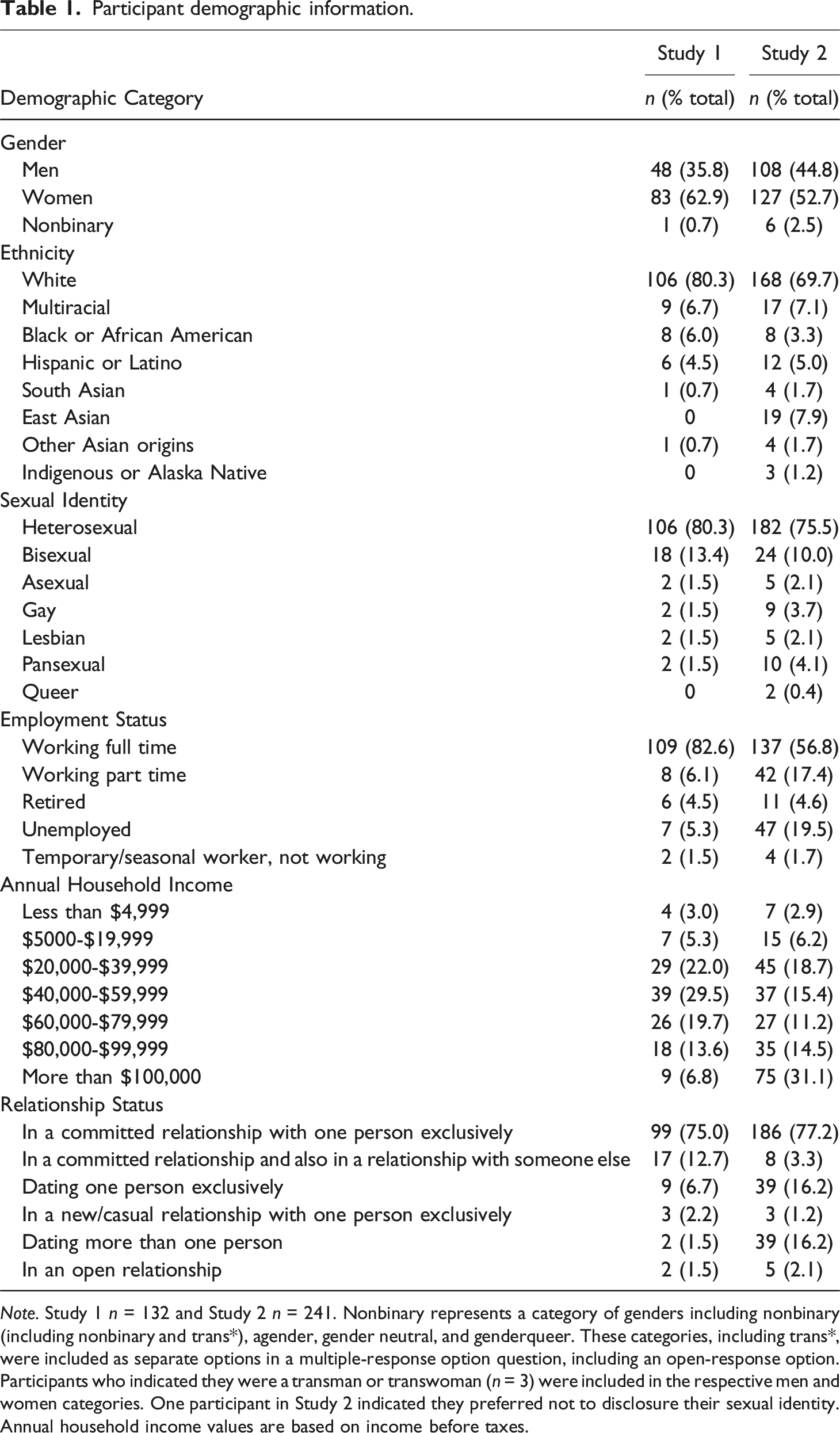
Note. Study 1 n = 132 and Study 2 n = 241. Nonbinary represents a category of genders including nonbinary (including nonbinary and trans*), agender, gender neutral, and genderqueer. These categories, including trans*, were included as separate options in a multiple-response option question, including an open-response option. Participants who indicated they were a transman or transwoman (n = 3) were included in the respective men and women categories. One participant in Study 2 indicated they preferred not to disclosure their sexual identity. Annual household income values are based on income before taxes.
Measures
Background questionnaire
This questionnaire was designed to gather background information specific to the current study. It included questions about the participants’ demographic information (e.g., age, gender, ethnicity, education and employment history) and the history of their current relationship (e.g., type of relationship, relationship length).
Reasons for sexual disclosure
We developed a three-question qualitative measure to assess participants’ reasons for disclosing sexual preferences in current or past intimate relationships. We provided the following instructions before asking the specific questions: “People tend to vary in terms of what they like sexually and what they do not like sexually, and the extent to which they share these likes and dislikes with their partner”. They were then asked three open-response questions about what helped them decide whether to disclose (a) sexual likes (i.e., “Thinking back to your current and past relationships, what has helped you decide whether to share your sexual likes (“turn-ons”) with a partner?”), (b) sexual dislikes (i.e., “Thinking back to your current and past relationships, what has helped you decide whether to share your sexual dislikes (“turn-offs”) with a partner?”), and (c) sexual fantasies (i.e., “Thinking back to your current and past relationships, what has helped you decide whether to share a sexual fantasy with a partner?”) to an intimate partner. To define sexual fantasies, we provided participants with the following introduction before the sexual fantasy question: Most people have at least one, often multiple, sexual fantasies. These are thoughts or actions that we might have done before, wish to do in the future, or enjoy getting sexually aroused thinking about but may not intend to do. Similar to sexual likes and dislikes, people vary in the extent to which they share sexual fantasies with their partners.
Coding of qualitative responses
To identify themes in the open-ended responses, we used an inductive coding approach that is based on Hsieh and Shannon (2005)’s framework for content analysis. The goal of the coding process was to produce a meaningful coding structure that represented the concepts and themes that emerged in the data. We worked with a three-person coding team comprised of the first and second authors and a trained research assistant. After reading all the responses, we identified 50 participants who gave responses that were not detailed enough to include in the analysis (e.g., “always tell the truth”) or did not directly answer the target questions, such as describing the content of specific sexual likes, dislikes, and fantasies (e.g., “In a past moment, I had oral sex with my partner”). A total of 62% of the participant’s responses (n = 82) were deemed viable in that a dominant code could be identified across the three responses.
The inductive coding process involved three rounds of coding and refining the identified themes using a discussion-based approach with the coding team. The responses to the three open-ended questions were first coded separately; however, we subsequently decided it was best to assign one dominant code across all three responses. The first rationale for this decision was that most participants discussed similar themes throughout their responses or referenced a previously written response (e.g., “like I said…” and “same as above…”), suggesting higher-level concepts that participants perceived to be relevant for sharing sexual likes, dislikes, and fantasies. Also, the underlying similarities across the participants’ three responses meant that we could get a more in-depth understanding of each participant’s experience with sexual communication by combining the open-ended responses; individually, many of the responses were quite short and seemed to represent parts of ideas as opposed to fully formed responses. As such, we assigned each participant one code, indicating the dominant theme they discussed across their three responses.
Two coders read through the responses and identified a list of 48 emergent themes. In discussion with the third coder, we refined the list to 31 themes by collapsing themes based on agreed conceptual overlap. Using the collapsed 31-theme coding structure, two coders independently coded the same 50 responses and discussed disagreements in coding (n = 20) until we reached a consensus. Given the high number of disagreements, more precise definitions of the codes were created. The same two coders then coded an additional 50 responses, this time only yielding 12 disagreements, which were discussed until a consensus was reached. Finally, in consultation as a team, we identified more conceptual overlap in the themes and agreed to collapse the codes again, resulting in a 12-item coding theme described below. The two coders used the 12-item structure to code 50 responses independently and, after agreeing that the new structure appropriately captured the themes in the responses, coded the remaining responses with good interrater reliability (Cohen’s kappa = .83).
The final coding structure included 12 codes (See Figure 1) and related to two aspects of the participants’ responses. First, participants described the focus of their considerations for disclosure, which were divided into three categories: self, partner, and relationship. We aimed to capture the primary motivational consideration for each theme. For example, if participants wanted to avoid disclosure to prevent a negative reaction from their partner and possible subsequent impacts on their relationship, it was still coded as a partner theme, emphasizing the focus of their motivational considerations. Second, they described one of two types of motivations: whether they were focused on the presence or absence of a) a positive outcome that was related to growth and advancement or b) a negative outcome that was related to safety and security. After coding the responses, we examined existing motivational frameworks to see if the emergent themes aligned with any existing frameworks. The inductively coded results aligned with Regulatory Focus Theory (RFT; Higgins, 1997), discussed further in the discussion, and we adopted the terminology of that framework retroactively to describe the emergent themes. Inductive coding model.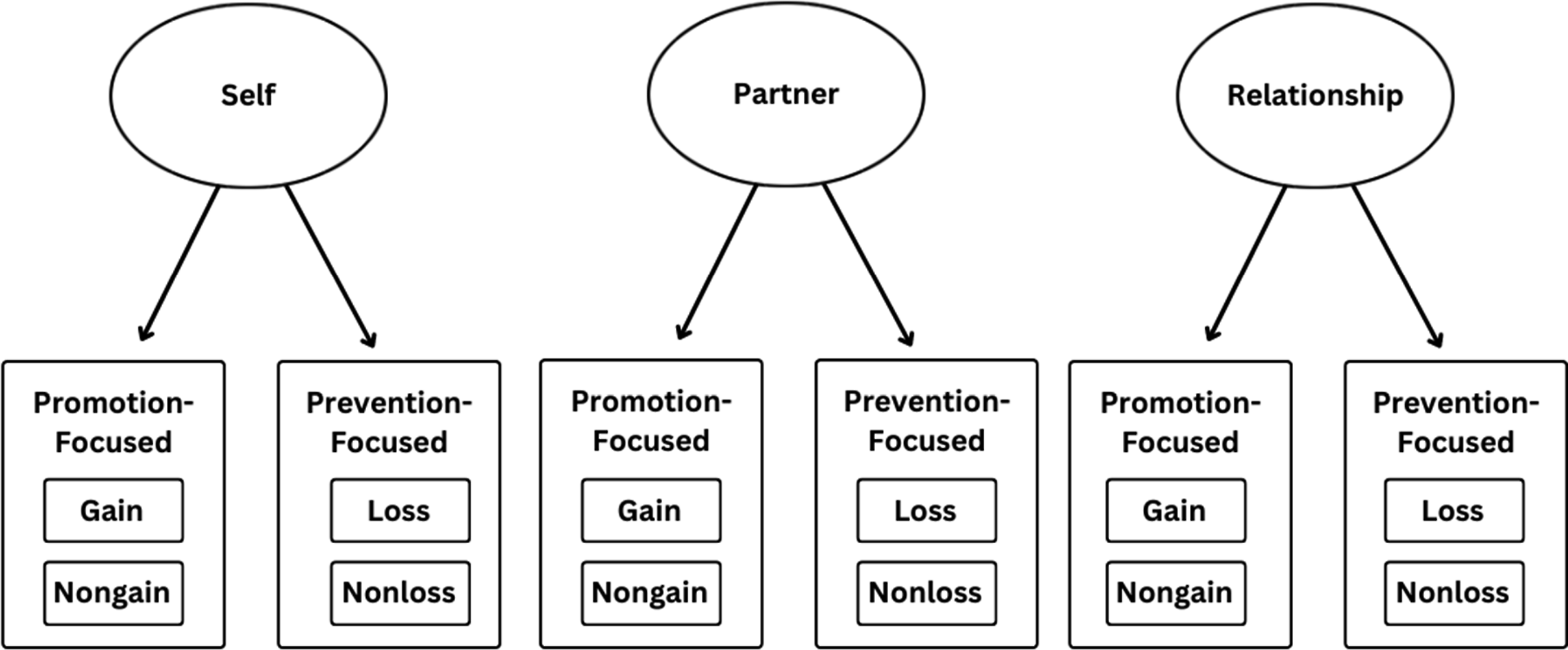
Study 1 results
In their open-ended responses, when participants were focused on achieving positive outcomes (i.e., promotion-focused), they described favourable responses when they achieved those outcomes (i.e., gain) and perceived it as a missed opportunity when they were not able to achieve them (i.e., nongain). Participants also described safety-related motivations (i.e., prevention-focused), expressing negative affect when a negative outcome occurred (i.e., loss) or feeling positive affect (e.g., relief) when they avoided a negative outcome. Responses frequently focused on anticipated gains and anticipated losses rather than nongains or nonlosses, though including all four components in the coding structure was the most comprehensive model of the inductive themes. In addition to the motivational focus, participants’ responses focused on whether their motivations were internally (i.e., self) or externally focused (i.e., partner and relationship), yielding six coding categories (i.e., promotion: self, partner, relationship; prevention: self, partner, relationship), which each had two subthemes (i.e., promotion: gain, nongain; prevention: loss, nonloss; See Figure 1). Additionally, participants referenced additional aspects of the content and process of their disclosure, including individual factors and the quality of their relationship, which informed whether they engaged in or avoided sexual disclosure. We discuss both the emergent motivational themes and discussions of the process of communication in the following two sections.
Emergent RFT motivational themes
Study 1 coding frequencies.
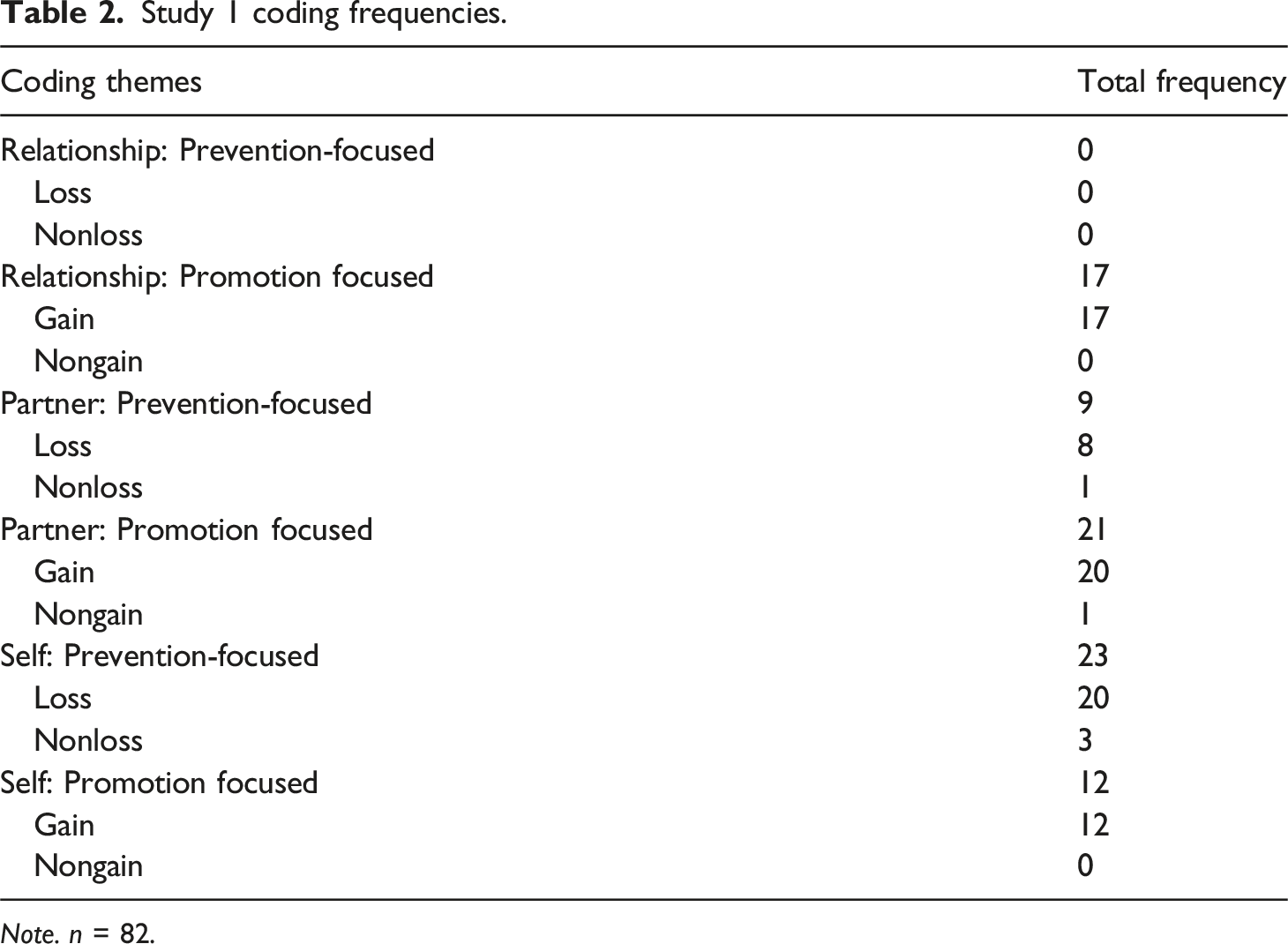
Note. n = 82.
Self promotion-focused
This was the dominant theme of 12 participants. Gain-focused examples include wanting their own sexual satisfaction (e.g., “That I wanted it to be a good experience each time for me. So I decided to talk to her in the beginning” and “I would share my fantasies... This is a great way to become closer and get what you want from the sexual experience”) and valuing being an open partner (e.g., “My general philosophy in relationships is to be honest… Truth is more intimate to me than anything else”). Nongain examples emerged though they were not identified as the dominant theme for any participants, focusing on not achieving their own sexual pleasure or other positive outcomes for themselves (e.g., “There is no use in doing something that doesn’t bring pleasure”).
Self prevention-focused
This was the dominant theme of 23 participants. Common loss examples included avoiding a threat to themselves and experiencing negative emotions. Participants described fearing judgement or another self-related threat from disclosing their sexual preferences (e.g., “I don’t want them thinking I am “weird”), leading them to develop strategies such as waiting for their partner to disclose their preferences first (e.g., “So instead of bringing it up, I waited until they brought up the subject of fantasies and got to hear theirs first” and “I always let them take the lead before revealing too much”). They also described only being motivated to engage in disclosure if it was affecting their sexual satisfaction, motivated by avoiding that negative outcome (e.g., “I would talk about that only if I wasn’t being satisfied”). Most nonloss themes focused on how feeling comfortable and safe with a partner helped the participant feel more confident about avoiding any self-threat, such as judgement (e.g., “What’s helped me decide whether to share… is when I know that there won’t be any judgement and that I can talk to him and be completely open with him”).
Partner promotion-focused
This was the dominant theme of 17 participants. Participants described being motivated by their partners’ behaviours and responsiveness. For example, people described how helpful it was when their partner was accepting and encouraging in nonsexual communication (e.g., “the openness of my partner is key. She is able to talk freely, so it is easier for me to share my likes with her” and “We were friends at first and we know about our relationships too. So it was easy for us to explore our sexual encounters and we utilized those opportunities to explore everything sexually”). They also reported specific partner behaviours, including modelling sexual self-disclosure (e.g., “I want to share to him because he was open up with his past experience that make me feel to share my fantasy too”), encouraging responses after previous disclosures (e.g., “After I told him first about how I feel about our sex life, he took it so positively and that encouraged me to be more open with him”), and directly asking about their sexual preferences (e.g., “I don’t really go out of my way to share them, but I’d answer if they asked”). Nongain examples emerged though they were not identified as the dominant theme for any participants. The responses primarily focused on evaluating partner openness and responsiveness to determine whether their positive outcomes could be achieved (e.g., “If they seemed open to it, some people are open to find out what pleases you and others aren’t, if I got the vibe that they weren’t open to it I wouldn’t speak up”).
Partner prevention-focused
This was the dominant theme of nine participants. Many loss-focused partner concerns involve avoiding disclosure to prevent adverse reactions in their partner based on experiences with past or current partners. Participants described nonloss situations of avoiding disclosure due to general expectations of negative reactions from the partner (e.g., “the only time I do not easily tell people what I do not like is if I think they will really react badly or negatively”). Concerns included eliciting negative reactions such as eliciting shame or guilt (e.g., “If I felt like the person who I was talking to was not going to get upset or feel badly about it”), poor self-esteem (e.g., “He would feel insecure if I brought anything like this up” and “Making your partner feel insecure isn’t ever a good thing”), and anger or frustration (e.g., “I do not share this with my partner because he would get angry and accuse me of comparing him to past relationships… He would also be upset because he thinks he does not satisfy me”). Participants also described not wanting to express sexual likes, dislikes, or fantasies that contrasted with their partner’s preferences to prevent possible ruptures in the relationship (e.g., “I will wait until I understand [partner’s turn ons] before I start telling them about my turn offs. I don’t want to jump into my turn offs only to find out that they contradict with my partner’s turn ons”).
Relationship promotion-focused
This was the dominant theme of 17 participants. Participants described motivations for disclosure for positive consequences to their relationship, such as improving relationship wellbeing (e.g., “I believe in full honesty and openness, and good communication. If I want a successful relationship, I can’t hold things back”), building a mutually pleasurable sexual repertoire (e.g., “I wanted to experience a sense of completeness in my relationship especially my sexual life, that drove me to open up to my partner”), building intimacy within the relationship (e.g., “It’s a great way to find out what you both want, and what the boundaries are in your relationship. Without these conversations, you won’t know”), and deepening the romantic connection (e.g., “I think I most wonderful way to stay [in] tune with your partner…make strong bonds with my partner”). Nongain examples were primarily focused on determining reasons that positive outcomes were not achieved (e.g., “to determine the underlying reasons you… aren’t enjoying sex together”).
Relationship prevention-focused
This theme was the least frequently discussed and, though discussed in participant responses, was not identified as the dominant theme for any participants. Participants described sharing sexual preferences to avoid perceived negative outcomes from not disclosing them (e.g., “If I do not share them, it would drive us far apart”).
Discussions of context and process of sexual communication
The second goal of this study was to identify themes in how participants discussed the role of individual factors (e.g., communicative self-efficacy) and contextual factors (e.g., relationship satisfaction) in their decision to self-disclose or avoid such self-disclosure.
Individual factors
Many participants described personal (i.e., individual) factors that either facilitated or hindered sexual communication. Helpful factors included self-confidence and communication self-efficacy. Barriers included fear of judgment or rejection, avoiding emotional or intimate expression, and other avoidance behaviours (e.g., waiting for their partner to bring up sexual communication). Participants noted that engaging in communication could impact future disclosure. Helpful factors were amplified after successful disclosures and minimized after unsuccessful ones. Barriers decreased after successful disclosures and increased after unsuccessful ones.
Relationship context
Participants discussed many aspects of the context of their relationship as important factors for sexual communication. They described how partner responsiveness (e.g., positive and encouraging, modelling disclosure) could increase or decrease (e.g., history of negative responses to sexual preferences by current or past partners) their likelihood of disclosure. General relationship uncertainty or their partner’s interest level was a barrier to communicating sexual preferences due to perceived negative consequences (i.e., threat). Participants also discussed their own and their partner’s communication abilities. Good overall relationship communication increased the likelihood of disclosure, while poor communication decreased it. Relationship satisfaction motivated discussions on sexual topics, increasing when there was positive responsiveness from a partner and desirable changes in their sexual relationship following disclosure. Participants frequently mentioned their own sexual satisfaction, their partner’s sexual satisfaction, and the quality of their overall sexual relationship as important outcomes motivating them to engage in sexual self-disclosure.
Disclosure content and process
In terms of the disclosure content, in addition to describing sexual preferences, as directed by the questions, participants also consistently mentioned two aspects of the process of sexual self-disclosure. They frequently noted that the consequences they anticipated for themselves, their partner, or their relationship influenced the decision to disclose. Positive perceived consequences increased the likelihood of disclosure, while negative perceived consequences decreased it. They also discussed the relative importance of a topic to themselves, their partner, or their relationship. They were more motivated to disclose extremely negative or important sexual preferences that would improve intimacy. If something was less important, they sometimes opted not to disclose it due to possible consequences (e.g., personal vulnerability, upsetting their partner). As such, participants described the perceived consequences and perceived importance of a sexual topic as aspects of their decision-making process prior to disclosure.
Study 1 discussion
The first goal of Study 1 was to understand the motivational themes for sexual communication. The qualitative coding of the open-ended participant responses provided a good understanding of the motivations that participants described for engaging or not engaging in sexual communication. The emergent themes aligned with the Regulatory Focus Theory (RFT), which has been successfully applied to many different contexts since its creation by Higgins (1997). Consistent with the theory, the themes captured promotion-focused motivations related to growth and advancement and prevention-focused motivations centred on safety and security (Molden & Winterheld, 2013).
RFT describes two distinct modes of goal pursuit depending on whether someone is concerned with advancement (promotion-focused) or safety (prevention-focused; Molden et al., 2008). Promotion-focused goals involve people focusing on achievement and working towards achieving positive outcomes (i.e., gains) while avoiding the absence of those positive outcomes (i.e., nongains, missed opportunities; Molden et al., 2008). Prevention-focused goals focus on achieving safety and security and work to protect the self from negative outcomes (i.e., nonloss, safety from threat; Molden et al., 2008). Continued exposure to situations that foster or encourage a particular goal pursuit can lead to an individual being predominantly promotion-focused or prevention-focused in their motivations (Molden & Winterheld, 2013).
The frequency with which participants described the RFT themes varied considerably, some not emerging as the dominant theme for any of the participants. For example, when discussing the impact of sexual communication on their relationship and partner, participants mentioned growth-oriented motivations more than security-oriented ones. However, when discussing self-related motivations, they discussed the two motivations more evenly. This pattern suggests that safety needs may become more pronounced when an individual is reflecting on the potential impact of sexual self-disclosure on oneself. Self-related concerns can be varied (Rehman et al., 2019), including how one would be perceived by their partner, feelings of shame and embarrassment of one’s sexual preferences, or fears that disclosure would make their partner view them as aberrant or deviant, causing them to “lose face.”
Given the limited detail in open-ended responses, smaller sample size, and lack of previous research on sexual communication motivation from a regulatory focus perspective, it is important to replicate and extend Study 1’s findings.
Study 2
We conducted a second study to attempt to replicate the qualitative coding structure and validate the Regulatory Focus Theory (RFT) as a relevant motivational framework for sexual communication. We also sought to expand on these findings by incorporating mixed methods approaches. Specifically, we wanted to explore how individual and relationship factors affect sexual motivations as well as how sexual motivations predict other components of intimate relationships, including communication (i.e., sexual and nonsexual) and satisfaction (i.e., relationship and sexual), all of which were discussed by participants in the qualitative responses of Study 1.
Study 2 research questions
We first wanted to determine if the Study 1 coding structure successfully replicates and captures the qualitative responses or if modifications are required (RQ1). We hypothesized that the coding structure would replicate (H1). Second, we wanted to determine if individual factors predict the coded RFT sexual motivations (RQ2). We hypothesized that all factors would predict the prevention and promotion motivations (H2). Third, we wanted to assess whether the RFT sexual motivations predict both sexual and nonsexual communication (RQ3) and hypothesized that they would predict both (H3). Fourth, we wanted to assess whether the RFT sexual motivations predict two notable relationship outcomes: relationship and sexual satisfaction (RQ4) and hypothesized they would predict both (H4).
Study 2 method
Participants and design
We collected a second unique sample of 270 participants from Canada and the United States using Prolific. Participants completed similar questionnaires to Study 1 (i.e., open-response questions and self-report Likert-type questions), and additional measures were collected that are not relevant to the current study. To be eligible for the study, participants had to be over the age of 18 and currently in a relationship. Consistent with the Prolific guidelines for remuneration, participants received £6.50 hourly for their time in completing the survey. Again, numerous steps were taken to ensure the quality of the data, and 29 participants were removed for careless responses, failing validity checks, or indicating that their data should not be analyzed as part of the study. The open responses were carefully examined for identical responses, though none were identified. The final sample consisted of 241 participants.
The participants’ demographics were comparable to those of the data collection for Study 1 (See Table 1). These participants ranged in age from 19 to 78 years old (M = 37.87 years; SD = 12.20 years). On average, they were in a relationship for 10.61 years (SD = 10.00 years) and had 15.73 years of education (SD = 2.70 years).
Measures
Study 2 descriptive statistics and internal consistency for self-report measures.
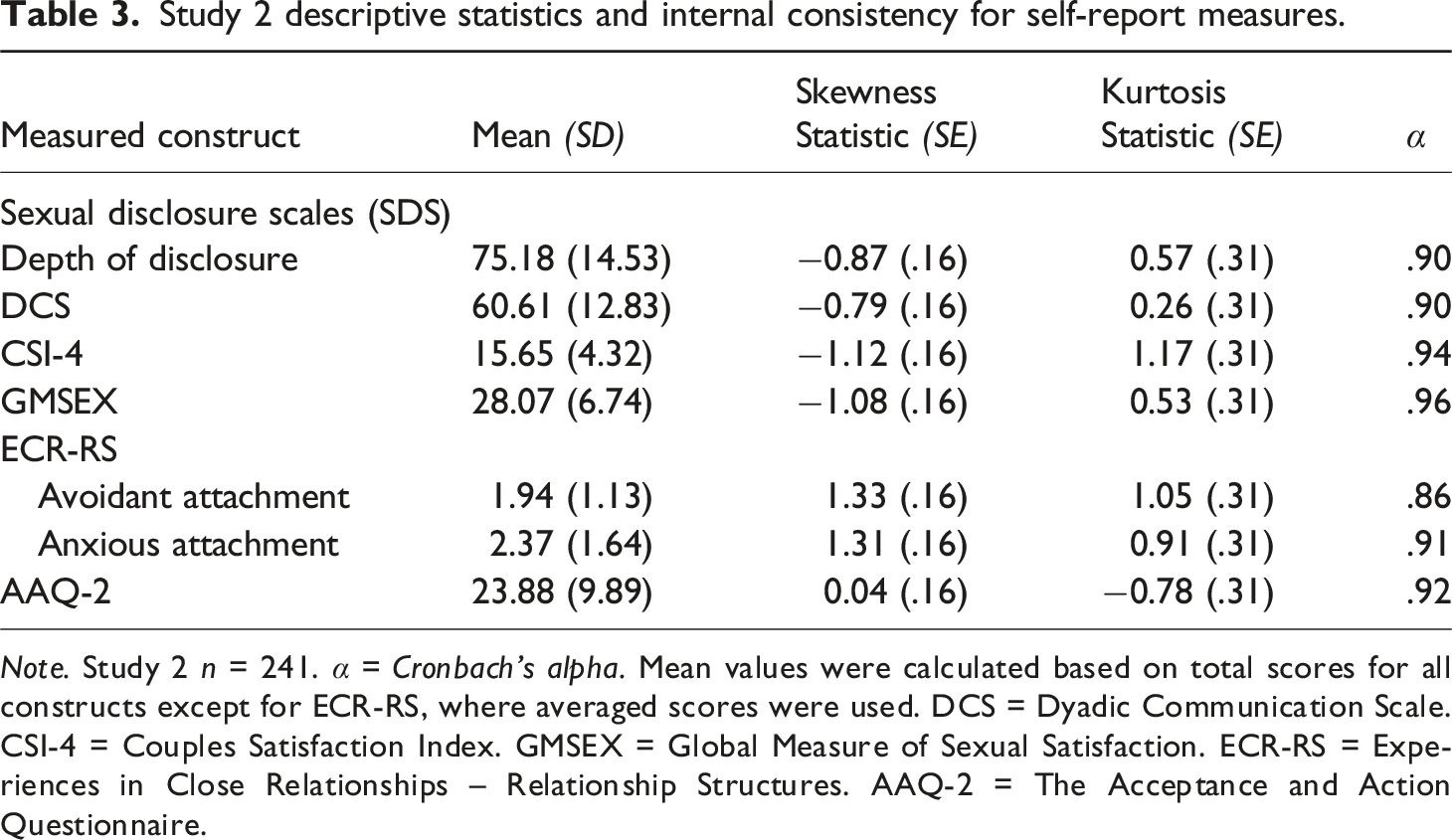
Note. Study 2 n = 241. α = Cronbach’s alpha. Mean values were calculated based on total scores for all constructs except for ECR-RS, where averaged scores were used. DCS = Dyadic Communication Scale. CSI-4 = Couples Satisfaction Index. GMSEX = Global Measure of Sexual Satisfaction. ECR-RS = Experiences in Close Relationships – Relationship Structures. AAQ-2 = The Acceptance and Action Questionnaire.
Sexual self-disclosure
Participants completed the adapted Sexual Disclosure Scales (SDS; Brown & Weigel, 2018; adapted in a previous study Wasson, 2023). Participants completed three subscales related to sexual self-disclosure, though only the depth of disclosure scale was included in this study. The scale asks, “Please select the response that best reflects what you have actually disclosed to your current primary romantic partner” about 17 sexual topics that are frequently discussed with a sexual partner (e.g., “oral sex”; “my sexual satisfaction”; “sexual problems or difficulties I might have”). The depth of disclosure Likert scale ranged from 1 (I have avoided talking to my partner about this topic) to 5 (I have talked openly and completely to my partner about this topic), with higher total scores indicating greater depth of disclosure with their partners across the presented sexual topics. The internal consistency for the depth of disclosure scale was good (α = .88).
Dyadic communication
We used the Dyadic Communication Scale (DCS), which assesses a broad range of components related to the interpersonal process of communicating with an intimate partner. The DCS includes items identical to the Dyadic Sexual Communication Scale developed by Catania and colleagues (1989), although the items relate to nonsexual dyadic communication. Participants rated how much they agreed or disagreed with each statement using a 6-point Likert scale ranging from 1 (disagree strongly) to 6 (agree strongly) on 13 items (e.g., “I have little difficulty in telling my partner what I will or won’t do” and “Talking together is a satisfying experience for both of us”). Higher total scores indicate better perceived dyadic communication. The scale’s internal consistency was good in the current study (α = .87).
Relationship satisfaction
Relationship satisfaction was measured with the 4-item Couples Satisfaction Index (CSI-4; Funk & Rogge, 2007), which examines the happiness (i.e., “Please indicate the degree of happiness, all things considered, of your relationship”), comfort (i.e., “I have a warm and comfortable relationship with my partner”), reward (i.e., “How rewarding is your relationship with your partner?”), and satisfaction (i.e., “In general, how satisfied are you with your relationship?”) on a 6-point scale from “not at all true” to “completely true,” with higher total scores indicating more relationship satisfaction. The scale’s internal consistency was good in the current study (α = .89).
Sexual satisfaction
The 5-item Global Measure of Sexual Satisfaction (GMSEX; Lawrance & Byers, 1998) examined sexual satisfaction by asking participants to answer “How would you describe your sexual relationship with your partner?” using five 7-point bipolar scales answering the question: good-bad, pleasant-unpleasant, positive-negative, satisfying-unsatisfying, valuable-worthless. The items are summed with total scores ranging from 7 to 35, with higher scores indicating great sexual satisfaction. The scale’s internal consistency was excellent in the current study (α = .97).
Attachment
We used the nine-item Experiences in Close Relationships - Relationship Structures (ECR-RS) to measure attachment insecurity along the two measured dimensions of avoidant attachment (e.g., “I’m afraid that my partner may abandon me”) and anxious attachment (e.g., “I don’t feel comfortable opening up to my partner”) on a 7-point Likert scale ranging from 1 (strongly disagree) to 7 (strongly agree; Fraley et al., 2011). Higher average scores on both dimensions indicate responses consistent with more insecure attachment. The internal consistencies for both avoidant (α = .81) and anxious (α = .94) attachment were acceptable.
Experiential Avoidance
We used the Acceptance and Action Questionnaire (AAQ-2) to assess participants’ experiential avoidance and psychological inflexibility (Bond et al., 2011). The scale asked participants to rate the seven items on a 7-point Likert scale ranging from 1 (never true) to 7 (always true), with higher total scores indicating more experiential avoidance and psychological inflexibility (e.g., “I worry about not being able to control my worries and feelings”). The scale’s internal consistency was excellent in the current study (α = .92).
Statistical analyses
Research Question 1
We used qualitative coding of the same three open-response questions to determine if the Study 1 coding structure replicates with these new data. As we were using an existing coding structure, we only performed one full round of coding. The same three-person coding team analyzed the qualitative responses. First, two coders coded a portion of the responses (40 participants) and, in discussion with the entire coding team, decided the coding structure was still appropriate for these new data without any erroneous responses (i.e., responses that could not be coded with the existing coding structure). We also noted that the qualitative responses for this study were much more detailed than those for Study 1. A total of 84% of the participant’s responses (n = 227) were deemed viable. The added details allowed for more variation in the understanding of what participants considered most important in disclosing likes, dislikes, and fantasies and how they differed from each other. Specifically, the more complex responses allowed us to make two notable changes to how we coded the data. First, we decided to code each of the three sections separately, as well as assign a dominant code to capture the overarching theme that emerged across the three questions. The resulting coding process meant that we assigned four separate codes to each participant: (a) likes (Cohen’s kappa = .96), (b) dislikes (Cohen’s kappa = .91), (c) fantasies (Cohen’s kappa = .93), and (d) overarching dominant theme (Cohen’s kappa = .96). Any disagreements were discussed as a coding team to reach a consensus. Second, we identified two higher-order themes (i.e., broad theoretical concepts) that participants described regardless of their motivation orientation (i.e., promotion or prevention-focused) as relevant to the process of sexual communication more broadly. These additional coded responses are included in the description of the findings below.
The two initial coders then coded all the participants’ responses. We were not able to code 91 of the 681 responses (13%) because they did not directly answer the questions, similar to some responses in Study 1 (e.g., only provided examples of their sexual likes). Only the dominant themes were included in the mixed methods analyses (i.e., RQ2).
Research questions 2-4
To address each of these goals, we employed quantitative analyses. We used logistic regression for RQ2, using the qualitative coded responses as outcome variables. We employed multivariate analyses of variance (MANOVA) for RQ3 and RQ4.
Study 2 results
Research question 1 results
Study 2 coding frequencies.
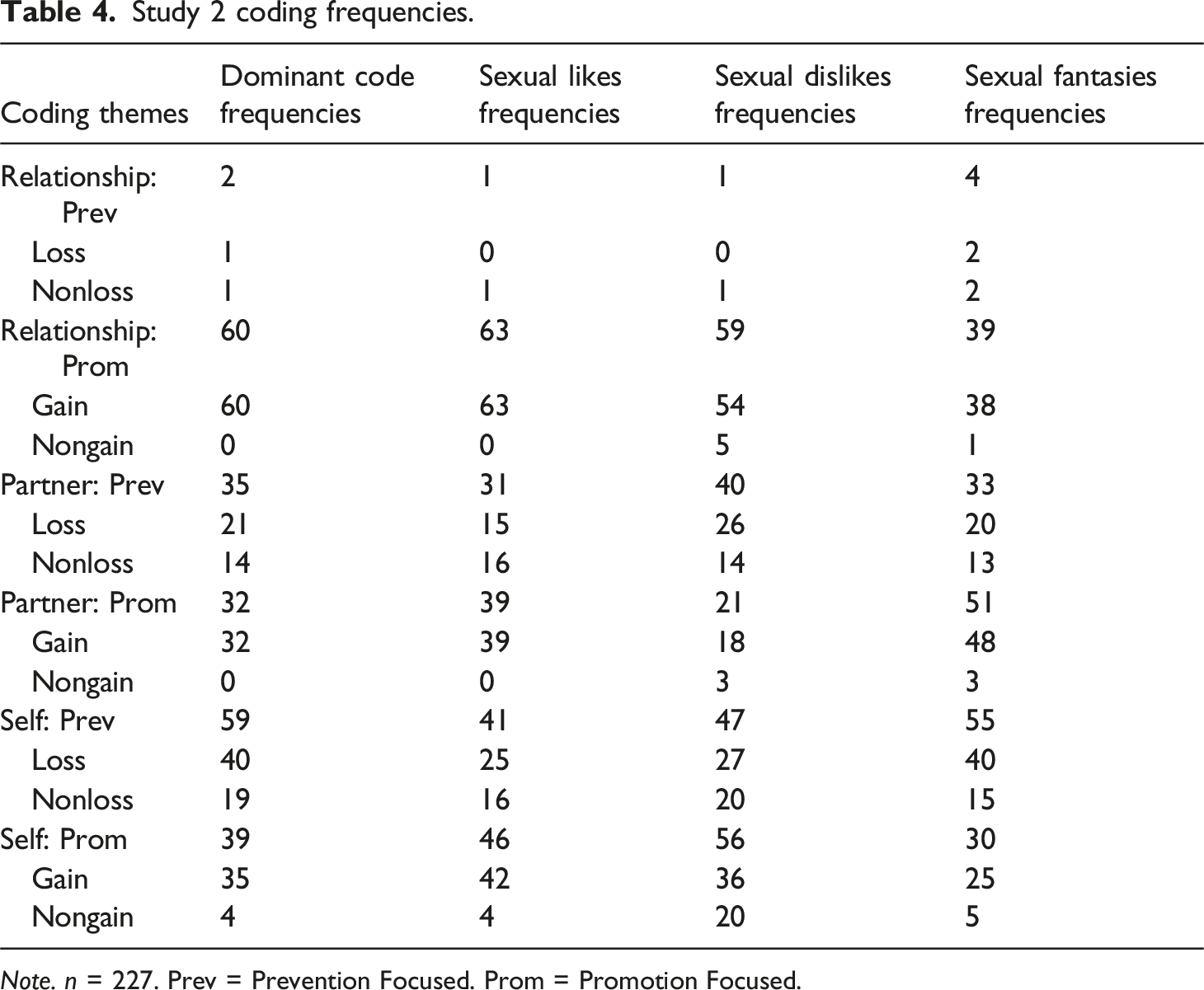
Note. n = 227. Prev = Prevention Focused. Prom = Promotion Focused.
Regulatory focus themes
The emergent 12-code coding structure created in Study 1 was successfully replicated. The codes reached exhaustiveness and thematic saturation (Hsieh & Shannon, 2005) using the coding structure from Study 1, meaning there were no identified thematic patterns related to sexual motivations that were not captured. There was considerable variability in the frequency of the different coded categories, and some codes occurred quite infrequently (See Table 4). Participants described their motivations for disclosure in terms of whether they were considering the self, their partner, or their relationship for both promotion (i.e., gain and nongain) and prevention (loss and nonloss) motivations. The responses and themes overall were quite similar to Study 1. However, the more detailed responses facilitated additional insights into how motivations relate to the process of sexual communication, such as the contribution of higher levels of comfort with the partner as enhancing disclosure, that it was helpful if their partner disclosed their preferences first, and pain or physical discomfort were described as strong motivators to disclosure. Due to the similarities between the RFT subthemes (gain/nongain, loss/nonloss), we will again discuss them together in six sections related to the motivation and focus of the response (self promotion-focused, self prevention-focused, partner promotion-focused, partner prevention-focused, relationship promotion-focused, and relationship prevention-focused), noting the similarities and differences compared to Study 1.
Self promotion-focused
The themes for both gain (e.g., wanting their own sexual satisfaction, being an open partner) and nongain (e.g., not achieving own sexual pleasure) self-promotion motivations were similar to those in Study 1. Self Promotion-Focused was the dominant theme for 42 participants.
Self prevention-focused
The themes were similar to those in Study 1. Self prevention loss-focused motivations commonly involved avoiding a perceived threat to themselves (e.g., feared judgment) or avoiding negative emotional experiences (e.g., embarrassment). Participants, again, described strategies such as waiting for their partner to engage in disclosure first or only disclosing when there was a notable consequence to not disclosing (e.g., notable impacts to intimacy). The nonloss themes also focused on avoiding disclosure to avoid the perceived threats to self, judgments, and negative emotional experiences. Self Prevention-Focused was the dominant theme for 61 participants.
Partner promotion-focused
The themes for both gain (e.g., partner behaviours encouraging nonsexual communication, modelling sexual communication, asking direct questions) and nongain (e.g., wanting to disclose but their partner’s unresponsiveness or lack of openness to hearing sexual preferences causing disappointment) partner-promotion motivations were similar to those in Study 1. Partner Promotion-Focused was the dominant theme for 27 participants.
The more detailed responses in Study 2 allowed for further understanding of the process by which their partner affected their motivations. For example, one participant described how these components helped her disclose her sexual preferences to her partner: My husband shared his personal sexual turn-offs with me first and asked me if I was feeling ok hearing all the detail. I really appreciated his approach and I shared my turn-offs shortly after. Just the fact that he opened up to me first really made me comfortable.
Partner prevention-focused
The themes for both loss and nonloss mostly centred around avoiding disclosure in an attempt to avoid a negative outburst from their partner (e.g., defensiveness) or causing a negative emotional response in their partner (e.g., shame, guilt). Partner Prevention-Focused was the dominant theme for 33 participants.
Relationship promotion-focused
The themes for both gain and nongain were similar to those in Study 1 and related to describing disclosure as necessary to develop closeness, intimacy, and mutually pleasurable sexual repertoires, which was described as positive if achieved (i.e., gain) and disappointing if not achieved (i.e., nongain). Relationship Promotion-Focused was the dominant theme for 63 participants.
Relationship prevention-focused
Similar to Study 1, this theme was also the least frequently discussed, though this dataset allowed for some important clarification in understanding the loss and security-focused prevention motivations that participants perceived regarding their relationship. Participants mostly discussed positive impacts of disclosure on their relationship (i.e., promotion-focused). Participants described a cost–benefit analysis in their prevention-focused motivations, perceiving the potential relationship costs to far outweigh the benefits. For example, one participant wrote the following: We understand that [disclosing sexual fantasies] is a very normal thing for people to have but have never seen or felt the need to share these thing in much detail as we feel there is always the chance for this to cause discomfort or hurt to the other with no real gain.
Other participants also described the perceived negative consequences of disclosure (e.g., “If society views the fantasy as more extreme it will affect whether I share or not, especially if it has the potential to threaten our marriage”), some because of previous experiences (e.g., “In past relationships I have found that not speaking about turn offs has led to catastrophic endings of those relationships”). A few participants mentioned that their concerns were specifically related to sexual desires that they felt their partner could not meet or would not be open to exploring, such as sexual activities involving people other than their partner (e.g., “I never really have because they are thoughts or images that I wouldn't act on or involve other people do it wouldn't do much good to share those and it doesn't hurt anyone not to”). There are also nonloss themes discussed, including avoiding a conflict or potential mismatch in desires or expectations from not disclosing (e.g., “…it was very easy to be open because there was relief that there wouldn't be much conflict between us on that topic”). Relationship Prevention-Focused was the dominant theme for only two participants.
Research question 2 results
Study 2 logistic regression assessing the association of individual factors on RFT motivations.
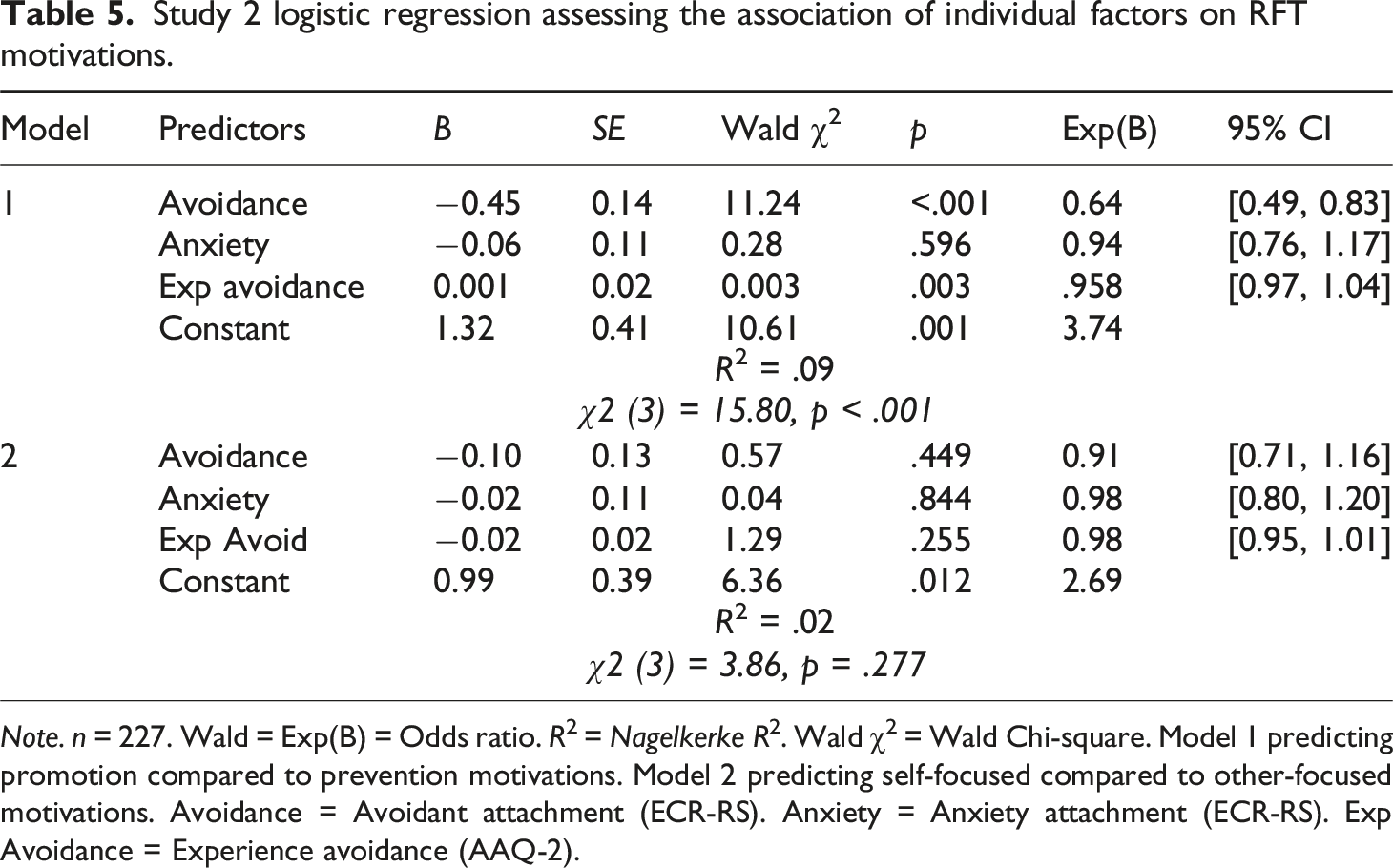
Note. n = 227. Wald = Exp(B) = Odds ratio. R2 = Nagelkerke R2. Wald χ2 = Wald Chi-square. Model 1 predicting promotion compared to prevention motivations. Model 2 predicting self-focused compared to other-focused motivations. Avoidance = Avoidant attachment (ECR-RS). Anxiety = Anxiety attachment (ECR-RS). Exp Avoidance = Experience avoidance (AAQ-2).
When examining whether attachment insecurity and experiential avoidance predicted promotion-focused motivations (versus prevention-focused) for disclosing sexual preferences, the model provided a significantly better fit than an intercept-only model (p = .001) and explained ∼9% of the variation in outcomes. Approximately 61% of decisions were accurately classified. Controlling for anxious attachment and experiential avoidance, each unit increased in avoidant attachment was associated with a decrease of 0.45 in the odds of having a promotion-focused motivation (p < .001), meaning that individuals higher in attachment avoidance were more likely to have prevention-focused motivations. Holding other variables constant, anxious attachment and experiential avoidance were not reliably associated with promotion-focused motivations.
Research question 3 results
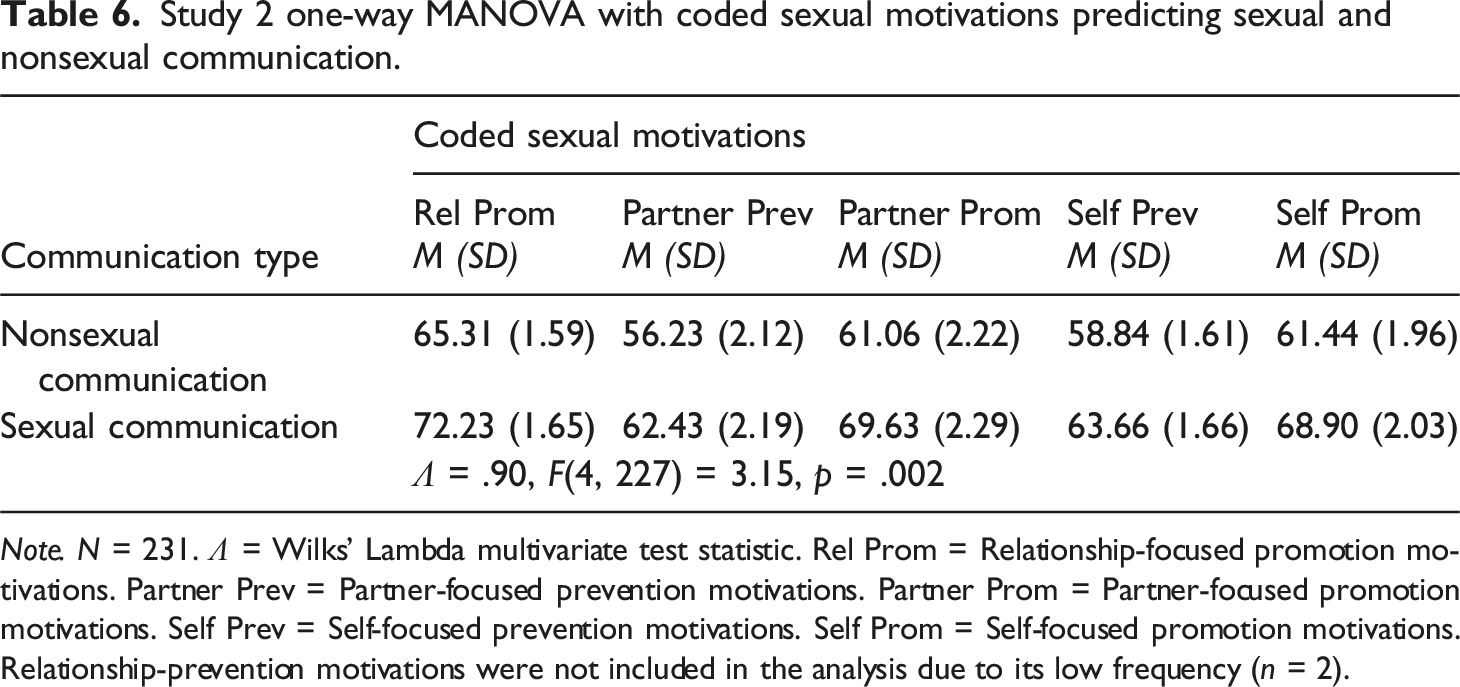
To investigate if the coded sexual motivations predict sexual and nonsexual communication, a one-way MANOVA was employed. The analysis revealed a significant multivariate effect of coded sexual motivations on communication type, Λ = .90, F(4, 227) = 3.15, p = .002 (See Figure 2 and Table 6). The sexual motivations variable had five levels: self- promotion, self-prevention, partner-promotion, partner-prevention, and relationship-promotion
2
. Wilks’ Lambda (Λ) was used as the test statistic to account for the heterogeneity between groups and differences in group size
3
. There was a small effect size (η2 = .05; Cohen, 1988), meaning that the coded sexual motivations account for 5% of the variance in communication type. Games-Howell post hoc tests were conducted to explore pairwise differences between groups and provide additional insights into the specific group differences that contribute to the overall multivariate effect observed in the MANOVA. Those with relationship promotion-focused motivations reported more depth of sexual communication and nonsexual communication than both those with partner prevention-focused motivations (sexual: p = .005; nonsexual: p = .033) and self prevention-focused motivations (sexual: p < .001; nonsexual: p = .012). One-way MANOVA with coded sexual motivations predicting (a) sexual and (b) nonsexual communication. Study 2 one-way MANOVA with coded sexual motivations predicting sexual and nonsexual communication. Note. N = 231. Λ = Wilks’ Lambda multivariate test statistic. Rel Prom = Relationship-focused promotion motivations. Partner Prev = Partner-focused prevention motivations. Partner Prom = Partner-focused promotion motivations. Self Prev = Self-focused prevention motivations. Self Prom = Self-focused promotion motivations. Relationship-prevention motivations were not included in the analysis due to its low frequency (n = 2).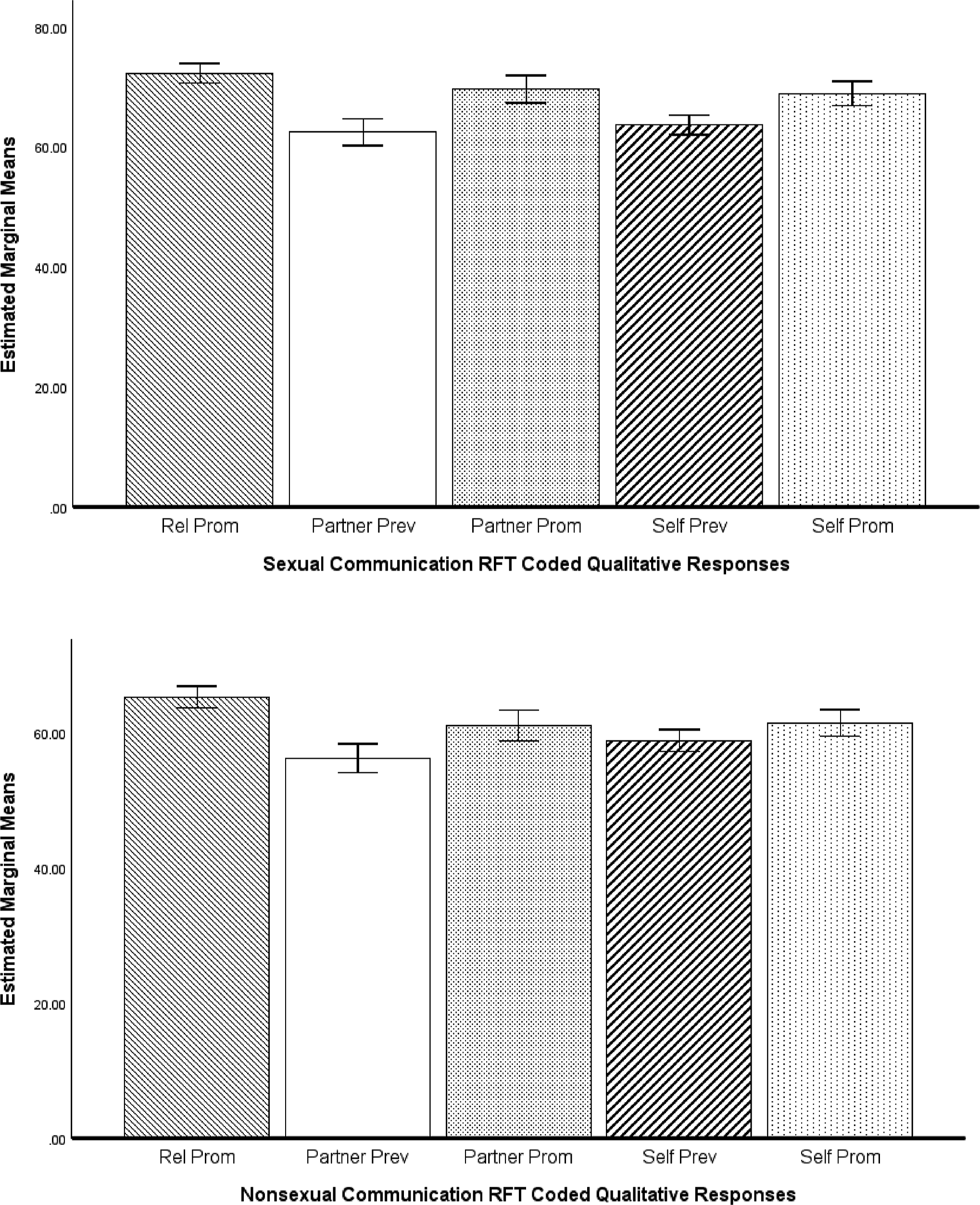
Research question 4 results
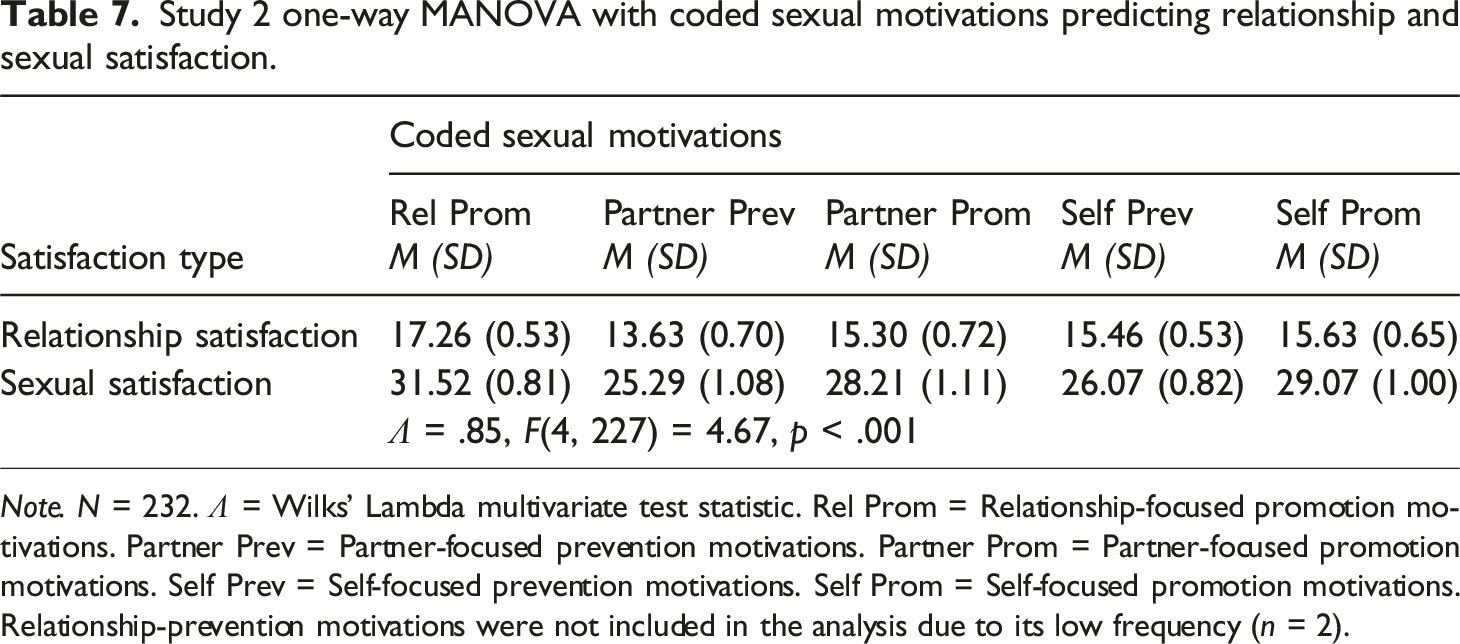
To investigate if the coded sexual motivations predict relationship and sexual satisfaction, a one-way MANOVA was employed, similarl to RQ3. The overall analysis revealed a significant multivariate effect of coded sexual motivations on relationship outcome variables, Λ = .85, F(4, 227) = 4.67, p < .001 (See Figure 3 and Table 7). There was a medium effect size (η2 = .08; Cohen, 1988), meaning that the coded sexual motivations account for 8% of the variance in relationship outcomes. Games-Howell post hoc tests were, again, conducted to explore pairwise differences between groups. Those with relationship promotion-focused motivations reported more relationship satisfaction (p = .016) and sexual satisfaction (p = .003) than those with partner prevention-focused motivations and more sexual satisfaction (p < .001) than those with self prevention-focused motivations. One-way MANOVA with coded sexual motivations predicting (a) relationship and (b) sexual satisfaction. Study 2 one-way MANOVA with coded sexual motivations predicting relationship and sexual satisfaction. Note. N = 232. Λ = Wilks’ Lambda multivariate test statistic. Rel Prom = Relationship-focused promotion motivations. Partner Prev = Partner-focused prevention motivations. Partner Prom = Partner-focused promotion motivations. Self Prev = Self-focused prevention motivations. Self Prom = Self-focused promotion motivations. Relationship-prevention motivations were not included in the analysis due to its low frequency (n = 2).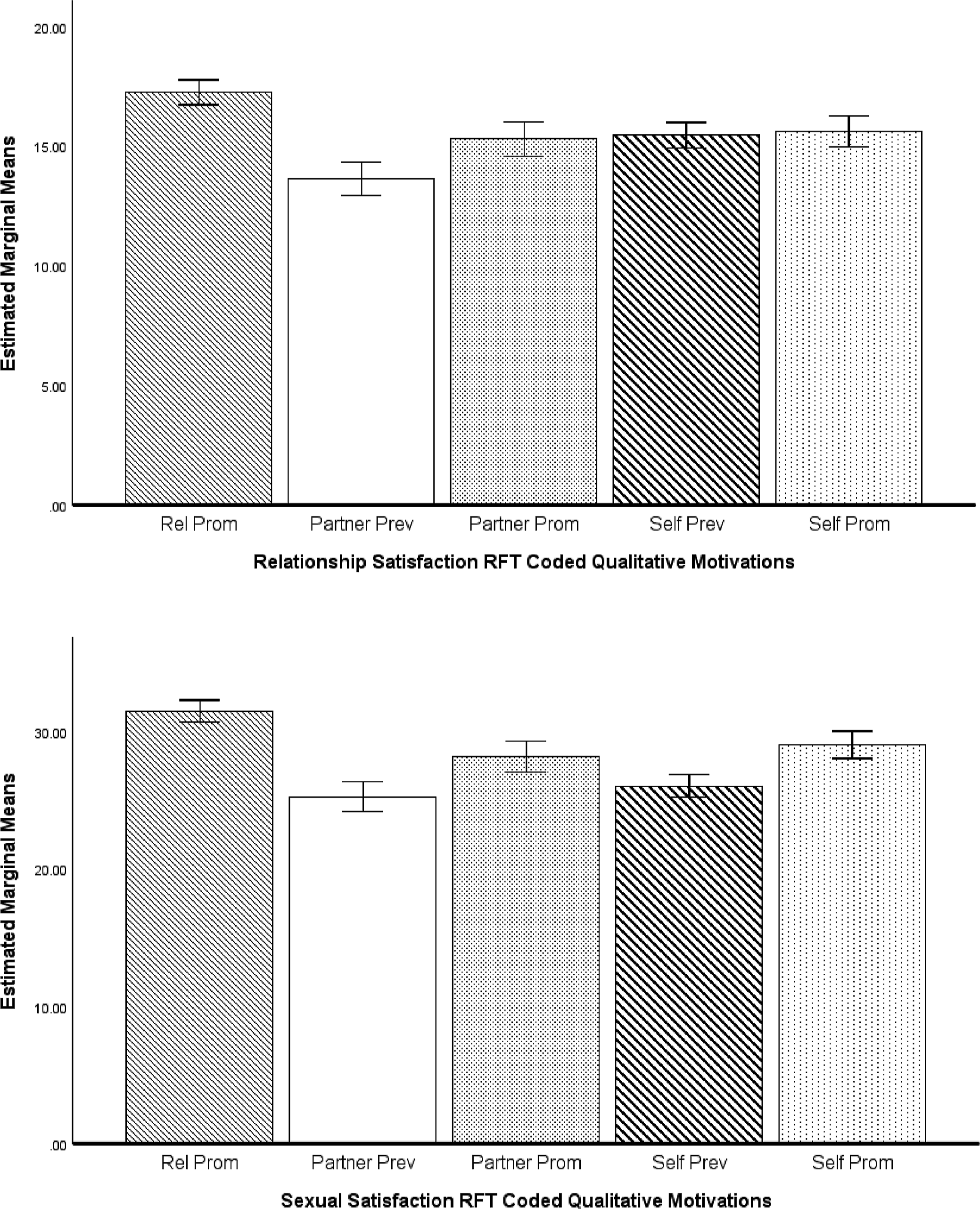
Study 2 discussion
The Study 2 findings largely supported the research questions and corresponding hypotheses. The 12-theme RFT coding structure developed in Study 1 again captured the themes of the participant responses. The depth of the responses was notably better compared to Study 1 (i.e., more detailed and clearer explanations). Similar to Study 1, participants discussed relationship growth-oriented motivations much more frequently than security-orientation motivations. Compared to Study 1 where participants discussed a higher relative frequency of growth-oriented motivations when discussing sexual communication motivations related to the partner, the distribution of partner-oriented motivations was fairly equally distributed across growth-oriented versus safety-oriented motivations. When discussing motivations related to the self, participants in Study 2 discussed more prevention-focused motivations, whereas participants in Study 1 were more likely to discuss the two themes comparably. With the variability in the relative frequency of the codes, these findings do not fully clarify what motivation type is more common and, perhaps, impactful when considering the focus of an individual’s motivations (i.e., self, partner, relationship). Future research will need to build on these initial findings to clarify if and how the RFT motivations change depending on who the individual is considering when deciding whether to engage in sexual communication. The findings and implications relating to the role of individual differences in predicting motivations and how the motivational categories predict theoretically relevant outcomes are discussed below.
General discussion
Sexual communication is vital to intimate relationships (Byers & Demmons, 1999; Rehman, Rellini, & Fallis, 2011). Safe and mutually pleasurable sexual repertoires are built by sharing sexual preferences, sexual health history, personal boundaries, and establishing sexual consent (MacNeil & Byers, 2005, 2009). We employed qualitative and mixed methods approaches to code themes related to sexual motivation from the participants’ responses (inductively coded in Study 1 and replicated in Study 2). We also investigated how individual difference variables predicted the coded motivation themes and how the coded themes predicted the quality of sexual and nonsexual communication (operationalized as the depth of communication) and overall relationship and sexual satisfaction (Study 2).
Results and implications of research goal #1
The first goal was to code motivational themes in participants’ decisions to disclose or not. Participants described motivations focused on growth and advancement (promotion) or safety and security (prevention). These emergent motivational themes mapped onto Regulatory Focus Theory (RFT; Molden & Winterheld, 2013) and were replicated in Study 2.
RFT, previously applied to intimate relationships (Hui & Molden, 2014), offers a compelling framework for understanding how safety and growth needs influence sexual communication decisions. For example, a promotion-focused individual may see a mutually pleasurable sexual repertoire as a positive goal and feel it is a missed opportunity if not achieved. Conversely, a prevention-focused individual may be preoccupied with the potential threat of sexual communication, particularly threats to self (Rehman et al., 2019), and thus avoid disclosure to prevent negative outcomes. Therefore, the first person is likely to disclose their sexual preferences, while the second is likely to withhold them to avoid perceived threats.
Though the RFT has conceptual similarities to both the approach and avoidance and attachment theories, it is a distinct motivational framework. Approach-avoidance captures motivations to achieve positive outcomes and avoid negative ones (Atkinson, 1957), without focusing on growth or security goals. Attachment theory explores how caregiver support shapes motivational frameworks, while RFT suggests motivations develop over time based on received support patterns (Mikulincer & Shaver, 2020; Molden & Winterheld, 2013). Someone with a strong promotion or prevention orientation can have any attachment orientation (Molden & Winterheld, 2013). Based on these theoretical distinctions between approach-avoidance, attachment theory, and the RFT, there is support for the RFT as a distinct motivational framework. The RFT motivational framework also has conceptual overlap with individual experiences such as fear of judgement and rejection. While fear of judgment/rejection centres on preoccupation with others’ approval, prevention-focused motivation involves avoiding perceived negative outcomes, which vary among individuals, such as an extrovert avoiding social losses or a rejection-sensitive person avoiding negative evaluations (Higgins, 1997).
Integrating RFT-based motivational themes into existing models, such as the Contextual Model for Sexual Communication (Brown & Weigel, 2018), could enhance understanding and future research. Developing a scale to measure RFT motivations specific to sexual communication could also facilitate the integration of the measurement of motivations for sexual communication into future research.
Results and implications of research goal #2
The second major goal of our overall study was to explore how an individual’s internalized models of intimacy and relationships (attachment style) and the tendency to avoid attending to internal experiences (experiential avoidance) predicted prevention-versus promotion-focused motivations. Avoidant attachment predicted prevention-focused motivations, though no other factors were reliably associated with the RFT sexual motivations (RQ2). Our findings for attachment align with some past work that suggests that avoidant attachment – but not anxious attachment – may be specifically associated with less skilled sexual communication in established relationships (McNeil et al., 2018). The findings from the present studies suggest that individuals with avoidant attachment have poorer sexual communication and poorer sexual wellbeing. Individuals with avoidant attachment tend to perceive intimacy and emotional expression as threatening (Mikulincer & Shaver, 2013), factors which are highly related to sexual communication (Mikulincer & Nachshon, 1991; Rehman et al., 2019). Exploring the mechanisms and barriers faced by individuals with avoidant attachment can reveal why sexual communication may feel difficult and not worth the perceived consequences to themselves, their partner, or their relationship. These insights can help develop strategies to support these individuals in overcoming barriers to fulfilling and safe sexual relationships.
We found no significant association between experiential avoidance and the RFT-based coded themes, potentially due to several reasons. First, given that experiential avoidance is conceptually linked to attachment and the development of experiential avoidance (as an emotion regulation strategy) is viewed as being influenced by attachment processes (e.g. Ross et al., 2016; Vanwoerden et al., 2015), it may have been difficulty to detect unique variance related to experiential avoidance. It is also possible that other aspects of emotion regulation, not experiential avoidance, are more relevant to predicting sexual communication. Additionally, only two individual factors were tested in the current study. As such, future research needs to examine additional factors, such as exposure to sexual health education and attitudes toward sexuality. Perfectionism is also an individual factor that has previously been linked to sexual functioning (Habke et al., 1999) and could be a personality variable that shapes certain types of sexual motivations.
Results and implications of research goal #3
The final goal of our broader study was to examine how sexual motivations predicted relationship quality, sexual satisfaction, and depth of sexual and nonsexual communication. Participants’ promotion-focused motivations in the relationship domain were associated with more in-depth sexual and nonsexual communication and higher sexual and relationship satisfaction; in contrast, participants’ prevention-focused motivations in the self and partner domain predicted less in-depth sexual and nonsexual communication and lower relationship and sexual satisfaction. These results suggest that focusing on growth and positive outcomes that are specifically related to the relationship as a whole is uniquely beneficial to both communication and overall relationship outcomes. If future studies use designs that can demonstrate a directional association between promotion and prevention motivations for sexual communication and the outcomes discussed above, this could present a potentially useful target for intervention. That is, therapists working with couples who tend to avoid sexual communication could help the couples articulate the motivational factors that are underlying the avoidance. In this way, if an individual or couple is experiencing a lack of safety when engaging in sexual communication, the factors that play a role in this lack of security can be addressed. Further, the therapist may try to highlight the potential benefits or rewards of sexual communication in an effort to activate promotion-focused goals.
It will also be important to expand this work both conceptually and methodologically. First, creating a conceptual model, such as expanding the Contextual Model for Sexual Communication (Brown & Weigel, 2018), which includes motivations for sexual communication, can help determine causal relationships as well as the relative importance of various factors. The expanded model can compare sexual communication processes across different groups (e.g., genders, sexualities, cultures). Developing a tailored scale for sexual communication-related RFT motivations will enhance future research by providing specific measurement tools.
Strengths and limitations
The findings of both studies support the idea that sexual motivations can be captured in a reliable way, with the observed motivational categories mapping well to an existing motivational paradigm that has been extensively researched. The coded motivations were also associated with attachment avoidance in theoretically meaningful ways. Furthermore, the predicted depth of disclosure and relationship/sexual satisfaction and the pattern of results were consistent with past research and theoretical predictions. To our knowledge, this is the first study to apply a regulatory focus perspective to the study of motivations for sexual communication, and the results suggest that this framework holds considerable promise as a meaningful lens for categorizing sexual motivations. This study employed qualitative and then mixed methods approaches to use individual responses and perspectives to help shape our understanding of motivations for sexual communication and how they relate to broader relationships and communication processes.
There are many important limitations to note as well as suggestions for expanding these findings. First, these results examined just one individual’s perspective, though it is important to examine how the communication processes of all individuals in a relationship affect each other. Dyadic analyses would allow further insight into how responsiveness and perceived partner openness impact the process of communication. Sexual communication is also a dynamic process that unfolds throughout relationships (Byers, 2005), though with these cross-sectional studies, we were unable to investigate how the process of sexual communication changes over time. Future longitudinal studies will be necessary to determine how the constructs in the model work together at different stages of a relationship, such as the beginning of a relationship, during long-term relationships, and during notable life changes (e.g., transition to parenthood). Given the impact of individual factors, it will also be important to measure them simultaneously to understand which factors have the biggest impact on sexual communication. There are also factors that we did not measure in these studies, such as communication abilities and frequency and type of sexual behaviour that have been previously related to overall sexual functioning and sexual communication (Jodouin et al., 2019; Yew et al., 2021). This research examined motivations for sexual disclosure, and the results illuminate key aspects of these motivations. However, it is possible that broader motivational tendencies in close relationships (e.g., Laurenceau et al., 2010) or general tendencies (e.g., Carver & White, 1994) play a role. Future research should measure and compare sexual and general motivations for both proximal (e.g., a satisfying sexual encounter) and distal outcomes (e.g., relationship satisfaction). Finally, we did not examine these results across different groups, such as gender, sexuality, and culture, which are important directions for future research.
Conclusions
Despite the limitations of this study, these findings contribute valuable information to elucidate the role and type of motivations that informed participants’ decisions to engage in sexual communication and how those motivations relate to the broader process of sexual communication. It is clear that sexual communication is a complex process that requires a more rigorous and refined implementation of this construct in research and clinical intervention.
Footnotes
Declaration of conflicting interests
The author(s) declared no potential conflicts of interest with respect to the research, authorship, and/or publication of this article.
Funding
The author(s) disclosed receipt of the following financial support for the research, authorship, and/or publication of this article: This work was supported by the Social Sciences and Humanities Research Council of Canada, 435–2022-0405.
Open research statement
As part of IARR’s encouragement of open research practices, the author(s) have provided the following information: This research was pre-registered. The aspects of the research that were pre-registered were the analyses in study two (replication of the qualitative coding structure of study one and subsequent mixed method analyses). The registration was submitted to OSF. The data used in the research are available. The data can be obtained at https://osf.io/s3cuq/?view_only=b7c83e75a5e8422094ff091b175766f1 or by emailing  or by emailing