



Abstract
The prevalence of loneliness varies widely across Western societies. However, the underlying sources of these cross-national disparities are still the subject of debate. In particular, recent advances in the literature put emphasis on exploring the moderating role of country-level characteristics for a better understanding under which condition individual-level factors predict loneliness. One such predictor for loneliness is neighborhood cohesion as perceiving the community as reciprocal and supportive has a large protective potential against loneliness. The present study links these lines of research and explores how three country-level characteristics (i.e. norms of cultural pluralism, welfare spending, and internet penetration rates) explain cross-national disparities in loneliness and whether they exert a moderating influence on the relationship between neighborhood cohesion and loneliness. By running linear multilevel models using data from the European Social Survey (N = 45042) as well as Eurostat Data, we find that all three country-level characteristics explain national disparities in loneliness as well as neighborhood cohesion. However, only norms of cultural pluralism moderate the association between neighborhood cohesion and loneliness on the individual level. This suggests that the potential of interventions aiming at fostering neighborhood cohesion to prevent loneliness varies depending on the cultural context.
Introduction
Loneliness refers to the painful perception that available social relationships do not satisfy personal social needs (Gierveld et al., 2018; Perlman & Peplau, 1981). Loneliness has been associated with a variety of negative consequences such as social distrust, chronic health conditions, and increased mortality (Hawkley & Cacioppo, 2010; Holt-Lunstad et al., 2015; Langenkamp, 2022). By defining loneliness on the basis of the frequency of lonely feelings (e.g., often, always, or sometimes, versus rarely or never), a recent meta-analysis of 120,000 older adults from 29 countries found that loneliness was prevalent in roughly 28.5% of the sample (Chawla et al., 2021). In European countries, for example, prevalence rates ranged from about 5–24% with an overall average of roughly 13%, implying that country-level differences might play an important role in explaining these disparities (Berlingieri et al., 2023; Langenkamp, 2023).
Research indicates that community-level factors such as perceived solidarity, trust, and support are important predictors for loneliness (Goodfellow et al., 2022; Franklin and Tranter 2021; Prezza et al., 2001). These kinds of perceived community indicators are often subsumed under the term “perceived neighborhood cohesion” (PNC). PNC is a broad concept that refers to the individual’s perception of trust, solidarity, and support in their neighborhood (Bromell & Cagney, 2014). Perceiving one’s own neighborhood as cohesive, reliable and trustworthy is likely to reduce loneliness, as this perception may facilitate a sense of security, foster social interaction and support the development of reliable social support networks (Pyle & Evans, 2018). Correspondingly, a recent study found that community-level interventions focused on increasing neighborhood identification can reduce loneliness (Fong et al., 2021).
However, the association between PNC and loneliness is not homogeneous across countries (Ruiz et al., 2019), suggesting that this association varies with socio-structural or cultural factors. If this holds true, intervention strategies against loneliness focussing on PNC might vary in their effectiveness depending on the broader social context. This corresponds with several calls for putting more emphasis on the exploration of cross-level interactions between individual-level and country-level characteristics, and the association of their interaction with loneliness (de Jong Gierveld & Tesch-Römer, 2012; Yang, 2019).
Cultural norms influence the experiences and social comparison standards (i.e. socialization) people grow up with. Depending on the cultural context, different types of relationships such as romantic relationships, family ties, or community ties are of varying importance for the individual’s social satisfaction (Van Staden & Coetzee, 2010). Individuals living in cultures characterized by higher social expectations regarding social relationships may be less likely to be physically socially isolated as they try to conform with the regional norms, but may be more likely to experience perceived isolation (i.e., loneliness) if they feel that their relationships do not meet cultural social norms (Heu, van Zomeren, & Hansen, 2021). Norms can be specific to relationship types. For instance, individuals living in cultures where a large number of family ties are expected may be more likely to feel lonely even if they have a large network if most network members are non-family ties. In a similar fashion, social norms likely influence associations of loneliness with other social resources such as PNC, as the perceived importance of these resources for the individual’s satisfaction with personal inclusion differs depending on the social norms in the region. If certain social norms increase the importance of living in neighborhoods the individual considers cohesive, the PNC should relate to loneliness more strongly.
Experts argue that cross-national disparities in loneliness as well as PNC stem from several country-level characteristics (Eurofound, 2018; Heu, 2023; Heu, van Zomeren, & Hansen, 2021). The most prevalent country-level characteristics examined when explaining cross-national disparities in loneliness are cultural norms, the extent of welfare state spending, and the degree of digitalization of the society, as indicated for example by internet penetration rates (Luhmann et al. 2023). For instance, cultural preferences for pluralism – representing a wider tolerance and openness toward others who have different lifestyles – is argued to foster more positive beliefs about other people and reduce the stigma of loneliness (Swader & Moraru, 2023). As such, one can expect that cultural preference for pluralism directly fosters higher levels of PNC. Simultaneously, one can argue that high cultural tolerance of different lifestyles lowers the importance of PNC for loneliness as individuals are socialized in a society that is more open toward diverse and heterogeneous communities.
Other social opportunity structures facilitate social interaction and prevent social exclusion as well. For instance, poverty or illness are established risk factors for loneliness. Social policies and welfare structures that limit the negative impact of poverty and illness consequentially protect against loneliness. For instance, welfare state spending that supports low-income households or that allows for a greater mobility of disabled individuals reduces barriers to social participation (Mood & Jonsson, 2016). In a similar fashion, enhancing access to the internet increases the proportion of the population that can access information about social events and participate in social activities (Luhmann et al. 2023; Swader & Moraru, 2023). That being said, we still know little about the relative importance of country-level characteristics for loneliness, PNC and the moderating role of country-level characteristics on the association between the two.
In the present study, we contribute to the literature by exploring the role of three country-level characteristics – preference for cultural pluralism, welfare state spending, and internet penetration rate – in explaining cross-national differences in loneliness and PNC as well as their moderating influence on the association between the two. Our analysis does so in multiple consecutive steps. First, we use multilevel regression models and variance decomposition to investigate to what degree preference for cultural pluralism, welfare state spending, and internet penetration rate are associated with loneliness and PNC. Secondly, we use multilevel models with cross-level interactions to investigate how the association between PNC and loneliness varies dependent on the three country-level characteristics.
Loneliness and perceived neighborhood cohesion
The cognitive discrepancy model (CDM) proposed by Perlman and Peplau (1981) conceptualizes loneliness as a perceived mismatch between the desired and available social relationships. Using the CDM as theoretical framework, loneliness is influenced by all factors that alter either the objective availability of social relationships, the desired type and perceived quality of social relationships, or the evaluation of the match between personal needs and the perceived availability of said relationships.
The protective influence of social relationships for loneliness is often discussed in the literature (Gierveld et al., 2018) and recent studies found evidence supporting the idea that social exclusion fosters loneliness across cultures and social settings (Dahlberg et al., 2022). Research concerned with the role of different types of social capital for the development or prevention of loneliness is, however, still limited. Social capital theory conceptualizes social cohesion and attitudes of reciprocity and trust as vital societal resources that foster interaction, beliefs in reciprocity, and community (Bhandari & Yasunobu, 2009; Coleman, 1988). Likewise, these attitudes foster community involvement, which in turn fosters social interactions, strengthens social support networks, and consequentially reduces the risk of loneliness (Bromell & Cagney, 2014). Correspondingly, authors have argued that the person’s perception of whether they fit into the broader social setting (for instance, the city, village, or neighborhood) and whether they consider themselves to be an integral part of society are important influences on the experience of loneliness (Di Masso et al., 2017; Franklin & Tranter, 2021). This is the central micro-level association we are interested in our paper.
Strong perceived neighborhood cohesion (PNC) is negatively associated with loneliness.
The influence of country characteristics on loneliness and PNC
The development of loneliness and PNC are influenced by the larger social context. Sociological models concerned with the consequences of social opportunity structures and social norms for social actions and attitudes provide vantage points from which to explain cross-national differences in loneliness and PNC (Esser & Kroneberg, 2017; Merton, 1996). Specifically, these models state that opportunity structures (such as laws, social welfare systems, or infrastructure) and social frames (social norms or mental models of the situation) inform attitudes and behavior. Consequently, social norms and social structures that enable (or inhibit) social inclusion or influence the evaluation of one’s personal relationship to people and the neighborhood as a whole can influence both loneliness and the perception of neighborhood cohesion. In the context of the present study, we focus on norms of preferred cultural pluralism, welfare state spending, and internet penetration rate.
As elaborated by Swader and Moraru (2023), norms of cultural pluralism encompass a cultural preference for pluralism in a broad sense, which includes especially an openness to diversity and acceptance of alternative lifestyles. Swader and Moraru (2023) review that cross-national differences in the prevalence of norms of cultural pluralism can influence the individual’s cognitive evaluation of the available and desired social relationships. Furthermore, they argue that a high level of cultural openness is linked with more tolerance in general for diverse lifestyles which, in turn, is linked to a reduced stigma of loneliness and more positive beliefs about the good intentions of others. Higher trust, in turn, is argued to lower levels of loneliness, as it helps to build good relationships among individuals (Rapolienė & Aartsen, 2022).
Following this reasoning, we can expect that a cultural preference for pluralism on the country level is associated with less loneliness and stronger PNC on the individual level. Openness towards others should make it easier to create and maintain contacts within the wider social area and, therefore, be associated with a stronger PNC as well. Similarly, a larger preference for cultural pluralism offers a wider range of relationship options, and the opportunity to choose a preferred relationship can indirectly enhance relationship quality (Heu, Hansen, & van Zomeren, 2021), thereby reducing loneliness.
A similar logic can be applied to welfare state spending. Welfare state spending is most commonly understood as money or material transfers by governments to private households or individual parties. This includes publicly funded health insurance, social protection schemes in case of unemployment or poverty, and education expenses, as well as administrative costs that arise in managing and operating these forms of governmental aid (Eurostat, 2023a). The social capital literature suggests that attitudes of reciprocity, trust, and PNC stem at least partially from membership in social associations and frequent positive social interactions (Coleman, 1988; Hoffmann & Putnam, 2003). There is extensive literature showing that financial security, quality of living conditions and health enhance the individual’s ability to maintain satisfying social relationships (Böhnke, 2008; Mood & Jonsson, 2016). This, in turn, means that social exclusion from social networks, clubs, associations, or general social activities due to illness or poverty can foster loneliness and reduce PNC (de Jong Gierveld & Tesch-Römer, 2012). Considering that level of social integration and quality of living conditions are strongly influenced by social support structures implemented by welfare states, it is not surprising that cross-national differences in welfare state regimes are associated with varying loneliness rates as well (Nyqvist et al., 2019). Welfare states that aim for a relatively equal distribution of resources across the population reduce the likelihood that poorer individuals must struggle to meet needs that their well-off compatriots can take for granted. This would be expected to result, on average, in greater feelings of inclusion and belonging of their citizens, thus reducing feelings of loneliness and increasing PNC.
In a similar fashion, availability of internet can be understood as a resource for social affiliation. Digital social spaces such as digital social networks, video calls, or games can offer individuals opportunities to maintain and extend their social contacts (Boulianne, 2020; Lou et al., 2012; Pace et al., 2010). This may be especially critical for more isolated individuals and in rural areas with a low population density where, unfortunately, internet access is most likely to be limited (European Commission Report, 2018). Likewise, community networks can offer information about analogous events in the local area and generate a sense of belonging and a feeling of “being in the loop”. While it has been suggested that the loneliness-related benefits of the internet are dependent on how it is used (Nowland et al., 2018), one cross-national study using the European Social Survey indicates that widespread internet facilitates social contact and is therefore, on average, associated with stronger feelings of social cohesion (Swader & Moraru, 2023). We argue that high internet penetration enables those individuals willing to socialize through digital resources. This seems to be particularly important for populations at high risk for loneliness such as persons of older age, gender minorities, and individuals who are immobile due to advanced age or illnesses (Polenick et al., 2021; Silva et al., 2022; Woznicki et al., 2021). As such, high internet penetration rates represent an important resource for social participation. Assuming that national differences in rates of internet penetration are reflected in individual and neighborhood rates of internet access and use, we posit that high national rates of internet penetration are associated, on average, with less loneliness and more PNC.
All of this suggests that countries with strong preferences for cultural pluralism, high welfare state spending and high internet penetration rates should have lower rates of loneliness and stronger neighborhood cohesion.
Stronger preferences for cultural pluralism are negatively associated with loneliness and positively associated with neighborhood cohesion.
Greater welfare state spending is negatively associated with loneliness and positively associated with neighborhood cohesion.
Greater national internet penetration rate is negatively associated with loneliness and positively associated with neighborhood cohesion.
Moderating influence of preferred cultural pluralism on the association between loneliness and neighborhood cohesion
The CDM of loneliness implies that the importance of certain types of social relationships for the development of loneliness varies depending on the individual’s comparison standards (Perlman & Peplau, 1981). For instance, regions can have cultural social norms that put emphasis on the availability and importance of specific types of relationships, such as large family networks or romantic partnerships (Van Staden & Coetzee, 2010). Most frequently discussed in the context of norms of individualism-collectivism, cultural norms are theorized to influence the culturally expected standards of social relationships a person should have (Gierveld et al., 2018; Heu, 2023). Not satisfying the social expectations that are prominent in a region is likely to trigger loneliness (de Jong Gierveld & Havens, 2004).
Following this reasoning, if loneliness is defined as a perceived inadequacy of social relationships and cultural norms influence the individual’s comparison standards and internalized social expectations, we can expect that cultural norms moderate the importance between the perceived social surrounding of a person and the person’s loneliness. Transferring this logic to our study, we expect a moderating effect of preferences for cultural pluralism on the association between neighborhood cohesion and loneliness.
As argued before, we expect high PNC to be negatively associated with loneliness, as strong perceived cohesion should increase the chances of being satisfied with one’s social surroundings. Additionally, we expect that strong preferences for cultural pluralism should strengthen this negative association between PNC and loneliness (moderation effect), as a high level of cultural acceptance of other opinions and lifestyles should diminish the role of any one concrete social group (i.e., the neighborhood) in one’s experience of feeling socially integrated (i.e., less lonely). Intuitively speaking, we expect that a strong preference for cultural pluralism lowers individuals’ expectation of how homogeneous and cohesive their social surroundings should be. If this holds true, we expect the negative association between PNC and loneliness to be stronger in regions with strong norms of preferred cultural pluralism.
In contrast, internet penetration rate and welfare state spending are expected to reduce loneliness and foster neighborhood cohesion directly by enabling social interaction, but there is little reason to expect that either will moderate the association between loneliness and PNC, as neither directly alters the perceived relevance of neighborhood cohesion for satisfaction with one’s own social network. Therefore, we hypothesize that preferences for cultural pluralism exert a moderating influence on the association between neighborhood cohesion and loneliness. In contrast, we expect that welfare state spending and internet penetration rates will not moderate the association.
Preference for cultural pluralism strengthens the negative association between loneliness and neighborhood cohesion.
More welfare state spending does not moderate the association between loneliness and neighborhood cohesion.
Greater national internet penetration rates do not moderate the association between loneliness and neighborhood cohesion.
Data and analytical strategy
Data
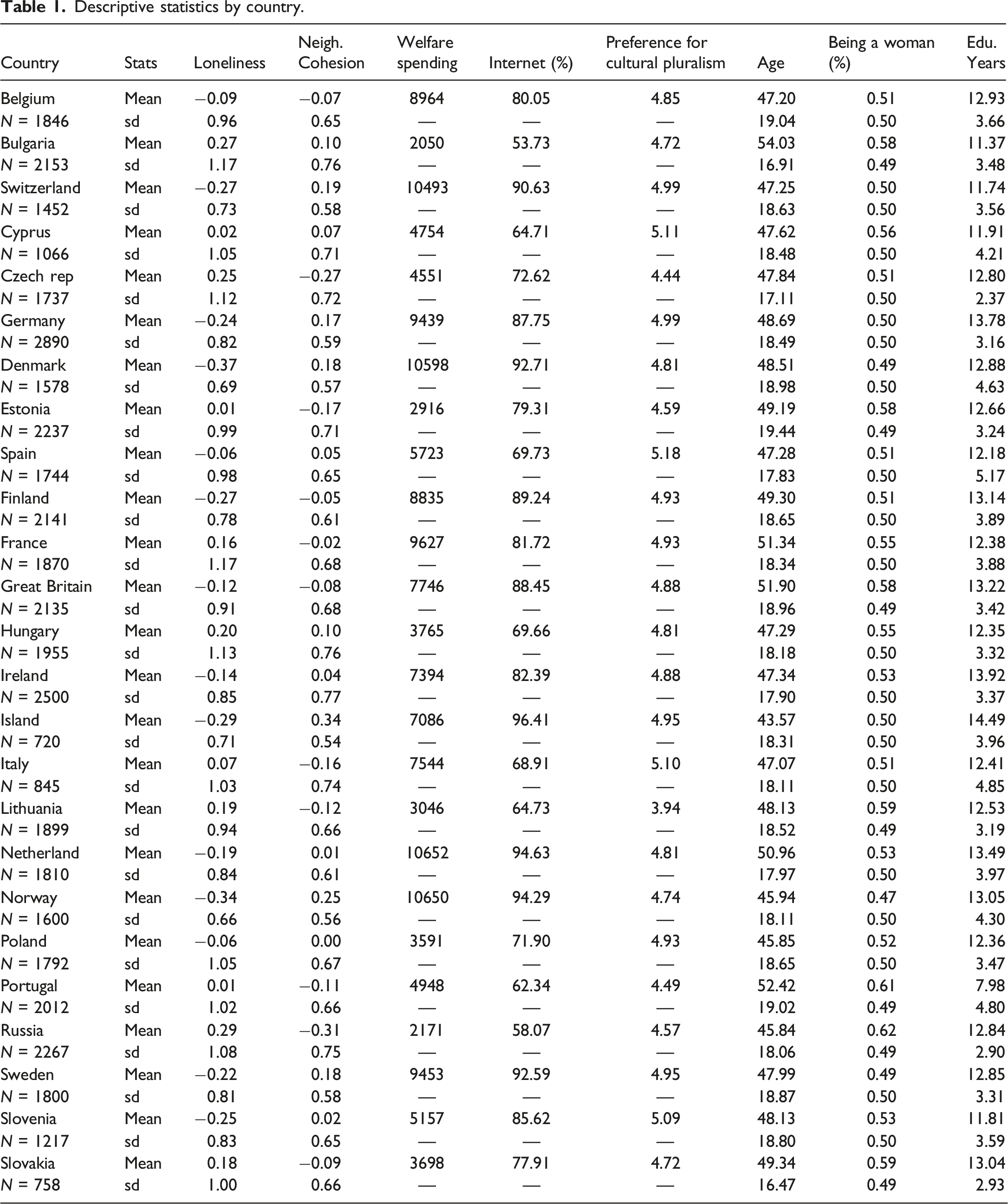
Descriptive statistics by country.
Pairwise correlations.
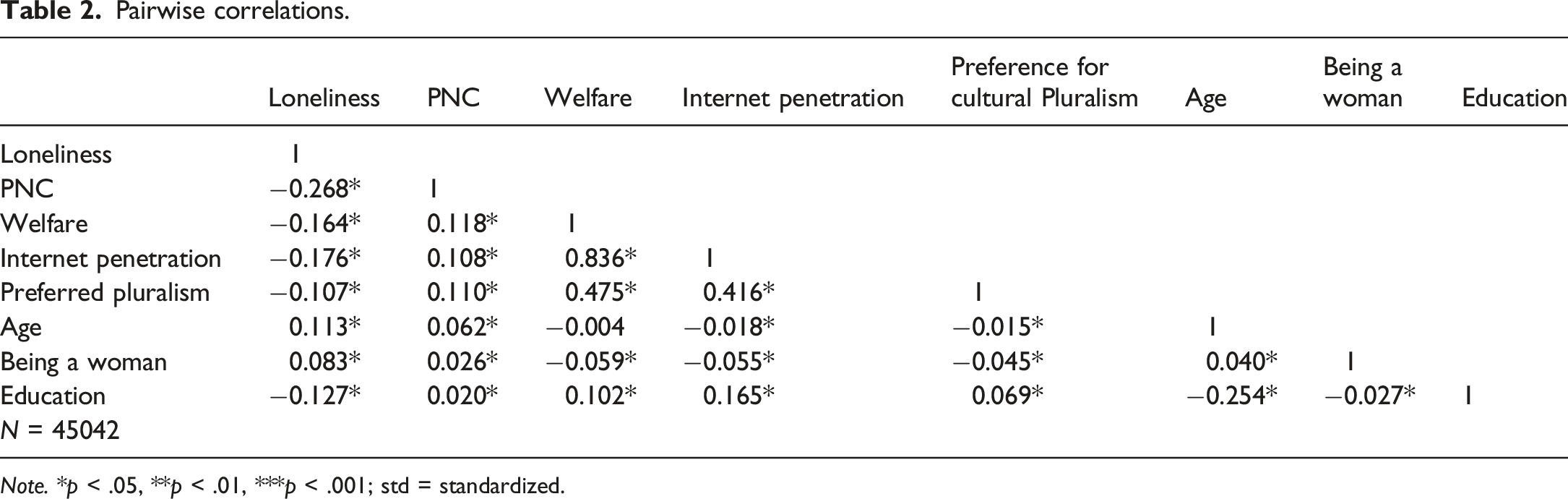
Note. *p < .05, **p < .01, ***p < .001; std = standardized.
Measures
Loneliness
We operationalized loneliness using a direct question, asking the participants how frequently they felt lonely during the past few weeks on a scale ranging from 1 (no or almost none of the time) to 4 (all or almost all of the time). While multi-item measures are preferable, single-item measures have been shown to be reliable and valid regarding a wide variety of external correlates (Mund et al., 2023). In the descriptive statistics, we report the variable unstandardized, but use a standardized version of the variable in the regression models.
Neighborhood cohesion
We operationalized neighborhood cohesion using variables measuring each person’s judgement about individuals in their social surroundings. In particular, the participants were asked whether they felt close with people in the local area, whether they felt appreciated by these people, whether they believed they would receive help from them if needed, and whether they believed that people in the area helped one another in general. We combined these variables to a standardized summated index, with high values indicating a strong sense of cohesion in the neighborhood (α = 0.78). Former studies support the validity of using comparable subjective individual level measures of perceived cohesion as a marker of community level processes (Cagney et al., 2009).
Preference for cultural pluralism
We operationalized preference for cultural pluralism using two items of the Schwartz human value scale (Schwartz, 2012; Swader & Moraru, 2023). These variables represent values for understanding and supporting diverse others. In the first question, the participants had to indicate whether they agreed that it was important to listen to people different from themselves and to understand one another even if they disagreed. The second question asked the participants whether they believed it was important that other people should be treated equally and should have equal opportunities. Individuals could answer on a six-point scale ranging from “very much like me” to “not like me at all.” Taken together, the items represent openness towards people different from the respondents. We coded the items so that high values indicated agreement with plurality and equality. We standardized and summed both variables to create a scale measuring individual preference for cultural pluralism. We use the country average of this variable as a macro-level indicator for preference of cultural pluralism (for a similar approach, see Swader & Moraru, 2023).
Welfare state spending
To operationalize each nation’s welfare state spending, we used the given nation’s expenditures on social protection per inhabitant in the survey period, measured by Purchasing Power Standard (PPS) per person. Intuitively speaking, as prices of goods vary between countries, a given amount of welfare state spending has a different impact between countries. To account for this, the PPS standardizes welfare spending by adjusting for price level differences between countries. The data are derived from Eurostat (Eurostat, 2023a), the official statistical office of the European Union. Like ESS data, Eurostat data are freely available to researchers.
Internet penetration rate
Internet penetration rate was quantified using a Eurostat indicator of the percentage of households within each country that have internet access. We use data from 2013 as it is the most recent available data for the ESS wave. The data for Switzerland were substituted from the year 2014, as they are unavailable for earlier dates (Eurostat, 2023b).
Control variables
To avoid controlling for mediators on the individual level and to keep the models as parsimonious as possible, we included only sociodemographic controls in our models. Namely, we controlled for age, gender and education. We used a question asking the participants whether they considered themselves to be a man or a woman to construct a dummy variable indicating participants reporting being female, with being male as reference category. Education was measured via years of education. In the original coding, the measure ranged from 0 to 51 years of education. Given that 98% of observations had 20 years or less, we grouped all individuals with more than 21 years of education together into a 21 or more category.
As we aimed to investigate how much of the cross-national variance in loneliness and neighborhood cohesion stems from the three country-level characteristics, we employed linear multilevel regression models with unrestricted random effects and robust standard errors (Huber/White/sandwich estimator).
The key advantage of this approach is that the multilevel models allow for the estimation of effects of contexts, i.e. higher-level units of analysis under control of individual-level characteristics. Likewise, effect decomposition allowed us to identify how much of the unexplained variance in loneliness and neighborhood cohesion on the country level is explained by the three country-level indicators and, more importantly, how much variance they explained relative to each other.
Results
Associations between country characteristics and neighborhood cohesion
First, we investigate the general association between the three considered country-level characteristics and the two micro-level outcomes, i.e. loneliness and neighborhood cohesion. Figure 1 displays the results of six multilevel regressions, with loneliness and neighborhood cohesion as dependent variables and the three country-level characteristics as independent variables. The models are controlled for age, gender, and education on the individual level. Association between country characteristics on loneliness and perceived neighbourhood cohesion. Note: Error bars indicate 95% confidence intervals.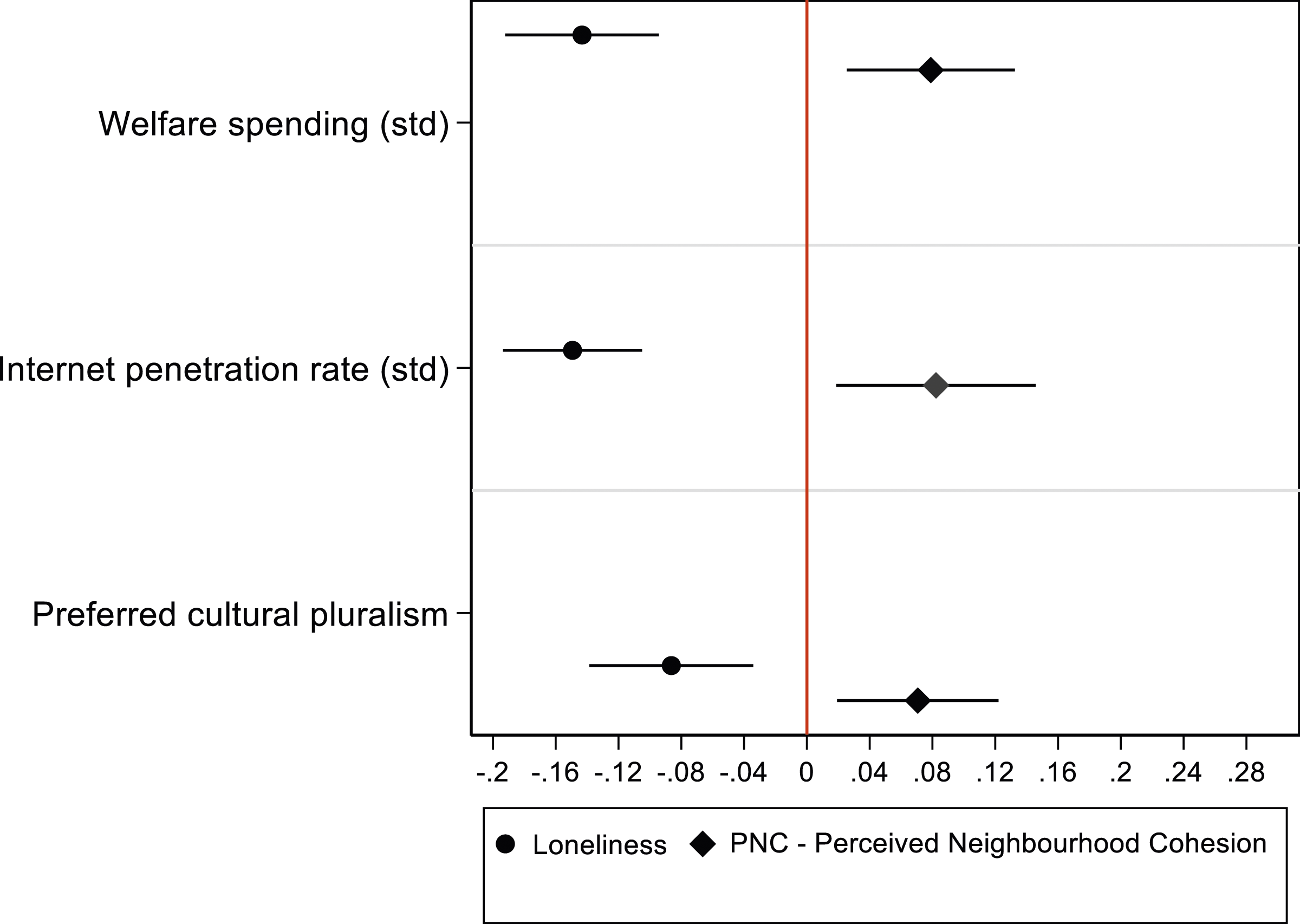
As Figure 1 illustrates, the associations of preferences for cultural pluralism, welfare state spending, and internet penetration rate with loneliness and PNC are very consistent. Stronger preference for cultural pluralism is associated with lower loneliness and higher PNC. Likewise, more welfare spending and higher internet penetration rates are associated with lower country-level loneliness and higher neighborhood cohesion as well. Thus, our hypotheses H2, H3, and H4 were supported by the analysis.
Variance decomposition – loneliness
Multilevel regression of loneliness on country-level predictors and individual-level sociodemographic covariates.
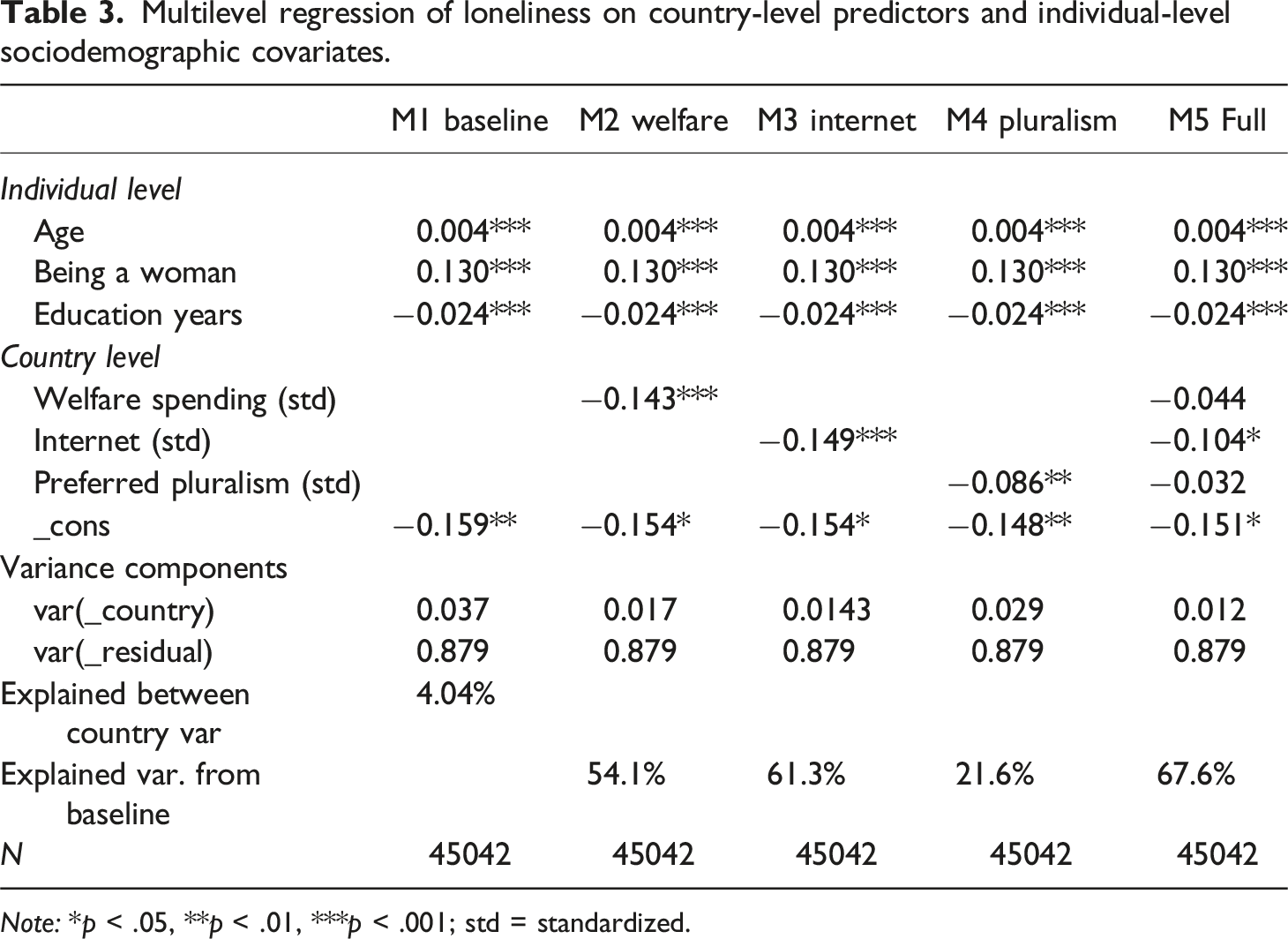
Note: *p < .05, **p < .01, ***p < .001; std = standardized.
Model 1 includes only the individual-level variables. The ICC of the baseline model (baseline 1) can be calculated by dividing the country variance component (0.037) by the sum of the country and residual variance component (0.037+0.879). The resulting ICC is 0.0404, indicating that about 4% of the variance in loneliness can be explained on the country level. This is the variance most studies interested in the influence of country-level characteristics on cross-national disparities in loneliness seek to explain. We can use this as a baseline and investigate how much this variance decreases when we add country-level variables to the following models.
Model 2 includes the welfare state spending indicator. The model indicates that more welfare spending is negatively associated with loneliness (p<=0.001). Therefore, more welfare spending is, on average, associated with less loneliness. To see how much of the explained variance of the baseline model (4%) is explained by the added variable, we divided the country variance component of Model 2 (0.017) by the country variance component of the baseline model (0.037) and subtracted the product from 1. By doing so, we see that roughly 54% of the explained variance from the baseline model can be explained by welfare spending. Repeating the process for Models 3 and 4, we can see that internet penetration explains about 61.3% of the explained variance, and preference of cultural pluralism explains about 21.6% of the explained variance. Combined in the full model, the three indicators account for about 67.6% of the explained variance in loneliness on the country level.
The explained variance of the full model containing all three indicators is close to the explained variance of Model 3, which includes only internet penetration. This is due to the fact that countries with high welfare spending are also very likely to have high internet penetration rates. As such, both indicators explain much of the same variance, and it is not fully possible to disentangle which of the two indicators is the most relevant.
Variance decomposition – neighborhood cohesion
Multilevel regression on perceived neighbourhood cohesion (PNC) on country-level predictors and individual-level sociodemographic covariates.
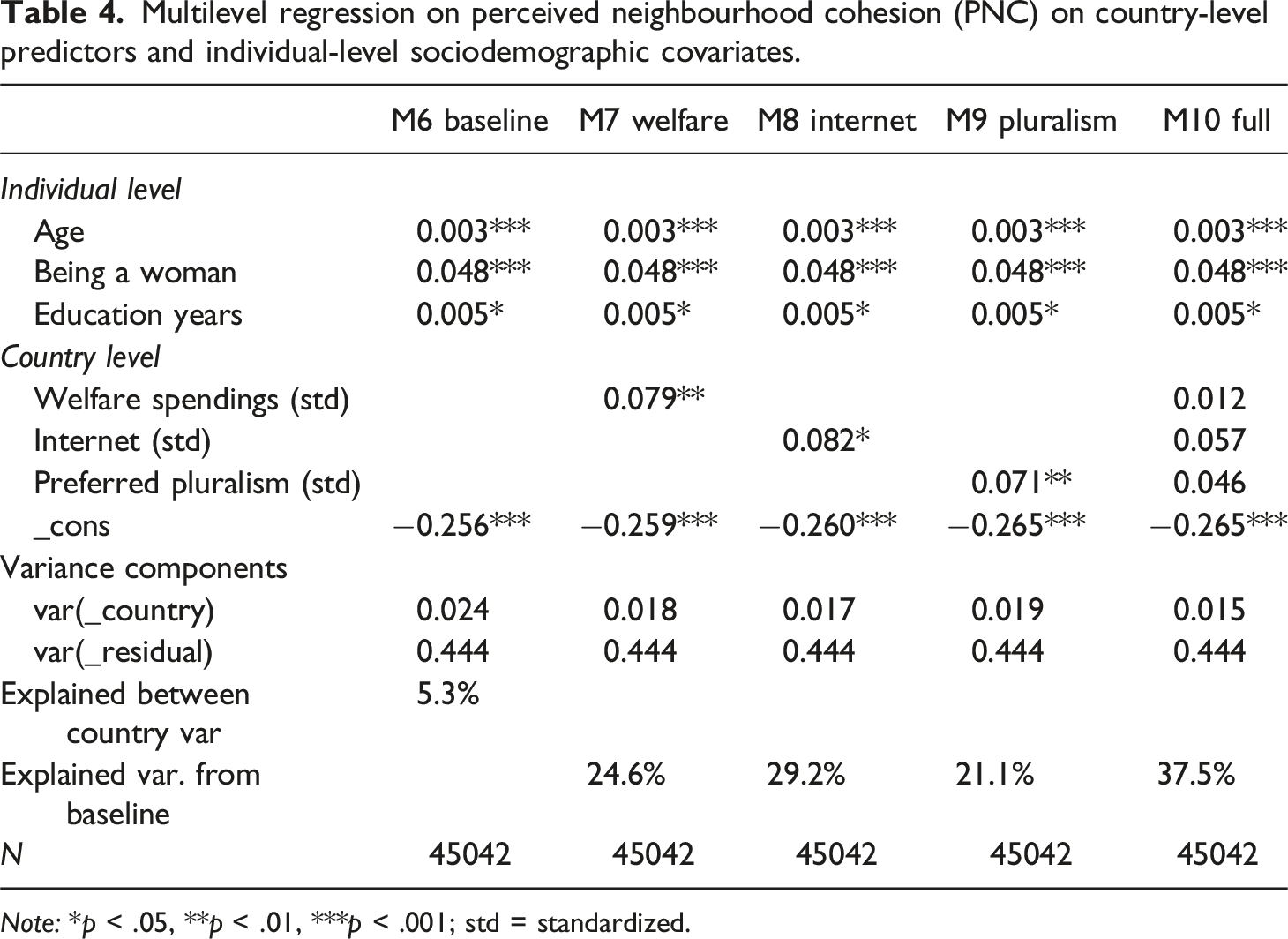
Note: *p < .05, **p < .01, ***p < .001; std = standardized.
In the case of neighborhood cohesion, all three country-level characteristics were similarly associated with cross-national disparities. Of the 5.3% variance derived from the baseline model, about 21% was explained by preference for cultural pluralism, 24.6% was explained by welfare state spending, and 29% by internet penetration rate, respectively. Jointly, the three country-level characteristics explained about 37.5% of the variance on the country level.
When all results from the variance decomposition are taken together, we see that most of the variance in loneliness and neighborhood cohesion is explained on the individual level, not on the country level. Country-level characteristics accounted for only 4-5% of the total variance in loneliness and neighborhood cohesion. However, the three country-level characteristics explained a significant proportion of the country-level variance in loneliness, with internet penetration rates and welfare spending explaining the largest amount of variance (61% and 54%, respectively); preference for cultural pluralism explained only 21%. The three country-level characteristics each explained a much smaller percentage of the country-level variance in neighborhood cohesion (less than 30%).
Moderating influence of country characteristics
The final section of the analysis is concerned with a potential moderating influence of the country-level characteristics on the association between loneliness and neighborhood cohesion. Figure 2 plots the bivariate correlation between neighborhood cohesion and the average level of loneliness by country. The graph illustrates that the association differs substantially between countries. Importantly, the graph displays that the association between the average level of neighborhood cohesion and loneliness in a country is comparatively small on average, but differs greatly between countries. In particular, the association seems to be very small in central and northern European countries (such as Germany, Denmark, Finland, Sweden), while the association is considerably stronger in southern and eastern European countries. This supports the idea that cross-country differences likely play a role in explaining loneliness and neighborhood cohesion. Cross-national differences in the correlation between loneliness and perceived neighbourhood cohesion. Note: Error bars indicate 95% confidence intervals.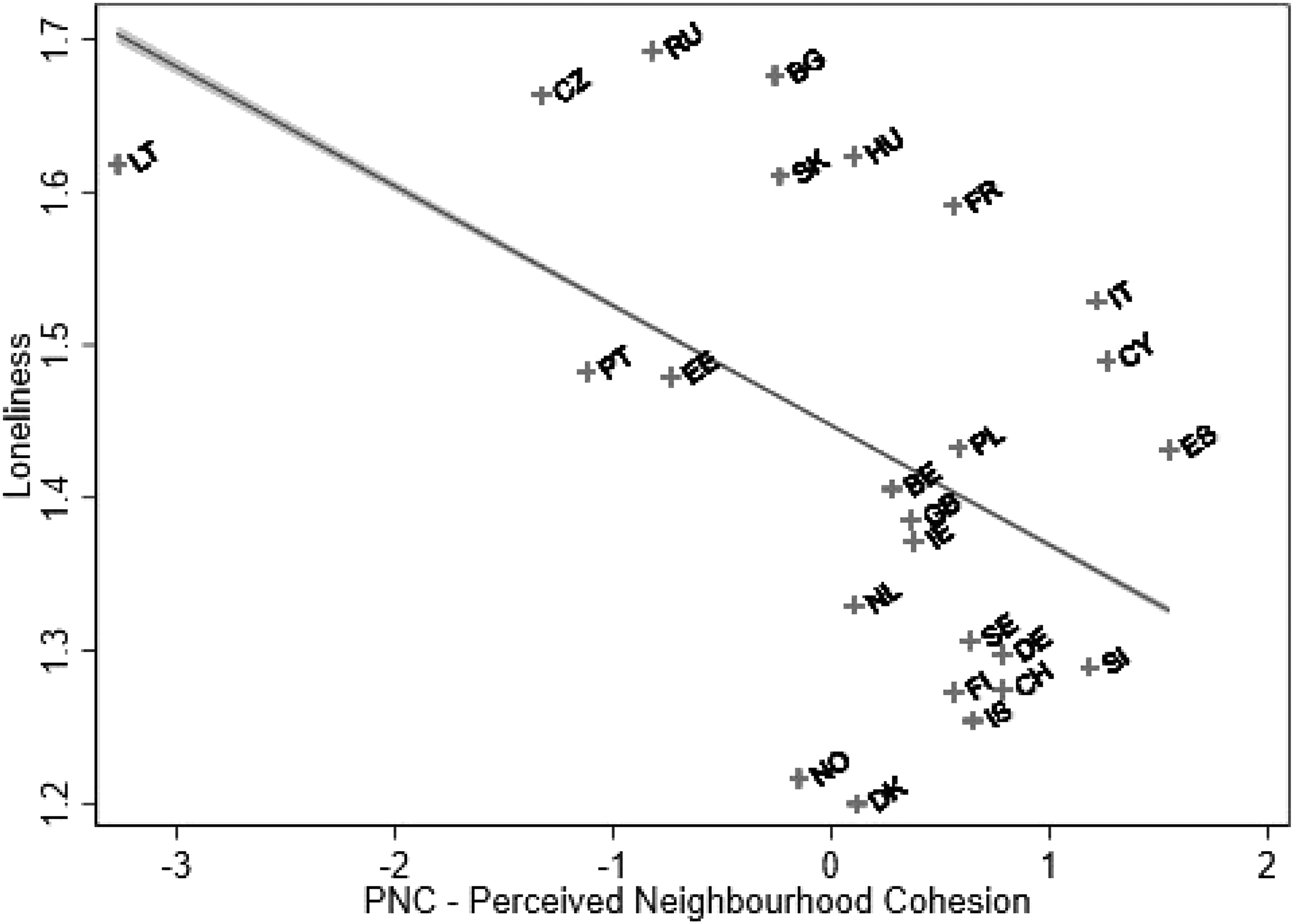
Multilevel regression of loneliness on perceived neighbourhood cohesion (PNC), country-level characteristics and their interactions.
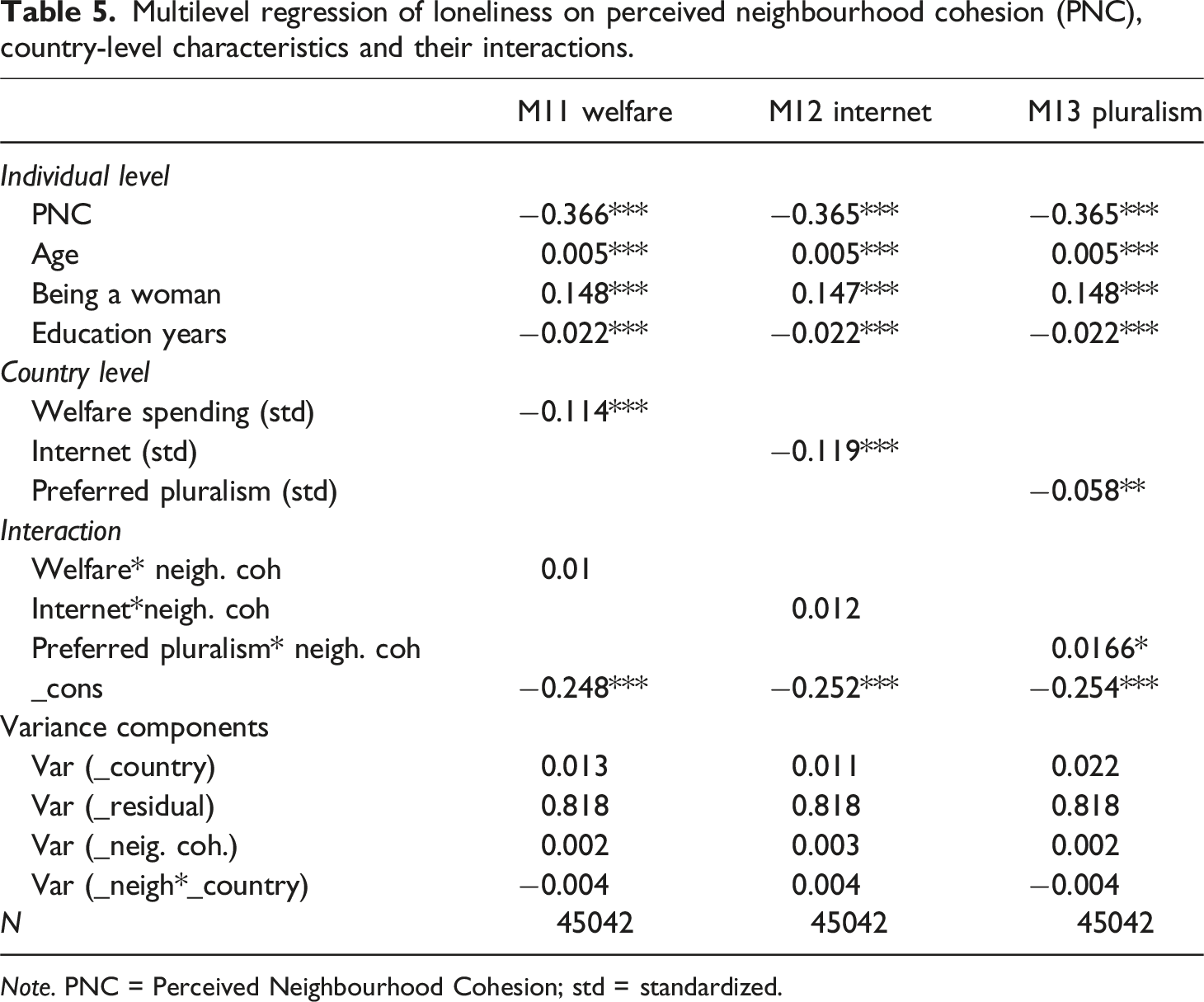
Note. PNC = Perceived Neighbourhood Cohesion; std = standardized.
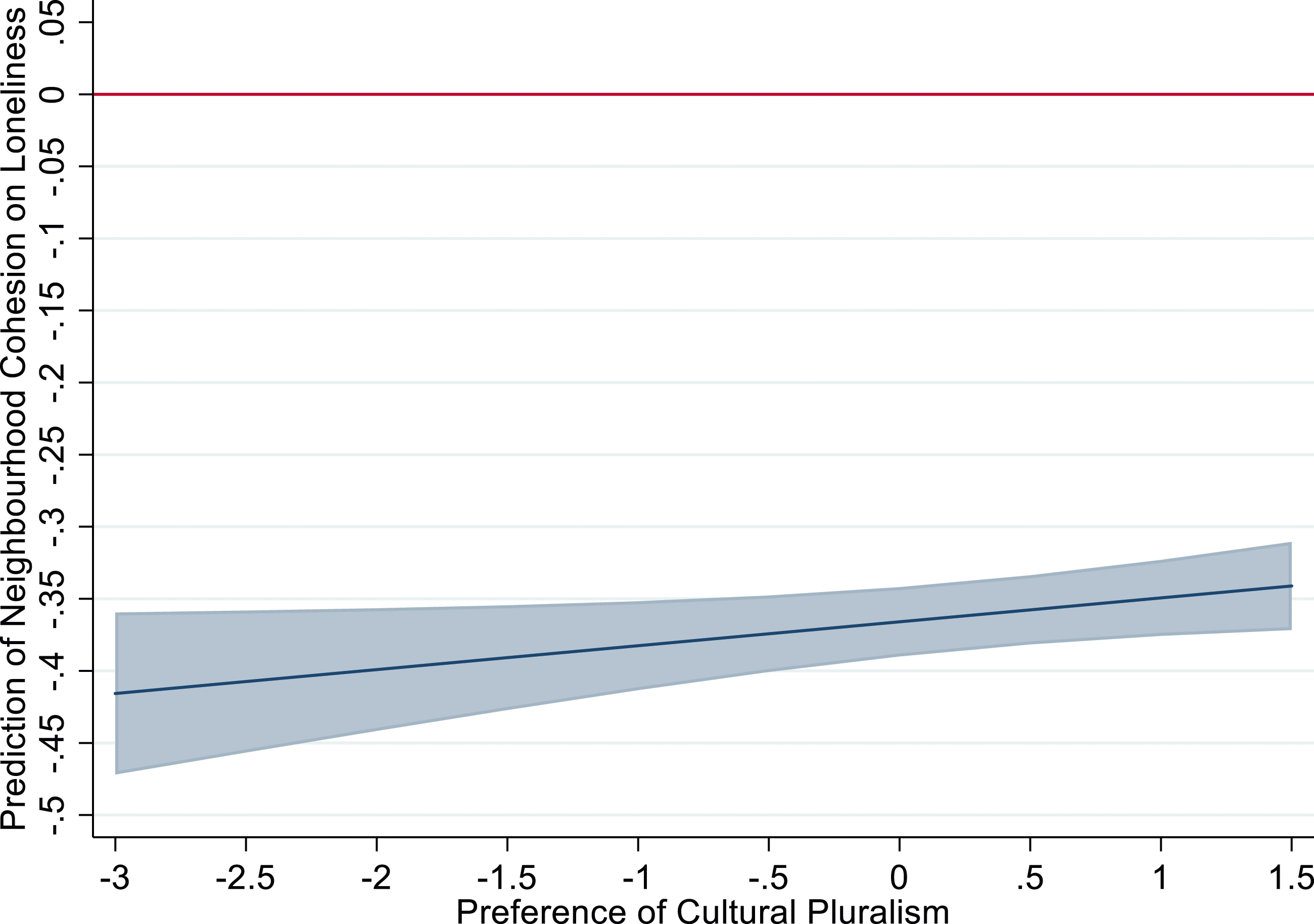
Predicted loneliness from cross-level interaction effects between perceived neighbourhood cohesion and relational pluralism. (M13). Note. Confidence intervals displayed at 95%.
Substantially, this means that in regions with stronger preferences for cultural pluralism, the importance of neighborhood cohesion for loneliness seems to be slightly smaller. As such, our findings are at odds with our initial expectations formulated in Hypothesis 5, which proposed that stronger preference for cultural pluralism strengthens the link between neighborhood cohesion and loneliness. Furthermore, we did not find a similar moderating influence of welfare state spending or internet penetration rate on loneliness. Although welfare state spending as well as internet penetration rate contributed to explaining cross-national differences in loneliness and neighborhood cohesion, they did not moderate the correlation between both outcomes. This is in line with our expectations formulated in Hypotheses 5 and 6.
Discussion
The aims of our study were twofold. Arguing from the theoretical perspective that social and cultural opportunity structures on the country level enable individuals to find and maintain social interactions, we expected preference for cultural pluralism, welfare state spending, and internet penetration rates to influence individual-level loneliness and neighborhood cohesion as well as the association between the two. The first contribution of our study was to examine and quantify the role of these country-level characteristics in explaining national disparities in loneliness and neighborhood cohesion. The results showed that all three country-level characteristics explained cross-national differences in loneliness and neighborhood cohesion. This highlights that combating loneliness in societies cannot solely focus on the lonely individuals, but rather should take social opportunity structures into account.
The second contribution of our study addresses country-level differences in the association between loneliness and neighborhood cohesion. On a theoretical level, our study adds to the literature linking social capital and loneliness. Social capital theory conceptualizes social cohesion, trust, and shared norms as vital societal resources that foster interaction, beliefs in reciprocity, and community (Bhandari & Yasunobu, 2009; Coleman, 1988). Linking this to loneliness, our findings can be interpreted as evidence that the protective influence of perceived (neighborhood) cohesion against loneliness is dependent on larger societal norms. In addition to our first finding that PNS is negatively associated with loneliness, our analysis suggests that differences between countries in the association between neighborhood cohesion and loneliness stem partially from cross-national differences in preference for cultural pluralism. Our results suggest that the association between neighborhood cohesion and loneliness is not homogeneous across nations. Instead, and contrary to our initial hypothesis, the negative association between PNC and loneliness is weaker in countries with a strong preference for cultural pluralism, suggesting that the relevance of PNC for combating loneliness is less relevant in these countries.
Norms of universalism, i.e. values of acceptance and welfare of others, are negatively related to a need for security and conformity (Schwartz, 2012). Schwartz’s conceptualization of human values is a potential theoretical perspective capable of explaining our findings: low norms of preferred cultural pluralism (low acceptance for different lifestyles and diversity) correspond with an elevated need for security and homogeneity within the neighborhood, a more fearful mindset, and a low acceptance of uncertainty. Thus, this logic implies that the negative association between neighborhood cohesion and loneliness should be lower in regions with strong preference for cultural pluralism. Conversely, this theoretical argument implies that the negative association between neighborhood cohesion and loneliness should be lower in regions with strong preference for cultural pluralism.
Overall, our findings complement other studies focused on the role of cultural norms (Dahlberg et al., 2022; Lykes & Kemmelmeier, 2014; Swader, 2019). These studies found mixed evidence that individualistic cultures moderate the associations between individual-level predictors and loneliness. Research studying other cultural norms aside from cultural individualism, however, is scarce. Our study finds that preference for cultural pluralism is directly related to loneliness and neighborhood cohesion. Likewise, we find that the association between loneliness and neighborhood cohesion is moderated by preferences for cultural pluralism. Our findings highlight that strategies to combat loneliness in societies must consider the cultural norms that differentiate countries. Interventions that target neighborhood cohesion may have a lower impact on loneliness in countries that have a stronger preference for cultural pluralism.
Although the cross-sectional data used in this study do not allow for causal claims, we believe that our findings offer several interesting implications for upcoming studies to explore. More research is needed to fully understand why preference for cultural pluralism reduces the negative association between PNC and loneliness. As argued before, it is possible that low acceptance of diversity and pluralism represents fearful mindsets and disapproving attitudes towards other lifestyles, which increases individuals’ desire for cohesive and homogeneous neighborhoods. This would explain our finding that the association between neighborhood cohesion and loneliness is smaller in countries preferring cultural pluralism. However, previous studies interested in the moderating role of social norms on the association between individual-level characteristics found mixed evidence for moderation effects (Dahlberg et al., 2022; Lykes & Kemmelmeier, 2014; Swader, 2019). Hence, future research should replicate our findings to shed light on how preference for cultural pluralism impacts the protective influence of neighborhood cohesion against loneliness. Likewise, the interplay between cultural pluralism and other cultural values such as individualism should be taken into account by upcoming studies as well.
Furthermore, while many related studies focus on older populations, our study analyses a cross-section of adults of all ages. Upcoming studies might build on our findings and consider investigating effect heterogeneity for different age groups and cohorts (Barreto et al., 2021; Morgan et al., 2021). Many studies in the literature examining loneliness are concerned with older age groups, but it is reasonable to expect some variation in the influence of cultural norms and other social opportunity structures on loneliness depending on the age group.
On a practical level, our study suggests that intervention strategies fostering neighborhood cohesion in order to reduce loneliness may be more effective in contexts with low preference for cultural pluralism. Several countries such as Germany, Japan, and Great Britain have recently launched policy campaigns aiming to reduce loneliness and foster social cohesion (BMFSFJ, 2023; GOV.uk, 2018; gov.uk, 2021). Such policy campaigns can benefit from a more nuanced understanding of the social contexts that are most beneficial for specific policy programs.
Limitations
Our results need to be interpreted while considering some limitations. First, our study is based on cross-sectional data. As such, our findings may not reflect a developmental process and we cannot draw any inferences about causality or the direction of the effect. Namely, we cannot say whether loneliness causes PNC, whether PNC causes loneliness, or whether the association is bidirectional. Research using long-term network data suggests that loneliness is a stigmatized condition and that lonely individuals are pushed to the peripheries of their social networks, leading them to become more excluded and lonelier over time (Barreto et al., 2022; Cacioppo et al., 2009). On the other hand, prolonged loneliness is known to increase anxiety and promote social withdrawal (Cacioppo & Cacioppo, 2018), suggesting that loneliness may reduce a sense of neighborhood cohesion. Longitudinal data are needed to assess the directionality of the association between loneliness and neighborhood cohesion. Likewise, to truly understand the impact of country factors on loneliness, upcoming studies investigate changes in country characteristics over time (i.e. changes in welfare spending or internet penetration rates).
Another limitation of our data is the survey period. The ESS wave was fielded in 2013 when internet penetration had an even greater variability between countries when compared to 2024. How individuals use the internet has also changed a great deal since 2012, meaning that today’s users might not experience the same benefits in terms of loneliness as were experienced earlier. Since 2012, more internet platforms have been developed to create opportunities for social encounters and exchange in local communities, suggesting that the relevance of internet penetration might currently be larger than we found in our study. This hypothesis remains to be tested in future research using more recent data. Likewise, we cannot generalize from European data to other regions of the world. The general idea that cultural norms shape the importance of specific types of relationships for the development/protection of loneliness has been posited previously (Gierveld et al., 2018; Van Staden & Coetzee, 2010), but more research is needed to explore the nature and extent of the interplay between norms and loneliness in other countries and cultures.
Upcoming research might overcome these issues using multinational longitudinal surveys to allow for a better understanding of the dynamic relationships among individual and country factors over time. More frequent measures of loneliness in multinational surveys would enable researchers to link these data with changing data on the country level, leading to more conclusive results. In particular, such data might allow for more insights about the bidirectional nature between loneliness and social capital, as well as add to more reliable insights about what types of policy changes can improve people’s sense of connection and belonging. By comparing longitudinal data from several national contexts, such studies will be able to explore whether this dynamic is heterogenous, depending on macro characteristics such as cultural norms. Furthermore, using data from a lower level of geographical grid (i.e. cities or regions) would provide locally relevant results, especially in regard to welfare state spending and internet penetration. In line with our findings, other studies concerned with social capital (conceptualized in the form of social trust) found associations between loneliness and social trust (Langenkamp, 2022; Rapolienė & Aartsen, 2022). Upcoming studies comparing the association between loneliness and trust between different small-grid regions will be helpful in obtaining a more nuanced understanding of the interrelation between both concepts.
Conclusion
Our study contributes to the debate about the consequences of social opportunity structures and social norms for social actions and attitudes (Esser & Kroneberg, 2017; Merton, 1996). Our study suggests that social opportunity structure in terms of social security (state welfare spending), digitalization (internet penetration rate), and social norms that promote living in a diverse, accepting, and supportive society are beneficial in reducing loneliness and in fostering social capital in the form of neighborhood cohesion. Furthermore, the importance of neighborhood cohesion in preventing loneliness on the individual level is greater in cultures with a preference for pluralism, highlighting the importance of social norms when evaluating the relevance of cohesion for the perception of loneliness.
Footnotes
Declaration of conflicting interests
The author(s) declared no potential conflicts of interest with respect to the research, authorship, and/or publication of this article.
Funding
The author(s) received no financial support for the research, authorship, and/or publication of this article.
Open research statement
As part of IARR's encouragement of open research practices, the authors have provided the following information: This research was not pre-registered. The data used in the research are available. The data can be obtained at: https://www.europeansocialsurvey.org/ and https://ec.europa.eu/eurostat/en/. The materials used in the research are available. The materials can be obtained at: 