




Abstract
Social experiences are of great importance in late life, and the need to belong may play a key role in shaping those experiences. A higher need to belong may motivate older adults to maintain a wide variety of social connections (e.g., family ties, friends, acquaintances, group engagement), yet may also lead to higher risks of feeling unsatisfied and lonely. However, little research examines how the need to belong may shape older adults’ social life in the daily context. This study examines the associations between older adults’ need to belong, daily social engagement, and transient loneliness in their everyday life. Older adults (N = 299) aged 65–89 completed the Need to Belong Scale, measures of their social networks, and ecological momentary assessment (EMA) surveys for five to six days. At each three-hour assessment, they reported in-person and phone contact with a variety of social partners (e.g., family, friends, acquaintances, etc.), whether they engaged in a social group, and rated their feelings of loneliness. In multilevel models, the need to belong did not predict the variety of partners encountered in-person or by phone, but predicted a greater likelihood of engagement with social groups. Older adults with a higher need to belong reported that they felt lonelier at three-hour intervals throughout the day, but this association was attenuated when they had in-person encounters with a greater variety of social partners. Group engagement was associated with feeling less lonely, whereas phone communication was associated with feeling more lonely, regardless of the need to belong. The findings suggest that social engagement with a variety of types of social partners may help satisfy older adults’ need to belong, and highlight the unique benefits that in-person contact (vs. phone contact) and group engagement may confer to mitigate older adults’ loneliness.
Introduction
Social relationships are of great importance in late life, with implications for physical and psychological well-being (Charles et al., 2021). Insufficient social relationships may lead to loneliness, which can be detrimental to health (e.g., risk of dementia, heart disease, depression) as people age (Cacioppo et al., 2015). The need to belong has been conceptualized as both a universal human need and an individual difference in desires for social inclusion and acceptance (Baumeister & Leary, 1995; Greenwood et al., 2013). Variability in the need to belong may influence how people build, maintain, and interact with their social networks, with a higher need to belong motivating greater social engagement (Baumeister, 2012; Eck et al., 2017). Yet, a greater need to belong also may lead to higher risks of subjective feelings of deficient social relationships and loneliness (Ong et al., 2016). Although the need to belong appears to decrease with age (Leary et al., 2013), differences in such need may help explain variability in older adults’ daily social engagement and related well-being outcomes (Bruggencate et al., 2018; Steverink & Lindenberg, 2006). This study examines the role of the need to belong in older adults’ everyday social activity and transient loneliness (i.e., feeling lonely in the moment).
The need to belong is theoretically distinct from attachment which pertains primarily to the role of attachment figures (i.e., close social partners) in generating feelings of security (Antonucci et al., 2004; Cicirelli, 2010). Although the belongingness theory was originally proposed with a focus on close ties (Baumeister & Leary, 1995; Gere & MacDonald, 2010), growing research has suggested that more various forms of social connections ranging from individual relationships (e.g., friends, acquaintances) to larger social groups (e.g., church groups, volunteer work) also help satisfy the belongingness needs (Eck et al., 2017; Sandstrom & Dunn, 2014). Based on this perspective, the need to belong may be associated with greater participation in a variety of intimate and less close relationships and social groups, and this engagement may help satisfy the need to belong, and therefore reduce feelings of loneliness (Berkman et al., 2000; Litwin & Shiovitz-Ezra, 2011). How the need to belong plays a role in engagement with a variety of social relationships and groups may be especially evident in late life when older adults normally follow a trend to keep close ties and disband less close and weak ties (Charles & Carstensen, 2010). A heightened need to belong may motivate older adults to not only remain active with their closest ties, but also to keep engaging with the broader social world including acquaintances, neighbors, and group gatherings.
This study aimed to identify the associations between the need to belong, social engagement, and transient loneliness in the context of older adults’ daily life using an ecological momentary assessment (EMA) approach. Despite a large body of research on social engagement and loneliness, much of the literature to date has regarded loneliness as a relatively stable emotional state (i.e., trait or chronic loneliness; Zhaoyang et al., 2022). However, recent work has suggested that feelings of loneliness can fluctuate from moment-to-moment and vary across different contexts within the same person (i.e., transient loneliness; Arpin et al., 2015; Compernolle et al., 2021). Thus, it is worth investigating whether older adults’ need to belong plays a role in social engagement and feeling lonely throughout the day. For daily social engagement, we considered older adults’ everyday encounters with both individual social partners and larger groups (Berkman et al., 2000). Further, we also considered different modes of contact (i.e., in person vs. by phone) that may have divergent influences on older adults’ social experiences (Teo et al., 2015). For group engagement, we only considered in-person contact because the majority of older adults still lack access or knowledge to use the technologies needed for online group activities in the United States (Xie et al., 2020).
Need to belong and daily social engagement in late life
In line with prior research, we use the term “variety of social partners” to refer to the number of types of social partners (e.g., spouse, parents, friends, co-volunteers) older adults have encountered throughout the day (Cohen et al., 1997; Fingerman et al., 2020b). In late life, individuals vary considerably in the variety of social partners they engage with (Fiori et al., 2007), and differences in the need to belong may help explain this variation. Older adults who strongly desire affiliation may foster a greater variety and number of social ties over the life course. They may retain family ties, develop and keep more friendships, participate in formal and informal groups, and interact with a wide array of acquaintances, neighbors, and other individuals (Leary et al., 2013; McLaren et al., 2015). They may be more likely to keep in touch with their established networks in everyday life (e.g., talking with family members, meeting up with friends, attending volunteer work), which may provide opportunities for experiencing belongingness and acceptance (Berkman et al., 2000). Likewise, older adults with a higher need to belong may be more extroverted and gregarious (Leary et al., 2013), which may lead to a greater variety of social ties, and more frequent contact with these ties (Okun et al., 2007). Therefore, we predicted that older adults who have a greater need to belong will have encounters with a greater diversity of social partners throughout the day.
The need to belong also may be associated with greater motivation to engage in groups (i.e., community-based social engagement) among older adults. Although the classic belongingness theory focuses on the vital role of close interpersonal social relationships (Baumeister & Leary, 1995), growing research indicates that group affiliations and activities are also important ways to fulfill the need to belong among adults of all ages (e.g., membership in a group; Eck et al., 2017; attendance at sports games; Inoue et al., 2020; engagement in religious activities; Thompson & McRae, 2001). As such, we also expected the need to belong to be associated with greater likelihood of group engagement in older adults’ daily life.
Need to belong, daily social engagement, and transient loneliness in late life
A higher need to belong may be associated with greater loneliness (i.e., the perception of a discrepancy between desired and existing social connections; Newall et al., 2009). The need to belong and loneliness are conceptually related but differ in their nature. The need to belong refers to the fundamental human motivation to seek social connections and acceptance, whereas loneliness reflects the subject feelings that those connections are lacking (Mellor et al., 2008; Reichl et al., 2013). However, individuals with a higher need to belong may be at greater risk of the need for affiliation and acceptance remaining unfulfilled, which will subsequently lead to feeling lonely (Pillow et al., 2015). Indeed, prior work suggested a positive association between the need to belong and loneliness, yet most of these studies were based on retrospective surveys among samples of younger adults (e.g., Holden et al., 2018). Such associations between the need to belong and loneliness may also be observed in late life when older adults normally are influenced more by social relationships and more likely to experience challenging social changes (e.g., social loss; Charles & Carstensen, 2010). Therefore, we hypothesized that older adults with a higher need to belong would be more likely to report feeling lonely throughout the day.
The need to belong also may condition the associations between daily social experiences and feeling lonely. Engaging with a wide variety of social partners or with groups may mitigate transient feelings of loneliness to a greater extent for people who are higher in need to belong than for people who are lower in this need. Belongingness theory posits that people with a lower need to belong may be easily satisfied with fewer social relationships or minimal social engagement, with diminishing returns from additional social engagement (Baumeister & Leary, 1995). By contrast, those with a higher need to belong may be more sensitive to insufficiency of social engagement, with greater risk of feeling lonely (Greenwood & Long, 2009). Hence, we hypothesized that the variety of daily social encounters and group engagement will be associated with decreased transient loneliness among older adults, especially for those who have a higher need to belong.
Mode of contact
Mode of contact is an important element in social experiences that is often overlooked in research. Older adults have been using technology-facilitated communication (e.g., social media, text) in increasing numbers, but sizable proportions of the older adult population still do not use these technologies (Faverio, 2022). Rather, in-person encounters and phone communications remain the preferred modes of contact among older adults in the United States (Fingerman et al., 2020a).
Research suggests that in-person encounters may mitigate feeling lonely in ways that technology-mediated communications do not (Teo et al., 2015). In-person encounters allow connections involving touch and shared expressions that are less feasible via telephone or other technologies (MacDonald et al., 2021). When in person contact is not available, phone communications may provide an important supplementary way to promote social connection (Hülür & Macdonald, 2020). Given their motivation to connect to a broad social world, older adults with greater need to belong may seek contact with social partners in person as well as by phone.
Nevertheless, telephone contact may not be as effective at mitigating feeling lonely. Indeed, one study found that older adults living alone during COVID-19 experienced less transient loneliness following in-person encounters, but greater transient loneliness following phone communications (Fingerman et al., 2021), suggesting the unique effect of in-person contacts in mitigating feeling lonely. Another study using a large national sample of older adults in Wales found that telephone contact sufficed for functional purposes, but did not confer the emotional connection available via in-person contact (Burholt et al., 2020). Thus, we speculated that older adults may show diminished feelings of loneliness following in-person contact with a greater variety of social partners, especially for those having a higher need to belong, but telephone contact may be less likely to mitigate transient loneliness.
The current study and other factors associated with the study variables
This study adjusted for factors that may confound the associations between the need to belong, social engagement, and transient loneliness, including age, gender, marital status, physical health, extroversion, depressive symptoms, and the day of the week. Older age is associated with a narrower social network and a lower level of need to belong (Charles & Carstensen, 2010; Greenwood et al., 2013). Older adults also show a hook-shape trajectory in loneliness from 60 years of age to the oldest age (Luhmann & Hawkley, 2016). Women tend to have more diverse social networks and a higher need to belong, and feel less lonely throughout the day in late life, compared to men (Compernolle et al., 2021; Cornwell, 2011; Leary et al., 2013). Older adults’ marital status (e.g., being widowed) may be linked with the gain or loss of the sense of belonging, types of social contacts, and loneliness (Kalmijn & Broese van Groenou, 2005; McLaren et al., 2015; Prieto-Flores et al., 2011). Better health was found to be associated with a lower need to belong, greater social participation, and less loneliness among adults (Douglas et al., 2017; Hartung & Renner, 2014; Luanaigh & Lawlor, 2008). Extroversion is linked with a higher need to belong, greater social engagement, and less loneliness (Buecker et al., 2020; Leary et al., 2013; Okun et al., 2007). Adults with more depressive symptoms may have a higher need to belong, show withdrawal from social participation, and experience greater loneliness (Barg et al., 2006; Kealy et al., 2023). We also controlled for the day of the week as older adults may have different patterns of daily activities and social engagement on weekdays versus weekends (Newton et al., 2018).
This study examined the following hypotheses
Compared to older adults with a lower need to belong, those with a higher need to belong will engage with a greater variety of social partners throughout the day, both in person and by phone.
Compared to older adults with a lower need to belong, those with a higher need to belong will be more likely to engage in social groups throughout the day.
Compared to older adults with a lower need to belong, those with a higher need to belong will report a greater level of transient loneliness throughout the day.
Encounters with a greater variety of social partners in person will be associated with decreased transient loneliness, especially for older adults with a higher need to belong. Encounters with a greater variety of social partners by phone will have a weaker association with decreased transient loneliness compared to in-person encounters.
Engaging in social groups will be associated with decreased transient loneliness, especially for older adults with a higher need to belong.
Methods
Participants and procedures
The data were from the Daily Experiences and Well-being Study (DEWS) collected in 2016–2017. The study involved 333 community-dwelling older adults aged 65–92 years recruited from the greater Austin Texas Metropolitan Area. Participants completed an in-person baseline interview about their social networks and background information. Then, participants completed an intensive data collection over 5–6 days that included Ecological Momentary Assessment (EMA) surveys in which they reported their daily social encounters and lonely mood every 3 hours during waking time. They completed the EMA surveys on a study-provided handheld Android device. The EMA surveys were scheduled with reminder alerts at three-hour intervals on the device. The surveys were scheduled to start and end based on each participant’s self-reported wake time and bedtime. Training was provided for older adults unfamiliar with the device. Participants also reported their need to belong in a self-reported questionnaire. Participants received $50 for the baseline interview and $100 for the intensive data collection.
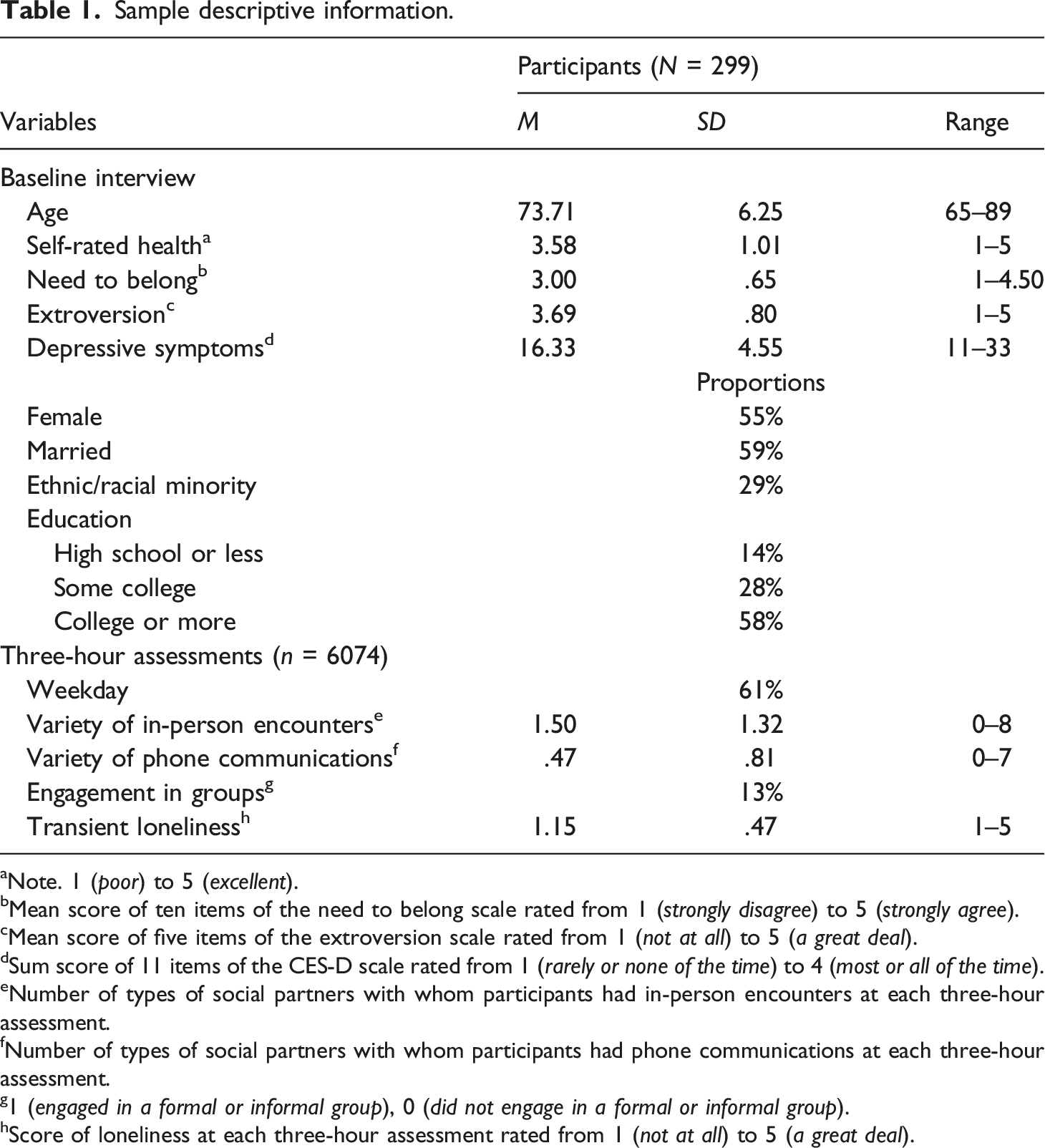
The sample in this study included 299 older adults (55% female, 45% male; Mage = 73.71 years, median = 73, SD = 6.25, range = 65–89) who had completed the baseline interview, the need to belong scale in the questionnaire, and at least one EMA survey. Compared to the 34 participants excluded, the 299 participants were younger (t = 3.03, p < .001), and less likely to self-identify as ethnic or racial minority (χ 2 = 14.50, p < .001). They also reported better self-rated health (t = −2.21, p = .03). No significant group differences were found in other background variables. For the final sample, 71% were non-Hispanic White American, 14% were non-Hispanic African American, 1% were non-Hispanic Asian American, .03% were non-Hispanic American Indian or Alaska Native, and 14% were Hispanic American. On average, participants completed 20.31 EMA surveys (SD = 5.78, median = 22, range = 1–32) across the study period (i.e., 6074 EMA surveys completed in total). The completion rate of EMA signals sent to the participants was 71%.
Measures
The baseline interview
Need to belong
Participants completed the ten-item Need to Belong Scale (NTBS; Leary et al., 2013), rating each item on a five-point Likert scale from 1 (strongly disagree) to 5 (strongly agree). Example items include: “I need to feel that there are people I can turn to in times of need” and “It bothers me a great deal when I am not included in other people’s plans” (α = .78). The item scores were averaged so that higher mean scores indicated higher levels of need to belong.
Control variables
Participants reported their age in years. Gender was coded as 1 (female), 0 (male). Participants indicated their marital status as married, cohabitating/living with a partner, divorced, separated, widowed, or never married, recoded as 1 (married or cohabitating), 0 (not married or cohabitating). Participants self-rated their physical health as 1 (poor), 2 (fair), 3 (good), 4 (very good), and 5 (excellent). For extraversion, participants rated how well each of five items (e.g., “outgoing”, “active”; Lachman & Weaver, 1997) described them using a five-point scale from 1 (not at all) to 5 (a great deal). The mean score of the five items were taken with higher mean scores indicating greater extroversion. Participants’ depressive symptoms were assessed using the 11-item CES-D scale (Gellis, 2010). Participants rated how often they have experienced each symptom of depression during the past few weeks from 1 (rarely or none of the time) to 4 (most or all of the time). We generated a sum score, with higher sum scores indicating more depressive symptoms.
Ecological momentary assessments
Variety of social partners encountered in different modes of contact
Participants provided the names of their close social ties using the social convoy measure in the baseline interview (Birditt et al., 2020). The information of the top ten closest social partners was transferred to the handheld Android device used for EMA. In each three-hour assessment, participants indicated whether they had encounters with each of their ten closest social partners and up to six other social partners (e.g., friends, acquaintances, strangers), as well as their mode of contact (i.e., in person or by phone). Drawing on the literature regarding social engagement (Cohen et al., 1997; Fingerman et al., 2020b), we calculated the variety of types of social partners (e.g., spouse/romantic partner, parents, children, siblings, friends, service providers, acquaintances) the participants engaged with at each three-hour assessment, regardless of the number of social partners. For example, if the participant engaged with their spouse, two children, and three friends, the variety of types of social partners encountered would be three (i.e., spouse, children, friends). We generated this index for variety of different types of social partners encountered in person (range: 0–8) and by phone (range: 0–7) each assessment separately.
Engagement in groups
At each three-hour assessment, participants reported whether they were in a formal or informal group (e.g., religious services, social gathering) using 1 (yes) and 0 (no).
Transient loneliness
Participants rated their feelings of loneliness in the past 3 hours from 1 (not at all) to 5 (a great deal) at each assessment (Compernolle et al., 2021).
Control variables
We coded the day on which the EMAs were collected as 1 (weekday) and 0 (weekend), generating the variable of the day of the week as a day-level covariate.
Analytic strategy
For each 3-h interval, we had three indices of social engagement: (a) variety of different types of social partners encountered in person, (b) variety of different types of social partners encountered by phone, and (c) engagement with formal or informal groups (assessed in person). Technology-mediated communications via text (15% of assessments) or social media (16% of assessments) occurred too rarely for analyses.
First, we performed descriptive statistics for background characteristics and ran Pearson correlations among all study variables. We assessed research hypotheses using a series of three-level multilevel models with the three-hour assessment (level 1) nested within day (level 2), and day nested within participant (level 3). In all models, we included participants’ age, gender, marital status, self-rated health, extroversion, depressive symptoms, and the day of the week as control variables. All participant-level continuous variables (i.e., need to belong, age, self-rated health, extroversion, depressive symptoms) were centered on the grand means before being entered into the models as predictors. All models were tested using the lme4 package in R.
To investigate Hypotheses 1, we estimated two multilevel models in which the predictor was the need to belong and the outcomes were (a) the variety of social partners encountered in person and (b) the variety of social partners encountered by phone at each three-hour assessment. We then estimated a multilevel logistic regression model with the need to belong predicting any engagement in groups (i.e., a binary variable) at each assessment. To test Hypothesis 2, we ran a multilevel model with the need to belong predicting ratings of lonely mood at each three-hour assessment.
Hypothesis 3 addressed whether the need to belong moderates the association between daily social engagement and transient loneliness. We estimated multilevel models treating transient loneliness as the outcome, and the need to belong, daily social engagement, and the cross-level interaction term between the need to belong × daily social engagement, as the predictors. We estimated these models separately for each of the three indicators of daily social engagement (i.e., variety of in-person encounters, variety of phone communications, and any engagement in groups). The time-varying measures of social encounter variety and group engagement were decomposed to each participant’s person-mean across assessments (i.e., between-person differences) and deviation from person-mean at each assessment (i.e., within-person fluctuations). Because we were interested in the within-person associations, between-person effects were controlled in the models but omitted from the tables. Finally, we conducted simple slope tests to examine the associations between daily social engagement and transient loneliness for older adults who reported a lower (i.e., M–1SD) versus higher (i.e., M + 1SD) need to belong. The patterns for each significant interaction effect were plotted.
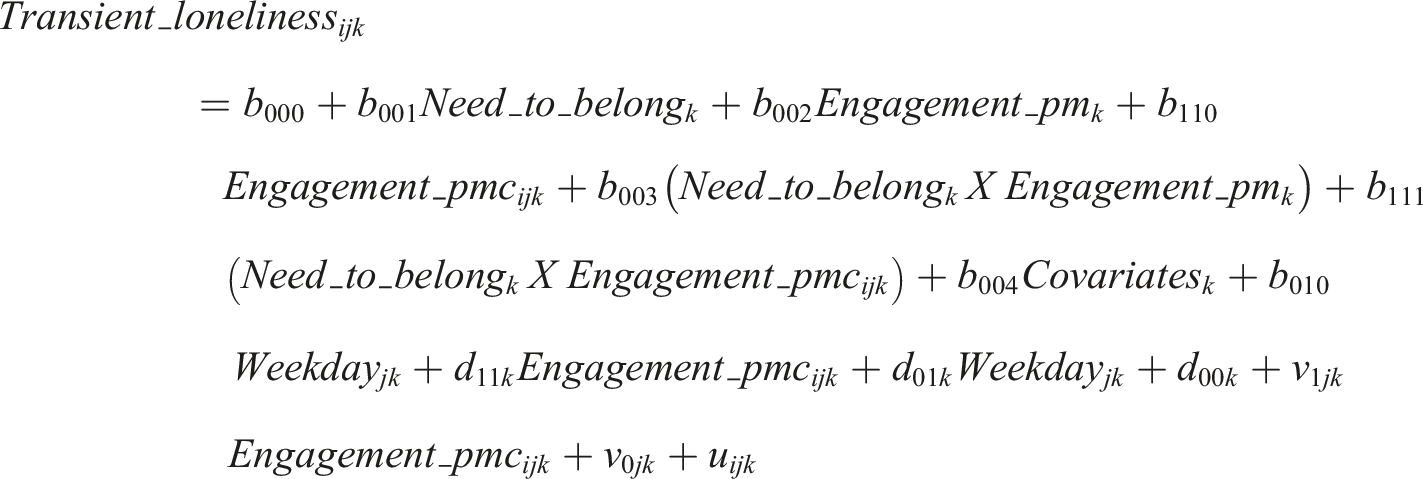
The equation below shows the cross-level interaction multilevel model to test Hypothesis 3. Engagement_pmc represents the person-mean centered level of the indicators of daily social engagement. Engagement_pm represents the person mean of daily social engagement. Covariates include multiple variables of level 3 participant’s personal characteristics but are written as a single item for brevity. Weekday is a level 2 covariate.
Level 1:

Level 2:


Level 3:



Composite representation:
Results
Sample descriptive information.
aNote. 1 (poor) to 5 (excellent).
bMean score of ten items of the need to belong scale rated from 1 (strongly disagree) to 5 (strongly agree).
cMean score of five items of the extroversion scale rated from 1 (not at all) to 5 (a great deal).
dSum score of 11 items of the CES-D scale rated from 1 (rarely or none of the time) to 4 (most or all of the time).
eNumber of types of social partners with whom participants had in-person encounters at each three-hour assessment.
fNumber of types of social partners with whom participants had phone communications at each three-hour assessment.
g1 (engaged in a formal or informal group), 0 (did not engage in a formal or informal group).
hScore of loneliness at each three-hour assessment rated from 1 (not at all) to 5 (a great deal).
The main effect of need to belong on daily social engagement and transient loneliness
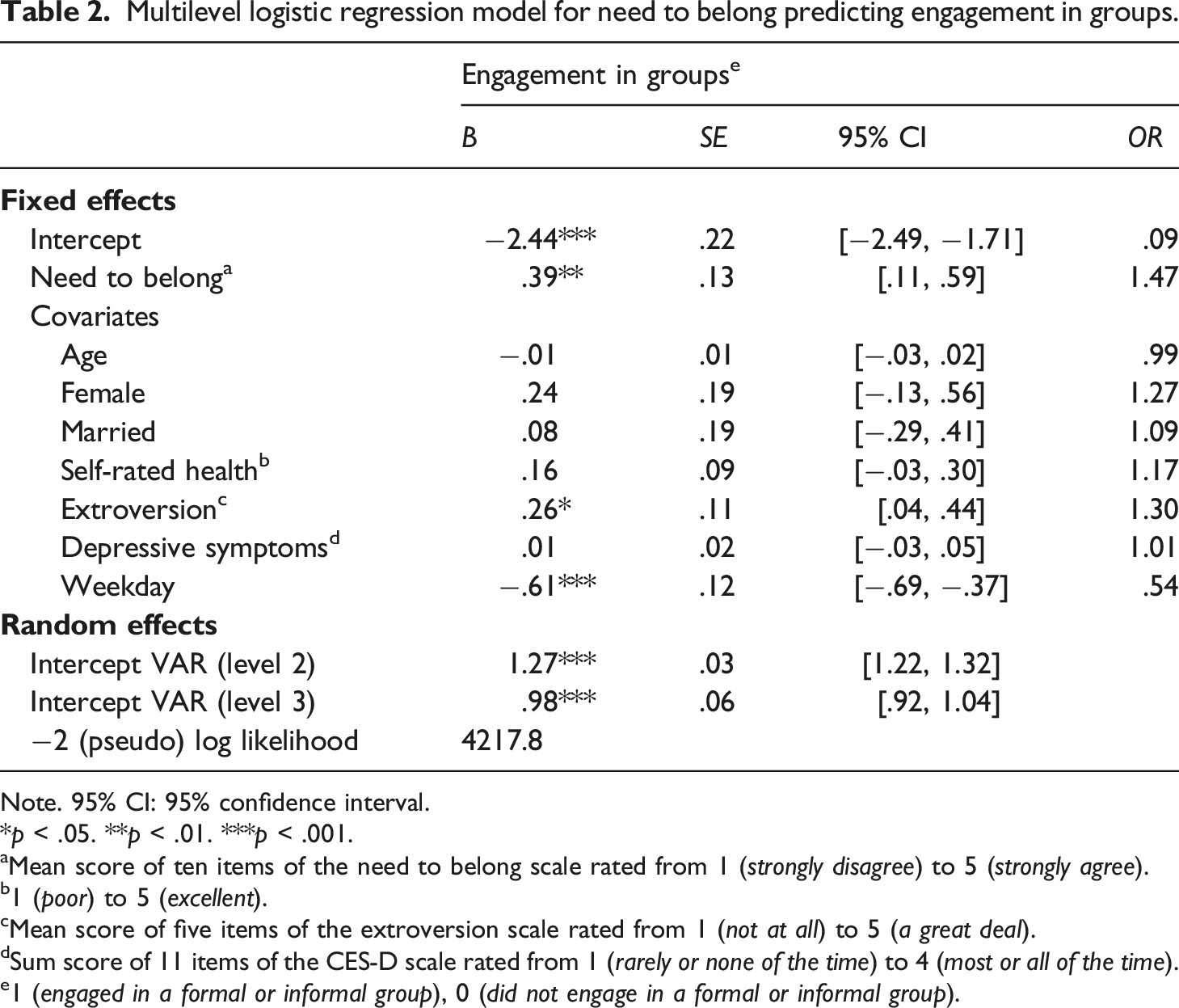
Multilevel logistic regression model for need to belong predicting engagement in groups.
Note. 95% CI: 95% confidence interval.
*p < .05. **p < .01. ***p < .001.
aMean score of ten items of the need to belong scale rated from 1 (strongly disagree) to 5 (strongly agree).
b1 (poor) to 5 (excellent).
cMean score of five items of the extroversion scale rated from 1 (not at all) to 5 (a great deal).
dSum score of 11 items of the CES-D scale rated from 1 (rarely or none of the time) to 4 (most or all of the time).
e1 (engaged in a formal or informal group), 0 (did not engage in a formal or informal group).
To test Hypothesis 2, we assessed whether older adults’ need to belong was associated with their ratings of feeling lonely throughout the day. As shown in Supplementary Table 3, older adults with a higher need to belong reported feeling more lonely (B = .08, p = .007).
Need to belong moderating the effect of daily social engagement on transient loneliness
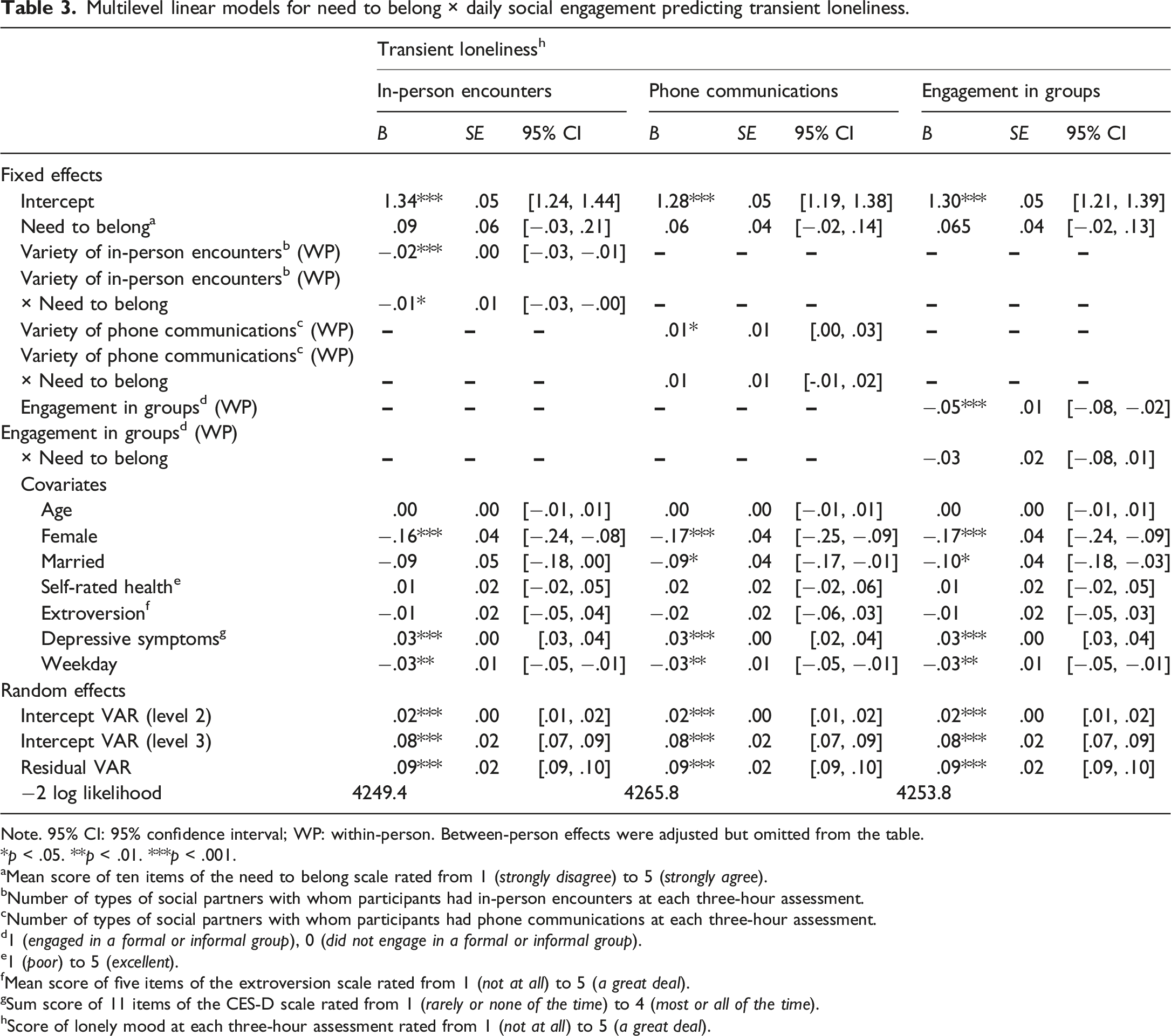
Multilevel linear models for need to belong × daily social engagement predicting transient loneliness.
Note. 95% CI: 95% confidence interval; WP: within-person. Between-person effects were adjusted but omitted from the table.
*p < .05. **p < .01. ***p < .001.
aMean score of ten items of the need to belong scale rated from 1 (strongly disagree) to 5 (strongly agree).
bNumber of types of social partners with whom participants had in-person encounters at each three-hour assessment.
cNumber of types of social partners with whom participants had phone communications at each three-hour assessment.
d1 (engaged in a formal or informal group), 0 (did not engage in a formal or informal group).
e1 (poor) to 5 (excellent).
fMean score of five items of the extroversion scale rated from 1 (not at all) to 5 (a great deal).
gSum score of 11 items of the CES-D scale rated from 1 (rarely or none of the time) to 4 (most or all of the time).
hScore of lonely mood at each three-hour assessment rated from 1 (not at all) to 5 (a great deal).
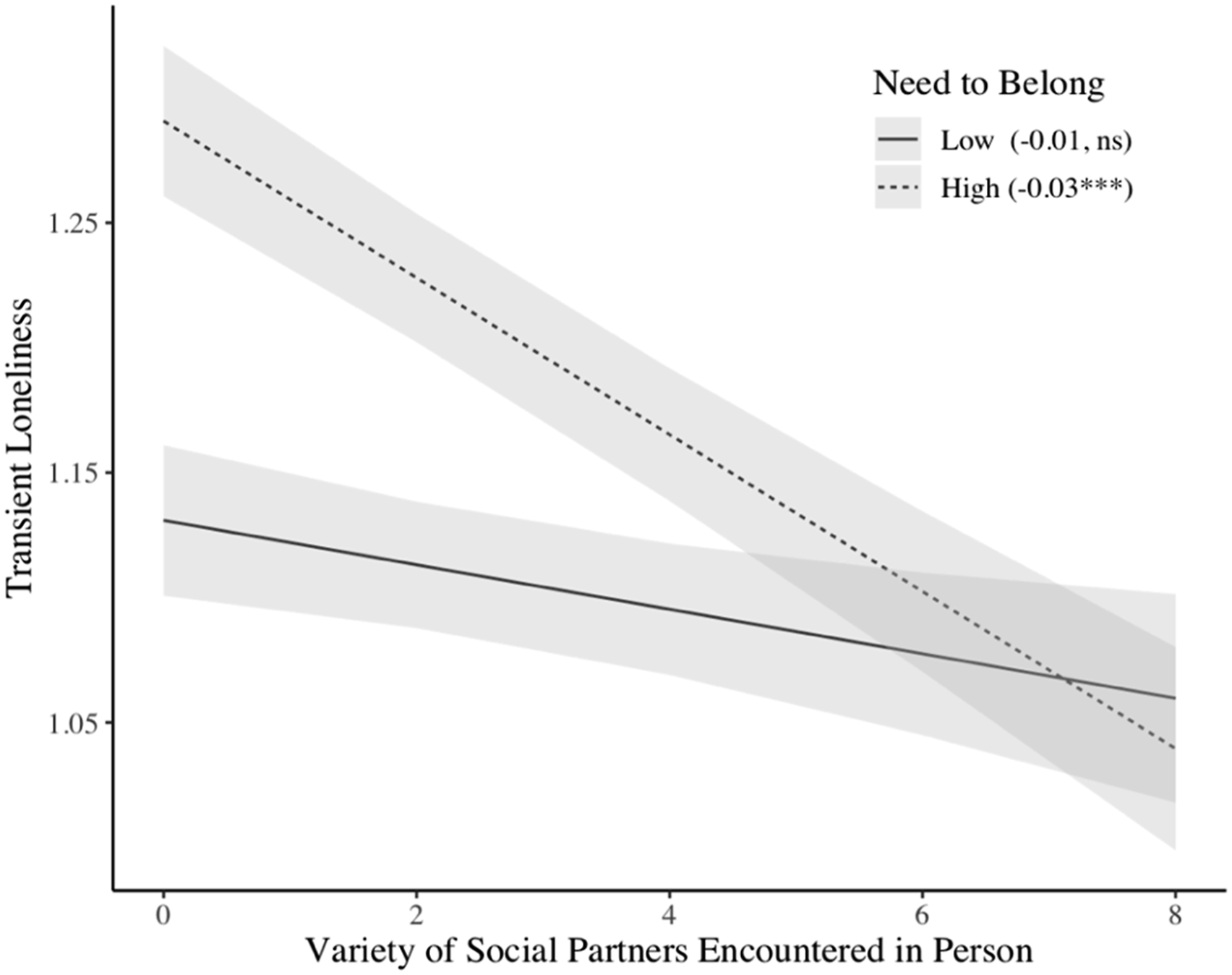
Predicted Transient Loneliness by Need to Belong and Variety of Social Partners Encountered in Person. Note. The predicted level of transient loneliness by the need to belong and the variety of social partners encountered in person (i.e., number of types of social partners with whom participants had in-person encounters) at each three-hour assessment. Unstandardized simple slopes are shown in parentheses. ***p < .001, ns = not significant.
Sensitivity test
We conducted four sets of sensitivity test to examine the robustness of the current findings. First, we calculated local effect sizes (Cohen’s f2; Selya et al., 2012) and the results indicate that effect sizes of the significant findings in Table 3 were small, ranging from .003 to .006. Second, we reran all models by treating gender as a moderator rather than a covariate. There were no significant gender differences revealed in any of the models (ps > .48). Third, because our sample oversampled racial/ethnic minority participants and was better educated than the general population, we reran all models by adding racial/ethnic minority (1 = ethnic/racial minority, 0 = non-Hispanic Whites) and education groups (1 = high school or less, 2 = some college, 3 = college graduate) as additional covariates. The results remained the same pattern. Finally, for Hypothesis 3a pertaining to the associations between in-person and phone contact and feeling lonely, we retested the interaction effects between the need to belong and daily social engagement on feeling lonely by entering the interactions terms for in-person encounters × need to belong and phone communications × need to belong simultaneously into one single model, rather than examining these two modes of contact in separate models. All results remained the same pattern.
Discussion
As a fundamental human need, the need to belong may underlie individuals’ social emotions and behaviors (Baumeister, 2012). The need to belong may play a key role in late life when social relationships have important implications for older adults’ well-being (Charles & Carstensen, 2010). Using an ecological momentary assessment design tracking older adults’ daily life for five to six days, this study established that the need to belong contributes to older adults’ daily social experiences and feelings of loneliness in complex ways.
Need to belong and daily social engagement in late life
Contrary to our expectations, the need to belong did not predict the variety of social partners older adults encountered in person or by phone throughout the day. However, a higher need to belong was associated with a greater likelihood of engaging with groups throughout the day. These results suggest that the need to belong may involve a motivation towards engaging in group settings and is distinct from attachment behaviors which focus more on the closest interpersonal relationships (Cicirelli, 2010). The findings mirror the evolving perspectives regarding the belongingness need that have given increasing attention to the power of less close social ties. Specifically, in addition to the strongest and closest ties, a wider range of social relationships and forms of social participation may also contribute to the fulfillment of the need to belong (Sandstrom & Dunn, 2014).
Also, findings are in line with the literature that differentiates the interpersonal networks (i.e., person-to-person relationships) from groups affiliations and community-based engagement (Cornwell et al., 2008). A higher need to belong may motivate older adults to actively seek social connections and interactions with others in everyday life, yet such opportunities for social participation may not always be available. Interpersonal ties are relatively difficult to control and predict especially in late life along with age-related physiological declines and possible social loss (e.g., bereavement, widowhood, retirement; Utz et al., 2002). In contrast, group activities may be more stable and accessible resources for older adults to be engaged and derive a sense of belonging (Cornwell et al., 2008).
Need to belong, daily social engagement, and transient loneliness in late life
Consistent with prior studies (Mellor et al., 2008; Pillow et al., 2015), older adults with a higher need to belong reported feeling lonelier throughout the day. This may be because their heightened social needs are at greater risk of being thwarted, which then leads to a sense of deficit social connections and loneliness, whereas people with a lower belongingness need may be more easily satisfied with fewer social interactions (Baumeister & Leary, 1995). Yet, our findings suggested that older adults with a higher need to belong may mitigate their feeling lonely via social engagement with both interpersonal relationships and larger groups.
Specifically, in-person encounters with a greater variety of social partners were associated with feeling less lonely among older adults with a higher need to belong, suggesting such social engagement helps satisfy their belongingness need. Notably, phone communications with a greater variety of social partners were associated with feeling lonelier throughout the day regardless of the need to belong. Emerging research suggests that in-person communications can be beneficial for older adults in a way that phone communications cannot perhaps by providing physical contact and greater opportunities for shared experiences (MacDonald et al., 2021). Results of the current study provide new evidence to this growing body of literature and point to less effectiveness, and even a reverse effect, of phone communications in mitigating feeling lonely even for those who have a heightened need for social connections.
Interestingly, engaging with groups was found to be associated with feeling less lonely regardless of the need to belong, pointing to the distinct benefits of group engagement which may not be conferred through one-to-one interpersonal interactions. Groups may provide a benefit of having a social role or position in a larger community, obtaining a sense of usefulness, preserving identities, and gaining specific resources and support (Baumeister & Leary, 1995; Berkman et al., 2000; Tomioka et al., 2018). Similarly, group dynamics may allow individuals to feel connected to others with relatively low energy expenditure in the moment. People can be present in a group without having to actually interact with other parties in an ongoing way. This aspect of group engagement in late life warrants additional attention.
It is noteworthy that prior work has distinguished social loneliness and emotional loneliness. Social loneliness arises from the lack of a broader group of social connections, whereas emotional loneliness originates from a perceived lack of close and intimate attachment (van Tilburg, 2021). The associations between the need to belong, engagement with a variety of social partners, and feeling lonely may be related more to social loneliness rather than emotional loneliness. Unfortunately, considering the feasible length of the intensive EMA surveys for older adults and following prior literature (Compernolle et al., 2021; Zhaoyang et al., 2022), we used a single item to measure transient loneliness, which did not allow us to directly test specific types of loneliness. Future research should consider investigating the role of the need to belong with regard to social loneliness versus emotional loneliness.
Limitations and future directions
This study has several limitations. First, the participants in the current study were all residing in Austin, Texas, which may increase the homogeneity and lower the representativeness of the sample. Also, the reported transient loneliness was overall at a low level in the current sample, and our effect sizes, albeit significant, were small. Therefore, the clinical implications of the current findings are limited. Moreover, we did not collect information on disability of the sample, which may impact the associations between the study variables. Future studies may consider revisiting and investigating the associations between the need to belong, daily social engagement, and transient loneliness among older adults using more heterogeneous samples to examine the generalizability of the current findings.
In addition, we did not assess the duration of the encounters or emotional experiences with social partners. It is possible that the need to belong shapes specific experiences during social encounters. For example, people with a higher need to belong may feel more rewarded after positive social encounters, but also may be hurt more by negative social encounters because they are more sensitive to rejections and social cues (Leary et al., 2013; Pickett et al., 2004). Future studies may also examine whether the frequency of contact with specific types of social partners may be associated with the need to belong.
Also, participants indicated whether they had interacted socially in a group during the prior 3 hours, but we do not have information regarding group size or group types. Participation in different types of social groups (e.g., neighborhood associations, volunteering activities, local events and hobby groups) may have varying implications for older adults’ well-being (Tomioka et al., 2018). Future research should consider whether larger or smaller and specific types of social group participation facilitate a greater sense of belongingness.
Finally, the use of technology-mediated communications such as text and social media has steadily increased among older adults (MacDonald et al., 2021; Pew Research Center, 2021), and were found to provide distinct social resources in late life (Kim & Fingerman, 2022). Currently, only 45% of older adults aged 65+ use social media, compared with 73% for those aged 50–64 years, and 81% for those aged 30–49 years (Faverio, 2022). Future studies may examine whether technology-facilitated communications may play a more important role in older adults’ social life taking their needs to belong into consideration in future cohorts.
Conclusion
In sum, this study provides new evidence that the need to belong may go beyond the closest ties or attachment ties and be associated with people’s desire and motivation for social connections with broader social networks. The findings also highlight that different types of social engagement in daily life may have varying benefits based on older adults’ need to belong. Older adults with a higher need to belong are more likely to feel lonely, but benefit from in-person encounters with a greater variety of social partners and group engagement throughout the day. Interventions to promote older adults’ well-being should consider variability in the need to belong and desire for social contact, and whether it is possible to foster contact in person and group activities.
Supplemental Material
Supplemental Material - Need to belong, daily social engagement, and transient loneliness in late life
Supplemental Material for Need to belong, daily social engagement, and transient loneliness in late life by Zexi Zhou, Shiyang Zhang, Yijung K. Kim, Kira S. Birditt, and Karen L. Fingerman in Journal of Social and Personal Relationships
Footnotes
Acknowledgements
The content is solely the responsibility of the authors and does not necessarily represent the official views of the National Institutes of Health. All requests should be made directly to the first/corresponding author. The current study was not preregistered in an independent, institutional registry.
Declaration of conflicting interests
The author(s) declared no potential conflicts of interest with respect to the research, authorship, and/or publication of this article.
Funding
The author(s) disclosed receipt of the following financial support for the research, authorship, and/or publication of this article: This research was supported by grants from the National Institute on Aging: R01AG046460 (Fingerman, PI) and P30AG066614 (awarded to the Center on Aging and Population Sciences at The University of Texas at Austin), as well as a grant from the Eunice Kennedy Shriver National Institute of Child Health and Human Development P2CHD042849 (awarded to the Population Research Center at The University of Texas at Austin).
Open research statement
As part of IARR’s encouragement of open research practices, the authors have provided the following information: This research was not pre-registered. The data used in the research are currently not available to the public. The data can be obtained by emailing:

Supplemental Material
Supplemental material for this article is available online.
References
Supplementary Material
Please find the following supplemental material available below.
For Open Access articles published under a Creative Commons License, all supplemental material carries the same license as the article it is associated with.
For non-Open Access articles published, all supplemental material carries a non-exclusive license, and permission requests for re-use of supplemental material or any part of supplemental material shall be sent directly to the copyright owner as specified in the copyright notice associated with the article.
