




Abstract
Romantic and peer relationships both contribute to overall well-being; however, each demand time and emotional investment that may give rise to competition. Little is known about how men, in particular, balance these relationships. We explored the extent to which men’s investments in peer relationships are associated with romantic relationship quality. We further examined differences between fathers and non-fathers. Data were from five annual waves of the Men and Parenting Pathways cohort study (N = 608). Participants were men in committed relationships (n = 526) aged 28-32 years at baseline (M = 29.91, SD = 1.3). In cross-sectional, linear regressions, estimated using Generalised Estimating Equations (GEE; to account for repeated waves), we investigated peer network investments, (1) time (hours) spent with peers, (2) close network size, and (3) extended network size, and their associations with romantic relationship quality, self-reported using the Dyadic Adjustment Scale. Inverted U-shaped associations were found for time spent with peers and close network size, whereby increases in investment were associated with improved relationship quality up to a “tipping point”, following which declines in quality are observed. For extended social networks, the association was linear, such that larger networks were linked to higher romantic relationship quality; however, this association was only evident in fathers. Investing too little or too much in peer relationships may adversely impact the quality of men’s relationships with romantic partners. Supporting men, and particularly fathers, to maintain appropriate investment in peer networks may have benefits for their romantic relationships.
Good quality romantic relationships are vital sources of emotional attachment and contribute to positive physical and psychological well-being (Gómez-López et al., 2019; Roberson et al., 2018). Conversely, poor romantic relationship quality can adversely impact well-being and life satisfaction, and as such increase risk for depressive and anxiety symptoms (Gómez-López et al., 2019). Romantic commitments typically gain salience across early adulthood (Shulman & Connolly, 2013), a period of rapid personal development where individuals begin establishing long-term interpersonal connections, foundational for future family life (Arnett, 2010). Strong intimate partner attachments formed at this time are forged with reciprocal and mutual care, whereby partners come to rely on one another in times of need, as a care-receiver and caregiver (Hazan & Selcuk, 2015). In this regard, good quality romantic relationships demand an investment of time and emotional energy (Nielsen, 2004).
Evidence suggests that some psychosocial effects (positive or negative) of romantic relationships may be more pronounced for men than women (Markey et al., 2007; Simon & Barrett, 2010). This gender disparity is posited to be at least in part due to men relying more heavily upon their romantic partners as a source of emotional support and security, while women typically maintain larger peer networks (McKenzie et al., 2018). Prior to the development of long-term romantic relationships, compared to women, men often have larger peer networks (Pearce et al., 2021). Once in romantic commitments, there is a typical shift in investment of time and emotional resources to the romantic relationship, often at the expense of peer relationships (Giordano et al., 2006; McKenzie et al., 2018). According to the differential investment of resources model, individuals allocate different resources, such as time and emotional energy, to their relationships based on various factors such as closeness, the perceived benefits of the relationship, and the reciprocity of investment from the other person (Huxhold et al., 2022). As friendships and romantic relationships require time and attention to thrive and as individuals become engaged in romantic partnerships, a natural inclination may emerge to allocate more time and emotional energy into nurturing that relationship. As resources are finite and each relationship necessitates substantial time and emotional investment, fewer resources may be available to continue maintaining a broader peer network (McKenzie et al., 2018; Pearce et al., 2021).
Similar to the opportunity-cost theory (Palmer & Raftery, 1999), men may undertake, consciously or unconsciously, an opportunity-cost assessment, with peer relationships and romantic relationships vying for the finite resources of time and emotional investment. Akin to the extensively researched opportunity-cost between balancing work and home life (Shorey & Chan, 2020), relationship investment cost may exist whereby men lack the resources, or perceive a lack of resources, to meet the competing demands of friends and partner (Hecht, 2001). Men may make an assessment as to whether to maintain or decrease the opportunity gained by the investment in peer relationships in order to minimise costs to the romantic relationship. While peer-reviewed literature on these competing demands is lacking, online discussion boards and media articles provide compelling evidence of its existence. A search in Google of the phrase “partner time with friends” yields innumerable results relating to individuals questioning whether they or their partner are spending too little or too much time with friends (e.g., Johnson, 2017; Moore & Moore, 2021). Newspaper articles provide advice on what to do when a partner over invests in peer networks (e.g., Johnson, 2017) and some sites offer tips on how to keep the balance (e.g., Lyons, 2018).
While investment in the romantic relationship is necessary for its success, the potential accompanying reduction in peer relationship investment (e.g., time) may have unintended psychosocial costs. Similar to romantic relationships, peer relationships are associated with physical and psychological benefits (Amati et al., 2018). Peer relationships are linked to capacity to trust in, respond to, and provide instrumental and emotional support (Gilbert, 2015). While peer and romantic relationships both meet affiliative needs such as companionship, emotional intimacy, trust, and shared interests (Kuttler & La Greca, 2004), peer relationships more often meet needs for social integration, self-worth, and pragmatic support (Barry et al., 2009). Peer relationships have also been found to be bidirectionally associated with improved life satisfaction, which in turn, contributes to the development and maintenance of meaningful and fulfilling peer relationships (Diener et al., 2002). Given that there is overlap in the functions served by peer and romantic relationships, it is possible that the benefits received through investing in friends may contribute to improvements in romantic relationship quality. However, competition between these roles may cause stress to both relationships (Shorey & Chan, 2020).
Investment in peer relationships is commonly indicated by time spent with friends or peer network size (Huxhold et al., 2013; Van der Horst & Coffé, 2012). In a large study of both men and women (N = 24,347), the number of close friends and frequency of contact with friends were each positively associated with improved social trust, health, and decreased stress; however, links with romantic relationships were not examined (Van der Horst & Coffé, 2012). Further, while these findings are consistent with previous research (Helliwell & Putnam, 2004; Newman et al., 2014), results were not differentiated by gender. Given that men may experience developmental differences in prioritising peer and romantic relationships, compared to women (McKenzie et al., 2018), gender specific investigations on the benefits and possible costs of peer relationships are warranted.
Individuals differentiate their relationships hierarchically, from very close to much less close, across a continuum of factors that include the frequency of interactions, their emotional intensity and intimacy, and the sense of reciprocity (Rademacher & Wang, 2014). Although close relationships are profoundly important, commonly linked to greater well-being, there are also unique strengths that occur in extended peer networks, which may be less close (Granovetter, 1973). For instance, relationships within an extended peer network provide a greater number of opportunities for individuals to connect with people beyond their main network (Antonucci, 2001) which may lead to enriching and stimulating experiences. Additionally, unlike close friendships, extended peer relationships typically involve less emotional investment and fewer expectations, which can be advantageous when limited resources (i.e., emotional and time) are available (Dunbar, 2018). Serving as a source of support and companionship without demanding a significant time commitment, extended peer networks may be more flexible and adapt to changing life circumstances, such as transitioning to parenthood and formation of romantic relationships.
Competition between men’s romantic and peer relationships may be further challenged once they enter fatherhood. Becoming a father may create an additional demand of finite resources, as men typically add the responsibility of supporting a child to a suite of roles that include partner and provider (Amati et al., 2018; Shorey & Chan, 2020). The suffocation model proposes that contemporary individuals are investing less in their romantic relationships compared to previous generations. One contributing factor is the significant increase in time devoted to parenting activities (Finkel et al., 2014). Evidence suggests that men who under-invest in their peer relationships feel less equipped to manage the pressures of fatherhood, compared to those with close friendships (Movember, 2019). However, fathers may perceive a lack of time for investment in friendships. This may account for men reporting fewer friends in their network after becoming fathers (Eggebeen & Knoester, 2001). Balancing additional role expectations can heighten stress, increase risk of emotional exhaustion (Baldwin et al., 2018), and precipitate or maintain poor mental health outcomes (Shorey & Chan, 2020). Numerous studies conducted by researchers have revealed that stress leads to the depletion of psychological resources and disrupts constructive behaviours within relationships (Buck & Neff, 2012; Muraven & Baumeister, 2000; Vohs, 2013). Poor mental health in fathers can have adverse effects on children, partners, and quality of relationships (Baldwin et al., 2018; Barker et al., 2017; Paulson & Bazemore, 2010). Decline in relationship quality following the birth of a child is common (Twenge et al., 2003). It is therefore important to know whether investment in peer relationships may buffer or exacerbate the effects of parenting on fathers’ perceptions of relationship quality (Shorey & Chan, 2020).
Aims and hypotheses
In this study, we aimed to explore whether men experience compromised romantic relationship quality when under or over investing in their peer relationships, operationalised as time spent with friends and the size of close and extended peer networks. Additionally, the study aimed to explore whether this differed depending on whether the men were parents or not, likely further exacerbating competition for time. Given competing interests and limited capacities, we first hypothesised that the association between men’s investment in peer relationships and romantic relationship quality would be inverse U-shaped, such that, under-investment or over-investment in peer relationships would be associated with poorer romantic relationship quality. Second, we hypothesised that fatherhood would exacerbate this risk association.
Method
Participants and procedures
Demographic characteristics of the analytic sample at wave 1.
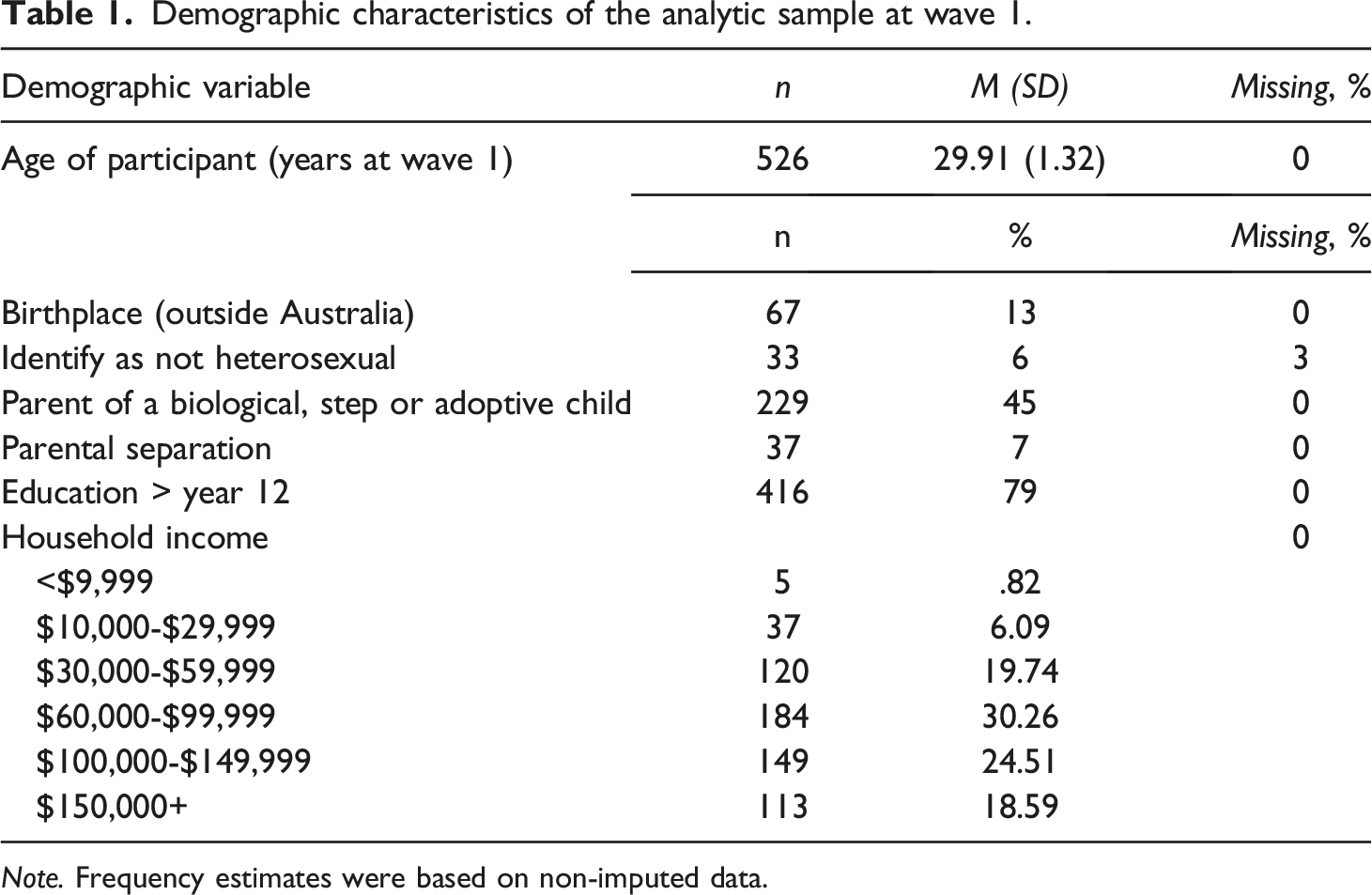
Note. Frequency estimates were based on non-imputed data.
Outcome measure
Romantic relationship quality
Romantic relationship quality was measured at each of the five waves using the 32-item Dyadic Adjustment Scale (Spanier, 2013). Response options included binary contrasts (yes/no) and 5-, 6- and 7-point Likert scales with item specific response options. In this study, the total dyadic adjustment score ranging from zero to 151 was utilised to assess and evaluate the overall quality of romantic relationships. Lower scores are indicative of problems within a romantic relationship, while higher scores indicate more positive relationship quality with little or no existing problems. The total scale captures dyadic consensus which is the degree to which participants agree with their partner (e.g., “Making major decisions”), dyadic satisfaction, which examines the degree to which participants feels satisfied with their partner (e.g., “Do you confide in your mate?”), dyadic cohesion, which is the degree to which participants participate in activities with their partner (e.g., “Work on a project together?”), and affectional expression which is the degree to which participants agree with their partners regarding emotional affection (e.g., “Demonstrations of affection”). Cronbach’s alpha for the five waves ranged from .92 to .96, demonstrating excellent internal consistency.
Predictor variables
Time spent with peers
To measure the amount of time spent with peers at each wave, a single item was used: “How many hours a week on average, outside of work, would you spend in the company of friends”. The response field for this question was open-ended. To reduce the influence of outliers, at the upper-end, excessive responses (i.e., more than 3 SDs from the sample mean) were winsorised. This produced an upper limit of 30, which is more than twice the mean number of hours men of the same age report spending with peers in the National Time Use Survey (ABS, 2008).
Close and extended peer network size
Close peer network size was measured at each wave using a single item: “How many people would you count as close friends (i.e., people you feel at ease with, can discuss private matters with, or call on for help)?”. Similarly, extended peer network size was measured at each wave using a single item: “How many people would you count as friends but not so close?” Responses for each measure were given across six options (“None”, “1 or 2”, “3 to 5”, “6 to 10”, “11 to 15”, and “16 or more”). To create a meaningful average score, we coded these options for analysis as the midpoint of the range of each response option. For the final category (e.g., 16 or more) in which no midpoint exists, the same midpoint was applied from the previous category, that is, zero = “None”, 1.5 = “1 or 2”, 4 = “3 to 5”, 8 = “6 to 10”, 13 = “11 to 15”, and 18 = “16 or more”.
Moderating variable
Father status
Participants reported their fatherhood status on a single item. Responses were dichotomised to zero = not a father, 1 = father of a biological, step, or adoptive child.
Potential confounding variables
A number of demographic variables that were reported in prior research to be associated with both relationship quality and investment in social relationships, were considered potential confounders of the relationships under investigation. These were: age (years), birthplace (0 = Australia, 1 = Not Australia; Cho et al., 2020), history of own parents’ relationship separation before age 16 (Yes, No; Hailey Maier & Lachman, 2000; Mahl, 2001), sexual orientation (Heterosexual, Not Heterosexual; Gillespie et al., 2015; Mohr & Fassinger, 2006), level of completed education (Year 12 or less, Higher than Year 12; Mihalcea et al., 2013), and yearly household income (6-point scale from Nil Income to $150,000+; Cho et al., 2020). We additionally included partner related factors. These were: living with partner status (No, Yes), relationship duration (7-point scale from Less than 3 months to More than 5 years), and the proportion of time a partner was present during social interactions (0%–100%; single item: “Of this time spent with friends, how many hours would your partner also be there?”).
Analytic strategy
Analyses were conducted in Stata v.17 (StataCorp, 2021). Linear regression models were estimated using Generalised Estimating Equations (GEE) with an exchangeable working correlation structure (to account for clustering across waves) and robust variance estimators. Specifically, in a series of cross-sectional regression models, romantic relationship quality was regressed onto each of the measures of peer investment; (i) time spent with peers, (ii) close peer network size, and (iii) extended peer network size. In each analysis, linear and then quadratic effects were examined, adjusted first for wave of measurement only and then fully adjusted with wave and all potential confounders. Finally, in each model, interactions between measures of peer investment and father status were additionally explored. Further, all associations were also examined at each wave by including an interaction between relevant predictors and measurement time point.
Missing data for the main outcomes, predictors, and moderators (i.e., romantic relationship quality, time spent with peers, close network size, extended network size, and father status) across the five waves ranged from 0% to 33%. To address missing data in the inferential analyses, multiple imputation was used. Due to the multiple waves including sequential and related measurements, a two-fold fully conditional specification algorithm was employed (Welch et al., 2014) Using Rubin’s rules, estimates were obtained by pooling results across the 20 imputed datasets (Rubin, 2004).
Results
Descriptive statistics
Mean, SD, possible ranges, and confidence intervals of partner and peer related variables.
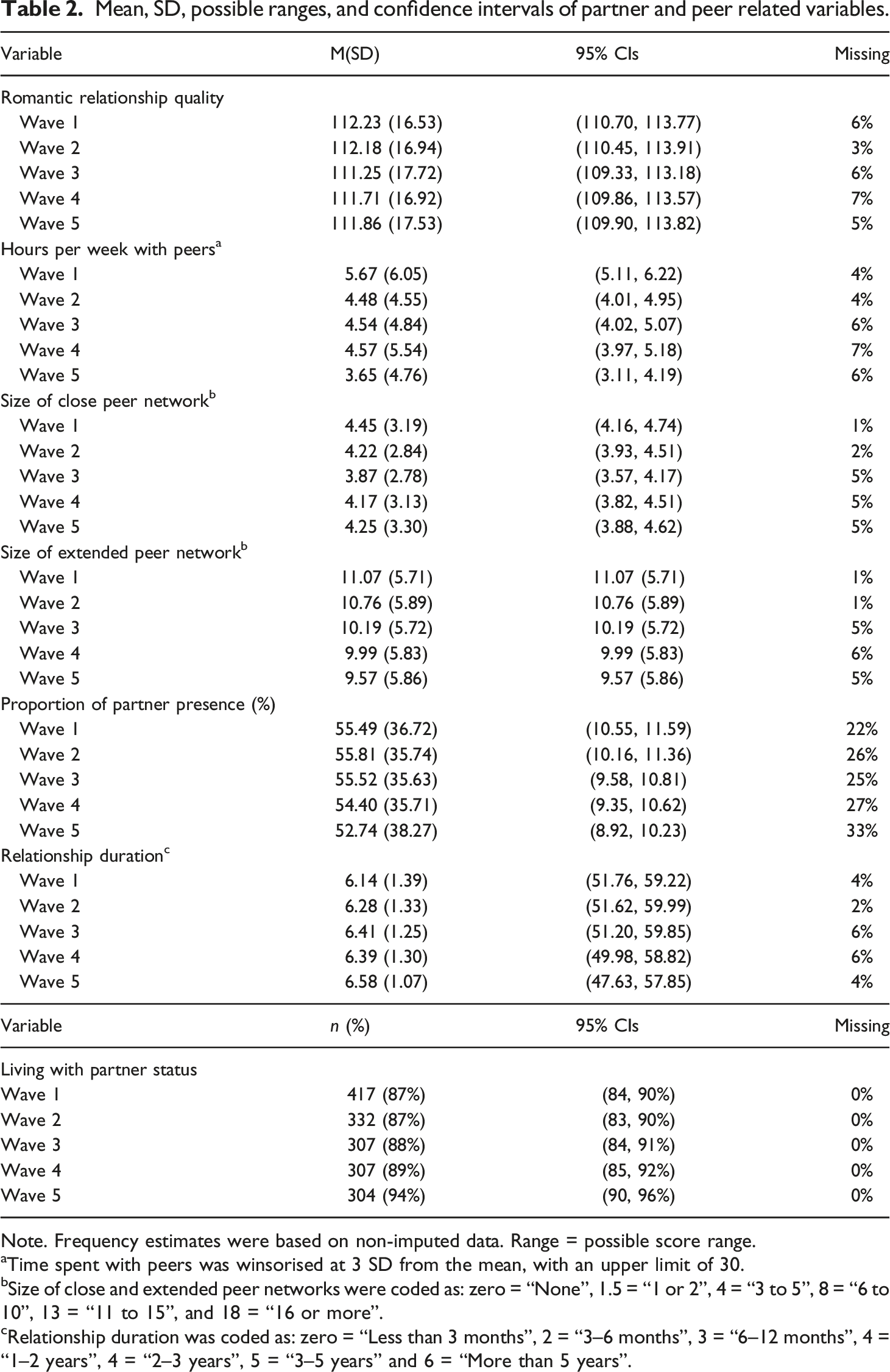
Note. Frequency estimates were based on non-imputed data. Range = possible score range.
aTime spent with peers was winsorised at 3 SD from the mean, with an upper limit of 30.
bSize of close and extended peer networks were coded as: zero = “None”, 1.5 = “1 or 2”, 4 = “3 to 5”, 8 = “6 to 10”, 13 = “11 to 15”, and 18 = “16 or more”.
cRelationship duration was coded as: zero = “Less than 3 months”, 2 = “3–6 months”, 3 = “6–12 months”, 4 = “1–2 years”, 4 = “2–3 years”, 5 = “3–5 years” and 6 = “More than 5 years”.
Associations between peer relationships and romantic relationship quality
Linear and quadratic regression GEE Models of time spent with peers and size of social networks (close; extended), predicting romantic relationship quality at 5 waves (n = 526).
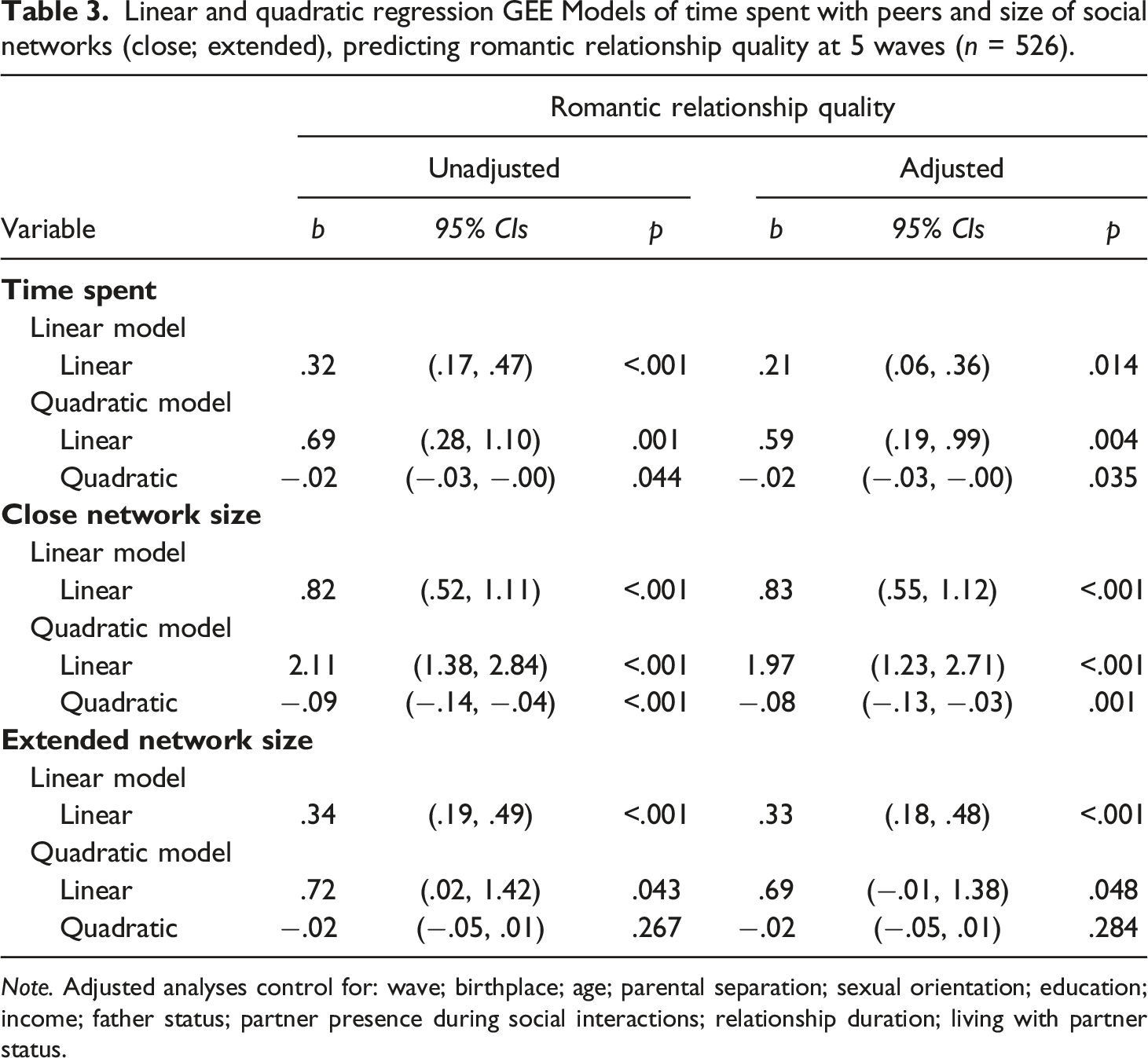
Note. Adjusted analyses control for: wave; birthplace; age; parental separation; sexual orientation; education; income; father status; partner presence during social interactions; relationship duration; living with partner status.
Evidence suggested a quadratic association between time spent with peers and romantic relationship quality, before and after adjustment for covariates. The quadratic relationship between time spent with peers and romantic relationship quality variables is presented in Figure 1(a), whereby increases in investment were associated with improved romantic relationship quality up to a “tipping point” – around 15–20 hours per week – following which romantic quality decreased. For example, men who spent no time with peers reported romantic relationship quality almost one third of a standard deviation (SD = ∼17 points on the Dyadic Adjustment Scale) lower than those reporting 15 hours investment. Beyond this tipping point, evidence that more hours spent with peers was associated with reduced romantic relationship quality was, however, weaker (i.e., wider confidence intervals). In line with this, it is noted that only a small proportion of the sample (5.36%) reported investment within and beyond this tipping point. Evidence suggested that this quadratic association was consistent across waves (p = .154). Selected quadratic or linear association between romantic relationship quality and time spent with peers, close peer network size, and extended peer network size.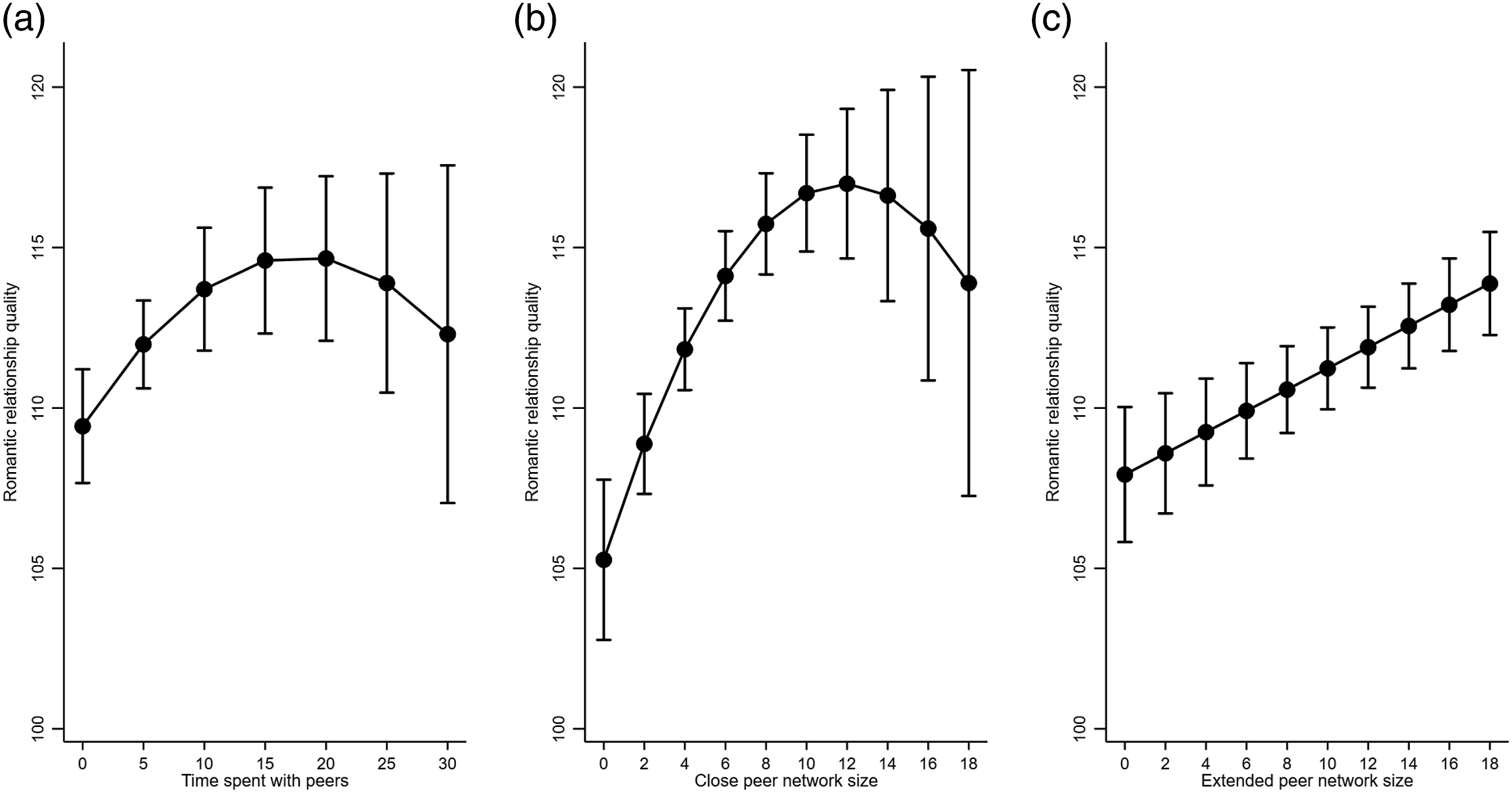
Similarly, evidence suggest a quadratic association between number of close peers and romantic relationship quality, both before and after adjustment for covariates. As presented in Figure 1(b), in the quadratic relationship between number of close peers and romantic relationship quality, increases in investment were associated with improvements in romantic relationship quality up to a “tipping point” – around 10 to 14 peers – following which romantic quality decreased. For example, men with no close peers reported romantic relationship quality over half of a standard deviation (SD = ∼17 points on the Dyadic Adjustment Scale) lower than those reporting to have 10 close peers. Beyond this tipping point, evidence that more close peers were associated with reduced romantic quality was, however, weaker (i.e., wider confidence intervals). In line with this, it is noted that only a small proportion of the sample (3.39%) reported investment within and beyond this tipping point. Evidence suggested that this quadratic association was consistent across waves (p = .929).
A significant positive linear association was found between extended peer network size, and romantic relationship quality, before and after adjustment for covariates. There was no evidence for a quadratic association between extended peer network size and romantic relationship quality (See Figure 1(c)). Evidence suggested that this linear association was consistent across waves (p = .518). As such, subsequent analyses with this predictor assumed linear effects.
While being a father was negatively associated with romantic relationship quality (b = −3.92, p < .001), in tests of interactions, no evidence was found for interactions between parent status and, in the quadratic models, time spent with peers (p = .857) or close network size (p = .590). Evidence did, however, suggest an interaction for extended network size in the linear model (p = .015; see Figure 2), such that the association between extended network size and romantic relationship quality was only evident in parents (b = .47, p < .001), compared to men without children (b = .14, p = .188). Linear association between romantic relationship quality and extended peer network size in non-fathers and fathers.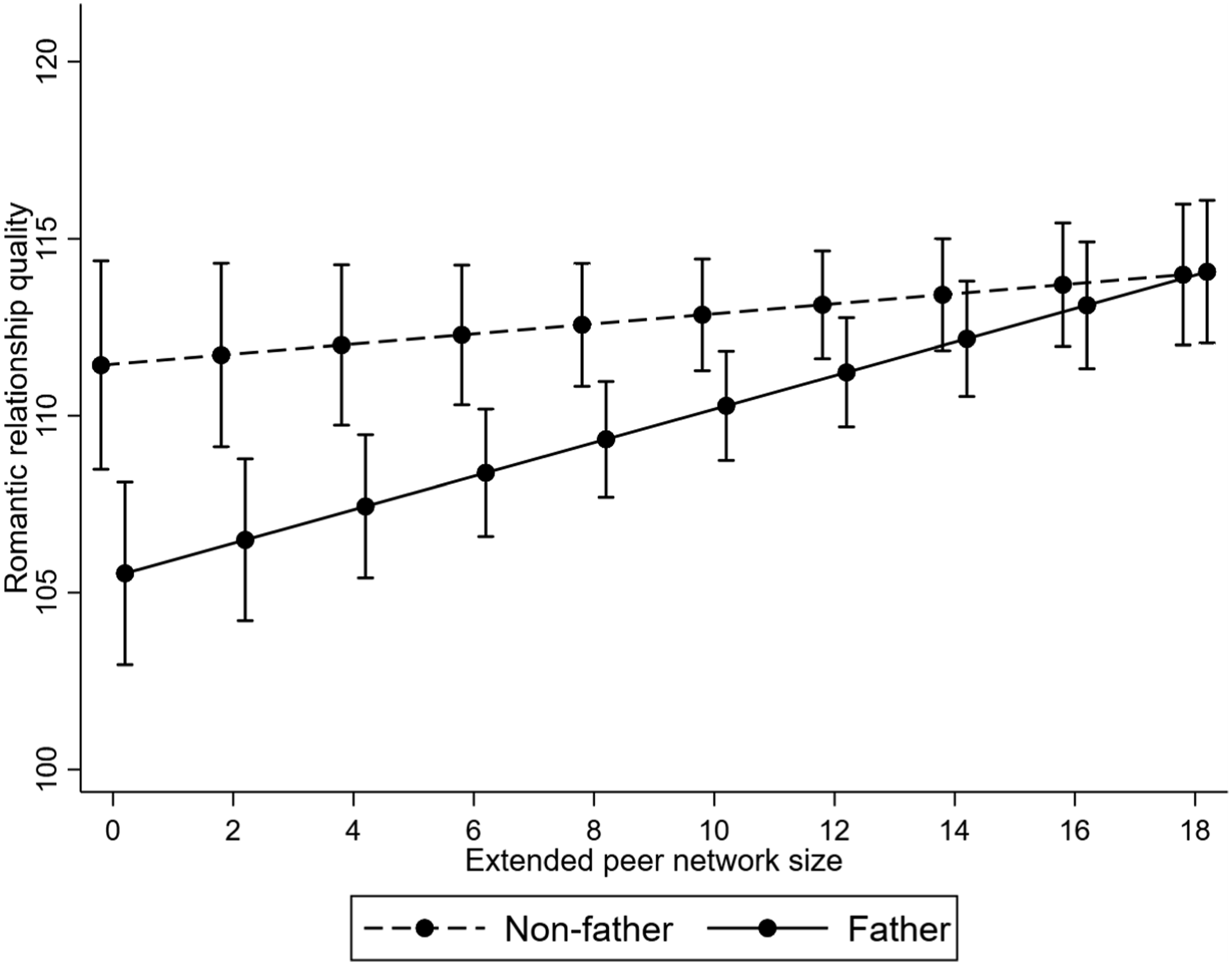
Discussion
In this study we address a commonly asked, yet understudied question regarding the extent to which men’s investments in their peer relationships (peer network size, and time spent with friends) are associated with the quality of their romantic relationships. We further examined differences between fathers and non-fathers. Findings suggest that men who spent very little time with friends had poorer relationship quality with partners. In contrast, more time with friends was associated with improvements in relationship quality; however, only up to a point, after which there was weak evidence of a decline in relationship quality. A similar trend was found with respect to close network size. Men with few close friends had poorer romantic relationship quality; however, as the number of close friends increased so too did the quality of their romantic relationship quality. Again, this was only up to a point, after which there was weak evidence of a decline in relationship quality for men with close peer network sizes beyond 12 close friends. With regard to extended peer network size and romantic relationship quality, we found no association for men without children, but a linear and positive association was evident among fathers.
Current findings suggest that romantic relationship quality may reach a tipping point when investment in peer relationships is around 15–20 hours per week. Australian population estimates show that men of a similar age to the current sample, on average spend approximately 13 hours per week with friends (Australian Bureau of Statistics (ABS), 2008). Men in the age group below (15–24 years), spend approximately 30 hours per week with friends (Australian Bureau of Statistics (ABS), 2008). These estimates are consistent with research suggesting that men tend to reduce their time spent with friends as they progress toward the developmental period of establishing romantic relationships and transition to fatherhood (Eggebeen & Knoester, 2001). This reduction in time spent with friends is also in line with the dyadic withdrawal hypothesis, which posits that individuals may withdraw from social interactions outside their romantic relationship as they deepen their commitment to their romantic partner (Johnson & Leslie, 1982). As men move into the life stage of forming and maintaining long-term partnerships, they may prioritise the emotional closeness and involvement with their romantic partners, which can lead to decreased social engagement with friends. Additionally, the transition to fatherhood may further contribute to this withdrawal, as men may focus more on their family responsibilities and nurturing their intimate relationship. As such, the current findings raise the possibility that reducing time with friends too much during this time may lead men to experience detriment to romantic relationship quality to an extent they would not if they sustained time spent with friends.
One explanation for why an underinvestment in time spent with friends is linked to poorer romantic relationship quality may be that less engagement with others increases risk of negative emotional states, particularly loneliness and isolation (Cheng & Furnham, 2002). In turn, experiences of loneliness and isolation are associated with greater dependency on romantic partners (Hasan & Clark, 2017). This dependency on one’s romantic relationship may increase pressure on partners to occupy available time and fulfill all needs for emotional support (Hasan & Clark, 2017). In prior research, dependency on partners has been associated with higher levels of conflict (Valor-Segura et al., 2014) and is identified at higher rates in those with higher levels of anxious attachment insecurity (Overall & Sibley, 2009).
We also found weak evidence that, beyond a tipping point, too many hours with friends may be linked to poorer relationship quality. Opportunity cost theory may explain outcomes of too much or too little time with friends. Opportunity cost refers to the potential benefits an individual forgoes when choosing one alternative over another (Nielsen, 2004). As men age, time and emotional resources become increasingly scarce, as they are tasked with competing roles, each requiring a substantial investment of time (McKenzie et al., 2018). Men in the current study were in the age range recently termed ‘Established Adulthood’ (Mehta et al., 2020), where pressure is felt by expectations of a “crunch time” for reaching major life milestones including settling in to committed relationships. As romantic and peer relationships require an investment of time and emotional resources, men are tasked with deciding how to allocate their resources. As such, by over-investing time in peer relationships, men may sacrifice the opportunity to invest the time and emotional resources required to sustain greater romantic relationship quality.
It is important, however, to interpret these results with caution given that there were wider confidence intervals around estimates of associations with relationship quality at the upper end of time spent with friends when compared to the lower end. This may be due in part to a lack of statistical power, with relatively fewer men in the sample reporting spending more than 15–20 hours per week with friends. As spending more than 30 hours per week with friends generally falls outside the typical population range, sample responses above this value were winsorised to minimise the effect of extreme outliers. Future research may benefit from further exploring this association in a larger sample of men.
In the current study, the association between size of men’s close peer networks and relationships quality was similarly quadratic. This was not the case for extended friendship networks, for which the relationship was linear and only evident in fathers. One question of interest is why different findings emerge for associations between romantic relationship quality and close compared to extended networks. The poorer relationship quality associated with large close networks may be attributed to the investment of time and emotional resources required by these networks, including regular communication, emotional support, and social activities, which can detract from the investment in romantic relationships. A different story emerged for extended networks. Not only was there no quadratic association but the linear association showed differences between non-fathers and fathers. Specifically, fathers and non-fathers had comparable romantic relationship quality when extended peer networks were large; however, having fewer peers in the extended networks was associated with lower romantic relationship quality in fathers only.
One reason may be that extended networks, while larger, may reflect a smaller overall investment for the individual. The existing literature on social integration and extended peer networks suggests that engaging with a diverse range of social connections can enhance individual well-being and contribute uniquely to one’s quality of life (Berkman et al., 2000; Fingerman, 2009). These relationships can serve parallel functions to close peer relationships, supporting different aspects of identity in various settings. Extended networks may be more oriented towards shared activities (e.g., sporting teams) that may provide a relief from the obligations of work, family and parenthood (Shaw et al., 2014) and increase physical and mental well-being, with potential flow on benefits for the functioning and quality of a romantic relationship. These networks are typically less intimate and may place fewer expectations and demands on the individual; in line with the functionalist perspective on the benefits of network diversity, this may be particularly advantageous for new fathers who likely have comparatively less availability.
Strengths and limitations
A strength of this study was the use of repeated measures across five waves, which allowed us to highlight the robust and stable nature of findings at multiple time points. However, limitations of a longitudinal study include attrition and missing data due to non-responses. In this study, levels of missing data were low, particularly with respect to cohort studies of men (Teague et al., 2018), and were addressed using multiple imputation. One other consideration was the potential impact of the COVID-19 pandemic that occurred in Wave 4 and 5 of data collection. Due to varying lockdowns across Australian states, the imposed restrictions and social distancing measures may have decreased investment in peer relationships due to limited peer interactions (Kovacs et al., 2021). Additionally, living with a partner during lockdowns, and COVID-19 related challenges, may have strained romantic relationship quality (Cornelius et al., 2021). However, no interactions were found between measurement wave and peer investments in the relationship with relationship quality, suggesting associations were robust to both the increasing age of participants and changing conditions of the pandemic.
The current study employed a gender focused lens that examined men at a community level and their interpersonal relationships. While findings suggest an association between peer investment and romantic relationship quality, the current study did not examine disparities in the way partners perceive the quality of the relationship. Whether the pattern of associations would be similar for partners is not known and remains an important area for future enquiry. Sexual orientation was adjusted for in each analysis, however, differences between heterosexual and non-heterosexual men were not explored. Prior research suggests there may be small sexual orientation differences in the number of friends, with non-heterosexual men having larger peer networks and time spent with friends, compared to their heterosexual counterparts (Gillespie et al., 2015), and may therefore, warrant further investigation, as the effects of peer investment on romantic relationship quality may differ for non-heterosexual men. Additionally, given the changing landscape for many men at this age, future work should also consider the impact of interactions with extended family members beyond the partner, which may counter effects of reduced peer networks. Further, the MAPP study sample were more often born in Australia and had higher education levels. Future research may benefit from investigating the association between men’s peer investment and romantic relationship quality across varying cultural groups.
Future research
While the current study explored the effects of peer investment on romantic relationship quality, men do not constitute a homogenous group, thus, there may be several different factors or characteristics that influence these associations, which remain as unmeasured confounding factors. Personality traits, for example, were not explored in the present analyses, yet may be relevant in the association between men’s peer and romantic relationships. Previous research has demonstrated extroverts typically have large peer networks and consider peer interactions a major source of happiness (Hills & Argyle, 2001). In contrast, introverts typically focus on establishing individual affiliative relationships and derive less satisfaction from the presence of others (Hills & Argyle, 2001). Nevertheless, evidence has not suggested that differences in emotional closeness were evident across a dimension of extraversion (Pollet et al., 2011). The benefit derived from peer investment and subsequent improvement in romantic relationship quality requires further examination across dimensions of personality such as extroversion. As such, future research would benefit exploring a range of traits to understand heterogeneity in effects of peer investment on romantic relationship quality.
Additionally, recent literature has suggested that individuals have their own personal or social signature for how we distribute effort across network members, which has been referred to as a “social fingerprint” (Saramäki et al., 2014). For example, Fiori et al. (2020) and Saramäki et al. (2014) have explored the persistence of social signatures in human communication, and the role of sociohistorical context in social development. It is possible that the tipping point of time spent with friends and the number of close friends that enhance romantic relationship quality may differ across individuals due to their unique social fingerprints. Future research may benefit from exploring the role of social fingerprints in the association between men’s investments in their peer relationships and the quality of their romantic relationships. Finally, the current study underscores the importance of balancing investment in peer relationships to enhance the quality of romantic relationships. Given a small number of participants were found to overinvest in peer relationships, further replication of the study would be advantageous.
Implications
Low investment in peer relationships has previously been identified as a risk factor to both physical and mental health outcomes (Gómez-López et al., 2019; Mansour et al., 2023). Our research provides evidence that suggests that a lack of friendships may too be a concern for romantic relationship quality. In the United States, millennials (born 1982 to 1999)—the generation of the sample in this study—have been found to be at particular risk of having none or few friends (YouGov, 2019). In a recent study (n = 1254), 23% of adult men stated they had no close friends outside of the family (YouGov, 2019). We did not ask participants to exclude family members when reporting the number of friends, nevertheless 5% of our participants stated they had no close friends, and 28% reported having one or two close friends. In recent years, governments in many countries have drawn attention to high rates of social isolation and disconnection as a public health risk, particularly impacting mental health (Surkalim et al., 2022); however, we are only now beginning to understand the extent and breadth of the ramifications. The current study demonstrated an additional risk to romantic relationships, with a lack of peer support potentially placing undue pressure on a partner in a relationship to be the sole provider of support and stimulation. This may further compound risk for mental health problems, with relationship breakdown linked to depression and suicidal ideation in men (Evans et al., 2016). Given the substantial proportion of men lacking close social connections or not spending time with friends, investing in supports for meaningful connections for millennial men should be a public health priority.
Findings from our study may have relevance for relationship counsellors providing insights into appropriate balancing of time with friends as one factor that may assist in improvements in relationship quality. Our measure of relationship quality captures a sense of cohesion, consensus, satisfaction, and affectional expression; as such, knowledge of the associations found in this study may be useful for supporting improvements within each of these facets of men’s romantic relationships. Additionally, given the widespread internet interest in this topic, findings from this study may be of general interest and help newly committed couples to normalise changes in prioritisation of peer relationships and provide a catalyst for communication between partners about benefits and costs of men maintaining peer relationships. Additionally, as men’s larger extended peer network size is linked to high levels of romantic relationship quality, there may be merit in community promotion of social groups that specifically target male membership. Where such groups engage in physical or other shared activities, benefits may be twofold: improving relationship outcomes for men, and improvements to physical and psychological well-being (Amati et al., 2018). Further, given that the impact of extended peer network size was particularly important for fathers, coupled with the fact that new fathers may be inclined to narrow their extended networks, facilitating engagement with fathering peer groups may be a valuable option to provide support.
Conclusion
Findings from this study suggest that there are notable improvements in romantic relationship quality attributable to peer investments, however, at the extreme too much investment may be detrimental. Given international evidence of poor engagement in friendship networks for men of this age (McKenzie et al., 2018; YouGov, 2019), public health investments in measures that build social connections are urgently needed. Overall, findings of the current study demonstrate that while increasing peer network size may benefit the quality of men’s romantic relationships, balancing investment of time and emotional resources between romantic and peer relationships may lead to higher quality connections in committed partnerships.
Supplemental Material
Supplemental Material - Balancing friends and romance: Associations between men’s investment in peer relationships and romantic relationship quality
Supplemental Material for Balancing friends and romance: Associations between men’s investment in peer relationships and romantic relationship quality by Khya Marabel-Whitburn, Christopher J. Greenwood, Kayla A. Mansour, Lauren M. Francis, Craig A. Olsson and Jacqui A. Macdonald in Journal of Social and Personal Relationships
Footnotes
Acknowledgements
The authors would like to thank the men who are participants in the Men and Parenting Pathways study for their time and invaluable contributions to each annual survey. We acknowledge the investigators and project managers who are not authors on this manuscript but have nevertheless made substantial contributions to the establishment and development of the cohort: Professors Jo Williams, Helen Skouteris, Tess Knight, Jeannette Milgrom, Associate Professor Richard Fletcher, and Doctors Laura Di Manno, Bengianni Pizzirani, and Briony Hill.
Declaration of conflicting interests
The author(s) declared no potential conflicts of interest with respect to the research, authorship, and/or publication of this article.
Funding
The author(s) disclosed receipt of the following financial support for the research, authorship, and/or publication of this article: This work was supported by a National Health and Medical Research Council of Australia Investigator Grant for CAO [APP1082406, GNT1175086].
Open research statement
As part of IARR’s encouragement of open research practices, the authors have provided the following information: This research was not pre-registered. The data used in the research are not available. The data can be obtained by emailing:  .
.
Supplemental Material
Supplemental material for this article is available online.
References
Supplementary Material
Please find the following supplemental material available below.
For Open Access articles published under a Creative Commons License, all supplemental material carries the same license as the article it is associated with.
For non-Open Access articles published, all supplemental material carries a non-exclusive license, and permission requests for re-use of supplemental material or any part of supplemental material shall be sent directly to the copyright owner as specified in the copyright notice associated with the article.
