




Abstract
Personality traits of romantic partners may be part of the puzzle of how romantic relationships are related to mental health. We investigated the role of narcissistic admiration and rivalry in this context. Positive associations of admiration and negative associations of rivalry with the mental health of individuals and their partners were hypothesized. Furthermore, we expected admiration to be particularly relevant for the narcissist’s mental health and rivalry to matter more for the partner. Actor-partner interdependence models and Bayesian inference methods were used (n = 7438 couples). Hypotheses and methods were pre-registered. Contrary to expectations, the results only supported the hypotheses concerning actor effects. Most partner effects were miniscule, with the exception of the effect of male rivalry on female mental health. While controlling for extraversion and agreeableness reduced and partly reversed the initial effects of narcissism, an exploratory analysis suggested that these personality factors should be considered as mediators and that most partner effects of admiration and rivalry on mental health may be cases of indirect-only mediation, with extraversion and agreeableness acting as process variables. While replications are needed, the findings suggest that the question posed in the title may be answered with “not that much, apparently”.
Keywords
Introduction
Romantic relationships can be highly relevant for individual mental health in positive and negative ways (Braithwaite & Holt-Lunstad, 2017). For example, social support from a partner may protect against depression (Gariépy et al., 2016). On the other hand, conflicts with partners have been associated with higher levels of depression and anxiety (Choi & Marks, 2008; Whisman, 2013). To advance our understanding of how romantic relationships influence mental health, it may be useful to investigate how personality traits of individuals relate to the mental health of their partners. This may not only inform theory but also help therapists recognize relevant relationship dynamics. Therefore, the aim of this study was to shed further light on the potential importance of a particular personality trait in this context: grandiose narcissism.
Grandiose narcissism has been described as consisting of paradoxical components (Morf & Rhodewalt, 2001). In the Narcissistic Admiration and Rivalry Concept (NARC) proposed by Back et al. (2013), grandiose narcissism is considered a two-dimensional construct reflected in two affective-motivational, cognitive, and behavioral dynamics: an extraverted dynamic named “narcissistic admiration” and an antagonistic dynamic named “narcissistic rivalry”. Both are thought to be driven by two normal psychological motives, namely the motivation to improve one’s self-view (“self-promotion”) and defend against negative self-views (“self-protection”). However, these motives are taken to an extreme because of the narcissist’s exaggerated self-view. Admiration is typified by self-promoting behaviors such as assertiveness and charming demeanor in order to gain social admiration. In contrast, rivalry refers to antagonistic behaviors such as aggressiveness and devaluation of others that aim to protect the narcissist’s self from losing grandiosity (Back et al., 2013).
It is conceivable that higher admiration may elicit favorable effects in personal relationships, while higher rivalry may lead to negative consequences. Previous research using the Narcissistic Admiration and Rivalry Questionnaire (NARQ; Back et al., 2013) appears to support these hypotheses for outcomes related to romantic relationships. In particular, Wurst et al. (2017) reported results from multiple studies (n = 3560) and found that higher rivalry scores of one’s romantic partner predicted lower self-reported relationship satisfaction as well as reports of more relationship conflicts. In contrast, higher individual admiration scores tended to be either irrelevant or advantageous for relationship-related outcomes, e.g., by being associated with higher observer ratings of likeability and physical attractiveness (Wurst et al., 2017). Similar findings were obtained in a dyadic daily diary study, in which admiration was positively and rivalry negatively related to daily relationship satisfaction (Rentzsch et al., 2021). Finally, Vrabel et al. (2020) also observed a positive association of admiration and a negative association of rivalry with romantic relationship functioning.
These results combined with the links between relationship factors and mental health suggest that admiration and rivalry may be associated with the mental health of narcissistic individuals and their romantic partners. While grandiose narcissism is often thought to be less important for individual mental health compared to vulnerable narcissism (Miller et al., 2017), previous null associations between grandiose narcissism and psychological distress may have been due to not differentiating between admiration and rivalry. When the two dynamics are disentangled, rivalry has been found to be a predictor of negative clinical outcomes such as depression, while admiration may be slightly protective (Mota et al., 2019). Yet, the focus on individuals in previous research still does not account for the possibility that the most severe consequences of grandiose narcissism may not be experienced by the narcissist, but by close others (Miller et al., 2017), which is what the present study aims to investigate.
Consequently, several effects of admiration and rivalry can be theorized. First of all, it seems plausible that admiration may be beneficial and rivalry may be detrimental for the mental health of the narcissistic individual. Importantly, rivalry may also be detrimental for the mental health of the narcissist’s partner due to its antagonistic nature. Potential mechanisms for a negative effect of rivalry on partners include the increased frequency of conflicts as well as the more frequent use of aversive strategies for influencing one’s partner such as bullying and disengagement (Sauls et al., 2019; Wurst et al., 2017). In contrast, admiration could be slightly beneficial for the partner’s mental health by having small positive effects on the relationship or related perceptions (Rentzsch et al., 2021; Vrabel et al., 2020; Wurst et al., 2017) and by indirectly promoting the partner’s self. Furthermore, as rivalry-related aggressive behaviors are primarily directed at others, rivalry may be more strongly associated with the mental health of the narcissist’s partner than with their own mental health. Admiration, on the other hand, could be more relevant for the narcissist’s own mental health.
To empirically investigate these expected associations, the actor-partner interdependence model (APIM) can be used (Cook & Kenny, 2005). The APIM distinguishes between “actor effects”, i.e., paths within an individual, and “partner effects”, i.e., paths from the predictor variable of an individual to the outcome variable of their partner.
The APIM can be applied using different statistical approaches. Structural equation modeling is a natural choice for the present study, as it facilitates latent variable estimation (Tomarken & Waller, 2005) and lends itself to the analysis of dyads for which individuals can be distinguished based on a meaningful criterion such as gender (Cook & Kenny, 2005). Furthermore, potential gender-related differences in how participants interpret questionnaire items can be easily assessed using structural equation modeling with data from distinguishable dyads (Sakaluk et al., 2021). For these reasons, the present study focused on romantic dyads including an individual self-reporting as male and an individual self-reporting as female, henceforth referred to as mixed-gender couples.
The main theoretical APIM and the hypotheses of the present study are illustrated in Figure 1. The hypotheses were pre-registered online (https://doi.org/10.17605/OSF.IO/VSRUF) and are explicated in the following paragraphs: Illustration of the pre-registered hypotheses. Note. The number of pluses and minuses represents the relative strength of the association of narcissism scores with better or worse mental health.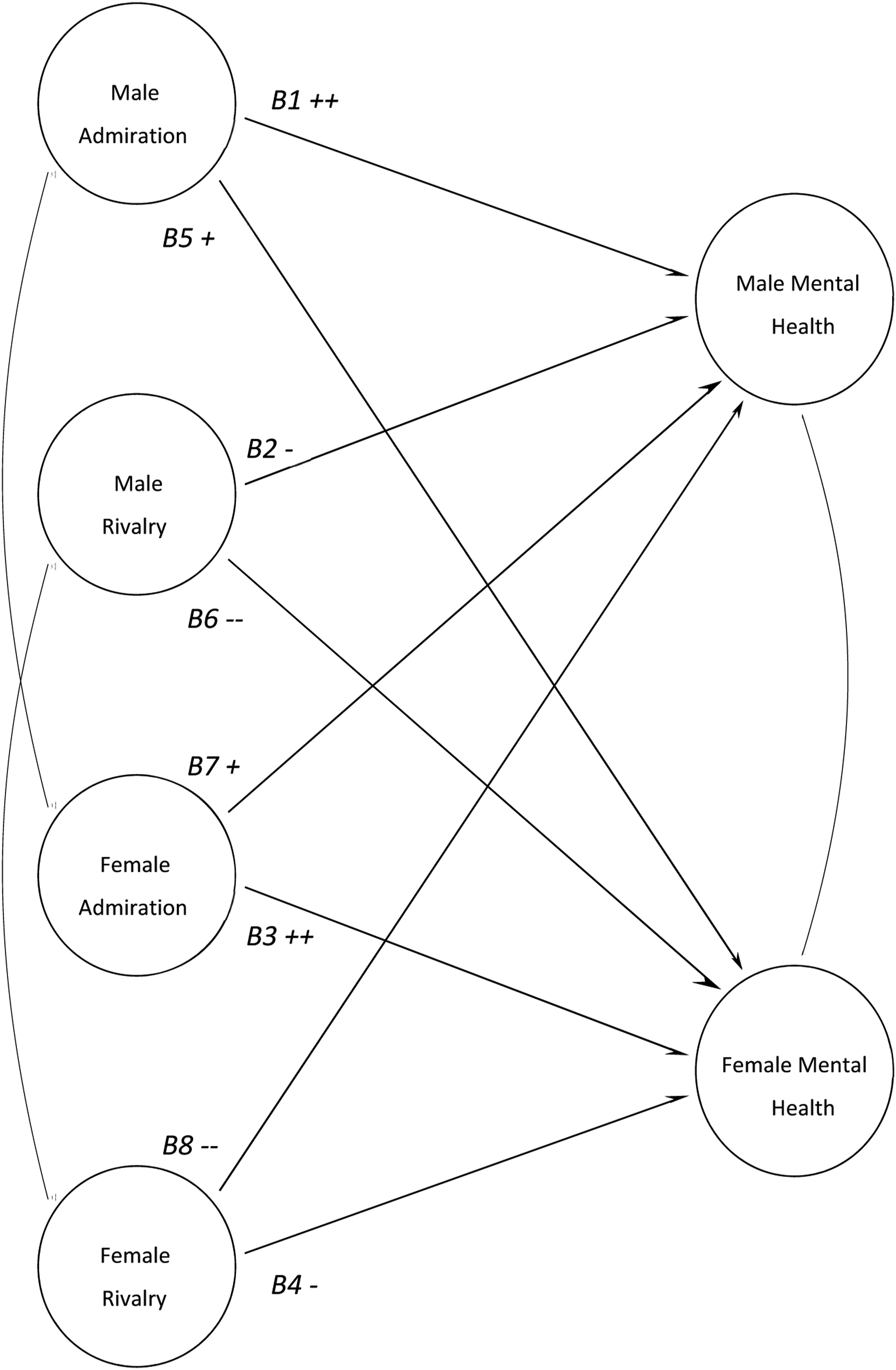
Regarding the actor effects, it was expected that higher male admiration would predict better male mental health (H 1 : B1 > 0), while higher male rivalry should predict worse male mental health (H 2 : B2 < 0). The same pattern was expected for higher female admiration and better female mental health (H 3 : B3 > 0) and higher female rivalry and worse female mental health (H 4 : B4 < 0).
Regarding the partner effects, it was hypothesized that higher male admiration would predict better mental health of female partners (H 5 : B5 > 0), while higher male rivalry should predict worse mental health of female partners (H 6 : B6 < 0). In parallel, higher female admiration should predict better mental health of male partners (H 7 : B7 > 0) and higher female rivalry should be a predictor of worse mental health of male partners (H 8 : B8 < 0).
Finally, it was assumed that admiration would be more relevant for individual mental health while rivalry would matter more for the mental health of romantic partners. That is, partner effects should be less extreme than actor effects for admiration (H 9 : B3 > B5; H 10 : B1 > B7) and more extreme than actor effects for rivalry (H 11 : B6 < B4; H 12 : B8 < B2).
All hypotheses refer to the unstandardized regression coefficients, as standardized regression coefficients should not be compared between partners due to potentially different standard deviations in men and women.
Given the correlational nature of this study, the robustness of these expected associations should be assessed by considering theoretically relevant confounding variables. In this regard, two particularly important psychological constructs appear to be extraversion and agreeableness. They represent the personality factors that are considered to be most closely tied to grandiose narcissism and the NARC (Back et al., 2013; Miller et al., 2017). It has been proposed that antagonism (i.e., low agreeableness) and agentic extraversion may represent the core of grandiose narcissism (Miller et al., 2017). After all, narcissistic admiration and rivalry are characterized by mostly extraverted and disagreeable behaviors, respectively, that are thought to be fueled by a grandiose sense of self-importance. This is also reflected in the correlations of admiration with extraversion and rivalry with agreeableness in previous studies of the NARQ (Back et al., 2013; Leckelt et al., 2018). Furthermore, extraversion is associated with mental health, and while agreeableness is not typically considered an important correlate of individual mental health, it may be relevant for the mental health of romantic partners, warranting inclusion in the present study (Kotov et al., 2010). Therefore, one may wonder whether the NARC can contribute to additional insights into the dynamics of mental health when extraversion and agreeableness are already considered. The present study includes a pre-registered robustness check to evaluate this question.
Finally, several questions were raised during the peer-review process that resulted in exploratory analyses that were not pre-registered. Most importantly, it was suggested that extraversion and agreeableness could also act as process variables mediating the effects of grandiose narcissism on mental health. That is, motivational tendencies to promote and protect one’s grandiose self may cause one to act in a more extraverted and less agreeable manner, which in turn may affect one’s own and the partner’s mental health. For this reason, a mediation model was included. Furthermore, the role of the scale type of the mental health outcome measure, which can be used as a screening tool, was evaluated by estimating a model with dichotomized outcomes. The potentially moderating role of the duration of the relationship was also explored, as it is conceivable that a partner’s narcissism may increasingly affect one’s mental health over the course of the relationship. Lastly, potential quadratic effects were investigated because the mental health of partners may only be affected in the case of severe narcissism, with moderate narcissism being irrelevant.
Method
For the sake of transparency and rigor, most methodological decisions were pre-registered online (https://doi.org/10.17605/OSF.IO/VSRUF). During the peer-review process, further exploratory analyses were added and are transparently reported as such. Analysis code and results can be found in the associated Open Science Framework (OSF) repository (https://doi.org/10.17605/OSF.IO/EQZ76). It should be noted that measurement models for the latent variables were computed before the pre-registration. This was done separately for narcissism and mental health, thereby avoiding the inspection of correlations or structural paths relevant to the hypotheses. The models were used for assessing dyadic measurement invariance (Sakaluk et al., 2021) to ensure that the measurement properties of the data were suitable for valid comparisons of actor and partner effects.
Sample
The data used for this study was collected as part of the German Socio-Economic Panel Study (SOEP) in the 2017 and 2018 waves (Goebel et al., 2019). The SOEP is a nationally representative household survey in Germany. In selected years, certain psychometric scales are incorporated into the survey. The 2018 wave was used for the current analyses because it included relevant measurement instruments: the (NARQ-S; Leckelt et al., 2018) and the 12-item Short-Form Health Survey (SF-12; Ware Jr. et al., 1996). From the 2017 data, extraversion and agreeableness items of the SOEP Big Five Inventory (Hahn et al., 2012) were used in a secondary robustness check and in an exploratory mediation analysis.
The main inclusion criterion for the analyses was that both adult (age ≥ 18 years) members of a mixed-gender couple (i.e., one partner self-reporting as male and the other self-reporting as female, regardless of sexual orientation) living together in the same household were given the NARQ-S in 2018. If both members of a couple did not respond to any item of the NARQ-S and SF-12 in combination, such a couple was excluded.
The inclusion criteria yielded a sample of 7438 mixed-gender couples (14,876 individuals) for the analyses. Partial responses were included and accounted for by using the full-information maximum likelihood (FIML) method (Lee & Shi, 2021). As the present study was based on already collected panel data, no sample size calculations for designing a study protocol with pre-specified power were performed.
Measures
The measurement instruments are described in the following subsections. It is important to note that German-language versions were used for all scales. Inverted item scores were reversed before the analyses.
Narcissistic Admiration and Rivalry Questionnaire
The NARQ-S consists of six items taken from the longer NARQ (Back et al., 2013; Leckelt et al., 2018). Responses are given on a 6-point scale with a range from 1 (do not agree at all) to 6 (agree completely). Higher scores indicate more extreme narcissism.
Leckelt et al. (2018) conducted a validation study of the NARQ-S with over 16,000 participants. Their results support a two-factorial structure, with the three admiration items loading on one factor and the three rivalry items loading on another factor. Convergent validity was indicated by moderately large positive correlations with other narcissism measures, while discriminant validity was supported by smaller correlations with self-esteem measures as well as Big Five measures. The reliability of the NARQ-S was also deemed acceptable (Leckelt et al., 2018).
12-item Short-Form Health Survey
Due to the focus of the present study on mental health, only those six items of the SF-12 that can be combined into a mental health component score were used (Ware Jr. et al., 1996). Responses concerning the frequency of certain affective states and impairments are given on a 5-point scale with a range from 1 (always) to 5 (never). Higher scores indicate better mental health. The combined mental health score was previously found to have utility as a screening tool for depressive disorders, supporting its construct validity as an indicator of mental health (Gill et al., 2007; Vilagut et al., 2013). Adequate reliability has also been established (Cheak-Zamora et al., 2009; Huo et al., 2018).
Socio-Economic Panel Study Big Five Inventory
The three items for extraversion and the three items for agreeableness from the SOEP Big Five Inventory were used, for which acceptable reliability and validity has been demonstrated previously (Hahn et al., 2012). Responses are given on a 7-point scale with a range from 1 (does not apply at all) to 7 (fully applies). Higher scores indicate more extreme extraversion or agreeableness.
Additional Predictor Variables
Self-reported age of the participants was also included as a control variable in the robustness check because previous studies also reported correlations of age with narcissism and mental health (Foster et al., 2003; Windsor et al., 2006). Male and female age were specified as single-indicator latent variables.
Furthermore, as the exact duration of the relationship was not readily available, a latent duration variable was estimated for exploratory analyses based on two proxy variables, described in detail in the Supplemental Material.
Statistical Analysis
Actor-partner interdependence models with latent variables were estimated using the R package lavaan (Cook & Kenny, 2005; Rosseel, 2012). Robust maximum-likelihood estimation and the FIML method were used to accommodate non-normality and partial responses, respectively (Lee & Shi, 2021; Li, 2016). Multiple measurement models for the latent variables based on the NARQ-S, the SF-12 and the SOEP Big Five Inventory were estimated to assess dyadic measurement invariance (Sakaluk et al., 2021). Further explanations concerning invariance testing are provided in the Supplemental Material.
To account for the item-specific non-independence of dyadic measurements, the present study employed the M-1 approach of specifying indicator-specific method factors, thereby rendering clearly defined latent variables (Eid & Kutscher, 2014; Eid et al., 1999; Geiser & Lockhart, 2012). As reference indicators for the narcissism factors, the admiration and rivalry items of the NARQ-S with the largest item-total correlation for the overall score of the full NARQ (“I manage to be the center of attention with my outstanding contributions.” and “I react annoyed if another person steals the show from me.”) were chosen (Back et al., 2013). Additional details concerning the measurement model specifications for the SF-12 and SOEP Big Five Inventory data are reported in the Supplemental Material.
Furthermore, as recommended during the peer-review process, a preliminary test was performed to verify the empirical distinguishability of the dyad members. This was done by comparing the model fit of the main analysis to the model fit of an APIM analysis in which the following pairs of effects were constrained to equality (assumption of indistinguishability): the actor effects of male and female admiration, the actor effects of male and female rivalry, the partner effects of male and female admiration, and the partner effects of male and female rivalry. While this test was not pre-registered, the results are reported alongside the main results as empirical distinguishability can be considered a prerequisite for the pre-registered APIM analyses.
While the main analysis only included the NARQ-S and the SF-12 data, a robustness check was also performed using additional control variables. In this model, latent male and female mental health were predicted by the following latent predictor variables: male admiration, male rivalry, female admiration, female rivalry, male extraversion, male agreeableness, female extraversion, female agreeableness, male age and female age.
Bayesian Evaluation of the Hypotheses
For evaluating the hypotheses, posterior probabilities based on Bayes factors computed by the R package bain were used (Gu et al., 2019, van Lissa et al., 2020). Following recommendations (Tendeiro & Kiers, 2019; Williams et al., 2017), we report Bayes factors as well as three potential posterior probabilities for each hypothesis to aid readers in interpreting the results. These posterior probabilities were computed by combining the respective Bayes factor and one of three prior probabilities for each hypothesis of interest: (a) 0.25, (b) 0.5, and (c) 0.75, with the respective prior probability of the complement adding up to 1. These choices of prior probabilities were pre-registered and represent examples of situations in which the hypothesis of interest is deemed (a) less likely than, (b) as likely as or (c) more likely than its complement a priori. The exact values (0.25, 0.5 and 0.75) were chosen arbitrarily but may roughly correspond to the range of prior probabilities commonly assumed by researchers in the field of human behavior (van Doorn et al., 2020). Arbitrary cut-offs for Bayes factors were not used to evaluate the hypotheses. Instead, the interpretation of the results considers the Bayes factors, posterior probabilities, effect sizes, confidence intervals as well as other factors such as model assumptions (McShane et al., 2019). Further theoretical explanations of the Bayesian methodology and technical details can be found in the Supplemental Material.
Exploratory Analyses
Several exploratory analyses were suggested during the peer-review process. In particular, an APIM mediation analysis was performed, with extraversion and agreeableness as mediator variables. The following indirect effects on male and female mental health were estimated: from male admiration through male extraversion, from male rivalry through male agreeableness, from female admiration through female extraversion and from female rivalry through female agreeableness. Bias-corrected confidence intervals for indirect and total effects were estimated using the adjusted bootstrap percentile procedure implemented in lavaan with 1000 bootstrap resamples.
The methods and results of additional exploratory analyses concerning the role of scale type (dichotomization of the outcome), relationship duration and quadratic effects as well as an alternative robustness check without participant age are reported in the Supplemental Material.
Results
Content and amount of missing responses of the APIM variables.
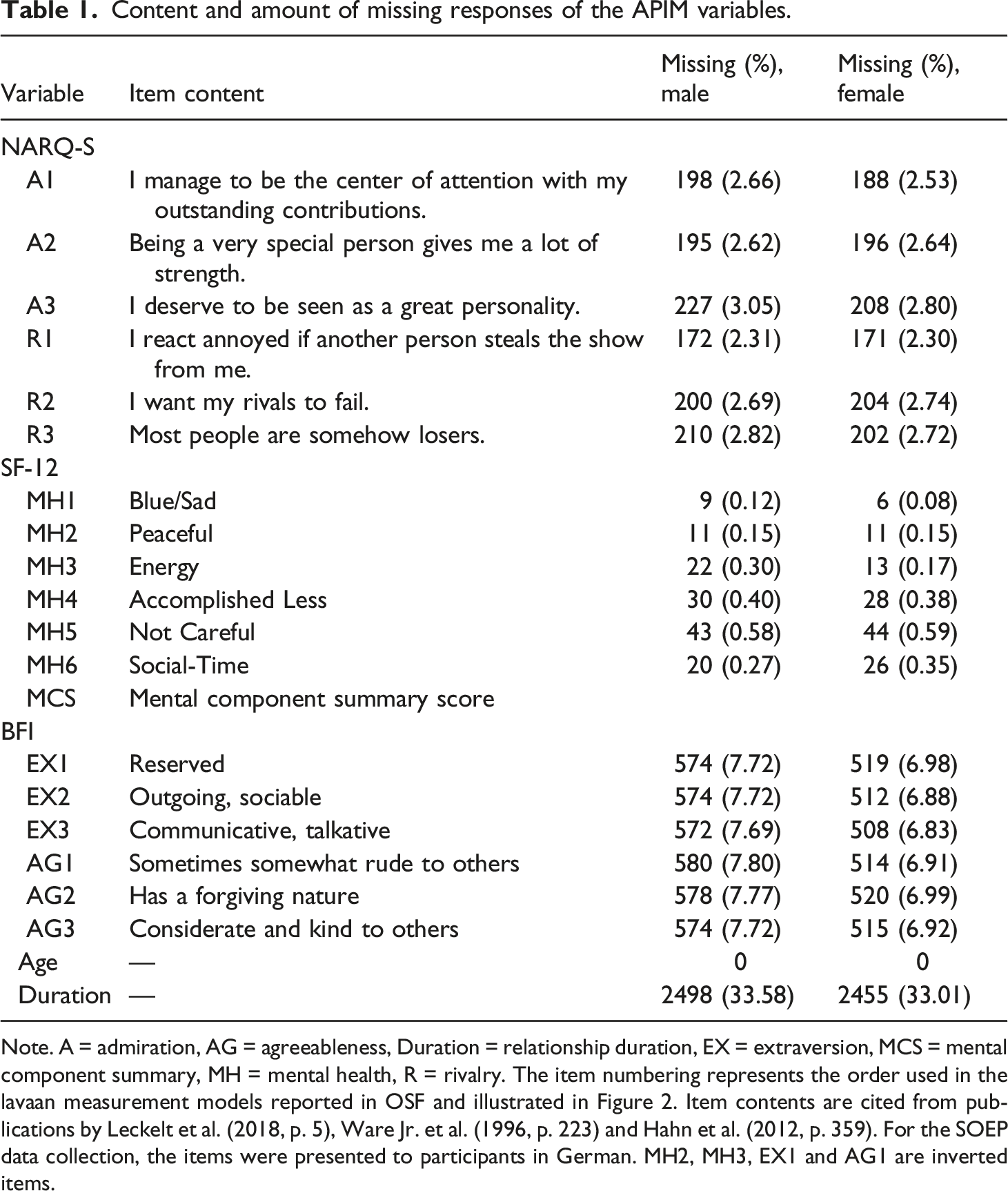
Note. A = admiration, AG = agreeableness, Duration = relationship duration, EX = extraversion, MCS = mental component summary, MH = mental health, R = rivalry. The item numbering represents the order used in the lavaan measurement models reported in OSF and illustrated in Figure 2. Item contents are cited from publications by Leckelt et al. (2018, p. 5), Ware Jr. et al. (1996, p. 223) and Hahn et al. (2012, p. 359). For the SOEP data collection, the items were presented to participants in German. MH2, MH3, EX1 and AG1 are inverted items.
Descriptive Statistics by Gender.
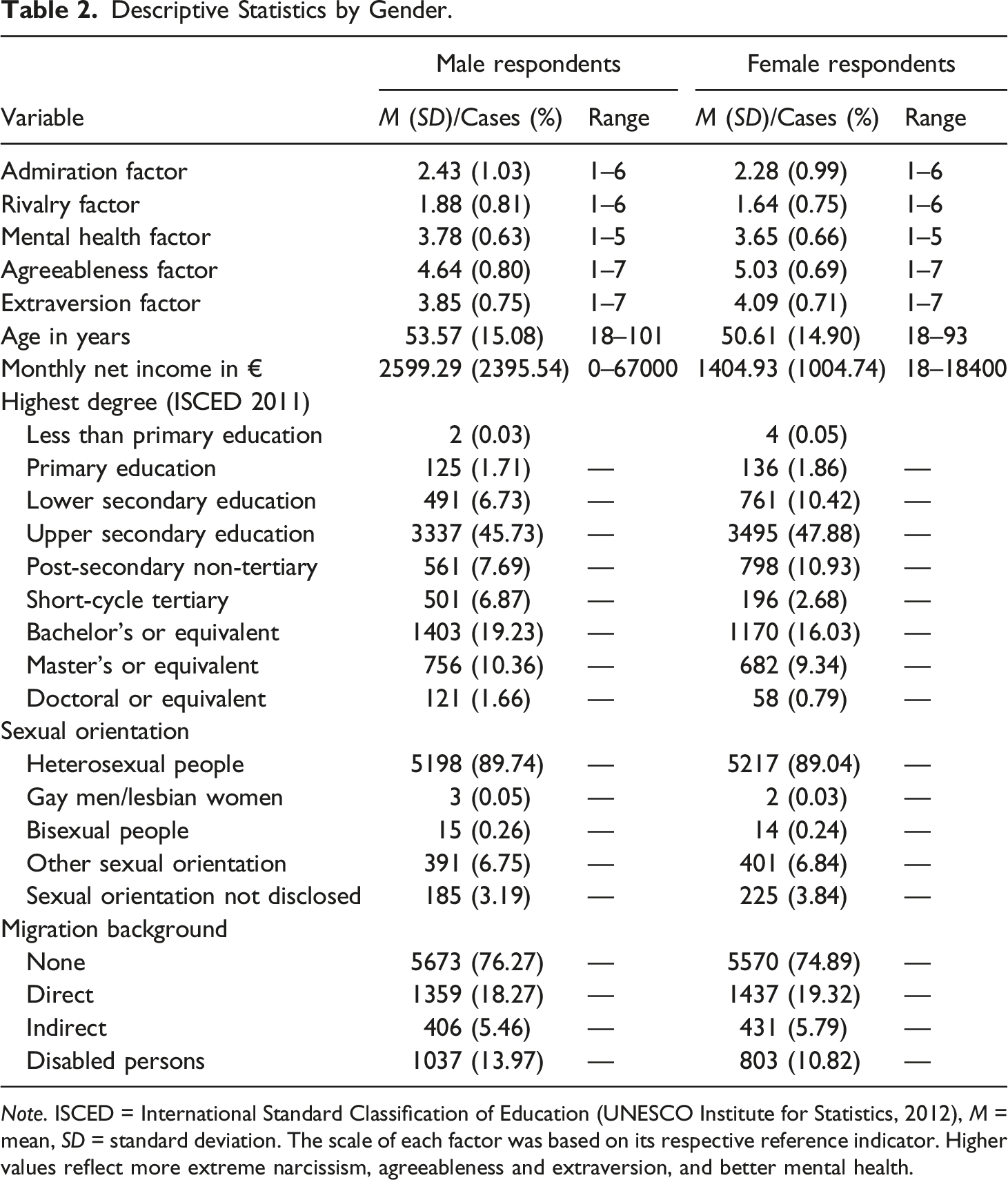
Note. ISCED = International Standard Classification of Education (UNESCO Institute for Statistics, 2012), M = mean, SD = standard deviation. The scale of each factor was based on its respective reference indicator. Higher values reflect more extreme narcissism, agreeableness and extraversion, and better mental health.
Measurement models for different levels of dyadic invariance.
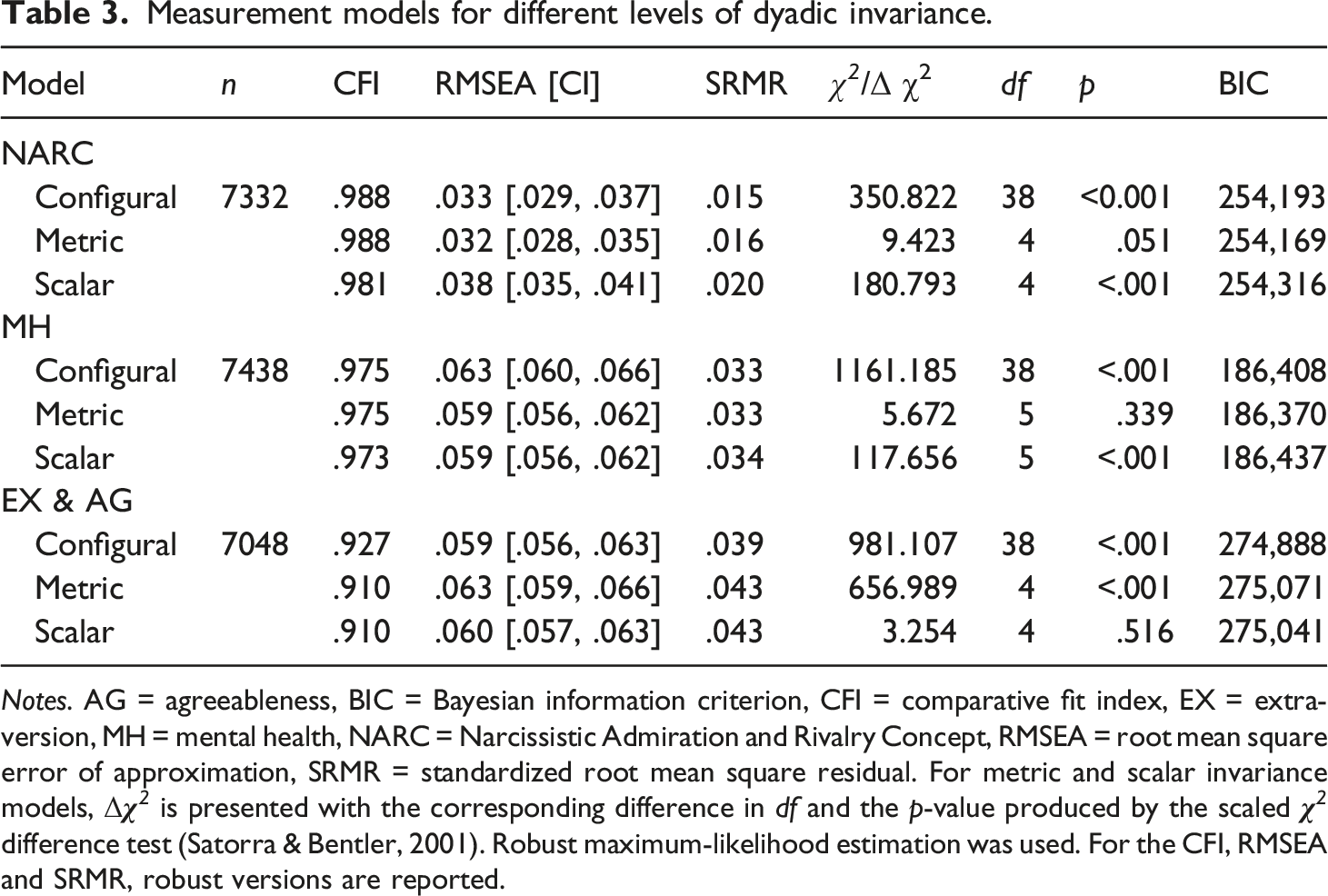
Notes. AG = agreeableness, BIC = Bayesian information criterion, CFI = comparative fit index, EX = extraversion, MH = mental health, NARC = Narcissistic Admiration and Rivalry Concept, RMSEA = root mean square error of approximation, SRMR = standardized root mean square residual. For metric and scalar invariance models, Δ
Correlation matrix of the exogenous variables of the APIM models.
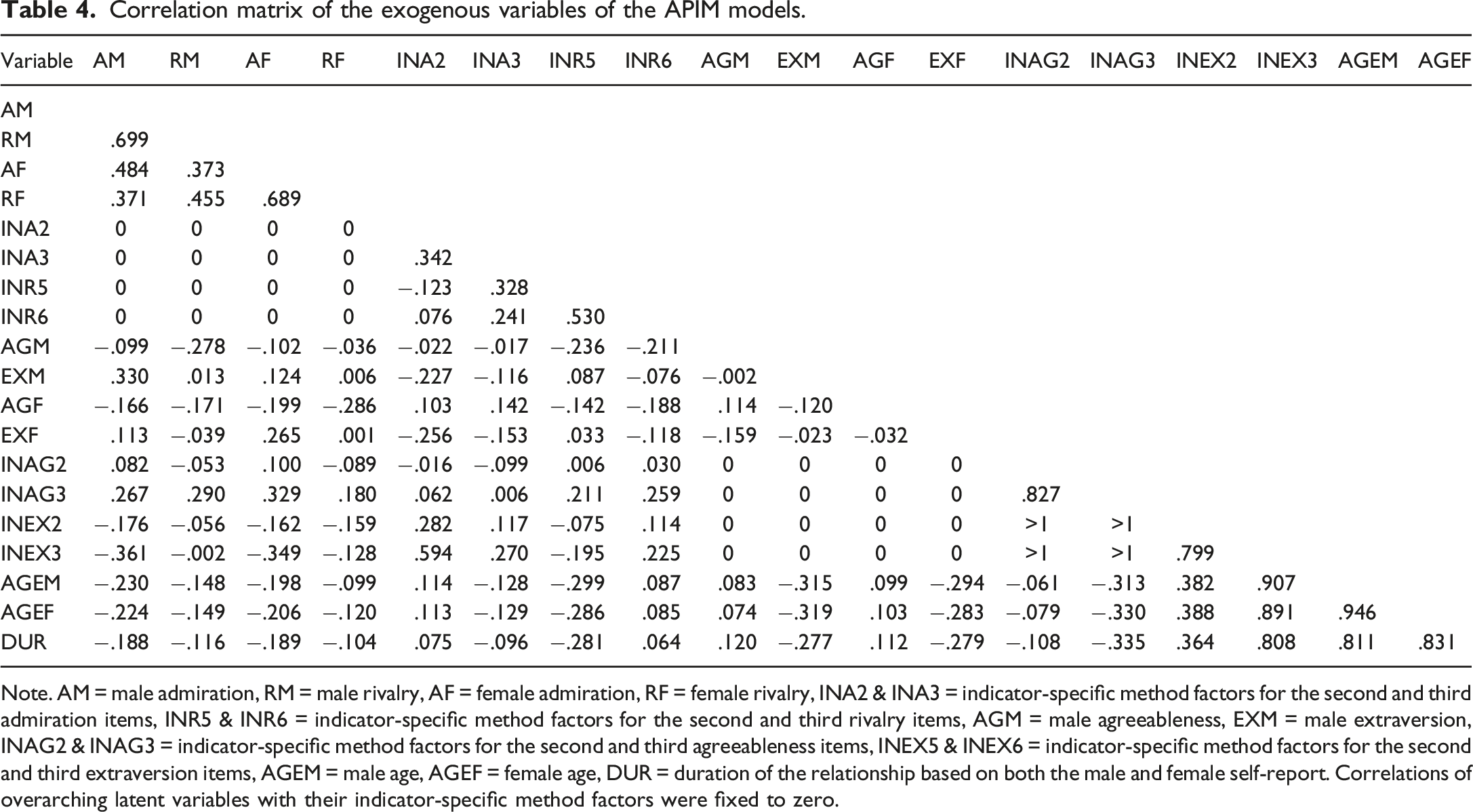
Note. AM = male admiration, RM = male rivalry, AF = female admiration, RF = female rivalry, INA2 & INA3 = indicator-specific method factors for the second and third admiration items, INR5 & INR6 = indicator-specific method factors for the second and third rivalry items, AGM = male agreeableness, EXM = male extraversion, INAG2 & INAG3 = indicator-specific method factors for the second and third agreeableness items, INEX5 & INEX6 = indicator-specific method factors for the second and third extraversion items, AGEM = male age, AGEF = female age, DUR = duration of the relationship based on both the male and female self-report. Correlations of overarching latent variables with their indicator-specific method factors were fixed to zero.
Regression parameters of the pre-registered APIM analyses.
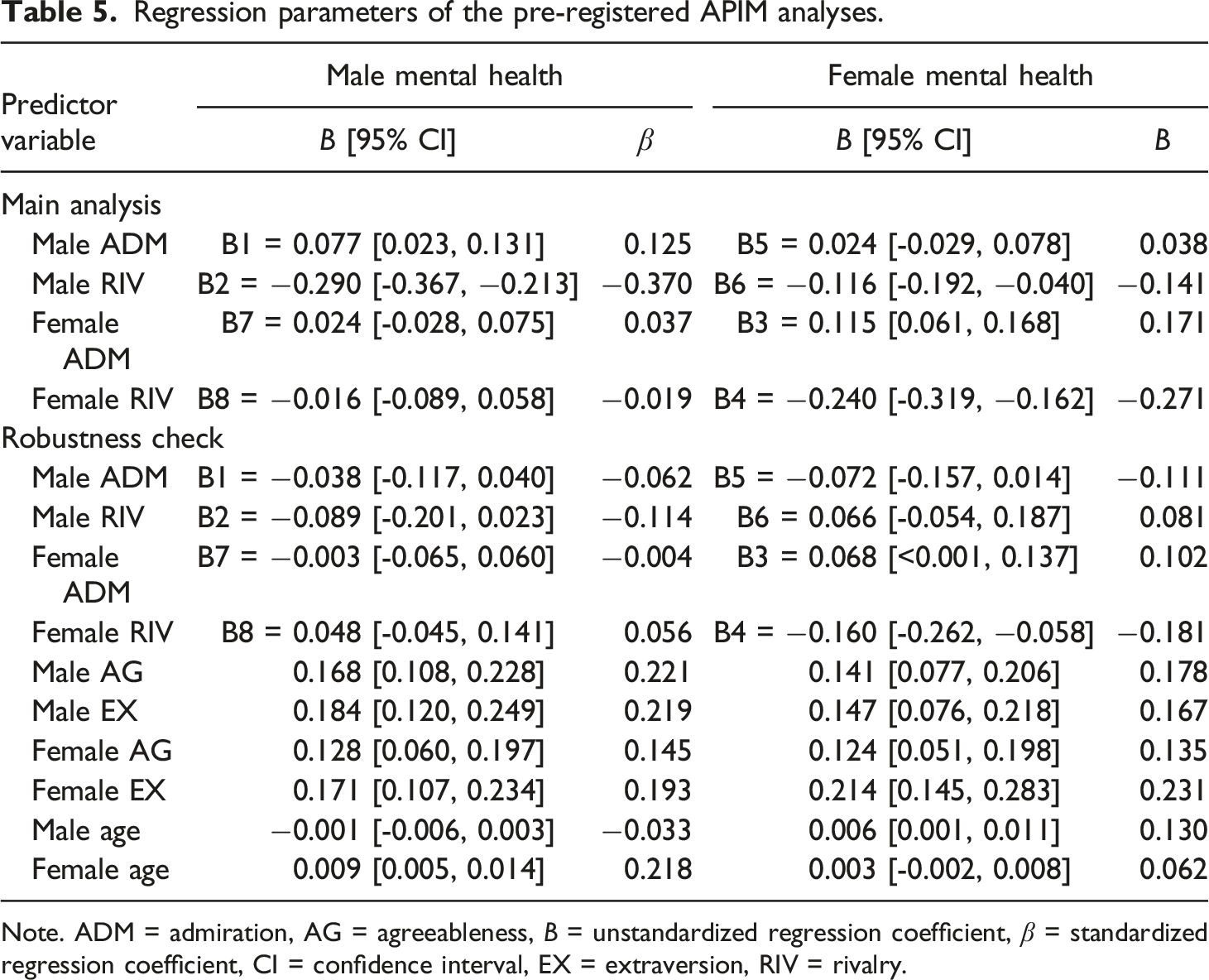
Note. ADM = admiration, AG = agreeableness, B = unstandardized regression coefficient, β = standardized regression coefficient, CI = confidence interval, EX = extraversion, RIV = rivalry.
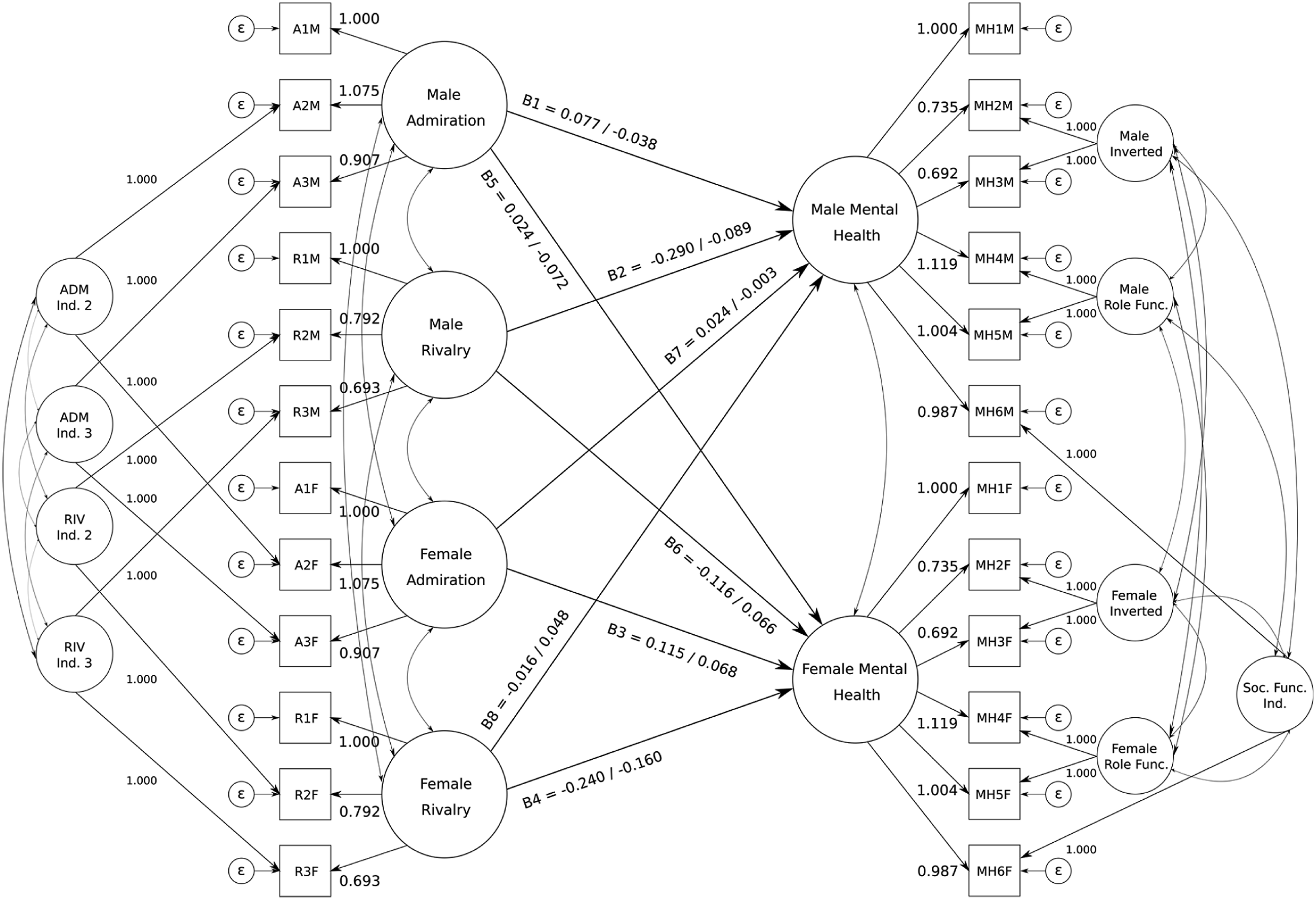
Illustration of the APIM results including the main measurement models. Note. ADM (A) = admiration, F = female, Func. = functioning, Ind. = indicator, M = male, MH = mental health, RIV (R) = rivalry, Soc. = social. Point estimates of the unstandardized regression coefficients are shown both for the main analysis and the robustness check (which included additional covariates not presented for the sake of space), separated by a slash. Furthermore, unstandardized factor loadings are presented based on the structural equation model of the main analysis. Factor loadings were fixed to 1 in the case of reference indicators and specific factors.
Bayes factors and posterior probabilities for the hypotheses compared to their complements.
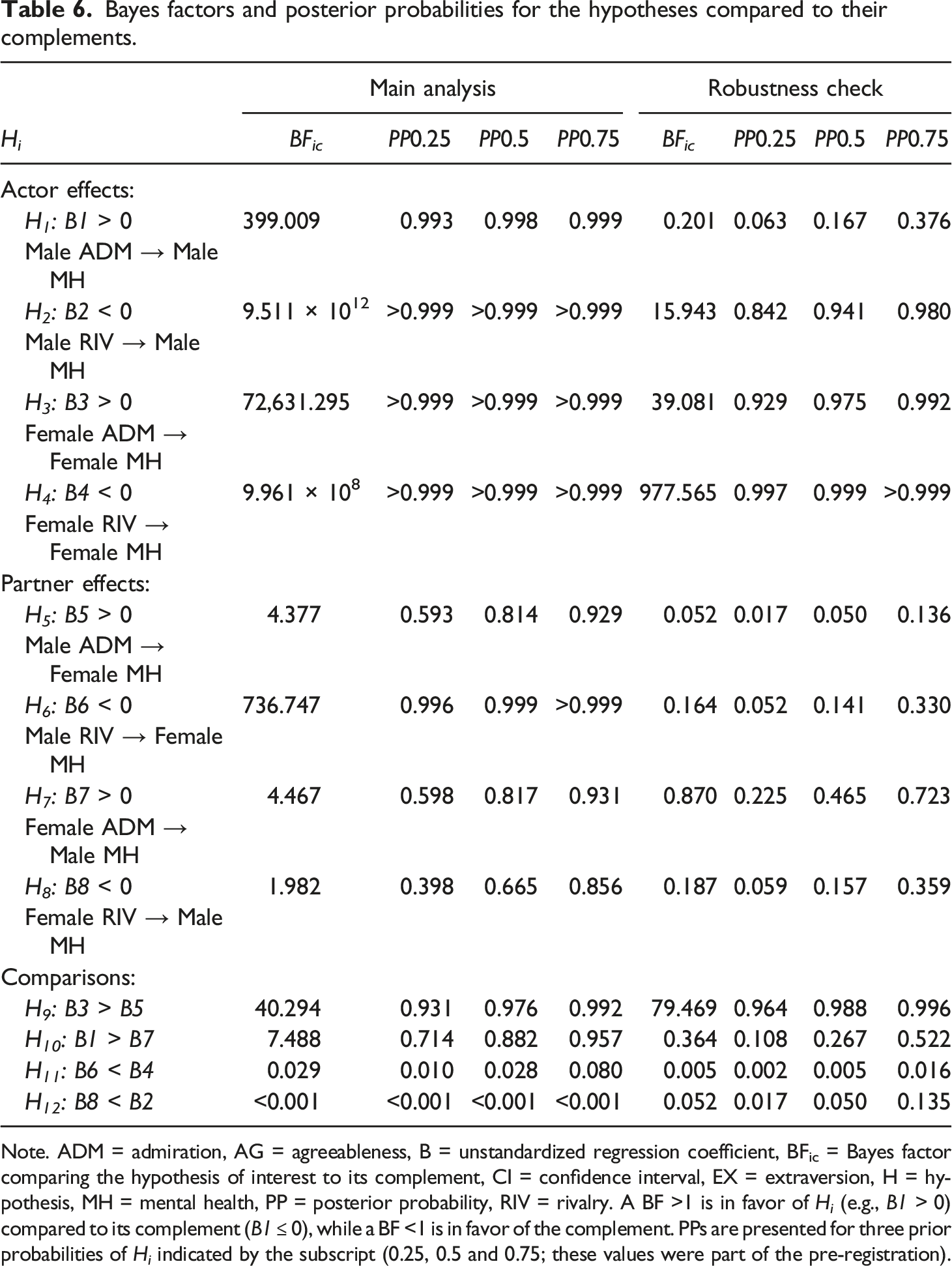
Note. ADM = admiration, AG = agreeableness, B = unstandardized regression coefficient, BFic = Bayes factor comparing the hypothesis of interest to its complement, CI = confidence interval, EX = extraversion, H = hypothesis, MH = mental health, PP = posterior probability, RIV = rivalry. A BF >1 is in favor of H i (e.g., B1 > 0) compared to its complement (B1 ≤ 0), while a BF <1 is in favor of the complement. PPs are presented for three prior probabilities of H i indicated by the subscript (0.25, 0.5 and 0.75; these values were part of the pre-registration).
However, not all hypothesized partner effects were apparent: Most regression coefficients were very small and while the Bayesian results were weakly in favor of these hypotheses, they did not indicate overwhelming support, except for the partner effect of male rivalry. Thus, the hypotheses comparing actor and partner effects could only be supported for admiration but not for rivalry. In fact, the results indicated strong evidence against the hypothesis that rivalry may matter more for the romantic partner of the narcissist.
The robustness check painted a more complex picture. While age seemed to be rather irrelevant, effects were apparent for agreeableness and extraversion. At the same time, the actor effects of narcissism became minimal and the direction of several actor and partner effects changed in unexpected directions after controlling for agreeableness and extraversion. The only exception was the actor effect of female rivalry. While the results of the main analysis had been mostly in favor of the hypotheses, the evidence from the robustness check mostly favored their complements.
Regression parameters of the exploratory mediation analysis.
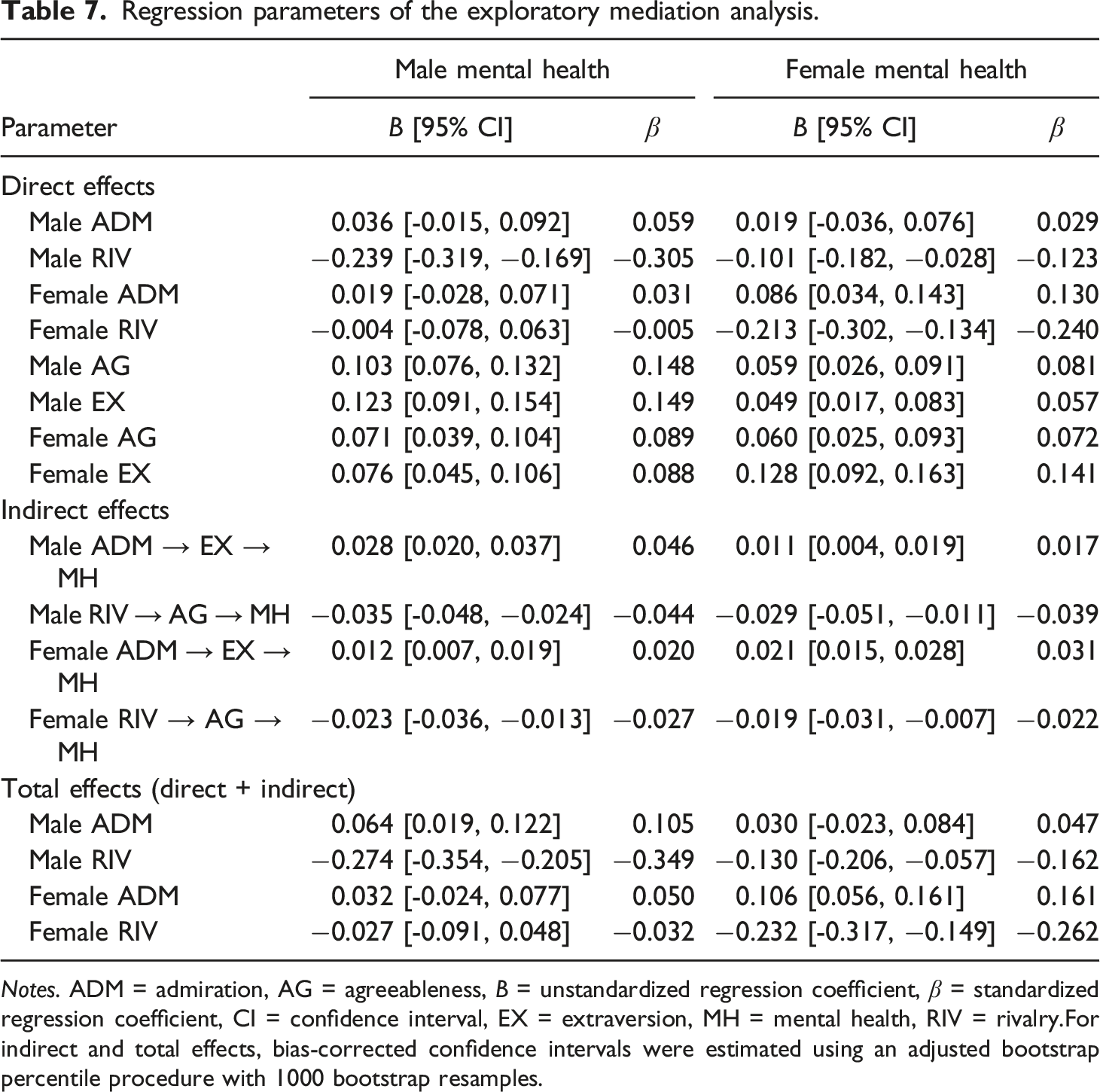
Notes. ADM = admiration, AG = agreeableness, B = unstandardized regression coefficient, β = standardized regression coefficient, CI = confidence interval, EX = extraversion, MH = mental health, RIV = rivalry.For indirect and total effects, bias-corrected confidence intervals were estimated using an adjusted bootstrap percentile procedure with 1000 bootstrap resamples.
Other exploratory analyses are fully reported in the Supplemental Material. Results did not differ substantially when the mental health outcome was considered as a dichotomous screening variable, when controlling for relationship duration, or when including relationship duration as a moderator. However, the results suggested that the actor effects of grandiose narcissism on mental health may be nonlinear, as indicated by the confidence intervals for the quadratic terms. Further investigations suggested a plateau of the actor effects: The regression curves were steeper at low levels of narcissism and became relatively flat at higher levels.
Discussion
Associations of narcissistic admiration and rivalry with mental health have been investigated in individuals (Mota et al., 2019), but dyadic effects have previously been neglected. As a contribution to fill this gap, this study represents a large-scale dyadic analysis, using data from over 7000 couples. The APIM results were contrary to expectations in important aspects:
While the main analysis supported the hypotheses of positive actor effects of admiration and negative actor effects of rivalry (in line with the results of Mota et al., 2019), the expected direct effects on romantic partners did not emerge. Only higher male rivalry appeared to be clearly associated with worse female mental health, which may point to gender differences in the types of aggressive behaviors associated with narcissistic rivalry.
Furthermore, accounting for agreeableness and extraversion as control variables in the robustness check strongly reduced and partly reversed both actor and partner effects of admiration and rivalry. Only the actor effect of female rivalry remained robust. However, when treating agreeableness and extraversion as mediators instead of as covariates, three of the four actor effects and the partner effect of male rivalry still remain as direct effects after controlling for the indirect effects. For male admiration, the direct actor effect was not apparent but a total effect was still supported by the data. The confidence intervals of the indirect effects also suggested the presence of small indirect pathways for all actor and partner effects. This can be a hint that narcissistic tendencies may slightly affect the mental health of romantic partners by fostering extraverted and disagreeable behavior. However, given that extraversion and agreeableness had been assessed earlier than the narcissism variables, such an interpretation is not well-founded and requires future longitudinal studies.
Another potential reason for a lack of partner effects could be the inclusion criterion of living together: Individuals who are more vulnerable to the effects of a partner’s narcissism may avoid living together with the narcissistic partner or end the relationship in order to protect their own mental health, resulting in selection bias. This restriction to couples living together may also explain why the approximated relationship duration variable did not emerge as a relevant moderator of the effects in the exploratory analyses. Highly narcissistic individuals may have also refrained from choosing highly narcissistic response options due to social desirability bias (Nederhof, 1985), thereby masking potential effects. Finally, narcissism may generally matter less for the mental health of romantic partners than expected. This interpretation would resemble the pattern observed by Joel et al. (2020) who analyzed data from 43 longitudinal couples studies and reported that including partner effects added no predictive power for the prediction of the actor’s relationship-related outcomes beyond the actor’s variables alone.
Multiple strengths of this study support the robustness of the results: A pre-registration was performed, enabling rigorous confirmatory testing of hypotheses. The large sample size facilitated a high accuracy of estimation, while the representative sampling design of the SOEP ensured relatively high generalizability. The wide age range of the participants covered virtually all of the adult lifespan. All measurement instruments were validated in previous studies. Partial responses were accounted for using the FIML method which is considered to be on a par with multiple imputation as one of the gold standard methods protecting against missing data biases (Lee & Shi, 2021). To prevent erroneous conclusions based on measurement error, latent variable estimation was employed. Lastly, the novel application of Bayes factor methodology in the context of structural equation models enabled a more direct test of the hypotheses of interest compared to traditional null-hypothesis significance testing.
However, several limitations also need to be acknowledged. Importantly, the study was of a cross-sectional, observational nature without experimental manipulation. This severely limits the interpretability of the results (including the mediation model) regarding causality, as the actual temporal relations and the potential influence of unobserved confounding remain unclear, despite efforts to include theoretically justified control variables. Another major limitation was the use of short-form measures. In particular, the SF-12 is a brief and less precise measure of mental health. More sensitive measures of specific symptoms of mental disorders (e.g., depression and anxiety measures) may have yielded more insightful results. Similarly, more items could have facilitated a better differentiation between admiration, rivalry, agreeableness and extraversion. The duration of the relationship was only approximated based on the current relationship status. Ultimately, the findings may only be generalized to mixed-gender couples living together from the German adult population and should not be applied to other dyadic constellations or cultures.
Further longitudinal research is needed to provide more robust information on potential causal pathways, particularly regarding the connection of narcissistic admiration and rivalry with agreeableness and extraversion, as well as on selection effects. In addition, gender differences in rivalry-related behaviors could be investigated to help explain the difference in size of the observed partner effects. To this end, investigations of other dyadic constellations (e.g., two dyad members of the same gender) would be desirable. Finally, the exploratory analyses also indicated that the actor effects may actually be of a non-linear nature, with initially steeper regression curves that become flatter with increasing levels of narcissism. Planned confirmatory analyses investigating the notion of a plateau of the actor effects could deepen our understanding of the links between narcissism and mental health.
Conclusion
The hypotheses concerning actor effects of narcissistic admiration and rivalry on mental health were supported by the main analysis. While a robustness check suggested that these effects of grandiose narcissism on mental health may have been confounded by extraversion and agreeableness, an exploratory analysis indicated that treating extraversion and agreeableness as mediators instead of as covariates rendered stable actor effects. No strong support was found for most of the hypotheses concerning direct partner effects except for a small partner effect of male rivalry. The results suggested that there may also be very small indirect partner effects mediated by agreeableness and extraversion, which warrants further research. In conclusion, while replications are still needed, the results suggest a preliminary answer to the question posed in the title of this study of “not that much, apparently”.
Supplemental Material
Supplemental Material - Do narcissistic admiration and rivalry matter for the mental health of romantic partners? Insights from actor-partner interdependence models
Supplemental Material for Do narcissistic admiration and rivalry matter for the mental health of romantic partners? Insights from actor-partner interdependence models by Leopold Maria Lautenbacher, Michael Eid, and David Richter in Journal of Social and Personal Relationships
Footnotes
Acknowledgements
The authors would like to thank the SOEP participants for providing data and the members of the Methods and Evaluation division at Free University Berlin for helpful discussions.
Author contributions
LML devised the research questions and main aspects of the analytical strategy, processed and analyzed the data and wrote the pre-registration and the manuscript.
ME and DR supervised the project and contributed to the pre-registration and the manuscript.
DR also provided access to the SOEP data as well as digital infrastructure.
Declaration of conflicting interests
The author(s) declared no potential conflicts of interest with respect to the research, authorship, and/or publication of this article.
Funding
The author(s) received no financial support for the research, authorship, and/or publication of this article.
Open research statement
As part of IARR’s encouragement of open research practices, the authors have provided the following information: This research was pre-registered. The aspects of the research that were pre-registered were the hypotheses, the data inclusion and exclusion criteria, the selection of variables and the analysis plan. The registration was submitted to the Open Science Framework (https://osf.io/vsruf/?view_only=0a277d839ce44bed9e0ec01d66b6dcbb). The data used in the research cannot be publicly shared but are available upon request. The data can be obtained by contacting the SOEP Research Data Center (https://www.diw.de/en/diw_01.c.601584.en/data_access.html). The materials used in the research can be publicly posted. The materials can be obtained at https://www.diw.de/sixcms/detail.php?id = diw_01.c.738729.en and https://www.diw.de/sixcms/detail.php?id = diw_01.c.742256.en (for the documentation of the survey instruments that were used in the 2017 and 2018 waves, respectively) and  (for the analysis code and results of the present study) or by emailing:
Supplemental Material
Supplemental material for this article is available online.
References
Supplementary Material
Please find the following supplemental material available below.
For Open Access articles published under a Creative Commons License, all supplemental material carries the same license as the article it is associated with.
For non-Open Access articles published, all supplemental material carries a non-exclusive license, and permission requests for re-use of supplemental material or any part of supplemental material shall be sent directly to the copyright owner as specified in the copyright notice associated with the article.
