




Abstract
Attachment orientations predict relationship outcomes and health and well-being, making it important to illuminate factors which enhance attachment security. We investigated how general and relationship-specific mindfulness predict changes in attachment orientations in couples over time, testing relationship preoccupation and partner-focused empathy as mediators. We also explored whether the longitudinal links between general mindfulness and attachment are bidirectional. Couples reported their general and relationship mindfulness and attachment orientations in a baseline session (Phase 1). They then reported relationship preoccupation and empathy each day for 14 days (Phase 2). Lastly, they reported general mindfulness and attachment orientations 2 months later (Phase 3). Results revealed that higher Phase 1 actor general—but not relationship—mindfulness directly predicted Phase 1-3 decreases in actor attachment anxiety. Conversely, greater Phase 1 actor relationship—but not general—mindfulness indirectly predicted Phase 1-3 decreases in actor attachment avoidance via greater Phase 2 actor empathy. Finally, lower Phase 1 actor and partner attachment anxiety directly predicted Phase 1-3 increases in general mindfulness. This research provides the first dyadic longitudinal demonstration of the interplay between partners’ mindfulness and attachment.
Keywords
Attachment orientations are important predictors of relationship and life outcomes (Li & Chan, 2012; Mikulincer & Shaver, 2016). A growing literature has begun to illuminate factors which enhance attachment security over time. We argue that attachment security should be enhanced over time by mindfulness, an open and receptive attention to and awareness of present-moment internal and external experiences. Greater mindfulness is consistently correlated with lower attachment anxiety and avoidance cross-sectionally (Stevenson et al., 2017), and scholars have theorized that mindfulness may enhance attachment security (Shaver et al., 2007). However, prior mindfulness-attachment research is limited in several ways. For example, no studies in this area have considered general and relationship-specific mindfulness, which independently predict relationship outcomes (Kimmes et al., 2018) and may link to the two attachment dimensions in different ways. Nor has research examined how (i.e., through what mediators) mindfulness may change attachment orientations or tested this process in couples over time. Guided by the Attachment Security Enhancement Model (ASEM; Arriaga et al., 2018), our primary goals were to investigate (1) how partners’ general and relationship mindfulness may reduce attachment anxiety and avoidance over 2.5 months and (2) the role of relationship preoccupation and partner-focused empathy as potential mediators of mindfulness-attachment links. As a supplementary goal, we examined bidirectional relations, testing whether partners’ attachment orientations predicted change in their general mindfulness over 2.5 months.
Attachment Theory and Attachment Change
The primary function of the attachment behavioural system is to protect individuals from danger by ensuring they maintain proximity to caring and supportive others, called attachment figures (Bowlby, 1982). Attachment orientations develop in infancy based on the responsiveness and availability of attachment figures in times of need (Bowlby, 1982) and guide thoughts, feelings, and behaviour throughout life (Mikulincer & Shaver, 2016). Decades of research have established that two theoretically distinct dimensions tap individual differences in adult attachment (Fraley, 2019). Attachment anxiety develops when attachment figures are inconsistent in their care and is characterized by worries about being abandoned and the use of hyperactivating strategies (e.g., intensified attempts at proximity-seeking and relationship rumination). Meanwhile, attachment avoidance develops when attachment figures are consistently unresponsive/unavailable and is characterized by a desire for emotional distance and the use of deactivating strategies (e.g., placing a high priority on independence in relationships and a lower priority on intimacy). Adult attachment security is generally represented as low anxiety, low avoidance, or both.
While attachment orientations are moderately stable across the lifespan (Fraley, 2019), they can change over time, with romantic partners and relationship processes often playing an important role in reducing attachment anxiety and avoidance (i.e., enhancing attachment security). To that end, the ASEM (Arriaga et al., 2018) postulates that attachment anxiety should decline in situations that foster greater personal confidence and more secure working models of the self, whereas attachment avoidance should decline in circumstances which involve positive dependence and foster more secure working models of others. Empirical work supporting this model has revealed that attachment anxiety decreases over time in response to perceiving gratitude from a partner (Park et al., 2019) or through the development of self-efficacy (Arriaga et al., 2021), whereas attachment avoidance decreases over time in response to intimacy-promoting activities with a partner (Stanton et al., 2017) and other support processes (Rholes et al., 2021).
Why Mindfulness Should Change Attachment
Although most security-enhancing factors to date predict declines in either attachment anxiety or attachment avoidance, we argue that there are theoretical reasons to believe that mindfulness would predict declines in both. General mindfulness (also termed trait mindfulness) has several cognitive-emotional benefits (Brown & Ryan, 2003; Raes & Williams, 2010). Guided by the logic of the ASEM (Arriaga et al., 2018), mindful attention may reduce attachment anxiety over time by diminishing more anxiously attached individuals’ consistent preoccupation with and worry about the relationship, instead drawing their focus to the present moment. This may decrease the negative, ruminative cognitive and emotional spirals which more anxious individuals often experience (Mikulincer & Shaver, 2016) and distribute their attention more evenly toward activities and experiences which increase confidence. These may include work, hobbies, and other nonrelational stimuli, which should help anxious individuals build a more secure working model of the self. This in turn may increase confidence and help anxious individuals feel more valued and capable in personal domains, increasing their comfort with autonomy and thereby reducing attachment anxiety over time (cf. Arriaga et al., 2014; 2021).
Meanwhile, the logic of the ASEM (Arriaga et al., 2018) suggests that mindful attention may reduce attachment avoidance over time by facilitating more avoidantly attached individuals’ ability to be present with their partner and thus more open and able to enjoy positive relationship experiences and activities. This mindful presence should increase felt closeness and empathy for the partner (see Karremans et al., 2017) and help more avoidant individuals feel valued and capable in interpersonal domains. This in turn should challenge their negative working models of close others, leading them to feel more comfortable with connecting with a partner and thereby reducing attachment avoidance over time (cf. Rholes et al., 2021; Stanton et al., 2017).
Empirical research has consistently found negative links between mindfulness and attachment anxiety and avoidance (Stevenson et al., 2017). For example, Zhou et al. (2020) found that greater general mindfulness was associated with lower attachment anxiety and avoidance, which in turn predicted higher relationship satisfaction. However, most empirical evidence in this domain comes from correlational, cross-sectional data attained at one time point (e.g., Caldwell & Shaver, 2013; Pepping et al., 2014). The few published experimental or longitudinal studies which examine mindfulness-attachment links (Melen et al., 2017; Pepping et al., 2015; Stevenson et al., 2021) have revealed null effects for mindfulness changing attachment orientations, raising questions about the predictive validity of mindfulness in enhancing attachment security.
Why Is Empirical Evidence for Mindfulness-Attachment Links Inconsistent?
Despite theoretical reasoning for why mindfulness should promote attachment security, empirical evidence has been mixed. We argue that there are at least four reasons why this may be the case:
A Sole Focus on Domain-General Mindfulness
Mindfulness is both a domain-general and a domain-specific construct. Recent research has uncovered the importance of relationship mindfulness, a domain-specific form of mindfulness capturing mindful attention and awareness within a current romantic relationship (Kimmes et al., 2018). Relationship mindfulness reflects an open attention and awareness to what is happening with a given partner in a current relationship. This construct is distinct from general positive relationship evaluations and perceptions of understanding, validation, and caring (Stanton et al., 2021). Regardless of being generally mindful, individuals may not be mindful at all times or in all contexts. Being mindful in certain contexts may be equally or more consequential than a general tendency to be mindful. For example, Kimmes et al. (2020) found that relationship mindfulness contributed to better relationship quality and lower stress beyond effects of general mindfulness. In another study, greater relationship—but not general—mindfulness predicted relative increases in positive relationship quality and relative decreases in negative relationship quality over time via higher perceived partner responsiveness (Stanton et al., 2021). Relationship-specific mindfulness may therefore more strongly and directly target relationship-relevant attitudes and outcomes, being more closely tied to how individuals act in intimate contexts.
Relationship mindfulness may play an important role in attachment, given that interactions with a partner are likely to be especially relevant to deep-seated attitudes toward the self and others (Mikulincer & Shaver, 2016). The unique contributions of general and/or relationship mindfulness to attachment change, however, are understudied. The literature on mindfulness and attachment thus far has almost exclusively examined links with general mindfulness (for exceptions, see Gazder & Stanton, 2020; Kimmes et al., 2018). Given the above evidence, we argue that relationship mindfulness may be equally (or more) relevant in a romantic attachment context than general mindfulness, making it important to assess the contribution of both forms of mindfulness.
Neglecting Potentially Important Mediators
A second reason why previous studies may have failed to find links from mindfulness to attachment change is that mindfulness may not enhance attachment security directly, but instead do so indirectly through mediating variables. We propose that mindfulness may reduce attachment anxiety over time via lower relationship preoccupation and reduce attachment avoidance over time via greater partner-focused empathy. Mindfulness involves an open and nonjudgmental attention toward internal and external events, rather than over-identification, rumination, and amplification of negative thoughts and emotions (Brown & Ryan, 2003). Empirical evidence has found that mindfulness is linked to a greater ability to control rumination (Raes & Williams, 2010). It is likely, then, that greater mindfulness would be associated with lower relationship preoccupation, the tendency to nearly always have the relationship on one’s mind (Davis et al., 2003). As constant focus on and preoccupation with the relationship decreases, this should create space for more focus on other activities, which may increase self-efficacy and bolster the working model of the self (and, in turn, reduce attachment anxiety).
While the key in reducing attachment anxiety is enhancing the working model of the self, a major factor in reducing attachment avoidance is enhancing the working model of others (Arriaga et al., 2018). Mindfulness may promote greater empathy for a partner’s situations and actions (Birnie et al., 2010; Block-Lerner et al., 2007). Empathy is defined as one’s ability to understand and share in the emotions of others (Davis, 1983). From the perspective of the ASEM (Arriaga et al., 2018), mindfulness should increase partner-focused empathy due to shared experiences and increased closeness that comes from being present with a partner. This increased partner understanding should make the reasons for the partner’s actions clearer and improve the working model of others (and, in turn, reduce attachment avoidance). Taken together, these distinct mediating variables may explain the current lack of findings drawing a directional link from mindfulness to attachment orientations.
Lack of an Interdependent Context
Third, prior work on mindfulness-attachment links has focused on individuals rather than couples. Relationship partners are interdependent, meaning the cognitions, emotions, and behaviours of one partner can affect the other’s outcomes (Kelley & Thibaut, 1978). A person’s attachment orientations may therefore change based on their partner’s mindfulness, as well as their own mindfulness. The role romantic partners’ characteristics and behaviours play in changing attachment orientations has been both theoretically postulated (Arriaga et al., 2018) and empirically supported (e.g., Arriaga et al., 2014; 2021; Park et al., 2019; Rholes et al., 2021). Thus far, the empirical evidence for partner effects of mindfulness is mixed; some studies find partner effects (e.g., Kimmes et al., 2020), but others do not (e.g., Stanton et al., 2021). To the best of our knowledge, there are no studies systematically investigating cross-partner effects in the context of mindfulness and attachment change. Therefore, exploring partner effects in this context is important for advancing this area of the literature.
Perhaps Mindfulness Does Not Change Attachment; Rather, Attachment Changes Mindfulness
Thus far, we have focused on why mindfulness should predict attachment and why prior research may not have consistently found this link despite its theoretical viability. However, there are also theoretical reasons for why attachment may predict mindfulness. Some scholars have proposed that individuals with lower attachment anxiety and avoidance internalize security-based representations of their attachment figures, meaning that they create an internal representation based on soothing interactions with their primary attachment figure (Shaver et al., 2007). These representations then become embedded in the individual’s own self-caregiving and self-compassion routines, and secure individuals develop self-soothing cognitions and techniques as a result (Shaver et al., 2007). Thus, securely attached individuals, rather than being preoccupied and on guard for negative relational experiences, are free to explore new experiences and social groups. Furthermore, secure individuals focus less biased and guarded attention on existential experiences such as relating deeply to others and finding meaning in life, which should make them more present and open in their intimate relationships.
There is empirical evidence that attachment anxiety specifically predicts later mindfulness. For example, Melen et al. (2017) found that priming attachment anxiety decreased state mindfulness. In another study, Stevenson et al. (2021) demonstrated that attachment anxiety predicted some facets of mindfulness (i.e., acting with awareness and nonjudging) 15 weeks later. However, this evidence is not unequivocal, as some studies have found that experimentally manipulating state attachment had no effect on state mindfulness (Pepping et al., 2015). No effects have emerged for attachment avoidance changing mindfulness, suggesting that the links between attachment anxiety and mindfulness are more robust.
Present Research Overview and Hypotheses
The purpose of the present research was to systematically investigate the interplay of general and relationship mindfulness and attachment orientations in romantic dyads over time. We extend previous studies by (a) investigating these links in a longitudinal, naturalistic context; (b) examining the unique contributions of general versus relationship mindfulness to attachment change; (c) testing two theoretically plausible mediators—relationship preoccupation and partner-focused empathy—which may underlie mindfulness-attachment links; (d) examining how partners’ mindfulness may predict change in not only their own (actor effects), but also each other’s (partner effects) attachment anxiety and avoidance; and (e) further exploring bidirectional links (attachment→ mindfulness). We tested these questions in a three-phase dyadic longitudinal study (baseline [Phase 1], a 14-day diary period [Phase 2], and a 2-month follow-up [Phase 3]).
Given the lack of literature comparing the longitudinal contributions of general and relationship mindfulness to attachment orientations in couples, it is unclear whether the predictive power would rest with general mindfulness, relationship mindfulness, or both. There is evidence that general mindfulness is correlated with attachment orientations (e.g., Stevenson et al., 2017). However, relationship mindfulness predicts relationship outcomes over and above general mindfulness (Kimmes et al., 2018; 2020), and sometimes instead of general mindfulness (Stanton et al., 2021). Given that attachment orientations are a more global construct than constructs such as relationship quality, it is possible that general mindfulness plays the key role in reducing attachment anxiety and avoidance in couples over time. Alternatively, it is plausible that because attachment anxiety and avoidance most often represent orientations toward relationships with romantic partners, relationship-specific mindfulness would contribute to change in romantic attachment over time. It may also be possible that general mindfulness maps onto one attachment dimension, and relationship mindfulness maps onto the other. Because of this, our hypotheses centred on links between both forms of mindfulness 1 and attachment change. Our study preregistration (including hypotheses and analytic plan) is available at https://osf.io/pvrtd.
Primary Research Question 1
Do general and/or relationship mindfulness directly contribute to change in attachment orientations in couples over time?
Primary research question 2
Do relationship preoccupation and empathy mediate the links between general and/or relationship mindfulness and change in attachment orientations over time?
Exploratory Research Question
What (if any) role does the partner play in the links between mindfulness, relationship preoccupation, empathy, and attachment orientations?
Auxiliary Research Question
Are the longitudinal links between mindfulness and attachment orientations bidirectional?
Method
Data were taken from a larger project investigating psychological experiences in couples over time, collected between January and May 2020. More information about the parent project, including the full compendium of study measures, is available at https://osf.io/ekv6x.
Participants
The sample comprised 100 couples (87 heterosexual, 9 lesbian, 1 gay, 3 other non-binary) recruited via social media posts, magazine advertisements, and wedding fairs. The sample size for the parent project was based on an a priori dyadic power analysis (https://robert-a-ackerman.shinyapps.io/APIMPowerRdis/) suggesting that 100 couples would provide 84% power for small-to-medium cross-sectional effects. Participants were 18–64 years of age (Myears = 24.15, SDyears = 6.61) and were in relationships lasting 3 months to 35.50 years (Myears = 2.84, SDyears = 4.41). Most participants (85.5%) identified as White, 3% as Hispanic, 1.5% as East Asian, 2.5% as South Asian, 2.5% as Southeast Asian, 3% as mixed/multiple ethnic groups and 2% as “Other.” Most participants (85.5%) were dating their current partner casually or exclusively, 1.5% were common-law, 1.5% were in a civil partnership, 5% were engaged and 6.5% were married. A minority (38%) were cohabiting at Phase 1. Ninety-eight couples were still together at Phase 3.
Measures
Primary variables
Covariates
Demographics
We chose to include Phase 1 gender, age, and relationship length as covariates in our analyses, given evidence for gender differences on certain mindfulness facets (Gilbert & Waltz, 2010); age-related differences in attachment anxiety and avoidance (Chopik et al., 2019) and mindfulness (Mahlo & Windsor, 2021); and attachment changes based on relationship duration (Duemmler & Kobak, 2001).
Additional exploratory covariates
At the request of an anonymous reviewer, we also tested other covariates (Phase 1 relationship satisfaction, Phase 1 perceived partner responsiveness, and Phase 2 positive and negative affect). Information regarding these measures can be found in our Online Supplementary Materials.
Procedure
In Phase 1, both members of the couple attended a 2-hour lab session wherein they completed several tasks, including the MAAS, RMM, and ECR-12 measures. The day following the lab session, participants began Phase 2 and were asked to complete a 15-minute series of questionnaires every day for 14 consecutive days. This survey included daily reports of relationship preoccupation and empathy. The survey was sent at 4:00p.m. each day and participants were asked to complete the survey by 11:59p.m. Each survey included a timestamped link that expired on the day, to avoid participants completing multiple daily surveys at once. The average number of completed daily surveys was high (M = 12.96, SD = 2.01). Two months following the end of the diary period, participants completed the Phase 3 online survey, which included the ECR-12 and the MAAS. Throughout all phases, partners were told to complete tasks separately from one another. At the end of the study, participants were debriefed and compensated up to GBP-£50.00 depending on how much of the study they completed.
Analysis Strategy
We tested hypotheses using the actor-partner interdependence mediation model (APIMeM; Ledermann et al., 2011) for indistinguishable dyads (see Kenny et al., 2006). The APIMeM allows us to understand how one’s own relationship and/or general mindfulness predict not only one’s own mediators and outcomes (actor effects) but also one’s partner’s mediators and outcomes (partner effects). Models were run in MPlus 8. The code used for analyses is available at https://osf.io/m2c5w/?view_only=cb717d8522ca4eb18123ac314405991a.
Hypotheses 1–4 were tested in two APIMeM models. One model included Phase 1 actor and partner relationship mindfulness and Phase 1 actor and partner general mindfulness as predictors, Phase 2 relationship preoccupation as the mediator, and Phase 3 actor attachment anxiety as the outcome, with Phase 1 actor attachment anxiety and avoidance and Phase 1 actor gender, age, and relationship length as covariates. The other model included the same predictors and covariates, but with Phase 2 empathy as the mediator and Phase 3 actor attachment avoidance as the outcome. 3
Hypotheses 4–5 were tested in two APIMeM models. Both models included Phase 1 actor and partner attachment anxiety and Phase 1 actor and partner attachment avoidance as predictors and Phase 3 actor general mindfulness as the outcome, with Phase 1 actor general and relationship mindfulness and actor gender, age, and relationship length as covariates. We were unable to test whether Phase 1 attachment predicts later relationship mindfulness, as relationship mindfulness was not assessed at Phase 3. One model tested Phase 2 relationship preoccupation as the mediator, and the second model tested Phase 2 empathy as the mediator.
Results
Correlations among study variables appear in our Online Supplementary Materials.
Direct and Indirect Effects of Mindfulness on Attachment Change
General and Relationship Mindfulness, Relationship Preoccupation, and Attachment Anxiety
As seen in Figure 1, controlling for demographic covariates and Phase 1 attachment orientations, greater Phase 1 actor—but not partner—general mindfulness directly predicted a relative decrease in Phase 1-3 actor attachment anxiety. There were no direct links between Phase 1 actor or partner relationship mindfulness and change in Phase 1-3 actor attachment anxiety. Direct and indirect effects of Phase 1 general and relationship mindfulness, Phase 2 relationship preoccupation, and Phase 1-3 change in attachment anxiety. Note. P1 = Phase 1 (baseline); P2 = Phase 2 (14-day diary period); P3 = Phase 3 (2-month follow-up). Higher scores on continuous variables represent greater standing on the variable (e.g., greater general mindfulness). Solid paths are statistically significant. *p < .05, **p < .01, ***p < .001.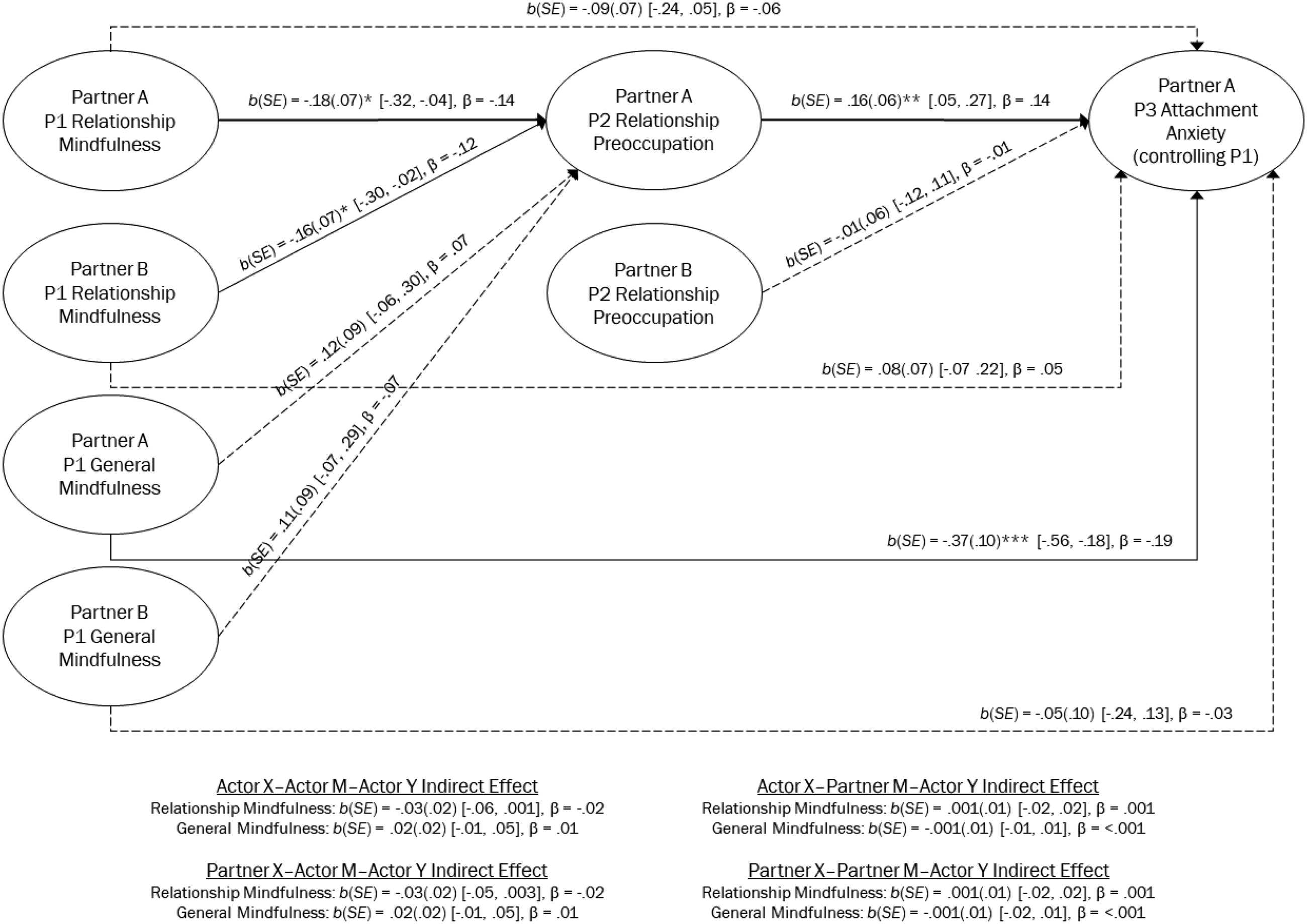
Nonetheless, greater Phase 1 actor and partner relationship mindfulness negatively predicted Phase 2 actor relationship preoccupation. Phase 1 actor and partner general mindfulness did not predict Phase 2 actor relationship preoccupation. Furthermore, lower Phase 2 actor—but not partner—relationship preoccupation predicted a relative decrease in Phase 1-3 actor attachment anxiety. Despite significant individual paths, however, the indirect effects of Phase 1 actor and partner relationship mindfulness on Phase 1-3 change in actor attachment anxiety via Phase 2 actor relationship preoccupation were not significant, as the confidence intervals for the indirect effect included zero.
General and Relationship Mindfulness, Empathy, and Attachment Avoidance
As seen in Figure 2, controlling for demographic covariates and Phase 1 attachment orientations, there were no direct associations between Phase 1 actor or partner general or relationship mindfulness and change in Phase 1-3 actor attachment avoidance. Direct and indirect effects of Phase 1 general and relationship mindfulness, Phase 2 partner-focused empathy, and Phase 1-3 change in attachment avoidance. Note. P1 = Phase 1 (baseline); P2 = Phase 2 (14-day diary period); P3 = Phase 3 (2-month follow-up). Higher scores on continuous variables represent greater standing on the variable (e.g., greater general mindfulness). Solid paths are statistically significant. **p < .01, ***p < .001.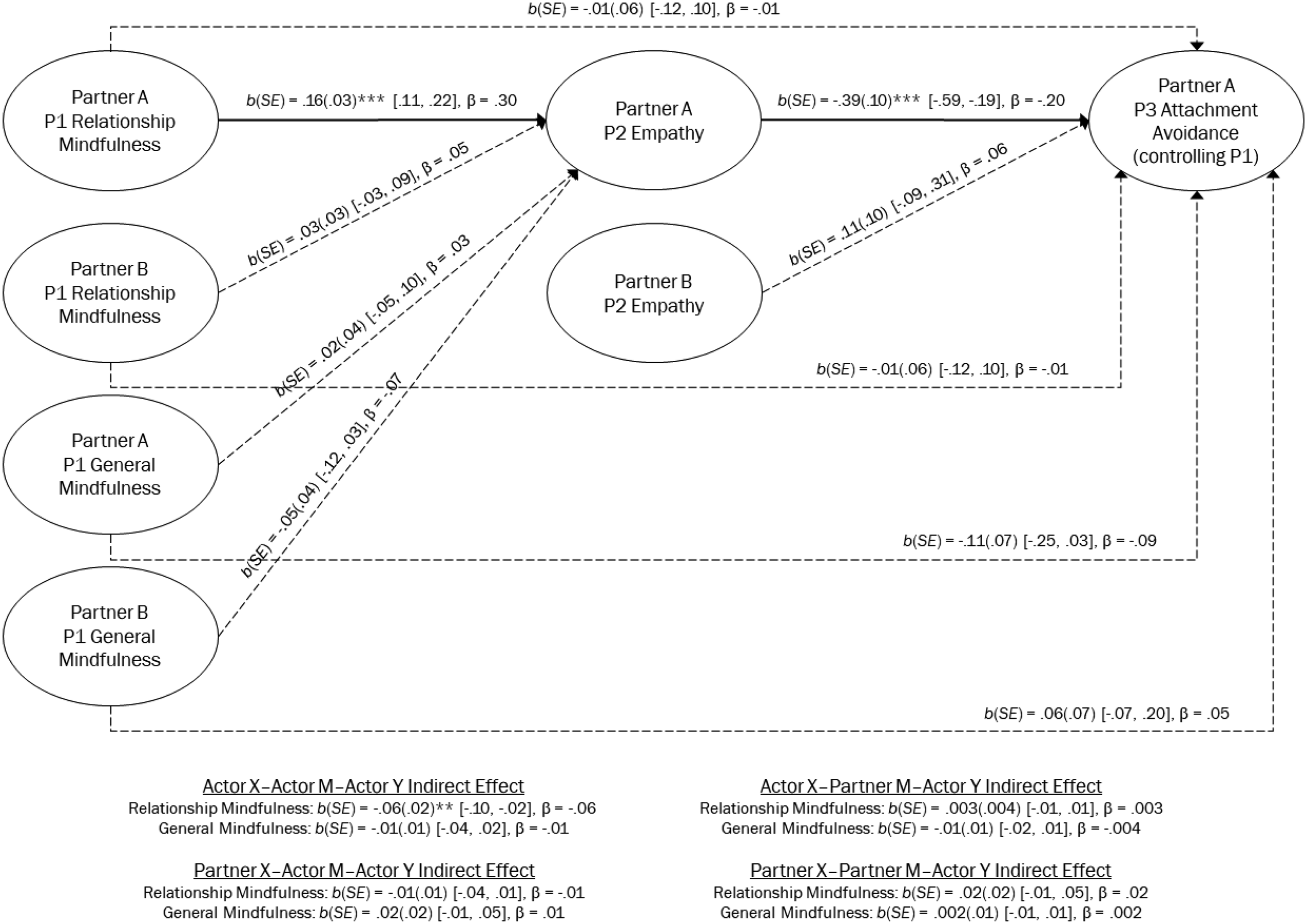
Nonetheless, greater Phase 1 actor relationship—but not general—mindfulness positively predicted Phase 2 actor empathy. Phase 1 actor and partner general mindfulness did not predict Phase 2 actor empathy. Furthermore, greater Phase 2 actor—but not partner—empathy predicted a relative decrease in Phase 1-3 actor attachment avoidance. The indirect effect of Phase 1 actor relationship mindfulness on Phase 1-3 change in actor attachment avoidance via Phase 2 actor empathy was significant, as the confidence interval for the indirect effect did not include zero.
Direct and Indirect Effects of Attachment Orientations on General Mindfulness Change
Attachment Orientations, Relationship Preoccupation, and General Mindfulness
As seen in Figure 3, controlling for demographic covariates and Phase 1 general and relationship mindfulness, lower Phase 1 actor and partner attachment anxiety directly predicted a relative increase in Phase 1-3 actor general mindfulness. There were no direct associations between Phase 1 actor or partner attachment avoidance and change in Phase 1-3 actor general mindfulness. There were no links between Phase 1 actor or partner attachment anxiety or avoidance and Phase 2 relationship preoccupation, and no links between Phase 2 actor or partner relationship preoccupation and Phase 1-3 change in general mindfulness. No indirect effects emerged in this model. Direct and indirect effects of Phase 1 attachment anxiety and avoidance, Phase 2 relationship preoccupation, and Phase 1-3 change in general mindfulness. Note. P1 = Phase 1 (baseline); P2 = Phase 2 (14-day diary period); P3 = Phase 3 (2-month follow-up). Higher scores on continuous variables represent greater standing on the variable (e.g., greater general mindfulness). Solid paths are statistically significant. **p < .01, ***p < .001.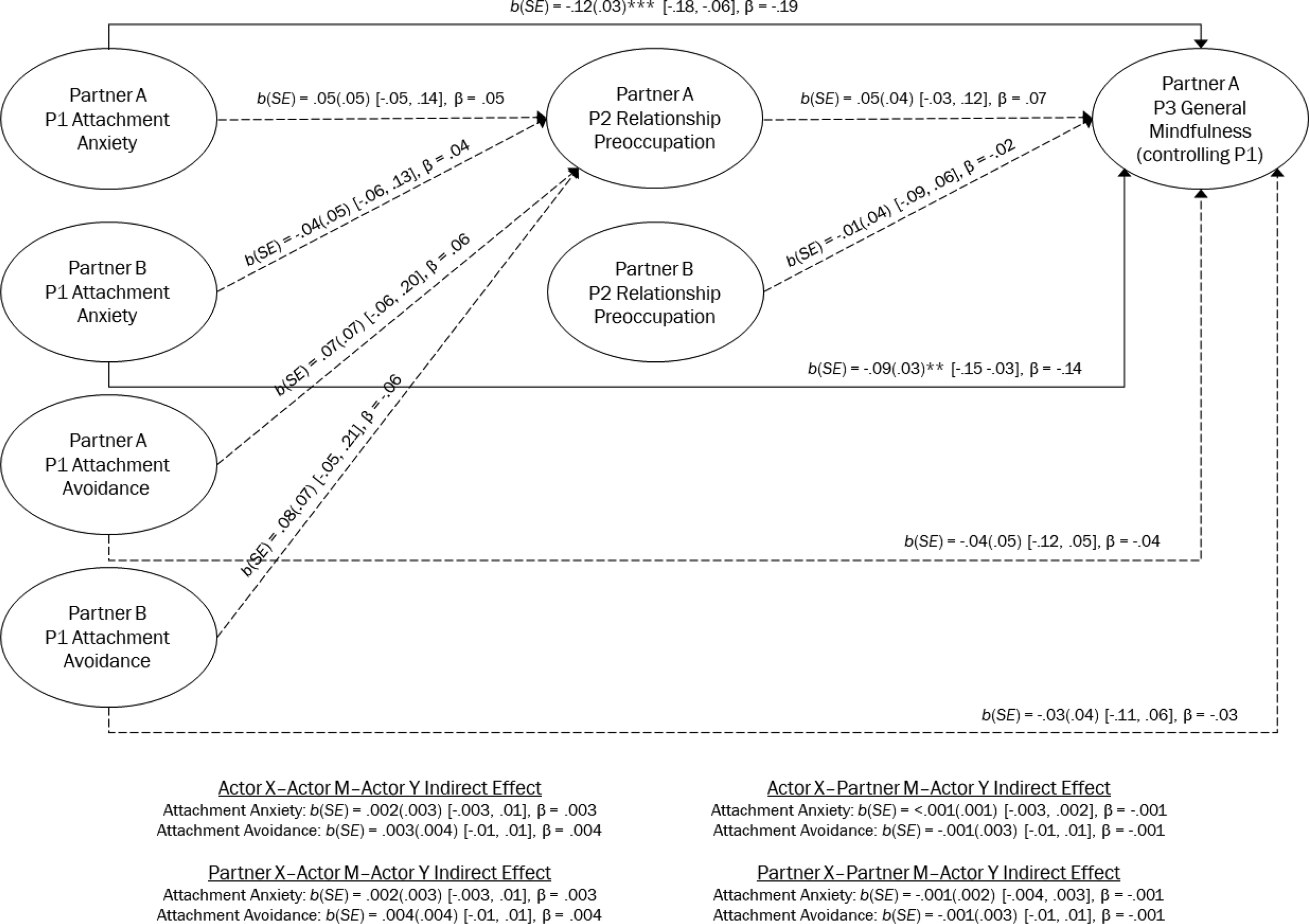
Attachment Orientations, Empathy, and General Mindfulness
As seen in Figure 4, controlling for demographic covariates and Phase 1 general and relationship mindfulness, lower Phase 1 actor and partner attachment anxiety again directly predicted a relative increase in Phase 1-3 actor general mindfulness. There were no direct associations between Phase 1 actor or partner attachment avoidance and change in Phase 1-3 actor general mindfulness. Direct and indirect effects of Phase 1 attachment anxiety and avoidance, Phase 2 partner-focused empathy, and Phase 1-3 change in general mindfulness. Note. P1 = Phase 1 (baseline); P2 = Phase 2 (14-day diary period); P3 = Phase 3 (2-month follow-up). Higher scores on continuous variables represent greater standing on the variable (e.g., greater general mindfulness). Solid paths are statistically significant. *p < .05, **p < .01, ***p < .001.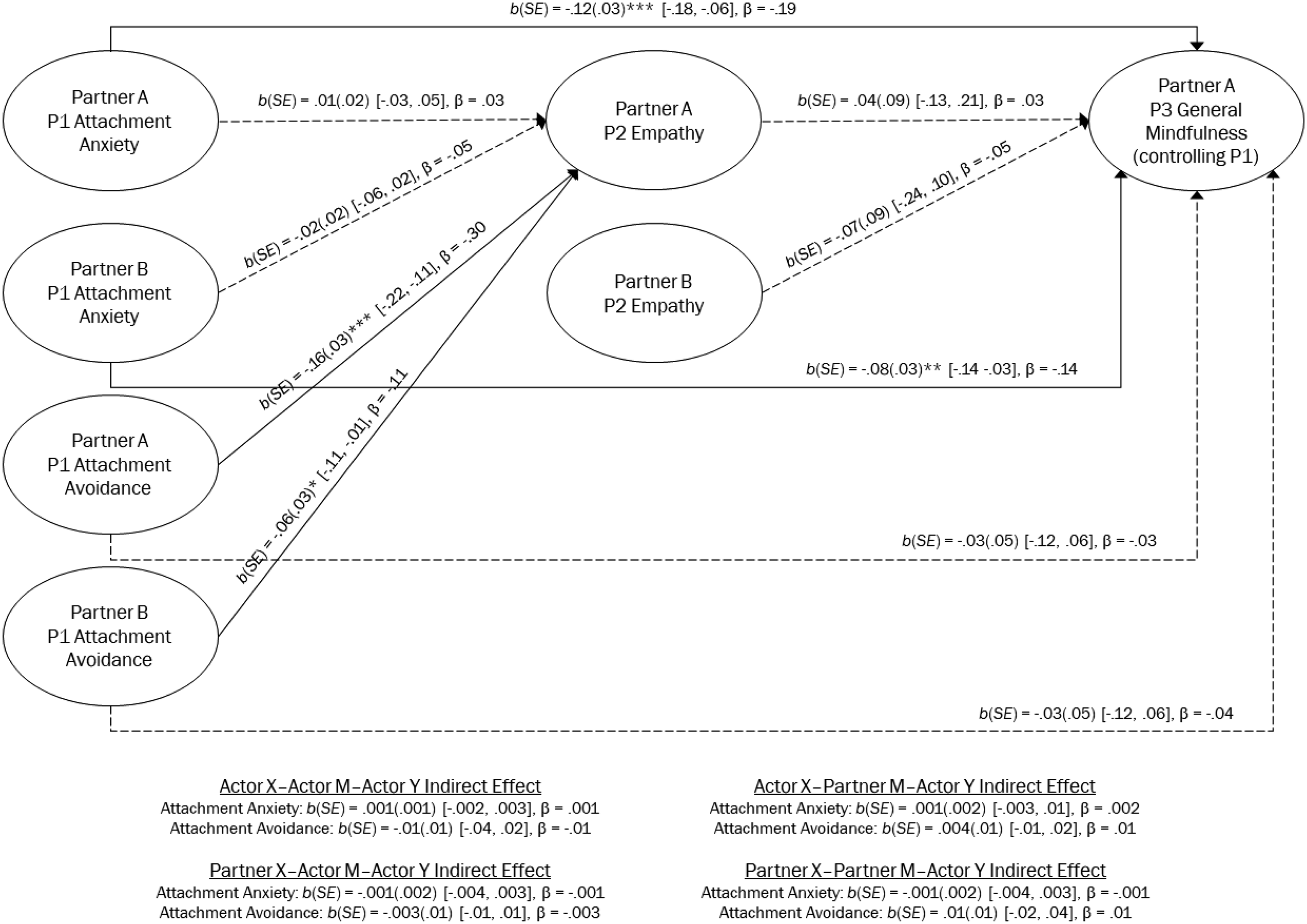
Phase 1 actor and partner attachment avoidance negatively predicted Phase 2 actor empathy. There were no links between Phase 1 actor or partner attachment anxiety and Phase 2 actor empathy. There were also no links between Phase 2 actor or partner empathy and Phase 1-3 change in general mindfulness. No indirect effects emerged in this model.
Additional Exploratory Analyses
At the request of an anonymous reviewer, we reran our models adding Phase 1 actor relationship satisfaction, Phase 1 actor perceived partner responsiveness, and Phase 2 actor positive and negative affect as further covariates. Interested readers may find the results of these models in our Online Supplementary Materials. Importantly, the original direct and indirect effects described above remained robust for all actor effects as well as the partner effect of Phase 1 attachment anxiety on Phase 1-3 change in general mindfulness. The effect sizes remained similar in analyses including the exploratory covariates. However, the other two partner effects (i.e., Phase 1 partner relationship mindfulness predicting Phase 2 actor relationship preoccupation and Phase 1 partner attachment avoidance predicting Phase 2 actor empathy) became nonsignificant when the exploratory covariates were included.
Discussion
The current study provides the first systematic investigation of how general and relationship mindfulness predict relative changes in attachment orientations in couples over time. Controlling for demographic covariates, relationship satisfaction, perceived partner responsiveness, and positive and negative affect, results revealed that one’s own greater general—but not relationship—mindfulness directly predicted a relative decrease in one’s own attachment anxiety over 2.5 months. No direct links were found between general or relationship mindfulness and change in attachment avoidance. Instead, one’s own greater relationship—but not general—mindfulness was associated with a relative decrease in one’s own attachment avoidance indirectly via one’s own greater partner-focused empathy. We also found that one’s own and one’s partner’s lower attachment anxiety predicated a relative increase in mindfulness over 2.5 months, suggesting bidirectionality. Taken together, our findings show that general mindfulness is uniquely and directly tied to change in attachment anxiety (and vice versa), whereas relationship mindfulness is uniquely and indirectly tied to change in attachment avoidance through empathy.
Direct and Indirect Effects of Mindfulness on Attachment Change
Our research aligns with the idea that the open attention and awareness inherent in mindfulness allows individuals to revise negative working models of the self and others. These findings dovetail broadly with previous cross-sectional research demonstrating negative correlations between general mindfulness and attachment insecurity (Stevenson et al., 2017). The finding that general—but not relationship—mindfulness predicted change in attachment anxiety directly suggests that an overall capacity to be attentive to internal and external experiences may suffice to get more anxiously attached individuals to reappraise their day-to-day interactions and feel safer and more competent in their relationships (cf. Arriaga et al., 2021). It may be that general mindfulness shifts attention towards nonrelational stimuli, which is helpful for increasing anxious individuals’ personal confidence and a secure working model of the self (Arriaga et al., 2018). Relationship mindfulness, on the other hand, may keep individuals focused on the relationship, which may not be helpful for anxious individuals, who naturally maintain a strong focus on their partner (Mikulincer & Shaver, 2016).
Interestingly, our mindfulness-attachment anxiety findings are incongruent with prior studies showing that mindfulness does not directly change attachment over time (e.g., Pepping et al., 2015; Stevenson et al., 2021). However, at the time of writing, this is only the second study to examine directional links between mindfulness and attachment in a longitudinal, naturalistic context (see Stevenson et al., 2021 for the first), and the first study to test these links longitudinally within couples. Perhaps single-session lab studies, given their more artificial nature and shorter timeframe are simply less able to reliably detect changes in attachment. This notion is bolstered by literature demonstrating that changes in attachment most often unfold over longer periods of time or in a dyadic context (e.g., Arriaga et al., 2014; Stanton et al., 2017).
One’s own and one’s partner’s relationship mindfulness was negatively associated with one’s own later relationship preoccupation. Perhaps being attentive toward one’s partner and relationship and having a partner who is mindful in the relationship soothes the need to become overinvolved with relational concerns (cf. Kimmes et al., 2018). The finding that one’s own lower relationship preoccupation predicted a relative decrease in attachment anxiety is consistent with the notion that lessening rumination about relationships may reduce dispositional worries about rejection and abandonment (Burnette et al., 2009; Shaver et al., 2007). Although these paths were significant separately, the indirect effect was not. This may be due to issues of statistical power. Alternatively, it is possible that our sampling window was not right for detecting indirect links from relationship mindfulness to change in attachment anxiety through relationship preoccupation (e.g., more time may be needed between assessments to capture this indirect process).
Neither general nor relationship mindfulness predicted change in attachment avoidance directly, consistent with previous null effects in the literature (e.g., Pepping et al., 2015; Stevenson et al., 2021). However, our research expands the literature by demonstrating that decreases in attachment avoidance follow specifically from greater relationship-specific mindfulness, and indirectly via greater partner-focused empathy. This finding marries previously established, but separate, links between mindfulness and empathy (e.g., Birnie et al., 2010; Block-Lerner et al., 2007; Karremans et al., 2017) and attachment avoidance and empathy (e.g., Mikulincer & Shaver, 2016; Burnette et al., 2009). It appears that mindfulness oriented toward a current relationship has a unique link to empathy toward one’s romantic partner, consistent with findings that relationship mindfulness predicts relationship outcomes beyond the effects of general mindfulness (Kimmes et al., 2018). Consistent with the ASEM (Arriaga et al., 2018), then, being present in the relationship appears to increase empathy and understanding for the partner’s thoughts, feelings, and actions, creating a more positive working model of others, and thereby reducing attachment avoidance over time.
The (Limited) Role of the Partner in Mindfulness→ Attachment Links
The role of the partner’s mindfulness in enhancing one’s own attachment security over time was absent in our findings, illuminating a potentially interesting difference between the capacity for mindfulness to buffer attachment insecurity and the capacity for mindfulness to promote attachment security in dyadic contexts. A partner’s attention and awareness may not in and of itself be able to create the confidence-building situations required to reduce the other partner’s attachment anxiety or promote the positive dependence processes (e.g., empathy) needed to decrease attachment avoidance. Although it is possible that partner effects of mindfulness on attachment take longer to emerge than 2.5 months, it may be that links from mindfulness to attachment links may simply operate primarily through individuals’ own experiences (cf. Joel et al., 2020). It may also be that partner effects are mediated by different variables, such as interpersonal behaviour, which were not tested in the current study.
Further Establishing Bidirectional Links
When testing links from attachment anxiety to mindfulness, we replicated the finding that one’s own attachment anxiety predicted a relative change in one’s own general mindfulness over time (e.g., Stevenson et al., 2021). We also extended prior research by demonstrating that one’s partner’s attachment anxiety also predicted a relative change in one’s own general mindfulness. Having a consistently available caregiver in infancy and childhood likely allows individuals to learn effective self-soothing techniques, which help them to be mindful of internal and external experiences on a moment-to-moment basis in the future (Shaver et al., 2007). Our novel partner effect suggests that one partner’s attachment security may help support the other partner’s capacity for mindful awareness, perhaps by facilitating an ability to manage emotional or cognitive resources (Arriaga et al., 2018).
Strengths, Limitations, and Future directions
Our findings advance the mindfulness-attachment literature by contributing the first longitudinal, dyadic investigation of the links between these constructs. Our data speak to the importance of considering both general and relationship mindfulness in attachment research, as well as mediators when examining change over time. Across all models, the effect sizes we found were small-to-medium, consistent with previous studies investigating mindfulness and relationship outcomes (McGill et al., 2016). Importantly, our additional exploratory analyses including relationship satisfaction, perceived partner responsiveness, and positive and negative affect ruled out several alternative explanations. Specifically, controlling for satisfaction and perceived partner responsiveness allows us to say more definitively that it is general and relationship mindfulness (rather than generally positive relationship evaluations) that contribute to attachment change. Controlling for positive and negative affect also allows us to say more definitively that it is empathy which mediates the relationship mindfulness-avoidance change link, rather than simply feeling happy or unhappy day-to-day.
In our view, the finding that general mindfulness predicts attachment anxiety directly, while relationship mindfulness predicts attachment avoidance indirectly through empathy is a noteworthy distinction. This dovetails with recent findings regarding the nuanced effects of general versus relationship mindfulness (e.g., Kimmes et al., 2020; Stanton et al., 2021), and has potentially important implications for attachment security-enhancing intervention development. Romantic relationship interventions often lack specificity, which can undermine their efficacy (Farrell et al., 2022), and it is important to tailor interventions to the needs of individuals and couples (e.g., Bradford et al., 2017). Our results show that it is likely that a general mindfulness intervention (e.g., mindfulness meditation) may be most efficacious if the targeted outcome is reducing attachment anxiety. Meanwhile, a relationship-oriented mindfulness intervention (e.g., mindfulness meditation with a loving-kindness component directed toward the partner), perhaps one which also emphasizes empathy, is likely to be more valuable when the targeted outcome is reducing attachment avoidance.
One limitation of our research was the wording of the general and relationship mindfulness measures used in our study. One might argue that the construct assessed in these measures is general inattentiveness (in the case of the MAAS) and inattention within a particular relationship (in the case of the RMM), rather than mindfulness since all items in both the MAAS and the RMM are negatively phrased. Although it is commonplace to reverse-score the items of these measures and discuss them as mindfulness (e.g., Barnes et al., 2007; Kimmes et al., 2018), recent evidence suggests that despite being quite highly correlated, inattention and mindful attention sometimes explain unique variance and can change somewhat independently over time (Daks et al., 2021). Due to this limitation, in the current research it is difficult to establish whether the pattern of findings indicates that mindfulness decreases attachment insecurity or whether inattention increases insecurity. It may be important in future work to establish whether positively-phrased attentional awareness items result in similar patterns of effects.
A further limitation of our measures is that the items in the MAAS and RMM assess only the attentional awareness facet rather than measuring mindfulness as a multifaceted construct. Other self-report measures of mindfulness, such as the Five Factor Mindfulness Questionnaire (FFMQ; Baer et al., 2006), capture five facets: observing, describing, acting with awareness, nonreactivity, and nonjudging. The current work can speak only to the direct and indirect effects of attentional awareness (as measured by the MAAS and the RMM) on attachment orientations. Using more complete measures of general and relationship mindfulness would potentially reveal more nuance in mindfulness-attachment links, especially because different facets of mindfulness sometimes have opposite effects on psychological outcomes (e.g., Baer et al., 2006). It is worth considering when certain facets of mindfulness may hinder attachment security enhancement processes, even if only temporarily before long-term benefits are reaped.
Given that relationship preoccupation did not mediate the link between mindfulness and attachment anxiety in our study, testing alternative mediators would be an informative future direction. It is possible, for example, that emotion regulation would mediate this relation, as mindfulness has been found to promote better emotion regulation (e.g., Arch & Craske, 2006), which in turn may reduce the emotional intensity and volatility associated with attachment anxiety (Mikulincer & Shaver, 2016). Additionally, it may be interesting for future research to test whether mindfulness (perhaps counterintuitively) undermines attachment security for partners in at-risk relationships (e.g., objectively discordant couples). Mindfulness involves an open awareness to both positive and negative internal and external events, and it may be in at-risk relationships that attention to negative experiences (perhaps those that would otherwise be suppressed in an effort to maintain the relationship) serves to increase attachment anxiety or avoidance over time. Finally, we were unable to explore bidirectional links for relationship mindfulness since relationship mindfulness was not assessed at the 2-month follow-up. The idea that attachment orientations (and perhaps attachment avoidance specifically, given the results of our study) would predict change in relationship mindfulness over time is a possibility readily amenable to future research.
In conclusion, the present study strengthens the case for examining the unique contributions of domain-general versus relationship-specific mindfulness to outcomes. Moreover, our findings illuminate that some mindfulness-attachment links are direct, whereas others occur indirectly through theoretically-plausible mediators. Our findings suggest that domain-general mindfulness does not have “one size fits all” benefits for different attachment orientations and have implications for both basic research and intervention science. Logical next steps for research in this area would be to investigate how other facets of mindfulness may play a role in attachment security enhancement and to examine the potential for general and relationship mindfulness interventions to enhance attachment security longitudinally within couples.
Supplemental Material
Supplemental Material - Longitudinal associations between mindfulness and change in attachment orientations in couples: The role of relationship preoccupation and empathy
Supplemental Material for Longitudinal associations between mindfulness and change in attachment orientations in couples: The role of relationship preoccupation and empathy by Taranah Gazder and Sarah C. E. Stanton in Journal of Social and Personal Relationships
Footnotes
Author’s Note
This research was presented in August 2022 at the biennial meeting of the International Association for Relationship Research (IARR), conducted virtually.
Acknowledgements
The authors gratefully acknowledge the Diverse Romantic Relationships and Well-Being I (DRRAW I) team for their assistance with data collection. The authors declare no conflicts of interest with respect to the authorship or publication of this article.
Declaration of Conflicting Interests
The author(s) declared no potential conflicts of interest with respect to the research, authorship, and/or publication of this article.
Funding
The author(s) disclosed receipt of the following financial support for the research, authorship, and/or publication of this article: This research was supported by New Investigator Grant ES/S005749/1 awarded to Sarah C. E. Stanton by the United Kingdom Economic and Social Research Council (ESRC).
Open research statement
As part of IARR’s encouragement of open research practices, the author(s) have provided the following information: This study was part of a larger research project investigating couples’ psychological experiences in relationships over time. Information regarding the parent project, including study measures, is available at https://osf.io/ekv6x. Information regarding the current study, including preregistered hypotheses and analytic plan and code used for analyses, is available at  . The data used in the research are available upon request and can be obtained by emailing Sarah C. E. Stanton (
Supplemental Material
Supplemental material for this article is available online.
Notes
References
Supplementary Material
Please find the following supplemental material available below.
For Open Access articles published under a Creative Commons License, all supplemental material carries the same license as the article it is associated with.
For non-Open Access articles published, all supplemental material carries a non-exclusive license, and permission requests for re-use of supplemental material or any part of supplemental material shall be sent directly to the copyright owner as specified in the copyright notice associated with the article.
