




Abstract
COVID-19 lockdowns have required many working parents to balance domestic and paid labor while confined at home. Are women and men equally sharing the workload? Are inequities in the division of labor compromising relationships? Leveraging a pre-pandemic longitudinal study of couples with young children, we examine gender differences in the division and impact of domestic and paid labor during a nationwide COVID-19 lockdown (N = 157 dyads). Women did more of the parenting and housework, whereas men engaged in more paid work and personal time, during the lockdown. Couple members agreed that women’s share of parenting, housework and personal time was unfair, but this did not protect women from the detrimental relationship outcomes associated with an inequitable share of domestic labor. A greater, and more unfair, share of parenting, housework and personal time predicted residual increases in relationship problems and decreases in relationship satisfaction for women. Exploratory analyses indicated that men who were the primary caregiver or were not working fulltime also experienced negative relationship outcomes when they did more housework and parenting. These results substantiate concerns that the COVID-19 pandemic may undermine advances toward gender equality by reinforcing inequitable divisions of labor, thereby damaging women’s relationship wellbeing.
The COVID-19 pandemic has significantly disrupted daily functioning, including lockdowns forcing many parents to balance domestic and paid labor at home. One prominent concern is that the pandemic will hinder progress in gender equality by exacerbating inequities in the division of labor (Craig & Churchill, 2020). Lockdowns have amplified both the need for cohabiting parents to manage domestic labor and the potential impact of inequities in the division of labor. Women performed more domestic labor prior to the pandemic, even when both women and men were employed outside the home (Fuwa, 2004; Greenstein, 2009). Research during the pandemic indicates that these inequities continue despite lockdowns providing women and men more opportunity to share domestic labor (Craig & Churchill, 2020). Such inequities are likely to produce relationship problems at a time when satisfying relationships are essential to sustain wellbeing.
To examine the presence and implications of gender differences in the division of labor during COVID-19 lockdowns, we leveraged an ongoing study in which couples with children completed assessments of relationship problems and satisfaction prior to the pandemic. During a mandated lockdown, couples completed repeated assessments of relationship functioning and reported on the division and perceived fairness of housework, parenting, paid work and personal time. This dyadic longitudinal design allowed us to assess whether partners agreed on any gender differences in the division and fairness of labor, and whether the division and perceived fairness of labor predicted residual changes in relationship functioning.
Do women and men report and agree on gender differences in the division of labor?
A large literature provides consistent evidence that, on average, women do more housework and parenting compared to men, particularly among couples who are married or are parents (e.g., Bianchi et al., 2000; Brines, 1994; Fuwa, 2004; Greenstein, 2009; Presser, 1994; Tai & Treas, 2013; van der Lippe et al., 2018). Couples need to balance even more housework and parenting duties during COVID-19 lockdowns. By reducing structural barriers to a more equitable division, home confinement of both couple members may provide an opportunity for men to more equally share domestic labor (Craig & Churchill, 2020). Yet, women’s engagement in paid work has not reduced gender discrepancies in the division of labor (Fuwa, 2004; Greenstein, 2009; van der Lippe et al., 2018) leading us to expect that women will continue to shoulder more of the housework and parenting during the pandemic.
Research assessing division of labor as the COVID-19 pandemic emerged supports concerns that gender inequities may be exacerbated. Online reports from individuals in Australia (Craig & Churchill, 2020) and the US (Carlson et al., 2020) reveal that, although both women and men report increases in housework and parenting during the pandemic, such increases have been greater for women. In these large-scale studies, respondents were likely in different contexts depending on whether they chose to shelter-in-place, could work from home, or had children out of school. Moreover, like the majority of studies involving samples of individuals, gender differences were assumed based on between-person averages that fail to account for different family situations. By contrast, in the current study, we gathered reports of the division and perceived fairness of labor from both couple members who were all confined to their home with young children during a nationwide lockdown. Gathering reports from couples more clearly tests whether gender differences exist within the same relationships and within the same context.
We also broaden a prior focus on housework and parenting by assessing whether gender differences in those domains are balanced by differences in paid work and personal time. Previous research indicates that men generally spend more time in paid work and personal time (e.g. leisure, self-care; Kamp Dush et al., 2018; Sayer, 2005). Examining couple’s agreement in the division of labor across domains offers additional insight into gendered patterns of labor. If women and men agree on the expected relative differences across domains—women doing more housework and parenting, men engaging in more paid work and personal time—this would indicate that different activities are equally recognized across couple members. However, if women and men agree about men’s relative paid work, but disagree about women’s greater housework or parenting, this would suggest that women’s contributions in these domestic areas are not equally recognized, perhaps because the intrinsic value ascribed to domestic work is less than that of paid work.
Participants also reported on whether the division of labor was more or less fair on them versus their partner. Couples may agree the division is inequitable but nonetheless perceive it to be fair, perhaps because it is compensated by other areas (e.g., paid work; Greenstein, 1996). On the other hand, couples could agree that the division is inequitable but disagree about whether inequities are fair. Indeed, men are more likely to view unequal divisions of labor as fair whereas women are more likely to view divisions as unfair (Carrasco & Domínguez, 2015). These different possibilities are important because, regardless of the division of labor, perceived fairness is likely to have important implications for relationship functioning.
How does inequitable or unfair division of labor affect relationship functioning?
Cross-sectional associations support that people who report doing more housework than their partner experience greater relationship conflict (Cubbins & Vannoy, 2004; Kluwer et al., 1996) and lower relationship satisfaction (Qian & Sayer, 2016; Voydanoff & Donnelly, 1999). Perceiving the division of housework and parenting as unfair is also associated with lower satisfaction (Frisco & Williams, 2003; Greenstein, 1996; Lavee & Katz, 2002; Rodriguez-Stanley et al., 2020; Schieman et al., 2018), and greater conflict (Newkirk et al., 2017). Longitudinal studies also indicate that a more inequitable or unfair share of housework predict declines in satisfaction and greater risk of dissolution (Bodi et al., 2010; Grote & Clark, 2001; Rodriguez-Stanley et al., 2020; Thielemans et al., 2019).
Given that women typically perform more domestic labor, these poorer relationship outcomes are likely to disproportionately affect women. In the current study, we test gendered effects of the division and perceived fairness of labor across a wider set of domains as the COVID-19 lockdown challenged couples to balance housework, parenting, paid work and personal time. Advancing the limited research assessing longitudinal effects of the division of labor (Bodi et al., 2010; Grote & Clark, 2001; Thielemans et al., 2019), we assessed relationship problems and satisfaction prior to and during the lockdown to test whether the division and perceived fairness of labor during lockdown predicted residual changes in relationship functioning.
Unlike most research which has involved individual samples, collecting dyadic data enabled the application of Actor-Partner Interdependence Models (APIM) to assess whether individuals’ and partners’ reports of the division and perceived fairness of labor contribute to relationship outcomes. Although we expected that individuals’ own perceptions of the division and fairness of labor would more strongly shape relationship outcomes, partners’ sense of inequities or unfairness may also create relationship problems for partners (Mikula et al., 2012). Equity theory (Adams, 1965) outlines that fair exchanges are important for both parties. The person who is contributing more than their partner should experience dissatisfaction as a direct result of the unfavorable exchange. The person experiencing a favorable exchange may also experience negative outcomes due to guilt from over-benefitting or simply confront problems arising from the under-benefitted partner’s discontent (also see Klumb et al., 2006).
Although inequities in the reported contribution to domestic labor have been linked to poorer relationship outcomes, equity theory also emphasizes that people’s perceptions of fairness should be more influential in determining outcomes (Klumb et al., 2006). For example, some prior studies have shown that perceived unfairness mediates the association between inequities in the division of labor and relationship conflict and satisfaction (Lavee & Katz, 2002; Newkirk et al., 2017). The principles of equity theory specifying the importance of perceived fairness also indicates that the worst relationship outcomes may arise when people contributing relatively more perceive their greater contribution is particularly unfair. Thus, we tested the main, relative and interaction effects of the division and perceived fairness of labor on relationship outcomes.
Do family roles explain or moderate the division or effects of labor?
Finally, we explored whether women’s and men’s family roles—primary caregiver and employment status—accounted for any gender differences in the division, fairness and effects of domestic labor. Prior research suggests that, although gender discrepancies in domestic labor persist, division of labor becomes more equitable when women and men are more economically equal, such as when women hold professional occupations, men stay at home, and/or there is a smaller gap in income between partners (Bianchi et al., 2000; Fuwa, 2004; Presser, 1994). Yet, other research indicates that gender differences in the division of domestic labor are not solely the result of social roles or available time. Some studies suggest that women perform more domestic labor when men are more economically dependent (Brines, 1994; van der Lippe et al., 2018). Men also express greater reluctance to perform “feminine” household tasks (e.g., cleaning, cooking, laundry) regardless of available time (Tai & Treas, 2013). These competing effects motivated additional analyses to ensure that any gender differences in the division, fairness and effects of labor were not simply due to different family roles and explored whether caregiver and employment status moderated any of the effects.
Current research
COVID-19 lockdowns have confined many working parents to balance domestic and paid labor at home. Are women and men equally sharing this workload? Are inequities in the division of labor compromising relationships? Leveraging an ongoing study of mixed-gender couples with young children who reported on their relationship problems and satisfaction prior to the pandemic, we examine gender differences in the division and impact of domestic and paid labor during a 5-week nationwide lockdown in New Zealand. All non-essential businesses and public/educational facilities were closed and families were confined to the home except when one person needed to acquire essential goods (e.g., groceries, medicine). Couples reported on the division and fairness of labor during the lockdown and completed repeat assessments of relationship problems and satisfaction. Our primary analyses examined (1) whether partners reported and agreed on gender differences in the division and perceived fairness of housework, parenting, paid work and personal time, and (2) whether a more inequitable and unfair division of domestic labor predicted residual changes in relationship problems and satisfaction. Additional analyses were conducted to ensure that any gendered patterns were not due to primary caregiver and employment status and explored whether caregiver and employment status moderated the effects. 1
Method
Participants
Sample size was determined by the pool of couples (N = 234 dyads) who had already participated in an ongoing study. Participation prior to the COVID-19 pandemic involved couples attending a laboratory session with their child, including completing measures of relationship functioning (see OSM for more detail). Intact couples were emailed an invitation to complete a questionnaire during a nationwide lockdown in which families were confined to the home from March 26 to April 28, 2020. Couples received $NZ50 for completing the questionnaire, which was open for the last 19 days of the lockdown (April 8 to 27). Of the 234 couples, 157 mixed-gender couples (314 individuals) provided complete data (67% response rate). Parents were on average 37.30 years old (SD = 4.92), involved in long-term marital relationships (M = 11.65 years, SD = 4.17), were mostly of European descent (70%), and covered a range of income brackets (see OSM for more details).
Procedure and materials
Prior to the lockdown, all families had completed an initial assessment, and 78 had completed a second assessment, of the initial study. At both pre-lockdown assessments, parents completed measures of relationship functioning. To provide the most conservative test, we used the most recent completed measures as baseline assessments of relationship functioning, which was on average 207 days (SD = 123 days) prior to lockdown assessments. Days since baseline was not associated with the primary variables and controlling for days since baseline did not alter the results. During the lockdown, participants completed the same relationship functioning measures along with reports of the division and perceived fairness of labor.
Relationship satisfaction
Participants completed 5 items from Rusbult et al. (1998) investment scale (e.g., “I feel satisfied with our relationship”; 1 = strongly disagree, 7 = strongly agree) prior to (α = .93) and during (α = .95) the lockdown. Relationship satisfaction was relatively high prior to (women: M = 5.53, SD = 1.29; men: M = 5.41, SD = 1.35) and during (women: M = 5.63, SD = 1.13; men: M = 5.52, SD = 1.21) the lockdown.
Relationship problems
Prior to the lockdown, participants completed the Marital Problem Inventory (MPI; Geiss & O’Leary, 1981) involving rating the extent to which they generally experienced problems within 27 common areas of relationship difficulties (e.g., “communication,” “showing affection,” “power struggles”; 1 = not a problem, 7 = major problem). Average levels of problems were low but varied across the sample (α = .92; women: M = 1.97, SD = 0.77; men: M = 2.02, SD = 0.78). During the lockdown, participants completed the MPI with regard to problems experienced during the lockdown (α = .93; women: M = 2.32, SD = 0.80; men: M = 2.40, SD = 0.74).
Division of labor
Participants were asked to consider “who has done more of each of the following activities during the lockdown” and reported the relative division of labor (−2 = my partner has done much more than me, −1 = my partner has done a bit more than me, 0 = we both have done equal amounts, 1 = I have done a bit more than my partner, 2 = I have done much more than my partner) for overall housework, parenting, personal time, and paid work. 2
Perceived fairness
Participants were then asked, “thinking about how much you and your partner have contributed to each of these activities during the lockdown, to what extent do you think what you and your partner have been doing is fair?” Participants provided separate ratings for fairness of housework, parenting, personal time, and paid work (−2 = much more unfair on my partner, −1 = a little more unfair on my partner, 0 = equally fair/unfair, 1 = a little more unfair on me, 2 = much more unfair on me).
Caregiver status
Participants indicated who the primary caregiver was during lockdown: self, partner, shared equally. A dummy code indexed whether each participant was a primary caregiver [1] or not [0]). More women (50.3%) than men (16.6%) were the primary caregiver; the remaining couples (33.1%) shared caregiving equally.
Employment status
Participants selected their employment status during lockdown (see OSM for more detail), which was used to create a dummy code indexing whether participants were working fulltime [1] or not [0]. More men (64.3%) than women (29.9%) worked fulltime. Men (M = 36.31) and women (M = 35.76) who worked fulltime spent comparable hours on paid work per week. Analyses using number of hours worked instead of fulltime status produced the same results and conclusions as reported below (see OSM).
Results
Gender differences and agreement in the division and perceived fairness of labor
We first examined the means of reported division of parenting, housework, paid work and personal time to ascertain whether there were gender differences in the division of labor and whether women and men agreed about any differences. The first column of Table 1 provides descriptive statistics of the raw ratings of whether individuals (above 0) or their partners (below 0) had done more (0 = equal amounts). On average, women reported that they had done more parenting and housework (scores above zero) and men agreed that their partner had done more (scores below zero). Paid work and personal time showed the opposite pattern.
Agreement in relative division and perceived fairness of labor.
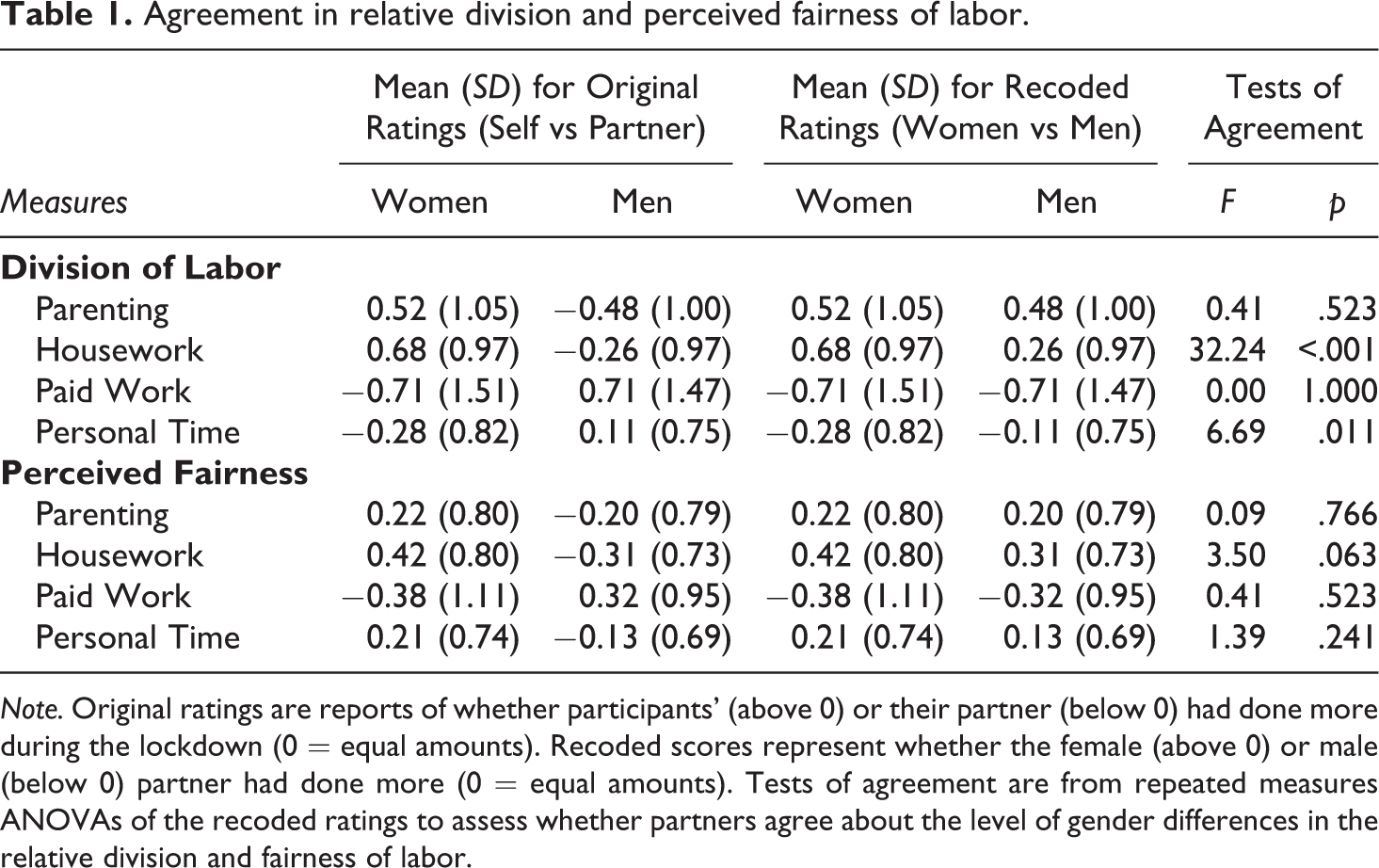
Note. Original ratings are reports of whether participants’ (above 0) or their partner (below 0) had done more during the lockdown (0 = equal amounts). Recoded scores represent whether the female (above 0) or male (below 0) partner had done more (0 = equal amounts). Tests of agreement are from repeated measures ANOVAs of the recoded ratings to assess whether partners agree about the level of gender differences in the relative division and fairness of labor.
To test how much couples agreed about these gender differences we recoded the original ratings so that scores reflected whether women (above 0) versus men (below 0) had done more (0 = equal amounts). Using these recoded ratings (see right side of Table 1), we conducted a 2 (women, men) x 4 (labor domain) repeated measures MANOVA and report the univariate comparisons testing the differences in means within each domain (see final column of Table 1). Two domains demonstrated agreement. On average, both women and men reported that women were doing more of the parenting (ratings above 0) and agreed about how much more parenting women did (no significant differences across average ratings). Both women and men reported that men did more of the paid work (ratings below 0) and agreed on exactly how much more paid work men did (no differences across ratings).
Two domains demonstrated disagreement. Although both women and men reported that women were doing more of the housework (average ratings above 0), women reported that they did significantly more than men acknowledged (women’s average significantly higher than men’s). By contrast, although both women and men reported that men had more personal time than their partners during lockdown (average ratings below 0), men reported that they had significantly less relative personal time than women reported men did.
We examined perceived fairness using the same procedures. Women and men perceived that the division of parenting, housework and personal time was more unfair on women, and that the relative division of paid work was more unfair on men. Moreover, there were no significant differences across women’s and men’s average ratings of perceived fairness indicating that women and men generally agreed on how unfair the division of labor was on women.
Effects of division and perceived fairness of labor on relationship outcomes
To examine whether the division or perceived fairness of labor were associated with residual changes in relationship problems and satisfaction we used women’s and men’s original ratings so that scores above 0 represent participants doing more compared to their partner (and vice versa). Zero-order correlations (see OSM) indicated that women who reported doing more parenting and housework, having less personal time, and perceiving the division of parenting, housework and personal time to be less fair on them compared to their partner experienced greater relationship problems and lower relationship satisfaction. By contrast, men’s ratings of division and perceived fairness of labor were uncorrelated with relationship outcomes.
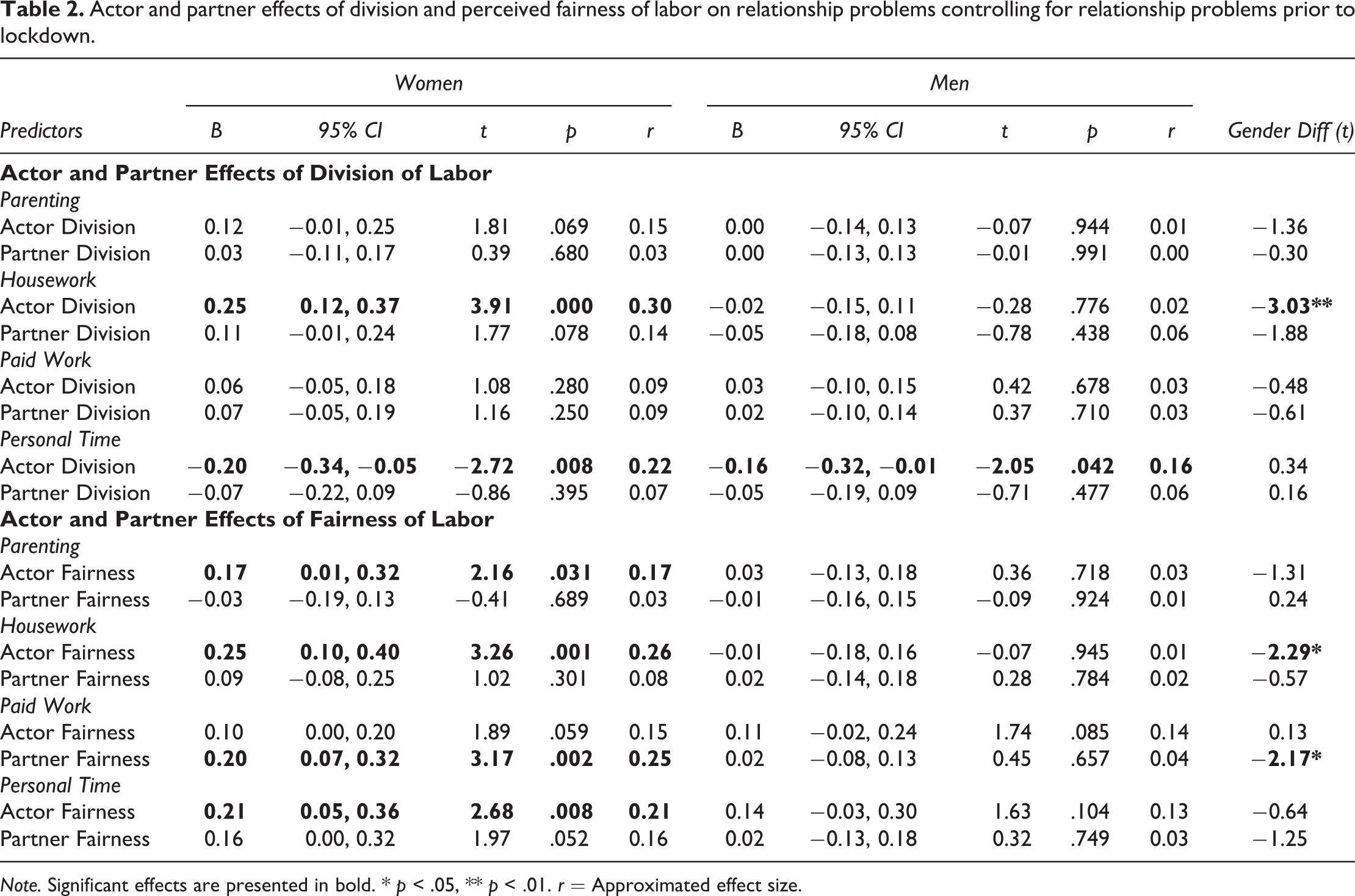
To estimate these associations controlling for the dependence in relationship conditions across partners, we applied the procedures and SPSS syntax provided by Kenny et al. (2006) to run APIM models. We modeled each relationship outcome (problems and satisfaction) as a function of individuals’ and their partners’ (1) reported division of labor and (2) perceived fairness of labor. We controlled for pre-lockdown assessments of each outcome so that any significant effects represent prediction of residual change in relationship functioning. Our primary models estimated the effects for women and men simultaneously while accounting for the dyadic dependence across partners (see OSM for annotated syntax). Supplementary models pooled effects across women and men and added the main and interaction effects of gender to provide significance tests of any gender differences (presented in the final columns of Tables 2 –5). Separate models assessed the effects of the division and perceived fairness of parenting, housework, paid work and personal time.
Actor and partner effects of division and perceived fairness of labor on relationship problems controlling for relationship problems prior to lockdown.
Note. Significant effects are presented in bold. * p < .05, ** p < .01. r = Approximated effect size.
Division of labor
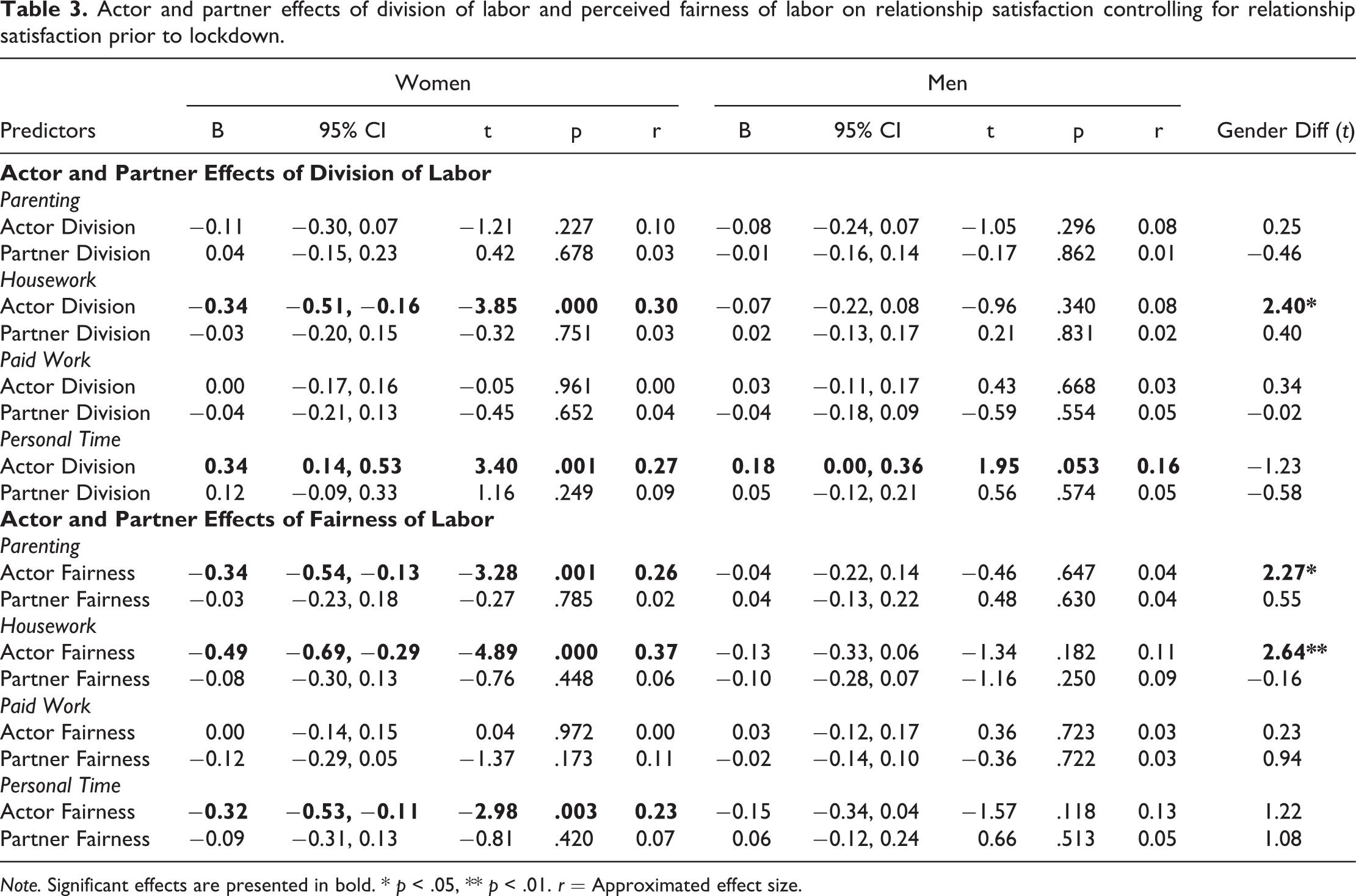
The top sections of Tables 2 and 3 present the effects of the division of labor, with significant effects presented in bold. Women who reported greater housework relative to their partner experienced greater relationship problems (Table 2) and lower relationship satisfaction (Table 3). By contrast, men’s relative housework was not associated with relationship outcomes, and these gender differences were significant (see final column of tables). Women and men who reported more personal time relative to their partner also experienced lower problems and greater satisfaction. There were no partner effects.
Actor and partner effects of division of labor and perceived fairness of labor on relationship satisfaction controlling for relationship satisfaction prior to lockdown.
Note. Significant effects are presented in bold. * p < .05, ** p < .01. r = Approximated effect size.
Perceived fairness of labor
The bottom of Tables 2 and 3 present the effects of perceived fairness of labor. Women who perceived the division of housework and parenting to be more unfair on them experienced greater problems (Table 2) and lower satisfaction (Table 3), and these effects significantly differed from the null effects for men (with one exception for parenting and problems). Women who perceived their relative personal time was unfair also reported greater problems and lower satisfaction, but these effects did not significantly differ from the null effects for men. A significant partner effect also indicated that women experienced greater problems when their partners perceived their paid work was relatively unfair.
Relative and interaction effects of division and perceived fairness of labor
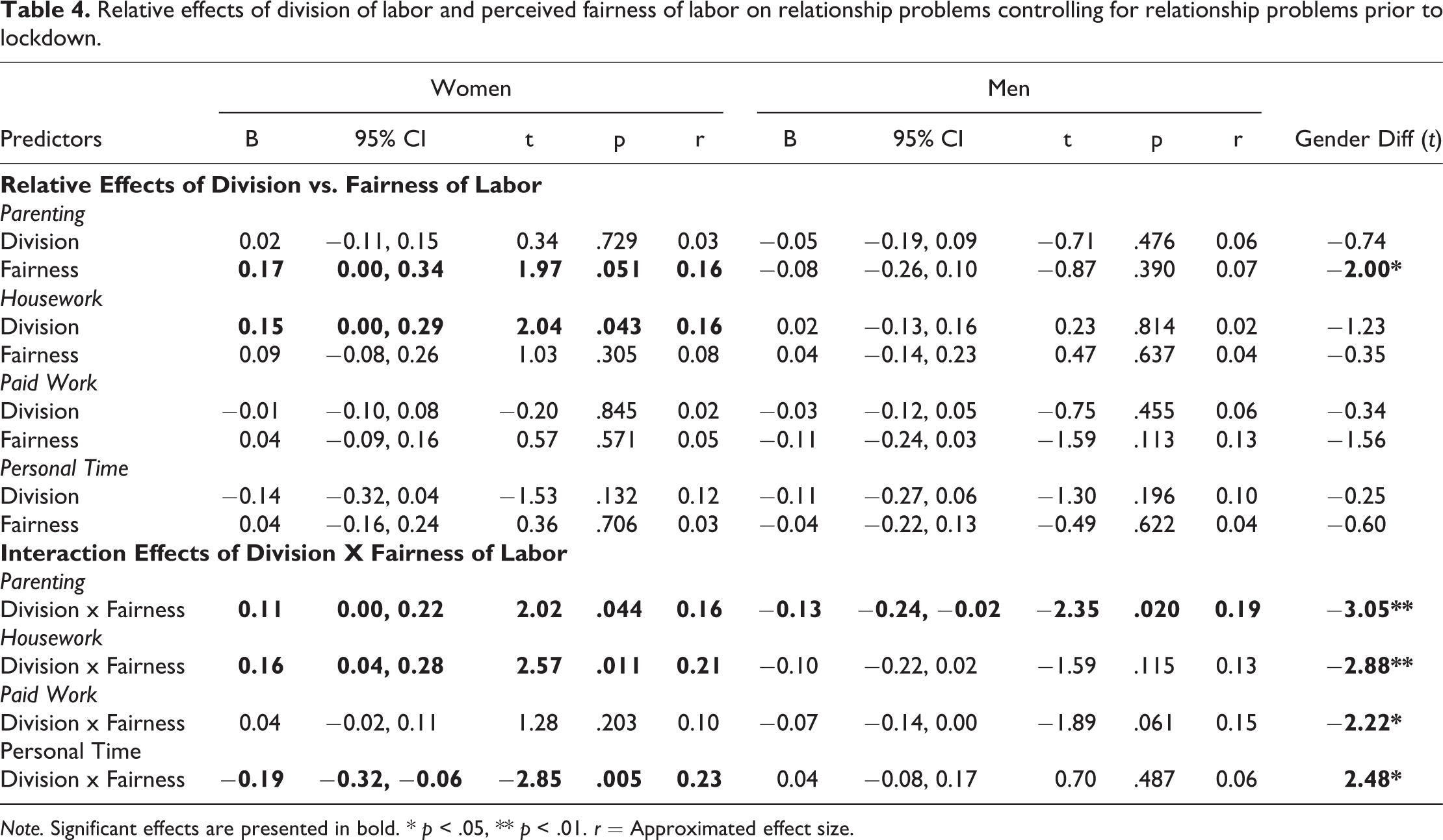
Modeling division and perceived fairness as simultaneous predictors of relationship functioning (controlling for pre-lockdown assessments) revealed, as expected, that perceived fairness tended to be a stronger predictor than the reported division of labor. Women (but not men) who perceived their relative housework and parenting labor to be more unfair on them reported lower relationship satisfaction (Table 5) and (for parenting) relationship problems (Table 4), and these effects differed significantly by gender.
Relative effects of division of labor and perceived fairness of labor on relationship problems controlling for relationship problems prior to lockdown.
Note. Significant effects are presented in bold. * p < .05, ** p < .01. r = Approximated effect size.
We next added the Division of Labor x Perceived Fairness interaction into the dyadic models to examine whether women who perform more domestic labor and perceive it as unfair experience the worst relationship outcomes. Three sets of interaction effects emerged. First, significant interactions between division and perceived fairness in housework labor predicting relationship problems (Table 4) and satisfaction (Table 5) emerged for women. As shown in Figure 1, women who reported doing more housework than their partner reported greater problems (Panel A) and lower satisfaction (Panel B) when they felt the division of labor was more unfair on them. Conversely, men reported lower satisfaction when it was unfair on their partner but they did more (Panel C) indicating that the need for men to pick up housework could reduce satisfaction (discussed further below). Second, significant interactions emerged for parenting in the opposite directions for women and men (Figure 2). Women (Panel A) reported greater relationship problems (Table 4) when they were doing more parenting than their partner and perceived it as unfair, whereas men reported fewer problems when they were doing more parenting and perceived is as more unfair on them (Panel B). Third, a significant interaction between division and fairness in personal time predicting relationship problems (Table 4) revealed that women reported greater problems when their partner had relatively more personal time and they felt it was unfair (Figure 3). 3
Relative effects of division of labor and perceived fairness of labor on relationship satisfaction controlling for relationship satisfaction prior to lockdown.
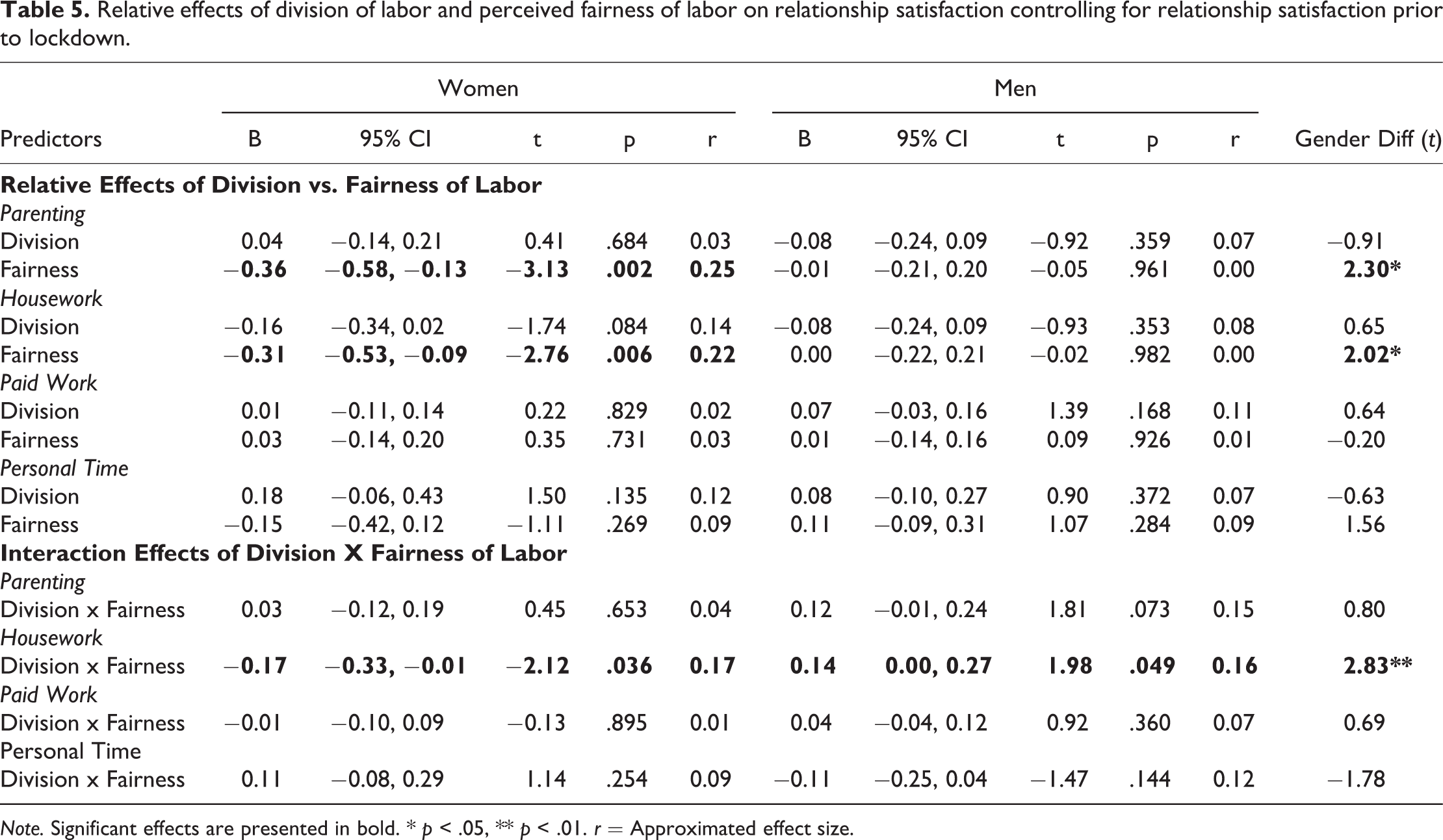
Note. Significant effects are presented in bold. * p < .05, ** p < .01. r = Approximated effect size.
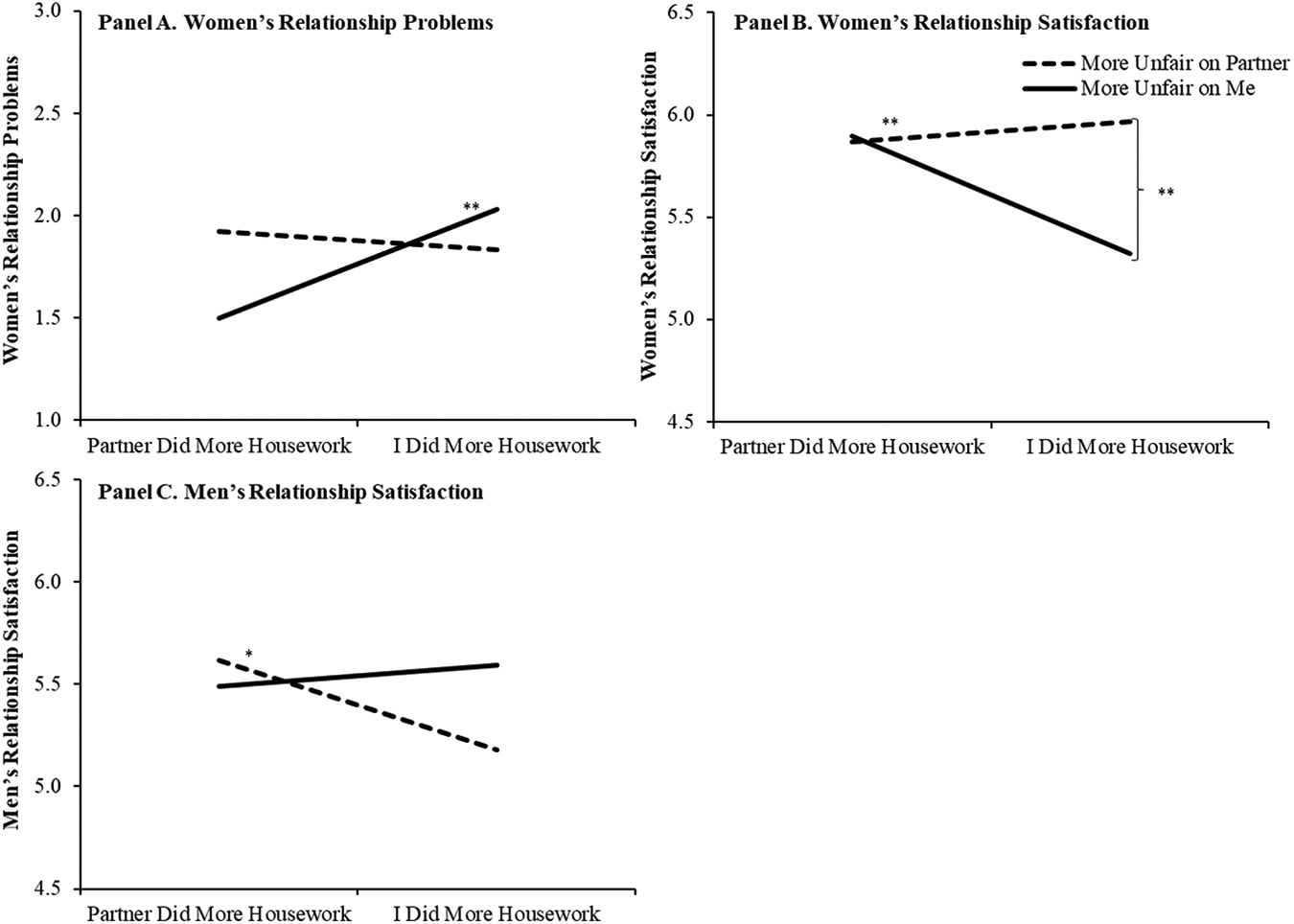
Interactions between division and perceived fairness of housework labor predicting women’s relationship problems (Panel A), women’s relationship satisfaction (Panel B), and men’s relationship satisfaction (Panel C). Note. The levels of predictor and moderator are plotted at −1 (partner did more/more unfair on partner) versus 1 (I did more/more unfair on me). Significant simple effects are marked: * p < .05, ** p < .01.
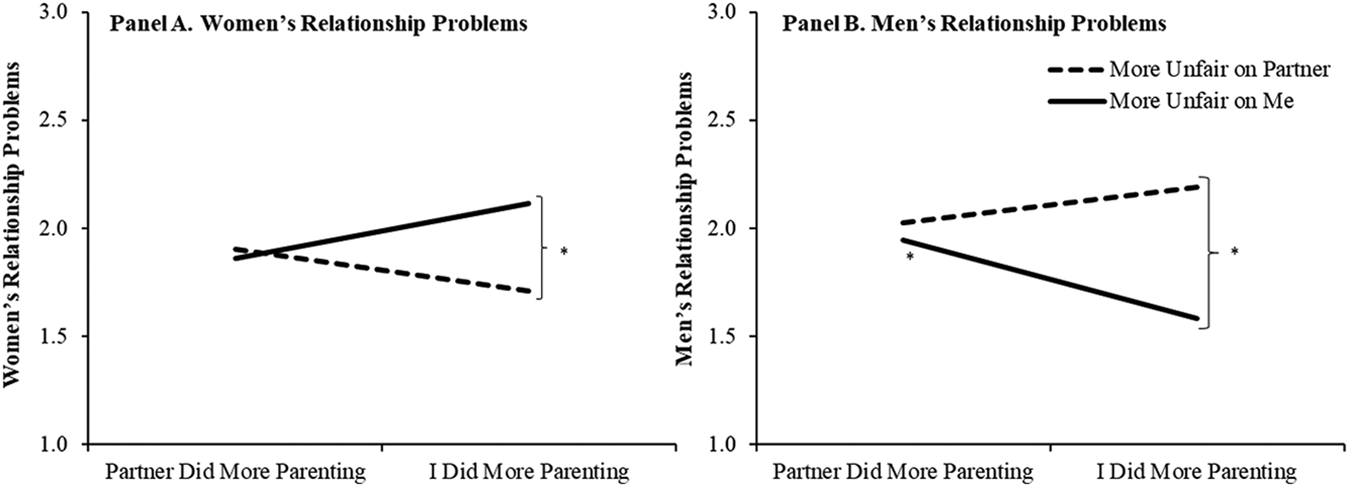
Interactions between division and perceived fairness of parenting predicting women’s (Panel A) and men’s (Panel B) relationship problems. Note. The levels of predictor and moderator are plotted at −1 (partner did more/more unfair on partner) versus 1 (I did more/more unfair on me). Significant simple effects are marked: * p < .05.
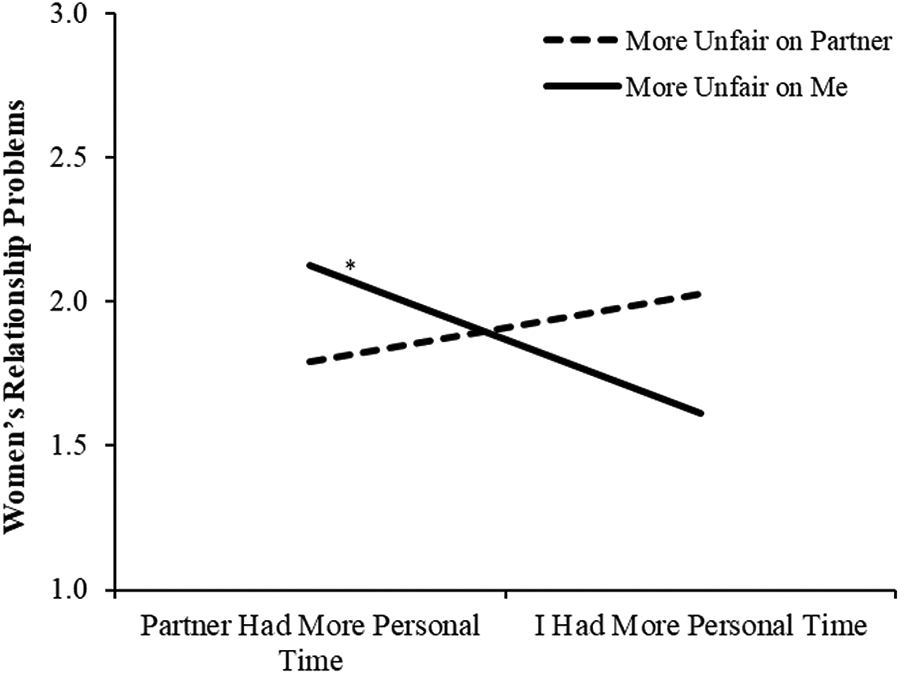
Interaction between division and perceived fairness of personal time predicting women’s relationship problems. Note. The levels of predictor and moderator are plotted at −1 (partner did more/more unfair on partner) versus 1 (I did more/more unfair on me). Significant simple effects are marked: * p < .05.
Caregiver and employment status
We re-ran all analyses controlling for women’s and men’s caregiver and employment status to rule out the possibility that the gender differences found were a function of different roles occupied by women (more likely the primary caregiver) and men (more likely working fulltime). We added both women’s and men’s caregiver and employment status as between-subjects factors in the test of mean level differences in the division and fairness of labor (see Table 1). This did not change the significant gender differences regarding housework, parenting or personal time. The gender differences in paid work, however, was moderated by employment status. When women were employed fulltime (29.9%), both partners reported that (1) women did more paid work than men and (2) the division of paid work was more unfair on women.
We reran all of the APIM models controlling for women’s and men’s caregiver and employment status. For women, the main and interaction effects of the relative division and fairness of parenting, housework and personal time on relationship outcomes remained (see Tables SM5–8). For men, the two significant effects of personal time on relationship problems and satisfaction for men remained, but the two interaction effects were altered. The interaction in Figure 1, Panel C was no longer significant, and the interaction in Figure 2, Panel B reversed to be consistent with that shown for women (Panel A). Thus, the detrimental effects of women’s domestic labor occurred regardless of caregiver and employment status, but the few effects that emerged for men were less reliable.
Our final analyses explored whether women’s and men’s caregiver or employment status moderated the effects of division and fairness of labor on relationship outcomes (see Tables SM9–10). Although there was no evidence that the effects on women’s relationship outcomes were moderated by caregiver or employment status, 4 out of 16 interactions tested were significant for men. Men who were not working fulltime and reported that they were doing more housework (Figure 4, Panels A and B) and that this division was more unfair (Panel C) reported greater relationship problems and lower satisfaction. Moreover, men who reported being the primary caregiver were least satisfied when they were doing more of the parenting and most satisfied when their partner was doing more parenting (Panel D). Although these effects provide some evidence that men who were primary caregivers or not working fulltime experienced similar outcomes shown for women, we are cautious to draw strong conclusions given the number of tests conducted, the composition of the sample (35.7% men not working fulltime, and only 16.6% men primary caregivers), and that these patterns were not predicted a priori.
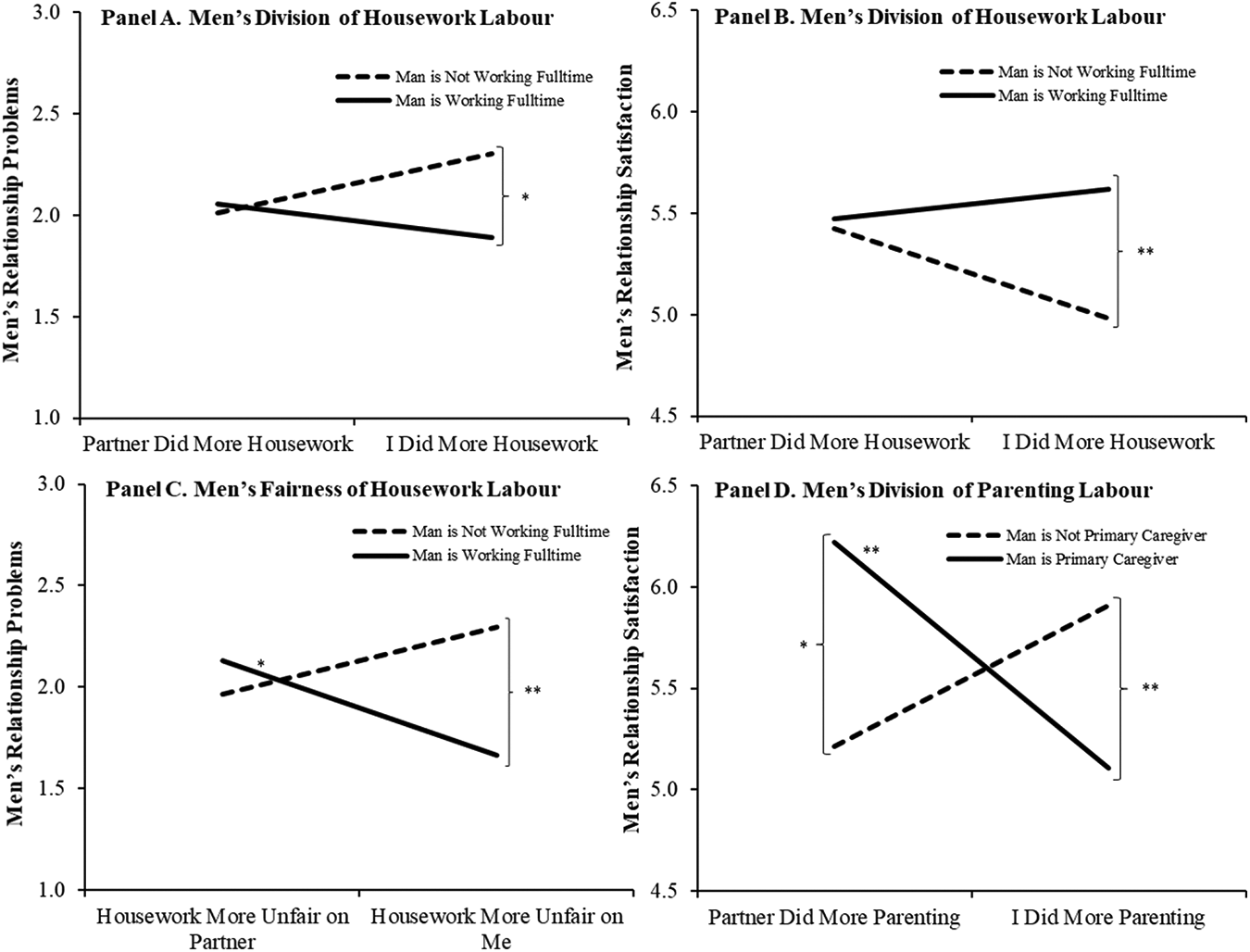
Interactions between (1) housework division of labor and men’s employment status predicting men’s relationship problems (Panel A) and relationship satisfaction (Panel B), (2) housework perceived fairness of labor and men’s employment status predicting men’s relationship problems (Panel C) and (3) parenting division of labor and men’s caregiver status predicting men’s relationship satisfaction (Panel D). Note. The levels of the predictor are plotted at −1 (my partner did more) versus 1 (I did more). The moderator is a dummy code: 0 = not primary caregiver/working fulltime; 1 = primary caregiver/working fulltime. Significant simple effects are marked: * p < .05, ** p < .01.
Discussion
The COVID-19 pandemic poses considerable challenges to couples, including lockdowns forcing working parents to coordinate an increase in domestic and paid labor. We leveraged an existing study of mixed-gender couples with young children assessed prior to the pandemic and conducted pre-registered tests of gender differences in the division and impact of domestic and paid labor as families endured a nationwide COVID-19 lockdown. Although lockdowns offer opportunities for couples to more equally share the domestic load, women did more of the parenting and housework, whereas men generally engaged in more paid work and personal time. Couple members agreed that the balance of labor was unfair on women, but this did not protect women from the detrimental outcomes of a greater domestic burden. Women who were unfairly doing a greater share of housework and parenting, and having less personal time, experienced residual increases in relationship problems and residual decreases in satisfaction.
The inequities in domestic labor and detrimental effects on women’s relationship outcomes occurred irrespective of caregiver or employment status. These results substantiate concerns that the COVID-19 pandemic may have greater risks for women, including quarantine efforts reinforcing gender inequality and placing greater strains on women’s health and wellbeing. Interestingly, exploratory analyses provided tentative evidence that men who were the primary caregiver or not working fulltime also experienced poorer relationship outcomes when they did more of the domestic labor. Thus, generating an equitable division of labor is an important target to protect the health and wellbeing of women (and men) who are shouldering more of the home demands exacerbated by the COVID-19 pandemic and lockdowns.
Couples agree: Women are doing more labor and this division is perceived as unfair
Both women and men reported that women did more housework and parenting, whereas men engaged in more paid work and personal time. The overall pattern of division of housework and parenting is consistent with established gender differences (Bianchi et al., 2000; Kamp Dush et al., 2018; Newkirk et al., 2017) and those reported during the pandemic (Carlson et al., 2020; Craig & Churchill, 2020). Gathering reports from couples, however, clarified that the gender differences typically shown by between-group comparisons of individual reports are evident when comparing women’s and men’s reports within the same relationship. The overall pattern illustrated that, despite home confinement potentially reducing structural barriers to men sharing housework and parenting, both women and men agree that women are shouldering the increased burden of domestic labor arising from COVID-19 lockdowns.
Yet, despite agreeing that gender differences existed, women and men disagreed about the extent of the inequity. Although men reported that women were doing more housework and having less personal time, women reported doing more housework and having less personal time than men’s reports acknowledged. These discrepancies could emerge because housework is less valued than other domains and thus not as visible or fully appreciated. Men may also tend to underestimate the time and energy housework involves due to their lower contribution to this domain, and consequently overestimate the personal time women are afforded or perhaps misinterpret some activities as personal time (e.g., planning, playing with children). It is also possible that women’s greater share of housework and men’s greater share of personal time result in women viewing these inequities as even greater than they are. Importantly, regardless of why disagreement across couples emerged, such disagreement may contribute to the persistence of gender discrepancies in domestic labor. For example, if women’s share of the housework or lack of personal time is not fully appreciated by partners then there is likely less chance that couples will work together to rectify these inequities.
Despite disagreeing about how much more housework and how much less personal time women were engaging compared to men, women and men equally perceived that the relative labor in these domains was unfair. Couples may have more insights into each other’s perceived fairness, perhaps because people are more likely to directly or indirectly communicate their discontent with unfairness. Couples also may consider relative fairness, rather than amount of time and energy spent, when considering each other’s contributions. The prominence of perceived fairness in the evaluation and effects of equity is why perceived fairness tends to have relatively stronger effects on relationship outcomes (Greenstein, 1996). Nonetheless, men’s recognition that the division of domestic labor was more unfair on women did not protect women from the detrimental relationship outcomes associated with a greater domestic burden.
Perceiving inequities as unfair create relationship problems and dissatisfaction for women
Leveraging an existing dyadic study enabled us to uniquely assess how couples’ division of labor predicted residual changes in relationship problems and satisfaction. The pattern of results confirmed that women are more at risk of the negative relationship outcomes associated with perceiving an unfair share of housework, parenting and personal time. With regard to housework, women who reported a more inequitable and unfair division experienced greater problems and lower satisfaction. Applying an equity perspective, tests of the interaction between the relative division and perceived fairness of housework revealed that women who did more housework than their partner and perceived their larger share as unfair experienced the greatest residual increases in relationship problems and reductions in satisfaction.
Perceived unfairness of parenting was also central to how couples’ division of parenting shaped women’s relationship outcomes. Prior cross-sectional studies indicate that inequity and unfairness in the division of parenting is associated with greater conflict and lower satisfaction (Newkirk et al., 2017; Schieman et al., 2018). In the current study, only perceived unfairness in parenting predicted residual changes in problem and satisfaction. A significant interaction also revealed that women who did more parenting than their partner only experienced greater relationship problems when they perceived their share of parenting to be unfair on them. Compared to the onerous necessity of housework, parenting may often be personally fulfilling (Tully et al., 1999) in ways that compensate for a greater burden of the parenting workload. Any compensation of personal fulfilment, however, may not be enough to counter dissatisfaction and problems in the marital relationship when mothers feel their greater contribution is unfair.
Our investigation also extended insight into the relative impact of an unfair division in both domestic and personal activities. First, the impact of gender inequities in domestic labor were not balanced by counter inequities in other domains. Although men on average did more paid work, neither women or men experienced poorer relationship outcomes as a function of a greater or more unfair share of paid work. Instead, women experienced greater problems when their partner perceived their work was unfair, perhaps due to men’s feelings of unfairness creating more relationship difficulties managing expectations around housework, parenting and personal domains. Second, couples agreed that men (on average) had more personal time than women, and men who had relatively more personal time reported lower problems and greater satisfaction. However, couples agreed that women’s lower share of personal time was unfair, and women (but not men) who had less personal time relative to their partner and perceived the share of personal time to be unfair experienced greater relationship problems and lower satisfaction.
Detrimental effects of inequities in domestic labor occur for women regardless of family role, but men who occupy domestic roles may experience similar outcomes as women
More women (50.3%) than men (16.6%) were the primary caregiver, and more men (64.3%) than women (29.9%) worked fulltime. Nonetheless, the gender differences in the division and perceived fairness of parenting, housework and personal time, and the effects of the relative division and fairness of parenting, housework and personal time on women’s relationship outcomes, did not vary across women and men’s caregiver and employment status. Thus, the gendered pattern of the division of labor, and the detrimental effects of the division and perceived fairness of housework and parenting on women’s relationship outcomes, occurred for women in traditional and non-traditional family roles.
Interestingly, however, additional analyses provided some tentative evidence that men may experience poorer relationship outcomes when their family role or situation forces them to pick up more domestic labor. In general, men did not report greater relationship problems or lower relationship satisfaction when they reported doing more housework or parenting or perceived their contributions in these domains were unfair. However, when exploring the moderating role of caregiver and employment status, a small number of consistent effects emerged. Men who were primary caregivers and reported an inequitable division of parenting, and men who were not working fulltime and reported that the division of housework was inequitable or unfair, experienced greater problems and lower satisfaction. This pattern of results indicates that men who take on more of the domestic work and perceive their contribution as unfair experience the same negative relationship outcomes as women.
These novel findings indicate a promising direction for future research by highlighting that the constraints of social roles, in addition to gender, are important for understanding the division and impact of domestic labor (Eagly & Wood, 2016). In particular, the pattern of expected and unexpected effects indicates that prescriptive pressures regarding women’s and men’s social roles result in women experiencing poor outcomes from carrying the burden of domestic labor across social contexts as well as men experiencing negative outcomes when men occupy women’s traditional social role. However, given these unexpected findings for men involved 4 out of 16 interaction effects tested, and the sample composition (16.6% men primary caregivers, 35.7% men not working fulltime) did not provide optimal conditions for these comparisons, future research is needed to more reliably test this intriguing pattern by gathering samples that more evenly represent different family role configurations. Such efforts may also emphasize the primary findings from the current study. Specifically, although these additional findings indicate that poor outcomes may emerge for both women and men who are shouldering more of the domestic labor, women experience more relationship difficulties arising from an unfair division of labor across contexts regardless of family roles.
Caveats and conclusions
Compared to typical large cross-sectional surveys of individuals, our dyadic and longitudinal design provides stronger evidence that an unequal and unfair division labor is likely to increase relationship problems and reduce relationship satisfaction when couples need to be working together to manage the challenges of COVID-19 lockdowns. Dyadic longitudinal designs, however, necessarily restrict sample size and thus statistical power to test for gender differences and interactions. The majority of the effects shown for women were significantly different from the null effects for men, supporting our general conclusions. We also focused on sets of theoretically relevant interactions, but some interaction patterns for relationship problems were relatively weak, likely because problems involve difficulties arising from both individuals’ and partners’ discontent. Finally, our sample involved relatively satisfied couples who agreed that the division was unfair on women. The detrimental outcomes shown here are likely to be magnified in couples who are facing more challenges, report greater discrepancies in the relative division and perceived fairness of labor, and who enter the pandemic and lockdowns with greater relationship difficulties.
Despite these caveats, the results indicate that key challenges of the COVID-19 pandemic are more likely to have detrimental effects on women. Women were more unfairly burdened with domestic labor, and as a consequence were more likely to experience increased relationship problems and dissatisfaction. Accounting for caregiver and employment status revealed that women experienced these poor outcomes across family roles and contexts. The detrimental impact of these inequities is unlikely to be fleeting and may grow as the pandemic and related economic and family disruptions continue across time. Couples who learn to share the load more equitably, however, may protect women from relationship difficulties at a time when satisfying, supportive relationships are crucial for health and wellbeing.
Supplemental material
Supplemental Material, sj-pdf-1-spr-10.1177_0265407521996476 - Gendered division of labor during a nationwide COVID-19 lockdown: Implications for relationship problems and satisfaction
Supplemental Material, sj-pdf-1-spr-10.1177_0265407521996476 for Gendered division of labor during a nationwide COVID-19 lockdown: Implications for relationship problems and satisfaction by Nina Waddell, Nickola C. Overall, Valerie T. Chang and Matthew D. Hammond in Journal of Social and Personal Relationships
Footnotes
Funding
The author(s) disclosed receipt of the following financial support for the research, authorship, and/or publication of this article: This research was supported by a Royal Society of New Zealand Marsden Fund grant (UOA1712) awarded to Nickola C. Overall and Annette M.E. Henderson.
Open research statement
As part of IARR’s encouragement of open research practices, the authors have provided the following information: This research was pre-registered. The aspects of the research that were pre-registered were the study rationale, the sample used and the key research questions and related analytic strategies. The registration was submitted to the Open Science Framework ( ). Anonymized, truncated data to replicate the primary results reported in this study will be made available on OSF (https://osf.io/7qv56). Full data cannot be publicly shared due to ethical requirements but are available upon request. The data can be obtained by emailing:
Supplemental material
Supplemental material for this article is available online.
Notes
References
Supplementary Material
Please find the following supplemental material available below.
For Open Access articles published under a Creative Commons License, all supplemental material carries the same license as the article it is associated with.
For non-Open Access articles published, all supplemental material carries a non-exclusive license, and permission requests for re-use of supplemental material or any part of supplemental material shall be sent directly to the copyright owner as specified in the copyright notice associated with the article.
