



Abstract
Media attention has highlighted the COVID-19 pandemic’s negative effects on romantic relationships (e.g., increased partner aggression). The current mixed-method study also explored potential positive effects, and how the relative balance of positive versus negative effects might have changed over time during the first pandemic wave. Individuals (N = 186) who participated in a pre-COVID study were recruited through MTurk to participate in a four-wave longitudinal follow-up, every 2 weeks from mid-April to late May 2020. Participants completed an 8-item self-report measure assessing perceived negative and positive effects of the pandemic on their romantic relationship. Multi-level models revealed that perceived positive effects were substantially higher than perceived negative effects at each timepoint, even amongst those who reported being more heavily impacted by the pandemic. Both positive and negative effects were stable across time. Open-ended questions at the final time point were coded for common themes. Positive themes were more frequent than negative themes. The most common negative theme centered on increased stress or tension in the relationship, while the most common positive theme discussed the importance of focusing on and appreciating the relationship, including taking advantage of the gift of increased time together the pandemic had brought. Amongst all of the pandemic’s bad news, it is refreshing to consider the possibility of pandemic-related benefits for people’s romantic relationships.
Keywords
On March 11, 2020, the World Health Organization declared COVID-19 a pandemic. On March 19, 2020, California issued the first statewide stay-at-home order (AJMC, 2021). By early April, a combination of statewide and local or regional lockdown orders had approximately 90% of the US population confined to their home, other than for outings to purchase essential goods (Secon, 2020). Times Square stood empty (Kimmelman, 2020). Unemployment was at the highest rate since records began in the 1940s (Falk et al., 2021). As horrific images of the dead and dying came streaming out of Italy and New York, many worried that their community would be hit next. Given the fear, uncertainty, and wholly unprecedented enforced togetherness, how did romantic relationships fare during that first wave of the pandemic? That question is at the heart of the current study.
At first glance, it seems likely that the effects of the pandemic on relationships would be negative. Karney and Bradbury (1995) provided a theoretical model, backed by ample empirical evidence, suggesting that major external stressors are negatively associated with relationship satisfaction and stability, because they challenge a couple’s ability to adapt and cope effectively. A variety of major external stressors, including work stress (Neff & Karney, 2009), a child’s illness (Katz et al., 2018), and some natural disasters (Cohan & Cole, 2002), have indeed been shown to be associated with relationship difficulties.
Pietromonaco and Overall (2020), applying Karney and Bradbury’s model to the COVID-19 pandemic, likewise suggested that the pandemic was likely to be related to relationship difficulties, with worse outcomes for those more gravely affected by the pandemic. Some preliminary empirical evidence supported their theory. Luetke et al. (2020) showed a self-reported increase in couples’ conflict levels during the pandemic. Schmid et al.’s (2021) respondents showed a small average decrease in relationship satisfaction compared to their pre-pandemic levels, with approximately twice as many individuals showing a decrease in satisfaction as an increase. Balzarini et al. (2020) showed that COVID-related stressors such as increased social isolation, increased financial strain, and increased stress were all associated with lower relationship satisfaction and higher relationship conflict.
The pandemic’s effects on the relationship are not necessarily going to be all negative, however. Theorists suggest some couples might have adequate coping resources to minimize the negative impact of the pandemic (Pietromonaco & Overall, 2020; Stanley & Markman, 2020). Positive psychology concepts such as resilience (Bradley & Hojjat, 2017) and traumatic growth (Kausar & Saghir, 2010) suggest that undergoing trying times together might even have benefits. In the face of increased mortality salience, people may turn to their closest others for comfort and security (Mikulincer et al., 2003). Indeed, some major external stressors, such as the 9/11 attacks (Cohan et al., 2009) were associated with a significant decrease, not increase, in the divorce rate, and some couples facing the illness or death of a child report growing closer during the ordeal (Dyregrov & Dyregrov, 2017; Kim et al., 2018).
Some early work on the pandemic likewise suggested neutral or even positive effects on the relationship. Williamson (2020) reported no change in average relationship satisfaction levels from pre-pandemic to post-pandemic time points. In Goodwin et al.’s (2020) sample in China in early March, a majority (53%) of respondents reported their relationship had improved as a result of the pandemic, while only 13% reported that it had gotten worse. In a national random sample in the US in late April 2020 (Lewandowski, 2020), most respondents (74%) saw no change in their relationship as a result of the pandemic, but of the remainder, those who thought it had improved (17%) outnumbered those who thought it had gotten worse (5%).
Notably, previous research took a unidimensional approach to assessing the effects of the pandemic on the relationship. It asked whether the pandemic was associated with improvements or decrements in relationship quality, without considering that both aspects might be present simultaneously. Apparent stability in relationship well-being (Lewandowski, 2020; Williamson, 2020) might potentially mask the fact that the pandemic had some bad effects on relationships, but potentially also some good effects. We will disentangle the issue by asking: RQ1: What was the relative balance of self-reported positive versus negative effects of the pandemic on romantic relationships, during the first pandemic wave?
Given that past research, both theoretical (Pietromonaco & Overall, 2020) and empirical (Balzarini et al., 2020), suggested that those couples who experienced more severe external stressors during the pandemic were also likely to show more substantial negative relational effects, we further hypothesize that: H1: Greater self-reported pandemic impact will be associated with perceived relational effects that are relatively more negative and less positive.
Of course, the pandemic was a long-term, ongoing stressor, and there was therefore a strong possibility that its effects on a relationship may have shifted over time. Couples’ experiences might have become more positive or less negative as they adapted to the new circumstances, or alternatively couples may have become fatigued and burned out coping with ongoing stressors, leading to relatively more negative effects over time. It is therefore important to assess the relative balance of positive versus negative effects of the pandemic on relationships not just at a single time point, but rather longitudinally.
Previous work on the longitudinal effects of major external stressors offers little clear guidance regarding what pattern to expect. One-time shocks such as terrorist attacks or natural disasters sometimes show divorce rates declining over time before returning to baseline (Cohan et al., 2009; Nakonezny et al., 2004), and other times show divorce rates increasing before returning to baseline (Cohan & Cole, 2002). Katz et al. (2018), exploring adjustment to a child’s cancer diagnosis, and Williamson (2020), exploring reactions to the COVID-19 pandemic, both saw overall stability in relationship well-being over time; however, both noted that this average stability masked considerable variability in trajectories, with some relationships improving over time and others worsening. Both also found moderation of trajectories over time, but with different patterns. Thus, no one clear trajectory of changes in relationship functioning over time after experiencing major external stressors seems to have emerged in the literature.
Some of these mixed findings might again be attributable to a unidimensional perspective on the effects of stressors on relationships. It is possible that both negative and positive effects of an external stressor might occur, and that the two aspects might change over time, not always in tandem, and perhaps at different rates for those facing different circumstances. Therefore, we ask: RQ2: Does the relative balance of perceived positive versus negative effects of the pandemic change over time? RQ3: Are patterns of change moderated by the overall impact of the pandemic?
Finally, we wished to explore the perceived negative and positive effects of the relationship not only quantitively, but also qualitatively. Such a mixed-methods approach provides researchers with the ability to summarize and interpret information numerically while also gaining a richer and more complete understanding of the problem through participants’ own words (Hesse-Biber, 2010). Qualitative work regarding the pandemic’s effects on relationship appears sparse to date. We were not able to find any other qualitative work focusing directly on effects of the pandemic on romantic relationships; however, there were two qualitative studies focusing on family functioning (Evans et al., 2020; Günther-Bel et al., 2020), which includes dyadic functioning as one aspect. Both reported a mixture of perceived negative and positive effects. We leave a more detailed overview of their findings to the discussion section, allowing us to compare and contrast their findings with our own. Thus, our final research question is: RQ4: What do participants themselves report as the perceived negative and positive effects of the pandemic on their romantic relationship (if any)?
Method
Recruitment and Participants
Participants in the current study were initially recruited from Amazon’s Mechanical Turk (MTurk) for a study on “Beliefs and Emotional Expectations in Intimate Relationships,” conducted in late December 2019/early January 2020, before the COVID-19 pandemic hit North America. To participate in that study, respondents had to be at least 18 years old, in a romantic relationship, residing in the United States, and have previously completed at least 1000 tasks on MTurk, with a 99%+ approval rating (see Norris, 2020 for further details).
Demographics.
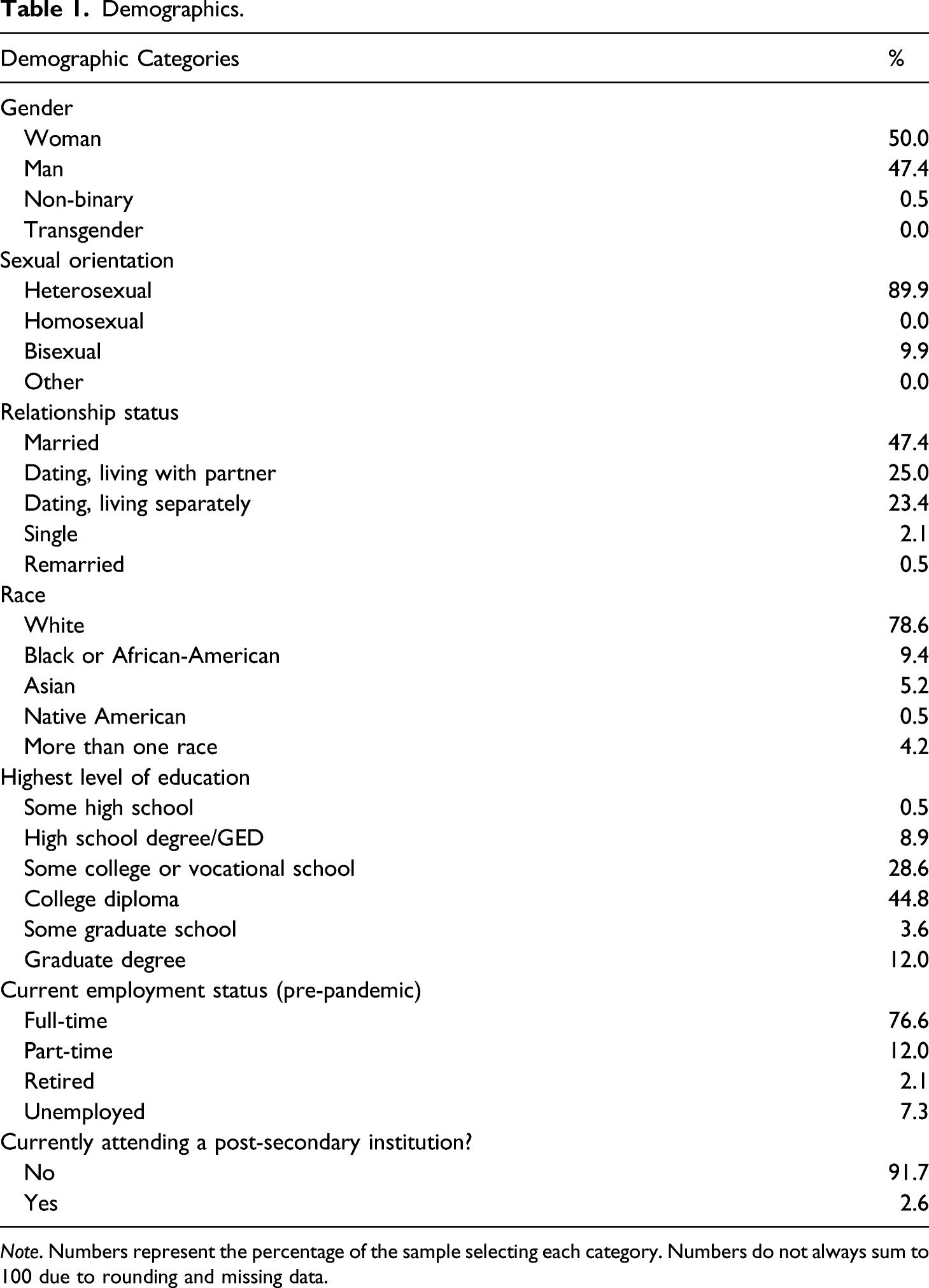
Note. Numbers represent the percentage of the sample selecting each category. Numbers do not always sum to 100 due to rounding and missing data.
Procedure
The study was approved by the Research Ethics Board at Acadia University. Participants from the original study were re-contacted via their MTurk accounts on April 13, 2020 (a Monday) and invited to participate in the four follow-up surveys. The message included an invitation code that allowed interested participants to access the study. The study remained available until the end of the day on Wednesday.
Participants read an informed consent form, provided their MTurk Worker ID to allow data connection across time, and completed the measures described below, along with additional measures reported elsewhere (e.g., Bell & Holmberg, 2021). Participants completed attention checks to help ensure data quality (Yarrish et al., 2019); all participants passed all attention checks. At the end of the study, participants were provided with a debriefing form. The same procedure was then repeated three more times, at 2-week intervals, with the last survey distributed on May 25, 2020.
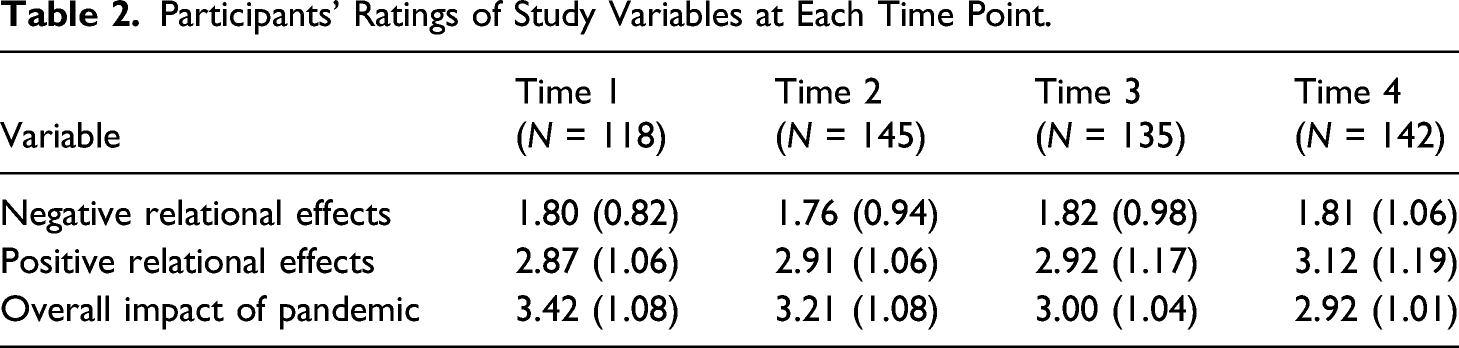
Participants were paid $1.75 US in MTurk credit for the first survey. To encourage retention, participants’ payment increased by $0.25 each timepoint, and those who completed at least 3 of the 4 follow-up timepoints received a $1.00 bonus at the end of the study. Sample size varied by time point: Ns = 118, 145, 135, 142 for Time 1 to T4 (T1 to T4) respectively, with most participants completing either three (22.0%) or four (43.5%) of the timepoints. Sample size for each analysis is provided in the results section.
Measures
Perceived Overall Impact
Participants were asked to rate the overall or global impact of the pandemic on their lives over the previous 2 weeks: “Over the past 2 weeks (i.e., 14 days), to what extent has the current COVID-19 outbreak affected you?”. Responses were provided on a 5-point scale (1 = Not affected me at all; 3 = Somewhat affected me; 5 = Affected me a great deal). This global assessment was asked after participants first responded to ten items asking about more specific impacts of the pandemic on their lives. Details of each specific impact, and their correlations with the global impact measure, are provided in the (Supplemental Materials) 1 .
Perceived Positive and Negative Relational Effects (Closed-Ended)
At each time point, participants completed an 8-item questionnaire designed for the current study. It was prefaced by the question “Over the past 2 weeks (i.e., 14 days), to what extent has the COVID-19 pandemic had the following effects on your relationship with your primary intimate partner (directly or indirectly)?”, followed by four positive and four negative statements about the relationship, mixed together. The positive items were: “It’s brought us closer together”; “It’s made me thankful that I have my partner”; “It’s been a blessing in disguise for our relationship”; and “It’s brought out the best in our relationship.” The four negative items were: “It’s added extra stress/strain to our relationship”; “It’s caused tension between us”; “It’s made our lives more difficult”; “It’s made problems that already existed in our relationship even worse.” Participants rated each item on a 5-point Likert scale, ranging from 1 = Not at all to 5 = Extremely. Internal consistency was strong, with Cronbach’s alphas ranging from .83 to .92 for the Negative subscale, and .83 to .89 for the Positive subscale. The measures showed good consistency across time, with correlations amongst the four timepoints ranging from .66 to .85 for the negative effects, and from .73 to .80 for positive effects.
Perceived Positive and Negative Relational Effects (Open-Ended)
At T4 only, participants responded to two open-ended questions: “Please describe any negative effects the COVID-19 pandemic has had on your relationship with your primary intimate partner,” and “Please describe any positive effects the COVID-19 pandemic has had on your relationship with your primary intimate partner.”
Qualitative Coding and Analysis
A thematic analysis approach was utilized to inform coding and analysis of participants’ responses to the open-ended questions. The approach adopted is most closely akin to the “coding reliability” approach summarized by Braun and Clarke (2021), in which an initial coding frame is developed and then data is coded independently by multiple coders with an eye toward ensuring accurate and reliable coding. Throughout the coding and analysis process, the current researchers attempted to adhere to the general phases of thematic analysis, as outlined by Braun and Clarke (2006).
The first author initiated the coding process by familiarizing herself with the data, which involved reading through participants’ responses to the open-ended questions several times, looking for potential patterns, and writing down initial ideas and observations. Through this process, the first author began to cluster observed patterns into coding categories and developed a preliminary coding frame. The third author then independently followed this same process of familiarizing herself with the data, looking for patterns, and organizing observations into potential coding categories.
The first and third author then met to discuss their initial observations, identifying commonalities and discrepancies in observed patterns. The goal of this initial work was to generate a preliminary coding frame of lower-level codes, such that the codes would be mutually exclusive, and between them would accurately cover all participants’ responses. Initially, the plan was to have two coding frames, one for each question. However, it quickly became clear that many responses contained a mixture of positive and negative elements. Therefore, a single coding frame capturing lower-level codes was developed and applied across both questions, with a planned, a priori division into “Negative Effects” and “Positive Effects.”
Following development of the initial coding frame, all responses were then coded independently by the third author and a trained research assistant who had not been involved in the development of the preliminary coding frame. Inter-rater reliability between the two coders was excellent, with a raw agreement score of 97.4% and a Cohen’s Kappa of .76. By the end of this coding process, a final coding frame of lower-level codes was developed that captured all participant responses. After all data were coded independently, the two coders met to discuss and resolve any coding discrepancies.
Lastly, lower-level codes were clustered into meaningful higher-level themes and subthemes, with the goal of developing a thematic network that fully and meaningfully captured the range of negative and positive effects of the pandemic experienced by participants in their relationships. The first author reviewed the final coding frame, looking for relationships between codes, and organized lower-level codes into overarching themes and subthemes (Braun & Clarke, 2006). These themes, subthemes, and lower-level codes were reviewed, discussed, and refined in consultation with the second author, resulting in a final thematic network used to present and discuss the qualitative findings. The Supplemental Materials show the themes and subthemes, along with all the lower-level codes included within each, and a representative quote for each lower-level code.
Results: Quantitative Data
Descriptive Statistics
Participants’ Ratings of Study Variables at Each Time Point.
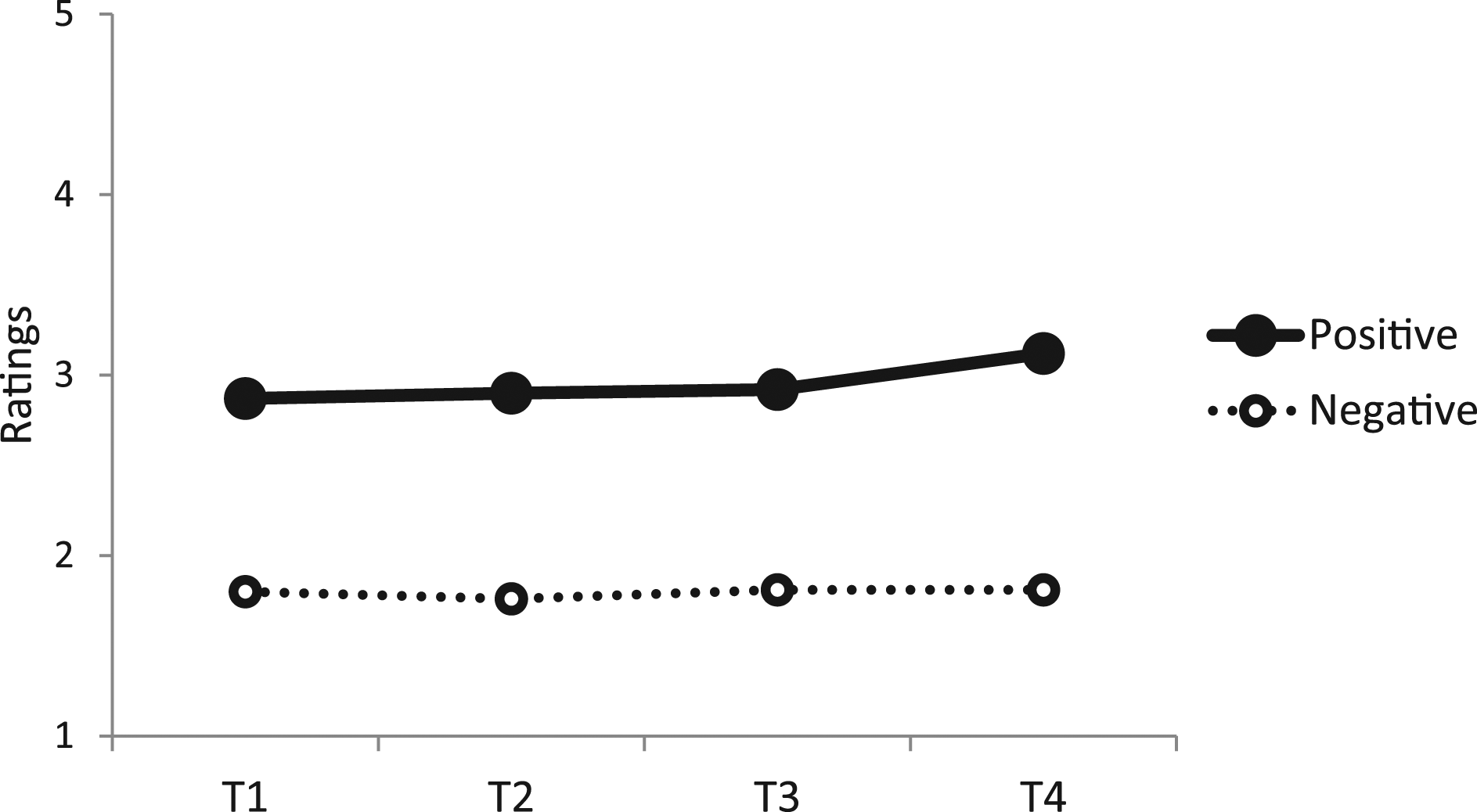
Ratings of negative and positive effects of the pandemic on the relationship, at each time point.
Averaging across timepoints, perceiving a greater overall pandemic impact was significantly associated with perceiving more negative relational effects (r = .39, p < .001), but was not associated with perceiving more (or fewer) positive relational effects (r = −.08, p = .36). Perceived positive and negative relational effects were moderately inversely correlated (r = −.44, p < .001).
Multi-Level Model
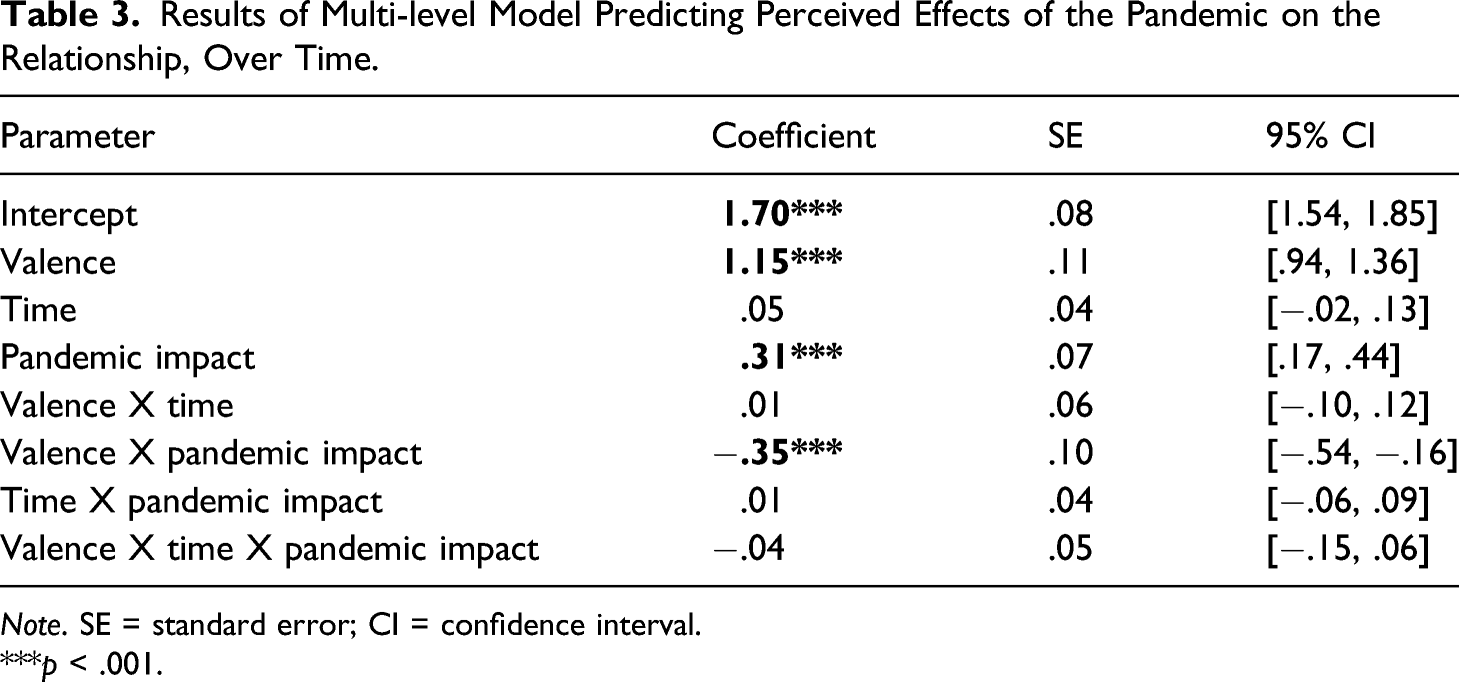
Results of Multi-level Model Predicting Perceived Effects of the Pandemic on the Relationship, Over Time.
Note. SE = standard error; CI = confidence interval.
***p < .001.
The gamma coefficient for the intercept shows the expected value of the dependent variable when all predictor variables are coded 0. Thus, here it shows that the predicted rating for negative relational effects of the pandemic at T1, for participants reporting an average overall impact of the pandemic on their lives, is 1.70 on a 1-5 scale. Coefficients for each predictor variable then indicate how much higher (or lower) than that value the dependent variable is expected to be, for each one-unit increase in that predictor variable.
There was a significant main effect of Valence (see Table 3). Addressing RQ1, ratings of perceived positive relational effects of the pandemic were substantially higher (i.e., 1.15 points, on average) than perceived negative relational effects. Addressing RQ2 and 3, there were no significant effects involving Timepoint, indicating that perceived positive and negative relational effects were quite stable across time; furthermore, patterns of change in the relationship ratings across time were not moderated by the overall impact ratings. However, there was a significant main effect of Overall Impact, further moderated by a significant interaction between Valence and Overall Impact. This interaction is graphed in Figure 2, at one standard deviation above and below the mean for Overall Impact, and with Timepoint set to an average level. Ratings of negative and positive effects of the pandemic on the relationship, at low versus high levels of overall pandemic impact (i.e., one standard deviation below and above the mean).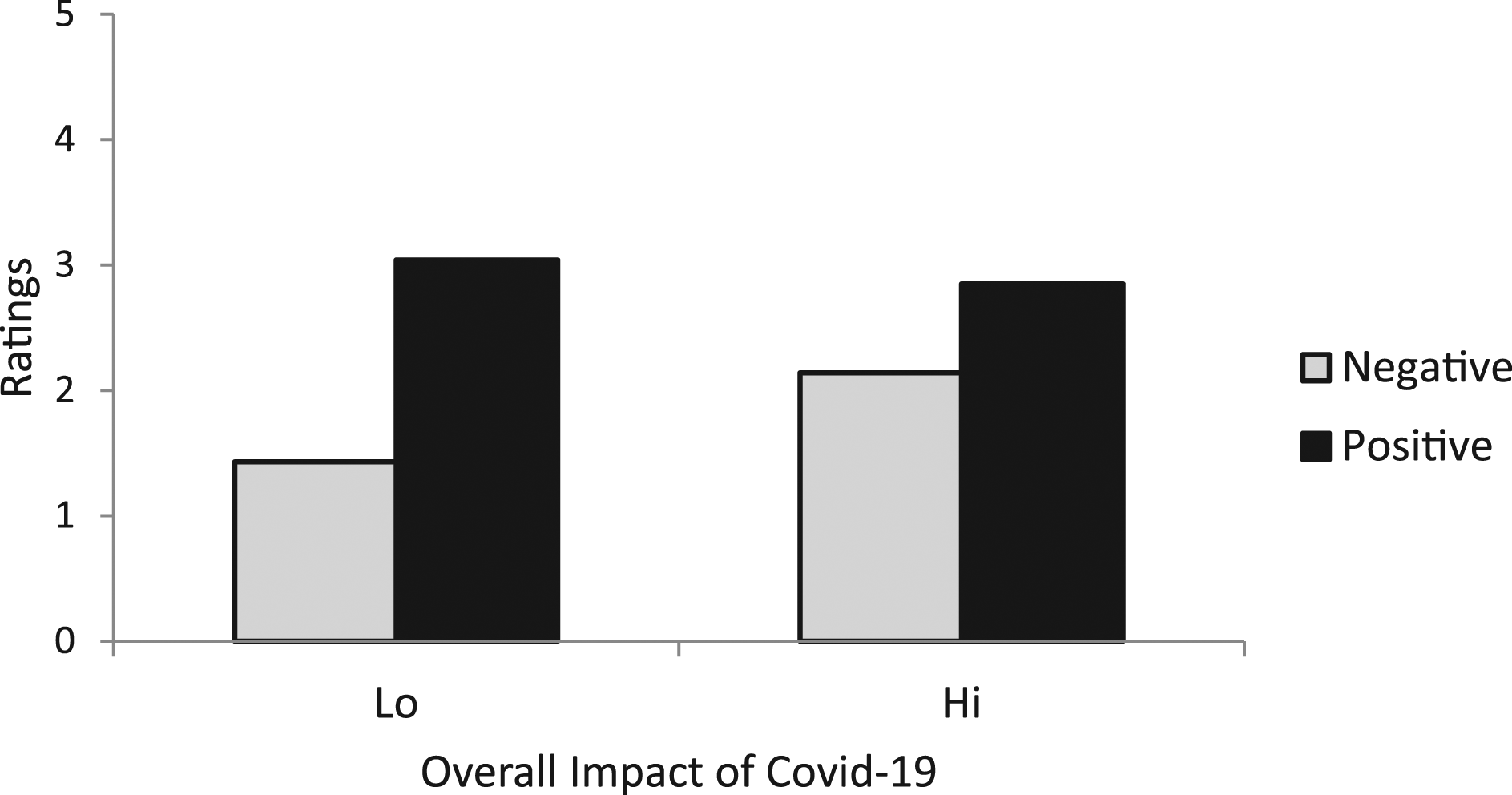
As can be seen in Figure 2, partially supporting H1, overall pandemic impact moderated the effects of the pandemic on the relationship. Perceived positive relational effects of the pandemic were higher than perceived negative relational effects for both groups, but the size of that difference was slightly attenuated for those reporting high levels of overall pandemic impact (b = 1.10, p < .001), compared to those reporting low levels of overall pandemic impact (b = 1.20, p < .001), as expected. Assessing the simple effects in the other direction, as overall perceived pandemic impact increased from low to high, perceived negative relational effects showed a significant increase (b = .31, p < .001), but perceived positive relational effects did not change (b = −.04, p = .53).
Results: Qualitative Data
Themes and Subthemes, with Percentages and Representative Quotes.
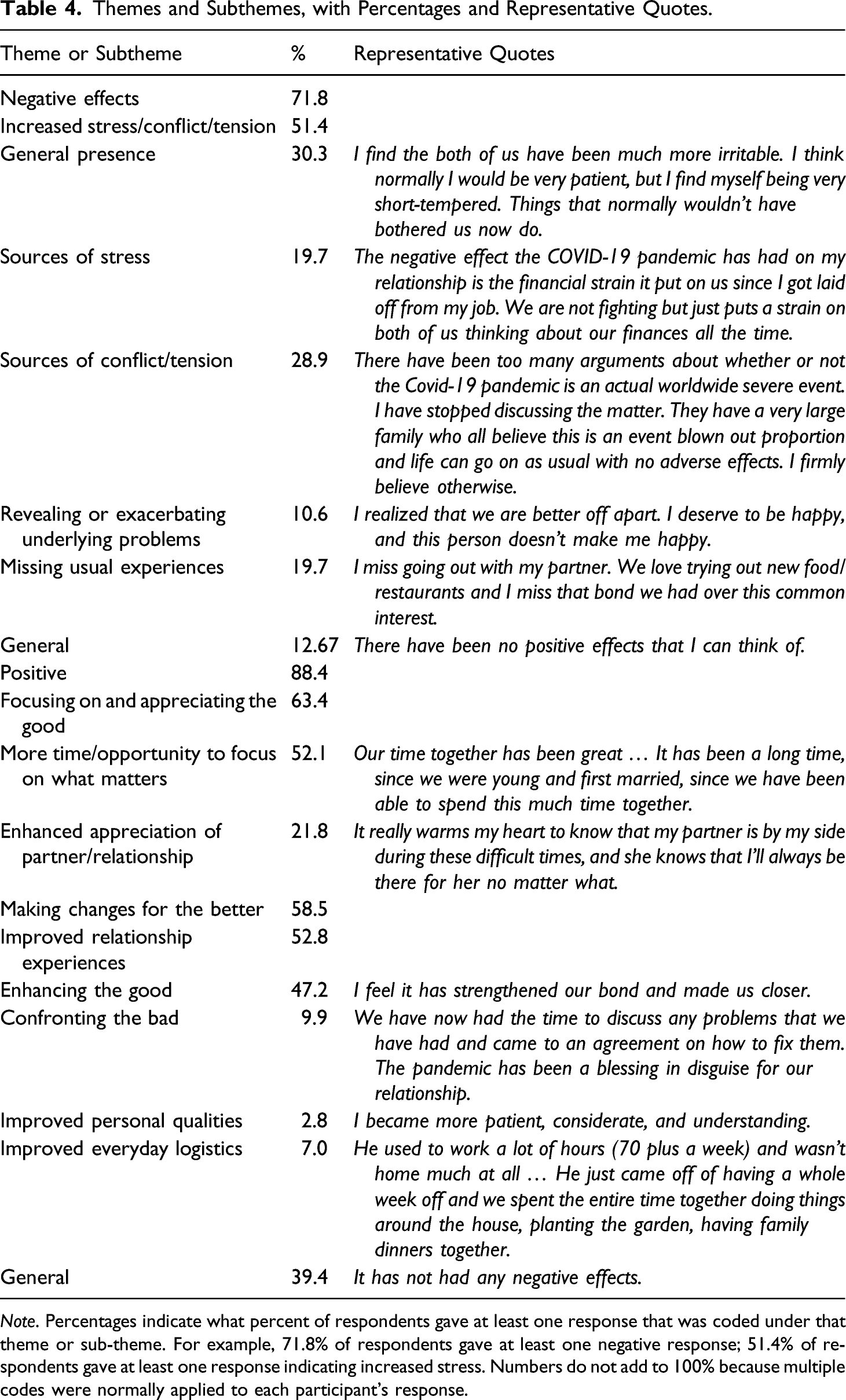
Note. Percentages indicate what percent of respondents gave at least one response that was coded under that theme or sub-theme. For example, 71.8% of respondents gave at least one negative response; 51.4% of respondents gave at least one response indicating increased stress. Numbers do not add to 100% because multiple codes were normally applied to each participant’s response.
Negative Effects
Increased Stress/Conflict/Tension
Within the broad theme of negative effects, the most commonly noted issue was that the pandemic had brought with it increased levels of stress, which was spilling over into increased levels of tension or conflict between the relationship partners. Some participants spoke of the stress they had been experiencing in general terms (“We get on each other’s nerves sometimes and get annoyed or frustrated with our pet peeves”), whereas others identified quite specific sources of stress brought on by the pandemic, including financial stress (unemployment, reduced hours or pay), health-related concerns of self and loved ones, and parenting challenges.
All of these issues not only contributed to increased stress at the individual level, but also to increased tension or conflict between partners at the dyadic level. Participants mentioned being on edge and taking it out on their partner (“I sometimes get stressed about the pandemic and take the stress out on my partner”), and also feeling like they needed more alone time away from each other (“It's just no break at all to do things we enjoy separately”). Intruding on each other’s efforts to work from home caused conflict, as did taking unequal responsibility for household tasks. The pandemic itself was also a source of conflict or tension for some couples, if they disagreed about how to handle pandemic-related activities like shopping or sanitizing, or if they were having different pandemic experiences (“I get a bit jealous that he can go out more than I can”). Some couples also experienced disagreements about the seriousness of the pandemic (“We do not completely agree with regard to the seriousness of the situation and the steps that are needed”), or about pandemic-related political issues.
Missing Usual Experiences
The next most commonly-mentioned negative theme was that the pandemic was causing participants to miss out on their usual experiences. Confinement was causing increased boredom (“It’s like there’s no break from household monotony”). Participants also mentioned specific activities they missed, like going out together or visiting with friends and family. Those who were separated during the pandemic missed their time together (“We haven’t seen each other in person in quite a while”).
Revealing or Exacerbating Underlying Problems.
Finally, a few respondents mentioned that the pandemic had revealed or (more often) amplified pre-pandemic problems, including negative aspects of partner’s personality or behavior (“more volatility and less stable mental health”) or relational problems (“It has emphasized communication problems…”). On a more mundane note, confinement made it more challenging for participants to follow their usual health habits, like healthy eating and exercise. The pandemic led some participants to reassess the viability of the relationship (“I can’t wait to leave her”). Though the pandemic negatively impacted many participants’ relationships in notable ways, numerous positive effects of the pandemic were also identified.
Positive Effects
Focusing On and Appreciating the Good
Above all, participants emphasized how the pandemic afforded them the time and opportunity to focus on the things they realized really mattered to them, including increased focus on home life, more time to spend together, as a couple or as a family (“Our time together has been great and I feel closer to them than I have in years”), and more time to spend on themselves. This increased time together encouraged participants to appreciate all the good things they had in their partner and the relationship, such as their partner’s presence or support during this challenging time (“I think we have grown to value each other more”).
Making Changes for the Better
In addition to appreciating the good things they already had, many participants commented that the pandemic had actually led to positive changes, such as improvements in the relationship (e.g., improved communication, sex life, bonding). Some couples found new hobbies to work on together (“We are having a fun time doing a garden at home together”). Even those separated during the lockdown period saw some advantages, such as being able to focus on time to themselves.
The pandemic also encouraged some couples to confront and work on problematic issues in their relationship. For example, some couples found they had to re-evaluate existing behaviors or plans (“It’s made us both think about our future and start considering making important decisions soon”). Others reported that having to work through challenging issues together helped them (“Obstacles make us stronger”).
In addition to these more global relationship improvements, some participants felt the pandemic led to practical improvements in the everyday logistics of their lives together. Some enjoyed working from home. Others reported being able to better care for their partner’s well-being. Some found more time at home allowed them to support each other better with household and childcare responsibilities (“Yard work is getting done more often and more quickly”). Lastly, a few participants reported that the pandemic had led to improvements at the individual level (“I became more patient”).
Discussion
Our results, both quantitative and qualitative, show consistent and somewhat surprising results. Although there were both perceived positive and negative aspects of couples’ relational experiences during the pandemic, the positive clearly outweighed the negative, and did so consistently over time.
In part, these results may have emerged from our methodology. Taking a cue from positive psychology, we did not focus solely on deficits. Had we done so, our surprising findings may not have emerged. After all, if like Luetke et al. (2020) we had focused our questions solely on conflict, we would have likely seen and duly reported an increase in such negative aspects of the relationship due to the pandemic. If we had asked simply for an overall assessment of the relationship, for example, relationship satisfaction, the positive and negative effects might have largely balanced out in participants’ minds, leaving an impression of overall stability (see Williamson, 2020). Previous relationships research has not fully considered that the pandemic, like other challenging situations, may actually have had some advantages, at least for some individuals. Early theoretical work on the pandemic (e.g., Pietromonaco & Overall, 2020; Stanley & Markman, 2020) suggested that some couples with strong coping resources might be able to cope effectively with its challenges; still, the work tended to be framed more in terms of buffering the negative, rather than facilitating positive adaptations. More research should assess both positive and negative effects of difficult circumstances, to reveal benefits that might be obscured when there is only a focus on deficits.
Our work contained a valuable longitudinal component, allowing us to assess whether perceived effects of the pandemic on relationships remained stable or shifted over time. Here too our results were somewhat surprising, revealing stability in effects over time, rather than adaptation or deterioration. Looking back from the perspective of a year and half into the pandemic, those 2 months in the first wave may seem like a long-ago, brief, and relatively benign period, making readers think that the positivity and stability are not surprising at all. However, readers should also try to recall the uncertainty and strangeness of those early days: panic-buying in the stores; doom-scrolling to horrific stories out of Italy and New York and not knowing when it would hit your area; adjusting to an entirely new reality and rhythm in lockdown. That first wave of lockdowns was also, in many areas, the most restrictive period of the whole pandemic, before public health officials began to determine what aspects of opening could be safe, and before companies developed alternatives for serving customers effectively at a distance. In terms of case counts, the first wave was relatively mild in retrospect, but it was undoubtedly still a difficult and stressful period, with the potential to put great strain on relationships. In that light, our participants’ resilience and even growth is inspiring.
Although our participants’ experiences were on balance more positive than negative, our analysis also indicated that the perceived negative effects of the pandemic were slightly stronger for those experiencing more substantial effects of the pandemic overall (according to analyses in our Supplementary Material, primarily financial stressors). This finding of external stress spilling over into enhanced relationship difficulties is in line with both theory (Pietromonaco & Overall, 2020) and some early empirical research about the pandemic (Balzarini et al., 2020; Turliuc & Candel, 2021), as well as with existing empirical work in other areas (e.g., Neff & Karney, 2009).
Still, the effects of greater external stress were surprisingly mild. For example, even those high in overall pandemic impact still reported more positive than negative effects, on average. Also, the reported positive effects were just as strong for those reporting higher, rather than lower, overall impact. Other researchers have similarly found relatively muted effects of pandemic stressors on relationship outcomes. Williamson (2020) found that neither an index of specific pandemic stressors experienced nor a more subjective assessment of the overall stress experienced due to the pandemic moderated participants’ relationship satisfaction scores over time. Turliuc and Candel (2021) found that perceived external stressors due to the pandemic predicted marital satisfaction over time only for women high in socioeconomic status, not for any other group.
Of course, the muted nature of these effects should not be overstated. Samples with the time and opportunity to respond to online surveys likely do not represent the full range of pandemic stresses experienced; undoubtedly pandemic stress did have more negative relational effects for some individuals, as increased calls to domestic violence hotlines attest (Usher et al., 2020). Still, the perceived effects of the pandemic on relationships, in our study and in others, seem to be less negative and more positive than one would anticipate.
Our qualitative work helps shed light on why that might be. Hearing participants’ own voices allows a fuller, more nuanced picture of their experiences than can be obtained by examining average responses on a scale (Hesse-Biber, 2010). First, it is worth noting that our qualitative findings share similarities with other preliminary qualitative work on the pandemic. (Günther-Bel et al., 2020) asked respondents in Spain during the first lockdown period what changes they had seen in their couple or family dynamics since the start of the pandemic. Like us, these researchers reported a mix of positive and negative themes emerging, with the positive outweighing the negative; their specific themes showed substantial overlap with our codes. Evans et al. (2020) asked parents of young children in Australia during the first lockdown how COVID-19 had affected their family life. Their responses, although including some focus on romantic relationships, focused more on parent-child interactions. Their respondents too saw a mixture of good and bad, although in this study the negative themes outweighed the positive ones. Again, the specific themes were similar to ours. A consistent picture is emerging that the pandemic, although having some negative effects on relationships, was also perceived to have some clear positive effects.
What was the nature of these effects? On the negative side, first, the pandemic added a variety of stressors to couples’ lives. Some of the specific sources of stress or conflict mentioned by respondents have been clearly identified in the pre-pandemic literature as likely to trigger or exacerbate relational tensions: increased financial strain (Falconier & Jackson, 2020), stresses from one partner doing difficult or dangerous work (Roberts & Levenson, 2001), parenting challenges (Khajehei, 2016), unequal division of labor (Grote & Clark, 2001), and stresses from loved ones’ illnesses (Katz et al., 2018).
Some of these stresses arose because the pandemic suddenly threw everyone into situations such as managing home-schooling of children or negotiating working from home that had previously affected only a small and generally self-selected group. These unplanned life changes clearly had mixed effects. Household labor increased during the pandemic, especially for women; however, men also increased their household contributions, resulting in a more equal division of household labor during the pandemic overall (Carlson et al., 2020). Working from home, especially with young children underfoot, certainly had its challenges, yet it may also potentially have many benefits, such as reducing commute time and adding more flexibility to people’s workday (The Economist, 2020). All of these pros and cons were mentioned by participants. The pandemic allowed a glimpse of how certain societal changes might have negative, but also positive, aspects. Understanding both will be an important task if we are to move into the post-pandemic world in a way that optimizes well-being.
Other stressors arose that were very specific to the pandemic, such as tensions surrounding who would engage in pandemic-related activities, and managing differences of opinion regarding the severity of the pandemic or the most appropriate response to it. Polarization around issues such as mask-wearing and vaccine hesitancy increased after the first wave (Salali & Uysal, 2020); it would be interesting to know whether these pandemic-specific tensions also increased over time.
In addition to new stresses, the pandemic also revealed or exacerbated existing problems, at either the individual or the dyadic level. A clear theme has emerged that those entering the pandemic with pre-existing vulnerabilities fared the worse (Wiwad et al., 2021). For example, Williamson (2020) found that those with poorer relationship coping skills and more relationship conflict pre-pandemic showed a decline in relationship satisfaction over the first wave. Balzarini et al. (2020) found that the association between pandemic-related stress and poorer relational outcomes was mitigated when participants perceived their partner as being responsive to their needs. If relationship researchers and therapists are able to help couples develop solid coping and support skills, it will undoubtedly equip them to better face any challenge the world might throw at them, apparently including a worldwide pandemic.
In addition to adding negatives to the relationship, the pandemic also removed some positive aspects. Participants reported missing engaging in joint activities outside the home, or discovering new things together. Such novel activities have been shown to be important for maintaining relational interest and satisfaction over time (Harasymchuk et al., 2020). Participants also reported missing connections with their extended social network. Again, past research suggests that couple members’ perceptions of available network support tend to be associated with better functioning (Kurdek, 1989).
The more surprising and encouraging aspect of our qualitative findings, though, is that similar to other researchers we are finding clear reports of positive effects of the pandemic on relationships. Some positives were more prosaic. Some respondents saw the pandemic as improving the logistics of their everyday life, for example, providing more time and opportunity for fathers to get involved in childcare or household tasks.
Most of the perceived benefits, however, seemed to come from a shift in focus and priorities. The most salient aspect when reading the positive responses was just how deeply participants appreciated the gift of more time together, simply to focus on themselves, each other, and their children if present. This lesson is one well worth remembering long after the pandemic is over. Overscheduling and over-commitment to a wide variety of outside obligations can be exhausting; partners need to remember to take quiet time, just to spend with each other.
The pandemic also encouraged participants to take stock and remember to be appreciative of their partner and their relationship. Gratitude has been shown to be an important predictor of well-being (Gordon et al., 2012). Positive reappraisal research is also relevant here (Helgeson et al., 2006); those who can take what could be a very negative event and see the upsides show benefits. It is heartening to see our respondents applying some of the lessons of positive psychology (Wood et al., 2010), with a focus on treasuring the present and being grateful for what they have, rather than endlessly pursuing assorted goals and pursuits that on further reflection may not represent what is truly important in their lives.
Furthermore, respondents were not only appreciating the good things they already had; some were also seizing the opportunity to spend the gift of time they had received on nurturing and improving their relationship. This effort will likely pay off, as research suggests ongoing relationship maintenance is important for maintaining long-term well-being (Levi et al., 2012). Some of the specific improvements they mentioned, such as discussing relational issues (Ogolsky & Bowers, 2012) and pursuing new interests together (Harasymchuk et al., 2020) have been associated with improved relationship well-being in past research.
On balance, our respondents’ answers suggested the pandemic truly has been a blessing in disguise for many relationships. It should not take a global catastrophe to encourage people to set aside time for each other, to remember to appreciate their partner, and to put effort into maintaining and improving their relationship. We echo Stanley and Markman’s (2020) call for both couple members and the relationship counsellors who work with them to use the pandemic as a springboard to encourage relationship appreciation and development.
Our study has both strengths and limitations. Our sample is relatively modest in size and consisted of volunteers, so may not be representative. Still, the sample was fairly similar to the US population in terms of age, gender, and race (US Census Bureau, 2019), and included respondents from almost all regions of the US. It was not initially recruited for a study on COVID-19, so respondents were unlikely to have a special interest in the topic. These strengths suggest our findings might be generalizable.
On the other hand, those who do not like to reflect on their relationship experiences may not have chosen to participate in the study and may therefore be under-represented in our sample. It has also been documented that marginalized and vulnerable groups (e.g., lower SES, racialized, LGBTQ+ individuals, older individuals, those with chronic health conditions or disabilities) have been hit harder by the pandemic than others (American Medical Association, 2020; American Psychological Association, 2020). Our participants seemed to be having relatively positive pandemic experiences, at least in the first wave. Those experiences, though, certainly cannot be assumed to reflect everyone’s, and complementary research on the experiences of members of more diverse groups is important to pursue.
Both the quantitative and qualitative measures asked for participants’ self-reports of the effects of the pandemic, which may potentially be biased by social desirability or lack of sufficient insight. Still, most measures of relationship functioning similarly rely on self-reports, and subjective perceptions are often more important when predicting outcomes than “objective” facts. Furthermore, the thoughtful open-ended responses certainly suggested participants were reflective and were taking the questions seriously. It would have been helpful to get both partners’ perceptions of the effects of the pandemic, for proper dyadic analysis. Hopefully, other researchers are collecting such data. Additional longitudinal analyses such as ours would also be valuable, as past research evidence appears mixed as to the precise trajectory of relationship well-being when couples undergo a long-term stressor (e.g., Katz et al., 2018; Kim et al., 2018).
Even if past longitudinal research findings were fully consistent, the results might not generalize to the pandemic, which was unprecedented in so many ways. It was truly global in its impact, yet it hit different areas with full force at different times, and continues to do so. The effects of the pandemic may therefore wax and wane, rather than reflecting a fairly steady upward trajectory, as might be expected after recovery from a natural disaster. It is a complex situation, and lessons learned may or may not generalize to other stressors; still, it is a unique opportunity to understand how a wide variety of different couples respond to a novel and complex external stressor. The good news is that, at least in the first wave, despite some acknowledged stressors, our respondents’ relationships mostly appeared to be doing quite well. Let us take a moment to appreciate that piece of good news, just as our respondents seemed to be taking a moment to appreciate each other.
Supplemental Material
sj-pdf-1-spr-10.1177_02654075211050939 – Supplemental Material for Now for the Good News: Self-Perceived Positive Effects of the First Pandemic Wave on Romantic Relationships Outweigh the Negative
Supplemental Material, sj-pdf-1-spr-10.1177_02654075211050939 for Now for the Good News: Self-Perceived Positive Effects of the First Pandemic Wave on Romantic Relationships Outweigh the Negative by Diane Holmberg, Kathryn M. Bell and Kim Cadman in Journal of Social and Personal Relationships
Footnotes
Declaration of Conflicting Interests
The author(s) declared no potential conflicts of interest with respect to the research, authorship, and/or publication of this article.
Funding
The author(s) disclosed receipt of the following financial support for the research, authorship, and/or publication of this article: This study was funded by a COVID-19 Social Science and Humanities Research Council Institutional Grant through Acadia University.
Author Note
A preliminary version of this work was presented at the Canadian Psychological Association conference in 2020.
Open research statement
As part of IARR’s encouragement of open research practices, the authors have provided the following information: This research was not pre-registered. The data used in the research cannot be publicly shared but are available upon request. The data can be obtained by emailing:  or by emailing:
Supplemental material
Supplemental material for this article is available online.
Notes
References
Supplementary Material
Please find the following supplemental material available below.
For Open Access articles published under a Creative Commons License, all supplemental material carries the same license as the article it is associated with.
For non-Open Access articles published, all supplemental material carries a non-exclusive license, and permission requests for re-use of supplemental material or any part of supplemental material shall be sent directly to the copyright owner as specified in the copyright notice associated with the article.
