



Abstract
Due to the COVID-19 pandemic, many couples are staying at home together for an extended period. This is likely to impact couples as they navigate their responsibilities while maintaining a healthy relationship during uncertain times. We conducted qualitative research to investigate participants’ perception on how relationships changed considering COVID-19 and social distancing measures. Data were collected through open-ended surveys (n = 200) which were completed weekly for 5 weeks and by semi-structured interviews (n = 48). Overall, 28.6% of relationships had gotten better, 28.6% worse, 29.9% stayed the same, and 8.0% were mixed. Both methods highlighted similar themes (communication, space, togetherness, sharing responsibilities, quality time, and support networks) including 15 sub-themes in the interviews. The study provides a unique insight into the impact of COVID-19 on relationships and provides techniques that have been identified by couples to increase relationship satisfaction for their own and others’ relationships.
The COVID-19 pandemic has had a devastating impact across the world with many countries implementing lockdown and social distancing measures. Consequently, many couples were at home together in isolation and faced working from home while balancing childcare and household responsibilities. The pandemic has had serious implications and potentially devastating impacts on relationships, including increased incidences of domestic violence and a rise in divorce rates (Deese, 2020). Even without these extreme outcomes, due to the widespread disruptions in daily lives caused by the pandemic, uncertainty and stress are likely to be heightened and have an impact on romantic relationships. This may bring some people together, whereas for others the stress and uncertainty may cause conflict and distance. To increase our understanding of the impact of the pandemic on relationships, the present qualitative study aimed to investigate how relationships had been affected in the first 5 weeks of the introduction of lockdown measures across several countries.
It is likely that some couples will experience worse effects of the pandemic on their relationship, whereas others may be less affected or even experience benefits. A recent guiding theoretical framework for the pandemic proposes that stress will increase harmful dyadic processes (e.g., hostility and withdrawal; Pietromonaco & Overall, 2020). Dyadic processes refer to strategies that partners use to communicate and provide support for one another (Pietromonaco & Overall, 2020). The framework suggests that couples entering the pandemic with few external resources, pre-existing vulnerabilities (e.g., unemployment and poor emotional health), and poorer dyadic processes may be particularly likely to experience declines in relationship quality and stability. In contrast, couples entering the pandemic with ample resources, enduring strengths, and better communication and support strategies are the most likely to maintain their high relationship quality and realize potential for relationship growth. The framework identified key factors essential to mitigating the harmful effects of chronic stress and increase recovery, including effective communication, responsiveness, and addressing pre-existing vulnerabilities (Pietromonaco & Overall, 2020).
Previous research has shown that external stressors can negatively impact relationships (Falconier & Jackson, 2020). For example, research showed that stressful experiences were associated with a deterioration of marital quality over time, leading to individuals having more negative perceptions and attributions of both their partner (Neff & Karney, 2004) and their relationships (Buck & Neff, 2012). Research has also demonstrated that stress can predict poor communication patterns (Williamson et al., 2013), more negative and divisive behaviors (Bolger et al., 1989; Buck & Neff, 2012), and fewer quality time activities (Hilpert et al., 2018; Milek et al., 2017).
Several studies have assessed the effect of disasters on relationships. These results have often been contradictory with some studies showing a negative average impact of disaster on relationships whereas others find positive outcomes. For example, one study found that up to 28% of women were abandoned by their partner during the time they suffered with Ebola; many couples who stayed together reported negative outcomes, such as decreased sex (Godwin, 2018). In contrast, during the SARS epidemic, couples generally wanted to be closer and their relationships got stronger and more committed (Chan et al., 2016). Throughout natural disasters, it has been found that marriage rates (Deryugina et al., 2018), divorce rates, and birth rates all increased in the following year (Cohan & Cole, 2002). However, divorce rates decreased following both 9/11 (Cohan et al., 2009) and the Oklahoma City bombing (Nakonezny et al., 2004). Trauma-related stress can undermine relationship processes and quality or enhance relationship processes via post-traumatic growth (Marshall & Kuijer, 2017). Most of these studies have been quantitative and thus only examined the average impact, rather than providing a more nuanced understanding into the myriad ways in which relationships may be affected by disasters which could be achieved by qualitative research.
A small number of recent studies have investigated the effect of COVID-19 on romantic relationships with the majority finding a negative impact on relationships overall (Balzarini et al., 2020; Biddle et al., 2020; Deese, 2020; Li et al., 2020; Luetke et al., 2020). Luetke et al. (2020) found that 34% of couples had experienced some degree of conflict with their partner due to the pandemic. Research has found an association between a high number of COVID-related stressors and decreased relationship satisfaction, decreased relationship commitment, and greater conflict within relationships (Balzarini et al., 2020).
However, Balzarini et al. (2020) also found that perceived partner responsiveness could mitigate or completely buffer these harmful effects on relationship satisfaction. Another study found that over half of participants felt that there had been no change in their relationship, with around one-quarter stating that their relationship grew stronger and only one-quarter stating that their relationship got worse during the pandemic, often due to financial changes (Biddle et al., 2020). Furthermore, large-scale stressors can enhance partners’ resilience to stress. Individuals are more likely to attribute causality to these stressors, rather than their partner (Clavél et al., 2017; Diamond & Hicks, 2012; Williamson, 2020). During the COVID-19 pandemic, researchers found that partners were more forgiving and less likely to blame their partner for negative behavior which meant that partners were more satisfied in their relationship (Williamson, 2020). The findings suggest that there may be some positive effects of the pandemic on relationships.
The present study aimed to understand how relationships had been affected during the first 5 weeks of many countries’ lockdowns. While a small number of studies have examined the effect of the pandemic on relationships, there are no studies to date that have addressed this impact qualitatively. As described above, previous research has found that some couples do better while others do worse. Qualitative research allows for a detailed understanding of the positive and negative impacts of the pandemic on participant’s relationships and gained explanations of how a relationship could simultaneously be described as both positive and negative. Importantly, to understand how relationships may have been affected by the lockdown restrictions over time, we followed 200 participants weekly over a 5-week period. The participants responded to open-ended survey questions regarding how their relationship had been affected. We also conducted in-depth qualitative interviews with 48 participants, some of whom were interviewed again a month later. This allowed a unique opportunity to understand what techniques worked for couples and what they would recommend for other couples to get through the pandemic.
Method
Participants
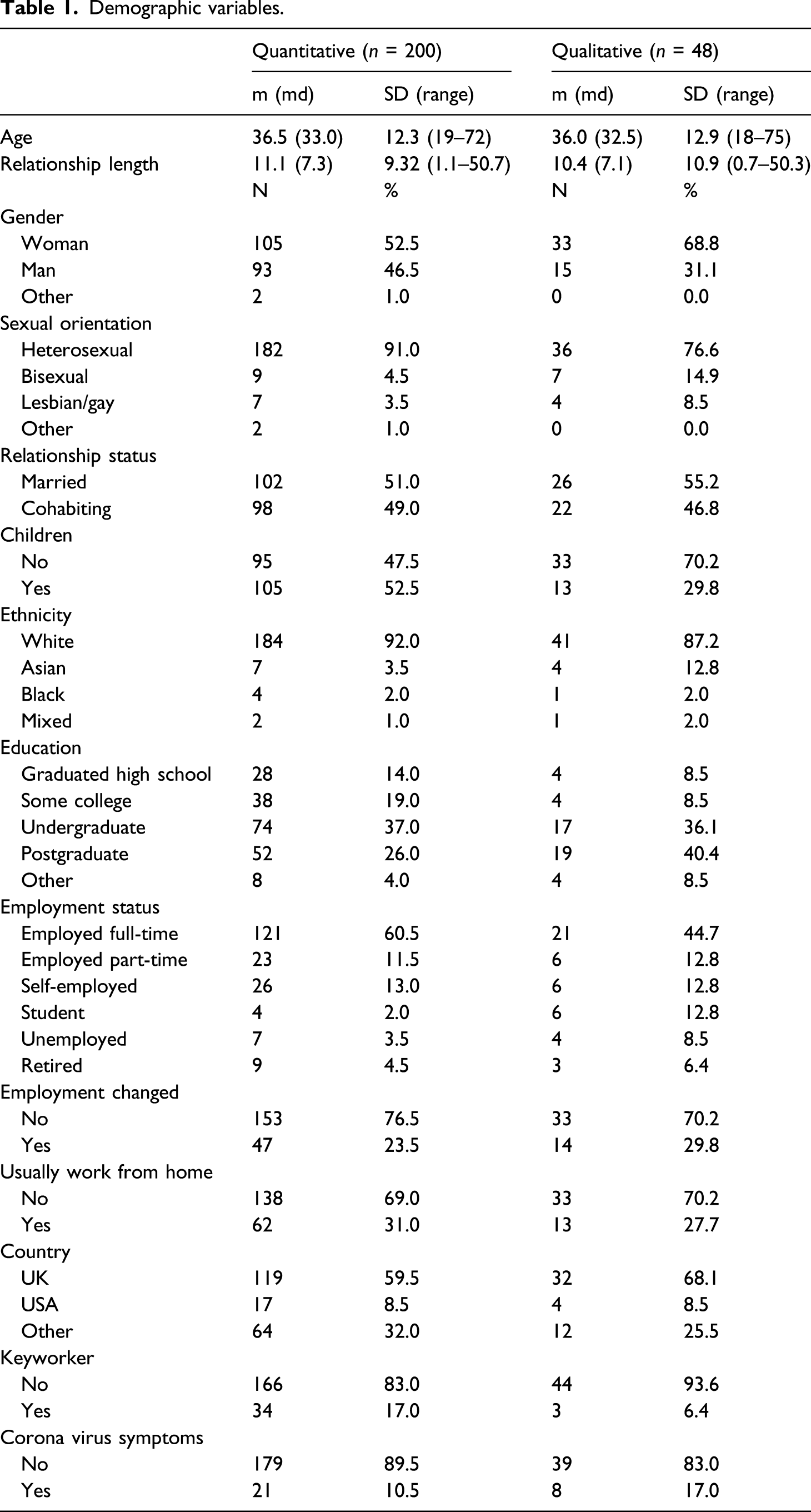
Demographic variables.
Procedure
The data for this study were collected as part of a larger concurrent mixed-methods study. The data, code, and materials for the project can be found here: https://osf.io/qr7cm. Ethical approval was obtained from the authors’ institutional review board. The survey data were collected using Prolific. Social media was used to recruit a convenience sample for the qualitative interviews. To be eligible, participants needed to be at least 18 years of age and had to be living with their romantic partner in any country which had enforced social distancing measures at the time of the baseline survey. The quantitative survey sample was limited to 200 participants due to funding limits. Participants who had been recruited through Prolific received up to £6.70, providing they had completed all follow-ups. Participants who took part in the qualitative interviews were entered into a raffle following the first interview, to win one of two £30 Amazon vouchers, as well as a second raffle following the second interview to win one of two £20 Amazon vouchers.
The baseline survey was completed on March 31, 2020, by all survey participants, shortly after many countries had entered a lockdown. Following this baseline survey, participants then completed one survey per week for another 4 weeks, totaling five weekly timepoints. This timescale was selected due to funding and because it was unclear how long lockdown would last, so this still provided a long enough period for change. All surveys were completed via Qualtrics. The participants answered questions concerning their demographics, relationship, and goals. They were asked an open-ended question: “Briefly describe how your relationship has been affected by the pandemic.” The final sample in the quantitative surveys was 200 with an attrition rate of 8.5% at the end of the 5 weeks.
The semi-structured qualitative interviews were conducted by the first author via Zoom and were audio recorded. Interviews were transcribed using an artificial intelligence transcription service, then edited by research assistants. Participants were asked a range of questions concerning their relationship and their goal pursuit during the pandemic. The following questions were relevant to the present study: “How has your relationship been affected by the pandemic?” and “What would you suggest to other couples to get through the pandemic?” Participants were also prompted to describe anything that had specifically gotten better or worse or more challenging during the pandemic. All first interviews were completed between March 30, 2020, and April 21, 2020. Participants who had been recruited through Prolific were also given the opportunity to complete the qualitative interviews. In total, 48 participants completed the first interview (30 were recruited from social media and 18 via Prolific who participated in both the quantitative and qualitative components of the study). Participants who had completed the first interview within the first 2 weeks of qualitative data collection were then invited to complete a follow-up interview, to develop understanding of how relationships were affected over the course of the pandemic. Of the 23 participants invited to complete the second interview, 19 responded. The initial interviews lasted between 14–49 minutes and second interviews between 7–24 minutes.
Data analysis plan
Reflexive thematic analysis in NVivo 12.0 was used to analyze the 48 qualitative interviews. The authors used an inductive, data-driven approach to coding by allowing for new codes to be created throughout the coding process. The interviews were coded by the second and third authors, who both familiarized themselves with the data before creating the initial codes. These codes were then further refined iteratively by the coders, who jointly agreed on the final codes, alongside the first author. Examples of initial codes included checking in, difficult conversations, empathy and understanding, and appreciation but these were combined into one larger theme titled communication. Any disagreements between these codes were discussed between coders until complete agreement was reached. Repeated filler words, such as “like” and “yeah” were removed to aid readability; “[...]” was used within quotations if unnecessary detail had been removed, or to provide additional required information in the quoted data provided. Participant identifying information was removed.
Content analysis (Hsich & Shannon, 2005) was used to analyze the open-ended questions from quantitative surveys regarding how relationships were affected by the pandemic. Codes were created based on the earlier qualitative interviews, and divided into four main categories: no change, change for the better, change for the worse, and both better and worse changes. These were coded by the same coders as the qualitative interviews. In order to assess inter-rater reliability (weighted Cohen’s Kappa), 30% (n = 299) of the codes were coded by both coders, which indicated almost perfect alignment of main themes (.97 [.95–.99]) and substantial alignment for sub-themes (.86 [.86–.86] (McHugh, 2012). Any discrepancies or queries within coding were discussed to ensure consistency among coders.
Results
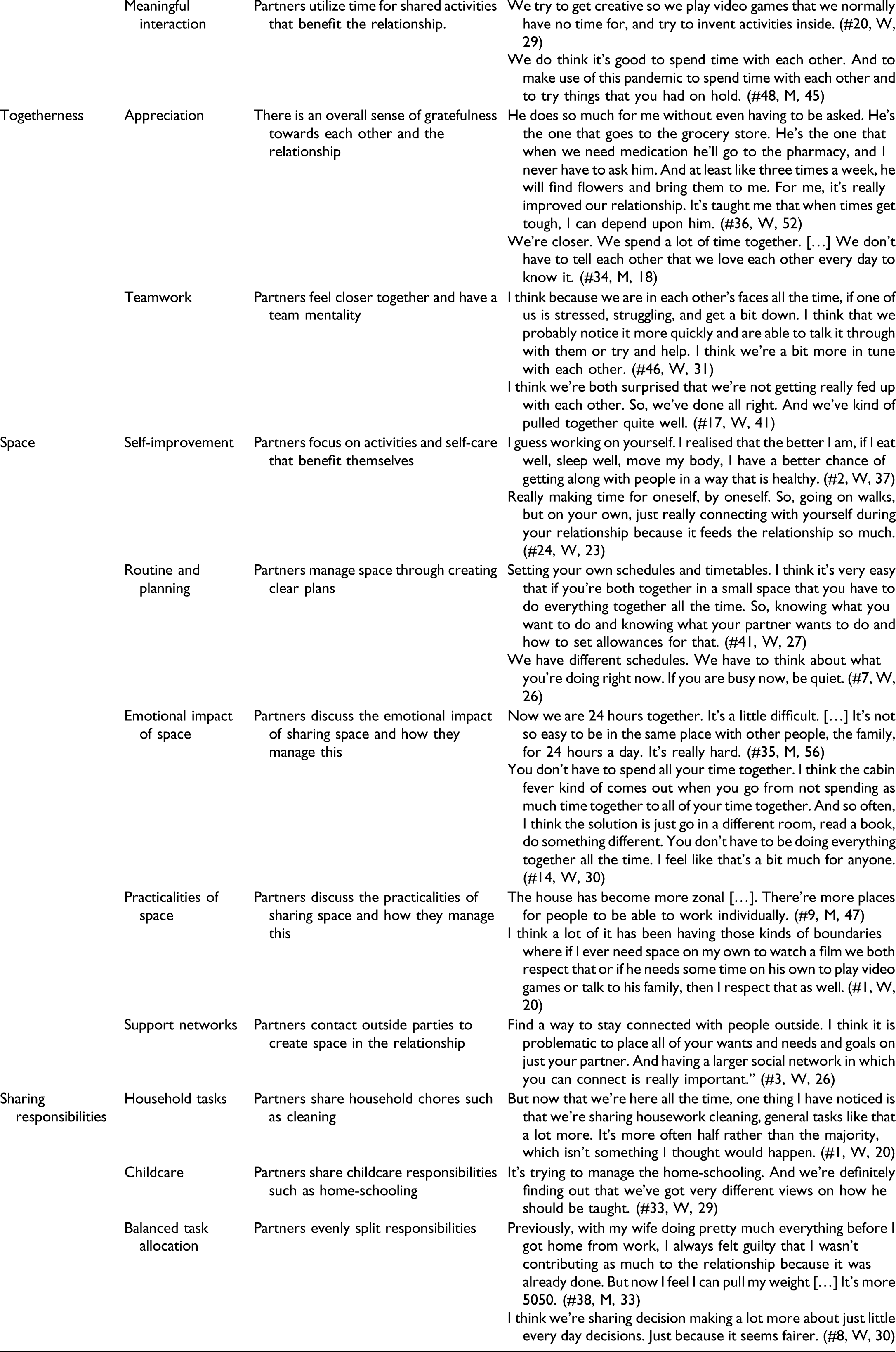
Themes and sub-themes with descriptions and representative quotes for changes in goal adaptation.
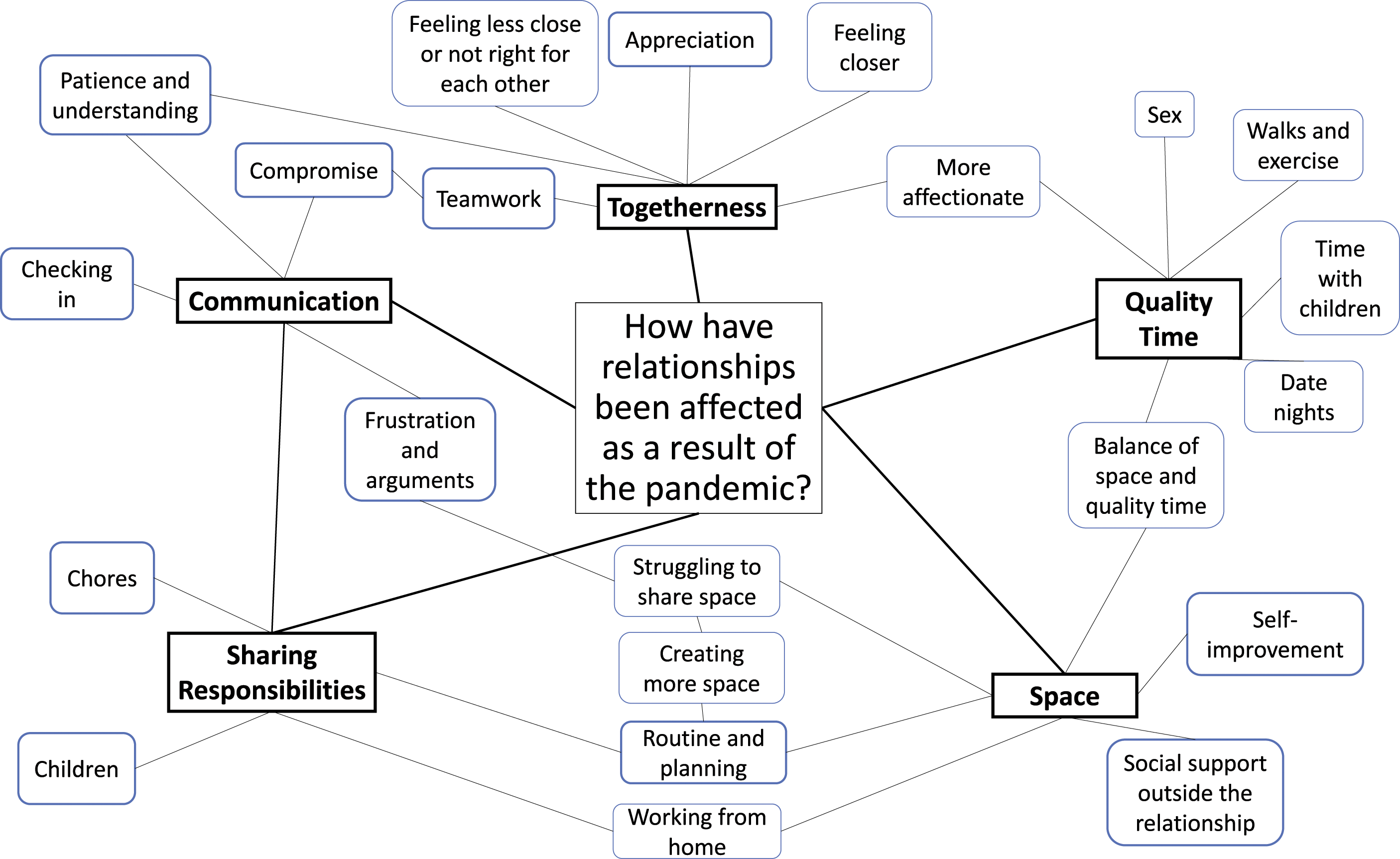
A mind map illustrating how the qualitative themes relate to each other.
Communication
A total of four sub-themes (frustration, patience and understanding, compromise, and checking in) were identified within communication. Of all the themes, most participants noted the pandemic had affected the way in which they communicated with their partner, both positively and negatively. For many participants, communication had been negatively impacted due to a mismanagement of space and time, leading participants to direct an increased amount of frustration and impatience toward one another. For example, one participant noted the pandemic had caused their partner to “become a little more hostile. A little more sniping. A little more sensitivity around comments that are made about stuff” (#23, W, 49). On the other hand, for some participants’ communication had changed positively as they had renewed feelings of patience and understanding for their partner such as being “more tolerant of each other” (#33, W, 29).
This change in feelings, to either increased patience and understanding or frustration, led participants to make behavioral changes. Participants who reported increased frustration additionally noted this led to arguments with their partner. For example, some participants noted a buildup of emotions had created tension and arguments, so partners had “fought a bit more recently” (#37, W, 19). Participants who identified increased patience and understanding noted this change in feelings was then practically implemented in terms of a willingness to compromise when potential disagreements occurred, checking in with how the other was feeling on a more frequent basis, and improving upon their listening skills. For example, one participant mentioned how they felt it was important to “just check ‘how are you feeling today’” (#29, W, 32). Similarly, another noted this increased understanding allowed both partners to engage in honest and open dialogue while also being “mindful of what you’re saying to your partner” (#41, W, 27). Such behavioral changes were also noted in follow-up interviews with one participant stating they are “getting better at listening to each other a bit more” (#15, W, 36). Indeed, many participants within the follow-up interviews identified positive changes in communication as they became more patient and understanding with one another.
Both participants who had positive and/or negative changes suggested that other couples should ensure they have “good open communication” (#31, M, 29) to manage the pandemic. This appeared to be mentioned by participants as they could directly see the impact of their communication on their own relationship satisfaction and hence identified communication to be a key factor other couples should also consider. Therefore, good communication often encompassed participants’ previously mentioned behaviors such as checking in, patience and understanding, and compromise. For example, one participant suggested other couples “stay neutral in the conversation instead of starting to get annoyed with each other” (#31, M, 29). Indeed, some participants who noted positive changes additionally mentioned they felt a sense of closeness and team mentality with their partner and were thus more willing to compromise.
Quality Time
A total of two sub-themes (meaningful interaction and intimacy) were identified within quality time. Most participants noted quality time to have been enhanced by the pandemic. For some participants, this was merely a consequence of sharing the same space; however, for most of these participants it was due to an increase in proactive meaningful interactions. For example, many participants had introduced date nights or shared activities, such as puzzles and board games, to do together. For a few participants, this in turn enhanced partners’ feelings of affection, with some also noting intimacy, such as sex life, had improved. For some participants, this enhanced their relationship as it allowed them to also build upon their emotional closeness and “reconnect” (#11, W, 36).
Within follow-up interviews, participants also identified a positive change in quality time with some noting improvements as partners ensured they dedicated time for each other. For example, one participant stated “Just making sure we find time for each other. There’s a few evenings for example, that are taken up by our projects. It’s then just making sure that there’s evenings in the week that we can make sure that we’ve got that time together” (#11, W, 36). As such, although many couples had work responsibilities, they ensured they could spend quality time with one another. Indeed, many of these participants had ensured not only that they set time aside for one another, but also that they “really just devote [their] attention and focus to each other rather than doing something else” (#16, W, 23).
Participants commonly suggested other couples consider a positive aspect of the pandemic—it allowed partners to spend more time with one another. For many participants, this was mentioned as they had identified increased quality time to be a positive within their own relationship. For example, one participant said, “I think we should just take the time to enjoy also doing things together. Because when this will be over, everything will of course be different” (#20, W, 29). Thus, due to the “positive spin” that participants put upon the pandemic, they further suggested other couples utilize and appreciate this increase in quality time. For example, one participant suggested that couples “make use of this pandemic to spend time with each other and to try things that you had on hold” (#48, M, 45). Thus, participants typically viewed quality time to be a positive of the pandemic both within their own relationship and for other couples to consider.
Space
A total of five sub-themes (emotional impact of space, practicalities of space, routine and planning, self-improvement, and support networks) were identified within space. The positive and negative impact of space on relationships was commonly mentioned by most participants. The emotional and physical impact of being in constant proximity with each other as well as how participants overcame any difficulties were key factors discussed by the participants. For some, limited space had an emotional impact as they reported a stressful home environment in which they were frustrated with their partner, whereas for others the practicalities of managing space were hard to navigate. Many of these participants thus noted that the quality of their communication had decreased as they struggled with “cabin fever” (#14, W, 30) and managed being “in each other’s pockets 24/7 so [they] had arguments that [they] wouldn’t normally have” (#26, M, 40).
For a few participants, however, the main impact of space had been the practicalities of both partners working at home at the same time. For example, one participant stated “he’s got quite a lot of online meetings and our internet’s rubbish. So, if he’s doing that I have to avoid using the internet” (#11, W, 36). Such issues did not always have a direct emotional impact where partners directed anger at one another, but rather caused one partner to be stressed, which indirectly adversely impacted the relationship. For example, one participant noted “it’s harder to define boundaries. I don’t want to be aggressive or rude but I do need to do my work [...]. I feel caught between not wanting to be disrespectful and not wanting to interrupt him and his attempts to kind of facilitate and my need to concentrate on getting my work done. And so that’s a little bit stressful to try to navigate balancing those” (#3, W, 26).
Whether participants initially struggled to manage space or did so with ease, they had commonalities regarding how they then attempted to manage space. For many participants, this was through creating emotional and physical space while respecting each other’s needs and boundaries to ensure both partners were able to manage their work–life balance. For example, some created designated family or workspaces, others ensured they had clear communication, and some implemented clear routine and planning. For example, one participant mentioned, “I think it’s really important to schedule in some time to do something on your own that you enjoy. Because I found that it really helps with us to have that scheduled time in the morning when we’ll just do something for ourselves for our own kind of personal goals and personal interests, and then spend time together later in the day. Because then it still feels like you’ve achieved something personally” (#21, W, 25).
Once partners had successfully created space, a few participants noted it was utilized for self-improvement which would indirectly benefit the relationship as it would allow partners to individually work on themselves. For example, one participant stated, “I guess working on yourself. I realized that the better I am, if I eat well, sleep well, move my body, I have a better chance of getting along with people in a way that is healthy” (#2, W, 37). As such, self-improvement allowed participants to care for and better themselves through pursuing their own interests, activities, or self-care. This was not always initially self-directed, with some participants noting that they were “being encouraging for each other to have new and kind of solo hobbies” (#14, W, 30) to motivate their partner toward individual pursuits.
Many participants who identified they had implemented strategies to better manage space also noted how this had allowed them to create a balance between personal and quality time, which benefited the relationship. This was notably mentioned within the follow-up interviews, with participants identifying clear methods for creating space, such as making the house “more zonal so there’s more places for people to be able to work individually” (#9, M, 47). Some participants noted self-improvement and creating space to be factors they would suggest other couples utilize to manage the pandemic. Many participants also suggested that other couples should consider the role of outside social support in assisting with the impact of close proximity. For example, one participant suggested that other couples “find a way to stay connected with people outside. I think it is problematic to place all of your wants and needs and goals on just your partner. And having a larger social network in which you can connect I think is really important” (#3, W, 26). It was noted that this outside support benefitted the relationship as it allowed for another opinion in times of disagreement, created different discussion points, or simply allowed partners emotional space from the other.
Sharing Responsibilities
A total of three sub-themes (household tasks, childcare, and balanced task allocation) were identified within sharing responsibilities. Due to an increase in availability, as both partners were working from home, many participants noted a change in the household dynamics regarding allocating tasks between each other. For some, there was a clear outline to share tasks such as cooking, shopping, and managing childcare, whereas for others this was unplanned and surprising. This was typically viewed as a positive change since it alleviated stress, especially when pre-pandemic household responsibilities had not been shared or, in the case of home-schooling, had not previously needed to be considered.
Indeed, it was not only participants whose partners had begun taking on more tasks who viewed this to be positive; participants who had taken on more tasks themselves also considered a more balanced sharing of responsibilities to be beneficial to the relationship as it created a team mentality. For example, one participant stated, “I always felt guilty that I wasn’t contributing as much to the relationship [...] But now I feel I can pull my weight [...] It’s more 50/50” (#38, M, 33).
Only a minority of the participants mentioned difficulty in managing how household or childcare tasks were allocated between one another and who would make the final decision if they had different perspectives, which created conflict and a “bit of a power struggle” (#15, W, 36). This difficulty occurred as partners had different views concerning childcare that they had not previously had to contend with, such as home-schooling. However, most participants noted they had been able to agree on other childcare or household responsibilities.
Only a positive change was noted in the follow-up interviews with a few participants identifying a more balanced shift in task allocation. For example, one participant mentioned, “one thing I have noticed is that we’re sharing housework cleaning, general tasks like that a lot more. So, it’s more often half rather than the majority which isn’t something I thought would happen” (#1, W, 20). It must be noted, however, that the sharing of responsibilities was not always an easy task, with one participant mentioning that they had to make a continual “conscious effort to share tasks” (#18, W, 32).
Few participants noted sharing responsibilities to be something other couples should consider. One participant discussed how important it was for partners to communicate about allocating tasks, and if there should be a “change of roles” (#15, W, 36) to what occurred pre-pandemic now that both partners were home to avoid conflict.
Togetherness
An overarching notion of togetherness and an emotional bond was mentioned by some participants. A total of two sub-themes (appreciation and teamwork) were identified within the theme. This theme went beyond a literal sharing of space but instead applied to a somewhat abstract feeling of emotional closeness and appreciation that was directed to either partner or the whole relationship. Some participants mentioned that completing tasks and activities together allowed them to learn more about their partner. For example, one participant noted “One of the things I value most about my partner is how much we can easily spend time together talking or not talking” (#13, M, 31). Indeed, for many participants, this appreciation then created feelings of understanding that they had not experienced pre-pandemic. For some, this understanding occurred as the pandemic positively influenced how they viewed their partner through highlighting strengths in their demeanor during a crisis which was described to be “endearing” (#26, M, 40), whereas for others this enhanced understanding was the result of clearer communication.
For a few participants, this understanding created a somewhat cyclical link between quality time and togetherness. The understanding and appreciation for each other led partners to desire more time together and work together as a team, which in turn further enhanced their feeling of togetherness. Indeed, some participants noted an appreciation and gratefulness toward their partner simply because they were able to, and happy to, spend the pandemic together. For example, one participant mentioned, “we’re both surprised that we’re not getting really fed up with each other [...] We’ve pulled together quite well” (#17, W, 41). Togetherness was thus identified to be a change in emotional closeness that in turn led to behavioral changes such as quality time or teamwork.
At follow-up, some participants reported feeling “a lot closer” (#2, W, 37) or “working better as a team” (#12, W, 26). However, as togetherness is an abstract theme, it is harder for participants to convey. This is further exacerbated by the link with quality time and clear communication, both of which are easier to convey. Thus, togetherness was rarely mentioned.
Content Analysis
The codes found in the qualitative interviews broadly mapped onto the codes from the open-ended survey responses, with little variation across the 5 weeks. Therefore, instead of presenting the responses for each week, we have only included aggregate scores across the 5 weeks (for a breakdown of the results by week, see the supplemental material on the OSF project page). The codes were first divided into four categories based on whether the participants reported change in their relationship or not. The sample of 200 participants provided responses five times over the study period. This resulted in a total of 948 responses that were coded into the main codes, with a minority of the responses not being able to be coded (n = 47, 5.0%). There were a similar number of responses across categories: 28.6% (n = 271) of relationship had gotten better, 28.6% (n = 271) worse, and 29.9% (n = 283) not changed. A minority of the participants reported both positive and negative effects of the pandemic on their relationship (n = 76, 8.0%).
To better understand the ways in which the relationships had changed, we also coded for specific areas of change. A total of 976 responses were initially coded into a total of nine sub-codes. However, due to a small number of responses for some of the codes, these were further condensed into a total of six codes. These included communication (n = 155, 15.9%), quality time (n = 264, 27.0%), sharing responsibilities (n = 46, 4.7%; combined with routine and planning), space (n = 152, 15.6%; combined with self-improvement), support networks (n = 14, 1.4%), and togetherness (n = 151, 15.5%). Within reports of better relationship quality, 18 responses reported improved communication, 108 improved quality time, 16 sharing responsibilities more, 17 mentioned more space, two support networks, and 80 participants felt more togetherness. Within reports of worse relationship quality, 74 responses reported poorer communication, 46 less quality time, eight less sharing responsibilities, 82 less space, two less support networks, and 13 felt less together. We were unable to classify 4.9% of the codes and 13.9% were only coded as no change.
Discussion
The aim of the current research was to understand how romantic relationships had been affected over the first weeks of the pandemic. We found that a similar number of responses reflected that the participants’ relationship had gotten better (28.6%), worse (28.6%), or stayed the same (29.9%). These numbers are similar to those found by Biddle et al. (2020). Some responses (8.0%) also indicated an experience of both positive and negative effects of the pandemic on the relationship, which was also highlighted by many interview participants. For example, these included enjoying more quality time together but struggling to share space. Some couples initially struggled and argued at the beginning of the lockdown, but this halted once they settled into their new situation and began to reap more benefits, including better communication. There was little change across the 5 weeks: couples who initially reported negative consequences continued to report them throughout, and couples who initially reported positive effects also continued to report them over the 5 weeks. This supports Pietromonaco and Overall’s (2020) framework suggesting that some couples may be vulnerable to poorer outcomes.
In addition to determining whether relationships had changed for better or worse, we also identified specific ways in which relationships had changed due to the pandemic. Many participants reported positive or negative changes in communication. There was a roughly equal split between participants reporting negative changes, such as frustration and arguments, or positive changes, such as more understanding—which has previously been linked to relationship satisfaction and maintenance (Stafford, 2010). Participants additionally noted they were able to have more quality time with one another and suggested it to be a key factor for other couples to consider. While the emotional benefit of quality time was commonly mentioned by participants without children, those with children often mentioned the practical aspect of spending more time together such as shared responsibilities. Furthermore, many participants who were working and had children noted the use of routine and planning to manage such responsibilities while having their own space.
Another key change was the participants’ sense of togetherness: relationships seemed to develop more emotional closeness and appreciation during lockdown. This created a feeling of a team mentality with their partner, which was practically reflected in sharing responsibilities. Many participants reported a more balanced division of household tasks and childcare due to the pandemic—balanced sharing has previously been linked to relationship satisfaction and maintenance (Stafford, 2010). This was often because both partners had more time at home to help. This supports the research of Carlson et al. (2020), which found an increase in couples sharing housework and childcare during the pandemic. The impact of space was also commonly reported with many participants initially noting difficulties, struggling with both physical space to perform tasks and mental space to have time alone. The follow-up interviews highlighted implementation of emotional and practical strategies to balance space and quality time. Overall, the participants’ responses identified techniques they found to be useful in mitigating the effects of the pandemic on relationships.
Within the current literature regarding the pandemic, our research goes beyond the earlier findings to show a deeper understanding of the effects of the pandemic on relationships. Most of the past research has relied solely on quantitative data and found primarily negative consequences (Balzarini et al., 2020; Deese, 2020; Luetke et al., 2020). By using qualitative research, our study provides further understanding than simply numbers and averages. In line with previous research (Balzarini et al., 2020; Biddle et al., 2020; Luetke et al., 2020), we found that the impact remained similar during the 5 weeks, with struggling couples continuing to struggle while couples experiencing benefits continued to do so. However, our research found that not everyone struggled, supporting Pietromonaco’s and Overall (2020) framework; over a quarter of the participants reported that their relationship had improved. This is also consistent with recent research suggesting that during major stressors couples are more likely to attribute blame to the stressor rather than each other (Clavél et al., 2017; Diamond & Hicks, 2012; Williamson, 2020). It is possible that couples who experienced improvements may have blamed their partner less, thus perceiving their partner separately from any negative behaviors.
Implications for theory, research, and practice
The present study has several theoretical implications, adding to the theory and existing research by demonstrating the importance of sharing responsibilities, quality time, and open communication. It provides empirical evidence for Pietromonaco and Overall’s (2020) framework for relationships during the pandemic suggesting that good communication is key to mitigating harmful effects of the pandemic stress: communication was often emphasized to be important for participants’ own relationship and an area they advised other couples to consider. The framework may also explain the differences in the impact of the pandemic as pre-existing vulnerabilities can cause relationships to be more negatively impacted than couples with enduring strengths, who will maintain high-quality relationships. In the present study, we also found that many partners who were doing well pre-pandemic were able to use the benefits afforded by the pandemic, such as more time together.
Our study also has important research implications. We highlighted the importance of qualitative research, which is often overlooked, but is vital to provide deeper understanding that goes beyond numbers and averages. Qualitative research not only provides an in-depth description but can also be used to critique and challenge assumptions, as well as to contribute to theory development (Willig, 2019). While previous quantitative findings show contradicting results of disasters (e.g., Chan et al., 2016; Godwin, 2018), using qualitative methods enabled us to examine both positive and negative effects of the pandemic on relationships simultaneously and provide further nuance into different ways in which relationships were affected.
Additionally, the present study has important practical and clinical implications. First, the findings have strong implications for therapy, providing insights into what techniques worked for relationships and helped partners through the pandemic rather than relying on theoretical propositions. For example, many couples found that negotiating space, quality time, sharing responsibilities, and having external support networks were very beneficial. Considering Deese’s (2020) finding that divorce rates increased during the pandemic, government policies should consider accessibility to services or external support networks for couples who are especially vulnerable or having relationship difficulties, otherwise the pandemic may lead to marital dissolution.
Strengths, limitations, and future directions
The current research has several strengths. First, by combining interviews with survey responses, the study benefited from both the generalizability of the larger sample in the open-ended response analyses and the detailed descriptions of participant interviews, which allowed us to gain deeper insight and full understanding of how relationships have been affected by the pandemic. Second, we used longitudinal data over the course of 5 weeks, enabling us to see whether relationships changed short-term. Third, since many of the participants completed these surveys under lockdown conditions, the research provides valuable insight into 5 weeks of these conditions.
However, the study also has several limitations, and the results should be interpreted with these in mind. First, the study does not include pre-pandemic data and thus relies on retrospective accounts of changes which may be biased and influenced by individual differences or contextual factors. Second, it was not yet possible to assess the full long-term impact of the pandemic on relationships. Future research should investigate whether benefits gained at the beginning of the pandemic continued as the restrictions remained in place, such as whether people continued to experience a sense of appreciation for one another, or if perhaps the novelty began to wear off. Once the pandemic ends, research could address whether couples keep the same techniques in place, or whether they revert to previous strategies. In subsequent lockdowns, research could examine whether people use the same strategies, or if they prove to be successful or unsuccessful.
Furthermore, our sample was largely recruited via Prolific, meaning we only gained insight into individuals who were willing and had time to complete the study during the pandemic. Additionally, the sample was comprised of predominately white, educated, and employed participants, thus may lack generalizability to other demographics. Future research could therefore look at diverse samples to see how the pandemic affected different relationships. Similarly, future research could address the impact experienced by a wider range of inclusive demographic categories for both gender identity and sexual orientation. Only a very small number of participants selected the “other” category for these questions in the current research—this may lack generalizability to other demographics, since LGBT+ individuals are disproportionally impacted by COVID-19 and perceive low levels of social support (Moore et al., 2021). Finally, this study only provided one partner’s perspective; therefore, future research could investigate whether both partners have similar perspectives of the effects of the pandemic on their relationship.
Conclusion
The COVID-19 pandemic has had devastating effects on the global economy and seriously affected millions of individuals’ social lives and relationships across the world. We found that a similar number of people had experienced a positive change, negative change, or no change on their relationship, with a minority experiencing both a positive and negative change. This suggests that some couples may experience benefits from the pandemic whereas other couples may need additional support during this time. Therefore, support should be put in place for the couples by governments and councils who are struggling, to minimize the negative impacts on their relationship.
Footnotes
Author’s Note
Laura M. Vowels, School of Psychology, University of Southampton; Katherine B. Carnelley, School of Psychology, University of Southampton; Rachel R. R. Francois-Walcott, School of Psychology, University of Southampton; Rhia E. Perks, School of Psychology, University of Southampton.
Funding
The author(s) received no financial support for the research, authorship, and/or publication of this article.
Open research statement
Data availabilty statement
The data used in the research are available. The data can be obtained at  . The materials used in the research are available. The materials can be obtained at https://osf.io/qr7cm.