



Abstract
Crushes are uncommunicated, often unilateral, attractions to an individual, generally viewed as a state of unfulfilled longing. They are typically attributed to young people, but recent research suggests that these experiences might be common among adults as well, including among those in committed relationships. Combining findings from three studies across four datasets, this mixed-methods research explores crushes experienced by individuals in committed intimate relationships. Study 1 explored types of crushes, preferences and nature of exchanges among adults in committed relationships and compares their reports to a sample of single individuals. Study 2 examined perceived outcomes of crushes as a way to assess needs or goals served by crushes. Study 3 investigated expectations about whether and how the crush relationship might evolve into a more intimate relationship. A total of 3,585 participants (22–45 years, 53.1% women) completed anonymous online surveys addressing crush experiences and related dynamics. Those in committed relationships typically did not intend to communicate their attraction to the target, unlike single individuals. Associated outcomes were primarily positive, including excitement, increased esteem, and fantasy/escape. The vast majority reported no expectations that these crushes would evolve into more intimate relationships, replacing their current relationship. This work adds to our understanding of attraction outside of traditional human courtship processes, with implications for the study of intimate relationship development and maintenance.
Introduction
Feelings of interpersonal attraction are a subjectively significant experience that guide behavior to seek out the object of attraction (Berscheid & Reis, 1998; Fisher, 1998; Sprecher & Hatfield, 1985). Although interpersonal attraction varies widely across individuals and contexts, this phenomenon is a cornerstone of the complex courtship process, and as Fisher (1998) has argued, likely evolved to direct and focus mating effort toward a particular (potential) partner. Although there is a substantive literature on the biological, psychological, and sociological factors involved in attraction, partner preferences, and mate-choice, much less is known about the continuum of attraction that individuals experience. Whereas factors such as passionate love and love at first sight have been explored on the one end (e.g., Hefner & Wilson, 2013; Vannier & O’Sullivan, 2018; Zsok et al., 2017), we argue that there is a dearth of understanding about experiences at the other end of this conceptual continuum where attractions begin to germinate. In the current paper, we offer an attempt to understand an early stage in this human courtship process by highlighting the experiences of attraction known as crushes.
Despite widespread use of the term and concept, the experience of a romantic/sexual crush has not been well operationalized or investigated. The lay concept of a crush is a feeling of romantic love for someone who is not currently a partner, a “light-hearted and slightly juvenile way to express a strong affection for someone” (ell.stackexchange.com); a desire to be with someone who you find very attractive and extremely special (wikihow.com); romantic infatuation unbeknownst to that person (thefreedictionary.com); and a feeling of love and admiration for someone with whom you know you cannot have a relationship (macmillandictionary.com). One encapsulating lay definition describes a crush as “a secret burning desire to be with someone who you find very attractive and extremely special, with whom there’s low or no chances at all of being a couple” (urban dictionary).
Central to these lay definitions is the view that a crush is typically unilateral—that is, unreciprocated—and not communicated directly to the target. These attractions are viewed as a state of unfulfilled longing that is not intentionally and directly communicated to one’s target. As such, it is possible that crushes are not actually intended to lead to mating with a preferred partner, much like play flighting among juvenile animals is not intended to result in actual combat or injury. Crushes may instead offer an opportunity for individuals to test the boundaries of their romantic and sexual attractions, to practice managing their feelings of attraction, to fantasize, to set motivational expectations or goals, or to allow individuals to psychologically weigh the costs and benefits of desired alternative partners.
A second dimension of the lay concept of crushes that also emerges regularly is that crushes are typically attributed to young people. One of the few studies examining crush experiences was conducted by Bowker and colleagues (2012) who surveyed 544 young adolescents (mean age 12.7 years) about other-sex crush experiences. The researchers defined crushes in terms of target-specific likings for another person, characterized by one-sided attraction or feelings. Using peer-nomination methods, the researchers found that 56% of their adolescent sample reported having a crush on someone at the time of the study, and that these crushes were distinct from romantic relationships as well as from other-sex friendships in almost all cases. In other words, crushes were experienced as unique from other, more clearly defined, relationships (friendships and romantic partners).
An older two-year longitudinal study of 283 adolescents found 93% reported at least one crush, lasting on average nine weeks (Bruce & Sanders, 2001). Other researchers have shown that most young adolescents report having had a crush in their past, often before they began dating or before having initiated their first romantic relationship (Hearn et al., 2003; Kornreich et al., 2003). These findings add support to the view that crushes serve a role in the development of intimacy skills that are critical to romantic and sexual development, consistent with developmental task theories.
A small but growing body of research indicates that crushes are not restricted to adolescence, and this tendency may be a lifelong phenomenon. In one of the first studies of adults’ experiences, researchers surveyed 160 of 229 women who indicated that they had had a crush on someone other than their romantic partner at some point during a long-term intimate relationship (Mullinax et al., 2016). The women reported a range of interactions with the crush target, who was typically a coworker (23%), old boyfriend (21%), or close friend (19%). Participants reported frequently flirting with these individuals, but not communicating interest directly. The women in the study reported being drawn to the crush target primarily because of physical attraction, but also emotional/romantic and intellectual reasons. Their feelings varied in intensity, but most reported that the crush was casual and not particularly serious. They described using strategies to manage their feelings, including being somewhat open with their primary relationship partner about the crush, fantasizing about the crush, and redirecting their attention to their relationship partner. Most perceived the crush as having little to no negative impact on their primary relationship, although that was not true for all and some experienced considerable guilt. Details regarding the perceived positive and negative individual outcomes of these crush experiences were limited, as were whether they wanted some form of intimate contact or interaction with the crush to develop.
Understanding attraction to others while in a relationship is important for a number of reasons. A premise of this research program is that not all attraction to others is destructive to primary relationships even though greater attraction to alternatives predicts relationship instability and can precede relationship dissolution (Miller, 2008), usually via infidelity (Foster et al., 2014; McNulty et al., 2018; Selterman et al., 2020). In formative work, over one-quarter (28.1%) of those in a committed intimate relationship had a crush at the time of the study and almost half (47.3%) reported having had at least one while in that relationship; no gender differences were found (authors). However, only a minority of those reporting such crushes also reported a history of infidelity. Of note, quality of one’s primary relationship, intensity of attraction to one’s crush, and willingness to leave one’s partner for a crush did not predict emotional/romantic or sexual infidelity.
Fundamental to the concept of crush is that individuals may experience attraction to alternative partners yet choose not to or have no intention of acting on those feelings. A crush is not just noticing a particular individual is attractive—a crush involves becoming highly aware of one’s attraction to a particular individual, and needing at some level to manage the pull toward that individual that the attraction entails especially if one is committed to another relationship. It may be that crushes or minor attractions are themselves not necessarily problematic or predictive of relationship problems or dissolution; attraction to others may be a necessary, but not sufficient, prerequisite for infidelity to occur. In a study of infidelity motives and outcomes, participants who actually initiated a new relationship while in an established relationship scored higher on lack of love motivation compared to those who did not (Selterman et al., 2020).
We know that those in committed romantic relationships tend to rate potential alternatives as less attractive than do singles and those in less committed relationships (Johnson & Rusbult, 1989; O’Sullivan & Vannier, 2013). However, in studies of relationship maintenance, attraction to others has been assessed primarily as a trait, one that reflects a stable, lifelong propensity to be drawn to other people beyond one’s primary partner (Lee & O’Sullivan, 2018, 2019). The literature to date has not clarified whether the types of crushes experienced by those in relationships differ fundamentally from those experienced by single individuals in terms of type, communication/exchanges, and expectations about whether a more intimate relationship will ensue. We expected that those in relationships would be less inclined than singles to communicate their interest directly and less inclined to communicate at all, in order to help preserve their primary relationship. We expected this to be the case especially in direct and unambiguous acknowledgments because most partnered people are not motivated to establish a new relationship. In addition, we expected that communication and exchanges would reflect gendered social/sexual scripts: Men are more direct in their approach of those they find attractive, agentic in the pursuit of relationships, and to seek sexual variety more so than are women (Buss & Schmitt, 1993; Wiederman, 2005). Thus, we expected men would be more likely than would women to report that they flirt with those outside of their primary relationship and use more direct communication of interest.
Another gap in the literature we sought to address relates to the psychosocial purposes that crushes serve. People’s goals in relationships are often complex, multiply-determined and difficult to elicit. The Instrumentality Principle provides a conceptual framework (Finkel & Eastwick, 2015) that can help us to understand interpersonal attraction in the form of crushes and the salient needs that these experiences meet. According to this framework, attraction to an alternative partner (and ultimately intimate involvement with that person) depends on the extent to which that attractive other helps the individual meet a goal that is of a high motivational priority, such as excitement, attention, arousal, intimacy. That is, the attractive other is instrumental in meeting a valuable goal. Thus, exploring goal pursuit in terms of perceived positive and negative outcomes associated with being drawn to an extra-dyadic/alternative partner and expectations regarding that crush relationship can give us insights into the contexts in which crushes might prove problematic to the stability of long-term committed relationships.
Overview of current studies
Combining findings from three studies across four datasets, the current research explores in some detail the experiences of crushes among individuals in committed intimate relationships. Study 1 explores the types of crushes, preferences and nature of exchanges experienced by adults in committed relationships and compares them to a sample of singles of similar ages. Study 2 examines positive and negative outcomes of crushes among those in established exclusive relationships as a means of determining the needs or goals that they meet. Study 3 investigates perceptions of the ways in which respondents believe their crush relationship will develop (if at all) in terms of sexual or romantic intimacy to investigate expectations regarding whether these relationships are considered preliminary to a more intimate relationship. The following research questions (Q) and hypotheses (H) guided our analyses: Q1: Does attraction to an individual (i.e., “crushes”) among those in committed relationships differ from crushes among singles in terms of types of crushes, preferred forms of communication, and whether and how they flirt as a type of exchange? H1: Consistent with relationship maintenance goals, those in relationships will report fewer types of crushes overall, a preference for indirect (versus direct) forms of communication, lower likelihood of flirting, and use of less direct forms of flirting compared to singles. H2: Consistent with gendered social/sexual scripts as well as sex differences in preferences for sexual variety (Buss & Schmitt, 1993; Schmitt, 2003), men will report more crushes overall, a preference for direct (versus indirect) forms of communication, a higher likelihood of flirting, and use of more direct forms of flirting compared to women. Q2: What are the range of positive and negative outcomes that individuals associate with their crush experiences? H3: Men will report more positive and fewer negative individual outcomes associated with crush interactions compared to women. Q3: What expectations do individuals have regarding the intimate development of their crush relationship?
Study 1
The goal of Study 1 was to compare the crushes of a sample of adults in established relationships that include exclusivity (partnered) with those of a demographically representative sample of adults who are not in relationships (singles).
Method
Participants and procedure
A sample of 333 adults (22–45 years; 55.7% female) who reported being in a committed relationship of at least 3 months’ duration were recruited using crowdsourcing methods (i.e., Prolific, Mechanical Turk). A range of screening items were used to disguise the criteria for entry into the study, which were age (22–45 years); United States, Canada, or UK resident; in a committed relationship; and an attraction to someone other than one’s partner. Those who indicated that they were also dating casually (n = 23) or in multiple relationships (n = 18) were excluded from the analyses. The final sample consisted of 292 adults.
The comparison sample of 2399 single adults (22–45 years; Mean = 34.71; Median = 34.00; SD = 5.82; 53.1% female) was recruited as part of the Singles in America (SIA) study, an annual cross-sectional survey on the attitudes and behaviors of single people in the United States sponsored by relationship company Match. Participants were not drawn from the Match.com population or affiliated sites. Participants were recruited exclusively by ResearchNow (Dallas, TX, USA), using independent opt-in Internet research panels for population-based cross-sectional surveys, based on demographic distributions in the most recent U.S. Census. All data analyzed here were collected in late 2019.
Demographic data for both samples are shown in Table 1. There were higher proportions of White respondents and sexual minority respondents in the relationship sample than the singles sample, X2(1) = 23.90 and X2(1) = 42.24, ps = .000, which is typical of crowdsourcing samples in general although these samples still tend to be more representative than standard college samples of young adults (Casler et al., 2013; Goodman et al., 2013; Hauser & Schwarz, 2016).
Demographic data for study 1 participants (22–45 years) indicating single status or in relationship.
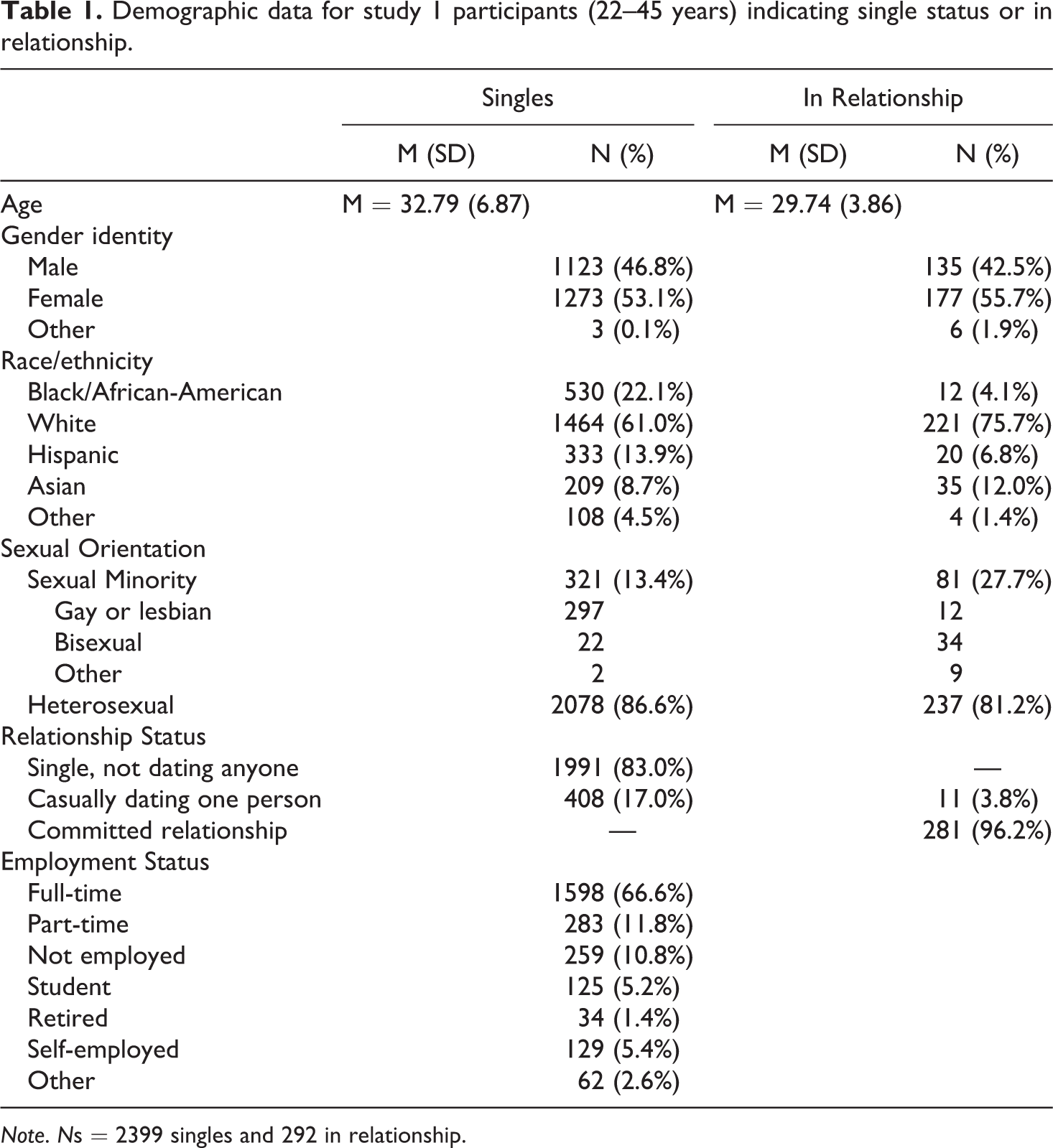
Note. Ns = 2399 singles and 292 in relationship.
Questionnaire
Participants in both samples completed the same items. These items assessed demographics (age, gender, race/ethnicity, sexual identity, relationship status). They were asked about the range of crushes that they had ever experienced from a list of 12 options, including friend, co-worker, neighbor, as well as fantasy crushes (e.g., celebrity or model). Participants also were asked to “rank the ways you’d prefer to tell a crush you’re attracted to them from most preferred to least preferred” from a list of six options (e.g., text/messaging, through a friend, face to face), with an option to indicate that they would not want to communicate this message at all. Participants also were asked to indicate the “ways you would flirt with someone you had a crush on” (e.g., make an excuse to hang out/get together, tease them, comment on their social media feeds) from a list of 10 options, and again, could indicate that they would not communicate their attraction through flirting with their crush. Items were generated from pilot work and consultation among the research team members. Response options were randomized under each question when presented to participants.
Results
Differences in the proportions of singles versus coupled participants reporting each type of crush, communication preferences, and flirting approaches are reported in Table 2. Compared to singles, higher proportions of respondents in relationships (reported having experienced each of 12 crush types with only two exceptions (gym member and dating app crush). The most common targets for crushes across groups were friends, peers at school, coworkers, and fantasy targets, such as celebrities. When asked to rank preferred means of communicating attraction across six options, fewer singles (22.9%) compared to those in relationships (52.1%) indicated that they would never tell a crush of their attraction, X2(1) = 14.98, p < .001. The option preferred by the most participants was face-to-face communication (a direct form) followed by texting or messaging. A higher proportion of those in relationships than of single respondents ranked face-to-face or through a friend as their preferred means of communicating an attraction to a crush. No other differences between groups emerged.
Types of crushes and communication exchanges.
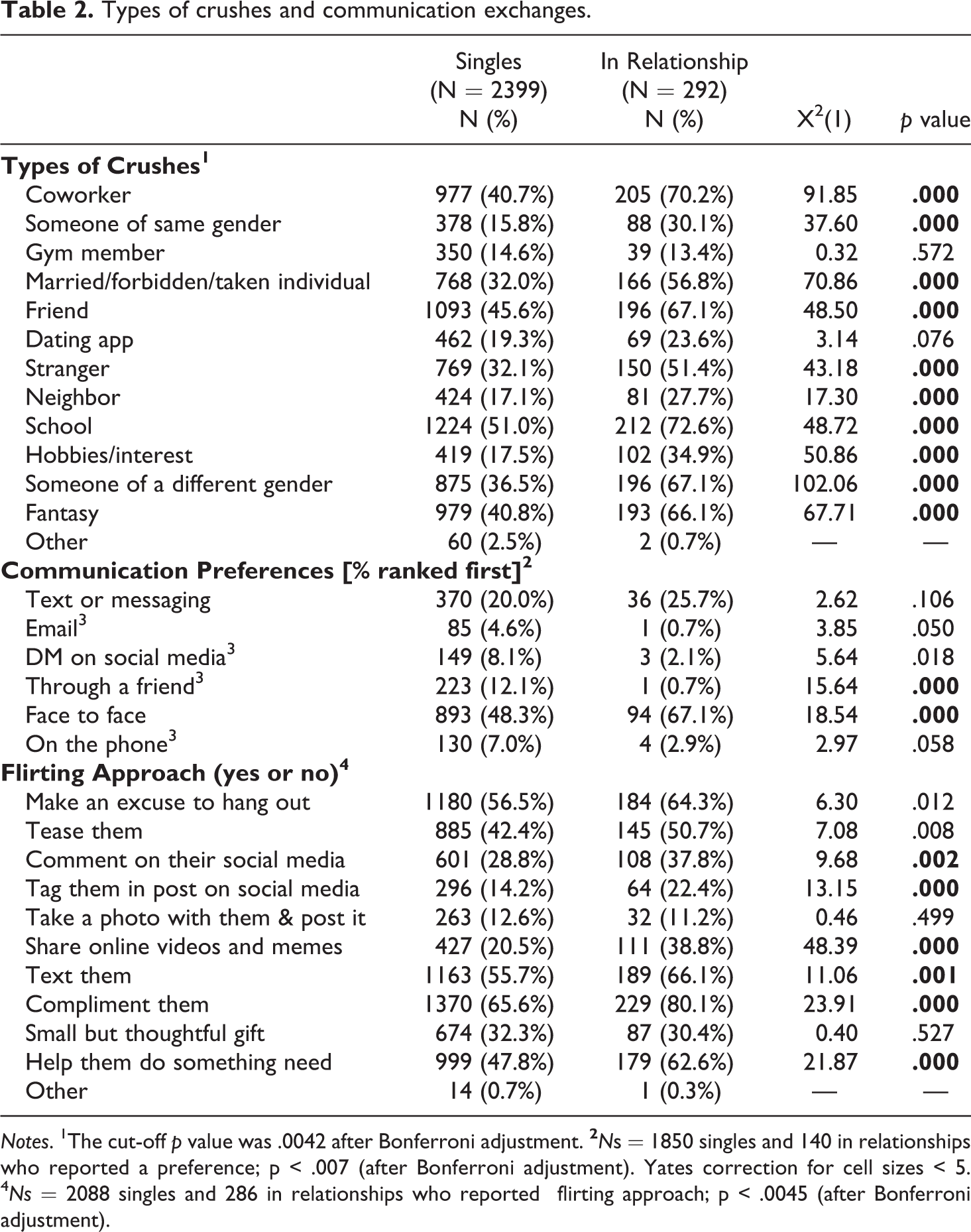
Notes. 1The cut-off p value was .0042 after Bonferroni adjustment.
Significantly higher proportions of those in relationships compared to their single counterparts reported that they use 6 of the 10 flirting approaches: comment on target’s social media, tag them in social media post, share online videos and memes, text them, compliment them, and help them do something they needed. In addition, a higher proportion of singles (13.0%) than of those in relationships (2.1%) indicated that they would not flirt with a crush at all, X2(1) = 29.81, p < .001. Thus, our hypothesis (H1) that coupled participants would communicate attraction in less direct ways compared to single participants was not supported
A 2 (men, women) × 2 (sexual minority and heterosexual) ANOVA using number of crush types reported revealed a significant effect for sexual identity, F(1, 2686) = 82.55, p < .001, ŋp2 = .03, and the gender × sexual identity effect, F(1, 2686) = 10.19, p = .001, ŋp2 = .004, but no main effect for gender, F(1, 2686) = 3.25, p = .072. Those who identified as sexual minorities reported more types of crushes than did those who identified as heterosexual. In addition, sexual-minority women reported more types of crushes than did sexual-minority men. As expected, a higher proportion of men than women (41.3% and 32.7%) reported that face-to-face communication of their attraction to a crush was their preferred method, X2(1) = 21.12, p < .001. The proportions reporting this preference did not differ between sexual minority- and heterosexual participants (33.6% and 37.2%), X2(1) = 1.95, p = .162. Thus, there was partial support for our second hypothesis.
Summary
More individuals in relationships reported almost all types of crushes compared to singles, with the most common crushes for both groups being friends, peers, and coworkers. (Fantasy crushes were also reported frequently, but these crushes involve individuals with whom the participant would have had no contact at all, which is of secondary interest to us but important to distinguish). Those in committed relationships clearly experienced attraction to others, although over half of participants indicated no interest in making their attraction to the extra-dyadic crush known, possibly to prevent challenges to their primary relationship and to ensure that a new relationship did not develop or advance in intimacy. Even so, those in relationships were surprisingly far more likely to flirt than were singles—across the range of flirting approaches. This may reflect how flirting constitutes a safe and typically indirect way to signal attraction and engage with an attractive other, but remain ambiguous about one’s interest (Hall et al., 2015; Wade & Slemp, 2015). In line with this view, single participants were far less likely to report keeping their attraction hidden or to express their attraction indirectly through flirting, presumably as they were well-positioned and motivated to advance a new relationship with the attractive other—or at least open to this possibility. But when those in relationships indicated they were willing to communicate their attraction, they were actually more likely than singles to choose to do so directly (face-to-face), perhaps because in those scenarios they are actually gauging whether the attraction is mutual and whether an intimate relationship with that individual is viable. However, this study assessed lifetime experiences rather than crushes within a recent timeframe and it is not yet known what purposes these attractions serve given efforts to ensure that they remain fairly covert.
Study 2
Study 1 demonstrated that crushes among coupled versus single individuals are notably different in a range of characteristics relating to their interactions. Study 2 examined which needs or goals that crushes might be meeting by examining the range of perspectives regarding associated positive and negative individual outcomes. We focused on individuals with whom they would be able to interact in some way, rather than fantasy crushes such as celebrities, to examine these perceived outcomes, as well as recent (not lifetime) experiences.
Method
Participants and procedure
An initial sample of 212 participants were recruited from crowdsourcing or via social media into this study with offers for modest financial remuneration. Eligibility requirements were age (< 45 years) and being in an established intimate relationship. Forty-one of these surveys were excluded from the outset for being duplicates as identified by their IP address or lack of consistency in reported place of residence and IP address. Twenty-eight people were excluded for being in a committed relationship with more than one person. Also excluded were 17 participants who indicated that they did not have or were unsure if they had an exclusivity agreement with their partner, for consistency with our prior study and with the preceding literature. Four people were deleted due to missing data. A total of 123 adults residing in Canada or the United States (Median = 32.00; Mage = 31.56 years, SD = 6.63; Range = 18–45) were retained for the present analyses. Approximately half (52.0%) identified as men and 48.0% as women. Participants identified primarily as heterosexual (91.9%), followed by bisexual (4.9%), gay (0.8%), lesbian (0.8%), asexual (0.8%), or indicated no labels were preferred (0.8%). They described their race/ethnicity as Aboriginal/Metis/Inuit/Native American (0.8%), African-American/Black (4.9%), Caucasian/White/European (78.0%), Hispanic/Latin (6.5%), Southwest Asian (2.4%), bi-racial/multi-racial (6.5%) or other (0.8%). They reported an average relationship duration of 63.33 months (SD = 66.17).
Questionnaire
Participants reported gender, age, race/ethnicity, and sexual identity. They were given the following prompt: “It’s common for people who are in long-term relationships to be attracted to people outside of their relationships. We are interested in crushes—it may be someone well known to you or someone you’ve never even talked to. They may know you find them attractive or have no idea that you do. A crush is someone for whom you have feelings of attraction, and someone you may have flirted with, but who you have not yet attempted to connect romantically or sexually with. In other words, a ‘crush.’” They then responded to the following item: “Do you currently have a crush on, or attraction to, someone other than your romantic partner?” (no/yes). Only those who responded yes reported the number of people on whom they had a crush, how long ago they met their crush (months), whether their exclusivity agreement with their primary partner included crushes (no/yes/don’t know), and whether it was typical for them to have a crush while in a romantic relationship (1–never, 7–always). They indicated the extent to which they agreed that each of 12 possible positive and negative outcomes were associated with their crush experience (e.g., “adds a little excitement to my day” and “has a positive impact on my relationship”; see Table 3). Responses were made on a seven-point scale (1 = Do not agree at all, 7 = Agree completely). These options were reviewed for face validity with experts in the field of intimate relationships and piloted prior to use. Cronbach alphas were .81 and .86, respectively, for positive and negative outcomes. They then completed an open-ended section asking them to describe in their own words associated positive and negative outcomes (“What are some of the positives of having a crush, e.g. advantages, benefits?”, “What are some of the negatives of having a crush, e.g. disadvantages, consequences?”) Correspondence between two independent raters who coded all excerpts from participants was .95 and .96 for positive and negative outcomes, respectively.
Mean (standard deviation) agreement with statements regarding crush perceived positive and negative outcomes.
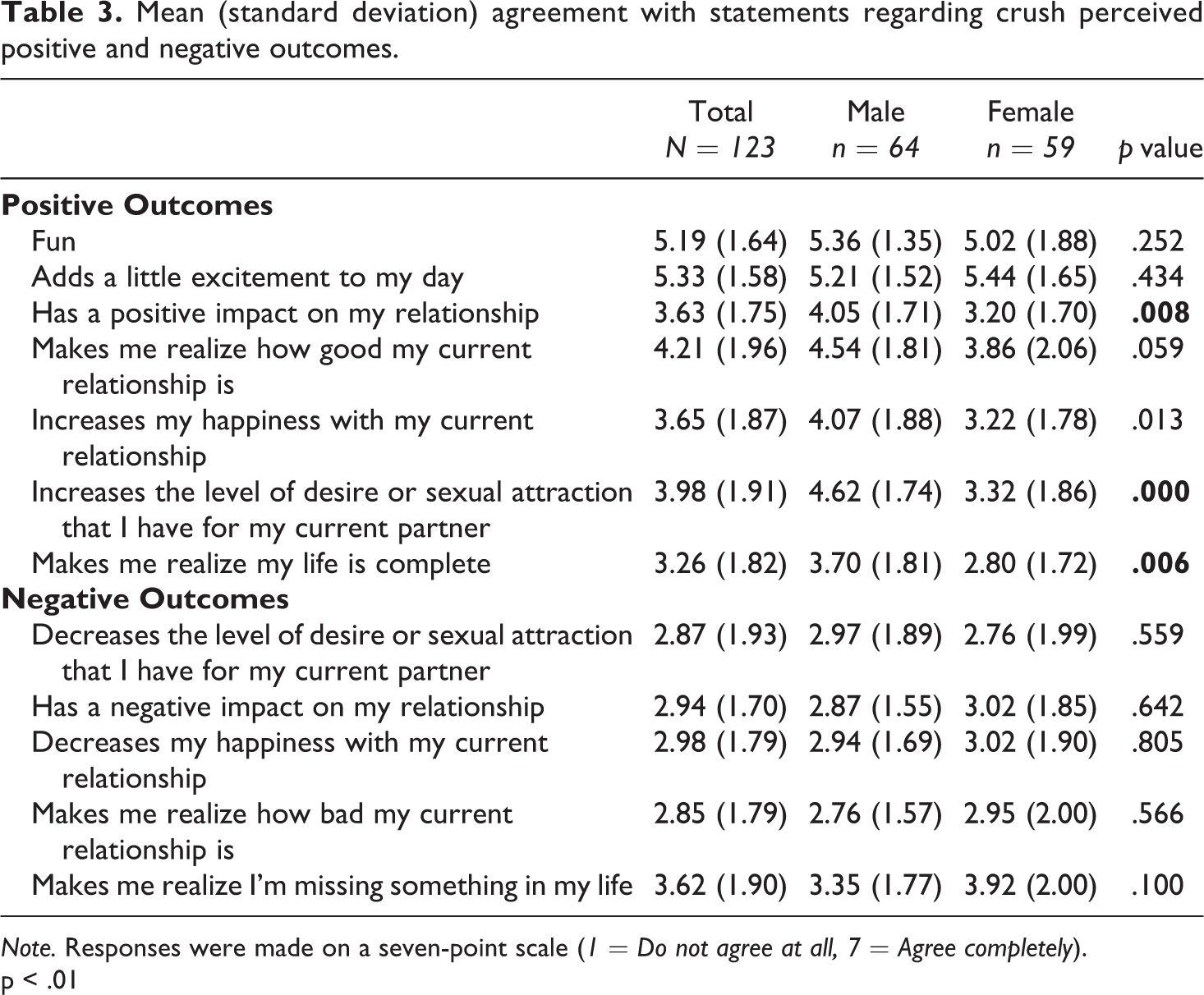
Note. Responses were made on a seven-point scale (1 = Do not agree at all, 7 = Agree completely).
p < .01
Data analysis
Descriptive analyses and group comparisons were conducted on the quantitative data. Too few participants identified as sexual minorities to allow analysis by sexual identity. For the open-ended survey items, directed qualitative content analysis was used to analyze the data (Hsieh & Shannon, 2005). Codes were created based on themes that emerged after reviewing the data. Initial coding and categorizing by two of the authors occurred concurrently using the full set of data. Disagreements in codes were resolved through discussion and refinement of the template. Categories were added or modified to capture all dimensions of the data in an iterative process (Morgan, 1993). Coding in content analysis focuses both on manifest content (i.e., visible, obvious components) and latent content (i.e., interpretation of the underlying meaning of the text; Graneheim & Lundman, 2004). Themes were identified and confirmed by examining variation across cases. To ensure both dependability and confirmability, relevant direct quotes from participants were used to facilitate the possible transferability of findings.
Results
All Study 2 participants indicated that they currently had a crush on someone. The median number of crushes at the time of the study was one (reported by 66.7%), with a mean of 2.07 (SD = 4.80). They reported meeting their crush on average 23.31 months earlier (SD = 33.77; median = 11.5). A minority of participants indicated that they had an exclusivity understanding with their partner that included crushes (23.9%); over half indicated that they did not have that understanding with their partner (56.6%) or were unclear if they had such an agreement (19.5%). Just over half (54.6%) indicated that they typically had a crush at least half the time, although only 4.2% indicated that they always had a crush.
Participants reported the strongest agreement with the statement that crushes are for fun and added excitement to their day. A MANOVA indicated gender differences in levels of agreement with the positive outcomes, F(7, 112) = 3.23, p = .004, ŋp2 = .17. Men reported significantly stronger agreement to the items that an attraction to someone other than their partner had a positive impact on their relationship [F(1, 119) = 7.39, p = .008, ŋp2 = .06], increased their desire or attraction to their primary partner [F(1, 119) = 15.63, p < .001, ŋp2 = .12], and made them feel that their life was complete [F(1, 119) = 7.93, p = .006, ŋp2 = .06]. Of note, participants on average disagreed moderately with each of the five negative outcomes listed. This was true for both men and women; the MANOVA testing gender differences in agreement with the negative outcomes was not significant, F(5, 116) = 1.13, p = .351, ŋp2 = .05. Thus, our third hypothesis was only partially supported.
Participants’ open-ended responses indicated that fun and excitement were the most commonly perceived positive outcomes of having a crush; no other theme emerged anywhere near as often (see Table 4). Far less frequent were crushes for fantasy and self-esteem boosts, ancillary improvements to their primary relationship, and novelty. Excerpts for novelty captured the view of the appeal of a new challenge or experience.
Perceived positive and negative outcomes of crush experiences (coded open-ended responses).
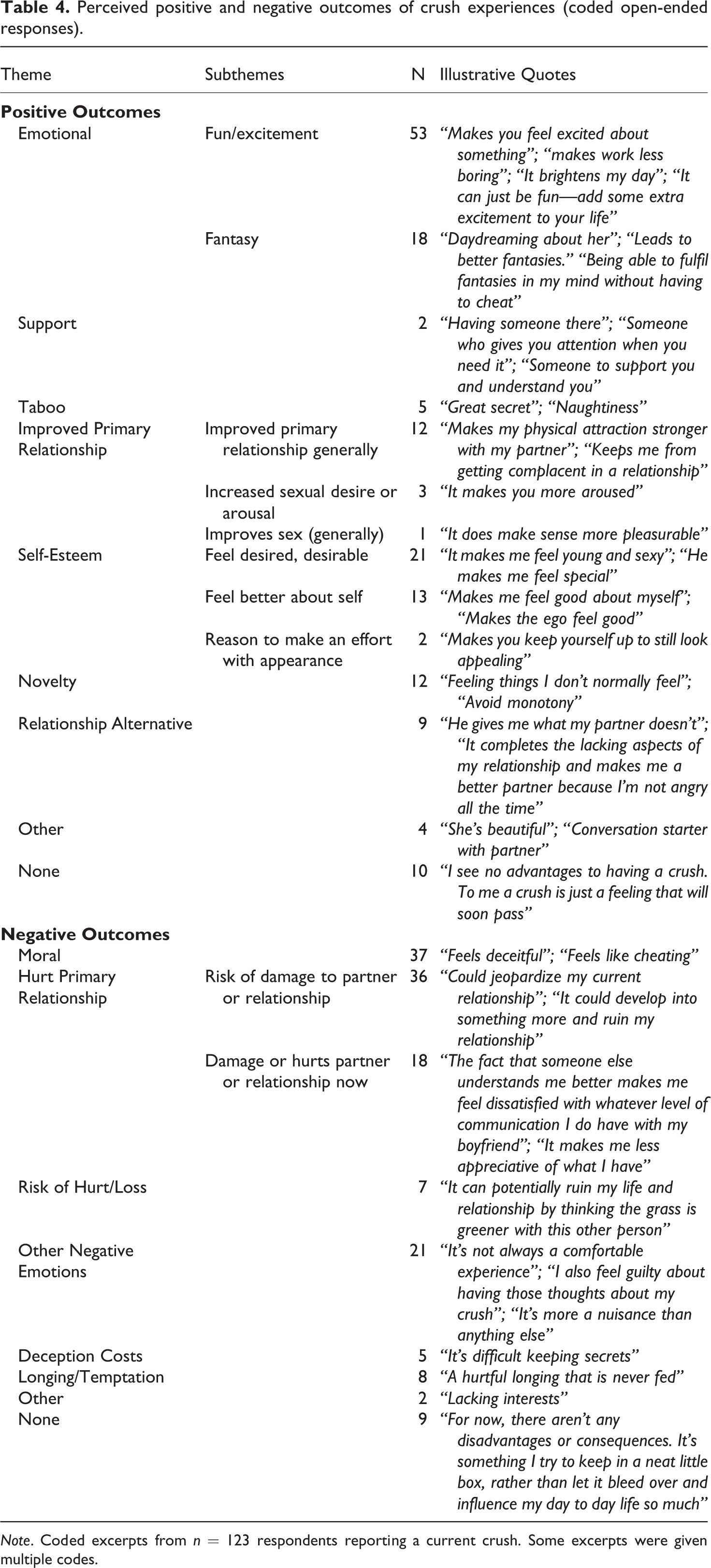
Note. Coded excerpts from n = 123 respondents reporting a current crush. Some excerpts were given multiple codes.
The codes that emerged most commonly for negative outcomes were moral concerns that the crush represented some type of betrayal, unfaithfulness, or dishonesty to their primary partner in some way. They also cited concerns about the risk to their primary relationship should the crush be discovered in terms of loss of trust or inciting jealousy. A range of other negative emotions emerged in participants’ descriptions including awkwardness, frustration, and nuisance. All respondents were asked to provide both positive and negative outcomes, so we did not assess whether men or women differed in reporting patterns in this regard.
Summary
As with Study 1, Study 2 indicated that crushes are frequent which raises questions about whether these experiences violate partners’ exclusivity agreements in some way. Of particular note, having an attraction to someone other than one’s partner was associated primarily with enjoyable outcomes for the individual, such as entertaining diversions in their day. Even so, these attractions represented for many a type of guilty pleasure, prompting some concerns about the potential for harming their committed relationship. These reports may reflect a biased view regarding the impact of crushes that could diverge notably from reports that partners would provide. However, this study gave some initial insights into meanings ascribed to these attractions, as well as the psychological impact that they might have.
Study 3
Study 2 indicated that most of the positive outcomes associated with having a crush related to primarily positive individual benefits, such as excitement, increased esteem, and fantasy/escape, rather than benefits for the primary relationship. Although, indirect benefits, like increased desire, likely enhanced the primary relationship—at least from the participants’ if not their partners’ perspective. What remains unclear, however, was whether crushes are expected to lead to an intimate relationship at some point in the future. The objective guiding Study 3 was to investigate the expectations that coupled individuals had regarding possible future intimate involvement.
Method
Participants and procedure
A sample of 641 participants (22–35 years) were recruited from crowdsourcing websites and completed a survey in exchange for monetary compensation. As before in Studies 1 and 2, eligibility criteria (age, committed relationship of at least 3 months’ duration, and attraction to someone other than their primary partner) were disguised in the screening process among a range of other screening questions. Type of crush was again restricted to those who the individual knew and could possibly interact in some way, as in Study 2, rather than fantasy/celebrity crushes. Forty-five respondents were eliminated for failing quality control checks; also excluded were those (n = 58) who indicated that they did not have an exclusivity agreement with their partner or were not in an ostensibly exclusive relationship (n = 23), and one person who did not provide open-ended responses. The final sample comprised 513 individuals (Median age = 29.00; Mean = 28.81; SD = 3.74; Range 22–35), who identified as women (n = 275; 53.5%), men (n = 230), non-binary (n = 5) or other (n = 3). One-quarter (23.4%) identified as a sexual minority, specifically gay (1.6%), lesbian (1.9%), bisexual (9.7%), asexual (0.4%), questioning (0.2%), no labels preferred (0.6%), or other (1.4%); 84.2% identified as heterosexual. In terms of race/ethnicity, most (72.1%) identified as Caucasian/White/European. The remainder represented a diverse range of race/ethnicities, including Aboriginal (0.8%), African-American/Black (7.8%), Arab (0.2%), Chinese (1.8%), Filipino (1.6%), Hispanic/Latin (7.2%), Japanese (0.4%), South Asian (4.7%), Southwest Asian (1.6%), West Asian (0.2%), bi-racial/multi-racial (0.8%), and other (1.6%). All resided in the United States (96.1%) or Canada (3.3%). The highest level of education was typically some college or technical school (18.3%), college or technical school (14.0%), university (37.4%), graduate school (14.2%), or high school (7.6%). They reported an average relationship duration of 4.87 years (SD = 3.77).
Questionnaire
Respondents were asked to identify their crush by initials. All were asked to respond to two questions designed to elicit insights into the nature of their attraction to someone other than their partner. The first item was used to orient them to the crush experience: “Tell us the story of your attraction to [initials]. How did these feelings of attraction develop?” The analyses below summarize responses to the primary question: “Where do you see this attraction to [initials] going? Where would you like it to go?” Qualitative content analysis, using procedures described in Study 2, was used to explore themes.
Results
Participants’ open-ended responses indicated that by far they did not expect the crush to develop intimately, most frequently citing the fact that one or both of the individuals were in committed relationships already and often stressing that they did not want any increased intimacy or wanted to maintain a friendship with that person (see Table 5). Participants were often content to maintain friendly or flirtatious interactions with the crush target or to fantasize privately about sexual or romantic involvement with that person. A few wanted or expected the attraction to end.
Expectations regarding future intimate involvement with crush experiences (coded open-ended responses).
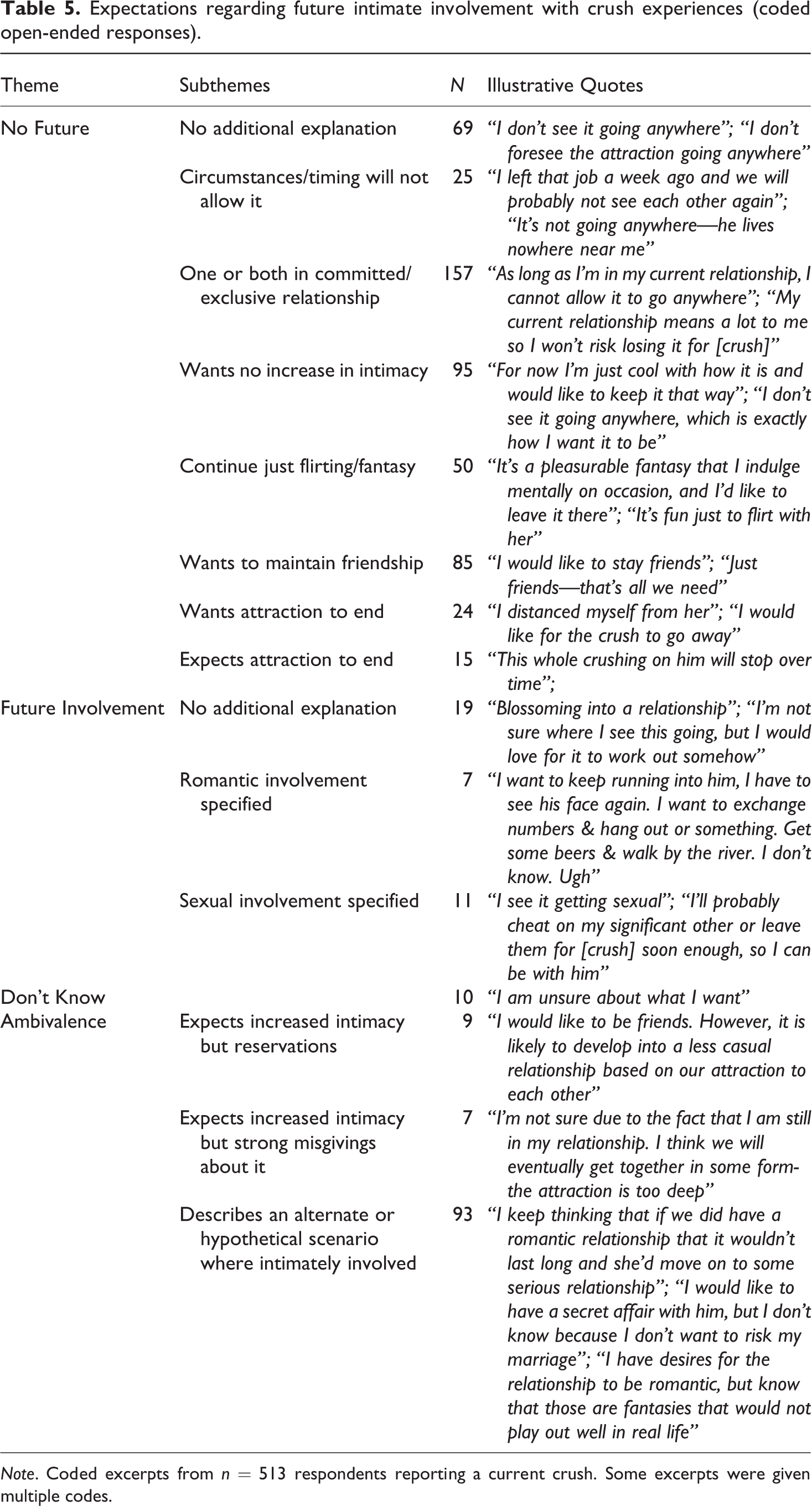
Note. Coded excerpts from n = 513 respondents reporting a current crush. Some excerpts were given multiple codes.
Only 37 of the 676 excerpts (5.5%) indicated some expectation that the crush relationship would develop intimately, and another 16 indicated ambivalence, if not dread, associated with the relationship advancing. Some of the excerpts (16.1%) described alternative realities of some sort, such as being single, where the respondent could envision being involved intimately with the crush target. No gender differences in reports emerged.
Summary
The qualitative reports of Study 3 indicate that for those in committed relationships these crushes truly constitute attractions from “afar,” a form of deliberately unfulfilled state of longing, with very few individuals wanting or expecting that an intimate relationship would develop. For some, the crush seemed to provide material for fantasy, but importantly, there was little indication that they intended to act on it. We should also not over-emphasize the findings of greater positive than negative outcomes—it is possible that participants reappraised their crush to offset cognitive dissonance, guilt, or anxiety around their attraction to another person.
General discussion
This series of exploratory studies on crushes was designed to provide some early insights into the nature of exchanges with attractive others for those in committed relationships, outcomes associated with having these attractions, and expectations of future involvement with the target of one’s attraction. Moving us beyond a focus on attraction to others as an indicator of poor relationship quality or a precursor to infidelity, the current series of studies established that these attractions most often seemed instrumental in gaining fairly positive psychosocial outcomes, such as diversion, fun, or excitement.
Overall, few individuals in ostensibly exclusive relationships reported plans to advance the crush relationship further. By comparison to singles, those in relationships were more inclined to keep their attraction covert and were more satisfied to simply flirt with someone for whom they experienced attraction rather than communicate their interest directly.
These findings raise the obvious question of why humans might exhibit and entertain feelings of crushes in the first place, if they are expected to go unfulfilled—that is, unlike in other models of attraction, an individual does not seek out the object of the crush. On the surface, this would seem to be a poor use of an individual’s time and effort, resources meant to be adaptively leveraged in mating contexts. It is possible that these crush attractions are simply inevitable, that we cannot turn off the psychological system that helps us orient toward potential partners when we enter an established relationship. The Instrumentality Principle would indicate that these behaviors meet a motivational priority, moving an individual toward a valuable goal. However, these attractions might reassure individuals that there are other options should the primary relationship falter (i.e., mate switching; Buss et al., 2017). Similarly, many young adults report maintaining “back burner” relationships, that is, a connection with someone who they might someday connect with romantically or sexually (Dibble & Drouin, 2014; Dibble et al., 2015). Crushes might comprise a means of gauging or testing one’s commitment and interest in preserving a primary relationship.
We did not assess relationship quality of one’s primary relationship. Although participants’ self-reports suggest that crushes are relatively benign experiences, further research is needed to examine under which conditions a crush might undermine relationship quality. Intensity of one’s attraction, especially if it increases over time, mutuality of the attraction and the response of the crush target should they want to pursue a relationship are likely important moderators, as is quality of the primary relationship in terms of satisfaction and commitment. Primary relationships of lower quality are likely more vulnerable to one or both partners becoming distracted by another. We also should examine more closely the impact of the secrecy involved with crushes and indeed how much is concealed from a primary partner. Secret attraction when linked with fear of its being exposed might amplify attraction through misattribution of arousal (“excitement transfer” Marin et al., 2017; Meston & Frohlich, 2003) or frustration attraction (Fisher, 2005).
Study limitations
There are other limitations that need to be acknowledged. Our use of cross-sectional data rather than longitudinal data renders any speculation about links to relationship outcomes unwarranted. A longer trajectory, ideally using prospective methods, would allow researchers to better capture outcomes associated with attractions to others. This is a limitation of the study designs, and short of tracking individuals from the onset of their relationship, one that cannot be easily overcome. In addition, it is important to bear in mind that self-reports about sensitive topics, such as attractions to others, are often subject to issues of presentation biases. However, in every case, we ensured that participants were fully informed of the anonymous nature of their reports, which we believe offset some of the biases these concerns might introduce.
Although we were able to study gender differences to some extent, we were only able to explore differences in terms of sexual identity in the first of our three studies. Those who identified as sexual minorities (gay, lesbian, or bisexual) reported more types of crushes than did those who identified as heterosexual. This finding might reflect pressure among sexual minority individuals to keep same-sex attractions hidden. Exploring these attractions in larger and/or more diverse populations will help us determine how a mechanism that evolved to guide individuals toward a viable romantic and sexual partner with whom we intend to bond and mate (Berscheid, & Reis, 1998; Fisher, 1998; Sprecher & Hatfield, 1985) operates in contexts in which an intimate relationship is ostensibly not the goal.
Conclusions
This set of studies indicates that attractions to individuals who are not one’s primary partner provide generally more positive (e.g., fun, excitement) than negative (e.g., concerns) outcomes. It informs the limited body of work on the earliest stages of attraction in the human courtship process, but reveals conditions in which, intriguingly, advancement to greater intimacy with the target of one’s attraction is not ultimately the goal. Rather, these crushes appear to serve other psychosocial purposes, possibly a context in which one can consider, monitor, or calibrate alternative partners.
Footnotes
Acknowledgment
We would like to thank Nyah Byers for help with coding the qualitative data.
Funding
The author(s) disclosed receipt of the following financial support for the research, authorship, and/or publication of this article:The author(s) received financial support from the Social Sciences and Humanities Research Council (435-2017-1166; O’Sullivan) for the research, authorship, and/or publication of this article.

Open research statement
As part of IARR’s encouragement of open research practices, the authors have provided the following information: This research was not pre-registered. The data used in the research are available. The data can be obtained by emailing: