




Abstract
We examined the importance of adult children’s ties with biological parents and stepparents for well-being in adulthood. We particularly focused on situations in which adult children are not close with the new partner of their biological parent, their stepparent. Following balance theory, it is straining to be in an unbalanced pattern (i.e., close to biological parent, not close to stepparent). Firstly, we studied how many adults are close to their biological parent only (dissonance), to both the biological parent and stepparent (positive consonance), or to neither parent in the stepfamily household (negative consonance). Secondly, we examined if the ties to biological parents and stepparents - as well as, the patterns between the two ties - were associated with the subjective well-being of the adult child. The OKiN data was used, which includes N = 1,477 adults with a stepfather and N = 1,274 adults with a stepmother. OLS regression models suggested that parent-child ties were important for depression and loneliness in adulthood, although associations with stepmother-child ties were insignificant. Moreover, the prevalence of dissonant ties was low, but the consequences for depression and loneliness were considerable. A distant or conflictual stepparent-child tie attenuated the benefits of having a close tie with the biological parent. Consequently, adult children in dissonant patterns are not necessarily better off in terms of well-being than those in negative consonant patterns.
Introduction
Closer parent-child ties have been linked to fewer behavior problems, fewer adjustment issues, and higher well-being among children and adolescents (Amato, 1998; Bulanda & Majumdar, 2009; Fagen et al., 1996). This association should also be studied within complex families, as after divorce, parents’ roles become more diverse, especially when stepparents are involved (King, 2006). In addition, given the growing number of contemporary adults with stepparents, more information is needed on the importance of (step)parent ties for adult children.
An ongoing challenge in the literature on intergenerational ties and child outcomes is to consider the interconnections between multiple dyads in families. Most research focused on one (step)parent-child tie at a time (Amato, 1998; Fagen et al., 1996). Yet, it is increasingly recognized that family ties—and their influence on well-being—can be connected and should thus, be studied simultaneously (Ganong & Coleman, 2016). One way authors have addressed this previously, has been to examine the patterns in children’s ties to two parents (King, 2006; Sobolewski & Amato, 2007). If we consider the parent-child-stepparent triad, as was done in our study, we could detect how often children grow up to be emotionally close to their biological parent, but emotionally distant from the new partner of that parent. Such a pattern (rather than the two individual ties) may have a particular influence on child well-being.
In most cases, stepparent-child relationships that start troubled, grow closer over time, with some stepparents having important roles in children’s adult lives (Ganong & Coleman, 2016). However, what are the consequences when, even after periods of adjustment, adult children do not get along with the stepparent? In general, there are two possibilities, both of which are presumably linked to lower well-being. The relationship with the biological parent either deteriorated, leaving the child distant to the entire stepparent household (“two distant ties”) or the child remained close with the biological parent (“one close, one distant tie”). The latter situation seems more optimal, but places the adult child in an awkward position. Balance theory points out that being close with one person but not with another, while these two others feel positively towards each other, results in psychological stress, which may even outweigh the benefits of having one close relationship (Heider, 1958).
In this study, our first aim was to explore the prevalence of three distinct relationship patterns within stepfamilies. We examined how often adult children are close to the biological parent only (dissonant pattern), to both the biological parent and stepparent (positive consonant pattern), or to neither parent in the stepfamily household (negative consonant pattern). We studied this for mother-stepfather-child patterns and father-stepmother-child patterns.
Our second aim was to examine whether ties with biological parents and stepparents—as well as, the patterns between the two ties—have consequences for adult subjective well-being. First, we examined whether the relationship-quality with the parent and stepparent independently contribute to well-being. We went beyond the static distinction of having or not having a stepparent (Amato, 1994; Coleman et al., 2000) and rather focused on variations in the quality of stepparent-ties. This is relevant, as comparisons between non-intact and intact families have not always acknowledged the heterogeneity that exists in stepfamily relations (Ganong & Coleman, 2016). Second, we studied the interplay between parent-child and stepparent-child ties: do they reinforce/attenuate each other in their influence on well-being? In doing so, we examined the consequences of the three relationship patterns and consequently, we had a unique opportunity to reflect on the general arguments of balance theory (Heider, 1958).
We focused on children later in life, rather than during a moment when children are still living with their (step)parents and potentially still adjusting to parental divorce and the introduction of stepparents. We thus tried to shed some light on the question of how important (step)parent-ties are for adult well-being. Adults go through life-course transitions, such as starting a career or having children, that can be challenging and may benefit from the adult receiving (parental) support. One could therefore argue that the importance of parent-child ties for well-being is likely to continue into adulthood, given that parents continue to provide resources/support (Sobolewski & Amato, 2008). Alternatively, parents’ role could be less important when children are older. When children are more independent, they can redefine the relationships with their parents according to their own preferences (Jensen et al., 2017). This suggests that adult children may rely less on their ties with (step)parents but also, that low-quality ties are less damaging in adulthood (Steinberg, 2001).
Much of our preoccupation with well-being in divorced families has focused on children or adolescents (Fine et al., 1993, Hetherington, 1993; King, 2006), while the few studies on adult children either focus on achievement or the intergenerational transmission of divorce (Amato & Keith, 1991). Moreover, studies on stepfamilies mostly focused on resident stepparents, which, due to the gendered consequences of divorce, were almost exclusively stepfathers (Fine et al., 1993; King, 2006). We used the OKiN survey (Ouders en Kinderen in Nederland; Kalmijn et al., 2018) which was carried out among adults aged 25–45 in the Netherlands and included a register-based oversample of individuals with divorced and remarried parents. The adult children reported on their ties with biological parents and stepparents and on their own subjective well-being.
Theory and hypotheses
Parent-child relationships
Although several factors contribute to well-being, the relationships people have with their parents are generally viewed as important (Goldberg & Carlson, 2014). Arguments derive from two streams of literature. According to resource theories, parents function as main providers of resources (e.g., economic, social, and cultural), which connect to more positive child outcomes (McLanahan, 2004). Resource arguments also suggest that, when the quality of the parent-child relationship is better, parents and children are more likely to invest in each other and the flow of resources will be higher (Swartz, 2008). Intergenerational support theories argues that those with more affectionate ties feel more emotionally supported and socially embedded (Roberts & Bengtson, 1996). This translates into higher self-worth and less psychological stress. Closer parent-child relationships can also work as buffers, as better-quality relations are expected to mitigate the influences of negative life events, such as illness, relationship struggles, or job loss (Goldberg & Carlson, 2014). Earlier research, which is mostly on children or adolescents, indeed indicates that more positive parent-child relationships correspond to better child well-being (Amato, 1998; Fagen et al., 1996; Jensen et al., 2017; King, 2006).
The importance of parent-child ties for well-being may persist into adulthood. In their adult lives, people face transitions which can be challenging. When confronted with such challenges, those with higher-quality relationships have more opportunities to rely on resources/support. Findings on intergenerational solidarity suggest continuous downward support transfers after children transitioned into adulthood (Swartz, 2008), with closer parent-child ties corresponding to more support. Our hypotheses were: the closer the adult child and biological parent are, the higher child well-being is (H1a) and the less conflict the adult child and biological parent have, the higher child well-being is (H1b).
Stepparent-child relationships
Biological parents are generally assumed to have a greater impact on well-being than stepparents (Amato & Keith, 1991). Nevertheless, resource and support theories suggest that ties to stepparents have an additive effect (King, 2006). The underlying argument is that each parent figure can make independent contributions to a child in terms of support or resources, which indicates that the more positive parent-child ties adult children have, the better off they are in terms of well-being (Jensen et al., 2017; King, 2006). For instance, stepparents can serve as additional family members with whom the child can spend time or discuss (family) problems in times of need (Crohn, 2006; Svare et al., 2004). Accordingly, stepparents contribute to children’s lives in varying ways and degrees, with the literature reporting substantial heterogeneity in how children perceive their stepparents, varying from “parent” or “friend,” to “intimate stranger” (Ganong & Coleman, 2016).
Although stepparents can have various roles (Ganong & Coleman, 2016), the additive influence of stepparent-ties on child outcomes has not often been considered and the evidence on this topic is mixed. Research on young children showed that those with a stepfather did not fare better in terms of well-being than those with single mothers, despite the greater access to parental resources (Amato, 1994; Coleman et al., 2000). Nevertheless, closeness to stepfathers has been linked to better child outcomes (King, 2006) and, in a few studies, stepfathers were found to be just as beneficial for well-being as biological fathers (Bzostek, 2008).
Whereas early stepparent-child ties can be tumultuous, stepparents are expected to gain a more prominent and more defined role in their stepchildren’s (adult) lives over time (Kalmijn et al., 2019). Based on resource and support theories, we expected stepparent-child ties to relate to adult well-being, net of the influence of biological parent-child ties. Our hypotheses were: the closer the adult child and stepparent are, the higher child well-being is (controlled for bioparent-child tie; H2a) and the less conflict the adult child and stepparent have, the higher child well-being is (controlled for bioparent-child tie; H2b)
Dissonant ties
Children’s ties to biological parents and stepparents may be interdependent (i.e., the influence of one tie depends in part on influence of another tie). Balance theory (Heider, 1958) emphasizes that people desire consistent relationships. A relationship pattern between three people is consistent when, for instance, person a likes person b and person c, and person b and person c also have positive attitudes towards each other. An unbalanced pattern exists when person b and c do not get along. An example of an unbalanced pattern is when a divorced parent has a new partner, the divorced parent and adult child are emotionally close, but the child and the new partner do not have a good relationship. We refer to this as a dissonant pattern. Following balance theory, well-being will be affected by dissonance in particular (as opposed to negative consonance, when the child is close to neither parent; Heider, 1958).
There are three mechanisms underlying this idea. First, if the child is close to the biological parent but has a distant relationship with the stepparent, the triad is unbalanced, and the child is presumed to experience a psychological dilemma, a “state of dissonance” (Festinger, 1957). The adult child may feel uneasy when visiting the stepfamily household or experience a sense of disloyalty towards the biological parent (Sobolewski & Amato, 2007). Second, the stressors related to dissonance could reduce the buffering effect of a close biological parent-child tie against external stressors. For instance, when an adult child needs support, the child could refrain from contacting a biological parent to avoid engaging with the stepparent. Dissonance would then undermine the benefits of being close to the biological parent. Third, in dissonant patterns, the child will be confronted with the new partner more often than when the relationship with the biological parent is distant. Increased exposure to a stepparent with whom one is not close—due to visiting the parental household or joint social activities, such as birthdays or holidays—increases the likelihood of experiencing stress.
The influence of dissonance may be even more pronounced if not the closeness between an adult child and stepparent, but rather an overt measure of stepparent-child dislike was considered: conflict or tension. The underlying arguments are the same, but a focus on stepparent-child conflict displays distinctly different dissonance patterns. Those who are not close with the new partner of their biological parent, may not experience the stepparent-child relationship as poor, but rather feel a sense of ambivalence towards the stepparent. A more adverse pattern of dissonance could be observed, however, when the adult child actually experiences the stepparent-child tie as being negative or conflictual (Afifi, 2003). Therefore, to uncover whether dissonance affects the association between parent-child ties and child well-being, we considered a positive (i.e., closeness) and negative (i.e., conflict) dimension of stepparent-child relationship-quality.
Overall, resource and support arguments suggest that parents make independent contributions to their children and thus, having positive relationships to both parent figures should be the most optimal situation for adult well-being (positive consonant), whereas having distant relationships with both parent figures should be the least optimal pattern (negative consonant). Balance arguments provide an alternative perspective (Heider, 1958): those who are in a dissonant pattern may not be better off (and potentially, even worse off) than those who have a negative consonant pattern (as a “main effects” model would imply). To elaborate, well-being will naturally be lower in dissonant patterns than when both ties are positive (positive consonance). For detecting an effect of dissonance, however, we need to find that the well-being of adult children with dissonant ties is similar to (or perhaps even lower than) the well-being of children with two negative ties (negative consonance). Thus, we argued that the potential effects of a positive tie to the biological parent were cancelled when the tie to the stepparent is negative. We formulated two interaction hypotheses: distant stepparent-child ties weaken the positive effects of a closer biological parent-child tie on adult well-being (H3a) and conflictual stepparent-child ties weaken the positive effects of a closer biological parent-child tie on adult well-being (H3b).
Data and method
Data description
We used data from the OKiN survey (Kalmijn et al., 2018). The survey was carried out among adult children, aged 25–45, and included a systematic oversample of those who did not live with both biological parents at age 15 (from Dutch registers). The data included more than 2,500 adults with divorced parents and adults with stepparents, which is unusually large in stepfamily research. All adult children received a letter with an invitation and online link to participate in the survey. Non-responders received reminders and if they did not respond a month after the last reminder, they were approached for face-to-face interviewing. The response rate was 62% (N = 6,485).
From the OKiN data, we selected a sample of adult children who lived with a stepfather and a sample of adult children who lived with a stepmother during youth. The term stepparent was not used in the interview; stepparents were defined as new cohabiting or married partners of the biological parent after divorce. We first selected those whose parents separated in youth (2,754 cases deleted) and whose biological parent is alive and married or cohabited with a new partner after separation (2,391 stepfather families and 2,206 stepmother families retained). If the biological parent and new partner had subsequently separated, those cases were deleted (902 cases deleted for stepfather families, 845 cases deleted for stepmother families). We thus selected respondents whose stepparents entered before age 18 and stayed with the biological parent up to adulthood (the stepparent has thus been present for at least 7 years). This selection was needed, as it allowed us to examine dissonant patterns that (a) are not due to the adjustment period after stepparent-entry and (b) presumably have persisted from childhood to adulthood. Respondents who indicated to have started living independently before the age of 15 were also excluded (one case for stepfather families; two cases for stepmother families). If no information was available on the relationship-quality between the respondent and biological parent or the respondent and stepparent, those cases were dropped using listwise deletion (11 cases deleted for stepfather families; 85 cases deleted for stepmother families). Our analytical sample consisted of N = 1,477 adults with divorced parents and a stepfather and N = 1,274 adults with divorced parents and a stepmother.
Variables and measurement
Well-being
The self-reported well-being of the adult children was measured using two indicators: depression and loneliness. In doing so, we considered a measure on the general mental health of respondents and a measure that relates more to their social embeddedness. We measured depression using the 8-item scale by Van de Velde et al. (2009). The respondents rated how well each item described their feelings (e.g., “I felt depressed” and “I could not get going”), with answer categories ranging from 1 (rarely or never) to 4 (most of the time). We took the mean score to create the scale (α = .86). To measure loneliness, we used the 6-item scale by de Jong Gierveld & van Tilburg (2006). The respondents reported to what extent the described statement applied to them, answer categories being 1 (yes), 2 (more or less) and 3 (no). We calculated a sum score of the neutral/negative responses of the three positive items (e.g., “There are many people I can trust completely”) and neutral/positive scores of the three negative items (e.g., “I experience a general sense of emptiness”) to create the scale (α = .82).
Parent-child ties
We measured parent-child relationships using a positive and negative indicator of relationship-quality, namely closeness and tension/conflict as reported by the adult child. We measured closeness on a 5-point Likert scale, which was recoded so that higher values refer to closer ties and the starting value is zero. The measure ranged from 0 (not close at all) to 4 (very close). Conflict was measured by asking how often the adult child experiences conflict or tension with the (step)parent. We recoded the measure to start at zero, with answer options ranging from 0 (never) to 3 (often).
These single-item measures have been widely used in the literature (Kalmijn et al., 2019; King, 2006) and are expected to have high face validity: respondents are not likely to wrongly interpret the questions. As our measures are reported on by the adult child and therefore at risk of single-reporter bias, we provided an additional check based on the multi-actor feature of the OKiN. Using reports by the parents, we found that adults and their parents were in high agreement on the quality of parent-child ties, as shown by the strong correlations between anchor and alter reports (Table A1 in Online Appendix).
Controls
Several demographic features, which are expected to be connected to well-being (Meertens et al., 2003), were included as control variables: age at the time of the interview (25 to 45), sex (1 = male), relationship status, number of previous partners, parenthood, education, income, and whether or not the adult child has paid employment. Relationship status was measured as whether the child currently has a partner or not (1 = has partner, 0 = no partner). Number of previous partners was measured on a scale from 0 (none) to 5 (10-or-more). Parenthood was measured as whether the respondent currently has children (1 = has children, 0 = no children). Education was measured by recoding the educational level to approximate years of schooling completed. Yearly personal income was measured in categories (as taken from the Dutch registers; missing values on income are imputed). We created a dummy to measure if respondents’ main source of income is from paid-employment (other sources, such as health/unemployment benefits, were coded 0). In addition, we controlled for the years of stepparent-child coresidence in youth. And finally, we controlled for the relationship-status of the other biological parent (1 = repartnered, 0 = not repartnered). Table 1 includes all descriptive statistics.
Descriptive statistics.
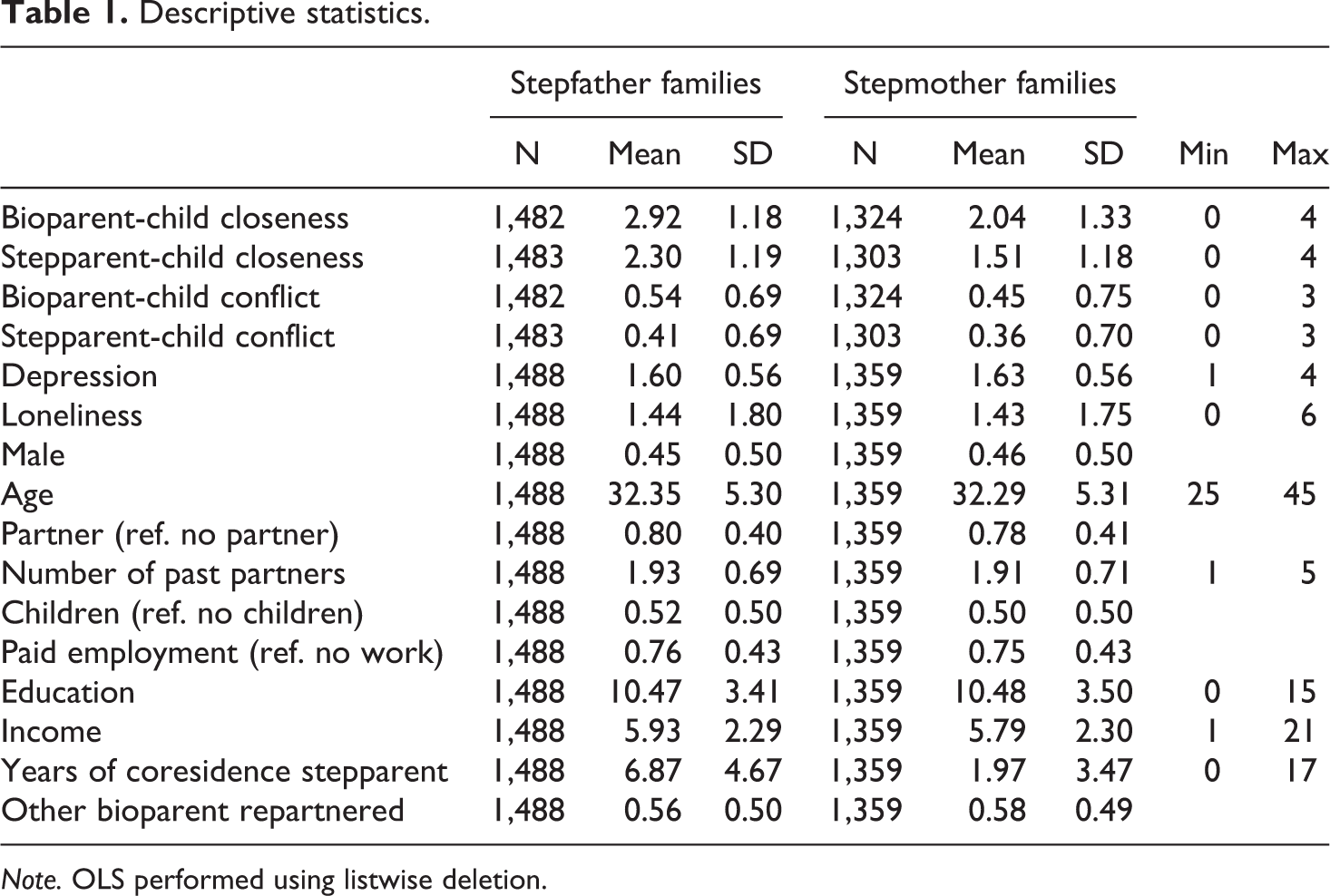
Note. OLS performed using listwise deletion.
Design and method
For the descriptive analyses, closeness with biological parents and stepparents was categorized into close (1 and 2), reasonably close (3), and not close (4 and 5) and cross classified. This was done to increase the interpretability of our descriptive analyses. The categories resemble earlier research examining relationship patterns (King, 2006; Sobolewski & Amato, 2008). We kept the category reasonably close separate for clarity. We also explored the patterns between closeness with the biological parent and conflict/tension with the stepparent, which was categorized as never (1), sometimes (2), and regularly (3 and 4). The descriptive findings are displayed in two contingency tables (see Figure 1). These tables include the prevalence of positive consonant, negative consonant, and dissonant patterns.
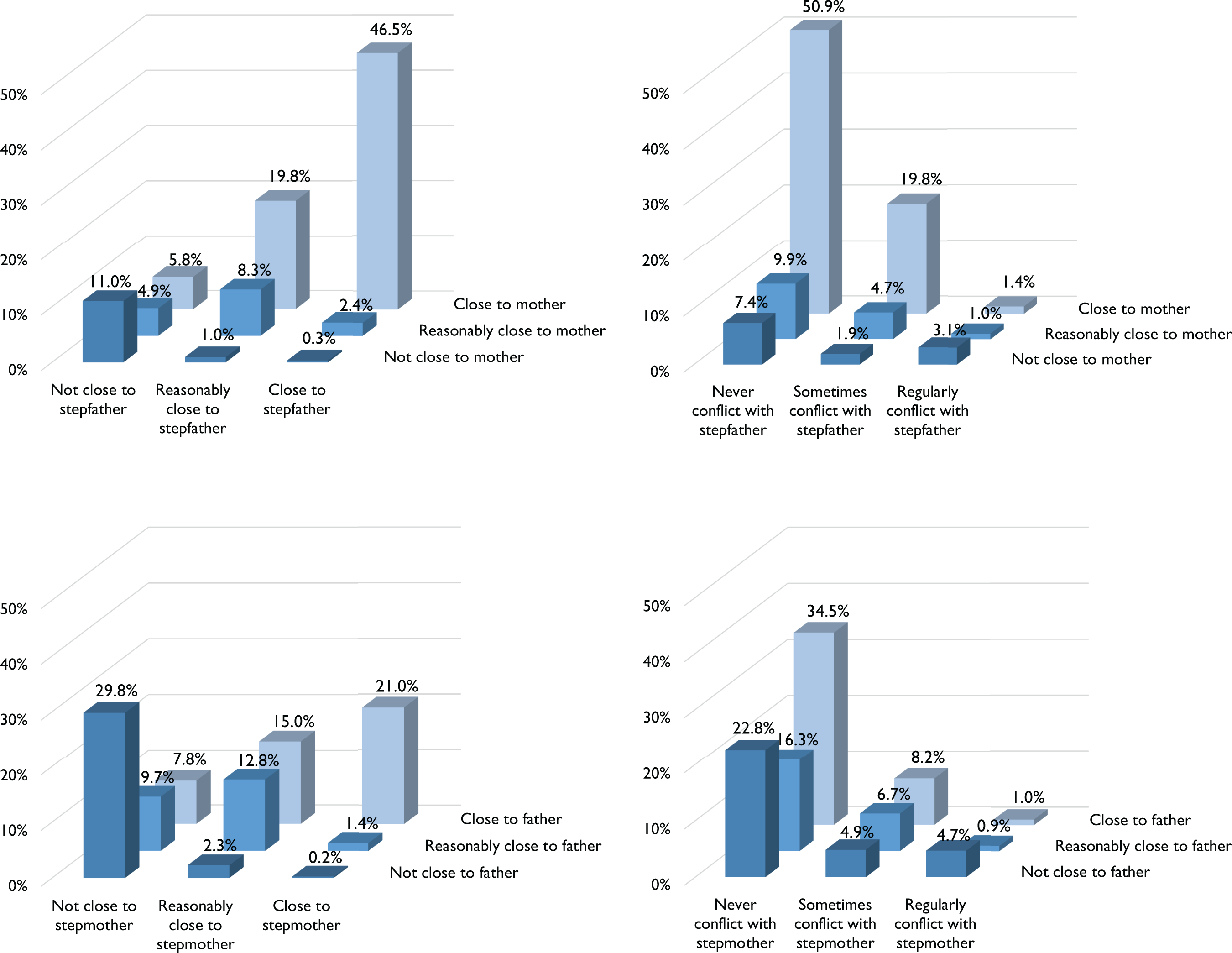
Prevalence of positive consonance, negative consonance, and dissonance.
We used three OLS regression models to perform our analyses on adult child depression and loneliness. We first estimated a model including the main effects of closeness and conflict with the biological parent and stepparent. Sociodemographic features of the child were included as controls (Model 1). From this model, we examined the additive importance of biological parent-child ties and stepparent-child ties for adult children’s well-being.
To test the dissonance hypothesis, we needed to examine whether there is an interaction between the biological parent-child tie and stepparent-child tie. That is, we needed to test whether stepparent-child distance attenuates the negative association between biological parent-child closeness and child depression/loneliness (i.e., a negative interaction). This interaction was included in Model 2. Similarly, we needed to test whether stepparent-child conflict attenuates the negative association between biological parent-child closeness and child depression/loneliness (i.e., a positive interaction). This interaction was included in Model 3. To better grasp any significant interactions, we used the -margins- command in STATA and then plotted the interactions in Excel. These plots were used to compare the well-being of those in positive consonant, negative consonant, and dissonant patterns. In doing this, we explored whether the costs of dissonance actually outweigh the benefits of having a strong biological parent-child relationship.
Results
Descriptive results
The prevalence of the three relationship patterns is displayed in Figure 1. It includes a cross-tabulation of closeness with the biological parent and closeness with the stepparent, as well as, a cross-tabulation of closeness with the biological parent and conflict with the stepparent. For each combination of answer categories, the total percentage of adult children that reported that specific combination is shown.
We firstly saw that 46.5% of all respondents in stepfather families and 21.0% of all respondents in stepmother stepfamilies, reported to be close to both their biological parent and their stepparent. Similarly, 11.0% of those in stepfather families and 29.8% of those in stepmother families reported to have a distant relationship with their biological parent and their stepparent. The positive and negative consonant pattern were thus most common, indicating a strong association between closeness to biological parents and closeness to the new partners of those biological parents (which can be interpreted as “household effects”).
When we looked at dissonant patterns, we saw that about 5.8% (86 cases) of all respondents who grew up with a stepfather reported to be close with their biological mother but not close with the stepfather. Similarly, 7.8% (99 cases) of all respondents who grew up with a stepmother reported to be close with the biological father but distant with the stepmother. Moreover, among all respondents with a stepfather, we saw that 19.8% (293 cases) reported to be close with their biological mother and to sometimes have conflict with the stepfather, whereas 1.4% (20 cases) reported to be close with their biological mother and often have conflict with the stepfather. Of all respondents with a stepmother, 8.2% (105 cases) reported to be close with their biological father and to sometimes have conflict with the stepmother, whereas 1.0% (13 cases) reported to be close with the biological father and have regular conflict with the stepmother. Dissonance was thus less common than consonance, but still occurred remarkably frequently given our focus on “stable stepfamilies”.
Dissonance occurs when one is close with the biological parent and not the stepparent, whereas the opposite pattern is less likely (King, 2006). Our data support this, as only 1.3% of participants in stepfather families were reasonably close/close to their stepfather and not to their mother and 2.5% of participants in stepmother families were reasonably close/close to their stepmother and not to their biological father. This indicates that the stepparent-closeness is contingent on the biological parent-child tie, while the biological parent-closeness is much more independent.
Consequences for well-being
We continued with the consequences of (step)parent-child relationships for depression and loneliness. The results for stepfather families (Table 2) and stepmother families (Table 3) are discussed separately. The main effects of the biological parent-child relationships and stepparent-child relationships are shown in Model 1.
Depression and loneliness in stepfather families (N = 1477).
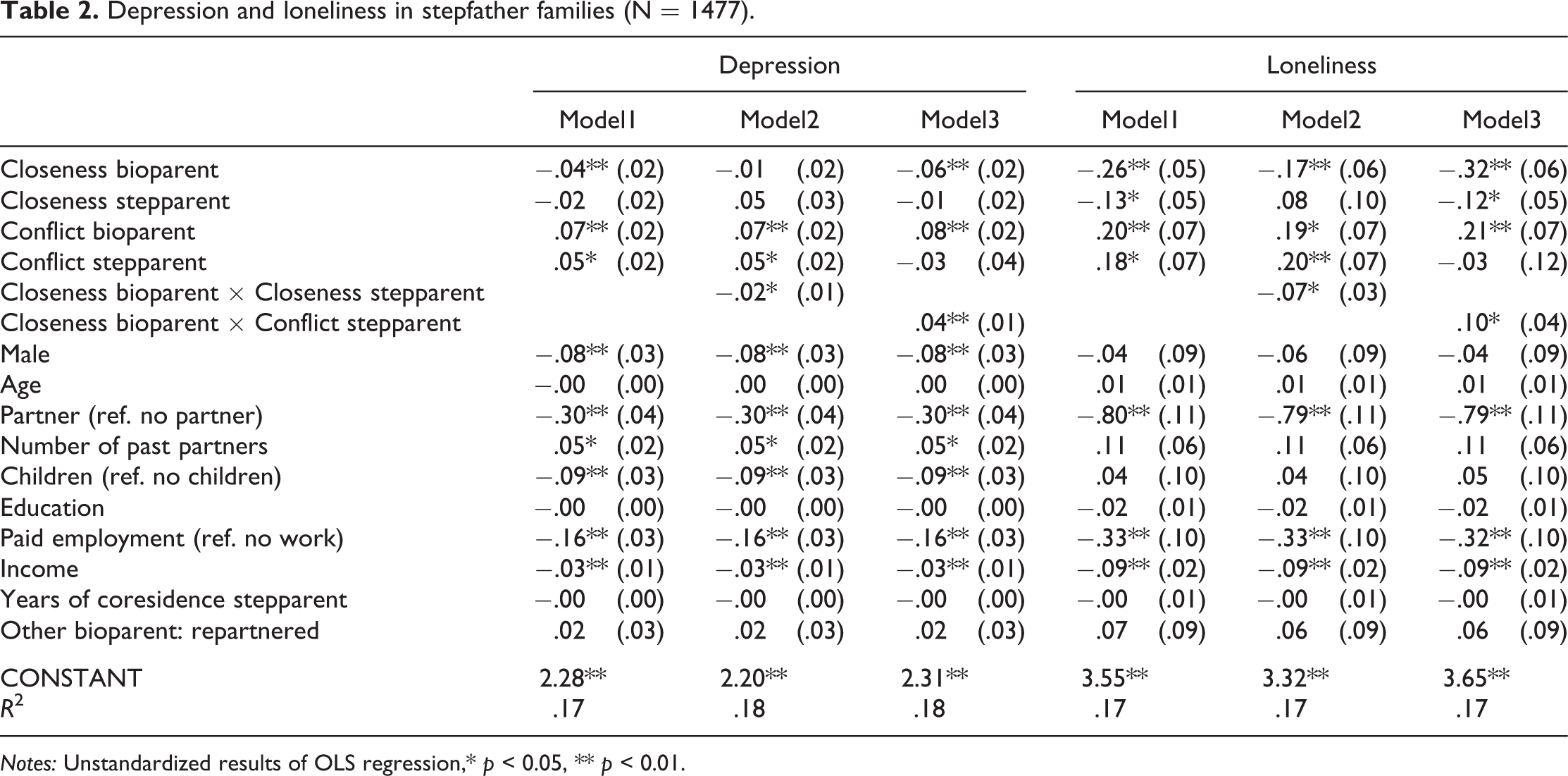
Notes: Unstandardized results of OLS regression,* p < 0.05, ** p < 0.01.
Depression and loneliness in stepmother families (N = 1274).
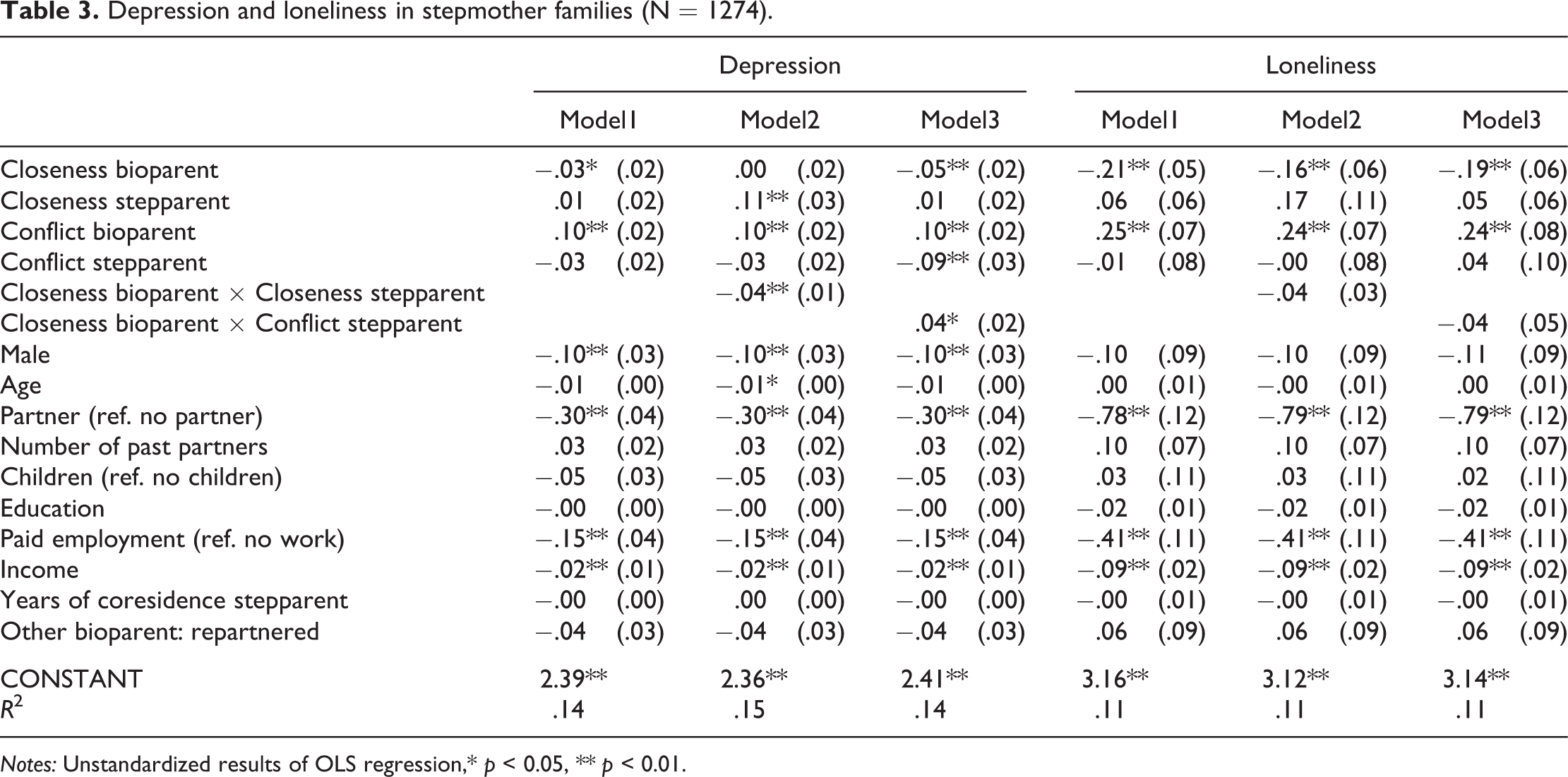
Notes: Unstandardized results of OLS regression,* p < 0.05, ** p < 0.01.
Stepfather families
We saw that mother-child closeness was negatively associated to the adult child’s depression (B = −0.04, p < .01, β = −.09) and loneliness (B = −0.26, p < .01, β = −.17), whereas mother-child conflict was positively associated to depression (B = 0.07, p < .01, β = .09) and loneliness (B = 0.20, p < .01, β = .08). This indicated that adult children who were closer and had less conflict with their biological mother, were less likely to experience mental health issues or feelings of loneliness. This was in line with Hypothesis 1a and 1b. The effect sizes were small, which was likely due to the fact that we studied independently living adults whose well-being depends on many other factors in their lives.
We found that stepfather-child closeness was unrelated to depression (in contrast to H2a) but significantly related to loneliness (B = −0.13, p < .05, β = −.09). Moreover, we found a significant positive association with stepfather-child conflict for both depression (B = 0.05, p < .05, β = .06) and loneliness (B = 0.18, p < .05, β = .07). As we controlled for mother-child relationship-quality, this indicated that stepfather-child closeness and conflict had an additive effect on the well-being of the adult child, net of the influence of mother-child tie, in line with Hypothesis 2a and 2b.
Stepmother families
We saw that closeness to a biological father was negatively associated to adult children’s depression (B = −0.03, p < .05, β = −.08) and loneliness (B = −0.21, p < .01, β = −.15). Conflict with the biological father related significantly to higher levels of depression (B = 0.10, p < .01, β = .13) and loneliness (B = 0.25, p < .01, β = .10). These findings were in line with Hypothesis 1a and 1b, although the effect sizes were again small. Contrasting the results on stepfathers, neither the closeness nor the conflict between an adult child and stepmother were related to well-being. This contrasted Hypothesis 2a and 2b.
Consequences of dissonant ties
To test the dissonance hypotheses, we looked at the interaction between biological parent-child closeness and stepparent-child closeness (Model 2) and the interaction between biological parent-child closeness and stepparent-child conflict (Model 3). The main effects of the independent variables in our interaction models reflected the effects of the independent variable when the other independent variable in the interaction was at its minimum (0).
Stepfather families
As shown in Table 2 (Model 2), we found a negative interaction between mother-child closeness and stepfather-child closeness for the adult child’s depression (B = −0.02, p < .05) and loneliness (B = −0.07, p < .05). Hence, the negative association between mother-child closeness and depression and loneliness was attenuated when the stepfather and adult child had a more distant relationship. If the stepfather-child relationship was closer, the association between mother-child closeness and depression/loneliness became more negative (mother-child closeness more strongly reduced depression and loneliness). To illustrate, if the stepfather and adult child were not close (a score of 0), having a closer mother-child relationship did not correspond to significantly lower levels of depression (see Model 2). In other words, the benefits of mother-child closeness (as found in Model 1) were undermined when the stepfather-child relationship was distant. These findings were consistent with Hypothesis 3a.
As shown in Model 3, we found a significant positive interaction between closeness with the biological mother and conflict with the stepfather on the adult child’s depression (B = 0.04, p < .01) and loneliness (B = 0.10, p < .05). Hence, stepfather-child conflict attenuated the negative association between mother-child closeness and depression/loneliness. If there was less conflict with the stepfather, the effect of the mother-child tie became more negative (more strongly diminished feelings of depression or loneliness). In other words, mother-child closeness increased the well-being of the adult child under the condition that the adult child experienced little to no conflict with the stepfather. The main association with stepfather-child conflict was insignificant in Model 3, which indicated that when the mother-child tie was distant, conflict between the stepfather and adult child did not relate to significantly higher levels of depression or loneliness.
Relationship patterns
To grasp what the interactions entailed, we focused on depression and created a figure including the average predicted depression for specific combinations of relationship-quality with the biological mother and stepfather (Figure 2). For each interaction (closeness × closeness, closeness × conflict), we selected three combinations of answer categories that best illustrated the positive consonant, negative consonant, and dissonant pattern. For all six combinations, we displayed the average predicted depression and the error bars, as taken from the predicted model (Model 2 and 3). We could then see whether depression in the dissonant pattern differs from depression in the negative consonant patterns.
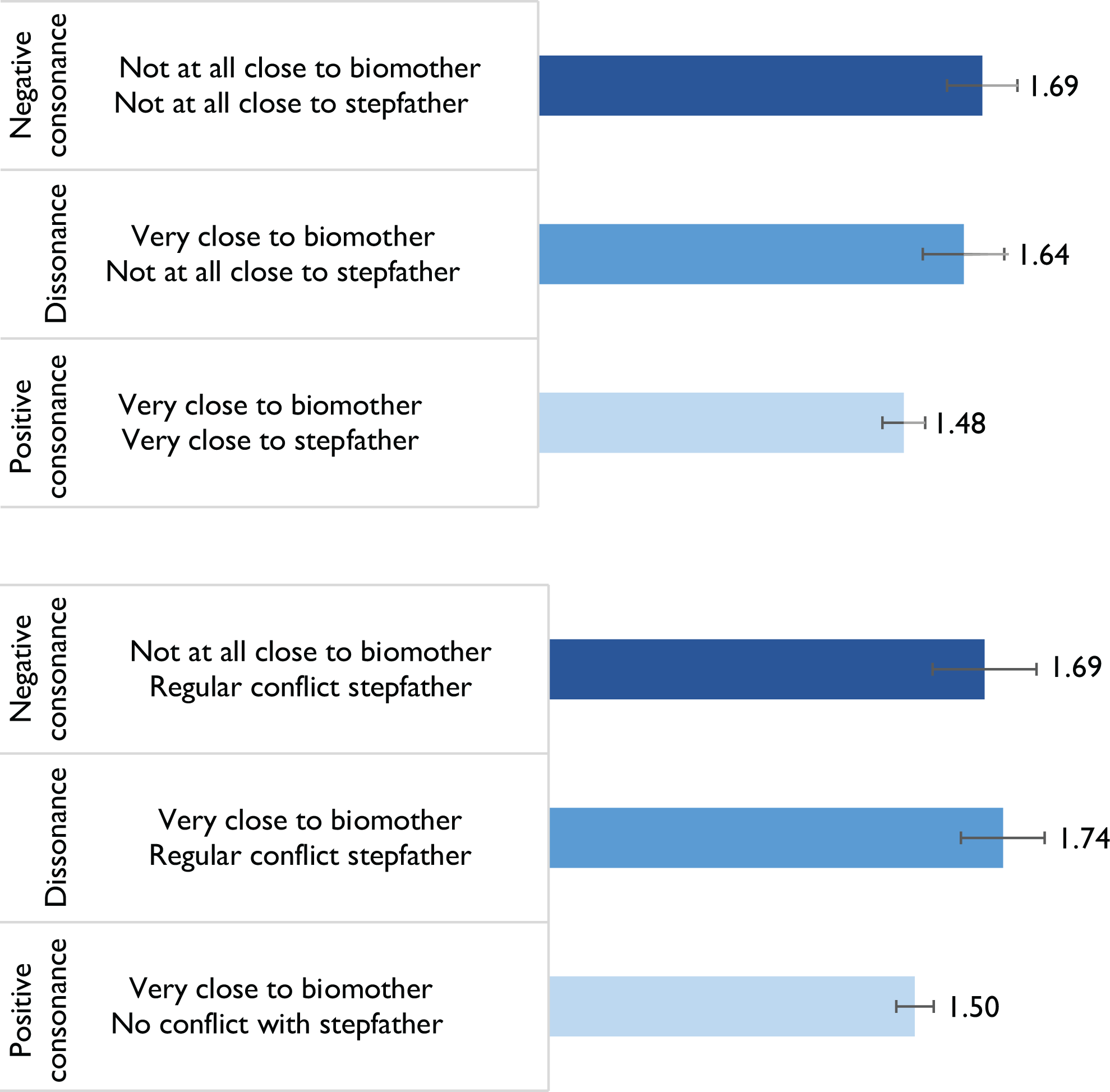
Average predicted depression by pattern in mother-child-stepfather triad (closeness × closeness, closeness × conflict).
For the interaction with stepfather-child closeness, we saw that depression in the positive consonant pattern was significantly lower than in the dissonant and negative consonant pattern, which was expected based on resource and support theories. Although the depression was slightly lower in the dissonant pattern than in the negative consonant pattern, this difference was not significant. For the interaction with stepfather-child conflict, average depression was even higher in the dissonant pattern than in the negative consonant pattern, although this difference was also not significant. This implied that the stressors related to dissonance make that those who have a good relationship with their biological mother but a bad relationship with their stepfather are not better off than those who have a distant relationship to both parents.
Stepmother families
The findings for stepmother families (Table 3) were similar to the findings on stepfather families (Table 2). We found a negative interaction between father-child and stepmother-child closeness for depression (B = −0.04, p < .01). In the interaction model (Model 2), the main effect of father-child closeness on depression was insignificant: when the adult child was not close with the stepmother, closeness in father-child ties did not lead to significantly lower levels of depression (stepmother-child distance cancelled the association in Model 1). We also found a positive interaction between father-child closeness and stepmother-child conflict for depression (B = 0.04, p < .05). Father-child closeness thus diminished depression if the stepmother and child had little to no conflict. This was consistent with Hypothesis 3a and 3b. Surprisingly, we found no significant interactions for child loneliness, which indicated that loneliness is not at all associated with the relationship between the adult child and stepmother.
Relationship patterns
Figure 3 displays the predicted depression and error bars as predicted from the model (Table 3, Model 2 and Model 3). For the interaction with stepmother-child closeness, we found that depression in the positive consonant pattern was significantly lower than in the other two patterns. The dissonant and negative consonant pattern were not significantly different from one another—indicating that those who were very close to the biological father but not at all close with the stepmother were not better off than those who were not close to either parent. For the interaction with stepfather-child conflict, the combinations of answer categories did not significantly differ from one another.
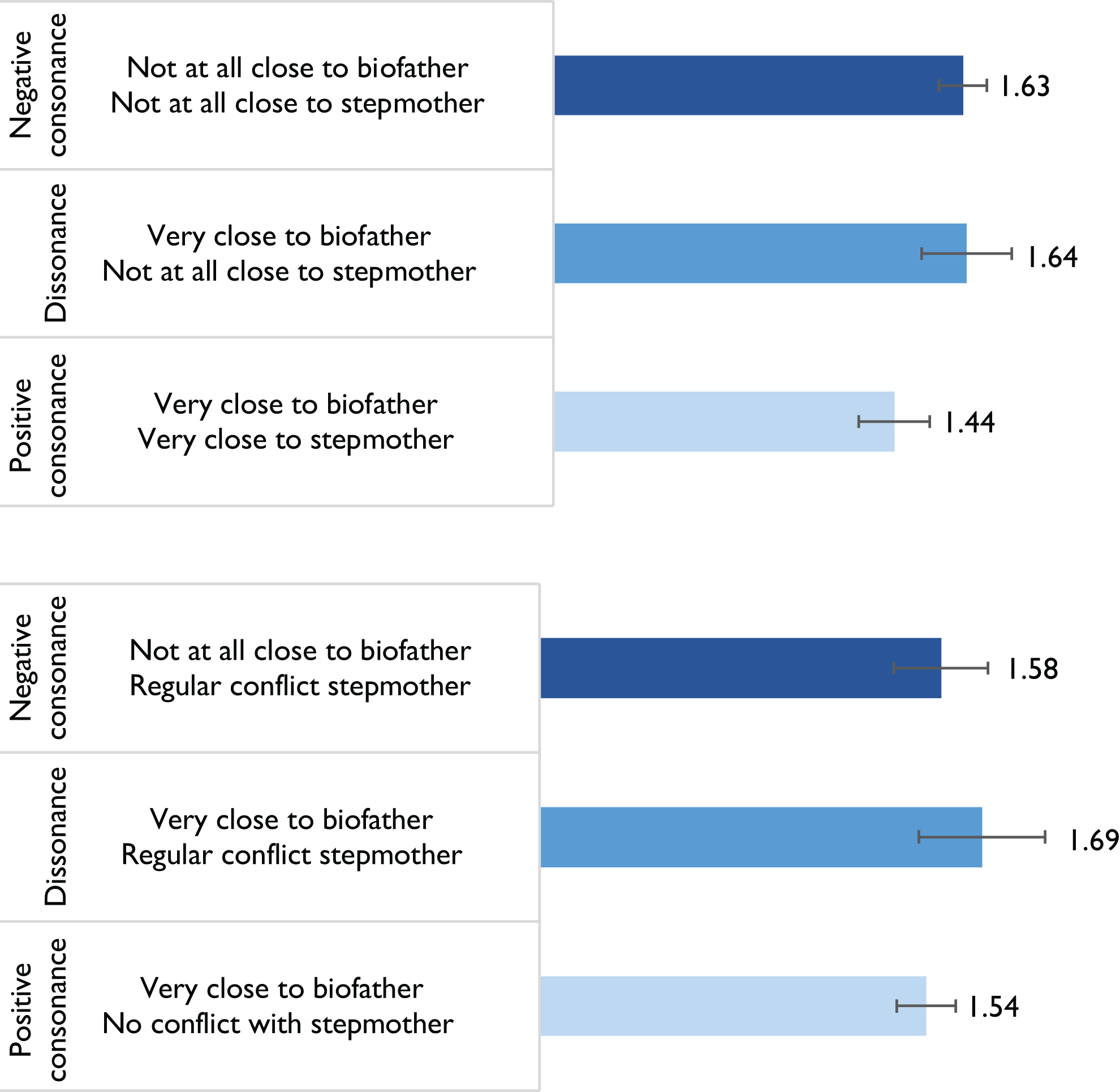
Average predicted depression by pattern in father-child-stepmother triad (closeness × closeness, closeness × conflict).
Adult child gender
As an additional explorative step, we tested whether heterogeneity exists in our findings according to adult child gender. Overall, the coefficients suggested that in adulthood, parent-child ties (and the patterns between them) related considerably more strongly to the well-being of daughters than sons (Table 4). Thus, with respect to depression and loneliness, adult daughters may depend more on family relationships than adult sons. These differences were not statistically significant, however. We did find a significant difference between sons and daughters with respect to one of the dissonance effects: for daughters, conflict with a stepmother undermined the benefits received from being close to the biological father (for depression, B = 0.06, p < .01), while a similar interaction was not present for sons. This can be interpreted as showing that women are more connected to their social environment and therefore more strongly affected by disbalances/conflicts in the stepfamily system.
Interactions with child-gender.
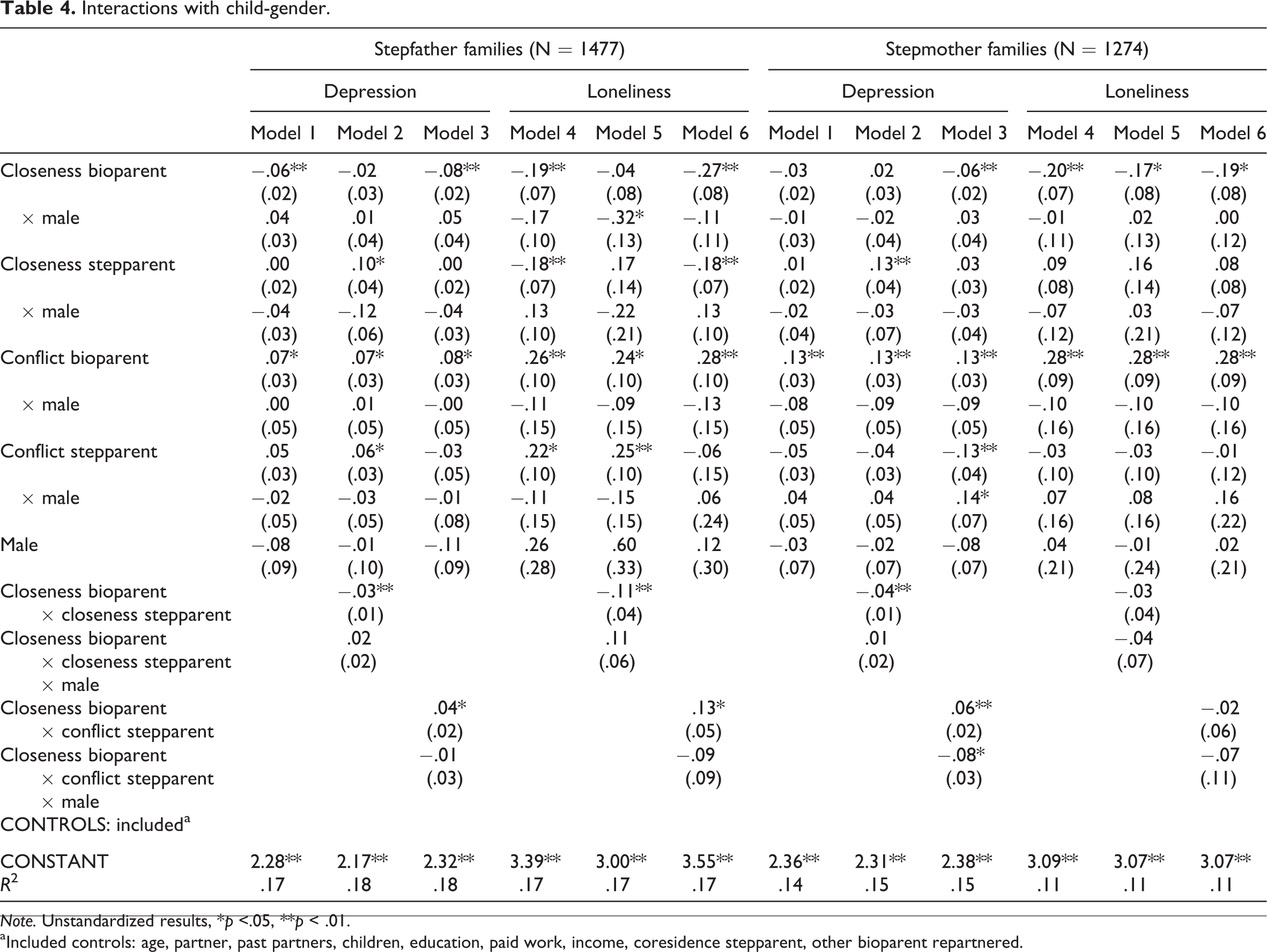
Note. Unstandardized results, *p <.05, **p < .01.
aIncluded controls: age, partner, past partners, children, education, paid work, income, coresidence stepparent, other bioparent repartnered.
Additional analyses
Two additional analyses were performed. First, although not hypothesized, we found some surprising contrasts between stepfather and stepmother families and therefore, we tested if these contrasts were statistically significant. We pooled the two samples, corrected for clustered standard errors to consider that the two samples overlap for some of the cases, and included three-way interactions using stepfamily-type (see Table A2 in the Online Appendix). Overall, the similarities/differences we found were confirmed.
The effect of closeness with mothers was stronger than closeness with fathers, but this difference was not significant. The difference between stepfather-ties, which were found to relate to depression/loneliness, and stepmother-ties, which were unrelated to well-being, was also confirmed in the interactions with stepfamily-type. Moreover, the dissonance effects on depression were confirmed to be similar in stepfather and stepmother families (the three-way-interactions with stepfamily-type were insignificant). Furthermore, in our main results on loneliness, we found a small but significant dissonance effect in stepfather families and a small but insignificant dissonance effect in stepmother families. This difference was not confirmed in the pooled analyses with respect to the closeness-bio*closeness-step*stepfamily-type interaction, which was insignificant. The closeness-bio*conflict-step*stepfamily-type interaction on loneliness was significant, however, which confirmed the results in our main models: this dissonance effect on loneliness exists in stepfather families, but not stepmother families.
Second, in our main analyses, we did not focus on those who were close to the stepparent but not the biological parent, as this “opposite dissonance” is rare (confirmed in Figure 1) and therefore, the number of cases was too small to draw conclusions about its effect on well-being. In an additional check, we examined how those in opposite dissonant patterns fare in terms of well-being from an explorative viewpoint. We used the information from the interaction models (Tables 2 and 3) and calculated the average well-being of those in such patterns (see Table A3 in the Online Appendix). Among those who reported to be close with the stepparent but not with the biological parent, depression/loneliness levels were relatively high. This suggested that the opposite dissonant pattern reflects a unique situation that has its own stressors which reduce well-being. As the sample is small, future research is needed to add confidence to these interpretations.
Conclusion and discussion
Balance theory suggests that people prefer their relationships to be consistent (Heider, 1958). This argument has been displayed using triads, with unbalanced patterns occurring when person a and person b and person a and person c are close, whereas person b and c dislike each other. A unique opportunity to study balance issues and their influence on well-being lies in the context of stepfamilies. In parent-child-stepparent triads, an unbalanced pattern exists when a divorced parent re-partners and their child and new partner do not get along (defined as “dissonance”). In this paper, we not only studied the additive importance of (step)parent-child ties for well-being, but also acknowledged the interplay between both ties. We examined the prevalence of three distinct relationship patterns in stepfamilies and studied whether such patterns (rather than the sum of both ties) are associated to child well-being in adulthood. Unique to the studied patterns is that adults have less opportunities to exit unbalanced family ties (as opposed to unbalanced friendship ties), as “cutting ties” with biological parents or stepparents is often less of an option.
Before examining the interplay of parent-child and stepparent-child ties, we needed to know how important each of these ties was individually. We built upon theories on resource/support exchanges between parents and adult children and argued that parent-child ties influence well-being in adulthood. Our analyses indeed showed that better-quality relationships were predictive of higher levels of well-being. If we look at stepfather families, closeness and conflict with the biological mother were significantly relatedto depression and loneliness. If we look at stepmother families, similar conclusions could be drawn about the biological father. Although the effect sizes were small, the significant associations were noteworthy, as they indicate that even for the well-being of adult and independently living children, the quality of parent-child ties matters.
Another argument implied in resource and support theories is that stepparents can contribute to child well-being in ways that are additive to the contributions of biological parents. Our findings were somewhat in line with this argument, given that better-quality relationships with stepfathers benefit well-being, net of the influence of mother-child ties. Adult children who were closer with their stepfather felt less lonely and those who had less conflict with their stepfather were at lower risk of loneliness and depression. Surprisingly, this was only found for stepfathers and not stepmothers. This indicated a gender difference: a good relationship with a stepfather can be beneficial, whereas a good relationship with a stepmother does not seem to provide any benefits; at best, distant or conflicted stepmother-child ties are also not hurting adult child well-being.
To explore the prevalence of unbalanced patterns in stepfamilies, our descriptive findings showed how often adult children reported to have a good relationship with only the biological parent (dissonance), the biological parent and their new partner (positive consonance), or neither parent figure (negative consonance). We found that positive and negative consonant patterns were most common, indicating a strong association between closeness to a biological parent and closeness or conflict with a stepparent (which can be interpreted as “household effects”). Dissonance was less prevalent. Of those who reported to be close to their biological parent, (a) only a small proportion was distant with their stepparent, and (b) even fewer had regular conflict with the stepparent, although reports of sometimes having conflict happened much more frequently.
Note that we studied adult children whose stepparents stayed in a stable relationship with the biological parent up to adulthood. Given our focus on “stable stepfamilies”, even this infrequent presence of dissonant patterns is noteworthy, as balance theory suggests that dissonant patterns are likely to have disappeared by adulthood (Heider, 1958), either because the child and stepparent have become closer over time (resulting in positive consonance), the child has pulled away from the biological parent (resulting in negative consonance), or because the biological parent and stepparent have separated. We found a small number of dissonant patterns in parent-child-stepparent ties, and it is probable that these dissonant situations have been persistent from childhood to adulthood (“chronic dissonance”).
In terms of consequences, our analyses showed that, although the prevalence of dissonance is low, the consequences in terms of well-being are considerable. Following balance arguments, having a close relationship with a biological parent, but a distant or conflictual relationship with a stepparent (dissonance), creates stressors which undermine the benefits of biological parent-child closeness. Thus, the positive association between biological parent-child closeness and child well-being is attenuated by distance/conflict within the stepparent-child tie. For both stepfather and stepmother families, we found a negative interaction between closeness to the biological parent and closeness to the stepparent, as well as, a positive interaction between closeness to the biological parent and conflict with the stepparent for depression. Hence, a closer relationship with the biological parent does not lead to significantly lower levels of depression when the relationship with the stepparent is distant or characterized by conflict. The same interactions were found for loneliness, but only for stepfather families.
Our results imply that the patterns in children’s relationships to biological parents and stepparents have implications for well-being. Following resource/support theories, one would expect that having distant relationships with both parents is the least optimal pattern for well-being, whereas the dissonant pattern is expected to be somewhat beneficial due to the close relationship with the biological parent. Alternatively, balance theory proposes that dissonance creates such stressors that the benefits of at least having one high-quality parent-child relationship are undermined. As we found that biological parent-child closeness does not diminish depression/loneliness when the stepparent-child tie is negative, our findings imply that those in dissonant relationship patterns are indeed not better off (and sometimes, even worse off) in terms of well-being than those in negative consonant patterns.
There are limitations to our study that can be improved in future research. First, given the cross-sectional nature of the OKiN data, we do not have data on variations in parent-child ties from childhood to adulthood. Our focus on adult children is important nonetheless, as it allowed us to study (step)parent-child ties and well-being long after the adjustment period that generally follows parental divorce or repartnering. An ideal alternative would be to use longitudinal data. Yet, panels generally have a limited number of respondents from stepfamilies, and additionally, they rarely include enough waves to include data on adult children.
Second, using the 5-point Likert scales of parent-child closeness could be an issue, as they may reflect different levels of closeness for parent-child ties than stepparent-child ties (e.g., “reasonably close” may reflect a different level of closeness for stepparents than biological parents). If so, we need to consider how this influences what we define as positive consonance, dissonance, and negative consonance. Although this is a valid argument theoretically, there is no simple empirical solution to account for this issue. An alternative would be to use categorical specifications, but this approach would require us to make arbitrary decisions about answer categories which may not reflect respondents’ answers and is arguably more prone to bias than our current approach.
In future research, attention should be directed towards the other interdependencies within the stepfamily system and the ways in which these affect the well-being of those involved. For instance, we do not know if parents’ well-being is related to their relationships with their adult (step)children nor do we know how “chronic dissonance” affects the biological parent and stepparent. An unexpected finding that requires attention in future works is the limited role of stepmother-child ties in adult stepchildren’s lives. In our findings, stepmothers only influence well-being when the relationship is distant/conflictual, and even then, the influence runs solely via the attenuated negative association between father-child closeness and depression. A few qualitative studies suggested that stepmothers act as “carpenters” that mend the ties between uninvolved fathers and their children (Schmeeckle, 2007; Vinick & Lanspery, 2000). Perhaps we found no independent effect of stepmother-child ties because stepmothers’ investments mostly go towards building positive father-child relationships.
Another finding that deserves future attention is the larger role of parent-child ties (and its patterns) for daughters’ compared to sons’ well-being. Though the differences were not statistically significant, future analyses would be interesting, as this difference may indicate that, in adulthood, women depend more on family ties, while men depend more on factors outside the parental environment.
Overall, stepfamilies have been described as incompletely institutionalized (Cherlin, 1978). The programs that attempt to strengthen the ties between children and divorced parents are primarily directed towards biological parents. Our findings suggest that “secondary actors” such as stepparents can reinforce or attenuate the influence of biological parent-child closeness on well-being. Improving biological parent-child closeness will thus not lead to considerable gains if the stepparent-child relationship remains distant or conflicted. In sum, our findings emphasize that family therapy/counseling would benefit from considering the embeddedness of parent-child ties in a larger system of relationships.
Supplemental material
Supplemental Material, sj-docx-1-spr-10.1177_02654075211031984 - Dissonant relationships to biological parents and stepparents and the well-being of adult children
Supplemental Material, sj-docx-1-spr-10.1177_02654075211031984 for Dissonant relationships to biological parents and stepparents and the well-being of adult children by Maaike Hornstra, Matthijs Kalmijn and Katya Ivanova in Journal of Social and Personal Relationships
Footnotes
Authors’ note
The OKiN was developed, designed, and executed by a collaborative team of researchers from the University of Amsterdam and Statistics Netherlands (CBS).
Funding
The author(s) disclosed receipt of the following financial support for the research, authorship, and/or publication of this article: This study was conducted as part of a larger project on Family Complexity funded by the European Research Council under the Horizon 2020 program [ERC grand agreement no. 669334].
Supplemental material
Supplemental material for this article is available online.
Open research statement
As part of IARR’s encouragement of open research practices, the author(s) have provided the following information: This research was not pre-registered. The data used in the research are cannot be publicly shared but are available upon request. The data can be obtained at  . The materials used in the research cannot be publicly shared but are available upon request. The materials can be obtained by emailing m.s.l.hornstra@uva.nl.
References
Supplementary Material
Please find the following supplemental material available below.
For Open Access articles published under a Creative Commons License, all supplemental material carries the same license as the article it is associated with.
For non-Open Access articles published, all supplemental material carries a non-exclusive license, and permission requests for re-use of supplemental material or any part of supplemental material shall be sent directly to the copyright owner as specified in the copyright notice associated with the article.
