



Abstract
This study examined how the triarchic model of grit (i.e., perseverance of effort, consistency of interests, and adaptability to situations) is related to cultivation of genuine happiness, loneliness, and COVID-19 anxiety in American (n = 643) and Filipino (n = 546) undergraduate students. It also explored whether grit had indirect effects on such social and well-being outcomes via relatedness needs satisfaction and meaning in life. Results of structural equation modeling demonstrated that whereas all grit dimensions were linked to increased relatedness needs satisfaction and meaning in life in the United States, only consistency and adaptability were associated with such constructs in the Philippines. Meaning in life was related to increased cultivation of happiness and reduced loneliness in both societies. Relatedness needs satisfaction was associated with higher happiness as well as decreased COVID-19 anxiety and loneliness in the United States and the Philippines. Finally, evidence supported indirect effects of of selected grit’s dimensions on mental health outcomes via relatedness needs satisfaction and meaning in life in both settings. This research complements existing literature on the relational and psychological benefits of staying gritty in different societies.
The route to achieving a healthy social relationship and well-being is a complicated task amid the COVID-19 pandemic. Supporting this conjecture, recent studies have provided evidence on the mental health toll associated with this pandemic in various societies such as the United States (Kujawa et al., 2020) and the Philippines (Tee et al., 2020). Researchers have also identified the increasing number of detrimental psychological impacts linked to the COVID-19 pandemic as an international public health issue (Xiong et al., 2020). These data point to the importance of identifying psychological, social, and contextual factors that might protect individuals against COVID-19 related mental health hazards. In this study, we explored whether grit served as a protective factor in regard to relational and well-being outcomes during this pandemic outbreak.
Grit was originally conceptualized as a personality trait characterized by sustained attention to specific goal-related activities (a.k.a., consistency of interests), and persisting despite obstacles and failures (a.k.a., perseverance of effort) associated with the pursuit of long-term ambitions (Duckworth et al., 2007). Previous investigations have linked grit to increased life satisfaction (Jin & Kim, 2017; Li et al., 2018), positive emotions (Datu et al., 2016), and meaning in life (Datu et al., 2019; Kleiman et al., 2013). Grit was also related to reduced suicidal tendencies (Kleiman et al., 2013) and burnout (Salles et al., 2014). Recently, grit has been identified as a protective psychological factor during the COVID-19 pandemic (Bono et al., 2020). These findings point to the mental health benefits of grit in different contexts.
Nonetheless, there are key research gaps left unfilled by past studies on grit. First, although prior work (Créde et al., 2017; Datu et al., 2016) has raised concerns about the generalizability of the two-factor model of grit underpinned by perseverance of effort and consistency of interests, there is still little research on how alternative models of grit may relate to well-being and psychological outcomes. Further, the reliability of the consistency of interests subscale is lower in non-Western and collectivist contexts (Disabato et al., 2019). Second, although past studies have shown that grit and its dimensions have been associated with better interpersonal functioning such as popularity among peers (Lan, 2020), prosocial behaviors (Lan et al., 2019), relatedness to parents and teachers (Datu, 2017), peer attachment (Jin et al., 2019), and sense of belongingness (Bowman et al., 2015), little is known about how grit might relate to other social processes and outcomes (e.g., connectedness and school belongingness). Third, whereas previous research has shown that satisfaction of basic psychological needs for autonomy and competence mediated the link of grit to subjective well-being (Jiang et al., 2020; Jin & Kim, 2017), no study has investigated the role of satisfaction of basic needs for relatedness in the hypothesized psychological benefits of grit. These findings underscore the significance of pinpointing precise social processes that account for the positive associations of grit with well-being outcomes.
Given conceptual and methodological controversies regarding the two-factor model of grit, this research adopts the triarchic model of grit (TMG; Datu et al., 2017, 2018a), which extends Duckworth et al.’s (2007) original grit framework by incorporating adaptability to situations, a dimension that encompasses an individuals’ capacity to flexibly modify strategies or pathways of long-term goals especially in collectivist settings. It is logical to anticipate that adaptability might operate as a culturally adaptive feature of grit in interdependent contexts as prior evidence (Suh, 2007; Vignoles et al., 2016) suggests that people in such cultures are more likely than those in individualist societies to espouse a context-sensitive self and behavioral flexibility. Studies have demonstrated that adaptability uniquely predicted academic and career development self-efficacy even after controlling for various demographic factors (e.g., age and gender), Big Five personality factors, and social desirability (Datu et al., 2017). Moreover, this grit dimension has been related to increased life satisfaction (Datu et al., 2021), interdependent happiness (Datu et al., 2018b), and psychological flourishing (Datu et al., 2021) in collectivist societies such as China and the Philippines. Interestingly, recent research has also showcased the beneficial role of adaptability in an individualist society, Poland, as this dimension of grit served as the strongest correlate of life satisfaction and psychological flourishing (Datu et al., 2021).
Guided by the invest-and-accrue model of conscientiousness (Hill & Jackson, 2016), we posit that grit may be associated with increased positive social and psychological outcomes. This model hypothesizes that conscientiousness and related personality characteristics, which predispose individuals to practice discipline, self-control, and regulation can foster optimal psychological health as these traits boost the ability to perform actions that result in success in specific life domains (Hill & Jackson, 2016). Unlike previous research, the present study assessed the roles that meaning in life (the realization that life has meaning; Steger et al., 2006) and relatedness needs satisfaction (the perception that one has a sense of connectedness and significance to other people; Deci & Ryan, 2000) play in the link between TMG and well-being. Consistent with previous findings (Kleiman et al., 2013), it is reasonable to expect a positive association between grit and meaning in life given that gritty individuals are likely to understand the importance of personal struggles and even failures when pursuing long-term aspirations. As the triarchic model of grit (Datu et al., 2017, 2018a) has clearly emphasized the importance of calibrating goal-related pathways and strategies depending on contextual or situational factors and past studies have linked grit to positive interpersonal functioning (Bowman et al., 2015; Lan, 2020; Lan et al., 2019), it is possible that grit may be linked to satisfaction of basic psychological needs for relatedness. If grit can operate as a route to fulfill relatedness needs and achieve a meaningful life, and both meaning in life (Steger et al., 2006) as well as relatedness needs satisfaction (Deci & Ryan, 2000) catalyze optimal psychological functioning, it can be hypothesized that grit dimensions will have indirect effects on well-being during the COVID-19 pandemic via meaning in life and relatedness needs satisfaction. This hypothesis of an indirect association between grit and mental health outcomes via the intermediate role of meaning in life is consistent with previous research about the mediating effects of meaning in life on the links of grit to well-being (Datu et al., 2019; Kleiman et al., 2013). Further, hypothesizing indirect relationships between grit’s dimensions and mental health through relatedness needs satisfaction can be supported by prior studies on how satisfaction of basic psychological needs mediated the associations of grit with subjective well-being (Jiang et al., 2020; Jin & Kim, 2017).
Therefore, the present research explored the relationship between TMG dimensions (i.e., perseverance of effort, consistency of interests, and adaptability to situations) and selected social (i.e., loneliness) and well-being outcomes during the COVID-19 pandemic among undergraduate students in the Philippines and the United States. It also examined the indirect effects of grit’s dimensions on these psychological outcomes via meaning in life and relatedness needs satisfaction. Loneliness, which pertains to perceived feelings of interpersonal isolation and lack of relatedness (Hays & DiMatteo, 1987) was chosen as an outcome in this study given that COVID-19 related loneliness has been associated with health problems such as sleep difficulties (Grossman et al., 2021). Because increased rates of anxiety and depression are associated with the COVID-19 pandemic (Elmer et al., 2020), this study also selected COVID-19 anxiety as an outcome variable. The present study also investigated caring for genuine happiness (Rudaz et al., 2020) as an outcome in order to provide preliminary evidence on how grit relates to new domains of optimal psychological functioning. Finally, previous studies on TMG relied mostly on monocultural designs which may limit generalizability to different cultural contexts, and therefore we investigated the social and mental health benefits of grit in the Philippines and the United States which are regarded to be collectivist and individualist societies (Hofstede Insights, 2018).
The hypothesized direction of paths in the study are depicted in Figure 1. Given that previous studies have shown mixed evidence regarding the correlations among TMG dimensions (Datu et al., 2021; Disabato et al., 2019), we did not propose any hypotheses on how these dimensions relate to each other. As there is relatively robust evidence supporting the beneficial role of perseverance in mental health outcomes in the Unites States (Bowman et al., 2015; Silvia et al., 2013; Weisskirch, 2018) and the Philippines (Datu et al., 2016, 2017, 2018b), we hypothesize that perseverance will be linked to increased meaning in life (H1), cultivation of happiness (H5), and relatedness needs satisfaction (H10) as well as reduced loneliness (H6) and COVID-19 anxiety (H7). Given mixed evidence on how consistency relates to well-being outcomes, we offer no hypotheses on how this grit dimension relates to social and psychological outcomes. With previous studies showcasing the mental health benefits of adaptability in an individualist (i.e., Poland; Datu et al., 2021) and collectivist societies such as the Philippines (Datu et al., 2018b) and mainland China (Datu et al., 2020a), we hypothesize that adaptability will relate to increased meaning in life (H3), relatedness needs satisfaction (H4), and cultivation of happiness (H8) as well as decreased loneliness (H9) and COVID-19 anxiety (H10). As prior evidence indicates that meaning in life (Steger et al., 2006, 2011) and satisfaction of psychological needs (Deci & Ryan, 2000; Vansteenkiste et al., 2020) catalyze optimal psychological health, we anticipate that meaning in life (H11) and relatedness needs satisfaction (H14) will be related to increased cultivation of happiness. Moreover, we expect that meaning in life will be associated with decreased loneliness (H12) and COVID-19 anxiety (H13). We also hypothesize that relatedness needs satisfaction will relate to lower levels of loneliness (H15) and COVID-19 anxiety (H16). In addition, we anticipate that perseverance and adaptability will have indirect associations with cultivation of happiness (H17), loneliness (H18), and COVID-19 (H19) via the intermediate variables—meaning in life and relatedness needs satisfaction.
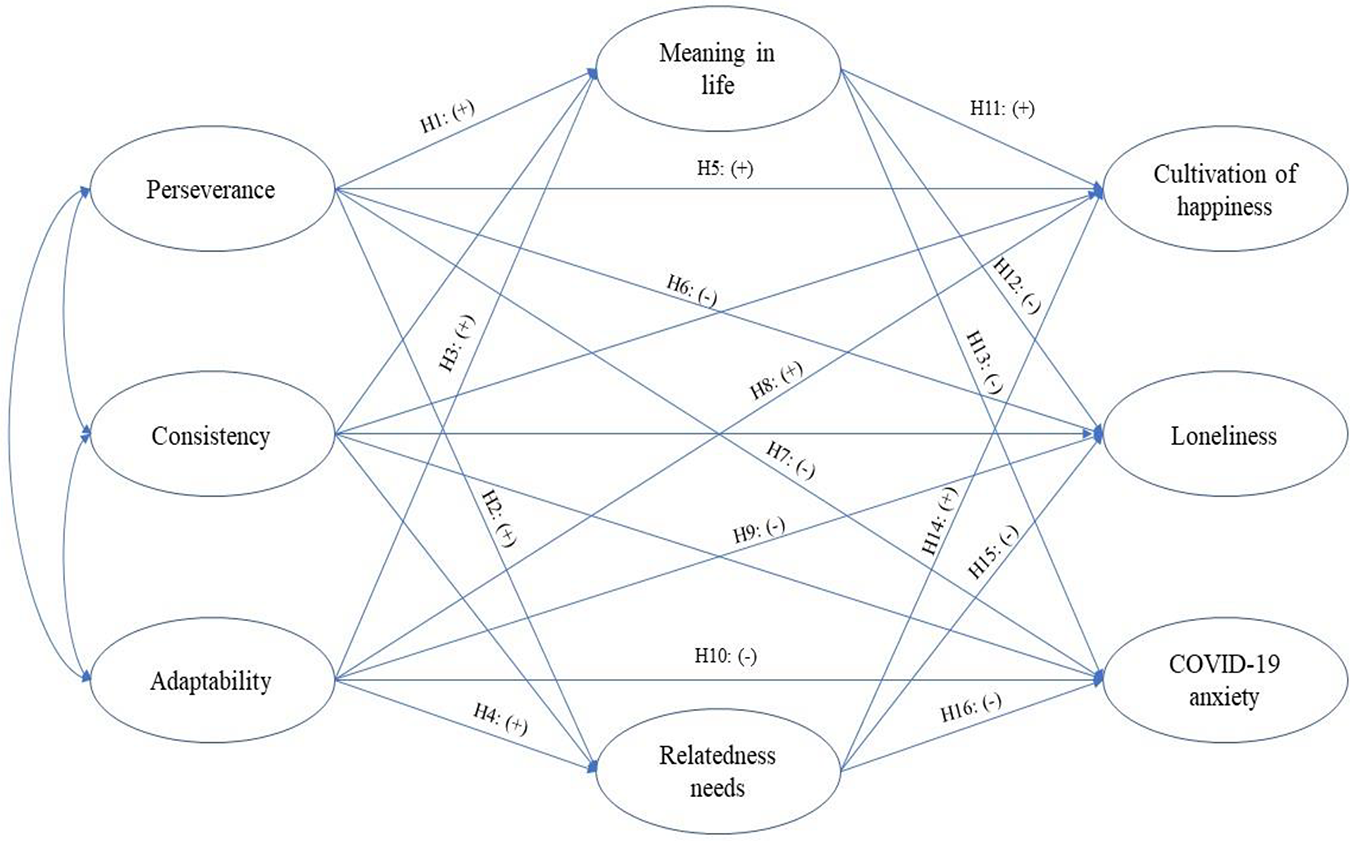
Hypothesized model showing how grit might relate to relatedness needs satisfaction, meaning in life, and psychological outcomes. Note: (+) sign indicates positive path while (-) suggests negative path.
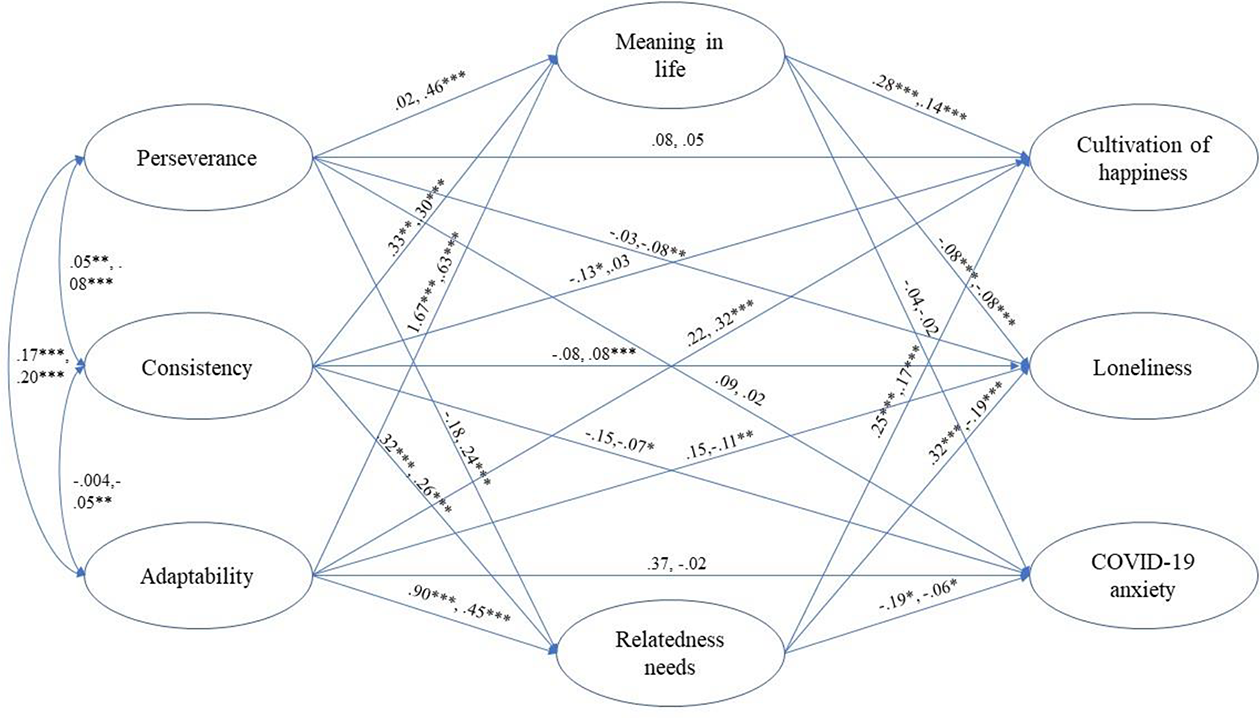
Structural model presenting the relationships among TMG dimensions to relatedness needs satisfaction, meaning in life, and psychological outcomes. Note. * p < .05, ** p < .01, *** p < .001. Regression coefficients are presented in the following order: Philippines and United States. For ease of presentation only latent factors are shown.
Methods
Participants and procedures
There were 1,189 undergraduate student participants (United States, n = 643; Philippines, n = 546). Students in the United States were drawn from a university in the Southeast of the country while those in the Philippines were recruited from a university in an urban city (i.e., Manila City) and another university in a rural setting (i.e., Laguna City). The average age of participants was 19.84 (SD = 1.36) and 19.98 (SD = 2.98) in the United States and the Philippines, respectively. The majority of the participants were female (United States, n = 576; Philippines, n = 443). and most participants in the United States reported that they were White/Caucasian/European American (n = 410).
Prior to survey administration, approval was sought from the Institutional Research Ethics Committee of Florida State University and The Education University of Hong Kong. After getting approval to collect data, an online link comprising the consent letter and survey items was distributed by course instructors of selected classes of undergraduate students. Participants voluntarily agreed to answer the online questionnaire. This study was part of a larger project that investigates predictors of well-being and academic functioning during the COVID-19 pandemic in both contexts.
Measures
Grit
The 10-item Triarchic Model of Grit Scale (Datu et al., 2017) was used to measure participants’ perseverance of effort, consistency of interests, and adaptability to situations. Items were rated using a 5-point Likert scale with 1 indicating “Not like me at all” and 5 suggesting “Very much like me.” Sample items include: “I am diligent” (perseverance), “New ideas and projects sometimes distract me from previous ones” (consistency), and “Changing plans or strategies is important to achieve my long-term goals in life” (adaptability). In the Philippines, the Cronbach’s alpha coefficients of perseverance, consistency, and adaptability subscales were .77, .67, and 72. In the United States, the Cronbach’s alpha coefficients of perseverance, consistency, and adaptability subscales were .90, .81, and 82.
COVID-19 anxiety
The 5-item Coronavirus Anxiety Scale (Lee, 2020) was utilized to assess the participants’ perceived mental health and anxiety linked to COVID-19 pandemic. Sample items in the scale include: “I felt dizzy, lightheaded, or faint, when I read or listened to news about the coronavirus (COVID-19)” and “I lost interest in eating when I thought about or was exposed to information about COVID-19.” Items were rated on a 5-point Likert scale, 0 “Not at all” to 4 “Nearly everyday.” Cronbach’s alpha for this scale in the Philippines and the United States were .89 and .86, respectively.
Cultivation of genuine happiness
The 4-item Caring for Bliss Scale (Rudaz et al., 2020) was used to measure the participants’ perceived ability to foster inner joy and genuine happiness. Sample items in the scale include: “I can generate a feeling of happiness in the here and now” and “I listen deeply to my heart.” Items were marked on a 5-point Likert scale with 1 indicating “Never” and 5 suggesting “Regularly.” The Cronbach’s alpha for this scale in the Philippines and the United States was .80.
Meaning in life
Items in the ‘presence of meaning’ dimension of the Meaning in Life Questionnaire (Steger et al., 2006) were used to measure the participants’ perceived realization of life’s meaning. Sample items in the subscale include: “I understand my life’s meaning” and “I have discovered a satisfying life purpose.” Items were rated on a 7-point Likert scale with 1 suggesting “Absolutely untrue” and 7 indicating “Absolutely true.” The Cronbach’s alpha coefficients of this scale in the Philippines and the United States was .89 and .90 respectively.
Loneliness
The 8-item UCLA Loneliness Scale (Hays & DiMatteo, 1987) was used to measure the participants’ subjective feelings of inadequate interpersonal interactions. Sample items in the scale include: “I lack companionship” and “I feel isolated from others.” Items were rated using a 4-point Likert scale, ranging from 1 “Never” to 4 “Always.” Cronbach’s alpha was .74 and .72 in the Philippines and United States samples, respectively.
Relatedness needs satisfaction
Items in the relatedness subscale (n = 8) of the Basic Psychological Needs Satisfaction–General Scale (Deci & Ryan, 2000) were used to assess perceived fulfillment of basic needs for relatedness. Sample items in this scale involved: “I really like the people I interact with” and “People in my life care about me.” Answers were given on a 7-point Likert scale with 1 indicating “Not at all true” and 7 labeled “Very true.” Cronbach’s alpha were .66 and .80, in the Philippines and the United States samples, respectively.
As English serves as the official mediums of instruction in Philippine higher education institutions, the English version of these scales were used in the current investigation.
Data analyses
Patterns of missing responses were explored before conducting descriptive and inferential analyses. Depending on the results of the missing value analyses, appropriate methods (e.g., imputation technique) for dealing with missingness would be adopted. Then, descriptive statistics such as the mean and standard deviation were computed. Further, independent sample t-tests were conducted to assess gender differences in loneliness, COVID-19 anxiety, and cultivation of happiness given that the majority of the participants in both contexts were female (n = 1019). Zero-order correlational coefficients among TMG dimensions, relatedness needs satisfaction, and outcome variables were computed. These analyses were carried out using the 26th version of the Statistical Package for the Sciences (SPSS).
To address hypotheses regarding the indirect effects of TMG dimensions on cultivation of genuine happiness, loneliness, and COVID-19 anxiety via the intermediate role of relatedness needs satisfaction, the two-step approach in examining structural models was implemented (Anderson & Gerbing, 1988). The first step involved testing a measurement model comprising all the latent constructs, indicators, and errors in the hypothesized structural model to provide evidence of convergent and discriminant validity of constructs in a study. Because constructs with too many indicators are likely to yield models with poor fit indices (Matsunaga, 2008), a parceling approach was used to minimize the number of indicators for loneliness and needs satisfaction. Random assignment of item indicators with relatively equivalent communalities to parcels (Matsunaga, 2008) was conducted which resulted in three parcels each for relatedness needs satisfaction and loneliness constructs. The final measurement model had 8 latent constructs, 20 indicators, and 20 errors. Then, the validity of this measurement model was explored in each country using confirmatory factor analyses (CFA). Consistent with prior methodological guidelines (Lance et al., 2006), a measurement model was considered acceptable if the comparative fit index (CFI) and Tucker-Lewis Index (TLI) were higher than .90 and root mean square error of approximation (RMSEA) and standardized root mean square residual were lower than .08.
Further, measurement invariance was examined to determine whether these constructs would have comparable meanings across Filipino and American undergraduate students. Model 1 tested configural invariance, which involved examining whether the structure of the scale such as the number of factors and loadings are equivalent. Model 2 explored metric invariance by assessing whether the factor loadings are comparable between groups. Model 3 evaluated scalar invariance by examining whether the item intercepts are equivalent across groups. Model 4 tested strict or residual invariance, which included exploring whether the residual or errors of metric and scalar invariant items were comparable across different groups. If the differences in CFI and RMSEA across different levels of invariance were less than .01 and .015 respectively, equivalence at specific levels was accepted which conforms with prior methodological guidelines (Chen, 2007).
After generating evidence regarding the validity of the measurement model, the second step involved evaluating the fit of the hypothesized structural equation model (SEM), which explored the indirect effects of TMG dimensions on COVID-19 anxiety, happiness, and loneliness via meaning in life and relatedness needs satisfaction. Bias-corrected bootstrapping analysis at the 95% confidence interval using 5,000 bootstrapped resamples was conducted to provide evidence of indirect effects. If zeroes did not occur between the lower and upper confidence limits of the indirect effects, we concluded that meaning in life and relatedness needs satisfaction served as intermediate variables accounting for the indirect association between specific TMG dimension and outcome. Throughout the manuscript, we adopted the term ‘intermediate variable’ instead of ‘mediator’ given the cross-sectional nature of this study’s methodological approach.
Results
There were 0.40% to 5.90% missing responses in selected items of this data. The result of missing value analysis indicates that these responses were not missing completely at random: χ2 321.27, df = 195, p < .001. Prior research (Schlomer et al., 2010) has recommended the use of an expectation-maximization imputation strategy in this case. The imputed dataset was used in subsequent analyses.
Table 1 reports the Cronbach’s alpha reliability coefficients, descriptive statistics, and zero-order correlations among grit, relatedness needs satisfaction, meaning in life, loneliness, cultivation of happiness, and COVID-19 anxiety. Except for the reliability estimate of consistency of interests in the Philippines (α = .67), all subscales yielded moderate to high reliability coefficients in both contexts. Moreover, results of independent sample t-tests demonstrated the absence of significant gender differences in cultivation of happiness t(1187) = −0.99, p = .33, loneliness t(221.29) = −1.17, p = .20, and the COVID-19 anxiety t(1187) = 1.74, p = .08. As expected, perseverance and adaptability were positively correlated with relatedness needs satisfaction, meaning in life, and cultivation of happiness, and negatively correlated with loneliness and COVID-19 anxiety in the Philippines and the United States. However, there was mixed evidence on how consistency related to intermediate and outcome variables in both societies.
Descriptive statistics and correlational coefficients among TMG dimensions, relatedness needs satisfaction, meaning in life, and meaning in life in Philippines and the United States.
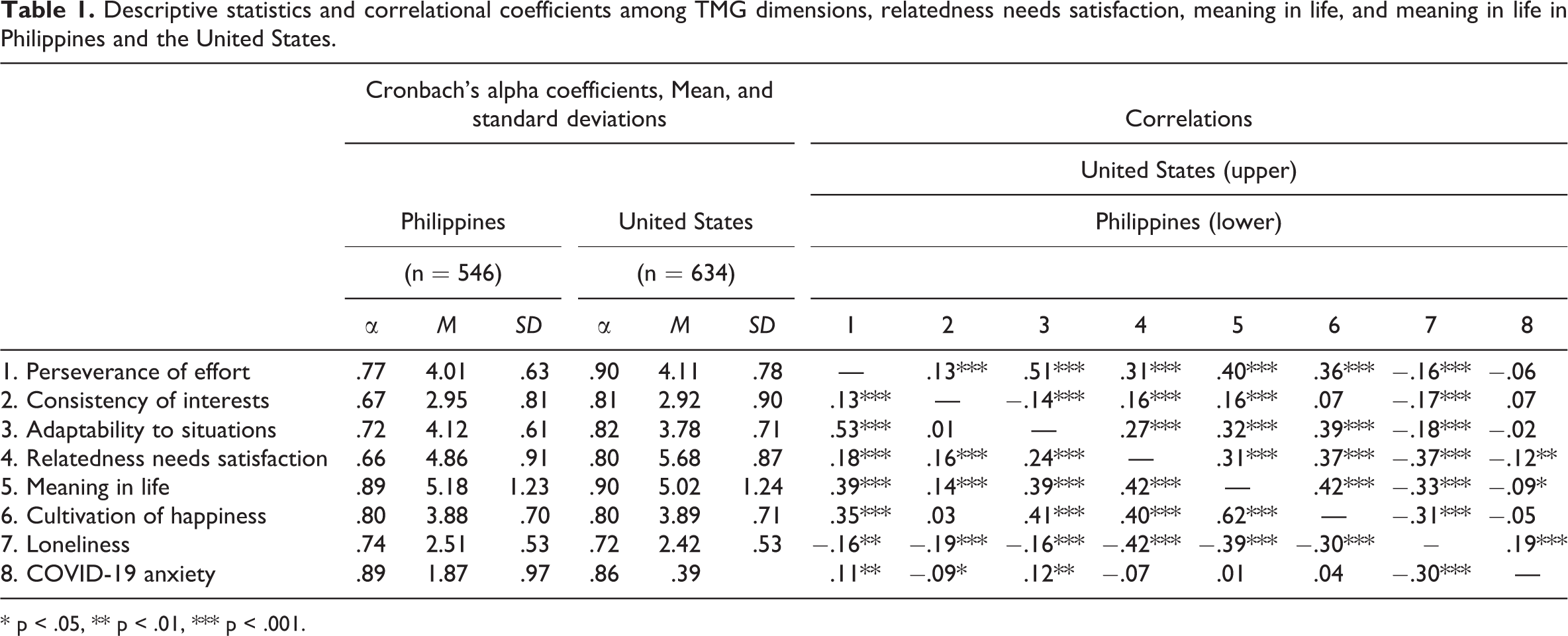
* p < .05, ** p < .01, *** p < .001.
To provide evidence about the convergent and discriminant validity of the constructs in the hypothesized structural model, we conducted confirmatory factor analyses using AMOS in each sample. The maximum likelihood estimation approach was adopted given that there were no indications of violations on univariate and multivariate normality in this study. Table 2 shows the results for the hypothesized measurement model in the Philippines and the United States. The model had a good fit in the Philippines: χ2 = 817.04, df = 377, p < .001, CFI = .94, TLI = .93, SRMR = .048, RMSEA = .046 (.042, .051). All grit dimensions had positive inter-factorial correlations with relatedness needs satisfaction, meaning in life, and cultivation of happiness latent constructs. Meaning in life and relatedness had negative correlations with loneliness and COVID-19 anxiety latent constructs. There were also negative inter-factorial latent correlations between grit dimensions and loneliness while mixed evidence was found on how these grit dimensions relate to COVID-19 anxiety latent construct. All indicators significantly loaded onto their hypothesized latent constructs at p < .001.
Results of separate analyses of the hypothesized measurement model in the Philippines and the United States.

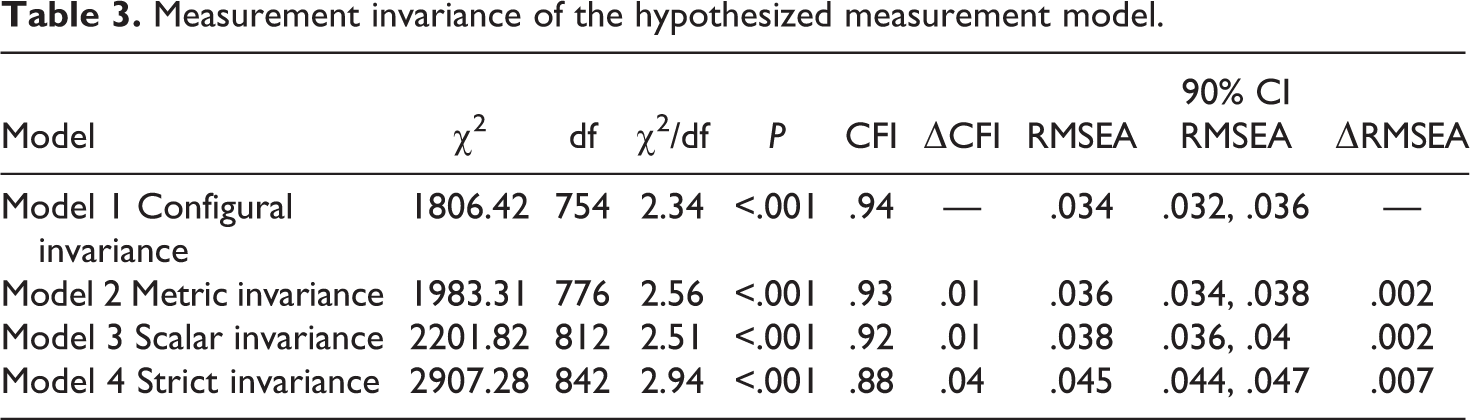
Likewise, there was evidence supporting the validity of the measurement model in the United States: χ2 = 989.39, df = 377, p < .001, CFI = .94, TLI = .93, SRMR = .051, RMSEA = .05 (.046, .054). All grit dimensions had positive inter-factorial correlations with relatedness needs satisfaction, meaning in life, and cultivation of happiness latent constructs. Meaning in life and relatedness had negative correlations with loneliness and COVID-19 anxiety latent constructs. Only consistency had significant negative correlation with the COVID-19 anxiety latent construct. All indicators significantly loaded onto their hypothesized latent constructs at p < .001. Finally, there was evidence showing configural, metric, scalar, and strict invariance of measurement between both societies as the differences in CFI and RMSEA across different levels of invariance were lower than .01 (see Table 3 for the results of measurement invariance).
Measurement invariance of the hypothesized measurement model.
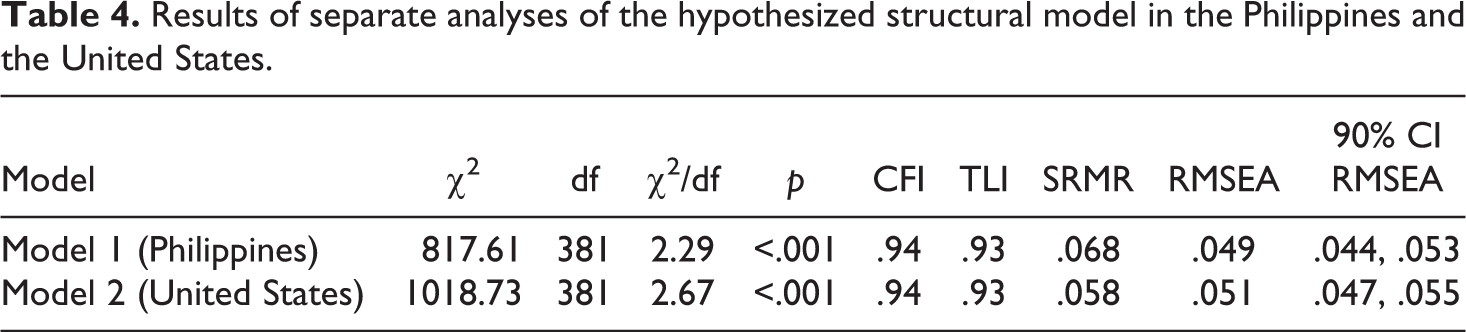
As the results of measurement invariance indicate that our constructs had comparable meanings in each sample, we conducted structural equation modeling via maximum likelihood estimation approach using AMOS in each country. Specifically, the structural model tested the indirect effects of grit dimensions (i.e., perseverance, consistency, and adaptability) on cultivation of happiness, loneliness, and COVID-19 anxiety via the intermediate variables—meaning in life and relatedness needs satisfaction. The model had an acceptable fit in the Philippines: χ2 = 817.61, df = 381, p < .001, CFI = .94, TLI = .93, SRMR = .068, RMSEA = .049 (.044, .053). A review of inter-factorial correlations of the grit dimensions showed that whereas perseverance had positive associations with consistency (r = .18, p < .01) and adaptability (r = .71, p < .001), there was no significant correlation between adaptability and consistency (r = .02, p = .75). Hypothesis 1 and Hypothesis 2 were not confirmed as perseverance did not predict meaning in life, B = −.24, p = .89 and relatedness needs satisfaction, B = −.18, p = .12. Surprisingly, consistency positively predicted relatedness needs satisfaction, B = .33, p < .01 and meaning in life, B = .32, p < .001. Hypothesis 3 and Hypothesis 4 were supported given that adaptability positively predicted relatedness needs satisfaction, B = 1.67, p < .001 and meaning in life, B = .90, p < .001. Hypothesis 5, Hypothesis 6, and Hypothesis 7 were not supported as perseverance did not predict cultivation of happiness, B = .08, p = .33, loneliness B = −.03, p = .60, and COVID-19 anxiety, B = .09, p = .48. Consistency negatively predicted cultivation of happiness, B = −.13, p < .05 and did not predict loneliness, B = −.08, p = .06 and COVID-19 anxiety, B = −.15, p = .14. Hypothesis 8, Hypothesis 9, and Hypothesis 10 were not confirmed given that adaptability did not predict cultivation of happiness, B = .22, p = .15, loneliness B = .15, p = .10, and COVID-19 anxiety, B = .37, p = .13. Hypothesis 11 was supported as meaning in life positively predicted cultivation of happiness, B = .28, p < .001. Given that meaning in life negatively predicted loneliness, B = −.08, p < .001, Hypothesis 12 was confirmed. Hypothesis 13 was not supported given that meaning in life did not predict COVID-19 anxiety, B = −.04, p = .37. Hypothesis 14 was confirmed as relatedness needs satisfaction positively predicted cultivation of happiness, B = .25, p < .001. Given that relatedness needs satisfaction negatively predicted loneliness, B = −.31, p < .001 and COVID-19 anxiety, B = −.19, p < .05, results corroborated Hypothesis 15 and Hypothesis 16.
The structural model had an acceptable fit in the United States: χ2 = 1,018.73, df = 381, p < .001, CFI = .94, TLI = .93, SRMR = .058, RMSEA = .051 (.047, .055). A summary of fit indices for the SEM in both societies is reported in Table 4. Perseverance had positive inter-factorial latent correlations with consistency (r = .16, p < .001) and adaptability (r = .56, p < .001). However, there was a negative inter-factorial correlation between consistency and adaptability (r = −.14, p < .01). Hypothesis 1 and Hypothesis 2 were supported as perseverance positively predicted meaning in life, B = .46, p < .001 and relatedness needs satisfaction, B = .24, p < .001. Consistency positively predicted meaning in life, B = .30 p < .001 and relatedness needs satisfaction, B = .26, p < .001. Corroborating Hypothesis 3 and Hypothesis 4, adaptability positively predicted meaning in life, B = .63, p < .001 and relatedness needs satisfaction, B = .45, p < .001. Hypothesis 5 was not confirmed given that perseverance did not predict cultivation of happiness, B = .05, p = .27. Consistent with Hypothesis 6, consistency negatively predicted loneliness, B = −.08, p < .001. As perseverance did not predict COVID-19 anxiety, B = .02, p = .69, Hypothesis 7 was not supported. Consistency did not predict cultivation of happiness, B = .03, p = 51 but negatively predicted loneliness, B = −.08, p < .001 and COVID-19 anxiety, B = −.07, p < .05. Adaptability positively predicted cultivation of happiness, B = .32, p < .001, which corroborated Hypothesis 8. Consistent with Hypothesis 9, adaptability negatively predicted loneliness, B = −.11, p < .01. Hypothesis 10 was not supported as adaptability did not predict COVID-19 anxiety, B = −.02, p = .78. Confirming Hypothesis 11 and Hypothesis 12, meaning in life positively predicted cultivation of happiness, B = .14, p < .001 and negatively predicted loneliness, B = −.08, p < .001. Hypothesis 13 was not supported given that meaning in life did not predict COVID-19 anxiety, B = −.02, p = .28. Hypothesis 14 was confirmed as relatedness needs satisfaction positively predicted cultivation of happiness, B = .17, p < .001. Relatedness negatively predicted loneliness, B = −.19, p < .001 and COVID-19 anxiety, B = −.06, p < .05 which corroborated Hypothesis 15 and Hypothesis 17. Table 5 reports the unstandardized coefficients in the final structural models in the Philippines and the United States.
Results of separate analyses of the hypothesized structural model in the Philippines and the United States.
Unstandardized beta coefficients in the structural models.
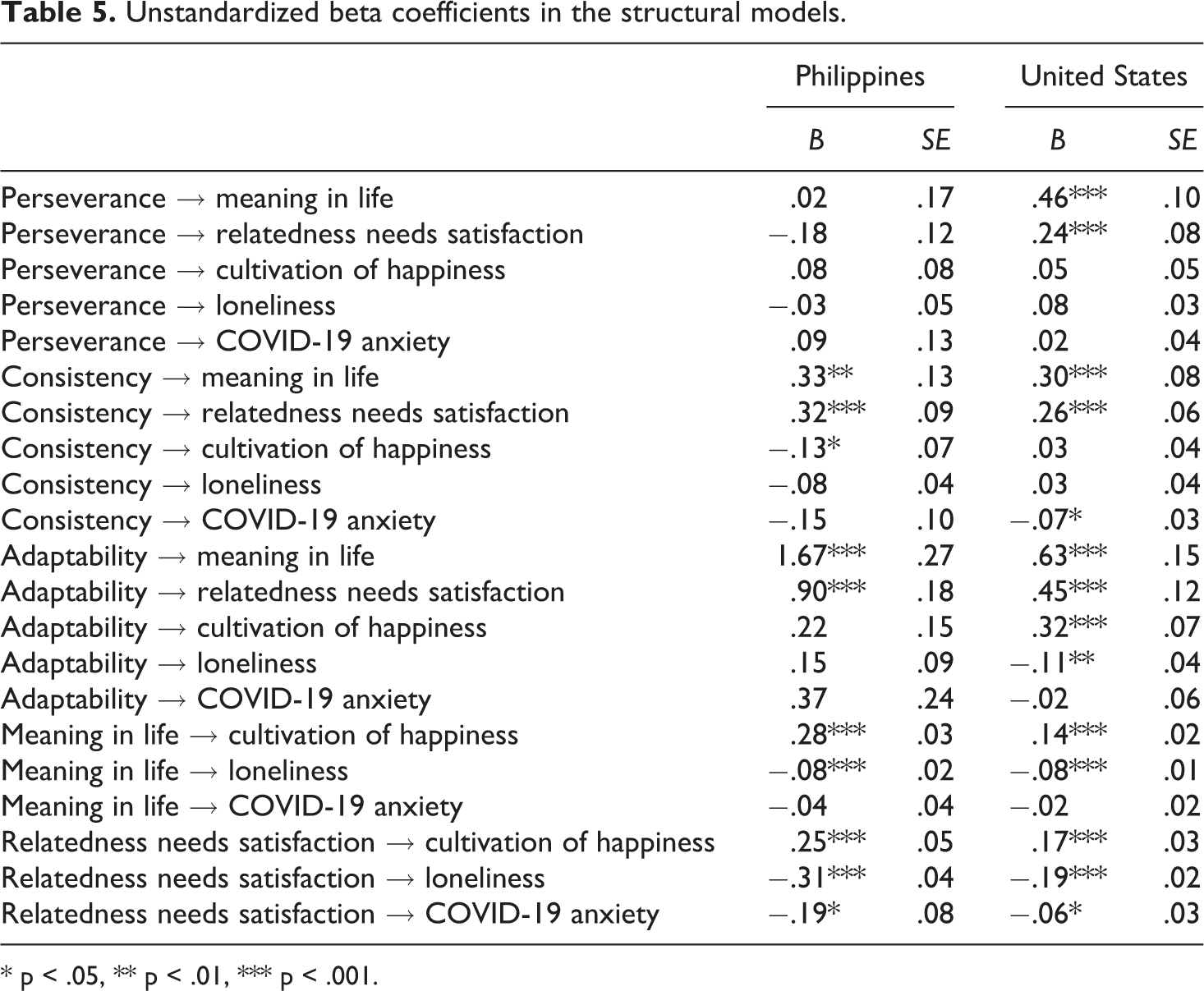
* p < .05, ** p < .01, *** p < .001.
To provide evidence on the indirect effects of meaning in life and relatedness needs satisfaction on the hypothesized path of each TMG dimension to cultivation of happiness, loneliness, and COVID-19 anxiety, bias-corrected bootstrapping analyses at 95% confidence interval using 5,000 bootstrapped resamples were conducted. Results demonstrated that consistency had indirect effects on loneliness via meaning in life and relatedness needs satisfaction in the Philippines and the United States. Adaptability had indirect effects on cultivation of happiness and loneliness via meaning in life and relatedness needs satisfaction in both countries. Adaptability had indirect effects on COVID-19 anxiety via similar intermediate variables in the Philippines. Perseverance had indirect effects on cultivation of happiness and loneliness through these intermediate variables in the United States. Findings of indirect effects analyses are reported in Table 6.
Results of bootstrapping analyses in the Philippines and United States.
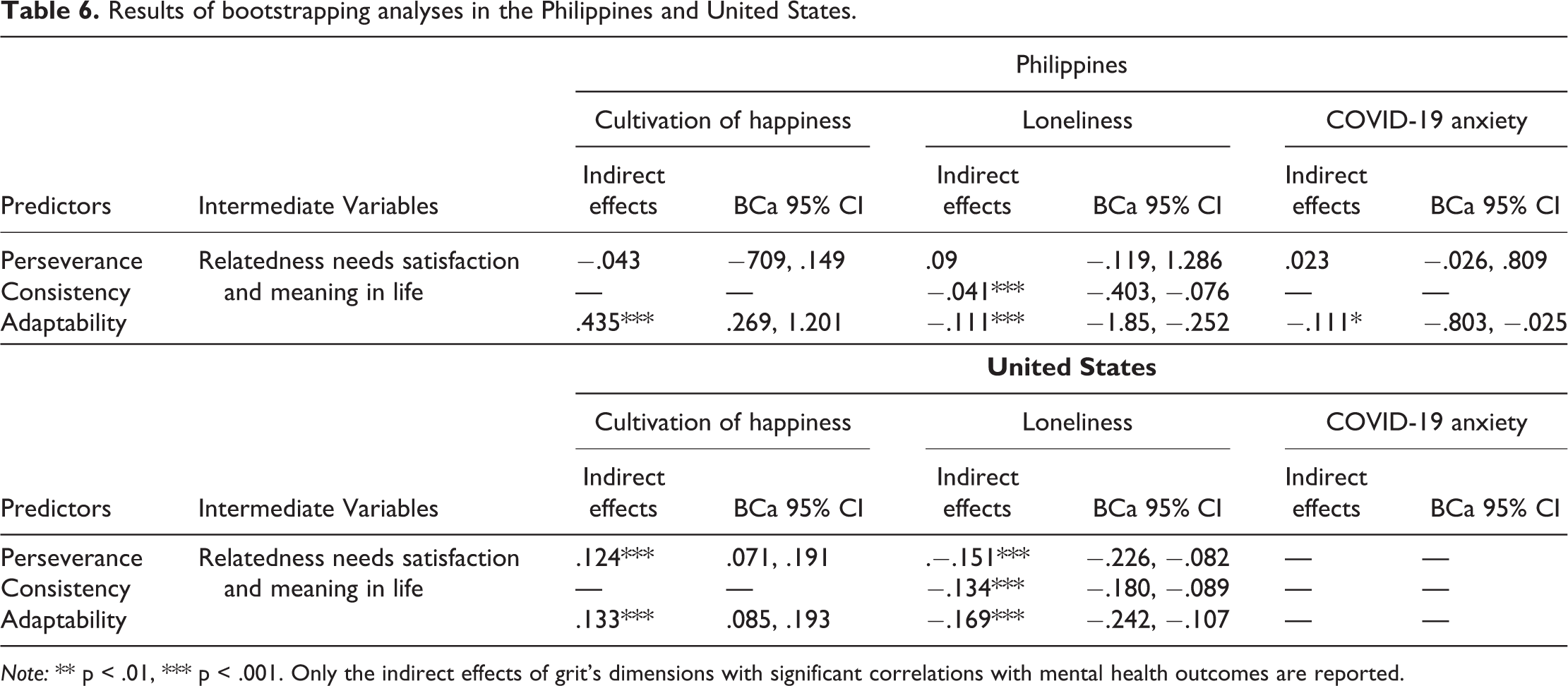
Note: ** p < .01, *** p < .001. Only the indirect effects of grit’s dimensions with significant correlations with mental health outcomes are reported.
Discussion and conclusions
Recent research indicates that grit underpinned by perseverance of effort and consistency of interests serves as a protective factor during the COVID-19 pandemic in undergraduate students in the United States (Bono et al., 2020). However, the role of an alternative model of grit in students’ mental health during this pandemic in different cultural settings has not been explored. The present research therefore examined the association of TMG dimensions with meaning in life, relatedness needs satisfaction, cultivation of happiness, loneliness, and COVID-19 anxiety using a cross-cultural approach involving undergraduate students in the Philippines and the United States.
Corroborating our predictions on the role of adaptability, results showed that this dimension of grit was linked to increased meaning in life and relatedness needs satisfaction in both the Philippines and the United States. Further, adaptability had direct and positive associations with cultivation of happiness in the United States. It is logical to argue that this TMG dimension may be linked to positive interpersonal and psychological outcomes given that past literature has emphasized the significance of effectively regulating difficult goals to attain desirable performance (Dreisbach & Fröber, 2019; Lucas et al., 2015). A key contribution of this study, however, is that it points to the direct effects of adaptability with constructs related to social well-being such as relatedness needs satisfaction and meaning in life. These findings resemble prior evidence on the mental health benefits linked to espousing higher capacity to modify goal-related strategies or even changing goals that could not be realistically attained (Datu et al., 2018b, 2021; Disabato et al., 2019).
Surprisingly, consistency had positive and direct associations with meaning in life and relatedness needs satisfaction both in the Philippines and the United States. Further, there was a negative and direct association between this TMG dimension and COVID-19 anxiety. Although these results are not consistent with prior research showing a non-significant link between consistency and psychological outcomes especially in non-Western contexts (Datu et al., 2016, 2018b, 2021; Disabato et al., 2019), it is likely that this dimension of grit might carry potential benefits in the context of maintaining smooth interpersonal relationships. This is because continuously sticking to interests or activities that optimize achievement of long-term relational goals might increase individuals’ likelihood of satisfying fundamental needs to belong (Baumeister & Leary, 1995).
Another interesting aspect of the findings point to the direct and positive association of perseverance with meaning in life and relatedness needs satisfaction in the United States but not in the Philippines. It is plausible that perseverance might not always relate to optimal psychological outcomes during the COVID-19 pandemic in different contexts, specifically that there are situations in which consistently persisting in times of struggles and failures may not result in successful goal attainment. For example, if one aspires to pursue an extravagant wedding during this pandemic even after getting a salary cut due to an organization’s financial losses, he or she might end up financially burdened, which in turn can lead to lower well-being. Clearly, there is danger associated with staying persistent even in circumstances in which the possibility of goal success is bleak (Baumeister et al., 2003).
Further, whereas all TMG dimensions were associated with higher levels of meaning in life and relatedness needs satisfaction in the United States, only consistency and adaptability were associated with such psychological constructs in the Philippines. These results, which reinforce recent research (Bono et al., 2020) on the beneficial role of grit in mental health outcomes among undergraduate students in the United States, indicate that grit might serve as a more robust protective psychological resource in an individualist culture amid the pandemic outbreak. It is likely that grit might serve as a stronger correlate of well-being in the U.S. than in the Philippines as research has shown that gritty individuals tend to display an increased likelihood of behaving in ways that correspond to their actual emotions, values, and goals in an individualist context (Vainio & Daukantaitė, 2016). In collectivist culture, it is common to engage in actions that are sensitive to interpersonal, contextual, and situational factors (Suh, 2007) so it is possible that grit may exhibit weaker associations with well-being. However, this inference remains speculative given that we did not measure individualism and other related cultural values in this research.
In addition, consistency was associated with lower cultivation of happiness in the Philippines. This result is consistent with those of prior studies (Datu et al., 2021; Disabato et al., 2019) regarding the negative to non-significant association of consistency with well-being outcomes in non-Western cultural contexts. Because individuals in societies with strong collectivist values tend to pursue goals and actions based on other people’s feedback and situational considerations (Suh, 2007), they may adopt more flexible pathways and interests in working toward long-term ambitions. Further, there is evidence supporting how continuously sticking to one’s goal might have detrimental behavioral (Lucas et al., 2015) and mental health outcomes (Anestis & Selby, 2015).
As expected, meaning in life was linked to increased cultivation of happiness and decreased loneliness in the Philippines and the United States, which is consistent with past studies on the benefits of presence of meaning in life in optimal psychological health (Steger et al., 2006, 2011). These findings suggest that students who realized their lives’ meaning are more likely to actively find ways to achieve happiness and are less likely to feel that they are ‘disconnected’ from others. It is possible that meaning in life might relate to increased well-being during challenging times (e.g., COVID-19 pandemic) as having meaning in life fosters interpersonal attraction (Stillman et al., 2011), which is important in facilitating mental health outcomes. Given that individuals with a higher sense of meaning in life tend to reflect on the perceived significance of their existence (Steger et al., 2006), they are also likely to think about the relevance of COVID-19 pandemic-related struggles to their overall sense of being and purpose in life, which in turn, might promote psychological well-being.
Further, results showed direct and positive associations between relatedness needs satisfaction and cultivation of happiness in the Philippines and the United States. Relatedness needs satisfaction also exhibited direct and negative relationships to loneliness and COVID-19 in both settings, which confirmed previous research findings regarding the positive impacts of relatedness on well-being outcomes during the COVID-19 pandemic (Behzadnia & FatahModares, 2020; Šakan et al., 2020). These findings point to the mental health payoffs of providing opportunities to fulfill needs to facilitate connectedness to other people. Our results align considerably not only with the basic psychological needs satisfaction theory, but also with the fundamental tenets of self-determination theory (Deci & Ryan, 2000; Ryan & Deci, 2017).
In addition, our data show indirect effects of consistency on loneliness and adaptability on cultivation of happiness and loneliness via meaning in life and relatedness needs satisfaction in the United States and the Philippines. Adaptability had indirect effects on COVID-19 anxiety via the abovementioned intermediate variables. Perseverance had indirect effects on cultivation of happiness and loneliness through similar intermediate variables in the US. Given prior evidence that grit relates to higher levels of meaning in life (Kleiman et al., 2013) and positive interpersonal functioning such as peer popularity and sense of belonging (Bowman et al., 2015; Jin et al., 2019; Lan, 2020) and meaning in life (Steger et al., 2006) as well as satisfaction of basic psychological needs (Šakan et al., 2020; Vansteenkiste et al., 2020), it is not surprising that meaning in life and relatedness needs satisfaction may potentially serve as key psychological processes accounting for the mental health benefits of TMG dimensions during the COVID-19 pandemic in both cultural contexts. These results corroborate basic assumptions of the invest-and-accrue model of conscientiousness (Hill & Jackson, 2016) showcasing the significance of traits reflecting discipline, self-control, and diligence on a wide range of performance and psychological outcomes in various domains.
Notwithstanding it contributions, the findings of the current study need to be viewed in light of its limitations. Given the correlational and cross-sectional nature of this investigation, the results do not provide evidence on temporal precedence among the grit dimensions, relatedness needs satisfaction, meaning in life, and well-being outcomes, which is important to detect mediated effects. Future research can address this limitation by using longitudinal designs to robustly test the potential mediating effects of meaning in life and relatedness needs satisfaction. The current study also relied on self-reported measures to assess predictor, intermediate, and outcome variables, which might increase susceptibility to common method variance. As our investigation recruited undergraduate student samples in the United States and the Philippines, results might have limited generalizability to students from diverse developmental backgrounds and non-student samples (e.g., employees). This shortcoming can be addressed by exploring the links of TMG to social and well-being outcomes in early adults, younger adolescents, and children to provide evidence about the significance of grit across different developmental phases.
Nonetheless, our study makes unique contributions to the existing grit literature. First, while a recent investigation (Bono et al., 2020) showed that grit was related to lower levels of psychological distress during the COVID-19 pandemic, it relied on the two-factor model of grit, which has been criticized at theoretical and methodological levels (Créde et al., 2017; Datu et al., 2016; Disabato et al., 2019). The present study addressed this limitation by examining the triarchic model of grit (Datu et al., 2017, 2018a) in a wide range of social and well-being outcomes linked to the COVID-19 pandemic. Second, whereas prior studies have demonstrated that grit relates to better interpersonal functioning such as peer popularity (Lan, 2020) and sense of belonging (Bowman et al., 2015), these studies primarily concentrated on social correlates of the two-factor model of grit using monocultural designs. Our study complements these findings through generating preliminary evidence on the links of TMG dimensions to social (i.e., relatedness needs satisfaction, meaning in life, and loneliness) and psychological (i.e., cultivation of happiness and COVID-19 anxiety) constructs via a cross-cultural design involving students in the Philippines and the United States. Third, this research contributes to existing evidence on the benefits of selected grit’s dimensions on COVID-19 mental health outcomes via the intermediate variables of meaning in life and relatedness needs satisfaction.
Conclusions
Recent research has demonstrated the potential mental health benefits of grit during the COVID-19 pandemic in the United States (Bono et al., 2020). However, no study has yet explored the association of an alternative model of grit with social and other well-being dimensions during the COVID-19 pandemic in other cultural contexts. The current research addressed these gaps by examining the role of the triarchic model of grit in the cultivation of happiness, loneliness, and COVID-19 anxiety via a cross-cultural design in the Philippines and the United States. This study indicates that promoting opportunities to foster selected components of TMG may be linked to relatedness needs satisfaction and meaning in life which in turn, relate to mental health outcomes during the pandemic outbreak. It is hoped that the present findings will stimulate future research on the interpersonal and psychological payoffs associated with grittiness in different cultural settings.
Supplemental material
Supplemental Material, sj-pdf-1-spr-10.1177_02654075211029380 - The relational and mental health payoffs of staying gritty during the COVID-19 pandemic: A cross-cultural study in the Philippines and the United States
Supplemental Material, sj-pdf-1-spr-10.1177_02654075211029380 for The relational and mental health payoffs of staying gritty during the COVID-19 pandemic: A cross-cultural study in the Philippines and the United States by Jesus Alfonso D. Datu and Frank D. Fincham in Journal of Social and Personal Relationships
Footnotes
Data availability statement
The dataset generated during and/or analyzed during the current study is available from the corresponding author on reasonable request.
Ethical approval
All procedures performed in studies involving human participants were in accordance with the ethical standards of the institutional and/or national research committee and with the 1964 Helsinki declaration and its later amendments or comparable ethical standards.
Informed consent
Informed consent was obtained from all individual participants included in the study.
Funding
Open access publication of this research was funded by the Faculty Research and Higher Degrees Committee’s Open Access Publishing Fund of the Faculty of Education and Human Development at the Education University of Hong Kong.

Open research statement
As part of IARR’s encouragement of open research practices, Dr. Jesus Alfonso D. Datu and Prof. Frank D. Fincham have provided the following information: This research was not pre-registered. The data used in the research cannot be publicly shared but are available upon request. The materials (i.e., scales) used in the research cannot be publicly shared but are available upon request.
Supplemental material
Supplemental material for this article is available online.
References
Supplementary Material
Please find the following supplemental material available below.
For Open Access articles published under a Creative Commons License, all supplemental material carries the same license as the article it is associated with.
For non-Open Access articles published, all supplemental material carries a non-exclusive license, and permission requests for re-use of supplemental material or any part of supplemental material shall be sent directly to the copyright owner as specified in the copyright notice associated with the article.
