




Abstract
The current study applies the communication theory of resilience (CTR) to assess married individuals’ utilization of resilience communication during the first wave of the COVID-19 pandemic. This study examines pathways between communicative resilience processes, relational uncertainty, discrete emotions, and evaluations of dyadic coping. Married individuals (n = 561) were surveyed during April 21–April 29, 2020 using Qualtrics panels. Structural equation analyses revealed that most of the resilience communication processes impacted evaluations of dyadic coping via three indirect pathways, including (a) relational uncertainty, (b) relational uncertainty → anger, and (c) relational uncertainty → fear. The alternative logic of humor did not impact dyadic coping through these indirect pathways, but instead directly, positively impacted dyadic coping. Theoretical and practical implications, limitations, and future research directions are discussed.
The novel Coronavirus, known as Coronavirus Disease 2019 (COVID-19), was declared a pandemic by the World Health Organization (WHO) in March 2020. Due to a lack of pharmaceutical means of treating or vaccinating against the virus, many nations implemented social distancing protocols, impacting interpersonal interactions across society (Khoo & Lantos, 2020). In the United States, each state instituted varying degrees of social distancing policies by April 2020 (Courtemanche et al., 2020). These policies included measures such as limiting or banning public gatherings, closing schools and non-essential businesses, keeping distance from others in public spaces, working from home, and restricting travel (Block et al., 2020). Researchers and health professionals expressed concern about the relational impacts of social distancing, particularly for couples whose marriages may be strained from being confined together (Galea et al., 2020; Park et al., 2020; Restubog et al., 2020). Articles and commentaries have been rapidly published to provide guidance for families about managing the COVID-19 pandemic (e.g., Restubog et al., 2020). However, evidence of how couples have actually managed the COVID-19 pandemic and the outcomes of those strategies is less known.
The current study assesses married individuals’ resilience communication during the COVID-19 pandemic’s first wave. 1 Although the impact of the COVID-19 pandemic can vary depending on numerous factors, such as having children at home, evidence suggests that the pandemic impacted everyone to some degree during the time of data collection (Courtemanche et al., 2020; Khoo & Lantos, 2020; Pietromonaco & Overall, 2020). Engaging in resilience communication has been linked to positive evaluations of dyadic coping during life disruptions (Venetis et al., 2020) and is likely important for evaluations of dyadic coping during the COVID-19 pandemic.
The current study tests a model whereby resilience communication is linked both directly to positive evaluations of dyadic coping and indirectly through reduced relational uncertainty and negative emotion (see Figure 1). Dyadic coping is “a process in which the stress signals of one partner and the coping reactions of the other partner to these signals are taken into consideration” (Bodenmann, 1997, p. 138). Relational uncertainty refers to the “degree of confidence people have in their perceptions of involvement within interpersonal relationships” (Knobloch & Solomon, 2003, p. 282). This can include uncertainty about the future of the relationship, the partner’s commitment, or one’s own relationship goals. Relational uncertainty commonly occurs during times of relational transition and crisis and is linked to depression, communication dissatisfaction, negative emotions, and distrust (Knobloch, 2008; Knobloch, Miller, & Carpenter, 2007; Knobloch & Theiss, 2011a). Therefore, providing empirically supported strategies for reducing relational uncertainty during the COVID-19 pandemic is an important goal for relationship scholars. Additionally, the current study furthers resilience theorizing by connecting resilience communication with relational uncertainty. The following describes the communication theory of resilience (CTR; Buzzanell, 2010, 2019) and provides empirical and theoretical support for the hypothesized model.
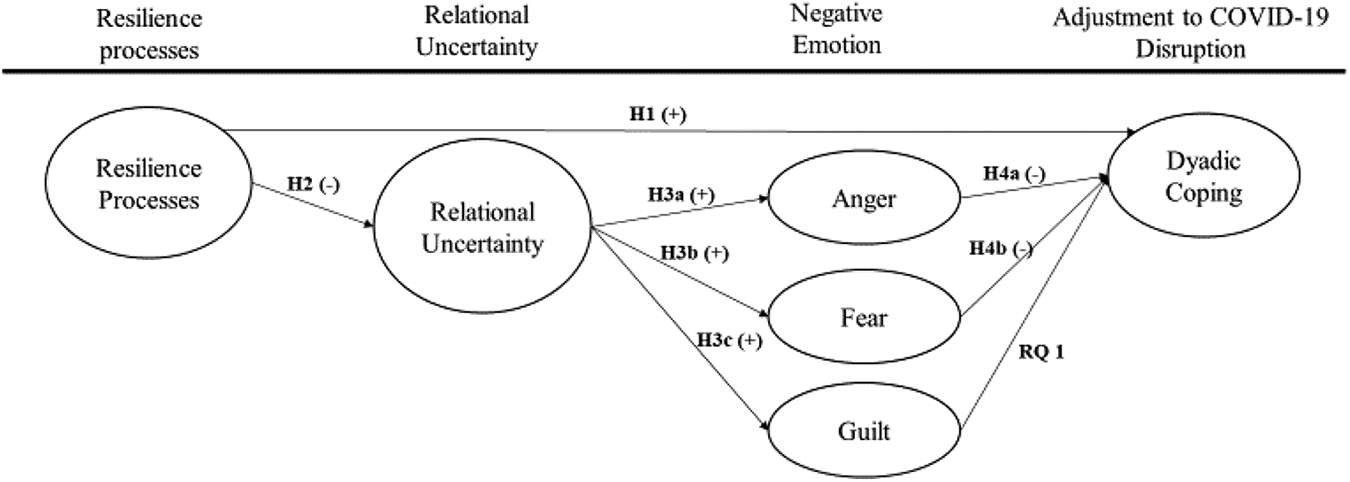
Hypothesized model.
Communication theory of resilience
The CTR (Buzzanell, 2010, 2019) conceptualizes resilience as a communicative process in which individuals engage in discourse as a response to disruption. CTR describes five communication processes that facilitate resilience. First, crafting normalcy occurs when individuals talk about how to reinstate pre-disruption normalcy or how to create new routines following disruptions (i.e., a “new normal”). For men experiencing job loss, resilience was enacted by maintaining normalcy through keeping family rituals and routines (e.g., taking vacations) that were important before the job loss. However, these rituals sometimes needed to be adjusted as a result of the disruption (e.g., less expensive vacations) (Buzzanell, 2010). Maintaining and using communication networks, hereafter communication networks, occurs when individuals engage in communication efforts with those in their social network to alleviate stress associated with a disruption. Communication networks includes talk with one’s partner, as evidenced in couples managing a cancer event (Venetis et al., 2020), as well as individuals outside of the dyad who may provide support (Dorrance Hall, 2018). Next, affirming identity anchors, hereafter identity anchors, represents communicative efforts to enhance or reinforce salient identities or values. Hardship can challenge one’s sense of self thus making it important to validate valued identities (Buzzanell, 2010). For couples experiencing disruptions such as military deployment (Villagran et al., 2013), a cancer diagnosis (Lillie et al., 2018), or job loss (Buzzanell, 2010), identity management was extremely important in fostering resilience. Constructing alternative logics occurs when individuals communicate in ways that reframe the disruption, such as breast cancer patients utilizing humor (Lillie et al., 2018) and military spouses reframing deployment as an “adventure” (Villigran et al., 2013). Finally, foregrounding productive action, while backgrounding negative feelings, hereafter foregrounding productive action, includes communicative efforts that acknowledge challenges or negative feelings associated with a disruption while focusing on potential positive outcomes or feelings (e.g., hopefulness). Marginalized family members describe pride in their differences while simultaneously recognizing their hurtful experiences with family members (Dorrance Hall, 2018). While initially theorized as productive, this process has been linked to experiences of tension as couples report dilemmas surrounding communication about the negatives associated with a disruption (Lillie et al., 2018; Villagran et al., 2013).
To date, most literature applying the CTR is interpretive and qualitative; Buzzanell (2019) calls for empirical studies using CTR to move beyond explaining how the five processes function and to begin exploring outcomes of CTR processes. To this end, scholars are quantifying the five resilience processes and examining how these processes relate to other communication processes and outcomes (Chernichky-Karcher et al., 2019; Wilson et al., in press). Wilson and colleagues (in press) identified three outcomes of communicative resilience in response to “disruptive events” (e.g., relationship challenges, legal issues) including posttraumatic growth, self-reported mental health, and one’s sense of purpose and identity. In the context of cancer management, communicative resilience positively predicted patients’ cancer management and evaluations of dyadic coping (Venetis et al., 2020).
As seen in Venetis et al. (2020), evaluations of dyadic coping may indicate the effectiveness of communicative resilience processes in response to a disruption like COVID-19. We seek to replicate Venetis et al.’s (2020) findings in a new context by testing the relationship between resilience processes and evaluations of dyadic coping in the COVID-19 context.
Resilience and relational uncertainty
Relational uncertainty is conceptualized as a state of questioning one’s relationship and is often comprised of three forms of uncertainty including self-uncertainty (i.e., one’s commitment to the relationship), partner uncertainty (i.e., questions about the partner’s relationship commitment), and relationship uncertainty (i.e., questions concerning the relationship status and future) (Solomon et al., 2016). Discrete, disruptive events, such as a global pandemic, influence relational uncertainty by challenging couples’ perceptions of relational closeness, fairness, and trust (Knobloch & Solomon, 2003). Specifically, unanticipated changes in everyday routines or relationship rituals, such as shifts in equity, contribute to relational uncertainty (Dainton, 2003). Understanding relational uncertainty during a life disruption necessitates examination of how couples communicate about the disruption (Knobloch, 2005). A resilience framework, specifically CTR, can help understand how couples appraise their relationships during disruptive events.
Research has demonstrated ways dyadic communication may contribute to relational uncertainty (Knobloch, 2008; Steuber et al., 2014). Specifically, communication behaviors aligned with resilience communication processes diminish relational uncertainty, and communication behaviors antithetical to resilience communication increase relational uncertainty. For example, avoiding talk about shared stressors with a partner is associated with increased relational uncertainty (Knobloch et al., 2013; McCurry et al., 2012). Similarly, couples who engage in less talk about the relationship and its future report increased relational uncertainty (Knobloch, Miller, Bond, & Mannone, 2007; Knobloch & Theiss, 2011b). These behaviors reflect diminished use of communication networks and foregrounding productive action, resulting in greater relational uncertainty. Conversely, Brisini et al. (2018) examined how processes from the experiencing life transitions model were related to relational uncertainty during times of transition. These processes clearly align with CTR. For example, the process of developing confidence/coping strategies includes establishing routines (crafting normalcy) and engaging in productive strategies to manage a transition (foregrounding productive action). Couples who engaged in that process experienced less relational uncertainty (Brisini et al., 2018).
Together, the literature suggests that resilience communication processes can reduce relational uncertainty. In the context of the COVID-19 pandemic, we postulate that resilience communication will be negatively related to relational uncertainty. Although communication behaviors can manifest complex relationships with the three separate components of relational uncertainty, we expect that resilience communication will be negatively related to relational uncertainty inclusive of all three components.
Relational uncertainty and discrete emotions
Relational uncertainty has been linked to emotion (Knobloch & Theiss, 2010; Tian & Solomon, 2020). Emotion is composed of several elements including subjective feeling, cognitive appraisals of a stimulus, physiological reactions, motor expression, and action tendencies (Nabi, 2010). Action tendencies refer to the ways specific emotions motivate people to act, such as engaging with or avoiding emotion-inducing stimuli. Most emotions have a positive or negative valence. The current study focuses on three negatively-valenced emotions: anger, fear, and guilt. These emotions often occur in pandemic and quarantine situations, particularly within close relationships, making them vital emotions to assess during the COVID-19 pandemic (Chew et al., 2020; Maiti et al., 2020). Additionally, anger and fear have both been related to relational uncertainty (Knobloch, Miller, & Carpenter, 2007), and Knobloch and Theiss (2010) recommended exploring guilt in relational uncertainty research.
Anger arises from the appraisal that an individual or a loved one has been demeaned or offended, often through rejection or betrayal of trust (Leary et al., 2006). Anger has an approach action tendency, meaning that it motivates individuals to engage with the cause of their anger (Canary et al., 1998). Fear occurs when an unpleasant or hurtful outcome is expected (Lazarus, 1991). Fear can have either an avoidance tendency, motivating individuals to escape through physical or cognitive distancing, or, when efficacy is high, an approach tendency, motivating individuals to address the threat (Tannenbaum et al., 2015). Finally, guilt results from having committed or wanting to commit a moral or social transgression, particularly if it harms a close other (Vangelisti & Sprague, 1998). Guilt can result in a mix of action tendencies, such as seeking to atone for the transgression, reappraising the behavior as acceptable, or disengaging from the hurt party (Owen et al., 2014).
The current study examines anger, fear, and guilt separately rather than examining negative emotion in general. Differentiating between discrete emotions provides meaningful nuance that enhances understanding of the complexities of human interaction (Nabi, 2010). Anger, fear, and guilt arise from distinct appraisals and result in different action tendencies (Lazarus, 1991), which suggests that they should be examined separately. Relational uncertainty research supports testing the effects of separate discrete emotions. In their study examining how anger, fear, sadness, and jealousy related to relational uncertainty, Knobloch, Miller, and Carpenter (2007) concluded that “the four negative emotions were comparable yet distinct markers of relational turbulence…we offer the differences as an example of the importance of conceptualizing emotions as discrete constructs” (p. 106). Therefore, the current study examines anger, fear, and guilt separately.
Emotion within relational communication can be examined using one of two broad approaches. First, emotional reactions to specific communication episodes or events can be examined (Knobloch, Miller, Bond, & Mannone, 2007). Second, the emotional climate of interactions over time can be examined, such as the amount of anger experienced in communication with a spouse over the last 2 weeks (Knobloch, Miller, & Carpenter, 2007). The current study takes the second approach, focusing on the emotional climate of the couple’s communication.
Research has consistently associated relational uncertainty with anger (Knobloch, Miller, & Carpenter, 2007; Knobloch & Solomon, 2003; Knobloch & Theiss, 2010). Relational uncertainty can generate or intensify anger responses even during conversations that are about positive relational topics, demonstrating the power of relational uncertainty to promote feelings of anger (Knobloch, Miller, Bond, & Mannone, 2007). Like anger, relational uncertainty has commonly been associated with fear (Knobloch, Miller, & Carpenter, 2007; Knobloch & Theiss, 2010). Interactions that increase relational uncertainty often evoke fear (Knobloch, Miller, Bond, & Mannone, 2007). To the authors knowledge, the association between relational uncertainty and guilt has yet to be examined. Knobloch and Theiss (2010) suggested examining guilt as a direction for future relational uncertainty research. Uncertainty about continuing in a marriage could feel like a moral and/or social transgression, causing guilt. Indeed, individuals considering divorce report feelings of guilt (Baum, 2007). Therefore, we propose that relational uncertainty will lead to anger, fear, and guilt.
Discrete emotion and dyadic coping
Negative emotional reactions to partner interactions accumulate over time to impact relational outcomes, leading to diminished perceptions of supportiveness and construing partner communication as more negative (Bodenmann, 1997; Solomon et al., 2016). Relational uncertainty creates a pessimism bias whereby individuals evaluate their interactions with their partners more negatively than outside raters evaluate these interactions. Knobloch, Miller, Bond, and Mannone (2007) suggest this is because of high levels of stress, emotionally-charged conflict, or the disheartening nature of relational uncertainty. Their reasoning suggests that negative emotion is the mechanism through which relational uncertainty can lead to negative relationship evaluations, including pessimistic evaluations of dyadic coping.
Past research indicates that anger and fear should negatively impact evaluations of dyadic coping. Marital conflict characterized by high levels of anger is linked to pessimistic evaluations of marital interactions (Sillars et al., 2000). Anger and fear caused by relational uncertainty can lead to a “spiral of negativity” in which partner interactions are perceived as increasingly negative regardless of changes in the interactions themselves (Knobloch & Theiss, 2010, p. 617). This spiral of negativity would create unfavorable evaluations of how couples are managing the COVID-19 pandemic together. Additionally, both anger and fear are associated with behaviors that lead to maladaptive coping and are indicative of relational trouble (Knobloch & Solomon, 2003; McLaren & Steuber, 2013). Although the link between these negative emotions and dyadic coping has not been empirically tested, evidence suggests that anger and fear should result in negative evaluations of dyadic coping.
The relationship between guilt and dyadic coping is less clear. Guilt that is driven by uncertainty about commitment can negatively impact partner interactions and signal relational trouble (Owen et al., 2014). Guilt necessitates an acknowledgment that the individual has committed a relational transgression (Vangelisti & Sprague, 1998), and transgressors should perceive poor relationship dynamics because of their own negative behavior. Alternatively, guilt is associated with increased helping behaviors and attempts to make amends (Lazarus, 1991). Feeling guilty can motivate people to realign their behavior with socially acceptable alternatives (Vangelisti & Sprague, 1998). This suggests that guilt could drive married individuals to improve their dyadic coping or to evaluate coping negatively. Therefore, we pose the following research question:
The proposed model
The current study proposes and tests a model that examines the influence of communicative resilience on evaluations of dyadic coping (see Figure 1). The model includes two key pathways of influence. First, resilience communication will have a direct, positive impact on evaluations of dyadic coping. Second, resilience communication will positively impact evaluations of dyadic coping through a pathway of relational uncertainty → discrete emotion. Specifically, resilience communication will reduce relational uncertainty. Relational uncertainty will be positively related to anger, fear, and guilt. Anger, fear, and possibly guilt will be negatively related to evaluations of dyadic coping. The model is tested in the context of the COVID-19 pandemic, assessing married individuals’ communication with spouses.
Method
Participants and procedures
Participants were recruited and screened using Qualtrics panels. Qualification criteria included: being married, being at least 18 years old, residing in the United States, and speaking English. Following screener questions and electronic consent, participants reported their demographic information and responded to items regarding resilience communication, relational uncertainty, discrete emotions, and evaluations of dyadic coping. After completing study measures, participants read a short message about COVID-19 and marriage, discussing how social distancing can cause strain for couples and providing either descriptions of the resilience processes or a short story about a couple managing communication difficulties during the pandemic. They were then asked open-ended questions about the message as a cleaner task. Those who provided nonsense, unrelated, or incorrect answers (e.g. “Bebopeh,” “the product really appealed to me”) and those who spent less than 5 seconds viewing the message were removed from the study. Responses were then assessed for straightlining, meaning participants provided the same answer across items. Of the 1283 who started the survey, 250 did not meet qualification criteria, 289 stopped before completing the survey, 119 were removed by the cleaner task, and 17 were removed for straightlining. Additionally, 47 participants indicated that they or their spouse had or may have had COVID-19. Because their experience was likely unique from other participants who were managing social distancing together, but not the illness itself, these participants were removed from the study.
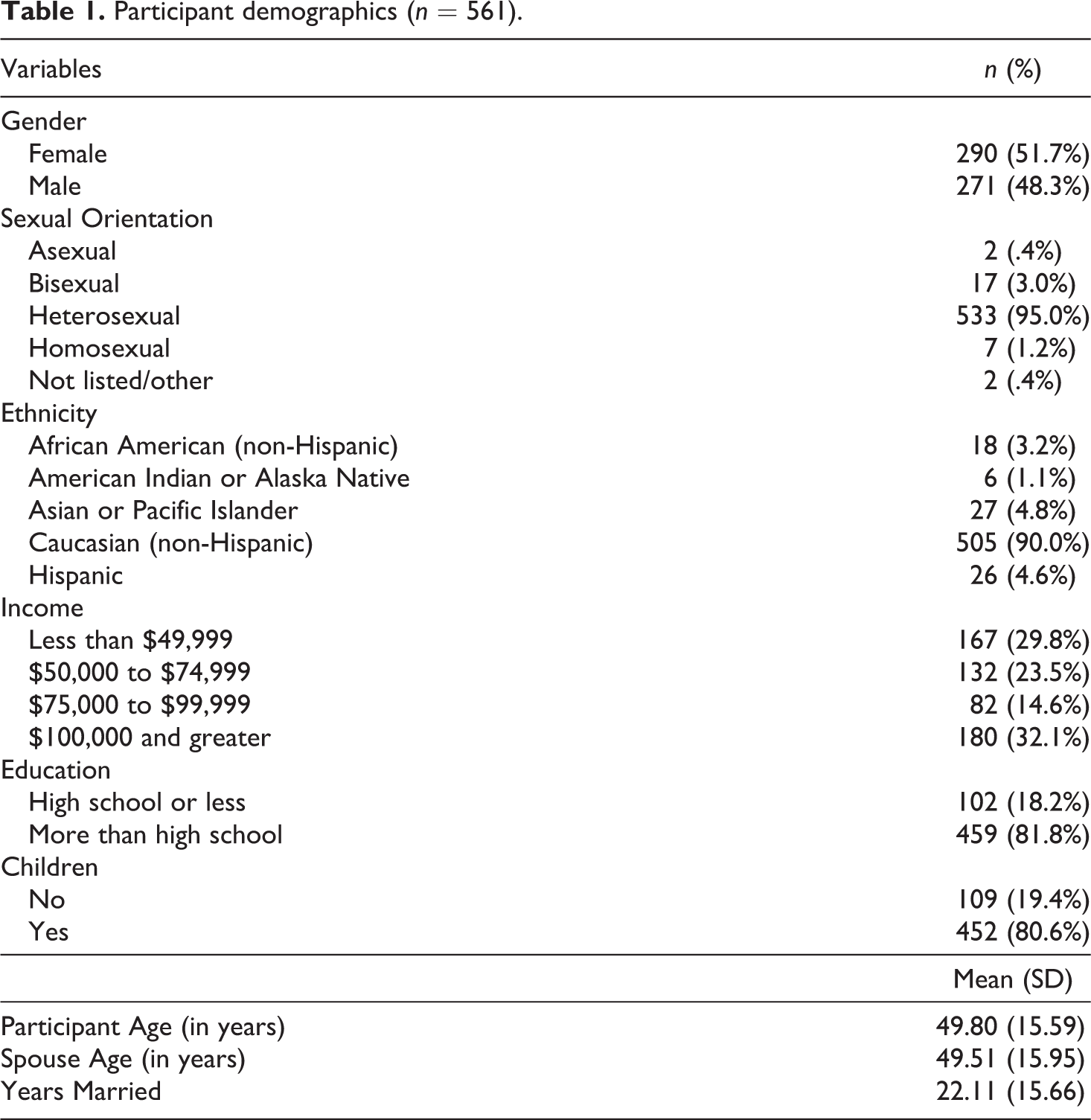
The final sample included 561 participants. Participants were evenly split between females (n = 290, 51.7%) and males (n = 271, 48.3%). Participants reported an average age of 49.8 years (SD = 15.59) and were married on average for 22.11 years (SD = 15.66). Participants were primarily Caucasian (n = 505, 90%) and heterosexual (n = 533, 95%). For full demographics, see Table 1.
Participant demographics (n = 561).
Measures
Dyadic coping
Dyadic coping was measured using the evaluation of coping subscale within the Dyadic Coping Inventory (Bodenmann, 2008). Participants were asked to think about their relationship over the last week and indicate how often they felt the following: “I am satisfied with the support I receive from my significant other and the way we deal with stress together” and “I am satisfied with the support I receive from my significant other, and I find as a couple, the way we deal with stress together is effective.” Responses ranged from 1 (very rarely) to 5 (very often) (M = 4.19, SD = 1.00, α = .93).
Resilience communication
Resilience communication was measured using an adapted dyadic communicative resilience scale (DCRS; Chernichky-Karcher et al., 2019). The measure assesses individuals’ perception of resilience communication occurring within a specific relational dyad related to a specific hardship. Participants indicated how strongly they agreed with statements about their communication with their spouse during the COVID-19 pandemic. Responses ranged from 1 (strongly disagree) to 5 (strongly agree). The scale uses eight subscales to measure Buzzanell’s (2010, 2019) five communication processes. Crafting normalcy was measured with two subscales: keeping pre-hardship routines (4 items; “My spouse and I have talked about how to maintain traditions and habits during the coronavirus pandemic”; M = 3.95, SD = 0.93, α = .87) and creating new routines (4 items; “My spouse and I have found new things to do together since the coronavirus pandemic started”; M = 3.75, SD = 0.99, α = .85). Communication networks was measured using 7 items (e.g., “My significant other and I have been able to bring up any coronavirus-related topic with each other”; M = 4.15, SD = 0.82, α = .89). Identity anchors was measured using 8 items (e.g., “My partner has told me that coronavirus-related issues have not change how he/she sees me”; M = 4.10, SD = 0.83, α = .92). Alternative logics was measured with two subscales: jokes/humor (4 items; “My spouse and I have made jokes about coronavirus-related issues”; M = 3.42, SD = 1.20, α = .93) and we are lucky (5 items; “My spouse and I have talked about how fortunate we are”; M = 4.22, SD = 0.83, α = .90). Finally, foregrounding productive action was measured with two subscales: constructing positivity together (7 items; “My spouse and I have tried to not dwell on the negative aspects of the coronavirus pandemic”; M = 4.16, SD = 0.72, α = .91) and foregrounding productive action (4 items; “My spouse has encouraged me to talk about my negative feelings”; M = 3.85, SD = 0.96, α = .88).
Anger, fear, and guilt
Anger, fear, and guilt were measured using Dillard and Shen’s (2007) discrete emotions measure. All items stemmed from a statement modeled after Knobloch, Miller, and Carpenter's (2007) measure of negative emotions in marriage: “During the past week of interacting with my spouse, I have felt.” Responses ranged from 1 (not at all) to 7 (a great deal). Anger items included “irritated,” “angry,” “annoyed,” and “aggravated” (M = 2.89, SD = 1.69, α = .95). Fear items included “fearful,” “afraid,” and “scared” (M = 2.30, SD = 1.65, α = .96). Guilt items included “guilty” and “ashamed” (M = 1.98, SD = 1.44, α = .91).
Relational uncertainty
Self, partner, and relationship uncertainty were measured using Knobloch’s (2008) measure of relational uncertainty in marriage. Participants were asked to think about their marriage and indicate how certain they were about each item on a scale ranging from 1 (completely or almost completely certain) to 6 (completely or almost completely uncertain). Self-uncertainty included 4 items such as “how you feel about your marriage” (M = 1.61, SD = 0.95, α = .94). Partner uncertainty included 4 items such as “how important your marriage is to your spouse” (M = 1.69, SD = 1.05, α = .96). Relationship uncertainty included 4 items such as “the current status of your marriage” (M = 1.72, SD = 1.04, α = .93).
Controls
Three variables were included as controls because they were significantly correlated with study variables including participant sex (0 = male, 1 = female), age, and life stressors (see Table 2). The life stressors measure was developed for this study, based on Dyrdal et al. (2018), to account for variability in life stressors experienced by the participants. Participants indicated on a 5-point scale from 1 (strongly disagree) to 5 (strongly agree) whether they were experiencing a range of 10 life stressors such as “job loss” and “legal troubles” (M = 1.88, SD = 0.78, α = .85).
Zero-order correlation matrix of study variables.
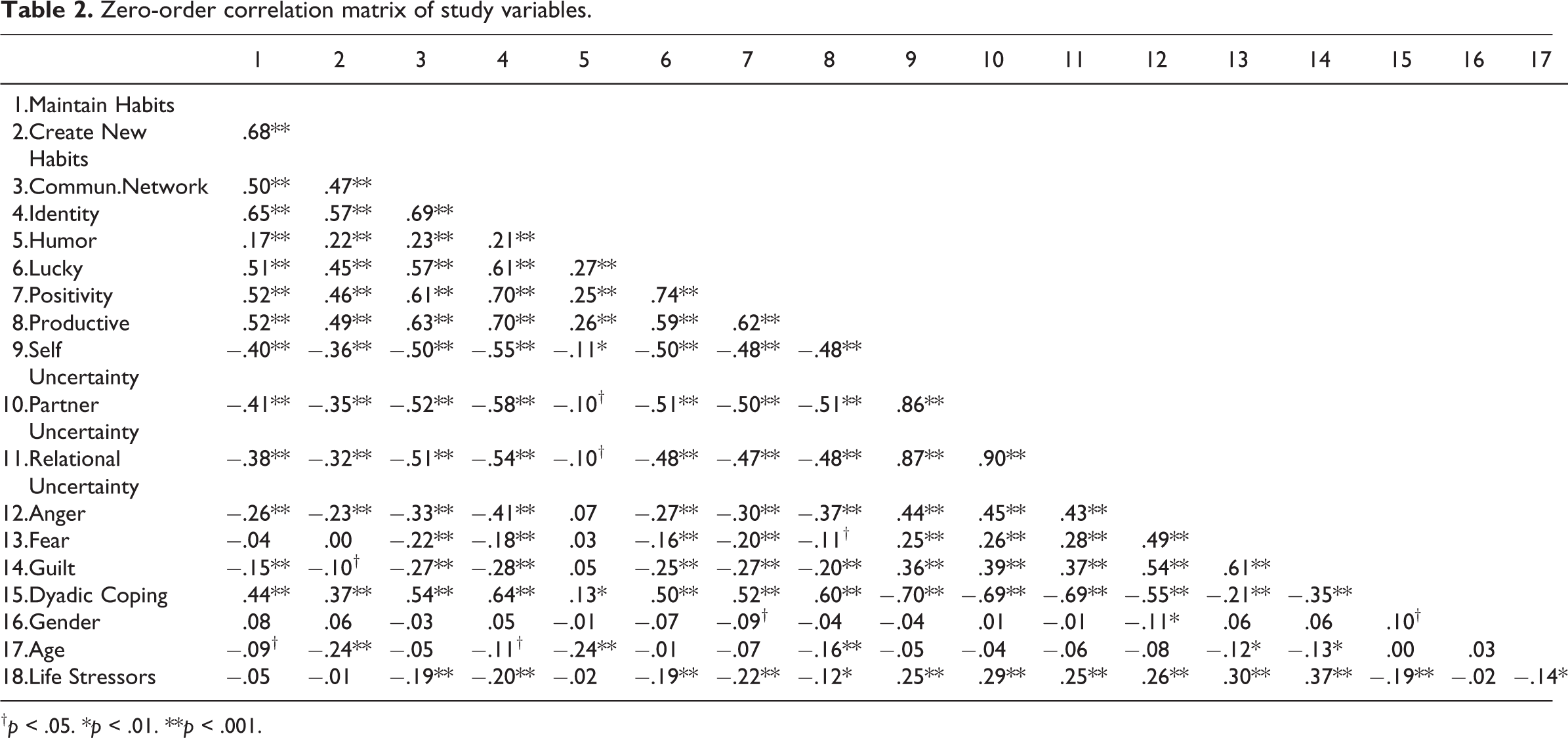
†p < .05. *p < .01. **p < .001.
Results
Preliminary analysis
Bivariate correlations between study variables were calculated in SPSS version 26 and were used to assess the appropriateness of: (a) including all eight resilience subscales in the same model, and (b) using a second-order latent relational uncertainty variable. First, the resilience subscales were highly correlated with one another (r = .17–.74), raising concerns about multicollinearity if included within the same model (Kline, 2016). Therefore, following Venetis et al. (2020), separate models were subsequently tested for each of the five resilience processes.
Second, correlations between the three uncertainty subscales were high (r = .86–.90), supporting use of a second-order latent relational uncertainty variable. Solomon et al. (2016) initially advised against using a second-order latent relational uncertainty variable. However, subsequent research has determined that a second-order latent variable may be necessary when using relational uncertainty as an endogenous variable (Tian & Solomon, 2020) as is the case in the current study. Additionally, the authors tested models separately for self, partner, and relationship uncertainty and found no differences in their associations with the resilience communication processes, discrete emotions, or dyadic coping.
Structural equation modeling
Hypothesized models were tested using Anderson and Gerbing’s (1988) two-step modeling technique. First, a measurement model including all study variables was tested, with latent variables covaried with one another. Measurement models were tested for each of the five resilience processes in AMOS version 26 employing maximum likelihood (ML) estimation. Model fit was assessed using the comparative fit index (CFI) and root mean square error of approximation (RMSEA). For excellent model fit, the model should have CFI ≥ .95, RMSEA ≤ .05, and χ2/df < 3 (Schermelleh-Engel et al., 2003). However, RMSEA ≤ .08 and CFI ≥ .90 is considered acceptable (Schermelleh-Engel et al., 2003). All measurement models achieved acceptable fit (see Figures 2 to 6).
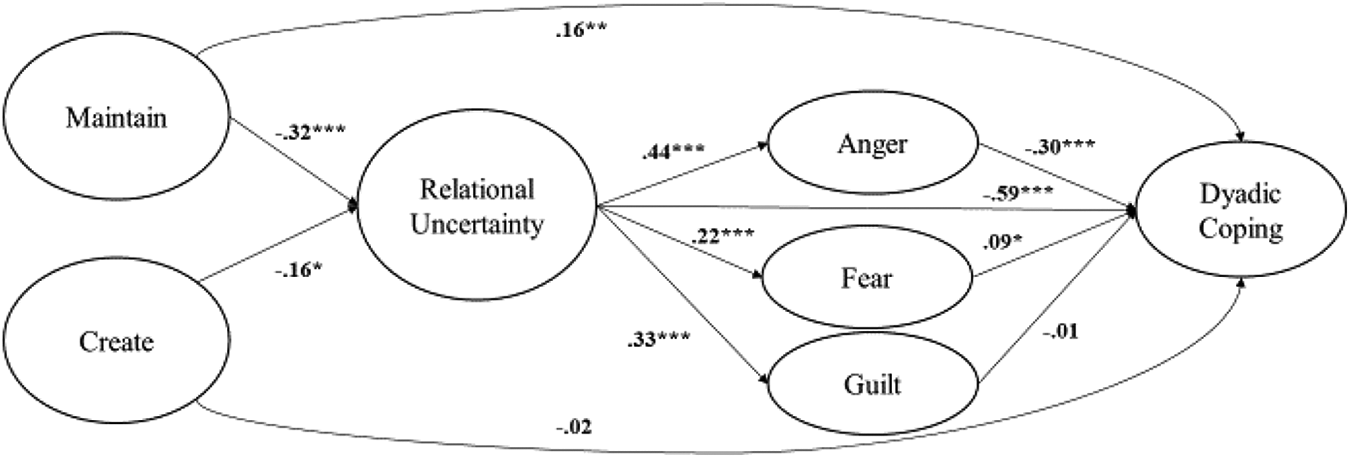
Crafting normalcy structural model. Note. Measurement model: χ2/df = 2.61, CFI = .97, RMSEA = .05; structural model: χ2/df = 2.35, CFI = .97, RMSEA = .05. *p < .05. **p < .01. ***p < .001.
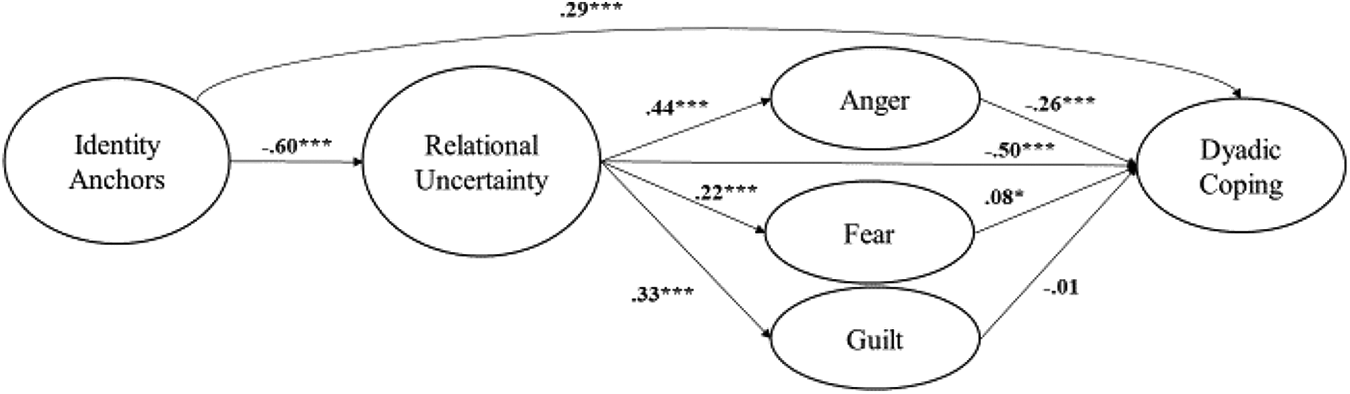
Identity anchors structural model. Note. Measurement model: χ2/df = 2.82, CFI = .96, RMSEA = .06; structural model: χ2/df = 2.60, CFI = .96, RMSEA = .05. *p < .05. **p < .01. ***p <.001.
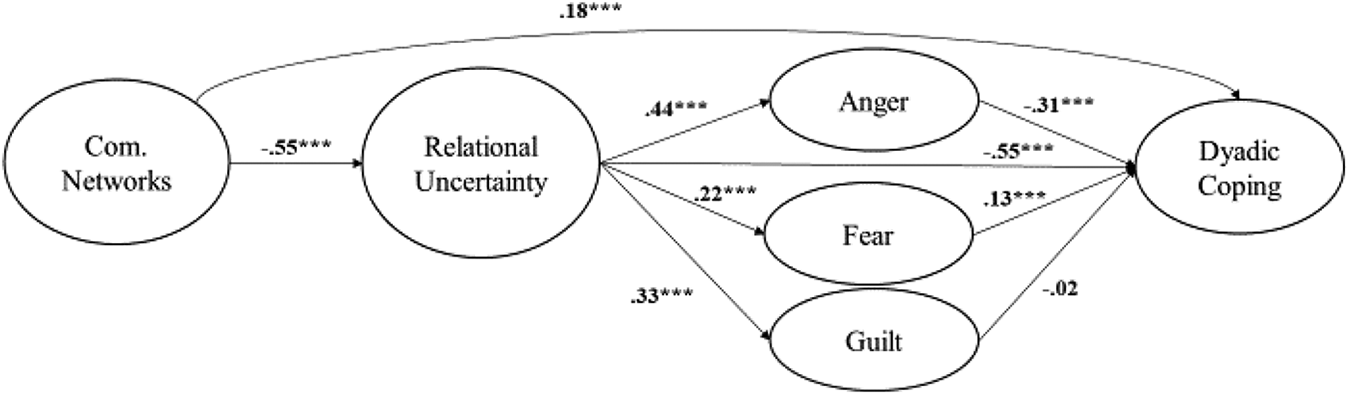
Communication networks structural model. Note. Measurement model: χ2/df = 2.92, CFI = .96, RMSEA = .06; structural model: χ2/df = 2.64, CFI = .96, RMSEA = .05. *p < .05. **p < .01. ***p < .001.
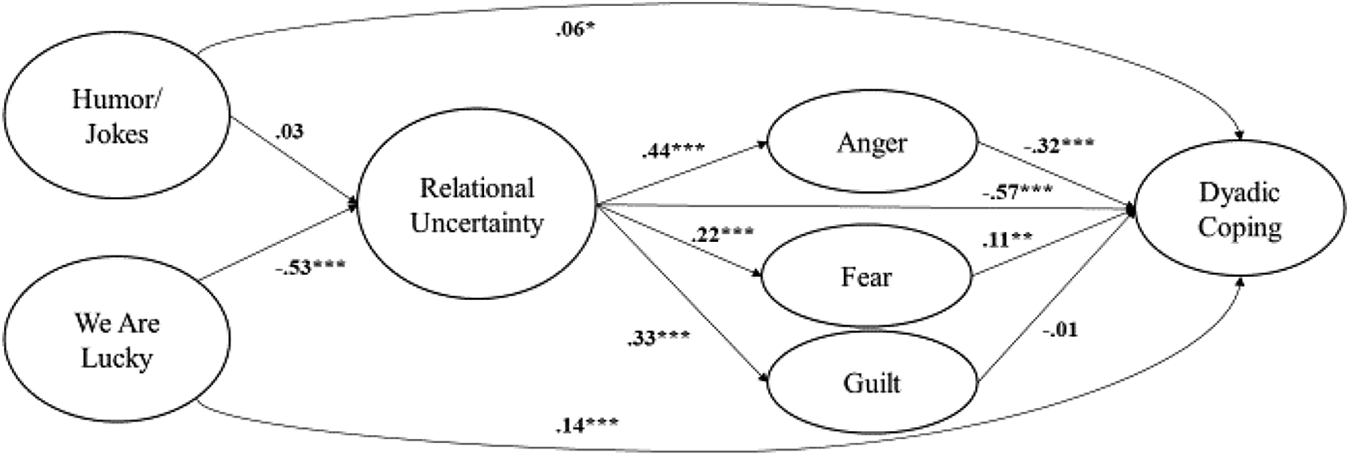
Alternative logics structural model. Note. Measurement model: χ2/df = 2.50, CFI = .97, RMSEA = .05; structural model: χ2/df = 2.39, CFI = .96, RMSEA = .05. *p < .05. **p < .01. ***p < .001.
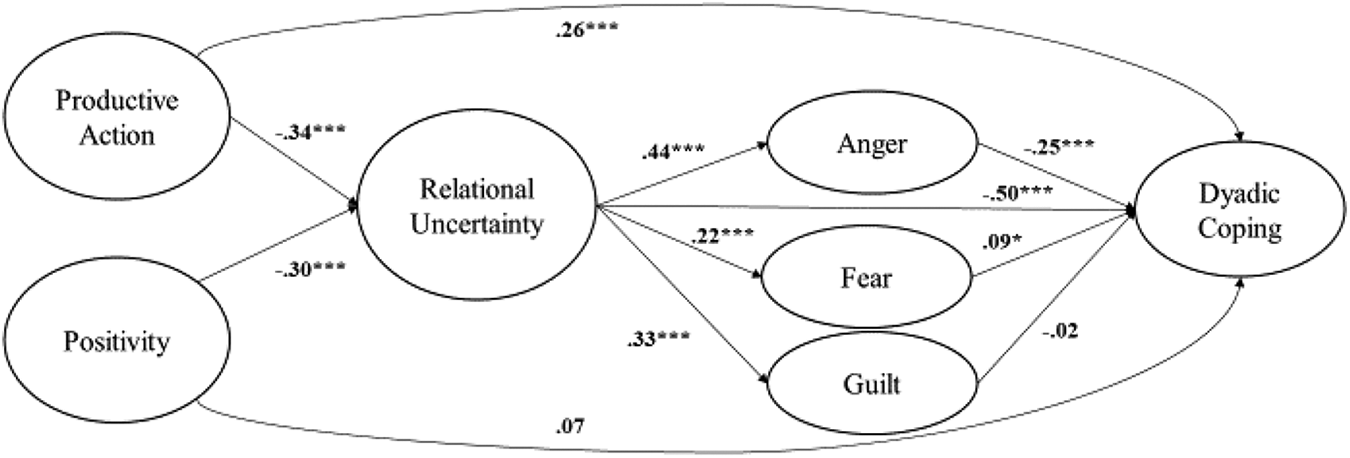
Foregrounding productive action structural model. Note. Measurement model: χ2/df = 2.62, CFI = .96, RMSEA = .05; structural model: χ2/df = 2.47, CFI = .96, RMSEA = .05. *p < .05. **p < .01. ***p < .001.
Second, fully-latent models (one for each resilience process) with the hypothesized pathways were tested (see Figure 1; Anderson & Gerbing, 1988; Kline, 2016). Model fit was assessed using the standards detailed above. The structural models did not initially achieve good fit. For all models, modification indices indicated a direct path between relational uncertainty and evaluations of dyadic coping, as well as correlations between the error terms of anger, fear, and guilt. Correlated error terms indicate that there is a common source of variance between measures not accounted for by the variables in the model (Gerbing & Anderson, 1984). Further analysis identified that a second-order latent negative emotion variable accounted for this variance. However, the authors chose to correlate the error terms rather than include the second-order latent variable to preserve the distinction between anger, fear, and guilt. After these modifications, the structural model for each of the resilience processes achieved good fit. See Figures 2 to 6 for model fit and results of hypothesis testing.
Hypothesis 1 predicted that resilience communication processes are directly, positively associated with evaluations of dyadic coping. Six of the eight resilience subscales were directly associated with dyadic coping. Although the bivariate correlations revealed that creating new routines (r = .37) and constructing positivity together (r = .52) were both significantly associated with dyadic coping, neither had significant direct relationships with dyadic coping in the structural equation models.
Hypothesis 2 predicted that resilience communication processes are negatively associated with relational uncertainty. This hypothesis was supported for seven of the eight resilience communication subscales. The humor/jokes subscale was unrelated to relational uncertainty (see Figure 5).
Hypothesis 3 predicted that relational uncertainty is positively related to (a) anger, (b) fear, and (c) guilt. This hypothesis was fully supported. Additionally, modification indices suggested a direct, negative association between relational uncertainty and dyadic coping.
Hypothesis 4 predicted that (a) anger and (b) fear are negatively associated with evaluations of dyadic coping. This hypothesis was partially supported. Anger was negatively related to dyadic coping, but fear was positively related to dyadic coping.
Research Question 1 asked if guilt is related to evaluations of dyadic coping, and results did not support a significant relationship.
Post hoc analyses—Indirect effects
Resilience communication
In addition to the direct relationship between resilience communication and evaluations of dyadic coping, it is likely that resilience communication indirectly impacted dyadic coping. The significant pathways from resilience communication to dyadic coping via relational uncertainty and negative emotion suggest that resilience communication indirectly impacted dyadic coping through these pathways. Therefore, we tested for indirect effects using Hayes PROCESS macro in SPSS 26. Analyses were conducted using PROCESS model 81, testing serial mediation with a lone first mediator (relational uncertainty) followed by multiple parallel mediators (anger, fear, and guilt). The presence of indirect effects is determined by a 95% confidence interval derived from 10,000 bootstrapped samples. If zero is not within the range of the confidence interval, the indirect effect is present (Hayes, 2013).
All the resilience communication subscales except jokes/humor had an indirect effect on evaluations of dyadic coping via three pathways including (a) relational uncertainty, (b) relational uncertainty → anger, and (c) relational uncertainty → fear (see Table 3). The subscales did not indirectly affect dyadic coping through relational uncertainty → guilt.
Indirect effects of resilience communication processes on dyadic coping.
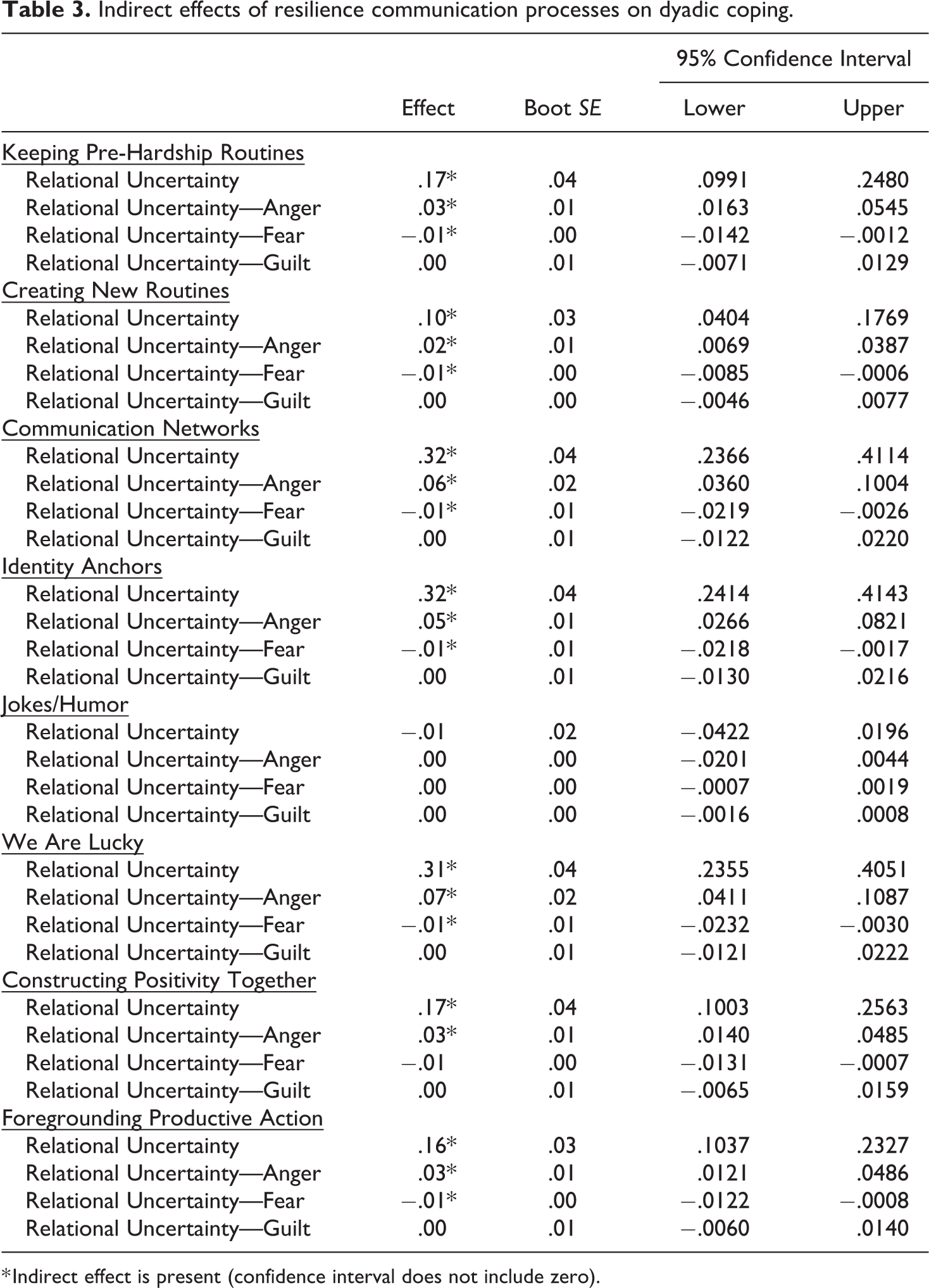
* Indirect effect is present (confidence interval does not include zero).
Relational uncertainty
Results suggest that relational uncertainty indirectly affected evaluations of dyadic coping through discrete emotions. We examined this supposition using PROCESS model 4, testing parallel mediation. Relational uncertainty had an indirect effect on dyadic coping via anger and fear, but not guilt (see Table 4).
Indirect effects of relational uncertainty on dyadic coping.
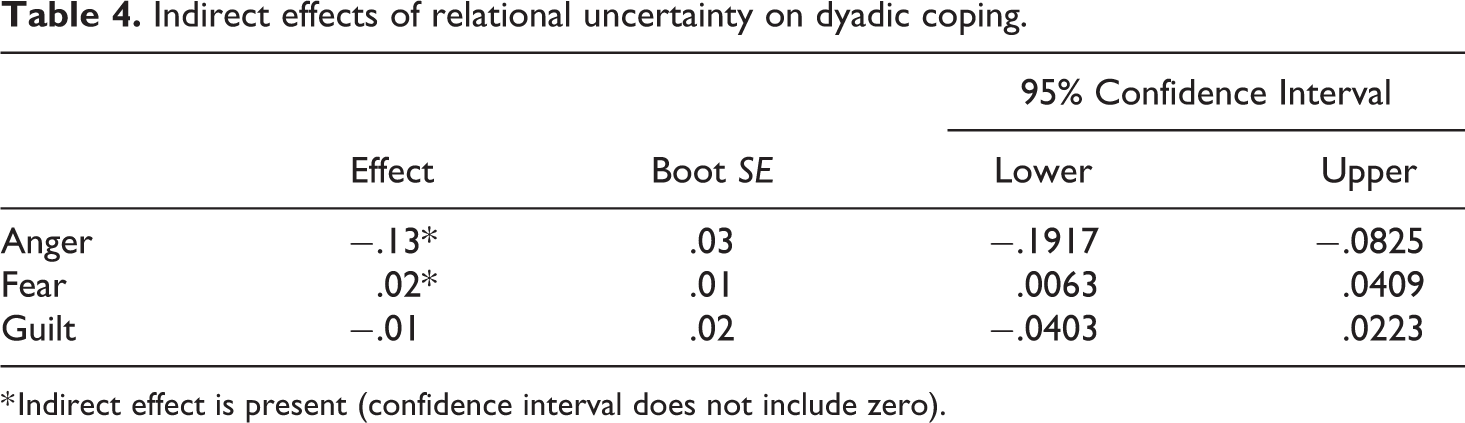
* Indirect effect is present (confidence interval does not include zero).
Post hoc analyses—Testing alternate models
Due to the cross-sectional study design, different variable orderings within the structural models are possible. For example, emotion could precede relational uncertainty. Therefore, we tested alternate models, one of which achieved acceptable fit: emotion → relational uncertainty → resilience communication → dyadic coping. 2 Guilt and anger were positively related to relational uncertainty. Relational uncertainty was negatively related to all resilience communication subscales. Five of the resilience communication subscales (keeping pre-hardship routines, communication networks, identity anchors, we are lucky, and foregrounding productive action) were positively related to dyadic coping. A direct link between relational uncertainty and dyadic coping was required (along with correlating the negative emotion error terms) to achieve good fit.
Discussion
The current study adds to resilience theorizing and provides insight into married individuals’ coping strategies during the COVID-19 pandemic. Most of the resilience communication processes impacted evaluations of dyadic coping via three indirect pathways including (a) relational uncertainty, (b) relational uncertainty → anger, and (c) relational uncertainty → fear. Humor did not have an indirect effect, but instead directly, positively impacted dyadic coping. Below, we discuss theoretical implications for CTR including relational outcomes of resilience, mechanisms of effect, unexpected findings related to humor, fear, and guilt, and methodological considerations for future research. We then detail practical implications for couples managing the COVID-19 pandemic and similar crises.
Communication theory of resilience
Resilience outcomes
The current study addresses Buzzanell’s (2019) concern that “CTR has not adequately explored outcomes of resilience” (p. 83). Findings link resilience communication to two relational health outcomes, including evaluations of dyadic coping and relational uncertainty. All but two of the resilience communication subscales had direct effects on dyadic coping within the structural models. Although not directly related in the models, creating new routines and constructing positivity together were both significantly correlated with dyadic coping. This suggests that these associations were completely explained by the indirect pathways. For the remaining processes, additional mechanisms of effect may exist.
The current study’s data also support an alternate model in which resilience communication is an outcome of relational uncertainty. In the alternate model, individuals are less likely to engage in resilience communication when their relational uncertainty is high. First, this suggests that the association between relational uncertainty and resilience communication may be reciprocal. Engaging in resilience communication could lead to reduced relational uncertainty, leading in turn to more resilience communication. A diary study or another form of longitudinal research could best test this assertion. Second, this suggests an important area for intervention. If the relationship between these variables is cyclical, breaking a harmful cycle of relational uncertainty and poor resilience communication could be vital for improving relational health.
Mechanisms of effect
The current study identifies mechanisms through which resilience communication impacts evaluations of dyadic coping. Determining mechanisms of effect is a key aspect of theory development (Slater & Gleason, 2012). Past research has identified a direct relationship between resilience communication and dyadic coping as well as other aspects of well-being (Venetis et al., 2020; Wilson et al., in press). Building from this research, our findings indicate that relational uncertainty, anger, and fear serve as mechanisms through which resilience communication impacts evaluations of dyadic coping. Future research should test if this finding holds across contexts or is unique to the COVID-19 pandemic. The current study assessed if anger, fear, and guilt served as mechanisms because they often occur during pandemics (Chew et al., 2020; Maiti et al., 2020). Yet, other emotions, such as jealousy, sadness, and hope, may mediate in other contexts. Future research should test if relational uncertainty and discrete emotions mediate the relationship between resilience communication and other outcomes, like posttraumatic growth and depression.
Humor
Jokes/humor only had a significant, direct association with dyadic coping. Relational uncertainty and discrete emotion did not mediate the relationship between jokes/humor and dyadic coping. Perhaps humor functions differently from the other communicative resilience processes because it is a more ambiguous form of communication (Landreville, 2015); the intention of humorous messages as either positive or negative is not always clear. This ambiguity can have implications for how messages are received and consequently can influence relational outcomes such as uncertainty. Specifically, Miczo and Averbeck (2020) found that perceived partner positive humor (e.g., attractiveness and enjoyment in partners’ humor) was negatively associated with relational uncertainty, and partner negative humor (e.g., perceptions of partners’ humor to hurt or avoid relational issues) was positively related to relational uncertainty. Furthermore, relational uncertainty mediated the relationship between positive and negative humor and relationship satisfaction. These findings support the assumption of the relational turbulence theory that positive communication should reduce, and negative communication should increase, relational uncertainty (Solomon et al., 2016). The current study did not distinguish between positive and negative uses of humor, perhaps resulting in the non-significant indirect effects between humor, relational uncertainty, discrete emotion, and dyadic coping.
Past literature linking humor to stress reduction and coping efforts often conceptualizes humor as an individual trait (i.e., humor style) or an individual’s use of a specific humor style (i.e., self-deprecating humor) and its impact on the individual’s experience of stress. This body of research does not assess the impact that humor can have on a dyad. In other words, much of the current literature linking humor to coping conceptualizes humor as a personal resiliency tool that individuals utilize to cope with stressful or traumatic events (Kuiper, 2012), focusing less on the dyadic nature of humor. In a recent examination of humor as an alternative logic, humor positively predicted cancer patient’s reports of dyadic coping (Venetis et al., 2020). Findings from the current study further support the relationship between couples’ use of humor as a communicative resilience process and dyadic coping efforts. Future research in this area should continue to test the impact of humor in dyadic relationships. Additionally, future work examining the alternative logic of humor when applying CTR should consider both positive and negative forms of humorous messages.
Fear
Contrary to predictions, fear was positively associated with dyadic coping, meaning individuals who experienced fear during their interactions with their partners believed that they were coping well with the COVID-19 pandemic as a couple. Although seemingly counterintuitive, this finding makes sense in light of fear’s relational triggers. Fear can come from a desire to maintain a relationship that the individual is concerned about losing, resulting in behaviors designed to ensure the relationship’s continuation (Knobloch & Solomon, 2003). Therefore, fear could motivate individuals to engage in behaviors that improve dyadic coping. Those who fear losing their partner might also overestimate how well they are working together as a couple to reassure themselves that the relationship will not end.
Guilt
Guilt was unrelated to dyadic coping. Guilt is characterized by two divergent action tendencies, to make amends and to avoid (Lazarus, 1991; Vangelisti & Sprague, 1998). This could account for guilt’s lack of effect on dyadic coping. Uncertainty-driven guilt is often characterized by wavering, inconsistent behavior. Owen et al. (2014, p. 209) state that “uncertain partners may act as if they are certain or more dedicated to the relationship to alleviate guilt…but then vacillate to show clearer signs of uncertainty.” Some participants experiencing guilt may be compensating by trying to cope better with their partner while others could avoid or exhibit erratic behavior, resulting in an insignificant relationship between guilt and dyadic coping.
Methodological considerations
The study informs future use of the DCRS and guides research considering the interdependent nature of the resilience processes. Although the DCRS scale was conceptualized to investigate dyadic communication during cancer survivorship (Chernichky-Karcher et al., 2019), all subscales except the alternative logic of attractiveness were implemented and reliable in this investigation. The successful application of this measure points to a more robust application of the DCRS to other, varied dyadic moments of uncertainty and stress management.
Consistent with prior research, study results demonstrate the interdependent nature and potential multicollinearity of the resilience processes (Venetis et al., 2020). For example, identity anchors are consistently associated with alternative logics and foregrounding productive action. Future research should investigate how resilience processes work together to improve coping and well-being as well as determine if a hierarchy exists such that one process enables or promotes others. Although processes may influence each other, this research also demonstrates the unique contributions of particular resilience processes. For example, only humor did not indirectly impact dyadic coping through relational uncertainty and negative emotion. When examining resilience processes by relational role in cancer care, constructing positivity was positively associated with dyadic coping for partners but not patients, and humor was positively associated with dyadic coping for patients but not partners (Venetis et al., 2020). Thus, it follows that future research should continue to examine the resilience processes separately and consider how contextual factors such as relational role or current stressor influences communicative practices.
Practical implications
While the full impact of the global pandemic is still unknown, early reports show that COVID-19 related challenges such as financial stress, isolation, and challenges balancing work and family life have led to decreased physical and psychological well-being (Pietromonaco & Overall, 2020). As noted in the review of literature, couples’ communication during this time of transition may influence relational outcomes such as uncertainty and evaluations of coping (Knobloch, 2008; Venetis et al., 2020). Study results show that when couples engage in resilience communication processes, they experience less relational uncertainty and less anger, resulting in improved evaluations of dyadic coping. These results may help clinicians and practitioners better advise couples who report experiencing relational uncertainty and anger resulting from COVID-19 stress. Specifically, practitioners may encourage couples to support identity anchors or communicate about changing routines as a means to process the various transitions that occur during stressful events like a global pandemic.
Limitations and future directions
Despite theoretical and practical advancements offered by this investigation, study limitations exist. First, although findings report about communication between romantic partners, data were collected from one partner. Future research should replicate this investigation to examine communication among dyads (e.g., Knobloch & Theiss, 2010). Secondly, the sample was predominantly Caucasian, limiting generalizability of results to other ethnic groups and people of color. Patterns of disclosure and conflict differ among couples of differing ethnicities (Oggins et al., 1993), and research should examine how ethnicity influences dyadic patterns of communication that foster or inhibit resilience, relational uncertainty, and coping. Third, the study sample includes individuals with increased computer literacy and access. Not only may individuals with reduced computer literacy communicate differently than those with increased literacy and access (Hwang, 2011), but they may also have differing information gathering patterns and levels of knowledge or opinions concerning COVID-19 (e.g., Beaunoyer et al., 2020). We caution generalizing study findings to others that have limited resources as compared to the study sample. Finally, data were collected during early stages of the pandemic. As time progressed and as science and treatment of COVID-19 developed, couples may have altered their pandemic-related communication. Thus, additional research may examine how dyadic resilience patterns, relational uncertainty, and coping adjusted across the pandemic timeline.
Conclusion
This study identifies how communicative practices can improve dyadic coping during the COVID-19 pandemic. Couples should engage in resilience communication processes of crafting normalcy, relying on communication networks, upholding identity anchors, using alternative logics (except humor), and foregrounding productive action during times of crisis to inhibit relational uncertainty. The study also links the communication theory of resilience (Buzzanell, 2010, 2019) with relational uncertainty (Solomon et al., 2016), furthering understanding of how couples manage turbulent times. Additionally, findings indicate that the emotional climate of a relationship has varying impacts on evaluations of dyadic coping depending on the specific emotion felt, specifically anger and fear, rather than the overall mood.
Supplemental material
Supplemental Material, sj-docx-1-spr-10.1177_02654075211009302 - Dyadic coping and discrete emotions during COVID-19: Connecting the communication theory of resilience with relational uncertainty
Supplemental Material, sj-docx-1-spr-10.1177_02654075211009302 for Dyadic coping and discrete emotions during COVID-19: Connecting the communication theory of resilience with relational uncertainty by Helen M. Lillie, Skye Chernichky-Karcher and Maria K. Venetis in Journal of Social and Personal Relationships
Footnotes
Authors’ note
The manuscript was presented at the International Communication Association’s annual convention in 2021.
Funding
The author(s) disclosed receipt of the following financial support for the research, authorship, and/or publication of this article: This manuscript was written with support from NIH grant 1DP2EB022360-01 (PI: J. Jensen) and 3P30CA042014-29S7 (PI: J. Jensen) and the Immunology, Inflammation, and Infectious Disease Initiative (Co-PIs: J. Jensen, A. King; Co-Is: H. M. Lillie, C. Ratcliff, M. Pokharel).

Open research statement
As part of IARR’s encouragement of open research practices, Drs Helen M. Lillie, Skye Chernichky-Karcher, and Maria K. Venetis have provided the following information: This research was not pre-registered. The data used in the research cannot be publicly shared but are available upon request. The materials used in the research cannot be publicly shared but are available upon request.
Supplemental material
Supplemental material for this article is available online.
Notes
References
Supplementary Material
Please find the following supplemental material available below.
For Open Access articles published under a Creative Commons License, all supplemental material carries the same license as the article it is associated with.
For non-Open Access articles published, all supplemental material carries a non-exclusive license, and permission requests for re-use of supplemental material or any part of supplemental material shall be sent directly to the copyright owner as specified in the copyright notice associated with the article.
