




Abstract
Twin relationships have a significant effect on the twins’ life and their families. In the first comprehensive study of this topic, our purpose was to examine the developmental courses of four dyadic dimensions of twins’ relationships: closeness, dependence, conflict and rivalry, and the impact of zygosity and parenting on their relationships. Parents reported on their twins’ relationships (N = 1547 mothers and 536 fathers with data from at least one of four measurement points from 3 to 8–9 years of age). The sample included 322 monozygotic twin dyads (sharing virtually 100% of their genes), and 1194 dizygotic twin dyads (sharing 50% of their genetic variance, on average). Our findings indicated that closeness and dependence decreased while rivalry increased through childhood. Dependence and rivalry also presented quadratic change. The twins’ conflict increased only for dizygotic twins. As expected, we found that the twins’ closeness and dependence were highly associated, as did the associations between conflict and rivalry. The mostly nonsignificant associations of closeness with conflict and rivalry reinforced the notion that they are not bi-polar opposites. However, dependence was positively related to the twins’ conflict and rivalry. A zygosity effect was also evident as monozygotic twins had higher levels of closeness and dependence than dizygotic twins through childhood, but there was no significant difference in the levels of their conflict and rivalry. In congruence with family system theories, parental positivity predicted the twins’ closeness and dependence, and parental negativity predicted the twins’ dependence, conflict and rivalry. The results were discussed in light of an evolutionary perspective and the twins’ developmental challenges through childhood.
Keywords
Starting from the womb, twins begin to develop their unique relationships (Castiello et al., 2010). These relationships are central in the twins’ life and their families: twins serve as best-friends and companions, as well as rivals and the focus of social comparisons from infancy till old-age (Fortuna et al., 2010; Neyer, 2002b; Piontelli, 2003). These unique relationships were found to be related to various aspects of the twins’ life: from mental health and conduct problems, to the quality of social relations outside the twinship, and to educational attainment (Bekkhus et al., 2011; Ebeling et al., 2003; Koch, 1966; Moilanen, 1987; Penninkilampi-Kerola et al., 2005).
Despite the growing rates of multiple births in the past few decades (Bacon, 2019), the research regarding the twins’ relationships is scarce. Thereby, many questions relating to the nature and characteristics of these relationships and their developmental course remain unanswered, leaving parents, educators and clinicians without the needed knowledge to maximize the benefits from, and provide tailored support to these unique relationships. For example, twin relationships had been shown as characterized by special closeness and dependence in later life, especially for monozygotic twins (MZ, sharing virtually 100% of their genes; Fraley & Tancredy, 2012; Neyer, 2002a, 2002b), but is this closeness present early on or does it increase through childhood? Do parents need to be worried that the twins’ mutual dependence at early childhood will further increase? And how does this mutual dependence impact other dimensions of the twins’ relationships?
Research about twins’ conflict is even more uncommon, even though it is a major concern for twins’ parents, who often wish to know if the early emergence of conflicts between their twins predicts high levels of conflict later on. However, twins’ rivalry did manage to capture the attention of theoreticians and clinicians, as the twins place similar developmental demands on their parents and compete over resources from birth (Joseph, 1975; Moilanen & Ebeling, 1998; Piontelli, 2003; Senekjian & Trad, 1994). Still, questions with practical implications (for example, what happens to the twins’ rivalry when they approach school-age?) are waiting to be empirically studied. These and similar questions were in the focus of the current research. Our aim was to deepen the understanding of developmental paths of the twins’ relationships and to predict these paths with two key aspects of twins: whether they are genetically identical or fraternal (zygosity), and what levels of parental positivity and negativity they received from their parents. We studied a large sample of twin pairs followed from early to middle childhood, in four measurement points, focusing on various dimensions of the twins’ relationships. As such, our study is the first comprehensive and longitudinal investigation of twins’ relationships through childhood.
Twins’ relationship dimensions
Social psychological research has identified several dimensions of relationship quality that characterize a broad variety of relationships (e.g., romantic, parental, friendship, and coworker) and siblings’ relationships in particular. Closeness (sometimes referred to as warmth) has been identified as a key dimension contributing to wellbeing and adjustment in couples, work groups, and families (Sherman et al., 2006). Dependence (e.g. seeking each other’s presence and having mutual impact on one another) also characterizes many relationship types, and is particularly relevant to family relationships, with family members having a meaningful and enduring influence on each other (Laursen & Williams, 1997; Neyer, 2002a; Scott et al., 2018). These two relationship dimensions can be seen as representing the positive aspects of siblings’ relationships (Laursen & Williams, 1997; Neyer, 2002a).
Living or working together often entails also conflict, which is another characteristic of many types of relationships (Lau & Cobb, 2010; Sherony & Green, 2002). A relationship in which partners compete over material or psychological resources is characterized by high rivalry (Brody et al., 1994a; Kilduff et al., 2010). Conflict and rivalry can be seen as representing the more negative aspects of siblings’ relationships (Furman & Buhrmester, 1985; Stocker et al., 1997).
These four dimensions of closeness, dependence, conflict and rivalry are well-known factors among siblings (Brody et al., 1994b; Furman & Buhrmester, 1985; Stoneman & Brody, 1993). Indeed, these dimensions characterize the relationships between siblings from childhood to adulthood, although the intensity of these characteristics undergoes a significant change when siblings grow up, and the relationships become more egalitarian and less asymmetrical (Buhrmester & Furman, 1990; Jenkins et al., 2005; Richmond et al., 2005; Vandell et al., 1987).
Twinship can be seen as a unique kind of sibling relations, with several particular characteristics. While research on singleton sibling relationships is informative for understanding twin relationships, there are inherent differences between twin and singleton pairs that do not allow an assumption that information about sibling relationship development can be generalized to that of twins. For example, Jenkins and colleagues (2005) found that negativity in the siblings’ relationships decreased over a 2-year gap. As there was a 5-year mean difference in age between older and younger siblings, potential for negativity was lower due to siblings’ different ages, with some of the older siblings already in adolescence. Thus, non-twin sibling relationships are unequal by nature because of the age differences and different family history (stemming from possible changes in family structure and dynamics over the years), while the relationships between twins have potential to be more equal and reciprocal (Smilansky, 1992). This difference is particularly noticeable in characteristics related to relative power among siblings such as dependence. In singleton siblings, it is more likely that through childhood the younger sibling will be more dependent on the older one (Minnett et al., 1983), whereas among twins, without age difference, other variables (such as difference in linguistic abilities or developmental delay of one of the twins; Ebeling et al., 2003; Moilanen, 1987) might impact their dependence.
Of the few studies that were performed on twins’ relationships, most studies focused on the positive aspects of the twins’ relationships (e.g., closeness and dependence). These studies repeatedly found that twins were closer and shared more warmth in their relationships than singletons throughout the life span (Fraley & Tancredy, 2012; Neyer, 2002b; Penninkilampi-Kerola et al., 2005; N. L. Segal, 1984). But although some theory is available on the negative aspects of twin relationships (Joseph, 1975; Piontelli, 2003; H. Segal & Knafo-Noam, 2018; Senekjian & Trad, 1994), there is little research regarding these aspects (Fortuna et al., 2010; Loh & Elliott, 1998; N. L. Segal, 1984), and to the best of our knowledge, there is no previous developmental study regarding the twins’ conflict and rivalry through childhood. Therefore, in the current study, we were also interested in the twin relationship’s negative aspects (e.g., conflict and rivalry) and their developmental courses.
Change and stability in twin relationships
In studying relationship development we distinguish between rank-order stability (the stability of the relative position of twin dyads in each relationship dimension across time) and mean-level change (how the average level of the relationship dimension might change with age; Specht et al., 2011). There are several reasons for expecting rank-order stability in children’s interactions with their siblings during childhood: continuities in children’s personalities, in the patterns of family dynamics, and in family circumstances may all contribute to such stability (Dunn et al., 1999; Kim et al., 2006). In addition, the characteristics of the twins’ relationship can serve as a feedback loop. For example, initial conflict level further increases the likelihood of conflict across time (Kim et al., 2006).
However, mean-level changes in twins’ relations might occur because the relations become even more egalitarian as the children grow, and the developmental differences between them decrease, and they go through differentiation processes that can serve to mitigate interpersonal rivalry and conflict (Buhrmester & Furman, 1990; Ebeling et al., 2003; Jenkins et al., 2005; Moilanen, 1987; Richmond et al., 2005; Vandell et al., 1987; Vivona, 2007). Discontinuities in relationship patterns might also be expected because of major changes in children’s lives over this period, with the entry into school and the formation of relationships with additional peers, close friends, and teachers (Dunn et al., 1999). That is, as the twins grow older, they spend less time with their family and more time in their own individual social settings.
Since the studies on twins’ relationships in childhood are scarce, our hypotheses relied on previous findings regarding siblings’ relationships (Brody et al., 1994b; Buhrmester & Furman, 1990), despite the different characteristics of twins’ and singletons’ relationships (Fraley & Tancredy, 2012; Neyer, 2002b; Penninkilampi-Kerola et al., 2005; N. L. Segal, 1984). We expected to find rank-order stability in all four dimensions of the twins’ relationships. We also expected that the closeness and dependence between the twins would decrease as the twins get older and develop differentiation from each other and form separate relationships with friends (mean-level change). However, the findings regarding the developmental courses of siblings’ conflict and rivalry were inconsistent (Brody et al., 1994b; Buhrmester & Furman, 1990; Jenkins et al., 2005; Richmond et al., 2005), and therefore were studied in an explorative way in the current research.
The associations among the twins’ relationship dimensions
Previous research regarding singleton siblings suggest that sibling relationships involve balancing between closeness and conflict (Dirks et al., 2015). As siblings represent a close-field relationship (e.g., relationships that are constrained by genetics, norms, or laws) they can withstand greater negativity than relationships such as friendships (Campione-Barr & Killoren, 2019). Indeed, previous studies found that singletons’ and twins’ closeness and conflict are not bi-polar opposites, and can co-exist (Furman & Buhrmester, 1985; Kim et al., 2006; Loh & Elliott, 1998; N. L. Segal, 1984; N. L. Segal & Hershberger, 1999; Stoneman & Brody, 1993). In a previous study from our sample (H. Segal & Knafo-Noam, 2019), focusing on the associations between the relationships’ dimensions in each measurement point (ages 3, 5, 6.5, and 8–9 years), we found moderate to substantial positive correlations between closeness and dependence, as well as between conflict and rivalry. Interestingly, the associations between the twins’ conflict and closeness appeared to be negative and mostly low or nonsignificant, while the associations between the twins’ conflict and dependence were positive from age 3 to age 5 and became nonsignificant or low at the age of 6.5 and above. Moreover, although the twins’ closeness was found to be unrelated to rivalry, the dependence between the twins was moderately related to rivalry in all measurement points (for detailed correlations see Table 1).
Correlations among twin relationship dimensions.
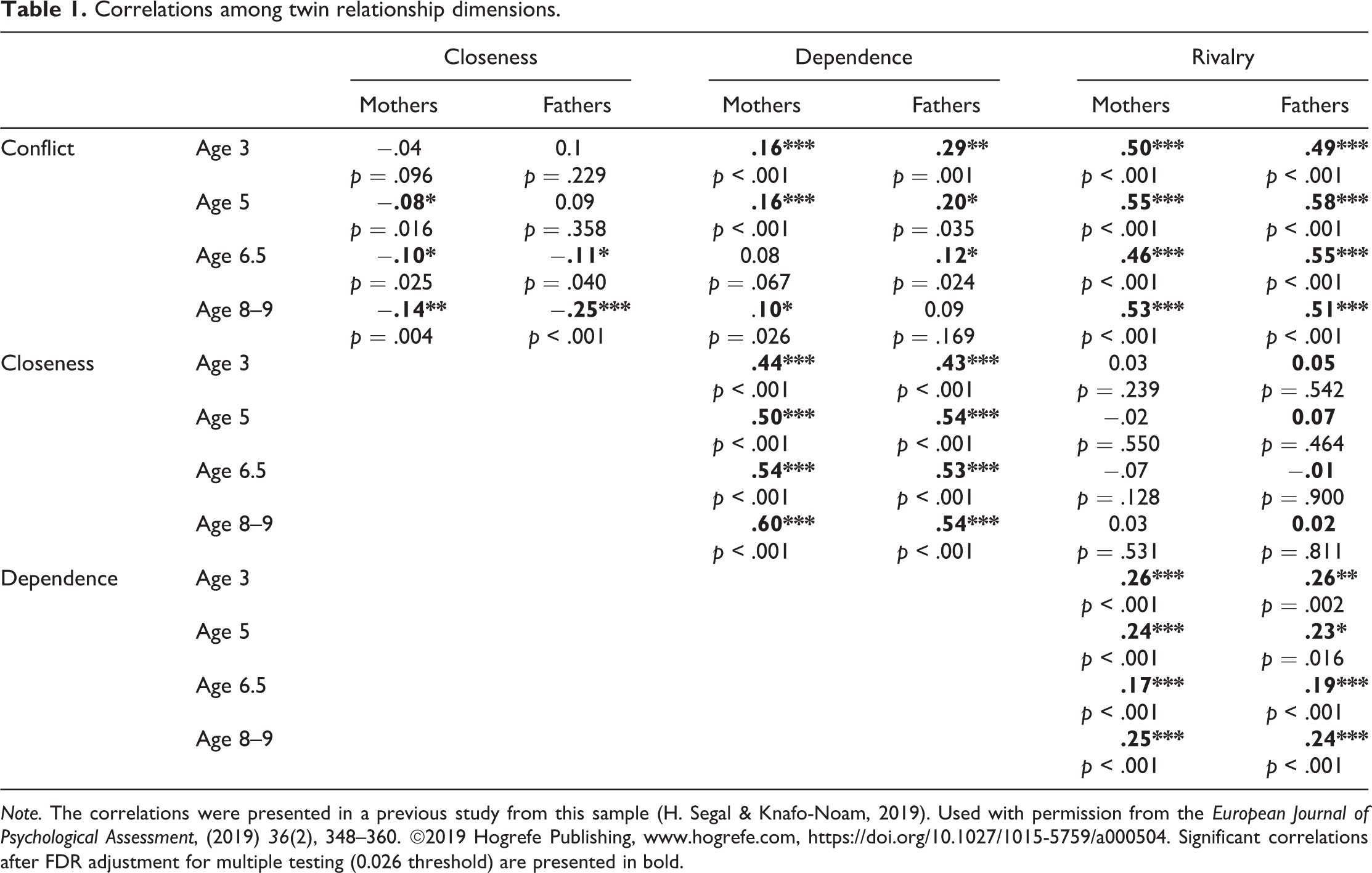
Note. The correlations were presented in a previous study from this sample (H. Segal & Knafo-Noam, 2019). Used with permission from the European Journal of Psychological Assessment, (2019) 36(2), 348–360. ©2019 Hogrefe Publishing, www.hogrefe.com, https://doi.org/10.1027/1015-5759/a000504. Significant correlations after FDR adjustment for multiple testing (0.026 threshold) are presented in bold.
However, to the best of our knowledge, previous studies did not deal with the complex associations between the developmental courses of all the four dimensions together (e.g., closeness, dependence, conflict and rivalry) in singletons’ or twins’ relationships. Thereby, important questions regarding the complexity of the development of the twins’ relationships remained unstudied, such as: do the twins’ closeness and dependence develop together? Does the twins’ initial closeness mitigate their rivalry? Does the twins’ dependence impact the developmental course of their conflict levels? Our aims in the current research were to shed light on these developmental courses, separately for each relationship dimension, as well as addressing the mutual development of all four relationship dimensions together.
Zygosity and twins’ relationships
Past research has shown that MZ twins, had closer relationships than dizygotic twins (DZ, sharing 50% of their genetic variation on average; Fortuna et al., 2010; Fraley & Tancredy, 2012; Neyer, 2002b; N. L. Segal et al., 2002). However, none of the previous studies investigated the effect of zygosity (MZ vs. DZ twinship) in a longitudinal design through childhood, which would be needed for a deeper understanding of MZ twins’ special relationships later in their lives. Therefore, as part of our comprehensive investigation of the twins’ relationship development, we were also interested to study if MZ and DZ twins differed in their relationships’ developmental courses. Considering the closer relationships MZ twins share through life, we expected that their closeness and dependence would decrease in a slower rate. However, as mentioned, only few studies dealt with the negative aspects of the twins’ relationships. These studies yielded inconsistent findings regarding the effect of zygosity on the twins’ conflict and competitiveness (Fortuna et al., 2010; Loh & Elliott, 1998; N. L. Segal, 1984; N. L. Segal & Hershberger, 1999). Using large samples and multiple measurement points, we studied the effect of zygosity on the negative aspects of the twins’ relationships in an explorative way, while striving to clear the inconsistency that was found in previous studies.
Parenting and twin relationships
Beyond the zygosity impact on the twins’ relationships, we were also interested in studying a potentially meaningful charateristic of the twins’ families: the parenting they experience. Parenting can be conceptualized as representing general patterns of child-rearing that characterize parents’ typical techniques and responses (Coplan et al., 2002). Parents’ behaviors are often characterized by two main dimensions: parental positivity (warmth/responsiveness) and parental negativity (hostility/punitive strategies; Atzaba-Poria & Pike, 2008; Darling & Steinberg, 1993; Endendijk et al., 2016; Spera, 2005; Tamis-LeMonda et al., 2009).
Several studies regarding the associations between parenting styles and singleton siblings’ relationships have supported the spillover hypothesis, which stems from Family Systems Theory. The spillover hypothesis suggests that the behavior and emotional styles transfer from one relationship to another within the family system (Pike et al., 2005). Indeed, in previous studies, parental positivity was found to be associated with close relationships between singleton siblings and parental negativity was found to be associated with siblings’ conflicts (Derkman et al., 2011; Milevsky et al., 2011; Pike et al., 2005; Yu & Gamble, 2008). However, to the best of our knowledge, the association between parenting and twins’ relationships has never been examined. Following singleton sibling studies, we expected to find support for the spillover hypothesis. That is, we hypothesized that parental positivity would predict closeness and dependence between the twins, and that parental negativity would predict twins’ conflict and rivalry. Using a longitudinal design also allowed us to examine whether parenting was associated with the developmental course of each relationship dimension, beyond its potential association with the initial levels of the twins’ relationship dimensions.
The current study
In the present study, we sought to examine the different aspects of twins’ relationships from early to middle childhood, using a large sample of twins in four measurement points. We expected to find stability in the relative position of twin dyads in each relationship dimension across time (rank-order stability). We also expected to find a decrease in twins’ level of closeness and dependence through childhood (mean-level change), while studying the change in conflict and rivalry in an exploratory way.
On top of our interest in the developmental path of each relationship dimension, we were interested in the mutual developmental courses of all the relationship dimensions. Since positive associations between closeness and dependence, as well as between conflict and rivalry, were found in our previous study in each measurement point (Table 1; H. Segal & Knafo-Noam, 2019), we expected that the developmental paths of the twins’ closeness and dependence would be associated with each other, as would be the case for the developmental paths of conflict and rivalry. Since closeness and conflict were found to be only weakly associated (Table 1), we expected them to develop independently through childhood. Due to lack of previous evidence, we studied exploratively the mutual developmental course of dependence with the negative aspects of the relationships, conflict and rivalry.
Finally, we were interested in better understanding the potential factors involved in twin relationships. We expected MZ twins to be closer and more dependent on each other and that their closeness and dependence would decrease in a slower rate. Due to inconsistencies in past studies, we studied the effect of zygosity on the negative aspects of the twins’ relationships in an explorative way. Finally, we hypothesized that parental positivity would predict closeness and dependence between the twins, and that parental negativity would predict conflict and rivalry between the twins.
Method
Participants
Families participated as part of the Longitudinal Israeli Study of Twins (LIST), a study focusing on children’s social development as influenced by genetics, abilities, and socialization (Vertsberger et al., 2019). Families of Hebrew-speaking twins born in Israel in 2004–2005 were contacted by mail after researchers received a list of twin births that occurred during 2004–2005 from the Israeli Ministry of the Interior.
Mothers were asked to complete questionnaires regarding their children’s development when the twins were 3, 5, 6.5, and 8–9 years old. One hundred and eighty-six mothers participated in all measurement points, allowing us to investigate the developmental path of the twins’ relationships. In addition, fathers of a subsample were asked to complete the same questionnaires at the same four measurement points. Since only 19 fathers participated in all measurement points, fathers’ reports only served to reinforce the findings in each measurement point separately, rather than the developmental findings. Detailed information about sampling, measures and zygosity assessment in the LIST can be viewed in Vertsberger et al. (2019).
For all the questionnaires and in all measurement points, the sex distributions of the samples were about equal (47.79%–54.93% males), and the MZ twins’ percentages ranged from 19.84% to 31.17%. This reflects the fact that due to design and budgetary constraints in ages 6.5 and 8–9, we only recruited a small proportion of opposite-sex dizygotic twins (mothers’ reports on OS-DZ at age 3: 38.10%, age 5: 36.69%, age 6.5: 12.29% and age 8-9: 20.45%). Table 2 describes the number of twins’ dyads, the gender ratios and the twinship type ratios, separately for mothers’ and fathers’ reports, at each measurement point.
Sample descriptive statistics.
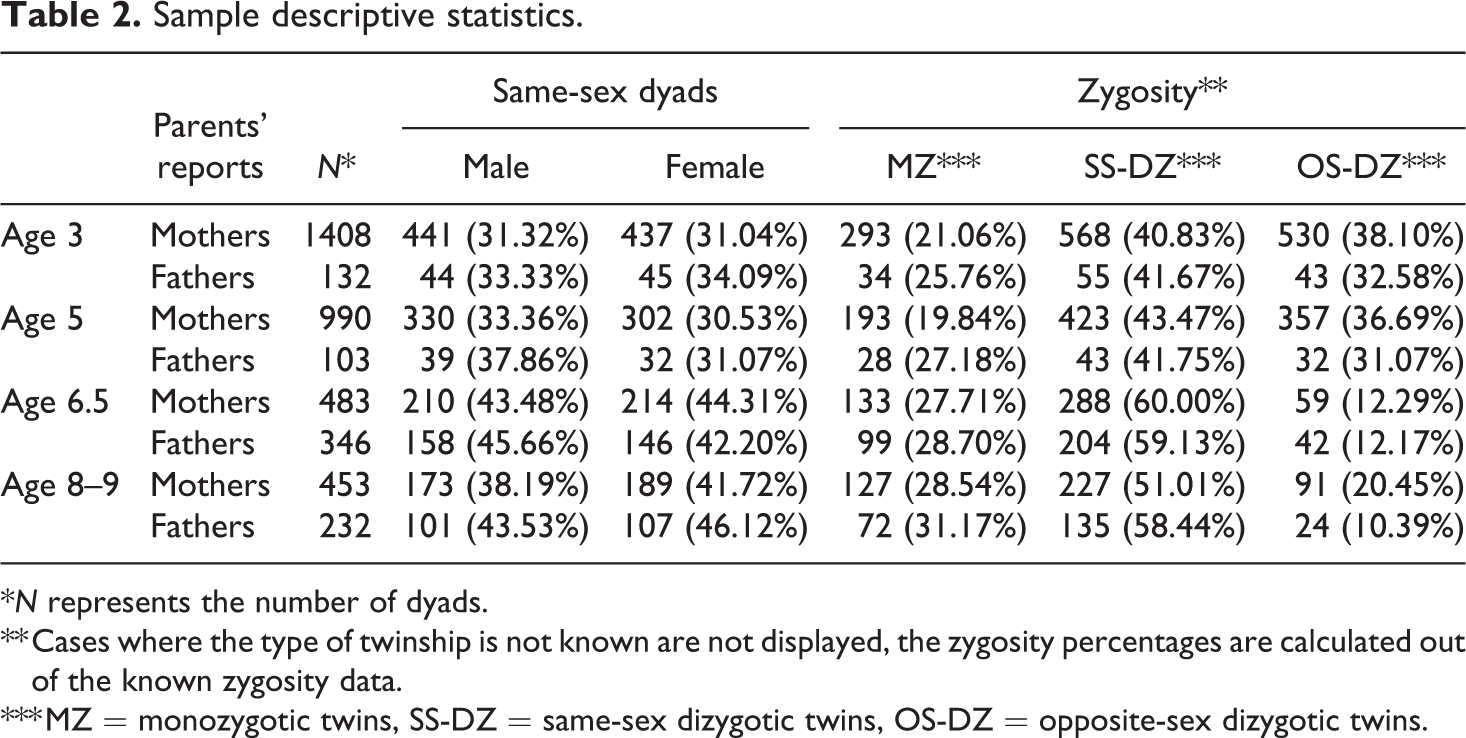
*N represents the number of dyads.
** Cases where the type of twinship is not known are not displayed, the zygosity percentages are calculated out of the known zygosity data.
*** MZ = monozygotic twins, SS-DZ = same-sex dizygotic twins, OS-DZ = opposite-sex dizygotic twins.
The changes in the number of mothers’ and fathers’ questionnaires happened due to change in age-specific goals and available funding of the larger longitudinal study. To test the effect of the changes in samples sizes on our study, the sample’s characteristics were examined to determine whether the subsample who continued to participate in the consecutive measurement point was comparable to the subsample that dropped out. In each measurement point the two subsamples were compared regarding all of the study’s variables. In almost all measurement points (except for mothers’ reports on closeness from age 5 to 6.5, Cohens’ d = .19) the differences in the twins’ relationships variances and means were nonsignificant between the two subsamples’ (See Supplementary Table 1).
Measures
Twins’ relationships
The extent of closeness, dependence, conflict and rivalry between the twins was assessed using the parent-reported Twin Relationship Questionnaire (TRQ; Fortuna et al., 2010; H. Segal & Knafo-Noam, 2019). Mothers and fathers reported separately on each twin. The TRQ includes five subscales: closeness, dependence, conflict, rivalry and dominance. However, only the first four dimensions were proven to have dyadic characteristics, while there were low inter-twin correlations regarding the dominance dimension (H. Segal & Knafo-Noam, 2019). Since we were interested in the current study in the characteristics of the dyadic relationships (rather than in the attitude of each individual twin toward the co-twin), we focused on the closeness, dependence, conflict and rivalry dimensions.
Parents rated the degree to which each statement characterized each of the twins, using a scale ranging from 1 = not characteristic at all to 5 = very characteristic. Five items represented the closeness scale (e.g., “Likes to be with other twin”) and 5 items represented the dependence scale (e.g., “Is upset when parted from the other twin”). Six items represented the conflict scale (e.g., “Fusses and argues with the other twin”) and 3 items represented the rivalry scale (e.g., “Is unhappy or jealous when you do things with the other twin”). Items and their respective scales appear in Supplementary Table 2.
Previous reports from this sample confirmed the reliability of the TRQ, as well as its construct and external validity. The internal consistencies of the closeness, dependence, conflict and rivalry scales ranged from .72 to .89 across ages, indicating adequate internal consistencies. The construct validity of the TRQ was supported by exploratory and confirmatory factor analyses, and the external validity was tested against experimentally assessed pro-social behaviors between the twins at age 6.5, and against the twins’ own reports on their closeness at age 11 (H. Segal & Knafo-Noam, 2019). The four scales were found to be dyadic variables, showing high inter-twin correlations in all measurement points ranging from .73 to .85 for closeness, from .77 to .88 for dependence, from .71 to .83 for conflict, and from .65 to .78 for rivalry (all inter-twin correlations were significant, p < .001). Because we were interested in the dyadic relationship rather than the specific conduct exhibited by each twin, we calculated a dyadic score for each scale by averaging the scores of the two twins.
Parenting
Mothers filled the Parenting Practices Questionnaire (Robinson et al., 1995) at all measurement points, using the following subscales: parental warmth and involvement (5 items; “Responsive to child’s feelings or needs”), reasoning/induction (6 items; “Explains the consequences of the child’s behavior”), democratic participation (5 items; “Takes into account the child’s preferences in making family plans”), verbal hostility (2 items; “Explodes in anger towards child”), corporal punishment (5 items; “Spanks when our child is disobedient”), non-reasoning/punitive strategies (4 items; “Uses threats as punishment with little or no justification”) and directiveness (2 items; “Scolds or criticizes when child’s behavior doesn’t meet our expectations”). Mothers rated their parenting toward each twin using a scale ranging from 1 = never to 5 = always.
A research review of a wide variety of parenting scales described this measure as good in terms of reliability and validity: the internal consistencies were adequate, ranging from .75 to .91 (Hurley et al., 2014; Locke & Prinz, 2002; Robinson et al., 1995). In two separate samples, including a subsample of the current twin sample (Abramson et al., 2014; Knafo et al., 2011), we found that the scales loaded on factors representing parental positivity (warmth/involvement, reasoning/induction and democratic participation), and parental negativity (verbal hostility, corporal punishment, non-reasoning/punitive strategies and directiveness scales). We therefore composed the positivity scale using the above three subscales (alphas ranging from .68 to .81) and the negativity scale using the above four subscales (.64 to .69). The correlations between the twins’ scores for parental positivity (rs = .72–.95) and negativity (rs = .78–.91) were high (p < .001) at all measurement points. Therefore, we averaged the scores of the two twins for parental positivity and for parental negativity.
Due to changing in the focus of the twin study along the years, parenting information was collected only from a subsample in ages 3 (N = 196) and 5 (N = 190). Therefore, rather than estimate parenting separately for each age, we computed an overall parenting measure covering the full study age range. We based this decision on the findings that the means and SDs of parenting were similar across measurement points (positivity: Ms = 4.03–4.08, SDs = .33–.39; negativity: Ms = 2.22–2.28, SDs = .40–.42), and that longitudinal correlations across the different measurement points were high (positivity: r = .57–.72, p < .001; negativity: r = .63–.77, p < .001; for detailed parenting descriptives and correlations see Supplementary Tables 3 and 4). Mean scores were calculated to represent overall parental positivity and negativity across ages, z-standardized within each measurement point. The mean score for parental positivity was .04 (SD = .95, N = 793), and the mean score for parental negativity was .02 (SD = .97, N = 788).
Analytic strategy
Correlations between each pair of consecutive points (i.e., ages 3 and 5, 5 and 6.5, 6.5 and 8–9) indicated rank-order stability of the different relationship dimensions. They were calculated for mothers’ and fathers’ reports separately, to reinforce our findings, using SPSS, version 25.
Next, to study the associations between the developmental paths of the twins’ relationships, we performed Latent Growth Modeling (LGM), to reflect the complex phenomenon of the twins’ relationship change using latent variables of intercept and slopes within a structural equation modeling framework (Ram & Grimm, 2007). The LGM involves identifying an appropriate growth curve form which can accurately and parsimoniously describe individual development and allow for the study of individual differences in the parameters that control the pattern of growth over time (Duncan & Duncan, 2004). In LGM, data points from the different study waves were used as indicators of three factors, the intercept, the linear slope, and the quadratic slope, for each longitudinal variable. Regression weights for the intercept were all set to 1.0, to allow the intercept to be interpreted as the initial (baseline) level of the twins’ relationship dimensions. For the linear slope factor, the four regression weights (i.e., ages 3, 5, 6.5, and 8–9) were set to .00, 2.00, 3.50, and 5.50, reflecting the actual time gaps (in years) between measurement points. Quadratic slopes were also calculated with the four regression weights set to 0.00, 4.00, 12.25, and 30.25 (the squared values of the linear slope weights).
We first calculated two models for each relationship dimension: a linear model (modeling the linear slope) and a quadratic model (adding a quadratic slope). The linear and quadratic models were compared to determine which model best reflected the development of each relationship dimension. In the second stage, relying on our findings regarding the best fit for the slopes of each relationship dimension, we calculated a LGM with all the dimensions together with their adequate slopes. We also allowed the four dimensions to covary in each measurement point. Zygosity was represented in the model as the percentage of shared genetic variance (MZ = 100%, DZ = 50%), and was introduced as a predictor of the parenting styles and the twins’ relationships. Measures of parental positivity and negativity were introduced as predictors of the twins’ relationships. It is worth noting that only approximately half of the twins had reports on the parenting they received (out of 1591 twins in the LGM, 793 had parental positivity scores and 788 had parental negativity scores). Missing values were treated using full information maximum likelihood estimation (FIML). As mentioned, the LGM was calculated only for mother reports, since only 19 fathers participated in all the measurement points, limiting the convergence of the model (Hamilton et al., 2003).
Several model fit indices were used to evaluate model fit: Chi-square, Comparative Fit Index (CFI), Tucker–Lewis Index (TLI), Root Mean Square Error of Approximation (RMSEA) and Standardized Root Mean Square Residual (SRMR). The Latent Growth Models were performed in R, version 3.5.2, using the “lavaan” package (Beaujean, 2014).
Finally, since our current and previous studies (H. Segal & Knafo-Noam, 2019) included many statistical analyses with the same data, we used the False Discovery Rate (FDR) adjustment to compensate for multiple testing (Benjamini & Hochberg, 1995). The threshold for significant p values after FDR adjustment was set to .026 (calculated on 443 p values ranging from 3.98E−88 to 0.992).
Results
Scale descriptives
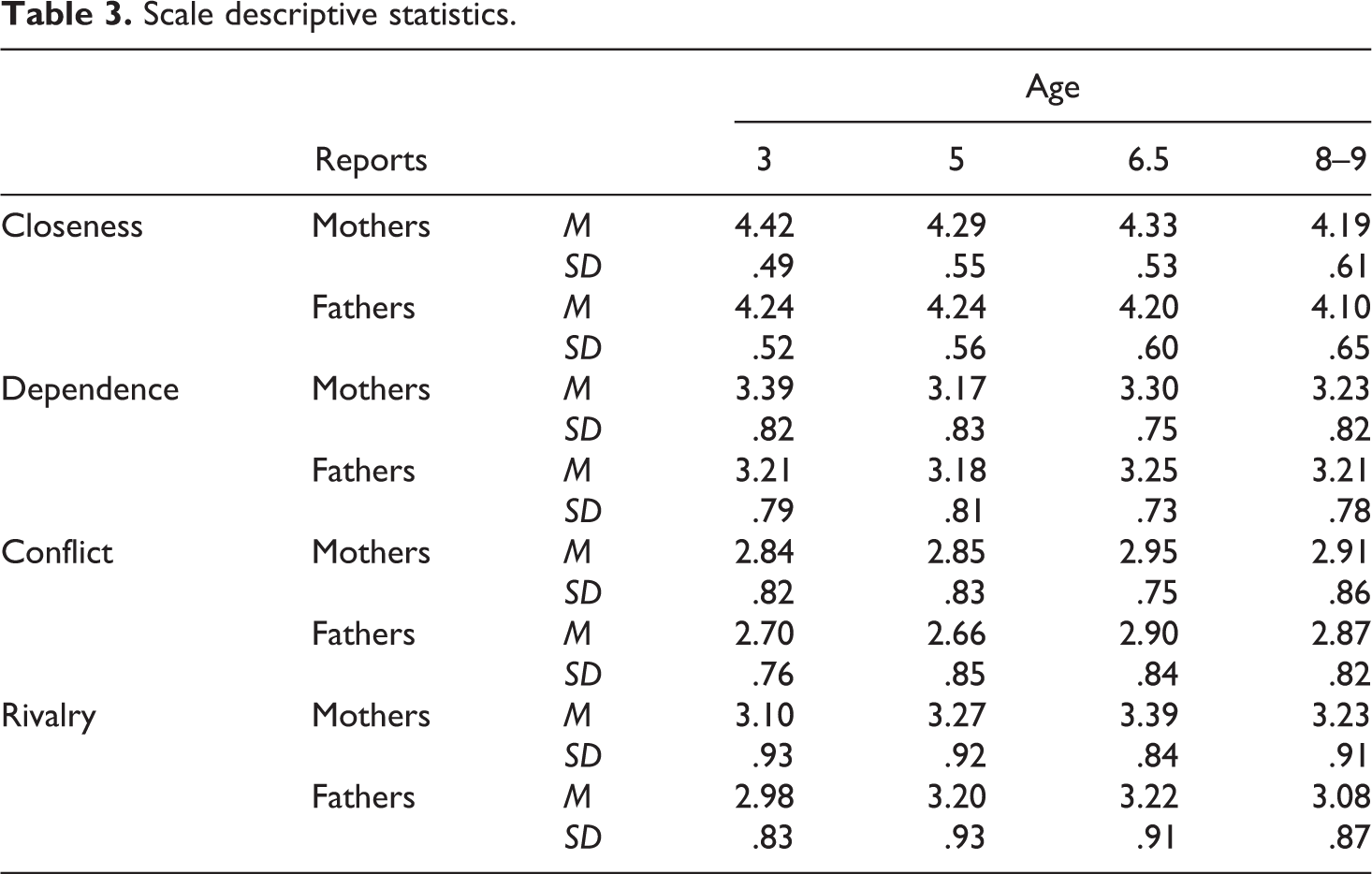
At all ages, mothers and fathers reported closeness behaviors as more common (Ms = 4.10–4.42, SDs = .49–.61) than dependence, (Ms = 3.17–3.39, SDs = .73–.83) and rivalry (Ms = 2.98–3.39, SDs = .84–.93). Conflict behaviors were reported to a considerably lesser degree (Ms = 2.66–2.95, SDs = .75–.86; Table 3). Mothers’ and fathers’ reports on the twins’ relationships presented a similar pattern (Figure 1). However, since we had a considerably larger number of mothers’ reports than fathers’ reports and since we found in our previous study (H. Segal & Knafo-Noam, 2019) that the correlations between mothers’ and fathers’ reports were substantial but not very high (r = .30–.53), we decided not to average their reports into united scores.
Scale descriptive statistics.
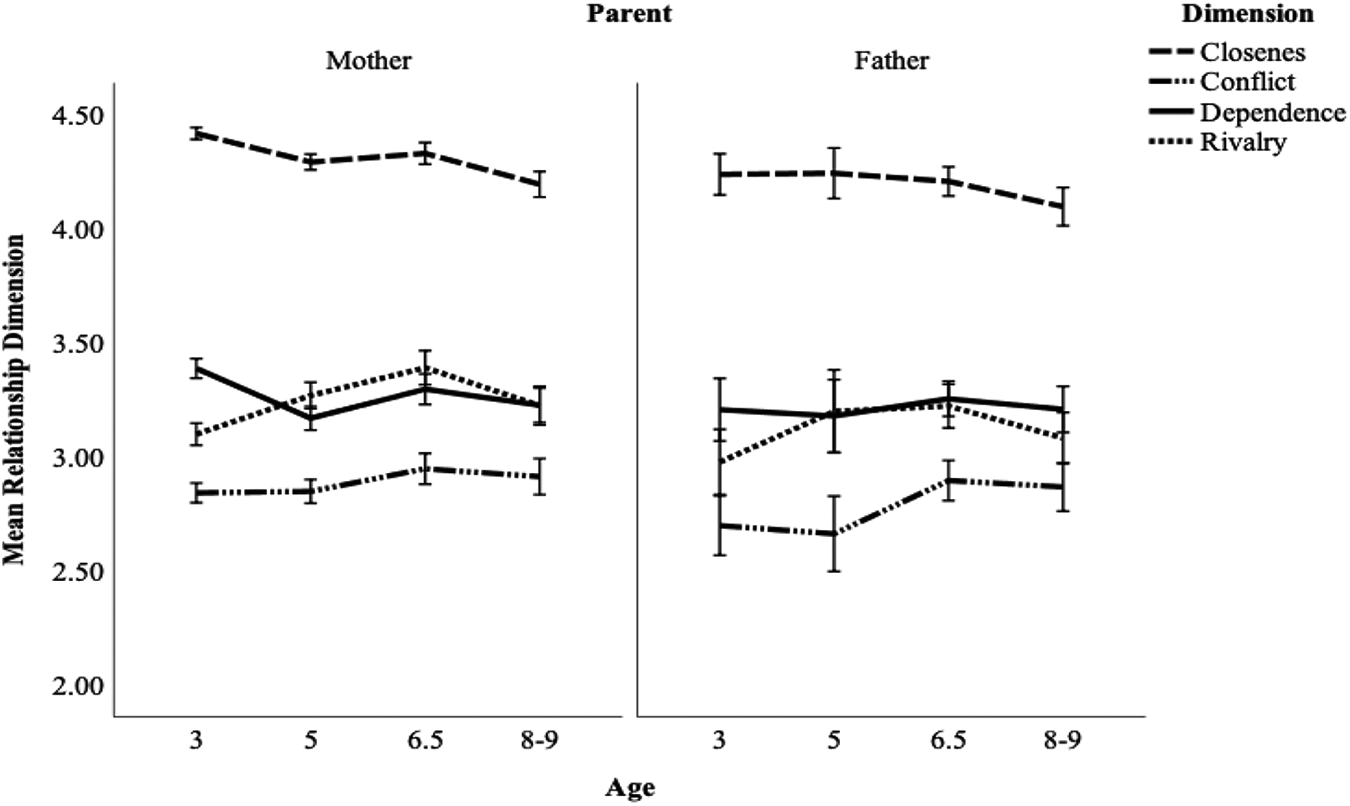
Relationship dimensions’ means and 95% confidence intervals through childhood, separately for mothers’ and fathers’ reports.
Rank-order stability presented similar results using both parents’ reports, as the correlations between the consecutive measurements of the different relationship dimensions were of medium to large size (Mothers: rs = .43–.69, p < .001; Fathers: rs = .32–.75, p < .05; Table 4). Thus, results indicated relatively high rank-order stability.
Correlations between each relationships’ dimension across all measurement points.
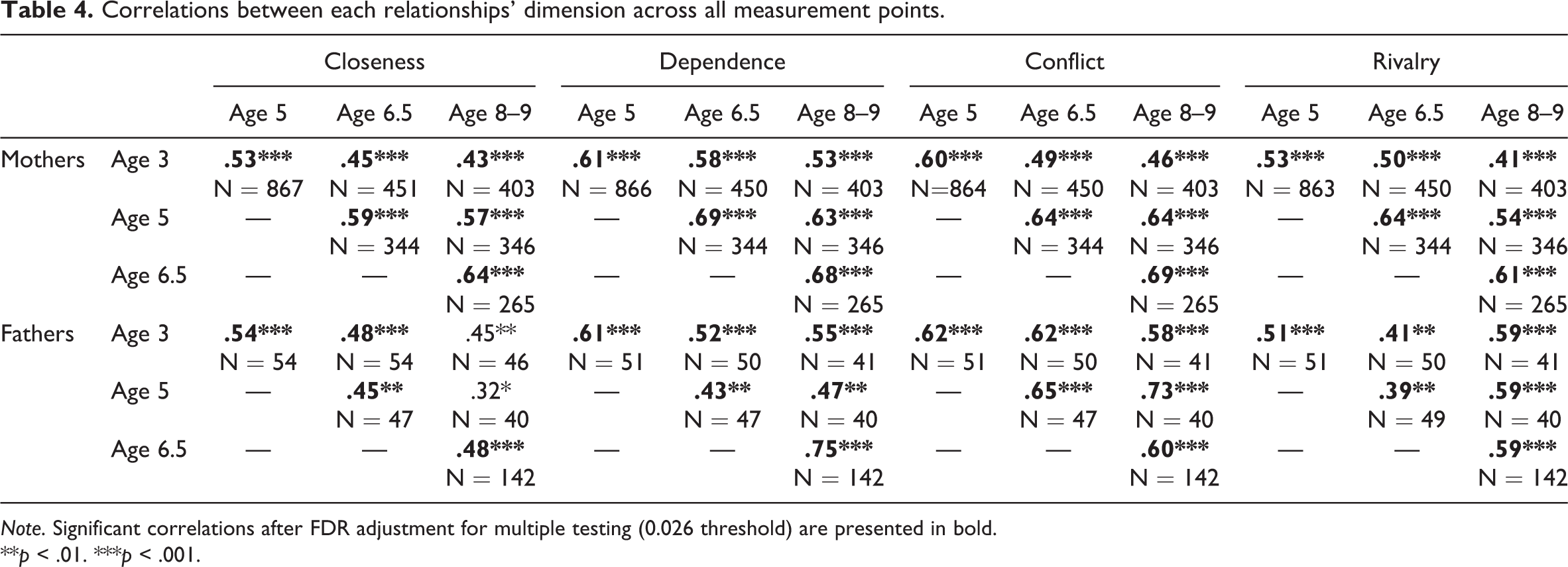
Note. Significant correlations after FDR adjustment for multiple testing (0.026 threshold) are presented in bold.
**p < .01. ***p < .001.
The developmental course of twins’ relationships across childhood
We first calculated four LGMs to estimate the proper slope for each individual dimension separately and compared the goodness of fit indices for the linear and quadratic models for each dimension. For closeness and conflict, model fit comparison between the linear and quadratic models yielded nonsignificant results (Table 5). Thereby, the linear model was chosen to represent the slopes of closeness and conflict out of parsimony considerations (Preacher, 2006). In contrast, for dependence and rivalry, model fit comparison between the linear and quadratic models yielded significant results (dependence: χ2(6, N = 1591) = 30.03; rivalry: χ2(6, N = 1591) = 49.04; p < .001), indicating that the quadratic models better described the development of the twins’ dependence and rivalry.
Goodness of fit indices of the LGM models for each dimension separately.
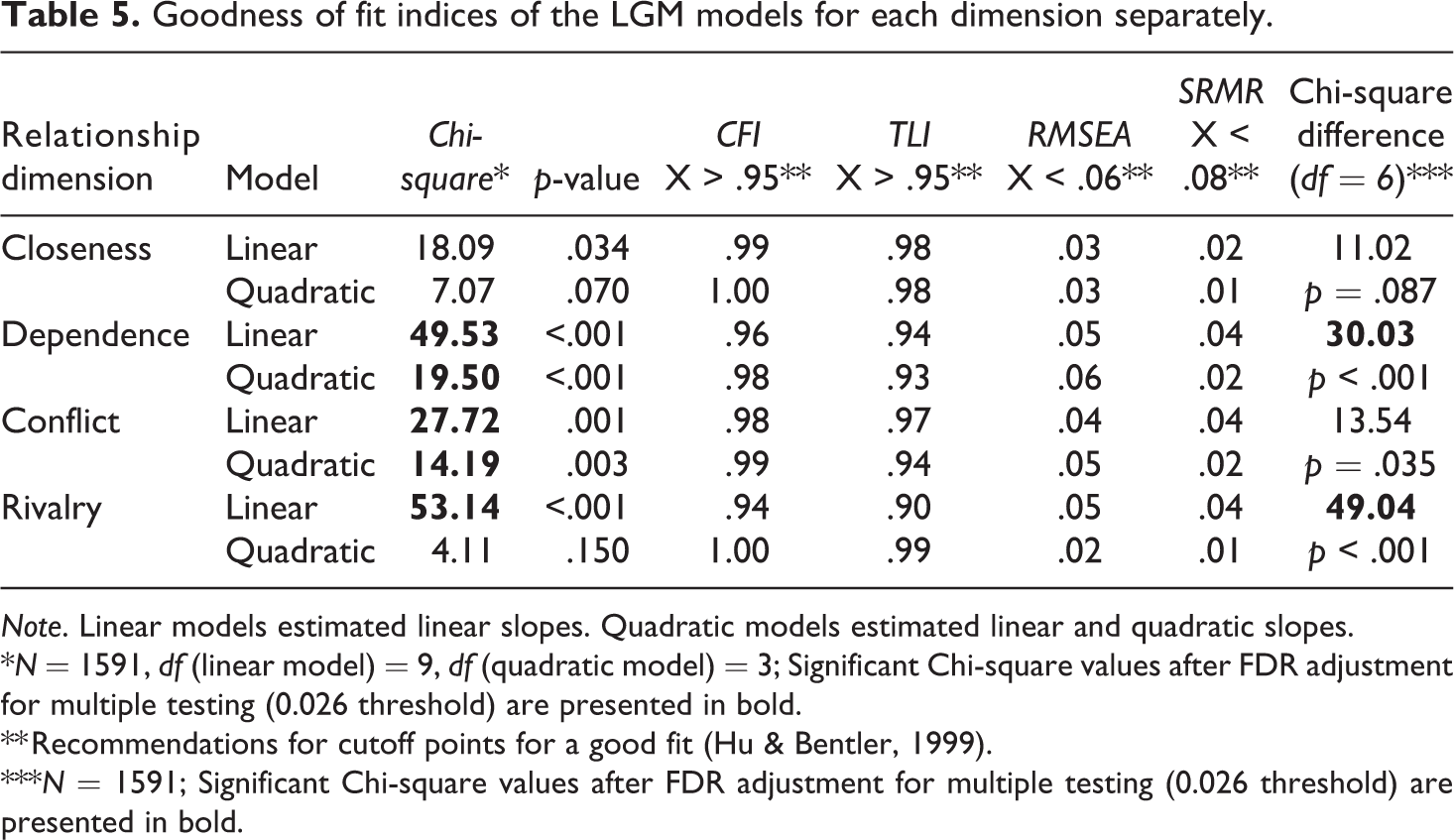
Note. Linear models estimated linear slopes. Quadratic models estimated linear and quadratic slopes.
*N = 1591, df (linear model) = 9, df (quadratic model) = 3; Significant Chi-square values after FDR adjustment for multiple testing (0.026 threshold) are presented in bold.
** Recommendations for cutoff points for a good fit (Hu & Bentler, 1999).
***N = 1591; Significant Chi-square values after FDR adjustment for multiple testing (0.026 threshold) are presented in bold.
We next performed a LGM that included the intercepts and linear slopes for the four dimensions as well as quadratic slopes for dependence and rivalry, with zygosity and parental positivity and negativity as predictors. Model fit, based on recommendations by Hooper et al. (2008) and Hu and Bentler (1999), was very good (χ2(70, N = 1516) = 131.54, p < .001; CFI = .99, TLI = .97, RMSEA = .02, SRMR = .03). Detailed LGM results appear in Tables 6 (estimates of intercepts and slopes) and 7 (latent variables standardized loadings, standardized parameter estimates, standard errors, z-values, and p-values; the coefficients described in the table reflected the covariances between the intercepts and slopes of the relationship dimensions that were not accounted for by zygosity and parenting). Additional information appears in Supplementary Tables 5 (latent variables standardized loadings), and 6 (standardized covariances between the dimensions at each measurement point). Figure 2 presents the LGM results regarding the significant paths between the study’s variables.
Estimations of LGM for twin relationship dimensions.
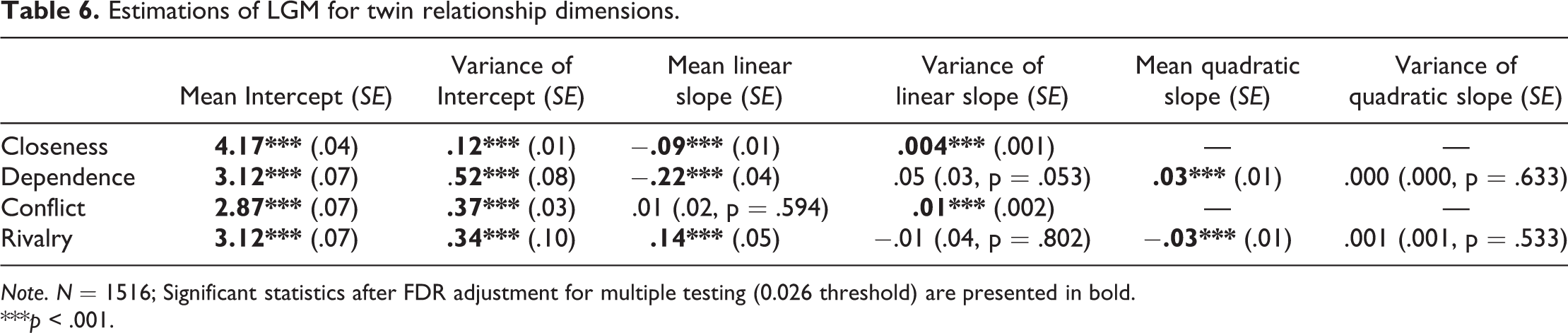
Note. N = 1516; Significant statistics after FDR adjustment for multiple testing (0.026 threshold) are presented in bold.
***p < .001.
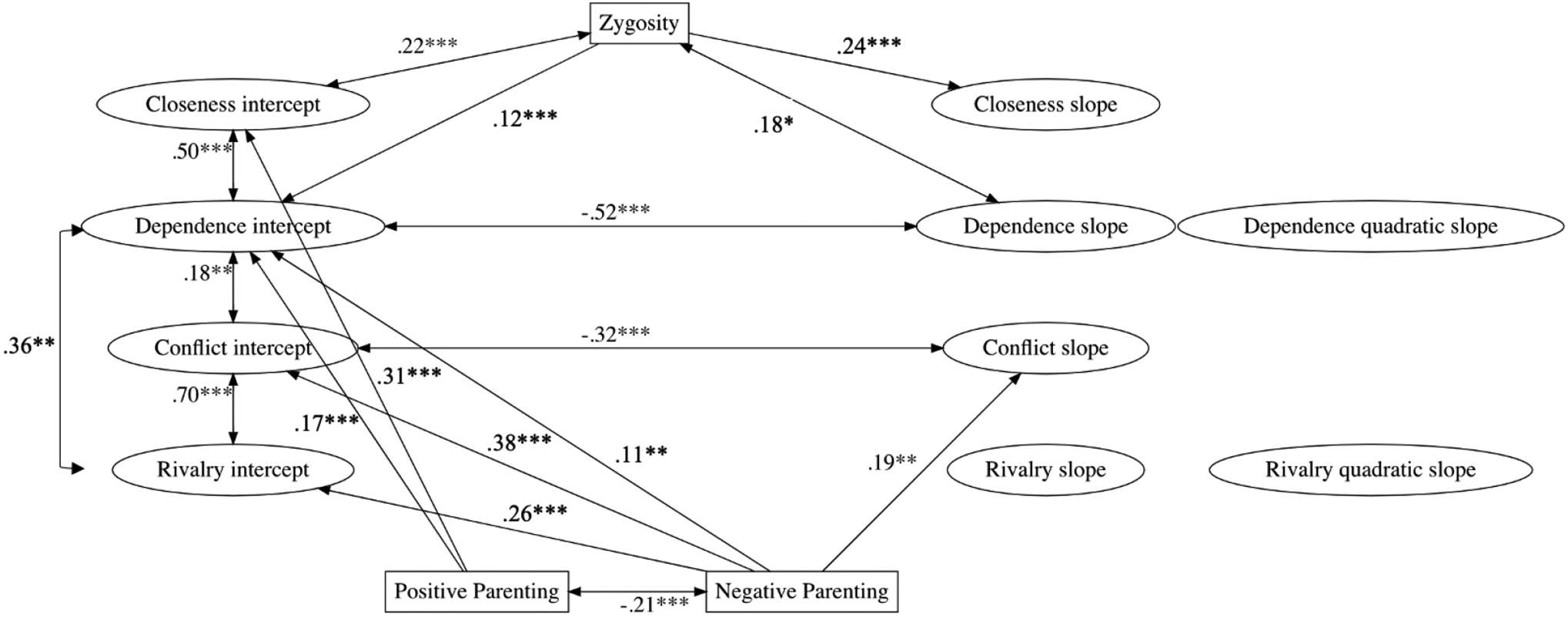
LGM for the twins’ relationships dimensions (mothers’ reports).
Intercepts and slopes: Descriptives
Twins’ closeness and dependence decreased over time (mean linear slopes: M = −.09, M = −.22, respectively, p < .001; Table 6). The dependence between the twins also demonstrated a quadratic change, as it had a low point at the age of 5, followed by an increase (M = .03, p < .001). Twin rivalry increased through childhood (M = .14, p < .001), but also presented a quadratic change, peaking at the age of 6.5, followed by a decrease (M = −.03, p < .001). The conflict mean slope was nonsignificant (M = .01, p = .594). Importantly, there was variability across twins’ dyads in the initial levels of all the four relationship dimensions (S2s = .12–.52, p < .001) and in the linear growth of closeness and conflict (S2 = .004, S2 = .01; respectively, p < .001).
Association between intercepts and slopes for each relationship dimension
The intercept and slope of closeness were not significantly associated, as was the case for the rivalry intercept and slope (Table 7), indicating that the initial level of the twins’ closeness and rivalry were not related to their developmental course. In contrast, there were negative associations between the intercept and slope of dependence (β = −.52, p < .001). That is, twins’ dependence decreased at a faster rate for dyads who had higher initial dependence levels. The association between the conflict intercept and slope was significant (β = −.32, p < .001). This association reflects that greater initial conflict was associated with a steeper decline in the twins’ conflict later on.
LGM for twins’ relationships: Standardized estimations of covariances.
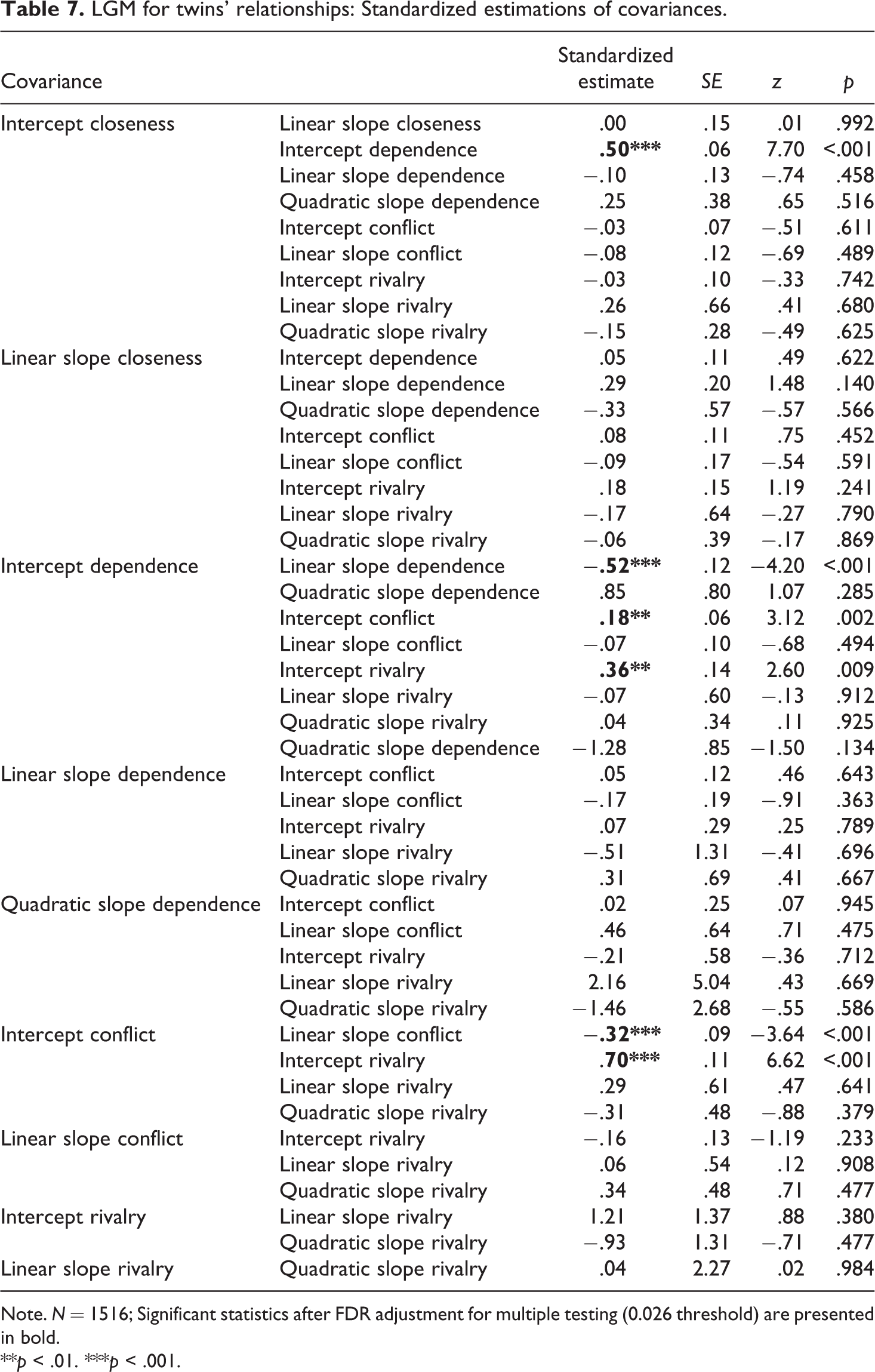
Note. N = 1516; Significant statistics after FDR adjustment for multiple testing (0.026 threshold) are presented in bold.
**p < .01. ***p < .001.
Associations among the relationship dimensions
Twin pairs showing high degrees of closeness also showed high degrees of dependence (the association between the intercepts: β = .50, p < .001; Table 7). Similarly, the initial levels of conflict and rivalry were highly associated (β = .70, p < .001). While all the associations between closeness and the negative aspects of the twins’ relationships were nonsignificant, twins’ dependence related to conflict and rivalry. Twins with higher initial levels of dependence also had higher initial levels of conflict and rivalry (as indicated by the associations between the intercepts: β = .18, p = .002; β = .36, p = .009, respectively). However, we didn’t find any significant associations between the developmental paths of the relationship dimensions, indicating that the associations among the different relationship dimensions were all accounted for by their initial levels. One exception to this regards the linear slopes of closeness and dependence, which were positively related (β = .35, p < .05) in an initial model, before adding the zygosity and parenting variables.
Zygosity and twins’ relationships
Our next focus was on the association between zygosity and the twin relationships (Table 8, the associations between the predictors and the rivalry linear slope, which had small variance, could not be computed, and thereby were dropped from the model.). Zygosity was related to closeness and dependence, but not to conflict and rivalry. Specifically, zygosity predicted the intercepts of closeness and dependence (β = .22, β = .12, respectively, p < .001), with a positive zygosity effect indicating higher intercepts for MZ twins. Moreover, zygosity related to both the linear slopes of closeness and dependence (β = .24, p < .001; β = .18, p < .05, respectively).
LGM for zygosity, parental positivity, parental negativity and twins’ relationships: Regression standardized coefficients.
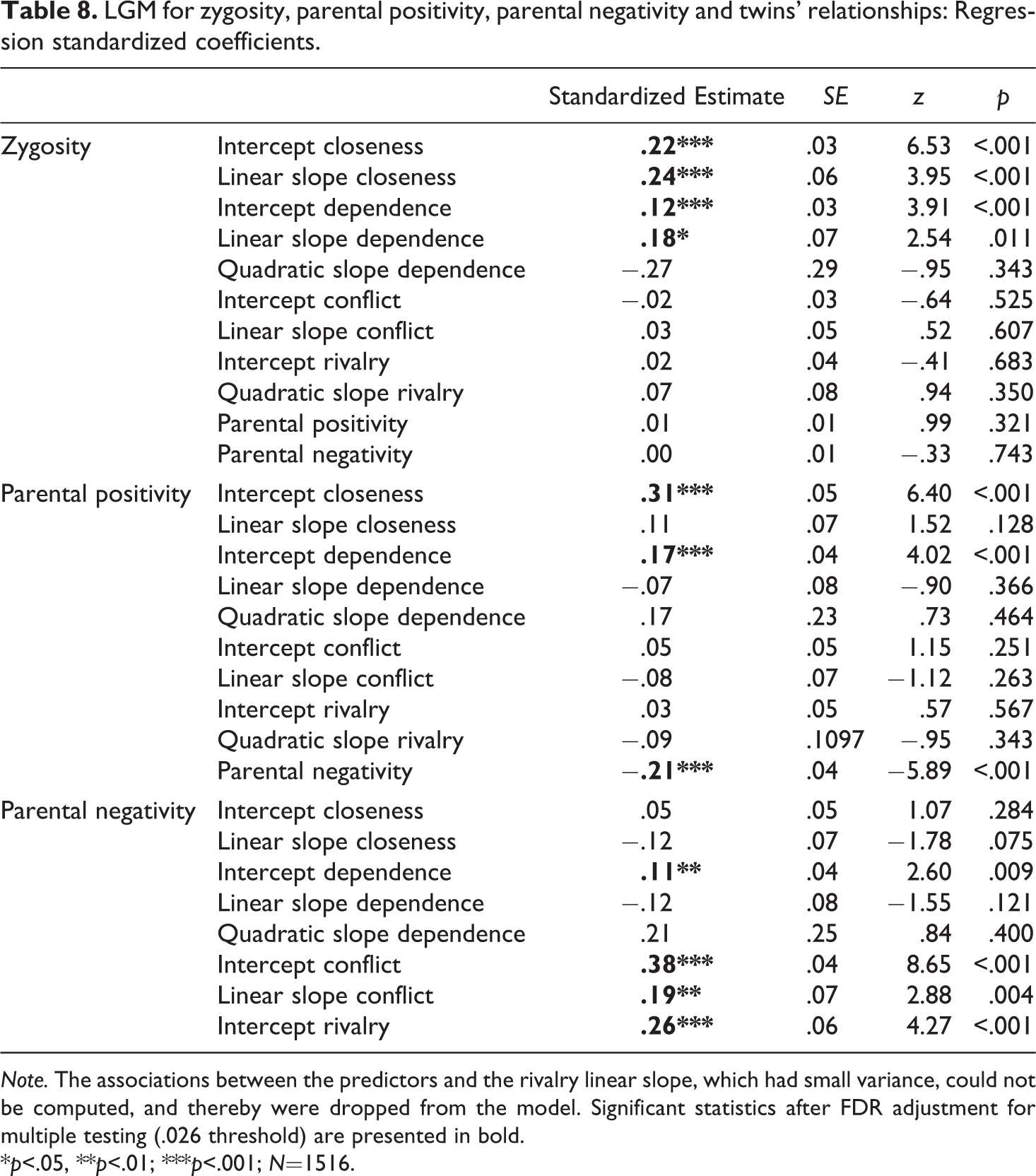
Note. The associations between the predictors and the rivalry linear slope, which had small variance, could not be computed, and thereby were dropped from the model. Significant statistics after FDR adjustment for multiple testing (.026 threshold) are presented in bold.
*p<.05, **p<.01; ***p<.001; N=1516.
In order to understand the effect of zygosity on the development of the relationships, two LGMs were calculated, for MZ twins and DZ twins separately. The fit for the two models could be considered as very good for MZ (χ2(61, N = 322) = 69.78, p = .206; CFI = .99, TLI = .98, RMSEA = .02, SRMR = .04) and DZ twins (χ2(61, N = 1194) = 136.51, p < .001, CFI = .98, TLI = .95, RMSEA = .03, SRMR = .04). Examining the MZ and DZ LGMs (Supplementary Table 7) reveals that MZ twins’ closeness and dependence didn’t change, on average, throughout childhood (as indicated by nonsignificant means for the linear slopes). However, for DZ twins, both closeness and dependence decreased (M = −.05, M = −.11, respectively, p < .001). In sum, the effect of zygosity on the slopes of closeness and dependence indicates that MZ twins preserved their level of closeness and dependence across the years, while DZ twins showed a decline in these relationship dimensions.
For both MZ and DZ twins, rivalry increased throughout childhood (M = .10, p = .005; M = .15, p < .001 respectively). Similarly, conflict increased for DZ twins (M = .02, p = .007), and for MZ twins, although not significantly so (M = .02, ns). As in the general LGM, the DZ twins’ LGM also presented an association between the conflict’s intercept and slope (β = −.36, p < .001).
Parenting and twins’ relationships
The associations between zygosity and parental positivity and parental negativity were nonsignificant (Table 8). Parental positivity predicted the initial levels of twins’ closeness and dependence (β = .31, β = .17, respectively, p < .001), and parental negativity predicted the initial levels of twins’ conflict and rivalry (β = .38, β = .26, respectively, p < .001). Perhaps more interestingly, parental negativity also predicted the initial level of the twins’ dependence (β = .11, p = .004). Finally, the association between parental negativity and the conflict slope was significant (β = .19, p = .004). That is, the twins’ conflict increased in a higher rate for twins who received higher levels of parental negativity throughout childhood.
Discussion
Twin relationships are perhaps the longest relationships people have, starting at birth and influencing many aspects of twins’ lives. With a large sample and the longitudinal design of the current study, we were able to examine the developmental courses of the twins’ four main relationship dimensions and the role of zygosity and parenting in these relationships, from early to middle childhood, making this study the largest and most comprehensive treatment of the topic. First, we sought to investigate the developmental courses of each relationship dimension. Our second objective was to investigate the association between the relationship dimensions and their mutual development. Our third intention was to study the role of zygosity and parenting in twin relationship development.
Development of twin relationships through childhood
Our findings indicated that the four twin relationship dimensions had different developmental courses through childhood. Overall, MZ twins showed little change, on average, in their relationship quality, while DZ twins’ closeness and dependence decreased through childhood. A closer look at the means (Table 3) showed that dependence between the twins reached its lowest point at age 5. Possibly, at an early stage the twins spend most of their time together, allowing for special closeness and dependence between them. As they progress to middle childhood each of the twins engages in other meaningful relationships with different peers (Thorpe, 2003; Thorpe & Gardner, 2006), which might result in a gradual decrease in the dyads’ closeness and dependence. The dependence low point at age 5 may be explained by the developmental stage that occurs in this age. Around age 5, children increase their exploration of the world, begin to plan activities, make up games, and initiate activities with others beyond the family context (Erikson, 1994; Poole & Snarey, 2011), which can lead to a major decrease in twins’ dependence. In the next measurement point, the twins reach the age of 6.5. At this age, the twins are already at school, while most of them are likely to be in different classrooms. This separation during the day may arouse dependence needs as they meet at home, which may translate to higher dependence scores.
In contrast with the developmental paths of closeness and dependence, DZ twins’ conflict and both MZ and DZ twins’ rivalry increased through childhood. Previous studies found that small age spacing between siblings promoted social comparisons and resulted in higher levels of competitiveness (Jensen et al., 2015; Minnett et al., 1983). Possibly, as the twins grow up, they become more aware of the comparisons between them, resulting in an increase in their rivalry. Furthermore, when entering school, twins may be increasingly exposed to social and academic comparisons (by their surroundings and by themselves), which makes the comparison even more prominent and even formal, resulting in a peak in their rivalry at age of 6.5 (Gleeson et al., 1990).
Comparing our results to singleton sibling research, it seems that while twins share the same developmental stage, the quality of singletons’ relationships is related to differences in the developmental stages of each sibling. For example, Dunn et al. (1996) followed sibling relationships of 47 second-born children through early childhood (at 33, 47 and 69 months of age). The mean levels of negative (but not positive) affect decreased in this period of time. The decrease in the negative behaviors of siblings was also found by Jenkins et al. (2005), where the older sibling has already reached adolescence. Vandell et al. (1987) investigated sibling relationships between the age of 4 and 11 in a cross-sectional study. Contrary to our findings, they found that companionship and positive emotional tone increased with age. However, findings regarding conflict were less conclusive, as conflict behaviors were infrequent in all age groups. The researchers explained that the levels of interactions between siblings were related to the shift in children’s companionability for their older siblings, a shift that is not relevant when we discuss twins’ relationships. These differences between our results and the results regarding the development of singleton siblings’ relationships emphasize the uniqueness of twin relationships and the need to study them specifically.
Associations among relationship dimensions
Studying the associations between pairs of relationship dimensions yielded interesting results. First, as expected and following our previous study (H. Segal & Knafo-Noam, 2019), our findings presented substantial positive associations between twins’ closeness and dependence as well as between conflict and rivalry. In addition, closeness was not associated with conflict and rivalry. This finding reinforced the notion that they are not bi-polar opposites. That is, feeling close to each other did not relate to the twins’ quarrels, jealousy and competitiveness. However, higher initial levels of the twins’ dependence were associated with higher initial levels of their conflict and rivalry. One possible explanation of these associations between dependence and conflict and rivalry is the tendency of the twins to express negative emotions and behaviors, either toward the other twin as in the case of conflict and rivalry, or in relation to the presence or absence of the co-twin, as in the case of dependence. This tendency to exhibit negative emotions may reflect the twins’ temperament (Buss & Plomin, 1984) and should be further studied in future research.
Another possible explanation for the associations of twins’ dependence with their conflict and rivalry reflects processes described by an evolutionary perspective. First, the concept of kin selection introduces the idea that organisms are inclined to increase their evolutionary success by promoting the reproduction and survival of other, genetically-related individuals (Hamilton, 1964), thereby increasing one’s inclusive fitness (Buss, 2016). This mechanism suggests that siblings, including twins, are expected to depend on each other in order to preserve the continuity of their genes (Fraley & Tancredy, 2012; N. L. Segal et al., 2003). However, parent-offspring conflicts are also expected as parents and offspring have an implicit conflict over the amount and duration of parental investment (Godfray, 1995). Competition and rivalry over parental resources might be fierce for twins, even more than singletons, because of the emotional and economic burden on their parents (Whiteman et al., 2011). Thereby, the need to promote the survival of the twins’ genes can result in what might be seen as opposite behaviors: relying on each other and using the twinship as a powerful resource, and at the same time, competitiveness over the parents’ limited attention and resources (H. Segal & Knafo-Noam, 2018). The notion that the parent-offspring conflict is related to the associations of the twins’ dependence with their conflict and rivalry is supported by our findings. Exposure to negative parent behavior may lead to both negative relationships between the twins, and increased dependence between them in potential confrontation with parents’ high negativity.
Zygosity effects on twins’ relationships
Previous studies have generally supported the notion that MZ twins have better relationships than DZ twins (Fraley & Tancredy, 2012; Kutschke et al., 2018; Neyer, 2002b; Penninkilampi-Kerola et al., 2005). However, most of these previous studies focused on the positive, rather than the negative aspects of the twins’ relationships. The current results showed that the conclusions regarding the effect of zygosity on the quality of relationship should be qualified. Indeed, MZ twins had higher initial levels of closeness and dependence than DZ twins, and MZ twins’ closeness and dependence didn’t change, on average, through childhood, while DZ twins’ closeness and dependence further decreased. In contrast, zygosity did not have a significant effect on the twins’ conflict and rivalry and their developmental courses. Although only DZ twins’ conflict increased significantly, this merely reflected the larger number of DZ twins, as the mean slopes were similar for MZ and DZ twins. The impact of zygosity in the twins’ closeness and dependence, and the lack of zygosity impact on conflict and rivalry is in accordance with N. L. Segal’s (1984) findings. Despite her finding that MZ twins had higher cooperation levels, there were no MZ-DZ differences in the amount of competitiveness, indicating that MZ twins’ closeness is not equivalent to the lack of mutual antagonism (N. L. Segal & Hershberger, 1999).
In addition to the explanation suggested by the evolutionary perspective regarding the associations between the twins’ dependence and their conflict and rivalry, the evolutionary perspective can also propose an explanation to the influence of zygosity on the twins’ closeness and dependence and to the lack of influence on the twins’ conflict and rivalry (Scott-Phillips et al., 2011; N. L. Segal et al., 2003). According to the kin selection mechanism, the ultimate evolutionary goal of promoting one’s genes is also facilitated by promoting each other’s survival, due to the high genetic resemblance between MZ twins, resulting in higher levels of closeness and dependence between MZ than DZ twins. However, the struggle for the survival of the self may be a legitimate way to ensure the continuity of one’s genes even if the competition is against an identical twin (Pollet & Hoben, 2011; H. Segal & Knafo-Noam, 2018). Thereby, both MZ twins and DZ twins are competing for their parents’ resources in order to preserve their genes, especially during childhood, when reliance on the parents’ resources is vital for survival (H. Segal & Knafo-Noam, 2018). This may account for the lack of difference between MZ and DZ twins in conflict and rivalry levels.
Parenting and twins’ relationships
Consistent with Family Systems Theory, our findings supported the spillover hypothesis, as we found that parental positivity related to the initial levels of the twins’ closeness and dependence while parental negativity related to the initial levels of the twins’ conflict and rivalry. In addition, we found that higher levels of parental negativity were related to more dependence between the twins. Previous research has suggested that bonds between siblings may resemble, complement or compensate for parent–child bonds (Whiteman et al., 2011). Indeed, our findings may indicate that twins tend to use one another for support, especially when facing a home environment in which they receive parental negativity. Therefore, twins’ dependence may compensate for parental negativity.
We also found that parental negativity predicted the rate of increase in twins’ conflict. That is, beyond its association with the initial level of the twins’ conflict, parental negativity may be involved in conflict increasing with age. This may suggest that parental negativity reinforces the conflict between the twins throughout childhood.
Strengths and limitations
The strengths of the study included the longitudinal design, with a large sample, and an integrated perspective on various dimensions of the twins’ relationships. The longitudinal design of our study allowed us, for the first time, to investigate the stability and change in twins’ relationship through childhood, reflecting different developmental courses for each dimension and understanding the role that zygosity and parenting take in the formation of these unique relationships.
Nonetheless, a limitation of the study is that in assessing the twins’ relationships, we relied on parental reports. The advantage of using parents’ reports is in the accumulated knowledge they have of their children, and in the ability to reach the large number of twin pairs needed for such an analysis. However, although the current measure did relate to children’s experimentally-derived behavior, and longitudinally to children’s self-reported relationships (H. Segal & Knafo-Noam, 2019), parents’ reports on their twins and on their own parenting might be biased (Saudino et al., 2000). The use of reports from both parents partially addressed this problem. The main findings regarding the dimensions’ mean levels, and the correlations between consecutive measurement points, replicated for mothers and fathers’ reports, further supported our findings. Future research should seek to replicate the current findings with additional measures, such as twins’ self-reports and observational measures.
Future directions
The current research reinforced the zygosity effect on the positive aspects of twins’ relationships and on their relationship development. Our next study will strive to deepen the understanding regarding this zygosity effect. As MZ twins are more similar to each other than DZ twins, both physically and in terms of personality (Korbøl Torgersen, 2016; Olson et al., 2001; Tellegen et al., 1988), we intend to study these similarities as mediating the zygosity effect on twins’ closeness and dependence.
The current study focused on the childhood period in the twins’ relationships. However, several studies found that these relationships are significant throughout the twins’ lives (Neyer, 2002b; Penninkilampi-Kerola et al., 2005). Moreover, changes in the twins’ relationships are expected as they enter adolescence. Developmental events such as puberty, and the extension of their social groups can further influence the twins’ evolving relationships (Kim et al., 2006; McHale et al., 2012; Whiteman et al., 2011). Future studies should continue the current one in investigating the developmental course of the twins’ relationships beyond childhood, and the impact that early childhood relationships have on the twins’ relationships later in their life.
Finally, understanding the complexities of twins’ relationships can bring insights into relationships in general (Mark et al., 2017; Yirmiya et al., 2018). The results of the current study can open a window to the complex associations between the dimensions of sibling relationships through childhood. Future research should examine the developmental course of singleton siblings’ relationships, to address the similarities and differences between twins’ evolving relationships and those of singleton siblings.
It is our hope that better understanding the complexities of twins’ relationships will help parents and professionals caring for twins. For example, parents might be upset by the conflicts between their twins and worry that the twins’ rivalry would have an impact on their future closeness. Clinicians might assume that the characteristics of the twins’ relationships are constant throughout the life of the twins, for better and for worse. Understanding that the development of the relationship dimensions is dynamic, and can change through childhood, especially for DZ twins, and that the twins’ closeness is not related to their conflict can calm parents’ concerns and give clinicians a developmental perspective when treating twins. Moreover, our findings regarding the possible impact of parenting on the twins’ closeness, dependency, conflict and rivalry, can give a powerful tool for parents to guide their twins toward a more positive relationship. Lastly, one of the main concerns of parents and educators is related to separating the twins in kindergarten and school. Our results suggested that the answer to this concern should take into consideration the complexity of the various dimensions in the twins’ relationships and be examined in multiple time points in the twins’ lives, as the nature of their relationship keeps evolving. Hopefully, our findings can help parents enhance the positive aspects of these relationships, giving their children and themselves a better opportunity to enjoy the twins’ unique relationships.
Supplemental material
Supplemental Material, sj-pdf-1-spr-10.1177_02654075211005857 - “Side by side”: Development of twin relationship dimensions from early to middle childhood and the role of zygosity and parenting
Supplemental Material, sj-pdf-1-spr-10.1177_02654075211005857 for “Side by side”: Development of twin relationship dimensions from early to middle childhood and the role of zygosity and parenting by Hila Segal and Ariel Knafo-Noam in Journal of Social and Personal Relationships
Footnotes
Funding
The author(s) disclosed receipt of the following financial support for the research, authorship, and/or publication of this article: This research was supported by Grant No. 31/06 from the Israel Science Foundation. Further support was obtained by a grant from The Science of Generosity Initiative, University of Notre Dame, funded by the Templeton Foundation, and by Starting Grant no. 240994 from the European Research Council, both to Ariel Knafo.
Acknowledgments
Hila Segal is now at the Department of Psychology, The Academic College of Tel Aviv-Yaffo.
We thank the parents and children in our study for their continued support and participation.

Open research statement
As part of IARR’s encouragement of open research practices, the author(s) have provided the following information: This research was not pre-registered. The data used in the research are not available online. The data can be obtained by contacting Ariel Knafo-Noam at the address
Supplemental material
Supplemental material for this article is available online.
References
Supplementary Material
Please find the following supplemental material available below.
For Open Access articles published under a Creative Commons License, all supplemental material carries the same license as the article it is associated with.
For non-Open Access articles published, all supplemental material carries a non-exclusive license, and permission requests for re-use of supplemental material or any part of supplemental material shall be sent directly to the copyright owner as specified in the copyright notice associated with the article.
