




Abstract
Satisfying intimate relationships are crucial to human health and well-being. Yet even the best relationships include good days and bad ones, and when people experience bad days in terms of relationship satisfaction, it tends to undermine personal well-being. What can reduce the extent to which bad relational days spill over into personal well-being? Based on the Buddhist concept of impermanence, as well as modern theory and research examining mindfulness, we argue trait mindfulness renders people more aware and accepting of all forms of change, including to changes in their relationships. As such, we hypothesized that people with greater trait mindfulness would be less likely to experience decrements in personal well-being on days in which they experienced dips in relationship satisfaction. In a daily study of 80 couples across 14 days (N = 1,798 observations), people experienced lower life satisfaction, greater negative emotions, and fewer positive emotions on days when they reported lower than their average relationship satisfaction, but this association was attenuated for people high in mindfulness. These results suggest trait mindfulness partially buffers the negative consequences of daily dips in relationship satisfaction.
Healthy relationships are central to nearly every aspect of well-being (Fincham & Beach, 2006; Holt-Lunstad et al., 2010; Robles et al., 2014). Yet one challenge inherent to relationships is that even the most satisfying ones change: for instance, in intimate relationships, it is normal for people to experience changes in relationship satisfaction in their daily life from one day to the next (e.g., Hofmann et al., 2015; Impett et al., 2010; Park et al., 2019; Tolpin et al., 2006). Unfortunately, these normative changes in relationship satisfaction-particularly when they are in the negative direction-predict negative outcomes, such as decrements in personal well-being in the form of lower life satisfaction, fewer positive emotions, and increases in negative emotions (Fincham & Beach, 2006; Hofmann, et al., 2015). This leads to an important follow-up question: What can prevent bad relational days-days which are lower than usual in terms of relationship satisfaction-from spilling over into personal well-being? Must these normal changes in relationships always result in detrimental outcomes? Based on theory and research suggesting that people high in mindfulness are less reactive to change (Maezumi, 2002; Ryan & Rigby, 2015), and better at adjusting to all types of difficult experiences (Brown et al., 2012; Niemiec et al., 2010), we hypothesized that trait mindfulness would reduce the extent to which daily dips in relationship satisfaction spill over into personal well-being outcomes. We use data from a daily study of 80 couples (160 individuals) who completed surveys across 14 days (N = 1,798 observations) to test this idea.
Relationship changes and personal well-being
A wealth of research demonstrates that social relationships are central to human health and psychological well-being. For instance, a meta-analysis by Holt-Lunstad et al. (2010) provided evidence that relationships predict mortality risk as strong as (or more strongly than) many well-established contributors to health. Importantly, other research also suggests that relationships are beneficial to the extent to which they are healthy and satisfying (see Robles et al., 2014 for a review), which is one reason why extensive research has been devoted to understanding satisfaction within intimate relationships.
One conclusion of this literature is that—even when they are generally satisfying—relationships are not always perfect and that it is normal for them to change (Fincham & Beach, 2006). For instance, a number of studies using daily diary methods demonstrate that individuals report significant variability in relationship satisfaction in daily life, and that variability exists for people regardless of the individual’s overall or average level of relationship satisfaction (e.g., Impett et al., 2010; Park et al., 2019; Tolpin et al., 2006). Importantly, this variability in relationship satisfaction has consequences for personal well-being. Although relationship satisfaction has implications for numerous facets of well-being, here we focus on three facets of subjective well-being (Diener, 2000): positive emotions, negative emotions, and life satisfaction. We focus on these aspects of personal well-being for two reasons: first, life satisfaction, positive emotions, and negative emotions are associated with a host of important behavioral, cognitive, and life-course consequences (Fredrickson, 2001; Lyubomirsky et al., 2005; Mor & Wingquist, 2002). For instance, in a review of the literature, Lyubomirsky et al. (2005) demonstrated that positive emotions and life satisfaction are associated with an increased likelihood of success in a variety of domains, such as work, physical health, and academics. Extensive evidence similarly suggests that negative emotions play a crucial role in cognition, behavior, health, and well-being (e.g., Gallo & Matthews, 2003; Mor & Winquist, 2002). Crucially, research suggests that assessments of psychological well-being that occur throughout the course of everyday life, such as daily assessments of positive emotions, negative emotions, and life satisfaction, tend to be especially predictive of key outcomes across time (see Connor & Barrett, 2012, for a review). As such, this provides special impetus for understanding the roots of subjective well-being in daily life.
The second reason we focus on subjective well-being is because research and theory demonstrate relationship satisfaction plays a crucial role in contributing to these outcomes. For example, Schimmack et al. (2002) argue relationship satisfaction is particularly likely to predict life satisfaction, positive emotions, and negative emotions. because intimate relationships are highly salient, chronically accessible, and central to most people’s lives. Empirical research supports these ideas: at both the general level, and in daily life, relationship satisfaction is a strong and consistent predictor of personal well-being (e.g., Carr et al., 2014; Dush & Amato, 2005; Hofman et al., 2015).
The robust link between relationship satisfaction and personal well-being leads to an important question: If daily ups and downs in relationship satisfaction are commonplace, and these changes are associated with personal well-being, is it also inevitable that bad relational days will have detrimental consequences for personal well-being? Are there any factors that mitigate the influence of normative day-to-day changes in relationship satisfaction on personal well-being? Although extensive research has examined the factors that predict greater levels of relationship satisfaction (Fincham & Beach, 2006), little research has examined the factors that mitigate the maladaptive influence of negative changes in relationship satisfaction. Given that positive emotions, negative emotions, and life satisfaction have a panoply of meaningful cognitive and behavioral consequences (Fredrickson, 2001; Lyubomirsky et al., 2005), it is important to understand ways to mitigate the negative influence of daily dips in relationship satisfaction. In the present work, we argue mindfulness plays a key role.
Mindfulness and its influence on relationships
Mindfulness is frequently defined as including two major components: (a) awareness of the present moment, combined with (b) non-judgment of what arises in the present moment (Bishop et al., 2004; Brown & Ryan, 2003; Karremans et al., 2017, 2019). Although mindfulness has been operationalized in many ways (Davidson & Kasznaik, 2015), in this research, we focus on trait mindfulness, 1 or the general tendency to be aware and non-judgmental of present moment experiences.
A developing body of literature demonstrates that trait mindfulness—which is generally assessed using self-report measures, such as the Mindfulness Attention Awareness Questionnaire (Brown & Ryan, 2003)—is associated with a host of benefits for intimate relationships (see Karremans et al., 2017, for a review). For instance, previous research has demonstrated that trait mindfulness is associated with greater overall levels of relationship satisfaction (Barnes et al., 2007; Jones et al., 2011; Wachs & Cordova, 2007), better responses to conflict (Barnes et al., 2007), greater growth belief in relationships (Don, 2019), and greater forgiveness (Karremans et al., 2019).
There are numerous theoretical reasons to suspect that trait mindfulness may play the additional beneficial function of altering the way people respond to changes in their relationships. One is the Buddhist principle of impermanence (Keown, 2003): according to this principle, all worldly phenomena—even seemingly permanent ones—actually consist of constant change. In this line of thinking, one of the benefits of mindfulness is that people become more aware and accepting of the changing nature of all of their experiences (Maezumi, 2002; Ryan & Rigby, 2015). Other research similarly suggests that people high in mindfulness tend to be better at coping with all types of difficult experiences, such as social threats, or reminders of their own mortality (e.g., Brown et al., 2012; Niemiec et al., 2010). 2
These ideas may be applicable to how people may respond to changes in relationship satisfaction. If people who are high in mindfulness tend to be more aware and accepting of change, and better at adjusting to difficult experiences, they may be less influenced by the normative changes that occur in their relationships in daily life. For instance, when a person high in mindfulness experiences a day in which they feel less satisfied than usual in their relationship, they may be more likely to view this change as normal, and therefore be less likely to experience decrements in their own life satisfaction or emotions. By contrast, a person low in mindfulness may feel a daily dip in their feelings of relationship satisfaction is particularly threatening, and therefore experience decrements in their life satisfaction or emotions. Thus, our primary prediction was that trait mindfulness would moderate the association between everyday dips in relationship satisfaction and personal well-being outcomes.
The current study
Although extensive research demonstrates that (a) day-to-day changes in relationship satisfaction are commonplace and (b) these changes have important implications for personal well-being, little research has examined the factors that can mitigate the maladaptive influence of daily dips in relationship satisfaction on personal well-being. Drawing from the growing literature demonstrating the benefits of mindfulness to relationships (Karremans et al., 2017), we hypothesized trait mindfulness would play a key role in mitigating the extent to which changes in relationship satisfaction would predict personal well-being. Our primary hypothesis, based on the principle of impermanence, as well as modern theory and research in mindfulness, was that daily negative changes in relationship satisfaction at the within-person level (i.e., when people experience lower than usual relationship satisfaction on a particular day) would have less of a detrimental influence on daily life satisfaction, positive emotions, and negative emotions for people high in mindfulness and that this would be true even when controlling for between-person differences in (i.e., overall levels) relationship satisfaction.
To test this hypothesis, we drew upon a sample of 80 couples who completed surveys which assessed their relationship satisfaction and personal well-being across the course of 14 days. Moreover, we used a method well-suited to our person-focused research question: we parsed each individual’s daily deviations from their own average relationship satisfaction on a daily basis, thereby creating a quasi-experimental, repeated-measures approach (Bolger & Laurenceau, 2013).
Method
Participants
Participants were recruited from the community surrounding a major university in the Southeast of the U.S. This study has been previously documented in prior research (Algoe et al., 2013) and further information about participants and procedures can be found online on the University of North Carolina Love Consortium Dataverse (Algoe & Fredrickson, 2019). To be eligible for the study, participants must have been in a romantic relationship for at least 6 months and at least 18 years old at the start of the study. The initial sample consisted of 160 people (80 couples). Participants largely identified as White (76.5%), with most others identifying as African American (13.2%), East Asian (2.2%), South Asian (2.9%), or another race (5.1%). Three percent of participants identified as Hispanic. On average, the sample was 27.73 years old (SD = 7.72). The average relationship length was 4.22 years (SD = 5.24), and the large majority of the sample identified as heterosexual (96.3%), with the rest of the sample identifying as another sexual orientation. There were 81 women and 79 men included in the study.
Procedure and materials
Participants first came to a research laboratory to complete a series of questionnaires as well as laboratory tasks that are not the focus of the current research. Among these questionnaires, participants completed an assessment of trait mindfulness. Beginning that night, participants independently completed a brief questionnaire at the end of the day for each of 14 evenings; they were encouraged to complete the questionnaire around the same time each day. The present investigation focuses on the reports of relationship satisfaction, life satisfaction, positive emotions, and negative emotions from that questionnaire. The final sample included in terms of daily observations was N = 1,798 for the analyses examining positive and negative emotions and N =1,791 for the analysis examining life satisfaction. Complete measures and data analytic syntax can be found on the corresponding Open Science Framework website for this article via this link: https://osf.io/y956s/?view_only=b48aed6e81db44e1af697a968d8d734a.
Mindfulness
Trait mindfulness was assessed during the baseline survey using the Mindfulness Attention Awareness Scale (MAAS; Brown & Ryan, 2003). The MAAS is an extensively used assessment of trait mindfulness, which encapsulates the present-focused and non-judgmental attention characteristic of how mindfulness is often defined in the literature (Bergomi et al., 2013). Moreover, this measure has demonstrated excellent discriminant, convergent, and predictive validity in prior research (see Quaglia et al., 2015, for a review). Participants completed 15 items (e.g., “I find it difficult to stay focused on what’s happening in the present”) on a scale from 1 = almost never to 6 = almost always, and these items were averaged (α = .81).
Daily relationship satisfaction
To assess daily relationship satisfaction, participants were asked to rate their relationship on that day on a scale from 1 = terrible to 9 = terrific each day (Gable et al., 2003).
Daily positive emotions and negative emotions
To assess daily positive and negative emotions, participants completed the modified Differential Emotions Scale (Fredrickson et al., 2003), which was abbreviated and adapted for use in daily life. Participants completed 12 items, 6 of which assessed positive emotions and 6 of which assessed negative emotions (e.g., “I felt angry, irritated, frustrated”; “I felt joyful, glad, happy”). Specifically, they were asked to indicate the greatest amount they experienced each feeling during the past 24 hours on a scale from 0 = not at all to 4 = extremely. A mean score for daily positive and negative emotions was created (positive emotions α = .81; negative emotions α = .81).
Daily life satisfaction
To assess daily life satisfaction, participants were asked to indicate their level of agreement on a scale from 1 = strongly disagree to 7 = strongly agree each day with the following item (adapted from Diener et al., 1985): “Today, I am satisfied with my life.”
Results
Bivariate correlations are presented in Table 1. At the bivariate level (without taking into account the nesting of the data), daily relationship satisfaction was strongly associated with daily life satisfaction, daily positive emotions, and daily negative emotions. Trait mindfulness was weakly associated with greater daily life satisfaction and moderately associated with greater daily positive emotions and lower daily negative emotions.
Bivariate correlations for study variables.
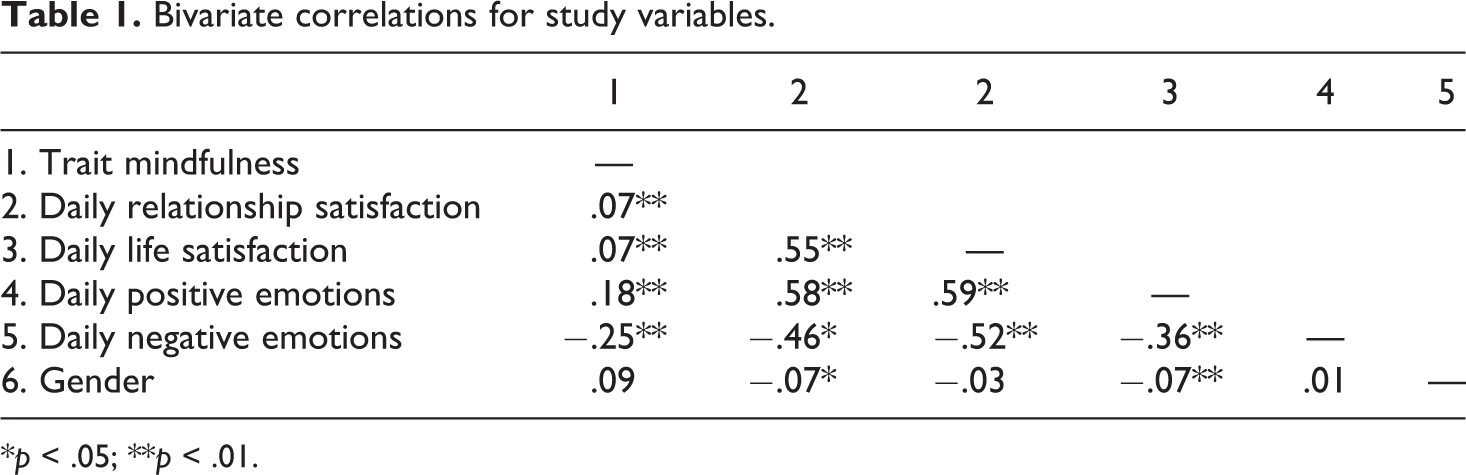
*p < .05; **p < .01.
Because the data were nested, such that daily observations were nested within people and couples, we utilized multilevel modeling to test the hypothesis that mindfulness would moderate the association between daily relationship satisfaction and personal well-being outcomes (life satisfaction, positive emotions, and negative emotions). Specifically, we used a three-level multilevel model that accounted for the nesting of the daily observations within persons and couples. In accordance with the recommendations of Bolger and Laurenceau (2013), we also partitioned the variability in relationship satisfaction into between- and within-person variables, such that the between-person variable represents how the individual differs from the grand mean across the 14-day period, whereas the within-person variable represents individual deviations on a particular day from the person’s own average across the 14-day period. 3 We were particularly focused on how mindfulness would moderate the within-person effect of relationship satisfaction on well-being outcomes, because we suspected that mindfulness would mitigate the extent to which a negative deviation from one’s average relationship satisfaction would contribute to maladaptive personal outcomes (i.e., Does mindfulness attenuate the influence of daily dips in relationship satisfaction on personal well-being?). Although it was not the focus of our hypotheses, as recommended by Bolger and Laurencaeu (2013), we also included an interaction term between trait mindfulness and the between-person differences in relationship satisfaction. 4 A fixed effect for day was also included to account for the possibility that there may be an effect of time on participants’ responses (Bolger & Laurenceau, 2013). We also note that while it is possible to test partner effects via dyadic multilevel models using daily data (Bolger & Laurenceau, 2013), based on theory we did not predict partner effects. 5 As such, our analyses focused on individual well-being outcomes, while accounting for the nonindependence of the dyadic data within the multilevel model we tested.
Finally, we also conducted post hoc power analyses, which examined our ability to detect an interaction between trait mindfulness and within-person changes in daily relationship satisfaction. To do so, we conducted Monte Carlo simulations in MPlus (Muthen & Muthen, 2012) based on the total number of observations included in the analysis (N = 1,798 for positive and negative emotions, and 1,791 for life satisfaction), the observed effect size for the key interaction in analysis (reported below), and 10,000 simulations per model. We calculated effects sizes based on the formula suggested by Rosenthal and Rosnow (2007): r = √(t2/t2 + df). Observed power for the within-person interaction was .83 in analysis examining daily positive emotion as an outcome, .84 in the analysis examining negative emotion as an outcome, and .73 in the analysis examining life satisfaction as an outcome. Thus, all of the analyses were adequately powered, with the exception of the analysis examining life satisfaction, which was slightly underpowered.
Results of fixed effects are presented in Table 2. Consistent with prior research, at the between and within-person levels, relationship satisfaction was strongly associated with life satisfaction, negative emotions, and positive emotions. Specifically, when people reported higher levels of relationship satisfaction as compared to other people (between-persons), and when people had higher relationship satisfaction on a particular day as compared to their average day (within-persons), they reported greater life satisfaction, greater positive emotions, and lower negative emotions that day. Trait mindfulness was associated with greater life satisfaction and lower negative emotions but was not significantly associated with positive emotions. Crucially, in support of our primary hypothesis, there was a significant interaction between trait mindfulness and within-person relationship satisfaction in predicting life satisfaction (r = −.06, p = .02), negative emotions (r = .07, p = .007), and positive emotions (r = −.08, p = .002). These interactions are plotted in Figures 1 to 3. All interactions were probed using simple slopes analyses at ±1 standard deviation of mindfulness. As estimates of effect sizes for each of the slopes, we calculated r values at low and high levels of mindfulness using the formula suggested by Rosenthal and Rosnow (2007): r = √(t2/t2 + df).
Results of multilevel models examining daily well-being outcomes.
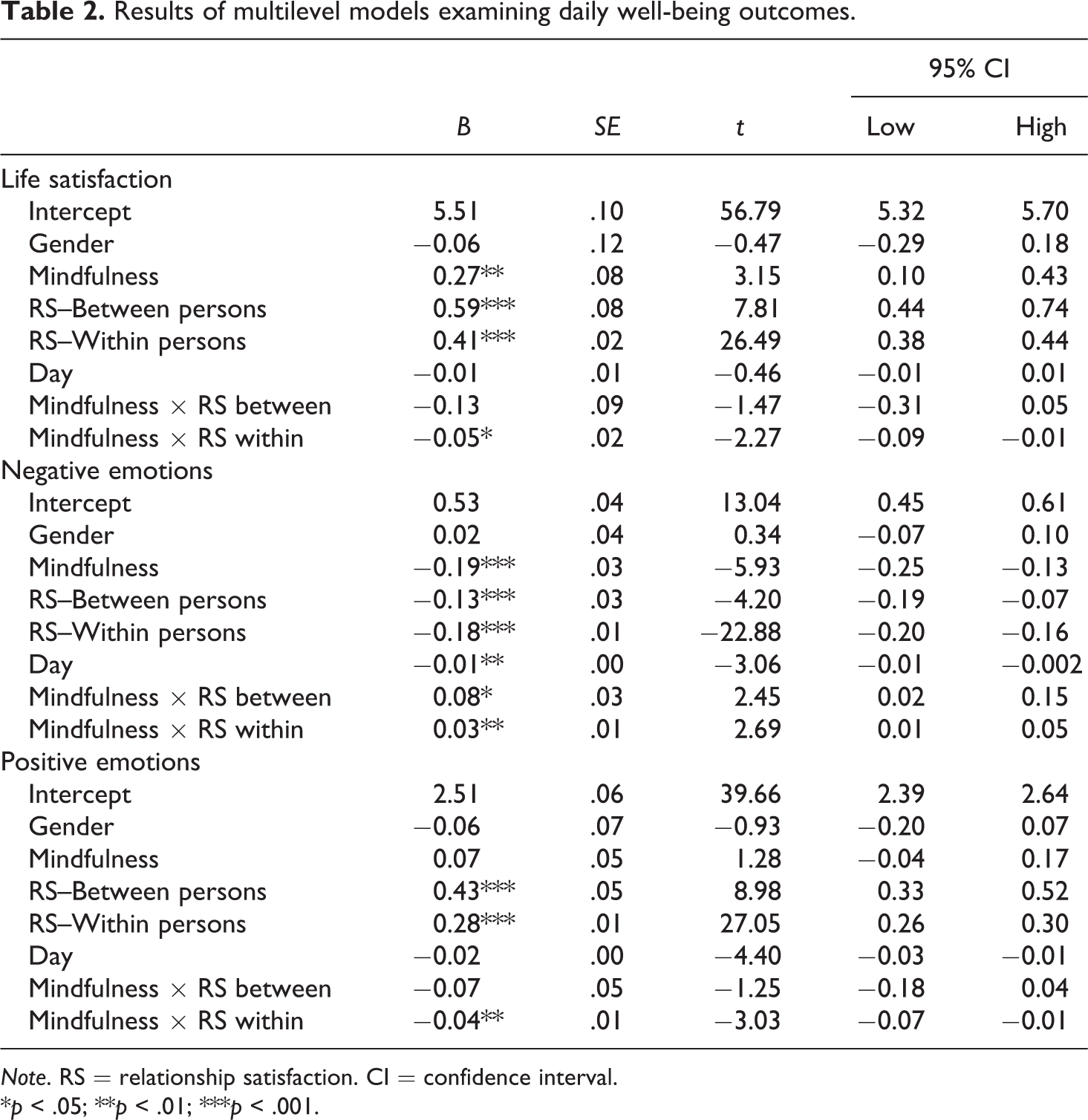
Note. RS = relationship satisfaction. CI = confidence interval.
*p < .05; **p < .01; ***p < .001.
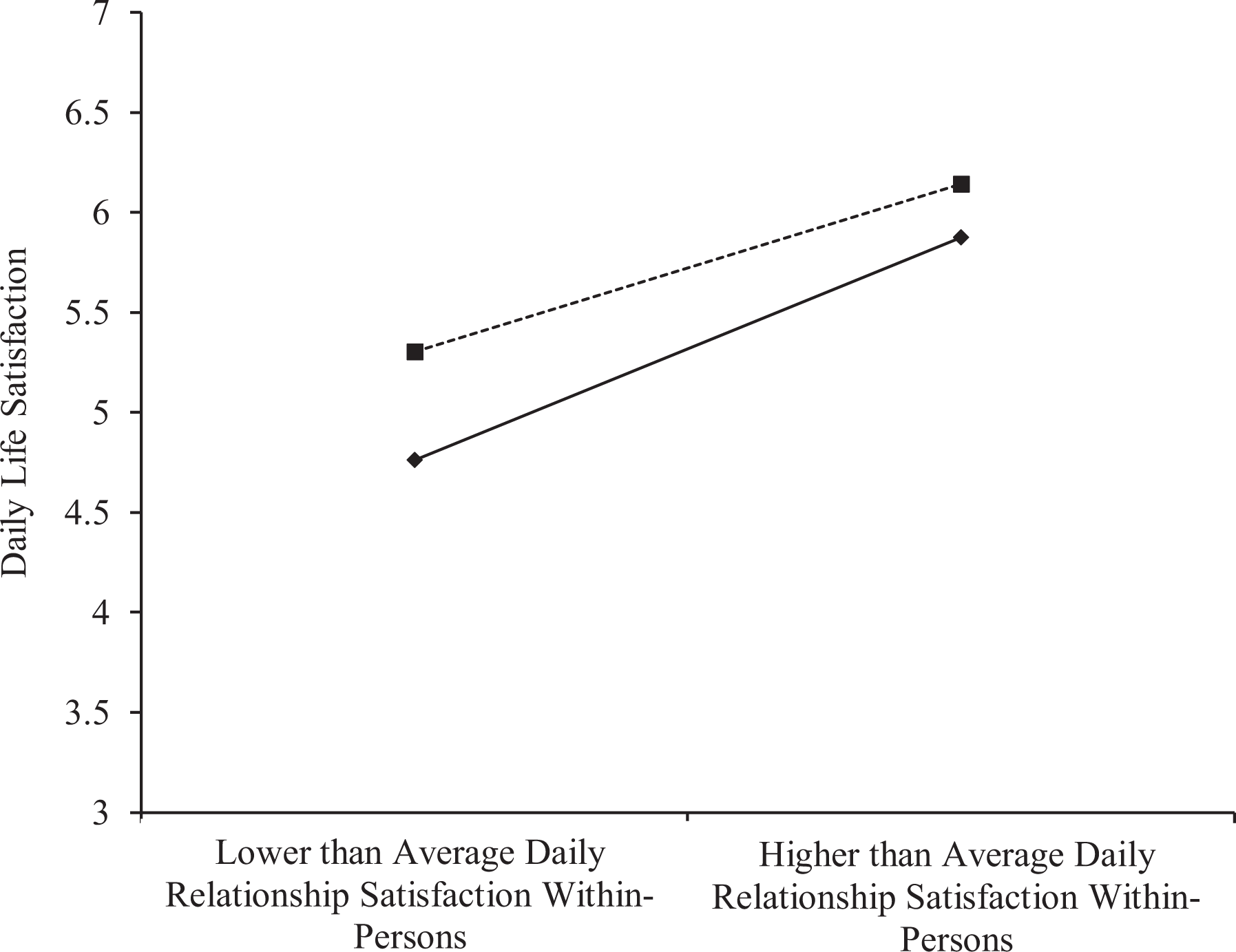
Interaction plot examining mindfulness as a moderator between daily relationship satisfaction within-persons and life satisfaction. Note. The dashed line indicates people high (1 SD above the mean) in mindfulness, whereas the solid line indicates people low (1 SD below the mean) in mindfulness. Life satisfaction was assessed on a scale from 1 to 7, but we present it on a scale from 3 to 7 here for ease of presentation.
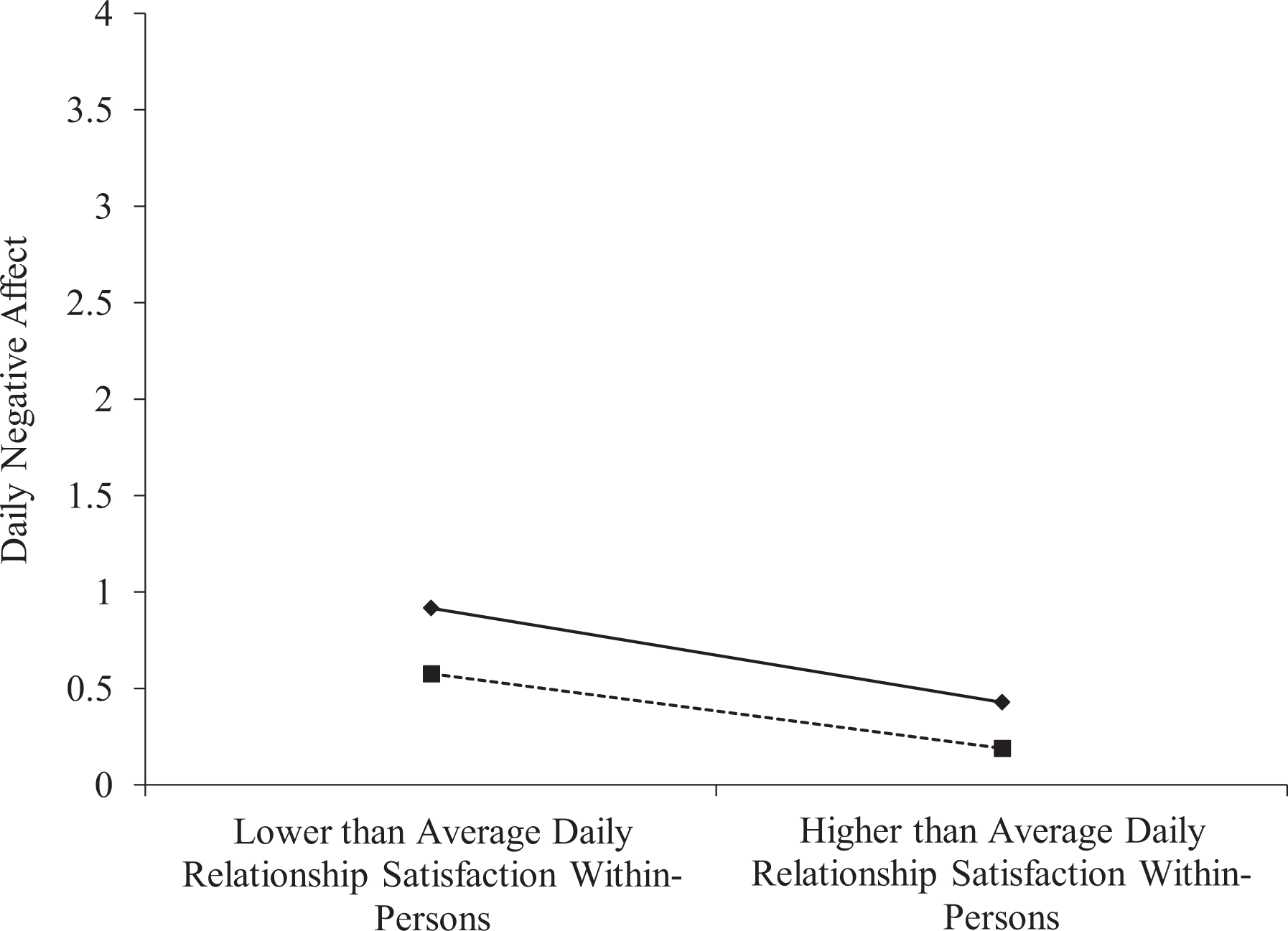
Interaction plot examining mindfulness as a moderator between daily relationship satisfaction and negative affect. Note. The dashed line indicates people high (1 SD above the mean) in mindfulness, whereas the solid line indicates people low (1 SD below the mean) in mindfulness.
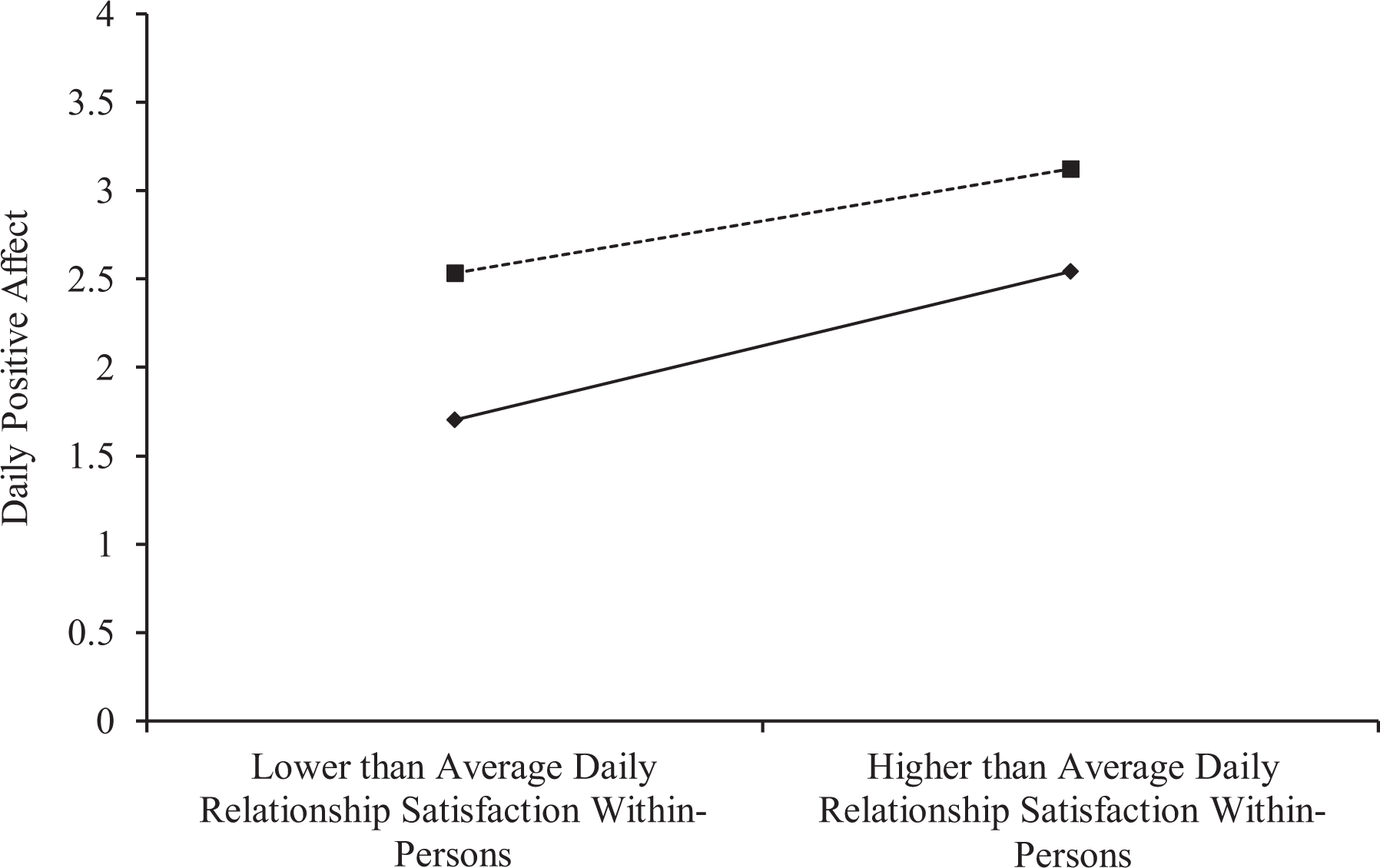
Interaction plot examining mindfulness as a moderator between daily relationship satisfaction and positive affect. Note. The dashed line indicates people high (1 SD above the mean) in mindfulness, whereas the solid line indicates people low (1 SD below the mean) in mindfulness.
Results of simple slopes analyses demonstrated that, as predicted, the association between daily relationship satisfaction and life satisfaction was attenuated for people high in mindfulness. Specifically, although people tended to report dips in life satisfaction on days in which they also reported lower than usual relationship satisfaction, this association was less strong for people high in mindfulness (B = 0.38, 95% confidence interval [CI] [.33 to .42], p < .001, r = .38), as compared to people low in mindfulness (B = 0.45, 95% CI [.41 to .49], p < .001, r = .45). Similarly, the association between daily relationship satisfaction and positive emotion was attenuated for people high in mindfulness, such that people who were low in mindfulness tended to experience decrements in positive emotions when they reported lower than average daily relationship satisfaction (B = 0.25, 95% CI [.22 to .28], p < .001, r = .47), whereas this association was less strong for people high in mindfulness (B = 0.31, 95% CI [.28 to .34], p < .001, r = .38). Finally, the association between daily relationship satisfaction and negative emotions was again attenuated for people high in mindfulness, such that people low in mindfulness tended to report higher negative emotions on days in which they reported lower than usual relationship satisfaction (B = −0.20, 95% CI [−.22 to −.18], p < .001, r = −41), but this association was less strong for people high in mindfulness (B = −0.16, 95% CI [−.18 to −.15], p < .001, r = −.38).
Ancillary analyses: Reverse directionality
Finally, because the theorized effects were within-day associations, it raises the possibility of a reversed causal pathway, and whether the present findings may be partially attributable to these reversed pathways. For example, perhaps people high in mindfulness are less strongly influenced by changes in their daily experience of emotions, which could spill over into their daily relationship satisfaction. To fully understand the strength of evidence for our theorized path, we tested these alternative pathways in ancillary analyses in which we specified daily relationship satisfaction as the outcome variable, and partitioned daily negative emotion, daily positive emotion, or daily life satisfaction into between- and within-person components. Then, we tested whether mindfulness moderated the association between within-person changes in daily positive emotion, negative emotion, and life satisfaction and relationship satisfaction in the same manner as described above. Full results of these analyses are presented in Table 3.
Results of multilevel models examining daily relationship satisfaction.
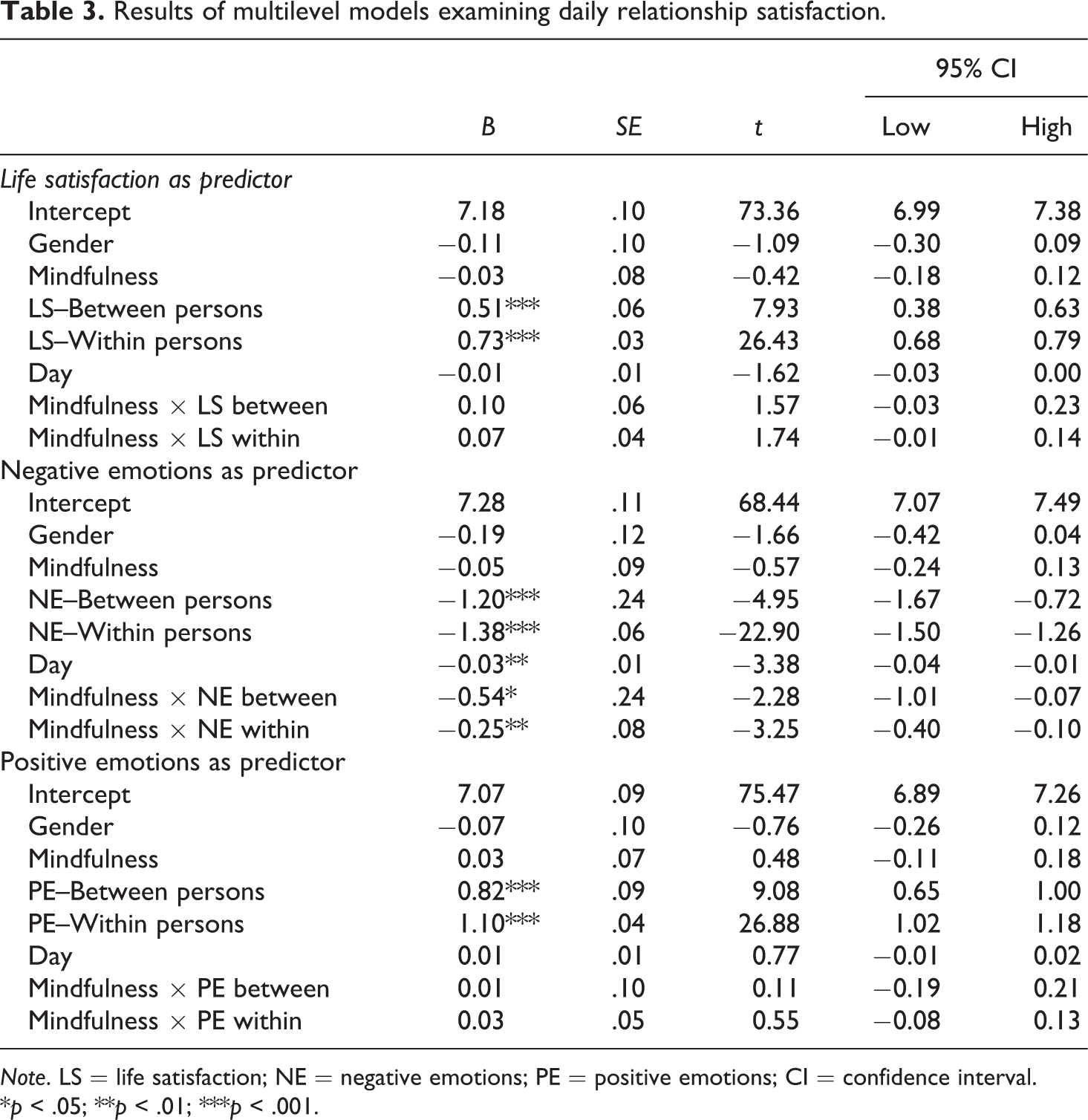
Note. LS = life satisfaction; NE = negative emotions; PE = positive emotions; CI = confidence interval.
*p < .05; **p < .01; ***p < .001.
With respect to the key interactions of interest, only the interaction between mindfulness and within-person changes in negative emotion was a significant predictor of daily relationship satisfaction; the interactions between mindfulness and (a) within-person changes in daily life satisfaction and (b) within-person changes in daily positive emotion were not statistically significant predictors of relationship satisfaction. We decomposed the interaction between mindfulness and daily negative mood in predicting relationship satisfaction and found surprisingly that higher than average days in terms of negative mood were more strongly negatively associated with daily relationship satisfaction for people high in trait mindfulness (B = −1.56, p < .001), as compared to people low in trait mindfulness (B = −1.19, p < .001). Given the literature demonstrating mindfulness tends to enhance emotional regulation (e.g., Hill & Updegraff, 2012), this finding seems anomalous. Crucially, for the purposes of the current study, these additional analyses suggest that, as predicted, mindfulness moderates the association of relationship satisfaction on daily emotions and life satisfaction, and these findings cannot be attributed to the reverse association, or the possibility that mindfulness attenuates the influence of well-being variables on relationship satisfaction in daily life.
Discussion
Based on theory and research in mindfulness, we drew upon a daily study of 80 intimate couples who completed surveys across 14 days to test the hypothesis that mindfulness would attenuate the association between daily changes in relationship satisfaction and personal well-being. Results supported our predictions: even accounting for between-person differences in relationship satisfaction, daily dips in relationship satisfaction were less strongly associated with daily positive emotions, negative emotions, and life satisfaction when people were high in mindfulness. To rule out alternative explanations, we also tested the reverse association; namely, that mindfulness attenuated the influence of changes in personal well-being outcomes on daily reports of relationship satisfaction. In these analyses, mindfulness did not consistently moderate the association between within-person changes in daily well-being and daily relationship satisfaction. As such, our results provide robust evidence in support of our hypothesis that mindfulness moderates the association between daily changes in relationship satisfaction and personal well-being outcomes. The implications of these results are discussed below.
Mindfulness and relationships: Understanding adjustment to change
A growing body of literature demonstrates that mindfulness is generally beneficial for intimate relationships, yet the theoretical and mechanistic explanations for precisely why and how mindfulness promotes relational well-being are not well understood (Karremans et al., 2017; Parker et al., 2015). The current research makes a novel contribution to the literature by shining a light on the possibility that mindfulness promotes better relationship functioning in part because it beneficially influences how people adapt to change in their relationships (see also Don, 2019). Notably, in the current study, we only examined one type of relational change (changes in relationship satisfaction), and it is possible that mindfulness may play a role in other relational change processes. For instance, across the course of relationships, people often experience changes in personality, careers, familial arrangements, and many other important characteristics (e.g., Don & Mickelson, 2014; Jones & Merideth, 1996; McCrae et al., 2000; Vinokur et al., 1996). Even more broadly, individuals frequently experience changes in a wide variety of domains, such as job satisfaction, physical health, and others in daily life (e.g., Illies et al., 2009). Thus, while making a novel contribution to the literature, our study also provides rich possibility for future study by suggesting that mindfulness may play a role in how people adjust to all types of changes in their relationships and beyond.
It is important to note that the daily differences in personal well-being we identified between individuals with lower and higher mindfulness remained constant even after accounting for between-person differences in relationship satisfaction. This is an important consideration, because it was theoretically possible that any differences in how people high and low in mindfulness responded to daily changes in relationship satisfaction could have occurred simply because people higher in mindfulness tend to have higher overall levels of relationship satisfaction. In the light of this possibility, our multilevel models statistically accounted for between-person differences in relationship satisfaction, as well as the main effect of trait mindfulness on relationship satisfaction. Even while accounting for these rigorous controls, we still found the predicted interaction between mindfulness and within-person changes in relationship satisfaction. Thus, our multilevel analyses provide robust evidence for our primary hypothesis: that daily dips in relationship satisfaction have less of a strong influence on personal well-being for people high in mindfulness, even after accounting for potential confounds.
Although the differences in the effect sizes between those high and low in mindfulness were relatively modest (e.g., for positive emotions the slope for people low in mindfulness was r = .47, whereas it was r = .38 for people high in mindfulness), prior research demonstrates these well-being variables have important real-world consequences, meaning even small daily differences between people high and low in mindfulness could have meaningful implications. For instance, among other important cognitive and behavioral implications of positive emotions (Fredrickson, 2001), people draw on positive emotions to foster resilience in traumatic situations (Fredrickson et al., 2003), meaning these extra daily decrements in positive emotion for people low in mindfulness could have important implications when difficulty arises. Research similarly shows that daily and momentary experiences of emotions are especially predictive of longitudinal physical health outcomes (Connor & Barrett, 2012), meaning even small daily differences between individuals low and high in mindfulness could accumulate into meaningful real-world consequences.
We also note that, as expected, mindfulness did not consistently moderate between-person differences in relationship satisfaction on personal well-being (i.e., the interaction term between mindfulness and between-person differences in relationship satisfaction was only significant in one of the three analyses). More specifically, when participants reported lower overall levels of relationships satisfaction across the 14-day period, as compared to others in the study, it was generally related to personal well-being outcomes in the theoretically expected manner regardless of the individual’s degree of trait mindfulness. Extensive research demonstrates that generally unhealthy relationships have a strong influence on numerous aspects of well-being (e.g., Robles et al., 2014), and we therefore felt it was unlikely that someone who was in a highly dissatisfying relationship would be buffered from deleterious consequences of this relationship simply because they were high in trait mindfulness. Instead, (as predicted) our results suggest that regardless of the overall level of one’s relationship satisfaction (i.e., controlling for between-person differences), mindfulness attenuates the influence of changes on personal well-being outcomes.
It is important to additionally mention the time scale on which we examined relational changes. We were specifically interested in examining daily relational ups and downs, and in daily life, dips in relationship satisfaction may be less detrimental for people high in mindfulness. Other studies have examined changes in relationship satisfaction across longer time periods and found that negative changes in relationships have a detrimental influence on important outcomes, such as depression and relationship stability (Arriaga, 2001; Whitton & Whisman, 2010; Whitton et al., 2014). If someone experiences serious, long-term, sustained changes in their relationship across time, it is possible mindfulness may have a different influence than in daily life. For instance, with respect to long-term, sustained negative changes in relationship satisfaction, mindfulness may not buffer the impact of those changes on personal well-being, and may even mean the individual is more aware and accepting of the negative changes such that they are more likely to end the relationship. Thus, one question for future research, then, is whether mindfulness would continue to mitigate negative relational changes across time, or whether this process would operate differently across different time scales.
Finally, by providing indirect evidence for the principle of impermanence, this research may be used to enhance theorizing on the benefits of mindfulness in relationships. That is, by demonstrating that people high in mindfulness react differently to changes in something they value and could theoretically lose (i.e., a satisfying relationship), our results provide indirect evidence for the role of impermanence in promoting the well-being of people higher in mindfulness. Importantly, however, we did not assess constructs which would allow us to more directly test whether impermanence was the mechanism by which mindfulness promotes adjustment to changes in their relationships, such as participants’ self-reported acceptance of change in their relationships (for example). As such, we believe this study provides fertile ground for future research to (a) utilize the principle of impermanence as a theoretical framework for understanding the benefits of mindfulness in the context of relationships and (b) to more directly assess constructs related to impermanence in order to test its utility as a conceptual mediator between mindfulness and beneficial relationship outcomes.
Limitations
We note a few important limitations of this work. First, the present findings are based on one sample, meaning future research should look to replicate these results. Despite this, the within-person design based on a large number of observations provides strong evidence for our hypotheses. Second, relational interactions and experiences depend to an extent on cultural and socioeconomic background (e.g., Kim et al., 2006; Piff et al., 2010). For instance, it is possible that bad relational days may have an especially strong influence on the personal well-being of individuals low in socioeconomic status (e.g., Maisel, & Karney, 2012), which could alter the nature of the interactions between mindfulness, daily relationship satisfaction, and personal well-being we observed in this research. As such, future research should replicate these results in samples of more socioeconomic diversity. Finally, we were limited to the use of a self-report, trait assessment of mindfulness. While research demonstrates this self-report assessment is valid, reliable, and predicts meaningful real-world outcomes (Brown & Ryan, 2003; Quaglia et al., 2015), there is some controversy in the literature regarding the use of self-report assessments of mindfulness, and within self-report measures of mindfulness, which measure best encapsulates the construct (e.g., Brown et al., 2011; Grossman, 2011). Future research should, therefore, examine how mindfulness influences reactions to changes in relationship satisfaction using multiple operationalizations of the construct, such as by combining trait assessments with mindfulness induced via meditation (Davidson & Kasznaik, 2015).
Conclusion
In this research, we drew upon theory in the mindfulness literature—including the Buddhist concept of impermanence—to explore a novel hypothesis that mindfulness plays a role in mitigating the maladaptive influence of negative changes in relationships. Our results robustly supported our predictions, providing suggestive evidence that non-judgmental awareness of change is one way in which mindfulness influences healthy relationships. Future research should continue to explore how mindfulness may promote lasting well-being, even in the face of relational ups and downs.
Footnotes
Funding
The author(s) disclosed receipt of the following financial support for the research, authorship, and/or publication of this article: This research was supported by grants from the National Institute of Mental Health [Grant Number MH59615] and The John Templeton Foundation [Grant Number 61280].
Open research statement
As part of IARR’s encouragement of open research practices, the authors have provided the following information: This research was not pre-registered. It draws upon an existing data set from a larger study which is distinct in scope and aims from this research. Because we do not have IRB approval to share confidential participant information, the data used in the research are not available. The materials and data analytic syntax used in the research are available. The materials can be obtained at:  or by emailing
Notes
References
Supplementary Material
Please find the following supplemental material available below.
For Open Access articles published under a Creative Commons License, all supplemental material carries the same license as the article it is associated with.
For non-Open Access articles published, all supplemental material carries a non-exclusive license, and permission requests for re-use of supplemental material or any part of supplemental material shall be sent directly to the copyright owner as specified in the copyright notice associated with the article.
