




Abstract
People with visual impairment are faced with daily accessibility challenges, including accessing hospitality and tourism venues. This scoping review aims to assess existing literature in hospitality and tourism for people with visual impairment. Two databases, Scopus and Web of Science, were searched using keywords and Boolean operators. Covidence was used for screening and data extraction by two reviewers. A total of 23 articles were included from 2003 to 2024, with a majority (91%) of studies conducted in high-income countries. Many (69.7%) focussed solely on tourism, only one was conducted solely on hospitality, and the others were a combination. Some of the biggest concerns identified were physical inaccessibility barriers, negative societal attitudes, lack of training and awareness of staff, and inaccessible signage/information. In conclusion, there is existing literature on barriers and enablers of travel for people with visual impairment but limited research on hospitality and potential solutions.
Background
People with a visual impairment face accessibility challenges every day, including conducting daily tasks, such as navigation, reading, participating in hobbies, accessing transport, and buildings and facilities (Cushley et al., 2022, 2023; Jones et al., 2019; Jones & Jain, 2006; Kim et al., 2012; Kim & Son, 2023; Weih et al., 2002; West et al., 2002). These challenges can often cause people with visual impairment to refrain from going out, creating issues with low social participation (Marchesano & Musella, 2020) leading to isolation and loneliness (Alliance for Aging Research Team, 1999; Gallagher et al., 2011; Kim et al., 2012) and affecting quality of life (Fenwick et al., 2012; Jones et al., 2019; Marchesano & Musella, 2020; Nutheti et al., 2006; Tyler, 2011). Lack of social participation affects social and familial relationships (Alliance for Aging Research Team, 1999; Gallagher et al., 2011; Klauke et al., 2023). Low participation and social capital are independently associated with and on par with the health risks posed by smoking and physical inactivity (Haslam et al., 2018; Hyyppä et al., 2007).
The external environment alongside a disability profoundly shapes a person’s wellbeing (Ralph et al., 2022). This can include accessing work environments, social environments, and leisure environments. Our world, including our environments, is designed for the ‘average male’ (Hahn, 1986) and does not take into account other genders, disabilities, and mobility needs. This inaccessible world can be attributed to the original medical model of disability, which views disability as a limitation and seeks to ‘fix’ or ‘cure’ this (Inclusion London, 2015). The newer social model of disability views that the person is being disabled by their environment, including the physical environment as well as social and communication barriers (Inclusion London, 2015).
The social model of disability therefore raises questions around accessibility and inclusion. While these two concepts are related, accessibility focuses on removing the barriers that are preventing a person from taking part of integrating no matter their need or disability (Howard, 2022). Inclusion is a much wider concept, often seen as a step further, and it focuses on making sure that everyone can access society itself on an equal basis and on their own terms (Howard, 2022).
In recent years, there has been an increasing disability, accessibility, and inclusion movement, especially in traditional and social media. Research has shown that people with visual impairment often do not participate in social and leisure activities (Adam, 2022; Adam et al., 2016; Vucinic et al., 2020) including tourism and accessing hospitality venues.
There is an emerging body of literature on tourism and travel in people with visual impairment, including some literature and scoping reviews. Current research studies focus on the barriers faced by people with visual impairment in travelling locally (Rickly et al., 2022; Small et al., 2012; Yau et al., 2004) or globally (Devile & Kastenholz, 2018; Kong & Loi, 2017; Rickly et al., 2022), which include physical restraints as well as mental, familial, and emotional constraints. There has been an increasing body of research focused on people with disabilities, including people with visual impairment, and the tourism sector (Darcy, 2002). There is now a movement called ‘hopeful tourism scholarship’ which advocates for critical thinking and action to enhance social justice (Richards et al., 2010). There is also an increasing push by many governments and supranational organisations that tourism participation is a right of citizenship (Minnaert et al., 2009). Research shows that people with visual impairment have a desire to travel (Müller et al., 2022; Rickly et al., 2022), and researchers recognise that the importance and benefits of travel for people with visual impairment are on par with those of sighted people (McCabe, 2009; Small, 2007). Despite this, there are issues (Devile & Kastenholz, 2018; Sintakova & Lasisi, 2021; Yeh & Fan, 2023) with air travel (Richards et al., 2010), accessibility of documents, menus and websites (Richards et al., 2010), hotel designs (Poria et al., 2011), and tourism staffs’ awareness and understanding (Richards et al., 2010).
One study discussed the positive experiences of people with visual impairment travelling specifically (Obigbesan et al., 2024), with others mentioning this within some in-depth interviews. From a literature search, it was found that there is a scarcity of literature on potential solutions to these accessibility barriers in travel. In terms of hospitality, such as restaurants and theatres, there is also a scarcity of research. One study researched the challenges faced by visually impaired theatre guests (Blok & Wasterlaken, 2022) and showed a high energy consumption when accessing entertainment venues, impacting on enjoyment and overall happiness (Blok & Wasterlaken, 2022). People with visual impairment are continuously having to adapt to new situations (Devile & Kastenholz, 2018) and appraise the barriers to accessibility, creating fatigue and tiredness. One bad experience can create additional fear and anxiety, isolating those affected even further from society (Boagey et al., 2022; Rooney et al., 2018).
The study question was ‘what literature is available on accessibility barriers and enablers and potential solutions for visually impaired users in the tourism and hospitality industry?’ This study’s objective was to assess existing literature into accessibility barriers within tourism and hospitality sectors for people with visual impairment, describe potential solutions proposed, and identify any research gaps. This review focussed on accessibility rather than inclusion as they are seen as related but different topics.
Materials and methods
The review has been conducted using a scoping review methodology, following the PRISMA-ScR checklist to ensure rigour in the methodology (Tricco et al., 2018) (Supplementary file 1). All stages of screening were completed by two researchers independently, and any conflicts were discussed before consulting a third senior academic should a consensus not be reached. A scoping review methodology was chosen, as this is a broad research area and the authors wanted to establish what research already existed, what the issues were, and what the potential solutions are. This was to establish key research priorities in this area and form potential research questions.
Initially, an information library specialist (RF) was consulted to determine search terms and databases. A protocol including search terms and BOOLEAN operators, database information, inclusion/exclusion criteria, and data extraction tables was constructed and reviewed by the other reviewers and the information specialist. Web of Science and Scopus databases were used as the selected databases due to the breadth of literature the topic would cover, including many topic areas such as medicine, hospitality, tourism literature, and others. A search of Web of Science and Scopus was conducted on 11 February 2025 using the search terms in Table 1:
Search terms used in databases.
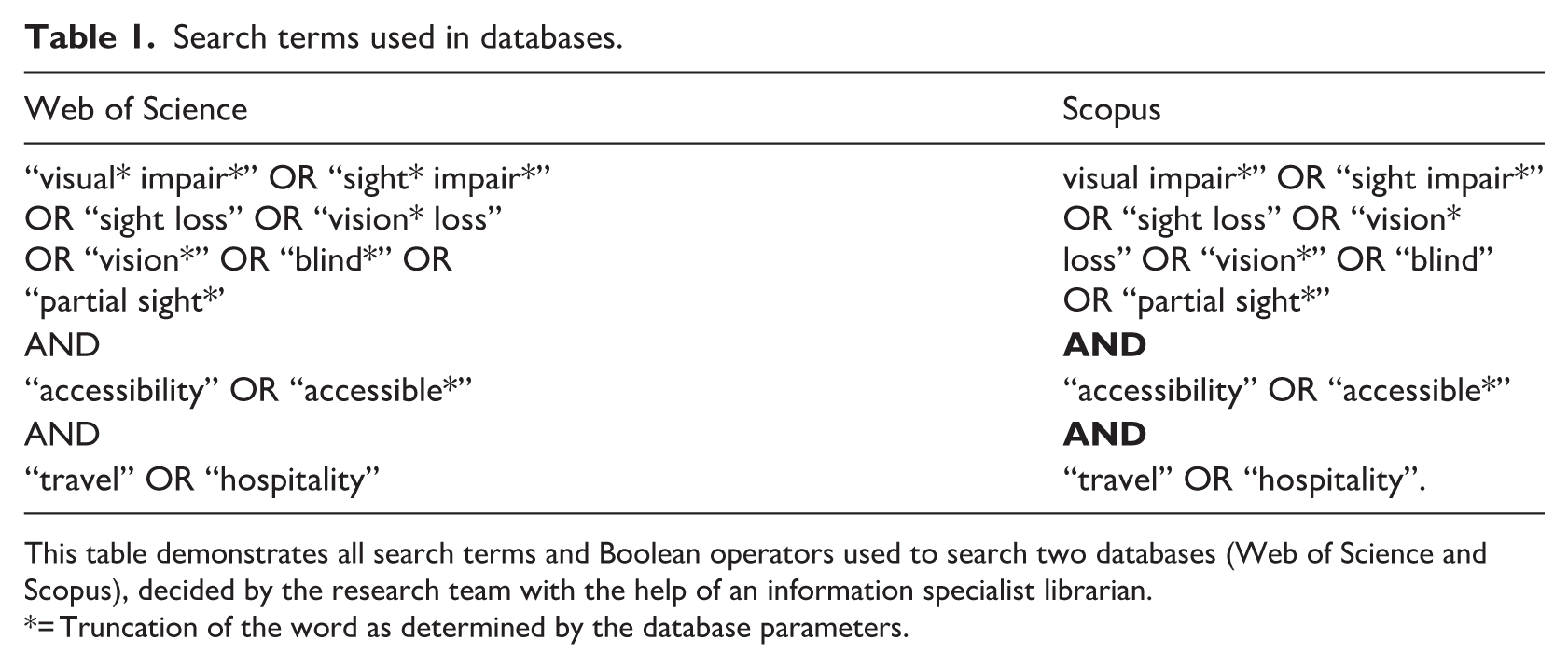
This table demonstrates all search terms and Boolean operators used to search two databases (Web of Science and Scopus), decided by the research team with the help of an information specialist librarian.
*= Truncation of the word as determined by the database parameters.
These search terms were chosen in correspondence with the information specialist and were left as broad terms due to the nature of the research question. Initial searches, including further clarified businesses within travel and hospitality, included many results which were irrelevant, especially considering the inclusion of ‘blind’, which is essential for the study. No limits were applied to the searches.
Database references were downloaded using an RIS file and imported into Covidence, which removed duplicates. The Inclusion and exclusion criteria were as follows (Table 2):
Inclusion and exclusion criteria.
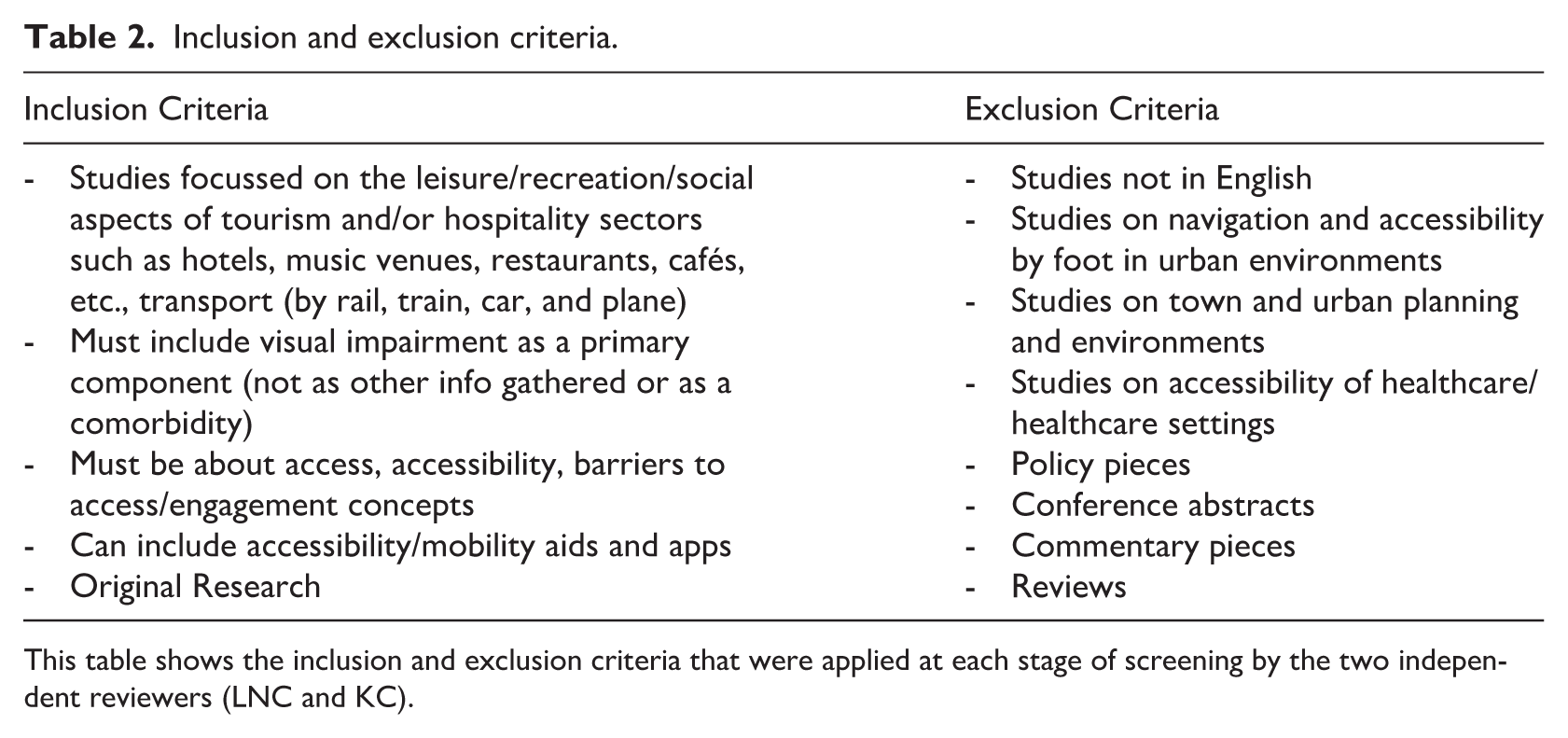
This table shows the inclusion and exclusion criteria that were applied at each stage of screening by the two independent reviewers (LNC and KC).
Studies were excluded if their focus was based around navigation and travel not for tourism or access to hospitality venues as many articles in the search were around independent travel including use of transport or walking. Due to this exclusion, studies on town planning and urban planning of environments were also removed. Studies not in English were also excluded due to understanding. Reviews were also removed but review reference lists were reviewed for additional grey literature that was not already included in the review. No restriction was put on years, and all studies were peer-reviewed publications with commentary, policy pieces and conference abstracts removed.
All screening was conducted using Covidence for blind screening. Initial title and abstract screening were completed by two reviewers (LNC and KC) independently, and conflicts were discussed before a final decision was made. A third senior academic was consulted if a resolution could not be met. Full-text screening was completed by the same two reviewers independently (LNC and KC), and conflicts were discussed; a third reviewer was consulted if resolution could not be met. Data extraction was completed by one reviewer (LNC) and verified by the second reviewer (KC). Data were extracted into an Excel table with the headings displayed in Table 3. LC went through all the full-text articles to extract all relevant quantitative and qualitative data, and the extracted data were discussed between LC and KC to ensure validity and rigour.
Excel data extraction headings.
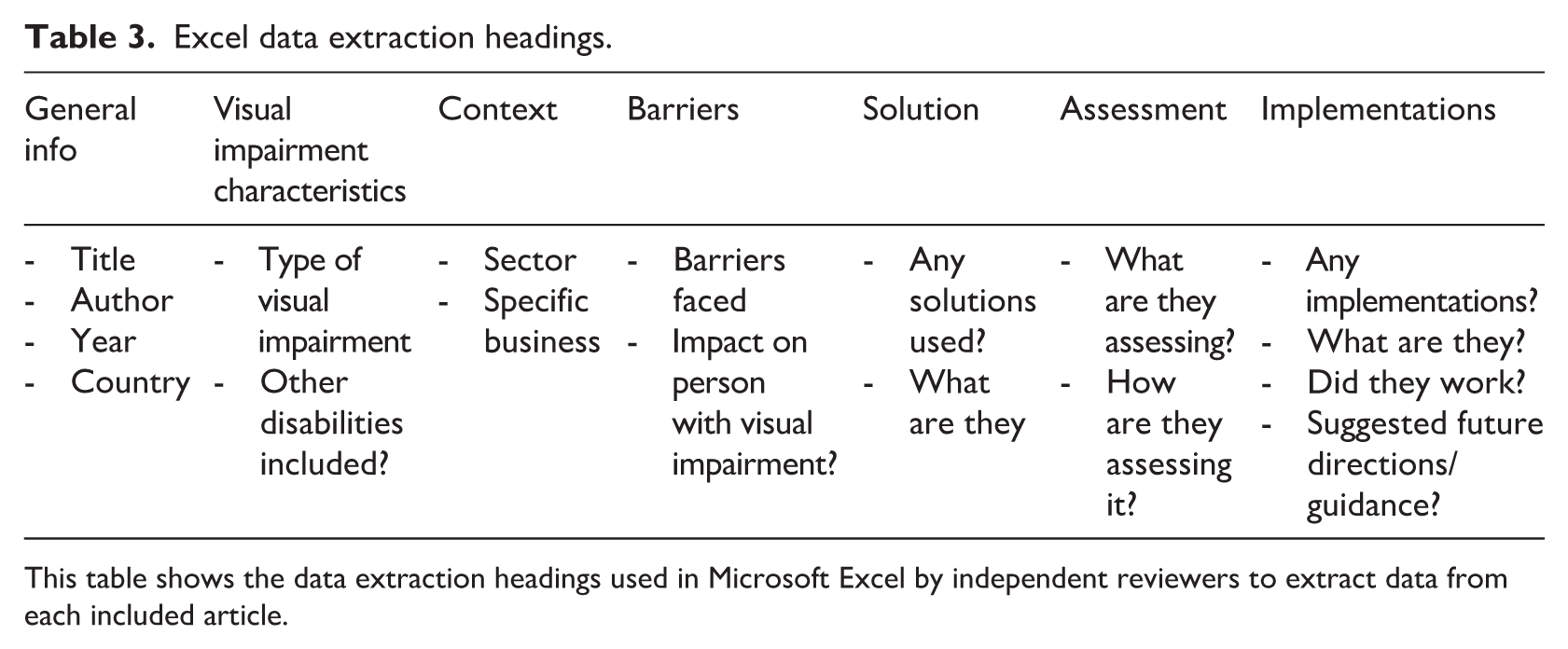
This table shows the data extraction headings used in Microsoft Excel by independent reviewers to extract data from each included article.
Qualitative data, including the number of participants, type of visual impairment, country of publication, and year were analysed for frequency using SPSS (version 28). Due to the qualitative nature of the data, this was extracted into the Excel spreadsheet, and thematic analysis was applied to ascertain important themes and subthemes using Braun and Clarke’s thematic analysis methods (Braun & Clarke, 2006). No assumptions were made during data charting.
Results
A total of 585 studies were identified through the databases, with 89 duplicates removed by Covidence. One duplicate study was removed during title and abstract screening. A total of 496 studies were titles and abstracts screened with 435 studies excluded. Full text was sought for 61 studies, with one unable to be retrieved. A total of 60 studies were screened at full text with 38 further studies excluded for various reasons. These reasons included (1) conference abstract, language (4), and wrong study design (5). Some studies (4) had the wrong patient population as visual impairment data could not be extracted from the study, and the wrong setting such as not in hospitality or tourism (2). Seventeen studies were not on recreation for tourism or hospitality and were therefore excluded, and four were specifically on walking as a method of commuting travel therefore was deemed not relevant (Figure 1).
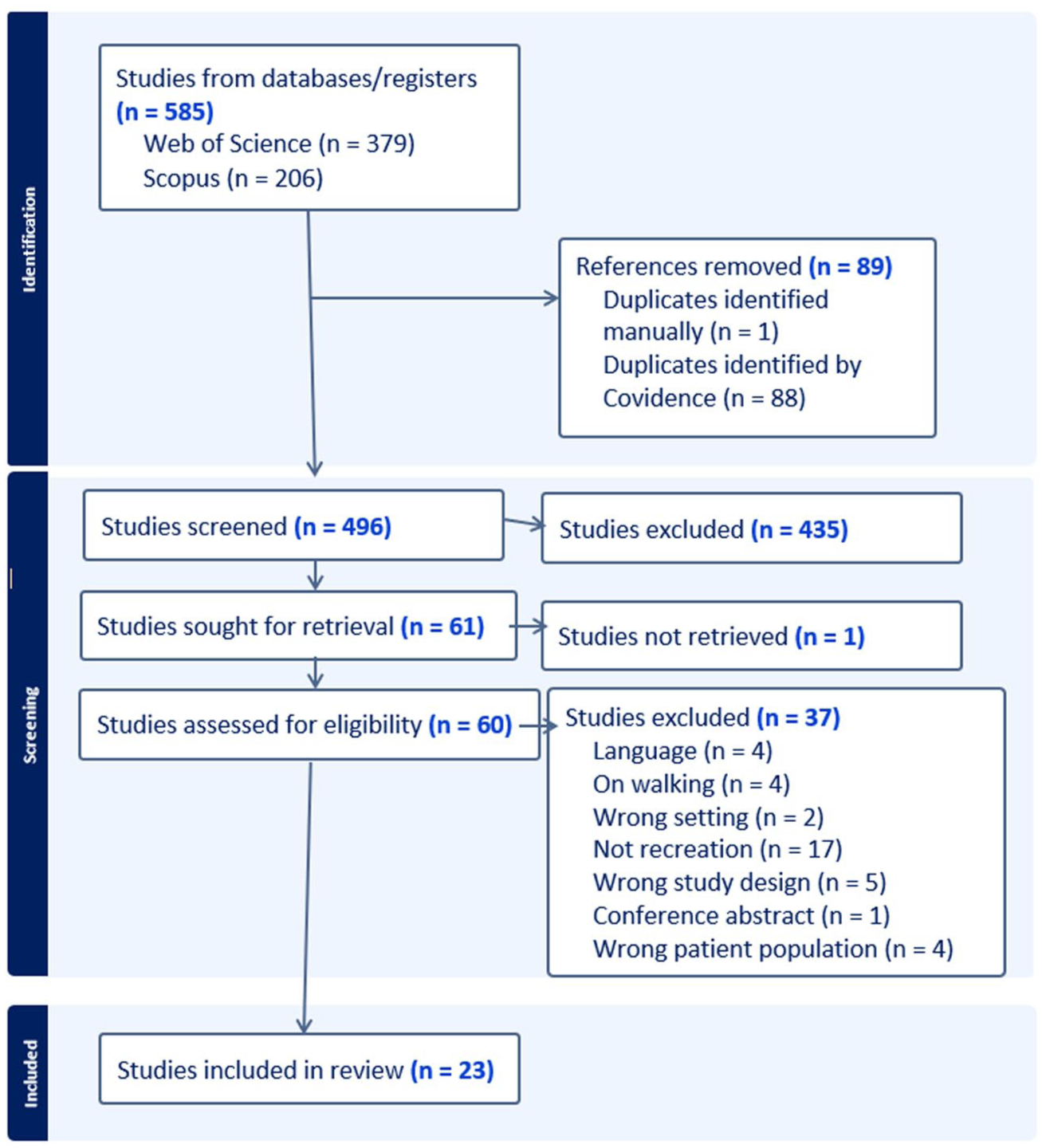
PRISMA diagram.
Studies were published from 2003 to 2024 with one article per year published from 2004 to 2021, with the exception of two articles in years 2017–2020. In contrast, since 2022, there have been three articles each year. The majority were conducted in high-income countries with only one in a middle-income country and one in a low-income country. Most studies were conducted in Asia (5%–21.7%), Europe (4%–17.4%) with 2 in Oceania, 1 in Africa, and 1 in North America (Table 4). One study included two centres, one in the United Kingdom and one in Thailand.
Global dispersion of studies.
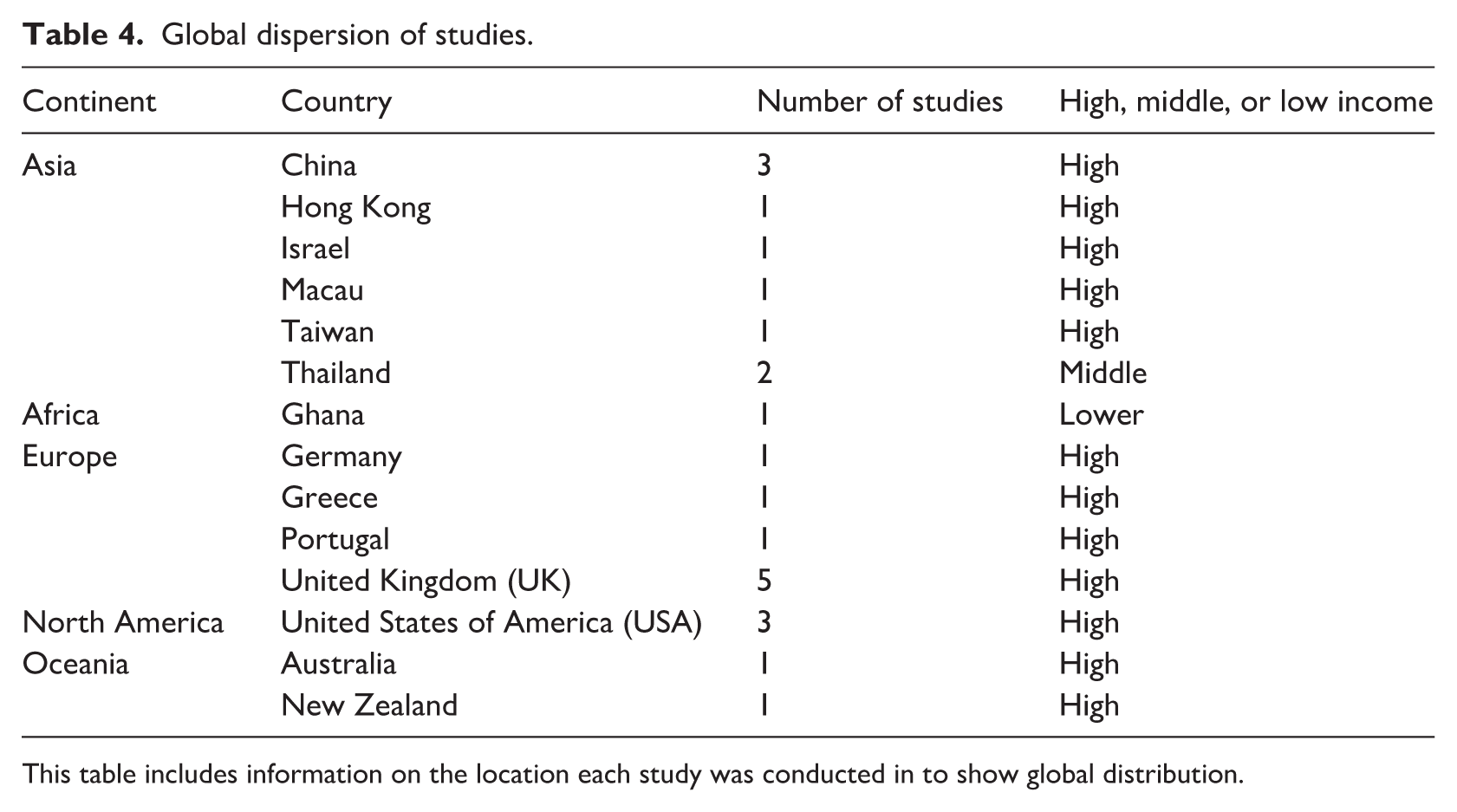
This table includes information on the location each study was conducted in to show global distribution.
There was a total of 1364 participants included in the studies with 1295 (95%) people with visual impairment – the remainder had mobility or hearing impairments or were controls. Age was reported in 20 studies (87%) in ranges, means and medians. All participants were between 8 and 90 years old. Gender was reported in 15 studies (65%) (Adam et al., 2016), 1 study only reported 50.6% were male with no total participant number. The other 14 studies had a total of 526 participants of which 272 (51.7%) were male and 252 (47.9%) were female.
Information on vision impairment was reported for 17 studies (73.9%), and 6 (26%) did not specify visual impairment status or cause (Choibamroong & Angkananon, 2022; Landau et al., 2005; Mills et al., 2008; Richards et al., 2010; Rickly et al., 2022; Yau et al., 2004). Six (26%) studies reported levels of low vision and visual impairment such as ‘mild’ ‘moderate’, ‘low vision’, and ‘blindness’ (Bandukda et al., 2024; Kong & Loi, 2017; Lam et al., 2020; Müller et al., 2022; Obigbesan et al., 2024; Poria et al., 2011). Two (8.7%) studies reported participants as ‘sight impaired (SI)’ and ‘severe sight impaired (SSI)’ (Babu, 2013; Jeamwatthanachai et al., 2019). One study (4.3%) reported that participants were ‘visually impaired’ (Adam et al., 2016), and one (4.3%) reported as diagnosed blindness (no perception of light and perception of light) (Qiao et al., 2023).
Causes of visual impairment were given for 7 studies (30.4%). Two (8.7%) studies reported amblyopia and blindness (with no other specifics) (Gomes & Eusebio, 2023; Qiao et al., 2021). Two (8.7%) studies reported congenital causes of visual impairment with no specific detail (Gomes & Eusebio, 2023; Small et al., 2012). The remaining three studies had mixed causes of visual impairment included: one study of 12 participants included people with macular degeneration (Devile & Kastenholz, 2018), congenital blindness, and trauma (Theodorou et al., 2024). One study included 128 participants with either congenital blindness (63% of participants), blindness caused by cancer, retinopathy, or VI caused by accidents (4wheelz, 2018). The final study included 12 participants with macular degeneration, medical side effects, retinitis pigmentosa (Bredal et al., 2022), cataract (Theodorou et al., 2024), corneal diseases (Theodorou et al., 2024), and measles (Theodorou et al., 2024; Yeh & Fan, 2023). One study included participants with macular degeneration, congenital blindness, and trauma (Devile & Kastenholz, 2018). Other VI causes included in other studies were congenital blindness (Gomes & Eusebio, 2023; Small, 2007) and serious amblyopia (Gomes & Eusebio, 2023). One study included participants with various conditions such as macular degeneration, medical side effects, retinitis pigmentosa, retinal detachment, cataract, corneal disease, and measles (Yeh & Fan, 2023). Five studies included participants with other disabilities, including physical (unspecified) (Adam et al., 2016), wheelchair users (Landau et al., 2005; Poria et al., 2011), and mobility issues (Müller et al., 2022; Yau et al., 2004).
Most, 16 (69.6%), were based solely on tourism, 3 (13%) included both tourism and hospitality, 3 conducted in hospitality alone (13%) and one on ‘leisure’. Only two studies were based on a specific business, including travel websites (Choibamroong & Angkananon, 2022) and a museum (Mills et al., 2008).
There were a variety of research methods used within the studies with 8 (34.8%) using mixed methods. A majority, 16 (69.6%), used interviews within the study design – 13 of which (81.3%) used semi-structured interviews, 2 did not specify interview type and 1 used non-structured interviews. Five studies (21.7%) used questionnaires or surveys. Other methods included focus groups (three studies) (Adam et al., 2016; Richards et al., 2010; Small et al., 2012), analysis of online websites and groups (three studies) (Choibamroong & Angkananon, 2022; Mills et al., 2008; Qiao et al., 2023), and think-aloud methods (two studies) (Jeamwatthanachai et al., 2019; Qiao et al., 2023). One study each used co-design workshops (Qiao et al., 2023) and user trials (Mills et al., 2008).
Nearly all (22) discussed the barriers faced by people with visual impairment in hospitality and tourism.
Interestingly, only five articles suggested solutions for accessibility matters (Choibamroong & Angkananon, 2022; Jeamwatthanachai et al., 2019; Landau et al., 2005; Mills et al., 2008; Qiao et al., 2023). Some of these solutions include more meaningful and descriptive captions within websites as well, and more full and continuous accessibility updates (Qiao et al., 2023). There is also a call for developing clearer information both written and verbal, with more education on the problems of visual impairment and accessibility (Landau et al., 2005). Some suggested solutions include the role of the visually impaired community with travel experience to bridge the knowledge gap (Jeamwatthanachai et al., 2019), a more accessible tourism ecosystem, and the implementation of accessible technology by visually impaired users and venues themselves (Jeamwatthanachai et al., 2019). One study suggested using accessibility software such as watchfire.com to rate the accessibility of websites (Choibamroong & Angkananon, 2022). None of the above mentioned four studies had investigated or conducted studies into the acceptability, usefulness, or sustainability of these solutions. One study tested the use of sound ‘ping’ beacons in a museum setting for people who are blind to assess their effectiveness in museum enjoyment and navigation (Mills et al., 2008). The results showed that the ‘ping!’ beacons were liked by some users but had some functionality issues and were only tested in one room in a specific museum (Mills et al., 2008).
Qualitative results
A table of most common themes and subcodes can be found in table 5. One of the most common subthemes was inaccessible physical barriers, which were mentioned in nine articles (39%). Some of these barriers included architectural barriers (Weih et al., 2002) such as non-symmetrical buildings (Bandukda et al., 2024), issues with interior design (Müller et al., 2022), and problems with multilevel lobbies (Müller et al., 2022). Others mentioned the lack of voiced instruction from elevators (Bandukda et al., 2024) with some only serving certain floors (Poria et al., 2011) and no handrails on stairs (Bandukda et al., 2024). Hotel lobbies were found to be difficult to navigate due to varying levels and the inability to find the reception desk (Poria et al., 2011). People with visual impairment had difficulties finding their room without detailed instructions (Müller et al., 2022). Subsequently, they reported having to move furniture inside the room, which housekeeping then moves back during room freshening (Müller et al., 2022). The outside streetscape also lacks accessible routes and tactile paving that are continuously connected (Adam et al., 2016; Babu, 2013; Devile & Kastenholz, 2018) and with a lack of uniform standards (Adam et al., 2016). Some buildings such as airports, stations, and museums, which are complex, can be difficult to navigate, especially to gates and platforms (Yeh & Fan, 2023). In addition, finding entrances of buildings was challenging (Babu, 2013; Bandukda et al., 2024; Gomes & Eusebio, 2023).
Qualitative results.
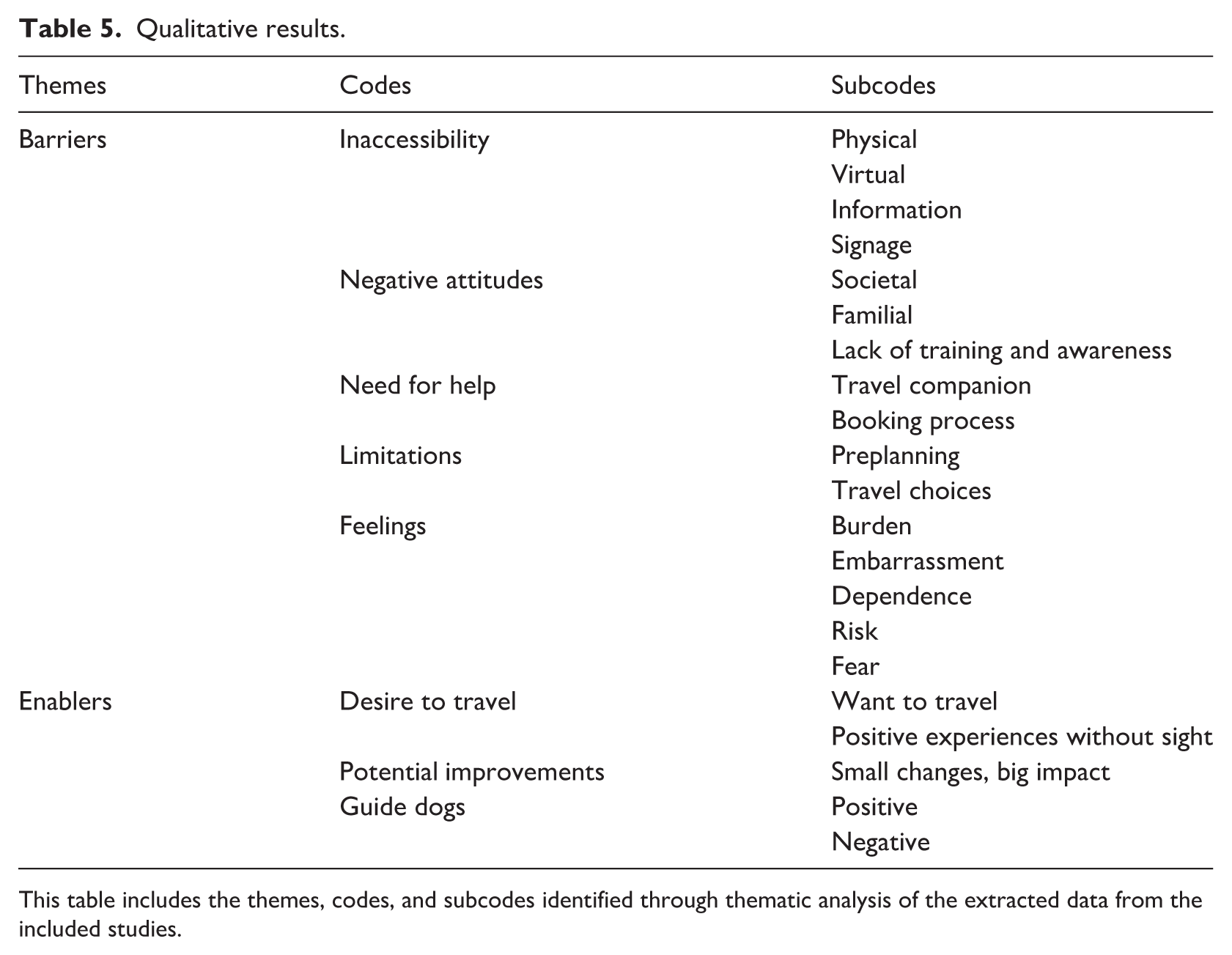
This table includes the themes, codes, and subcodes identified through thematic analysis of the extracted data from the included studies.
Negative societal attitudes were detailed in nine articles (39%) displaying negative or paternalistic attitudes by society and erroneous perception of disability (Devile & Kastenholz, 2018). People with visual impairment state that ‘society doesn’t understand us very well’ (Gomes & Eusebio, 2023) with researchers commenting that wider society has very little awareness of the psychological and emotional impacts of visual impairment (Richards et al., 2010). This is especially an issue as people perceive that ‘because my eyes look perfect in front, they don’t believe that I’m blind’ (Richards et al., 2010) and [people assume] ‘because you’re blind or you’ve got low vision, why would you want to travel anyway’ (Small et al., 2012). There is a lot of stigma (Yau et al., 2004; Yeh & Fan, 2023), and people are excluded from national and international programmes (Adam et al., 2016).
Lack of training and awareness of tourism and hospitality staff were mentioned eight times (34.7%), including every steps of the process from booking to right through to the holiday (Landau et al., 2005; Yeh & Fan, 2023) leading to a ‘general sense of frustration with service providers’ (Richards et al., 2010). People with visual impairment stated they felt uncomfortable disclosing their VI on the booking due to stereotypes staff might have with how to behave (Yau et al., 2004). Some people expressed concerns with hotel staff training as they are either not helpful or do not have the right equipment (Devile & Kastenholz, 2018) or too helpful causing feelings of low self-esteem and dependency (Poria et al., 2011).
Some articles describe poor quality signage and information (six articles, 26%) such as a lack of menus with braille or only with small writing (Bandukda et al., 2024; Devile & Kastenholz, 2018; Poria et al., 2011) as well as inaccessible other tourist information and signage (Babu, 2013; Bandukda et al., 2024; Devile & Kastenholz, 2018; Poria et al., 2011; Richards et al., 2010). There are misconceptions that Braille signage ‘sorts the VI issue out for everyone with VI’ (Kong & Loi, 2017). There is low accessibility of virtual and online information, including problems with booking flights (Qiao et al., 2023) and hotels (Jeamwatthanachai et al., 2019) as well as other tourist information (Jeamwatthanachai et al., 2019). There are general contrast problems with inappropriate use of colour and lack of image descriptions (Choibamroong & Angkananon, 2022; Lam et al., 2020). Some people reported that websites stated the venue was accessible when in fact it was not (Poria et al., 2011). This consequently led to trust issues with future booking processes and having the need for trustworthy travel agents or family members to help book trips (Jeamwatthanachai et al., 2019; Landau et al., 2005). This often excludes people with visual impairment from the booking process itself, but then requires a lot of pre-planning before the trip to overcome both virtual and real-world accessibility issues (Landau et al., 2005; Small et al., 2012). There was a perception that having a disability limits travel choices (Devile & Kastenholz, 2018).
There are additional barriers with the need for a travel companion (21.7% of articles) and familial attitudes (13%). Some articles reported inadequate support from family and friends (Adam et al., 2016; Gomes & Eusebio, 2023) or a fear of their family member with VI travelling (Devile & Kastenholz, 2018). Family are often asked to accompany people with visual impairment on trips which some are not supportive of (Gomes & Eusebio, 2023). Many articles state the need for a travel companion (Bandukda et al., 2024; Gomes & Eusebio, 2023; Jeamwatthanachai et al., 2019; Müller et al., 2022; Yeh & Fan, 2023) as a coping strategy. If there is no travel companion, then people often have to put their trust in strangers, leaving them vulnerable (Jeamwatthanachai et al., 2019).
The challenges with tourism can cause various feeling in people with visual impairment such as becoming a burden (Gomes & Eusebio, 2023; Landau et al., 2005) or feelings of dependence (Devile & Kastenholz, 2018; Landau et al., 2005) and fear (Bandukda et al., 2024; Devile & Kastenholz, 2018). Papers describe the risk of travelling with a VI including the constant need to adapt to new environments, often having bumps and bruises and the risk of where you travel to (Devile & Kastenholz, 2018; Gomes & Eusebio, 2023; Kong & Loi, 2017; Small et al., 2012; Yau et al., 2004). Several instances can also lead to embarrassment such as feeling inferior and being excluded (Bandukda et al., 2024) while ‘feeling more visually impaired than I do at home’ (Small et al., 2012). Issues with airport travel including the need for assistance which often is not appropriate – ‘at the airport, one person had to go in a wheelchair or else they wouldn’t take you. It was a nightmare, a horrible feeling. I was in the dark and I couldn’t see. And of course, when I got on the plane they thought I couldn’t walk’ (Richards et al., 2010).
Despite the challenges, 26% of articles state that people with visual impairment want or have a desire to travel (Rickly et al., 2022). People want to plan a trip (Müller et al., 2022), feel the benefits such as stress relief and mood upliftment (Qiao et al., 2021; Yeh & Fan, 2023) and feel that travel is important (Müller et al., 2022). One article states that people with visual impairment feel that travelling is a form of achievement for them and is a good way to satisfy their desires (Qiao et al., 2021; Yeh & Fan, 2023). Some articles (four, 17.4%) stated that people with visual impairment have positive experiences when travelling, especially when experiencing the world using other senses than sight (Yeh & Fan, 2023). Positive experiences sometimes come from staff being aware and trained (Obigbesan et al., 2024; Small et al., 2012)– ‘When I stayed in London, the gentleman was brilliant at showing me where everything was ’, the light switch is here, the remote control is here, would you like me to describe the room? (Small et al., 2012). In addition, exploring the world without sight is fulfilling – ‘just because you can’t see the Eiffel Tower or you can’t see the Silk Road, it doesn’t necessarily mean that you can’t experience the ambience, the culture, the food, the language’ (Small et al., 2012).
Guide dogs can help people with visual impairment have confidence in travelling with 96% of respondents in a study by Rickly et al. (2022) having taken a domestic trip within the United Kingdom, nearly half taking over six trips in the last year (Rickly et al., 2022). Guide dogs give their owners the confidence they need to travel (Rickly et al., 2022) with some opting to leave their guide dog alone so they can get a holiday (Rickly et al., 2022). Despite this, issues with guide dogs travelling by air transport with some being forced to wear a muzzle or being put in the hold (Devile & Kastenholz, 2018). One article proposed that some small changes such as clear edging of steps, good colour contrast, suitable lighting, contrasting handrails and clear signage, could make a big impact in travel experiences for visually impaired users (Richards et al., 2010).
Discussion
Our results show that topics presented in this review are becoming increasingly researched with three times as many articles published since 2022 as before. All but one study focused on describing the findings in tourism and hospitality for people with visual impairment with only one testing a potential solution of an early prototype of sound beacons for navigation of a museum. Unsurprisingly, interviews were the most common method of data collection, likely due to the easy accessibility – they can be completed online, in person, or by phone. They also have a more personal feel and participants often feel that their opinion and story is being heard and creates a space to ‘vent’ (Royal National Institute of the Blind, 2022).
Within the articles, there is a lack of information on the causes and severity of visual impairment with many omitting specific visual function information and simply stating ‘blindness’ or ‘visual impairment’ with no further clinical measurements. As visual impairment has such variability, including patterns of vision loss, severity, and which visual functions are impaired, it is difficult to compare if the same problems faced in tourism and hospitality are shared between diseases, visual loss patterns, and severities. In the future, it is important that research should state more clinical visual diagnosis and loss to assess barriers faced, as well as potential solutions.
One of the biggest issues identified was the physical barriers to accessibility. This resonates with a lot of other research, including inaccessibility in the built environment (Cushley et al., 2023). Results suggest interior design (Gomes & Eusebio, 2023; Müller et al., 2022; Poria et al., 2011) and wayfinding (Babu, 2013) are big problems, much like in the built environment (Cushley et al., 2023; Imrie, 2000; Imrie & Luck, 2014; Norgate, 2012). Within these interior and exterior environments, there are common accessibility barriers such as colour and contrast. Accessibility improvements could include continuous floor colour throughout environments, contrast where appropriate to mark out steps or hazards and furniture that is a contrasting colour to the floor.
Large complex environments such as airports and train stations are troublesome for people with visual impairment, especially where there are large open spaces (Richards et al., 2010) with little to no signage located high up. By bringing signage down to eye level or even ground level, increasing the font size and putting it on a good contrast background, this could improve accessibility. In addition, continuous tactile paving, tactile numbers, signs, and buttons in transport hubs could make it much more accessible (Adam et al., 2016; Devile & Kastenholz, 2018). Issues around ‘transport assistance’ such as having to get in a wheelchair to be transported due to misunderstandings of staff and policies and guide dogs needing muzzled (Devile & Kastenholz, 2018; Rickly et al., 2022) are reported. By increasing awareness and knowledge of staff in these tourism hubs, they can assist appropriately and with understanding, making the experience better for people with visual impairment.
The lack of awareness and understanding of tourism staff is an ongoing problem with housekeeping staff moving furniture, remotes, and other items in the room back to their previous location after room cleaning (Müller et al., 2022). Appropriate training and time for staff to train is essential in combating this problem. This training should be delivered by professionals who can raise awareness of the full spectrum of visual impairment as well as potential solutions such as larger menus, invoices, and other tourism information. Training on how to be a ‘sighted guide’ could also be beneficial in these sessions. Awareness and training within the tourism industry will also help reduce misconceptions and negative attitudes of the public, which are often seen as a large barrier. The public commonly assume that people with visual impairment all have a guide dog or use a cane, and if someone can see their phone or navigate, then they cannot have a visual impairment.
There is also little knowledge in hospitality on how to make dining out more accessible for people with visual impairment. For example, instead of using small writing on menus, displaying it using a larger font and a QR code on the menu would make these more accessible (Balfour, 2024; Richards et al., 2010). The use of accessible online formats also allows for assistive technology to help read the menu or other information. Most websites and online information include the use of inappropriate colours, lack of contrast and overcrowding of webpages. Increased font size, inclusion of alt text or image descriptions, simplification of descriptions, and good contrast would help with booking flights/connections as well as picking an appropriate room type (Jeamwatthanachai et al., 2019; Lam et al., 2020; Qiao et al., 2023).
Strengths
This is the first scoping review to include results from both hospitality and tourism accessibility challenges in the visually impaired community. This review also aimed to investigate what potential solutions were present for these accessibility challenges and if they had been tested or utilised. The strength of using scoping review methodology allowed us to investigate a broad question and align appropriate literature to inform future research.
Limitations
The scoping review methodology includes all published research articles found on named databases within the academic sphere; however, it may not have included any legislation around accessibility in these areas. It will also not include reports by charities and other organisations where they are not producing peer-reviewed articles.
Conclusions
This scoping review identified that there is an emerging body of literature on tourism and travel for people with visual impairment. However, there is limited research into other hospitality venues such as bars and restaurants. The biggest issues identified included physical barriers caused by architectural or product design. Another issue which was identified was societal perception and understanding of the complexity and variability of visual impairment. This was especially relevant to staff working in tourism and hospitality, as their misconceptions and lack of knowledge often cause a big impact on people with visual impairment. In addition, this scoping review identified that there is little research into potential accessibility solutions and the acceptability, usefulness, and sustainability of these solutions. Without co-designed long-term solutions, many of our people with visual impairment will miss out on potentially life-changing and life-reaffirming experiences.
Supplemental Material
sj-docx-1-jvi-10.1177_02646196261422565 – Supplemental material for Accessibility for the visually impaired community in hospitality and tourism: A scoping review
Supplemental material, sj-docx-1-jvi-10.1177_02646196261422565 for Accessibility for the visually impaired community in hospitality and tourism: A scoping review by Laura N Cushley, Tunde Peto and Katie Curran in The British Journal of Visual Impairment
Footnotes
Author contributions
Conceptualisation, LNC; methodology, LNC, KCe, XX; validation, LNC, KC; formal analysis, LNC; investigation, LNC, KC; data curation, LNC, KC; writing – original draft preparation, LNC; writing – review and editing, LNC, KC, TP; visualisation, LNC; supervision, TP. All authors have read and agreed to the published version of the manuscript.
Data availability statement
Data is available upon request from the authors due to the literature review nature of the study.
Funding
The authors received no financial support for the research, authorship, and/or publication of this article.
Informed consent statement
Informed consent was not required for this study.
Institutional review board statement
IRB was not required for this study.

Supplemental material
Supplemental material for this article is available online.
References
Supplementary Material
Please find the following supplemental material available below.
For Open Access articles published under a Creative Commons License, all supplemental material carries the same license as the article it is associated with.
For non-Open Access articles published, all supplemental material carries a non-exclusive license, and permission requests for re-use of supplemental material or any part of supplemental material shall be sent directly to the copyright owner as specified in the copyright notice associated with the article.
