




Abstract
Camp Abilities (CA) is an educational camp for children and youth with visual impairment (VI). Since its inauguration in 1996, CA has expanded nationally and internationally with three central objectives: (1) to offer a specific summer camp for youth with VI, exposing them to different sports through adapted teaching and modified equipment; (2) to enable young teachers to gain experience in teaching adapted physical activity; and (3) to conduct research on a geographically dispersed population. A first systematic review was carried out to summarize 24 quantitative studies conducted on CA. This second review aimed to identify and summarize qualitative studies conducted at CA (n = 16 articles). Using thematic analysis, a qualitative synthesis was conducted to identify themes and main findings. Narrative conclusions were extracted from the studies to present the perspectives and lived experiences through the voice of the participants involved, namely, the athletes with visual impairment (AVI), the stakeholders (directors, coaches), and the parents of the athletes with VI. Findings indicated that AVI have reported meaningful experiences enabling them to connect with peers with VI, have experimented with a wide range of sports, outdoor activities, and self-determination opportunities through adapted teaching. The directors reported that CA had enabled them to develop a community service combining teaching and research on adapted physical activity and VI. Finally, parents reported that CA had helped their child overcome barriers to physical activity.
Introduction
Camp Abilities (CA) is an educational camp for children and youth with visual impairment (VI). It was created in 1996 by Dr. Lauren Lieberman at the State University of New York at Brockport and is now implemented internationally. Unique to CA is a focus on teaching future adapted physical activity (PA) leaders and conducting research on a low incidence population in addition to providing many benefits to the camp participants, referred to as athletes. The athletes are children and adolescents with VI aged between 7 and 19 years who require the expertise of a Teacher of the Visually Impaired. The official classification used in CA is the United States Association of Blind Athletes (USABA, 2017), in which vision levels are divided into four levels (B1, B2, B3, and B4). Each CA accommodates between 10 and 55 campers each summer and lasts between 3 days and 1 week (Haegele et al., 2014). CA is an open-air teaching laboratory, as it exposes children and youth with VI to different sports through specific lessons (e.g., goalball, beep baseball, swimming) while integrating cross-curricular learning through specific nine domains of instruction with the Expanded Core Curriculum (ECC) (Lieberman et al., 2021), namely, assistive technology, compensatory access; career education; independent living skills, orientation and mobility, recreation and leisure, self-determination, sensory efficiency and social interaction as well as Self-Advocacy Curriculum (Lieberman & Childs, 2020).
For teachers or future teachers, CA provides opportunities to gain experience teaching in different positions, namely, sports specialists (responsible for teaching group lessons) and coaches (who work one-on-one with campers throughout the camp). Coaches are 18 years of age or older and are students in training from different fields such as physical education (PE), Adapted Physical Education (APE), and Orientation and Mobility. Before the camp, sports specialists and coaches receive training and information about VI, orientation and mobility, intervention strategies, and immersion in all sports activities offered during the week (Furtado et al., 2017).
A recent systematic review identified 24 quantitative studies conducted on CA (Caron et al., 2023) since the first edition in 1996 (Lieberman, 2023). More specifically, 11 themes have been studied using quantitative methods (i.e., assessment of fundamental motor skills, perceived motor competencies, PA, and barriers). The participants in the studies included were divided into three groups: athletes with VI (athletes with visual impairment [AVI]; n = 22 studies; 1083 participants; Mage = 13.8), coaches (CO) (n = 18 participants), and one article combined AVI with their parents (PAR; n = 50 participants).
While the Caron and colleagues’ (2023) review provided much depth into research conducted at CA, it was limited to quantitative results. This article is complementary to the first review as its purpose is to document the perspectives and experiences of CA through the voices of participants involved (AVI, stakeholders as directors or coaches, and parents). Therefore, this study aimed to conduct a scoping review of qualitative studies conducted about CA. More specifically, the research question is, “What are the experiences of participants attending Camp Abilities (athletes with VI, parents, directors, and coaches)?”
Method
Search strategy
The scoping review was performed with the consensus established in the updated guidelines (Lockwood & Tricco, 2020; Peters et al., 2020; Pollock et al., 2022). This method of synthesis is considered as useful for a number of reasons, most commonly to explore the extent of a field of study, to map studies and to inform future research. They are particularly used when the literature is complex and heterogeneous (Peters et al., 2020).
To identify relevant studies, the following electronic databases were consulted: Web of Science, OvidSP, EBSCOhost, and SAGE Journals from 1996 (corresponding to the first year of CA) up to December 2023. In addition, a contact with the director and founder of CA. The keywords used in the research were visual impairment, camp abilities, camp, sport, experience, reflections, qualitative. Two researchers separately investigated the above search engines with the key words above.
Inclusion and exclusion criteria
To be included in the review, each study had to be written in English, peer-reviewed, and published in an academic journal. The PIC method was used to define the inclusion criteria (Aromataris et al., 2024). Population (P) is the participants with VI, their parents, the directors, and the coaches. The phenomenon of Interest (I) is the description of an experience and/or a perspective related to Camp Abilities and Context (C) is CA. This review will include studies that focus on outcomes from qualitative data (i.e., designs such as phenomenology, grounded theory, and ethnography) published between 1996 and 2023. Studies were excluded for different reasons, such as quantitative studies or descriptive articles without qualitative data collection. This procedure identified 228 articles. A first selection of 42 articles was made after reading the titles, the keywords, and the abstract. Next, a full reading of the articles resulted in 16 articles that met all inclusion criteria. One additional article was identified by ancestry method and direct contact with researchers involved in CA. Finally, a total of 16 studies were included in the scoping review. Figure 1 presents the flowchart diagram.
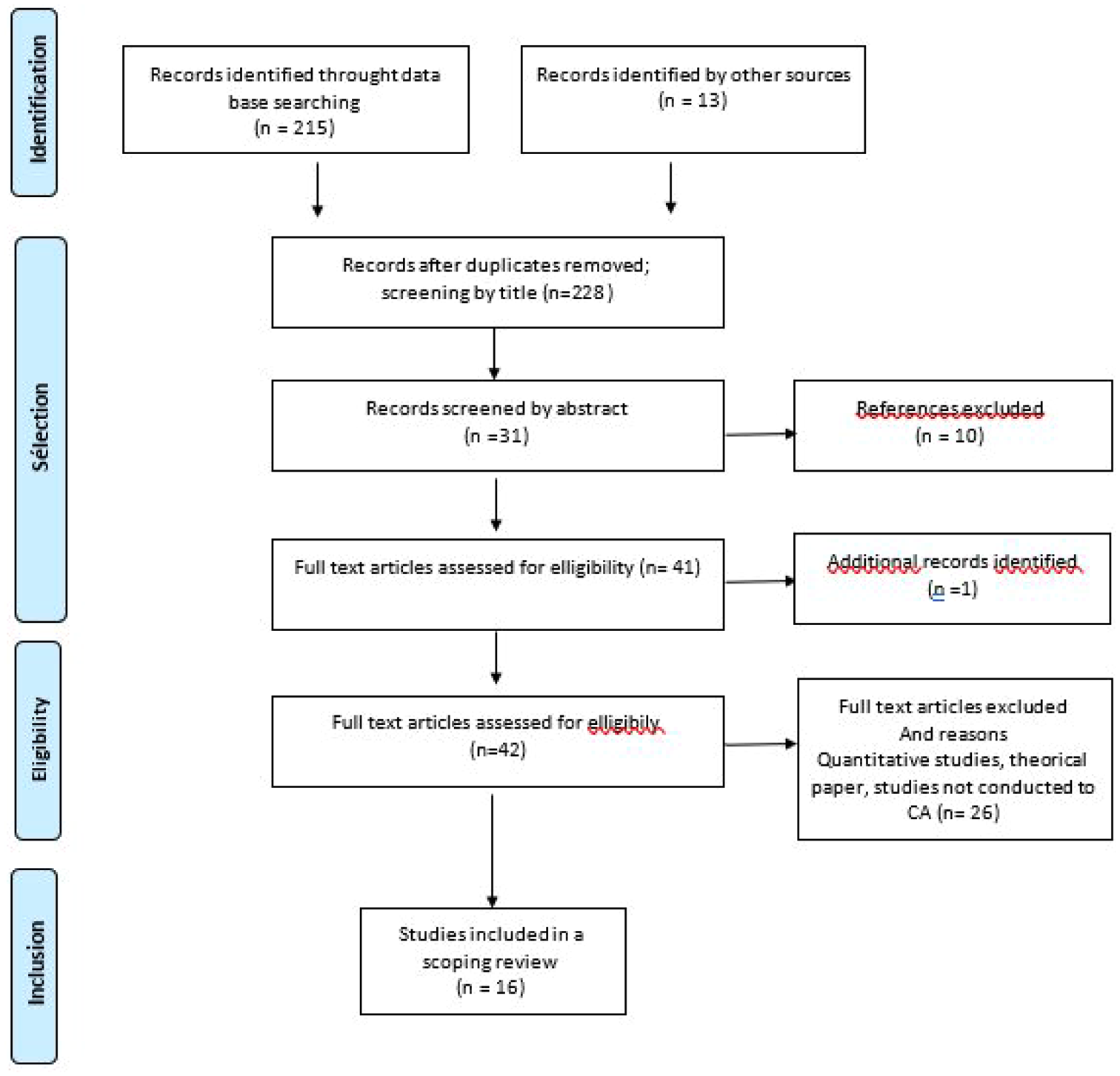
PRISMA flow diagram.
Quality assessment
Quality assessment was included according to the guidelines proposed by Peters et al. (2020). This assessment is considered useful, although not mandatory for scoping reviews, as it helps to interpret the quality of the results of included studies and guide future research. The assessment was performed according to the 10 criteria proposed by the Joanna Briggs Institute (JBI) (Aromataris et al., 2024). For each criterion, a score of Yes (1 point), No (0 points), Unclear (0.5 points), or Not Applicable was assigned. This process was done simultaneously by two authors for four articles, corresponding to 25% of the articles selected (O’Keeffe & McNally, 2021). For each study, the sum of items in agreement between the two researchers, divided by the total number of items, yielded an agreement score of 75%. Using the book provided by JBI, the authors held discussions to establish a common understanding of the criteria, to achieve 100% agreement for all articles.
Data extraction and analysis
A thematic analysis method was used (Thomas & Harden, 2008) to perform the data synthesis, a data extraction form was created in an Excel sheet to extract key information from all studies included (author, year, journal, participants, method, and data collection tool) as well as results (themes, main findings, and quotes). Moreover, NVivo Software was used to code the themes to obtain a global picture of the themes and select the direct quotations in the studies selected. The data extracted were summarized in a narrative format by presenting the themes, the findings, and an illustration of direct quotes of participants (verbatim; Aromataris et al., 2024; Peters et al., 2020).
Trustworthiness (level of credibility)
As this study aims to identify themes and analyze the results of numerous articles, thematic synthesis was used (Thomas & Harden, 2008). Each article was read in depth to identify the main themes and results. These themes were then grouped into subthemes. This process was carried out by two authors to ensure that the coding was as exhaustive as possible.
Results
Study description
Among the 16 articles selected, 13 were conducted in the United States, two in Guatemala, and one in Brazil/the United States. The 174 participants were divided into four groups: (1) AVI (n = 12 studies; Σ = 116 participants), (2) directors (n = 2 studies; Σ = 14 participants), (3) parents (n = 2 studies; Σ = 14 participants), and (4) coaches (n = 1; Σ = 10 participants). The authors used different data collection tools such as interviews, focus groups, observations, and document analysis. Table 1 presents the characteristics of the studies selected.
Characteristics of the studies.
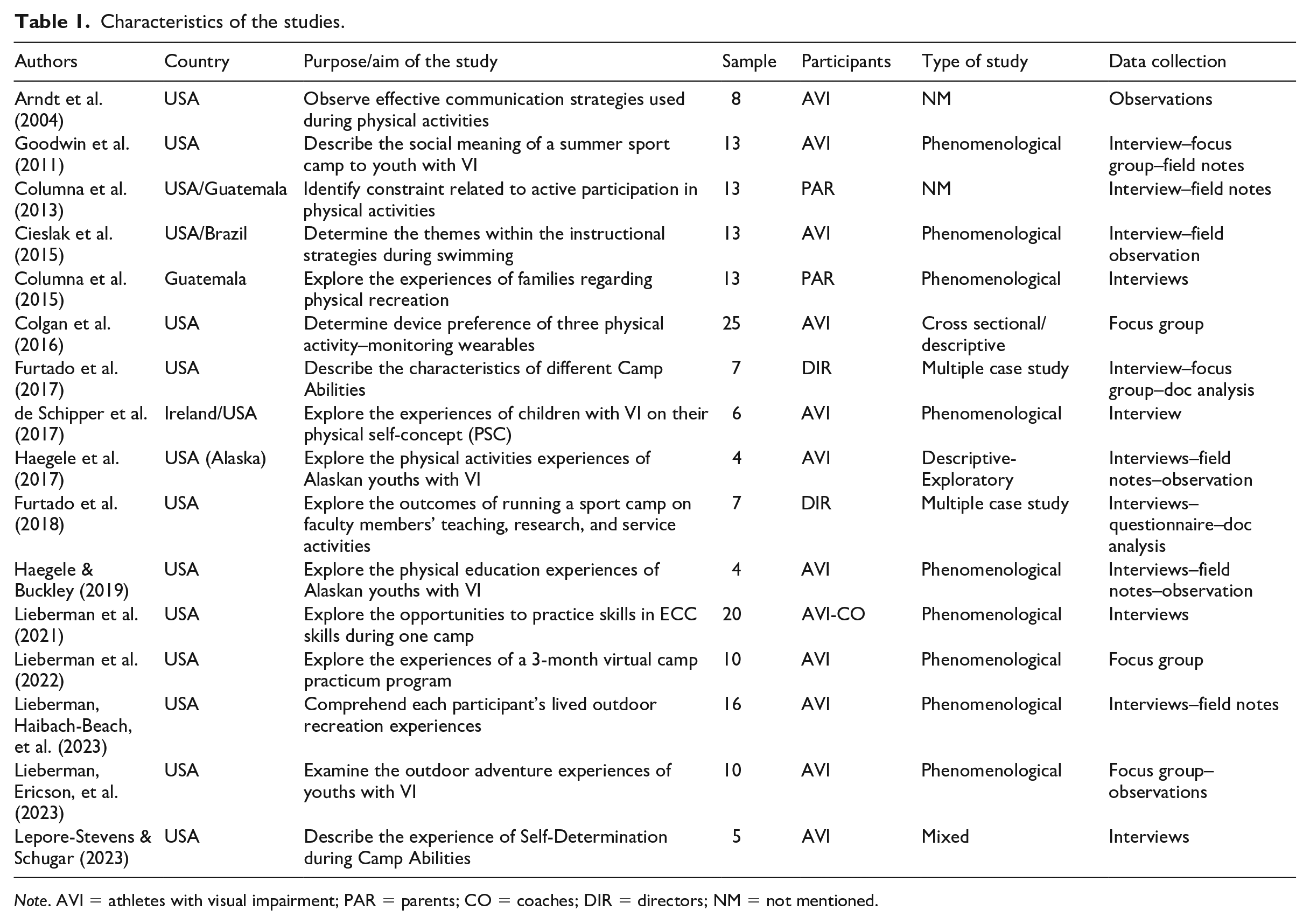
Note. AVI = athletes with visual impairment; PAR = parents; CO = coaches; DIR = directors; NM = not mentioned.
Perspectives and experiences of athletes with VI
Among the 16 articles included, 12 had AVI as a participant (Σ = 116 participants, Mage = 14 years, M = 10 participants/article). Articles have explored the perspectives of AVI through different themes such as the social meaning of the camp, the physical self-concept, the opportunities to practice ECC skills during camp, the experience of virtual camp during the COVID-19 pandemic, and the outdoor recreation activities and self-determination. Two articles documented the experiences of AVI regarding communication and instructional strategies used between athletes and coaches and preferred devices.
Social meaning and connection with other youth with VI
One article explored the experience of social meaning (Goodwin et al., 2011). Athletes mentioned that CA gives them many opportunities to meet and “connect” with new friends with VI: Alice (Bl), also a first-time attendee, expressed how limited her social sphere was: “At home, I don’t really meet anyone. I just stay at home with mom and dad. . . I don’t know any other kids with visual impairments except ones that I’m working with now” (Goodwin et al., 2011, p. 46). CA participants develop new friendships, social belonging, and they have the opportunity to learn about their VI from older athletes. Brad says, “One cool thing for me this year is Brad came and we have the same exact visual impairment and its one in 33,000 and that’s a lot of people” (Goodwin et al., 2011, p. 46).
Outdoor adventure experiences
Two articles described the experiences of AVI regarding outdoor adventure experiences using focus groups with athletes and coaches (Lieberman, Ericson, et al., 2023; Lieberman, Haibach-Beach, et al., 2023). Participants reported that CA gave them the opportunity to practice outdoor adventure experiences that promote numerous benefits, including enjoyment, independence, and relationships. Dennis shared, “It just feels nice. Going outside, such as in the forests, rivers, lakes, is just fun” (Lieberman, Ericson, et al., 2023, p. 5). Elena agreed, saying, “I feel good and can say I did it. You feel a sense of accomplishment” (Lieberman, Ericson, et al., 2023, p. 5). While most athletes discussed the benefits of their experiences during outdoor adventure activities, some participants also expressed barriers such as those associated with accessing fear and anxiety, exclusion and low expectations, and lack of equipment. Julia stated, “I was very nervous to stand on the paddleboard because I did not want to fall into the water. I was even scared with my life jacket” (Lieberman, Ericson, et al., 2023, p. 9). Michael’s coach shared, “Michael was a bit hesitant to do a lot of things, but when he was participating, he was really happy with each and every sport” (Lieberman, Ericson, et al., 2023, p. 9).
Self-determination
One article explored the experience of Self-Determination through interviews with AVI (Lepore-Stevens & Schugar, 2023). Athletes reported they experienced Self-Determination in different ways during camp. One athlete said of her coach in an interview, “Instead of just letting me do everything, she’s literally doing it with me. Like doing it with me instead of telling me to do” (Lepore-Stevens & Schugar, 2023, p. 6). Another athlete wrote that during sports, “the coaches did it with me, then let me do it on my own” (Lepore-Stevens & Schugar, 2023, p. 6). Athletes noted they saw their coaches as role models and perceived their coaches respected their needs. One athlete reported, “When I ask for what I need, coaches listen” (Lepore-Stevens & Schugar, 2023, p. 6). Athletes also identified that coaches encouraged them to self-advocate and set goals. One young athlete explained that coaches “She taught me how to take care of my body and ask for what it needs” (Lepore-Stevens & Schugar, 2023, p. 6). Participants with VI and coaches reported that CA could promote independence as they had the opportunity to make free choices. Alexander says, “You could go out and do what you wanted to do with you and your coach and friends” (Lepore-Stevens & Schugar, 2023, p. 6).
Experiences of PA
Two articles explored the experience of PA of youth with VI living in Alaska (Haegele & Buckley, 2019; Haegele et al., 2017). Participants reported that they do not have a lot of participation in PA outside of the camp: “I don’t really participate in sports other than at camp” (Haegele et al., 2017, p. 107). They also mentioned that they prefer to participate in unstructured PA activities, such as hiking, walking, or fishing, rather than team sports or structured activities: “I just never did get into them. It’s [sports] not something I’m opposed to, per se . . .” (Haegele et al., 2017, p. 108). Participants mentioned that they participated in different PA fun and functional activities in their community but without a club or sport organization (i.e., walking): “Oh, absolutely. It’s a way to get around, a way to get to stores here and there, places around town” (Haegele et al., 2017, p. 108):
Participants also highlighted the importance of support from family as an important facilitator. Vernon said, “My family did a lot of hikes and stuff together, like every Saturday and Sunday. In the winter, it was snowmobiling and snowboarding, those kinds of things” (Haegele et al., 2017, p. 109). Jewell mentioned that family could help him find a way to participate: “I have to find a different strategy than they [other family members] do, because they are fully sighted” (Haegele et al., 2017, p. 109).
During PE class, participants from Alaska described their experiences are also different according to the contexts (Haegele & Buckley, 2019). Some participants described they had a positive experience as accommodations were proposed by PE teachers. Max said, Most of them [physical educators] were pretty cool. I actually didn’t talk to them much about my eyesight. I just got around with everyone else and acted normal, for the most part. I do feel like they [peers] learn a little different because they can see everything. So, sometimes, I have to go up to the teacher and make sure the teacher gets everything printed off for me to make sure I can see it. (Haegele & Buckley, 2019, p. 63)
Despite some positive experiences shared by several participants, others experienced separation or exclusion in their PE classes. Chikuk says, No, I go to the weight room in the school. I run on the treadmill, and that’s all I do. I don’t get to play any fun games during physical education. The other students get to play games, like kickball, but I don’t really participate.
Participants also expressed feelings of social isolation. Chikuk mentioned, “Sometimes, they [peers] won’t even let me try. I really want to play. And I wish they [peers] would be nicer” (Haegele & Buckley, 2019, p. 63).
Instructional strategies
In the four articles that review instructional and communication strategies, coaches and athletes revealed that they experienced many instructional strategies during CA, such as verbal instructions, physical guidance, tactile modeling, and the use of tactile boards (Arndt et al., 2004; Cieslak et al., 2015; Colgan et al., 2016; Lieberman, Ericson, et al., 2023). For swimming lessons, physical guidance was the preferred instructional strategy. Amy says, “I definitely thought physical guidance was much better. Using tactile modeling, they can’t remember as well as physical guidance. I found that physical guidance worked better just because he is moving.” Coach Kelly supported it, “When I was physically guiding him, he was getting it all at once and he was engaged in it because he was doing it” (Cieslak et al., 2015, p. 11). Tactile modeling was another strategy that participants discussed: Coach Erika commented, “With the tactile modeling, I did have to break it down, so it was a lot more work. We had to go over it in different ways, and I had to point out where to look” (Cieslak et al., 2015, p. 11). Coach Maryna agreed, saying, “We have to say what is going on and what we expect them to do. I think communication is the key and what I learned the most” (Lieberman, Ericson, et al., 2023, p. 7). Coaches and specialists also provided tactile accommodations. One specialist described how a coach mapped out the course for an athlete on their back (tactually). Dennis benefited from more tactile cues and guidance. He shared, “I had a struggle with physical movements that you should know when you were a toddler” (Lieberman, Ericson, et al., 2023, p. 8). Athletes also reported that they utilized task adaptations and modifications to successfully access outdoor adventure activities. “The tactile boards really helped Alexander. He is completely blind and having a physical representation of everything he was doing helped a ton” (Lieberman, Ericson, et al., 2023, p. 9).
Colgan et al. (2016) explored the experiences of AVI regarding device preference of three PA-monitoring wearables (Nike FuelBand, Garmin Vivofit, and Centrios Talking Pedometer). Athletes reported they appreciated devices with auditory feedback: “The bands sound easiest because you can just hold [them] near your phone with the Bluetooth on” (Colgan et al., 2016, p. 342). Preferences varied by level of VI and some AVI preferred devices with visual contrast components: “Because I have some sight left, I can see [the FuelBand] better . . . because it’s colored and has better contrast” (Colgan et al., 2016, p. 342). Figure 2 presents themes identified in articles using athletes with VI as a participant.
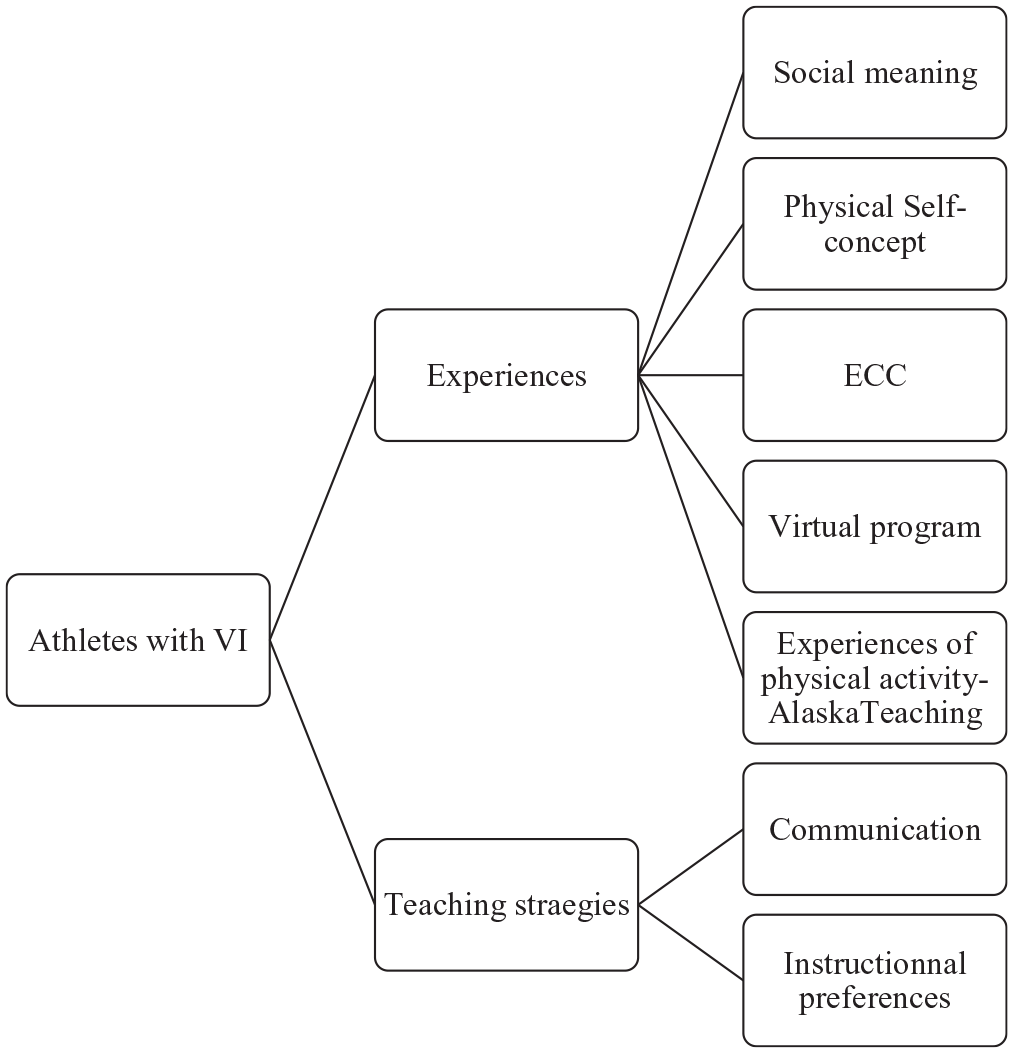
Themes identified by athletes with VI.
Perspectives of directors
Two articles described the experiences and responsibilities of directors of CA with interviews, focus groups, questionnaires, and document analysis (Furtado et al., 2017, 2018). Results indicated three themes including background, responsibilities, professional development, and research. Directors held an academic position (responsible for teaching in APE, PE, or related field). Most of the directors had previous experiences in different camps as volunteers or were involved in organizing sessions. The main responsibilities of the directors were facilitating the collaboration with university facilities (i.e., recruiting, advising students, and organizing volunteers). They were involved in a variety of duties, including planning, organization, supervision, fundraising, equipment, food, accommodations, certificates, and the scheduling. Some directors are assisted by undergraduate or graduate assistants whose salaries are paid by scholarships ranging from 4 to 12 months. Directors also determine the eligibility criteria for AVI, some of whom have broadened their audience by accepting athletes with additional disabilities (i.e., deafblindness, autism, intellectual disability, or multiple disabilities). Directors could be implied in the individualization and adaptations and modifications to the program according to the needs of the campers. A director said, “I do everything but coach a sport” (Furtado et al., 2017, p. 159).
Directors indicated they supervised the program that offered different sport and PA (i.e., goalball, beep baseball, judo, soccer five-a-side, basketball, rock climbing) depending on the availability of equipment and facilities or the specificity of the geographic region where the camp occurs. They also reported involvement with the supervision of the program of evening activities which proposed different activities that promote socialization through a variety of activities, including talent shows, dance, music, cooking, fishing, showdown, and arts-and-crafts. Finally, directors reported they participate in the recruitment and supervision of the students who came from around the world.
Professional development
Directors expressed that running a camp provided different opportunities for professional development and allowed them to acquire more knowledge about students with VI and effectively adapting sports and PA. One director said, “I didn’t really get involved in sports for the visually impaired (before), so it has increased my knowledge and my awareness” (Furtado et al., 2018, p. 81). Another director mentioned that teaching during a camp represented an open sky laboratory for the students involved; he said, I get a chance to role model the teaching methods that I’m teaching them in class. So, I use all of those things to help me identify that what I am teaching them is real. It reiterates that the things that I’m teaching are real. So that’s professional development for me. And there’s no doubt in my mind that with every camp something happens where I have to learn a lot more. (Furtado et al., 2018, p. 81)
Research
Finally, important responsibilities of the directors are to secure funding to plan and conduct research during CA. They mentioned that CA opened research opportunities for them, as the target audience could be difficult to reach. The camp also provided a research laboratory for studying different themes. CA not only enabled the directors to develop research projects but also their professional careers by disseminating their results as well as improving the knowledge in the field. One director said, At the beginning of camp it was all about teaching and service. I had to get money and I had to have students participate. I couldn’t even think about research. But about three years into it I thought I could fit some research in . . . now I see such a value in the research part of it that I always want that to be part of it what we do, but I don’t want to lose the focus of the main purpose as teaching: teaching the kids and teaching my students. (Furtado et al., 2017, p. 161)
Figure 3 presents themes identified in articles using directors as a participant.
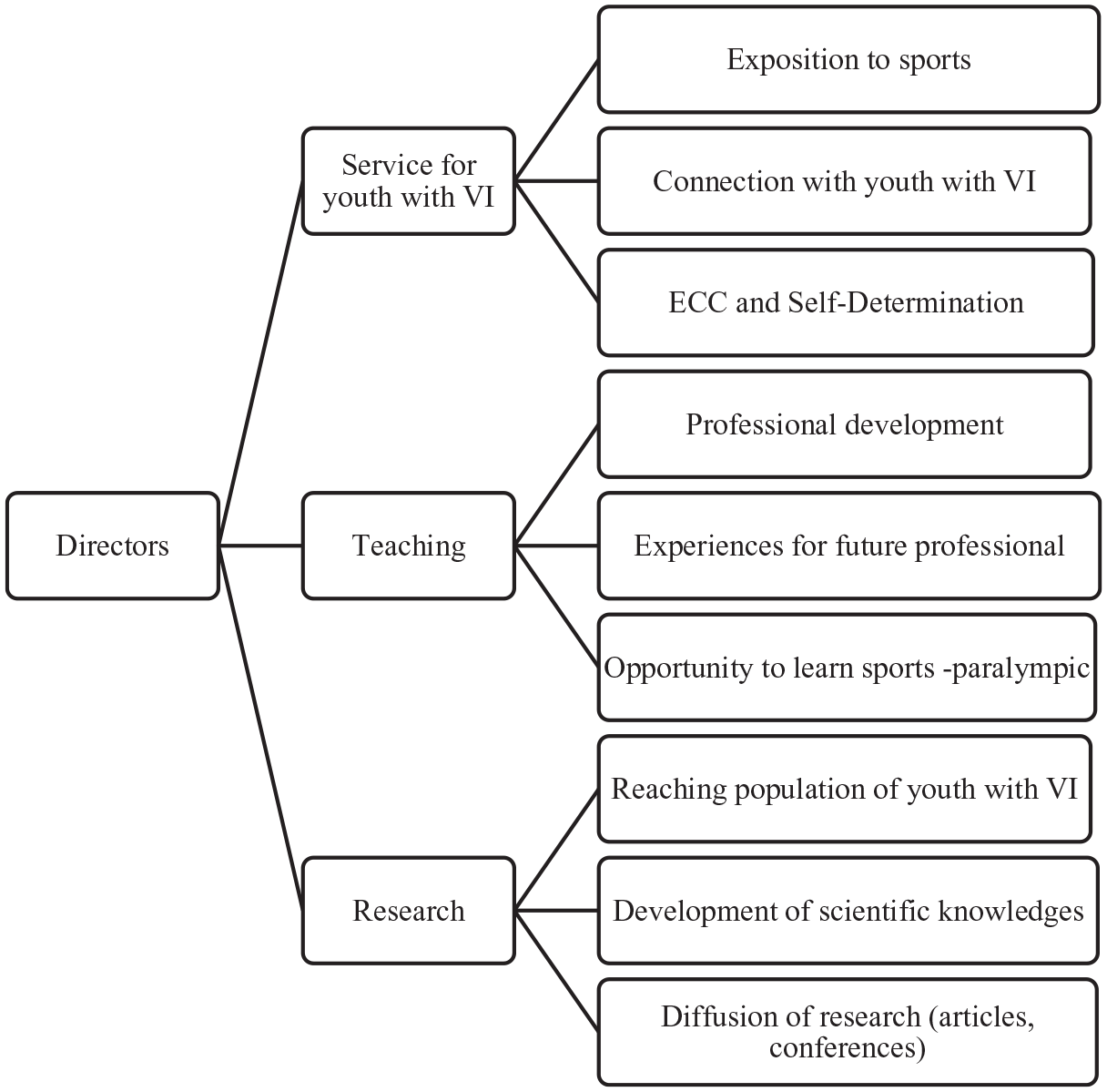
Themes identified by directors.
Perspectives of coaches
Two articles explored the experiences of coaches regarding opportunities to practice ECC skills using interviews with AVI and coaches (Lieberman et al., 2021) and outdoor adventure experiences through focus groups (Lieberman, Ericson, et al., 2023). Participants reported that CA promoted many opportunities to practice ECC skills which were infused all week long. Athlete 4 says, “I feel like last year I met the assistive technology, orientation and mobility and career education ones” (Lieberman et al., 2021, p. 35). Coaches reported that CA provided opportunities to develop skills in all domains of ECC: Coach 6 stated, “I would say that athletes experienced all those nine domains” (Lieberman et al., 2021, p. 36).
Perspectives of parents
Two articles described the experiences of parents of athletes with VI (Columna et al., 2015; Perkins et al., 2013) regarding PA using interviews with families from Guatemala. First, Perkins et al. (2013) explored constraints related to active participation in physical recreation activities and strategies to overcome those constraints. Families indicated that they faced several barriers that limited their physical recreation choices (i.e., child disability, financial, societal, and lack of knowledge). A father said, “This group in this town is very poor, there are a few middle class or middle high-class parents, but the rest of them have very limited resources” (Columna et al., 2013, p. 212). A parent mentioned, Our family has the willingness and the desire to go out, but going out and doing different activities is always an effort . . . right now I have to buy glasses for the child. I have to order another binocular. I have not been able to raise that money . . . even to participate in this (camp), I am making an extra effort because our economic situation really does not give us to cover these costs. (Columna et al., 2013, p. 212)
Parents also mentioned that they face many societal constraints such as the lack of recreational activity, negative attitudes, and safety concerns. One participant said, “In this country, there is nothing, no foundation or specific place to help parents and children to develop in a better way” (Columna et al., 2013, p. 213). They reported that they face negative attitudes when they go out with their youth with VI: Sometimes is difficult when these activities include all the people that are not accustomed to a blind child. But is very difficult for people that are not sensitized and the people that still have these paternal feeling that think, of poor little child or Oh I cry when I see her. That kills any kind of relationship even for the parents because they cannot or some people still have barriers and that is very hard to break. (Columna et al., 2013, p. 214)
Parents mentioned their child with VI could face discrimination to participate in recreational activities. One mother said, I noticed that when he wants to do something [with his friends] all the kids leave. He asked where they go . . . and I say . . . they went on a bike. . . Then he wants to go on a bike . . . but by the time we set up the bike. . .[it] is too late . . . his peers are too far . . . and by the time we put his gear on and my gear on it is too late . . . because he cannot go alone, we have to take him. . . He doesn’t move as fast and he gets frustrated. (Columna et al., 2015, p. 1124)
To overcome the barriers they faced, parents suggested creative and low-cost activities and hands-on-experiences: We have to be creative and find things like go to a park of visit someplace that doesn’t cost a lot of money. We don’t need a super expensive bike. We use what we have and find new things to do in a creative way. (Parent 10) (Columna et al., 2013, p. 215)
Parents also suggested quality training for all (parents and teachers): I think . . . that a little bit more knowledge in terms of how to do certain sports. . .for example. . .the sports that [child’s name] played here today [at camp]. . . I read about those sports in a brochure a while ago when [child’s name] was one year old . . . at school they gave me some copies and a book of how a teacher can teach different sports. . .but there were some things that were not clear to me . . . because . . . it’s not the same to read it . . . than to practice it. (Parent 5) (Columna et al., 2013, p. 215)
In a second study, Columna et al. (2015) reported that families participated at least once a month in low-budget recreational activities with their child with VI, mainly organized by mothers. They reported that recreational activities were very beneficial for their families, enabled them to socialize, created family bonds, and improved communication. A mother said, “I think these activities are really good because I noticed they enhanced father-son relationships [from doing things together]” (Columna et al., 2015, p. 1124). Finally, parents reported their child had a positive experience during summer camp: I’ve noticed his attitude [during camp] . . . he’s really excited because he likes to play with other peers and he understands that they are all at the same level, playing the same game and he feels like he’s won something. He gets something out of it. (Columna et al., 2015, p. 1124)
Figure 4 presents the themes identified by parents.
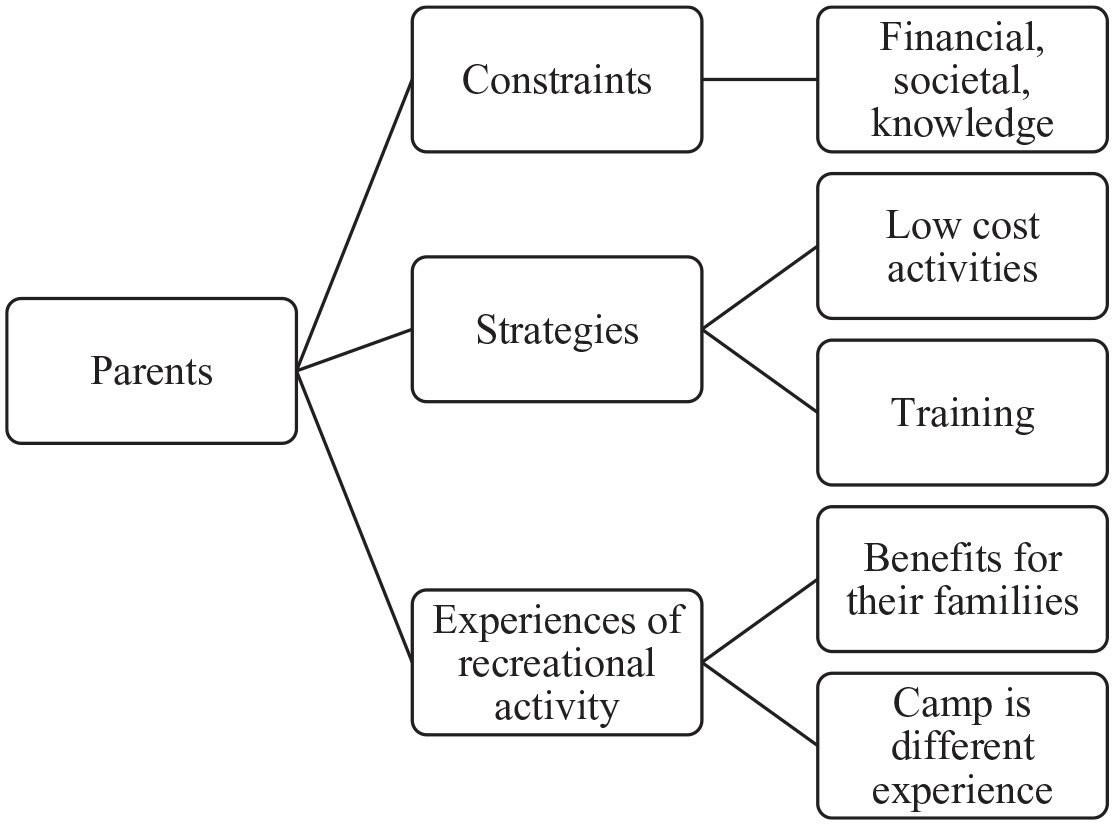
Themes identified by parents.
Quality assessment
Using the JBI criteria, some methodological strengths and weaknesses were highlighted in the quality assessment process. Strength of the studies are Criteria 2, 3, 4, 5, 8, and 9. Nevertheless, weakness of the studies appears to be in Criteria 1, 6, and 7. Table 2 presents the quality assessment.
Quality assessment using JBI criteria.
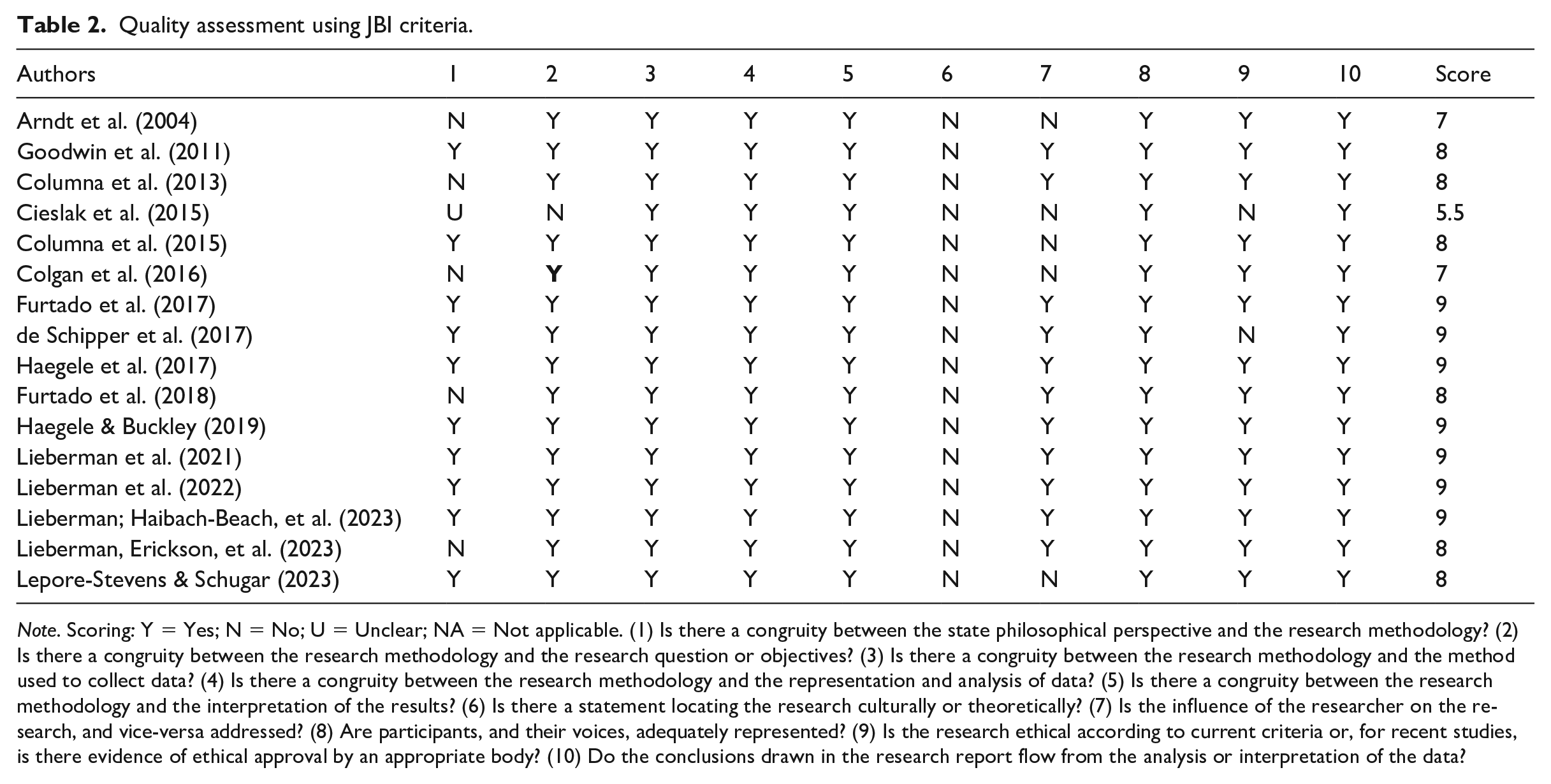
Note. Scoring: Y = Yes; N = No; U = Unclear; NA = Not applicable. (1) Is there a congruity between the state philosophical perspective and the research methodology? (2) Is there a congruity between the research methodology and the research question or objectives? (3) Is there a congruity between the research methodology and the method used to collect data? (4) Is there a congruity between the research methodology and the representation and analysis of data? (5) Is there a congruity between the research methodology and the interpretation of the results? (6) Is there a statement locating the research culturally or theoretically? (7) Is the influence of the researcher on the research, and vice-versa addressed? (8) Are participants, and their voices, adequately represented? (9) Is the research ethical according to current criteria or, for recent studies, is there evidence of ethical approval by an appropriate body? (10) Do the conclusions drawn in the research report flow from the analysis or interpretation of the data?
Discussion
Twelve of the qualitative studies investigated the experiences and perspectives of AVI who have attended CA. These studies involved in-depth interviews or focus groups to examine their perceptions of the camp’s impact upon their skills, confidence, and overall well-being. The results indicated that AVI had a socially meaningful experience that enabled them to connect with other young people with VI (Goodwin et al., 2011) and experimented with new sports using adapted equipment through various teaching strategies (Cieslak et al., 2015; Colgan et al., 2016). AVI also practiced outdoor activities (Lieberman, Erickson, et al., 2023) and received ECC and self-determination skills training (Lepore-Stevens & Schugar, 2023; Lieberman et al., 2021).
These experiences appear to be rewarding, given that many AVI have previously reported experiencing a nonmeaningful activity in a different setting during PE class (Tanure Alves et al., 2020), a bullying experience (Ball et al., 2022), or a sense of not being treated like their peers and felt “absent” or “incapable” (Haegele et al., 2022). There has also been extensive literature related to feelings of isolation and loneliness in children with VI (Rokach et al., 2021). These findings show that engagement in a CA program can likely combat these feelings of isolation and loneliness. Furthermore, knowledge of adapted sports, opportunities to practice PA, and learning about ECC and self-advocacy, which are often reported as obstacles (Lewis & Iselin, 2002; Opie, 2018; Rekaa et al., 2019), were important drivers for developing skills in the area of self-determination.
Two studies examined the experiences of directors (Furtado et al., 2017, 2018) and one other study combined AVI and coaches (Lieberman et al., 2021). Directors and coaches expressed that their participation in CA enabled them to teach sports and implement adaptations to youth with VI to help them gain confidence. As a result, the directors and coach’s involvement in CA seems to be an important pillar in training by developing knowledge and a sense of confidence, both often reported as obstacles (Foley et al., 2020). A study by Lirgg et al. (2017) stated that students with VIs were among the most difficult to teach in PE. This finding that knowledge and self-confidence improves with a CA experience is welcomed as we need teachers to be confident in their abilities to be able to know the instructional strategies for their students with VI. If the professors teaching them know more about teaching children with VI due to Camp, the students will gain more knowledge from the class taught by that professor.
Finally, two studies examined the role of family members and caregivers in supporting individuals with VI during camp experiences. Understanding family perspectives and experiences provided insights into the broader impact of CA on familial relationships and support networks (Columna et al., 2015; Perkins et al., 2013). Although parents reported several barriers to accessing PA, they also suggested avenues for overcoming them. According to Lieberman et al. (2014), parents can be the link to valuable information for the PE teachers of children with VI. Parents’ perceptions regarding PA are important factors in the practice and perception of youth themselves (Stribing et al., 2022).
Limitations
Although the experiences reported have been positive overall, several limitations need to be mentioned. First, participants involved in CA are already convinced of the benefits of PA, which does not necessarily represent those not involved. In addition, most of the studies were carried out in the United States (and Ireland) and the only parents interviewed were from Guatemala. Consequently, the generalization of these qualitative results are limited. Another limitation of this systematic review is the involvement of the main director in the process of this study. Her enthusiasm for CA could lead to a certain bias in the analysis of the results described in the studies analyzed.
The results obtained from the quality assessment are quite positive, and certain methodological weaknesses need to be considered when interpreting the results. Of particular concern are Criteria 6 (Is there a statement locating the research culturally or theoretically?) and Criteria 7 (Is the influence of the researcher on the research, and vice-versa addressed?). Notwithstanding these limitations, analysis of the experiences through this scoping review gives a voice to the participants and identifies avenues for further research.
These studies were found with a search for qualitative studies on youth with VIs through a Camp. As with any systematic review, there may have been other studies that analyzed these topics, but were conducted at a school or a transition program, and so on.
Nevertheless, considering the short time frame and this low incidence population, the findings here are robust in relation to what is known.
Conclusion
This scoping review aimed to give a voice to the people involved in CA through analysis of 16 articles conducted with different types of CA participants (AVI, stakeholders, and parents). Future research on CA for the visually impaired could deepen understanding and improve practices. Some potential avenues for further research include the following:
Long-Term Effects: Examine the long-term effects of CA participation on the lives of individuals with VIs. Follow-up studies tracking participants over time can assess the lasting impact of the skills and experiences gained at camp, including educational and vocational outcomes, social integration, and quality of life.
Intersectionality and Diversity: Investigate the intersectionality of identities and how it intersects with the camp experience. This could include examining how factors such as race, ethnicity, gender, sexuality, socioeconomic status, and disability intersect to shape individuals’ experiences at CA and their access to resources and support.
Technology and Innovation: Explore the role of technology and innovation in enhancing CA programs. This could involve researching the use of assistive technologies, adaptive sports equipment, or virtual reality simulations to provide new learning opportunities and experiences at camp.
Peer Support and Mentoring: Investigate the role of peer support and mentoring in CA programs. This could involve studying the dynamics of peer relationships, the benefits of peer-led activities, and the impact of mentorship on skill development, self-confidence, and social integration.
By exploring these areas of further research, qualitative studies of CA can continue to contribute to understanding of the unique needs, experiences, and opportunities for individuals with VIs in recreational and educational settings.
