



Abstract
There are calls for better application of theory in health research. Applying intersectionality theory in vision impairment research is critical because it affords an in-depth understanding of social issues, including their causes. Explicit application of intersectionality theory can further enhance research and practice in vision impairment; yet, there is a paucity of research on how intersectionality theory is applied and the degree to which it can guide vision impairment research. The purpose of this scoping review was to understand how intersectionality theory has been applied within vision impairment research and how it can be used to guide further vision impairment research development. A scoping review was conducted to examine and summarize the extent, range, and nature of the application of intersectionality theory within vision impairment research. Four electronic databases were searched from inception in April 2023, resulting in 1632 unique records. Inclusion/exclusion criteria were applied, resulting in 19 articles being identified for further analysis. The application of intersectionality theory in vision impairment research was seen most frequently among authors in the field of anthropology and human and movement science. The way in which intersectionality theory was taken up in vision impairment research is described using three overarching themes including: (1) as a lens for the interpretation of findings; (2) as a general conceptual framework for the article; and (3) as a tool for data analysis.
Keywords
Introduction
Theories are integral in practice and research, including in the field of vision impairment (Collins & Stockton, 2018; Zijlstra et al., 2013). All scientific thinking, including vision impairment research, involves the application of theoretical approaches (Jackson & Mazzei, 2011; Kuhn, 2015) because theories influence how data is collected, analyzed, understood, and utilized (Davies et al., 2010; Davis et al., 2015; Eccles et al., 2005; Jackson & Mazzei, 2011). As such, explicit use of theory in the field of vision impairment can assist with the identification of whether findings are applicable and usable in specific settings (Eccles et al., 2005; Zijlstra et al., 2013). An example is intersectionality theory, which is an emerging perspective in vision impairment practice and research, the application of which might assist in optimizing research and practice in the field of vision impairment. Thus, the purpose of this article is to facilitate improved understandings of the application of intersectionality by reviewing how the theory has been applied in vision impairment research and how it can be used moving forward to guide further vision impairment research development.
Intersectionality
Intersectionality theory was coined by Kimberle Crenshaw (Carastathis, 2014; Crenshaw, 1989; Nash, 2008). Its origins date back to feminist studies focused on Black women and the criticisms toward racial prejudices (Carastathis, 2014; Crenshaw, 2018). The theory of intersectionality is premised on the notion that human beings are shaped by the interaction of multiple identities such as, race/ethnicity, disability, gender, social class, and age, to name a few (Atewologun et al., 2016; Azmitia & Thomas, 2015; Cho et al., 2013; Hankivsky, 2012; Tormos, 2017). These interactions occur within a context of interconnected systems, hierarchies and power structures (Cho et al., 2013; Davis, 2014; Hankivsky, 2012). In addition, intersectionality brings into focus health and social inequities experienced by historically oppressed populations, including people with vision impairment (Bowleg, 2012; Frederick & Shifrer, 2019; Nair & Vollhardt, 2020). As such, the commitment to social justice by low vision service providers, vision impairment policy makers, and low vision advocacy groups makes it a natural fit with intersectionality. Yet despite a plethora of research that focuses on people living with a vision impairment, studies on vision impairment that incorporate intersectionality as their articulated guiding theoretical framework, are sparse.
The fundamental principle of intersectionality is that social categories, such as ethnicity/race, disability, sex, gender, and sexual orientation are not independent and unidimensional but rather multiple, interdependent, and mutually constitutive (Bowleg, 2012; Carastathis, 2014). Far from representing a simple addition of social identities such as disability (e.g., vision impairment) plus gender (e.g., female), an intersectional perspective asserts that disability and gender constitute each other, such that one identity alone (e.g., gender) cannot explain the unequal or disparate outcomes without the intersection of the other identity or identities (Bowleg, 2012; Nair & Vollhardt, 2020). From the perspective of intersectionality, attempting to understand or address health disparities via a single analytical category (e.g., gender or race or sexual orientation), does not take into consideration the complex ways in which multiple social categories intersect with social hierarchies and discrimination to create disparity and social inequality in health (Bowleg, 2012; Hancock & Daigle, 2021).
Another important principle of intersectionality is its focus on the intersecting identities of people from historically oppressed and marginalized groups such as ethnic/racial minorities, low-income people, and people with a disability, such as vision impairment (Bowleg, 2012). Intersectionality examines the health of people from multiple historically oppressed and marginalized populations in their own context and from their vantage point (Chan, 2018; Smith, 2014). Yet, despite its emphasis on multiple socially disadvantaged statuses as a focal point, intersectionality does not presume that all interlocking identities are equally disadvantaged (Bowleg, 2012; Chan, 2018; Smith, 2014). Rather, intersectionality considers how oppressed identities (e.g., racial minority) and privileged identities (e.g., upper- or middle-class SES) intersect to produce disparity and advantage (Bowleg, 2012; Chan, 2018). An understanding of the experiences of marginalized populations at the intersection of various identities can facilitate the development of meaningful intervention and policies (Chan, 2018; Moodley & Graham, 2015; Shaw et al., 2012).
Intersectionality is particularly relevant to understanding vision impairment. To illustrate, inequalities in the field of vision impairment are seen when certain social groups have different experiences of living with a vision impairment, which can lead to different eye care outcomes compared to others. Such groups can be categorized by gender, race, poverty, education, and occupation (Hancock & Daigle, 2021; Jaggernath et al., 2014; Kuper et al., 2008; Rius Ulldemolins et al., 2019). Intersectionality identifies the societal and environmental contexts in which experiences of oppression occur and explores the interrelationship of inequalities based on such identities (Hankivsky, 2012; Kerner, 2012; Levac, 2020).
Importantly, in the vision impairment literature, differences in social identities have been linked to the prevalence of vision impairment. For example, previous studies have shown that females have a higher prevalence of vision impairment (i.e., 55% of people with vision impairment are females), while socio-economic status, ethnicity and race, and geographical inequalities were associated with differences in the prevalence of vision impairment (Lyu & Kim, 2018; Mohanty et al., 2019; Mullings & Schulz, 2006; Rius Ulldemolins et al., 2019; Shickle & Farragher, 2015). In support of this, Liew (2019) argued that an intersectional perspective adds value in vision impairment research, where he examined the impact of race/ethnicity and sex differences in transitioning across different visual-functioning states among older adults with vision impairment. Findings from this study showed probabilities of higher transition associated with vision deterioration among Black and Hispanic seniors, females, and people with low education. The author argued that these findings provide support for the uptake of intersectionality as a theoretical lens in this area of research.
While awareness of the importance of intersectionality is emerging in vision impairment research, to our knowledge, there are no known reviews exploring how intersectionality theory has been taken up in vision impairment research. For this reason, we conducted a scoping review examining how intersectionality has been applied in vision impairment research. In this article we summarize findings from a scoping review on vision impairment and intersectionality toward providing recommendations and next steps for vision impairment research.
Method
This scoping review followed the methodology described by Arksey and O’Malley (2005) which was further refined by Levac et al. (2010). The authors suggest five key methodological steps to a scoping review including: (1) Identifying the research question; (2) Identifying relevant studies; (3) Selecting studies; (4) Charting the data; and (5) Collating, summarizing, and reporting results. Here, we embraced the definition by Colquhoun et al. (2014), which points out that a scoping review “addresses an exploratory research question aimed at mapping key concepts, types of evidence, and gaps in research related to a defined area or field by systematically searching, selecting, and synthesizing existing knowledge” (p. 1291). In contrast to a systematic review, which assesses quality as a basis for study inclusion, a scoping review summarizes all of the literature within a defined set, regardless of quality, to examine the range of studies that exist (Arksey & O’Malley, 2005).
Identifying the research question
The specific question that guided this scoping review was: “What is the extent, range, and nature of how intersectionality theories are presently being applied in vision impairment research?”
Identifying relevant studies
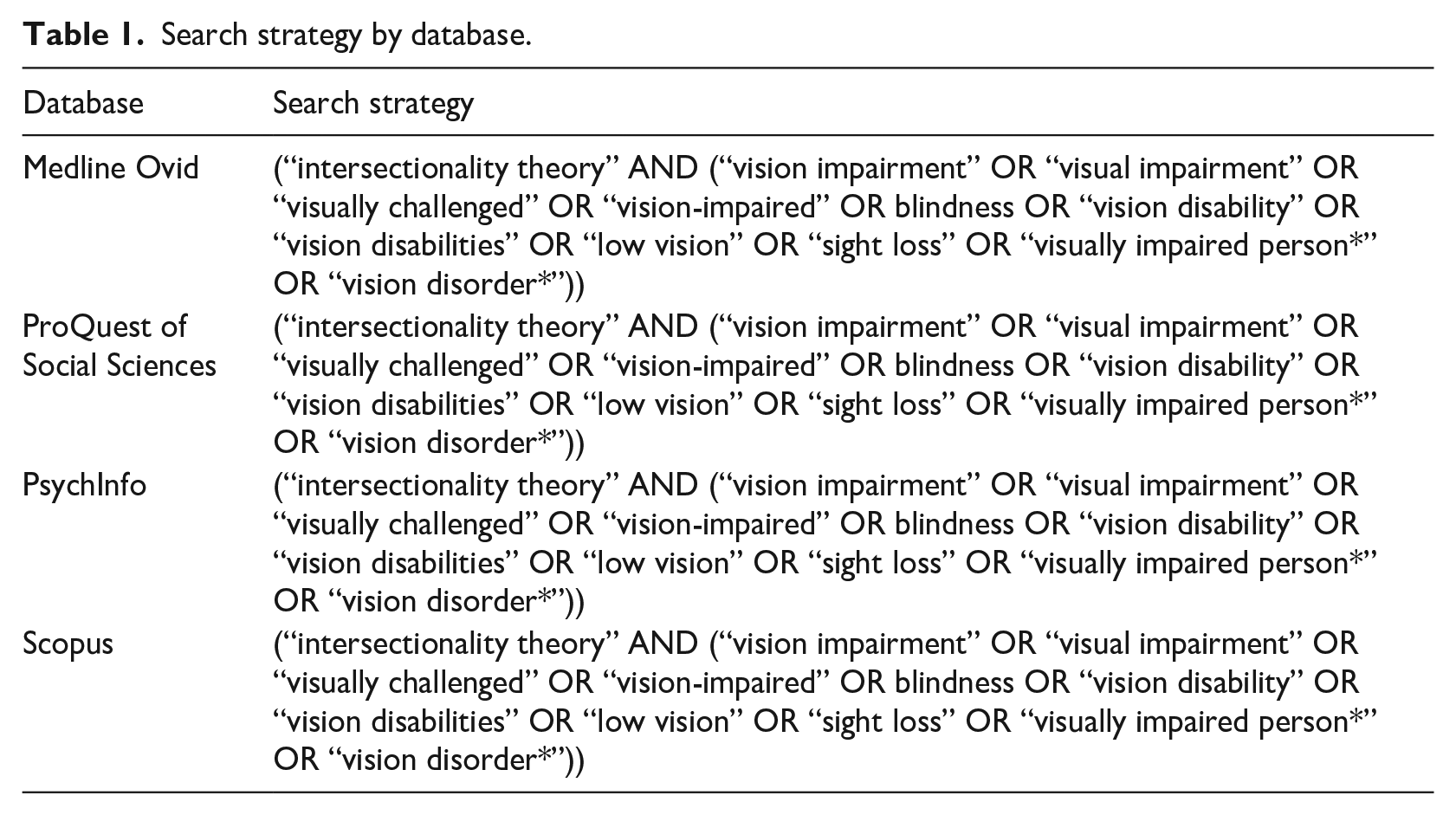
The search strategy and database selection were determined in consultation with a Librarian (R.I.). Literature published between inception of each database to October 2023, was collected from the following databases: Medline Ovid, ProQuest of Social Sciences, PsychInfo, and Scopus. These databases were selected for their relevance to the research topic, across a range of interdisciplinary fields. Owing to the varying perspectives and applications of intersectionality in the literature, we anticipated literature to be indexed under a variety of terms. To account for broad indexing, we used a range of search terms (see Table 1). We also conducted hand searching for relevant articles.
Search strategy by database.
Study selection
A study was eligible for inclusion if it met the following criteria: (1) it was published in a peer-reviewed journal; (2) it was conducted with individuals with vision impairment. Here, articles that focused on disability, in general, so long as people with vision impairment were included as participants were included; (3) articles written in English; and (4) authors provided an explicit statement in the manuscript reporting that they incorporated intersectionality theory within their research. Articles that were not empirical studies (e.g., reviews and theoretical papers) were excluded. The first author screened titles and abstracts, and the supporting authors conducted the full text review. After the application of inclusion and exclusion criterion, a total of
Charting the data and collating, summarizing, and reporting the results
All selected articles were read in full, and data were entered into a Microsoft Excel spreadsheet developed by the first author. These data were entered under the following headings: name of author (s), title of article, year of publication, country of study, disciplines of the primary author, research design, research objective/question, and intersectional/social identity focused. The authors also completed study tracking, which included the number of articles that used intersectionality theory, counts for the different discipline fields involved in each article, and descriptive terms used by authors to describe intersectionality.
As described by Arksey and O’Malley (2005), we adopted a descriptive-analytical method to determine the nature of the use of intersectionality theory. Utilizing the descriptive method helped us to develop a summary description of the application of intersectionality theory in vision impairment research. Each article was reviewed, and the nature of how intersectionality theory was applied was given a description and a related category by the first author. As each article was reviewed, a determination was made about whether the application of intersectionality theory in the article fit into an existing category or whether a new category was required. This was an iterative process, similar to coding in qualitative analysis, in which the various ways in which the applications could be summarized were reviewed and reorganized until a meaningful summary was achieved.
Findings
Extent of intersectionality theory application
The search strategy applied found 1632 citations (see Figure 1 detailing the PRISMA diagram). After importing 1632 studies into Covidence Reference Manager for screening, 326 duplicates were removed. The title and abstract of 1306 studies were screened; of these, 1240 studies were determined to be irrelevant. A full-text review was conducted on the remaining 66 studies. After review of the 66 articles and application of the exclusion criteria, 17 were retained. Two studies from hand searching the reference lists of included articles were also found and included, totaling 19 studies that were included in this scoping study (see Table 2). Common reasons for study exclusion included: (a) the article was focused on the positionality concept, not related to intersectionality; (b) the article was a commentary; and (c) the article was a review paper.
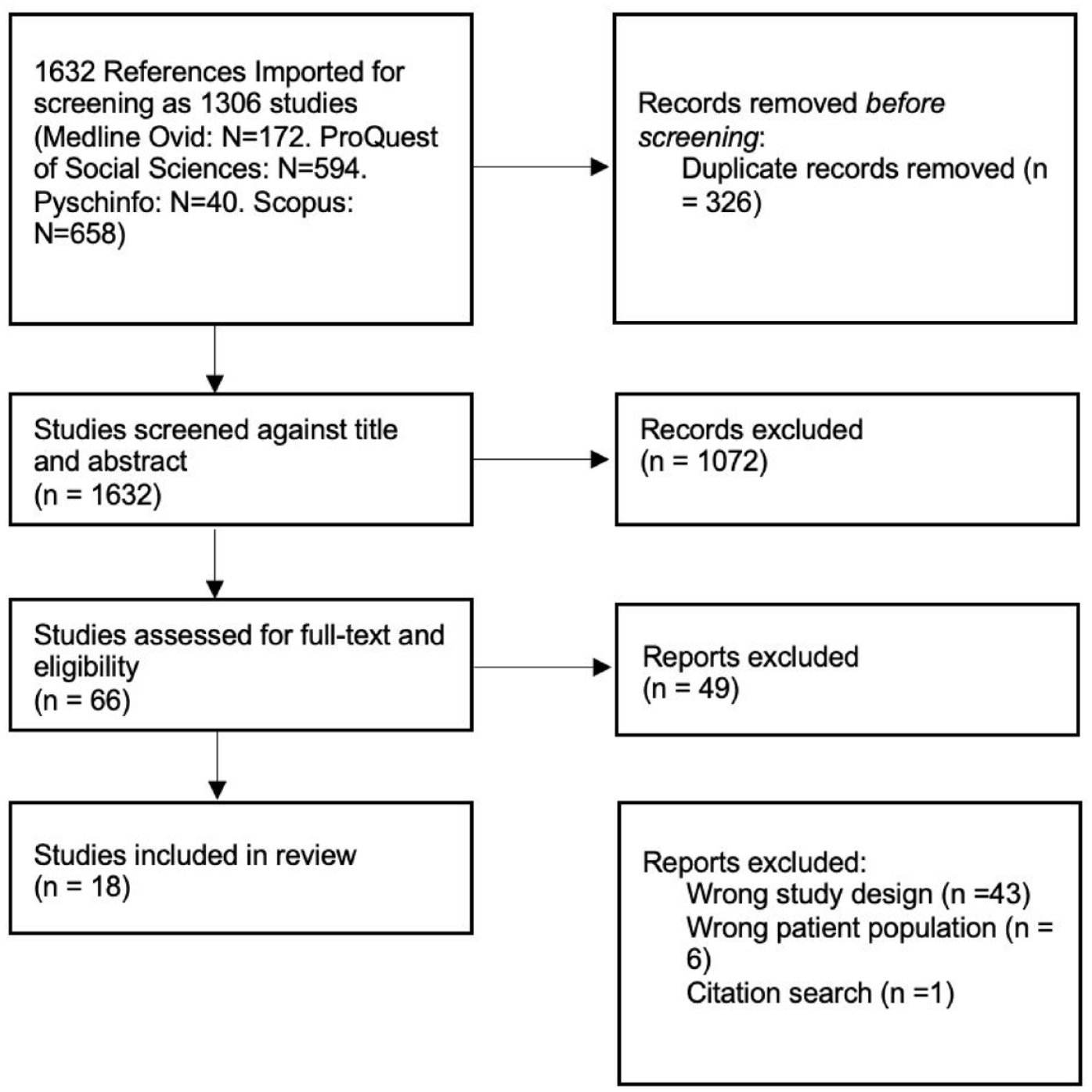
PRISMA chart.
Description of studies.
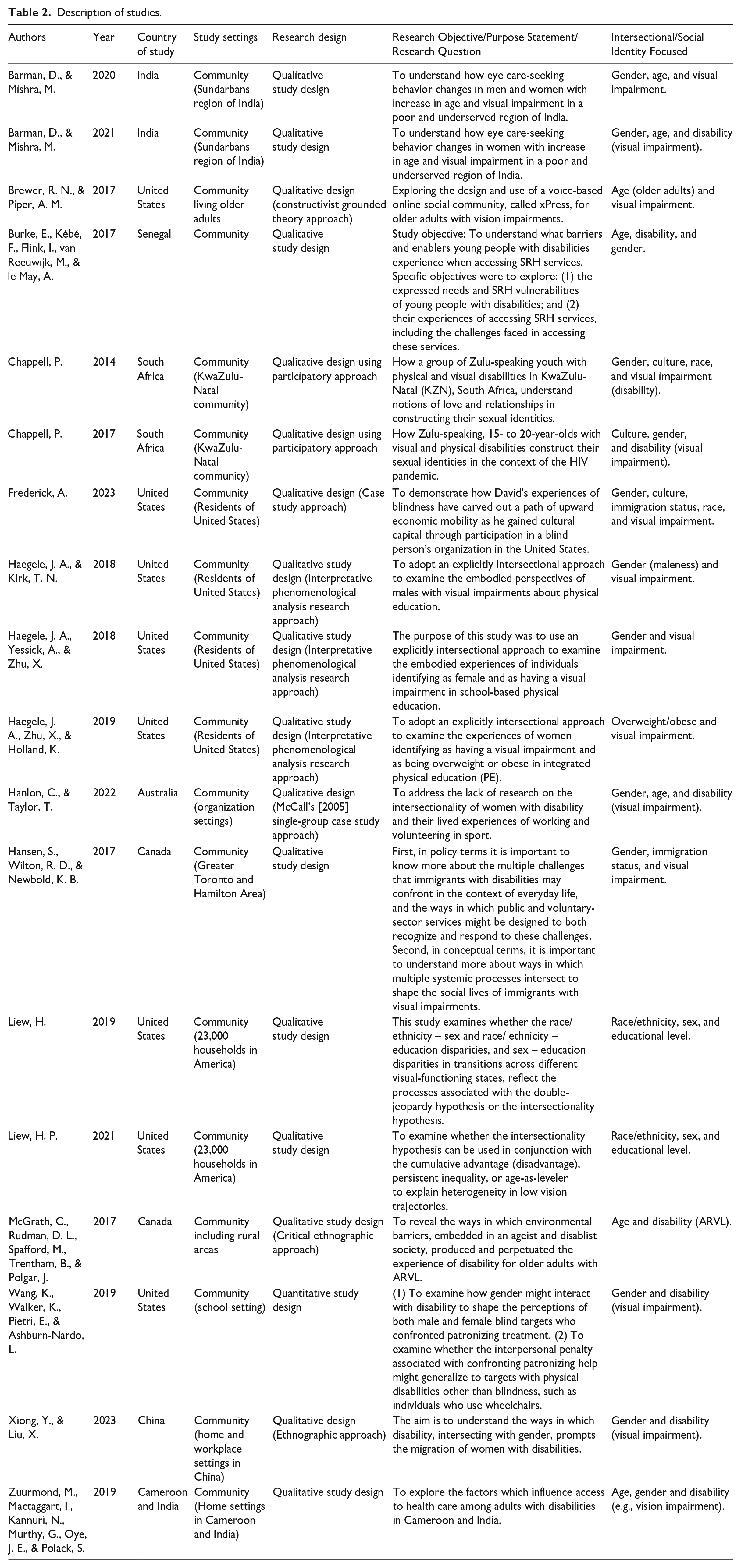
All articles were published in the last 8 years, with increasing frequency, indicating a growing interest in this area, as seen by publications in 2014 (n = 1), 2017 (n = 5), 2018 (n = 2), 2019 (n = 4), 2020 (n = 1), 2021 (N = 4), 2022 (N = 1), and 2023 (N = 1). Although all were published in the last 8 years, 18 of the 19 articles were published in the last 5 years.
Range of intersectionality theory application
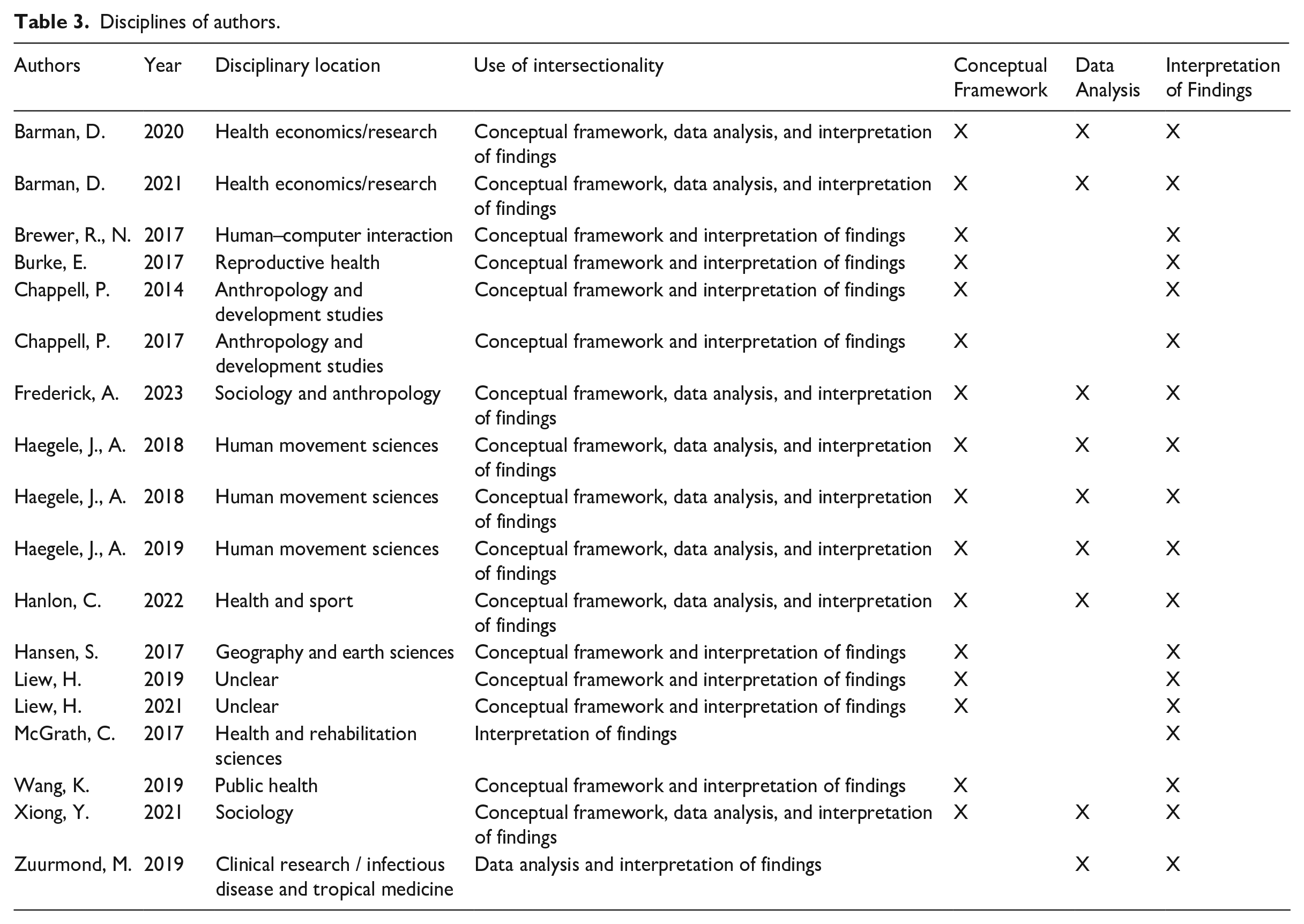
Table 3 provides a summary of the different disciplines of the first author for each of the included articles in the scoping review. The articles were spread across several different fields of study, indicating that intersectionality theory in vision impairment research is of interest to multiple disciplines. Represented disciplines included anthropology (N = 3) (Chappell, 2014, 2017; Frederick, 2023) and human and movement sciences (N = 3) (Haegele et al., 2018, 2019; Haegele & Kirk, 2018) being the most common. Other disciplines included health economics (N = 2) (Barman & Mishra, 2020, 2021), geography and earth sciences (N = 1) (Hansen et al., 2017), health and rehabilitation sciences (N = 1) (McGrath et al., 2017), health and sport (N = 1) (Hanlon & Taylor, 2022), human and computer interaction (N = 1) (Brewer & Piper, 2017), infectious disease and tropical medicine (N = 1) (Zuurmond et al., 2019), optometry (N = 1) (Oviedo-Cáceres et al., 2023), public health (N = 1) (Wang et al., 2019), and sociology (N = 1) (Xiong & Liu, 2023). Two studies did not specify the discipline of the author (Liew, 2019, 2021).
Disciplines of authors.
Nature of intersectionality theory application
Authors have used intersectionality theory in their research in a variety of ways. Analyses indicated that the ways in which intersectionality theory was applied within vision impairment research articles could be categorized into three primary themes including: (1) as a lens for the interpretation of findings; (2) as a general conceptual framework for the article; or (3) as a tool for data analysis. Each category is described, the total number of articles within that category is reported, and representative examples are provided (see Table 3). It should be noted, however, that some authors used intersectionality in multiple ways when framing their research.
A lens for the interpretation of findings
Articles in this category (n = 18) utilized intersectionality theory as a lens for interpreting findings. Examples include using intersectionality to illustrate heterogeneity in low vision trajectories (Liew, 2019, 2021), to understand access to visual rehabilitation services (Oviedo-Cáceres et al., 2023), to explain eye care-seeking behaviors (Barman & Mishra, 2020, 2021), and to describe access to services and social media platforms among older adults with vision loss (Brewer & Piper, 2017). In this category, intersectionality was used to interpret findings from the influence of intersecting social identities on the experience of individuals with vision impairment. An example is the work of Barman and Mishra (2020, 2021) where an intersectional approach was used to interpret findings in relation to eye care-seeking behavior among men and women with vision impairment. This research detailed the socio-economic impact of living with a vision impairment, the occupational implications for women with vision impairment, and the relationship of such experiences with the process of aging among this population. Here, age, gender, and vision impairment status were the overlapping intersectional domains of focus.
A general conceptual framework for the article
Articles in this category (n = 17) utilized intersectionality theory in framing their studies, particularly in research approach and design. Here, intersectionality was applied as a conceptual framework for research in vision impairment. Examples include using intersectionality theory to conceptualize the implications of overweight/obesity in PE participation among females living with vision impairment (Haegele et al., 2018). In addition, the authors used intersectionality theory to conceptualize the experience of working with a sport organization as a female and one who is living with a vision impairment (Hanlon & Taylor, 2022). Intersectionality theory was utilized to conceptualize access to facilities, such as eye care and reproductive health services, and social media platforms (Barman & Mishra, 2020, 2021; Brewer & Piper, 2017; Burke et al., 2017; Frederick, 2023; Oviedo-Cáceres et al., 2023; Zuurmond et al., 2019). There was variation in how authors used intersectionality theory as a conceptual framework. Some authors described, in detail, the intersectional approach they used and how they used it (Haegele et al., 2018, 2019; Haegele & Kirk, 2018; Liew, 2019, 2021; Oviedo-Cáceres et al., 2023), whereas others stated that their research incorporated an intersectionality framework without describing how intersectionality was used (e.g., Chappell, 2014, 2017; Zuurmond et al., 2019).
A tool for data analysis
Articles in this category (n = 10) utilized intersectionality theory as a tool for data analysis. Here, all studies adopted a qualitative approach, with three articles (N = 3) specifically using an interpretative phenomenological approach for data analysis. Authors who used intersectionality as a tool for data analysis varied in providing detail regarding what they used and how they used it. For example, Haegele and Kirk (2018) used an intersectional approach to analyze qualitative data from the experience of males with vision impairment about their participation in PE.
Discussion
This scoping review has outlined the extent, range, and nature of application of intersectionality theory in vision impairment research. In total, 19 articles were found using intersectionality theory in vision impairment research. Three different strategies for applying intersectionality theory in scholarship were identified including as: (1) a lens for interpreting findings, (2) a general conceptual framework, and (3) a tool for data analysis.
The fundamental principles of intersectionality theory, which focuses on the influence of intersecting identities on people’s experiences, have been recommended for research and practice in vision impairment (Haegele et al., 2018; Oviedo-Cáceres et al., 2023). Authors whose work was included in this scoping review suggested that multiple identities of individuals with vision impairment be considered when exploring their experiences (Chappell, 2014). Some authors further noted that intersectionality theory offers a useful perspective to answer questions of a social nature (Haegele et al., 2019; Haegele & Kirk, 2018; Liew, 2019, 2021).
Studies in the broader health discipline have shown that an intersectionality framework is useful as a theoretical and practical guide to health research and practice (Bauer, 2014; Bowleg, 2012; O’Neill et al., 2014). This has also been demonstrated in vision impairment research. Here, authors utilize intersectionality as a conceptual framework for their research. For instance, intersectionality theory has been suggested as the theory for understanding the changing of physical educators’ behavior in the physical activity context (Haegele et al., 2018). Such an approach may be particularly important for areas of practice in which service providers need to make significant behavioral changes when fostering capacity among individuals with vision impairment participation in physical activities (Haegele et al., 2018).
Although intersectionality offers significant contributions to the health sciences, it has been critiqued for its inconsistent and incomplete application. For example, scholars have varied in their characterization of intersectionality. Carastathis (2014) noted that some scholars characterize intersectionality as a theory, framework, or perspective, with little consensus on its methodological considerations (Bowleg, 2013). In addition, there is little guidance for conducting intersectional research (Else-Quest & Hyde, 2016; Nash, 2008). As such, intersectionality still encounters challenges in its application. Further, the majority of the studies apply intersectionality with a qualitative research design (N = 16) while few studies utilized quantitative research design (N = 3) (see Table 2). This is suggestive of qualitative research design as a robust strategy for applying intersectionality in vision impairment research.
Given that intersectionality theory’s application in vision impairment research is relatively new compared to other fields, researchers in vision impairment have a unique opportunity to develop the foundational conceptual perspectives that intersectionality theory offers vision impairment research. An example is the study carried out by Haegele et al. (2018). Here, females with vision impairment reported feelings of frustration and inadequacy about being belittled and discriminated against by physical educators who perpetuate ableist ideals concerning physical ability. These instances exacerbated negative social tensions among their peers. The study provided an understanding of intersectional experience of females with vision impairment including challenges linked to having a vision impairment intersecting with challenges linked to gender identity in the context of PE.
An intersectional lens challenges approaches that focus on a single socio-demographic factor, such as age, race, or sex (Collins, 2020). As such, research in the field of vision impairment instead, should take into account the nature and effects of a wide range of socio-demographic factors associated with privilege in particular contexts, such as gender identity, race and ethnicity, disability, geography, and immigration status (Liew, 2019, 2021). For instance, progress has been made in raising awareness among vision impairment professionals of the influence of low socioeconomic status, gender, and race on the risk of eye disease that can lead to vision impairment (Rodriguez et al., 2002; Shickle et al., 2018). A sole focus on individual identity markers may be inadequate and even unhelpful (Liew, 2021) because the identification of multiple factors is associated with better health and social well-being as it provides people with a basis for being supported.
Despite the contribution of the articles reviewed in applying intersectionality theory, the scoping review, as a whole, suggests that the field of vision impairment tends to fall short by failing to take into account the heterogeneity of people with vision impairment and the variations in their social identities. A narrow or limited exploration of social categories may be related to research feasibility concerns. Yet the limited application of intersectionality theory is not in line with the emerging field of discriminatory accuracy – which calls for intersectional approaches to investigate the interaction of multiple axes of social differentiation (Wemrell et al., 2017), which will, in turn, provide a better understanding of the complex and diverse identities held by an individual. This limitation in the field is echoed in the long-held critique that research at the level of more general population patterns does not acknowledge individual heterogeneity and the resultant complexity to be considered in designing person-centered care in health services (Merlo, 2018). This critique is particularly relevant to the field of vision impairment owing to the multiple complex social determinants associated with heightened risks for eye disease – vision impairment and reduced capacity to utilize eye health services (Shickle et al., 2018). As such, research in the field of vision impairment should be prioritized to identify the nature of intersectional risks associated with eye care and low vision rehabilitation services.
To mobilize an expansion of an intersectional lens in the field of vision impairment research, approaches to study conception and design should move beyond recognizing the influence of sex or race alone (Liew, 2019) on the care, experiences, and rehabilitation/treatment outcome for people with vision impairment. Instead, there is a need for protocols which will incorporate analysis based on the presence and interaction of multiple variables, including gender identity, ethnicity, race, social class, socio-economic status, age, and immigration status. To aid in this endeavor, vision impairment researchers may need to engage in further interdisciplinary discourses that disrupts silos that maintain static and hegemonic views of persons with disabilities more broadly (Ben-Moshe & Magaña, 2014; Pisani & Grech, 2015; Rfat et al., 2023).
Study strengths and limitations
This scoping review presents a description of the extent, range, and nature to which intersectionality theories have been applied in vision impairment research; however, the findings are not without their limitations. The first is related to the inclusion criteria. Studies conducted broadly with persons with a disability were included if they included participants with vision impairment. Although the accounts of participants with vision impairment were not analyzed separately from those of other participants, such studies were included owing to the paucity of research in this area. There is a possibility, however, that findings may have been different if the accounts of participants with vision impairment had been analyzed separately. Second, only studies published in English were included and, as a result, there is a strong possibility that relevant studies in other languages were excluded from this scoping review (Hartling et al., 2017). Finally, the research did not include all populations, as initially intended. The studies included were mostly conducted with adults with vision impairment. Given that children with vision impairment are part of the vision impairment population that access eye care and vision rehabilitation services, future studies would benefit from taking up an intersectional approach with pediatric populations.
Study implications
A qualitative approach is the exclusive methodology for vision impairment research that applies intersectionality theory (see Table 2). Thus, there are research opportunities to increase the use of intersectionality within quantitative research. To be stewards of intersectionality, it may be important for vision impairment researchers to consider whether the aim of social justice is woven into every stage of the research process, ensure that the values and assumptions that drive knowledge production are explicit, and properly acknowledge intersectionality’s Black feminist roots. Building on the recommendations of authors to increase research in the area of intersectionality (Haegele et al., 2018, 2019), further empirical research that builds understanding related to best practices in incorporating intersectional models into vision impairment research is necessary. This scoping review provided an overview of the current intersectionality and vision impairment literature. Findings certainly indicate a call for more research in the field of vision impairment – to address this gap in research.
Conclusion
Researchers are incorporating intersectionality theory in vision impairment research. These researchers are primarily using the theory for various aspects of qualitative research design (e.g., conceptual framework for study design, tool for data analysis). Research is at the examination or exploratory level and focused on the interactions between social identities. Authors have employed various terms of intersectionality and descriptions often incorporate aspects of intersectionality theory related to how multiple social identities interact to influence people’s experiences. In summary, it is timely and ethically important to recognize the presence and influence of intersectionality in vision impairment research and practice. Hence, more research, debate, and exploration are still needed to continue to understand how intersectionality theory can be incorporated into vision impairment research.
