




Abstract
Children with a visual impairment experience lower psychological well-being than normative populations. While research on this subject is abundant, an overview is lacking of the methods used and topics commonly studied, to guide future research. The aim was to provide a visual overview of common topics included in psychological well-being research from 2000 to 2018 among children with a visual impairment. We created a bibliometric map with the VOSviewer programme using the text mining functionality to construct and visualise co-occurrences of relevant terms from the titles and abstracts in the included literature. The results show that common subjective terms are behaviour, relationships, attachment and parenting, cerebral visual impairment, cerebral palsy, autism spectrum disorder, and intellectual disability. The common methodological terms include literature and randomized control trials, with the latter restricted to specific terms such as parenting. The conclusions and implications are that the results give insight into the subject terms studied in past years and provide a roadmap for future research in the fields of visual impairment and psychological well-being of children. The topics needing more research are rare disorders, siblings, assistive technology, romantic relationships, bullying, and the frequent cooccurrences of visual impairment with autism spectrum disorders and intellectual disability.
Introduction
Visual impairment is estimated to affect 1.3 billion people worldwide, 19 million of who are children younger than 15 years of age (Warburg, 2001; World Health Organization, 2012, 2018). Children with a visual impairment are at risk of experiencing lower well-being compared with those without (Heppe et al., 2015, 2019; Kef et al., 2000; Pinquart & Pfeiffer, 2011), which is related to the many difficulties they experience during development (van den Broek et al., 2017). Many developmental issues and milestones depend on children’s interactions with their parents, other family members, and peers, but these milestones are threatened by the lack of visual input in children with a visual impairment (van den Broek et al., 2017). In addition, these children have a higher risk of not reaching their optimal potential in communicating and interacting with other people due to the lack of visual information (Hoevenaars-van den Boom et al., 2009; van den Broek et al., 2017). Another factor potentially influencing their development is additional impairment such as other sensory impairments, intellectual disability (ID), or developmental disorders (de Vaan et al., 2016; Hoevenaars-van den Boom et al., 2009; van den Broek et al., 2017), which in turn may be associated with low psychological well-being.
A visual impairment can adversely impact children’s development and psychological well-being (Nyman et al., 2010; Pinquart & Pfeiffer, 2011). However, to the best of our knowledge, no review has explicitly focused on the topic of psychological well-being in children with a visual impairment, focusing instead on diverse subjects and intervention strategies (Elsman et al., 2019; Fazzi et al., 2005; Heppe et al., 2015, 2019; van den Broek et al., 2017; Williams et al., 2014). Furthermore, these reviews have focused on various outcome measures and intervention efficacy and on large studies with participants lacking additional impairments. Thus, studies with small sample sizes (n < 10) and studies which included persons with an additional impairment have been excluded (Elsman et al., 2019; Nyman et al., 2010). Therefore, no visual overview of topics and methods in studies of well-being among children with a visual impairment has been provided.
Thus, the aim of this study was to address this knowledge gap by providing a visual overview of common research topics (subject terms) and methods (methodological terms) used to examine these issues. Bibliometric mapping has been used in reviews to visualise trends in various research fields (Schuengel et al., 2019; Stopar & Bartol, 2019; Zyoud et al., 2018) and to create a visual overview of terms that are commonly included in studies on a specific subject or population (van Eck & Waltman, 2011). One popular functionality of this method is text mining, which is a feature used to construct and visualise co-occurrences of important terms extracted from a selected body of literature (see Krauskopf, 2018; Moscoso et al., 2018; Sweileh et al., 2016; Yu et al., 2018). By providing a bibliometric map of terms commonly studied within psychological well-being research among children with a visual impairment, our goals were to give insights into already studied areas and provide a roadmap for future studies.
To develop this roadmap, we included studies with diverse sample sizes, ages, and psychological well-being topics. We created a bibliometric map to determine the following: the most common subject terms in research (e.g., causation of visual impairment, comorbid developmental disorders, and well-being outcome measures) concerning the psychological well-being of children with a visual impairment; and the most common methodological terms mentioned in research articles (e.g., case study, review) on the psychological well-being of children with a visual impairment. By addressing these issues, we identified knowledge gaps, provided a roadmap by describing the topics needing further attention and the subgroups needing more research, and provided suggestions for study designs that can be used to reach the ultimate goal of improving the psychological well-being of children with a visual impairment.
Method
Literature search and inclusion/exclusion criteria
The literature search took place between February 19 and 28, 2019. The search terms used were children, visual impairment, visual disorders, psychological well-being, quality of life, and psychotherapy and nine search strings were used, for example, Children AND Visual impairment AND Interventions AND Well-being AND NOT adults. The database used to create the bibliometric map was Web of Science, as recommended in previous research (van Eck & Waltman, 2011) and by the developers of the VOSviewer programme (see vosviewer.com). Relevant categories were chosen by using the feature offered by the Web of Science database, as reported in previous studies (van Eck & Waltman, 2010, 2011). The categories were psychology, psychology developmental, psychology clinical, behavioural sciences, family studies, and rehabilitation. The exclusion criterion was adult participants, and because the purpose of this study was to determine which research designs are commonly used and/or can be applied in the future, no restrictions were set on the study design, number of participants, or their additional characteristics (e.g., ID).
The inclusion criteria were articles published between 2000 and 2018, children 18 years of age and younger with a visual impairment, and outcome measure related to psychological well-being.
To determine whether the outcome measure was related to psychological well-being, Ryff’s (1989) six-factor model of psychological well-being was used. According to the theory, six factors contribute to psychological well-being: self-acceptance, personal growth, positive relationships with others, autonomy, purpose in life, and environmental mastery (Dodge et al., 2012; Ryff, 1989). These factors were used to determine the outcome measures of studies related to psychological well-being.
Ryff’s six-factor model has been widely and successfully used in previous research (Chan et al., 2019; Opree et al., 2018; Ryff, 2013). Even though the model is originally built on research among adults (Ryff, 1989), some researchers have used the model in the development of instruments to measure psychological well-being among children and adolescents (Emadpoor et al., 2016; Lavasani et al., 2015; Opree et al., 2018). Opree and colleagues (2018) did a confirmatory factor analysis on a scale they developed based on Ryff’s model. Their analysis indicated that the six factors could also adhere to children’s well-being by influencing their development, which is also supported by other research (Pollard & Lee, 2003).
The first factor, self-acceptance could be seen as children’s self-esteem or the extent to which children are happy and proud of themselves which could be influenced by relationship to other people and the care and understanding they receive from them. The second factor, personal growth is especially related to variables that influence successful development (e.g., attachment relationship to parent that influences their openness too new learning experiences) (Opree et al., 2018), or the possibility for personal growth through treatment, training, or social inclusion (Pollard & Lee, 2003). The third factor, positive relationships with others includes many important aspects for development, for example, attachment to parents, friendships, and other social relationships (e.g., with peers, teachers, therapists) and social inclusion (Pollard & Lee, 2003). The fourth factor is autonomy, which can be influenced by children’s disabilities (e.g., visual impairment, autism spectrum disorders) but can be strengthened through care, understanding, training, and treatments, for example, technology or interventions to improve specific skills. The fifth factor, purpose in life might be less meaningful for children as it focuses on the future as children are more focused on the present (Opree et al., 2018). However, this factor could possibly include roles (e.g., student, friend) or relationships as these are purposeful in children’s lives. The sixth factor, environmental mastery can represent children’s ability to manage their everyday life, such as making decision, participate in activities, or be successful in their roles (e.g., student) (Opree et al., 2018). But these could also be influenced by developmental deviations such as developmental or physical disorders.
Data extraction
The search resulted in 86 articles, and 5 duplicates were excluded. From the results of the search, the first author and an independent researcher (psychologist) independently scored whether or not to include the title of the article after reading the titles and abstracts and comparing them to the inclusion and exclusion criteria. Based on the title, 42 articles were selected from the search in Web of Science and 2 were from the reference lists of other articles. If there was any doubt about whether to include the articles based on the title, the abstract was scored (n = 15); accordingly, four articles were excluded. For example, if the article was about children with cerebral palsy (CP), then it was included if participants had visual impairments and if the outcome measure was related to psychological well-being. In all cases, agreement was obtained before the inclusion of articles.
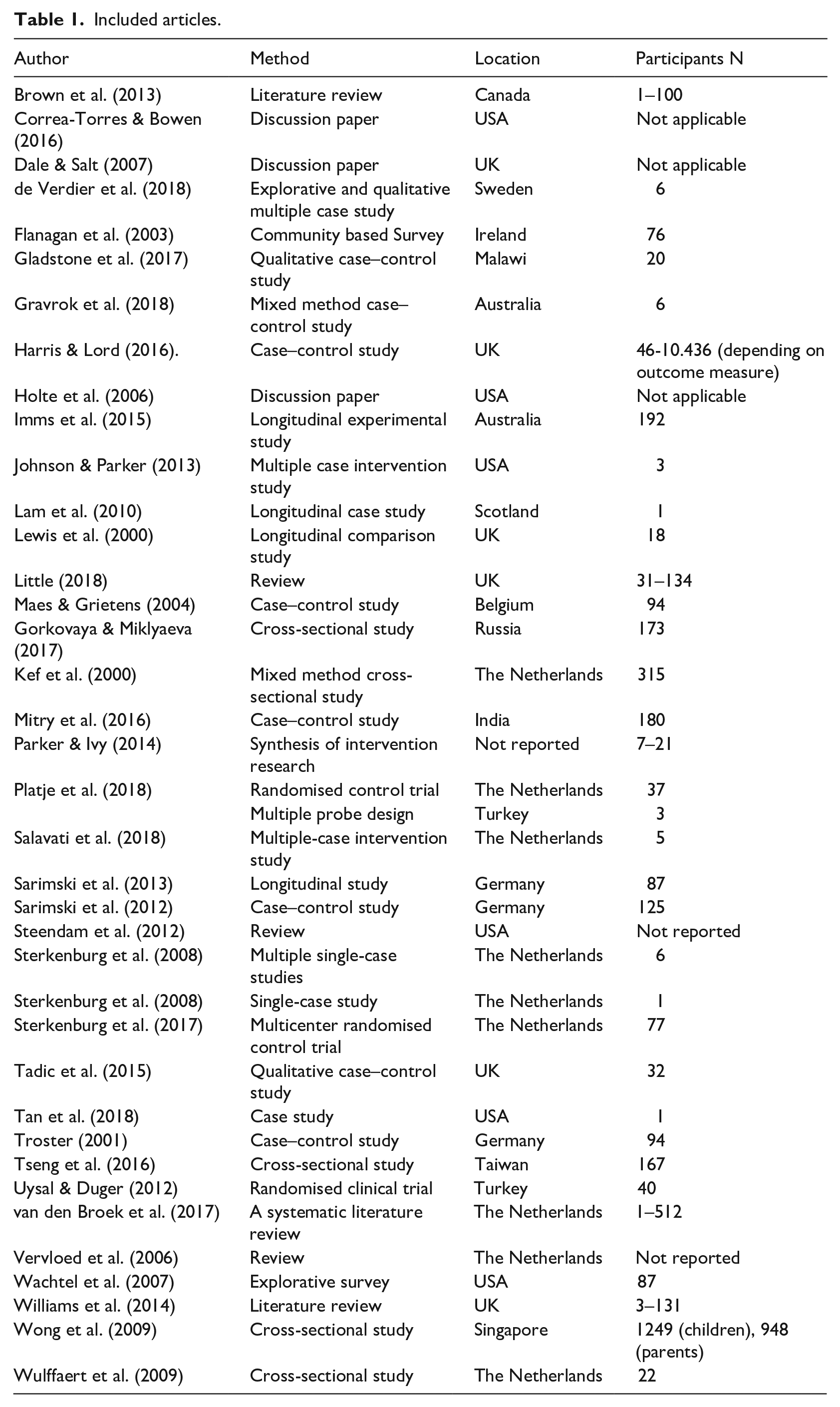
In total, 38 articles (see Table 1) were included and imported into the VOSviewer programme, which uses an automated term identification technique to choose terms from the titles and abstracts of the chosen articles (van Eck & Waltman, 2011). Normally, the programme chooses by default terms with fewer than 10 occurrences; however, because the result of the literature search was low and we wanted a broad overview, the number of minimal occurrences of terms was decreased to 3. The programme calculates by default a relevance score for selecting the 60% most relevant terms, which resulted in 68 items. To gain a narrative view of terms, we focused on including terms that were specific and comprehensive. Thus, as has been done in previous research, the following 12 general descriptive terms were manually deleted: introduction, implication, number, outcome, field, area, sample, purpose, limitation, questionnaire, total, and aim, leaving 54 terms to be included in the map.
Included articles.
Results
The items (terms) in the map had to occur at least three times and be calculated as relevant by the programme to be shown in the map. To create the bibliometric map, VOSviewer uses a smart local moving algorithm to select terms and divide them into separate clusters, indicated by a different colour (van Eck & Waltman, 2011). The programme executes this in two steps: The first one is to identify verbs, nouns and adjectives with the Apache OpenNLP toolkit (n.d.) (http://incubator.apache.org/opennlp/). Noun phrases (terms) are then identified and plural ones are converted into singular ones. The second step is to select the most relevant terms by determining the distribution of co-occurrences over all terms which is then compared with the overall distribution of co-occurrences. A larger difference between two distributions represents a higher relevance of a term. Terms are then divided into different coloured clusters. Each cluster represents terms that are related to each other, according to the calculation that the less distance between two terms the stronger is their relatedness, based on co-occurrences of the terms in the articles (van Eck & Waltman, 2011, 2018). Figure 1 presents the most occurred terms from the selected literature.
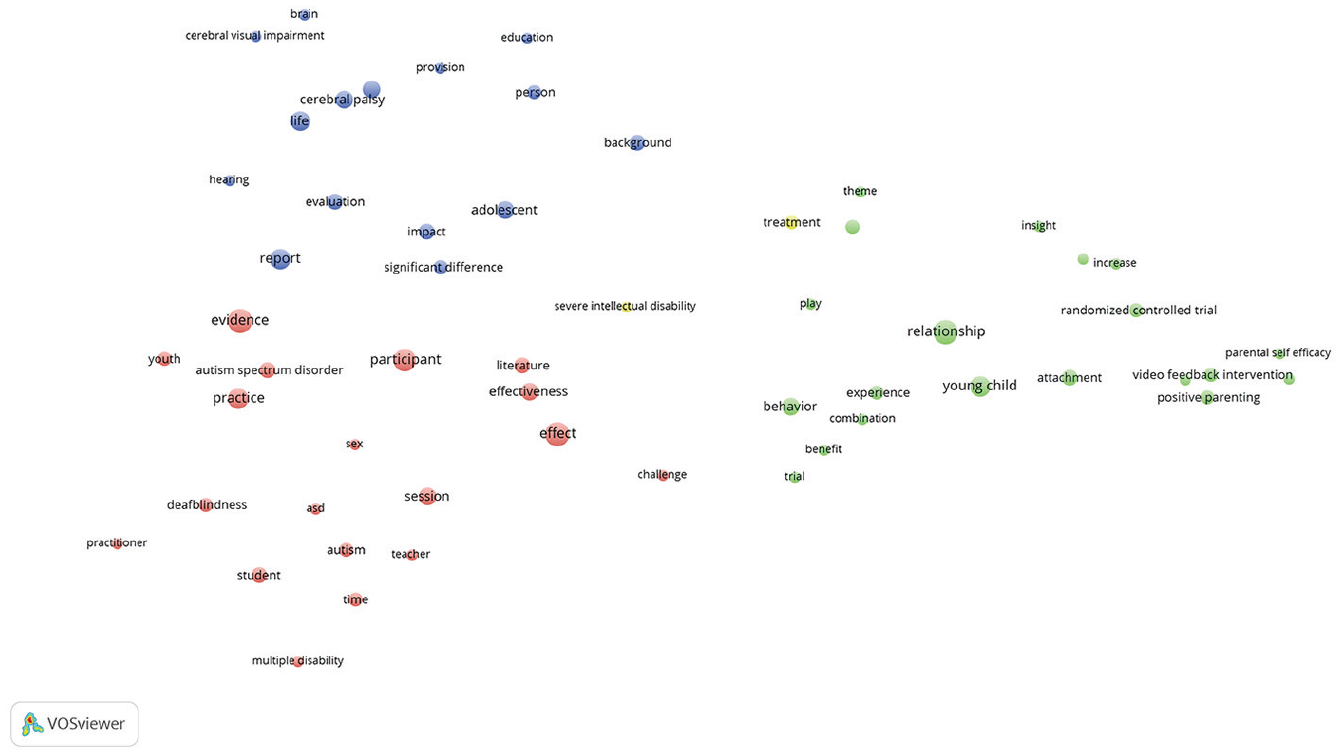
Bibliometric map of the most commonly mentioned subject and methodological terms in the included articles.
Subject terms
The green cluster focuses on relationship terms such as parental variables, attachment, understanding, care, and insight. The red cluster includes the groups student and teacher, and autism spectrum disorder (ASD), deaf-blindness, and multiple disability. The blue cluster focuses on CP, cerebral visual impairment (CVI), adolescents, hearing, and education. The yellow cluster only has the subject term severe intellectual impairment. To avoid overlapping of terms, the programme does not write out all terms in the map (see Figure 1). In Tables 2 and 3, we describe the categories of the subject terms and the methodology used.
The most commonly occurred subject terms concerning children with a visual impairment and psychological well-being.
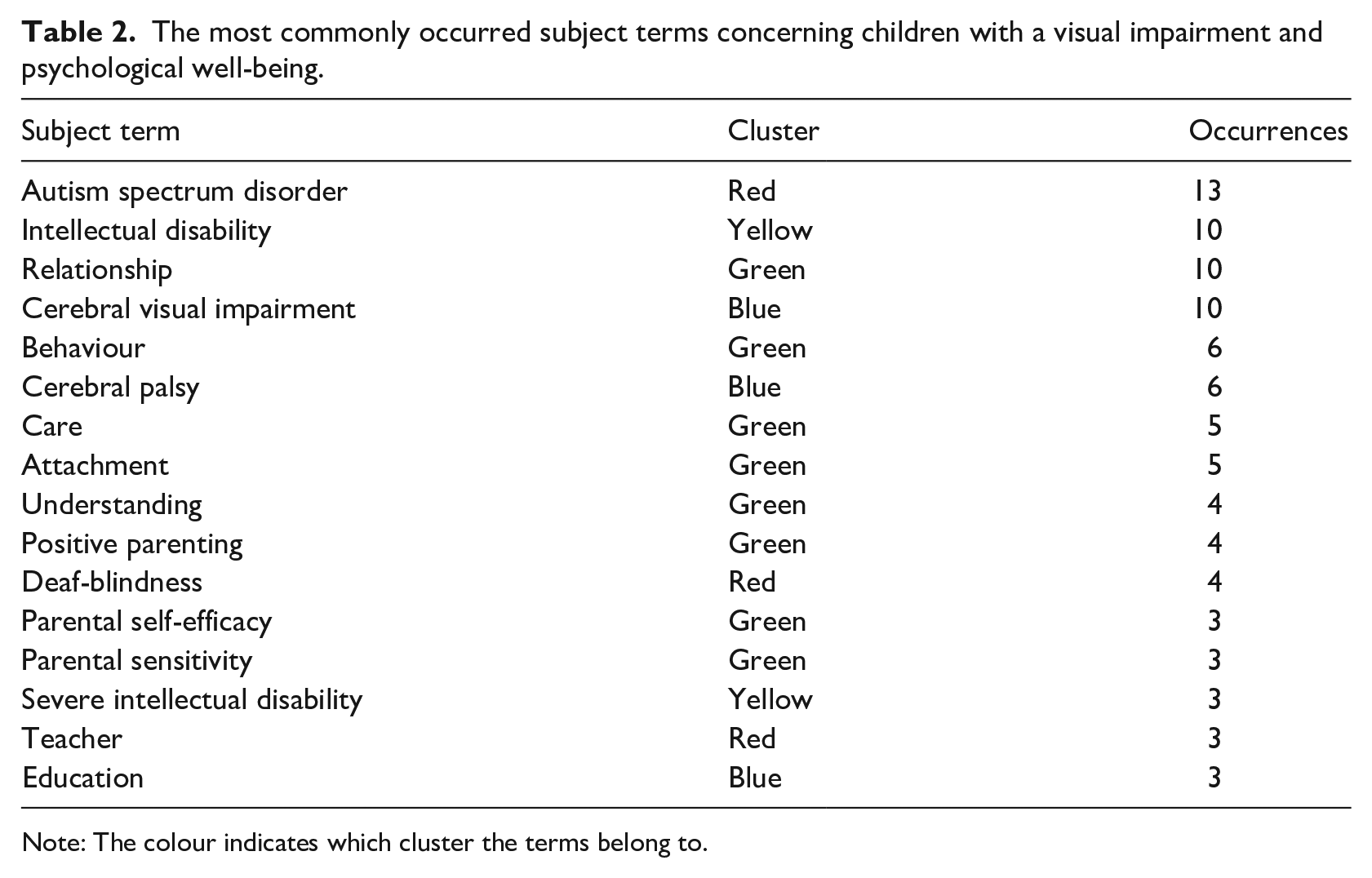
Note: The colour indicates which cluster the terms belong to.
The most commonly occurred methodological terms concerning children with a visual impairment and psychological well-being.
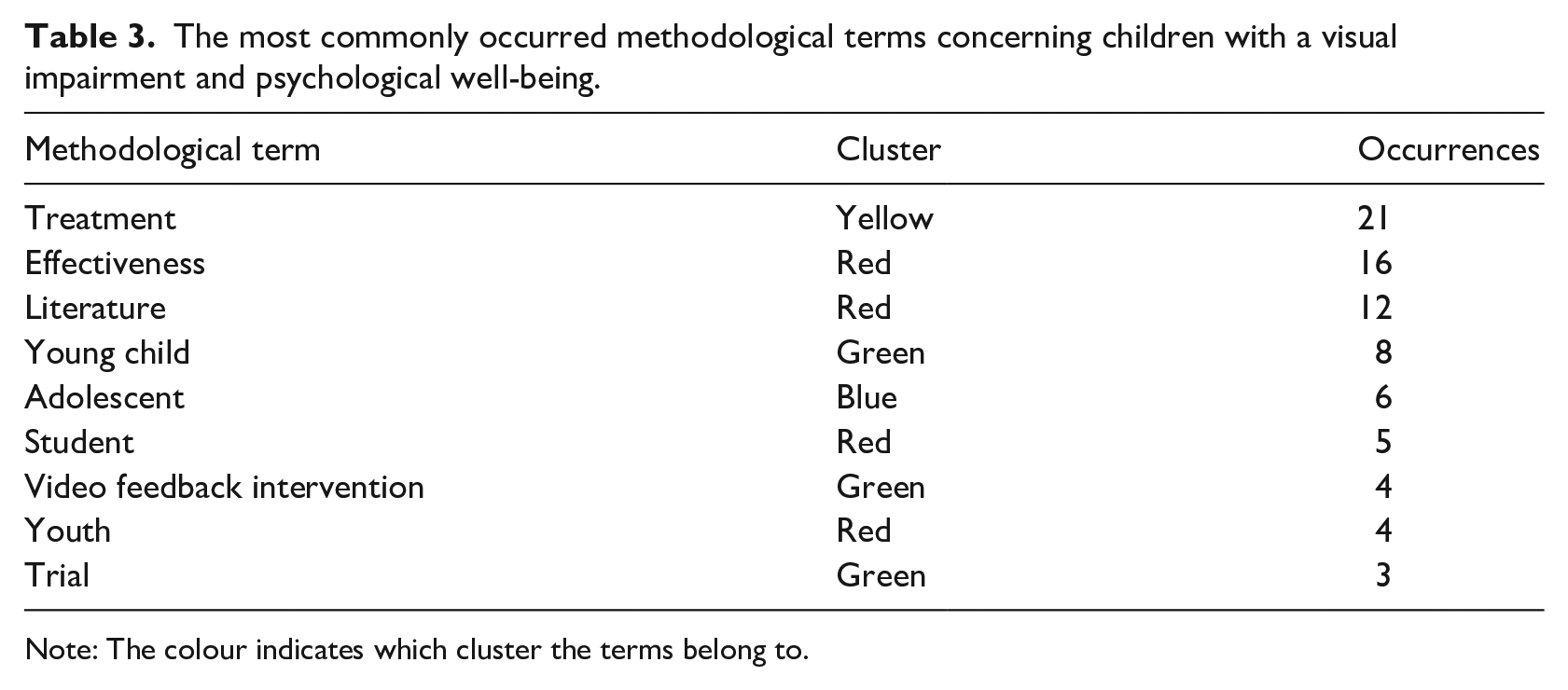
Note: The colour indicates which cluster the terms belong to.
Methodological terms
The green cluster includes the methodological terms randomised control trial and video feedback interventions and the yellow cluster includes the term treatment. The red cluster focuses on literature, effect, and effectiveness. The diverse age group of participants was present throughout the different coloured clusters; the green one focused on trials of video feedback interventions among young children, the red clusters focused on older children, and the blue one focused on adolescents.
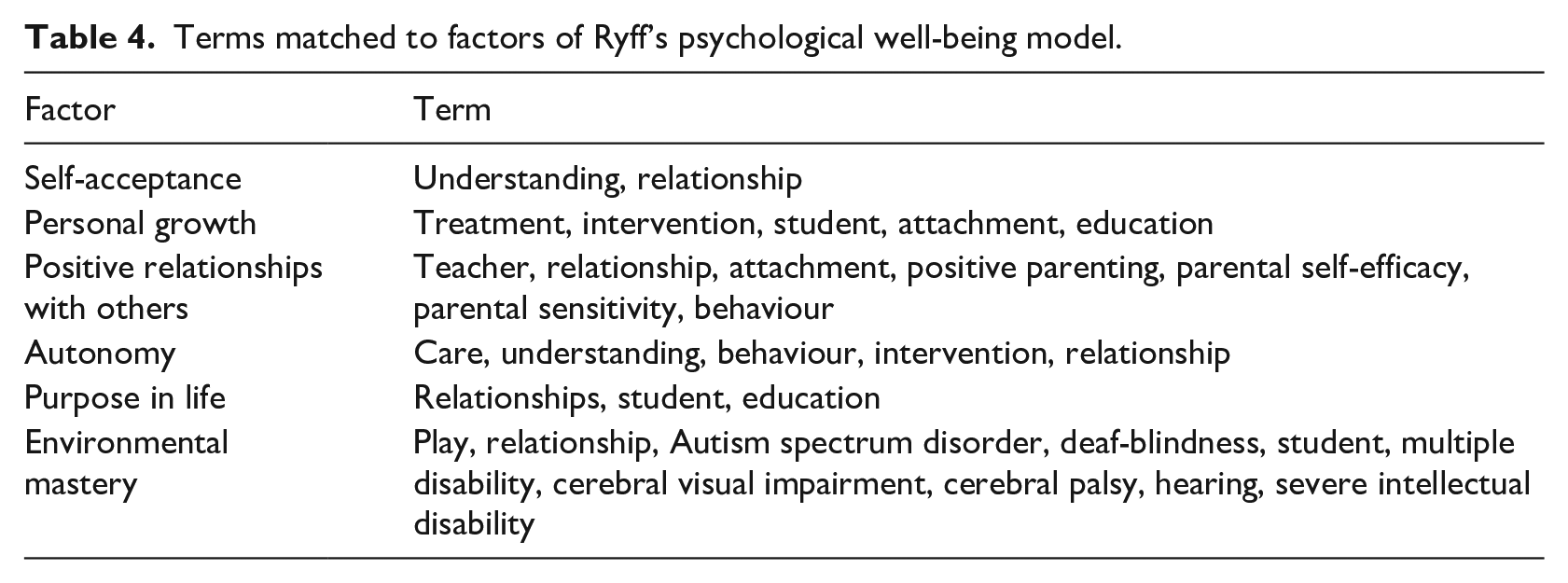
Accepted terms were matched to the factors of Ryff’s model, some terms matched two or more factors in the sense that they belonged to them or can influence a factor, for example, understanding from others influences self-acceptance and physical or developmental deviations (e.g., autism, deaf-blindness) can influence ones environmental mastery. Table 4 shows which terms match each factor.
Terms matched to factors of Ryff’s psychological well-being model.
Discussion
The purpose of this study was to provide a broad overview of subject and methodological terms focusing on psychological well-being studies among children with a visual impairment. Overall, subject terms included ASD, ID, behaviour, deaf-blindness, and relation variables such as attachment, understanding, care, and positive parenting. Methodological terms included treatments, effectiveness, and literature and terms to describe the age of participants in the studies.
The bibliometric map indicated that a common subject term was behaviour, which in most articles was referred to as challenging, problematic, or self-injurious. These findings corresponded to the literature (Maes & Grietens, 2004; Sauer et al., 2018), which has shown that problematic behaviour is common among children with a visual impairment. As expected, studies have focused on ways to contribute to less challenging and problematic behaviour, to contribute to the well-being of persons with a visual impairment.
Another common subject term found in the bibliometric map was the attachment between children and their parents or therapists, and parental- and relationship-related variables such as positive parenting, parental self-efficacy, and parental sensitivity. Again, as expected, studies focused on this subject because the parent–child relationship is considered to be an important factor in the development of children with a visual impairment (van den Broek et al., 2017). Subject terms related to additional impairments or causality of the visual impairment included brain disorders such as CVI and CP, which was not surprising as these are the major causes of visual impairment among children and are also often associated with ID and ASD (Philip & Dutton, 2014), which were likewise the most frequently mentioned comorbidity terms in the included studies. The most commonly mentioned methodological term was treatment where the effect was tested or reviewed through group trials, whereas four of the studies were video feedback intervention trials among young children.
Recently, Elsman and colleagues (2019) applied a different strategy on a partly similar research theme as in this current review. In their review of interventions and their effectiveness for children with visual impairments, the most common topics were self-image, self-concept, work motivation, mood disorders, and activities of daily living. We used a different strategy, resulting in the subject themes: developmental disorders, physical deviations related to the cause of visual impairments, and relationship variables (e.g., attachment, parenting, care), therefore adding new information on these topics. However, despite these differences in subject terms, our methodological terms mostly agreed with those in the review by Elsman et al. (2019).
Limitations and implications
This study had several limitations. In the literature search, we used specific search terms and exclusion and inclusion criteria that formed the basis of our results; thus, they should be interpreted with caution. Our results included fewer terms than previous bibliometric studies (Schuengel et al., 2019; Stopar & Bartol, 2019; Zyoud et al., 2018), as we used strict inclusion and exclusion criteria to guarantee that the included studies covered psychological well-being topics among children with a visual impairment and would not include articles that were irrelevant to our topic. In addition, less methodological terms were found than expected, possibly because in some articles, the methodological terms were not mentioned in the abstract or the same term was listed under different names, and hence these terms were not visible on the map. For example, many of the included articles were single-case studies, but that term was not included in the map. Another explanation may be that the VOSviewer programme evaluates certain terms as irrelevant (e.g., single case study, meta-analysis) and excludes them from the map. These issues should be addressed in future studies. We also used general search terms for well-being (e.g., quality of life) in the purpose of finding out what topics/terms related to psychological well-being have been studied in the past. Including more specific search terms (e.g., social inclusion) may have resulted in increased number of articles; however, that would not have matched the method we aimed to use according to previous bibliometric studies (van Eck & Waltman, 2011).
The terms missing in our bibliometric map could also be missing due to research on these terms not being published. In fact, one of the biggest problem of reviews and meta-analysis is the under presentation of unpublished studies (Atakpo & Vassar, 2016); thus, the possibility of publication bias limiting our results cannot be excluded.
Even though that the Ryff’s (2013) six-factor model on psychological well-being has been used widely in previous studies in various contexts among various samples and that arguments for the model to fit younger (⩽8) children can be made, there are to our knowledge no empirical studies on the model among younger children with visual impairments. Thus, in the future the model should be tested among younger children with special needs (Lippman et al., 2011; Pollard & Lee, 2003).
Moreover, we did not look specifically into subgroups within the population of children with visual impairments, which are not a homogeneous group. In fact, perhaps their most relevant heterogeneity in terms of research and intervention strategies lies within their different visual and intellectual profiles (Bathelt et al., 2019; Philip & Dutton, 2014). Thus, future bibliometric mapping studies should evaluate what terms are mostly studied within each subgroup in regard to visual and intellectual profiles. Because this review aimed to shed light on common terms within a specific body of literature, no quality assessment was conducted. Furthermore, it was impossible to use non-English articles or combine articles from many databases, as the VOSviewer programme does not support those functions. Thus, the minimal occurrence of a term was reduced to three, which may be considered an untraditional method. Regardless, the purpose of this article was to provide a broader view of research topics among visually impaired children, while focusing on the topic of psychological well-being.
This article also had several strengths. This was an explorative study that focused on the topic of psychological well-being among children with a visual impairment and provided a bibliometric map of these topics. In addition, no restrictions were set on the study design of the included studies; thus, we included various research designs including randomised controlled trials (RCTs), case studies, and single-case design studies, thereby compensating for the limitations of previous reviews.
While our review sheds light on commonly studied terms, the goal was also to provide a roadmap for future research. Based on our literature search, treatment was a commonly mentioned term. Yet only four RCTs and five single-case studies were found (conforming to previous studies; Elsman et al., 2019). Because these methods are efficient ways to estimate treatment effects (Deaton & Cartwright, 2018; Lobo et al., 2017), more single-case studies and RCTs need to be conducted. Furthermore, the RCTs in this review were restricted to parenting variables and children with a visual and an intellectual impairment; thus, future RCTs should focus on other variables and other comorbid conditions with visual impairments such as children with a visual impairment and depression or anxiety. However, to conduct more RCTs with sufficient power, international collaboration is needed.
Furthermore, based on our literature search, understanding and care were included only a few times, suggesting that research may be scarce since care and understanding of people with a visual impairment and additional conditions are often lacking in their relationship to other people (Sterkenburg et al., 2008). Also, attachment and parental relationship terms were apparent on the map, yet only a couple of studies were found on that topic, suggesting that more research is required, as children with visual impairments and their parents often have difficulties successfully establishing relationships (Sterkenburg et al., 2007; van den Broek et al., 2017).
The two most common comorbidity terms in our results were ID and ASD, in accordance with previous studies (Hoevenaars-van den Boom et al., 2009; de Vaan et al., 2016). Regarding this commonly occurring impairment and disorder, it has been observed that children with a visual impairment appear to share common behaviours with children with ASD, such as limited social communication and interaction and repetitive and restrictive movements (de Vaan et al., 2016). Thus, some researchers have suggested that these children may be wrongfully diagnosed with ASD (Hoevenaars-van den Boom et al., 2009). In contrast, it has been noted that visual impairment can be undetected among children with ASD or ID because of a diagnostic overshadowing where a physical deviation is concealed by a developmental deviation (Butchart et al., 2017).
Regardless of these two different perspectives, our results support previous discussions about the need for sufficient assessment tools to detect visual impairment in children with ASD and ID (de Vaan et al., 2016; Ely & Ostrosky, 2017). In addition, our results emphasise the importance of improving assessment tools for detecting ASD among visually impaired children (de Vaan et al., 2016; Matsuba, 2014). Sufficient assessment tools may result in the more frequent and earlier diagnosis of visual impairment among children with ID and ASD, which can benefit them through important early interventions, support strategies (Corsello, 2005; Ely & Ostrosky, 2017), and autism friendly optometry services (Chiri & Warfield, 2011).
Although some terms may not have been a part of our findings, perhaps due to the exclusion and inclusion criteria, they could be meaningful for our target group. Future research on the psychological well-being of persons with visual impairments should focus on rare disorders (Von et al., 2017) such as neuronal ceroid lipofuscinoses, which are a collection of lysosomal storage disorders that are the most common generative brain diseases in childhood that can cause visual impairment (Schulz et al., 2013). Furthermore, the term ‘sibling’ did not make it into the map since only one study was found on the role of siblings in the well-being of children with a visual impairment. These results introduce a possible topic for future studies in light of the important contribution siblings can have on the well-being of their visually impaired sibling(s) (Correa-Torres & Bowen, 2016). Terms related to assistive technology associated with psychological well-being were not present in the map based on our search. Yet, assistive technology has been successful in improving factors associated with well-being through parents or caregivers of people with disabilities (Frederiks et al., 2015, 2019).
However, there is a lack of child user-friendly technology to support and optimise development through play and communication, which presents lost opportunities in light of the cortical plasticity present in children (Gori et al., 2016). Thus, future studies should explore the possibilities for technology to contribute to the psychological well-being of children with a visual impairment. Other topics that were missed in our literature search but may be related to the psychological well-being among children with a visual impairment include peers and romantic relationships, but only one study on those topics were found. Since those are an important aspect of development among adolescents and are often experienced differently among adolescents with a visual impairment (Kef & Bos, 2006), further research is encouraged. Bullying (Lievense et al., 2019; Pinquart, 2017), stigma and discrimination (Green et al., 2005) should likewise gain more attention in future research since individuals with a disability are at risk of experiencing such adversities and being less able to cope with them (Brunes et al., 2018), and few studies on these topics were found in children with a visual impairment.
Conclusion
The purpose of this article was to provide a broad visual overview of topics being studied in relation to the psychological well-being of children with a visual impairment to inform future research on what subjects need further research attention. Since our results were based on a literature search with certain inclusion and exclusion criteria, the results should be interpreted with caution.
The bibliometric map includes 54 terms divided into four separate clusters. The most common subject terms were behaviour, relationships, attachment and parenting, cerebral visual impairment, cerebral palsy, ID, and autism spectrum disorder. The most common methodological terms that were used included literature, reviews, and only a few randomised control trials.
Thus, from our results, we conclude that more RCTs and single-case studies are needed, which will require international collaboration among researchers. Furthermore, future studies should demonstrate awareness of the different visual profiles of children with visual impairments, focusing on including children with rare disorders, studying relationships between children and their parents and siblings, and adapting assistive technology to the needs of children. Moreover, the frequent co-occurrence of the terms ASD and ID with visual impairment support previous discussions on the need for researchers to develop and improve assessment tools and support services that accommodate children with comorbid ASD, ID, and visual impairment. Finally, other issues that need further research attention include the experiences of children with a visual impairment of romantic relationships, bullying, stigma, and discrimination.
Footnotes
Acknowledgements
We thank Gloria Kempelmann for scoring the articles on the inclusion and exclusion criteria.
Data statement

Declaration of conflicting interests
The author(s) declared no potential conflicts of interest with respect to the research, authorship, and/or publication of this article.
Funding
The author(s) disclosed receipt of the following financial support for the research, authorship, and/or publication of this article: The research time of the first author was financially support by ZonMw Academische Werkplaatsen Verstandelijke Beperkingen, fund number 60-6410098101.