




Abstract
This study examines how 22 male parolees navigate the job search process using adaptive identity strategies. Anticipating stigma tied to their criminal records, they reconcile identity meanings and construct possible professional selves to manage employer bias and appear as viable candidates. Findings show that the visibility and perceived relevance of a criminal record require deliberate identity work. For parolees, seeking employment involves envisioning life after incarceration and managing impressions to navigate anticipated stigma.
Criminal history remains one of the most significant barriers to workforce reentry, particularly for individuals on parole. Parolees face at least a dual burden: the stigma of their criminal past and the restrictive conditions of parole, both of which limit their employment opportunities. This stigma typically relegates formerly incarcerated individuals to low-wage, unskilled, and precarious employment. Beyond restricting job access, the stigma of a criminal record also influences self-perception and identity, further complicating reintegration and the job-seeking process (Ali et al., 2017).
Prior research demonstrates a growing openness among employers to hire individuals with a criminal history, with recognition of their potential and strong work ethic (Society for Human Resource Management, 2012; Society for Human Resource Management and Charles Koch Institute, 2018, 2021). However, despite this expressed willingness, individuals with a criminal history continue to be largely excluded from organizational inclusion efforts and ultimately still face challenges and barriers when seeking employment (Blessett and Pryor, 2013; Lam and Harcourt, 2003). Formerly incarcerated individuals face barriers to employment that go beyond simply securing a job (Griffith et al., 2019). Given the importance of employment in successful reintegration, it is essential to understand how individuals with criminal records navigate the job search process, particularly the management of their stigmatized identities. Navigating the pervasive stigma of their past criminal activity can involve a complex negotiation of self-concept, as individuals must reconcile their past with their aspirations for future success.
In this study, we explore how formerly incarcerated individuals, particularly parolees, navigate identity management during the job search process. Through interviews with 22 male parolees who served at least two years in Canadian federal prisons, we investigate the evolution of their identities and their strategies in presenting themselves in the labor market.
The impact of stigmatized identity and self-concept on job search
Employers tend to view candidates with a criminal record unfavorably (Western, 2002, 2007; Western and Pettit, 2005, Western and Pettit, 2005), considering criminal history a negative credential that reflects ethical concerns or signals potential risk (Henle et al., 2005). This perception often leads to discrimination and social exclusion unless an individual can explicitly demonstrate reformation (Maruna et al., 2004; Pager, 2003). However, reform is not always visibly apparent, and a negativity bias exists, whereby a deviant label is more readily acquired than recognition of change (Skowronski and Carlston, 1989).
Holding a devalued identity, such as a criminal record, often results in prejudice and discrimination (Chaudoir and Fisher, 2010) negatively impacting behavior, employment prospects, and psychological well-being (Black et al., 2019). Within the employment context, a stigmatized identity can erode self-perception, lower self-worth, and negatively impact job-related outcomes. Individuals with a criminal history often encounter restricted access to stable employment and experience slower wage growth over time (Western, 2002). Many are relegated to precarious, low-wage, temporary jobs requiring minimal skills (Sheppard and Ricciardelli, 2020), increasing their vulnerability to workplace exploitation (Atkin and Armstrong, 2013).
Despite these barriers, many formerly incarcerated individuals demonstrate resilience in their employment pursuits (Palmer and Christian, 2019). In some cases, their motivation is reinforced by the conditional nature of their release, which often mandates active job seeking. As they work to rebuild their careers, navigating the relevance of past justice involvement necessitates a reorientation of identity and self-concept.
Identity work and job search
Identity work, shaped by external influences and internal self-conceptions, is critical in how individuals construct and present themselves in social spaces, including during job searches and career development (Kreiner et al., 2006). For parolees, occupational aspirations are often influenced by prior work experience, personal interests, and perceptions of which employers might be willing to hire them. However, the stigma of a criminal record frequently overshadows their qualifications, limiting opportunities (Hlavka et al., 2015).
Criminal justice involvement often misaligns individuals with the collective identity of most organizations, creating substantial barriers to employment. While parolees may struggle to reconcile their desired professional roles with the stigma of their past, strong credentials and demonstrable skills can help mitigate employer biases (Denver and DeWitt, 2022; DeWitt and Denver, 2020). As parolees navigate identity management in their job search, self-perception, self-presentation, and decision-making become critical factors shaping their employment experiences and long-term career trajectories. Examining how they engage with these aspects provides valuable insights into the barriers they face and the strategies they develop to secure meaningful employment.
Context
In Canada, federal incarceration includes any person sentenced to two or more years in prison, while remanded prisoners awaiting trial and sentencing or sentenced to a maximum of two years less a day are held in provincial and territorial correctional services (Ricciardelli, 2014). As such, there are 14 distinct yet related correctional services in the country (Ricciardelli, 2019). Basically, people conditionally released from provincial and territorial prisons serve their time in the community on probation and those released from federal custody are placed on parole (Ricciardelli et al., 2024). Prior to being sentenced, people who are released due to bail eligibility and payment are supervised by the provincial and territorial systems on probation with a surety. People in prison are eligible for parole after serving one-third of their sentence (i.e. one of three years), yet they may not be paroled after applying. However, after serving two-thirds of their sentence (i.e. two of three years), people in federal custody are awarded statutory release, and serve the remainder of their sentence in the community under parole officer supervision (Ricciardelli et al., 2024). There are some exceptions. For instance, a person who serves time provincially or territorially, but who receives Long Term Statutory Release is transferred to the federal correctional system and serves such on parole with federal supervision. The current study includes only individuals released from federal custody on parole and thus under the supervision of Correctional Services Canada.
Methods
Sampling
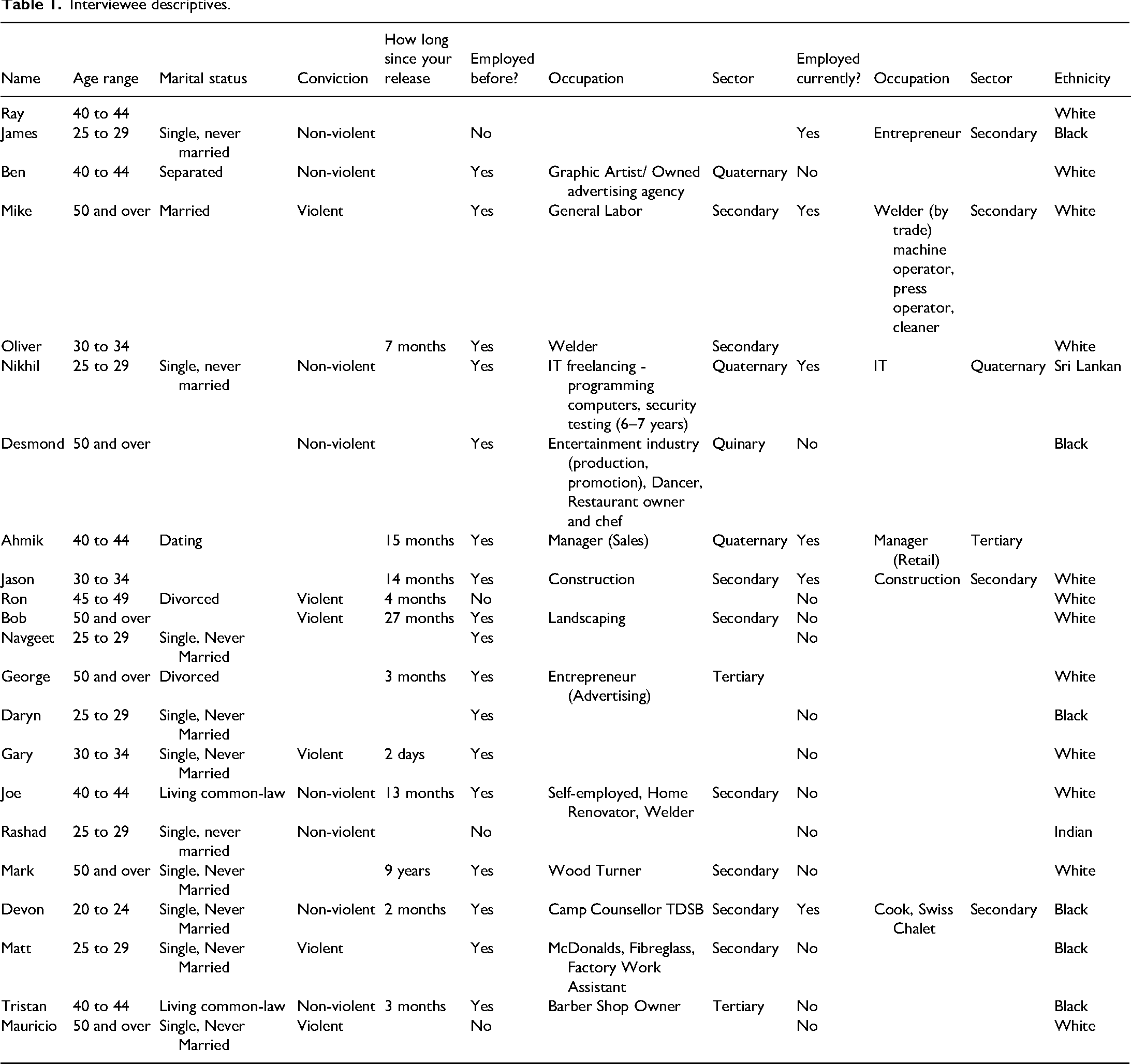
We conducted semi-structured interviews with men on parole (n = 22) in Canada. Participants were released from federal custody and were at various stages of re-entry, with most released into the community within the past two months to a year. The sample was purposive, drawn from a day reporting center in a metropolitan area. Their ages ranged from early 20s to over 50 (see Table 1). Forty percent of the participants identified as single/never married (n = 9), and 36% (n = 8) had children. Most participants were white (55%), while 27% were Black. Of the men interviewed, 14 individuals reported their criminal convictions, and of those, 40% had committed non-violent offenses (e.g. drug trafficking and computer hacking). In total, 14 men reported their employment history 1 : eight had worked in the secondary sector (57%), two in the tertiary sector (14%), and one in the quinary sector. At the time of the interview, post-release participants were (a) actively searching for employment, (b) having searched for employment in the past, and (c) intended to or would consider searching for employment in the future.
Interviewee descriptives.
Procedure
Interviews were conducted using a semi-structured interview guide, with the conversational flow guided by the participant's responses (Kvale and Brinkmann, 2009). The duration of each interview ranged from 30 to 60 min. All interviews were audio-recorded and transcribed verbatim. Transcripts were subsequently edited to remove speech fillers (e.g. “like,” “um,” and “ah”) and correct grammar as needed while retaining participants’ vernacular, slang, and profanity. To maintain participant confidentiality, pseudonyms were assigned, and any identifying information, such as prison names, personnel, and organizational details, was omitted.
The transcription and coding of interviews occurred concurrently, with themes being identified and refined through ongoing analysis. The interview process continued until theme saturation was reached (Marshall, 1996). In keeping with recognizing interviewees as “knowledge agents,” we deliberately suspended prior knowledge of the literature to focus on participants’ interpretations. This approach led to an emergent, inductive model deeply grounded in the participants’ lived experiences (Gioia et al., 2012).
Analytical framework
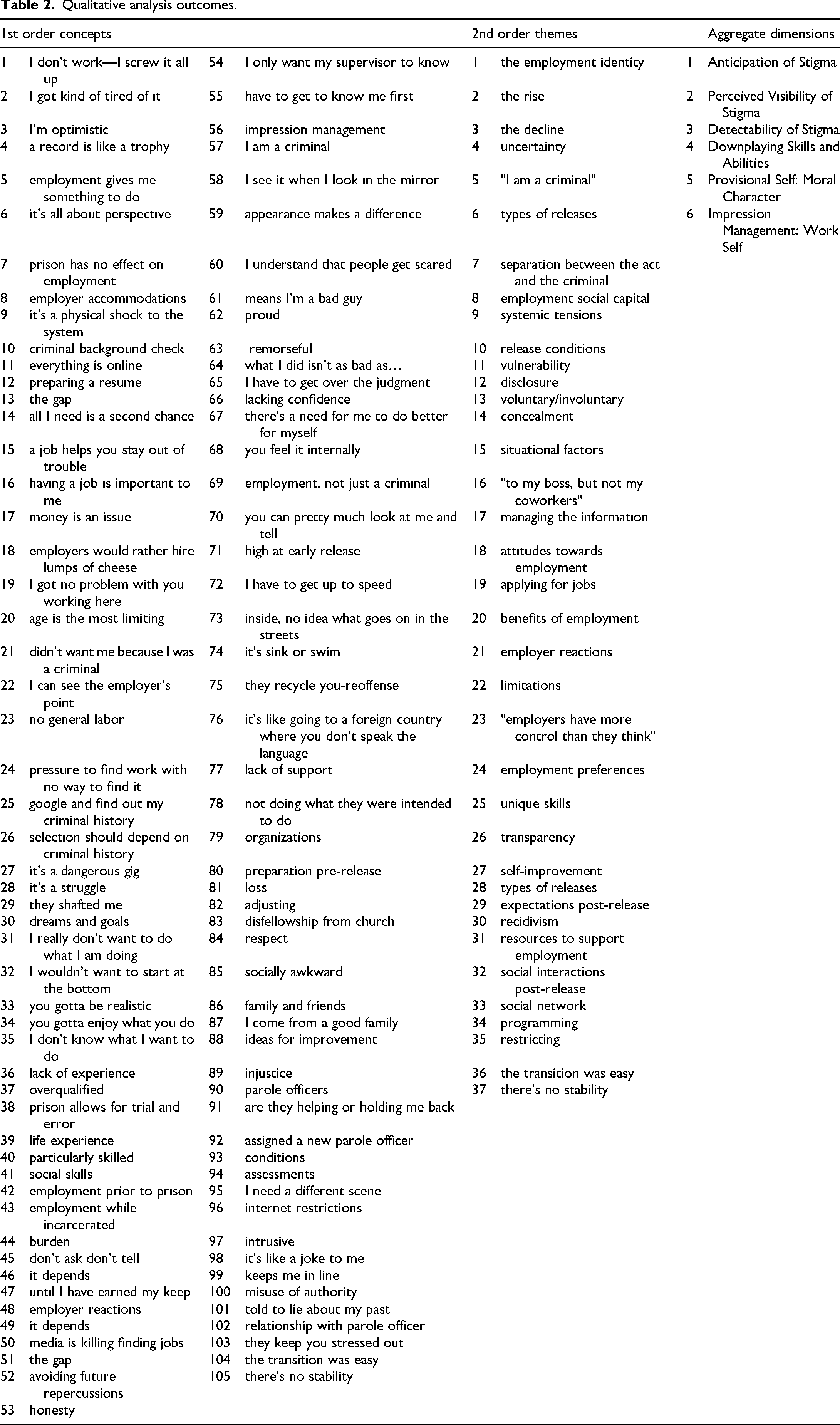
The analysis involved immersion in the data, organizing the data, and a posteriori categorization employing a systematic inductive approach (i.e. The Gioia Methodology; Gioia et al., 2012). This method allowed for a detailed and comprehensive exploration of the data's emerging patterns and structures. The authors coded and analyzed the interviews using qualitative data analysis software (QSR NVivo) to facilitate in-depth analysis, account comparison, and identification of key themes. The iterative nature of the analysis involved organizing the data into first-order concepts and second-order themes and categorizing it based on emergent data structures (see Table 2; Gioia et al., 2012). Each author independently analyzed and interpreted the data, focusing on identifying where the data converged or diverged from existing literature. This approach allowed for both the confirmation of previous knowledge and the development of new insights.
Qualitative analysis outcomes.
Results
Through conversations with parolees, we observed the dynamic interplay between self-perception, self-presentation, and decision-making in the context of post-release job searching. Critical aspects of identity work emerged, shaping key themes related to self-efficacy in employment-seeking. These themes illustrate how individuals navigate identity stigma and reconcile their self-concept throughout the job search process.
Navigating identity stigma
In reflecting on the social implications of having an incarceration history when seeking employment, many participants described background checks as a symbol of inaccessibility. Several reported choosing to self-opt out of job opportunities or risk being overlooked entirely. George, for example, discussed the dilemma posed by criminal history prompts on applications, explaining the difficult choice of whether to “lie in the box or […] don’t tick it.” He later noted, “You are caught both ways.”
The inquiries into criminal history on job applications represent a significant predicament, signaling negative connotations and feeling caught when submitting job applications. While individuals are often described as being caught for committing a crime, anticipating the permanence of this social stigma can be particularly taxing. Tristan reflected on this devaluation and sense of permanence, stating that even if someone is qualified for a job, many large companies will “run your name,” and then “your application gets [tossed] to the side.” From the perspective of many parolees, a box on the application, hearsay based on prior applicants, or even interview and selection procedures, all communicate an underlying reluctance to hire them.
Nathan, a sales professional with 25 years of experience, recounted an instance in which a prospective employer informed him that he required a criminal background check to secure the position and the cost of which would be deducted from his first paycheck. He perceived this deduction as a deterrent, and knowing of his record, he subsequently withdrew from the selection process, opting to pursue other employment opportunities.
At each stage of the recruitment and selection process, whether in the application, screening, or interview phases, parolees encounter discrediting circumstances contributing to their concerns of being found out due to their criminal history or the anticipation of rejection once an employer discovers it. These experiences highlight the embedded stigma surrounding criminal records, making it difficult for parolees to fully engage in the job market and overcome these barriers to employment.
Anticipation of stigma
Interviewees frequently referred to themselves as criminals, reflecting Hogg and Terry's (2000) assertion that, post-release, an individual's social identity is often closely tied to their prison history. The relational elements of social identity were evident as participants described themselves and fellow parolees as a collective us in contrast to those without a prison history, who were categorized as them or you guys. These accounts reflect the participants’ awareness of their formerly incarcerated identity in comparison to the identity of “non-deviant” citizens. This self-awareness highlights the stigma attached to incarceration history and the significant challenges it poses when seeking employment.
Employment was seen as a rare opportunity—one that, if attained, must not be squandered. Mike, who had been incarcerated for three years and had been employed since his release, spoke about managing his expectations in the job search process: Don’t get your expectations too high. You have to start at the bottom like everybody else… if by chance you get a good-paying job, you’re one of the lucky ones.
Seeking employment involves a deep commitment to overcoming the negativity associated with a stigmatized identity. The added pressure of this stigma can lead individuals to aspire to exceed expectations to succeed. As George expressed, “There's no room for failure.” Gary also highlighted the stakes involved: “A lot to risk… a lot to lose” if he couldn’t secure employment and successfully reintegrate post-release. He spoke to the overwhelming pressure to make a positive impression, work diligently, and persevere: “if people don’t accept me, if people don’t like the work that I do, it's sink or swim.”
For parolees, seeking employment is not only a consuming and demanding process, but the anticipation of stigma looms large, influencing their work expectations and shaping their understanding of the high stakes involved. These pressures are central to understanding the challenges parolees face in the job search and the realities of reintegration post-release.
Perceived visibility of stigma
At the heart of the job search and employment process, post-release, is how an individual's history of incarceration and criminal record shape the permanence and salience of their identity (Anazodo et al., 2019). Gary described his incarceration as a defining aspect of his self-concept, explaining, “[employers] can pretty much look at me and tell, this guy has probably been inside.” He also noted that he internalized this perception of being visibly marked by his past, saying, “I see it when I look in the mirror.” Such individualized perceptions of what time served looks like reflect the perceived visibility of a formerly incarcerated identity (see Moran, 2012). Managing these perceptions can place additional psychological strain on individuals, limiting their ability to feel authentic as they navigate the challenges of managing a stigmatized identity.
Beyond perceptions of visibility, some individuals may carry physical markers of their past imprisonment, such as tattoos, scars, or other marks resulting from carceral punishment (Moran, 2012; Shantz and Frigon, 2010). Joe, who had been released for 13 months, acknowledged that he didn’t “dress like a criminal,” noting that social expectations and stereotypes of a criminal appearance typically involve tattoos covering the body, sagging pants, and a general attitude of defiance. He described the stereotypical appearance as all covered in tattoos…scribbles all over your arms and your face and your neck…pants down around their ass, limping, sucking their teeth.
Joe pointed out that while individuals who portray this image might feel labeled by society, they are, in a sense, labeling themselves through their appearance.
Joe recognized how the prison experience becomes inscribed on the body, yet he also acknowledged the agency of former prisoners in deciding how they present these marks. For example, tattoos can be a form of self-expression and a way to inscribe one's experiences. Joe differentiated himself from others by selectively not identifying with the attributes commonly ascribed to individuals with a criminal history. His careful negotiation of identity, including his physical appearance and the ways he chooses to present himself, reflects the broader challenges faced by parolees as they navigate the intersection of stigma and employment seeking.
Detectability of stigma
Criminal history may become apparent to employers through formal employment practices, such as background checks, public platforms like social media or media outlets, and even indirect cues the individual provides, such as gaps in their resume (Anazodo et al., 2020). Several participants in this study voiced their concerns about the potential discoverability of their criminal histories. Information about an individual's involvement with the justice system may be publicly accessible online; however, such information is often inaccurate, lacks critical context, and undermines the individual's ability to disclose or explain their experience on their own terms. George shared his frustration with the public nature of his past, stating: All you have to do is Google my name, and the sad part is…I wasn’t charged with any of that […] There is nothing [about] what I was found guilty of. It's just a lot of dramatizations […] that make me look like […] a terrorist.
This statement reflects the anxiety many parolees feel about the permanence of their past actions and how these past experiences are exaggerated or misrepresented in the public domain. Ben highlights the difficulty in managing and controlling access to this information, reflecting: You can Google my name and see where I was charged…20 years ago…it will be on the internet forever.’ He added, ‘If I don’t disclose at the time of hiring … if one of the co-workers googles my name, what kind of position am I in?
This concern reflects the lingering fear that external sources of information could be detrimental to the job-seeking process, especially if personal history is uncovered unexpectedly. Ahmik, who had found stable employment, also articulated similar worries, saying: I am afraid. I am concerned and trying to find a way to get my name off the Internet.
These personal accounts reveal the psychological toll that the potential discovery of a criminal history can have on individuals. The fear of stigma, compounded by the ease with which such information can be accessed through online searches or background checks, creates a sense of vulnerability. This is consistent with Quinn and Chaudoir's (2009) assertion that individuals with stigmatizing characteristics are often socially devalued, leading to heightened psychological distress. For individuals with criminal histories, their invisible stigma can become a source of constant anxiety, mainly when mediated by accessible and often irreversible platforms, such as online databases or background check systems.
The participants in this study suggest that the mere potential for their criminal history to be discovered—whether during hiring, via a potential co-worker's search, or through public records—intensifies the psychological strain of managing their stigmatized identity. These intermediary mechanisms, which enable others to quickly uncover sensitive information, exacerbate feelings of distress and contribute to a broader sense of powerlessness in managing the visibility of their past.
Aligning self-concept
A key aspect of evaluating identity work is understanding how it aligns with an individual's self-concept. Ideally, even though there may be a distinction between work identity and personal identity, work identity should still reflect how individuals envision themselves personally and professionally. This alignment can be assessed by considering how individuals understand and recognize their knowledge, skills, abilities, and talents and whether they see these qualities reflected in the available employment opportunities they pursue. In an ideal scenario, employment should serve as a vehicle for individuals to express and utilize their full potential in ways that align with their self-perceptions.
For individuals re-entering the workforce after incarceration, the job search process often requires starting from the bottom or beginning anew in an entirely different industry or career path. This process of reinvention demands a specific type of identity work—one that involves adapting to new roles, recalibrating expectations, and aligning previously developed skills with new opportunities. Re-entry into the workforce may include navigating external challenges and negotiating internal ones, such as reconciling past experiences with future aspirations.
In such cases, the work of shaping an identity that aligns with one's authentic self becomes a significant challenge. The process of starting over in a new job or industry often entails redefining oneself professionally and overcoming any internalized feelings of devaluation tied to one's criminal history. As parolees face these obstacles, the work of negotiating and aligning their personal identities with the expectations and requirements of their new professional lives becomes a critical component of their reintegration process.
Downplaying skills and abilities
As parolees navigate the job search and reintegration process, they must contend with the challenge of matching their capabilities to available employment, often feeling forced to reinvent themselves in light of the restrictions imposed by their criminal history. For example, Ben's situation illustrates the dissonance between his prior work experience and the available job opportunities post-incarceration. Despite Ben's extensive background in advertising and graphic design, Ben faced employer reluctance when applying for labor-intensive positions. Although his prior experience was in a different field, he was open to pursuing work outside his previous career, recognizing how such roles might be more accessible given his criminal record and history of incarceration. However, his reluctance left him uncertain about how to present his qualifications while also being mindful to downplay his criminal background.
This negotiation between ideal job opportunities and the limitations of criminal history often means that individuals cannot focus solely on their desires or career goals. Jason's experience highlights this issue: although he had a genuine interest in office work and pursued an education in financial planning, his status as a parolee and the restrictions tied to his criminal background meant these opportunities were not viable. His frustration with the gap between his aspirations and this reality is a common sentiment among individuals re-entering the workforce post-incarceration.
Moreover, many parolees face the challenge of reconciling the dissonance between their prior qualifications and the available roles. As Oliver's experience demonstrates, individuals may feel compelled to downplay or omit significant portions of their work history to present themselves as more qualified for the available roles. By omitting his over-qualification in welding, Oliver strategically reframes his resume to align with more attainable jobs, particularly ones with fewer barriers to entry for former prisoners. In doing so, he minimizes the risk of employers seeing him as overqualified or someone who might not be committed to the role. This tension between portraying one's actual qualifications and presenting a more marketable version of oneself underscores the complexity of identity management during the job search process.
The paradox of dissonance between self-presentation and authentic self-expression not only limits their job prospects but also has implications for their mental health and long-term adjustment. By being forced to downplay their skills and experience, parolees may face prolonged struggles with self-esteem, identity conflict, and distress, making reintegration even more difficult.
The reintegration process for parolees involves managing the complexities of identity, stigma, and self-authenticity. These factors shape how parolees perceive themselves in the job market and how they present themselves to potential employers while influencing their mental and emotional well-being throughout the process.
Moral character
The pursuit of employment for formerly incarcerated individuals often involves navigating a landscape of uncertainty, especially when their criminal history is an integral part of how they perceive themselves and how others perceive them. For some, like Joe, reconciling their self-concept involves distancing themselves from their past actions and emphasizing the moral aspects of their identity. Joe reflects on his life positively, acknowledging his mistakes but also highlighting that he did not hurt people and has a positive moral standing despite his past. This sense of moral clarity becomes essential to managing the stigma tied to a criminal history and can be instrumental in negotiating their identity in the job market.
This process of self-reconciliation, however, is often entangled with the concept of identity intrusion (Kreiner et al., 2006), where the stigmatized criminal label imposes on their identity, often hindering their ability to move forward. In response, individuals may attempt to differentiate between their self and the criminal actions they were involved in. This can be seen in how Mike and Ron frame their criminal history in more positive, less threatening terms to protect their self-concept. For instance, Mike emphasizes that while he has a criminal record, he is not a thief, stressing his non-violent nature. Similarly, Ron recounts his history of bank robberies but reassures others that his crimes were non-violent and involved no weapons or threats. By qualifying the nature of their offenses, they effectively separate their identity from the violent or threatening aspects often associated with the criminal label.
Morality can become a key tool for managing identity (Hannah et al., 2020; Huhtala et al., 2021) and may enable individuals to distance themselves from the negative connotations of their criminal past. This process of moral distinction serves not only as a means of self-preservation but also as a method of establishing trust and gaining the confidence of others, particularly employers. By framing their criminal past as part of a broader narrative that includes moral and non-violent elements, these individuals attempt to overcome the stigma associated with their incarceration.
The ability to disassociate from acts that signal a higher threat potential, such as violence or theft, is especially significant for those seeking employment. In a job market that often views criminal history as a liability, emphasizing a non-violent and morally grounded self-concept can help individuals navigate the challenges of securing employment. This distinction between personal identity and criminal label also facilitates the development of career pathways that may have otherwise been closed off due to the self and social stigma associated with criminal history (Pager, 2008; Paternoster and Bushway, 2009).
Ultimately, for individuals like Joe, Mike, and Ron, redefining their identity and separating their moral self from their criminal past is not just an exercise in self-conceptualization but a strategic approach to job searching and reintegration. By positioning themselves as ethical and trustworthy, they attempt to counterbalance the negative impacts of their criminal history and improve their chances of gaining employment and moving forward in their lives.
Work self-identity
For many, employment was not just a means to financial stability but a crucial element in reconciling their identity post-release. The prospect of meaningful work allowed them to reclaim a sense of self and dignity, something that the stigma of incarceration had often stripped away. For these individuals, work was symbolic of their potential for reformation, their desire to rebuild their lives, and a means to separate themselves from the label of parolee or criminal.
As Harding (2003) noted, employment can symbolize morality and the possibility of transformation. This view was reflected in how participants like Tristan and Jack spoke about the positive impacts of work on their self-concept. Tristan described work as a confidence-building force, something that bolstered not only his skills but also his personality and charisma. Similarly, Jack expressed how employment brought him personal gratification, framing work as a way to feel good about himself and his contributions. This sense of accomplishment went beyond financial compensation and was tied to a deeper emotional and psychological benefit (e.g. feeling optimistic about one's efforts and the problems they solve).
For Gary, employment represented an opportunity to reshape his identity. He expressed frustration with the label of convict recognizing that it did not align with how he saw himself or how he wanted to be seen by others. Employment was a way for him to embody a new identity—one of an entrepreneur, cook, or waiter—rather than being defined by his criminal past. This shift in focus allowed Gary to see himself in a new light and signaled his success in reintegrating into society. In fact, for Joe, employment symbolized an opportunity to reinforce a new self-concept that was no longer connected to his criminal past. He spoke about “soul searching” during his time in prison and how he understood and appreciated the person he had become. By separating his past actions from his present self, Joe demonstrated how employment could be essential in distancing him from his former identity as a criminal.
The prospect of employment provided more than just economic opportunity—it was a vehicle for personal reinvention, a chance to move away from a past defined by incarceration and toward a future rooted in accomplishment, growth, and a restored sense of self. Meaningful work was seen as a way to support themselves financially and as a crucial aspect of their reintegration journey. It allowed them to redefine their social identity and reclaim their sense of self as someone more than their past actions. This process of reinvention was not just about finding employment; it was about finding a path forward that allowed them to build a new narrative of who they could be post-incarceration—one that was not defined by stigma but by potential and purpose.
Discussion
In the current study, we explored the process of identity formation among men on parole. We examine how they navigate the challenges of securing employment post-incarceration, particularly concerning the stigma associated with their criminal histories. Through an analysis of pre- and post-incarceration experiences, this research investigates how individuals with criminal records negotiate their self-concept, manage societal stigma, and work toward reintegration and employment stability. By centering the lived experiences of parolees, this study contributes to a deeper understanding of the structural and psychological barriers faced by stigmatized job seekers. Additionally, it highlights the critical role of identity work in the reintegration process, offering insights into the strategies parolees employ to reconstruct their professional and social identities.
One of the central findings of this study is that parolees face significant identity demands when seeking employment. Goffman (1963) highlighted that stigma influences an individual's self-perception and how others view them. For parolees, this means reconciling their past actions with how they wish to be seen in the future, particularly in employment.
The second major finding concerns identity tension, where parolees struggle with balancing their past and present selves. Many participants revealed how their past incarceration left an indelible mark on their self-concept, making it difficult to fully embody an authentic or positive self-image in the eyes of others. Some participants reported feeling their past spilled over into their present lives, making presenting themselves as credible or capable workers more difficult. For parolees in Canada and the United States, especially those in racially marginalized groups, the perceived visibility of their past criminal actions might have different implications. Black, Indigenous, and Latinx individuals are disproportionately impacted by systemic racism within the criminal justice system, leading to heightened exposure to criminalization and the social consequences. Their overrepresentation compounds pre-existing employment inequities, as these groups already face significantly lower employment rates in Canada and the United States (Cotter, 2022; Vélez and Peguero, 2023). A criminal record further deepens these disparities by creating additional barriers to meaningful employment.
The intersection of racialization, criminalization, and mental health adds layers of disadvantage (Anazodo et al., 2024). Racialized individuals with criminal records face uniquely persistent obstacles to employment (Nally et al., 2012), and those who also experience mental health challenges encounter further exclusion. In Canada, for example, Black individuals report substantially higher rates of psychological distress, including depression, at six times the national average (CMHA, 2023). These disparities, rooted in systemic injustice, further complicate the process of reintegration.
Stigma, discriminatory hiring practices, and the lack of appropriate workplace accommodations collectively reinforce labor market exclusion. Addressing these intersecting forms of marginalization is essential for building inclusive employment pathways. For probation services and allied practitioners, this underscores the need for systemic advocacy and culturally responsive, trauma-informed supports that reflect the racialized and psychological dimensions of post-incarceration employment barriers.
The third key finding involves how identity intrusion—the process by which a stigmatized social identity interferes with a person's personal identity—impacted the self-perception of parolees. As they navigated the job search process, many participants grappled with how their past convictions affected their current self-concept. The study found that parolees frequently tried to separate their past criminal actions from their current identity, trying to distance themselves from their past while simultaneously trying to maintain a sense of self-worth.
By highlighting the job search experiences of individuals seeking employment after incarceration, these findings underscore how stigmatized identities shape and complicate the job search process. While the stigma of incarceration is externally imposed, it deeply influences how individuals perceive their own self-worth and navigate their presentation to potential employers. These dynamics reveal the persistent barriers to reentry and the need for more inclusive and equitable hiring practices.
Limitations and future research directions
While this study offers valuable insights into parolees’ identity work and job-seeking experiences, several limitations warrant further exploration. Notably, the study provides only a cross-sectional perspective, capturing parolees’ experiences at a single point in time. This approach limits our understanding of the long-term effects of employment on the reintegration process. Future research should employ longitudinal methodologies to track parolees’ employment trajectories before and after securing work. Such an approach would illuminate how these experiences shape career development and identity over time, providing a more nuanced understanding of the reintegration process, including successes and setbacks in the labor market.
Our findings align with previous research by Ray et al. (2016), which highlights how parolees often adopt a form of defensive individualism when seeking employment post-incarceration, prioritizing self-reliance over external support. While this strategy may foster resilience, it may not always be the most effective approach to securing stable employment. Future research should examine the implications of defensive individualism more closely, particularly about the erosion of social networks during incarceration and its subsequent impact on job-seeking. Understanding the role of social capital in reintegration efforts could inform policies and interventions that encourage parolees to leverage available support systems, thereby improving employment outcomes.
Another promising avenue for future research involves investigating the psychological costs associated with managing a stigmatized identity throughout the employment process. Comparing the experiences of formerly incarcerated individuals with those of other marginalized groups could provide a broader perspective on the psychological burdens of stigma in workplace settings. Such research could also inform policies to reduce these burdens, promote inclusivity, and foster psychological well-being among stigmatized job seekers. For instance, right to be forgotten policies introduced in Europe under the General Data Protection Regulation (2016) offer a potential model for mitigating the enduring consequences of criminal records. By enabling individuals to request the removal of specific data from public access after a defined period, policies of this nature could help alleviate the stigma parolees face in the job market, ultimately bolstering their confidence and agency in employment settings.
The findings of this study also carry significant implications for employers and organizations committed to supporting the workforce reintegration of parolees. Employment is an economic necessity and a crucial mechanism for identity reconstruction. Parolees must navigate the challenge of reconciling their criminal past with their aspirations for a positive future, and securing meaningful employment plays a pivotal role in this transformation. Employers can facilitate this process by creating structured opportunities for parolees to contextualize their criminal history in ways that do not lead to automatic disqualification from employment. Organizational leaders should develop fair and comprehensive hiring practices that evaluate candidates holistically, ensuring that past convictions do not overshadow their potential.
Reform-oriented employment strategies emphasizing growth, rehabilitation, and skill development can further contribute to parolees’ successful reintegration. Viewing employment as a vehicle for social reintegration rather than merely a labor resource allows for creating workplaces that foster dignity and mutual respect. Overall, a more comprehensive, research-informed approach to employment practices can support parolees’ successful reintegration, mitigating recidivism risks while strengthening individual and societal outcomes (Atherton and Buck, 2021). Future research should continue to explore these dimensions, providing empirical guidance on best practices for fostering employment opportunities that align with broader social reintegration goals.
Conclusion
This study underscores the complex interplay between identity work, stigma, and employment among male parolees following incarceration. It demonstrates how parolees actively engage in self-presentation and self-management strategies to navigate the enduring stigma of a criminal record while seeking employment and reconstructing their sense of self. Employment emerges as a vital pathway for identity transformation, enabling parolees to challenge the offender label and reimagine a future oriented toward personal growth and societal reintegration.
As public awareness grows around the structural barriers confronting formerly incarcerated individuals, this research offers critical insights for employers and policymakers. It highlights the importance of creating employment opportunities that facilitate identity reconstruction through meaningful work. By fostering inclusive and supportive workplace environments, employers can play a pivotal role in parolees’ reintegration journeys, supporting their transition into stable, fulfilling lives and contributing to broader social and economic well-being.
Footnotes

Ethical considerations
This study has been reviewed and received ethics clearance through the Research Ethics Boards at University of Windsor, York University, and Memorial University of Newfoundland.
Consent to participate
All participants were fully informed of the study’s purpose, procedures, and their rights prior to participation. Informed consent was obtained through a detailed information and consent form, which each participant reviewed and signed before taking part in the study.
Consent for publication
Informed consent for publication was provided by the participants through the information and consent form.
Author contributions
Funding
The authors received no financial support for the research, authorship, and/or publication of this article.
Declaration of conflicting interests
The authors declared no potential conflicts of interest with respect to the research, authorship, and/or publication of this article.
Data availability
The data that support the findings of this study are available from the corresponding author upon reasonable request.