



Abstract
There is limited understanding of psychological illness within the probation workforce. This study begins to address this by outlining the extent of psychological illness among probation staff in England and Wales. Utilising Freedom of Information data, we examined employees recorded as taking a period of absence due to psychological ill-health between 2015 and 2023. Findings demonstrate that the declared rate of absence for psychological ill health is higher in the probation service compared to other areas of the criminal justice system at comparable times, and significantly higher than non-criminal justice occupations. The article reveals concerning indications of the mental health challenges faced by probation employees.
Introduction
The Probation Service in England and Wales is part of His Majesty's Prison and Probation Service (HMPPS) and supervises individuals serving community sentences or released from prison into the community. Probation practitioners have a range of responsibilities, which include providing sentencing advice to the courts, facilitating rehabilitation programmes and Unpaid Work, delivering risk assessments, and managing sentence plans (HMPPS, 2022). Probation practitioners have to contend with changing political, social, and economic contexts whilst also dealing with pressures from management, government, and the media (Worrall and Mawby, 2013). There are a range of probation practitioner roles in the probation service; these include probation officers (POs), probation service officers (PSOs), programme facilitators, Unpaid Work supervisors, and Approved Premises residential workers, all of whom interact directly with those subject to probation service supervision. Senior POs (SPOs) also play a key role in supervising front-line probation practitioners.
To date, very little is understood about the wellbeing of the probation service workforce despite their work involving working directly with challenging behaviours which have the capacity to impact negatively on staff wellbeing (Jenkins et al., 1997). This is surprising given the important role that probation staff play in our society. The current article examines developments within other areas of the criminal justice system to understand the existing, albeit limited, wellbeing research. Research into the wellbeing of blue light services, particularly the police, has provided a useful framework for defining the stressors that can contribute to wellbeing issues. These stressors are categorised as organisational stressors and operational stressors (Violanti et al., 2017).
Organisational stressors are factors imposed by the organisation that contribute to the stress experienced by workers. These issues are common in most organisations and include shift patterns, management, workload, administration, and bureaucracy. The second category of stressors, known as operational stressors, relates to experiences directly associated with the employee's role. In the probation service, this may refer to the distress caused by managing probationers, exposure to traumatic material from probationers’ pasts, or altercations with probationers, for instance. Indeed, both types of stressors have been documented to have a significant negative impact on wellbeing with organisational stressors being accountable for the higher proportion of wellbeing problems in the police (Shane, 2010).
In this article, we borrow the distinction used in police literature and apply it to the Probation Service to understand the different stressors that may occur in probation work. We will firstly start with an examination of the organisational stressors. To do this, we must first understand the significant organisational changes made to probation services in England and Wales over the past two decades (Annison et al., 2008; Phillips et al., 2016; Worrall and Mawby, 2013). The changes in recent years have become more frequent and impactful on probation practitioners (Walker et al., 2019) and it is argued here that such changes are significant organisational stressors that will likely have a detrimental impact on the workforce. The formation of both the National Probation Service (NPS) in 2001 as set out in the Court Services Act 2000 and later the National Offender Management Service (NOMS) in 2004 (see Carter, 2003) resulted in probation practitioners at the time feeling alienated and demoralised as a result of constant changes, a focus on targets, and increased workload pressures (Farrow, 2004; Robinson and Burnett, 2007). In 2008, the Global Financial Crash resulted in reduced staffing levels quickly followed by further austerity measures imposed by the Coalition Government in 2010 (Walker et al., 2019). This was closely followed in 2014 by the most radical, speedy, and significant change to probation practitioners’ working environments and caseloads (Kirton and Guillaume, 2015; Phillips et al., 2016) with the implementation of the transforming rehabilitation (TR) programme (Ministry of Justice (MoJ), 2013). TR saw the division of probation services into a public sector NPS supervising higher risk cases and 21 privately owned Community Rehabilitation Companies (CRCs) supervising those assessed as low and medium risk of serious harm (HM Inspectorate of Probation (HMIP), 2017). Due to significant delivery failures resulting in the early termination of CRC contracts (MoJ, 2018), most probation services were reunified in June 2021 to form the new Probation Service which continues to implement and adapt to the new Target Operating Model (HMPPS, 2021). Additionally, the pandemic brought significant challenges with the introduction of the Exceptional Delivery Model which saw practitioners working from home, blurring the boundaries of probation work and home life (Phillips et al., 2021).
In December 2024, there were 5262 Full Time Equivalent (FTE) POs in post, 5316 FTE PSOs, and 1523 FTE SPOs supervising 238,646 people on probation (HMPPS, 2025). There were 13.2 Average Working Days Lost (AWDL) to sickness for probation service staff year ending December 2024 (HMPPS, 2025); substantially higher than the latest published figures showing the national average of 5.7 days per worker per year (Office for National Statistics, 2023). Mental ill health was the most common reason for sickness in all HMPPS accounting for 40.5% of working days lost; with mental ill health most prevalent for POs accounting for 58.5% of working days lost for this reason (HMPPS, 2025). Additionally, there are concerns with respect to the attrition rates of probation practitioners. Year ending December 2024, the leaving rate for POs, PSOs, and SPOs was 7.1%, 11%, and 4.6%, respectively (HMPPS, 2025). There was a shortfall of 1854 FTE POs in December 2024 with 1601 FTE undertaking the PO training and a commitment to recruiting a further 1000 trainee POs in the 2024/25 financial year (HMPPS, 2025). Organisational stressors are likely to be prevalent in such an under-resourced service which have the potential to negatively impact on practitioners’ wellbeing.
Organisational and operational stressors in probation practice
To date, much of the research into psychological illness has been conducted in America which has tended to focus on those working in institutional rather than community settings. However, the little research that has been undertaken exploring community probation practitioner's experiences has shown that poor wellbeing is related to both organisational factors and operational stressors from client contact. One aspect of poor wellbeing in the workplace is the concept of burnout defined by Maslach et al. (2001: 399) as, a response to chronic interpersonal stressors on the job characterised by overwhelming exhaustive, feelings of cynicism and detachment from the job, and a sense of ineffectiveness and a lack of accomplishment.
Further organisational factors such as court demands, lack of time to complete reports, management, and inadequate supervisory practices have been related to stress in probation practice (Norman and Ricciardelli, 2022; Simmons et al., 1997; Whitehead and Lindquist, 1985). Significantly higher levels of job stress, role overload, and role ambiguity were experienced by probation practitioners in comparison to residential staff workers (Jin et al., 2018). Role overload, restructuring, poor working relationships, lack of resources, role ambiguity, lack of training and supervision, and poor technology have been found to be more likely to be linked to physical and psychological effects than working with challenging individuals (O’Donnell and Stephens, 2001). Organisational factors then have generally been found to be more likely to be the main stressor in the probation practitioner role except for managing high-risk cases (White et al., 2005).
We now turn our attention to documenting the scarce literature on the operational stressors in probation. Engaging with people who have committed serious crimes and have experienced trauma has the potential to impact emotionally on probation practitioners; this may be both cumulative and unconscious (Wood and Brown, 2014). Working with individuals assessed as high risk has the capacity to be emotionally, and psychologically challenging, despite this also being the source of job satisfaction (Kirton and Guillaume, 2015; Petrillo, 2007). Literature has also documented that an increased caseload of people with mental illness results in a higher likelihood that probation practitioners will report depressive symptoms rooted in emotional exhaustion (Gayman et al., 2018). Additionally, emotional labour, that is managing emotions as part of the job, is an integral part of the probation practitioner role and has been found to be related to burnout in the form of emotional exhaustion and depersonalisation (Phillips et al., 2024).
To date, there are very few studies that have considered the impact of operational stressors in probation practice and their capacity to cause traumatic stress, whether this be primary or secondary. What is known is that significantly higher levels of traumatic stress have been measured in practitioners who have managed probationers who had sexually or violently reoffended, committed suicide, officers who had been assaulted or threatened, and had been in the role for some time (Lewis et al., 2013). Collating offence information and assessing criminal behaviour also has the potential to induce trauma (Lewis et al., 2013). Additionally, negative emotional impacts, such as lack of confidence, emotional overwhelm, and fear of risky behaviours, may be experienced by probation practitioners supervising high-risk individuals who meet the criteria for antisocial personality disorder (Lad and Walker, 2022). It is this high-risk work, alongside organisational pressures, which has tended to be the focus of studies in England and Wales.
Working with high-risk individuals can result in feelings of anxiety in managing cases with the potential to cause harm to others (Wood and Brown, 2014). POs in the NPS during TR were found to experience overload in the intensity and complexity of managing high-risk cases (Kirton and Guillaume, 2015). Working with a high volume of high-risk cases, comprising two-thirds assessed as high risk and half having committed sexual offences, has a ‘huge’ emotional impact on POs (HMIP, 2017: 27). POs described managing this type of caseload as ‘relentless’, ‘risky’, ‘urgent’, and ‘intensive’ (Phillips et al., 2016: 4). Conversely, POs noted that high-risk cases are often more stable compared to lower risk cases, who can be more chaotic with multiple needs (Phillips et al., 2016). However, POs generally described feeling stressed and anxious managing a high volume of high-risk cases (and an increased number of men who had committed sexual offences), feeling unable to work as effectively as they might otherwise do, and feeling unsupported with the pressure (Phillips et al., 2016). This work also has the potential to spill over from work to personal lives resulting in a more negative view of people and society overall (Westaby et al., 2016). This spill over was heightened during the pandemic when working from home was implemented as part of the exceptional delivery model; probation practitioners experienced greater challenges managing work–life balance, accessing peer support, and experiencing higher emotional demands of the job (Phillips et al., 2021). Indeed, despite the reunification of probation services in 2021, probation practitioners continue to experience negative repercussions (Millings et al., 2023; Robinson, 2023).
Different roles and demographics in the probation workforce
We now turn our attention to unpicking the pre-existing literature to understand what is known about the different roles and demographics in the Probation Service and whether any are associated with poorer wellbeing. The supervisor has been described as one of the main factors able to reduce stress induced by organisations (Brown, 1987). Conversely, professional supervision viewed as poor by officers has the potential to impact negatively on probation practice and job dissatisfaction (Simmons et al., 1997). Frequent, one-to-one, face-to-face supervision sessions that provide an exclusive space to reflect, seek reassurance, gain constructive feedback, and explore health and wellbeing are valued by probation practitioners (Coley, 2020). Due to some NPS POs experiencing detrimental impacts of working in the TR climate (Phillips et al., 2016; Westaby et al., 2016), additional pressure and expectations were placed on SPOs to manage these impacts appropriately. However, SPOs may not be sufficiently skilled to effectively facilitate the type of supervision that is required, or assist the work required to enable practitioner development (Knight and Modi, 2014). During TR, some POs viewed their experiences of supervision as inadequate (Phillips et al., 2016), which had the potential to impact on their ability to carry out their role effectively (Westaby et al., 2016).
SPOs play a vital role as middle managers ensuring the delivery of probation service aims through the implementation of management strategies and supervising POs, PSOs, and trainees (Westaby et al., 2023). Very little research has sought to understand the demands of the role despite SPOs supervising practitioners who experience various psychological stressors as detailed above, as well as having to manage their own emotional wellbeing (Westaby et al., 2023). They also have to contend with managing staff adapting to significant organisational changes, such as TR, reunification, and the pandemic, as well as adjusting to those changes themselves (Carr, 2021). The SPO role has evolved overtime to not only provide staff supervision, providing support with the management of cases, but also to incorporating support and development alongside risk management and performance management (Westaby et al., 2023). SEEDS2 (Skills for Effective Development and Supervision), a refreshed version of the original SEEDS framework lost in the TR landscape, now requires SPOs to use reflective supervision and observations of practice to support the development of staff wellbeing and practice (Phillips et al., 2021; Westaby et al., 2023). Indeed, the emotional demands of frontline probation practitioner roles are also experienced by SPOs and have the same potential to be detrimental to their wellbeing (Westaby et al., 2023, 2025).
With regards to individual characteristics, few studies have focussed on how individual demographics may relate to psychological illness whilst working as a probation practitioner. Age, gender, and length of time in the role have been found to be significant factors linked to stress, burnout, and job satisfaction (Simmons et al., 1997). Older officers are more likely to report job satisfaction and less job-related stress, and women are more likely to report higher levels of job stress than their male colleagues (Simmons et al., 1997). Less experienced officers reported more stress than their more experienced counterparts, whereas more experienced officers reported more emotional exhaustion (Whitehead and Lindquist, 1985). Higher levels of traumatic stress and burnout have been found in officers between 9 and 12 years in practice (Lewis et al., 2013). Physical stress has also been found to be more prevalent in women as the number of years in the role increased (Slate et al., 2003). Personality traits, such as low ego strength, guilt proneness and anxiety, were found to have a greater effect on younger officers, which combined with their experiences of role conflict and emotional exhaustion caused them to work harder (Holgate and Clegg, 1991). In older officers, organisational factors alone were the primary factor for burnout (Holgate and Clegg, 1991). Working with high-risk cases has resulted in women POs experiencing an elevated sense of their own vulnerabilities, a ‘heightened perspective of risk’ and ‘contamination’ which ‘spilled over into their personal lives’ through continuous exposure to distressing information and high-risk abusive behaviours (Petrillo, 2007: 402). More recently in England and Wales, women have been found to experience higher levels of burnout in the form of emotional exhaustion, and older officers were found to experience lower levels of burnout overall (Phillips et al., 2024).
The present review clearly documents the complex role probation practitioners undertake, alongside the drastic changes imposed upon the service through restructuring. Despite their vulnerability to workplace stress and exposure to trauma – whether secondary or firsthand – there is a significant need for research into the wellbeing of those working on probation in England and Wales. Currently, this is not the case; there are very few studies that provide a detailed account of the mental health of the probation service in England and Wales. This is concerning when compared to other roles in the criminal justice system, where wellbeing research is more prevalent. For example, the research landscape for the police is so saturated that we can understand which specific aspects cause wellbeing issues, whether these be specific crimes, such as investigating homicide (Cartwright and Roach, 2020), or organisational stressors, such as shift work (Violanti et al., 2017). It is argued here that research in the field of probation is urgently needed. After all, considering the individuals probation employees may be exposed to, it is not difficult to imagine the operational stressors that may be prevalent from working with such complex individuals. This article seeks to pave the way to obtain the first understanding of wellbeing in the Probation Service at a macro level through sickness absence data.
This paper uses data obtained via the Freedom of Information Act (FOI) to explore the number of employees recorded as taking a period of absence because of psychological ill health in the Probation Service workforce. We also examine the extent to which this has changed in the last decade, and how this relates to demographic factors (age and gender), location of the role, and whether psychological illness and stress are more prevalent in particular roles. The findings in this article relate to the context of England and Wales since 2015 (we requested data from 2008 but were informed that this information was not held) and specifically on people working in the Probation Service. 1 This is not to suggest that those working in other HMPPS settings, such as prison, do not also experience psychological illness, but the context and setting are different, and we suggest each setting deserves its own focus.
Method
The authors of this research requested probation absence data via a FOI request to the Ministry of Justice (MoJ) in December 2024. FOI requests are increasingly becoming a popular research methodology for studying the criminal justice system (Bows and Westmarland, 2017; Cartwright and Roach, 2020). The Freedom of Information Act was brought into the UK statute in 2005, to provide the public with access to data held by public agencies (Bows and Westmarland, 2017; Cartwright and Roach, 2020). That said, there are several restrictions to accessing such data. The first being that the data must not identify specific individuals (Cartwright and Roach, 2020). Secondly, the request must not take more than 18 hours to be compiled by the organisation (Cartwright and Roach, 2020). The research was approved by University of Huddersfield's School of Human and Health Sciences Research Ethics and Integrity Committee.
The present study's methodology was designed based upon an existing study into psychological sickness data in policing, which utilised the FOI method (Cartwright and Roach, 2020). The wording of the request sent to the MoJ was the same as that utilised in previous research but made relevant to the Probation Service. The request was as follows:
The annual number of staff who have taken a period of absence due to psychological illness or stress from 2008 to 2024. Please provide the data for each year individually (e.g. in 2008 there were x number of staff on sick leave due to psychological illness or stress). Please break this down to provide data in relation to the following variables for each year (at the time of taking absence):
specific probation delivery unit, job title/rank, age, sex, reason for being signed off (e.g. stress and depression). The annual figures of staff employed by the probation service between 2008 and 2024. Please break this down by year. Please break each year down by:
specific probation delivery unit, job title/rank, age, sex. The figures in relation to the number of staff who had taken more than one leave of sickness absence from service due to psychological illness/ stress, between 2008 and 2024. Please break each year down by:
specific probation delivery unit, job title/rank, age, sex, reason for being signed off.
Data
Data obtained were aggregated by the Probation Service prior to been sent to the researchers, and as such only descriptive analyses were possible. Whilst data were requested from 2008 (the period in which frequent and significant changes increased within probation services), we were advised that staff data held by Probation Trusts prior to the formation of the National Probation Service on 1 June 2014 was not held. Data was incomplete for the years 2014 and 2024 with only partial data returned, as a result, these years were excluded from the descriptive analysis. Additionally, some data requests had errors and to avoid reporting incorrect data these data were not included in the present study.
Furthermore, it is important to recognise the limitations associated with using the FOI data presented here. The data presented here does not illuminate the ‘hidden figure’ of sickness absence (i.e. unreported and so unrecorded numbers) (Cartwright and Roach, 2020). This article reveals only those who had their leave of absence recorded as due to psychological problems or mental-ill health and not (1) staff who do not take sick leave but have mental health issues, (2) staff who record their mental health issues as something else (e.g. cold or flu). The data provided to the researchers was reliant upon the FOI officer at the HMPPS and it is possible for errors to occur at this stage. Additionally, sickness data is recorded by individual staff members working as managers or in HR and thus individual errors and discrepancies might be present at this stage. Finally, the data is aggregated, and this is important because inferential statistics are not possible due to issues surrounding the ecological fallacy, whereby conclusions about individuals cannot be made from group observations (Freedman, 1999). Despite these limitations, which were recognised in Cartwright and Roach's (2020) FOI study, utilising FOI data provide a unique insight and has proved very useful in furthering knowledge of wellbeing issues in policing, for example. As such the present study seeks to replicate Cartwright and Roach's (2020) study to provide a first attempt to provide a longitudinal study of wellbeing in the Probation Service using sickness absence data. This provides an insight into the extent working in the Probation Service can affect an individual's wellbeing.
Results
The percentage of probation employees recorded as taking a period of absence because of psychological ill-health between 2015 and 2023 is displayed in Figure 1. This shows the number of employees recorded as taking a period of absence because of psychological ill-health has risen from 11% of the workforce to 15% with further increases likely. The reason for further increases being likely is due to the data that was excluded from this study for 2024, which shows that in the first 9 months of 2024, 13% of employees had taken leave due to psychological ill-health.
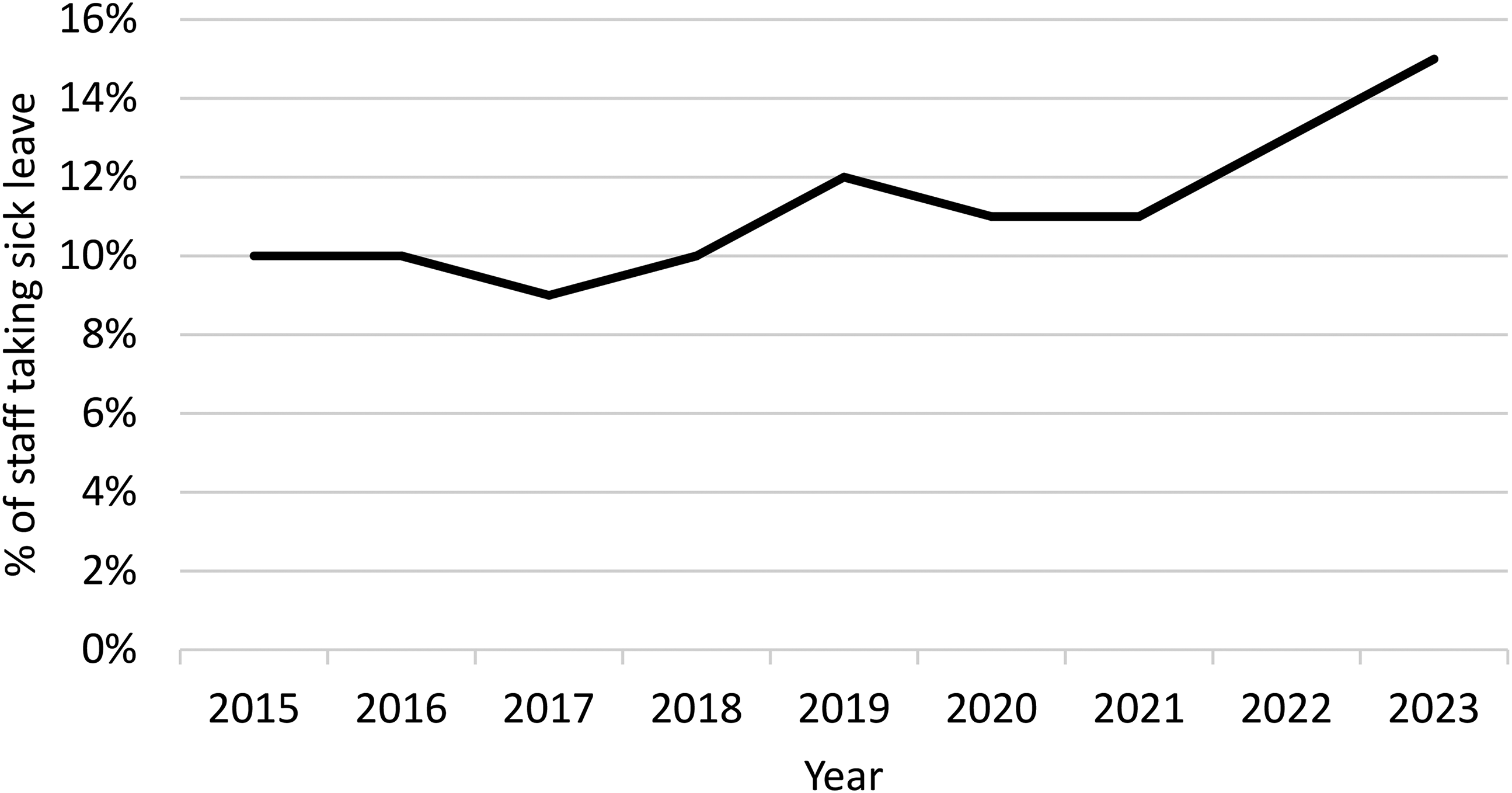
Average annual rates of sick leave due to psychological ill-health in the probation service between 2015 and 2023.
The next area of focus was to explore whether there are any discrepancies across the service in relation to the different regions of the Probation Service. Detailed in Table 1 are the rates of sickness across the different locations of the service, which shows a remarkable similarity occurring in the percentage of staff taking sick leave.
Percentage of staff taking sick leave by area of service.
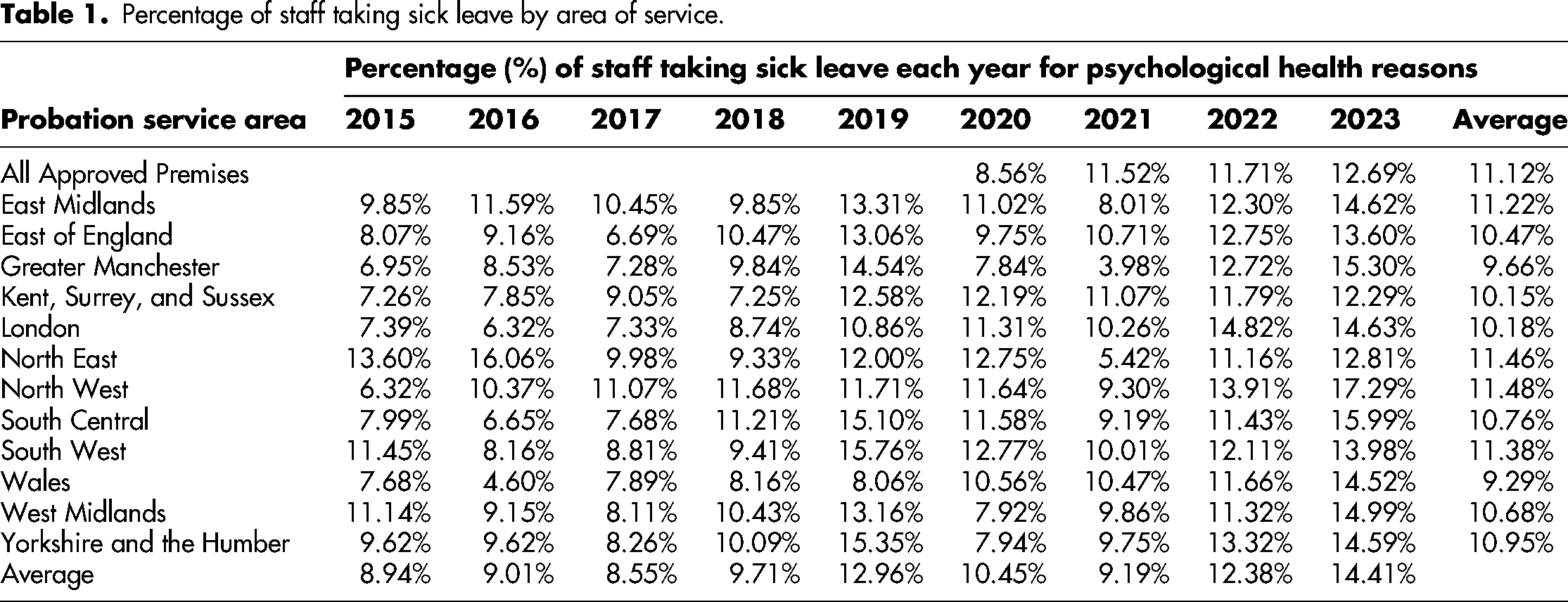
To determine the areas that have the highest recorded absences due to psychological ill health, the average percentage of staff across the entire workforce taking leave was calculated (using the annual percentages for each service). This then allowed for a comparison of how many times each area of the service has surpassed the entire workforce average by greater than 1% for sickness leave due to mental health. North West Probation Service exceeded the national average by more than 1% in six out of the 10 years followed by South Central and North East which exceeded the average in four out of the 10 years. These areas were followed by the South West who exceeded the workforce average for three out of the 10 years. East Midlands, Kent Surrey and Sussex, and London Probation services surpassed the average in two out of the 10 years. Finally, Approved Premises, Greater Manchester, Wales, West Midlands, East of England, and Yorkshire and the Humber all exceeded the national average in one out of the 10 years. Despite the overall average rates of sick leave being similar, the descriptive analysis here illuminates which areas of the service where sick leave has been highest.
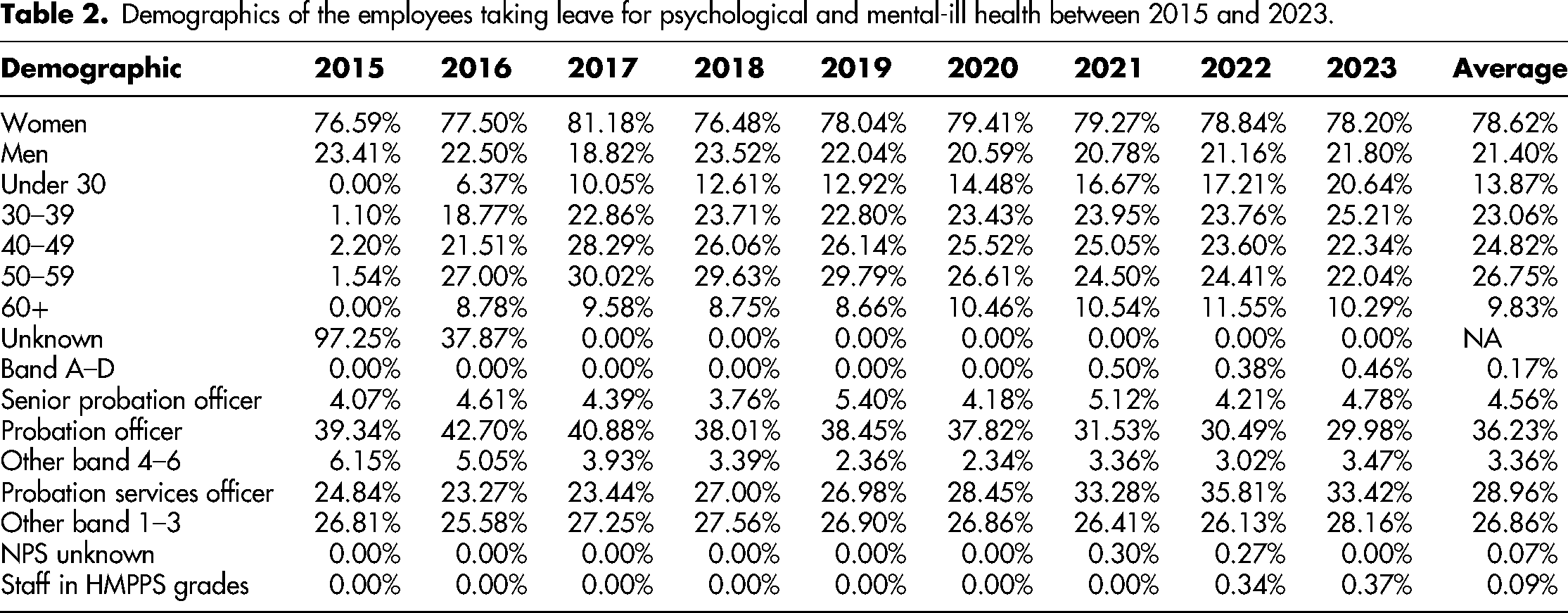
The next area of focus is the breakdown of sickness absence by employee demographic. Table 2 demonstrates that most sickness absence tend to be from women, POs, and those aged 50–59. However, it is important to consider these findings in relation to the demographics of the workforce shown in Table 3.
Demographics of the employees taking leave for psychological and mental-ill health between 2015 and 2023.
Representativeness of demographics versus sickness absence.
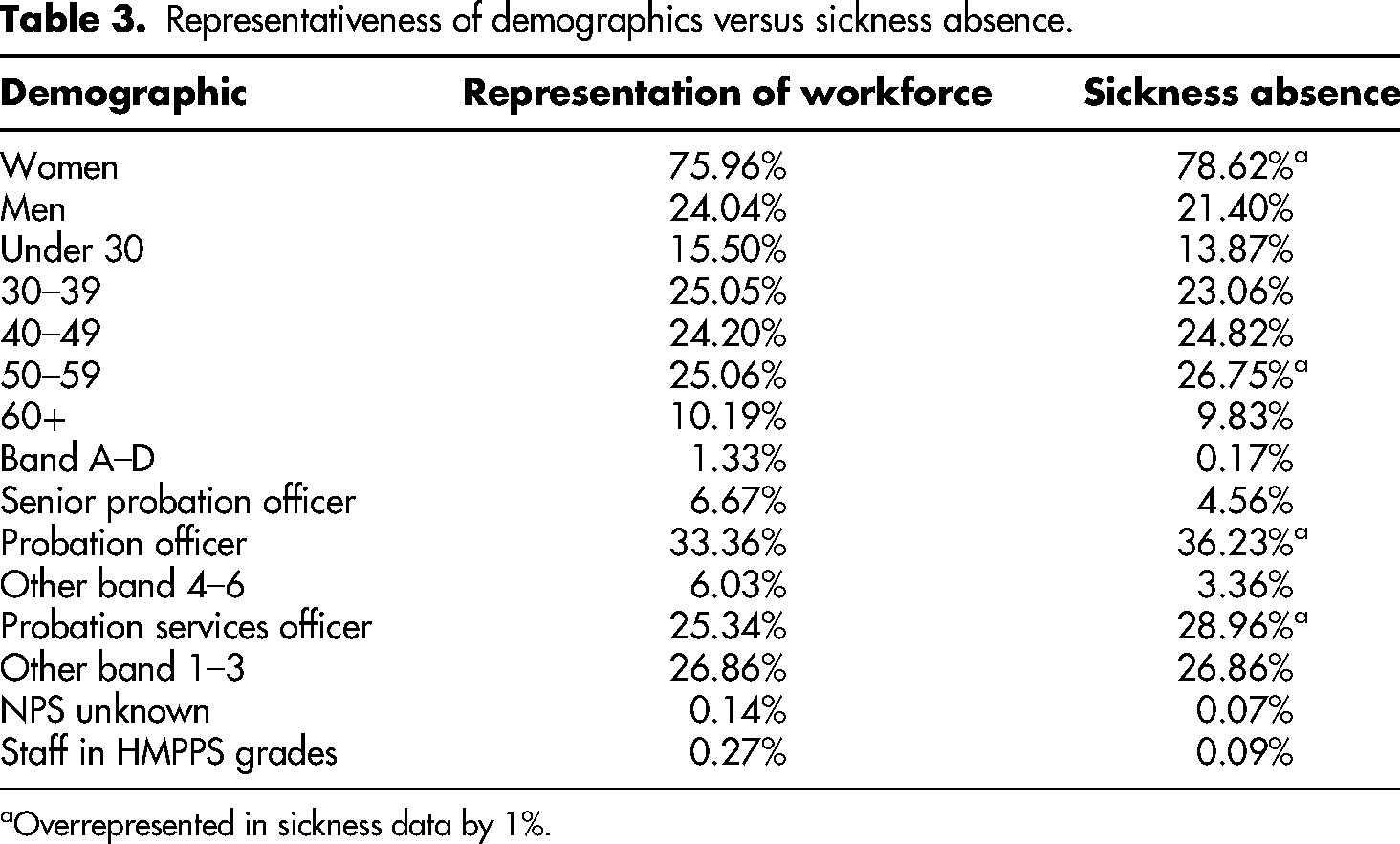
Overrepresented in sickness data by 1%.
Table 3 outlines the average demographic data over the period studied alongside the average sickness rate. The data here has been calculated using the average sickness rate per year to ensure that the data make sense even with the significant changes to the workforce due to unification. As shown in Table 3, the demographic characteristics of those who take sickness absence is broadly in line with the workforce breakdown. There are a couple of notable exceptions where certain demographics are overrepresented in sickness absence records. Women, those aged 50–59, POs, and PSOs are overrepresented in the sickness data, and thus it suggests that employees who represent these characteristics are more likely to take a period of sickness due to psychological ill-health than other demographics.
A further area of interest to employee demographics was the reason for taking sick leave. The data returned from the MoJ is documented in Table 4. This shows the data held is not sufficiently detailed; however, the main reasons recorded are stress, anxiety, and depression, and then ‘other’.
Employees reasons for taking leave between.

The final area of focus in the present study is in relation to those employees who have taken more than one period of absence because of psychological ill-health. The data provided by the MoJ demonstrates that this number has dramatically increased from 2.46% in 2015 to 7.95% in 2023. However, this figure seems to be highly inflated for the 2023 data return. Figure 2 plots this data visually.
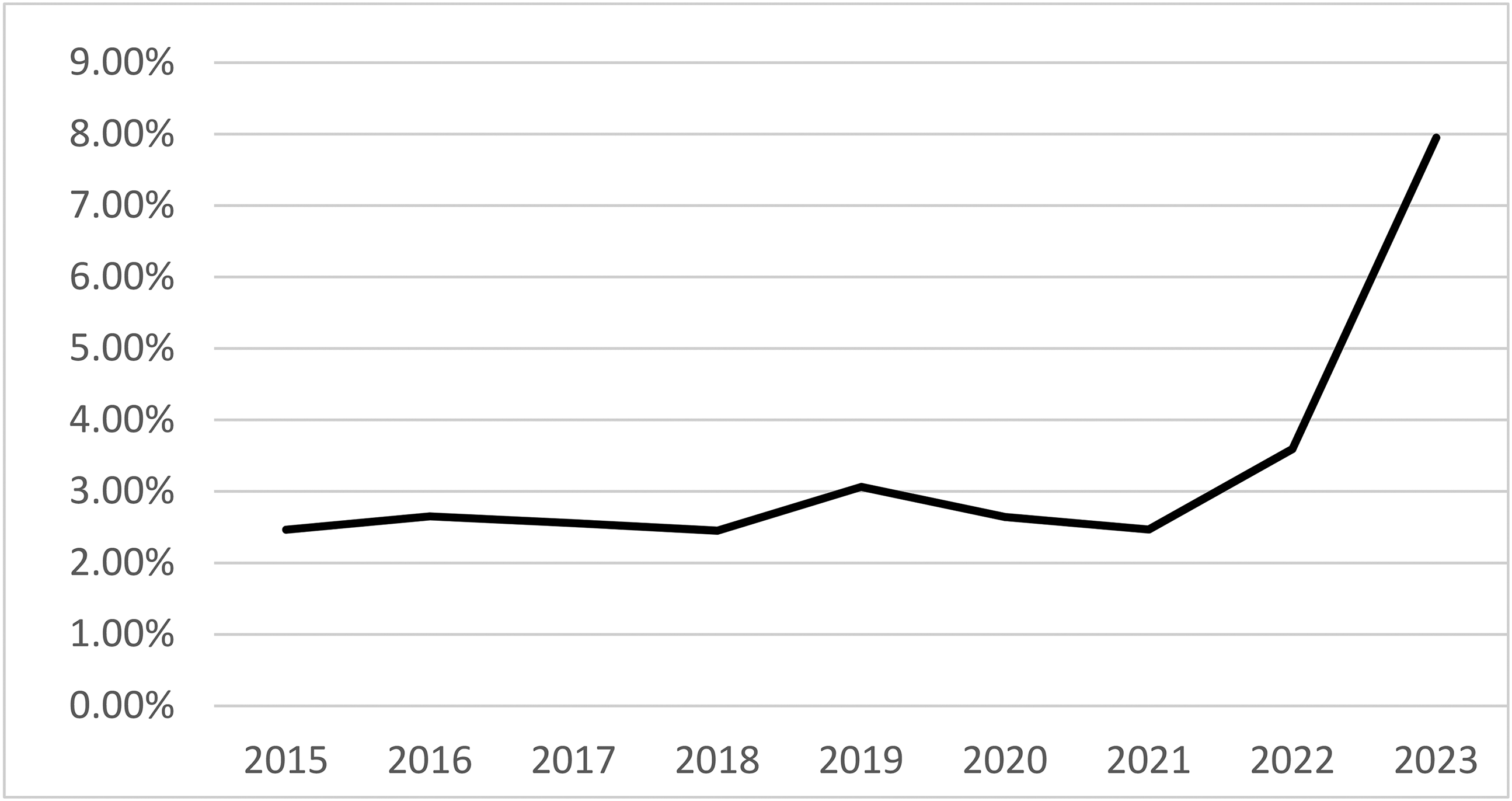
Percentage of employees who have taken more than one absence between 2015 and 2023.
The average percentage of staff who are recorded as having taken more than one period of absence because of psychological ill-health in a calendar year between 2015 and 2023 is 3.04% compared to an average of 11.03% for just one sickness absence per calendar year. This is interesting data and provides an insight into those who might be dealing with more severe wellbeing issues. Across the period studied the data suggests that 29.01% of employees who take a period of absence due to psychological ill-health go on to take further absences in the same calendar year. In 2023, the data is substantially higher with 53.18% of those who took one period of absence went on to take further absences.
When exploring the demographics of those who take more than one absence, issues with the data obtained from the MoJ were revealed. The aggregated individual demographic data often did not match the total sum for those who had taken more than one period of absence. For example, in one calendar year, 100 staff may have taken more than one absence but in the individual demographic data, there may be 52 women and 50 men (n = 102). This was prevalent across all demographic variables measured in the present study and is an issue to do with how the data is recorded. If an employee changes their pronouns, changes role, or moves into an older age bracket between the first sickness absence and the second, this resulted in the individual demographic data being incorrect. This was discussed with the data handler in the MoJ and as a result, the present study does not undertake further descriptive statistics to avoid making inaccurate conclusions about the individual demographic factors associated with reoccurring absences.
Discussion
This study sought to increase understanding of the psychological wellbeing of the probation workforce. Specifically, this study has explored the number of employees recorded as taking a period of absence because of psychological ill-health in the Probation Service workforce, how this has changed over the last decade, and how this relates to demographic factors (age, role, and gender), and location of the role. Findings show that the percentage of staff taking a period of absence due to psychological ill-health has risen from 11% to 15% over the last decade. This appears to be more prevalent in women, those aged between 50 and 59, and POs and PSOs (although these differences are relatively small). Stress appears to be the biggest factor followed by anxiety and depression. Absences relating to psychological illness also appear to be more prevalent in certain probation regions. Additionally, almost a third of those who take a period of absence due to psychological ill health take a further period of absence in the same calendar year.
The findings here are consistent with previous qualitative research in England that suggest that stress and anxiety are experienced by POs (Phillips et al., 2016; Wood and Brown, 2014). However, there is very little research exploring the impacts on the wider probation workforce such as PSOs, SPOs, and trainees. The findings here suggest that this area would benefit from future research, not least since there are currently 5316 PSOs in the Probation Service supervising those assessed as low and medium risk (HMPPS, 2025). The potential for a Serious Further Offence to occur is just as likely in lower-risk cases as with those assessed as higher risk (HMIP, 2024) and may be supervised by PSOs. Moreover, recent proposals plan for rehabilitation programmes aimed at domestic and sexual abuse perpetrators to be delivered by PSOs rather than more qualified and experienced POs (Syal, 2025). Therefore, it is likely that PSOs may also experience similar impacts to those of POs due to the direct work they undertake with people on probation alongside organisational stressors. Additionally, extant previous research has suggested that SPOs also experience detrimental impacts to their emotional wellbeing whilst having to supervise probation practitioners who experience various psychological stressors (Westaby et al., 2023, 2025), manage their own adaptation to significant organisational changes (Carr, 2021), alongside risk management and performance management (Westaby et al., 2023). These responsibilities also extend to the management and supervision of trainee POs who require more intense supervision.
We add to this body of work by drawing on quantitative data across the whole probation workforce to illustrate the extent, and increase, of recorded absences due to psychological illness over the last 10 years. Probation services in England and Wales have had to contend with continuous significant changes over the past decade and continue to adapt to these. It is concerning therefore that a substantial number of probation practitioners are increasingly experiencing detrimental impacts on their psychological wellbeing. That said, at present, other than the data presented in this article, we have very little understanding of the probation workforce's mental health. What is characterized as ‘stress’, ‘anxiety’, and ‘depression’ in this study is likely to be inaccurate in terms of the actual mental health needs. To date, no study has utilised validated tools to determine the specific mental health needs of the probation workforce. It is likely that within these categories held by the Probation Service, there are individuals suffering from post-traumatic stress disorder, complex post-traumatic stress disorder, and secondary traumatic stress disorder. A more detailed understanding is needed to fully comprehend the wellbeing needs of the probation workforce and to respond appropriately.
When considering employee demographics associated with poor wellbeing our findings concur with Phillips et al. (2024), Slate et al. (2003), and Simmons et al. (1997) who demonstrated that women were more likely to experience poorer levels of wellbeing. Holgate and Clegg (1991) also found that organisational factors were the primary factor for burnout in older officers (Holgate and Clegg, 1991). Phillips et al. (2024), however, found that older officers in England and Wales were less likely to experience burnout. Whilst we suggest that HMPPS should focus on improving the wellbeing of all staff members regardless of characteristics, it may be worth seeking to understand the potential reasons for women and those aged between 50 and 59 being overrepresented in the statistics. Indeed, having a deeper understanding of the reasons for these individuals experiencing increased psychological ill health may improve the future outcomes of those who remain in the profession.
What is worrying is that the findings here show that almost a third of those who take one period of absence due to psychological illness, take a further period of absence in the same year. This indicates that for some, a period of absence is not sufficient to allow them to recover and for appropriate support to be put in place to alleviate their experiences of psychological illness. It may be the case that the wellbeing interventions offered by the Probation Service are either ineffective or not taken up by the workforce. Although these two demographics are overrepresented, it must be acknowledged that our data suggests that general levels of mental health issues in the Probation Service are high. When compared to the police service, for example, the percentage of staff taking sickness leave is significantly higher. According to Cartwright and Roach's (2020) FOI study, the rate of sickness is 2% higher for the years where the data is comparable. These figures are likely to be the ‘tip of the iceberg’ and a conservative estimation of the actual levels of mental health issues and poor wellbeing. In the police context, the sickness absence data that has been published is significantly lower than large-scale self-report surveys undertaken by Police Care UK. We argue that it is likely to be the same within the Probation Service. This is most likely due to many employees not taking a period of absence, and some might take leave but attribute it to other reasons and as such are not captured here. Thus, the data presented here is alarming and indicates considerable issues related to wellbeing within the service.
A further insight that the present study offers is that absences are not spread evenly across the country. This suggests that some areas may require further attention in relation to understanding why this is the case and the cumulative impact that this may be having on those affected areas. Attrition rates are also worth some consideration here. Whilst findings here provide some insight into psychological illness in relation to absence rates, those choosing to leave the service due to psychological wellbeing are not included in these figures. Leaving rates 2 year ending 30 September 2024 were around 8% for POs, 12% for PSOs, and 5% for SPOs. Additionally, resignation rates 3 were 8.4% for PSOs and 4.5% for POs. It would therefore be beneficial to understand the extent of psychological illness contributing to decisions to leave, although it may be that people may wish to leave the service without sharing this information. Worrall and Mawby (2013) conducted interviews with 60 current and former probation workers in England and found that many probation practitioners in England had an actual or imagined exit plan which extended to trainees. More recently, the introduction of TR saw ∼500 probation practitioners resign (Collins, 2016) which saw an increase in caseloads, which have been related to stress and anxiety (Walker et al., 2019). From a sample of eight probation practitioners, Walker et al. (2019: 115) suggest that ‘workplace harm’ is experienced in this role through negative psychological experiences such as stress, depression, overwork, and suicidal thoughts. More recently, Orakci (2025) found from 24 ex-POs that emotional labour and spillover were core concerns as to why POs left the service. Staff attrition, failure to fill posts, and increased caseloads for POs were also factors that influenced decisions to leave (Orakci, 2025). This clearly demonstrates why it is vital that we get a better understanding of wellbeing in the service.
It is important to recognise that whilst the use of FOI data in the present study provides a significant insight, the data is not without limitation and should be interpreted with caution. FOI data is compiled by the MoJ and not the researchers and there are numerous ways in which issues may occur that may affect the reliability. For example, data reporting practices change over time, and this may cause issues with regards to reliability. Moreover, FOI data is aggregated and as such can only provide a surface level of understanding.
Conclusion
The present study has offered new and important insights into the wellbeing of the Probation Service workforce. The findings outlined do offer more questions than they do answers, and it is crucial that this article is the catalyst for rigorous research into the wellbeing of the Probation Service workforce. Significant future research is needed to understand the true extent of wellbeing issues in the Probation Service, to understand who is most at risk, and to review the current responses by the service for supporting employees who experience poor wellbeing.
Footnotes
Declaration of conflicting interests
The author(s) declared no potential conflicts of interest with respect to the research, authorship, and/or publication of this article.
Funding
The author(s) received no financial support for the research, authorship, and/or publication of this article.
