




Abstract
Despite the fact that the use of electronic monitoring systems has grown across Europe and within each jurisdiction, comparative research on the matter is scarce. Previous studies have highlighted two relevant aspects. On one hand, the versatility of the measure, in the sense that different (even contradictory) objectives and functions can be attributed to it. On the other hand, the difficulty in measuring and comparing the intensity of its use in different countries. For these reasons, this work aims to compare the areas of implementation of electronic monitoring in two different countries: Spain and Belgium. By looking at the different uses of the measure, the objective is to demonstrate the premise electronic monitoring fits in various phases of the criminal proceeding. Moreover, the research also compares the punitiveness of the measure in both countries by making use of the elements highlighted by Hucklesby et al.. The findings show the difficulty of drawing definitive conclusions about its punitiveness mainly due to the adaptability of electronic monitoring.
Introduction
Since its first implementation in Europe, electronic monitoring (in the following EM) has been expanding in different ways. On one hand, the number of electronically monitored individuals has been growing over the years. On the other hand, although the original aim was to cope with prison overcrowding as an alternative to early inmates’ release, EM has spread through all stages of the criminal justice system (see, e.g. Daems, 2020; Dünkel, 2018; or Nellis, 2014).
The expansion of the use of EM is the general trend. However, important differences remain among countries in its design and implementation (Gudders, 2019: 150–151). The present work proposes these differences are a trait of its versatility. This feature makes it possible to assign different and even contradictory functions to this measure (as Daems, 2020, points out) and, at the same time, it makes possible for the measure to continue to expand. Nevertheless, there is scarce comparative research on the subject of EM (Beyens, 2017: 3), with relevant exceptions such as Nellis et al. (2013) or Daems (2020), as it is in general in the field of offender supervision (Beyens and McNeill, 2013: 155), even though criminological comparative research has grown significantly in the last decades (Robinson and McNeill, 2016: 1).
To date, the available studies in the field of EM, and in general in offender supervision, have focused on evaluating or describing these measures in specific countries (McNeill and Beyens, 2013: 6). Comparative EM studies are needed for a number of reasons. In general, penology research has been mainly focused on imprisonment (Beyens and McNeill, 2013: 155). Even though people under other measures outnumber the prison population in most European countries (McNeill and Beyens, 2013: 1). And the numbers continue to grow due to the expansion of these measures both in scale (the number of people on whom such a measure is imposed) and in range (the increasing variety of measures available and in an increasing number of settings) (McNeill and Beyens, 2013: 2). The growth of these measures is based on rationalities that argue for their greater cost-efficiency than prison and their greater credibility (trying to leave behind claims about their lesser punitiveness) (McNeill and Beyens, 2013: 3). Another reason for the need of comparative research in offender supervision is that policy transfer is very common (in the case of EM see Gudders, 2019). So measures tend to “expand” internationally. Although authors (such as Beyens and McNeill, 2013: 157 or Robinson and McNeill, 2016: 3) recommend taking into account in the comparisons the specific social and political context of each jurisdiction (“situated understanding”).
Until today, research on EM has highlighted its “universal appeal because it fits or can be made to fit many purposes” (Beyens, 2017: 4) and how comparisons based on rates of use are a misleading way of assessing the differences between jurisdictions (Hucklesby et al., 2021: 88), mainly because systematic quantitative data on EM is inexistent (Nellis et al., 2013: 2). Precisely, the main aim of this paper is to analyse the versatility of EM and its differences in the legal design (and implementation when research is available) through a comparison (a horizontal comparison in terms of Robinson and McNeill, 2016: 3) between two countries: Spain and Belgium. In both countries, EM started to be used in the penal system at the same time (from late 1990s to early 2000s), as a pilot project with the same objective of early release subjects finishing a prison sentence and under similar rationales. Soon after the policies and discourses around EM start to differ in both countries. Although in both cases the use of EM has been increasing since then, the political relevance and, therefore, the academic and social attention on the measure is very different. Such was the greater (relative) relevance of EM in Belgium that there is a whole body of research on the Belgian EM model. In the case of Spain, the (little) research that has been done on the measure has been mainly around legal issues. Therefore, the main objective of this article is to contribute to the scarce national research 1 (in the Spanish case), and comparative research in general terms, by means of a study that confronts the Spanish and Belgian EM models.
In what follows, this paper is composed of two main sections. The first of these sections compares in which phases of the criminal justice system and for what purposes EM is used in both countries, under the premise that these differences are a characteristic of the measure itself, its ease of adaptation in any area of the criminal process for very different purposes. It also presents data on its use and an attempt to compare in quantitative terms. Accounting for the need to “surpass the reductivist quantitative approach of comparing countries based on general statistics” (Beyens and McNeill, 2013: 159) in the next section, the comparison focuses on more qualitative issues. It mainly attempts to answer the question: to what extent do diverse policy and legal designs contribute to EM being experienced in different ways in the two countries? To this end, different aspects of the measure such as its duration or intrusiveness are treated using a comparative framework developed by Hucklesby et al. (2021).
“This technology is a bargain”: the versatility of EM
Spain
In Spain, EM always supports other precautionary, criminal, or security measures to ensure compliance with these measures (González Blanqué, 2008: 5–6). EM is used in four areas in Spain: in the execution of precautionary measures and accessory penalties in the context of gender or domestic violence; in the enforcement of home detention; during the fulfilment of prison sentences, and in the execution of supervised release.
Firstly, as a precautionary measure (regulated in the art. 64.3 Act 1/2004), EM can be used to ensure compliance with restraining orders in cases of gender violence. The aim of the measure is preventing the suspect to approach the victim. Following a standardized risk assessment carried out by the police if it is high or extreme a judge can decree a restraining order to be enforced with EM (Arenas García, 2017: 248). Once the measure is agreed, a bracelet (RF) and a portable receiver (GPS) are placed on the suspect and a receiver device and a GSM auxiliary mobile phone (GPS) are given to the victim (Arenas García, 2017: 250–252). As can be seen in Figure 1, from 2009 to 2022 there has been a substantial increase in the number of active devices 2 . This very pronounced growth, however, contrasts with the low percentage of electronically monitored restraining orders in relation to the total. In the year 2019 3 that percentage was 2.03 (INE, 2022).
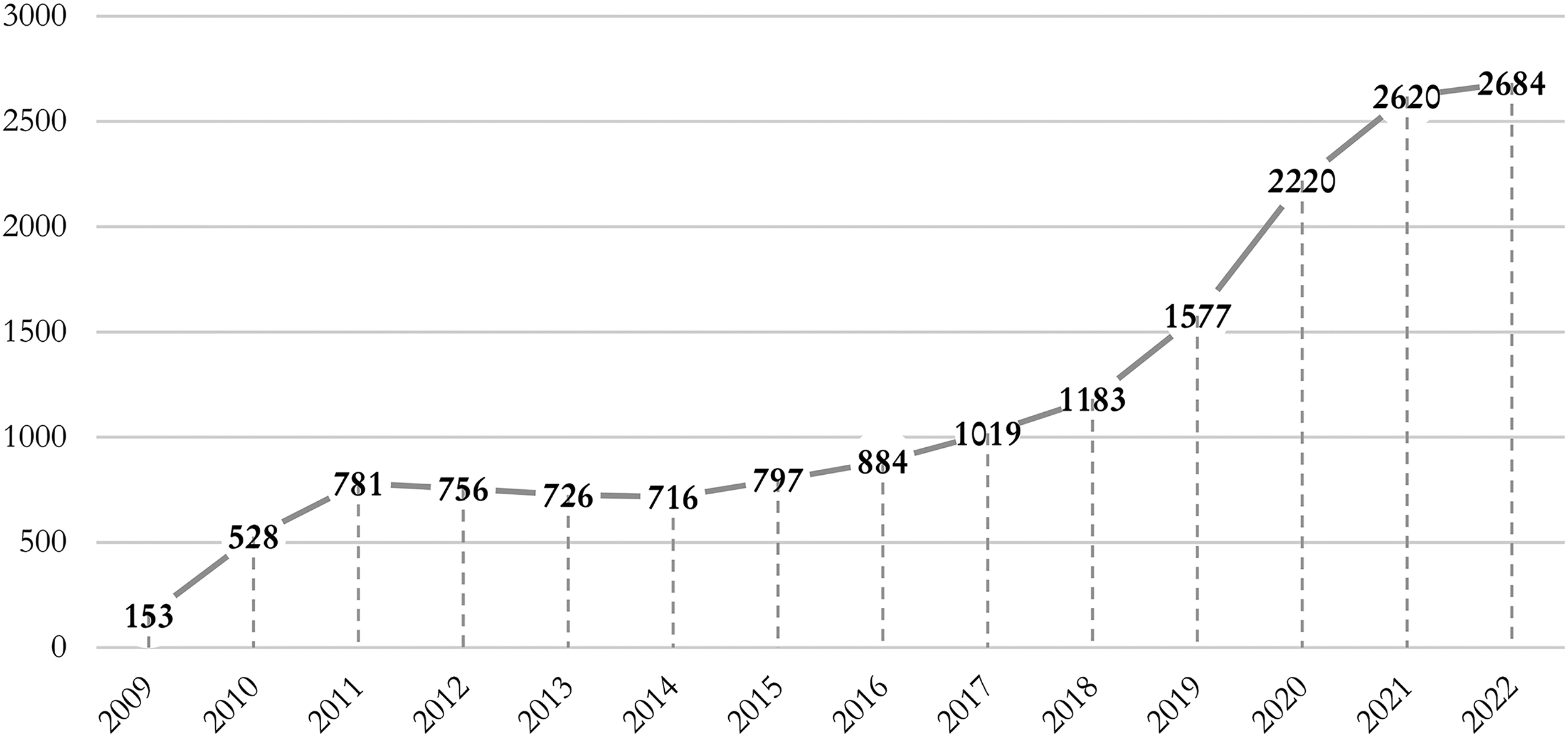
Active EM devices in gender violence restraining orders (Spain). Source: Government Delegation against Gender Violence (2022).
On the other hand, art. 48.4 Criminal Code establish that in cases of gender (and also domestic) violence EM can also be used to ensure compliance with accessory penalties (e.g. a contact ban or a ban on visiting certain locations). The procedure to follow in the cases where this measure is executed by EM is similar to the one in cases of restraining orders described above (see the Action protocol) 4 .
Secondly, regulated in the art. 37 Criminal Code, home detention is a penal measure that consists of the obligation of the convicted person to remain in a specific place (usually at the convicted home but it can also be served in prison facilities) for a specific period of time, which can be served in a continuous or intermittent basis (normally during weekends and public holidays). Its implementation is decided by the sentencing judge or court which also decides on the type of monitoring to be applied, which can be electronic or regular random visits by the police. In 2006 in Catalonia 5 31% of the home detention sentences were executed by EM and 69% by police surveillance (González Blanqué, 2008: 134). Regarding the rest of Spain, according to the General Secretariat of Penitentiary Institutions (2014: 142) there were executed 7387 home detention sentences with voice recognition (VR) between August 2005 and December 2013. There is no data available to calculate which percentage represents those sentences of home detention with EM over the total of home detention sentences. The same report asserts that due to legal reform in 2011 the number of home detention enforcement plans including EM has decreased and almost disappeared during the last years.
Thirdly, EM was firstly introduced in the Spanish criminal justice system as a “back-door” strategy for convicted offenders. Article 86.4 Prison Rules (further developed in Instruction 13/2006) provides that inmates classified in third grade, which imply an open regime of life in prison, do not have to comply with the requirement of a minimum stay of 8 h in the prison when they voluntarily accept to submit to EM or another kind of control (which in practice is normally articulated by the inmate reporting to the prison on a regular basis). This provision is reserved for those inmates who have obligations that require more daily dedication than those allowed by the “normal” open regime of the art. 83 Prison Rules (such as work or family obligations) (Martí Barrachina, 2019: 212–215). Figure 2 displays the evolution of new EM device activations during the execution of a prison sentence in Spain 6 . It can be seen that from 2010 to 2018 there were on average 2500 new activations each year. This number grew sharply in 2019 reaching 3420 new activations. But the most pronounced growth occurs in the year 2020 with 7546 new activations, which means an increase of 120.64% in 1 year. The General Secretariat of Penitentiary Institutions (2021: 142) provides an explanation for this significant increase: in recent years, there was a change, consolidated in 2020, for which inmates that were serving a prison sentence in third grade living in a dependent unit are now serving the sentence under EM. Regulated in the art. 165 Prison Rules dependent units are located outside the prison premises, preferably in ordinary housing within the community.
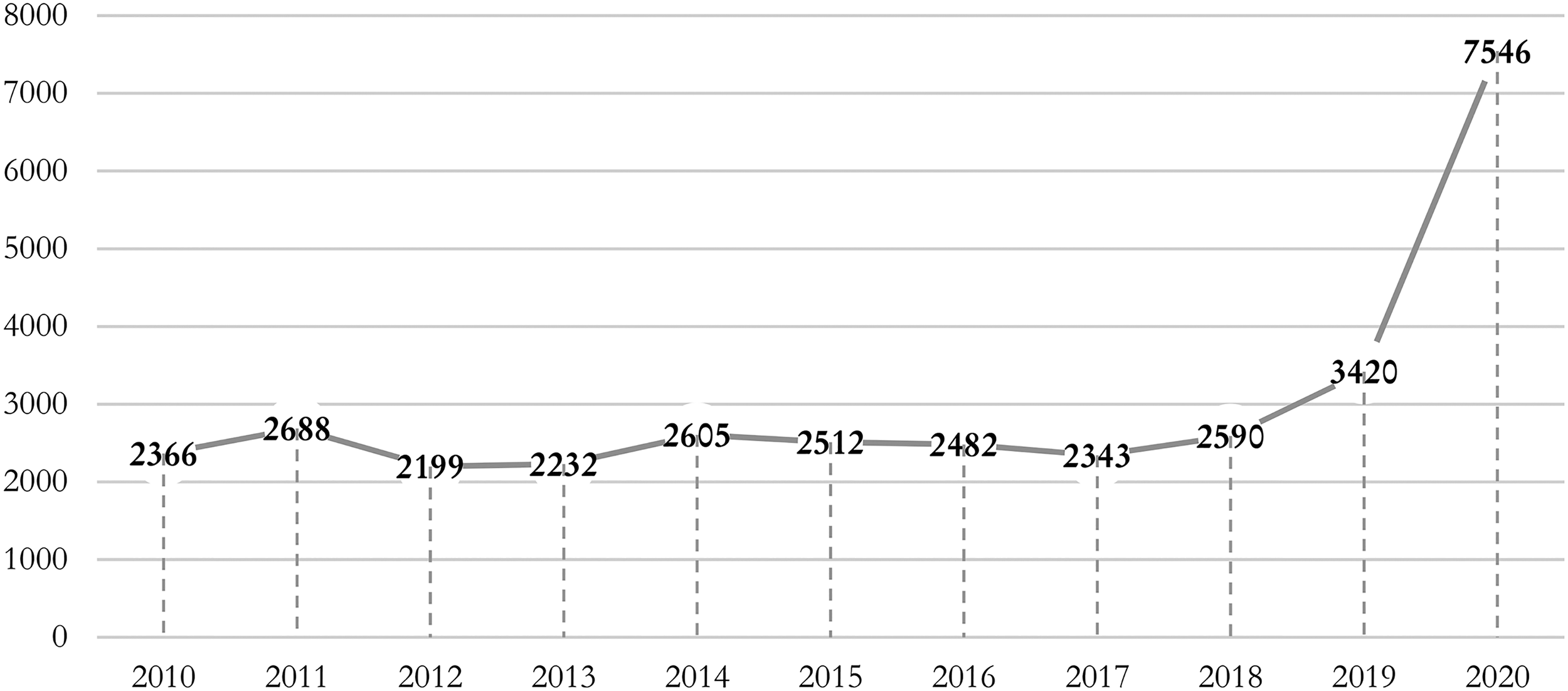
New EM device activations in the execution of a prison sentence (GSA-Spain). Source: General Secretariat of Penitentiary Institutions (2021).
The use of EM in prisons is also provided for prison leaves. These permits, regulated in articles 154 to 159 Prison Rules are granted as a way of preparing inmates for their subsequent release (ordinary prison leaves) or to deal with an urgent situation (extraordinary prison leaves), such as the death of a family member. In some cases, the prison administration considers that it is necessary to carry out special monitoring of the inmate during the granting of a prison leave and it is in these cases that control can be intensified through the use of GPS tracking devices (Arenas García, 2017: 19; Circular Letter 1/12). In 2016 304 prison leaves were granted in the prisons managed by GSA-Spain (General Secretariat of Penitentiary Institutions, 2017). That same year the total amount of granted prison leaves was 114,374 (Rovira Sopeña et al., 2018: 25) so those with EM represented only the 0.27% of the total.
Finally, in 2010 there was a reform of the Criminal Code in which supervised release was introduced as a non-custodial security measure. The novelty of this measure is that it is applied to individuals who have already served their custodial sentence. At the time it was introduced, it was targeted at people who had committed sexual or terrorist offences. Since 2015, however, it has been extended to homicides and gender or domestic violence crimes (Arenas García, 2017: 21; Torres Rosell, 2012b: 8). This measure is developed in articles 96.3 and 106 Criminal Code. According to art. 106 supervised release consists of subjecting the released convicted person to judicial control by means of the fulfilment of one or more obligations or prohibitions. The first of these obligations is “the obligation to be reachable anytime by electronic devices that allow permanent monitoring.” At the end of 2020 there were 38 individuals serving supervised release under GPS monitoring (General Secretariat of Penitentiary Institutions, 2021).
Belgium
In Belgium, EM is also present in different stages of the criminal justice process. Historically, EM was primarily used as an alternative way of executing prison sentences. However, since 2012 EM has been also implemented in pre-trial phase as an alternative to remand detention and as an autonomous sanction.
In the first place, since 2014 an investigative judge or a court can choose EM as a pretrial measure among others (Beyens and Roosen, 2016b: 10). At that time, the novelty represented a significant change as it was the first time that EM could be used beyond the context of a prison sentence (Beyens and Roosen, 2016a: 107). Individuals subjected to this measure are confined to their homes 24 h a day. Although there are some exceptions described in the Ministerial Circular Letter ET/SE-3 and the investigative judge or court can give permission for lifting the maximum in special cases (Beyens and Roosen, 2016a: 108; 2016b: 10–11; 2017: 15). Despite the use of EM as pretrial detention measure is supposed to be limited to avoid criminal system net-widening (Beyens and Roosen, 2017: 15), figures in both Belgian regions 7 have grown in the last years as shown in Figure 3. Taking into account both regions and all the areas of implementation of EM in the year 2019, new activations of devices for pretrial detention represented 20.05% of the total (Fédération Wallonie-Bruxelles, 2022; Vlaanderen, 2022).
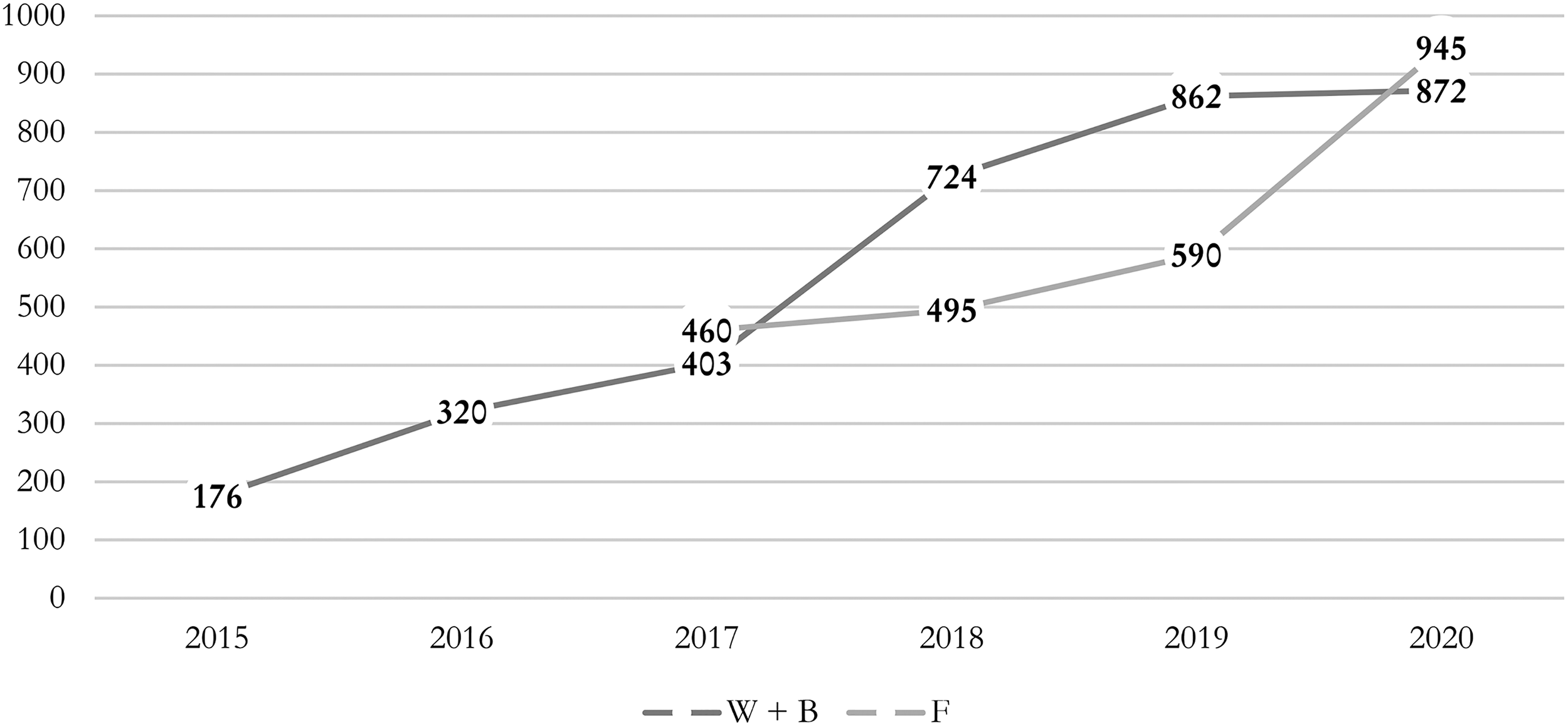
New EM device activations in pretrial detention (Belgium). Source: Fédération Wallonie-Bruxelles (2022); Vlaanderen (2022).
In the second place, the role of EM in the execution of a prison sentence is different depending on the length of the conviction. If the length of a prison sentence is more than 3 years EM is conceived as a “back-door” strategy for transition before the granting of conditional release. When the sentence is up to 3 years the EM can be used as a “front-door” measure replacing prison sentence (Beyens and Roosen, 2016a: 104; Maes, Mine, De Man and Van Brakel, 2012: 5). This case is regulated in the Act of 17 May 2006 and in the Ministerial Circular Letter ET/SE-2. Its implementation is decided by the prison governor who can mandate to convert prison sentence into EM seeking the consent of the convicted (the consent of cohabitants is also necessary if the monitored individual is not domiciled in the address where the measure will take place) (Beyens and Kaminski, 2013: 155–156; Beyens and Roosen, 2016b: 8; 2017: 14). There are some exceptions, because in cases of conviction for sex offences against minors, terrorism-related crimes and for individuals without a valid residence permit, the decision is made by the Detention Management Service of the Penitentiary Administration after a social enquiry (Beyens and Kaminski, 2013: 155–156; Beyens and Roosen, 2016b: 8, 15; Ministerial Circular Letter ET/SE-2).
Within the same group a new separate modality was introduced by the Ministerial Circular Letter ET/SE-2 called “home detention,” which is viewed as a simplified version of the beforementioned procedure. It consists of the remaining of the monitored individual in their home without the involvement of the justice assistants or any kind of social support. This modality was introduced for those punished with a prison sentence between 4 and 8 months (Beyens and Roosen, 2013: 62–63; 2016b: 9; 2017: 15). The evolution of new EM device activations for home detention in the Region of Wallonie-Bruxelles 8 can be seen in Figure 4. In the year 2019 new activations for home detention represented 29.11% of all new activations of EM devices (Fédération Wallonie-Bruxelles, 2022).
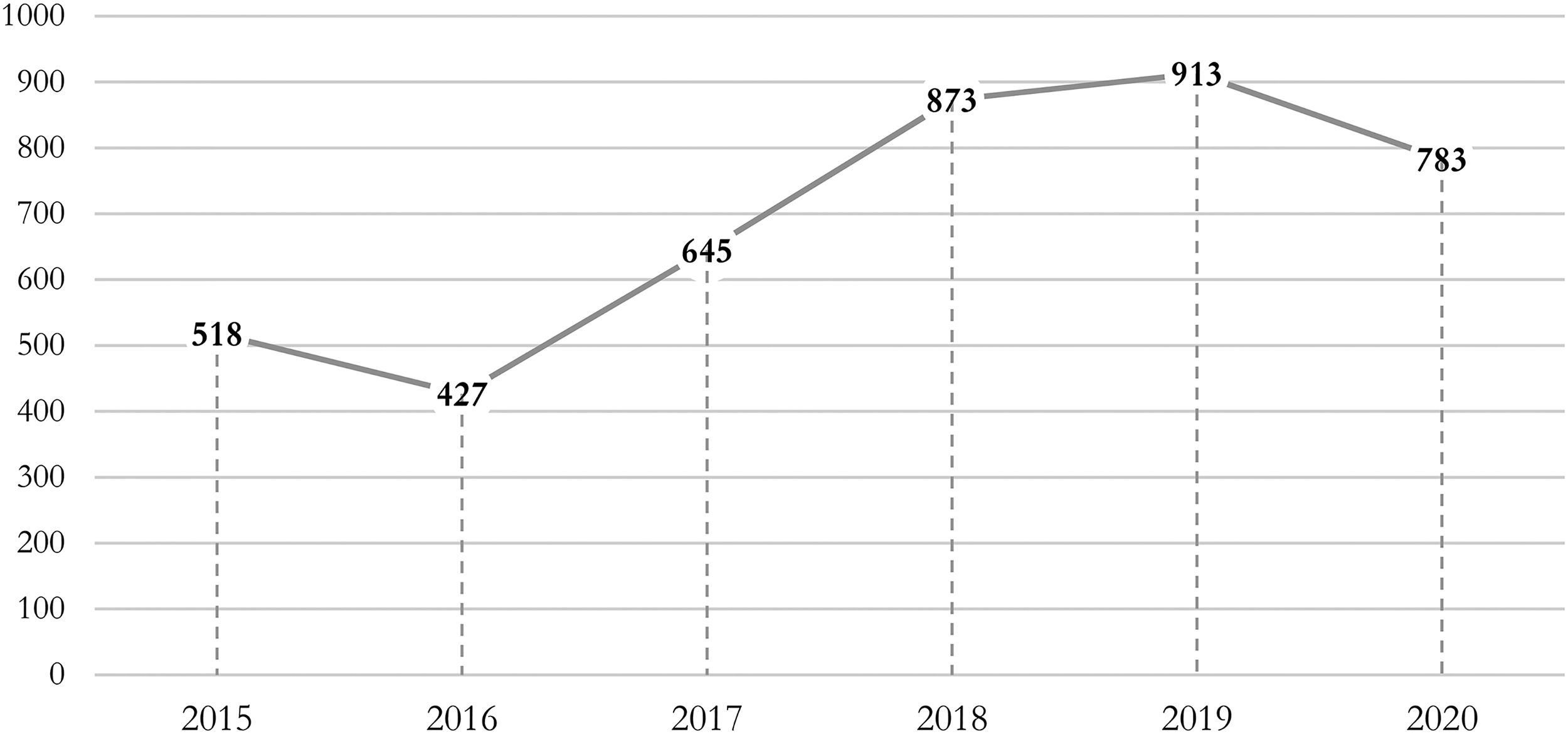
New EM device activations in home detention (Wallonie-Bruxelles). Source: Fédération Wallonie-Bruxelles (2022).
Prison sentences longer than 3 years can be commuted by EM at 6 months before being eligible for a conditional release. Inmates can request this modality of finishing the prison sentence 4 months in advance. Prison governors could inform the inmate about this possibility. Since 2007 the decision is made by the sentence implementation court, which imposes general and individual conditions to comply, with the advice of the prison governor and the public prosecutor, and after hearing the inmate. The fulfilment of these conditions is supervised by justice assistants (Beyens and Kaminski, 2013: 155–156; Beyens and Roosen, 2013: 60; 2016b: 7, 15–16; 2017: 14). This modality is also regulated in the Act of 17 May 2006. There are some contraindications in those cases involving the lack of reintegration perspectives, the risk for the victim(s) or the risk of reoffending (art. 47 Act of 17 May 2006).
Figure 5 shows the evolution of new activations of EM devices in the context of a prison sentence during the last years depending on the length of the sentence and the region. It can be seen that the majority of new activations are for sentences of up to 3 years for both regions. It should be noted that the application of EM in cases of sentences up to three years is almost automatic according to Beyens & Roosen (2013: 59).
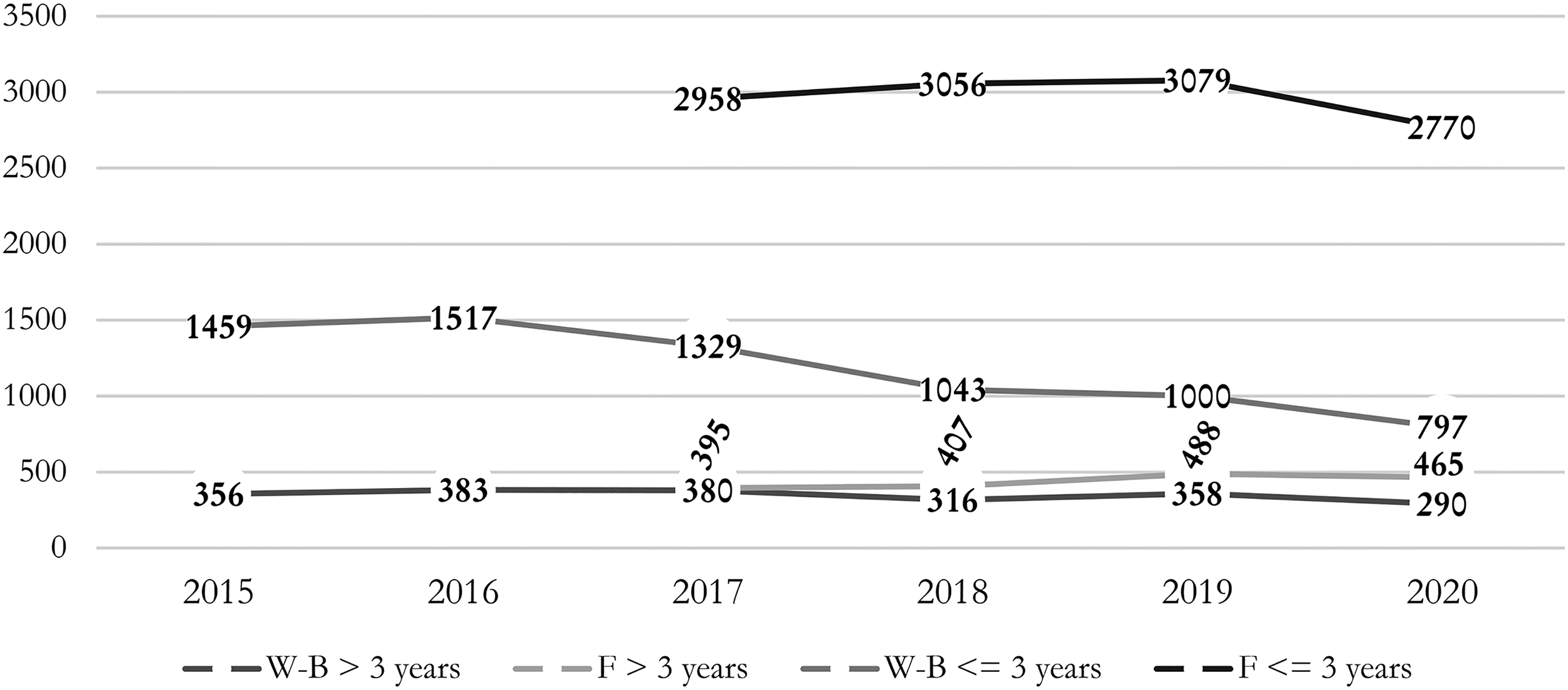
New EM device activations in the enforcement of a prison sentence (Belgium). Source: Fédération Wallonie-Bruxelles (2022); Vlaanderen (2022).
Finally, EM was introduced as an autonomous sanction in the Act of 7 February 2014 (although its implementation started in 2016). This sanction is eligible for offences punishable with up to 1 year of prison. The sentencing judge or court has to determine the duration of the sanction that can be between 1 month and 1 year. The imposition of EM as an autonomous sanction may be preceded by a brief report requested by the public prosecutor or the investigating judge/court to inform the decision (Beyens and Roosen, 2016b: 11). In general, EM in those cases is not accompanied by another supervision or support measure (Beyens and Roosen, 2017: 15; Dünkel, 2018: 62, 68). Nevertheless, there exist some provisions regarding individualized victim conditions (Beyens and Roosen, 2016b: 11). The use of EM as an autonomous sanction in Belgium does not seem widespread. It only represents 0.15% of all new device activations. Although differences exist among regions: in the period between 2015 and 2020 there was a mean of 5.25 new yearly device activations for the Wallonie-Bruxelles Region and 19.5 for the Flemish Region (Fédération Wallonie-Bruxelles, 2022; Vlaanderen, 2022).
Quantitative comparison
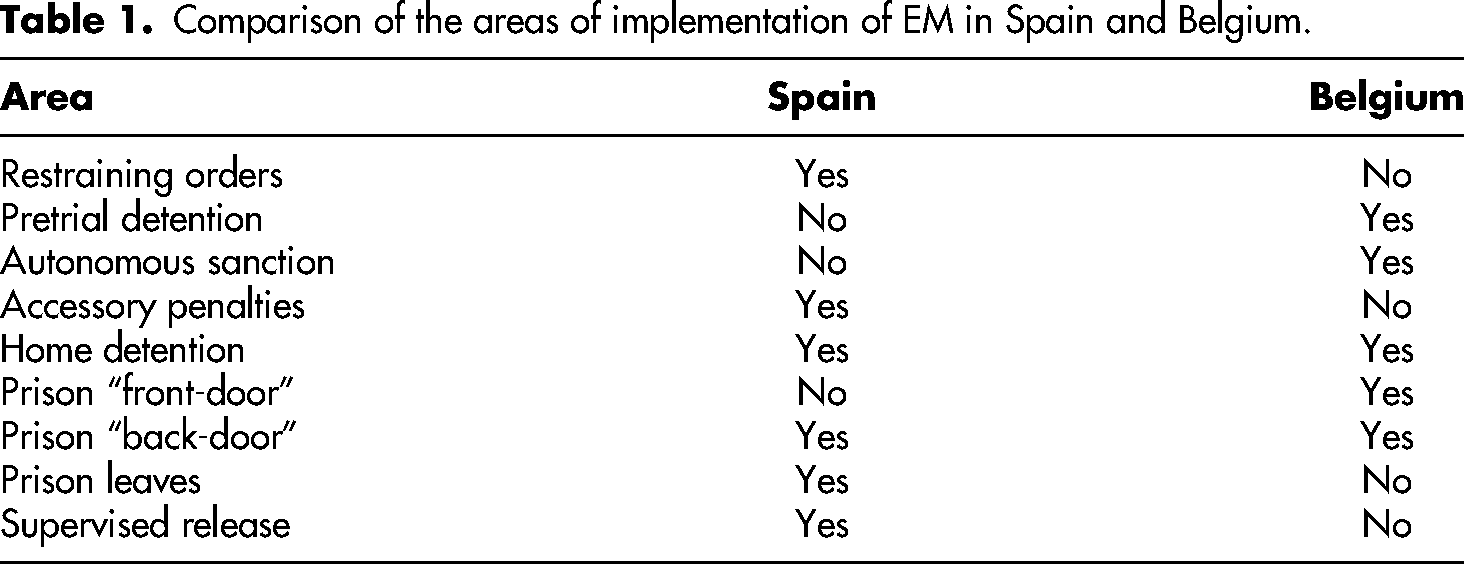
In Table 1 a summary of the uses of EM in Spanish and Belgium contexts can be found. The comparison shows that the use of EM only match in two cases: the enforcement of home detention and in the execution of prison sentences.
Comparison of the areas of implementation of EM in Spain and Belgium.
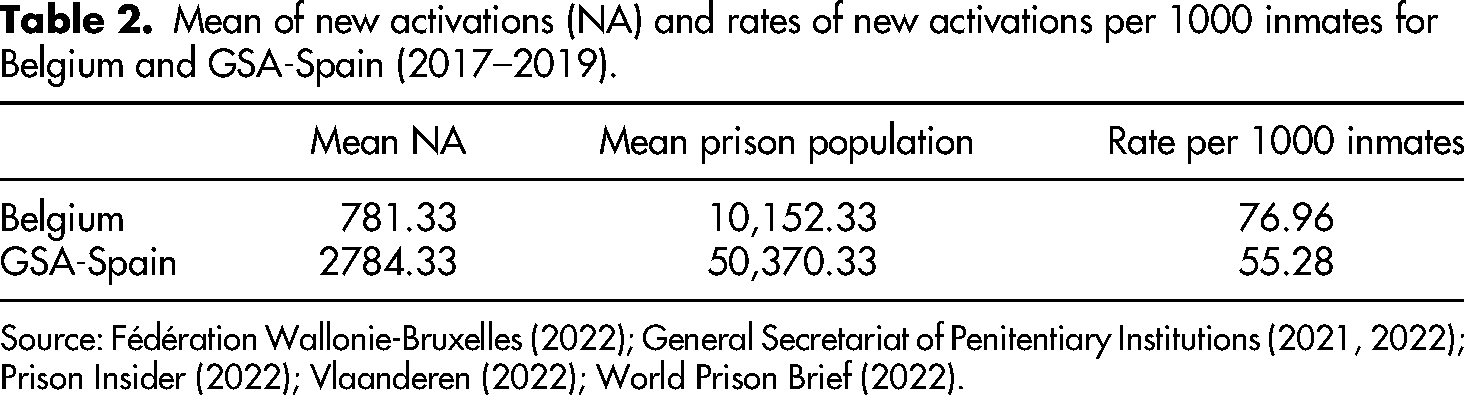
There is no data about the total daily EM population in Spain. But even if this data exists these figures could lead to misunderstanding due to the different areas of implementation in both countries as seen before. In the end, it seems it is only possible to compare data about new EM device activations in the context of prison sentences but just when it is used as a back-door strategy. Table 2 shows the comparison with a mean of new activations for years 2017, 2018, and 2019 (to avoid the effect of fluctuations and the exceptional change in 2020 in Spain) and rates calculated with the mean prison population of both countries as a benchmark. As can be seen, Belgium has a higher rate of new activations in the context of prisons than GSA-Spain.
Mean of new activations (NA) and rates of new activations per 1000 inmates for Belgium and GSA-Spain (2017–2019).
“It's no big deal”: the tightness of EM
Due to its initial introduction as a back-door strategy to release inmates early, EM is still not perceived as a “hard punishment” (Daems, 2020: 43). This perception is strongly influenced by its comparison with prison. In general, even people under EM conceives the measure as a much better alternative than prison (e.g. because it allows them to be in contact with the family) (Vanhaelemeesch, 2014: 13). However, this is not the same as regarding EM as a not punitive measure. Research has shown the punitive impact of EM on the lives of those subjected to it (see e.g. Vanhaelemeesch, 2014 in Belgium; or Arenas García, 2017 in Spain). Research has also displayed that the experiences among wearers vary. For instance, monitored individuals’ perception is improved when EM is designed as a part of a broader individualised program aiming to reintegration (Vanhaelemeesch, 2014: 13). Consequently, it is possible to say that the impact or punitiveness of EM will depend on the legal design and implementation of the measure in each country.
Moreover, a comparison only focused on the rates of use of EM would not be a good measurement of the punitiveness of EM. As stated by Hucklesby et al. (2021: 88–89) rates of use provide a partial picture of the implementation because of the less reliability of community sanctions data in general (compared with prison data) and also because they do not reflect the differences in the design of the sanction, in the regulation and policy and thus the differences in the way that EM is executed and experienced. For this reason, the authors provide a way to assess the regimes of EM in terms of its “tightness” and this framework is the one that will be used in the following. The focus of the analysis will be on the legal and policy framework to understand “the ways in which the EM regimes are designed to impact upon the daily lives of individuals subject to EM” (Hucklesby et al., 2021: 92). Some of the aspects which are used to compare the EM regimes are designed intentionally while others can have unintended effects (Hucklesby et al., 2021: 92).
Hucklesby et al. (2021: 90) borrow the concept of tightness from Crewe (2011), who used it to explain the degree in which the prison grabs, takes over and disrupts inmates’ lives. The authors apply this concept to the context of EM (being aware of the differences with the prison 9 ) and also conceptualize the tightness differently than Crewe (2011), for whom the concept refers only to an aspect of the dimension of weight. On the contrary, for Hucklesby et al. (2021: 93) the concept of tightness is defined as combining the dimensions of length (of the measure), breadth, weight, and depth. 10
To assess those mentioned dimensions, the comparison elements used by Hucklesby et al. (2021: 94) are the regime intensity (which includes aspects such as the length of the measure or the curfew hours), the regime intrusiveness (which includes among other elements the level of mandatory contacts between the monitored individuals and the authorities) and the measures envisaged in the event of non-compliance or breach.
Intensity
Length is the first element in order to measure the intensity of EM. The length can be determined by the law, regarding the maximum provided, where EM can be imposed.
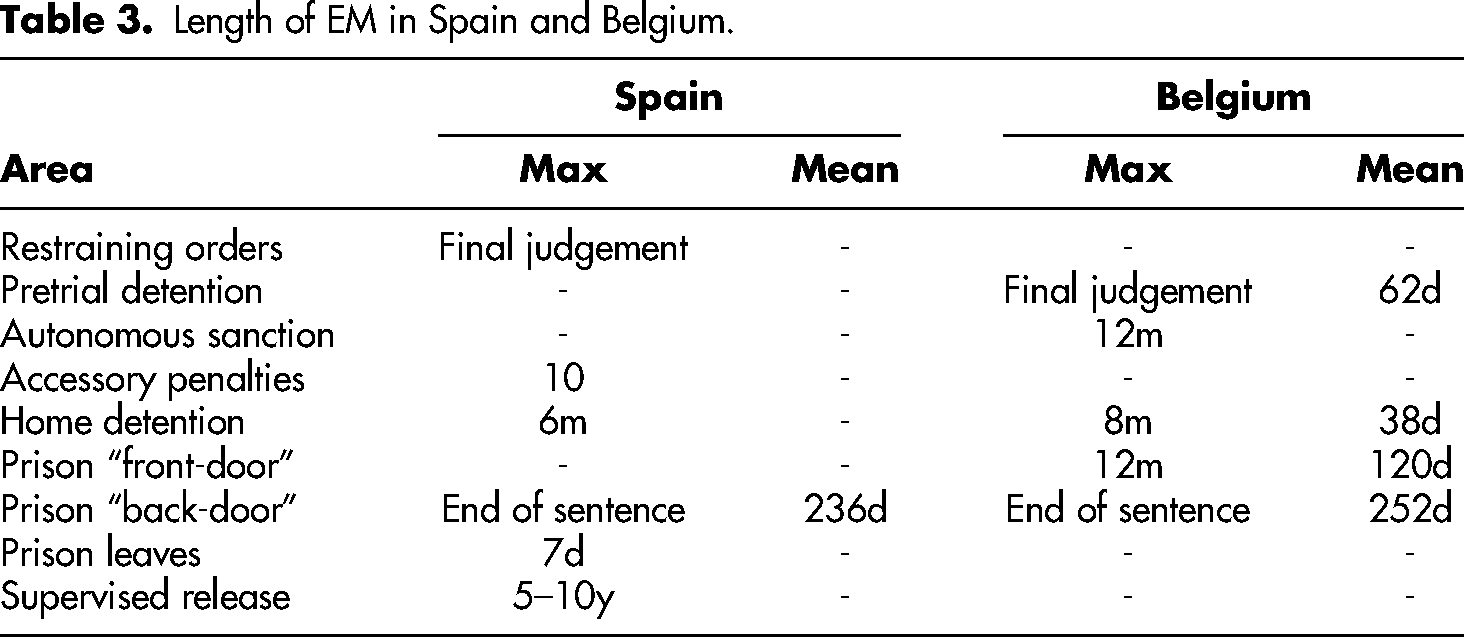
There is no specific regulation about the duration of EM in Spain, for this reason the maximum duration should be drawn from the duration of the measure in which EM is attached. The length of EM as a way of enforcing restraining orders is to be determined by the judge who imposes the restraining order but normally is maximum duration until there is a final judgement (art. 64 Act 1/2004). In the case of accessory penalties, the maximum duration is 10 years (art. 40.3 Criminal Code). Whereas in the context of home detention, the maximum length is fixed in the law in 6 months (art. 37 Criminal Code) (prior to a reform carried out in 2010 the maximum was 12 days as noted by Torres Rosell, 2012a: 23). On the other hand, in the cases of enforcement of a prison sentence depends on the duration of the mentioned sentence but in 2020 had a mean duration of 236 days (General Secretariat of Penitentiary Institutions, 2021). As for prison leaves, the maximum duration is of 7 consecutive days (arts. 154 and 155 Prison Rules). Finally, as an obligation in the context of supervised release the length of the measure could be until 5 years in cases of less serious crimes (i.e. those offences punished with a prison sentence from 3 months until 5 years) and 10 years for serious crimes (e.g. those punished with more than 5 years of prison) (art. 192 Criminal Code). In Belgium, the duration of EM depends on the concrete use of the measure. For pretrial detention there is no formal time limit (Ministerial Circular Letter ET/SE-3), the mean duration in 2015 was of 62 days (Beyens and Roosen, 2016b: 25; 2017: 17). In home detention cases the maximum duration is of 8 months (Beyens and Roosen, 2016b: 9) and in 2015 had a mean duration of 38 days (Beyens and Roosen, 2016b: 25; 2017: 17). When is used in the context of prisons the maximum length is 12 months in the case of prison sentences up to 3 years, with a mean duration of 120 days in 2015 (Beyens and Roosen, 2016b: 25; 2017: 17), and it can last until the end of the sentences when the prison sentence is of more than 3 years. In those cases, it had a mean duration of 252 days in 2015 (Beyens and Roosen, 2016b: 25; 2017: 17). An overview of the duration of the measure is displayed in Table 3.
Length of EM in Spain and Belgium.
Another aspect to assess the intensity of EM is the design as a standalone measure. Under this frame, there can be different, and even contradictory effects, on the perceived intensity. On one hand, when EM is imposed alongside other obligations the situation can be perceived as more intense because of the existence of additional restrictions in daily life. On the other hand, when additional obligations imply some kind of assistance of support, EM is perceived as less intense (Hucklesby et al., 2021: 96). In general terms, on the basis of Spanish legislation in four out of five of the scenarios, EM can be applied as a standalone measure, with the exception of the execution of prison sentences (and in some cases in supervised release). Also in Belgium EM could be considered a standalone measures in four out of five cases, only with the exception of the enforcement of prison sentences of more than 3 years (and in some cases in those up to 3 years).
Normally the use of EM implies the existence of confinement hours at the home of the wearer. Curfew hours are an element of special relevance when it comes to measuring the intensity of the measure. In Spain, curfew hours are only legally provided for home detention, which are 24 h at home (Torres Rosell, 2012a: 23), and for the enforcement of prison sentences, with a minimum of 8 h of confinement (Instruction 13/2006). In the case of Belgium when EM is used in the context of pretrial detention curfew hours are fixed in 24 h (Beyens and Roosen, 2016b: 10; 2017: 15). Individuals serving prison sentences of more than 3 years have a minimum of 4 and a maximum of 12 non-curfew hours (so between 12 and 20 curfew hours) and the concrete distribution is to be fixed by the justice assistant together with the wearer in an individualized basis. In cases of prison sentences shorter than or equal to 3 years, the hours of confinement depend on the enrolment in significant activities such as work or education programs. When there is no enrolment in such activities non-curfew hours are 4 (although non-curfew hours will be increased automatically on a monthly basis and for weekends) (Hucklesby et al., 2021: 96–97). On the contrary, if the wearer has a job or is participating in training programs hours distribution would depend on the duration of the activity. If the activity is full-time, 12 non-curfew hours are granted but if the activity is part-time non-curfew hours are reduced to 8 (Beyens and Roosen, 2016b: 9, 51; 2017: 14).
During curfew hours wearers are forced to stay at home (or at an agreed location). In some cases during non-curfew spatial restrictions can also be imposed. As a consequence, EM may also imply the existence of exclusion areas where monitored individual must not enter, otherwise the technology will warn competent authorities. The intensity of EM would be higher when exclusion zones are larger. Typically in Spain, restraining orders and accessory penalties in the context of gender or domestic violence imply the existence of prohibited areas to protect the victim or its relatives, such as the neighbourhood, the work, or other places they visit frequently. The judge establishes a minimum distance between the victim and the offender or suspect which must not be exceeded (art. 64 Act 1/2004 and art. 48 Criminal Code). In the remaining cases, the existence of exclusion zones is contingent on the existence of other measures or obligations associated with EM. Explicit references to EM exclusion zones could not be found in the Belgian regulation.
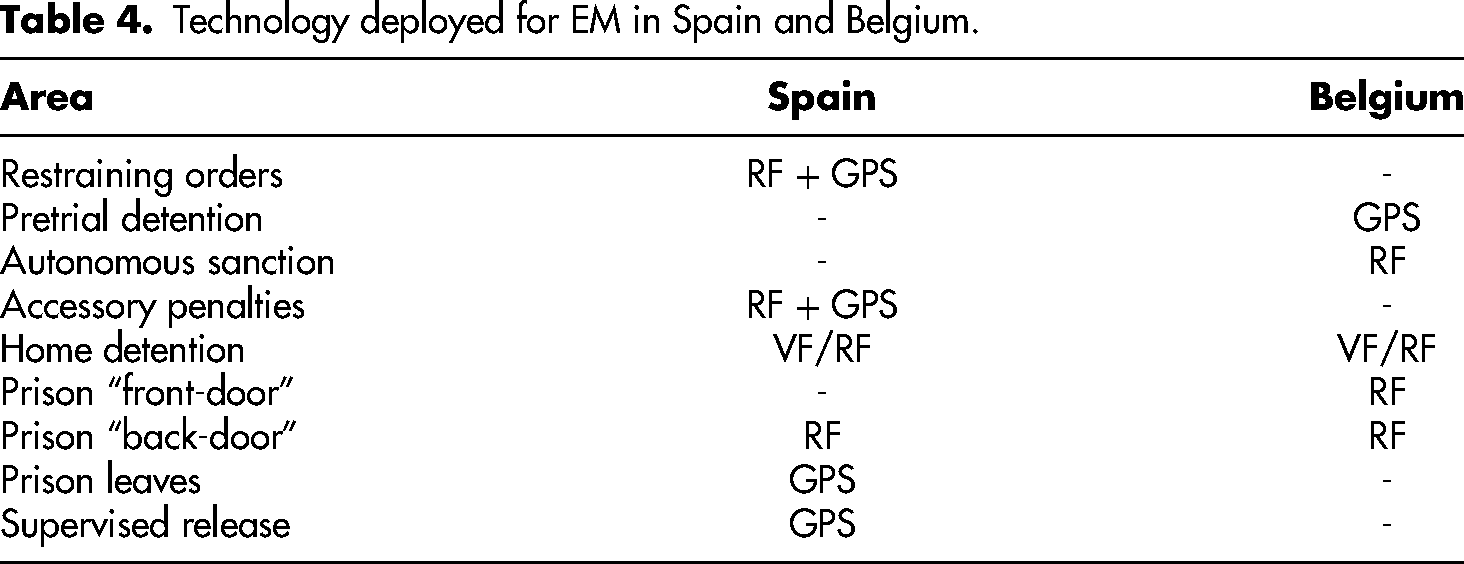
Finally, there can be differences in the intensity of the measure depending on the specific type of technology deployed. Radio-frequency (RF) technology is often used to monitor the presence of the individual in a small area (e.g. the home of the wearer) whereas GPS technology can control the movement, therefore spatial restrictions are not usually imposed giving the individual a sense of more freedom. Table 4 shows the type of technology used in EM in both countries depending on the concrete context of implementation. In Spain for restraining orders and accessory penalties a combination of RF and GPS technologies are used (Action protocol; Arenas García, 2017: 250). In cases of home detention VR technology is the one used more frequently, although RF is also possible (Torres Rosell, 2012a: 20–24). In the enforcement of prison sentences with EM normally RF equipment is deployed (Arenas García, 2017: 166–168; Martí Barrachina, 2019: 213). But when it comes to prison leaves the chosen technology is GPS (Arenas García, 2017: 19). The same is true for supervised releases with EM (Torres Rosell, 2012b: 4–7). According to Hucklesby et al. (2021: 94), in Belgium around 86% of equipment used in EM is based on RF technology and GPS is normally reserved for pre-trial detention.
Technology deployed for EM in Spain and Belgium.
Beyens and Roosen (2016b: 10) point out the paradox of using GPS tracking to merely control the presence of the individual at their residences. Moreover, VR was used in home detention at the beginning but was replaced by RF because of the stress produced by the calls (not only to the individual under the measure but also to their cohabitants), the high risk of false alarms and a sense of lack of control by the authorities (Beyens and Roosen, 2016b: 43–44).
Intrusiveness
Intrusiveness is an important aspect of EM giving that is mostly served at wearers’ homes. The measure normally involves at least two visits to the wearer's address: one for the installation of the equipment and another for the removal. EM can also imply different contacts (via telephone calls or visits). These have the potential not only to affect the individual life but also the life of those who live with or are close to them.
In the enforcement of a prison sentence in Spain, there is a prior contact before the installation of the equipment in the individual's home to verify the availability of the necessary infrastructure. In addition, in those cases, the inmates under EM should have at least one face-to-face control every other week, and they can be subjected to other random controls, such as regular visits to inmates’ workplace or interviews with inmates or their family by prison staff (Arenas García, 2017: 166–168; Martí Barrachina, 2019: 213). In the home detection context, the supervision is carried out by automated telephone calls through VR technology. There is a prior voice registration of the convicted person which would confirm their identity and their presence at the agreed location (Instruction 13/2005; Torres Rosell, 2012a: 20–24). In the context of supervised release, other contacts will depend on the measures associate to EM. In the rest of the cases no further contact other than the installation or removal of the technology is required, only in the event of an incident. In the case of Belgium, the role of justice assistants, who were responsible for the social follow-up of the monitored individuals, has been reduced through time. In cases of prison sentences between 4 and 8 months (which include home detention), the role of justice assistants is inexistent. For those convicted between 8 months and 3 years, justice assistants play a minimum role. An initial formalized contact is developed during the first two weeks, which aims to explain the procedure to follow. After that, contact would be initiated only in case of multiple violations (although monitored individuals can request at their initiative a meeting with justice assistants). However, in some cases, further involvement of justice assistants could be requested by the prison governor if it is considered necessary for the successful execution of the sentence. On the other hand, in the cases of prison sentences longer than 3 years justice assistants play a more significant role. Their functions involve a social enquiry report, asking for the consent of sentenced cohabitants, arranging with monitored individual the schedule of curfew and non-curfew hours and activities, visiting the wearers’ home and having regular meetings (for which there is no fixed frequency) (Beyens and Roosen, 2016b: 15, 19–20). In pretrial detention and as an autonomous sanction there is no provision of regular contact with authorities other than the ones to install/uninstall the equipment (Hucklesby et al., 2021: 96). Although contacts with justice assistants or prison staff could be seen as intrusive they can also be elements that can help to limit the intensity of the measure when they are seen as helpful in terms of reintegration or supportive contacts.
The type of technology has also an impact on intrusiveness. For example, even though GPS can give a sense of more freedom the technology collects more detailed data than can help to reconstruct the daily life of the monitored individuals (see Table 4 previously displayed for an overview of the technology used in each case within each country). And it should be noted that in cases of precautionary measures and accessory penalties for gender or domestic violence in Spain, the technology also affects the victim.
Consequences of non-compliance
Detection and responses to non-compliance are an important aspect of EM because due to the nature of EM the risk of detecting a breach is higher than in other sanctions, although there is room for discretion in deciding when to take action (Hucklesby et al., 2021: 100). As in Spain, EM is used to assure compliance with other measures, incidents with EM normally imply the breach of the former. Judicial determination of a breach of measure or punishment constitutes a specific offence (“breach/infringement of the sentence”) that is enforceable with 6 months up to 1 year of a prison sentence or a fine. There is a specific provision for those who intentionally disable or damage the EM equipment or those who do not carry or fail to take the required measures to keep it properly working. In those cases, a fine is considered. In the specific context of restraining orders and accessory penalties for gender or domestic violence or for those under supervised release, the consequence is always prison between 6 months and 1 year. Apart from those provisions and regarding the enforcement of prison sentences in Spain, when an incident occurs (e.g., a breach of curfew hours) and it is considered a violation the consequences can also be the regression to “normal” open regime or even to second grade (which is the usual regime of life in prison) (Arenas García, 2017: 168–169). In Belgium, two types of breaches can be distinguished: those involving the violation of curfew hours and the rest (manipulation of the device or a violation of other obligations). In the first case, the sanctions will be imposed after the accumulation of those infractions. Although in the case of not being reachable for more than 4 h this will be considered a serious violation and the police will be in charge of finding the individual (Beyens and Roosen, 2016b: 56–61). In the second case, usually an immediate response takes place. In cases of pretrial detention, the investigative judge decides about breach procedures. If the violation is considered severe then GPS tracking could be revoked and the individual will be sent to prison on remand. For prison sentences up to 3 years (in those cases breach procedures are regulated in the Ministerial Circular Letter ET/SE-2), the response to a breach is to be decided by the prison governor who is invested with significant discretion to decide whether EM is revoked and the individual is incarcerated. In cases of curfew infractions, the Ministerial Circular Letter ET/SE-2 is clear about the consequences: (i) for the first two infractions a warning is triggered; (ii) for the third violation a reduction of the free time is to be calculated on the basis of the time of the infraction; (iii) for the fourth and further violations the prison governor can decide to extend the measure a maximum of 6 days or revoke EM and recall the individual to prison. For prison sentences of more than 3 years when a violation is detected, the procedure is more complex because it involves more actors. Justice assistants make an initial assessment about the violation and based on the seriousness decide to inform the sentence implementation court. If a breach of curfew is considered and it is the third violation of that kind it will result in the recalculation of free hours. After several violations the sentence implementation court decides the consequences, ranging from recalculating non-curfew hours or extending the period under EM to recall the monitored individual to prison (Beyens and Roosen, 2016b: 56–61). In the cases that EM act as an autonomous sanction, the sentencing court or judge has to establish a substitute imprisonment which becomes applicable if EM is not fulfilled (Beyens and Roosen, 2016b: 11, 20–21).
Conclusions
Beyens and McNeill (2013:155) warn about the difficulties to make clear conclusions in the comparison of offender supervision measures in different countries because it is a field of penology in which the boundaries are unclear due to the wide range of forms and definitions these measures take. So the following conclusions should be read with caution.
Although EM is still an underused measure relative to other criminal justice measures, its implementation has increased in recent years in both countries. In addition, EM is used as a versatile measure between and within countries. EM has different uses in Spain and Belgium but in both countries there is an implementation of EM in almost all stages of the criminal proceeding.
When data can be compared it seems that in the context of prisons EM is used more in Belgium than in Spain (and that is without taking into account that in Belgium it can also be used as a front-door strategy). Further investigations could look at how much of this greater use in Belgian prisons has helped to reduce prison overcrowding, which was one of the main objectives when introducing the measure, in comparison with Spain.
Regarding the tightness of EM in both regimes, the comparison is difficult due to the differences in the areas of implementation so conclusions are not always generalizable. When it comes to the length, for those situations comparable, in home detention the measure has a longer maximum duration in Belgium and also the mean duration of EM as a back-door strategy is slightly higher in Belgium. Nevertheless, in Spain there are two cases where EM can last up to 10 years (accessory penalties in cases of gender or domestic violence and supervised release). When taking into account the use of EM as a standalone measure both contexts are similar. With regards to curfew hours, in the only comparable scenario, which is for prison sentences (but only for those of more than 3 years in Belgium), monitored individuals could enjoy more fixed non-confinement time in Spain (although in Belgium the curfew hours depend on the individualized agreement with justice assistants). Concerning exclusion zones during non-curfew hours, they are only provided for specific cases in Spanish regulation. Although there is no official data about percentages it seems that in Spain there is greater use of GPS technology than in Belgium. This can have two effects: the measure can be less intense in this regard in Spain than in Belgium, but taking into account intrusiveness the situation is quite the opposite. In addition, it seems mandatory contacts are also more intrusive in Spain because in some cases they can even include visits to the place of work of the monitored individual. Finally, in general terms, the worst possible consequence of non-compliance with EM in the Belgian context is the revocation of the measure. Consequences then seem harder in Spain because violations are responded to by new sentences and all that this entails (such as the existence of new convictions and criminal records).
It should be noted that comparisons are limited because they only take into account official data (and in a few cases data coming from research) and the legal design of the measure. To get a more complete picture it is necessary to carry out comparative research in both contexts, counting on the experiences of those subjected to EM.
Footnotes
Declaration of conflicting interests
The author(s) declared no potential conflicts of interest with respect to the research, authorship, and/or publication of this article.
Funding
The author(s) received no financial support for the research, authorship, and/or publication of this article.
