



Abstract
The association between logistics and militarised humanitarianism is expanding as a strategy for managing migrants' productive and reproductive lives. In Brazil, despite a progressive humanitarian visa policy, the national army remains responsible for the logistics of a severely underfunded humanitarian operation in Brazil’s Amazon. This study, based on participatory action research with 300 migrants, introduces the notion of martialisation to show political and socioeconomic dimensions that are juxtaposed in the military logistics of humanitarian zones and subsequently experienced as a dominant structuring process of exploitation. These are securitization of migration linked to at once the deepening of market liberalism and the normalisation of military intervention within productive and reproductive processes. Findings show that the military leadership in Brazil’s humanitarian response reveals a multi-scalar phenomenon of military rule that contributes to sustaining the repressive labour regime in Brazil’s Amazon. It articulates the structures of labour subordination with the micromanagement of reproductive measures by which migrants are controlled, exploited, and dispossessed of their rights. The conclusion makes the case for the collective organization of migrants in pursuit of transformative action.
Keywords
Introduction
In the past decade, the national army led a cross-agency humanitarian operation to address the influx of over 770,000 Venezuelan refugees in Brazil’s Amazon. This leadership aimed to improve the logistical capacity of the severely underfunded humanitarian response and served to justify the military coordination of refugee camps, food provision, documentation and programmes of labour intermediation. The response occurred in parallel to the remilitarisation of the federal government and the implementation of conservative reforms in the country, including the rollback of labour and social protection.
From a legal perspective, Venezuelans, alongside other migrants in need of humanitarian protection, were granted legal status and made eligible for work and social rights. Despite progressive law-making and dispensations (Acosta and Freier, 2023; Brumat and Geddes, 2023; Zapata and Tapia, 2022) migrants continuously earn less than their counterparts (Gordon, 2024) and mostly face appalling conditions in the informal labour market in Brazil’s Amazon. The few opportunities in terms of formal employment came from other regions, mainly through military-led programmes of relocation and labour intermediation. However, migrants increasingly contest these conditions due to their links to labour abuse, xenophobia, slave labour and human trafficking (Portes Virginio and Ferreira, 2023).
The strategic association between logistics and militarised humanitarianism is not Brazilian in particular, but an expanding strategy for managing migrants' productive and reproductive lives (Bradley, 2024; Pascucci, 2021; Portes Virginio and Ferreira, 2023) In tandem, the globalised trend towards less secure processes of economic production and budget cuts in the humanitarian industry is increasing the logics of supply chains in humanitarian operations (Gordon, 2021; Ziadah, 2019). In Brazil, however, the militarisation of civilian affairs is not simply evidence of further dependence on military Keynesianism (Gilmore, 2007; Graham, 2011). Rather, it is evidence of a pervasive force that has deepened the dependence on foreign capital and super-exploited labour in the liberal era (Galeano, 1999; Portes Virginio et al., 2023).
These developments converge distinctively in Brazil’s Amazon due to the longstanding rationalisation of military rule to achieve geopolitical objectives in the region (Becker, 2005; Gonçalves, 2005). Military power and concepts, particularly sovereignty and logistics, have been influential in politics, policy and practice in colonising the region and optimising its integration into the national export model (Barros, 2021; Wendt and Barnett, 1993). The informalisation of productive and reproductive processes in the workforce is an important legacy of this spatial organisation, with approximately 50% of the urban population in state capital cities concentrated in shanty towns (IBGE, 2024).
An extensive literature on militarised humanitarianism has shown how the militarisation of border zones has articulated the violent containment and exploitation of asylum seekers and refugees (Moreno-Lax, 2018; Nguyen, 2011; Polly Pallister-Wilkins, 2020; Stock et al., 2019). The literature has highlighted that the way in which contemporary humanitarianism has been organised marks the continuous entrenchment of security apparatuses and philanthropic work, linked to both state authorities and to transnational capital, with deep-set colonial roots (de Groot and Regilme, 2021; Hyndman and Giles, 2011).
In making these interventions, critical logistical studies (Cowen, 2014;; Peano, 2021; Ziadah, 2019) have highlighted that the growing militarisation of humanitarian spaces connects migration to this calculative rationale for optimizing commodity circulation across spaces. This encroaching rationale has increased the integration of security approaches to processes of humanitarian commodity flows – both labour and goods – at the cost of social, economic and political insecurities for migrants (Brankamp and Daley, 2020; de Groot and Regilme, 2021; Krifors, 2021; McCormack and Gilbert, 2022; Tazzioli and Garelli, 2020; Weizman, 2011).
However, it was only more recently that this critical scholarship has placed emphasis on reproductive spaces as key sites in which exploitation is facilitated, articulated and contested (Alexander, 2023; Pallister-Wilkins, 2020; Portes Virginio and Ferreira, 2023; Sahraoui, 2020; Tazzioli, 2024; Ticktin, 2011). Yet what remains undertheorized is how the moral and political economies of military rule are embodied and subsumed as capitalist valorisation processes in migrant labour regimes. This paper advances this argument by showing that the logistics of humanitarian protection in Brazil’s Amazon are multiscalar dimensions of military control implicated in the process of commodification, control and exploitation across the spheres of production, reproduction and circulation.
The paper thus addresses the following research question: How does military logistics of the humanitarian response in Brazil’s Amazon shape migrants’ experiences of protection and control within and beyond the workplace? The question interrogates novel articulations of social reproduction, military regulation and subsequent labour exploitation in humanitarian responses that require further understanding where there is concern for transformative action. This paper draws on data gathered for participatory action research on Brazil’s Amazon that included ethnographic observations and the participation of approximately 300 migrants through semi-structured interviews and participatory action workshops.
Findings show the continual and indefinite exposure to military rule normalises a repressive labour regime through the association with the micromanagement of everyday reproductive measures by which migrants are controlled, exploited, and dispossessed of access to their rights: which arguably can be better understood as a form of martialisation. The concept of martialisation here is compatible with the notion of militarisation as a dynamic practice while aiming to push it forward with emphasis on the structural and normalised coordination of military-civilian entanglements as central to the migrant labour regime. In Brazil’s Amazon, the quotidian dependence of migrants on the militarised infrastructures of social reproduction and labour intermediation makes them particularly vulnerable to labour exploitation. The paper contributes to the literature on critical logistics studies and militarised humanitarianism. Today’s humanitarian zones, it is argued, are an example, par excellence, where these two inter-related research agendas come together in the militarised governance of forced displacement.
From protection towards the martialisation of migration
Militarised humanitarian zones are today expanding as an integral, disciplinary, and differentiated component in the logistics of capital and labour circulation (Cowen, 2014; De Genova, 2012; Mezzadra and Neilson, 2019; Tazzioli and Garelli, 2020). These are characterized by multi-network initiatives with substantial military involvement, managing humanitarian operations as an integrated system to reduce operating costs and non-value-added time. This encroaching logistical rationale deepens the way in which military rule intertwines with space and, as such, also increasingly coordinates the migrant labour regime to optimise the value extracted from migrants along gendered and racialised lines of control (Baglioni, 2018; Hyndman and Giles, 2011; Peano, 2021; Portes Virginio and Ferreira, 2023; Schiling, 2022).
Howell (2018) adopts the concept of martial politics to challenge liberal imaginaries about the dichotomy between civilian and military, peace and war. Instead, the author focuses on the interdependence of these as a constitutive power in the liberal order, particularly towards the governance of marginalised ‘people who are subject to war-like (martial) forms of politics’ (p.119). This approach, while paying less attention to militarisation as a dynamic process, is helpful in capturing this paper’s structural context. It provides a more nuanced view of multiscalar engagements in civilian-military relations that goes beyond conventional notions of exclusions pertaining specifically to exceptional military rule or illegal activities as the major source of action. In Brazil's Amazon, military regulation constitutes a distinct foundation and structural presence which is ingrained into the repressive labour regime (Portes Virginio et al., 2023). Thus, the military centrality to the humanitarian response, in collaboration with transnational NGOs and corporations, reveals a contradictory but associated removal of statutory rights and carcerality in socially reproductive life that can be understood as a form of martialisation.
Therefore, the concept of martialisation is employed here to bring together, refine, and explain the political and socioeconomic dimensions of military rule that are juxtaposed in the logistics of the humanitarian response and subsequently experienced as a dominant structuring process of exploitation. These are securitization of migration linked at once to the deepening of market liberalism and the normalisation of military intervention within productive and reproductive processes. As such, martialisation, rather than a state of exception, reveals a historically structured process that is articulated in politics, policy and practice to entangle the control, commodification and exploitation.
Securitization and marketisation
The securitisation of humanitarian zones is an essential part of border control and presents migrants as a security risk and threat, allowing ‘exceptional measures’ such as the monitoring, identification and containment of migrants within the global south (Moreno-Lax, 2018; Riggirozzi et al., 2023; Tazzioli and Garelli, 2020). This approach to securitisation gained traction in the literature as a way to describe the discursive and material shift towards militarised Keynesianism and border control since the end of the 20th century (Gilmore, 2007; Moreno-Lax, 2018). As Mohanty (2011: 82) points out, “in securitised regimes, violence is less about killing, and more about disciplining, surveillance and monitoring movement”.
Previous work on militarised humanitarianism has added complexity to this aspect, showing the quasi-carceral function of securitised humanitarian zones (Hyndman, 2000; Moran et al., 2018; Martin, 2021; Pallister-Wilkins, 2020; Tazzioli and Garelli, 2020). Humanitarian zones, previously framed as demilitarised areas in which apolitical responses ensure displaced civilians protection and dignity, increasingly became militarised zones governed by market-dependent compulsion and the logic of state security (Jones et al., 2017; Moreno-Lax, 2018). The geopolitical use of humanitarian responses co-opted the ethics of humanitarian work (Fassin, 2015; McCormack and Gilbert, 2022; Ticktin, 2011) to introduce more repressive ‘solutions’ to reduce the social costs and collective rights of displaced populations, particularly in border zones in the global south (Portes Virginio and Ferreira, 2023; Weizman, 2011; Ziadah, 2019).
This development renewed interest in the politics and social construction of militarisation in migration control (Gilmore, 2007; Graham, 2011; Martin, 2021; McCormack and Gilbert, 2022; Moran et al., 2018). The rejection of Eurocentric views of militarised humanitarianism and its rhetoric of ‘exceptionalism’, for instance, has sustained research attention on the roots of logistics and its military origin to optimise the global circulation of racialised labour and goods since colonial times (Cowen, 2014; Daley, 2021; Galeano, 1999; Howell, 2019 ; Nisa, 2019). Detention, the restriction to asylum procedures, the militarisation of state borders, urban areas, and the use of cyber-surveillance in makeshift camps are managerial techniques that have increasingly performed a logistic function to regulate the effectiveness and efficiency of labour circulation across borders in contemporary capitalism (De Genova, 2012; Krifors, 2021; Khalili, 2023; Peano, 2021).
While the system of humanitarian protection of refugees is normatively predicated on liberal democratic nostrums of individual freedom in the post Second World War period, it is also intrinsically entrenched in the reproduction of the colonial order and interests of settler colonial states (Ashutosh and Mountz, 2011; Bradley, 2022; Mayblin and Turner, 2020). It could be argued that the expansion of military logistics and geographically dispersed depictions of social unrest in the 21st century are illustrative of the calculative analysis of value transfer (Suwandi, 2019) and carceral control, lowering the total costs of goods and labour globally (Moran et al. 2018; Pallister-Wilkins, 2020; Savell, 2016). These depend upon the collaboration of international organisations and NGOs that have mostly adapted their responses to the limits of the logistics of state security (Achiume, 2019; Bradley, 2024; Gerard and Weber, 2019; Hyndman, 2019).
The degree to which the emerging logistics of militarised humanitarianism (Dixon and Marston, 2011; Hyndman, 2019) interconnect with labour regimes in these southern areas remains a critical research question (Cassidy et al., 2022; Gill et al., 2018; İşleyen, 2018; Stock et al., 2019). A further rationale for this article is that, while escalating at the global level, military rule must be conceptualised as a historically contingent and locally embedded process that operates across production, social reproduction and circulation processes. The effect of such quotidian militarised regulation is explored in the following section.
Martialization
Not unreasonably, the literature on securitization has focused rather more on a Eurocentric and discursive analysis of government, governance and the increasing process of military intervention and surveillance and it has done so in ways that further our understanding of a more recent expansion of border security, militarisation, and citizenship exclusion. In turning attention to Latin America, however, and Brazil in particular, there are distinct ways in which political, moral, and economic techniques of military regulation result from a particular historical process of state-building and class relations.
Militarised regimes are typically referred to as emergency measures or a past colonial political structure, marking the transition from an authoritarian to a liberal democratic order. In Brazil, however, the separation between military and civilians, between violence and politics, is further complicated. Components of military rule have strategically articulated notions of economic development, territorial sovereignty, and citizenship over the past centuries. Thus, the moral and political economy of military rule organises not only spaces within and between the domestic and working lives of migrants in border zones, but also informs the broader fabric of social relations and legal standards that migrants must negotiate.
Since the beginning of 20th century, the local elite has constantly promoted the perception of low state capacity and mismanagement to confer on the military a modernising/civilising role in Brazil and thus to secure the conditions for their self-reproduction in the transition from slave society (until 1888) into class society. Initially, this served against the restauration of the monarchy in Brazil and to address the geopolitical concerns over domestic and international imperialist threats, particularly in the resource-rich Amazonian region ( Gonçalves, 2005; Wendt and Barnett, 1993). These were accompanied by a ‘whitening immigration policy’ that aimed to recruit European migrants, who were perceived as racially superior to the population of unemployed Afro-Brazilians – former enslaved people. The resulting exaltation of military rule contributed to the professionalization and politicisation of the army alongside society’s acceptance of conservative military leadership in a broad range of civil affairs, including the appropriation of ‘instrumental authoritarianism’ to organise national development projects in the following decades (Fausto, 2001).
This background laid the foundations for military interventions in public policies and politics, including during the civil dictatorship of Getúlio Vargas (1937–45) and the civil-military dictatorship (1964–85). Both dictatorships counted on the support of large segments of the population, although at fluctuating levels (Cordeiro, 2009). This was a marked difference from countries of the global north and their concomitant political-economic measures and welfare protection. Migrants themselves were subject to particular ideas of the military, and the regime’s migration policy illustrated this in a concrete way. The Brazilian Foreigner Statute (1980–2017) framed migrants as a security concern, and the legislation facilitated policing and deportation mechanisms, as well as the formal exclusion of migrants from certain citizenship rights, including rights to vote and political organising.
The two decades of right-wing military dictatorship (1964–1985) contributed to furthering the interpenetration of military values into societal structural adjustment. With the support of Western hegemonic powers, the regime’s anti-communist motto combated ‘the national security threat’ from the most vulnerable segments of the working class. A short period of impressive economic growth was linked to further dependence on foreign capital and the systematic deterioration of human rights and labour standards, devaluating wages, dismantling social programmes and repressing forms of labour organisation. The dictatorship ended through a consensual transition between elites and military leaders in the country, which conserved the authoritarian traditions in the new national democratic Constitution (1988) and society. The regime’s violations were seldom investigated, and an amnesty law (1979) protected perpetrators of crimes on behalf of the regime. The army retained many of its institutional prerogative powers together with a public image of managerial efficiency, despite reports of fraud, corruption, hyperinflation and growing socioeconomic and racial inequality (Abreu, 2015; Fausto, 2019).
This period allowed a particular labour regime to emerge, in which military rule shaped legal and social structures of labour subordination with a greater dependence on cheap labour and the exports of commodities. The devaluation of the minimum wage in real terms was approximately 50% during the dictatorship (Abreu, 2015). High rates of informality, substantial differences between the minimum wage and living wages, and low social protection remain an influential legacy of this period and contribute to racial inequalities in the implementation of legal and social protection across the country (Portes Virginio et al., 2023).
The resurgence of militarization in the 2010s resulted from the convergence of a persistent political and economic crisis. The state increasingly depended on military forces to implement economic reforms and public security objectives, containing social unrest and offering temporary provisions in marginalised areas (Savell, 2016; Viana, 2021). Following Rousseff’s (2011–2016) controversial impeachment in 2016, the national army counted on popular support to re-militarise the government. Such support was based on imaginaries of military efficiency to reinstate moral values and to end the economic crisis, political corruption, and high rates of gang criminality in the country.
The remilitarisation was concerted between conservative religious and economic elites and allowed a rise in the number of military personnel in civil executive positions, from approximately 1400 in 2010 to over 6000 in 2020 (Schmidt, 2022). In practice, this militarisation was accompanied by gradual neoliberal reforms, budget cuts for regulatory agencies and the rollback of several social, labour and environmental responsibilities the state had accrued since the end of the dictatorship in the late 1980s. In 2017, these developments negatively impacted the implementation of a new human rights-based migration law, which suffered over 20 line-item vetoes (Brumat and Geddes, 2023).
The process reached its most radical form under the government of far-right former army captain Jair Bolsonaro, who was elected Brazil’s president (2019–2022). Bolsonaro praised the past civil-military dictatorship and advocated for a country ‘economically liberal and conservative in habits’. Views that were strongly endorsed by segments of his supporters (Figure 1). In his foreign policy, Bolsonaro echoed Donald Trump’s views on the Venezuelan crisis to indicate a strategic alignment between the two far-right presidents in Brazil and EUA. These motivations explain how, despite his strong anti-migration rhetoric, Bolsonaro sustained the existing humanitarian operation for Venezuelans in Brazil’s Amazon to promote the army in his anti-communism motto against left-wing groups in Brazil and Venezuela.
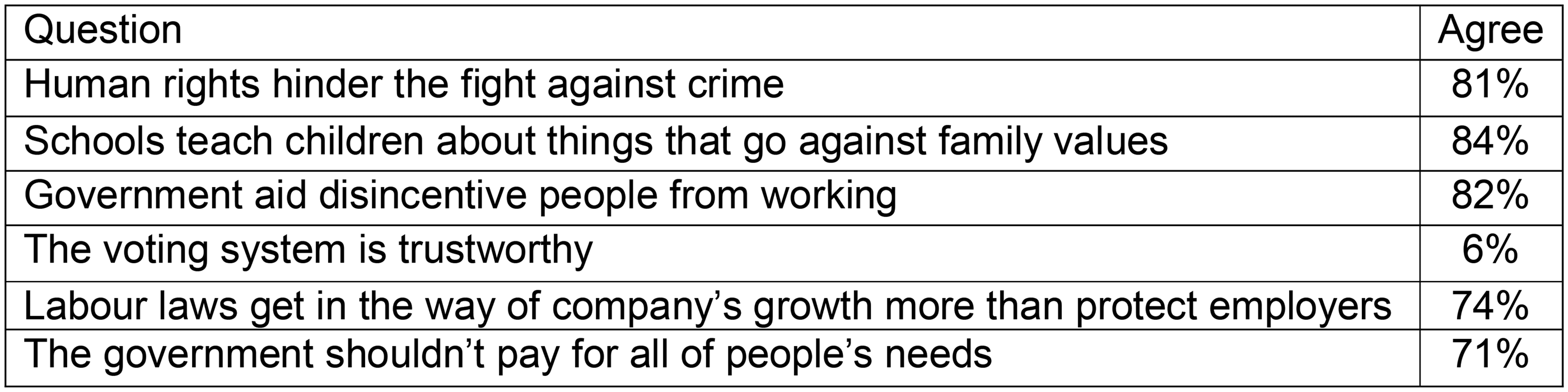
Survey with Bolsonaro’s supporters in São Paulo’s rally (Ortellado, 2023).
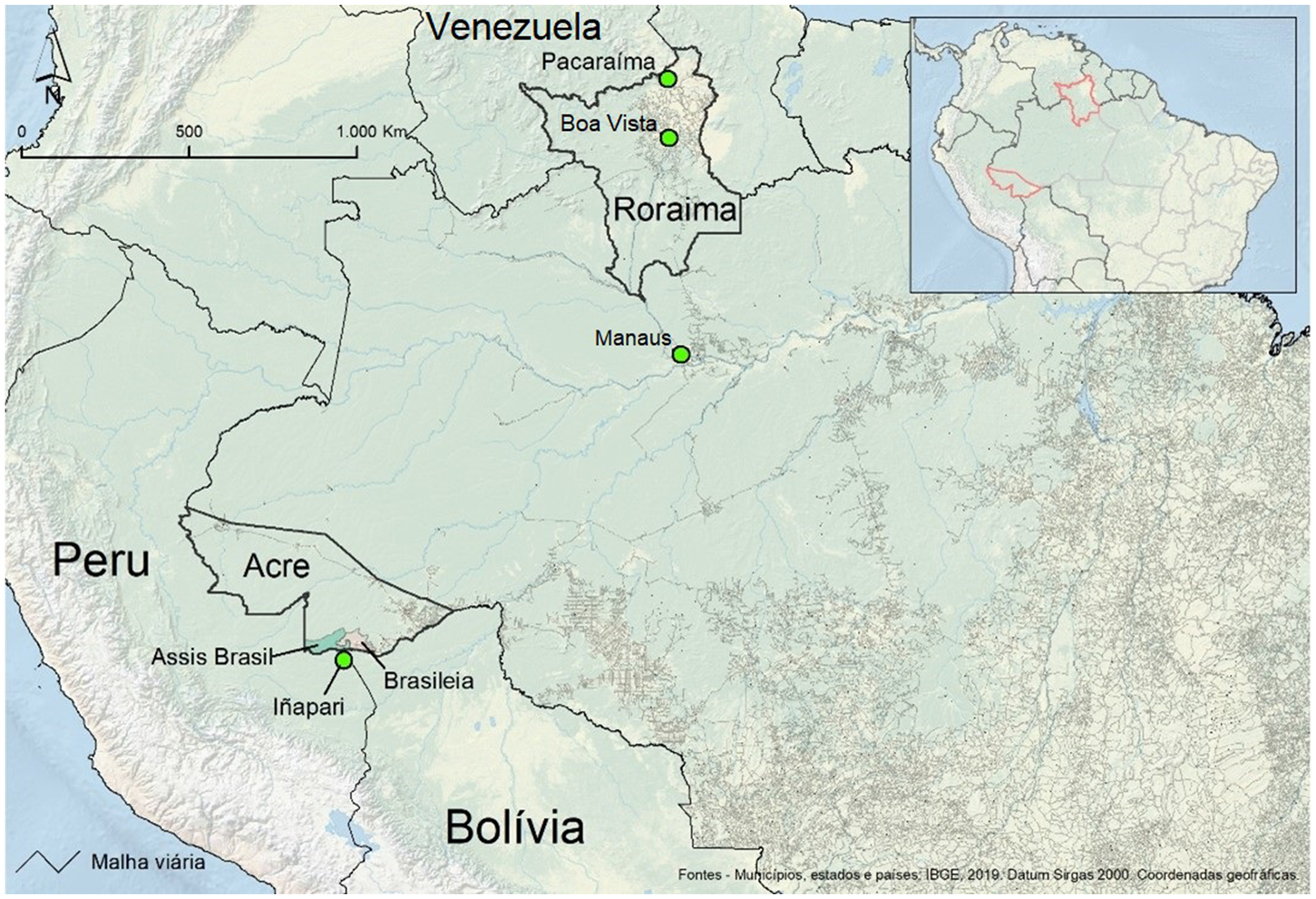
Map of the Amazonian region indicating main entry points for Humanitarian migration in Brazil between 2010 and 2020 (Torres, 2022).
Previous studies of societies with continual experience of military rule highlight the fact that particular values and embodied feelings reproduce military logic in institutional approaches, including the micropolitics of everyday life (Cordeiro, 2009; Lint de and Praino, 2022; Millar, 2020; Mohanty, 2011; Smith et al., 2022). This is not restricted to imaginaries of law and order, but also includes the normalisation and socialisation of civilians into military logics: performative acts of personal sacrifice, carceral spaces, and ‘emergency provisions’ are framed as both necessary and glorified. These developments, in turn, serve to legitimise military rule and to limit the processes by which public, qua independent, structures emerge (Ashutosh, and Mountz, 2011; Bruff and Tansel, 2019).
Recent findings indicate that societies exposed to military rule are also more inclined to support far-right groups, through microstructures of nostalgic nationalism, xenophobic patriotism and anti-democratic manifestations of militarism (Lint de and Praino, 2022; Nisa, 2018 (Nisa, 2019). In addition, these groups engage in conservative norms and identities that promote narratives of ‘military exceptionalism’ as well as gendered and racialized structures of oppression (Achiume, 2019; Mohanty, 2011). A critical example is the ever-growing routinisation of “emergency operations” and carceral models of control in the reproductive spaces of racialised populations, as can be witnessed by the military in Brazilian shanty towns or urbanized slums (Savell, 2016). These are portrayed as hubs of violence, drugs and criminal activity where state-mediated violence is tolerated and normalised.
These material and affective dimensions of military rule are influential in this paper’s militarised context and in contemporary cost-benefit practices of ‘care’ through the work of humanitarian networks that increasingly lack mandates or resources to protect the universal rights of migrants (Ashutosh and Mountz, 2011; Bradley, 2022; Gordon, 2021). As such, even progressive law-making or dispensations in favour of migrant workers in the past decade in Brazil (Brumat and Geddes, 2023; Gordon, 2024; Portes Virginio and Ferreira, 2023), run up against the centrality of the military apparatus: a power dominion whose logistics rationale has fewer concerns for enforcing rights and improving social and labour standards.
Instead, migrants remain conceptualised as passive recipients of aid and, when entitled to protection, are seen as self-reliant individuals responsible for their welfare and that of their families (Parsanoglou, 2020). The military leadership in migration governance arguably favours masculinist discourses of individualism, self-reliance, and heroism (Millar, 2020; Mohanty, 2011; Sahraoui, 2020) and, in concert, has created forms of unpaid work (Tazzioli, 2024) and externalised reproductive costs to the household (Baglioni, 2018; Portes Virginio et al., 2023).
Hence, the notion of the ‘uncivilised migrant’, requires training and voluntary work to increase their human capital, entrepreneurial skills, and knowledge of local legislation (Martin and Tazzioli, 2023; Parsanoglou, 2020). In contrast to the colonial-liberal entanglement guiding this provision (Garvey et al., 2022; Portes Virginio et al., 2022), job insecurity, class, gender and racial inequality have been the result (McDowell et al., 2009). Moreover, for the most part, social services and labour intermediation remain informal or business-oriented (McGrath and Mieres, 2022; Mezzadri, 2016).
This is because the calculative rationale of logistics control function to uphold military power over refugee provisions and continuously perpetrate the administration of the labour regime (Galeano, 1999; Nisa, 2019). In Brazil’s Amazon, the terrain in which the logistics of humanitarian response operates reveals a historically contingent and locally embedded process of military rule that operates beyond legal exclusions and militarised containment, as commonly explored in the literature. As the paper will reveal, the testimonies of migrant workers point to the dovetailing of postcolonial patterns of military domination (Achiume, 2019; Mayblin and Turner, 2020) with liberal market discipline in ways that affect the productive and reproductive realms of the recently arrived.
Methodology
This paper draws on data gathered for participatory action research that mapped the living and working conditions of migrant workers across the Brazilian Amazon region. This approach was motivated by previous research led by the authors (Portes Virginio et al., 2022; Portes Virginio et al., 2023, which identified that, despite legal rights, the experiences of migrants in Brazil’s Amazon were creating understudied patterns of subordination. The participatory action approach aimed to engage with community knowledge, values and political practices as alternative epistemic spaces (Daley, 2021; Gordon, 2024; Hyndman, 2019) to the hierarchical structure in the humanitarian response. The study was ethically approved and fieldwork was conducted between February 2019 and December 2020. The paper focuses on the experiences of migrants in Boa Vista, Rorainópolis and Pacaraima (Roraima); and Manaus (Amazonas). These cities were within the humanitarian zone, that is, a corridor that was further militarised due to the humanitarian operation. The term humanitarian zone is not a legal definition in Brazil but rather a geographical space where material aspects of the humanitarian response in Brazil’s Amazon are concentrated (Figure 2).
The study comprised three stages: diagnostic, participatory discussion, and public engagement. The first stage included ethnographic observations and 80 semi-structured interviews in these different Brazilian states, and the literature informed key areas of focus: migratory journey, accommodation, living conditions, community, labour market and access to social rights and services. To expand the collection of contextual information, border zones, shelters and other areas of work, recruitment, assistance, and accommodation were visited, including several refugee camps led by the Welcome operation. Participants were selected in these locations and in migrant community organisations. Thanks to the length and depth of this fieldwork, it was possible to identify migrants who were community leaders and activists in their contexts.
A purposive sample was defined and organized across each site of study. Interviews with immigrants were conducted in person and at pre-established locations chosen by the participants, including coffee shops, places of community gathering, public squares and places of accommodation. These locations also provided powerful insights about the living and working conditions of migrants and their daily struggles. The 90-minute interviews were conducted in Portuguese, English, French or Spanish according to the preferences of the participants. All participants were anonymized and had lived in the Amazon region at some point in their journey. The sampling consisted of 51 men and 29 women from Venezuela, Haiti, Senegal, Nigeria, Cuba and Syria. All but three participants are between 20 and 45 years old. Interviews were coded and thematic analyses were used.
The second stage consisted of participatory action workshops. Approximately 230 migrants participated in the first two workshops. They occurred in independent venues without the presence of external organizations. An experienced facilitator trained a facilitation team of academics and migrant community leaders in preparation for the workshops. The selection of team members supported a balanced representation of gender, age range, ethnicity and nationality. The team collectively agreed on techniques and research questions to lead the consultation and analysis in the workshops. In the participatory action workshop, the 230 migrants decided collectively the main problems, priorities and potential solutions. A follow-up workshop with research partners, including civil servants, trade unions and human rights activists, defined a collaborative strategy to support migrants demands.
The third stage focused on public engagement and the implementation of the commitments the research team assumed with migrant workers. The research team facilitated the formal meetings between the representatives of these workers and statutory authorities, including public defenders, labour inspectors and judges. The meetings were a central element of migrants’ demands to express their political voices. Migrants’ representatives shared with statutory authorities their collective demands. Multimedia outputs such as booklets, websites and podcasts were co-produced in partnership with these participants to disseminate the results to a larger audience. The research project also supported migrant community organisations with resources, training, expert assistance according to their specific needs and action plans. It also supported initiatives to build a national network of migrants’ community organisations. The authors are academics and were involved in all stages of the research process. For the specific argument of the paper and its ethical approach to alternative epistemic spaces, we focus on both the participatory action workshops and the semi-structured interviews with migrants.
The Amazonian humanitarian zone
In the last decade, more than 850,000 migrants in need of humanitarian protection arrived in Brazil, mainly through the Brazilian Amazonian region. These immigrants consist of Senegalese, Colombians, Afghans, Ukrainians, Syrians, Nigerians, Cubans, Angolans, but mainly Haitians and Venezuelans. All these received formal migratory statuses that have not imposed major legal restrictions on access to social rights including entitlement to work. While in principle several state agencies are involved in this humanitarian response, in practice, the military leadership supports the continuation of a pattern of control that asserts its discipline and tactics over workers in a structurally precarious labour market in Brazil’s Amazon (Figure 2).
The contemporary situation of Venezuelans stands out because it is considered the largest international forced displacement in the world, comprising nearly 8 million migrants who have left their homeland since 2015 – over 35% of the Venezuelan population. Despite the legal right to work and move across Brazil, most stay in the states of Amazonas and Roraima. Both states are linked by road and Roraima shares its foreign borders with Venezuela. Beyond this, migrants must travel distances of up to 4000 kilometres by airplane to arrive in the more developed southern regions. This creates a distinct containment with a substantial impact on local demographic dynamics, not only in border towns, but also in the two capital cities – Manaus and Boa Vista. As an example, Boa Vista has increased in population by over 20% since the arrival of Venezuelans.
The declaration of a humanitarian crisis allowed the Brazilian government to organise a militarised humanitarian response called ‘Welcome Operation’ (2018). It relied on the work of United Nations agencies (mainly UNHCR and OIM) and a wide range of philanthropic organisations that work under the umbrella of humanitarian work, mainly funded by the United States, Canada and Western European countries (UNHCR, 2020). The operation responded to the dramatic rise of social conflicts, xenophobia (Zapata and Tapia, 2022), and informal settlement migrants in central urban areas. This was advertised nationwide with a strong emphasis on humanitarian relief for Venezuelans, with its attendant moral values exuding compassion, aid, and assistance. The operation pursued has the hallmarks of humanitarian aid, yet it is driven by the military, which was justified based on the army’s logistic skills, capacity and efficiency to provide border safety and ‘people management’ (Moulin Aguiar and Magalhães, 2020). This also relates to humanitarian aid to Venezuelans remaining the most underfunded in modern history. By comparison, the amount of Humanitarian aid available to Venezuelans amounted to approximately $125 per person while the amount available to Syrian refugees is $1500 per refugee (Bahar and Dooley, 2019).
In practice, the logistical rationale is to optimize control and to make migrants available in the commodity form, which would thus be timely and efficient from a financial perspective, reducing the volume of state resources necessary for the reproductive process. The interconnection is vividly manifested in the micromanagement of the temporary infrastructure and 'value-added activities’ to speed the incorporation of migrants into the labour market in the Amazonian region and beyond.
The interpretation of such a ‘logistic approach’ is important in illustrating at least two aspects of migrants’ lives. First, the nature of the autonomy in their quotidian labour in both productive and reproductive spaces. Second, a vital feature in defining migrants as recipients of aid rather than rights. Migrants, in response to this context, describe experiences ranging from despair to a distinct compulsion to work: There are 600 hundred people in a single shelter. It is a huge humiliation. I live in a makeshift tent made of plastic and the mattress … It is too hot and insalubrious. Lots of scabies, respiratory problems, lots of noises … many reports of hepatitis, flu … you name it. We have to go out and look for alternatives. (Caroline Velazco, woman, Venezuelan) We are paralysed here. We cannot solve it. We cannot send anything to Venezuela. There is this whole pressure, this mortification. I am here but I am unable to work, what am I going to do? How do I help? Many questions that pass in my mind on a daily basis. I feel I want to cry facing such impotence. I just have to hold on. (Manolo, man, Venezuelan)
However, as Manolo’s narrative emphasises, the labour market is structurally precarious. It is characterised by acute job insecurity, cuts in social welfare and high unemployment rates, which have been rising sharply since 2014 with the neoliberal reforms implemented during the re-militarisation of the state in the past decade. The unemployment rate of all the states receiving Venezuelans substantially exceeded the national unemployment rate of 12% during the period of research. Most immigrants stay in (state) capital cities where the job market offers more, if very precarious, opportunities.
At the time of writing, the unemployment rate was 19.4% in Boa Vista (RR), and 15.7% in Manaus (AM) (IBGE, 2020). Approximately 30% of workers with formal employment have found only part-time jobs, and none have managed to work a full 40-hour week. As a result, despite being a gateway and residence for tens of thousands of immigrants, the region has accounted for less than 2% of formal jobs created for immigrants in the last decade (IBGE, 2020). The predominance of informal work in the region is considerably above the national rate of 36.3%. The average rate of informal employment in the these capital cities is above 47%, while it reaches up to 70.4% in the rest of the region. Average income is also an issue where the average wage in the capital cities accounts for less than 50% of the national living wage of R$3980, while this falls to approximately 30% in local towns. However, Venezuelans make up to four times less than an average Brazilian in similar conditions (IPEAD, 2021). This only added to the sense of despair and dissatisfaction: A lot of people give up and just wait. They say, ‘I will leave when they relocate me to another place’. They (The Humanitarian actors) question our commitment to find work here. They say that we do not recognize what they do for us, the shelters … They say that all this structure does not exist in other countries. (Miguel Bolivar, man, Venezuelan) There are many cases of exploitation. We have to look for work but carefully. The official reports says there are very few cases because migrants are afraid of reporting abuses. They are afraid of retaliation. As you say around here, there are mafias so the migrant must look the other way. (Hugo Rivero, man, Venezuelan)
Importantly, these labour market indicators are not simply the result of the inflow of migrants but rather of the stuttering imposition of military projects for the regional development and in the past century (Becker, 2005; Gonçalves, 2005). Despite fiscal incentives for industrialisation during the civil-military dictatorship (1964–85), these logistics-led development plans depended largely on periods of commodity boom, export-oriented infrastructure projects, and, recently, the expansion of large-scale agriculture, illegal logging and livestock. While the military encouraged disorderly migration to the region, the demand for this workforce was temporary and made increasingly redundant by the mechanisation of production and the end of export cycles in particular commodities.
These came with a lack of formal protection, public infrastructure and compassion for the reproduction of local communities. Instead, the missionary character of the church was encouraged to provide relief and ‘civilise’ the Amazon’s interior, including a wide range of ethnic and indigenous groups. During Brazil’s civil-military dictatorship, this also assumed forms of contestation and became an important voice, shedding light on the rising cases of human rights violations including slave labour, involving domestic and foreign migrants (Portes Virginio et al., 2022). Successive governments never fully abandoned this paradigm. This scale of structural vulnerability and informalisation highlights that, while some aspects of humanitarian protection are similar to other contexts, migrants with a full legal status find themselves particularly vulnerable to exploitation in the labour market.
Between the cross and the sword
The encroaching militarisation of public policies and politics permeates the socially reproductive lives of migrants. The presence of the national army is widespread and the military is actively managing refugee camps, conducting surveillance, and providing migrants with food, documentation, vaccinations, social assistance, and secure living areas. More than an anticipated militarisation of the border, military logistics become processes of time-space management of migrant’s daily routines in urban areas, especially in points of transit and accommodation. This micromanagement contributes to convince or coerce migrants into participating in the labour market where many scratch an existence.
Typically, hundreds of Venezuelans queue daily to receive support from the Welcome Operation. However, this system of transnational funding also means that other nationals, such as Haitians and Senegalese, while granted humanitarian protection in Brazil, are not allowed to receive any support from this operation, allegedly due to donor restrictions. This contributed to racialized regulations and unlawful cleavages among migrants as the nature of humanitarian visas and protection needs were constantly refracted through the lens of geopolitics (Gross-Wyrtzen, 2020). As Robert states: There is no aid to Haitians. No one wanna know about Haitians anymore. It is just about the Venezuelans, the help is just for them. We have to take care of ourselves. (Robert Merval, Haitian)
For Venezuelans, this financial booster does not necessarily mean further protection but rather opens the possibility for abuse, exploitation, and militarised control. At the time of data collection, there were 13 formal refugee camps in the state of Roraima. Each camp could shelter between 300 and 1000 people who lived in shared tents. This was by no means enough to settle more than 110,000 in the region or provide subsistence for refugees, as Margarida illustrates: We need to go out and make some money to pay for basic items such deodorant, shampoo and shoes … I only have these (point to her old flip flops). (…) (Margarida López, woman, Venezuelan)
This refugee accommodation existed alongside improvised overcrowded shelters, abandoned buildings, or tents in public areas such as bus stations, squares, and under highway overpasses. In the long term, the logic of social reproduction within the purview of military logistics makes the daily experiences of migrants inextricable from imaginaries of ‘value-added activities’ and spatial order to increase logistics performance. In the main bus station, as observed during fieldwork, the military provides hundreds of migrants with camping tents at night. They were sleeping in tents but lacked basic infrastructure and were forced to leave at 6 a.m. every day with all their personal items (Figure 3).
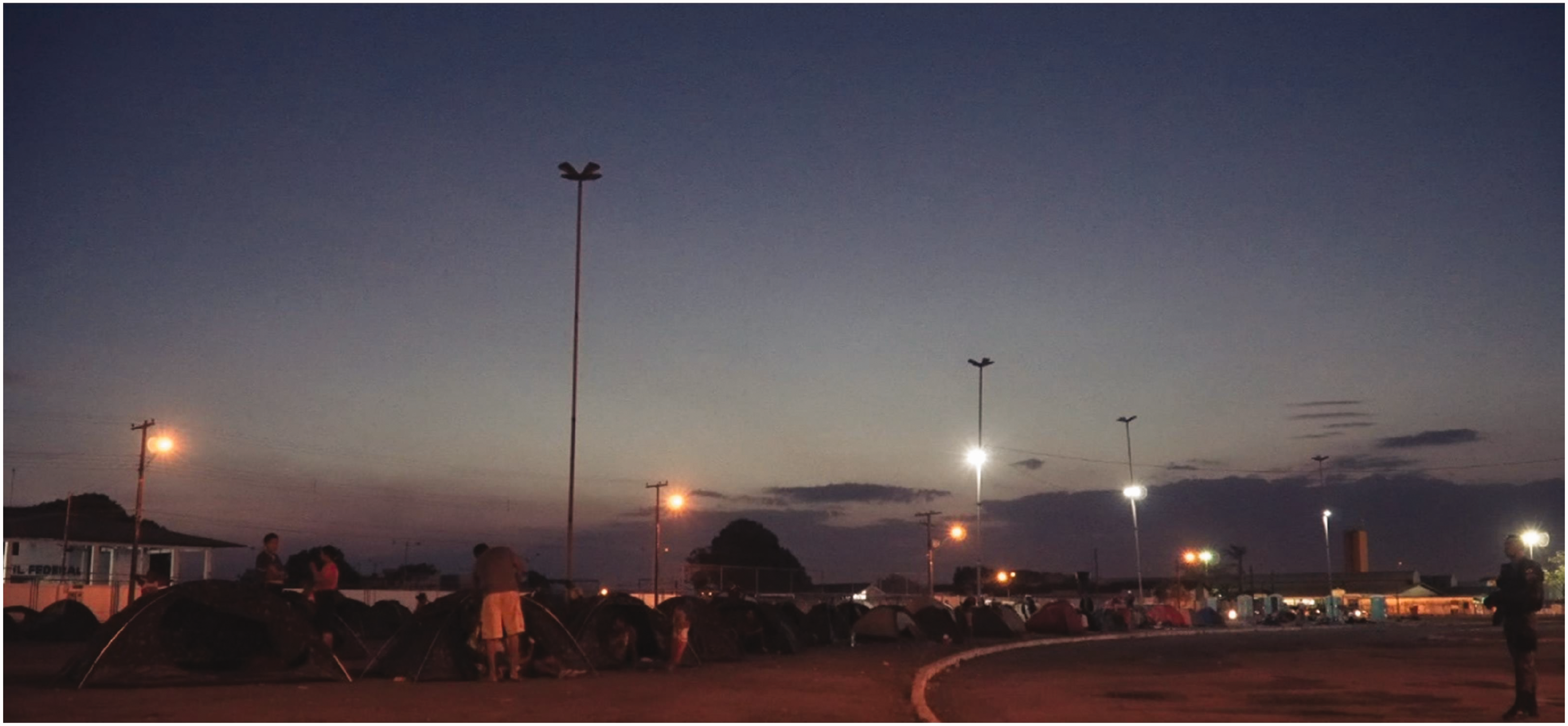
Under military supervision, refugees start packing at 5:40 a.m. in the bus station in Boa Vista, Roraima.
In the militarised shelters, other disciplinary restrictions on freedom were observed: migrants experienced curfews, had 3 minutes to shower, and restrict time to eat and leave their tents. These measures reveal the impact of military logistics on domestic life. As Marcia, a single mother, recalls: They (the military) are entering into the shelter at night covering their faces, guns in the hands but there are children there. This is no prison and the children get scared. We gathered the whole population. There were entering into our tent without our permission and they searched it. In my opinion, this is a violation against all kind of privacy. (Marcia Gomes, woman, Venezuelan) On a individual level, I feel like an indigent. No one wants to walk the whole day and then arrive at night and stay without taking a shower (…) You have to queue to have lunch(…) You must fight for a plate of food which I had never done. I must sleep on the floor, not even in Venezuela I had done this. (Pablo Martins, man, Venezuelan) We have to leave (the shelter) at six every morning. To be entrepreneurs, to try doing lots of stuff, because this was temporary. The church was offering something temporary. We were sleeping in tents, but often there was no space so we had to stay outside. (Margarida, woman, Venezuelan) I, as many other Venezuelans, want to validate our diplomas and qualifications. This is key for us but this remains hard in Brazil, it is a strong issue of social class. (Maya Perez, woman, Venezuelan)
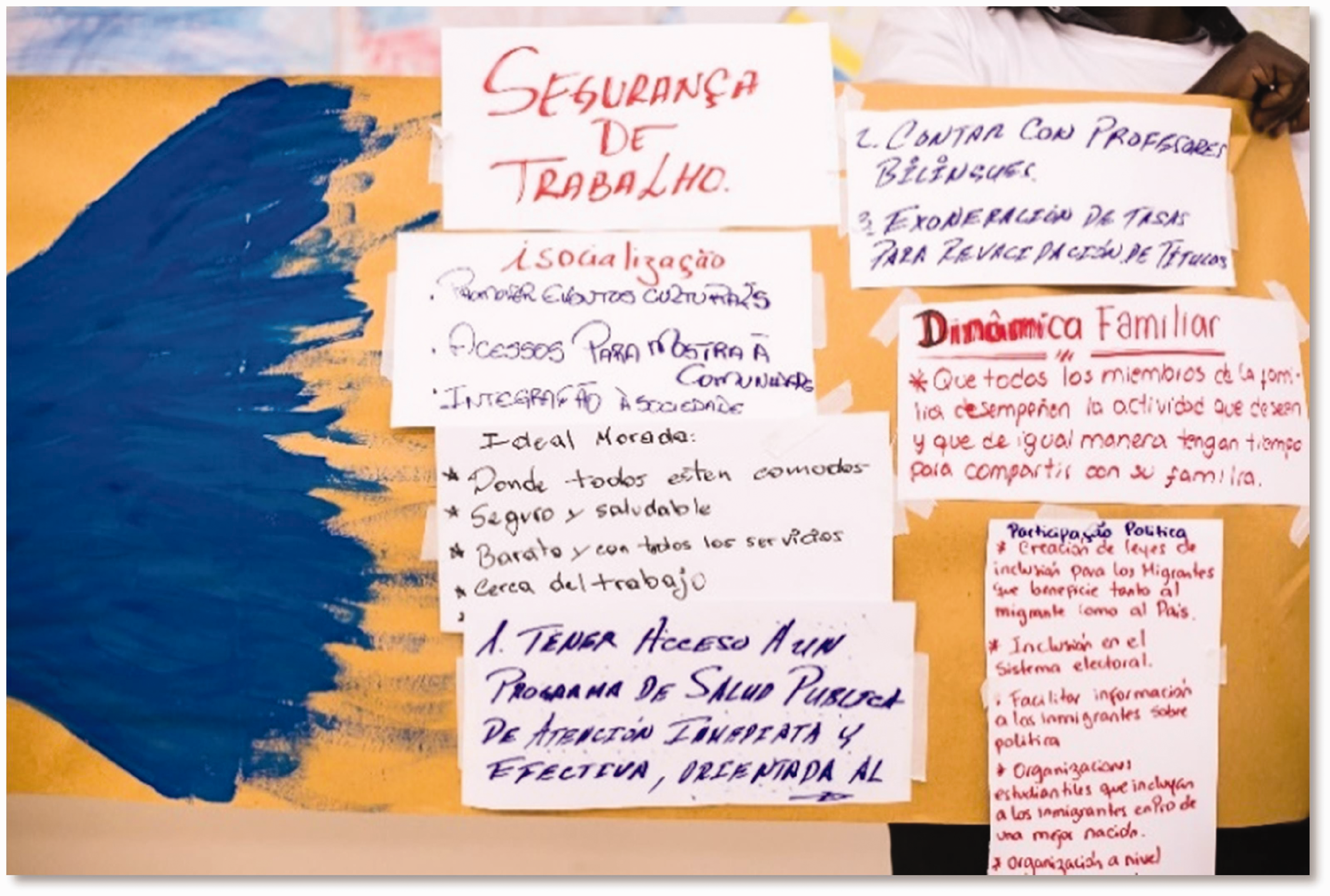
Example of demands made by migrants in participatory workshops.
Labour at the crossroads
It is in the high rates of informalisation that migrants find themselves at the junction of martial and postcolonial influences, leading to experiences of criminalisation and exploitation. The visibility of migrants in the streets increased the prevalence of xenophobic attacks and daily discrimination. In turn, migrants resist the permanent sense of displacement by creating strategies of family work, temporary shelter, and bringing socially reproductive work into the light of public spaces. Meanwhile, emerging cases of assault and death have been reported for those migrants who contest exploitation in the Brazilian labour market. When we are in the centre, we feel we are disturbing, bothering people. But I don’t have anything else to do. I don’t have food. We need to do something (…) Is there another way? No! It is bad but it is the only way. It is that or nothing and with nothing, I cannot eat, work or study. I lose my hope about everything. (Marie Lemarquis, woman, Venezuelan) I arrived and cleaned his home. (…) When he had to pay me in the afternoon, he gave 20 reais. I did all this work and he paid me 20 reais. I asked him and he told me that it was just to help me. (…) He used to pay 60 reais for this. The bosses did not want an employee. They wanted a wife. If it was a woman, she wanted to exploit you. If it was a man, it was sexual harassment or worse. So I decided I would not do this anymore. (Marie Lemarquis, woman, Haitian) Travel tickets from Roraima are too expensive. There are the most expensive in Brazil. By making only these 30 reais, I will not have 1000 reais in a year, so I will never be able to leave this place. (Margarida, woman, Venezuelan)
As both narratives also show, this is particularly complicated by colonial legacies and patriarchal cultures assigning women care responsibilities together with the dangers associated with gender violence. The Amazonian state of Roraima, for instance, leads national statistics for violence against women, including femicide (IBGE, 2020). The cuts in social care and lack of a suitable household make parents, or more commonly single mothers, unable to leave their children in a safe place, either at home, or in a school or nursery. The care and socialization of children takes place on the streets or in militarised camps due to the lack of adequate infrastructure for social reproduction. These children also end up being a complementary labour force in their struggle for subsistence.
In the workshops, migrants’ collective demands were for more cooperative forms of production and support for their community organisations which is crucial to expanding their collective power since working and citizenship rights are insufficient for ensuring dignified conditions. However, they highlight that the demands are not backed up by the federal military operation, while local governments prefer instead to push forward illegal measures that restrict access to public education and health. In addition, migrants’ collective voice highlighted the fact that the presence of humanitarian networks often hinders wider aspects of migrants’ collective bargaining. International organisations and NGOs lead the direct dialogue with external actors and public representatives, reproducing their understanding of safety and protection in the humanitarian zone.
The logistical approach also allowed the army to be actively involved in labour intermediation, leading programmes of geographical relocation of Venezuelans to other regions in Brazil. The programme, managed in concertation with international organisations, has also offered the labour of migrants to transnational corporations across the country, while organising the travel and covering employers’ recruitment and transportation costs. The relocation depends on the individual consent of migrants and the emphasis is providing better economic opportunities for migrants in more developed regions and alleviating the pressures on the humanitarian operation.
While this geographical relocation could indicate a gateway for Venezuelans, it often aggravates the situation. The number of migrants relocated became a measurement indicator of logistics performance and a quantifiable target for ostensibly advertising the efficiency of the operation for donors worldwide (IOM, 2024).
However, this programme has left labour experts and national agencies for labour rights outside the design, implementation and long term monitoring of the relocation programme (Portes Virginio and Ferreira, 2023). This supply of labour became a strategic advantage for some employers who have been systematically involved in labour abuses, slave labour and human trafficking. Growing evidence also shows that unlawful terms of contract have been negotiated between the army and employers (Portes Virginio and Ferreira, 2023). The logistical rationale thus enables the martial terrain on which both human rights and labour protection are undermined, opposing the aspirations of migrants: What happens if they do not find a company that needs one, or 300 or 20 people to work? What happens? What am I gonna eat while staying at someone’s mercy? If I am hungry and staving, why do I have to wait? No. It’s not acceptable. I don’t have to wait until seven in the morning when the food is served (in the shelter). That is why I want to work, I need to work, to build mine and my son’s future. (Rosa Vasquez, woman, Venezuelan) They (companies) ask for men. I heard that very little employers want women. I mean, among the companies that are actually recruiting. They send a group of people to the companies each 40 days or so depending on their needs. (…) Sometimes they recruit men or couples, but those without children. Otherwise it costs too much (the travel expenses). (Carlos Garcia, man, Venezuelan)
To mitigate certain aspects of this precarity, most migrants end up working as street vendors as an alternative, leaving, notably women, to search for the protection of open spaces. The average remuneration for street vendors is similar, but it requires extensive hours of unpaid labour in an owner’s home, and frequently involves the work of family members and myriad production costs. The resulting dynamic is a 10-to-14-hour journey of collective work. Under temperatures constantly above 38 degrees, migrants sell water bottles, homemade food items and ice cream at traffic lights.
As the Haitian Piere Maurice explained, other street vendors, such as herself, take risks by selling small items of clothing to make a slightly higher profit. However, both Haitians and Senegalese described a sense of racial prejudice from the local population and military police, which is a legacy of the most repressive ages of the civil-military dictatorship and remains in place to provide civil services while protected by military law. Black migrants indicate that, while the presence of Venezuelans is tolerated due to the military operation, they feel targeted. The police confiscate migrants’ produce based on the assertion that their tax invoices are not in order or that they have problems with their street vendor license. This is systematically supported by the local population who harass and denounce the presence of migrants in street vending. The resistance also creates a distinct sense of displacement, with migrants organising their working time and selling points across the peripheral areas to escape this type of surveillance, as the leaders of the Senegalese association explained.
A small number received job offers to work in isolated areas, for example, in the timber industry. These are commonly linked to the rising case of illegal logging and slave labour in the Amazon region, as vividly described by a Venezuelan who had his finger amputated due to the appalling labour conditions where he was working in Rorainópolis, in Roraima. The final testimony illustrates the conflicted role of the church in the organisation of labour. Johnson Laurent highlighted that he, along with dozens of Haitians, had been making and selling popsicles on the street for over four years. They receive approximately 50% profit while the rest goes to the local church which established the popsicle industry to support migrants in the wake of the Haitian migration crisis in the region in the past decade.
Conclusion
The geopolitics of migration are confining greater numbers of migrants to humanitarian zones in the global south, where logistical approaches to severely underfunded humanitarian responses coordinate the incorporation of migrants into repressive labour regimes. However, the expanding layers and outsourced connections in the contemporary militarisation of migration and social reproduction necessitate novel ways of understanding disruptions and vulnerabilities in the labour market.
The notion of martialisation reveals the conflation of securitization of migration linked at once to the deepening of market liberalism and the normalisation of military intervention within productive and reproductive processes. The concept offers a more nuanced view of civilian-military entanglements in the management of humanitarian response and labour regimes. In Brazil’s Amazon, this militarised control, in collaboration with transnational NGOs and corporations, goes beyond conventional conceptualisations of securitisation and militarisation to unveil a distinct process of state building and class relations.
While Brazil’s humanitarian visa policy is progressive, the military-led logistical approach serves to facilitate the subordination of migrants to the labour regime. Instead of a rights-based approach (Gordon, 2021; Portes Virginio and Ferreira, 2023), the emphasis is to make migrants available in the commodity form. The micromanagement of temporary reproductive infrastructures, which aims to speed up their incorporation into the labour market, has limited enforcement and monitoring of the employment relationship. Thus, the logistics realm is embedded in marked-centred tactics that deepen the subordination to exploitation within humanitarian zones (Martin and Tazzioli, 2023; McGrath and Mieres, 2022; Portes Virginio and Ferreira, 2023). While this finding aligns with previous work on the logistics of migration in reproductive spaces (Mezzadri, 2016; Peano, 2021; Tazzioli, 2024), it differs in the scale and extent to which military rule has structured the exploitation of labour and the imaginaries of spatial control, citizenship and economic development.
In Brazil’s Amazon, the morality and politics of military rule represent the longstanding method for achieving strategic objectives. It coordinates the delivery of humanitarian support alongside historically structured processes of structural adjustment, wage devaluation, high levels of informality and export-oriented infrastructure projects in the region. The gap between national rights and their practical implementation is wider in the region, and further exacerbated by the continued rollback of the regulatory state from labour protection, the social wage and political rights. This ‘martial terrain’ (Howell, 2018) is manifested and coordinated in a multiscalar dimension: politics, policy and practice. The military leadership in the humanitarian operation is thus better understood as constituted by and through association with the civil-military strategy for the logistics of goods and labour (Chua et al., 2018; Cowen, 2014; Ziadah, 2019) and their postcolonial continuities in Brazil’s Amazon. However, the need for effective humanitarian protection and the lack of alternative resources make this newly arrived population particularly vulnerable to this mode of control. As a result, military logistics are not only entangling, but also deepening patterns of labour control and super-exploitation among migrant workers in Brazil (Portes Virginio et al., 2023).
While the experiences of all migrants vary in form and intensity, they are marked by the normalisation and socialisation of military rule. Migrants have collective demands for more immediate and longer phases of reproduction processes such as housing, dignified work, and welfare protection. However, in a climate of deregulated labour markets and anti-migration protests in society, this ‘unethical commodification’ (McGrath and Mieres, 2022) of protection rubs up against the liberal imaginaries of security, freedom, and entrepreneurism. The fact that the militarisation of migration governance in Brazil’s Amazon remains present in 2023 and is concomitant with the continuous support for the militarisation of politics and public policies in Brazil further supports our argument.
The article also illustrates the manner in which the universal character of public policies and statutory protection risks being dismantled through nationality-based militarised humanitarianism. This type of material and epistemological misrecognition not only dehistoricizes and depoliticizes the condition of the migrant workers in Brazil, but also highlights the extent of colonial continuities in contemporary humanitarian zones (Bradley, 2022; Davies et al., 2022). Although migrants are not passive agents, they still conceive their identities primarily in national terms, which has limited collective forms of action in the Amazonian region. These are also complicated by the differentiated access to assistance and the labour market which has distinct racialized and gendered forms of control. These developments highlight the importance of collective organisation in the context of the persistent influence of military rule on labour regimes.
Footnotes
Acknowledgements
We sincerely appreciate and thank the reviewers and editors for their time, in-depth comments and valuable suggestions. We also thank the workers for sharing their time, knowledge and their continuous commitment with this work. Finally, we also thank other research partners and civil servants who have supported this study in many ways. We are grateful for the incredible effort and dedication you all demonstrated in this research.
Declaration of conflicting interests
The author(s) declared no potential conflicts of interest with respect to the research, authorship, and/or publication of this article.
Funding
The author(s) disclosed receipt of the following financial support for the research, authorship, and/or publication of this article: This work was funded by Leverhulme Early Career Research Fellowship (ECF-2021–614) and an ESRC Global Challenges (ES/S001417/1).