




Abstract
This article investigates the social life of excision at the Southern Spanish border. Scholars have documented how excision expands the border project, and how it uses the law to make it more defensible as a practice. Less attention has been paid to how excision is challenged by activist networks, and how the law is used as an instrument to un-make borders. I expand literature on the complex relation between the law and geography in bordermaking by arguing that excision is rather dynamic in nature. A comparative ethnography of Melilla and the Canary Islands reveals that de facto borders created through excision are vulnerable to legal activism. The strategic use of the law can set back the expansion of the border project, tenuously restoring some rights for asylum-seeking and undocumented foreigners. Such setbacks are tenuous because excision is, nevertheless, deeply integrated into a dense web of containment tactics. ‘The undesirables’ might thus recuperate some of their rights at one point but then still face exclusion at another point of the expanded frontier.
Introduction
Melilla, early 2022. The sky outside my window threatened to rain, and the temperature inside my apartment was made uncomfortably cold by the sticky Mediterranean humidity. I grabbed my coat and stepped out the door of the Modernist building where I was staying. Melilla felt deserted. The shops had not reopened yet after the lunch break. Others had their windows covered in brown paper, closed for the time being. I wanted to get a haircut, and I wandered around until I found a tiny walk-in shop. I pushed the entry door, and the hairdresser nodded at me, gesturing towards the plastic chairs aligned against the walls. I sat down and quietly waited for my turn. There were just two other people in the shop, a teenage girl who was getting her hair done, and her mother, a woman in her 40s.
The hairdresser and the mother of her client were talking about a mundane subject of conversation in Melilla: el cierre de la frontera, the closure of the border separating the Spanish exclave from Morocco (see Figure 1). On 13 March 2020, in fact, Morocco had announced the closure of the land border dividing the province of Nador from Melilla in the wake of the COVID19 pandemic (Publico, 2020b). This announcement had dramatically reshaped the social and economic landscape of the region: as the movement of 35,000 people who used to cross the border on a daily basis came to a halt, Melilla and the surrounding region had plunged into a deep economic recession. Shops in the city centre of Melilla had started closing (El Faro de Melilla, 2021a). People on both sides of the border had lost their jobs (Publico, 2020c, 2020a). The area surrounding Barrio Chino, the border post where most of the cross-border trade happened before 2020, became a dusty and ghostly area. The long queues of cars at the international border post dividing Melilla from the Moroccan village of Beni Ensar disappeared. The border post itself now looked more like a parking lot than the nerve centre of cross-border circulation.
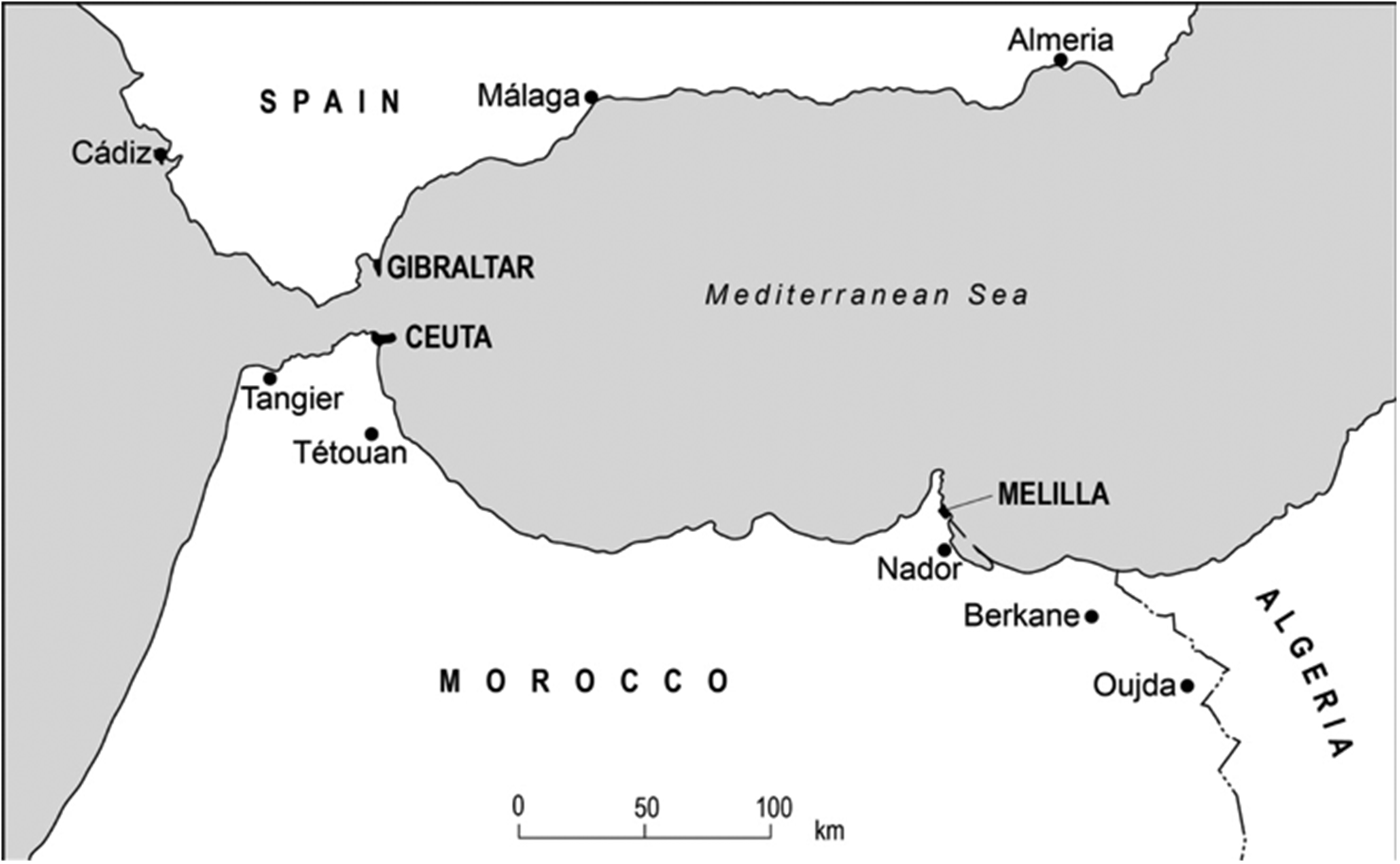
The Western Mediterranean, including Ceuta and Melilla.
As the hairdresser trimmed the hair of her client, the two women started talking about the shortage of care and domestic workers that Melilla was experiencing since the border closed. Melilla’s service and construction sector, in fact, used to rely on the cheap labour provided by Moroccan workers from the surrounding province (Soto Bermant, 2017). The closure of the border had cut off service provision from the Moroccan side of the border. The hairdresser, however, thought that the closure of the border was not the only reason why she was struggling to hire a care worker for her mother. As she was finishing blow drying the hair of her customer, she added that the shortage of care workers was also a by-product of esto del asilo [this asylum thing]. ‘With this thing of the asylum, everybody left!’ she said, while the other woman nodded in agreement.
What the two women were referring to was a sentence issued by the Spanish Supreme Court in July 2020, which had ruled that people seeking asylum in Ceuta and Melilla enjoy freedom of movement within the entire Spanish territory. Asylum-seekers, the judge said, thus had the right to travel from the two exclaves to mainland Spain once their asylum application has been admitida a trámite [admitted to examination] (Octavio Juan Herrero Pina, 2020). 1 This decision had outlawed the practice enforced by the National Police in Ceuta and Melilla to prevent asylum-seekers from travelling to mainland Spain under the pretext that their status was only valid on the territory of the two exclaves (Vieyra Calderoni, 2019). By curtailing the freedom of movement of asylum-seekers, the National Police was de facto excising the two exclaves from the rest of the Spanish territory: the law was made to work differently in Ceuta and Melilla, to the point that rights granted to asylum-seekers in the rest of mainland Spain were not considered applicable to the two enclaves. 2
Even though it took another year for the Supreme Court sentence to be implemented, since the summer 2021, asylum-seekers that had been stuck in Melilla for years finally managed to travel to mainland Spain. Individuals and families that had been living irregularly in Melilla for decades also turned to asylum as the only option to legally and safely exit Melilla (El País, 2021d). While stating that the shortage of service workers in Melilla was a by-product of the Supreme Court’s decision is a questionable conclusion, the hairdresser was right in implying that the renewed freedom of movement enjoyed by asylum-seekers had fundamentally shaken the climate of forced immobility that had constrained the life of many people in Melilla for over 30 years.
This article sheds light on the social life of excision by comparatively looking at how it was implemented and legally challenged at two different points of the Southern Spanish border: the Spanish enclave of Melilla, and the archipelago of the Canary Islands (see Figure 2). Existing literature argues that excision usually emerges out of extra-legal border enforcement practice, generally as a response to a declared emergency (see Gregory, 2006). Such procedures, however, are then usually enshrined in law – a course of action necessary to make the exclusion of foreigners more defensible in the long term (Makaremi, 2008; Tyszler, 2019). Whereas the literature has extensively analysed how some areas are excised from territory for the purpose of border control, much less attention has been paid to how excision, either as a codified or informal practice, can be challenged and reversed. The law, in fact, can play a double role in border control. It can be used to sanction mechanisms of capture (De Noronha, 2020). However, it can also rule migration containment as unlawful, especially following organised action pursued by migrant themselves and by the solidarity groups that support them (Jiménez Álvarez, 2011).
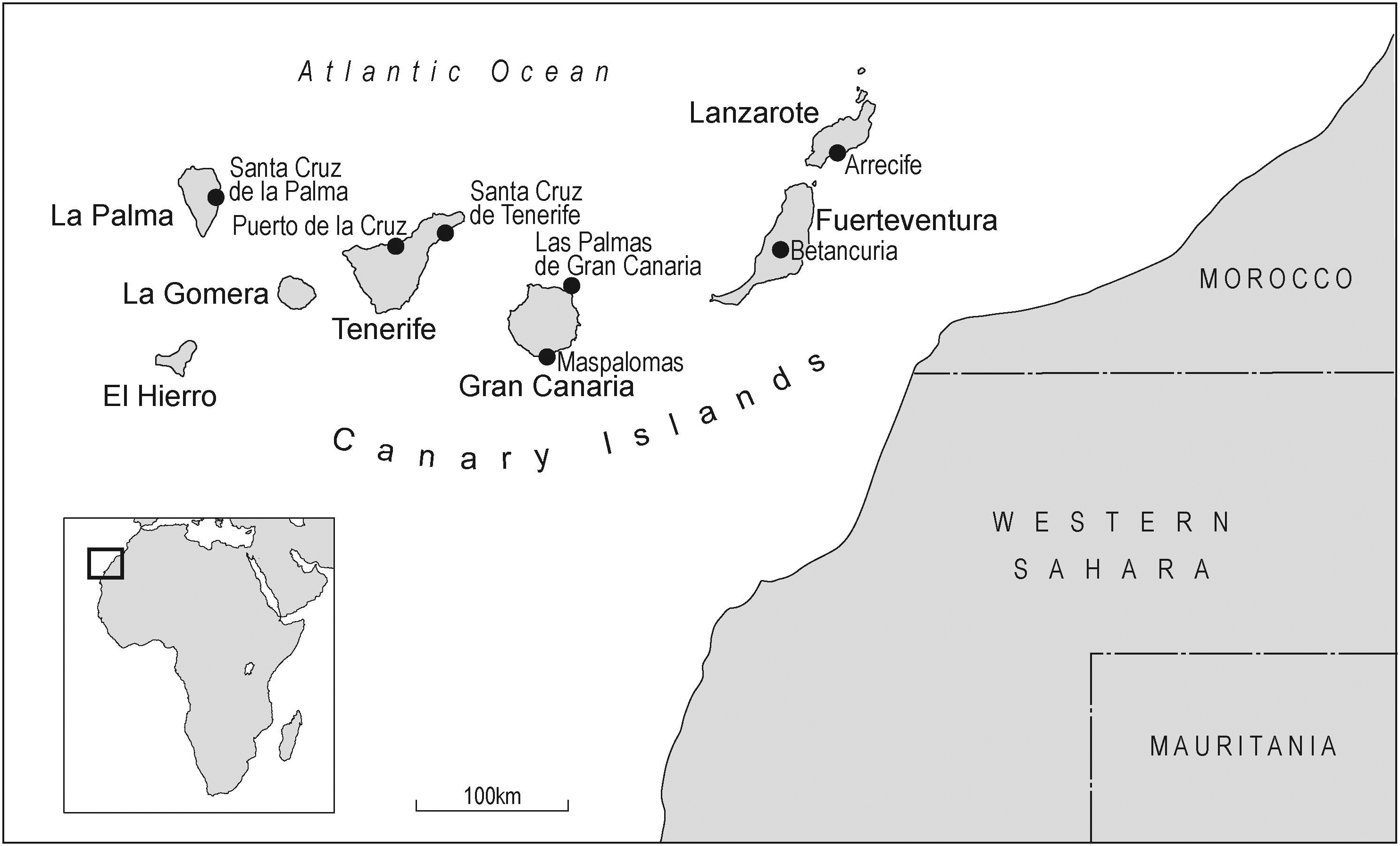
The archipelago of the Canary Islands.
Building on scholarship complicating the role of the law in border-making, I argue that excision, as a border control method, is dynamic in nature. The state, in fact, uses excision to create new internal borders – whose existence might be enshrined in law, or simply maintained through extra-legal practice. Precisely because of their reactive origin, however, the existence of such borders is vulnerable to legal activism. Organised action by migrants and solidarity networks can repurpose the law as an instrument to lift the frontiers of excision by exposing the incompatibility between border control and constitutional rights. Legal intervention, however, only allows for the restoration of a limited set of migrant rights. Excision, in fact, is deeply integrated into a dense web of border containment tactics, whereby ‘the undesirables’ might recuperate some of their rights at one point but then still face exclusion at another point of the expanded frontier. In so doing, the article expands current discussions about the relation between geography and the law in the making and remaking of border spaces (Maillet et al., 2018; Mountz, 2011; Tazzioli and Garelli, n.d.).
Melilla and the Canary Islands are two case studies which offer insights into differential border practices at the Euro-African border. Even though both areas have been at the centre of Spain’s efforts to curb irregular migration from North and West Africa (Andersson, 2010; Vives, 2017a, 2017b), the migratory pressure experienced by Melilla and the Canary Islands has differed over the past four decades. The exclave and the archipelago therefore present uneven histories of excision. In both areas, the state leverages on geographical distance between excided areas and the mainland to curtail the mobility of asylum seekers and undocumented people. In both spaces, excision was an object of legal contestation, whereby the law became an instrument of border curtailment. However, the situated histories of political and economic integration of such areas into the nearby African territory and to mainland Spain have largely conditioned the timeline and effectiveness of both excision and legal contestation. In Melilla, excision was a long-standing practice that was codified through the exclusion of the enclave from the Schengen Area. While in Melilla the unlawful curtailment of asylum-seeking people’s mobility on this basis was only lifted after sustained legal action (see Vieyra Calderoni, 2019), in the Canary Islands it was a time-bounded measure that was suppressed after an individual attempt to contest it in court (El País, 2021c).
Methodologically, the article builds on fieldwork conducted between the summer 2019 and the summer 2022 in both locations. The two different strategic litigation processes are reconstructed primarily through the analysis of press articles, court sentences and NGO reports. The discussion of the impact of excision (and its unmaking) on migrant life instead relies mostly on semi-structured interviewing and participant observation. In the case of Melilla, the analysis is mostly based on ethnographic data based on everyday observation and volunteering shifts in charities providing support to migrant and asylum-seeking people. In the case of the Canary Islands, the analysis stems from 37 interviews I conducted with NGO workers, asylum-seeking people and volunteers, complemented by ethnographic fieldnotes based on volunteer shifts in charities and migrant solidarity networks.
The rest of the article unfolds as following. The next section discusses the literature on territorial excision and its tension with legal activism at the border. I then frame mobility and border control in Melilla and the Canary Islands as part of a broader context of colonial extraction and contested sovereignty. I then comparatively analyse how excision practices were introduced, how they affected the mobility of undocumented and asylum-seeking people, and how they were lifted through strategic litigation. The discussion and conclusion sections build on the findings to theorise on the social life of excision, and its connection to other methods of bordering anew.
Sophisticating, expanding, challenging borders
Over the past three decades, border control has undergone a process of sophistication and diffusion, whereby containment is no longer exercised only at the physical edges of the state (Menjívar, 2014). The border has been externalized and internalized: controls over ‘suspicious’ foreigners now take place before and after the person has entered the national territory (Williams, 2019). Containment has also been informalised: it is undertaken by both state and non-state actors, often according to flexible and ad hoc arrangements that can be expanded, retracted or rewritten according to rapid changes in migration flows. Bordering thus becomes an ‘itinerant’ process, which refers ‘not to the territorial limit of the state but to the management practices directed at “where the migrant is”’ (Casas-Cortes et al., 2016: 232). In practice, the sophistication of border control can be observed in the integration of ‘defensive’ and ‘preventive’ practices, aiming both at capturing and removing undocumented migrants from the state territory, as well as at dissuading and differentially channel migration aspirations upstream along migration routes (Casas-Cortes et al., 2015; Vives, 2017a). At the Euro-African border, this led to the increase of militarised surveillance at the external borders of the European Union and to the establishment of cooperation mechanisms with countries of ‘origin’ and ‘transit’ to prevent irregular border crossing and facilitate the return of undocumented migrants. Countries like Morocco, Tunisia, and Mauritania have thus elaborated their own restrictive migration policies, and adopted measures aimed at restricting the capacity of non-white migrants to travel North (Ould Moctar, 2022; Vives, 2017a).
The arbitrary curtailment of the mobility of ‘undesirable’ foreigners has become a well-established instrument of contemporary border control. The state contains the movement of certain categories of foreigners either by denying them access to means of transport (Gazzotti and Hagan, 2020), or by confining them to areas where the application of domestic laws is suspended (Boochani, 2018; Mountz, 2011). Legal sociologists and geographers define the latter’s practice as ‘excision’, a process whereby states play with jurisdiction to turn portions of the national territory into legal exceptions (Maillet et al., 2018). Excision provides the state with a justification for the application of enhanced mechanisms of exclusion onto foreigners who arrive or are immobilized into such areas. Because they are in an area where the law does not really apply as in the rest of the national territory, asylum-seekers or undocumented foreigners cannot really expect to enjoy the same rights as they would if they were in the mainland (Basaran, 2011; see also Kaplan, 2005).
Containing through excision has been the cornerstone of Australia’s migration control strategy: in 2001, Australia passed the Excision Act, that sanctioned part of the Australian territory as ‘excised offshore place’ for the purpose of the application of the Migration Act. In practice, anyone arriving to an excised offshore place without a valid visa was to see their access to asylum restricted, as the application of certain provisions of the Act was suspended in excised offshore places. In 2005, 4891 Australian islands were declared excised territory, and so was the entire mainland in 2013 (Foster and Pobjoy, 2011; Vogl, 2014).
Excision symbolizes the complex relation of the state to the law. Although state jurisdiction and the treatment of individuals within it should be determined by law, Maillet et al. highlight that ‘law remains spatially limited by nation states, and the power at work is not merely legal’. Jurisdiction is thus ‘not intrinsic to territory but […] produced by states’ (Maillet et al., 2018: 145). The same state which creates the rules specifying the modes and limits of its power can decide to lift such restrictions temporarily or permanently (Agamben, 2005). Areas of exception are created through different rhetorical instruments. Talking about the role played by Guantanamo Bay in the War on Terror, Kaplan highlights how the Bush administration came to justify the human rights abuses on prisoners in the US naval base in Cuba by abdicating its legal jurisdiction: the area being within Cuba’s ultimate sovereignty, US laws and international treaties subscribed by the US government do not apply – even though Cuban laws don’t either (Kaplan, 2005). Creating a legal fiction of sovereignty abrogation, however, is not a cost-free rhetoric for state authorities, and as such cannot be easily replicated. In the case of Australia’s excised offshore places, the Australian government has always made clear it considered excised areas as fully part of Australian territory – only not for the application of specific sections of the Migration Act. Stressing out state sovereignty over excised territory was necessary to maintaining political popularity with Australian citizens in such areas (Vogl, 2014). Maillet et al. therefore brand such capacity to play with jurisdiction as the expression of ‘imperio’, a form of power that is distinct from sovereignty insofar as it is ‘a boundless, limitless and administrative power, applied primarily […] to migrant bodies as opposed to fixed spaces territorial borders’ (Maillet et al., 2018: 143). Whereas sovereignty simultaneously limits and expands the application of the law to the national territory, imperio seeks to control individuals and populations in spite of state borders. It is imperio that allows countries such as Spain, Australia, and the US to seek and control migrant people either by expanding their jurisdiction beyond their borders, or by selectively suspending the application of the law within the national territory.
The excision of certain portions of the territory from state jurisdiction, and the immobilisation of foreigners into these areas, works as a de facto confinement method – even in a situation where such immobilization does not amount to straightforward incarceration (see Tazzioli and Garelli, 2020.). It is not by chance that many islands chosen to be processing sites for migrant and asylum-seeking people exist in a complex juridical limbo. As Alison Mountz argues, islands are ‘nodes of sovereign power’ (Mountz, 2020: 18), where the state is able to leverage remoteness and legal ambiguities to distance migrants from the mainland, enhance their isolation from networks of support, curtail their access to legal recourse, and thus make border enforcement more effective (Avramopoulou, 2020; Lemaire, 2014). The island’s physical geography is mobilized to reproduce the carceral potential of formal detention. Vice versa, spaces of detention in the mainland reproduce the isolation and remoteness of the island. As Mountz compellingly asks, ‘what is a prison if not an island?’ (Mountz, 2020: 20).
The entanglement between geography and jurisdiction reveals the complex relation of the law, and of the legal apparatus writ large, to the making and unmaking of borders. As legal ethnographies have highlighted, the law can be used both to legitimate and disrupt bordering practices. Laws can be rewritten under the pressure of activist groups who pursue strategic litigation as an avenue to advance migrant rights (Barbulescu and Grugel, 2016; Jiménez Álvarez, 2011). Migrants and their solidarity networks can reinterpret restrictive laws that were created to allow only a tiny minority of foreigners to regularize their paperwork in order to create regularization avenues for a much larger population (S. Coutin, 2006; S. B. Coutin, 1998). Wins by immigration lawyers in court, however, do not always translate into a straightforward advancement of migrants’ rights: the administration can either minimally comply, or engage into venue shopping to escape legal jurisdiction. Similarly, obtaining a residency card can still be synonymous with discrimination and victimization, if achieved by flattening the foreigner’s experience into legal categories which recognize the ‘suffering’ body as the only tolerable stranger (Galli, 2020; Ticktin, 2011). Court ethnographies highlight that the legal apparatus is not a neutral arbitrer that mediates between the state and the foreigner: it contributes to border (un)making by shaping migrant subjectivities (Vianelli et al., 2022), by adjudicating on competing versions of the past and of the future (Fisher et al., 2022), by ruling on the imaginary of nation-making (Vogl, 2014). The law, in other words, is part of a larger web of social and political interactions (Kawar, 2015). Acknowledging the dynamic nature of law-making and law implementation allows us to recognize its contradictory function in the (un)making of border containment.
Fencing the Southern Spanish border
Since the 1980s, the Southern Spanish border has undergone a process of dramatic reshaping (Suárez-Navaz, 2004). The entry of Spain into the European Union in 1986 and the imposition of visas on non-European citizens in 1991 have transformed the Spanish-Moroccan border from a zone of exchange and circulation to one where human mobility is differentially obstructed (Jiménez Álvarez, 2011). Melilla and the Canary Islands occupy a central space within the EU and Spanish border containment strategy. Yet, the pressure of border control has been felt and exercised unequally in these two areas over the past 40 years. This is due both to the nature of the border connecting and separating these areas to the rest of the African and to their different integration into the surrounding region (Ferrer-Gallardo, 2008; Tyszler, 2019; Vives, 2017a).
Separated from Morocco by a land border, Melilla – like Ceuta – has a history of porous, extractive, conflictual yet mundane exchange with the surrounding region (Boukllouâ, 2017). Since the city was occupied by Spain in 1497, Melilla has banked on its function as Spanish garrison first and, since 1863, on its status as free port in the Western Mediterranean coast. The political economy of the city thus revolved around maritime and overland trade, the management of tributes required to people who wanted to trade, and the regulation of mobility in and out of the exclave (Pack, 2019). In the build-up to Moroccan independence in 1956, Spain started adopting measures to make sure neither Ceuta nor Melilla became isolated: the two cities became ‘free commerce zones’ in 1955, and in 1964 a new regime of circulation was established which allowed residents of the two nearby Moroccan provinces (Tétouan for Ceuta and Nador for Melilla) to enter and work in the two exclaves without a visa during the day (Ferrer-Gallardo, 2008). Melilla grew economically dependent from its capacity to export goods to Morocco and import cheap labour and food (McMurray, 2001). When Spain entered into the European Union in 1986, the tight but calculated integration of Melilla within the surrounding Riffian territory became a difficult contradiction to handle. The Schengen Agreement aspired to build a custom-less and border control-free areas within the European Union – at the expense of a tight control of the EU’s external border.
Becoming part of the EU while maintaining the border between Ceuta, Melilla and Morocco as porous as functionally possible to the economy of the two cities became a challenge (Soto Bermant, 2017). Ceuta and Melilla did not become part of the Customs Union. The treaty determining the access of Spain to the Schengen area excludes the two cities from the area of free movement, maintaining controls in ports and airports (Espineira, 2015). At the same time, the treaty also allows Moroccan citizens residing in the neighboring provinces of Tétouan and Nador to enter Ceuta and Melilla respectively without a visa for the purpose of cross-border trade (even though this possibility was foreclosed in the aftermath of the COVID19 pandemic). These dispositions asserted the European-ness of the two cities while modulating its integration within the surrounding Moroccan territory. The impossibility for informal cross-border workers to settle in the exclaves was guaranteed through an exception to the Spanish law on the registration of inhabitants (Ley de Empadronamiento), which prevented Moroccan citizens not holding valid visas to register as residents in Ceuta and Melilla. Not figuring as inhabitants prevented them from gaining access to public services such as education, healthcare, and social benefits (which undocumented migrants are entitled to once they manage to register as inhabitants in the rest of Spain) (Barone, 2019).
During the 1990s, the fences surrounding the two Spanish enclaves were repeatedly strengthened, and the border shifted from a mere line of barbed wire into a six-metre high triple fence equipped with thermal cameras (Andersson, 2016) and surveilled with drone military technology (El Independiente, 2022). Spanish authorities developed a tight collaboration with Moroccan border guards to intercept irregular border crossing attempts and return people that have managed to cross the border, according to a practice become known as devolución en caliente (Tyszler, 2019). As fences were reinforced and border control cooperation became tighter, centres were built in Melilla to temporarily host migrants who had managed to cross into the city and that could not be legally returned. In 1999, the Centro de Estancia Temporal de Inmigrantes (CETI) opened its door, with capacity to host around 350 people. Over the 2000s, Child Protection Services also reformed former orphanages and military garrisons to host the increasing number of unaccompanied children arriving to Melilla (Gonzales and Bautista, 2019). This architecture of border control has contributed to the maintenance of a racially charged social and economic hierarchy. While most civil servants are white Spaniards, people working in the service sector are either Moroccans or Melillenses of Moroccan descent (Suárez-Navaz and Suárez, 2022). Until the start of the COVID19 pandemic, Melilla’s economy heavily relied on atypical commerce, a form of trade whereby goods were physically transported from the enclave to Morocco so that Spanish firms did not have to pay Moroccan customs to export into the country. This very lucrative economic activity relied on the labour of Moroccan crossborder workers, mostly poor women from the nearby villages, who would work long hours transporting bulky and heavy parcels on their back from one side to the other of the border (Publico, 2020b; Soto Bermant, 2017). The Modernist buildings composing the central neighborhood of Melilla host offices, shops, and are inhabited by white Spanish citizens. The neighborhoods closer to the border are instead home to a population of precarious labourers, with precarious or no legal status, living in precarious buildings (Soto Bermant, 2012). Soto Bermant describes Melilla effectively as an ‘ethnocracy’: power in the city is concentrated in the hands of a Christian, white élite that has historically relied on border control and citizenship rules to confine Muslim citizens of Berber or Arab descent to the underclass. Even though active resistance by the Muslim community has resulted into the achievement of legal rights for thousands of long-term residents in the late 1980s, racial politics remains a tangible reality regulating relations of domination in Melilla (Soto Bermant, 2012: 86).
Separated by the closest Moroccan coast from 100 km of Atlantic Ocean, the Canary Islands constitute a different setting – both in terms of its relation to the nearby African territory and of the migratory pressure it experienced over the past decades. The archipelago has historically been a colonial, trade and migratory node between Europe, Africa and the Americas. Spain occupied the Canary Islands over the course of the 15th century, subjugating the local indigenous population – the Guanche. After the Spanish occupation, the Canary Islands became a laboratory and lynchpin for Spain’s colonization of the Americas. After departing from Europe, ships would make one last stop in the archipelago to load reserves and cheap workforce, including enslaved people, before the transatlantic journey. Its intermediary position facilitated the development of a plantation economy based on the production of export-oriented agricultural goods (Parsons, 1983). Such an economy was maintained through the exploitation of indigenous or West African enslaved workforce, a colonial model which the Spanish then replicated overseas. Over the following centuries, the Canary Islands remained characterized by high rates of emigration along routes opened by the Spanish colonial enterprise – primarily the Caribbean and Latin America but, especially in the 20th century, the Western Sahara (Andreu Mediero, 2017) and West Africa (Fundacion Mapfre Guanarteme, 2008). Since the 1970s, immigration to the Canary Islands has become more consistent. As the archipelago transformed into a mass tourist destination, hotel resorts and housing developments emerged in previously scarcely populated parts of the islands, now populated by Northern European tourist and residents (Santana and Godenau, 2014). In the 1990s, immigration from Morocco and the Western Sahara also started growing (Díaz Hernández, 2004). However, the Canary Islands did not become a source of concern for migration policy-makers until the mid-2000s, when the number of West African migrants reaching the shores of the archipelago skyrocketed (Andersson, 2010). Between 2006 and 2008, the rapid increase in the number of undocumented arrivals pushed Spain and the EU to ramp up measures to seal off the Atlantic route and return undocumented migrants. Measures included the signature of bilateral cooperation agreements with Mauritania and Senegal, and the funding of programmes to provide economic alternatives to migration in origin communities in Senegal (Vives, 2017a). Such measures were successful in sealing off the Atlantic route. The tightening of border control measures in Northern Morocco from 2018 onwards, however, coupled with the economic crisis linked to the COVID19 pandemic, has redirected migration flows towards the Atlantic route once again since 2020 (Iridia, 2021). In September 2020, the Ministry of Inclusion, Social Security and Migration converted 17 hotels in the South of Gran Canaria to temporary reception centres to host up to 5500 people. In November 2020, Spain approved the opening of seven new reception centres in Gran Canaria, Tenerife and Fuerteventura with capacity to host up to 7000 people. These new reception centres were not built anew, but created in the premises of old military and educational facilities (Ministerio de Inclusión, Seguridad Social y Migraciones, 2020). These macrocentros (maxi-centres) soon revealed to be unsuitable as medium-term reception facilities: shortly after their opening in January and February 2021, migrant people started organizing protests both in Gran Canaria and Tenerife to complain against the undignified conditions that they were being obliged to endure (El País, 2021a).
The social life of excision in Melilla
The anomalous status of Melilla within the Schengen agreement is most concretely noticeable at the airport and at the port of the city. Travellers heading to another Spanish city, in fact, have to undergo document checks before the security control area. The presence of such controls established an insurmountable border to many (Vieyra Calderoni, 2019): undocumented migrants, who could not exhibit a valid visa to enter the Schengen area; and ‘undocumented residents’, mostly people of Moroccan descent that were either born in Melilla or have lived there the majority of their life, but that cannot regularize their situation as they are denied access to key documents that could prove the time they have been living in the city. Such de jure border, however, was imposed also on asylum-seekers, whose presence on Spanish territory is made legal precisely in virtue of their asylum application. The legal exception to the Schengen Agreement was therefore de facto transposed onto people whose presence in Spain was administratively legal (even if temporarily). Such de facto border was administratively consolidated by the police operating in the asylum office by marking asylum papers as being valid ‘only in Melilla’. In this context, the institutional transfers that the Ministry of Inclusion, Social Security and Migration organized from the CETI in Melilla to other migrant reception centres in mainland Spain constituted the main legal avenue out of the enclave (see Espineira, 2015 for the case of Ceuta). Such transfers, however, were carried out according to opaque criteria, with nationals of certain countries (especially Morocco and Algeria) having to wait far longer than others to be relocated (Servicio Jesuita a Migrantes España, 2018). The continued imposition of travel restrictions onto asylum-seekers in Ceuta and Melilla discouraged people from lodging their asylum claims in the two enclaves, and led to others withdrawing their asylum applications in fear of remaining stuck (UNHCR, 2015). The repercussions of forced immobility became particularly acute after the closure of the land border with Morocco on 13 March 2020, which left Moroccan citizens originating from the nearby province of Nador but irregularly residing in Melilla unable to come and go through the border as they could do before – thus unable to renew identity documents, see family, and access resources in Morocco.
Throughout the 2010s, various human rights organisations have expressed their concerns regarding the travel restrictions for asylum-seekers between Melilla and mainland Spain. The Superior Courts of Andalucia and Madrid, and the local Court of Ceuta, also ruled it illegal (UNHCR, 2015). The authorities, however, kept on refusing to lift the barriers to freedom of movement. The Immigration and Border police in Melilla, for example, responded to sentences recognizing the rights of asylum-seekers to move to mainland Spain exclusively by authorizing the travel of the individual(s) to which the sentence was referred (Servicio Jesuita a Migrantes España, 2018). A decisive change in practice was achieved in the summer 2020, when the State Attorney challenged a sentence won by the Spanish Commission for Assistance to Refugees (Comision Española de Ayuda al Refugiado) recognizing the freedom of movement of asylum seekers in Ceuta and Melilla in the national territory before the Spanish Supreme Court (Octavio Juan Herrero Pina, 2020). The sentence, the State Attorney argued, breached both Spanish and EU jurisprudence. The State Attorney invoked two legal arguments to substantiate their claim. First, Spanish asylum law did not explicitly mention freedom of movement as a right recognized to asylum seekers, and their right to be documented was not to be considered as an equivalent to regular status – which implied freedom of movement across the national territory. Second, Ceuta and Melilla are not part of the Schengen Agreement, so the principle of freedom of circulation within the Schengen space is not applicable to people who have applied for asylum in Melilla. In other word, the State Attorney leveraged on the particularity of the status of both asylum seekers (considered temporarily legal) and of the autonomous cities of Ceuta and Melilla (considered Spanish but not belonging to the Schengen area for the purpose of freedom of circulation) to legitimize curtailing freedom of movement.
The Supreme Court, however, upheld the sentence recognizing the freedom of movement of people who had applied for asylum in Ceuta and Melilla. The court recognised that the Immigration and Borders General Commission had the faculty to decide over the entry of foreigners into the national territory, but that such faculty did not apply in the context under examination because ‘even if in a transitory way until the decision over its asylum claim, the claimant was already in Spanish territory (Ceuta undeniably is)’ (Octavio Juan Herrero Pina, 2020: 6, translation mine). The court detailed that Spanish asylum law did not define or limit specific implementation procedures for Ceuta and Melilla, and that the provision for the two cities foreseen by the Schengen Agreement did not limit the right of asylum-seekers to reside and move in Spain while their asylum application was being processed.
The sentence did not immediately translate into a street-level policy change. It took another favourable Supreme Court sentence in spring 2021 to a lawsuit brought by the Jesuite Service to Migrants (Servicio Jesuita a Migrantes), together with the end with the state of exception in Spain in May 2021, for local authorities in Ceuta and Melilla to start lifting restrictions. Since June 2021, asylum-seeking people from both enclaves started exercising their newly-found freedom of movement. NGOs started receiving more and more requests from asylum-seekers to help them with the cost of paying for ferry tickets towards Malaga or Almeria. The opening of a legal mobility avenue made the volume of asylum applications skyrocket. Between June and August 2021, at least 1230 people applied for asylum in Ceuta (El País, 2021d). As asylum-seekers gained mainland Spain, the border with Morocco remained closed, and the number of irregular border-crossing attempts reached a historical low. The number of foreigners hosted in the CETI progressively decreased (El Faro de Melilla, 2021b). The number of people sleeping rough in the city also decreased, and so did the queue of people queuing for food in the improvised stall set up by volunteers.
As the streets of Melilla got emptier and emptier, the profile of people showing up at food distributions became more and more consistent: they were mostly young Moroccan men who had recently arrived to Melilla swimming from the nearby Moroccan coast, or jumping the fences dividing the enclave from the Moroccan port of Beni Ensar. These people were all sleeping rough despite having recently applied for asylum, and thus being eligible for accessing the reception centres for asylum seekers funded by the Spanish Ministry of Inclusion, Social Security and Migration. The reason why they were sleeping rough, I was explained, was that the CETI in Melilla was not admitting Moroccans. In winter 2021, a group of volunteers and I accompanied a group of Moroccan asylum-seekers to the CETI to claim admission to the centre. One of the employees of the CETI, with the help of an interpreter, explained us that Moroccans could only enter the CETI once their asylum application had been admitida a trámite. ‘However’ they specified, ‘after the decision of the Supreme Court last year, asylum seekers are not obliged to stay here. They are free to leave for mainland Spain’ [italics added]. I made the point that this advice was not particularly helpful, especially since ferry tickets were pricy and asylum seekers were only allowed to leave for mainland Spain once their asylum application had been admitted to examination, which obliged them to spend at least one month in the street after the interview. Other volunteers highlighted the discriminatory nature of such practice: people from other nationalities were allowed to enter the CETI right after having arrived to Melilla, without waiting to apply for asylum. The employee of the CETI kept on insisting that this was the instruction given from the Ministry of Inclusion, Social Security and Migration. In January 2022, the Government Delegate in Melilla, Sabrina Moh, publicly declared that the CETI was then hosting less than 250 residents (although it had a capacity for 782 people). Such occupation level was a historical low, especially since the CETI had got to host over 2000 people at a time in its recent history (El Faro de Melilla, 2021b). Controversially, Moh declared that residents were mainly ‘Sub-Saharan’, with a minor presence of other nationalities. The NGO Solidary Wheels highlighted that these declarations were misleading, since the low occupation rate and the profile of residents in the CETI were also due to the refusal of the CETI administration to admit any Moroccans (Solidary Wheels, 2022).
In the coming weeks and months, I got to know many Moroccan men who had applied for asylum in Melilla. I met them over and over again on the street, at food distributions, or at Spanish classes that I taught in the office of a local NGO. During food distributions, some of them would ask me for one more portion of food so they would not have to worry about breakfast the next day, or for one more bread because the one they had saved the day before had been eaten by rats entering their makeshift shelter. To the question ‘how was your week?’ in Spanish class, I would infallibly receive an ironic answer about how uncomfortable it was having to shower in the beach with cold water. The stress to gather enough money to cover for food and to buy a ferry ticket to Malaga or Almeria pushed them to pick up informal jobs in construction – a sector that had already claimed the life a Malian migrant during an occupational accident the year before (Europa Press, 2021). Even though the sentence of the Supreme Court had lifted a major restriction that had conditioned the life of asylum seekers for decades in Melilla, regaining freedom of movement within the Spanish territory still meant enduring a life of significant limitations.
The social life of excision in the Canary Islands
Despite being much further away from mainland Spain, the Canary Islands are part of the Schengen area. Passengers boarding ferries or planes connecting the archipelago to Southern Spain are not ordinarily subject to immigration control checks by the Spanish police, and can travel as long as they carry a valid document to prove their identity to carriers. As the number of irregular border crossings from West and North Africa to the Canary Islands increased in 2020, Spanish police started implementing measures to prevent people from moving freely from the archipelago to mainland Spain. In August 2020, the police instructed airlines and ferry companies not to accept proof of asylum applications as valid identity documents, thus preventing people who did not hold a valid passport from travelling to mainland Spain. In December 2020, police started conducting immigration checks in the airports of archipelago. Such controls targeted all travelers, but de facto prevented West and North African passengers, who could not display valid residency documents, from accessing the boarding area. People identified in this way were often also temporarily detained in the airport police station. As the Canary Islands are part of the Schengen area, such controls could not be carried out at border posts – as no border post exists for flights between the Canary Islands and mainland Spain. The identification of irregular migrants was thus carried out by a group of police officers stationing in the airport hall, right before the security control area (Iridia, 2021). Spanish authorities justified such controls as stemming from the implementation of COVID19 sanitary measures. As the Spanish newspaper El Diario argued, however, even migrants who could exhibit a negative COVID19 test were denied boarding in absence of valid residency documents (Eldiario.es, 2020). Such controls were imposed at a time when the transfers of migrant people residing in reception centres in the Canary Islands were extremely reduced. As Amnesty International reports, in 2020, only 2618 people were transferred to reception centres in mainland Spain (Amnesty International, 2021), over a total of over 23,000 arrivals (Defensor del Pueblo, 2021). The archipelago thus became surrounded by an invisible border insurmountable to dark-skinned migrants.
The progressive curtailment of the freedom of movement of asylum-seekers and undocumented people in the Canary Islands was swiftly challenged in court. On 11 December 2020, Tawfiq, a Moroccan man with a valid passport, tried to board a flight to mainland Spain. However, police officers prevented him and other 21 travellers from boarding. All the people who were detained had been previously issued an acuerdo de devolución [return agreement] upon their irregular arrival by boat from the border police. Tawfiq decided to apply for asylum in March 2021, and shortly after that he tried to board a flight to Fuerteventura, unsuccessfully (Canarias7, 2021b; El País, 2021c). Two lawyers, both connected to broader activist networks in the Canary Islands and in mainland Spain, brought his case to the contentious-administrative court of Las Palmas. The judge ruled that the National Police could not prevent a foreigner from travelling to mainland Spain if they have an identification document (such as a passport or a proof of its asylum application). Questioned by the judge, the Government Sub-Delegation in the Canary Islands claimed that on 11 December 2020 22 people had been detained at the Gran Canaria airport so that they could be deported within 72 hours or detained in an Immigrant Detention Centre (CIE). However, the Government Sub-Delegation did not provide the judge with any information about the implementation of such detention or deportations. The judge concluded that, if a foreigner is stopped but the Ministry of Interior cannot expel him within 72 hours, or detain him in a CIE, said foreigner is free, and enjoys freedom of circulation within the national territory. The judge thus ordered the National Police Department in Canarias to stop preventing the movement of people presenting a passport or a proof of asylum application, if their travel plans were compatible with COVID19 travel restrictions (El País, 2021b; Juzgado de lo contencioso administrativo n° 5 – Las Palmas de Gran Canaria, 2021).
Like in Melilla, this sentence did not immediately translate into a street-level policy change. The Asamblea de Apoyo a Migrantes en Tenerife, for example, denounced that the police continued preventing migrant people from boarding flights towards mainland Spain. The police justified this practice as necessary to enforce COVID19 travel restrictions. Travellers who could not show documentary evidence that their travel was due to essential reasons were not permitted to travel (Canarias7, 2021c). The implementation of COVID19 travel restrictions, however, was clearly racialized, as travel was denied much more easily to passengers from West and North Africa than to Spanish and other European citizens (Canarias7, 2021d). Once Spain lifted the state of emergency on 9 May 2021, however, the police fell short of legal arguments to prevent people with valid passports or proofs of asylum applications from travelling to mainland Spain. As migrants continued their journeys towards other Spanish cities, the number of rough sleepers in Las Palmas considerably decreased. Solidarity groups started reassessing their involvement, as the emergency had decreased to a level that the existing assistance networks for rough-sleepers could cope with the demands (Somos Red, 2021).
Like in Melilla, the lifting of travel restrictions did not mark the end of containment. In late May 2021, Maria, a Spanish woman who had been volunteering to assist migrant people sleeping rough, received a series of frantic calls from Alioune, a Senegalese man that she had become acquainted to over the previous month. Alioune had arrived to Gran Canaria by boat the previous fall, and had been frustratingly waiting for months to finally be able to reach his family in mainland Spain. Once the news of the sentence on freedom of movement had come through, Alioune had hastily made arrangements to leave. Two weeks after travelling to the mainland, however, the family member he was staying with said that he could no longer support him. Alioune had been told to pick up his stuff and to take a bus to Malaga, where he hopefully would be able to find a job in the informal market. Alioune had no idea where Malaga was, and the prospect to sleep rough in a place where he did not know anyone upset him. He therefore called Maria, asking whether he could come back to Gran Canaria to stay with her and her family. Maria agreed, and Alioune took a flight back.
Like Alioune, many migrants who had travelled to mainland Spain from the Canary Islands were known to have ended up sleeping rough in their city of destination. During interviews, volunteers explained that this had happened for different reasons. Many people had found out on arrival that the family connection they were counting on was not as strong as they previously thought, and that the family member in mainland Spain was unable or unwilling to host and support them on the long term. On top of that, asylum-seeking or undocumented people who had ‘voluntarily’ left a state-funded reception centre in the Canary Islands were not eligible for admission to a centre in mainland Spain. Finally, working opportunities for undocumented migrants and asylum seekers 3 were limited to the informal job market, leaving many completely unemployed or on very low and exploitative wages. As a result of such a hostile environment, the number of migrant rough sleepers in many Spanish cities increased. Already in March the local authorities in Irun – a Spanish city at the border with France – had to set up emergency shelters to house over 100 migrant people that were sleeping rough after having arrived from the Canary Islands (Canarias7, 2021a).
A few days after Maria agreed to host Alioune upon his return to Gran Canaria, she received a call from another of her Senegalese acquaintances, Mohamed. Mohamed had also travelled to mainland Spain a couple of weeks prior. Contrary to Alioune, however, he did not have any family connection there. After sleeping rough for a few days, he had found informal work in the fields, but the pay was so low that he was barely able to support himself. On the brink of homelessness, he had called Maria asking to come back. With the arrival of Alioune, Maria did not have enough resources to support one more person. Like Maria, many other volunteers received distress calls from people who were finding themselves in extreme hardship in the mainland, trapped in a system that left them free but pushed them on the street – preventing them from legally working and from accessing state-funded accommodation.
Discussion: states of excision
Excision has been utilised as an instrument of border control in both Melilla and the Canary Islands. Both areas were excised from mainland Spain through the partial application of asylum law, which led to the curtailment of freedom of circulation for asylum seekers. The extent to which excision was mobilized, and the legal grounds underpinning it, however, differed in the two contexts. In Melilla, the social and economic dependence of the enclave from its integration into the surrounding Moroccan territory created an anomaly with the principle of free internal circulation established by the Schengen Agreement that had been solved through its partial excision from mainland Spain. However, the application of excision on a category of foreigners who are not administratively irregular (asylum-seekers) created a de facto border out of a de jure situation. Asylum-seekers were not considered legal enough to cross the border post between Melilla and the mainland, and Melilla was not considered European enough for rights acquired in the enclave to be applied elsewhere in the state territory. Such logic could not work in the Canary Islands. As the archipelago is part of the Schengen agreement, the control of asylum-seeking and undocumented mobility could not be exercised by leveraging on de jure borders – because such borders simply did not exist. Rather, territorial disconnection was created by leveraging on the remoteness of the archipelago from mainland Spain – which created a mobility bottleneck at ports and airports (see Lemaire, 2014). At such bottlenecks, improvised borders were set up to police the mobility of people who had the right to fly to mainland Spain, but whose very presence in Spain was threatened by a previous deportation order. While in Melilla the curtailment of mobility was produced by leveraging on existing legal provisions that partially excided the enclave from the rest of Spain, border control in the Canary Islands was tightened by conflating the logistics of remoteness and the policing of undesirability into a process of de facto excision. Although the result was largely equal (asylum seekers and passport holders were not allowed to travel to the mainland), the legal rationale and longevity of the practice very much depended on the situated histories of border control and regional integration characterizing the two territories.
De facto borders created through partial excision are vulnerable to legal challenges. In both Melilla and the Canary Islands, the curtailment of mobility of asylum seekers was successfully contested in court. The thickness of the border in Melilla, however, made the application of the law much harder than in the Canary Islands. While in the archipelago the sentence over an individual case was swiftly socialized and applied to the rest of the population, in the case of Melilla the case had to land in the Supreme Court before the existing travel restrictions were lifted. In both contexts, border police utilised restrictions on non-essential travel established to prevent the spread of COVID19 to delay restoring the mobility rights of asylum seekers.
The lifting of the de facto border, however, restored only some of the rights of non-white people arriving at the edges of Europe. Excision, in fact, is integrated into a much more complex net of containment which continues restricting the access to rights and to a dignified life of asylum seeking and undocumented people within and beyond the excised territory. In Melilla, the restored right to mobility for asylum seekers is mobilized by humanitarian workers to displace attention away from the discrimination against Moroccan nationals who seek access to the local reception system. The freedom to leave the enclave is repurposed as an alternative to the exclusion from the reception system – even though such freedom cannot be exercised without accepting to sleep rough for at least one month, but most likely longer. In the Canary Islands, the freedom to leave the archipelago often ended up displacing the problem of rough sleeping from one site of the state territory to the other. This happened because freedom of movement was the only restored right within a much broader exclusionary immigration system. Asylum-seekers kept on being barred from legally finding means to support themselves and from re-claiming access to the reception system if they had already transited through it in the past. Confinement to the street, therefore, became a way of bordering people anew – not by locking them in detention, not by locking them into an island, but by maintaining them in a state of right-curtailment (Tazzioli and Garelli, n.d.).
Conclusion
This article has investigated the social life of excision at the Southern Spanish border. Building on a comparative analysis of the curtailment of asylum seekers’ freedom of movement in Melilla and in the Canary Islands, I have questioned the relation between the law and geography in the making and unmaking of border control. The article makes three main scholarship contributions. First, excision is not a static nor linear event. Rather, it is a dynamic process, that is not only reactive to migrants’ ever-changing crossing strategies but also to the disruptions created by political campaigning and strategic litigation. The state attempts to couple and decouple jurisdiction from the national territory, generally to react to an evolution in migration flows. Migrants and their solidarity groups, in turn, commit human and financial resources to build legal challenges to both long-standing and novel excision practices. The anxiety of the security states transforms every partial opening into a concern for closure: the reinstatement of freedom of circulation for asylum seekers, for example, is delayed by COVID19 travel restrictions. Second, the trajectory of excision as a border control method is inherently contingent on the local histories that characterize the excided area. Specific dynamics of regional integration, conflict and colonial extraction determine the role that territorial excision plays in the local political economy. This, in turn, has an impact in the profile of the legal challenge that civil society organisations had to construct. In other words, the border is always situational, and as such it needs to be historicised to be fully apprehended. Third, the successful lifting of excision does not signify the end of containment. Excision, in fact, is part of a dense, thick network of border control, where a variety of physical, institutional, and social barriers maintain irregular border crossers in a situation of rights curtailment. In Melilla, the anxiety of the nation-state over the foreign, ‘undesirable’ body bent on maintaining Moroccan asylum seekers out of the local reception centre. In the Canary Islands, the pervasiveness of such network of containment rather hit once the individual had travelled to mainland Spain, where the lack of support pushed many on the street again.
The article opens a few research questions, that should be explored in further scholarship development. First, the dynamic nature of territorial excision should be interrogated in light of Autonomy of Migration theories. What is apparent in both the cases of Melilla and of the Canary Islands is that migrant people use the avenues opened through strategic litigation to overcome barriers to mobility. In the case of Melilla, this posed a direct threat to the political economy of the city, based on the possibility to exploit cheap, immobile labour. This phenomenon is part and parcel of a broader pattern of autonomous migration at the Euro-African border that poses a direct challenge to migration control, and that deserves to be explored in further detail (Casas-Cortes et al., 2015; De Genova, 2017; Ould Moctar, 2022). Second, the implementation of territorial excision highlights the fundamental racialization of border control. This is particularly evident in the case of the Canary Islands, where identity checks at airports – justified under the guise of COVID19 travel inspections – disproportionately targeted Black and brown people. It would be important to more systematically investigate how racialized control creates borders where the law establishes none, and how whiteness acts as a form of credential at border posts (Garelli and Tazzioli, 2017; Gazzotti, 2021).
Footnotes
Declaration of conflicting interests
The author(s) declared no potential conflicts of interest with respect to the research, authorship, and/or publication of this article.
Funding
The author(s) disclosed receipt of the following financial support for the research, authorship, and/or publication of this article: This article draws on research conducted since 2019, and funded by the Banco Santander, the Society for Libyan Studies, the Royal Geographical Society, the Cambridge Humanities Research Grant Scheme, and the British Academy (grant SRG20\200368).