




Abstract
This study deals with the application of Iranian zeolite as a low cost adsorbent for the removal of the Direct blue 71 (DB 71) from colored solution. Important parameters including equilibrium and contact time, initial dye concentration, effect of pH, and zeolite dosage were evaluated. Maximum dye removal was obtained at about 99.8% for 25 mg/L at 120 min of equilibrium. Higher adsorption efficiency of direct dye was obtained at higher dose and acidic pH. To analyze the adsorption equilibrium and kinetic, Langmuir, Freundlich, and Temkin isotherms as well as four kinetic models encompassing pseudo first-order, pseudo second-order, intraparticle diffusion, and Elovich were evaluated. The Langmuir isotherm (R2 = 0.995) and pseudo second-order models, gave the best fit to equilibrium experimental data. In Langmuir analysis, the maximum adsorption capacity (qm) by 13.66 mg/g was determined. Finally, the characteristics of zeolite including both natural and modified, such as compositions, surface morphology by X-ray diffraction technique (XRD), X-ray fluorescence (XRF), and scanning electron microscopy (SEM) were obtained. According to XRF analysis, it was demonstrated that Al2O3 and SiO2 are the most part of natural and modified zeolite. Furthermore, the clinoptilolite was determined as the significant crystalloid phase by XRD pattern.
Keywords
Introduction
Nowadays, the textile industry plays a key role in the economy of countries around the world (Amin, 2009). Among the textile operation, dyeing is a fundamental process which produces large volume of colored wastewater that can affect environmental ecosystems, especially aqueous ambient. Direct blue 71 is an azo dye group with three azo bonds. The potential toxicity and carcinogenicity of azo dyes has been reported (El-Bahy et al., 2009). In addition to aesthetically displeasing, some dyes (as azo group dye) are toxic to some microorganisms and may cause direct destruction or inhibition of their catalytic activities (Armagan et al., 2004). According to reports, Direct dyes constitute about 17% of all dyes employed for dyeing textiles and about 30% of dyes used for dyeing cellulose fiber (Sax, 1981). Therefore, this products need to be treated before delivery. The conventional methods for the decolorization of dyes from aqueous solutions are oxidation, precipitation, ion exchange, bio-sorption, electrochemical treatment, and adsorption (Bulut et al., 2007; Shirmardi et al., 2013). The use of each method depends on the economical, technical requirements, and wastewater characteristics. As a result of the adsorption advantage, (i) it is considered to be relatively superior to other techniques due to its low cost, (ii) simplicity of design, (iii) viability, and (iv) ability to treat dyes in more concentrated form (Arami et al., 2006; Hossini et al., 2015; Malakootian et al., 2011). On the contrary, adsorption has been found to be superior to other techniques for water re-use in terms of initial cost and insensitivity to toxic substances (Meshko et al., 2001). Zeolites material including synthetic and natural forms have become increasingly important due to the wide range of their chemical and physical characteristics, and have been applied as adsorbents, ion exchangers, membranes, molecular sieves, and catalysts in the past decades (Wang et al., 2006). In this study, the potential of Iranian zeolite was tested as a low cost adsorbent. The aim of this study is to estimate the ability of modified Iranian zeolite for the removal of Direct dyes. The optimum parameters were determined to be used in column design and other applications. Furthermore, the equilibrium and kinetic studies were carried out for this adsorbent.
Materials and methods
All chemical reagent and material were prepared in laboratory grade.
Adsorbent
The natural zeolite was prepared from Semnan mines, Iran. After derivation, the natural zeolite was rinsed for 24 h and was dried at 200℃ to remove the impurity, contaminant, and moisture. Subsequently, zeolite was grinded and sorted by sieving in 50–70 meshes. Thereafter, in order to produce a higher quality zeolite, it was placed in contact with 1 M sodium chloride for 48 h and was shook at about 170 r/min. Saturation with sodium chloride provides more uniformity of zeolite surface, and enhances the cation exchange capacity. The saturated zeolite was washed with deionized water and was dried at 50℃. Finally, it was treated with 2 mmol/L of N-cetylpyridinium bromide (CPB) for 24 h and 170 r/min. Thereafter, samples were rinsed and placed at 50℃.
Adsorbate
Direct blue 71 has three azo bonds, and it is in the group of azo dyes with a large molecular weight (Molar mass 1029.87 g/mol). The molecular structure of Direct blue 71 is shown in Figure 1. Molecular formula is C40H23N7Na4O13S4. The stock solution of Dye was prepared by dissolving 200 mg of Direct blue 71 in 1000 mL deionized water. The other concentrations were diluted with stock solution. To evaluate the effect of initial dye concentrations, four values of 25, 50, 75, and 100 mg/L were selected. Due to typical concentration in textile wastewaters (about 50 mg/L) (Saien and Soleymani, 2007), the range of 25–100 mg/L was considered. The pH was adjusted to the desired value with 1 M NaOH and 1 M HCl.
Direct blue 71 structure.
Analysis
Before the samples were analyzed, the filtration was employed to remove the solid material. pH was measured with a pH meter (Metrohm). The decolorization rate of the Direct blue 71 in the solution samples was analyzed by spectrophotometer (Perkin Elmer Lambda 25—uv/vis spectrometer), at a wavelength of maximum absorbance of 585 nm, respectively. The XRD, XRF, and SEM images were taken from both zeolite (natural and modified) by X’ Pert MPD Philips Holland, PW 2404 Philips Holland and XL30 Philips Holland, respectively. The experiments were carried out at room temperature of about 23℃ ± 1℃.
Kinetic and isotherm study
To analyze the adsorption equilibrium and kinetic, the most three common isotherms (Langmuir, Freundlich, and Temkin) and four kinetic models (pseudo first, pseudo second-order, intraparticle diffusion, and Elovich) were evaluated. The linearized form of equations was employed for determining the equilibrium, kinetic constants, and coefficients.
Results and discussion
Effect of contact time and initial concentrations
An investigation was conducted in order to study the effect of contact time at various initial dye concentrations (25, 50, 75, and 100 mg/L) on the rate of dye removal from solution. It can be clearly seen from Figure 2 that the adsorption increases rapidly in the first 0 to 30 min, and then gradually increases until it reaches the equilibrium in all dye concentrations at 120 min. The adsorption efficiency of modified zeolite were about 99.8, 85.6, 62.33, and 49% at 12 min of equilibrium for 25, 50, 75, and 100 mg/L dye concentrations, respectively. Maximum dye adsorption was obtained for 25 mg/L, and efficiency was reduced with increase in initial dye concentrations. Thereafter, 50 mg/L was chosen for other experiments.
Effect of contact time and initial concentrations on Direct 71 adsorption.
Effect of initial pH and dosage
The pH is an important parameter in adsorption processes due to the following: it is a controlling factor that strongly affects the sorption mechanism of surface complexation and on the other hand, the pH of the system controls the adsorption capacity because of its influence on the surface properties of the adsorbent (Ajouyed et al., 2010), and provides the optimum condition for conversion of pollutant materials.
To determine the optimum pH, batch experiments were performed by taking in contact 100 mg/L of Direct 71 solution with 5 g of modified zeolite (CPB) for 120 min shaking time. For this object, several values of pH were considered such as 3, 5, 7, and 9. The adsorbed Direct 71 efficiency was calculated from the difference between initial C1 and final C2 concentrations of initial Direct 71 concentration in colored solution, before and after shaking (equation (1)).

As shown in Figure 3, the percentage of adsorption decreased, when the initial pH of colored solution increased. This fact can occur due to characteristic changes of zeolite surface. In lower pH, the zeolite surface is charged positively as a result of higher proton ions and it can provide higher adsorption rates. On the other hand, due to negative charges, the dye molecule in aqueous solution and the positive sites of the adsorbent, are favorable for sorption of the dye (Xiong et al., 2010). Similarly, higher adsorption efficiency of direct dye in acidic pH was reported by (Nemr et al., 2009) and (Xiong et al., 2010).
Effect of initial pH on Direct 71 adsorption.
The effect of initial Zeolite dosage is shown in Figure 4. In order to find the proper dose, five doses (2.5, 5, 7.5, 10, and 12.5 g) were tested. According to results, it can be seen that the higher dye molecule was removed at higher dosage of modified zeolite. Nevertheless, with regards to 5% Error bar, no significant efficiency percentage was observed for 5 g with upper doses.
Effect of modified zeolite (CPB) dosage on Direct 71 adsorption.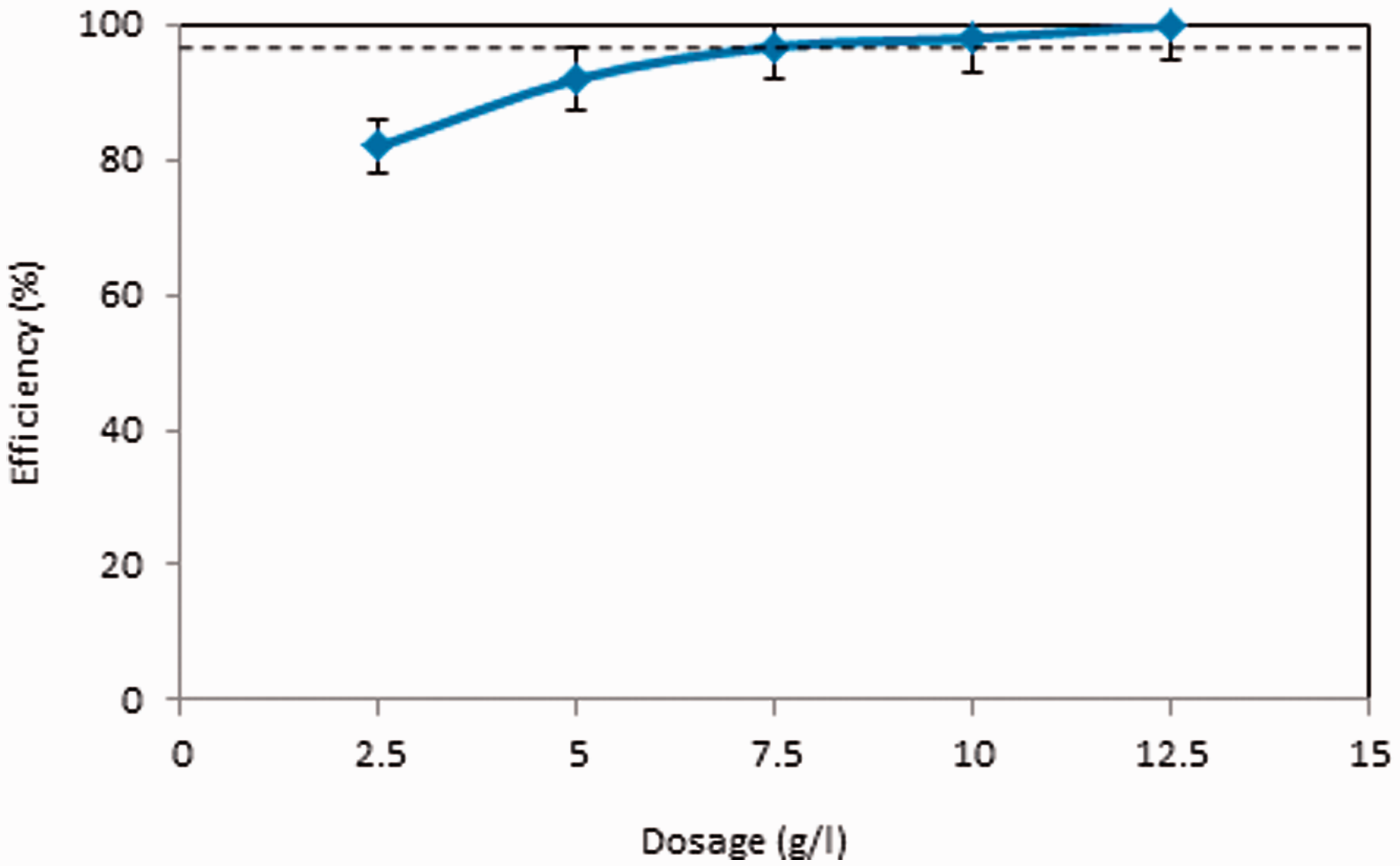
Isotherm studies
In general, isotherms have been applied to describe the equilibrium between liquid and solid phases (Meshko et al., 2001). In other words, isotherm is the relationship between the equilibrium amount of adsorbed (Direct Blue 71) on sorbent surface (modified zeolite (CPB)) and residual concentration of adsorbed in solution. To analyze the adsorption isotherm, three models were employed including the Langmuir, Freundlich, and Temkin isotherms. The comprehensive detail of isotherm model has been reported by Foo and Hameed (2010). The following relations can represent the linear forms of the isotherm models (Hossini et al., 2014; Niri et al., 2015; Wang et al., 2010)



As shown in Figure 5, the adsorption isotherm models comprising Langmuir (Figure 5(a)), Freundlich (Figure 5(b)), and Temkin (Figure 5(c)) are shown for experimental data. Regarding R2 value of models, better correlation between isotherms and experimental data can be found. Nevertheless, the Langmuir with R2 0.995 indicates the best fit with the adsorption experimental data. Furthermore, in Langmuir analysis, the maximum adsorption capacity (qm) by 13.66 mg/g was determined. As shown in Table 1, there are more details of isotherms including the constants and adsorption values for Direct blue 71 onto modified zeolite. A comparison of equilibrium constants of various dyes for zeolite is shown in Table 2. With regard, the adsorption of DB71 by zeolite is best correlated with the Langmuir and Freundlich isotherms. In addition, the maximum adsorption capacity was observed for all of them. It is obvious that the maximum adsorption capacity is between 0.5 and over 85 mg/g. However, a maximum adsorption capacity of 13.66 mg/g for Direct Blue 71 onto modified zeolite can be appropriate in the present work.
Langmuir (a), Freundlich (b), and Temkin (c) isotherms. Isotherm constants and correlation coefficients. Comparative evaluation of equilibrium constants for various adsorbates.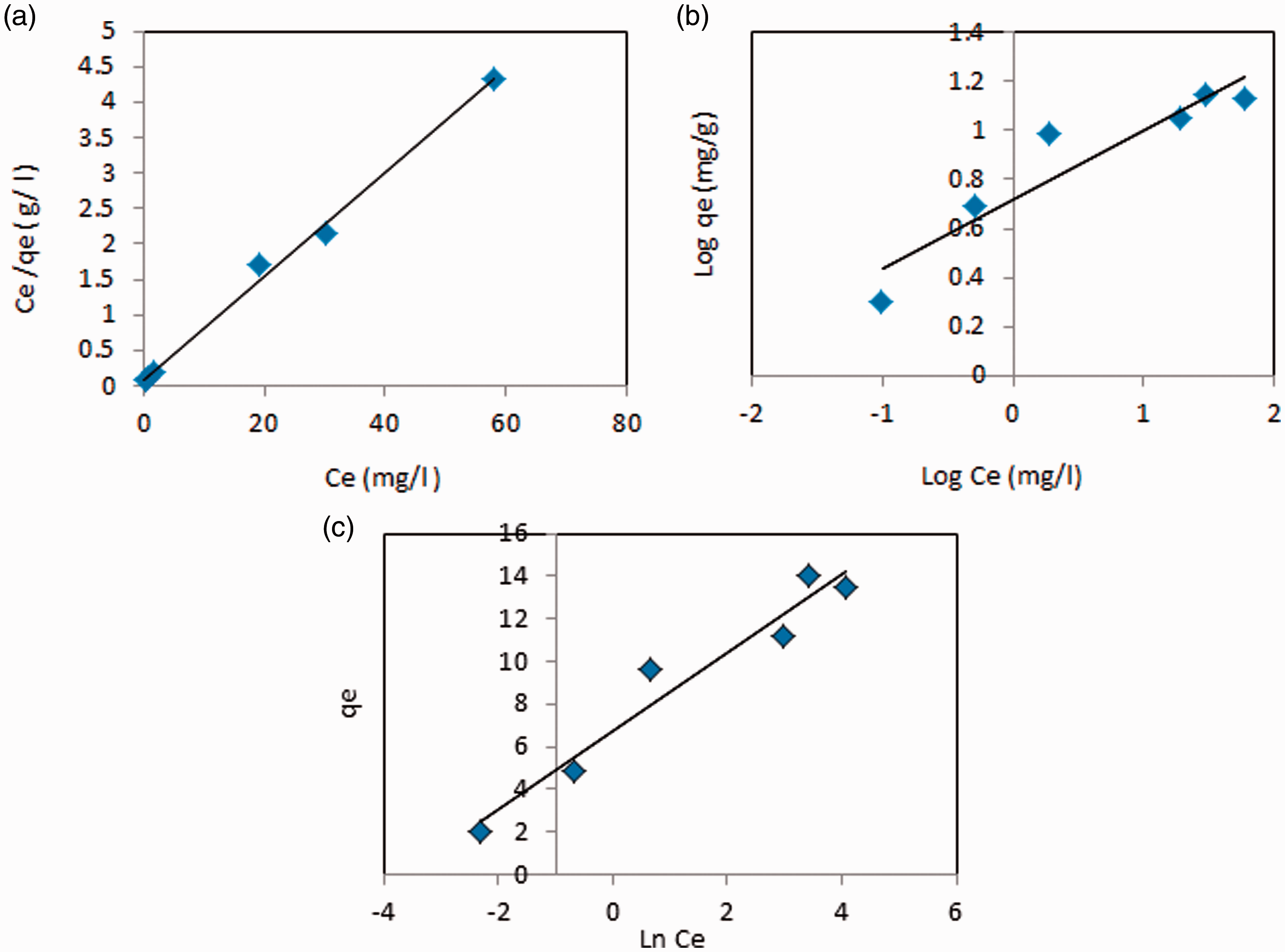


Kinetics studies
To investigate the capacity of mass transfer of dye molecules to zeolite sites, the kinetic relations were employed. Other beneficial aspects of kinetic studies are as follows: (i) to know more details about adsorption performance, facilities and apparatus, and mechanisms, (ii) to be effective for the pilot application, (iii) to determine the solution uptake rate (Qiu et al., 2009).
The four most popular kinetic models including pseudo first, pseudo second-order, intraparticle diffusion, and Elovich were evaluated, to determine the better mass transfer model. Hence, the linearized form of kinetic relations was employed. The linearized equations can represent the following (Equation (5)–(8)) (Arab Markadeh et al., 2016; Hossini et al., 2016; Moussavi et al., 2013)




Figure 6 illustrates the complete pattern of pseudo first-order (Figure 6(a)), pseudo second-order (Figure 6(b)) and Elovich (Figure 6(c)) as well as Intraparticle diffusion (Figure 6(d)) kinetics for each dye concentration. The results of kinetic study with its details are shown in Table 3. According to correlation coefficient values (R2), it can be concluded that the pseudo-second-order model is more fitted with the experimental data. Furthermore, as can be seen from Table 2, they are best correlated with the second-order kinetic.
Pseudo first-order (a), pseudo second-order (b), Elovich (c), and intraparticle diffusion (d) kinetics. Kinetic constants and correlation coefficients.

XRD, XRF, and SEM analyses
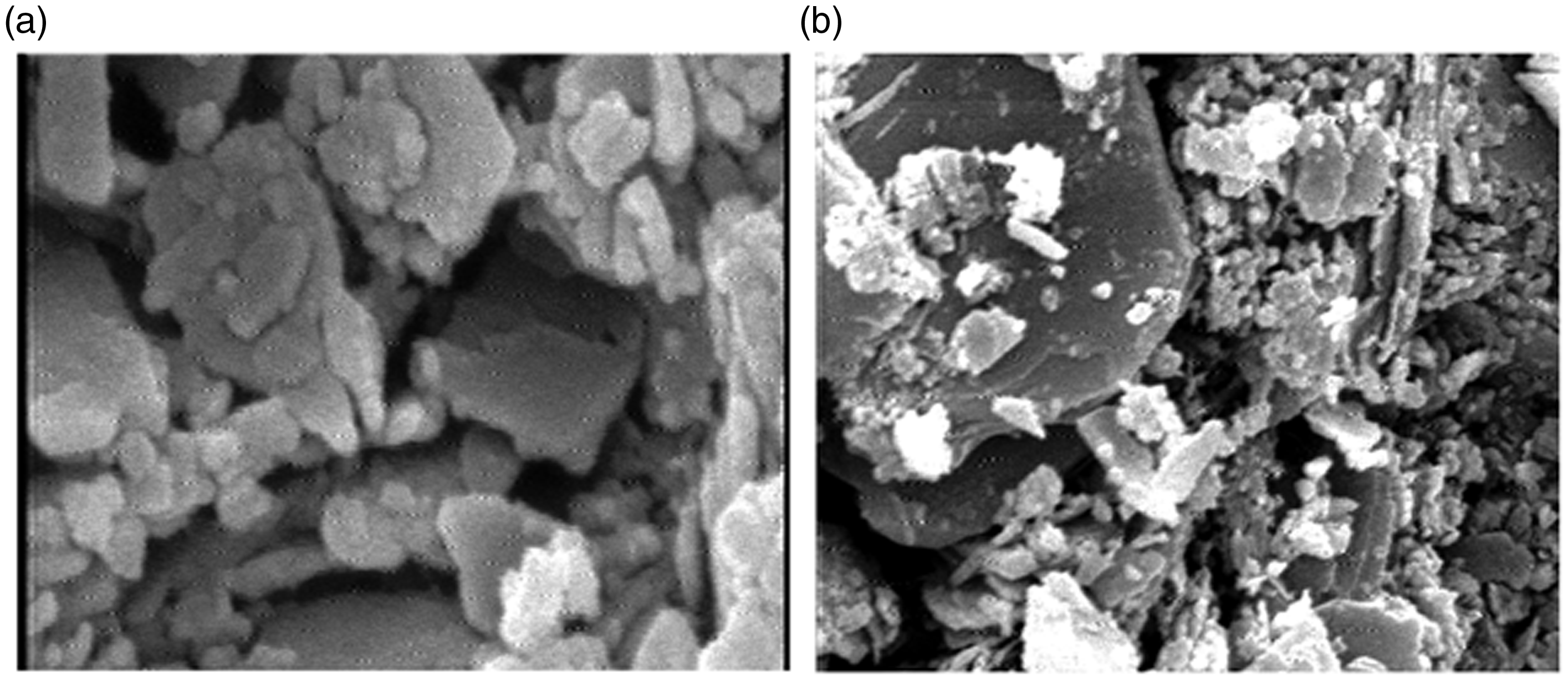
In order to review the modified zeolite, the X-ray diffraction technique (XRD), X-ray fluorescence (XRF), and scanning electron microscope (SEM) analysis were taken. As shown in Figure 7, data points of experimental X-ray diffraction patterns were observed for the natural and modified zeolite sample. According to XRD pattern (Figure 7(a)), it can be seen that the zeolite used in this study, was mainly composed of clinoptilolite (10–60°θ) and cristalloite. The lower part belongs to Quartz (20–22°θ). Surfactant modification of this natural zeolite is seen in 50–60°θ on the structure (Figure 7(b)). In addition, more crystalline peak (24–26, 30–32, and 34–36°θ) were created during surface modification. Figure 8 shows the structure and morphological characteristics of the zeolite, before and after modification by SEM image. Proper structure of surface zeolite is represented. To identify the constituents of zeolite, the XRF analysis was considered. As shown in Table 4, details of XRF analysis are presented. According to zeolite constituents, Al2O3 and SiO2 are the integral part of natural (raw) and modified zeolite. However, several elements such as P2O5, SO3, Sr, and Zr were added when modification was carried out. The LOI is loss on ignition which shows the volatile portion after the heating of zeolite, and is a common method for determining the organic and carbonate content of samples (Heiri et al., 2001). The loss of ignition percentage of about ∼11.3% was determined for both types.
XRD image of zeolite (a) natural zeolite and (b) modified zeolite with PCB. SEM image of zeolite (a) natural zeolite and (b) modified zeolite with PCB. XRF test for both natural and modified zeolite.

Conclusion
This work identified modified zeolite as a suitable adsorbent for decolorization of Direct dye with large molecule weight from aqueous solution. Based on results, the following conclusion can be suggested. The adsorptions were rapid during the first 30 min, and reached equilibrium in 120 min. The adsorption efficiency of modified zeolite was about 99.8, 85.6, 62.33 and 49% at 12 min of equilibrium for 25, 50, 75, and 100 mg/L dye concentrations, respectively. Higher adsorption efficiency of direct dye was obtained at higher dose and acidic pH. The Langmuir isotherm (R2 0.995) and pseudo second-order models gave the best fit to equilibrium experimental data. In addition, according to XRD pattern, it can be inferred that the clinoptilolite is the most important ingredient of crystalloid phase.
Footnotes
Acknowledgements
The authors acknowledge all non-financial support provided by Kashan and Tehran University of Medical Sciences.
Declaration of Conflicting Interests
The author(s) declared no potential conflicts of interest with respect to the research, authorship, and/or publication of this article.
Funding
The author(s) received no financial support for the research, authorship, and/or publication of this article.