




Abstract
Is authoritarianism a universal psychological phenomenon? Does the concept of authoritarianism in its current form effectively explain anti-democratic tendencies across societies? From a cultural perspective and using data of Chinese citizens in the fourth wave of the Asian Barometer Survey, this article identifies an authoritarian variant of an ethical and relational origin. This article argues that the received view of authoritarianism, which is conceptually bounded to prejudice, represents but one brand that arises as a function of threat. In paternalistic cultures such as Confucianism, people may develop hierarchical orientations through the learning of certain relational ethics. Called Confucian Authoritarian Orientation (CAO), this authoritarian variant encodes the following three attitudinal aspects: (1) authority reverence, (2) authority worship, and (3) authority dependence. Empirical results show that CAO stands as an entirely different construct from prejudice-bounded concepts such as Right-Wing Authoritarianism. Furthermore, CAO also serves as a powerful predictor of political docility in individuals; it is correlated with stronger political trust and weaker political efficacy.
Introduction
Scholars often use the standard conception of authoritarianism, or so-called authoritarian predisposition/personality, to understand a variety of anti-democratic politics (Herzog, 2021: 2). Not many have noticed that this concept, which is conceptually bounded to generalised prejudice, mainly applies to certain North American and European populations susceptible to the appeal of ethnocentric, proto-fascist ideology within an intergroup hostility context. If authoritarianism in its broadest sense is about strict obedience to an external authority at the expense of individual autonomy and freedom, then across human societies, there should be various processes and structures that can engender such orientations in one way or another.
This article departs from the standard view and argues that authoritarianism is an embedded construct that signifies modes of attitudinal responses to cultural and social environments surrounding it. Based on observation of Chinese citizens, this article identifies a cultural variant called Confucian Authoritarian Orientation (CAO), which is a set of internalised worldview beliefs of Confucian relational ethics. Explaining its social origin, dynamic, and predictive power for political orientations, this article shows how CAO differs substantially from prejudice-bounded authoritarianism found in the West.
The rest of the article is organised as follows. It first critically reviews existing authoritarianism theories, against which it theorises CAO. Drawing on data from the fourth wave of the Asian Barometer Survey, the main empirical analysis first tests the construct validity of CAO by comparing data on China and three Southeast Asian countries and then examines CAO’s relationship with political docility at the individual level. Two robustness checks using different survey data are conducted to further validate CAO.
Prejudice-bounded authoritarianism and its limits
Authoritarianism is a concept originally developed to explain the underlying personality leading to social pathologies that form the base of prejudice and, more particularly, Nazi fascism (Kreindler, 2005: 90). The most classical research for such answers is the authoritarian personality theory. From a psychiatric perspective, the theory explains how repressed psychological needs by punitive parenting in early childhood engenders a particular personality type, with uncritical submission towards authority on one hand and hostility projected towards the vulnerable and the weak on the other hand (Adorno et al., 1950). The theory is operationalised as an F-scale with a constellation of nine personality traits as designated predictors of pre-fascist attitudes. Following a series of subsequent conceptualisations such as the Dogmatism (Rokeach, 1954) and Conservatism (Wilson, 1973), Altemeyer’s (1981) three-factor Right-Wing Authoritarianism (RWA) scale (authoritarian aggression, authoritarian submission, and conventionalism) stood out as the most reliable measure of authoritarian personality, and its importance in explaining individual differences in intergroup behaviour have been widely agreed (Duckitt et al., 2010: 686).
While initially defined in terms of individual psychodynamics, the informative value of the concept of authoritarianism is largely sociological, and is strongly oriented towards prejudice-related attitudes and behaviours along various social/ideological and institutional dimensions (Altemeyer, 1988, 1996; Duckitt, 2001; Feldman, 2003; Pratto, et al., 1994; Stenner, 2005). Most notably, recent theories have sought to understand the underlying core values as well as the social and situational factors eliciting authoritarian dynamics in ways that lead to generalised prejudice (Duckitt, 2015: 259). Along this line of inquiry, new theories have adopted an intergroup hostility perspective and understand authoritarianism as a group phenomenon (Stellmacher and Petzel, 2005), which may arise from the psychological needs for group norms (Kreindler, 2005), group cohesion (Duckitt and Sibley, 2010), social conformity (Feldman, 2003; Feldman and Stenner, 1997), and collective security (Duckitt et al., 2010).
The above research agenda, with certain traits, attitudes, and beliefs measured dependently on prejudice, makes the concept of authoritarianism largely a theoretical–relational tautology (Liska, 1969). Different from tautology at the operational level, which confuses items and predictive criteria, the definitional link between authoritarianism and prejudice is relational, not contentual (Liska, 1969). That is, authoritarianism is implicitly defined in terms of its role in the total theoretical network, and consequently operationalised as that which results in prejudiced attitudes. Critics of contentual tautology, where measures of authoritarianism directly tap prejudice and intolerance, exist (e.g. Dunwoody and Funke, 2016; Stenner, 2005), but the theoretical–relational tautology resulting in the narrowing of research scope has not yet been effectively addressed. While this is not a fallacy in a technical sense, such a theoretical–relational tautology surely limits scholarly imagination in developing alternative conceptualisations.
First, the conceptual core of authoritarianism is defined in relation to prejudice, that is, as support for the subordination of individuals to collective authority against an external threat (Duckitt et al., 2010: 690). Following this core idea, current literature typically defines authoritarianism as the psychological tendency to exhibit hostility towards outgroups, and the desire to have everyone defer to rightful leaders to maintain order and hierarchy (Adorno et al., 1950). This definition is also framed in many different ways, such as prioritisation of social order and aggression towards outsiders (Altemeyer, 1988, 1996), a tendency towards in-group identification and outgroup derogation (Duckitt, 2001; Feldman, 2003; Stenner, 2005: 14), and a generalised orientation towards the in-group’s superiority over other groups (Kreindler, 2005; Pratto et al., 1994). Given that the concept itself is meant to explain generalised prejudice and intolerance within or between groups, these descriptions often take the concept back to the departure point.
Second, the theoretical structure of authoritarianism is formulated in terms of its theoretical relationships with prejudice. More specifically, because the power to predict prejudice is attributed to threat (Cohrs and Ibler, 2009: 81), current research featuring a collective security approach (Feldman, 2003; Stellmacher and Petzel, 2005) has largely emphasised external threat as a determinant of authoritarianism (Altemeyer, 1988; Duckitt et al., 2010: 687; Kreindler, 2005: 93; Stenner, 2005). Social Dominance Orientation (SDO) and RWA both make the best sense along this line of reasoning: SDO involves derogation of inferior groups who threaten established social hierarchy (Pratto et al., 1994), and RWA involves aggression towards outgroups who challenge social norms and traditions (Altemeyer, 1988). But when disengaged from this theoretical–relational tautology, their explanatory power becomes less explicit. For example, existing research has largely taken authoritarian aggression as basic to RWA (Altemeyer, 1988), yet it is not easy to figure out why submissive and conventional people would display high levels of aggressive attitudes. The cognitive-motivational structure becomes clearer only when discussed in relation to threat; those who value in-group values and norms would seek to repudiate anti-norm deviants and outgroups who threaten group conformity, and they expect powerful leaders to punish those threatening outgroups on their behalf through coercive social control (Feldman, 2003: 67). Obviously, there is no reason to see aggression as intrinsic to authoritarianism if it only serves as a function of the degree of perceived threat.
Third, this theoretical–relational tautology has affected the relative importance of basic attitudinal dimensions comprising authoritarianism. In The Fear of Freedom, Fromm (1942: 32) defined authoritarianism as the inability to rely on one’s self and the desire to cling to an external authority. In this classic definition, the submissive character is seen as unquestionably fundamental. But when the aforementioned theoretical–relational tautology rose to prominence, the attitude structure of authoritarianism was altered by an undue emphasis on factors leading to intergroup hostility, and the submissive character in authoritarianism was deemphasised accordingly. For example, Duckitt and Fisher’s (2003) analysis of 20 randomly selected RWA items has found that hardly any of them directly express authoritarian submission. While Duckitt et al.’s (2010) Authoritarian-Conservatism-Traditionalism (ACT) model placed submission (or what they call ‘conservatism’) at the core of RWA, it is still regarded as but one of the three social attitude dimensions, with each representing a different motivational goal towards favouring group conformity at the expense of individual autonomy. As such, submission to authority is no longer focused on as a main issue in this literature. However, if we move beyond this particular line of inquiry, then authoritarianism could have been conceptualised differently.
Authoritarianism and relational ethics: A cultural perspective
Is there any cause other than threat that makes one anti-democratic in one way or another? If yes, what is the underlying mechanism, and what kind of authoritarian predisposition does it produce? Taking a cultural perspective, this article contends that authoritarian predisposition in individuals serves as an attitudinal response to the corresponding sociocultural environment. More particularly, this article identifies the role of relational ethics in generating an authoritarian variant, which existing research has largely overlooked.
Culture is a frequently mentioned – but ineffectively used – factor in comparative research of authoritarianism. In the existing literature, contextualising efforts at investigating external influences mostly pertain to mechanisms of threat; they often end up identifying variations in authoritarianism as a matter of degree but not of kind (see Schnelle et al., 2021). Arguably, if authoritarianism simply means the tendency to submit to an external authority at the expense of individual freedom and autonomy, then different cultural structures and social institutions should create different kinds of authoritarians, each of which experiences power, hierarchy and order in its own ways.
There is increasing research interest in providing evidence that a qualitative difference might exist among authoritarians living under different social and cultural conditions. Empirical evidence collected from Brazilian (Vilanova et al., 2019) and Romanian (Duckitt et al., 2010) samples have found different factor structures in these countries, which suggest that the three-factor RWA model might not be universal. There are also theoretical discussions about how modern capitalism in Western societies engenders new forms of authoritarian personalities (Herzog, 2021). Even those prejudice-bounded, threat-induced phenomena have varying effects under different sociopolitical conditions. RWA, which is linked to dangerous-world beliefs, reflects the high levels of societal threat which previously advantaged groups experienced following the loss of power. It is, therefore, more evident in social groups such as the Afrikaners (Duckitt and Sibley, 2010). Left-Wing Authoritarianism (LWA) finds its best expression in societies with a history of more dictatorial left-wing regimes, such as those found in Russian and Eastern European countries (Conway et al., 2021).
This article argues for the ethical and relational origin of authoritarianism. Relational ethics are normative values and beliefs about the appropriate relationships that should exist in interpersonal relations. They affect an individual’s psychological orientation towards authority through macro-level normative influences. Relational ethics assign role obligations to key social relations, such as those between parents and children, teachers and students, and bosses and employees. They consist of culturally specific ethical commitments and responsibilities for self and to others. As social life consists of playing assigned roles, relational ethics should exert normative pressure on societal members regarding accepted ways of interacting with others.
Authoritarianism concerns beliefs and attitudes towards authority relations in a relational context – intergroup or interpersonal. Arguably, if a society is normatively oriented towards respect and reverence for authority, societal members would be naturally pulled to become ethical authoritarians and perceive certain anti-democratic values as morally appropriate. Ironically, cultural and personality research does not take into account this underlying ethical and relational factor that might lead people living under paternalism to form such robust virtues.
Confucian–authoritarian orientation as an authoritarian variability
Confucianism, which appreciates the paternalistic and relational nature of human life, should serve as an ideal cultural soil for the formation of such ethical authoritarianism. For more than 2000 years, Confucianism has been the dominant doctrine governing all aspects of social interactions in East Asian societies, including Greater China, Japan, South Korea, and Singapore, all of which have been subject to profound and persistent Confucian influence (Dalton and Ong, 2005; Pye, 1985). Confucianism is essentially a moral system of relational ethics. In contrast to Western individualism, which emphasises liberty and autonomy, Confucian philosophy places human relationships at the core of personhood (Hwang, 2000). According to Confucianism, human beings are not substantial independent entities. They become persons in a relational process where they contribute to each other’s ethical growth by performing designed roles and obligations (Liu, 2015: 528). Confucianism is mainly structured on the two fundamental principles of ‘familism’ and ‘order’ (Nathan, 2003; Yang, 1993). It is these two principles that set the normative core and give a Confucian version of authoritarian orientation its life.
First, ‘familism’ requires that relationships in a family follow a vertical, hierarchical structure, where the family head (usually the father) has the greatest authority. Under familism, filial piety (xiao) serves as the supreme value on which other loyalties are based (Nathan, 2003: 8). Ongoing interactions with family authority allow individuals to acquire a set of normative rules about appropriate conduct between the superior and the subordinate. Through the process of ‘pan-familisation’ (Yang, 1993), individuals may extend such family role ethics into social life under similar power relationships (teacher–student, boss–employee, etc.), depending on the relative status of the other party involved in the interaction (Chien, 2016: 4; Liu, 2015: 102). Since role obligations are relational, the dual tendency of respecting the superior and disciplining the subordinate may be found in the same person, thus making him or her an ‘ethical’ authoritarian. Second, ‘order’ (dao) requires conflict avoidance, including limitation of self-assertion, controlling of one’s emotions, and not interfering with others’ business (Nathan, 2003: 8; Yang, 1993). To realise order and bring society into harmony, one must first internalise the above rules of conduct into predispositions and then extend them to others in social interactions (Slingerland, 2011). Constrained by this conflict-avoidance perspective, authoritarianism in individuals becomes very different from RWA, as it discourages the use of coercion to attain social conformity. Rather, order is realised through self-cultivation or ethical training that inculcates appropriate patterns of conduct in authority relations. Variously referred to as hierarchical relationalism (Liu, 2015), Confucian relationalism (Hwang, 2000), and relational hierarchy (Zhang et al., 2005), these normative principles govern human relationships in various spheres and set the foundation for a harmonious society.
But what attitudes and beliefs underlie this Confucian version of authoritarianism? KS Yang’s (1993) work first proposed an Indigenous model that specifies authoritarian orientation in China into the following three basic dimensions: authority sensitisation, authority worship, and authority dependence. ‘Authority sensitisation’ means that people decide how to interact with another party depending on the presence or absence of an authority figure. ‘Authority worship’ refers to unconditional worship of not only living authority but also traditional family values established by ancestors, such as those related to gender stereotypes and sexual puritanism. ‘Authority dependence’ means self-surrendering submissiveness to or complete dependence on authority due to trust and confidence in authority. Chien (2016) added a submissive dimension to Yang’s model by proposing three additional attitudinal constructs, namely authority obedience, authority dread, and authority reverence.
To further specify this conception, this article proposes CAO. CAO refers to a set of internalised role ethics in the relational hierarchy in interpersonal relationships, which is acquired as a virtue through socialisation from early childhood. Along a submissive perspective, this article develops operationalisable criteria that specify CAO into the following three conceptual components: (1) authority reverence, (2) authority worship, and (3) authority dependence.
Authority reverence asks how much one should obey his or her superior with profound awe and respect versus treating each other equally or even disrespectfully. Different from ‘authoritarian submission’ which serves as a motivational goal of maintaining the status quo, authority reverence exists as an end in itself, for it represents filial piety – the natural law or the moral axiom upon which the entire moral–ethical system of Confucianism is based.
Authority worship refers to ideological submission to established authority and ancestors. It concerns whether one himself or herself should accept traditional moral values, norms, and practices versus behaving independently of these. Different to ‘conventionalism’, authority worship exists as a self-oriented mentality that urges self-suppression; that is, one should always reflect within oneself whether his or her behaviour and thinking stay in line with the established norms.
Authority dependence concerns whether one should have an authority manage and take care of his or her life versus living as an independent individual. Authority dependence represents the paternalistic part of CAO. Those high in authority dependence tend to show a kind of ‘self-surrendering submissiveness’ (Chien, 2016: 4) towards almighty authority and have that authority make decisions for them and take care of them.
CAO’s predictive power for political docility
Basic human values in the non-political sphere often hold strong explanatory power in predicting one’s political values and attitudes (Rokeach, 1960). In East Asian societies, hierarchical orientations acquired at home, school, and in the workplace can easily translate into a particular set of political values and attitudes that guide how people understand the power relations between political authorities and citizens. As such, CAO is formulated to explain political docility in individuals. Political docility, or receptivity to authoritarian rule or leadership, is operationalised as high-political trust and low-political efficacy. First, given that CAO entails a subordinate’s trust toward their superior, this social value may arguably spill over to the political sphere and make those ethical authoritarians express a higher level of political trust in government. For ethical authoritarians, trusting the government is a virtue since the government is supposed to act as the guardian of the people, just like parents to their children. As Hahm (2004) has observed, ‘The virtue highly valued in family is filial piety, correspondingly political allegiance is the state’s due’ (p. 98).
Second, CAO implies weaker political efficacy. With reverence to authority in mind, one becomes less likely to believe that he or she has the right and the ability to understand and influence politics. In the same vein, those prone to authority dependence are unlikely to have much political aspiration for participating in public affairs, as he or she chooses to have the authority make decisions for him or her. When individuals surrender themselves to any external forces with the belief that they cannot control their own life and that largely means a loss of self-efficacy.
Hypotheses
Based on the proposed analytical framework, this article puts forward the following hypotheses:
Hypothesis 1. CAO is different from prejudice-bounded authoritarianism.
Hypothesis 2. CAO is an effective predictor of political docility in individuals. More specifically:
Hypothesis 2.1. CAO positively predicts political trust.
Hypothesis 2.2. CAO negatively predicts political efficacy.
Method
Data
The main empirical analysis draws on the most recent wave (Wave 4) of the Asian Barometer Survey (ABS) conducted between 2014 and 2016. This survey was chosen because it is one of the very few cross-national surveys that contain useful question items that tap authoritarian predisposition in a Confucian/Chinese setting. The ABS covers 20,667 voting-age adults from 14 East Asian societies, and the China survey covers 4068 respondents from 26 Chinese provinces. The sampling size for each province varies from 39 to 366, adapted according to the population of each province. The ABS dataset inevitably contains non-responses and non-meaningful responses (including ‘don’t understand’ and ‘can’t choose’). Since their proportions in the selected variables are less than 10%, I simply deleted these values from the dataset.
Data analysis
First, in order to confirm the discriminant validity of CAO from prejudice-bounded authoritarianism, exploratory factor analysis (EFA) was conducted to compare the factor loadings of the proposed four-item CAO with an alternative seven-item construct that combined CAO and authoritarian aggression into one potential factor. If the hypothesised four items comprising CAO can load together with each other, but diverge from items measuring authoritarian aggression, then Hypothesis 1 should be confirmed. As a rule of thumb, only factors with loadings greater than 0.5 will be extracted (Hair et al., 2009).
Next, for further discriminant validation, confirmatory factor analysis (CFA) was used to compare the fit of the four-item CAO with that of the seven-item model. The seven-item model was further specified into a one-factor solution and a two-factor solution. In the two-factor solution, the manifest variables were allowed to relate only to their hypothesised latent variable.
To check whether there is substantial variation in attitudinal structures within the Chinese population, the above factor analysis models included the following three subsamples: the low education group (with less than 9 years of education), the elderly aged above 65, and rural residents. As CAO is a general cultural orientation, factor analysis results supposedly should not be sensitive to variations in demographic characteristics.
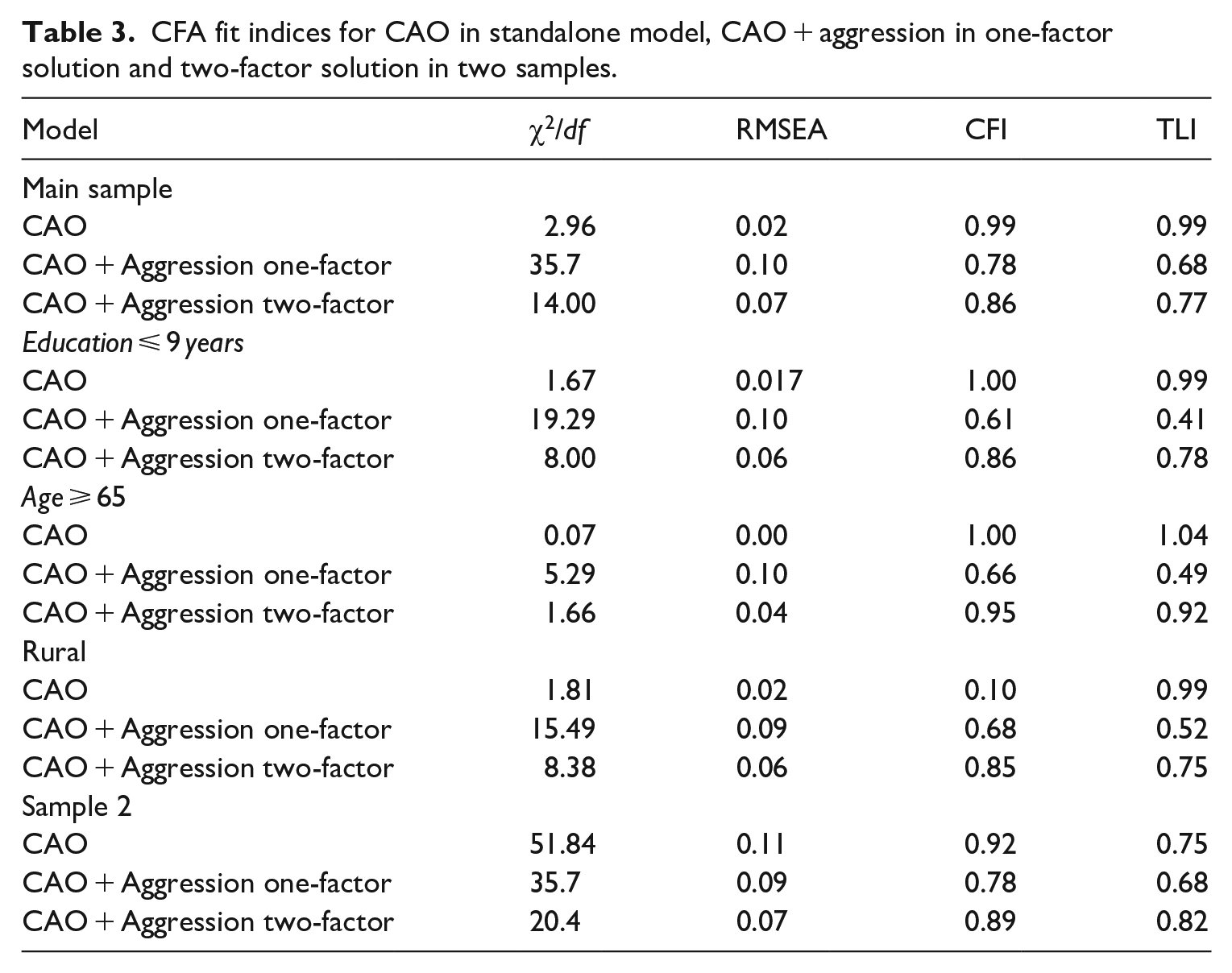
χ2, root mean square error of approximation (RMSEA), comparative fit index (CFI), and Tucker-Lewis index (TLI) were selected as indicators of goodness-of-fit. The cut-off points for the χ2 and degrees of freedom ratio are between 2 and 3. CFI and TLI larger than 0.95 and RMSEA less than 0.05 are considered a close fit (Bollen and Long, 1993).
For the purpose of validating that CAO is unique to Confucian societies, EFA and CFA tests were repeated on the same seven-item scale using Sample 2, which consisted of 4377 respondents from Myanmar, Indonesia, and Malaysia. The three Southeast Asian countries were chosen because they have very different socio-historical contexts from that of China; that is, they are all multiethnic societies prone to intergroup hostility. In Myanmar, ethnic minorities’ grievances are creating a vicious cycle of violence that continues to escalate; in Indonesia and Malaysia, ethnic tension has always been a pronounced social issue in these two countries throughout history (Osborne, 2013). These three Southeast Asian countries should show a different pattern of authoritarian orientation from that of China.
To investigate the effects of CAO on an individual’s political orientations, that is, political trust and political efficacy, four regression models were employed. First, a path model using Structural Equation Modeling (SEM) was built. It hypothesised a unidirectional causal relationship between CAO and political orientations, with control variables exogenously affecting the two main variables (see Figure 1). It used the coefficient of determination (CD), denoted R2 in regression analysis as goodness-of-fit index, in order to assess how well the observed outcomes approximate the real data points.
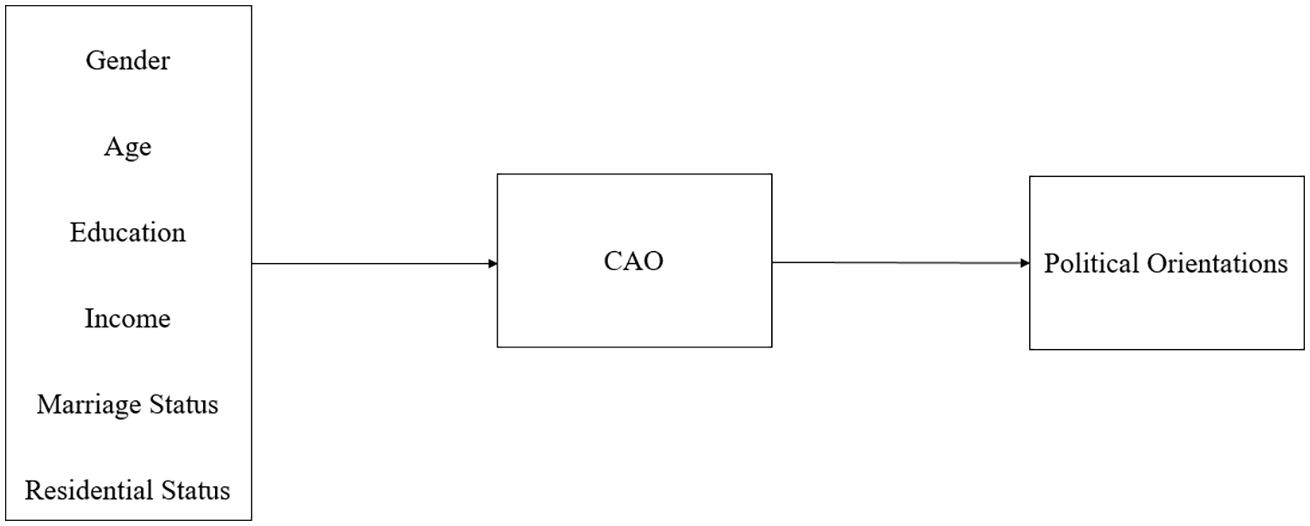
Path model of CAO and political orientations.
The second to fourth models were regular regression models. To specify the random effects for different regions in China, the second model adopted multilevel mixed-effect regression. The third model moved from linear regression to ordered logistic regression. The reason is that the dependent variables specified all have an ordinal structure ranging from the strongest tendency to the weakest. Thus, it is necessary to check whether – and how much – coefficient estimates and significance levels vary when changed from linear regression to ordered logistic regression. The fourth model and the fifth model both used ordinary least square (OLS) regression, except that the fifth model excluded education in order to control for potential multicollinearity effects caused by the high correlation between education and income.
Measures and descriptive statistics
The key variables in this study were all composite factors, measured by individual indicators. In path analysis under SEM, they were operationalised as latent variables, and in regression models, I made these key variables into additive indexes by averaging their indicators respectively. All dependent variables were self-reported items using a Likert-type scale of 1–4, with larger numbers indicating stronger predispositions:
CAO is the core explanatory variable in this study. It was measured by the following four questions that respectively tapped authority reverence, authority worship, and authority dependence. Selected variables are politically neutral items that only reflect one’s dispositional attitudes, not political attitudes. This helped lesson tautology between items and predictive criteria, a common measurement problem in authoritarianism research (Dunwoody and Funke, 2016; Stenner, 2005). First, authority reverence was assessed by the following two questions: ‘Even if parents’ demands are unreasonable, children still should do what they ask’ and ‘Being a student, one should not question the authority of their teacher’. Second, authority worship was measured with a single question item about son preference – an indicator of gender stereotypes typically found in Confucian family values (‘If one could have only one child, it is more preferable to have a boy than a girl’). Third, authority dependence was measured with one question: ‘Wealth and poverty, success and failure are all determined by fate’. The more one believes that he or she cannot act as master of his or her life, the less personal agency he or she holds, and the more dependent he or she is on other authority forces such as God, kinship heads, and parents.
Authoritarian aggression was operationalised as intolerance and hostility toward others. Authoritarian aggression concerns attitudinal belief favouring repression, conflict and coercion versus softness and permissiveness toward different others. Within the original Authoritarian Aggression subscale designed by Altemeyer (1996), half of the items have overt references to aggression against nonconformists and deviants perceived to be sanctioned by established authority, while the other half of the items measure more implicitly, relating to a divisive and intolerant perspective. The ABS survey does not contain overt measures, but several items do pertain to intolerance and conflicting attitudes. Given that the collective security approach has largely conceptualised authoritarianism as attitudinal beliefs favouring social harmony/social conformity over diversity (see, for example, Duckitt et al., 2010), these implicit measures should serve the purpose. ‘Harmony of the community will be disrupted if people organize lots of groups’ and ‘If people have too many different ways of thinking, society will be chaotic’ were selected to assess how socially intolerant one is. Those who scored high in the two items were perceived as valuing social conformity over diversity. A somewhat related but different question item, ‘Even if there is some disagreement with others, one should avoid the conflict’, assessed how one prefers to react when different voices arise – an indicator of hostility. Those who prefer resorting to conflicts were considered more supportive of using repression and coercion to others. The above questions were all measured on a four-point Likert-type scale, such that 1 = ‘Strongly disagree’ and 4 = ‘Strongly agree’, except for the last item, which was measured with a reversed scale, that is, 1 = ‘Strong agree’ and 4 = ‘Strongly disagree’.
Political trust was assessed by seven ordinal variables. They included trust in the courts, national government, parliament, civil service, the military, the police, and the local government, where 1 = ‘None at all’ and 4 = ‘A great deal of trust’. This comprehensive measurement revealed the nuances in citizens’ political trust at different levels of government and from different dimensions.
Political efficacy was measured by two question items, one on perceived knowledge about politics (‘Sometimes politics and government seems so complicated that a person like me can’t really understand what is going on’), and the other on perceived influence over government (‘People like me don’t have any influence over what the government does’). The original scale was reversed so that a greater number indicates greater disagreement with the statements, and thus greater political efficacy.
Several socio-demographic factors were included as control variables in the empirical analysis, including years of education and perceived level of household income that have been found to be negatively associated with authoritarianism (Schnelle et al., 2021; Stenner, 2005); marital status and residential status (i.e. whether one lives in urban or rural areas) that often correlate with incomes and education; and gender and age – the most common demographic factors.
Figure 2 shows the general configuration of CAO among six East Asian countries that largely make up the Confucian cultural zone. 1 The average score in the region was between 2 (somewhat disagree) to 3 (somewhat agree). The economically developed regions, including Japan, Hong Kong, Taiwan, Korea, and Singapore, exhibited the weakest tendency. The highest level was found in China.
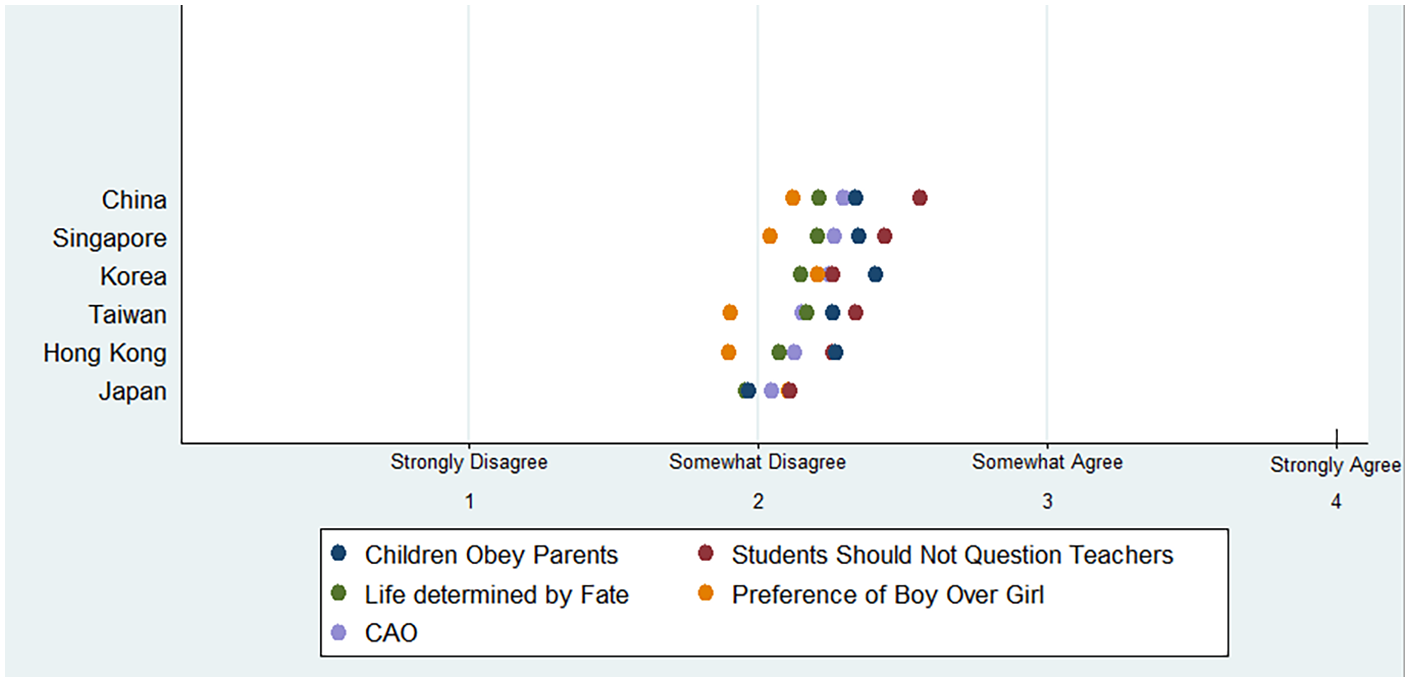
CAO in six East Asian countries and regions.
Table 1 shows the demographic characteristic in levels of CAO among Chinese respondents (for more descriptive statistics, see Appendix I). Descriptive statistics suggest that being elder, poorer, and less educated makes one more authoritarian. t-test results show that there were no gender and religious differences in the average level of CAO, but there were significant differences between urban and rural populations, as well as between ethnic and Han populations.
Mean CAO scores among Chinese citizens.
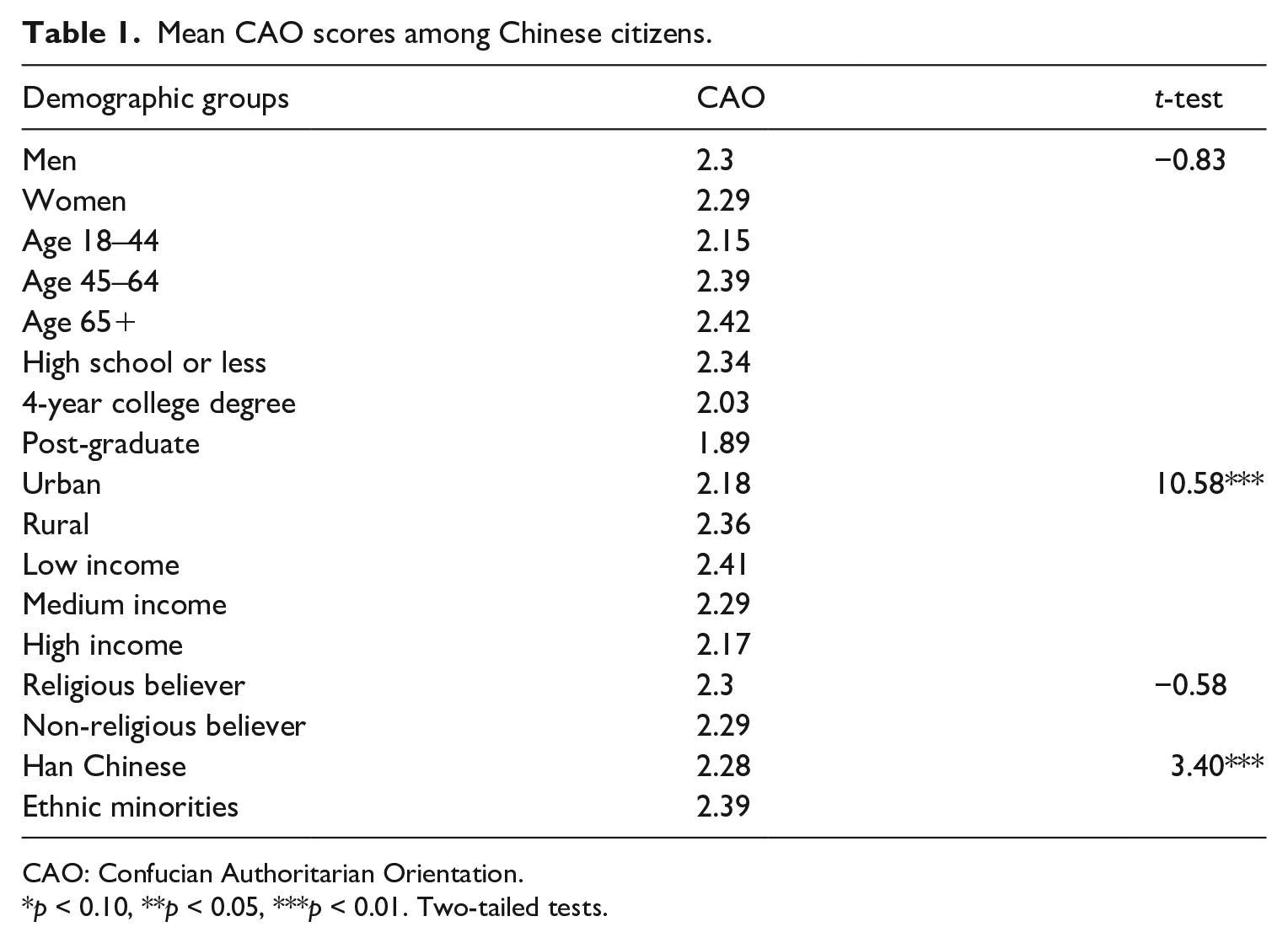
CAO: Confucian Authoritarian Orientation.
p < 0.10, **p < 0.05, ***p < 0.01. Two-tailed tests.
Main results
Factor analysis
EFA results are shown in Table 2. In the standalone model, the factor loadings of the four items comprising CAO were all above 0.5. In the alternative seven-item model, these four items still loaded strongly with each other, but the items measuring authoritarian aggression diverged from them. Intolerance yielded factor loadings lower than 0.5, and hostility showed no correlation with CAO at all, which suggested good discriminant validity at work. The results remained robust on the three subsamples, namely the less educated, the elderly and the rural residents. EFA for the alternative seven-item model was repeated on three Southeast Asian countries. In contrast to findings on China, an entirely different structure was detected. As shown in Table 2, authority reverence and authority dependence loaded strongly with aggression and intolerance. Meanwhile, authority worship failed to load onto this composite factor.
Results of exploratory factor analysis in two samples.
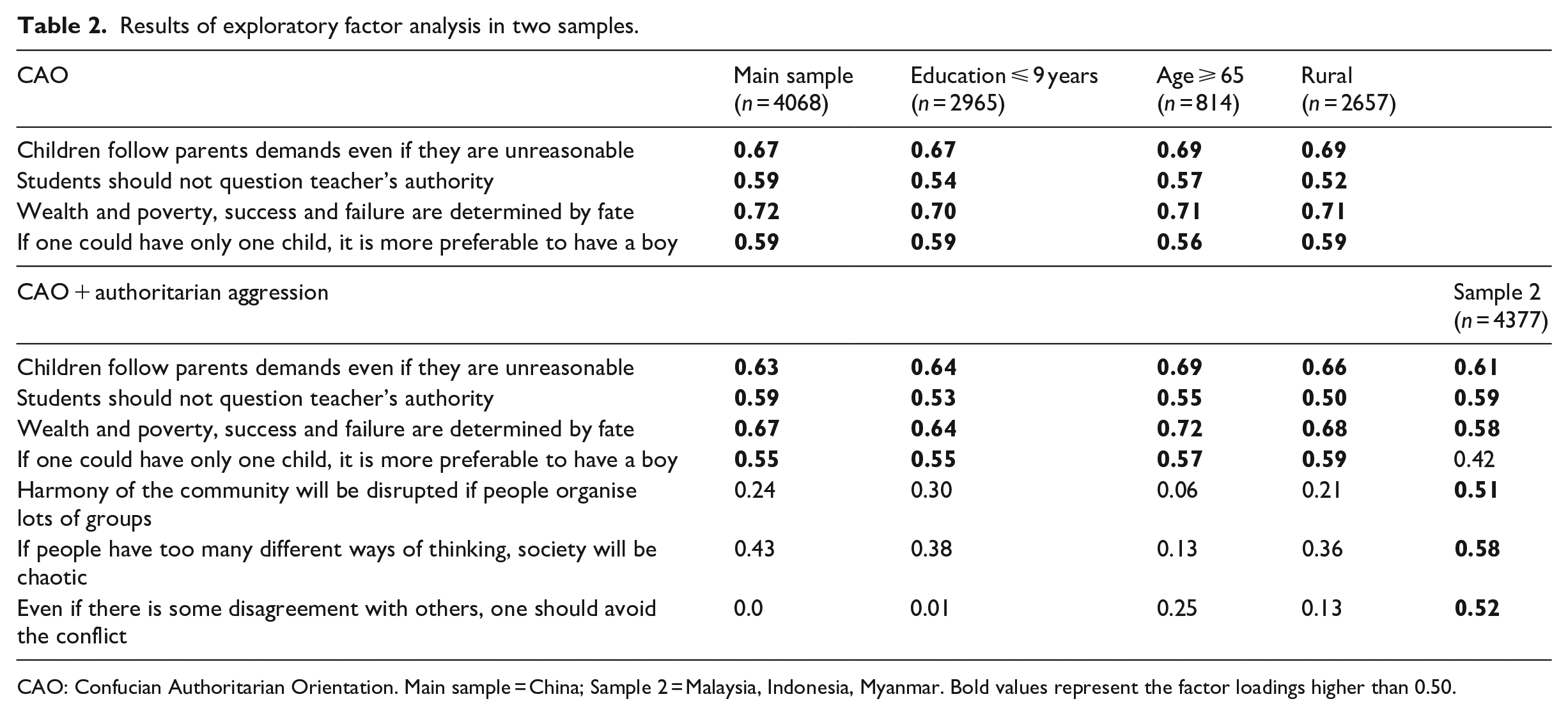
CAO: Confucian Authoritarian Orientation. Main sample = China; Sample 2 = Malaysia, Indonesia, Myanmar. Bold values represent the factor loadings higher than 0.50.
CFA demonstrated excellent fit in the hypothesised four-item model (χ2/df < 3, RMSEA ⩽ 0.02, CFI = 1.00, TLI ⩾ 0.99), and much poorer fit for the one- and two-factor structures of the alternative seven-item model across the main sample (see Table 3). The CFA results on the three subsamples of the Chinese population also suggested the hypothesised model was the best. When the same CFA was repeated on the three Southeast Asian countries in Sample 2, the two models both yielded poor fit indices, which indicated that CAO cannot be easily found in regions other than the Confucian zone. Hypothesis 1 is confirmed.
CFA fit indices for CAO in standalone model, CAO + aggression in one-factor solution and two-factor solution in two samples.
Regression results
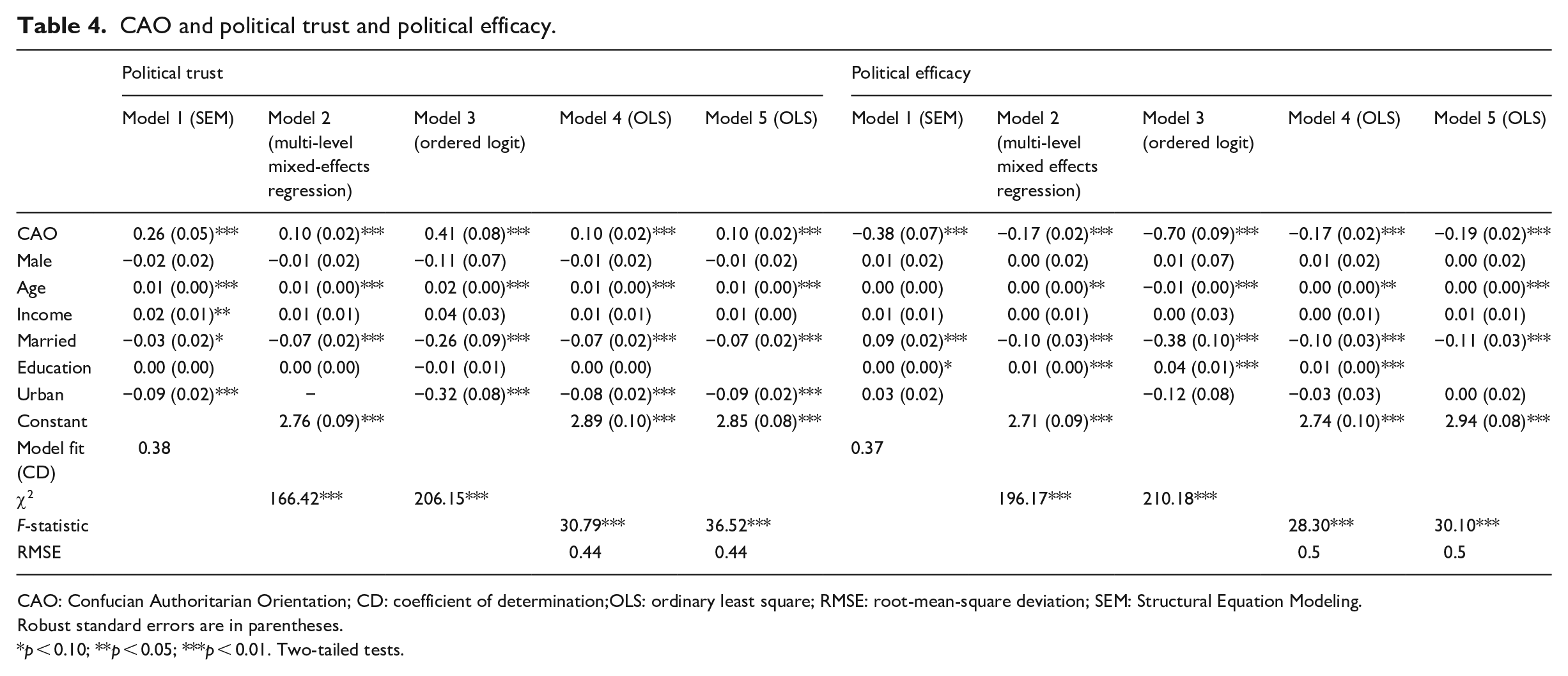
The regression outcomes are displayed in Table 4. The specified path analysis passed the goodness of fit test (CD), indicating that the estimated standardised regression coefficients in the path were accurate descriptions of the data. The results remained consistent across different model specifications. In general, CAO serves as a powerful predictor of political docility and the estimated effects are not sensitive to changes in model specifications.
CAO and political trust and political efficacy.
CAO: Confucian Authoritarian Orientation; CD: coefficient of determination;OLS: ordinary least square; RMSE: root-mean-square deviation; SEM: Structural Equation Modeling.
Robust standard errors are in parentheses.
p < 0.10; **p < 0.05; ***p < 0.01. Two-tailed tests.
Political trust
Path analysis using SEM suggested that an increased level of CAO led to higher political trust (β = 0.26, p < 0.01, Model 1). Ordered logistic regression displayed an even larger positive effect (β = 0.41, p < 0.01, Model 3), whereas the estimated value by multilevel mixed-effects regression (Model 2) and full OLS regression (Model 4) dropped a little (β = 0.10, p < 0.01). The result remained robust even after education was removed from OLS regression (β = 0.10, p < 0.01, Model 4). Table 4 also provided additional information on the effects of socioeconomic factors on political trust. Gender and education status did not seem to exert any significant effects on political trust. Income had a weak but significant correlation with political trust in some models but not others. Only being elder, married and urban residency significantly and negatively predicted political trust. Hypothesis 2.1 is confirmed.
Political efficacy
Contrary to political trust, the same path analysis model indicated that political efficacy was negatively correlated with CAO (β = –0.38, p < 0.01). Such significant negative effects can be observed across the regression models. The strongest association was found using ordered logistic regression (β = –0.70, p < 0.01, Model 3). Models 2 and 4 yielded the weakest yet still substantial correlation (β = –0.17, p < 0.01). When education was removed from OLS regression, the negative correlation between CAO and political efficacy rose slightly (β = –0.19, p < 0.01, Model 5). In addition to the main regression results, Table 4 also showed that marital status and education level were significantly associated with an individual’s political efficacy. Taken together, regression results across the five models all strongly suggested the negative effect CAO had on an individual’s political efficacy. Hypothesis 2.2 is confirmed.
Robustness checks
Would the construct validity of CAO be guaranteed if we use different measurements, and how stable is it when only one dataset is employed? To address these concerns, this section conducts two robustness checks using EFA, with each drawing on data from a different survey.
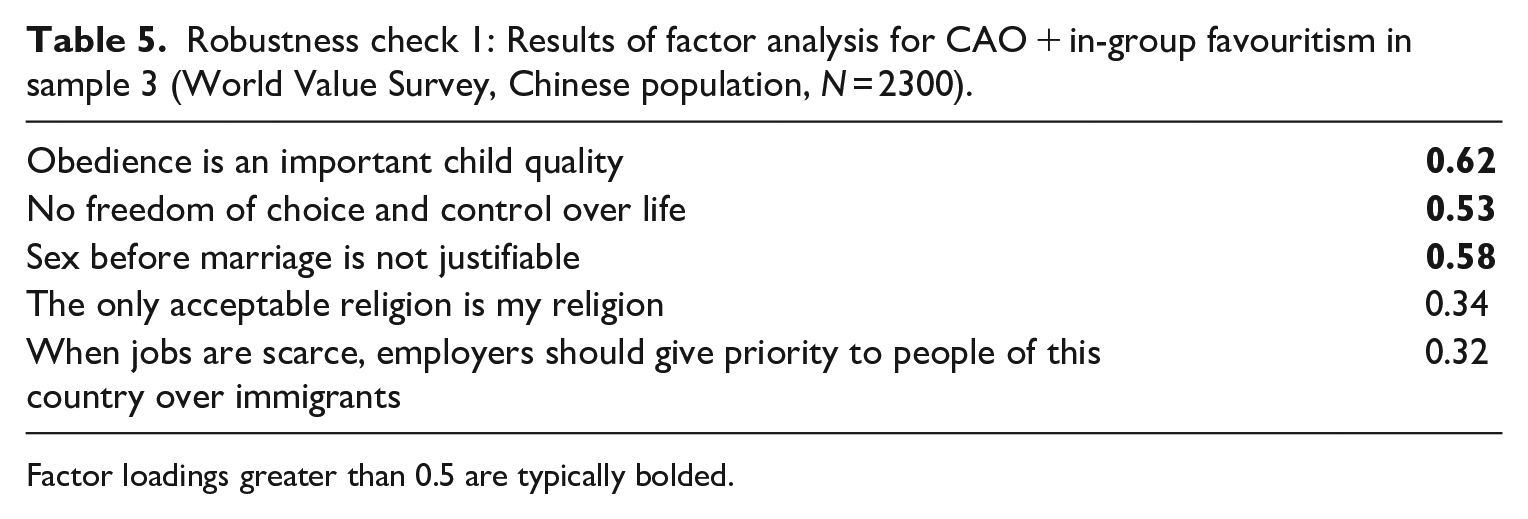
Robustness Check 1 moved to the Sixth Wave of the World Value Survey’s (WVS 6) China dataset. Three survey questions served as the CAO’s alternative measures. The alternative measure of authority reverence asked whether one considers obedience to be an especially important quality that children are encouraged to learn at home. Those who mentioned this quality were coded as 1, otherwise 0. Authority worship was assessed using an item about chastity (how justifiable it is to have sex before marriage), the core of sexual puritanism in traditional Confucian family values, where completely justifiable was coded as 1, and completely unjustifiable as 4. Authority dependence was measured with a question concerning how much freedom of choice and control over life a person should have, using a scale of 1 (a great deal of) to 3 (none at all). This question is very similar to the main measure. The less one thinks he or she has autonomy and control over life, the more he or she is likely to submit his or her life to external authority. Slightly different from the main analysis, the robustness check used two items assessing in-group favouritism – the other side of the coin – to reflect outgroup hostility in individuals (‘The only acceptable religion is my religion’, 1 = strongly disagree, 4 = strongly disagree; ‘When jobs are scarce, employers should give priority to people of this country over immigrants’, 1 = disagree, 3 = agree).
Results displayed in Table 5 suggest that CAO stood as a concept on its own. Variables representing authority reverence, authority worship, and authority dependence all loaded strongly with each other, but intolerance and aggression both failed to load onto the composite construct.
Robustness check 1: Results of factor analysis for CAO + in-group favouritism in sample 3 (World Value Survey, Chinese population, N = 2300).
Factor loadings greater than 0.5 are typically bolded.
Robustness check 2 draws on data from a national survey of over 2000 Chinese Internet users in 2017, called the ‘Chinese Internet Users’ Social Consciousness Survey’ (zhongguo wangmin shehui yishi diaocha). This survey has been extensively used by political psychologists to fathom the ideological orientations of Chinese citizens. 2 Although not representative of the Chinese population, this national sample represents a very large and important subpopulation of Chinese society.
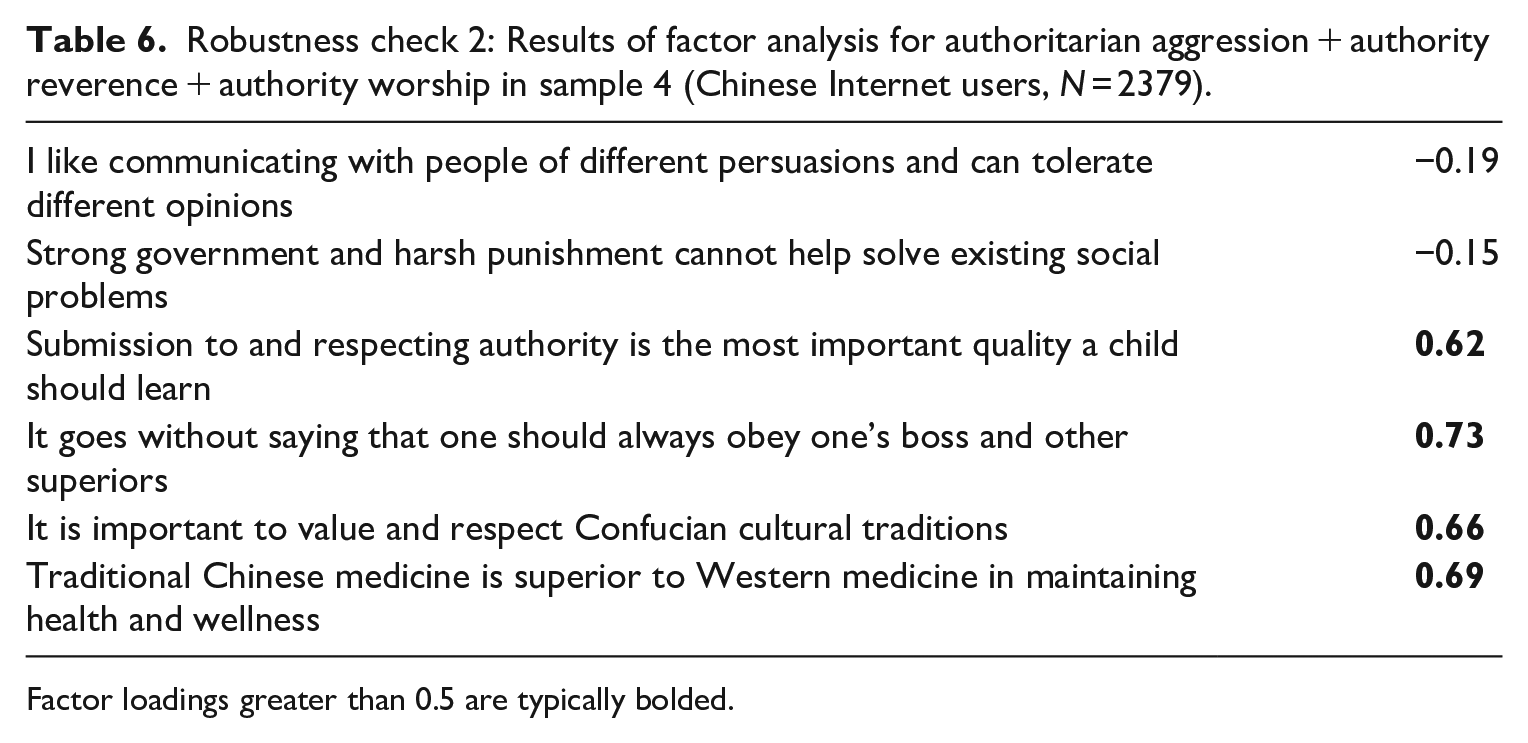
This robustness check further examined CAO’s discriminant validity by creating an alternative model combining authority reverence, authority worship, and authoritarian aggression. Ideally, authority dependence should be included in the model, but due to a lack of relevant survey items, the next best solution was to test how well authority reverence and authority worship load with each other and diverge from authoritarian aggression. Authority reverence was measured by two items about submission to authority (‘Submission to and respecting authority is the most important quality a child should learn’ and ‘It goes without saying that one should always obey one’s boss and other superiors’). Authority worship was measured by the two items that tapped one’s attitude towards traditional culture (‘It is important to value and respect Confucian cultural traditions’ and ‘Traditional Chinese medicine is superior to Western medicine in maintaining health and wellness’). Authoritarian aggression was operationalised by overt measures of intolerance (‘I like communicating with people of different persuasions and can tolerate different opinions’) and aggressiveness (‘strong government and harsh punishment cannot help solve existing social problems’). The above questions were measured on a five-point Likert-type scale such that 1 = ‘Strongly disagree’ and 5 = ‘Strongly agree’, except for the last item, which was measured with a reversed scale. Table 6 displays the EFA results for the above constructs. It shows that items measuring authority reverence and authority worship are strongly correlated with each other, with factor loadings all above 0.6. In contrast, they were negatively correlated with overt measures of authoritarian aggression.
Robustness check 2: Results of factor analysis for authoritarian aggression + authority reverence + authority worship in sample 4 (Chinese Internet users, N = 2379).
Factor loadings greater than 0.5 are typically bolded.
Conclusion and discussion
Authoritarian predisposition is often perceived as threatening to democracy in Western societies. But this idea is not seriously reflected when moving to other sociocultural milieus. By moving into a largely unexplored cultural context and exploring an authoritarian variant of an ethical and relational origin, this article renews existing understandings of authoritarianism. The contributions of this article can be summarised as follows. First, this article shows how interest in and vigilance against prejudice has led to a theoretical–relational tautology that confined authoritarianism study within an intergroup hostility perspective. This particular research agenda should not be analysed in isolation from the backdrop of social crisis plaguing contemporary Western societies. But moving out of this particular context, authoritarianism does not necessarily remain in this monolithic form.
Second, this article provides a fresh perspective for understanding authoritarianism from an ethical and relational dimension. Using Confucianism as a compelling case, this article shows how hierarchical orientations in individuals can be acquired through the socialisation of relational ethics. Moreover, this research demonstrates that CAO has strong predictive power for political docility in individuals. While operating mainly in the social sphere, those value priorities favouring relational submission to authority implicitly orient an individual to become docile members under authoritarian rule.
Third, this article builds a bridge of dialogue between authoritarianism literature and literature about the political culture of East Asia, which are not fully aware of each other’s existence. In terms of developing conceptual tools, existing research on the political culture of East Asia has not fully incorporated the advanced approaches and methods used in authoritarianism studies, and most researchers tend to reduce Confucian authoritarianism into a simple, one-dimensional construct (e.g. Dalton and Ong, 2005). An important breakthrough of this research is that it develops a more comprehensive, multifaceted scale for the study of East Asian political culture and puts it into cross-national empirical tests. Moreover, this article enriches existing authoritarianism literature by bringing to light a Confucian dimension, which will help this field build its cultural awareness and theoretical imagination.
Fourth, this article adds to the scholarly understanding of contemporary authoritarian politics from cultural and personality dimensions. The social significance of this article should be best understood against the background of the reemergence of the two most important authoritarian phenomena over the past decades. On the one side of the globe, in the West, the reemergence of authoritarian politics across the West suggests that a cultural backlash is taking place (Norris and Inglehart, 2019). On the other side of the globe, in China, the public’s general acceptance and obedience to the authoritarian regime has raised doubt about whether this country will democratise (Wright, 2010). Through studying the characteristic differences in social origins, value priorities, and behavioural patterns, this article demonstrates that RWAs are entirely different from loyal supporters of the Chinese Communist Party. The former is fueled by the desire to ‘get rid of the rotten apples’ (Altemeyer, 1988: 87) through conflict-ridden politics of right-wing populism, ultra-nationalism, and anti-systematic movements. In contrast, the latter, with its strong emphasis on trust in political leaders and low political efficacy, appears benign and may even contribute to regime stability.
To conclude, the concept of authoritarianism – as it currently stands – remains too broad and too vague to be effectively employed to explain a variety of anti-democratic tendencies in individuals. To examine the concept in its full dynamism and heterogeneity, we need more refined analytical tools. This article thus calls for more cultural–psychological efforts in exploring and theorising authoritarian variabilities in individuals, which have not yet been fully integrated into the existing literature.
Supplemental Material
sj-docx-1-pol-10.1177_02633957221119645 – Supplemental material for Comparative evidence on cultural variability in authoritarianism: An ethical and relational perspective
Supplemental material, sj-docx-1-pol-10.1177_02633957221119645 for Comparative evidence on cultural variability in authoritarianism: An ethical and relational perspective by Meixi Zhuang in Politics
Footnotes
Acknowledgements
The author thanks Martin Jay, Zuo Cai, Zeng Qingjie, Hu Peng, the Politics Editors, and the two anonymous reviewers for their helpful suggestions and comments on this manuscript.
Funding
The author(s) disclosed receipt of the following financial support for the research, authorship, and/or publication of this article: This research was sponsored by Shanghai Pujiang Program.

Supplemental material
Supplemental material for this article is available online.
Notes
Author biography
References
Supplementary Material
Please find the following supplemental material available below.
For Open Access articles published under a Creative Commons License, all supplemental material carries the same license as the article it is associated with.
For non-Open Access articles published, all supplemental material carries a non-exclusive license, and permission requests for re-use of supplemental material or any part of supplemental material shall be sent directly to the copyright owner as specified in the copyright notice associated with the article.
