



Abstract
This article embarks on a detailed exploration of Lisbon's evolving linguistic landscape, focusing on a specific neighborhood shaped by mass tourism and migration. Lisbon, traditionally considered a monolingual society, has experienced significant linguistic diversification due to globalization, making it an ideal context for studying how languages coexist and interact in urban spaces. Drawing from linguistic landscape research and sociolinguistic theories, this study examines how Asian immigrant communities, alongside international tourists, contribute to the city's dynamic linguistic environment. Our data collection, conducted through a combination of conversational interviews and photographic analysis, resulted in a corpus of 143 signs from a neighborhood densely populated by Asian immigrants. We show that the neighborhood's linguistic landscape is not just shaped by practical communication needs but also reflects deeper socio-cultural dynamics, such as identity preservation and economic adaptation to tourism. This research contributes to the growing field of linguistic landscapes by analyzing how immigrant languages, local languages, and global languages coexist and influence each other in Lisbon. It highlights the challenges and opportunities posed by globalization in urban environments and suggests pathways for fostering greater linguistic inclusivity and intercultural dialogue in multicultural cities like Lisbon.
Introduction
In an increasingly interconnected and diverse world, the dynamics of urban spaces have been transformed into vibrant tapestries of culture, communication, and coexistence. Cities have long been crucibles of linguistic diversity, serving as magnets for people from diverse linguistic backgrounds who bring with them their languages, cultures, and identities. As urban populations continue to swell and global migration patterns persist, linguistic diversity in cities has become more pronounced and complex than ever before.
The concept of linguistic landscapes has gained considerable attention in the field of linguistics and urban studies, as it provides a unique lens through which to examine the socio-cultural, political, and economic forces shaping contemporary cities (Gorter, 2013; Ronan et al., 2023). Within this context, linguistic landscapes encompass a rich array of semiotic resources, including street signs, advertisements, shop names, graffiti, and other written and visual displays of language, that collectively reflect the multilingual nature of urban spaces. These linguistic landscapes offer invaluable insights into the complex interplay between language, identity, and power in modern cities.
Lisbon is a city of intricate layers, both culturally and linguistically, making it difficult to encapsulate its rich diversity in a single study. The city's linguistic landscapes reflect a multifaceted mosaic shaped by its long history, its colonial past, its connection to the sea, and, more recently, the forces of globalization, mass tourism, and migration. Each neighborhood in Lisbon tells its own story, offering distinct linguistic and cultural expressions that contribute to the city's overall identity. The linguistic diversity found in public spaces, signage, and everyday interactions reveals how different languages coexist and interact within the city, forming multiple, varied linguistic landscapes. Given the complexity of Lisbon's urban and linguistic medley, this study focuses on one specific neighborhood deeply impacted by both mass tourism and immigration.
This particular neighborhood stands out due to its significant population of Asian immigrants, who are not only residents but also the primary owners and operators of many local shops and businesses. These businesses serve a dual function, catering to the daily needs of the immigrant community while simultaneously attracting tourists who are drawn to the area for its perceived exoticism. Visitors flock to this part of the city in search of an “authentic” and affordable cultural experience, enjoying the small, inexpensive Asian restaurants and exploring what they perceive to be a unique, foreign quarter within Lisbon. This neighborhood, with its dynamic and evolving linguistic landscape, offers a fascinating intersection of global and local influences. The predominant languages here reflect the community's ethnic and linguistic origins—Mandarin, Bengali, Nepali, and other Asian languages 1 —alongside the ubiquitous presence of Portuguese and English, which are essential for communication with the wider population and visiting tourists. As such, the neighborhood becomes a space where multiple linguistic worlds coexist: the functional language of everyday immigrant life, the language of commerce with tourists, and the symbolic language of cultural identity.
By narrowing our focus to this neighborhood, we aim to capture the intricate relationship between language, identity, and urban transformation. The linguistic landscape here not only reflects the demographic shifts brought about by immigration but also highlights the economic and cultural influences of mass tourism. This convergence creates a unique linguistic and cultural environment that is emblematic of Lisbon's evolving identity as a global city. However, even with this focused approach, it remains impossible to fully capture the depth and variety of Lisbon's linguistic landscape in a single study. What we offer here is a snapshot of one of the many stories woven into the fabric of this ever-changing city.
Literature Review
The seminal work of Landry and Bourhis (1997) showed how the presence of monolingual signs in languages other than the official serves as a significant indicator of subjective ethnolinguistic vitality. This phenomenon reflects the community's perceptions of the vitality and importance of their in-group language across various social and cultural domains. Subjective ethnolinguistic vitality refers to how members of a linguistic community perceive the strength and presence of their language within the broader societal context. For our study, these perceptions are visibly manifested in areas where monolingual signs in Asian languages are prominent. These signs are more than mere navigational aids or commercial advertisements; they symbolize the community's confidence in the relevance and resilience of their language. For instance, a neighborhood adorned with signs exclusively in Mandarin suggests a robust and cohesive linguistic community. It indicates that the speakers of this language feel a strong sense of identity and belonging. They believe their language has a legitimate place in the public sphere, not only for practical communication but also as a marker of cultural presence. This linguistic landscape also highlights the community's self-perception regarding the functionality of their language in various domains such as business, education, and social interaction. Monolingual signs in Asian languages demonstrate that these communities see their languages as fully functional and capable of meeting the needs of daily life in Portugal. This is a powerful affirmation of their cultural and linguistic identity, asserting that their languages are not merely secondary to Portuguese but hold intrinsic value and utility. Furthermore, these signs contribute to the broader multicultural collage of Portugal. They enhance the visibility of diverse linguistic groups and promote a more inclusive societal narrative. By asserting the presence of their languages in public spaces, these communities challenge the notion of a monolingual national identity and advocate for a more pluralistic view of what it means to be part of Portuguese society.
The complex relationship between language's visibility and salience on public and private signs, on the one hand, and the soundscape and the social and linguistic dynamics of a context, on the other, has been extensively studied by recent linguistic landscape research. Begum and Sinha (2023), Gorter et al. (2019), and Karpava (2022) examined the dominance and visibility of languages in public spaces, as well as the uses of languages among speakers in public spaces, a subject we will cover in the upcoming sections. Nambu (2021) investigated the ways in which the private signs are indicative of the active expression and creation of identity, what we will implement for Lisbon's Asian immigrants. Mamadouh and El Ayadi (2022) studied how a person's impression of linguistic diversity and multilingualism is shaped by the sense of place and belonging that is promoted throughout the city, in particular communities, and in public areas, as the following pages will reveal. Finally, Lin (2023) investigated the effects that foreign companies operating in the tourism sector, like hotels, have on the multilingual ecosystem of countries when they introduce their linguistic customs and mindsets, an illustration of current events in Lisbon.
The works of Lou (2010, 2017) and Lo (2016) provided critical frameworks for understanding the complex interplay between language, identity, and space in urban settings, offering valuable insights that inform our study of Lisbon's linguistic landscape. Lou's (2010) exploration of narrative place-making in Chinatown demonstrates how immigrant communities use linguistic and visual resources to assert cultural identity while navigating power dynamics and economic pressures. Similarly, her geosemiotic analysis of Hong Kong markets (2017) revealed how signage and spatial practices create a sense of place, blending local and global influences in spaces of consumption. Lo's (2016) worked on the linguistic racialization of Asian Americans extends this discussion by highlighting how the visibility of Asian languages in public spaces can simultaneously affirm cultural presence and reinforce perceptions of foreignness and otherness. These perspectives are deeply relevant to Lisbon, where Asian immigrant communities and their linguistic practices shape the neighborhood's visual and cultural fabric. Signs in Asian languages serve not only as functional tools for the community but also as symbolic markers of identity, while their presence in a city shaped by mass tourism underscores broader dynamics of cultural negotiation, exoticization, and power. By merging these theoretical insights with our analysis of Lisbon's multilingual spaces, we contribute to understanding how linguistic landscapes function as arenas where global, local, and immigrant identities intersect and are contested.
The insights from Ferrarotti (2016), Bruyèl-Olmedo and Juan-Garau (2009), Alomoush (2022), Gu and Manan (2024), Liu and Ma (2024), and Santos Rovira (2024) provided valuable insights into the role of English as both a lingua franca and the primary language of tourism in multilingual urban settings. Ferrarotti (2016) demonstrated how English evolves from a practical lingua franca into a symbolic tool that signifies modernity and global connectivity in urban linguistic landscapes. Bruyèl-Olmedo and Juan-Garau (2009) highlighted its dominance in the multilingual resort of S’Arenal, where it functions as the primary medium for tourist communication and fosters a sense of cosmopolitanism. Alomoush (2022) reinforced this by showing how English facilitates interactions in the ancient city of Jerash, blending seamlessly with local languages to accommodate global tourism. Similarly, Gu and Manan (2024) explore how English, transliterated into non-Latin scripts, adapts to diverse linguistic landscapes, reflecting its versatility and centrality in global communication. Liu and Ma (2024) focused on English's commodification in rural China, underscoring its role as the language of commerce and tourism, while Santos Rovira (2024) examined Benidorm, where English dominates as a key driver of international tourism, shaping the city's linguistic identity. These studies directly connect with our analysis of Lisbon's linguistic landscape, where English plays a pivotal role as the lingua franca bridging diverse groups, particularly in tourist-heavy areas. In the studied neighborhood, English not only serves as a practical communication tool for international visitors but also symbolizes Lisbon's integration into the global tourism network. By analyzing its interplay with Portuguese and Asian languages, our study aligns with these works, demonstrating how English consistently emerges as the language of tourism and global accessibility, shaping urban spaces in diverse sociolinguistic contexts.
Backhaus's study on the linguistic landscape of Japan (Backhaus, 2005) draws parallels with our own study, as both countries are renowned for their deep cultural roots and traditional values, often thought of as primarily monolingual nations. However, a closer examination of their urban environments reveals a remarkable array of languages spoken. This diverse linguistic mosaic reflects the changing demographics and the impact of globalization in both countries. The unexpected diversity in language enriches the city, offering residents and visitors a more inclusive and enriched experience. It challenges the idea of linguistic homogeneity and showcases the dynamic nature of these societies. The multitude of languages serves as a bridge, connecting various cultural groups and promoting a deeper understanding and appreciation of global diversity. This phenomenon underscores the significance of language as a means of cultural exchange and social unity in our increasingly interconnected world.
In the literature on linguistic landscapes in Portugal, several studies provide valuable insights into how language use in public spaces reflects broader socio-cultural and economic dynamics. Torkington's (2009) exploration of the ‘Golden Triangle’ in the Algarve offered a compelling analysis of how tourism shapes the linguistic landscape. Her study reveals that English dominates public signage in this affluent, tourist-driven region, reflecting the area's economic reliance on international visitors. Similarly, Clemente et al. (2013) examined linguistic diversity in the ‘Beira Mar’ neighborhood of Aveiro, using methodological approaches that foreground the role of immigration and multiculturalism in shaping urban spaces. Both studies emphasize the impact of external forces—tourism in Torkington's case, and immigration in Clemente et al.'s work—on the linguistic landscape. Our study builds on these frameworks by investigating the intersection of these two powerful forces—tourism and migration—in a Lisbon neighborhood heavily influenced by Asian immigrants. Like Torkington and Clemente et al., we use linguistic landscape methodologies to assess how language visibility and use reflect the complex socio-cultural dynamics of urban spaces in contemporary Portugal, while focusing specifically on how these dynamics are shaped by the dual forces of mass tourism and settled immigrant community.
In our study, we adhere to the perspective articulated by Scollon and Scollon (2003, p. 34) that “we can only interpret the meaning of public texts like road signs, notices, and brand logos by considering the social and physical world that surrounds them”. This approach underscores the interconnectedness between language and its situational context, asserting that the meaning of public texts is profoundly shaped by the surrounding socio-cultural and physical landscape. By considering the broader social world, we recognize that public texts do not exist in a vacuum. They are embedded within a mélange of cultural practices, social norms, and community values. For instance, a monolingual sign in Mandarin in a Lisbon neighborhood cannot be fully understood without acknowledging the presence and influence of a significant Chinese community. The social dynamics, including the community's history, migration patterns, and socio-economic status, play a crucial role in shaping the purpose and impact of such signage. These signs might serve as beacons of cultural identity, markers of territoriality, or practical tools for daily navigation, each interpretation grounded in the specific social fabric of the area. By adopting Scollon & Scollon's framework (2003), we aim to uncover the multilayered meanings of public texts within their specific socio-physical contexts. This holistic approach allows us to appreciate the nuanced ways in which language interacts with space and society, offering deeper insights into the cultural and linguistic landscapes of the areas we study.
The study of linguistic landscapes in current times not only presents an opportunity to deepen our understanding of urban life but also carries implications for language policy, cultural preservation, and social integration in an era marked by rapid globalization and migration. Our vision of globalization, informed by Blommaert (2010) and Goebel (2020), emphasizes the intricate and dynamic nature of global interconnectedness, particularly through the lens of sociolinguistics and transnationalism. Blommaert's perspective highlights how globalization reshapes linguistic landscapes, leading to complex patterns of communication and identity that transcend traditional geographic and cultural boundaries. This sociolinguistic approach underscores the fluidity and hybridity of language in a globalized world, where local and global influences intertwine. Complementing this, Goebel's work on transnationalism and superdiversity explores how globalization fosters diverse social environments characterized by multifaceted interactions among individuals with varied backgrounds. These interactions challenge conventional notions of community and identity, promoting an understanding of the world as an interconnected web of relationships and cultural exchanges. Together, these works illuminate the profound impact of globalization on social structures, communication, and identity, advocating for an appreciation of diversity and the continuous negotiation of meaning in an increasingly interconnected world. By examining linguistic landscapes, we can illuminate the connections between language, urbanization, and identity, thus providing valuable insights into the challenges and opportunities that arise in today's cosmopolitan cities.
This “mundane metrolingualism”, as described by Pennycook and Otsuji (2020, p. 9), encapsulates the every day, often unnoticed, instances of multilingualism that thrive within urban environments. It is the casual conversations between neighbors speaking different languages, the multilingual signs on city streets, and the diverse linguistic exchanges at local markets. Our research will show a plethora of unique multilingual scenarios in Lisbon, pertaining to both the immigrant population and mass tourism, which demonstrate how “mundane metrolingualism” is specifically tailored to each location. This phenomenon is a testament to the fluidity of language in contemporary urban life, where globalization and multiculturalism converge to create a dynamic linguistic landscape.
Research Questions
The surge in mass tourism has profoundly shaped the linguistic landscape of Lisbon, creating a dynamic interplay between the city's traditional linguistic identity and the demands of a global tourist audience. Public spaces and services in Lisbon have undergone linguistic adaptations to accommodate the diverse linguistic needs of tourists, emphasizing the use of English and other widely spoken languages. Signage, information boards, and service interactions often prioritize these global languages, reflecting the economic imperative to cater to a broad international clientele. This linguistic shift, driven by the pragmatic need for effective communication with tourists, has introduced a layer of complexity to Lisbon's linguistic fabric, where the vernacular contends with the lingua franca of global tourism.
Lisbon's linguistic diversity is significantly influenced by migration patterns that have brought several languages and cultures to the city. The interactions between native Portuguese speakers and immigrant communities contribute to the complexity of the linguistic landscape. The coexistence of multiple languages within neighborhoods and social spaces reflects the negotiation of linguistic identities. Immigrant communities often maintain their native languages within private spheres, contributing to a rich blend of linguistic diversity. The linguistic interplay between Portuguese and immigrant languages not only shapes the daily interactions within the city but also influences cultural representations and expressions of identity, highlighting the role of migration in diversifying and enriching Lisbon's linguistic mosaic.
Accordingly, our research questions are the following:
What specific patterns of language use and visibility emerge in the linguistic landscape of the chosen Lisbon neighborhood, and how are these patterns influenced by the dual forces of mass tourism and Asian immigration?
How do the linguistic practices of the Asian immigrant community, as reflected in public signage, communication strategies, and customer interactions, contribute to shaping the social and cultural dynamics of the neighborhood's public spaces?
Our Data
This study was carried out in May-June 2023, and data were gathered from a city center area that had previously been identified as frequently being populated by Asian immigrants and that roughly matches Rua da Palma, Travessa do Benformoso, Rua do Benformoso, and Rua Fernandes da Fonseca (as shown in Figure 1). Asian immigration in Lisbon is one of the most recently arrived communities, compared to traditional European immigration or immigration from former Portuguese colonies, and its visibility is now characteristic of certain areas of the city, particularly the area under study: “Em 1980, o continente asiático era o menos representado entre as nacionalidades presentes em Portugal com 1.153 indivíduos legalizados. Dez anos mais tarde o número já tinha quadruplicado e na década seguinte ainda duplicou, cifrando-se em 8.743 em 2000 e 26.314 em 2009” [In 1980, the Asian continent was the least represented among the nationalities present in Portugal with 1,153 legalized individuals. Ten years later the number had already quadrupled and in the following decade it doubled, reaching 8,743 in 2000 and 26,314 in 2009] (João, 2013, p. 203). The Asian population in Portugal grew exponentially over the next decade, reaching 106,877 people in 2021, according to the most recent available data, with half of them residing in Lisbon (População Estrangeira Residente Em Portugal - Ásia, 2023). Several small businesses run by Asians have been established in the studied area, selling various products from their respective countries, with the unique feature of being directed, fundamentally, towards citizens of their own countries, rather than Portuguese citizens, as will be seen throughout the following pages, because its signs, that are part of the linguistic landscape, are written, mostly, in Asian languages.
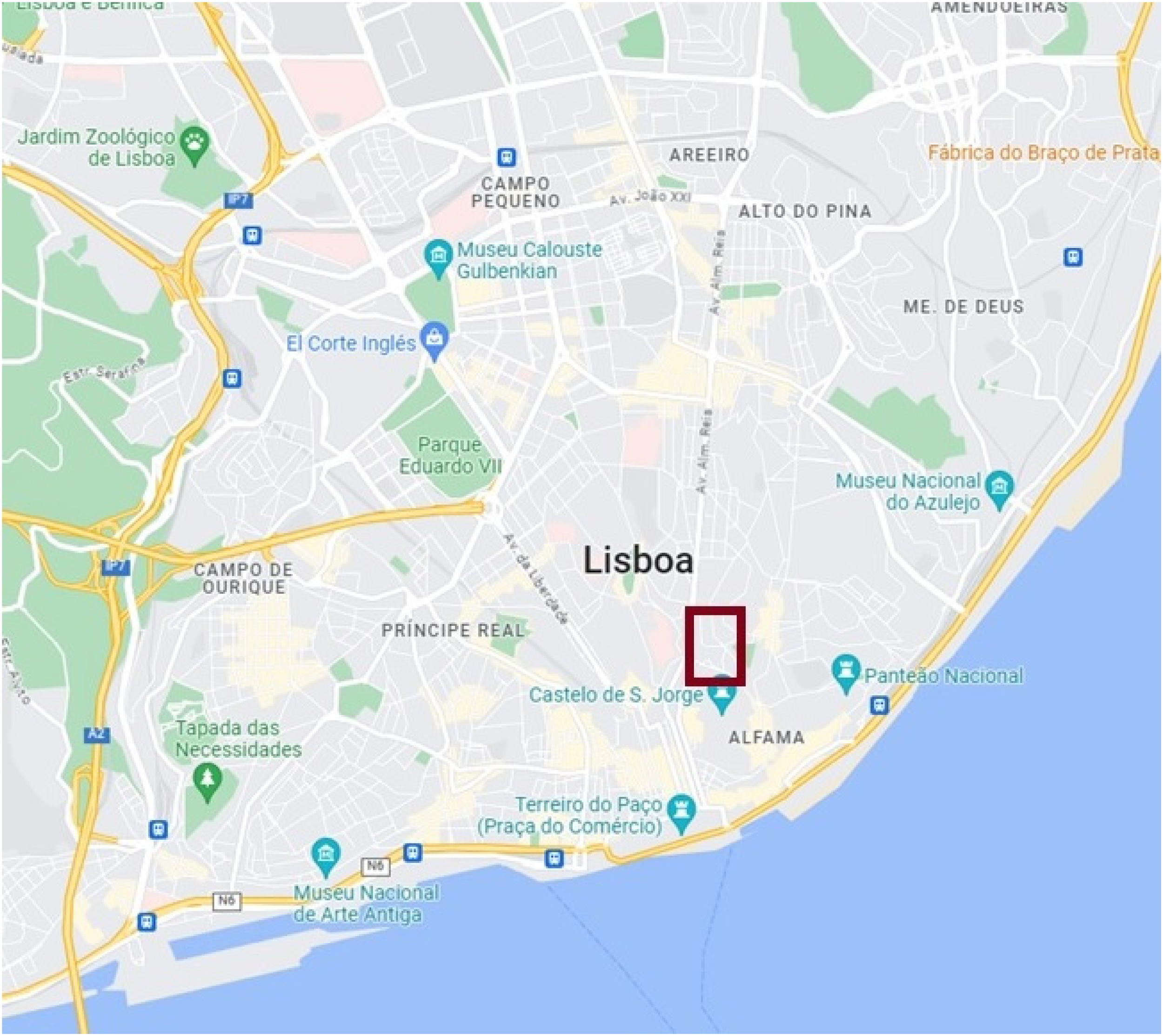
A map of Lisbon and the studied area (red square) from Google Maps.
The study gathered a data corpus of 143 photos from the main bustling streets in the chosen neighborhood. The area studied covers approximately 20,000 m², and within this space, we conducted a comprehensive and systematic photographic survey of the linguistic landscape. This involved photographing every sign visible to the public—meaning any signage located outside shops or easily seen by passersby from the street. We made a conscious decision to exclude interior signs that were not immediately visible from outside, in order to focus on the public-facing dimension of the linguistic landscape. Importantly, this approach included photographing the main storefront signs of every shop and business in the area, regardless of size or type. We also documented vertically displayed signs, signs hanging perpendicular to the buildings, banners, sandwich boards placed on the pavement, and even handwritten or personally printed notices temporarily affixed to windows or doors. These included sale announcements, delivery notices, menus, and other customer-facing messages. Our goal was to capture the full range of signage that contributes to the everyday visual and linguistic environment experienced by pedestrians. No signs were selectively chosen or excluded during data collection. Every sign publicly visible along the streets of the neighborhood was photographed. The resulting corpus of 143 signs represents the total number of unique, publicly visible signs that met our criteria during the period of data collection. For the purposes of this article, we selected a subset of these images to include in the analysis and discussion, focusing on those that were most representative of broader trends and most relevant to the themes explored in the study.
Throughout this article, we refer to “Asian languages” in a general sense without specifying particular languages, as this study is not focused on the intricacies of Asian linguistics but rather on the broader concept of the linguistic landscape in a specific Lisbon neighborhood. Our aim is to explore how these languages, collectively representing the Asian immigrant community, contribute to the visual and social fabric of the neighborhood's public spaces. Additionally, we make comparative references to Portuguese, the official language of Portugal, as it plays a central role in national identity and public communication. English is also examined, as it serves as the primary language of mass tourism, reflecting its influence on the neighborhood's economic and cultural dynamics. The interplay between these languages—Portuguese, English, and various Asian languages—sheds light on the complex linguistic relationships that characterize this urban space, illustrating how language can simultaneously reflect local identity, global tourism, and immigrant presence. Accordingly, the quantitative data on the sample is as follows:
Monolingual (Asian language): 76 Bilingual (Asian language + Portuguese): 19 Bilingual (Asian language + English): 43 Multilingual (Asian language + Portuguese + English): 5 Total: 143
The signage distribution in this neighborhood shows a clear dominance of monolingual signs in an Asian language, with 76 out of 143 signs falling into this category. This indicates that the Asian immigrant community has established a strong linguistic presence, focusing mainly on communication within their own language group. The relatively high number of bilingual signs combining an Asian language with English (43 signs) reflects the neighborhood's connection to mass tourism, where English acts as a common language for international visitors and possibly other Asian migrants from different language backgrounds. Notably, there are fewer bilingual signs that include both an Asian language and Portuguese (19 signs), suggesting that while there is some engagement with the official language of the host country, the main focus seems to be on interactions within the immigrant community and with tourists. The limited presence of multilingual signs incorporating all three languages—Asian, Portuguese, and English (5 signs)—highlights the challenge of addressing multiple linguistic groups simultaneously, with businesses seemingly prioritizing one or two key languages rather than attempting to cater to all audiences.
In addition to the primary data collection in the neighborhood of focus, an additional 27 photographs were taken in the nearby district of Alfama, a historic area renowned for its heavy concentration of international mass tourism. These photos (nearly all were from private businesses, with only two exceptions) captured street signs specifically designed to cater to the large influx of international visitors. Notably, all of these signs featured English, underscoring the district's reliance on English as a global lingua franca to communicate with its diverse tourist audience. Given that Alfama is one of Lisbon's most frequented and iconic areas, particularly known for its narrow streets, Fado music, and rich cultural heritage, the inclusion of English in signage reflects the area's role as a major destination for global travelers. This prevalence of English is not only a practical tool for navigation and information but also signifies the city's adaptation to the demands of a highly internationalized tourism market. The signs highlight the linguistic shift in tourist-heavy zones, where the needs of non-Portuguese speakers shape the visible linguistic landscape, further reinforcing English's status as a central element in Lisbon's tourism infrastructure.
In this area, we approached various corner shops and markets, where we requested permission from their owners (or those responsible at that time), to take various photos of the signs that advertised them, as well as interviewing those who were kindly open to doing so. Due to this very close way of approaching, we were able to not only obtain a wide range of photographs that show the linguistic landscape of the area (of which in this article we show only a few, for reasons of space), but we were also able to see first-hand the opinions, thoughts and ideas of these migrants, who daily contribute to creating this linguistic diversity, and deal with other migrants who play a fundamental role in the changes we mention in these pages.
Our interviews were conducted as informal, conversational discussions with community members, including shop owners and residents, during their daily routines. This approach prioritized spontaneity and natural interaction, enabling us to capture authentic insights into their linguistic practices and experiences. These discussions provided valuable qualitative data that complemented the photographic analysis of the neighborhood's linguistic landscape. By engaging participants in situ, the interviews offered a practical and contextually grounded understanding of the dynamics shaping language use and visibility in the area.
Mass Tourism: A Shaper of Linguistic Diversity
The advent of mass tourism in Lisbon has significantly impacted the city's linguistic landscape. The appeal of Lisbon's historic charm, vibrant culture, and stunning vistas has drawn tourists from across the globe. As visitors flood the city's streets and neighborhoods, their languages become an integral part of the urban soundscape. English, French, and an array of other languages now intermingle with Portuguese, rendering the city's linguistic landscape increasingly diverse. Tourism-driven linguistic diversity, however, extends beyond mere linguistic encounters (Khalid et al., 2022). In response to the global tourist influx, businesses, from hotels to restaurants and shops, employ multilingual signage and staff, creating a hospitable environment for an international clientele. These linguistic accommodations reflect Lisbon's adaptability to the global stage while highlighting its role as a sought-after destination.
Official and public street signs in Lisbon are practically monolingual in Portuguese, with some limited exceptions in certain especially tourist places, as shown in Figure 2. The tile featured in the picture is located in Largo do Chafariz de Dentro, a small yet emblematic square nestled in the heart of Lisbon's historic Alfama district. This charming square is characterized by its cobbled pavement, traditional Portuguese architecture, and the steady flow of both locals and tourists who pass through its narrow streets. Surrounded by old buildings with wrought iron balconies and laundry hanging from windows, the square offers a vivid glimpse into the everyday life of Lisbon's oldest quarter. Its name, which references a historic water fountain once essential to the community, adds to the nostalgic and authentic feel of the place. The presence of the tile in this setting is especially meaningful, as it contributes to the layered visual and cultural identity of a space that balances tradition, tourism, and local memory. This public street sign, written primarily in Portuguese with brief messages in French and English, exemplifies the city's response to the influx of international tourists. While the predominant use of Portuguese underscores the city's cultural and linguistic identity, the inclusion of French and English reflects a pragmatic adaptation to its diverse visitors. This trilingual signage helps to create a welcoming and accessible environment for non-Portuguese speakers, demonstrating Lisbon's hospitality and global outlook. Despite the official monolingual nature of most public signs, these multilingual accommodations in tourist-heavy areas highlight Lisbon's commitment to serving an international clientele and enhancing the visitor experience.
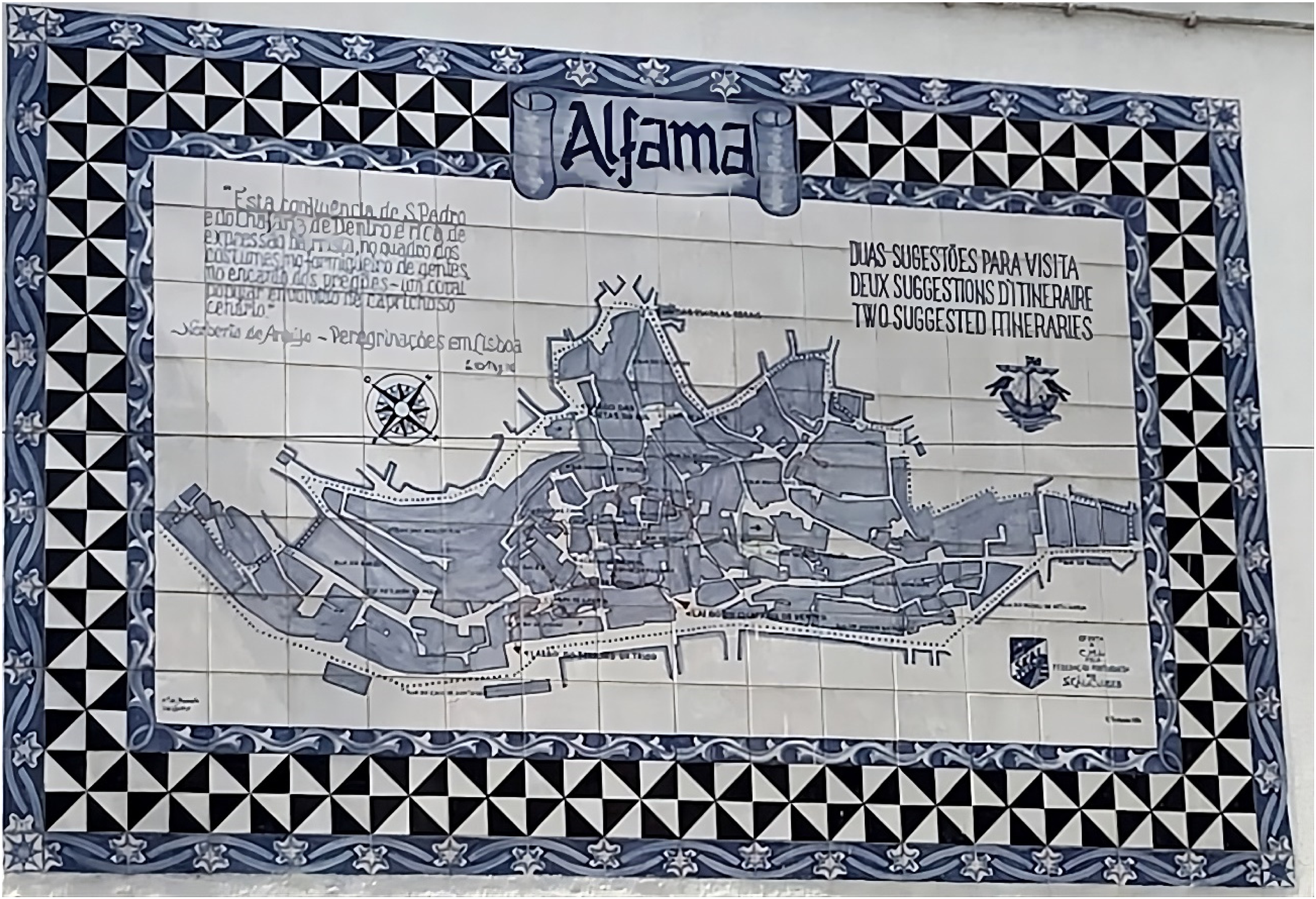
Public street sign in Portuguese with a brief message also in French and English. Photo by author.
It is private businesses that contribute to the city's multilingual image and multilingual character. Alongside Portuguese, signs in English and French are common, highlighting the city's international appeal, although this alienation of the linguistic landscape is not always to everyone's taste: “In Lisbon my heart breaks a little bit more with every new boutique hotel advertised with a meaningless slogan in English” (Rachael McGill, in a press interview 2 ). Advertisements and commercial signage play a significant role in shaping Lisbon's linguistic landscape. Multinational corporations often use English in their marketing strategies, while local businesses employ Portuguese and occasionally other languages to cater to international tourists and residents.
As a result, the exponential rise in mass tourism in Lisbon over recent decades has engendered a multifaceted impact on the city's linguistic landscape, yielding a nexus of advantages and challenges. The appeal of Lisbon's historical richness, cultural vibrancy, and picturesque landscapes has made it a sought-after destination, attracting visitors from diverse linguistic backgrounds. The subsequent interaction of tourists with the city's linguistic fabric, while fostering cultural exchange and economic growth, has also precipitated shifts in language usage, visual representations, and sociocultural dynamics.
Mass tourism in Lisbon has notably broadened the linguistic diversity within the city. The influx of international visitors has rendered Lisbon's linguistic landscape more cosmopolitan, with an array of languages coexisting alongside the native Portuguese. In the public sphere, this linguistic diversity is vividly illustrated through multilingual signage, tourist information, and public announcements, accommodating visitors from diverse backgrounds. Furthermore, businesses, ranging from hotels to restaurants and shops, have adapted to the global clientele by employing multilingual staff and providing services in various languages, particularly English and French. Such adaptations not only enhance the tourist experience but also bolster the city's economy.
Additionally, the interactions between tourists and locals have cultivated an environment of cultural exchange. Language, as a medium of communication, becomes a conduit for dialogue between Lisbon's residents and its visitors. These exchanges foster mutual understanding, transcend linguistic barriers, and engender a richer cultural patchwork. Consequently, Lisbon has transformed into a global meeting point, where language serves as the bridge between diverse worldviews, thereby promoting intercultural harmony and cooperation.
Conversely, the growth of mass tourism in Lisbon has introduced certain linguistic challenges. The pervasiveness of English in particular, as the lingua franca of international tourism, has been both a boon and a bane. While English facilitates communication with a global audience, it also poses the risk of linguistic homogenization. There exists a pressing concern that the dominance of English may eclipse the local linguistic heritage, thereby diluting the distinctive Portuguese linguistic identity. Moreover, the surge in tourism-driven linguistic diversity in commercial signage and the service sector might inadvertently marginalize Portuguese. In the quest to accommodate international tourists, there is a risk that the native language might be relegated to secondary status, potentially diminishing the visibility and vitality of Portuguese in the city's public sphere. This may impact language preservation and pose challenges for the transmission of cultural traditions and linguistic heritage to future generations.
Figure 3 was taken at a publicly accessible commercial establishment in Lisbon—a pastry shop named Santo António. Notably, there is a meaningful coincidence between the name of the business and the saint referenced in the image. The photograph was captured next to the main entrance, at ground level, and situated directly above this location is a traditional blue-and-white tile depiction of Saint Anthony. This composition reinforces the cultural and religious symbolism associated with the shop, integrating local iconography and devotional imagery into the commercial facade. The picture prominently features advertising in English with supplementary messages in Portuguese and French, and encapsulates the linguistic tensions brought by mass tourism. The dominance of English on the signage highlights its role as a global lingua franca, simplifying communication with international visitors and boosting commercial appeal. However, this linguistic prioritization raises concerns about potential linguistic homogenization. The relegation of Portuguese to secondary status on such signage may undermine the city's unique linguistic heritage and cultural identity. As businesses strive to cater to a global audience, the risk of marginalizing Portuguese becomes evident, potentially threatening language preservation and the transmission of cultural traditions. This shift underscores the complex balance Lisbon must navigate between embracing global tourism and safeguarding its indigenous linguistic landscape.
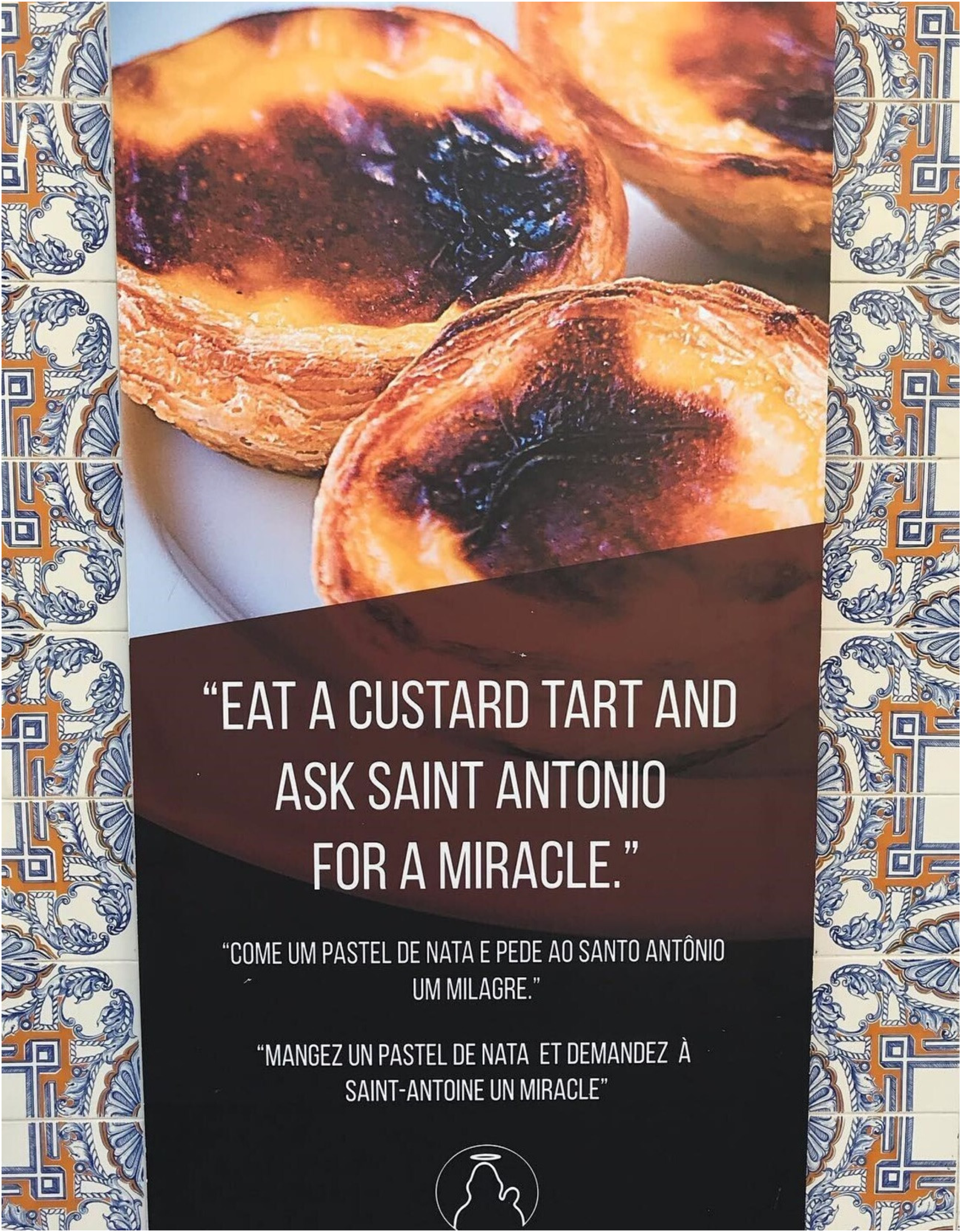
Public business advertising in Portuguese, French, and English, although English is the most prominent language. Photo by author.
In conclusion, the advent of mass tourism in Lisbon has ushered in a dichotomy of advantages and challenges in the city's linguistic landscape. While it fosters linguistic diversity, cultural exchange, and economic growth, it also poses the risk of linguistic homogenization, marginalization of the native language, and the dilution of the city's unique linguistic identity. The ongoing negotiation between the benefits and drawbacks of mass tourism in the context of language underscores the dynamic interplay between globalization and local cultural preservation within Lisbon's evolving urban narrative.
Migration and Cultural Hybridity: A Linguistic Evolution
In today's rapidly evolving urban landscape, markets and small shops play a pivotal role in the dynamics of global change. The forces of globalization have brought about contrasting trends in consumer behavior and retail environments. One of these trends is the rise of online shopping and the proliferation of large-scale franchised supermarkets, driven by advances in technology and supply chain management. The convenience and efficiency of these options have reshaped the way we purchase goods, blurring geographical boundaries and ushering in an era of virtual consumerism. The socio-economic changes brought on by tourism, such as skyrocketing property values and the conversion of the entire urban economy into a tourist-oriented industry, are mostly to blame for the city center's progressive abandonment by locals.
Lisbon's evolving linguistic landscape is equally shaped by migration patterns. As Portugal transitioned from an emigrant to an immigrant-receiving nation, Lisbon's immigrant population expanded, leading to the establishment of diverse communities with their own languages and cultural practices. Neighborhoods such as Mouraria and Martim Moniz have become vibrant hubs of linguistic and cultural diversity.
This wave of migration contributes to the multifaceted linguistic landscape, with languages such as Mandarin, Bengali, and Gujarati coexisting with Portuguese. This diversity reflects the potential for coexistence and intercultural dialogue within urban spaces, counterbalancing the homogenizing effects of globalization. Figure 4, a photograph of a corner shop in Lisbon, where Portuguese and Asian languages share the same space, vividly illustrates the city's dynamic linguistic landscape shaped by migration. This multilingual signage highlights the cultural hybridity that characterizes modern Lisbon, transforming it into an urban environment where multiculturalism is not just a theoretical concept but an everyday reality. This visual representation of linguistic plurality underscores Lisbon's adaptability and openness, fostering a sense of community among its diverse inhabitants and enriching the city's cultural rainbow. This image captures the façade of a small halal butcher shop. The textual and visual elements on display are deeply embedded in the social and physical environment surrounding the shop, and they reflect both practical communication needs and cultural identity. From a physical standpoint, the shop is nestled within a modest, slightly weathered building with a traditional pink façade, a color often seen in older Portuguese architecture. Its blue doors and window grills, along with the cobblestone sidewalk, root it visually within the local Lisbon streetscape. Yet, the signage diverges from typical Portuguese storefronts: images of halal meats, a cow, a rooster, and cuts of meat are presented alongside the words Talho Halal (Portuguese for “Halal Butcher”). The multilingual nature of the signage signals that the shop primarily serves the Muslim immigrant population, while still maintaining some engagement with the host society through the use of Portuguese. The presence of national symbols—such as the Portuguese flag—next to the Arabic word “Halal” suggests an attempt to bridge identities: maintaining cultural and religious distinctiveness while asserting legitimacy within the local national context. The use of vivid, straightforward images of meat and animals reinforces the utilitarian nature of the signage, focused on clear communication rather than aesthetic appeal. The Arabic religious phrase above the door adds a sacred dimension to the space, marking it as not just a commercial enterprise but also a culturally resonant site for the community it serves.
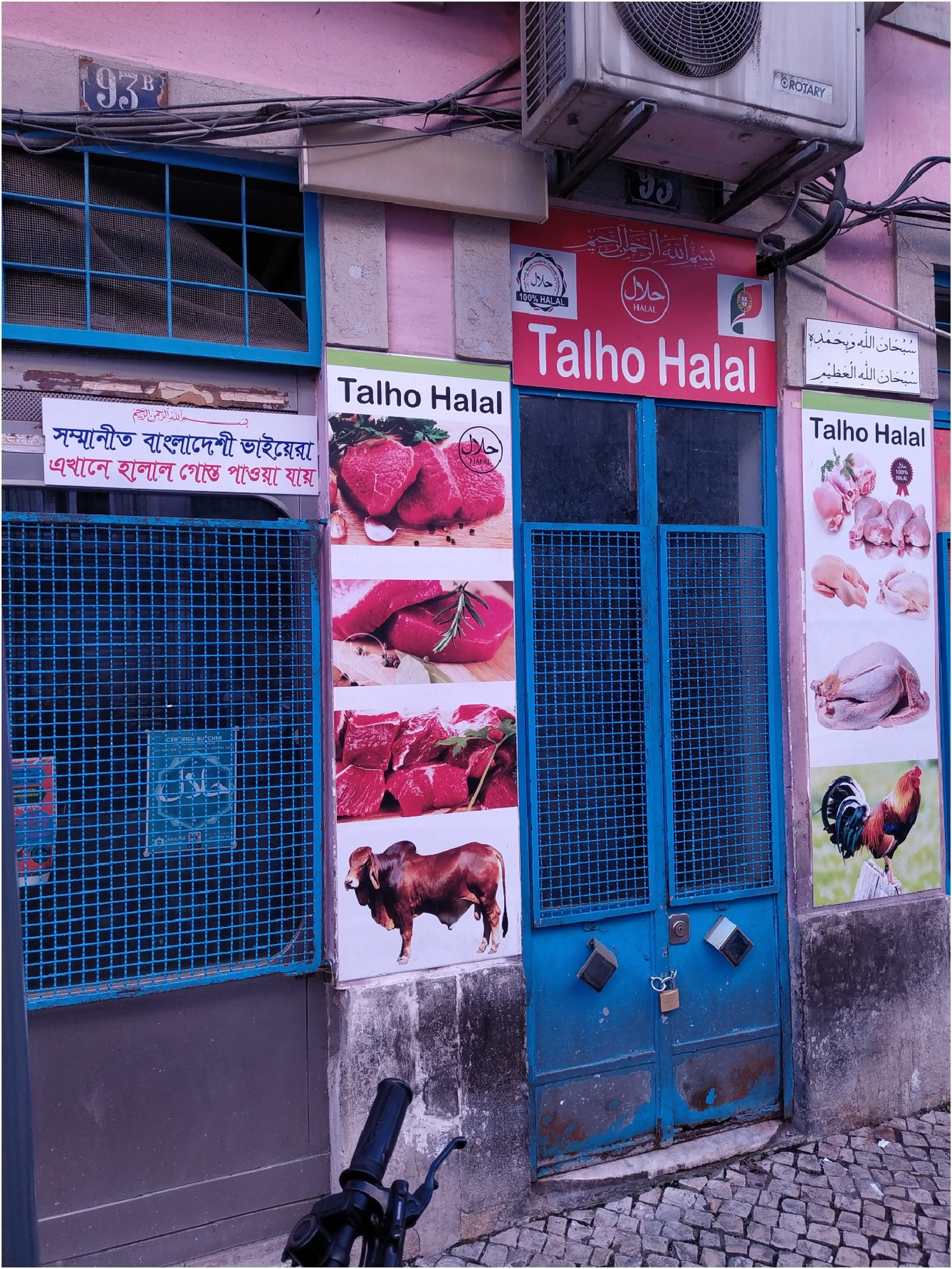
Portuguese and Asian languages share the same space at this corner shop. Photo by author.
Amidst the digital revolution and the prevalence of mega-retailers, another direction in urban development has emerged. It is a direction that underscores the enduring importance of the multicultural corner shop or market. These small-scale, locally-owned businesses are not just places of commerce; they are vital community hubs where diverse cultures converge. As explained by Hua et al. (2017, p. 383): “markets and small shops are the sites of urban and global change. While one trend in globalization leads to online shopping and large-scale franchised supermarkets, another direction takes us in the direction of the multicultural corner shop or market”.
The multicultural corner shop or market represents a fusion of cultures, languages, and traditions. In fact, the market “is central to any understanding of intercultural exchange” (Wood & Landry, 2008, p. 148). These spaces reflect the diverse fabric of modern cities, often serving as a microcosm of the globalized world. Customers and shop owners from various backgrounds interact daily, creating a vibrant blend of cultural exchange. In these markets and small shops, one can find “exotic” ingredients, authentic cuisine, and unique products that embody the rich heritage of the communities they serve.
The significance of these multicultural corner shops and markets extends beyond mere commercial transactions, as “markets reflect, but also shape, the nature and meaning of social and cultural diversity” (Hiebert et al., 2015, p. 16). They embody the resilience of local communities and serve as living testaments to the enduring power of human connection in the face of globalization. These corner shops and markets remind us that amidst the digital and impersonal, there is also a space for the personal, the communal, and the culturally rich.
Contrary to what happens in cities like Washington DC and Los Angeles, where the old truly multilingual and multicultural neighborhoods have been Disneyfied (Lou, 2010, 2016; Modan, 2009), causing the flight of a large part of the old population that gave them that character, and the arrival of the big commercial chains that use these references only as a tourist attraction, suppressing any semiotic sense of these languages, within the most central area of Lisbon we can still find a multilingual neighborhood in its full sense, where the linguistic landscape is not built as an attraction for visitors, but to really inform and/or sell to the actual speakers of those languages. A number of linguistic, extralinguistic, and contextual factors influence a language's viability and prominence in a given area. These include the characteristics of the location where immigrants reside, the length of their stay, the way native speakers feel about their own language, the host country's linguistic policies, as well as other political problems (Cocq et al., 2022, p. 2).
Figure 5, a photograph of a corner shop in central Lisbon, featuring signage exclusively in English and Asian languages, provides a stark contrast. In Lisbon, the absence of Portuguese on this shop's signage signifies a true multilingual neighborhood, where the linguistic landscape serves the practical needs of its residents rather than catering to tourists. This authentic use of language reflects the deep-rooted presence and active participation of immigrant communities within the city. The shop's signage is designed to genuinely inform and engage speakers of these languages, rather than serving as a superficial attraction. This image shows the storefront of a South Asian grocery and butcher shop named HATT. The shop's signage and visual layout offer a rich example of how language and imagery interact with the social and physical context of the urban space. The store presents itself as a halal supplier of meat and fish, prominently featuring the phrase “Best Quality of Meat and Fish” in English across the top, flanked by photographs of livestock and fish. English here functions as a lingua franca—likely chosen not because it targets native English speakers, but because of its broad accessibility to a range of immigrant and tourist populations. The shop window is a dense medley of visual and linguistic messages. At eye level, a large halal certification sign in Arabic immediately communicates religious and dietary appropriateness to Muslim customers. Alongside this are images of halal products—chickens, ducks, fish, and cattle—serving both a practical and culturally symbolic purpose. Above these, another large sign in Bengali, framed in a decorative design shaped like a fish, appears to advertise a special event or promotion, reinforcing the shop's South Asian cultural anchoring. Additional smaller notices and labels inside the window also appear in Bengali, targeting a specific linguistic community. Physically, the shop integrates seamlessly into the Lisbon streetscape, yet it visually distinguishes itself through its multilingual signage and cultural references. The bright interior lights and shelves full of familiar South Asian products suggest a space of community gathering and cultural continuity.
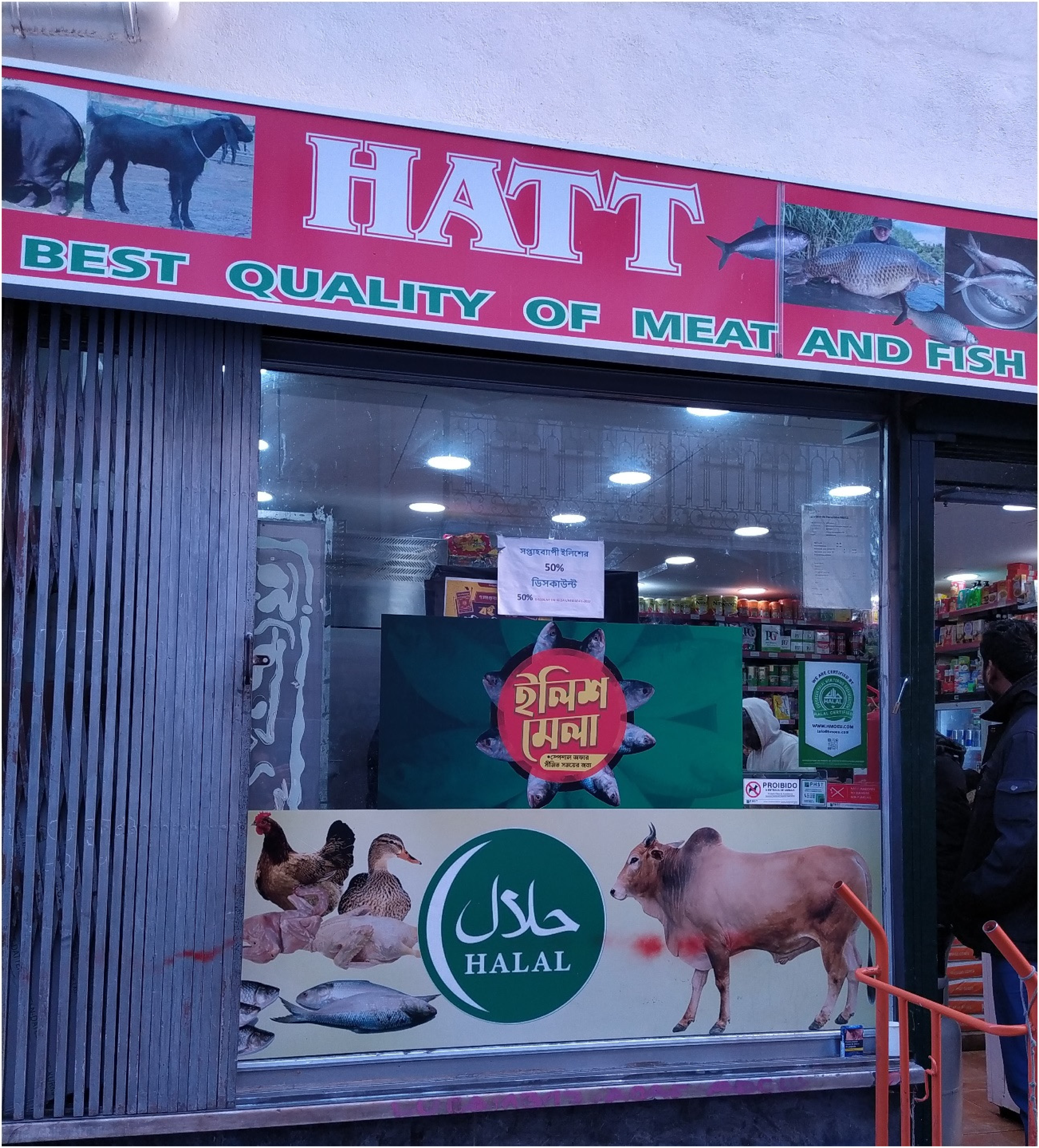
No Portuguese at this corner shop, just English and Asian languages. Photo by author.
Figure 6, a photograph of a humble hostel in Lisbon, adorned with signage exclusively in Asian languages, offers a poignant glimpse into the city's genuine multicultural fabric. This hostel's linguistic orientation underscores its authentic dedication to serving a specific immigrant community. The exclusive use of Asian languages indicates that the hostel is not merely a facade for attracting tourists, but rather a vital resource tailored to the needs of Asian guests. This reflects the hostel's role as a sanctuary and hub for Asian immigrants, providing them with a sense of belonging and familiarity in a foreign city. The focus on Asian languages illustrates the pragmatic adaptation of Lisbon's businesses to the linguistic and cultural needs of its diverse residents. It emphasizes the hostel's commitment to inclusivity and genuine service, showcasing a side of Lisbon where multiculturalism thrives organically, beyond the reach of commercial exploitation.
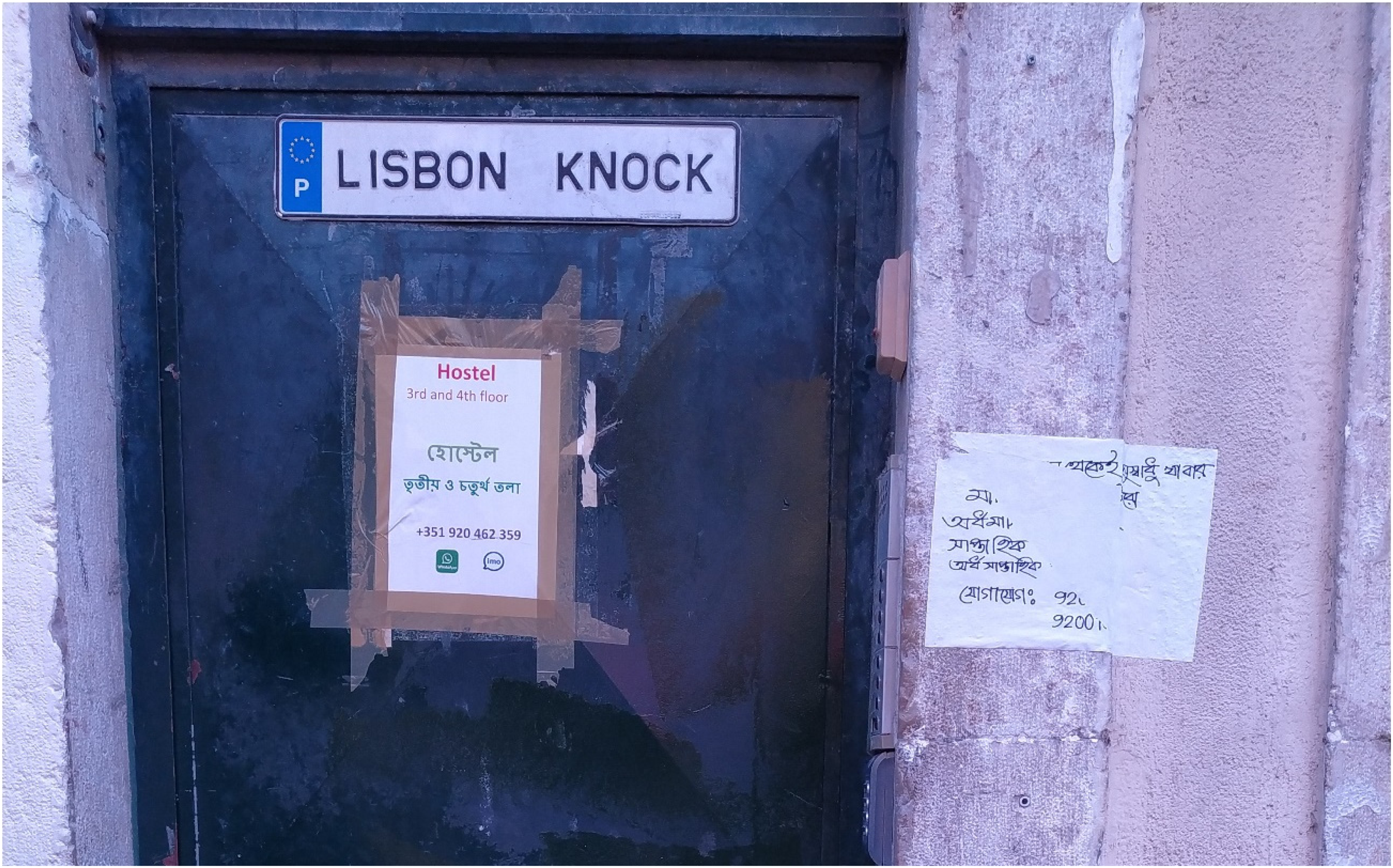
This humble hostel seems to be oriented just toward Asian guests. Photo by author.
This image depicts the entrance to a modest building in Lisbon, marked by a dark green door labeled with a printed metal sign reading “Lisbon Knock.” The door and adjacent wall are covered with temporary handwritten and printed notices, taped directly onto the surfaces—an informal and improvised form of communication that stands in sharp contrast to the permanence and official tone often associated with signage in more commercial or touristic spaces. The central notice, affixed with brown tape, advertises a hostel located on the 3rd and 4th floors, with information provided in both English and Bengali. The English portion, printed in red and black text, states: “Hostel – 3rd and 4th floor,” followed by a Portuguese phone number, while the Bengali text beneath it serves the same communicative function for Bengali-speaking individuals. Below the contact number, the WhatsApp and Imo icons suggest that the target audience is familiar with and reliant on these communication platforms, which are widely used among migrant communities for maintaining affordable and accessible contact across borders.
To the right of the door, another handwritten note—entirely in Bengali—reinforces the assumption that this space is intended primarily for a South Asian immigrant audience, most likely Bangladeshi. The use of handwritten paper taped to a public-facing surface also indicates the informal economy and word-of-mouth communication networks that sustain many migrant communities in urban environments. It may reference job opportunities, accommodation availability, or community news—services and exchanges that are difficult to trace through official channels but are vital for day-to-day life in diaspora contexts. Analyzed through the lens of Scollon and Scollon's geosemiotic framework, the signage in this image underscores how spatial context and semiotic choices intersect. While the sign “Lisbon Knock” evokes a sense of belonging or even invitation, the layered, multilingual, and temporary signage reflects a distinct subcultural ecosystem existing somewhat parallel to the dominant Portuguese urban experience. This is not a space crafted for tourists or for the broader Portuguese public, but one that caters almost exclusively to a tight-knit immigrant network. The contrast between the formal, printed street sign and the taped paper notices illustrates how language, mobility, and informality converge in Lisbon's linguistic landscape. This doorway becomes more than an entrance—it is a threshold into an immigrant world, one sustained through shared language, community networks, and a need for visibility within the constraints of economic precarity and limited integration.
In this intriguing snapshot captured amidst Lisbon's charming streets (Figure 7), the prominence of Mandarin as the exclusive language in a business setting speaks volumes about its targeted clientele. Against the picturesque backdrop of Portugal's capital, the presence of Mandarin signage hints at a deliberate catering to the city's Chinese community. This deliberate choice underscores the business's orientation towards serving the specific needs and preferences of Chinese customers. It symbolizes more than just linguistic accommodation; it reflects a nuanced understanding and commitment to providing a comfortable and familiar environment for this demographic within Lisbon's cosmopolitan landscape.
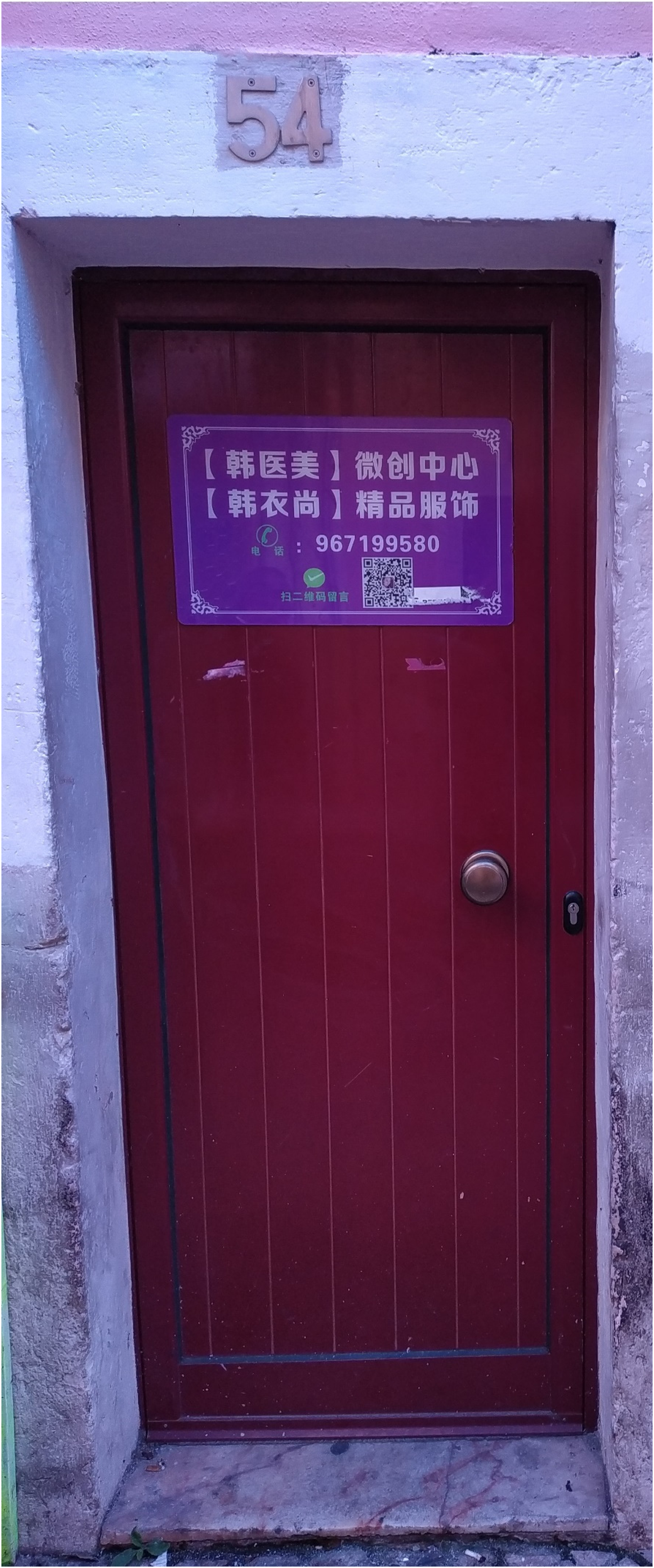
Mandarin is the only language in this business. Photo by author.
This image presents a closed wooden door at number 54, with a single sign fixed at eye level. The sign is strikingly purple and entirely in Chinese, indicating that this establishment is oriented specifically toward the Chinese-speaking community in Lisbon. The lack of any accompanying text in Portuguese or English, further suggests that this space is not intended for the general public or passersby, but rather functions as a discreet, community-specific business. The text appears to promote a wellness or beauty-related service and boutique-style clothing, with a local Portuguese mobile number and a QR code providing access to further information—likely through Chinese platforms such as WeChat. The presence of such a QR code is significant; it marks the space not only as linguistically distinct but also technologically embedded within Chinese digital ecosystems, a clear indication of the transnational connections maintained by the community.
Visually and spatially, the door is plain and closed, with no transparent display or welcoming visual cues. There is no attempt to integrate with the local urban aesthetic or attract foot traffic from outside the linguistic or cultural group it serves. In terms of Scollon and Scollon's geosemiotic model, this can be read as a case of “interactional segregation”—the sign communicates exclusively with a particular group and does not seek to engage a wider public. The building's physical location, likely in a mixed-use residential and commercial neighborhood, contrasts with the insular function of the business behind the door, reinforcing the enclave-like quality of the space. This image powerfully illustrates how linguistic landscapes are shaped not only by what is shown but also by what is excluded. The absence of Portuguese and English, the minimal visual information, and the closed nature of the door collectively create a semiotic message of cultural specificity and selective access—visible only to those who already know how to read and navigate it. It exemplifies the subtle ways in which immigrant communities carve out space within the urban fabric while maintaining clear boundaries of identity, language, and audience.
Abiral 3 , a Nepalese shop-owner, offered us his opinion on the language used in his business: “My customers are mostly Nepalese, so it is the main language in which I serve, as well as the language in which I advertise my products. Many of my customers are not fluent in Portuguese or English, so having signage in Nepali ensures they feel comfortable and welcomed here. It also helps them easily identify the products they are looking for, especially items from our home country that are not easily available in other shops … However, I also write some things in English, because there are always some tourists coming in. These are usually people exploring the city who are curious about the culture or looking to try something new. English is the language they expect and understand, so it's practical for business … As for the local population, it is very rare that they come, so I hardly ever use Portuguese. Occasionally, a Portuguese customer might come in, but it's not common. I think this area is seen more as an Asian space, so Portuguese tend to avoid it. For my business, the focus are my main customers from Nepal and some occasional tourists.”
Bo, a Chinese retailer, told us that he has a very international clientele, so he serves both Chinese customers and locals and tourists. Therefore, at his premises he tries to announce everything in Portuguese, English, and Mandarin: “My customers are international, Chinese customers, locals, and tourists. Chinese customers prefer a place where they can speak their language, so Mandarin helps them feel at home and they feel the products are for them … I also have many tourists coming in the shop, and English is essential. It's the language they speak. Including English is good here … For Portuguese, I am sure to include Portuguese as well. They are not my main customers, but Portuguese is also important and shows respect for the country. It also helps when Portuguese come. I have Mandarin, English, and Portuguese, I invite everyone.”
Bilal, a Pakistani seller, advertises his products in Urdu since almost all of his customers are also Pakistanis: “I sell halal meat, so almost all my customers are Muslims, and more specifically Pakistanis. They come here because they know they can find halal products, and using Urdu ensures they feel comfortable and can easily understand what I am offering … For this reason, I make sure that all my advertisements are in the language that they need, regardless of what is official. Urdu is the language they trust, and it shows them that this shop is here to serve their specific needs. It's about creating a sense of belonging for them … I only place the legally required posters in Portuguese, so as not to have problems. Those signs are for compliance, but beyond that, I don’t use Portuguese much because my local clientele is very rare. My focus is on serving the community that trust on me.”
It is important to distinguish between how the participants, including members of the city and Asian immigrants, perceive and use the signs, and how they are analyzed from a scholarly perspective. For the participants, the signs serve primarily practical purposes—communicating essential information to their specific audience, facilitating commerce, and maintaining cultural familiarity within their community. The signage is functional and designed to address immediate needs such as advertising products, providing directions, or signaling services. From a scholarly perspective, however, these signs are more than tools of practicality; they are artifacts within a larger linguistic landscape, reflecting broader socio-cultural, economic, and power dynamics. While participants may view them as everyday necessities, scholars analyze them as markers of identity, inclusion, exclusion, and interaction within the urban space. This dual lens highlights the layered meanings of the linguistic landscape, where signs simultaneously serve practical functions and symbolize deeper societal structures and relationships.
Not only do professional and permanent advertisements fulfill this function, but also temporary posters serve the same or similar purposes. Beyond their immediate function of disseminating information about events, they act as essential connectors, forging bonds within language communities. In fact, “temporary posters also serve to build the language community, by advertising events of interest to those who share the language” (Kallen, 2010, p. 53). By showcasing events and activities catered specifically to speakers of a particular language, they create opportunities for social interaction, cultural exchange, and a sense of belonging. These posters become more than just promotional materials; they serve as symbolic invitations to participate in a shared cultural and linguistic experience, ultimately strengthening the cohesion and vitality of the language community they represent.
In this evocative image (Figure 8), a temporary poster adorned with text in two languages transcends its immediate function of disseminating event information, becoming a potent symbol of cultural and linguistic connection. Beyond mere advertisement, these posters serve as vital connectors within language communities, fostering bonds and solidarity. In essence, these posters are more than just promotional tools; they are symbolic gateways inviting individuals to partake in a shared cultural and linguistic journey.
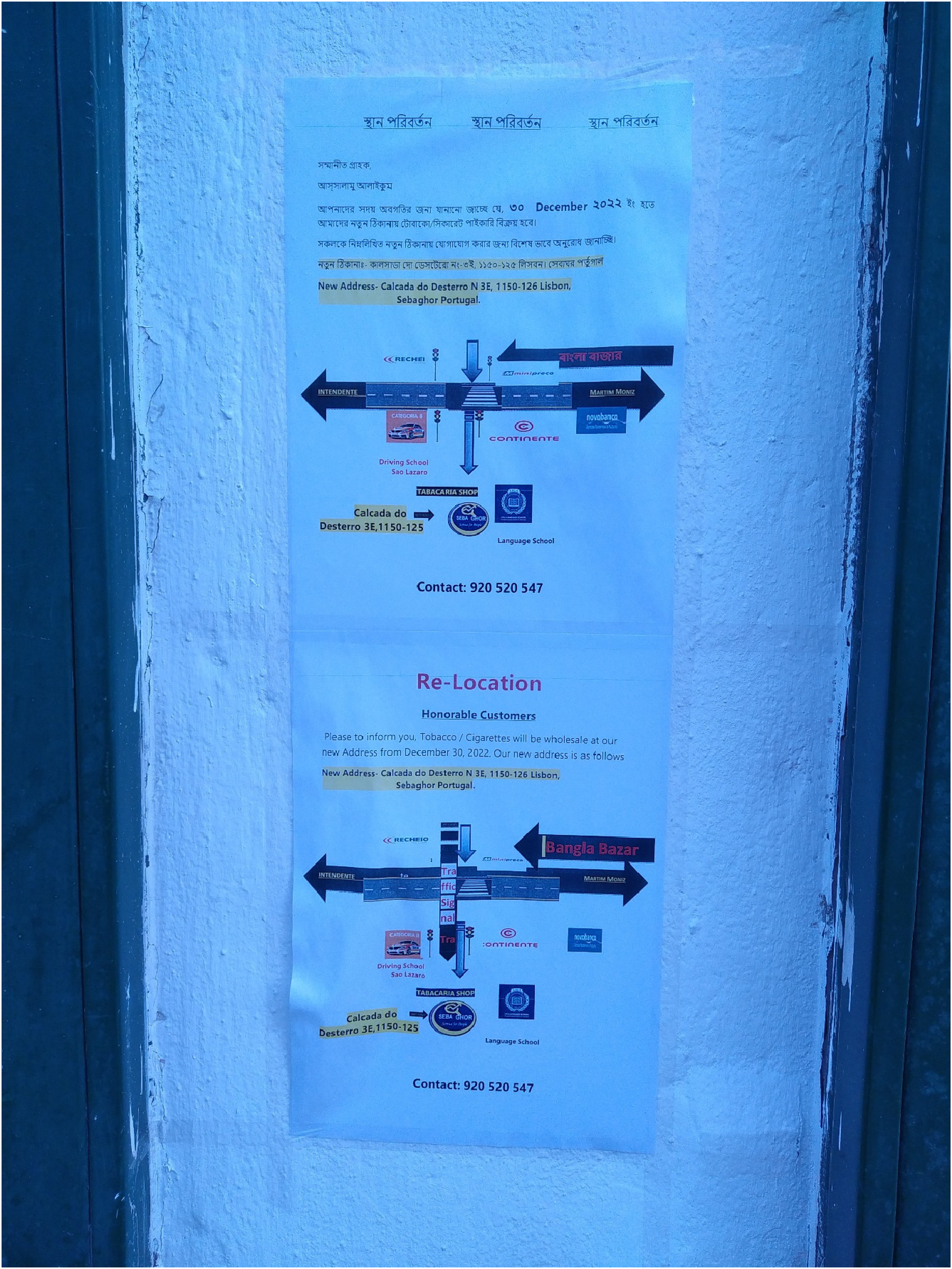
Temporary poster in Hindi and English. Photo by author.
This image features a printed notice taped to a wall, announcing the relocation of a business—most likely a South Asian-run tobacconist or wholesale store—within Lisbon. The notice is bilingual, with the top half written in Bengali and the bottom half in English, each accompanied by a small map to assist customers in locating the new premises. The layout is pragmatic and information-heavy, clearly directed toward a specific customer base, with no design elements intended for aesthetic or commercial appeal beyond basic clarity and utility. The English portion addresses “Honorable Customers,” stating that tobacco and cigarette wholesale will be moved to a new address as of December 30, 2022. The inclusion of both the old and new addresses, nearby landmarks, and a visual map reinforces the sign's functional purpose: ensuring that a specific community of regular clients—likely Bengali-speaking immigrants—can continue accessing this service with ease.
This kind of sign exemplifies what Scollon and Scollon (2003) refer to in their geosemiotic model as the interaction order: it communicates directly within a closed linguistic and cultural circuit. The use of Bengali indicates that the majority of this business's customers belong to that language group, while the presence of English reflects either a desire to reach a broader South Asian or international audience or to comply with communicative norms in a multicultural urban setting. Notably absent is Portuguese, which suggests that local Portuguese customers are not the intended audience, highlighting once again the role of linguistic signage in reinforcing spatial and social boundaries within the city. The physical and material characteristics of the sign—printed on A4 paper, taped to a wall, and slightly creased—further emphasize its impermanent and utilitarian nature. This is not a sign meant to brand or advertise in the traditional sense, but rather to convey essential logistical information within a migrant economy, circulating outside formal channels.
In this captivating depiction (Figure 9), a temporary poster exclusively in Mandarin script transcends its role as a mere informational tool, becoming a beacon of cultural and linguistic unity. Beyond its surface function, such posters serve as pivotal connectors within Mandarin-speaking communities, fostering a sense of camaraderie and shared identity. By showcasing events tailored specifically to Mandarin speakers, these posters create invaluable opportunities for social interaction, cultural enrichment, and a profound sense of belonging.
Mandarin is the only language in temporary posters. Photo by author.
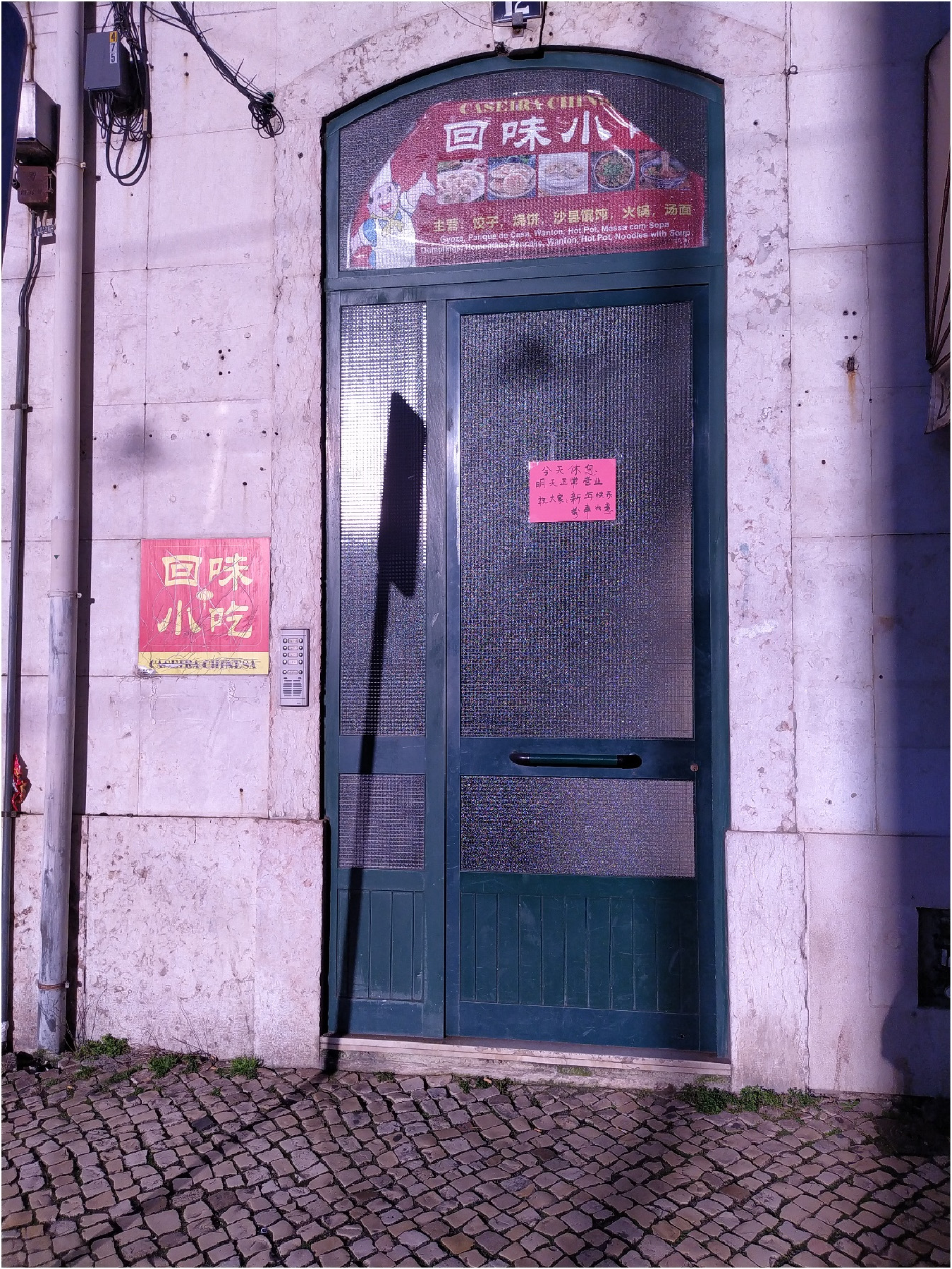
This image shows the entrance to a Chinese restaurant or takeaway establishment in Lisbon, located in a traditional Portuguese stone façade building with green-framed glass doors. The signage and visual cues are heavily dominated by Chinese script, indicating that the business primarily serves the local Chinese-speaking community. At the top of the door, a curved red banner displays various food items alongside large Chinese characters and smaller English translations of some dishes (e.g., “Hot Pot,” “Soup”), suggesting some effort to make the offerings legible to a broader public, perhaps tourists or other non-Chinese-speaking customers. The sign just above the door showcases images of food, likely to visually communicate the menu to all potential passersby, regardless of language. This is a common semiotic strategy in immigrant businesses—where visuality compensates for linguistic barriers. The small pink handwritten sign taped to the glass is entirely in Chinese, possibly containing temporary information such as hours of operation, a holiday closure, or a change in service. This localized, ephemeral form of communication underscores the shop's direct engagement with a known clientele fluent in the language.
On the left side of the doorway, a smaller red and yellow sign, also fully in Chinese, reinforces the cultural identity of the business and its intended audience. The lack of Portuguese signage here is notable, especially given the restaurant's presence in a public-facing space in Lisbon. This omission speaks to a clear sense of linguistic and social boundary: the business exists within Lisbon but does not primarily communicate with the broader Portuguese-speaking public. This storefront represents a semiotic enclave—a space that uses language and imagery to signal cultural identity and community affiliation rather than universal accessibility. The spatial arrangement of the signs, their multilingual asymmetry, and the layering of permanent and temporary messages reveal how immigrant-owned businesses shape micro-spaces of linguistic and cultural continuity within the broader urban fabric. While the physical environment may reflect Lisbon's traditional architectural aesthetic, the linguistic landscape transforms it into a site of cultural specificity and targeted communication, blending commercial function with community expression.
Language serves as a powerful marker, often one of the most immediate and recognizable, that not only reflects but also shapes one's sense of belonging to a particular ethnic group. It signifies how language functions as a tangible symbol, “as a readily identifiable index of ethnicity” (Leeman & Modan, 2010, p. 191), providing individuals and communities with a distinct identity that is deeply rooted in their linguistic heritage.
Lisbon's linguistic landscape raises questions about language policies and planning. How does the coexistence of multiple languages impact language education, social integration, and public services? How can the linguistic diversity of the city be harnessed to promote intercultural understanding?
Viewing “the linguistic landscape as an ensemble of multiple systems within the same visual field and not as a single system” (Kallen, 2010, p. 46), is a pivotal shift in understanding the intricate interplay of languages in our urban environments. It underscores the notion that within a single cityscape, numerous linguistic systems coexist, each with its own cultural, historical, and sociolinguistic significance. This perspective challenges us to recognize the nuanced interactions between these systems, where street signs, advertisements, and public spaces may simultaneously showcase the dominant language, minority languages, immigrant languages, and even languages of global communication.
It is the concept of “the ordinariness of diversity in everyday life” (Pennycook & Otsuji, 2020, p. 10), which emphasizes the commonplace nature of diversity that permeates our daily experiences. It underscores the idea that diversity is not an exceptional or extraordinary occurrence but an inherent and routine aspect of our lives. In our daily interactions, we encounter people from various backgrounds, cultures, languages, and perspectives. Recognizing the ordinariness of diversity challenges us to embrace the richness it brings to our daily existence. It reminds us that diversity is not an anomaly but an integral part of the human experience, shaping our interactions, perceptions, and understanding of the world around us.
Concluding Remarks
This study set out to explore the linguistic landscape of a specific neighborhood in Lisbon that has been deeply affected by both mass tourism and immigration, focusing on how these factors shape language visibility and usage. Drawing from the extensive body of research on linguistic landscapes, we have applied the frameworks of Scollon and Scollon (2003) and Landry and Bourhis (1997) to analyze the social and physical contexts that influence language representation in public spaces. Through a combination of spontaneous conversational interviews and photographic data collection, we gathered a total of 143 photographs from the neighborhood, revealing a complex interplay of languages, predominantly Asian languages, Portuguese, and English.
One of the key findings is the predominance of monolingual signage in Asian languages, which underscores the strong functional role these signs play in serving the needs of the immigrant community. While their primary purpose is practical—facilitating communication with customers who speak these languages—they also contribute to the visibility of the community within the neighborhood. This reflects aspects of subjective ethnolinguistic vitality, as the presence of these signs inadvertently reinforces the community's cultural identity and highlights its cohesion, even if the primary intent is not explicitly to assert identity. The study also reveals that English plays a pivotal role as a lingua franca for tourists, with a significant number of bilingual signs in both Asian languages and English. This demonstrates how mass tourism has shaped the linguistic landscape, as businesses adapt to the needs of a global audience, as seen in the findings of Torkington's (2009) work on the Algarve and Clemente et al.'s (2013) study of Aveiro.
The scarcity of bilingual signs combining Asian languages and Portuguese reflects the limited interaction between the immigrant community and the broader Portuguese-speaking population. This raises important questions about social integration and the role of public policy in fostering linguistic inclusivity. Additionally, the small number of multilingual signs, which incorporate Asian languages, Portuguese, and English, points to the difficulty of catering to multiple audiences simultaneously. These findings align with previous research, such as Backhaus’ (2005) work on multilingualism in Japan, showing how traditional monolingual societies are being reshaped by immigration and globalization.
The dynamics of inclusivity in urban spaces vary widely, with some cities fostering integration while others operate through enclaves that serve distinct communities but are also frequented by tourists and, occasionally, locals. In the case of Lisbon, the studied neighborhood functions as a cultural and linguistic enclave predominantly shaped by Asian immigrants. This area, while rich in diversity, tends to be frequented more by tourists seeking an “exotic” experience than by local Portuguese residents. Several factors may contribute to this divide, including limited cultural integration, economic disparities, and societal perceptions of the neighborhood. While tourists are often drawn to the area's unique food offerings and atmosphere, viewing it as an authentic and affordable cultural destination, local residents may perceive it differently—either as a less desirable area or as one not aligned with mainstream cultural preferences. This trend reflects a broader phenomenon where certain neighborhoods in cities are celebrated for their diversity by outsiders while remaining socially and culturally segregated from the local population. These dynamics underscore the complex interplay between inclusivity, cultural identity, and economic forces, revealing how urban spaces can simultaneously highlight diversity and reinforce social divisions.
Through our analysis, we gain a deeper understanding of how this specific Lisbon neighborhood, influenced by both Asian immigration and mass tourism, becomes a site of complex linguistic negotiation. Unlike many other urban spaces, the linguistic landscape here reflects a dual purpose: it serves as a functional resource for the immigrant community while simultaneously catering to the visual and communicative demands of global tourists. This duality underscores the neighborhood's role as both a practical hub for its residents and a symbolic space for outsiders, where language becomes a visible marker of cultural and economic forces at play. In addition, the study reveals a nuanced role for English within this neighborhood. It functions as a bridge between diverse groups, including tourists, locals, and even immigrants from different linguistic backgrounds. Unlike Portuguese, which is used sparingly and primarily in legally mandated signage, English emerges as a lingua franca that supports commercial interactions and connects the space to global networks. Immigrant languages, on the other hand, dominate monolingual signage, highlighting their role in maintaining community cohesion and identity. This finding aligns with studies of other urban spaces but brings new insights into how English interacts with immigrant languages in a space shaped equally by migration and tourism.
Furthermore, this study highlights how signage in this neighborhood serves different functions depending on its audience. Monolingual signage in Asian languages caters exclusively to the immigrant community, reinforcing a sense of cultural preservation and autonomy. Bilingual and multilingual signs, especially those incorporating English, reflect an economic strategy aimed at inclusivity and accessibility for tourists. The visual hierarchy of languages in these signs—such as the prominence of English over Portuguese in tourist-oriented businesses—reveals the shifting priorities of urban spaces influenced by global economic forces. This layering of languages on signs illustrates not only practical adaptation but also symbolic representations of power and audience focus. The linguistic landscape analyzed in this study also exposes inequalities tied to language visibility. While immigrant languages are highly visible within their communities, they remain largely insular, reflecting a limited integration into the broader Portuguese linguistic environment. Similarly, the prominence of English over Portuguese in many signs catering to tourists highlights an economic prioritization that marginalizes the official language in favor of global commercial interests. This phenomenon underscores the unequal visibility and valuation of languages in diverse urban spaces, raising questions about inclusivity and the broader implications for social cohesion.
Throughout this article, we have demonstrated that the linguistic landscape of Lisbon, particularly in this neighborhood, is shaped by the convergence of migration and tourism, creating a space where local, immigrant, and global languages coexist, yet often operate in separate spheres. The research questions we posed have been addressed through a detailed analysis of signage and conversational interviews, revealing a nuanced picture of Lisbon's evolving identity. By addressing these questions, this paper makes a meaningful contribution to the field of linguistic landscapes, offering new insights into how migration, tourism, and economic priorities shape language use and visibility in urban environments.
In conclusion, this study contributes to the growing field of linguistic landscape research by highlighting the interplay between language, identity, and urban transformation. The findings underscore the need for further research on how linguistic diversity can be harnessed to promote social cohesion and cultural exchange, not just for tourists but also for the immigrant communities that call Lisbon home. The implications of this research extend to language policy, urban planning, and cultural preservation, offering valuable insights into how cities like Lisbon can navigate the challenges and opportunities of globalization.
Footnotes
Declaration of Conflicting Interests
The author declared no potential conflicts of interest with respect to the research, authorship, and/or publication of this article.
Funding
The author received no financial support for the research, authorship, and/or publication of this article.
