



Abstract
Paid work promises pathways to financial security and wellbeing for families, yet variable scheduling and low pay can interfere with the routines and rhythms of family life, and contribute to caregiving challenges and stress. Using qualitative data from a survey of retail workers, this article shows how Australian employment policies have enabled flexibility practices to be strongly oriented around the needs of employers, reducing employees’ resources for care. We develop the concept of ‘care theft’ from employees’ accounts of the ways flexible scheduling and low pay converge to transform and deplete their temporal, financial and ethical resources for care. As an extension of ‘time theft’ and alternative to individualised notions of ‘work-family balance’, care theft helps make visible the ways employment practices strip resources for care from working people, and shift risk to low-income families and communities.
Introduction
Paid work is usually understood to improve families’ financial security and wellbeing, yet some job characteristics, including nonstandard schedules and low pay, can contribute to caregiving challenges and stress (Craig and Brown, 2017; Hepburn, 2018; Millar and Ridge, 2013). This article focuses on work and caregiving experiences in retail, an industry which employs over 10% of Australia's workforce (ABS, 2021), including large numbers of women with caring responsibilities. Most retail workers occupy routine roles in supermarkets and other stores, working as cashiers, sales assistants, fillers, warehouse workers, and in online retailing. Short, variable, on-demand part-time hours, rotating and split shifts, and irregular, on-call work are common, enabled by regulatory settings which give employers, including large supermarket chains, access to hyper-flexible casual and permanent part-time employment (Campbell, Macdonald and Charlesworth, 2019). This article examines and reconceptualises retail employees’ experiences of work and care, building on scholarship recognising that the types of flexibility prevalent in retail may impact on health and wellbeing, family finances and planning, and other aspects of workers’ lives (Carre and Tilly, 2017; Coleman-Jensens, 2011; Sharma et al., 2022; Strazdins et al., 2013).
Traditionally considered a private responsibility, managing work and care has attracted increased policy support in recent decades, including rights to work flexibly, which have enabled mothers to mould paid hours around traditional domestic roles and helped to increase women's workforce participation (Chung and van der Horst, 2018; Hepburn, 2020; Kalleberg, 2011; McKie et al., 2009). For individuals, flexible working arrangements potentially improve work-family reconciliation and employee satisfaction and health (Grzywacz et al., 2008), yet in low-paid industries, employers have held the upper hand, offering flexible options shaped strongly around managerial priorities (Henly et al., 2006). In retail for example, flexibility has been promoted as part of lean scheduling models whereby labour is allocated to match short-term fluctuations in customer demand, to eliminate ‘slack’ during slow, ‘unproductive’ periods, minimise costs, and promote profitability (Boushey and Ansel, 2016; Campbell and Chalmers, 2008: 488; Lambert, 2008; McCrate, 2018; Carre and Tilly, 2017; Sharma et al., 2022).
These on-demand models of flexibility, including for those in permanent jobs, have flourished in Australia, although Australia's regulatory system is comparatively robust by international standards. As was the case throughout the twentieth century, pay rates, working times and other minimum conditions are set by different ‘awards’ for each industry (including retail). Awards set out the rights and protections applying to full-time, part-time and casual employees, and operate under the Fair Work Act 2009, with changes determined by the Fair Work Commission, usually in response to applications from unions and employer associations (Campbell et al., 2019: 6). Casual status is a distinctive employment category; casuals are employed per engagement, and are not entitled to the same rights, such as paid leave, available to permanent full or part-time employees. A ‘casual loading’ of 25% is paid in lieu of paid entitlements such as annual leave and sick leave (Campbell et al., 2019: 7). In retail, the General Retail Industry Award, together with a set of National Minimum Standards, provide the regulatory ‘safety net’ for employees.
Since the 1990's, however, employment regulation has emphasised improving wages and conditions via enterprise-level agreements with employers, rather than industry awards. This has resulted in a stripped-back, porous national safety net in respect of minimum hours, shift periods and scheduling. In feminised industries like retail, gaps in protections have facilitated the use of not only casual but also permanent part-time employees on short minimum-hour contracts which can be ‘flexed up’ with little notice and without paid overtime (Campbell and Chalmers, 2008; Deery and Mahony, 1994; Price, 2016; Campbell et al., 2019). Enterprise bargaining has been less successful in female than male-dominated sectors (Charlesworth and Smith, 2018), particularly in retail, where several agreements struck between unions and large retailers have controversially reduced working-time conditions including for evening and weekend work, negatively affecting many low-paid employees (Hardy and Stewart, 2018). Further, retail conditions have been under prolonged pressure as employer associations have lobbied to widen the span of daily and weekly hours, and reduce minimum rates, working-time conditions, and premia for those working ‘unsocial’ hours (Boddy, 2020; Price, 2016). In addition, employees have had their control over working times reduced by new technologies, which have enabled employers to centralise their scheduling functions, distancing decision-making from frontline workers and store-based managers (Campbell and Chalmers, 2008; Campbell et al., 2019; Price, 2016).
Aims and structure
Against this policy backdrop, we sought to understand retail workers’ experiences of caring for children, elders, and people with disability, and to theorise their accounts of adversity. Employees’ descriptions of their work and care challenges, collected via a large Australian survey (n = 6469), highlight the ways contemporary retail work depletes employees’ care resources, draining their time, money and energy for care, and transforming the ways they can perform their caregiving role. While work-family ‘balance’, ‘conflict’ and ‘strain’ have long-dominated theorisation of the work-care interface, here we contribute an alternative framing, introducing ‘care theft’, an extension of ‘time theft’, to conceptualise the fraught dynamics at the work-care interface.
First, the article briefly outlines research on the family impacts of non-standard, flexible working time. Then, we examine how ‘time theft’ (Sharma et al., 2022) helps interpret dynamics in retail, before distinguishing ‘care theft’ as a discrete concept. In doing so, we propose ‘care theft’ as a concept that better reflects the ways uneven power relations, evident in retail employer strategy and enabled by Australian policy and regulation, extend beyond workplaces to affect families and communities. Drawing on the perspectives of retail workers with care responsibilities, we show how care theft is constituted by three overlapping processes which transform and deplete employees’ care resources: working time arrangements which leave workers with insufficient or mismatched time for informal or formal care; low pay, exacerbated by short hours, which preclude workers from accessing the financial resources vital for care; and stressful, tiring work arrangements which lack autonomy and disrupt opportunities to provide attentive, responsive caregiving in ways determined by workers and care recipients.
Family impacts of nonstandard work
Despite the promise that flexible working time arrangements would help manage life and job demands and promote wellbeing, scholarship repeatedly shows that flexibility shaped around organisational rather than employee interests contributes to challenges, including underemployment, financial instability, role-strain, stress and gender inequality (Greenhaus and Beutell, 1985; Kalliath and Brough, 2008; Leach et al., 2010; Schneider and Harknett, 2019). In retail, flexibility often equates to schedules which are irregular, short-notice, subject to last-minute changes, and which require presence at times typically reserved for family life, such as nights and weekends (Campbell and Chalmers, 2008; Schneider and Harknett, 2019; Sharma et al., 2022). Workers need additional resources to mitigate the material consequences of such insecurity, and to adjust household organisation to maintain work readiness (Pulignano and Morgan, 2023). Indeed, unpredictable working time has been observed to create ‘time out of life’, in that even outside of paid hours, workers remain at employers’ disposal, unable to devote time to their own non-work lives, including caregiving (McCann and Murray, 2010: 29–30).
Impacts extend to children. Reviewing 23 studies, Li et al. (2014) found all but two showed significant associations between nonstandard schedules and childhood adversity. Unsuitable working times disrupt family routines and result in sleep deprivation, missed family events, child health and behaviour problems, planning difficulties, and reduced relationship quality, especially for mothers (Han, 2008; Hepburn, 2020: 743; Zhao et al., 2021; Dodson, 2007). Weekend work, particularly prevalent in retail, increases work-family conflict for parents, especially when employees lack scheduling control (Laß & Wooden, 2022). Nonstandard schedules limit children's access to extracurricular activities and shared mealtimes, and require parents to use patchworks of informal childcare, or poorer quality formal arrangements, affecting learning (Henly and Lambert, 2005; Hepburn, 2018; Presser, 2003; Henly et al., 2006). Scheduling can also generate fatigue and stress and constrain parents’ capacity to prioritise family needs (Roman, 2017). However, while a large body of literature identifies and describes work-family adversities, few conceptual frames make visible the structural mechanisms that generate and maintain the care challenges faced by employees (Henly et al., 2006: 610).
Care theft: Beyond metaphors of balance and conflict
Challenges at the work-family interface have near universally been conceptualised using ‘balance’ oriented metaphors, which describe pressures between roles in terms of ‘conflict’ or ‘spillover’ (Gregory and Milner, 2009; Kalliath and Brough, 2008). Such concepts helpfully draw attention to the ways employees reconcile their work and family demands, but take as given seemingly neutral allocations of care resources. ‘Balance’ is seen to result from individuals’ role demands and personal preferences rather than deeper inequalities in power, detracting focus from the collective, structural responses needed to challenge class and gender inequalities at work and home (Gregory and Milner, 2009; Henly et al., 2006: 610; Lewis et al., 2007).
A framework which draws attention to power and inequalities at work is offered by Sharma et al. (2022). Focusing on time, they reveal the power inequalities shaping the work-life interface, developing ‘time theft’ to capture how Los Angeles retail workplaces normalise expropriations of employee time, generating instability and underemployment which compel workers to organise their lives around employers’ schedules (Sharma et al., 2022: 35). Through on-demand, short-notice and split shifts, cancellations, and expectations of open availability, employers reduced workers’ time and kept them ‘hungry’ for shifts, contaminating their non-work time (Sharma et al., 2022). Among their participants, requirements to prioritise work resulted in difficulties planning and participating in non-work activities, and precluded the stability needed for education, a second job or childcare (Sharma et al., 2022: 13–14).
As we detail below, ‘time theft’ partially captures Australian retail employees’ accounts of work and care. Time theft shifts focus from how employees organise fixed quantities of care resources to achieve balance, helpfully making visible and problematising how employers organise labour processes and schedules in ways that systematically deplete employees’ time. Australian retail workers in our study attested to similar but non-identical processes, enacted through inconvenient scheduling, inadequate notice, last-minute changes, and expectations of on-demand availability. However, our participants contributed particularly illuminating accounts of caregiving in contexts of employer control, outlining how employer decisions and workplace dynamics deplete not only their time, but also their caregiving resources and options. Thus, our data highlights the need for a more expansive concept, which similarly accentuates how workplace relations can drain employees’ resources, but which goes beyond time, to centre on care.
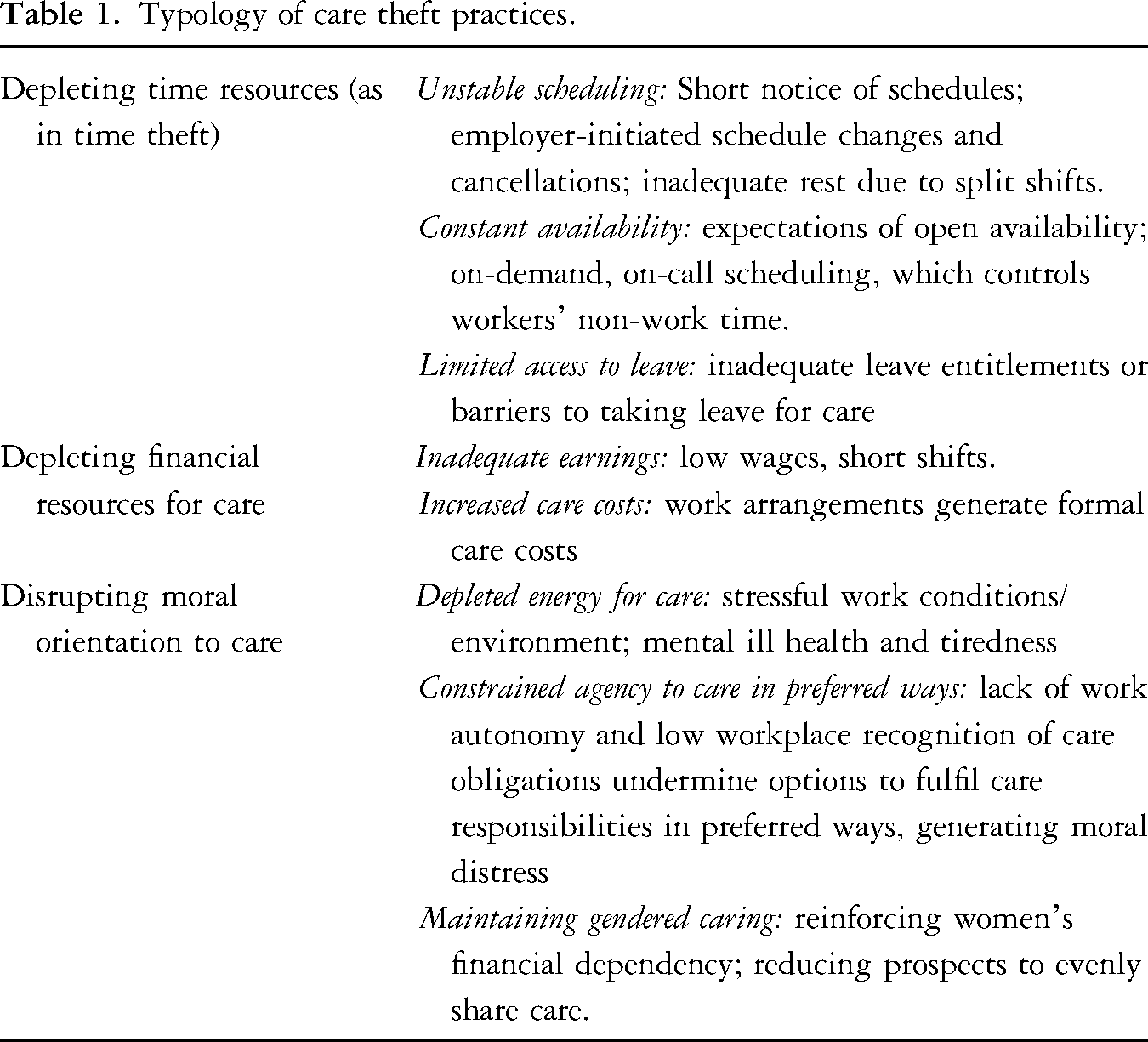
Recognising that employees have rights to give and receive care and that care binds communities (Williams, 2001), our analysis builds on ‘time theft’ (itself an extension of ‘wage theft’) to develop ‘care theft’, as depicted in Table 1. Care theft overlaps with time theft, in that workers’ time resources are affected by unstable schedules, employers’ control of non-work time, and inadequate access to leave. However, care theft includes non-temporal factors which drain care resources and disrupt whether and how workers can give and receive care. It captures how low-paid, precarious work withholds financial resources for care, increases care costs and disrupts workers’ ethical orientation to care, resulting in distress from being unable to attend to care needs in preferred ways. After outlining the methods and analytic approach, the article explores in detail each element of care theft using employees’ accounts.
Typology of care theft practices.
Method
Data was captured in a mixed-method online survey exploring Australian retail workers’ experiences of work, family and care. In collaboration with university researchers, the main retail union, the Shop, Distributive and Allied Employees’ Association (SDA) invited its members to participate, with data collected during March-April 2021.1 The 6469 participants comprise around 3% of the union's membership. The protocol was approved by the University of New South Wales human ethics panel. Questions covered childcare, elder-care, and disability care responsibilities; formal and informal childcare arrangements; rostering practices and impacts; and financial security, asked via standard, closed survey items with fixed options and open-ended questions to capture participants’ experiences and any unanticipated issues. While pressures on care resource are also reflected in analysis of closed survey questions (see also Cortis et al., 2021), here our interpretation uses free-text responses. Like other methods, analysing online survey comments has limitations. Participants contribute anonymously, without the face-to-face interactivity usually characterising qualitative methods (Braun et al., 2017: 251). However, we found the approach allowed participants to control content and timing; this was important for those with time or mobility constraints or who preferred anonymity, and helped to effectively engage marginalised voices within a large, heterogeneous sample (Braun et al., 2017).
Sample characteristics
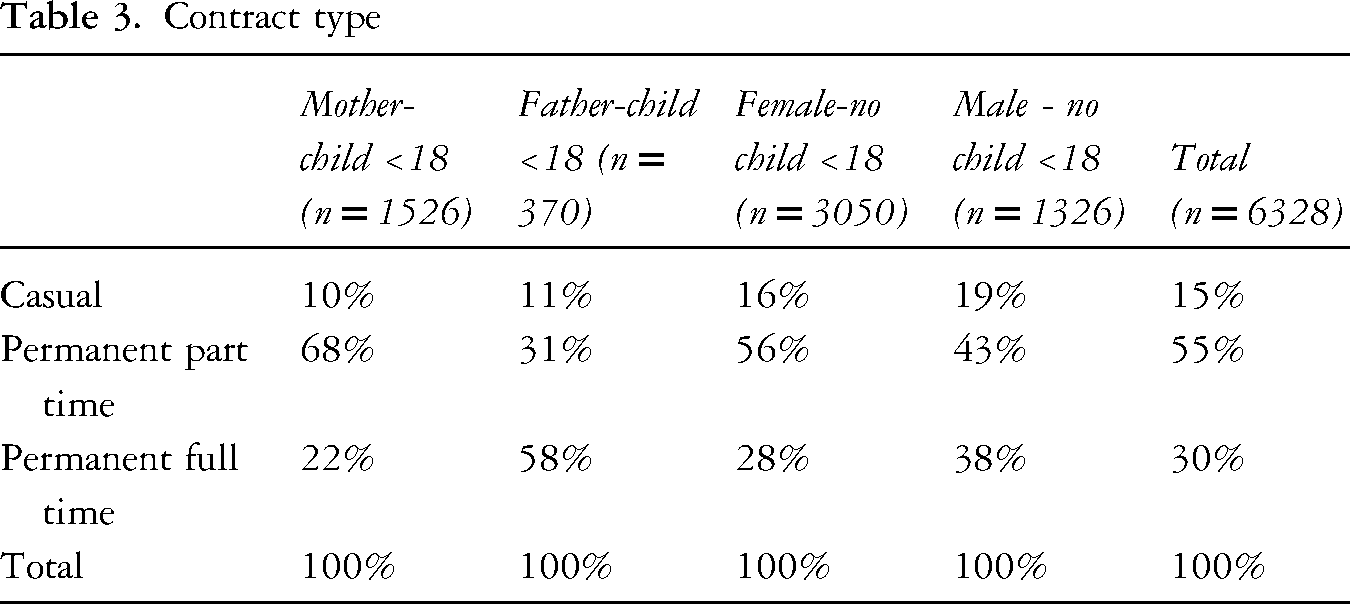
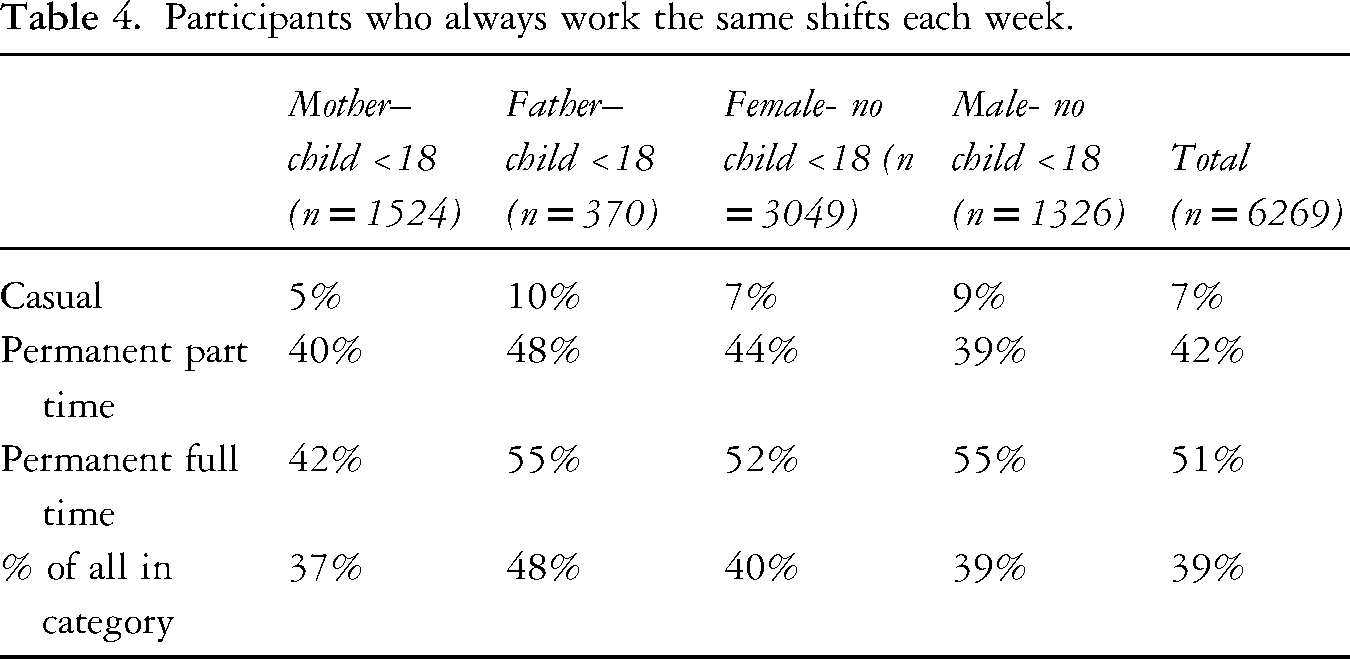
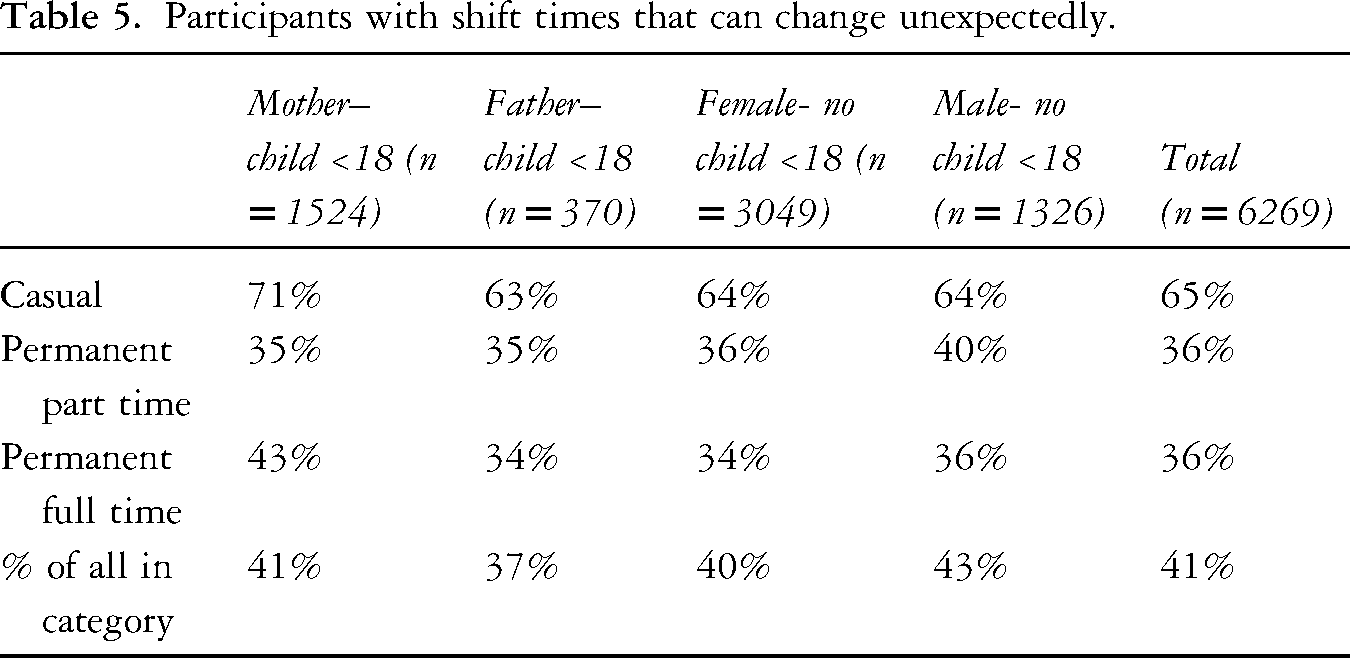
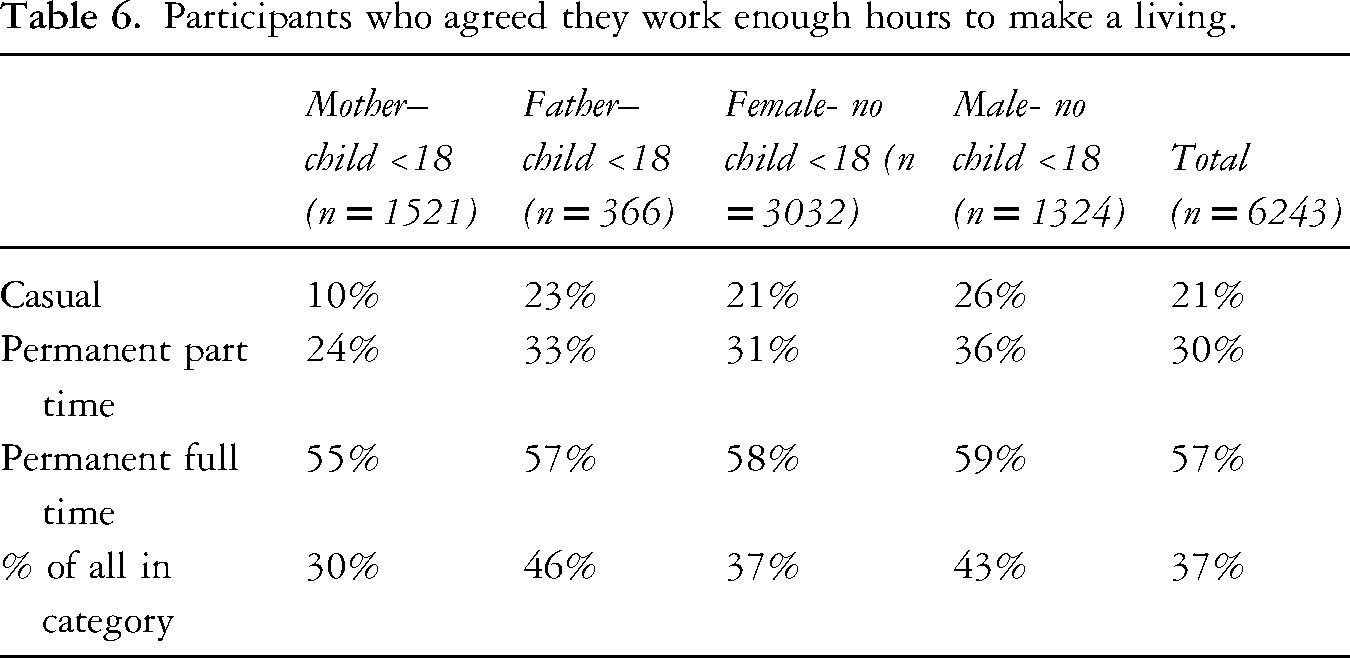
Often considered a source of temporary part-time employment for students and young people, participant characteristics highlight how retail offers long-term employment to a diverse workforce, including people with complex care responsibilities. Among the 6469 participants, 17% were students, 10% spoke a language other than English at home, and 3% were First Nations people. Over half (55%) regularly provided some form of care to another person, such as a child, grandchild, older person, or person with a disability or long-term health condition. A third of women (33%) and 22% of men cared for a child under 18. Many also provided non-parental care (Table 2). Together, participants worked for over 200 employers. Almost half (47%) served Australia's two main supermarket chains and a further 23% worked for ten other large employers (covering department and variety stores, hardware, liquor and fuel). Many (42%) had served their current employer for 10 years or more. Sixty-eight percent of mothers worked on a permanent part-time basis, more than double the proportion of fathers (31%) (Table 3). Indicating gendered variability of working-time, 37% of mothers and 48% of fathers always worked the same shifts each week (Table 4), and around two in five participants experienced unexpected scheduling changes (Table 5). Only 30% of mothers (46% of fathers) agreed they work enough hours to make a living (Table 6).
Care responsibilities
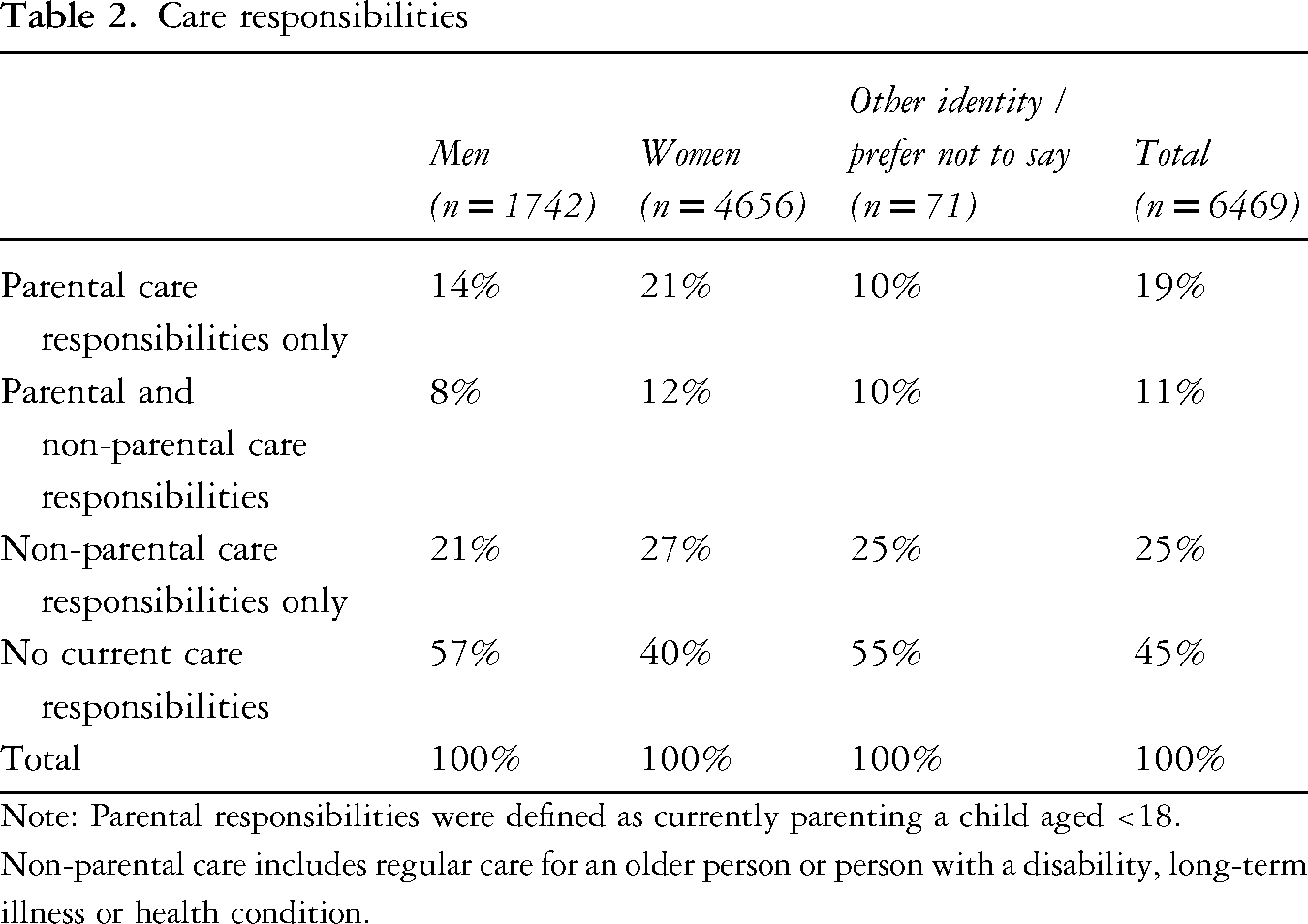
Note: Parental responsibilities were defined as currently parenting a child aged <18. Non-parental care includes regular care for an older person or person with a disability, long-term illness or health condition.
Contract type
Participants who always work the same shifts each week.
Participants with shift times that can change unexpectedly.
Participants who agreed they work enough hours to make a living.
Analysis
Initial thematic analysis (Cortis et al., 2021) identified the range of challenges faced by retail employees. To develop a theoretically-informed account of work and care challenges, we focus here on the 3579 participants with parental or non-parental care responsibilities. As work and care featured in responses to multiple questions, we analysed participants’ comments across questions about formal and informal care used while working; how rostering practices affect them, their family, and care arrangements; any childcare difficulties; what helped co-ordinate work and care; and ways to address work-care challenges.
Some made comments like ‘All good', ‘Incredibly fortunate to have weekends off' and ‘Roster was perfect with my caring role'. However, more numerous examples of adverse experiences of retail work and caregiving were identified. To theorise these adversities, our next analytical iteration reconsidered employees’ accounts using the lens of ‘time theft’ (Sharma et al., 2022). This highlighted themes of unsuitable scheduling, inadequate notice, last-minute changes, and expectations of on-demand availability, and how work schedules raised challenges for organising non-work activities. However, this analysis did not capture the full range of caregiving challenges that participants described, nor their perceived drivers. A more expansive concept was needed. In the subsequent iteration and as outlined below, we developed ‘care theft’, which, while overlapping with time theft, better captures employees’ accounts of work transforming, depleting and disrupting their time, financial and ethical resources for care.
Findings: Practices of care theft
Depleting time resources
Overwhelmingly, employees found retail work generated difficulties in their lives. Few described schedules that worked well. Workable schedules were more commonly noted by those with fewer and less complex care commitments, including men. Some expressed relief they had understanding managers who offered schedules that recognised their situation. Mothers in particular put suitable schedules down to ‘luck’ in finding appropriate arrangements, rather than workplace policy and practice (McKie et al., 2009). However, most emphasised how working time arrangements poorly accommodated their caregiving needs.
Unstable scheduling
Although Australia's Retail Award2 requires patterns of full-time hours to be agreed and that part-time hours be ‘reasonably predictable’, participants found their work schedules were unpredictable and mismatched to care recipients’ needs. Parents of young children described poor access to formal childcare, which remains premised on standard weekday work, unavailable across the span of ‘ordinary’ retail hours,3 and unsuitable for short shifts (minimum engagements under the Retail Award and the main enterprise agreements are three hours). Reflecting time theft, variable shifts made it difficult to access formal care, or to provide informal care in preferred ways. Instability was highest among those working casually, only 7% worked the same shifts each week (Table 4) and many said shifts change unexpectedly (Table 5). Even permanent workers experienced unpredictable hours: 36% of permanent full-time employees, and the same proportion of part-timers, experienced unexpected shift changes (Table 5). Being rostered on at different times each week, with shifts changed or cancelled, made it difficult to make plans, manage finances, and use formal childcare.
Such circumstances are enabled by the Retail Award, which, as discussed above, has facilitated on-demand flexibility. Employers can change start and finishing times via email or text message, even during a shift. Often, requirements that employers obtain employees’ agreement prior to change were not borne out, with roster changes notified unilaterally, via an app. A woman with eldercare responsibilities explained how this reduced her resources for caregiving, impacting others: Shifts regularly get added or changed without any communication, meaning I have had to put my family out on several occasions, leaving them to fend for themselves. I’ve had to cancel medical appointments [without] notice because shifts have altered. (Mother, elder carer, permanent part-time)
Similarly, a grandmother explained how unsuitable schedules made it difficult to secure time for care: I don't think it's fair that they can keep changing my start times. It makes it difficult to collect my grandchildren (Grandmother, permanent part-time)
Consistent with time theft, unpredictable mixes of early starts, late finishes, and short-notice calls-ups, made it hard to organise home-life, disrupting family plans and care arrangements. Variable schedules were particularly difficult for those with complex care arrangements, including parents of children with disabilities which are more easily managed with stable routines (e.g., autism spectrum disorder). Unsuitable scheduling was common among mothers returning to work after having a baby. New parents sometimes found employers resisted adjusting schedules to accommodate their new circumstances, constraining their care arrangements and breastfeeding choices.
Constant availability
Also reflecting time theft, retail schedules made it difficult for employees to plan their lives. To maintain good relations with employers and maximise earnings, employees sought to stay available, regularly checking online rosters for changes, and stretching to accept shifts. Often struggling to maintain sufficient hours, part-timers tried to accommodate changes that ‘flexed up’ their hours above guaranteed minima, to earn more, albeit without overtime or casual loadings. Such accommodations required care arrangements that maximised work availability and allowed short-notice changes, causing inconvenience and cost to themselves and others.
Often, schedule changes appeared in online schedules without consultation or reasonable notice, requiring employees to quickly reorganise care plans, or risk repercussions for non-availability. This father, also caring for a parent, highlighted the unevenness of power in his workplace, which required employees to rearrange their lives around workplace needs. Consistent with time theft, this disrupted non-work time: They change rosters without consultation or even notice. We have to work crazy hours that are inflexible and inconvenient. If casuals knock one shift back their hours are cut. All this negatively impacts home life and energy levels when not at work. (Father, elder carer, permanent full-time)
Limited access to leave
Ineligibility for paid caregiving leave, or barriers to using leave entitlements, diminished employees’ time for care. Some described being unable to access the paid leave they needed, including to care for babies’ and toddlers’ frequent illnesses. Many contended with workplace cultures which stigmatised using leave entitlements or created unreasonable hurdles. This reduced caregiving options and felt distressing: We have to give at least 4 weeks’ notice to get a day off. With children, things pop up with short notice. If I need a day off, I am met with an extremely rude [manager] and no understanding. I am made to feel guilty for asking. (Mother, elder-carer, permanent part-time)
Others described how accessing leave required them to undertake costly, time consuming processes to obtain medical certificates. Reasonable leave requests were frequently rejected by managers, who prioritised employers’ interests above all else. Some new fathers reported being unable to access adequate leave around the birth of their child, reducing caregiving options: My second child was born on the 22nd of December and I was not given adequate time off due to the time of year. (Father, permanent full-time)
However, capacity to ensure care of family members and others was not only affected by theft of time. Participants described their financial resources to care being diminished, too.
Depleting financial resources
Care theft is also enacted through low pay, which, especially when combined with irregular scheduling and short part-time hours, decreases employees’ financial resources for care. Work inadequately compensated for disruptions to workers’ caring lives, and raised their care costs.
Inadequate earnings
Employers’ cost-minimisation agendas kept wages low and hours short, making it difficult for retail workers to make a living. This has been facilitated by Australia's Retail Award and large employers’ enterprise agreements, which have widened the span of ordinary hours and reduced the circumstances under which employees must be paid penalty rates to compensate for unsocial hours. Employees with supervisory responsibilities lack premia for weekend work. One mother explained that since being promoted to manager, salary arrangements meant weekend work had no financial benefit, and failed to compensate for disrupting care. Instead, work was ‘wasted time away from my children’.
With low basic pay rates and fluctuating hours, parents often commented that they did not reliably earn enough to afford childcare. Short shifts and low wages meant incomes could not cover formal care costs, both for younger children (early childhood education and care) and school-aged children (out-of-school-hours care). Inflexible services, requiring payment for full days, exacerbated poor affordability. Mothers explained: [It's difficult] having to pay for full days of childcare (at the set rate) when I’m only working for three hours. (Sole mother, casual)
It's not worth working and putting 2 children in daycare. I only take money home when I work while the kids are at school and not paying for before/after school care or vacation care. (Mother, permanent part-time)
As well as reflecting low wages, these challenges underline Australia's poor childcare performance: net costs are sixth highest among OECD countries (OECD, 2022). While low-income families can access higher government subsidies (Bray et al., 2021), arrangements are confusing and costs remain high for families (Noble and Hurley, 2021).
Increased care costs
Irregular schedules and short shifts meant retail workers found work generated formal care costs which were difficult to cover. This was evident among those caring for young children rather than carers of adults, perhaps because adult care costs are usually borne by care recipients, not carers. Parents struggled to meet childcare requirements to pay for full days of care even if working only a short shift. Some reported booking and paying for more childcare than they needed, in order to maximise their availability to work. If short-notice schedule changes meant the childcare booked was subsequently not needed, money was lost. We thankfully have a great daycare. But we also pay for full 12 hour days even if we don’t use that - but it's something I’m willing to do to give us flexibility around work. (Mother, permanent full-time)
Care during evening shifts was costly and difficult to cover. One sole mother of a child with disability summed up: Average wage per hour $26. Cost of a babysitter per hour $25. If I need to hire a babysitter for an evening shift, by the time tax is taken out, I actually come out behind. (Sole mother, casual)
To manage low pay and high childcare costs, couple parents sometimes ‘tag-teamed’, using weekend and evening work to avoid paying for care. Often, employees drew on kin to accommodate employers’ demands. Indeed, when asked what helped families to manage, the solutions described were commonly developed privately among extended family and community networks. Such arrangements could accommodate short-notice changes and help avoid formal care costs, but these rested on norms of obligation and gratitude and could feel insecure and stressful for employees.
Disrupting employees’ moral orientation to care
Care has long been understood as both a disposition and a practice involving ethical elements as well as physical tasks (Tronto, 1993). Caregivers require not only temporal and financial resources for care, but also the energy and opportunity to monitor and attend to care needs in ways aligned with their moral judgements about care recipients’ needs (Tronto, 1993: 127; Fisher and Tronto, 1990). Often, the approaches to care that participants felt were needed and the course of action they could take were misaligned, due to work requirements. More than inconvenience, this inability to enact moral responsibilities in their private lives resulted in moral distress (Hussein et al., 2022).4 Care theft was therefore also evident where employer practices reduced employees’ energy for attentive care, and constrained their agency to care in the ways they judged were needed.
Depleted energy for care
Often, workers found the physical and emotional demands of frontline retail, including high workloads and customer abuse, drained them of energy for caregiving. Stress and poor sleep from variable shifts made it difficult to sustain regular, attentive care routines. A woman caring for multiple disabled family members explained: Some days I work 6am start, some 9:30am start, some 2pm start. And sometimes I need to stay back. I can’t help my family if my sleep routine is lacking due to the many varied shifts. (Carer, permanent full-time)
Where possible, employees sought secure employment that accommodated their caregiving roles, and resisted arrangements that interfered with meeting care needs. They were acutely aware that their care resources depended on individual managers. This mother explained how despite being upfront in communicating her need for school-hours rostering, new managers changed her stable, workable schedule, requiring significant effort to renegotiate: It was perfect up until recent new management. I'm constantly having to dispute my roster and my hours are getting cut because they can no longer work with my schedule. I feel like a burden, and I come home stressed out and exhausted. (Mother, casual part-time)
Unstable hours and incomes impacted employees’ psychological wellbeing and diverted attention from children's needs to monitoring and managing changes so as to secure a stable income: As a single mother I am committed to working hard for my children. With consistent hours, I have been able to have stability. Now due to low hours of only 9 hour a week, all of a sudden I have found myself more stressed and losing sleep at night worrying about how I am going to survive. I’ve considered …quitting their sports because me having to take them to training and their games doesn’t suit my managers idea of rostering. (Sole mother, casual)
Constrained agency to care in preferred ways
Care theft was also evident where employers’ requirements prevented employees from caring in the ways they chose. This mother shared how returning to work too soon after giving birth left her unable to arrange formal care of acceptable quality, contributing to moral distress: I had to go back to work after 18 weeks and had to put my baby in family day care…I noticed she [the educator] is not doing the right things and always she turned the TV on for my baby. I’m blaming myself all the time that I had to stay away from her when she was just 18 weeks. (Mother, permanent part-time)
Mothers in particular highlighted how employers’ failure to accommodate employees’ preferred schedules and to provide a living income caused children to miss out on the educational and extracurricular activities parents wished to provide. Mothers of school-aged children explained how employers’ inflexibility made it difficult to ensure children's safety and wellbeing. One exasperated sole mother, for example, described how unilateral changes in her work schedule impacted on her children: My manager doesn’t care that I’m a single mother and that my girls have to hang around outside the school for 1 hour and 10 minutes for me to pick them up. She also didn’t care when she changed my roster and my daughters couldn’t see their psychologist any more ….and she didn’t care that my girls had to give up their sports… This has affected me and my girls’ mental health and it affects our daily lives. Our lives are very stressful because of my work hours and my girls suffer because they only have me and they always miss out, and my boss couldn’t care less. (Sole mother, permanent part-time) Whilst I have teenage kids, you would still like to be there before and after school, but that's impossible when doing 9- or 10-hour days, [with] no choice because the pay rates are so low. (Sole mother, permanent part-time)
Maintaining gendered caring
Finally, low-paid retail employment reduced options to organise care equitably. Within families, variable, insecure work could consolidate mothers’ financial dependency on partners with jobs in other industries, and reinforce prioritisation of fathers’ careers, reducing prospects to evenly share care: Without my husband's employment, we simply would not survive. I work my shifts and caring for the kids around his career because of this. (Mother, casual)
Thus, in addition to practices which depleted time and financial resources, care theft was also evident in employer practices which affected employees’ energy for care, their ability to care in preferred ways, and opportunities to equitably share care.
Concluding discussion
Low-paid retail employees’ accounts of work and care, captured in online survey comments, highlight how employers’ practices, enabled by porous employment regulation, deplete resources for care, and shift social and economic risks onto employees, families and communities. While employees’ accounts resonate with notions of ‘time theft’ (Sharma et al., 2022), our concept of ‘care theft’ more comprehensively captures the ways employer-driven instability and demands for constant availability not only control employees’ work and non-work time, but also affect their caregiving possibilities. Employees described care challenges in terms of overlapping, mutually reinforcing employer practices which depleted the time and money available for care, and disrupted their ability to enact their moral judgements about care, contributing to moral distress. Many participants foregrounded their accounts of adversity with recognition of the uneven power relations in their workplaces, and went beyond describing work-family ‘conflict’ or ‘spillover’ by connecting their experiences with employers’ priorities of efficiency and profitability. They attested to the ways retail employers required frontline workers, even those on permanent contracts, to regularly reorganise their work and non-work time to meet employer needs, to accommodate scheduling demands, maintain open availability, and accept last-minute changes. As participants saw their caregiving constraints to arise directly from power inequalities at work and employers’ priorities and practices, care theft offers an appropriate analytical frame.
Our findings attest to the ways employers’ practices have broad impacts that go beyond the workplace, to affect children and others requiring support. Parents, and particularly mothers, struggled to be available to supervise children when needed, and drew on family and friends in order to manage. Many worked schedules that affected their family's ability to eat meals and attend activities together, and created irregular sleep and wake routines, impacting on family functioning and health, and capacity to organise care in preferred ways. While employees sought to resist care theft by negotiating more suitable arrangements or leaving unsupportive workplaces, many experienced precarious employment for years. As such, employer control contributes to the long-term loss of care in working-class communities, affecting multiple generations. These findings offer reminders of how workplaces are part of the ‘nested dependencies’ of care, whereby care recipients’ needs and experiences are embedded in those of carers and in broader structures (Kittay, 1999). Neglecting to align employment policies to caregivers’ and care recipients’ needs thus has profound social and economic impacts.
Our findings resonate with, and build on, research that has highlighted the impacts of employer-oriented flexibilities on employees (Henly and Lambert, 2005; Henly et al., 2006). Reflecting how employers are ‘greedy institutions’ which can make extraordinary demands on employees (Burchielli et al., 2008) we extend ‘time theft’ to develop ‘care theft’ as a frame for understanding the family and gendered impacts of employer control. Grounded in the perspectives of low-paid, precarious workers, care theft helps shift focus from individualised concepts of ‘balancing’ role demands. While ‘balance’ and ‘conflict’ were developed with reference to experiences of white-collar, professional work (den Dulk and Peper, 2007; Blair-Loy, 2009), here our more systemic analysis is grounded in the power dynamics encountered by people in low-paid jobs, and connects their work-care challenges to the workplace policies and processes which shape and deplete their care resources.
Of course, findings are limited by our focus on workers in a single industry where precarity is rife. Retail workers appear to have benefited little if at all from employment policies expanding legal rights to request flexibility, which have promoted family-friendly arrangements in professional settings (Lambert et al., 2012). Given the highly stratified nature of work-family supports and care experiences (Kossek and Lautsch, 2018), the concept of care theft requires further interrogation in a wider range of employment contexts. Additionally, while our participants were diverse in terms of age and gender and had a range of caring responsibilities, more research is needed to explore the ways specific groups of men and women experience and resist pressure on their formal and informal care resources. Non-white workers, especially women, carry disproportionately high responsibilities for care, and discriminatory rostering can increase their exposure to temporal precarity (Storer et al., 2020; TUC, 2022). Future research should further explore the ways these intersectional injustices shape employees’ care resources.
Notwithstanding, care theft offers a practical frame that can enhance critical policy analysis and advocacy. It makes visible the power dynamics that underpin and shape the care economy, making stark how working arrangements premised too strongly on employers’ interests have consequences for children, families and communities, with women bearing the costs. In identifying care theft, our findings speak to the urgent need for robust policies to improve low quality jobs (Carre and Tilly, 2017). Care theft underlines how sustaining the social fabric requires principled, effective regulatory protections of workers’ rights to secure living hours and a living wage. Such principles should include rights to non-negotiable working-time standards (McCann and Murray, 2014) to protect time and other essential care resources. For Australia, reinserting clear distinctions between genuinely casual employment, which attracts a pay loading, and permanent full or part-time employment, offers a practical pathway. Such reforms are needed across all contexts but most urgently to protect resources for care in retail and other female-dominated industries where carers are concentrated, and where workplace arrangements place caregiving most at risk.
Footnotes
Acknowledgements
We thank the Shop, Distributive and Allied Employees’ Association (SDA) for supporting the research, and SDA members for generously sharing their experiences.
Funding
The authors received no financial support for the research, authorship, and/or publication of this article. However, it draws on survey research which was supported by the SDA.