




Abstract
At the moment, the first phase of the military confrontation between Russia and Ukraine, which began in February 2022, is reaching its logical end: A certain front line has already been established and the economic state in which the countries are is becoming clearer. That is why the evaluation and forecasting of the military, economic and demographic impact of the war on other countries become relevant. This work examines what losses Russia received due to its actions. In the article, the authors examine the issue of the impact of the war in Ukraine on the Russian economy, as well as a retrospective forecast of the impact of Russia’s military operations on its national economy. Attention is focused on military and demographic aspects, as well as on the results of the impact of various types of sanctions. The main method that was used in the work can be considered modelling; however, in addition to it, analysis, historical method, graphic and others were also used. The practical results of the analysis showed that the government of the Russian Federation announced the transition to a command mobilisation economy, and today its first consequences are already visible in the form of rising prices and devaluation of the national currency. In addition, it was shown that despite the large number of sanctions imposed on Russia, the country has not yet felt the full consequences. The issue of how the defence economy of the Russian Federation is developing, how the military budget of Russia has changed over the past 11 years, and how the war in Ukraine affected the demographic situation has been examined. In the section on the impact of the war on the economy of the Russian Federation, it is shown that modernised production and industries will suffer the most from such actions, which will lead to a powerful technological lag. The article brings new knowledge for understanding the current functioning of the Russian economy and in the near future, as well as for making assessments of the possible future course of the war.
Introduction
On 24 February 2022, Russia began a full-scale invasion of Ukraine, which the Russians called a ‘special military operation’. A few days later, it became clear that its goals were not achieved due to the false foundations that existed (and perhaps still exist) in the Russian leadership regarding Ukraine. Among such mistakes, one can note problems both in assessing the mood of the Ukrainian population and their attitude towards the Russian Federation, and in the military assessment of the capabilities of the Armed Forces of Ukraine (Bowen, 2022). Thus, having received significant resistance, Russian troops were forced to leave the northern territories of the country and concentrate their forces in the south and east, preparing for a protracted war.
In connection with such actions of Russia, the world community decided to impose sanctions on the country, i.e., a certain type of ‘punitive’ measures imposed within the framework of international law on countries (or their representatives) in case of violation of the norms of international law (Alqamoudi, 2021; Ozdamar & Shahin, 2021). The Russian Federation began to turn into an outcast, both diplomatically and economically, which, as is known from the theory of international economics, leads to net losses in any case, no matter how propagandists and lobbyists try to assure otherwise (Poon & Rigby, 2017). Thus, the questions become relevant: What losses has Russia suffered since the beginning of the war in Ukraine, and what losses can it still suffer due to its continuation? In this work, the authors try to find answers to the questions.
Although the full-scale war in Ukraine began quite recently, there is already a layer of works in various fields dealing with its economic, military and political assessments. Thus, an article by Bowen (2022) can be marked, in which the author examines the military aspects of the war in Ukraine, the events that took place at the front in the first months of the war and what are the possible future consequences and course of the conflict. In turn, Pereira et al. (2022) consider the ecological dangers for Ukraine, Russia and the whole world that may be caused in connection with the Russian–Ukrainian war. Importantly, Rendall (2022) assesses the likelihood of a nuclear disaster due to the Russian–Ukrainian war, its consequences and actions that should probably be taken now in order to protect ourselves from it. In turn, Astrov et al. (2022) studied the general impact of the Russian–Ukrainian war on the economy of these countries and the world economy as a whole, and Prohorovs (2022) studied the problems due to the war, which became most characteristic of the countries of Europe. The object of the research is the current realities of the economy of the Russian Federation, as such, and the perspective of their changes in the future. The novelty of the work is the formation of estimates and models that make it possible to assess the current and likely future state of the Russian economy due to the war in Ukraine.
Thus, the goal of the work is to estimate and show Russia’s economic losses due to the start of the war in Ukraine, as well as to make a forecast regarding the likely future losses of the country.
Materials and Methods
Although there are currently some scientific works on the course and consequences for Russia of the invasion of Ukraine, there are still too few to draw certain conclusions. The same applies to publicly available statistical data, especially on the part of the Russian Federation, which a few months after the start of the war began to hide real statistical data on the country’s development, including the economic one, and those that remained available often contradict each other. This is the reason, why in the work, in order to form certain conclusions, individual pieces of available data are used or quotes from well-known and authoritative economists regarding their opinion about events in the section of the economy in Russia.
Thus, statistical methods became the most used during the research. Among them, modelling became the main method. The reason for this is the significant number of models built in the article describing the likely future development of Russia, and in particular its economy and demography. For their construction, the method of forecasting also became important, which made it possible to form certain predictions about the movement of certain indicators in the future. Most often, these predictions were formed using correlation regression models with varying degrees of reliability. Also, when building these models, the method of abstraction was used, in order to make it more understandable and to level the influence of some unimportant external factors on its reliability. In turn, the results obtained after building the models were schematically displayed using a graphical method. In addition to statistical, theoretical research methods played an important role in the work. Thus, it is possible to mention the analysis, which became especially relevant, taking into account the significant volumes of statistical and theoretical data that were used during the research. In turn, the historical method made it possible to assess the process of economic, military and demographic development of the Russian Federation over the past 20–30 (and sometimes more) years.
The entire research process can be divided into several main stages. In the first stage, general information about how the war between Ukraine and Russia is going now was analysed, what the situation is at the front and in the international diplomatic arena. In the second stage, a study was conducted on how the economic, demographic and military components of the Russian Federation have developed over the past decades and what fundamental changes have taken place in it. Also, during this assessment, special attention was paid to the events taking place in the world in a certain period of time and the military conflicts in which Russia participated at that time. In the third stage, the changes taking place in the economy of the Russian Federation at the moment (from all available sources) were evaluated, and also, based on the future rates of the entry into force of sanctions, the level of their effect and the expected duration of the conflict, models of the future development of the Russian economy were formed. A table that describes in sufficient detail all the relevant features of the course of the Russian–Ukrainian war, and what consequences should be expected from it, was also compiled.
Results
In general, a significant number of economists tried to give their forecasts about how the economic development of Russia will take place due to the war in Ukraine. In various sources, it is possible to find certain data on this matter: in particular, on the Geneva Solutions website, an article describing Russia’s daily war losses of about 223.5 million USD (United States dollars) (Maltsev, 2022); other sources note the huge costs of bombing Ukrainian cities with expensive high-precision missiles, the development and production of which cost billions of dollars (Zubarevich, 2022). In any case, such costs do not compare with those borne by Ukraine in connection with hundreds of killed civilians and destroyed factories, buildings, roads and enterprises. To begin with, we will consider the indicators of the military and economic development of the Russian Federation before the events of 2014 and after; this will allow us to assess changes in well-being and allow us to compare the level of militarisation of the country. However, due to the fluctuating nature of the rouble/USD exchange rate, any conversion of rouble values to USD is subject to its own special kind of uncertainty. These data are shown in Table 1.
Characteristics of the Economic and Military State of the Russian Federation in the Period from 2000 to 2021.
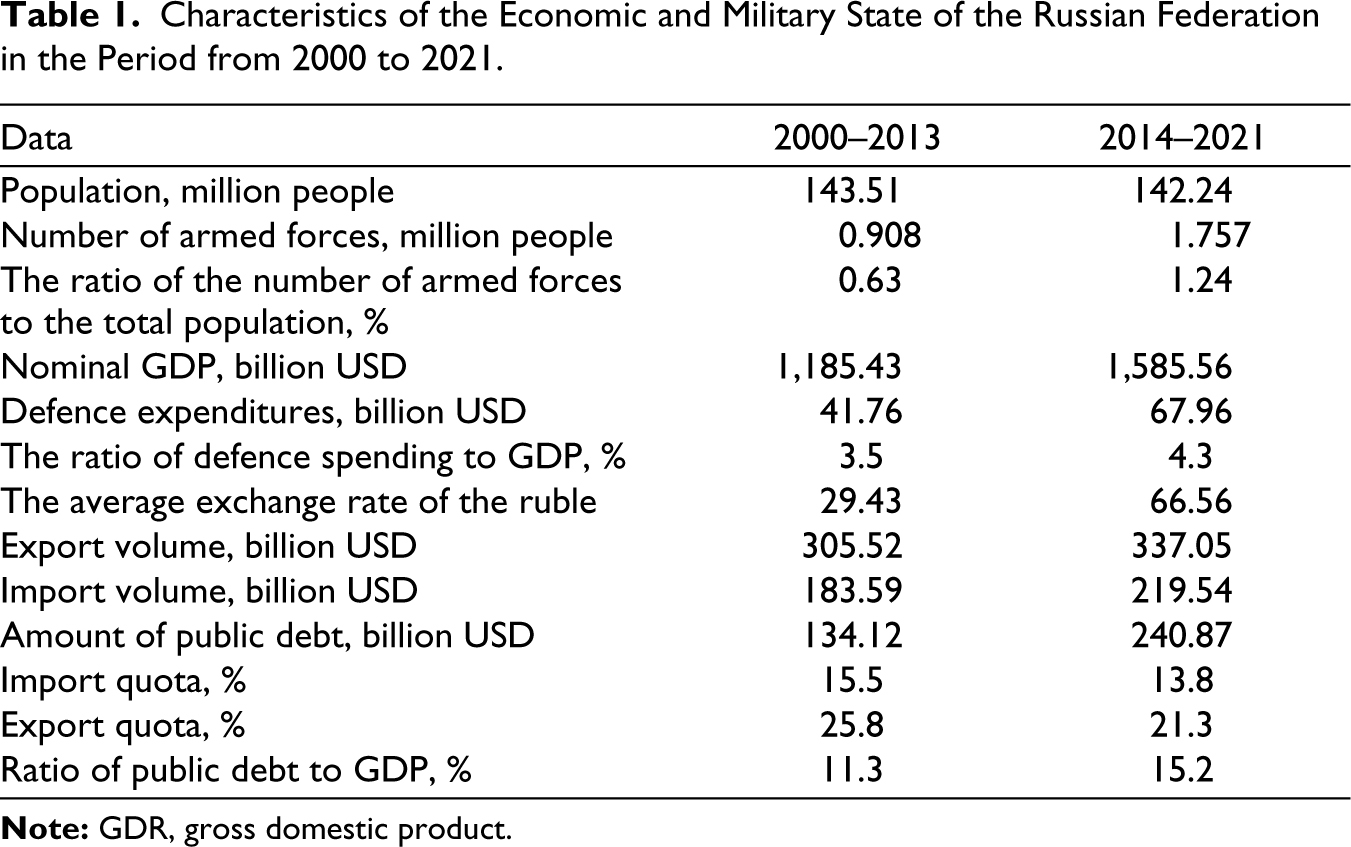
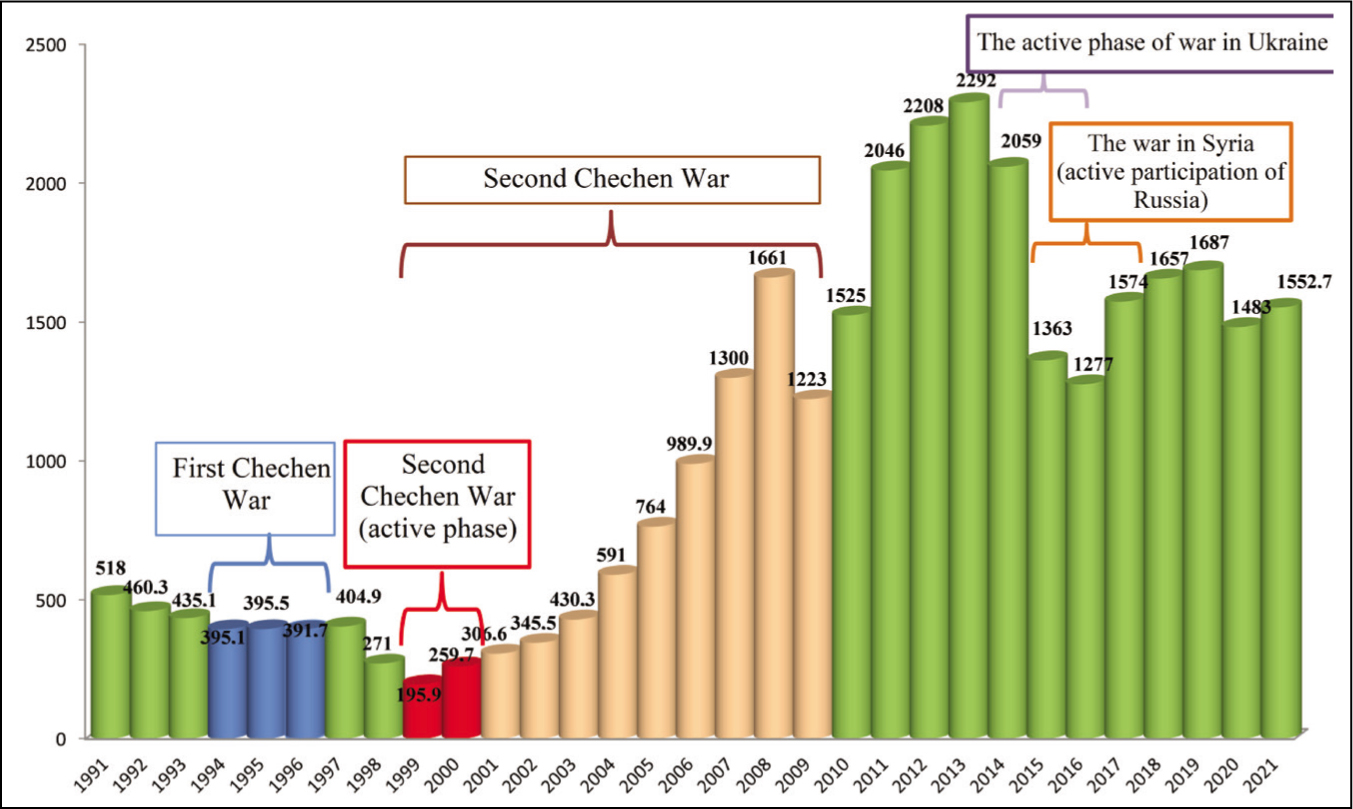
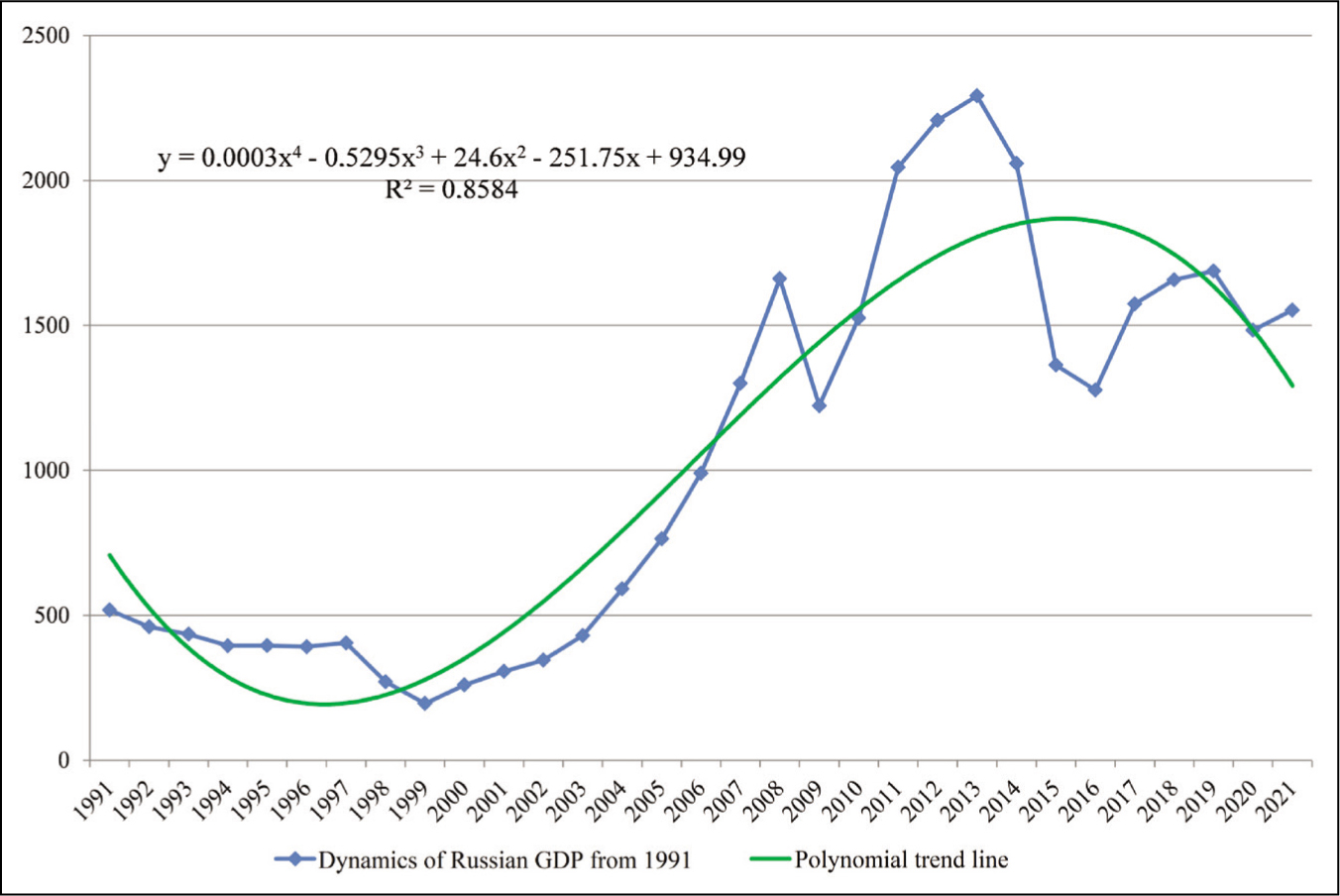
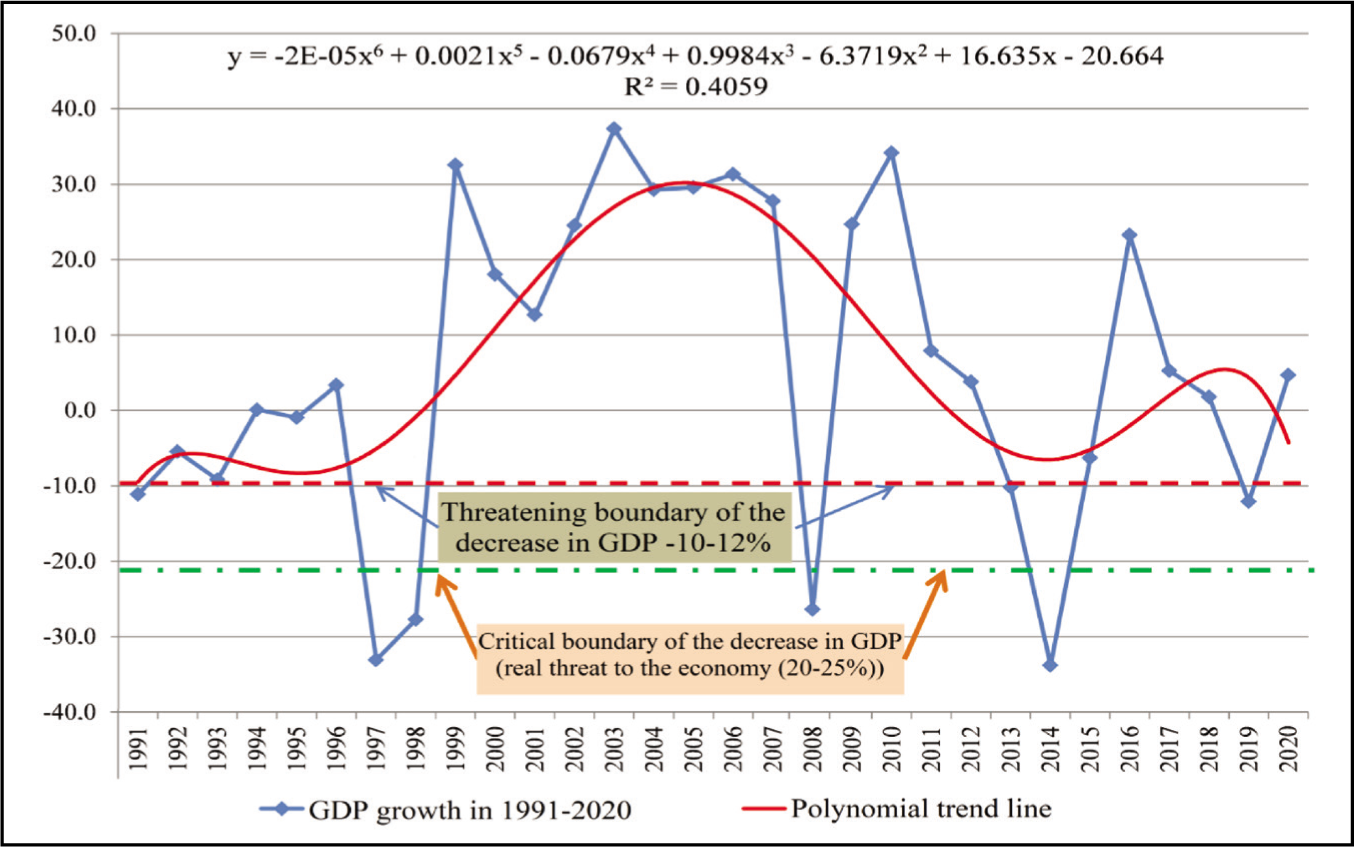
Analysing the data from Table 1, it is worth drawing attention to some main indicators. First, while the total population in the country is decreasing, the contingent of the armed forces has almost doubled, which has led to an increase in the ratio of the number of armed forces to the total population, which indicates an increase in the level of militarisation of the country. Second, defence spending increased, and at a faster rate than nominal GDP; this led to an increase in the share of defence spending, which also indicates a gradual increase in the level of militarisation. Third, there is a general increase in the level of GDP and indicators of foreign trade: Nevertheless, their real increase is not so great, and the level of nominal GDP is below the peak year of 2013 (at the level of 2010). Fourth, there has been a slight increase in public debt, which, however, remains extremely low. Figures 1–3 present data on the dynamics of Russia’s GDP, taking into account its activities in military campaigns.
It can be concluded from Figures 1 to 3 that wars have always had a negative impact on the development of the Russian economy. Nevertheless, it has always been able to recover due to the possibility of obtaining loans and selling a large amount of its own natural resources on the market. The negative was also strongly felt after the wars, as the economy was forced to restore lost military resources and build up military capabilities. From Figure 2, in particular, this can be seen in the period of the first and second Chechen wars; in addition, losses in economic potential can be observed in the period before 2022 due to the conduct of a hybrid war against Ukraine and preparations for a full-scale invasion.
Analysis of Changes in Russia’s GDP Taking into Account the Periods of Its Participation in Armed Conflicts, Billion USD.
Dynamics of Changes in Russian GDP from 1991 to 2021 and the Long-term Trend Constructed Using a Regression Model, Billion USD.
Dynamics of Russia’s GDP Growth Rate in 1991–2020 and the Long-term Trend Constructed Using a Regression Model, %.
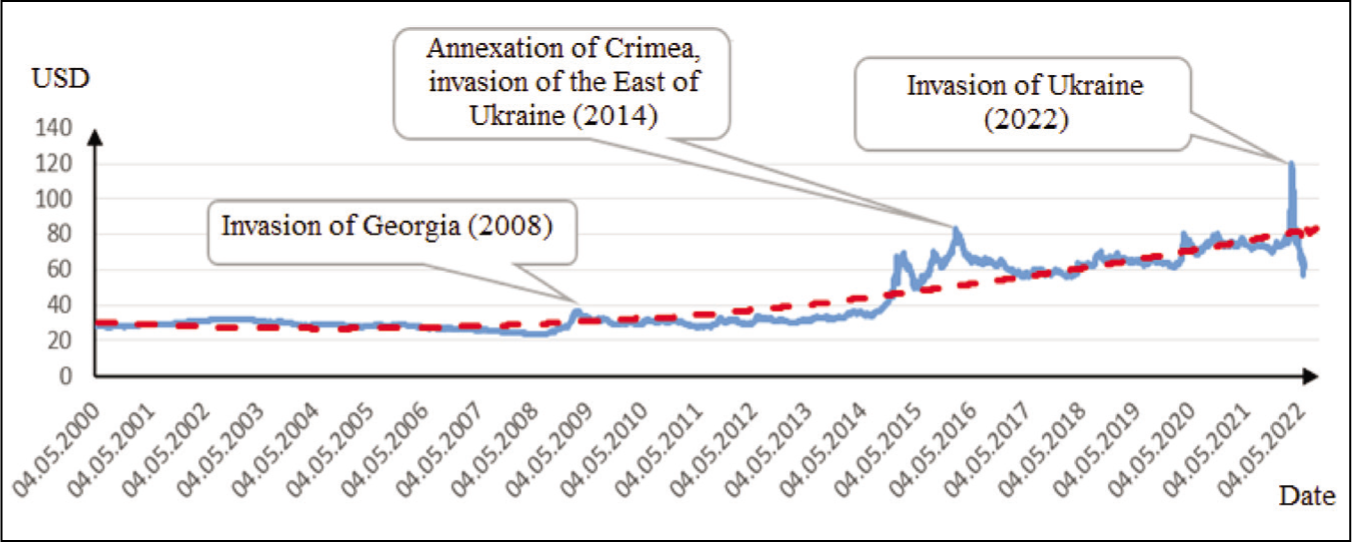
Currently, Russia has come under the brunt of the largest number of sanctions that have ever been imposed on a country in the world. It was also a relative surprise that many companies made the choice to leave the Russian market on their own due to their reluctance to cooperate with the aggressor (and to preserve their reputation) (Mahlstein et al., 2022). Among them were manufacturers of cars, televisions, oil service companies and even those who sell furniture and consumer goods (IKEA, Procter & Gamble) (Zubarevich, 2022). Even now, the consequences of such sanctions are not fully felt in connection with the availability of stocks of goods produced by these companies, as well as the stock of their reliability. It is quite possible that the real shortage of goods will be felt in Russia only in the summer of 2023. One of the indicators that should be analysed as part of the work is the rate of the Russian national currency, since this indicator is very inertial in relation to events in the country, that is, it reacts quickly to them. Data on the ruble exchange rate can be seen in Figure 4.
Figure 4 shows the main changes in the ruble exchange rate in 2000–2022 and the reasons that led to sharp changes in its exchange rate. The main reasons are the financial crisis of 2008–2009 and the invasion of Georgia, in 2014, the first hybrid stage of the war in Ukraine and the beginning of sanctions. During the COVID-19 crisis, a certain stabilisation of the exchange rate was observed, and in 2022, a significant fluctuation of the national currency can be observed: before the war, the dollar was valued at 120 rubles, and after it began—at about 60. Note that this strengthening of the Russian currency is caused by restrictions on the movement of capital in the country, certain requirements for exporting companies to sell existing foreign exchange reserves and some other reasons. In addition, this leads to an increase in problems with the country’s budget deficit.
So far, the Russian central bank has been able to defend the ruble’s value through capital controls, interest rate hikes and requiring exporters to sell foreign currency. But these are temporary measures. As the war drags on and sanctions bite deeper, the budgetary strains will increase. At some point, the Russian government may resort to printing money to fund the war effort and fiscal deficit.
This monetary financing could certainly spark higher inflation or even hyperinflation, especially if combined with shortages of goods due to severed supply chains. The ruble’s recent steep devaluation may be an early sign of such risks. However, the Russian economy today is structured differently than in the 1990s, with a flexible exchange rate rather than a currency peg. This may make hyperinflation less likely, but very high inflation is certainly plausible.
In fact, the impact on the Russian economy of the war is ambiguous, not only because of the peculiarity of the situation in which the country finds itself, but also because official statistics are often inaccurate and contradict each other. At the same time, the nationalisation of the abandoned enterprises was recently announced, which, nevertheless, will not solve the problems arising from the restriction of the import of technologies into the country. Thus, in the near future, the Russian Federation will face a severe shortage of components. The main industries that will be affected are shown in Table 2.
Main Industries of the Russian Federation Whose Enterprises Depend on Imported Components.
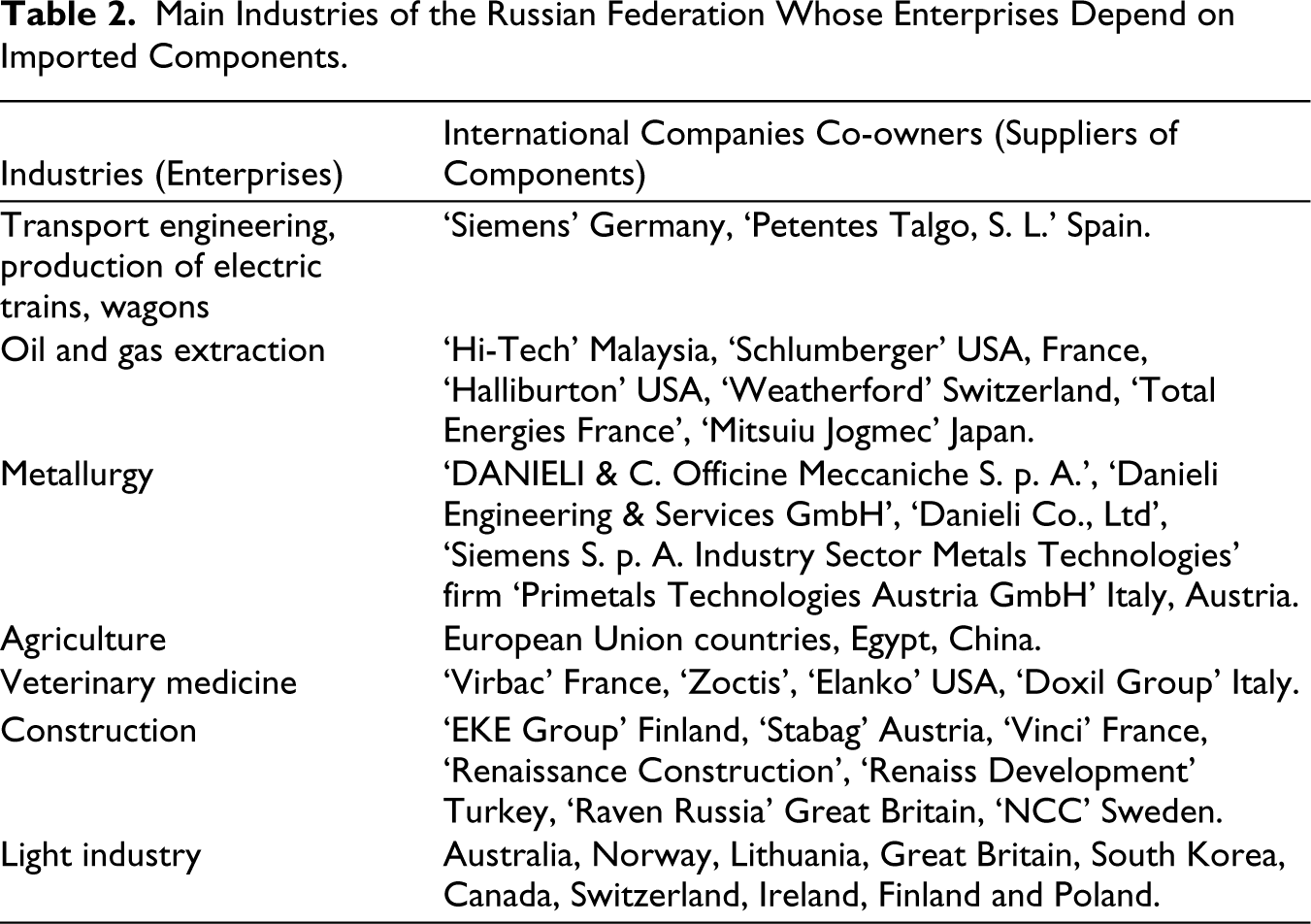
Due to the exit of the companies shown in Table 2, many others may cease to operate. It is also important that due to such actions of companies, the Russian Federation will not be able to produce some types of military equipment and ammunition, as well as carry out their repairs.
After the start of the war, it became clear to the countries that it is more than risky to continue to buy energy carriers from Russia and remain dependent on it. For example, Germany plans to almost completely abandon Russian fuel by the end of this year, and other European Union countries promise to do it even faster. From December of this year (2022), an embargo on Russian oil is also planned and a price limit will be set for other countries to purchase it: In the case of a more expensive purchase, such countries will be subject to secondary sanctions from the countries of Europe and the United States. Such a restriction is particularly important, because it will complicate the financing of the war by the Russian Federation: In fact, this is possible only with the help of the reserves it has left (about 160 billion USD at the beginning of the war, taking into account the frozen part, as well as gold, the purchase of which was prohibited and about 100 billion at the time of writing (International reserves of the Central Bank of the Russian Federation, 2022). It is also relevant to consider how the defence economy in Russia developed and how the military budget changed (Figure 5).
Changes in Military Expenditures in the Russian Federation in 2010–2021.
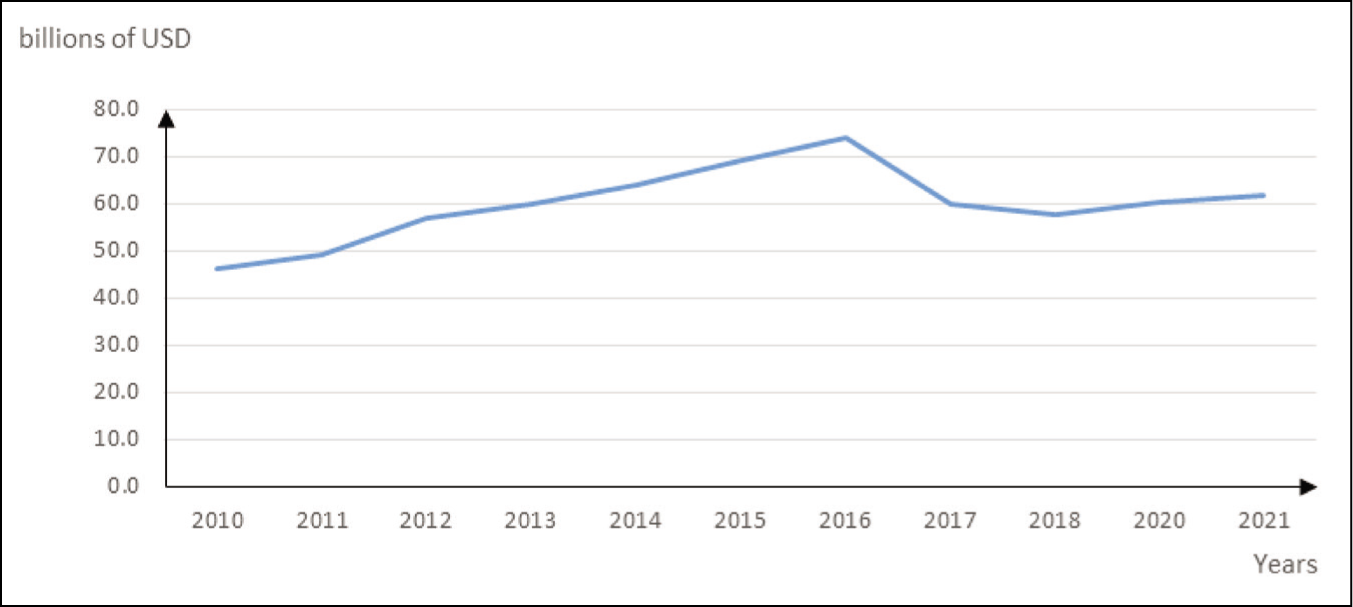
As can be seen from Figure 5, the largest share of spending on the defence sector was in 2016, but it decreased significantly by 2018 and began a slight recovery by 2021. It is difficult to say what exactly this trend is related to, but such a decrease in spending immediately after the country started several armed conflicts does not seem justified. Experience shows that one of the spheres that reacts sensitively to changes in the economy is demography. Therefore, it is worth considering how the demographic situation of Russia changed before the war and what is happening now (Figures 6 and 7).
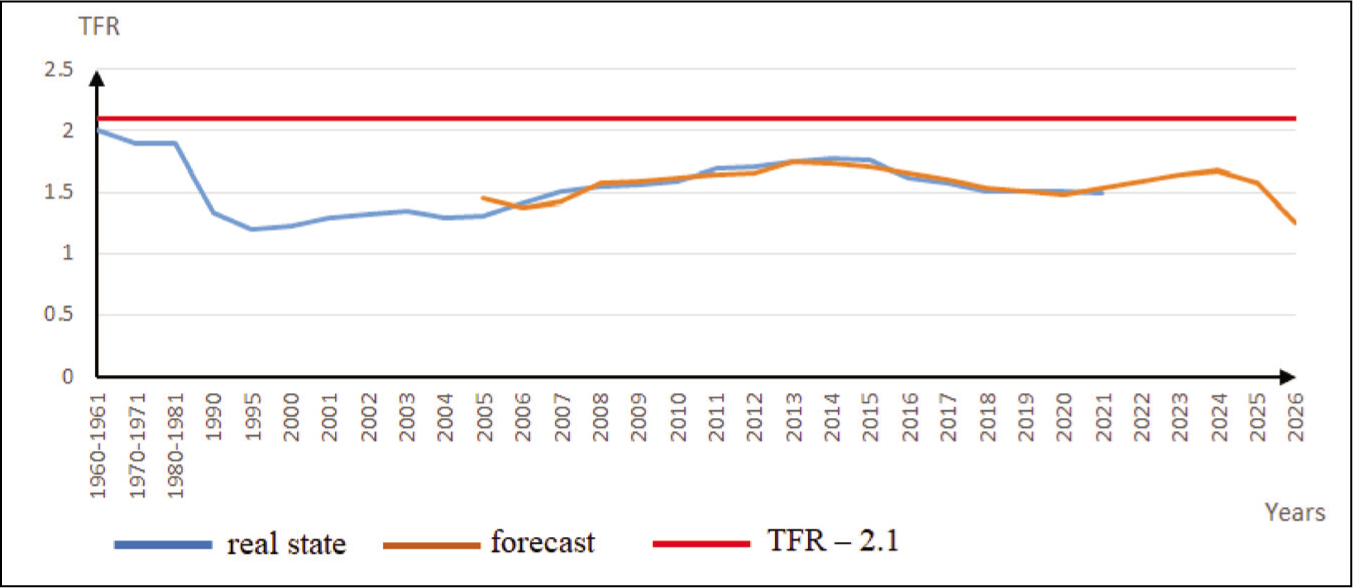
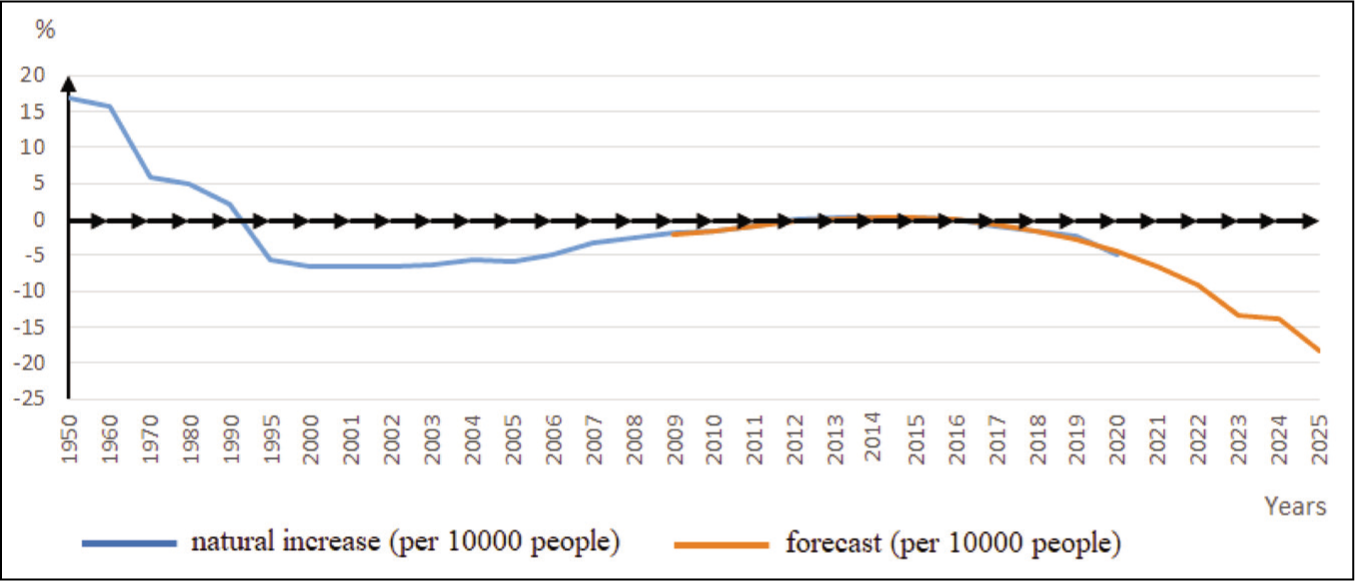
From Figures 6 and 7, it is possible to see a clear trend of a decrease in the birth rate in the country, which became especially noticeable in recent years, and the increase in the number of the population occurred primarily due to the influx of migrants. Such a picture was not observed even during the Second World War (Eberstadt, 2011). The value of the level of TFR shown in Figure 6, which is necessary to maintain a stable population in the country, should be at the level of 2.1 (Bogue, 1969).
In the Russian Federation, the well-being of the population differs significantly depending on the region of residence: If the standard of living is relatively high in the centre, then the peripheral regions are frankly depressed (Pletnev & Barkhatov, 2021). This is the structural disproportion of territorial labour markets. Therefore, now the Russian Federation has a situation where many more soldiers are being mobilised from relatively poor districts. Contract workers are mostly young people from depressed areas, which are archaic, hardly modernised, and have a cult of power. There were problems with the labour force in the Russian Federation even before the war due to the outflow of the numerous most educated young people, but now this issue has become particularly acute. Having analysed the information provided above, it is possible to describe the main characteristics and features of the Russian–Ukrainian war, which are shown in Table 3.
Characteristics of the Russian–Ukrainian War.
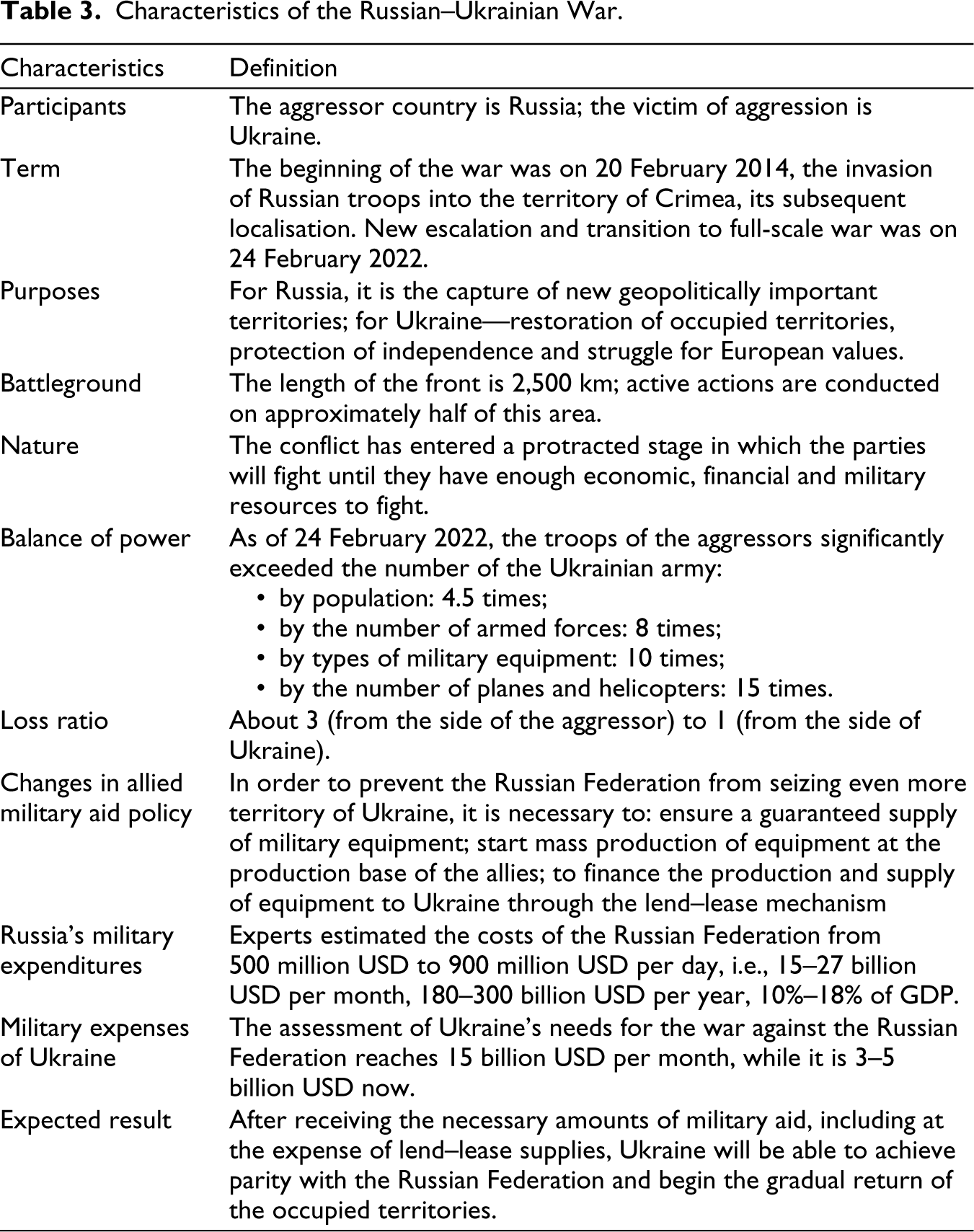
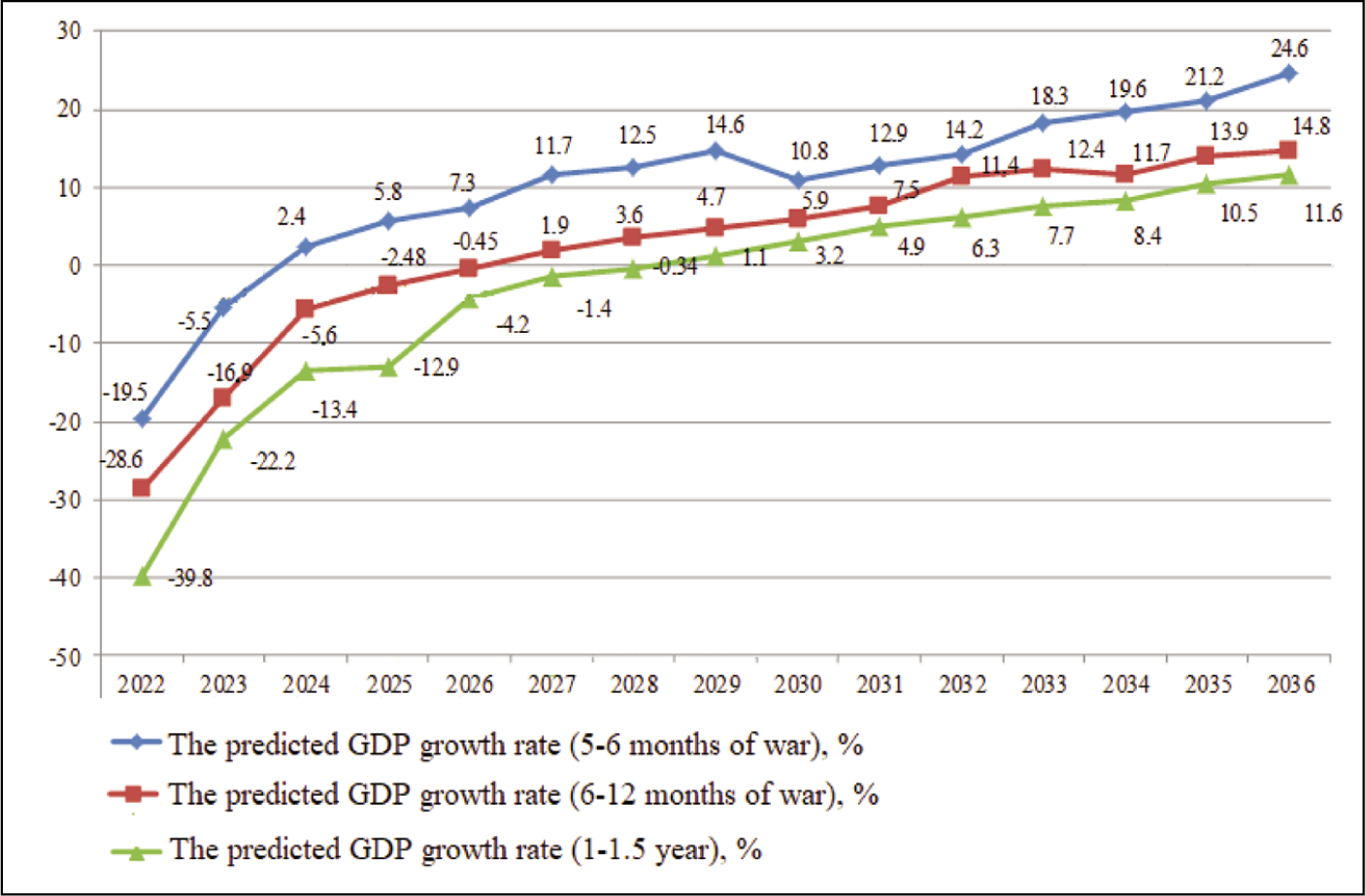
Thus, it can be understood from Table 3 that the Russian–Ukrainian war will be able to continue for quite a long time due to the support of Ukraine by the allies, Russia’s considerable human and resource stock and the long-term effect of sanctions. On the basis of the information analysed above, models of changes in Russia’s GDP were compiled under three main conditions: the continuation of the war in 5–6, 6–12 or 12–18 months (Figures 8 and 9).
Dynamics of Changes in Russia’s GDP in Case of Continuation and Strengthening of Economic Sanctions Against Russia, %.
Dynamics of Russia’s GDP in Case of Extension and Strengthening of Economic Sanctions Against Russia, USD Billion.
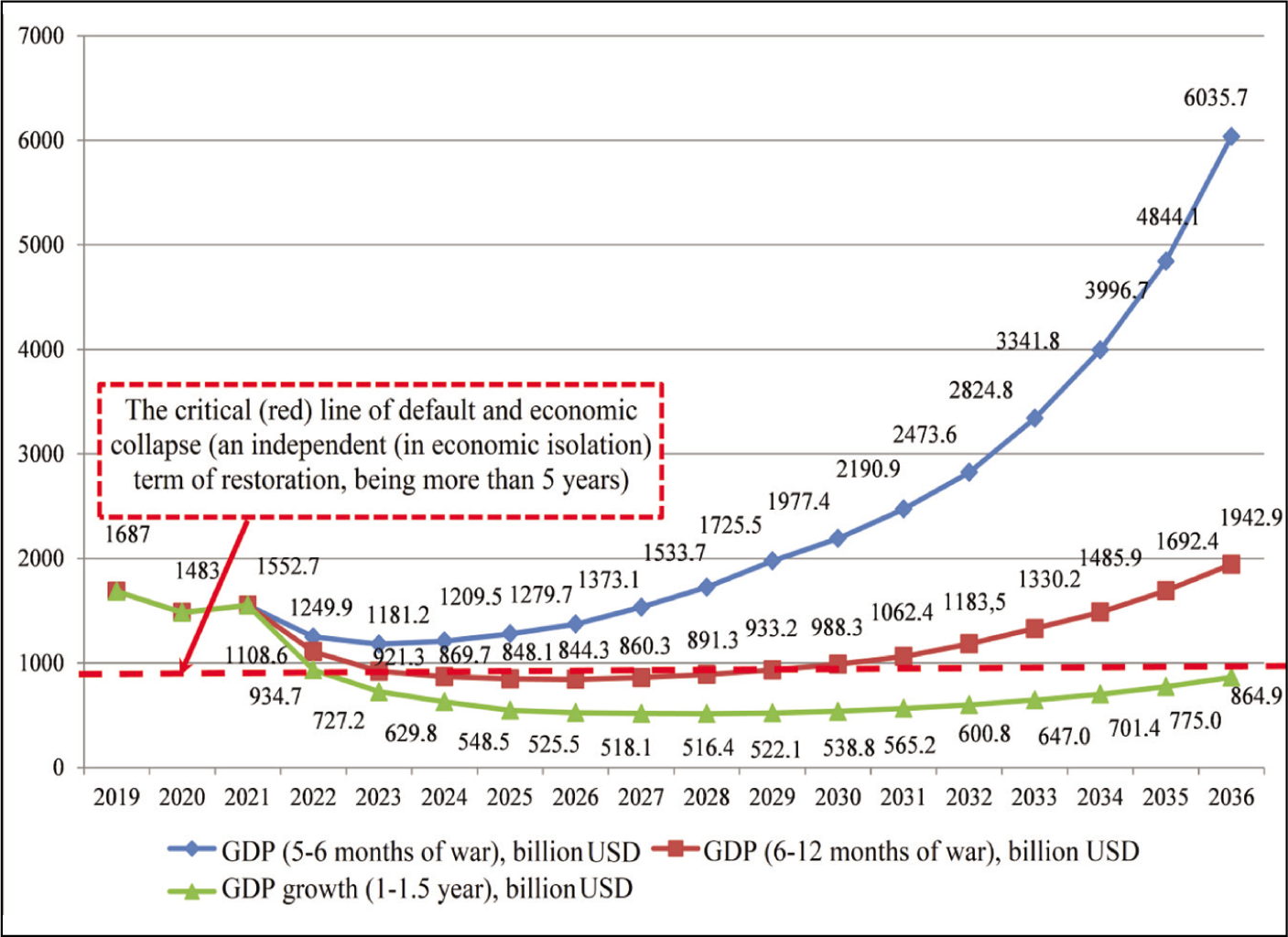
As can be seen from Figures 8 and 9, the most favourable course for the Russian economy (but also the least likely) is negotiations with Ukraine and the withdrawal of troops from its territory in order to avoid sanctions from Western countries. The results of the analysis show that the only way to avoid default is for the Russian Federation to stop the war for no more than 6–8 months. In this case, it will be difficult for the Russian economy and the Russian people, but the chance for economic recovery thanks to the energy and raw material construction of the economy remains, as well as maintaining a sufficient level of internal and external security. The duration of the war on the territory of Ukraine for more than a year will practically not allow Russia to avoid default already at the beginning of 2023. Russia can use it as a mechanism to get rid of foreign debts, but this contributes to the increase of unemployment, impoverishment of the population and most importantly, it will create a threat of a change in the political system.
Discussion
The consequences of Russia’s invasion of Ukraine are studied by Astrov et al. (2022). They compare this war with the wars in the Balkans of the 1990s: The events that took place then can be compared with modern times both in terms of volume and geographical location (the war in Europe). As scientists note, the situation surrounding the war is extremely unpredictable, because its course depends on a huge number of factors. Nevertheless, they highlight some basic scenarios that may lead to war: the emergence of a new protracted, unabated conflict or a change in the ruling elite in Russia. The authors note that this approach to forecasting is somewhat different from the one they used above in the work: Nevertheless, the transition of this conflict into a too protracted stage seems unlikely due to the limited financial and military resources of Russia, the actual absence of allies or partners and comprehensive support countries of Europe and partners of Ukraine, which will only grow over time.
Scientists also conduct an analysis of economic losses for Ukraine, Russia and the countries of the world: For Ukraine, they note multibillion-dollar losses in terms of damaged infrastructure and a decrease in the production capabilities of the economy and for the Russian Federation they predict a long and protracted recession, an increase in the level of inflation and a simultaneous decrease in the standard of living. Their predictions about Russia did not come true: The recession in the country does not yet seem so deep (the effect of the sanctions was not so fast and strong), and although the standard of living has decreased, the level of inflation, which initially increased, is beginning to decrease due to strengthening of the ruble. Indeed, the situation regarding the exchange rate of the national currency in the country is unique: An attempt was made to literally separate Russia from the international economy, which in modern conditions hardly seems possible at all (Kurtz et al., 2020). The reason for the strengthening of the national currency in this case was a sharp decrease in imports with unchanged exports (or not such a significant decline) of energy carriers. Thus, a strong ruble does not allow Russians to feel a sharp increase in prices, although it creates certain difficulties for the Russian economy, in particular from the side of the possibility of filling the budget.
If the scientists’ view of the medium- and long-term prospects of both countries is to be characterised in general, then for Ukraine they are difficult, but, with the help of the Western countries, they are still such as to contribute to economic development. As for Russia, the medium-term forecast for it seems mostly negative: Due to sanctions, the Russian economy will lose access to a significant part of foreign capital and Western technology transfer, which will increase its economic backwardness relative to the rest of the world; the migration and departure of large corporations from the country will also be a problem. In general, forecasts by Astrov et al. (2022) agree with those proposed in the paper above. Economic consequences for Russia are also assessed by Chalyuk (2022). It considers three main scenarios of the course of the war and describes the consequences for the country in the case of each of them. According to the scientist, in any of these scenarios, the consequences for the Russian Federation will be catastrophic and recovery may take tens of years.
As for the losses of European countries from the war, they felt its consequences, first, in connection with the increase in energy prices, and later—due to the need to save scarce energy (Garafonova et al., 2023; Rexhepi et al., 2023). Prohorovs (2022) provides similar conclusions in his work. He notes that the biggest losses due to the beginning of the war were suffered by the countries of Eastern and Central Europe, which had the largest turnover with the country, but no longer have the opportunity to continue it. It should be also noted that for these countries, it is also particularly relevant now to ensure a sufficiently high level of the security dimension (Todorov, 2022). In addition, the general investment climate of the region has deteriorated and there has also been uncertainty for doing business (Anayi et al., 2022). This, in turn, led to a weakening of the euro, a decrease in the profitability of European companies, a slowdown in the economy and other problems (Mariotti, 2022).
Some scientists fear the course of the war for environmental reasons as well. Pereira et al. (2022) emphasise that the war in Ukraine not only has a terrible effect on global economic development and kills tens of thousands of people but also significantly worsens the ecological situation both in Ukraine and the border territories of Russia and Belarus, but also affects the environment in one way or another environment in all countries of Europe and even the world. Dangerous situations associated with nuclear power plants pose a particular threat: the Chornobyl Nuclear Power Plant in Chornobyl and the Zaporizhzhia Nuclear Power Plant (ZNPP) in Energodar. In the first case, it is related to the conduct of hostilities in the territory close to the station, which led to the rise of radioactive dust dangerous to health (Nagataki & Yamashita, 2017). In turn, with the ZNPP in Energodar, this is connected with the penetration of Russian troops into its territory, which can lead to a general ecological disaster that will affect not only Ukraine, but also Russia, Belarus and European countries. However, this is not the only reason for the existing danger, since, as Leaning (2000) state, war, even if only conventional means are used, poses a huge threat to the environment and the health (both physical and psychological) of the people on whose territory it is waged.
Another danger that the Ukrainian–Russian confrontation carries, which is mentioned and evaluated by Rendall (2022), is the use of nuclear weapons and the beginning of nuclear war. The scientist notes that it is practically impossible to be protected or prepared for such a threat: If the probability of a comet falling on the planet Earth or the impact of a pandemic or other diseases can be determined in advance and prepared for them, then such a phenomenon as a nuclear war will be virtually impossible to stop once it begins and this is guaranteed to result in multimillion-dollar casualties (Chapman & Morrison, 1994; Osterholm & Olshaker, 2020). In addition, according to the scientist, the probability of the occurrence of such an event and the losses from it may seem greater than it seems to contemporaries, since such cases are incredibly rare and lead to the victims of many people at once, surprisingly not taken seriously enough by society and politicians, and, respectively, do not find the necessary feedback for their solution. Most likely, if Russia uses a nuclear weapon or something similar, it will suffer very significant losses due to a likely response from the West, the consequences of which are difficult to predict.
Thus, the all-encompassing consequences of the war in Ukraine will be felt not only for Ukraine, given that the confrontation is taking place on its territories, but also for other countries, including Russia. Most scientists agree that the consequences of this war will be felt for the Russian Federation for a long time due to the effect of sanctions, and the economic situation will have to be restored for decades.
Conclusions
Thus, the article examines the impact of the Russian–Ukrainian war on the economy of Russia in terms of military-economic and demographic aspects. The results of the analysis showed that on the eve of 24 February, the Russian Federation had USD 640 billion in reserves and could prolong the duration of the war for a long time, spending 1 billion per day. However, sanctions against the Central Bank of the Russian Federation instantly froze about 350 billion USD reserve fund, and the US ban on operations with Russian gold limited it by another 123 billion USD.
The first thing that Russian citizens faced at the beginning of the war was the fall in the ruble exchange rate. Now, due to the disproportion in imports and exports, as well as certain prohibitions on the movement of the currency, its rate has become more stable, which, however, may change after the introduction of an embargo on the purchase of Russian energy carriers and the introduction of a ‘price ceiling’. It is also worth expecting a high level of inflation, which according to the latest forecasts will be about 12%–15%. The analysis carried out in the work shows that in 2023 1 USD will cost about 83 rubles if the current trend continues. All this affects Russia’s military–industrial complex: The exit of industrial giants leaves the Russian market without spare parts and components, including military equipment. Now the Russian Federation lacks not only guidance systems for Calibers but also hub bearings for tanks. As a result, already more than 20 enterprises of the military industry have completely or partially suspended their activities.
Also, the war completely destroys the demographic policy of the state. In favour of this statement, the Federal Service of State Statistics of Russia has changed a number of methods of assessing the main socio-economic indicators to hide negative trends. Nevertheless, noticeable trends in the emigration of Russian citizens abroad indicate the existing destructive consequences of such a policy. A more detailed forecast of Russian development, taking into account the introduction of an embargo on energy carriers and the establishment of a ‘price ceiling’ on them, may become an actual direction for future research on this topic.
Footnotes
Declaration of Conflicting Interests
The authors declared no potential conflicts of interest with respect to the research, authorship and/or publication of this article.
Funding
The authors received no financial support for the research, authorship and/or publication of this article.