




Abstract
Keywords
Introduction
Young Australian adults (aged 18–24 years) are more likely to consume more than four standard drinks in 1 day than any other age group (i.e. 40.8% exceeded this at least monthly in 2022–2023) (Australian Institute of Health and Welfare, 2024). Excessive consumption of alcohol exposes young adults to possible adverse events, with the potential for catastrophic harms (Kuntsche et al., 2017). Hence, ongoing public health strategies to curtail harmful drinking behaviours in young adults are needed. The increased availability and acceptability of lower strength alcoholic products in Australia may support a novel approach to moderate alcohol consumption behaviours (Bucher et al., 2018; Vasiljevic et al., 2018a, 2018c; Rehm et al., 2016).
A wide variety of beverage products sold in Australia have the appearance of traditional alcoholic products (across beer, wine and spirit categories), but contain no, or limited amounts of alcohol. These products can be represented as low alcohol beverages (LABs) if they contain ≤1.15% alcohol by volume (ABV) (Food Standards Australia New Zealand, 2020). No and low alcoholic products are becoming increasingly popular, with market values (including Australia) increasing from $11 bn in 2022 to $13 bn in 2023 (IWSR Drinks Market Analysis, 2022, 2023b). Internationally, factors influencing the consumption of no and low alcoholic drinks are often contradictory and culturally/context-specific (Waehning and Wells, 2024). A recent Australian study has found a high awareness of LAB products among a wide range of respondents, but an unwillingness to try them (Day et al., 2024). Research examining the characteristics of young LAB consumers and their context of use is lacking. Understanding young drinkers’ awareness of, attitudes towards and experiences of using LAB products is critical to assess their potential to moderate risky drinking behaviours and their usefulness in harm reduction strategies.
Therefore, the aim of this study is to investigate young risky drinkers’ awareness, perceptions and behaviours towards LAB products. This study will provide evidence to better understand contextual factors that influence the consumption of these products and modifications (if any) that may be required to increase young risky drinkers’ awareness and uptake (as an alternative) in the future.
Methods
Participants, recruitment and eligibility criteria
A cross-sectional online survey of young Australian adults aged 18–24 years was conducted between June and August 2022. Participants were sourced from an Australian university via university-wide research recruitment emails, advertisement through university courses and in-person recruitment at a university event. While there was no formal sample size, a convenience sample was recruited within the set dates, aiming to collect the largest sample available. Individuals aged <18, or >24 years, and those who did not consume >4 standard drinks in one drinking occasion in the previous three months were ineligible to participate and precluded from continuing the survey. This study was approved by the Griffith University Human Research Ethics Committee (Ref No: 2021/900).
Survey design
The survey was administered using the Research Electronic Data Capture (REDCap) system with a CAPTCHA challenge enabled to safeguard from spam bots (nedCAPTCHA external module). The survey was piloted for face validity and usability by five individuals, including undergraduate and research students and academic staff, none of whom were part of the research team. The recommendations from these individuals resulted in minor changes to survey structure and question/response wording for the purposes of optimising the comprehension and interpretation of questions.
The final survey consisted of 20–25 questions, which took approximately 10–15 min to complete. Branching logic allowed participants to answer only questions that were relevant to previous responses. An outline of the survey tool, including section topics, area of enquiry and response format is available in Supplementary File Table S1.
Prior to commencing the survey, participants were required to read the participant information sheet and check a box to confirm adherence. Completion of the survey was taken as consent to participate in the research. Upon survey completion, participants had the opportunity to follow a link to a separate survey to record their name and email address as consent to enter a $50 gift card draw (with a one in 50 chance of winning). While respondents’ identifying information was stored separately from their main survey data, this information was utilised to check the likelihood of multiple participations from individual participants.
Survey procedure
Section 1 of the survey related to participant demographics. Section 2 related to participant awareness of LAB products. In this section, participants were asked to indicate the strength (%ABV) cutoff for a low alcohol beer, wine and spirit. Following this, participants were presented with a LAB education page which defined Australian LAB products. The aim of this education was to ensure that participants answered the remaining survey questions in the context of LAB products containing ≤1.15% ABV. Participants were then asked to recall their exposure to LAB products. Participants who had previously consumed LAB products were directed to Section 3 and those who had not previously consumed LABs were directed to Section 4. Section 3 of the survey related to contextual factors associated with LAB consumption. Section 4 related to contextual factors associated with not consuming LAB products. Section 5 of the survey related to the consideration of alcohol-related harm and perceptions of LABs reducing alcohol consumption.
Low alcohol beverage education
The effectiveness of the educational material was pilot-tested with 34 undergraduate university students (aged 18–32 years). Details (including results) of this pilot test are available under Section S2 of the Supplementary File. Overall, the pilot test indicated the educational material was successful in enabling young drinkers to correctly identify LAB products.
Statistical analysis
Data was analysed using Jamovi Desktop 2.3.21 and RStudio 2022.12.0+353 (using the ‘ggplot2’ package for plotting (Wickham, 2016)). Participant demographics, awareness of LABs, consumption (or non-consumption) of LABs and associated contextual factors, and perceptions of LABs reducing alcohol consumption were examined using descriptive analysis and reported as frequencies and percentages. The associations between consumption of LABs (yes/no) and respondents’ gender, age, level of education, degree type (i.e. health) and beverages typically consumed (i.e. beer, wine, spirits) were investigated using Pearson's chi-squared analyses. Binomial logistic regression was used to identify factors associated with the previous consumption of LABs. Variables with a p-value <.1 in individual univariate binomial regressions with the outcome variable of past LAB consumption (yes or no) were included in the final regression model. The model fit parameters of Akaike information criterion (AIC) and McFadden pseudo r2 (R2McF) were derived from the model. Associations (i.e. the likelihood of having previously consumed a LAB) were presented as odds ratio (OR) with 95% confidence interval (CI). A p-value <.05 was considered statistically significant. The analysis was conducted on data from respondents who fully completed the survey only.
Results
Participant demographics
In total, 198 individuals volunteered to take part in this survey, with 159 fully completing the survey (80.3%). The mean age (±SD) of respondents was 20.1 ± 2.0 years. Participants’ demographic characteristics are presented in Table 1.
Characteristics of respondents (n = 159).
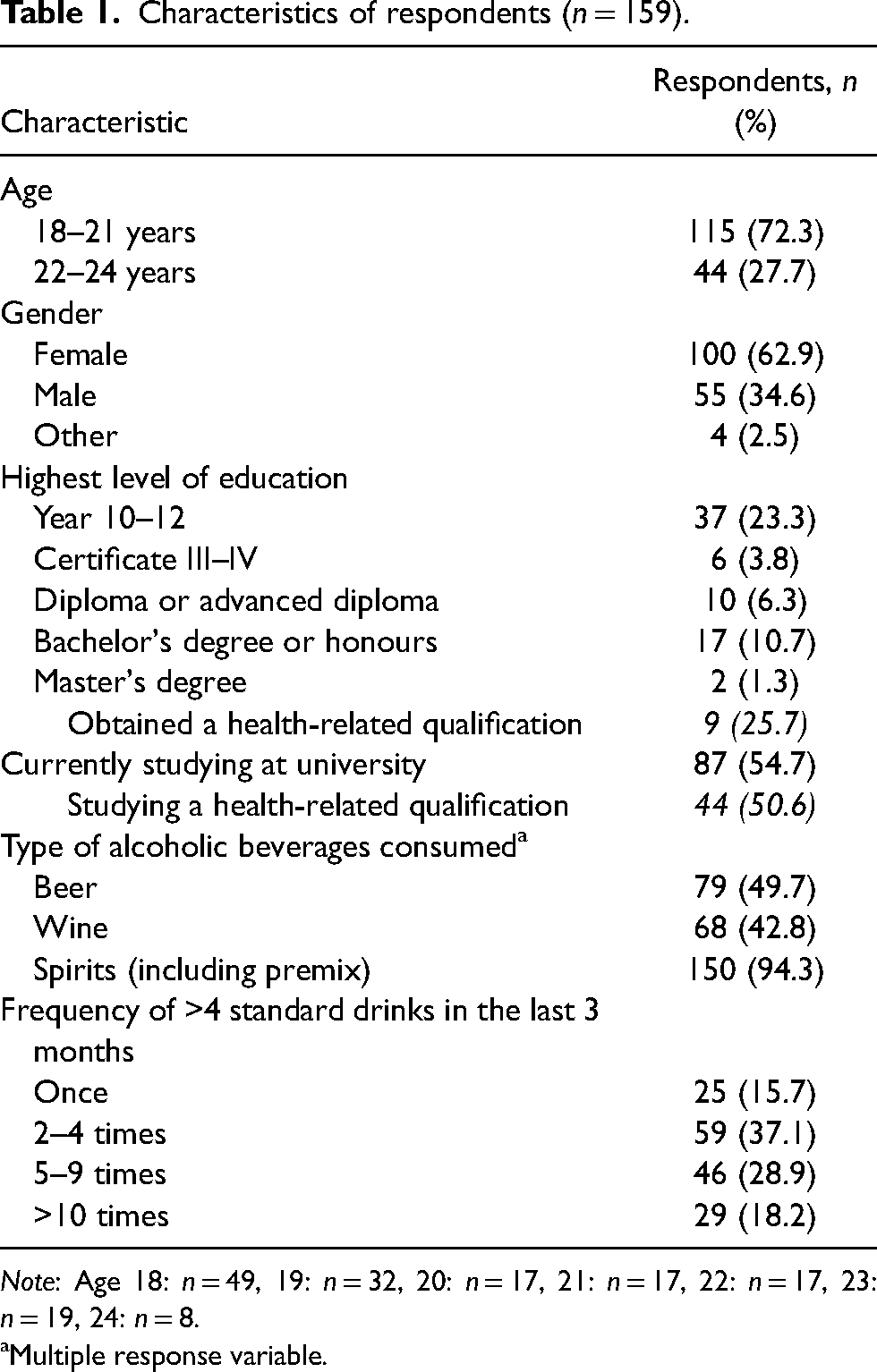
Note: Age 18: n = 49, 19: n = 32, 20: n = 17, 21: n = 17, 22: n = 17, 23: n = 19, 24: n = 8.
Multiple response variable.
Awareness of low alcohol beverages
The mean estimated LAB %ABV cutoff was 5.2 ± 6.5% for beer, 9.3 ± 7.6% for wine and 18.1 ± 12.8% for spirits (Figure 1). Only 13 (8.2%), 15 (9.4%) and 10 (6.3%) respondents correctly identified a %ABV ≤1.15% for beer, wine and spirits, respectively.
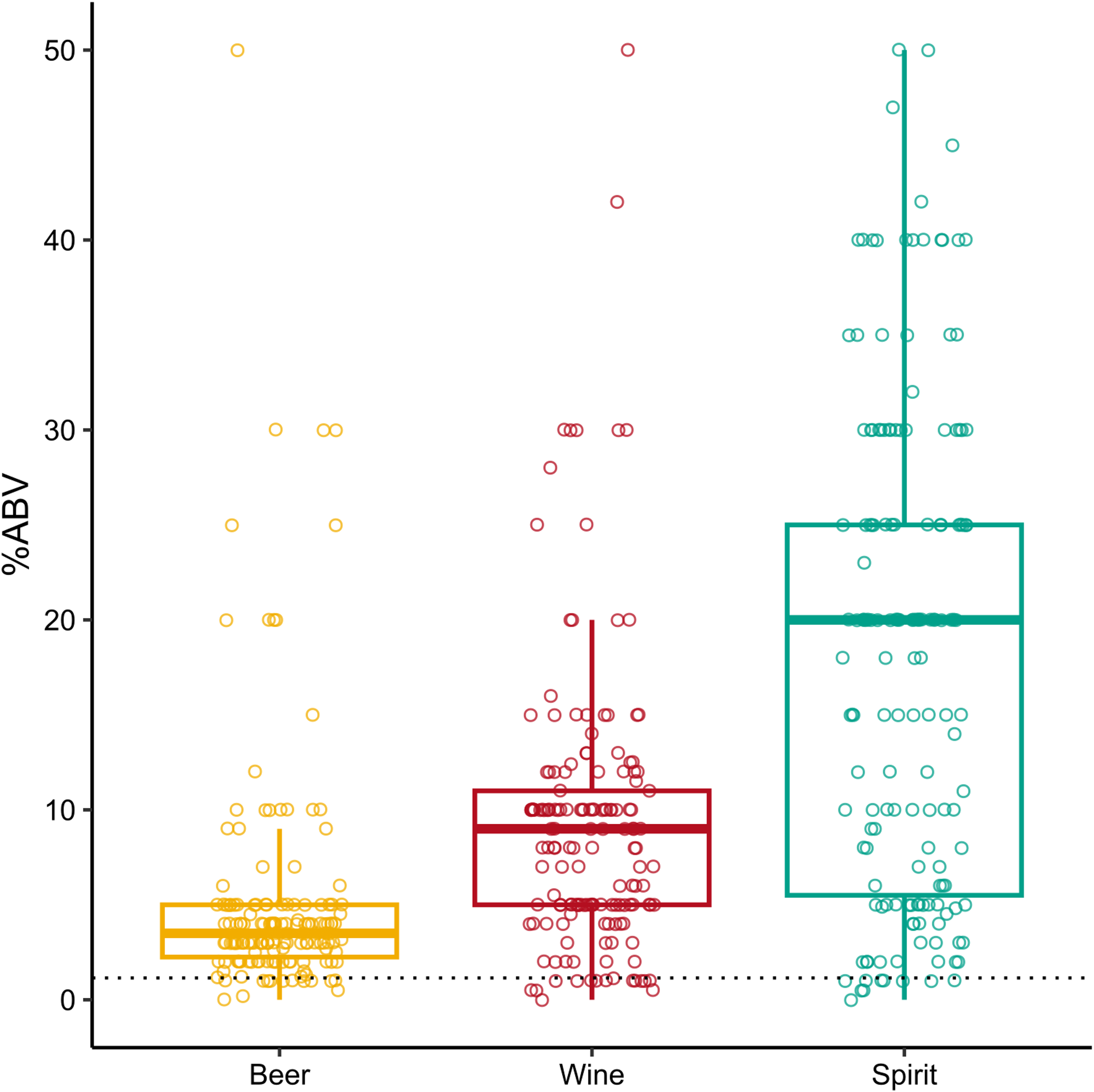
Percent alcohol by volume (ABV) considered to be the cutoff low alcohol beer, wine and spirits (dotted line indicates 1.15% ABV, the strength at which a beverage can no longer be represented as a LAB in Australia).
In the past three months, respondents recalled seeing: LAB advertising (n = 74, 46.5%); LAB promotions (n = 40, 25.2%); people not in their peer group consuming LABs (n = 40, 25.2%); and their peers consuming LABs (n = 29, 18.2%). However, 59 respondents (37.1%) did not recall seeing LABs in any of these capacities.
Consumption of low alcohol beverages and associated contextual factors
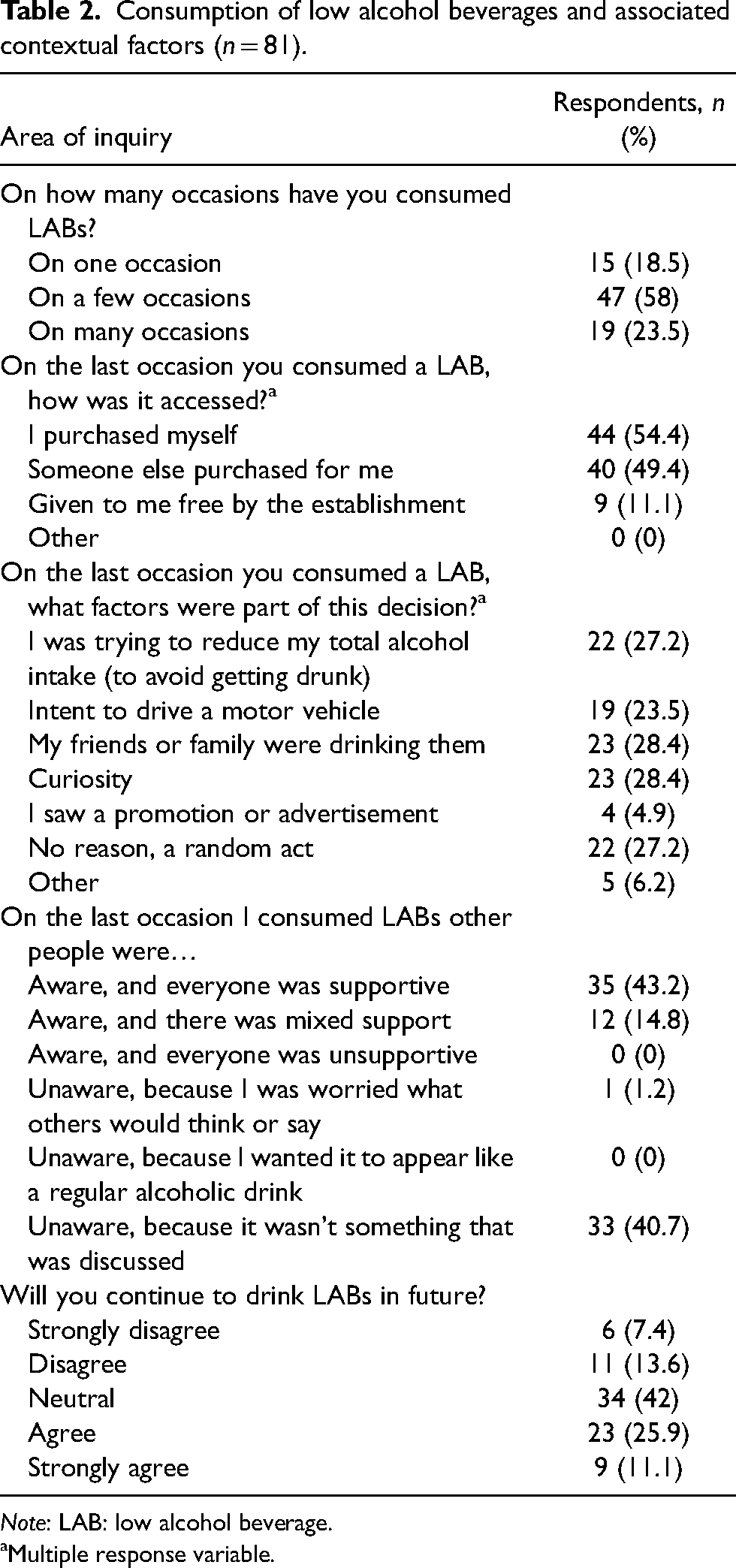
Overall, 81 respondents (50.9%) indicated they had previously consumed LABs. Table 2 outlines the frequency of consumption, method of access, attitudes towards future LAB consumption, factors influencing the choice to consume LABs and peer awareness of LAB consumption for these individuals. Most respondents consumed LABs on more than one occasion and were influenced by a range of factors.
Consumption of low alcohol beverages and associated contextual factors (n = 81).
Note: LAB: low alcohol beverage.
Multiple response variable.
Respondents who indicated drinking beer (χ2 = 4.59, p = .032) and wine (χ2 = 4.16, p = .041) were significantly more likely to have previously consumed a LAB. No significant differences for previous LAB consumption were observed for those who indicated drinking spirits; level of education; having obtained a health-related qualification; studying a health-related qualification; age; gender; or consideration of reducing the personal risk of alcohol-related harm.
Non-consumption of low alcohol beverages and associated contextual factors
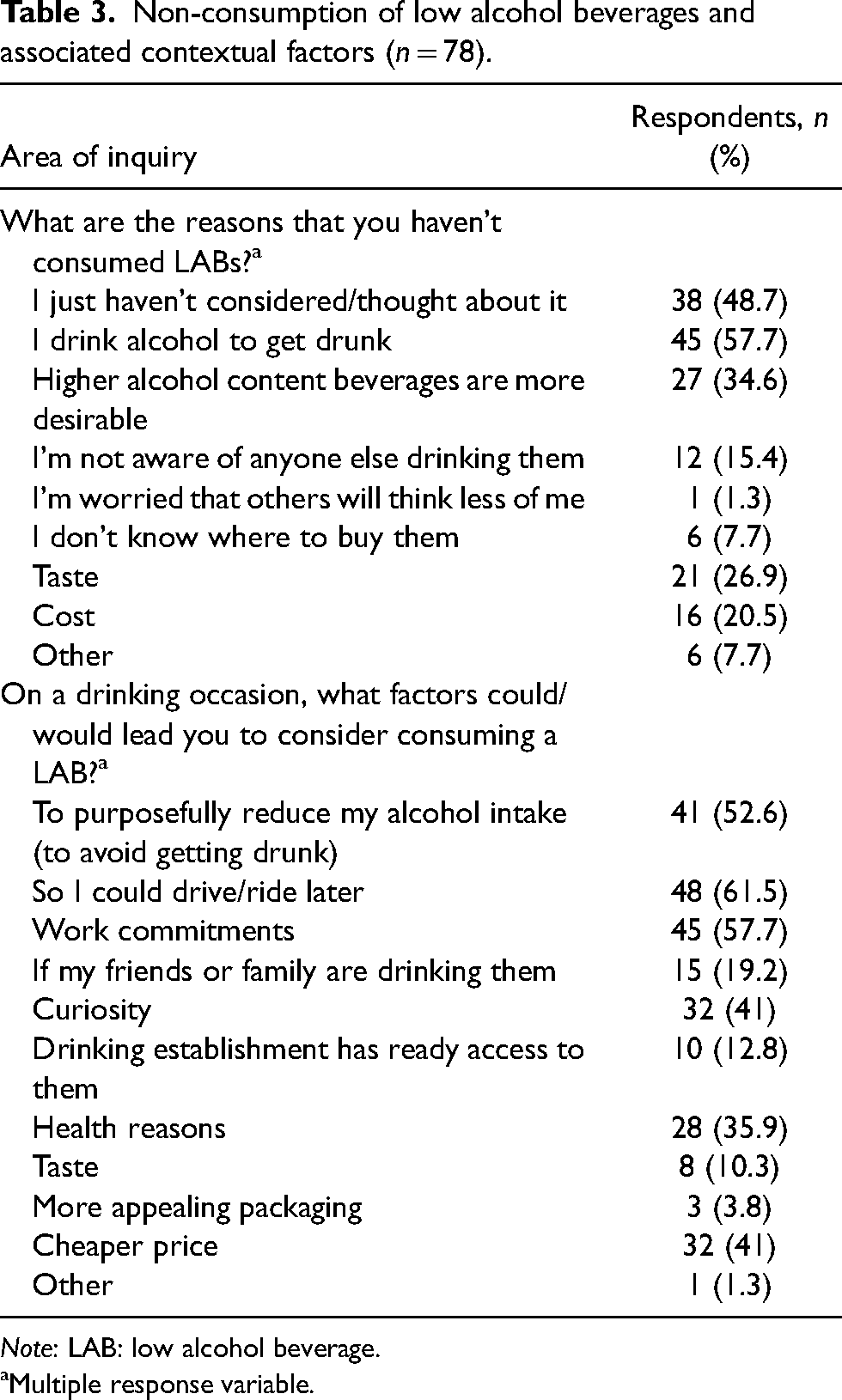
Overall, 78 respondents (49.1%) indicated having never consumed LABs. Table 3 outlines respondents’ reasons for not consuming LABs and factors that may influence future consumption of these products. Most respondents had not consumed LABs because regular alcoholic products enable intoxication and they had never contemplated these products as an alternative.
Non-consumption of low alcohol beverages and associated contextual factors (n = 78).
Note: LAB: low alcohol beverage.
Multiple response variable.
Perceptions of low alcohol beverages reducing alcohol consumption
Most respondents indicated giving ‘some’ (n = 73, 45.9%) or ‘a lot’ (n = 60, 37.7%) of consideration to reducing their personal risk of alcohol-related harm when drinking. In contrast, 26 respondents (16.4%) indicated giving ‘no’ consideration to reducing their own risk of alcohol-related harm when drinking. Respondents' concerns about a range of alcohol-related harms occurring in society are outlined in Supplementary File Table S3.
On an occasion when respondents are drinking alcohol, many agreed (n = 73, 45.9%) and strongly agreed (n = 28, 17.6) that consuming LABs would reduce their total alcohol consumption. In contrast, 28 respondents (17.6%) had neutral feelings, 21 respondents (13.2%) disagreed and nine respondents (5.7%) strongly disagreed. Similar results were found when respondents were asked if consuming LABs would reduce the alcohol consumption of others: 100 respondents agreed (62.9%), 37 had neutral feelings (23.3%) and 22 disagreed (13.8%).
Predictors of low alcohol beverage consumption
The likelihood of having consumed a LAB previously was higher for those who indicated they: were very concerned about alcohol-related productivity loss and workplace absence (OR = 4.6, 95% CI = [1.1–18.5], p = .033), recalled their peers drinking LABs (OR = 4.4, 95% CI = [1.5–13.1], p = 0.008), drink wine (OR = 2.1, 95% CI = [1.01–4.4], p = .046). The likelihood of having consumed an LAB previously was lower for those who strongly agreed LABs would reduce their total alcohol consumption on a drinking occasion (OR = 0.14, 95% CI = [0.02–0.8], p = .028). Full results of the binomial logistic regression (predictors of previous LAB consumption) are presented in Supplementary File Table S4.
Discussion
This study explored young Australian risky drinkers’ awareness, perceptions and behaviours towards LAB products. Overall, approximately half of the young risky drinkers surveyed had previously consumed LAB products, with most doing so only on a few occasions. Despite this, few respondents could correctly indicate the cutoff strength of LAB products. Two thirds of participants agreed that LAB products would assist to moderate alcohol consumption behaviours for themselves and their peers. These findings highlight the potential for LABs to moderate harmful drinking behaviours of young Australian adults.
The present results indicate that some young Australian risky drinkers consume LAB products. An individual's choice to consume LABs was positively influenced by several factors, including supportive social interactions (i.e. friends and family), curiosity and the purposeful intent to reduce alcohol intake. Indeed, recent international evidence indicates a desire to reduce alcohol consumption and improve health may be important factors contributing to the uptake of LABs (Waehning and Wells, 2024). Investigations into the alcohol consumption patterns of young Australian drinkers (aged 18–24 years) indicate the number abstaining from alcohol in the previous 12 months has increased (9.7% abstaining in 2001 vs. 22.9% in 2022–2023), and the number consuming more than four standard drinks on any one day has decreased (57.3% exceeding guidelines in 2001 vs. 40.8% in 2022–2023) (Australian Institute of Health and Welfare, 2024). Moderation of alcohol consumption by some young adults may reflect broader social shifts (Whitaker et al., 2023; Burgess et al., 2022; Vashishtha et al., 2020). For example, the desire for autonomy and self-control (Whitaker et al., 2023; Burgess et al., 2022) may be redirecting individuals towards lower strength alcoholic alternatives.
Despite reductions in risky drinking behaviours, 18–24-year-old Australians remain the age group most likely to drink at levels considered risky for their immediate health (Australian Institute of Health and Welfare, 2024). Indeed, many young drinkers indicate they consume alcohol with the specific intent to become intoxicated (Biagioni et al., 2017; Advocat and Lindsay, 2015). Consistent with this, many respondents in the current study indicated that ‘drinking to get drunk’ was a factor preventing them from consuming LAB products, and that beverages with a higher alcohol content were perceived as more desirable. Studies have shown that products displaying low alcohol content are perceived as less appealing and enjoyable (Chrysochou, 2014; Porretta and Donadini, 2008; Meillon et al., 2010; Vasiljevic et al., 2018b, 2018c; Masson et al., 2008). However, when individuals are blinded to descriptors, low-strength beverages can be perceived as equally enjoyable compared to higher strength beverages (Segal and Stockwell, 2009; Naspetti et al., 2020). Young drinkers’ perceptions of LAB products are not likely to be shaped by their personal experience consuming these products. Many respondents who had not consumed a LAB indicated having no consideration or thought about these products. Recently, prior exposure to non-alcoholic products has been demonstrated to improve perceptions of these options (Day et al., 2024). Therefore, strategies promoting exposure of LAB products to young drinkers in environments where alcohol is consumed may support uptake, acceptance, and normalisation of these products in these settings, even in individuals who are yet to consider them as a viable alternative.
The LAB market has rapidly expanded in Australia (Endeavour Group, 2022; IWSR Drinks Market Analysis, 2023a) and presents an opportunity for the industry to potentially align with international alcohol harm-reduction efforts (World Health Organization, 2010). However, the focus of industry marketing strategies to date has been to promote brand awareness, attract new customers and maintain profitability (Pierce and Stafford, 2021; Miller et al., 2021) in environments where alcohol may not have been previously consumed (Vasiljevic et al., 2018a; Nicholls, 2023). The present data indicates many respondents recalled seeing advertisements or promotions for LAB products. However, a recent audit of licensed venues in an Australian city found few LAB product options available at the point of sale, and no promotion of these products was identified in any venues (Palmer et al., 2023). This suggests when young drinkers recall advertising or promotion of LABs it is not from exposure to environments where they are drinking alcohol. Further work is required to determine the usefulness of these products as an alternative to regular alcoholic products in licensed environments.
In this study, approximately two thirds of respondents agreed that LABs would assist them to reduce their alcohol consumption on a drinking occasion. Indeed, previous research indicates individuals feel more likely to consume LABs as an alternative to regular alcoholic beverages rather than in addition to their typical alcohol consumption (Nicholls, 2023). European evidence also suggests the introduction of no or low-strength products was associated with decreased purchases of higher-strength products (Jané Llopis et al., 2021, 2022; Anderson and Kokole, 2022a, 2022b). In addition, individuals with motivation to reduce their alcohol consumption find products lower in strength more appealing (Vasiljevic et al., 2018b). These findings provide encouraging evidence for the potential of LAB products to moderate alcohol consumption.
The survey measures used in this research were designed by the research team and did not undergo formal validation. Additionally, it is important to recognise the attitudes, perceptions and behaviours captured in this study come from a narrow population of young drinkers and may not reflect a broader demographic (i.e. those of different educational backgrounds or health-related interests). Nonetheless, exposure to LAB products in environments where alcohol is consumed will either result in no change to alcohol consumption or show potential to reduce alcohol consumption in young risky drinkers. As such, future research should prioritise the extent to which risky drinking behaviours can be moderated by LAB options available to young drinkers in environments where alcohol is consumed.
This study investigated young risky drinkers’ awareness, perceptions and behaviours towards LAB products. Findings indicate that LAB products have the potential to play a role in moderating the alcohol consumption of young Australian risky drinkers. However, the majority of young risky drinkers have consumed LABs, on a limited number of occasions, or not at all. Further work is required to explore whether increased exposure to LABs influences alcohol consumption behaviours. Attempts to normalise and increase social acceptance of LAB products as alternatives to regular alcoholic beverages in drinking environments are warranted.
Supplemental Material
sj-docx-1-nah-10.1177_02601060241296168 - Supplemental material for Young Australian drinkers’ awareness, perceptions and behaviours towards low alcohol beverage products
Supplemental material, sj-docx-1-nah-10.1177_02601060241296168 for Young Australian drinkers’ awareness, perceptions and behaviours towards low alcohol beverage products by Blake Palmer, Ben Desbrow and Christopher Irwin in Nutrition and Health
Footnotes
Authors’ contributions
All authors were responsible for designing, reviewing and editing the manuscript. BP was responsible for data collection, analysis and manuscript drafting. CI was responsible for overseeing the data analysis, and BD was responsible for providing analytical advice.
Availability of data and materials
The data that support the findings of this study are available from the corresponding author upon reasonable request.
Consent for publication
All authors consent for this research to be published in Nutrition and Health.
Declaration of conflicting interests
The authors declared no potential conflicts of interest with respect to the research, authorship, and/or publication of this article.
Ethical approval
This study was approved by the Griffith University Human Research Ethics Committee (Ref No: 2021/900).
Funding
The authors received no financial support for the research, authorship, and/or publication of this article.

Supplemental material
Supplemental material for this article is available online.
References
Supplementary Material
Please find the following supplemental material available below.
For Open Access articles published under a Creative Commons License, all supplemental material carries the same license as the article it is associated with.
For non-Open Access articles published, all supplemental material carries a non-exclusive license, and permission requests for re-use of supplemental material or any part of supplemental material shall be sent directly to the copyright owner as specified in the copyright notice associated with the article.
