




Abstract
Introduction
Diet plays an important role in our health and welfare, and interest in healthy eating is growing. In Kazakhstan, meat and dairy products are important ingredients in traditional cuisine. During 1992–2000, the most consumed animal-derived foods were milk (75%), followed by meat (20%) and eggs (below 5%) (Liang et al., 2020).
Nowadays, the role of meat and meat products in human diet is extensively discussed. Over the last decade, it was repeatedly suggested that high consumption of red and processed meat is associated with an increased risk of several non-communicable diseases including type 2 diabetes mellitus (DM), cardiovascular disease and some forms of cancer (Wolk, 2017). Moreover, increasing global meat production leads to an adverse impact on the environment. Thus, there is a general trend to reduce meat consumption, especially red meat, and substitute it at least partly with chicken meat and plant-based analogues (Banovic and Sveinsdóttir, 2021; Collier et al., 2021).
Whereas the total fish consumption in the world has increased over the past 50 years, some countries of the former Soviet Union tended to consume less fish (Supartini et al., 2018). Fish consumption is associated with healthy eating because fish is the main dietary source of the n-3 long-chain polyunsaturated fatty acids (n-3 PUFA) and also contain vitamin D, a number of minerals and high-quality protein (Chen et al., 2022). In contrast to some other Asian countries, inhabitants in Kazakhstan consume more meat than fish (York and Gossard, 2004). For example, fish consumption in children aged 9-10 years constituted 2% of total protein intake, whereas meat – 43% (Sharmanov et al., 2018).
Unhealthy eating including overconsumption of fast food, sugar and salty snacks, is common among adolescents and young adults (De Vet et al., 2015). This might lead to an increased risk of the development of chronic conditions. Investing in adolescent and young adult healthy eating can reduce the risks of development of non-communicable diseases in the future. Consumption of animal-based products among young people in grassland countries or regions is however not well studied.
The aim of this study was to investigate the dietary habits of young adults in Kazakhstan. Specifically, we focused on the frequency of meat and fish consumption among university students in different regions of Kazakhstan.
Materials and methods
Consumption frequency and socio-demographic factors
The assessment of meat and fish consumption was based on the food frequency questionnaire (in Russian). Following food items related to the consumption of fresh red meat, processed meat, chicken, and fish were included: fresh meat intake included beef, pork, horsemeat, lamb, goat, and poultry, boiled or fried; processed meat items included sausages and salami; fish and seafood consumption included salmon types, carps, and perch types, as well as molluscs and crustaceans. Answer “other types” were also included. For each food item, the participants were asked to select the following frequency: 1) every day; 2) 4–6 times per week; 3) 2-3 times per week; 4) ones per week; 5) 2-3 times per month; 6) ones per month; 7) less than ones per month; 8) never. Then, the answers were categorized into three categories: i) 4–7 times per week; ii) 1–3 times per week; iii) less than once per week. Consumption quantity per week was estimated as (reported times per week * 150) as each serving of unprocessed meat and fish in Kazakhstan is 150 g. Alcohol intake and smoking habits were not considered in this study. A questionnaire was pretested by senior researchers from the Central and North regions before using it in the survey.
Region of residence, age, gender, height, weight, and parental education were also self-reported. The following regions were included: North (cities Kostanay, Petropavlovsk, Kokshetau, Shchuchinsk); West (Aksai, Uralsk, Aktobe), Central (Nur-Sultan, Karaganda), South (Almaty, Turkistan, Shymkent), and East (Pavlodar, Semey, Ekibastuz) (Figure 1). Body mass index (BMI) was calculated from self-reported weight and height, and weight status was categorized as i) under-weight (<18.5 kg/m2), ii) normal weight (18.5–24.9 kg/m2), iii) overweight (25.0–29.9 kg/m2) and iv) obese (≥30 kg/m2).
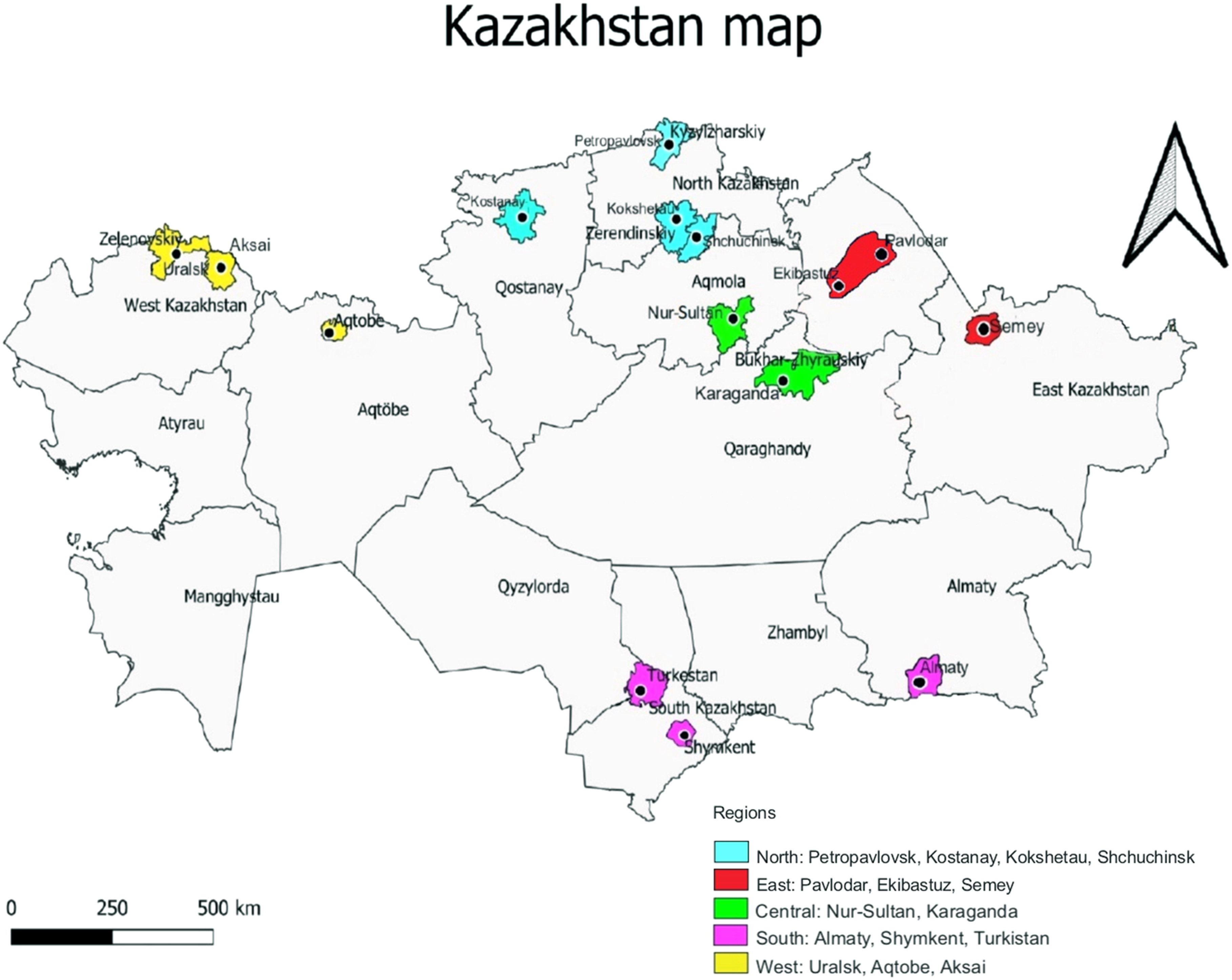
Map of Kazakhstan with the regions where meat and fish consumptions were assessed.
Participants and informed consent
A cross-sectional study was conducted over the largest universities in five regions of Kazakhstan (Figure 1). The study protocol was approved by the local commission on bioethics of the West Kazakhstan Medical University named after Marat Ospanov, meeting number 4, protocol 4, assigned number 16/1 (8 April 2021). Requests to complete the online food frequency consumption questionnaires were sent out to the students of by e-mail and via WhatsApp groups. The participants were informed about the purpose and duration of the study, data protection, and data retention. The present study included questions about food consumption and did not include the processing of sensitive personal data. Participation in the study was voluntary and anonymous. No responses to the questionnaires used in this study include information that can be traced to, or used to identify any individual. Data were collected in May 2021.
A total of 1069 young adults participated in the study. Of these, 83 participants (7.6%) failed to fill in all the data required. The answers from 986 participants at the age of 16 to 30 years were included in the study.
Statistical analysis
Data were analysed with SAS Version 9.4 (SAS Institute Inc., Cary, NC, USA). Descriptive statistics were used to determine absolute and relative frequencies of categorical variables. Bivariate associations of the self-reported fish and meat frequency consumption (percentages) with the region, sex, fathers’ and mothers’ education were estimated using a series of chi-square tests. Then, differences in calculated consumption quantity per week were evaluated using the mixed model with the fixed effect of regions, sex, fathers’ and mothers’ education. Weight category and age were not included in the final model due to lack of significance and lack of any changes in the model outcomes. Association between BMI, and meat and fish consumption frequencies was estimated using the mixed model with the fixed effect of regions, sex, fathers’ and mothers’ education, and meat type and fish consumption frequencies. The level of statistical significance was set at p < 0.05.
Results
Characteristics of the study population and frequency of meat and fish consumption
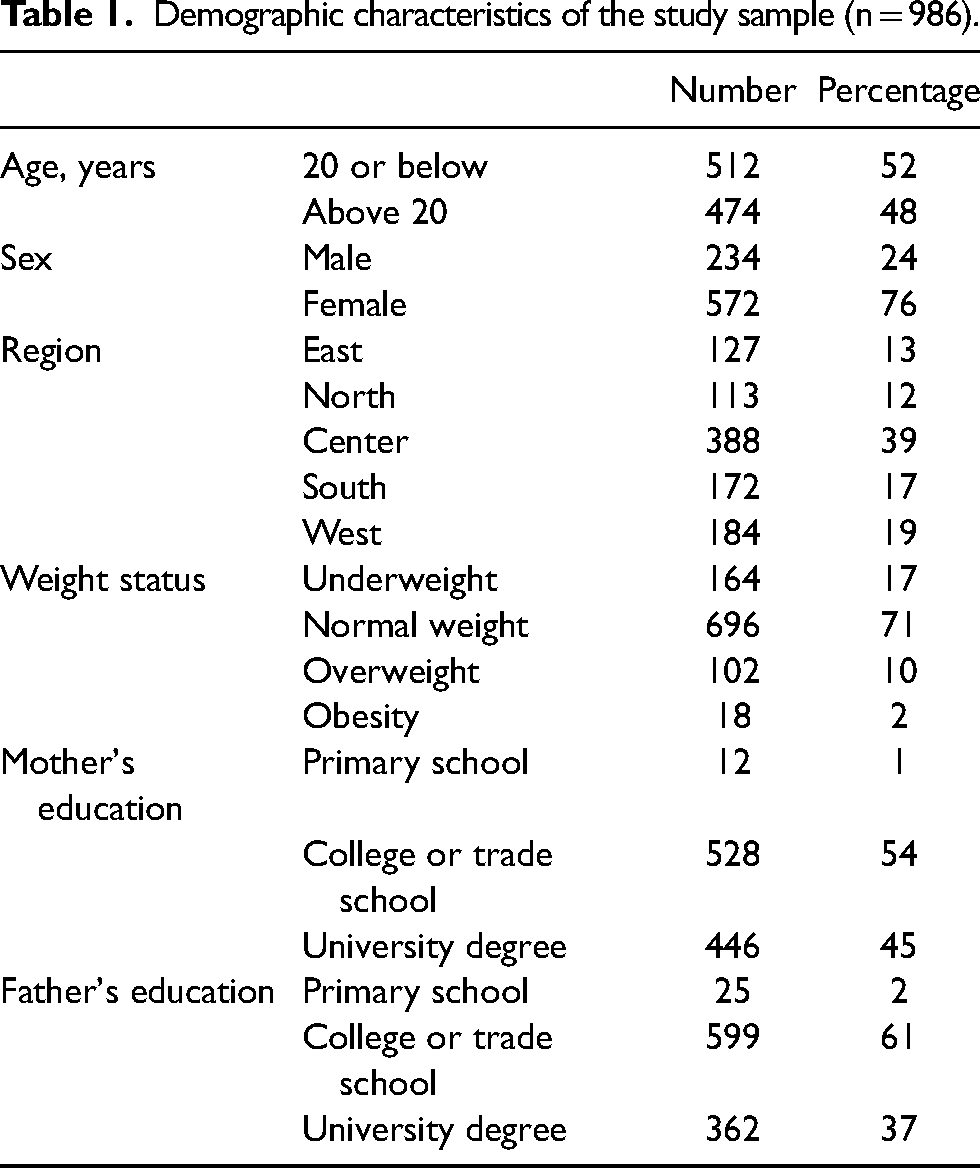
The main socio-demographic characteristics of the participants are presented in Table 1. The highest number of answers were collected from the Central region of Kazakhstan (39%). Among the participants, there were more women (76%). Further, 17% of participants were categorized as underweight and 12% were overweight or obese.
Demographic characteristics of the study sample (n = 986).
Among 986 participants, six (0.6%) never eat meat, and 24% of the participants eat meat every day. Reported frequencies of consumption of different meat and fish type are presented in Figures 2 and 3, respectively. The most commonly consumed meat-types were beef and poultry, followed by horse and lamb (Figure 2). Pork and goat meats were less consumed. On average, the participants consumed beef 2.4 times per week, poultry – 1.6 times per week, horse and lamb – ones per week, pork – 0.3 times per week, and goat – 0.2 times per week. It appears that 77% and 67% of these surveyed never ate pork and goat, respectively. Boiled meat was consumed slightly more often, 1.8 times per week, than fried meat, 1.5 times per week (data not shown).
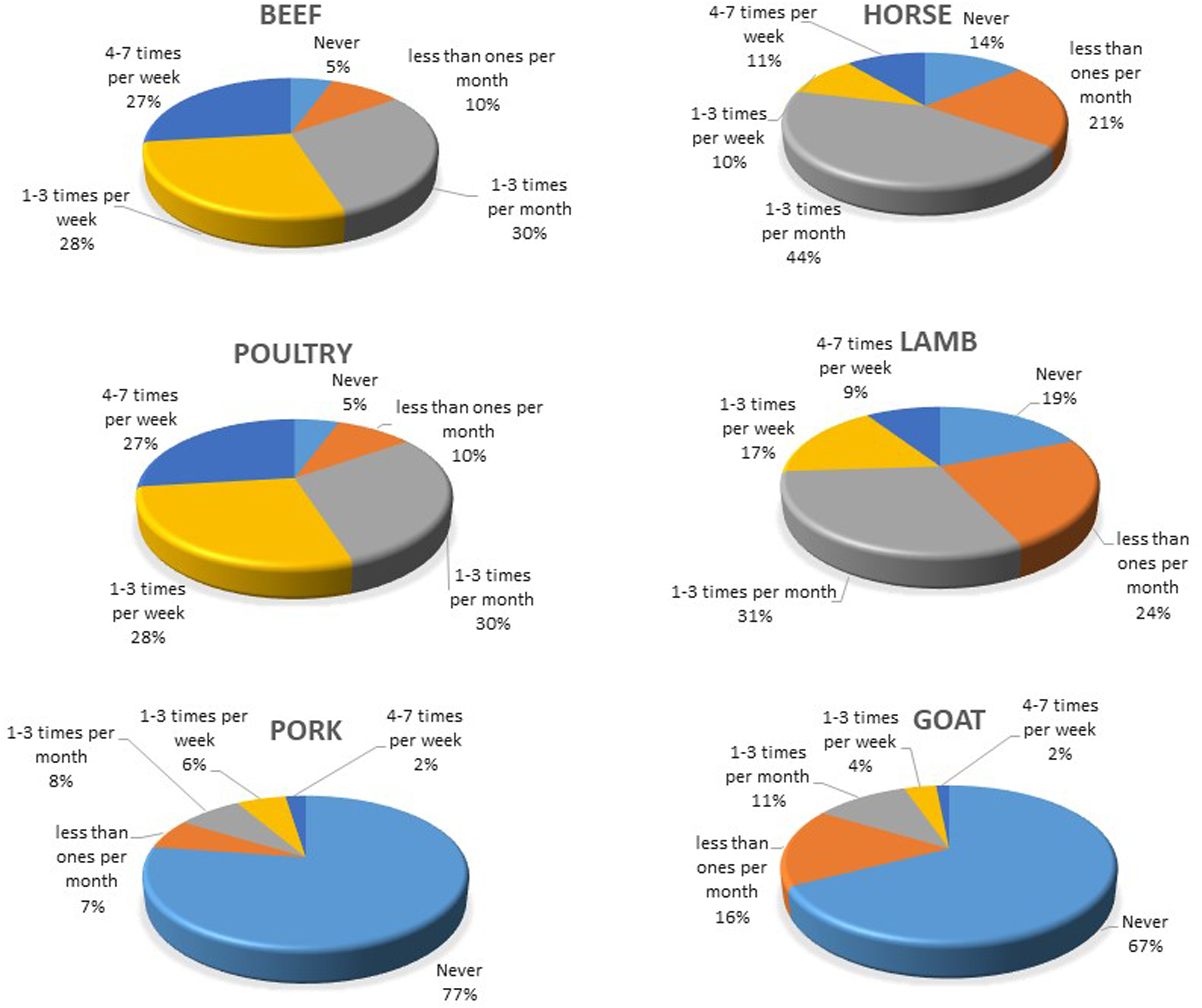
Self-reported consumption frequency of beef, poultry, pork, lamb, horse and goat meat among young adults in five regions of Kazakhstan (n=986).
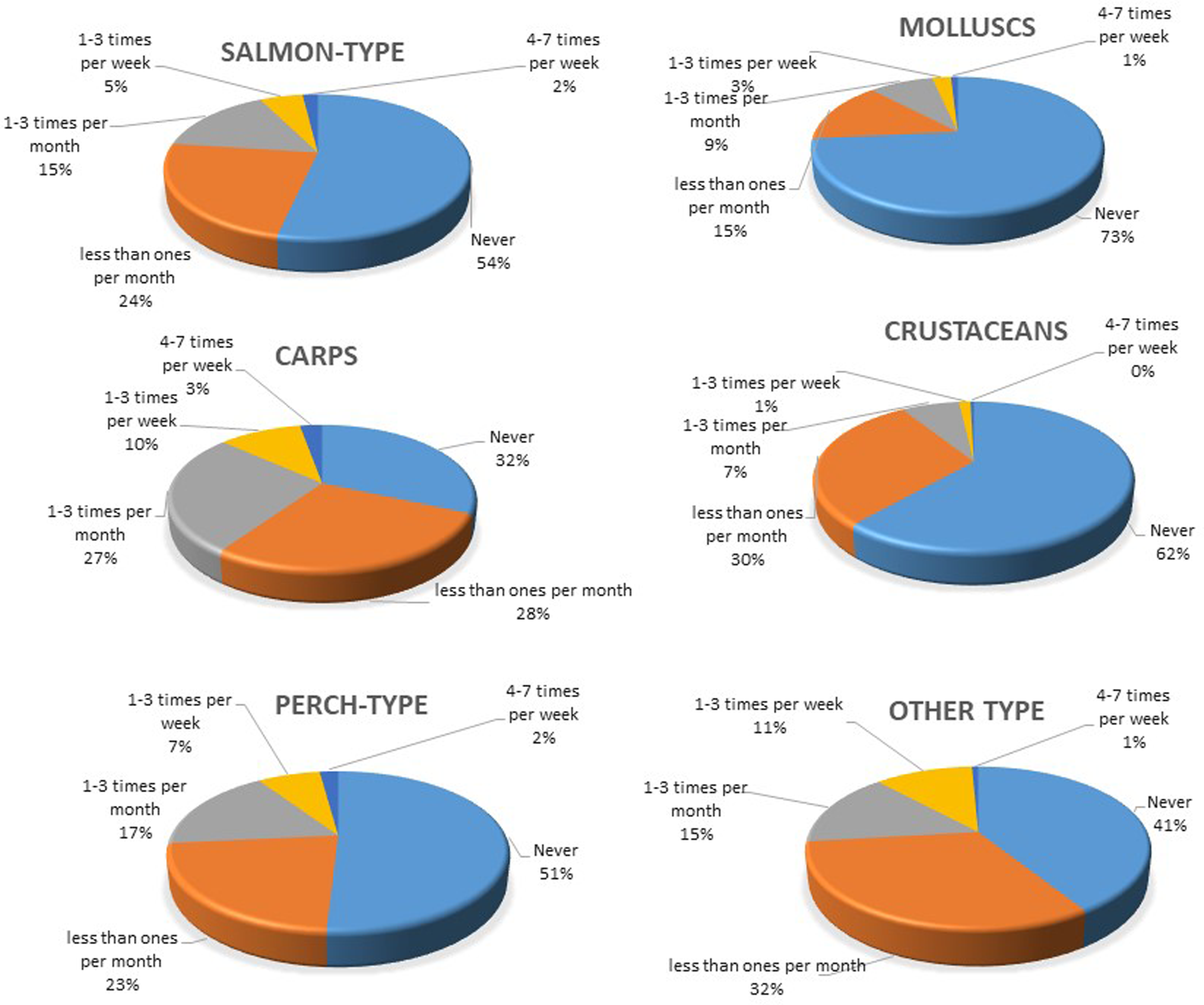
Self-reported consumption frequency of salmon, perch, carp, molluscs, crustaceans and other types among young adults in five regions of Kazakhstan (n=986).
Generally, fish consumption frequency was lower compared to meat. Among the participants, 88 (9%) never eat fish and seafood, and 77% of the participants eat fish and seafood more seldom than once per month. Only 8.6% of the participants in our study reported fish consumption frequency of 2-3 times per week. The frequency of carp consumption, 0.5 times per week, was greater compared to the consumption of other types of fish (Figure 3).
Effect of socio-demographic characteristics on meat and fish consumption frequency
Meat and fish consumption frequencies per sex, parental education, and region are presented in Table 2. According to the chi-test, beef consumption frequency did not differ between the regions (p = 0.085) and sex (p = 0.186) and was not associated with either mother's (p = 0.177) or father's (p = 0.438) education (Table 2). Poultry consumption was highest in the East and Central Kazakhstan (p = 0.038). No sex-associated differences were observed in poultry consumption frequency (p = 0.927). Mother's education was not related to poultry consumption frequency (p = 0.985), although poultry consumption frequency was lowest among participants with fathers who have a university degree (p = 0.038). Horse consumption frequency tended to be higher in the East and Central Kazakhstan (p = 0.053). Male participants were less likely to consume horse meat more than 4–7 times per week compared to female participants (p = 0.007). Neither mother's (p = 0.232) nor father's (p = 0.774) educations were associated with horse consumption frequency. Lamb consumption frequency did not differ between the regions (p = 0.118) and was not associated with mother's (p = 0.325) and father's (p = 0.073) education. Female participants were more likely to consume lamb 4–7 times per week compared to male participants (p = 0.009). Goat consumption frequency was lowest in the North Kazakhstan (p = 0.022). No sex-associated differences were observed in goat consumption frequency (p = 0.944). Mother's education was not related to goat consumption frequency (p = 0.136), although the frequency was lowest among participants with fathers with a primary school education (p = 0.037). Pork consumption frequency was highest in the North Kazakhstan (p = 0.005). Pork consumption did not differ between sexes (p = 0.282), and was not associated with mother's education (p = 0.564). Pork consumption frequency was higher among participants with fathers with a primary school education (p = 0.007).
Bivariate associations of the self-reported frequency consumption of fish and meat with demographic factors.
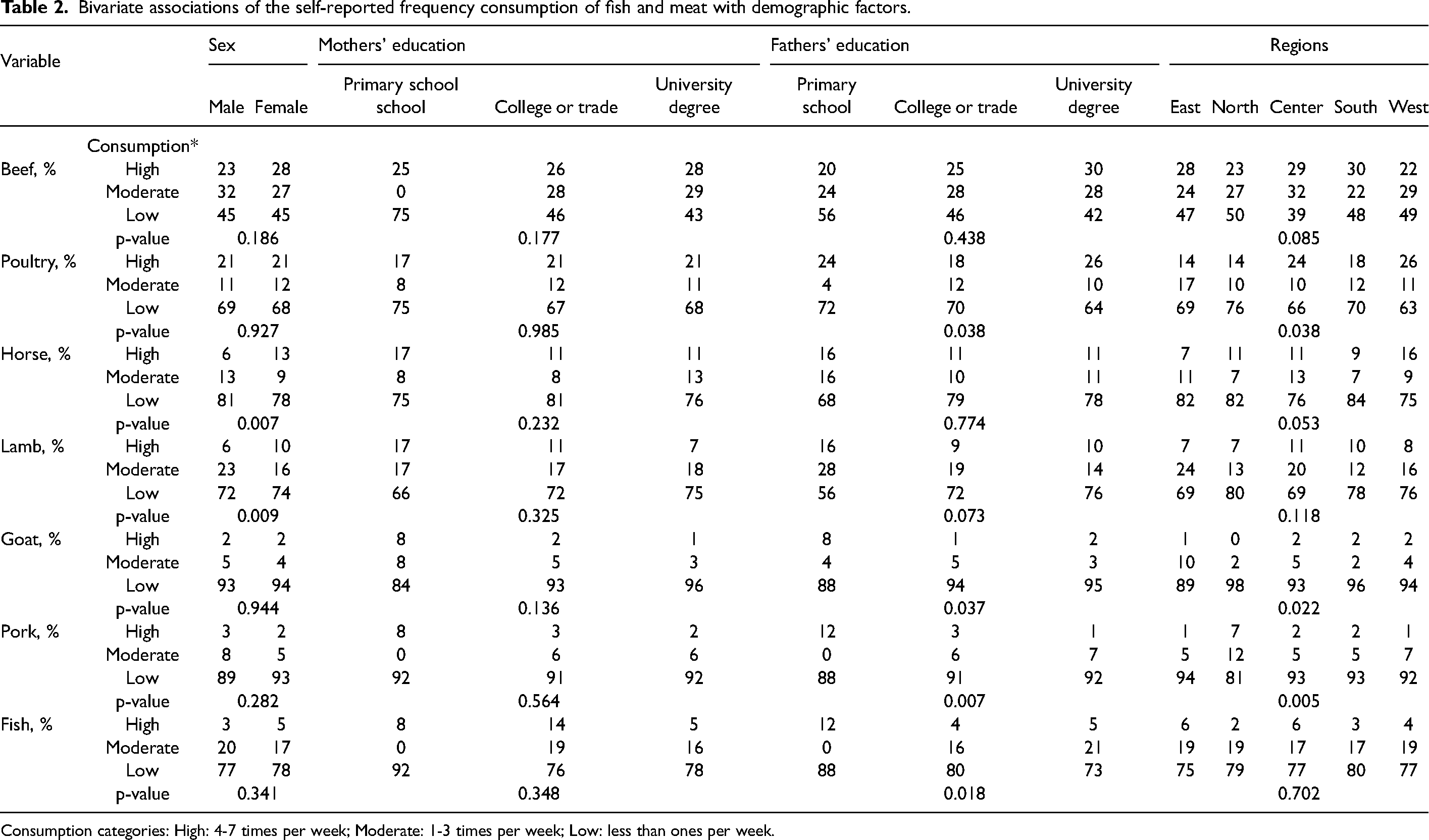
Consumption categories: High: 4-7 times per week; Moderate: 1-3 times per week; Low: less than ones per week.
Total fish consumption frequency did not differ between the regions (p = 0.702) and sexes (p = 0.341) and was not associated with mother's education (p = 0.348). The fish consumption frequency was highest among participants with fathers who have a primary school education (p = 0.018). We could not relate the consumption frequency of different fish types to demographic characteristics due to the low number of participants consuming fish.
Effect of socio-demographic characteristics on calculated meat and fish consumption quantity per week
Differences in calculated consumption quantity per week between the regions are presented in Table 3. According to ANOVA test, the quantity per week of total meat, beef, lamb, goat, and fish did not differ between the regions (p > 0.05). The highest poultry and horse meat consumptions were recorded in the East region (p = 0.012 and p = 0.034, respectively). Pork consumption was highest in the North region (p < 0.001).
Comparison of recommended consumption of meat products with calculated consumption* by participants from 5 regions of Kazakhstan (n = 986). Data are presented as least squares means ± standard errors.
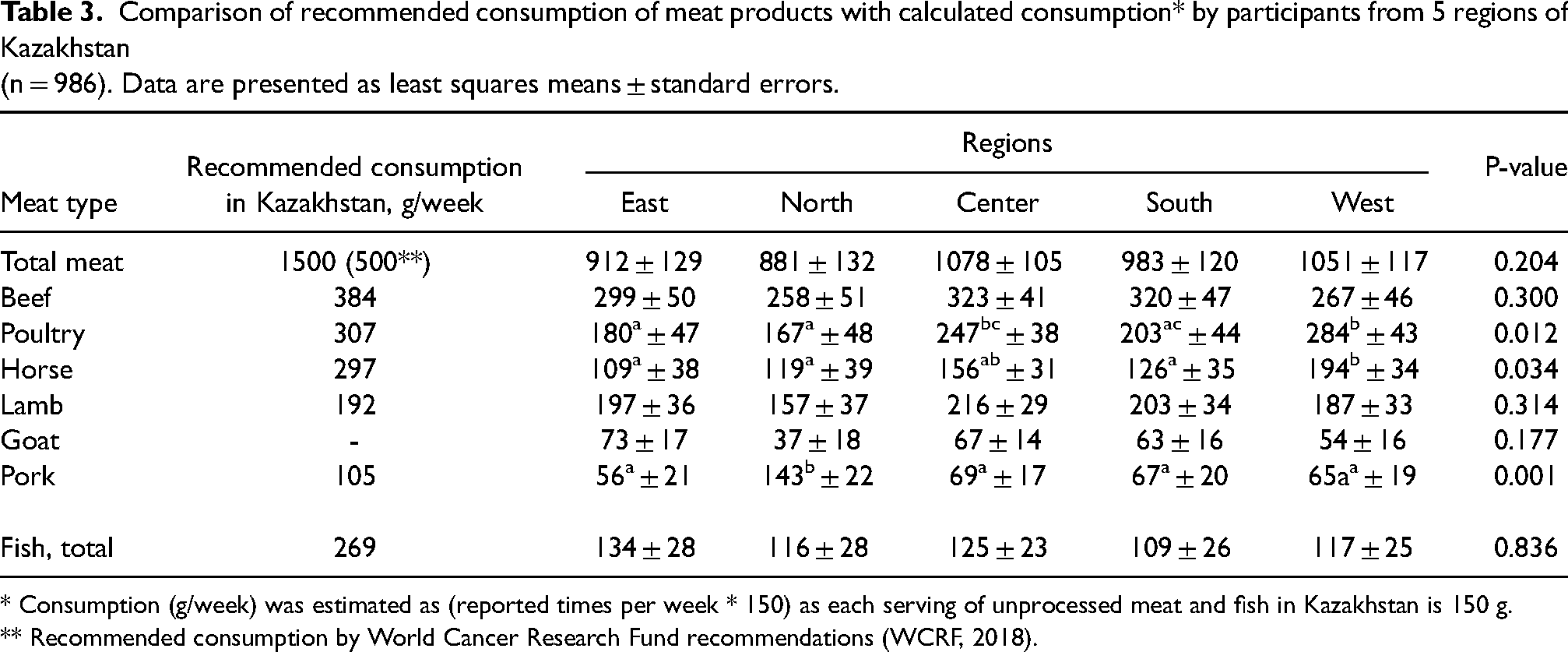
* Consumption (g/week) was estimated as (reported times per week * 150) as each serving of unprocessed meat and fish in Kazakhstan is 150 g.
** Recommended consumption by World Cancer Research Fund recommendations (WCRF, 2018).
Total meat consumption was similar between male and female participants (p = 0.190) and was not associated with mother's (p = 0.398) and father's (p = 0.200) education. Similarly, beef, lamb, goat, and fish consumption were not associated with any of the demographic factors (p > 0.05 for all). Horse consumption was highest among girls (p = 0.020). Poultry consumption was lowest among participants with fathers with a college or trade education (p = 0.021), whereas pork consumption was higher among participants with fathers with a primary school education (p = 0.050). No other significant associations were observed.
BMI
No differences in BMI in relation to beef (p = 0.441), horse (p = 0.099), goat (p = 0.220), poultry (p = 0.131) and fish (p = 0.498) consumption frequency were detected. Frequent lamb consumers had lower BMI (p = 0.047), and frequent pork consumers had higher BMI (p = 0.05).
Discussion
Self-reported frequency consumption is a common method to assess dietary habits (Thompson and Subar, 2017). In the present study, we used this method to conduct a survey at the national level on a sample of young Kazakhstani consumers from five regions. We focused on meat consumption because meat eating in Kazakhstan and other countries with nomad culture is identified with cultural norms. We also included the frequency of fish consumption because fish consumption is associated with a healthy diet.
Meat is a good source of a wide range of nutrients such as proteins with the optimal profile of essential amino acid, easily absorbed haem iron, zinc, selenium, and vitamins B. However, health risks have been associated with the high consumption of red meat and processed meat products (Wolk, 2017). Frequent consumption of meat, especially processed meat, has been consistently associated with an increased risk of type 2 DM in prospective studies (Song et al., 2004; Würtz et al., 2021). Moreover, processed meats might lead to high sodium intake, which increases risks for high blood pressure, heart disease, and stroke (Delgado et al., 2021; Woodruff et al., 2021). To minimize the risk of development of type 2 DM, authorities in many countries suggest healthy diet and regular physical activity (Schulze and Hu, 2005). Thus, the EAT-Lancet report in 2019 called for a decrease in animal-based foods (Willett et al., 2019). According to the Nordic Nutrition Recommendations (NNR, 2012), the consumption of red meat should be limited to an average intake of 500 g/week. These recommendations are in line with the World Cancer Research Fund recommendations (WCRF, 2018) and are based on the scientific evidence regarding associations between red meat consumption and the risk of colorectal cancer development. In Kazakhstan, meat is an important part of the traditional diets, and the newest recommendations are 1500 g/week and 78.4 kg/capita (On the approval of scientifically based physiological norms of food consumption, 2016). Total meat consumption among the participants was lower than recommended consumption in Kazakhstan but almost two-fold higher than the World Cancer Research Fund recommendations (WCRF, 2018). From 1997 to 2019, meat consumption in Kazakhstan increased by 15% (Jia and Zhen, 2021). The incidence of type 2 DM in Kazakhstan is also constantly growing (Beisembinova et al., 2021; Supiyev et al., 2016). A possible association between increased meat consumption and developing DM in Kazakhstan remains to be investigated.
Vegetarianism is a growing movement that gains popularity among adolescents and young adults. In the present study, only 0.6% of participants reported that they never consume meat, although the general prevalence of vegetarians in Asia is accounted for 19% (Hargreaves et al., 2020). Nomad diets have been unique to Kazakhstan culture, and are still followed by a large portion of the population (Aljanova et al., 2016). Approximately 24% of the participants in the present survey reported consuming meat every day, with beef and poultry being most commonly consumed. Horse and lamb meat were also consumed frequently in Kazakhstan, although the majority of the consumers from other countries are only occasional consumers of these meat types (Belaunzaran et al., 2015; de Andrade et al., 2016). Most consumers in the present study did not consider pork as their preference. The low pork consumption might be primarily related to the religious restrictions. In the present survey, we did not intend to investigate the impact of ethnicity on the preferences for meat, but we assume that pork-eaters mainly consist of the Christian population in Kazakhstan.
In the studied population, male participants consumed horse and lamb meat less frequently compared to female participants. No other sex-related differences in meat and fish consumption were observed. In contrast, other studies reported that women consume less meat compared to men and are more ready to reduce meat consumption (Beardsworth et al., 2002; Prättälä et al., 2007).
We found some significant associations between meat and fish consumption frequency and parental education. However, these associations seem to be random and difficult to explain. Generally, education level was negatively associated with meat consumption in other adult populations, including but not limited to French-speaking Switzerland (Marques-Vidal et al., 2018), Germany (Koch et al., 2019), and French-speaking men in Montreal, Canada (Trudeau et al., 2019). In contrast, a study on dietary habits of children from Moscow and Murmansk suggested that children of mothers with higher education consumed meat more frequently than the children of mothers with lower education (Aleksandrov et al., 2014). These differences between countries might be due to different nutrition recommendations and general meat image; while in Western Europe meat reduction is gaining in popularity, Kazakhstan and Russia continue considering meat as an important part of a healthy diet.
According to the Dietary Guidelines for Americans and Nordic Nutrition Recommendations (NNR, 2012), the optimal consumption of fish and shellfish is two to three times a week. Among Swedish male adolescents, 20% reported eating fish more than once a week (Åberg et al., 2009). In the present study, only 8.6% of the participants in our study reported a consumption according to these recommendations, whereas 77% of participants eat fish and seafood more seldom than once per month. In the neighbouring countries Kyrgyzstan and Uzbekistan, fish consumption is even lower, whereas inhabitants in China and Russia consume more fish than in Kazakhstan (York and Gossard, 2004). N-3 fatty acids eicosapentaenoic acid (EPA) and docosahexaenoic acid (DHA) are essential components of a healthy diet and their beneficial effects are well recognized (Campoy et al., 2012; Simopoulos et al., 1999). Oily fish is the best source of EPA and DHA. Moreover, fish is a major dietary source of vitamin D. According to Gromova et al. (2020), approximately 60% of the adult population of Kazakhstan might suffer from vitamin D deficiency. Even though vitamin D can be synthesized in human skin after exposure to sunlight, dietary vitamin D is important particularly during dark months (Kulie et al., 2009). Moreover, the high iodine levels in fish and seafood might decrease the risk of iodine deficiency, which remains highly prevalent in Kazakhstan (Kuanyshbekova, 2003).
Our data indicate that meat and fish consumption was homogeneous across regions, sex and age. Thus, it is difficult to target to a particular group to improve dietary habits and work should be initiated for general young population in Kazakhstan. It should also be emphasized that the participants in the present study did not have any education on nutrition and health during the study.
Interestingly, we found that BMI was highest among participants who reported frequent pork and low lamb consumption. Many studies demonstrated positive associations between meat consumption and risk for overweight and obesity (Wang and Beydoun, 2009). However, no difference in BMI between pork, beef and chicken consumers was previously detected (Murphy et al., 2014). Observed in the present study differences in BMI between participants with high and low pork consumption should be interpreted with caution because this type of meat is not a part of typical diet in Kazakhstan. Observed differences in BMI in relation to lamb consumption have never been previously reported.
Our study has several strengths. The majority of previous studies was focused on overall meat consumption, without considering the type of meat. Because of the existing differences in meat preferences, we considered frequency consumption of different meat types. Another strength was the geographical spread of participants over Kazakhstan. There were also potential uncertainties in our results. There are several limitations associated with dietary assessment, including self-reported food frequency questionnaires. We are also aware that consumption quantities of meat and fish calculated from shelf-reported food frequency provide only an approximate estimation of factual food consumption. Finally, the results are limited to the younger population in Kazakhstan and may be inapplicable to the general population.
Conclusions
Calculated total meat consumption among the university students in Kazakhstan was lower than recommended consumption in Kazakhstan (1500 g per week), but almost two-fold higher than World Cancer Research Fund recommendations (500 g per week). Approximately 24% of the participants reported consuming meat every day, with beef and poultry being most commonly consumed. Another relevant point is low fish consumption among the participants. Only 8.6% of the participants in our study reported consumption in line with the recommendation of fish consumption of approximately 270 g per week in Kazakhstan. Our data indicate that meat and fish consumption is fairly homogeneous across regions and sex. Thus, it is difficult to target a particular group to improve dietary habits and work should be initiated for the general young population in Kazakhstan. The next step is to describe the major drivers of current consumption habits in Kazakhstan and identify its relationship with health of general population. Moreover, the solid scientific basis of appropriate dietary recommendations for meat and fish consumption should be established. Policies to promote healthy food consumption in Kazakhstan are needed to prevent the health risks associated with low intake of the n-3 PUFA and vitamin D, and high intake of meat. It is also essential to promote healthy dietary habits, for example through the introduction of training programmes and appropriate advertisements of healthy food.
Footnotes
Acknowledgements
The authors thank all participants for their contribution to the study. The authors also thank senior researchers from involved universities for their help with recruiting participants.
Author contributions
The authors contributed to the manuscript according to the following: Conceptualization, Y.B., Y.K. and G.Z.; Methodology, V.A., Y.B., Y.K., A.I., A.M., A.B., Y.U., K.I. and G.Z.; Software, Y.K.; Validation, Y.K. and G.Z.; Formal Analysis, G.Z.; Investigation, G.Z.; Data Curation, Y.K. and G.Z.; Writing—Original Draft Preparation, G.Z.; Writing—Review and Editing, V.A., Y.B., Y.K., A.I., A.M., A.B., Y.U. and K.I.; Visualization, V.A. and G.Z.; Project Administration, G.Z.; Funding Acquisition, Y.B. All authors have read and agreed to the published version of the manuscript.
Declaration of conflicting interests
The author(s) declared no potential conflicts of interest with respect to the research, authorship, and/or publication of this article.
Funding
The authors disclosed receipt of the following financial support for the research, authorship, and/or publication of this article: The study was partly supported by the Ministry of Education, Youth and Sports of the Czech Republic – CENAKVA project (LM2018099) and by the program-targeted funding of the Ministry of Agriculture of the Republic of Kazakhstan (project number BR10764944).
Ethical approval and consent for publication
The study protocol was approved by the local commission on bioethics of the West Kazakhstan Medical University named after Marat Ospanov, meeting number 4, protocol 4, assigned number 16/1 (8 April 2021). The participants were informed about the purpose and duration of the study, data protection, and data retention. The present study included questions about food consumption and did not include the processing of sensitive personal data. Participation in the study was voluntary and anonymous.
Availability of data and materials
The datasets generated and analyzed during the current study are available from the corresponding author on reasonable request.
