




Abstract
This research study explores the experiences of those who transitioned from working within a traditional office setting to working from home (WFH) during the COVID-19 pandemic. To explore the factors individuals consider critical to successfully WFH during the pandemc, this investigation draws inferences from Herzberg’s two-factor theory (1959) and the job demands–resources (JD-R) model and their underlying components. Data were collected from 294 participants through the distribution of a qualitative survey during the first phases of the COVID-19 lockdowns. Thematic analysis was employed to analyse the data. Our findings identified four factors necessary for successful WFH. These four themes presented as a working-from-home framework are: (a) the home office environment; (b) technical set-up; (c) social capital and (d) the new reality. This framework illustrates that implementing long-term successful WFH is a balancing act, and that organizations must consider not only the hygiene factors and motivators of Herzberg’s theory but also the positive and negative indications and outcomes of an employee’s well-being as set out in the JD-R model. Consequently, Herzberg’s theory and the JD-R model must be considered equally when developing a long-term working-from-home strategy. Understanding and addressing these factors will support organizations in unlocking the full potential of WFH to enhance employee productivity, satisfaction and well-being. As data were gathered during the first phases of the COVID-19 pandemic, this research also provides unique insights into workers’ experiences transitioning from office work to WFH during COVID-19.
Keywords
Introduction
On 31 December 2019, a health-related phenomenon of unknown cause came to the world’s attention via the World Health Organization (WHO). The outbreak that the WHO reported at that time would be later called COVID-19 (Brammer et al., 2020). To slow down the spread of the disease, in March 2020, national governments requested citizens to stay indoors where possible, advising organizations that any individual who could work from home should do so (Dick et al., 2020). Nearly every organizational process that could be rapidly digitized was virtualized within days, with employees across the globe moving from on-site to working from home (WFH) (Iansiti & Richards, 2020).
Described as the world’s largest experiment of virtual working (Adisa et al., 2021a, 2021b), introducing widespread WFH brought new challenges for employees outside those commonly experienced (Toniolo-Barrios & Pitt, 2021). These challenges included maintaining a work–life balance (Misra et al., 2022) and disrupting family–work boundaries (Chang et al., 2021), thereby putting enormous strain on workers (Bilotta et al., 2021). For organizations, the limited lead-in time to move employees from on-site to off-site resulted in little preparation and planning time. Therefore, not all systems or structures could be established to support individuals (Soto-Acosta, 2020).
This empirical investigation aims to explore the factors individuals found challenging and what worked well during the transition from on-site to off-site working during the pandemic. The article is structured as follows. The first section outlines the evolution of the extant literature on the topic of WFH and its relationship to flexible working, coupled with the advantages and disadvantages associated with WFH and their implications for organizational human resource management. In the second section, we describe our interpretive research methodology and outline the findings of our empirical inquiry. In the penultimate section, we present the discussion of our findings. We conclude by acknowledging the study’s limitations and outlining recommendations for future research.
Literature Review
Origins of Working from Home
WFH refers to ‘organizational arrangements enabled by technological advancements that allow employees to work at home regularly as a substitute for attendance at the everyday workplace’ (Olson & Primps, 1984, p. 97). In early scholarly work, discussions in this area employed various terminologies, such as ‘remote work’ (Olson, 1983) and ‘working at home’ (e.g., Cooper & Kurland, 2002; Shamir & Salomom, 1985).
As interest in the topic grew, discussions evolved into investigations into virtual teams (Gilson et al., 2015; Wang et al., 2020; Yang et al., 2021) and the ‘virtual organization’ (Karl et al., 2021; Markus et al., 2000; Vyas & Butakhieo, 2020). For this study’s purpose, we refer to the topic as WFH as this terminology has been used frequently in the literature when discussing the topic (e.g., Bloom et al., 2014; Dwivedi et al., 2020; Yucel & Chung, 2021). Furthermore, it more accurately reflects the experience of individuals who transitioned from on-site to a virtual environment for work during the COVID-19 pandemic (Dingel & Neiman, 2020).
The concept of telecommuting or working from a remote location away from traditional office settings emerged in the 1970s. It was first described by Jack Nilles, an American engineer and sociologist. Nilles used the term ‘telecommuting’ in a 1973 publication where he envisioned a future where people would work remotely using technology (Nilles, 1973, as cited in Venkatesh & Vitalari, 1992). The development of telecommunications and computing technologies in the 1970s and 1980s laid the groundwork for remote work possibilities. These teleworkers could carry out their daily work-assigned activities from the comfort of their own homes or another remote location. They were primarily connected to a home office through telephones, fax machines, internet, computer modems and email (Townsend et al., 1998). In 1979, IBM launched a very successful WFH initiative called ‘Telecommuting’, thus making it the first major corporation to provide such an opportunity for workers (Kanter, 1989).
This initiative, which started with five and expanded to 2,000 employees by the 1980s, allowed specific individuals to work from home or other off-site remote locations up to three days a week. This proved popular particularly among female employees because of their traditional relationship with the home and their more domestic-focused responsibilities; consequently, it was considered that women, rather than men, would use homework as an opportunity to integrate family responsibilities with paid work (Kraut, 1989; Stanek & Mokhtarian, 1998). Furthermore, WFH would provide cost-saving opportunities by reducing time-consuming commutes to central locations and provide more flexibility for workers regarding work–life balance. By 1990, telework was one of the fastest-growing segments of the workforce in the United States (Yap & Tng, 1990).
As technology advanced and organizations expanded and sought talent beyond their local markets, the concept of geographically distributed teams gained prominence (Schweitzer & Duxbury, 2010) as employers began recognizing that they could tap into a wider talent pool and build globally diverse teams by embracing remote work, as this flexibility in work practices gave them a competitive edge in attracting and keeping the best talent (Iansiti & Richards, 2020; Soto-Acosta, 2020).
Current Approaches to Flexible Work and WFH
Although the literature suggests that there was an increase in the number of organizations offering WFH before the pandemic, with anecdotal evidence suggesting that paid employment was no longer confined to designated hours carried out in a specified office place (Felstead & Henseke, 2017), the reality was that WFH was not a widely used practice before COVID-19 (Kossek & Lautsch, 2018; Kossen & van der Berg, 2022; Wheatley & Gifford, 2019; Wang et al., 2020). Instead, these opportunities were ad hoc arrangements to facilitate personal commitments (Dingel & Neiman, 2020).
Several reasons have been suggested to explain this reluctance. For example, Eckhardt et al. (2019) hold that the two common factors for this reluctance are, first, a lack of understanding of how best to engage with the virtual worker, given workers’ individual characteristics, and second, a lack of knowledge on how best to integrate home workers with office workers. Everett (2020) points out that this reluctance can be attributed to organizations being familiar with managing by hours rather than outcomes. Simultaneously, multiple studies have suggested that trust is a key factor for many organizations when implementing a long-term WFH strategy (Crisp & Jarvenpaa, 2013; Gilson et al., 2015). However, the pandemic forced many organizations to quickly transition from on-site to off-site work to ensure the safety of their employees by providing employees with some flexibility in terms of how long, where, when and at what times they work (Felstead & Henseke, 2017; Jamal et al., 2023).
According to the literature, WFH is also closely related to other forms of flexible working, and the existing trends in these types of work approaches may explain, in part, the growth and development of remote working (Kelliher & Anderson, 2010 & Anderson, 2010; Venkatesh & Vitalari, 1992). Indeed, Di Martino and Wirth (1990, p. 530) define remote working as ‘a flexible work arrangement whereby workers work in locations, remote from their central offices or production facilities, the worker has no personal contact with co-workers there, but is able to communicate with them using technology’.
The central premise of flexible working is that employers engage labour in a manner that is more responsive at a time when more work is required. This is based on the ‘flexible firm’ approach in which employers can treat some parts of the organizational workforce differently and, in doing so, increase their flexibility in how they carry out their work functions (Atkinson & Meager, 1986). In their seminal article on the topic, the authors considered that new pressures obliged organizations and their employees to consider various approaches to getting tasks done (Atkinson, 1984). This was prompted by a marketplace that was facing market stagnation, workers losing their jobs, the introduction of new technologies and a significant reduction in working hours, contributing to a view among employers that any further significant reduction in work time could be supported only by restructuring work and offering their workers more flexibility in the way they work. From this view, the authors proposed a model that includes three kinds of flexibility: functional, numerical and financial.
Benefits and Competitive Advantages of Remote Working
Although developing the technology and employee skills necessary for effective WFH implementation carries a cost in time and financial investment (Bloom et al., 2014), studies on the topic suggest a ‘win–win’ situation in which both employers and employees gain advantages (Felstead & Henseke, 2017; George et al., 2022).
The gains for employers come from a more productive workforce and higher employee retention rates as WFH provides employees with a desirable work arrangement and promotes a positive organizational culture with a reduced office footprint that is more cost-effective for the organization (Beno, 2021; Bloom et al., 2014; Dwivedi et al., 2020; George et al., 2022; Wang et al., 2020; Yang et al., 2021). Also, organizations can bring workers together ‘from wherever they are to wherever they need to be, almost instantly’ (Horwitz et al., 2006, p. 474), thus allowing organizations to adapt quickly to changing circumstances, such as during emergencies or disruptions, by allowing employees to work remotely without significant interruption to operations (Soto-Acosta, 2020).
The benefits for employees include a better work-life balance and increased job satisfaction. Those working in a virtual environment can also achieve more independence and greater work-related autonomy, more schedule flexibility and freedom as they are no longer confined to a typical 9–5 business day, and fewer distractions (e.g., Bellmann & Hübler, 2020; Irawanto et al., 2021; Jamal et al., 2023; Kelly, 2021; Staff & Lobdell, 2021).
However, there are trade-offs for employees. The office can create a boundary between work and family life by providing an environment free of household distractions. It can also provide individuals with social and professional interaction opportunities (Wang et al., 2020). Employees may also experience communication challenges (Misra et al., 2022), become psychologically strained by role and information overload and role ambiguity (Karl et al., 2021) and feel disengaged (Schweitzer & Duxbury, 2010). Workers may also experience a lack of cohesion with team members (Raghuram et al., 2010). They may also become frustrated by a perceived sense of professional isolation, as some employees may be concerned that being off-site would limit their opportunities for professional development, promotion and organizational rewards (Cooper & Kurland, 2002). Individuals may also feel a loss of team identity (Martins et al., 2004), suffer from workaholism (Molino et al., 2019) and experience technostress as a result of their high exposure to technologies (Eckhardt et al., 2019). Moreover, those WFH may suffer from social isolation and loneliness, missing informal interactions with colleagues in an office setting (Gilson et al., 2015; Kossen & van der Berg, 2022). This feeling of social isolation became more pronounced during the pandemic as individuals had little face-to-face contact outside their immediate households (Brammer et al., 2020).
The literature also highlights that for those with caring responsibilities, particularly women, the change from the office to the home environment can potentially become even more demanding, offering less freedom than the workplace for these individuals (Nash & Churchill, 2020; Wang et al., 2020). Previous studies have identified that men worked longer hours before the pandemic while women spent more time on domestic work when WFH (Van der Lippe, & Lippény, 2020). During the pandemic, these demands increased as mothers became the default parents because of school closures, limited after-school activities and a reduction in available childcare facilities (Lester & Lacey, 2020; Mavin & Yusupova, 2020; Pandita et al., 2023; Venkatesh, 2020). As a result, governments and organizations were urged to address these inequalities (Dwivedi et al., 2020).
Implications for human resources
Despite the increased interest in the topic of WFH, no one theory dominates the literature (Wang et al., 2020); however, employee satisfaction is considered one of the most relevant consequences of teleworking and, at the same time, one of the most critical for its success (Allen et al., 2015). Existing research conducted during COVID-19 on the topic of WFH draws inspiration from Herzberg’s (1959) two-factor theory (e.g., Alfaleh et al., 2021; Prodanova & Kocarev, 2022; Sonnenschein et al., 2022). This theory is one of the main approaches to designing jobs and job conditions to achieve increased satisfaction (Prodanova & Kocarev, 2022). It suggests that jobs can be enlarged and enriched to increase motivation and satisfaction by distinguishing between dissatisfiers (hygiene factors) and motivators (motivation factors) (Herzberg, 1996; Herzberg et al., 1967; Grant & Parker, 2009). These factors are not associated with the work itself but with factors surrounding the work’s doing (Sonnenschein et al., 2022). These dissatisfiers include working conditions, salary, company policy and administration, benefits, job security, supervision and interpersonal relations. Conversely, the motivators are achievement, recognition, the work itself, responsibility and advancement (Prodanova & Kocarev, 2022). Nevertheless, according to Gorgenyi-Hegyes et al. (2021), this theory may not adequately capture an individual’s physical and mental health challenges while WFH during the pandemic. Therefore, others (e.g., Bilotta et al., 2021; Shamsi et al., 2021) have considered the job demands–resources (JD-R) model (Bakker & Demerouti, 2007) when discussing the topic.
Job demands refer to those physical, psychological, social or organizational aspects of the job that require sustained physical and/or psychological (cognitive and emotional) effort or skills and are therefore associated with certain physiological and/or psychological costs (Bakker & Demerouti, 2007). Examples of job demands include work overload, time pressure, emotional labour and role ambiguity. High levels of job demands can lead to increased stress, burnout and decreased job satisfaction and performance. Conversely, job resources are the features of work that assist workers in meeting their goals, reducing work demands and facilitating personal development and a sense of well-being (Bakker & Demerouti, 2007; Bakker & Demerouti, 2017). Consequently, the JD-R model is also considered an appropriate lens to investigate the topic as employees’ work-related well-being has become one of the most significant areas of interest for researchers, human resource (HR) managers, and organizations due to the pandemic (Shamsi et al., 2021).
This new normal challenges HR managers, which, according to Gifford (2022), requires a fundamental shift in how we work and will have implications for core HR development topics, including learning and development, organizational productivity, workload, effective communication and relationships, and people management capability. Furthermore, organizations need to take into consideration employees’ mental well-being in general within their HR practices (Sonnenschein et al., 2022), as one of the biggest obstacles of WFH is the experience of isolation (Wang et al., 2020); therefore, organizations must ensure that there is an increased provision of HR (Prodanova & Kocarev, 2022). This requires organizations to consider revisiting their traditional perceptions of managing HR in the wake of the pandemic (Misra et al., 2022), as this flexible approach to working will be the norm, not the exception (Dwivedi et al., 2020; Gifford, 2022).
Study Objective
This study aims to investigate the factors individuals considered critical to successful WFH during COVID-19. Hence, inferences are drawn from two seminal works on employee motivation and well-being to examine these factors: Herzberg’s two-factor theory (1959) and Bakker and Demerouti’s (2007) JD-R model and their underlying components.
This is important as WFH has become the new normal following national lockdowns, with an acknowledgement in the literature that new insights are needed on how to best facilitate these fundamental changes to work practices as this transition has exposed deficiencies in the management and HR community, much of which was engaging with staff working off-site for the first time (e.g., Carroll & Conboy, 2020; Delany, 2021; Gifford, 2022; Misra et al., 2022). Hence, it is important to consider the factors that individuals consider necessary for the success of WFH so that organizations can put the correct systems and supports in place.
Research Methodology
Given the uniqueness of the pandemic and the additional responsibilities for those who were on WFH, we decided to focus on the factors individuals found challenging and what worked well during the transition to WFH during COVID-19.
Sample, Online Survey and Procedure
This investigation examined participants’ experiences of WFH during COVID-19 and similar to other research (Dick et al. 2020), a qualitative online survey was developed. Our research instrument was designed drawing inference from both Herzberg’s theory and the JD-R model. Although qualitative surveys remain underutilized and there is little methodological discussion on the topic, qualitative survey data capture what is important to participants and accesses their language and terminology (Braun & Clarke, 2006). When viewed in their entirety, the resulting datasets can provide richness and depth, even if individual responses might be brief (Braun et al., 2021).
The online survey instrument consisted of a series of open-ended qualitative statements. It also captured additional questions regarding gender, age, individual role within the organization and current work status. Such information was used for descriptive purposes only. Ethical approval for the study was granted, and the online survey was administered between 29 March 2020 and 29 October 2020 during various stages of the COVID-19 lockdowns.
Using a database of business networks maintained and used by the university, a gatekeeper sent the online survey link to various organizations within the Republic of Ireland. Once an organization agreed to participate, it circulated the survey on behalf of the research team for participants to complete. However, as one of the study’s main inclusion criteria was that participants had to work from home during this period, the number of participants who initially engaged in the survey was 405 (n = 405). To meet the study’s major criteria, this had to be the first time for those who participated to have had the opportunity to work from home. Based on this criterion, the number of such workers numbered 294 (n = 294) or 40.72% of the sample. Thus, the comments and experiences of this sample group (n = 294) were employed in this study.
Regarding the sample breakdown (Table 1), there were more females (n = 185; 67.8%) than males (n = 88; 32.2%); most participants were 31–45 years (n = 134; 47.7%), followed by 46–55 years (n = 134; 47.7%), 18–35 years (n = 45; 16.1%) and 56-plus (n = 16; 5.7%). Most of the participants were members of a team or non-management (n = 158; 56.4%), compared to those who were management/director/owner (n = 122; 43.6%). In terms of industry sector worked in, the highest number of respondents were in the category Public Administration, Education and Health (n = 114; 41.2%) (see Table A1 in for the breakdown of industry sector participants). This wide range of participants enabled us to understand the perspectives of individuals from various industry sectors and organizational hierarchical levels.
Sample Breakdown.

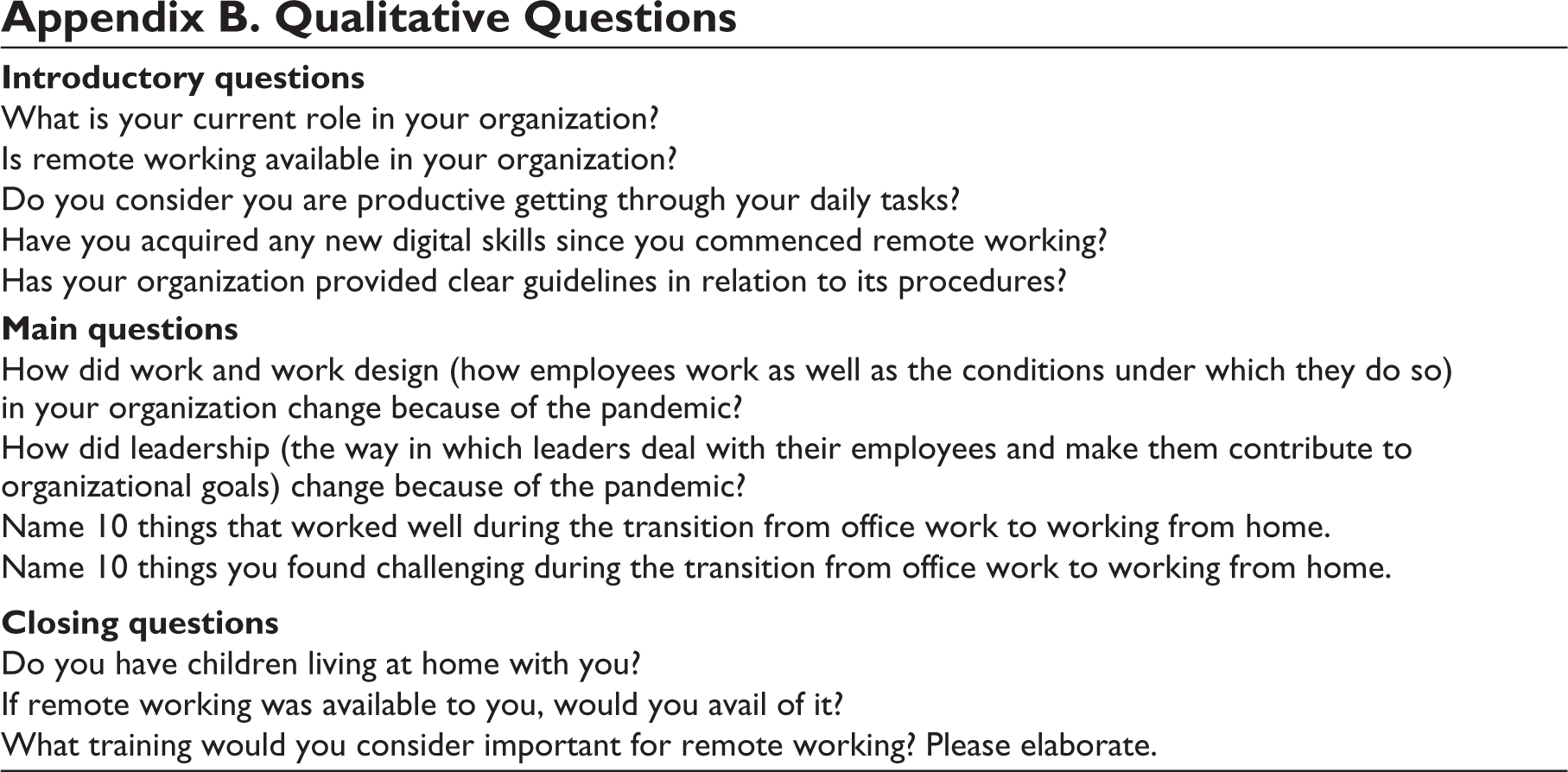
Participants were informed about the nature of the survey, and consent was implied once they clicked through. An information sheet was supplied, overviewing the nature of the study and how it explored individuals’ experiences resulting from moving from on-site work to WFH during the pandemic. The online survey contained several key research questions. The first question was: ‘How did work and work design (how employees work as well as the conditions under which they do so) in your organization change because of the pandemic?’ (Schwarzmüller et al., 2018). The second question was: ‘How did leadership (the way in which leaders deal with their employees and make them contribute to organizational goals) change because of the pandemic?’ (Schwarzmüller et al., 2018). Participants were then asked to ‘name ten things that worked well during the transition from office work to working from home’ and ‘ten things they found challenging’. They were then asked and given the space to describe each of these in greater detail (see Appendix B for qualitative questions).
Data Analysis
Like others who have investigated WFH (e.g., Eddleston & Mulki, 2017; Misra et al., 2022; Wang et al., 2020), we adopted an interpretive approach to inquiry and a qualitative methodological approach. Our focus was to investigate the lived experiences of those who transitioned from on-site to WFH during the pandemic. In particular, we were concerned with examining what worked well and what lessons could be learnt that would add additional insights into the topic of WFH.
As data analysis is considered one of the most challenging aspects of qualitative research because, unlike quantitative studies, prescriptions of data analysis techniques are not as clearly defined (Cohen et al., 2007; Myers, 2020) or, as Yin (2018, p. 165) puts it, ‘there are very few fixed formulas or cookbook recipes as guides’, we were inspired by others who have conducted investigations on WFH during the pandemic (e.g., Adisa et al., 2021; Sonnenschein et al., 2022) and followed Braun and Clarke’s (2006) thematic analysis approach.
The first phase of data analysis proposed by Braun and Clarke (2006) involves immersion in the data, which involves a repeated reading of the survey transcript and actively reviewing the data (Braun & Clarke, 2006). Unusable responses were removed, and data were cleaned.
To begin coding, the authors conducted Level 1 coding (Braun & Clarke, 2006) to analyse the raw survey data. The central aim of this phase was to identify related or similar codes that grouped together to form an overarching theme or an important idea (Braun & Clarke, 2006). This involved going through each qualitative survey line by line. Focus was placed on participants’ narratives (i.e., words, sentences, or paragraphs) around salient factors impacting their negative or positive experiences of WFH. This step identified in vivo codes (i.e., phrases, sentences, or sections in the participants’ language). Since coding is not a specific science (Saldaña & Omasta, 2016), this resulted in several Level 1 codes following the language participants used (Gioia et al., 2013), while others were more abstract interpretations (Corbin & Strauss, 2008). These Level 1 codes were then grouped or clustered together in order to generate Level 2 codes. Table 2 presents these Level 1, or first-class, codes with the associated frequency of respondents to each code.
Frequency of Occurrence of First Order Codes.
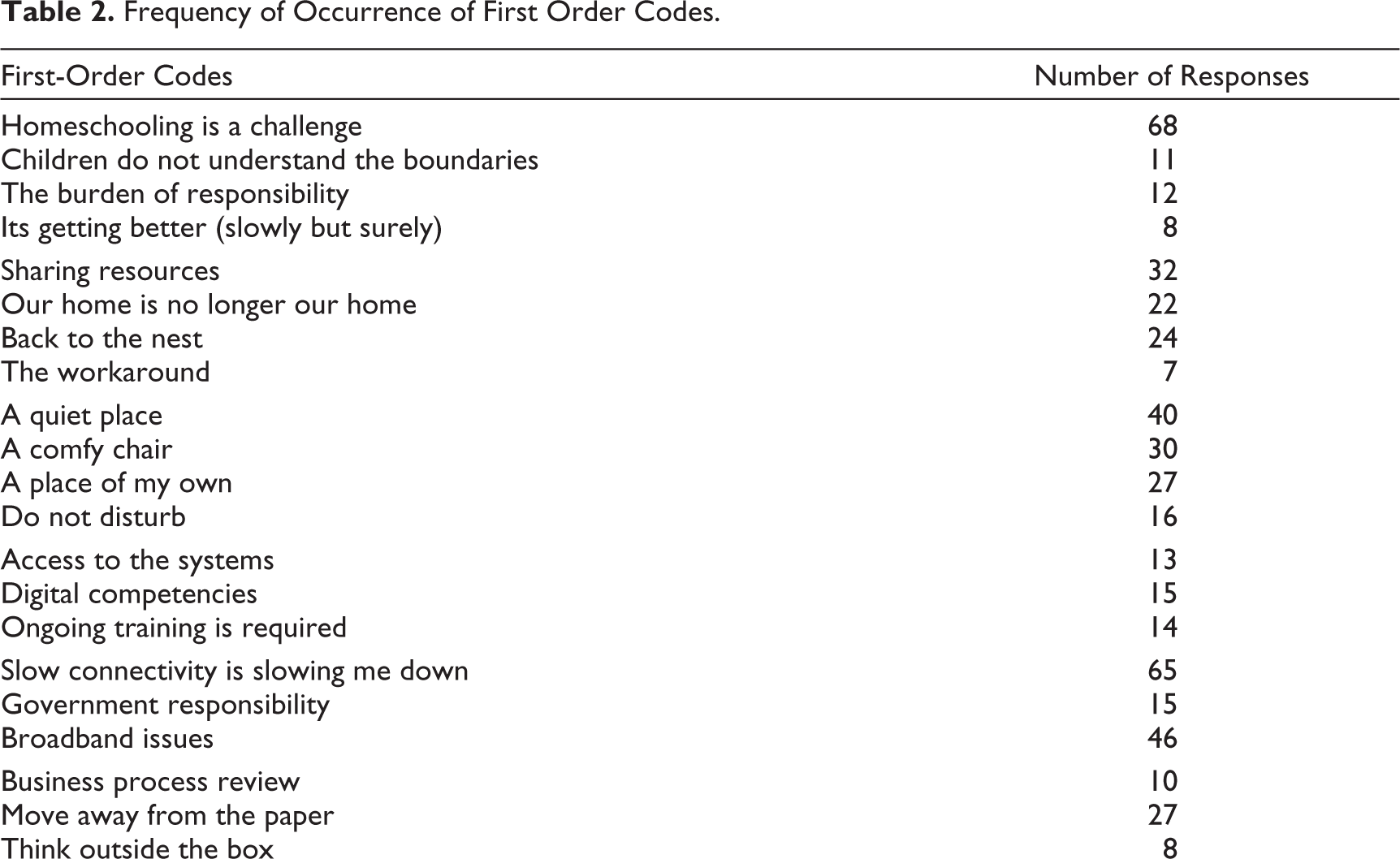
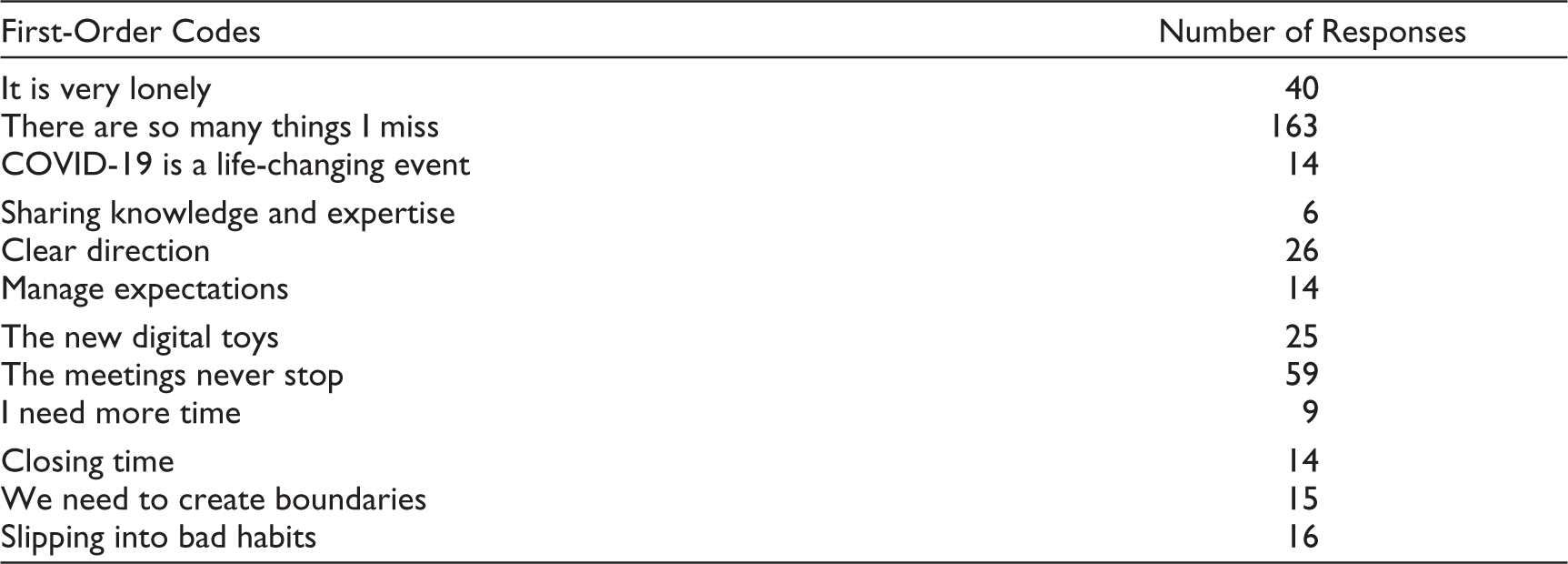
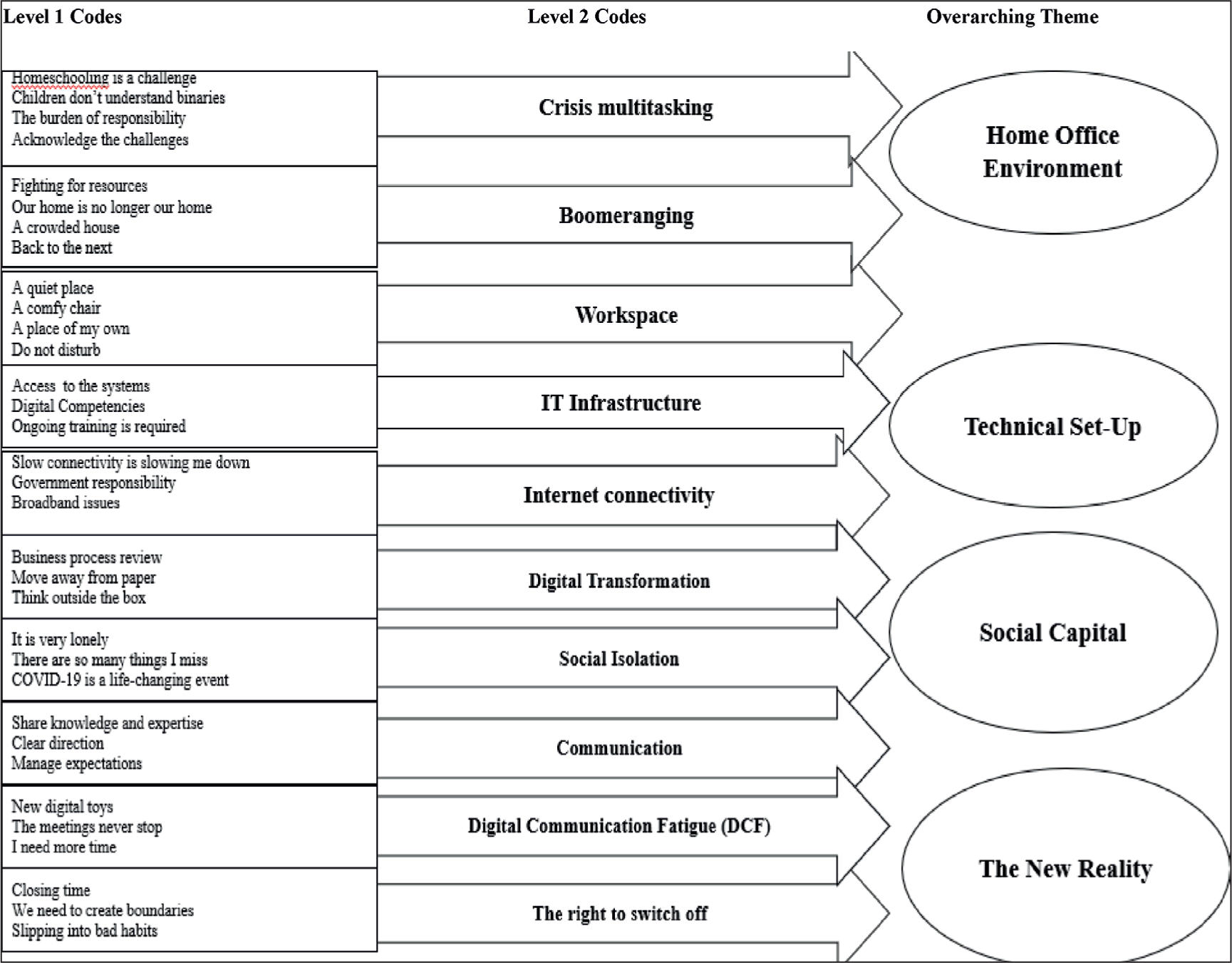
The next stage involved sorting the data extracts and comparing codes to identify differences or similarities (Miles & Huberman, 1994). The list of codes generated at Level 2 coding was collated and put into possible themes and sub-themes, thus employing a clustering technique (Gioia et al., 2013) and creating a broader level of analysis (Braun & Clarke, 2006). Having coded all the survey data, we unified Level 2 codes around central phenomena based on Herzberg’s two-factor theory (1959), the JD-R model (Bakker & Demerouti, 2007), and the existing literature on WFH (e.g., Allen et al., 2015). We then consolidated this list into four overarching themes. We have labelled these: (a) home office environment; (b) technical set-up; (c) social capital and (d) the new reality.
Figure 1 presents the final data structure following data analysis. According to Gioia et al. (2013), using a data structure allows researchers to organize their data into a meaningful visual aid. Thus, it provides a graphical representation of the process from the raw data stage to themes in conducting their analysis. This is considered an important component when demonstrating rigour in qualitative research.
WFH Critical Success Factor Framework.
To increase the validity and trustworthiness of the data (Patton, 2002), it was triangulated with supplementary industry and media reports and national and international survey results.
Findings and Discussion
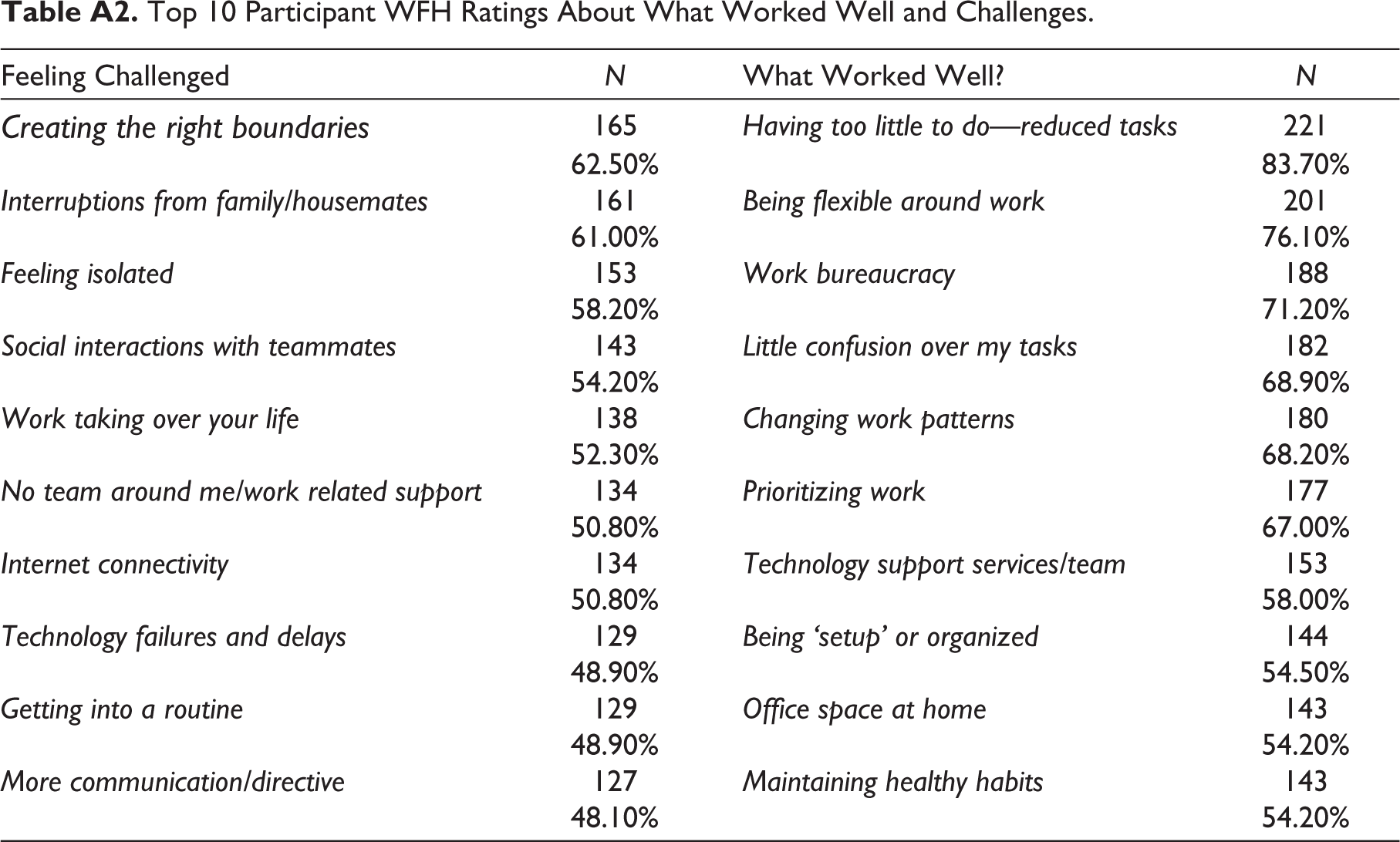
The proposed framework presented in Figure 2 represents this study’s findings. This framework illustrates that successful WFH is multidimensional and requires a balancing act between several factors (e.g., Dwivedi et al., 2020; Wang et al., 2020). The framework proposes that not only are the job resources/social capital themes (poor hygiene factors, social capital and home office environment) on the left of the framework a necessary condition for the themes on the right side, job demands and motivations, but also that all these themes are combined in a ‘recipe that strings them together in such a way as to tell the story of how (the outcome) occurs whenever it does occur’ (Mohr, 1982, p. 37)—a remote working balancing act per se. This was evident when participants disclosed what worked well and what they found challenging, which they elaborated on in subsequent questions (see Table A2).
WFH Framework.
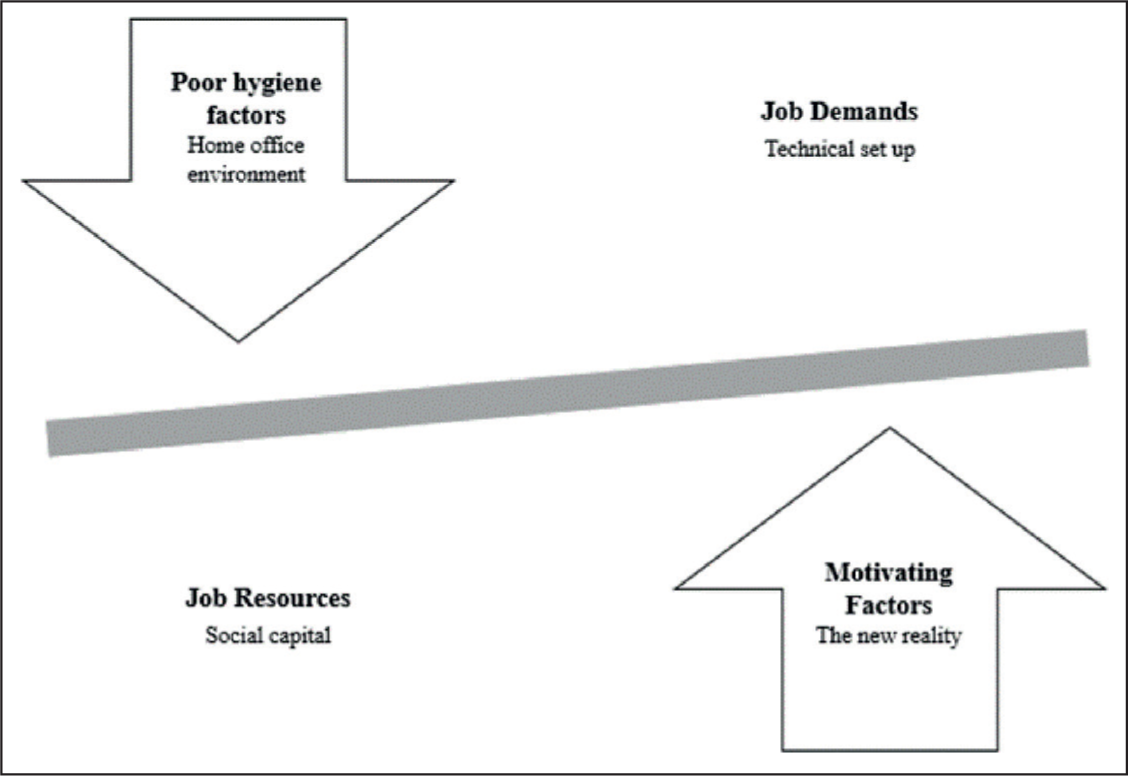
To support successful WFH, therefore, organizations must consider Herzberg’s (1959) hygiene factors and motivators and the JD-R model (Bakker & Demerouti, 2007) of positive and negative indications and outcomes of an employee’s well-being. Consequently, Herzberg’s theory and the JD-R model must be considered equally when developing a long-term WFH strategy. Within the four overarching themes of (a) home office environment, (b) technical set-up, (c) social capital and (4) the new reality, participants highlighted several factors critical to improving the WFH experience within these themes. The following paragraphs discuss these in detail. To ensure individuals’ anonymity, pseudonyms will be used throughout this section, with respondents’ anecdotes used to illustrate individual lived experiences.
Theme 1: The Home Office Environment
Implementing WFH usually requires strategic planning well before implementation (Eckhardt et al., 2019); however, during the pandemic, the move from on-site to off-site was swift, allowing little time for organizations and employees to prepare. The challenges disclosed by participants in the first theme centred around poor hygiene factors (Herzberg, 1959) regarding a suitable home office environment, which negatively impacted individuals’ job satisfaction. This satisfaction was impaired due to crisis multitasking, boomeranging and establishing a suitable workspace where individuals could work without distraction.
Sub-theme 1a: Crisis Multitasking
In the survey, respondents frequently mentioned the challenges faced regarding crisis multitasking. This phenomenon has already been highlighted by Bloom (2014) in relation to those who work from home; however, during the COVID-19 lockdowns, this multitasking was particularly prevalent for individuals with childcare responsibilities as they attempted to navigate work commitments and widespread school and childcare closures. This was further compounded, as illustrated by Nash and Churchill (2020), Wang et al. (2020) and Bansal (2023), by the need to support younger children with schoolwork while individuals continued to carry out work activities. As a result, individuals felt overwhelmed, as illustrated in the statements below:
Trying to do my work and look after the kids simultaneously is impossible. (June, private sector employee). I find that I end up working longer hours to complete tasks due to a drop in productivity because I am constantly being disrupted by my children doing schoolwork and checking schoolwork. (John, private sector employee)
While there is an acknowledgement in the literature that WFH can be challenging for those with caring responsibilities, particularly women, this was exacerbated by the pandemic (Mavin & Yusupova, 2020; Venkatesh, 2020); nevertheless, our findings illustrate that both men and women felt the demands of WFH and caring responsibilities equally challenging, and there was no discernible difference in how participants perceived these demands as both men and women disclosed that they struggled to balance WFH and managing family life.
There was also no discernible difference between where individuals were employed or between those identified as team members and those identified as management. That is not to suggest that female respondents did not take on most of the burden of childcare due to the pandemic, as highlighted in the literature (e.g., Lester & Lacey, 2020; Pandita et al., 2023). Instead, these findings indicate that those who participated in the study felt that balancing home life and work life was difficult regardless of gender, rank, role or industry sector.
As a result of this crisis multitasking, individuals felt that management needed to be more flexible regarding start and finish times to allow for these additional pressures, thereby illustrating, similarly to the literature (e.g., Nash & Churchill, 2020; Wang et al., 2020), that WFH, autonomy and flexibility (Bakker et al., 2005) concerning start and finish times are necessary when implementing a longer-term WFH strategy. The responses of two participants, Ann and Jane, who were both team members from different industry sectors, clearly illustrate this sentiment:
Childcare cannot be accessed in the country [Ireland] now. Employers need to get with the times by assigning work correctly and giving deadlines for things to get done. For example, if the request is that a report be submitted no later than Friday, then it does not matter if they (the employee) submit it at 2 a.m. Thursday night. The important thing is that the employee submits a decent report on time. (Ann, non-profit employee) There is a real lack of support from my line manager. There is an assumption that it is business as usual—when things have changed so dramatically. There is an unrealistic number of meetings on MS Teams daily. My organization has said it is okay to work flexibly around children. In practice, this means working from 4 a.m. to 9 am and 5 p.m. to 8 p.m. daily and doing childcare in between. I have no downtime. I am suffering from anxiety and exhaustion. (Jane, financial services employee)
Sub-theme 1b: Boomeranging
Our findings also highlight that family size increased as children returned to the family home during COVID-19 lockdowns. This boomeranging was not only limited to college-age children. In preparation for national lockdowns, as discussed in the literature (Mavin & Yusupova, 2020), older family members working and residing away from family migrated back to homes where family members lived. This boomeranging was putting additional pressure on individuals’ limited resources available to support WFH. This was articulated by Norah, who was involved in the arts:
I have to share resources with family members who are also working remotely. We share office space, computers, iPads, etc. We just do not have an adequate number of devices or accessories to support this in our house. My family size has increased from three to six in the space of a week. As a result, the normal working day has stretched as we are all trying to share equipment and space.
As a result of this boomeranging, family members had to adjust to this new way of living. David, who was employed in manufacturing, remarked:
The return of family members to the home means that we have had to reconfigure family, work, and home life and balance these. With all the adults and children remote working at the same time, it is tough.
Sub-theme 1c: Suitable Workspace
Herzberg (1996) also acknowledges that individuals need a comfortable workspace and the necessary objects to work from home. These working conditions, or hygiene factors, are an essential and obvious requirement (Stein et al., 2015). Nevertheless, the data analysis showed that, as the move from on-site to home working was rapid, organizations struggled to provide these necessary work conditions to support employees. As Nicole, who worked for a small private organization, remarked:
There was a lack of resources and equipment support from my organization. I had to borrow a laptop from a friend—my organization provided no laptop or PC. I was fortunate that we had good broadband. I have a positive mindset, think quickly, and am used to operating on the fly. This got me through.
This lack of preparation by organizations, notably smaller, privately owned organizations, resulted in respondents being dissatisfied with their work conditions (Herzberg, 1996) and forced to use personal equipment, including laptops, tablets and printers. This also meant many respondents worked from the kitchen table and usurped family living spaces.
In the absence of suitable working conditions, a few responses indicated (n = 2) that individuals were concerned that there could be long-term health implications due to these subpar conditions. Tory, who was employed by a not-for-profit organization, explained:
I’m working from a small laptop rather than two large monitors, and my eyes are really feeling the strain.
However, in many instances, as individuals adjusted to this new way of working, the narrative changed and the poor hygiene factors of suitable work conditions lessened, leading to increased employee satisfaction (Herzberg, 1996) as respondents began to proactively identify solutions to some of their issues by creating suitable workspaces. For example, individuals began to self-fund the necessary resources required to create a comfortable segregated office space away from distractions to improve their work conditions. This is demonstrated in Noeleen’s response, which states:
Casting my mind back to when I started to work from home when this started a few weeks ago; initially, I worked from the kitchen table, and this proved difficult. This was due to not having a workspace in a different area of the house. You really need to have some segregation. Nevertheless, I went online, bought a desk and chair, and just took over a small space in the garage, and this is now ‘my office’. It is not perfect, but I am managing.
Theme 2: Technical Set-Up
Organizations must also ensure that individuals on WFH have the correct technical set-up so they can carry out their day-to-day activities (e.g., Bansal, 2023; Soto-Acosta, 2020). However, this was difficult for organizations to address during the early stages of the pandemic because of the rapid transition from onsite to off-site. The challenges identified during the technical set-up theme are IT infrastructure, internet connectivity and digital transformation.
Sub-theme 2a: IT Infrastructure
Regardless of the environment, whether WFH or in the office, organizations must take responsibility for employees’ technical set-up (Venkatesh & Vitalari, 1992). This requires organizations to provide individuals with the necessary hardware and all the requisite pre-installed software and provide essential support to guide workers through set-up and troubleshooting (Nan & Lu, 2014). However, during the early days of the pandemic, organizations were not sufficiently prepared to provide this technical set-up. The data analysis revealed that, for the most part, individuals had access to the necessary IT platforms relatively quickly. However, respondents encountered challenges in using the technology made available to carry out their day-to-day activities, illustrating that the job demands in terms of appropriate training and development were lacking, putting additional psychological pressure (Bakker et al., 2003) on individuals as they attempted to accelerate their learning to carry out their daily activities.
Therefore, as the literature indicates, organizations implementing a longer-term WFH strategy must commit to providing ongoing learning opportunities (Bakker, 2011) and support to employees to equip them with the necessary skills and competencies for the future organization (Misra et al., 2022). This was evident in several comments from respondents from various industry sectors, particularly larger public sector service providers:
Because of my lack of technical knowledge of all the various systems used in the office, I found it difficult to understand them. (Tim, public sector employee) I needed to rapidly adapt to multiple platforms without time to learn them properly. (Catherine, public sector employee)
However, once individuals gained access to the required IT platforms and learned how to navigate these various systems, their perceptions and experiences improved. For example, Lorraine, who worked in education, disclosed:
Downloading the software was hard, but once it was on the laptop and connected to the internal system, and I spent a little time learning the system, all was working well.
Sub-theme 2b: Internet Connectivity
Our findings also support the literature that a necessary enabler for any organization when offering WFH opportunities is the availability of suitable internet connectivity (Eckhardt et al., 2019). These poor work conditions (Herzberg, 1996) proved challenging for individuals regardless of industry sector and have been acknowledged in most topic definitions (Schweitzer & Duxbury, 2010). Therefore, it was unsurprising that 14% of respondents voiced their concerns about the poor broadband speed and internet connectivity, which hampered their ability to work from home. This internet speed was compromised depending on the number of individuals accessing the internet at any given time in any household. Consequently, individuals found it more challenging to carry out their day-to-day activities. Sandra, who worked in health, explained this:
I do not have fibre broadband, so it is been a challenge. My three teens and husband are also studying and working from home, which has slowed down the speed significantly.
The internet speed also depended on respondents’ geographical location, with internet connectivity and broadband speed being a significant source of dissatisfaction outside larger urban centres. Patrick, a public sector employee working in education, remarked:
I am working from my car at the top of a hill. It is the only place that I can get an internet signal.
Eckhardt et al. (2019) noted the issue of appropriate internet connectivity for virtual workers, maintaining that, despite all the advances in digital technologies, one of the most significant challenges in building a virtual workforce is still poor technology reliability and slow (or even no) connectivity. However, the respondents’ dissatisfaction with these poor work conditions (Herzberg, 1996)—that is, broadband infrastructure—was not attributed to individual organizations. Instead, there was an acknowledgement that the issue was the government’s responsibility. This lack of adequate internet infrastructure led to frustrations among those on WFH and was echoed by several participants, such as Gerry, who had his own construction business:
If it was not already obvious, this situation (COVID-19) has highlighted the massive and systemic failure of consecutive governments to organize. This makes running a business very tough indeed.
Sub-theme 2c: Digital Transformation
Another challenge those WFH disclosed pertinent to the technical set-up theme was individuals’ inability to access the information they needed to carry out their day-to-day activities. While digital transformation has received much attention and is emerging as an important phenomenon, with many scholars contributing to the discourse (Vial, 2019), part of this digital transformation requires organizations to move away from paper-based activities (Gong et al., 2020). However, our findings revealed that some organizations had continued to employ paper-based activities, with 3% of respondents highlighting that their organizations depended on paper files, hindering their ability to carry out their daily tasks.
This was particularly prevalent in participant responses from public sector employees. As a result, individuals could not perform certain activities away from the office, imposing additional job demands (Bakker & Demerouti, 2007) and consequent psychological strain. For example, Amber and Bryan, who worked in public administration, remarked:
I need access to some paper files as we were closed rather quickly. I did not have a chance to take them with me. (Amber) I need access to a lot of the hard files in the office, and I cannot get back in. It is hard to get my work done without them. (Bryan)
Theme 3: Social Capital
Our data analysis also shows that over 15% of respondents found the lack of social interaction challenging. Participants indicated that this social capital was a positive job resource that organizations could use to counterbalance the negative experiences of poor hygiene factors in relation to work conditions (Herzberg, 1996) or job demands such as work overload (Bakker & Demerouti, 2007) when WFH.
Sub-theme 3a: Social Interaction
As there was little time for individuals to get ‘mentally ready’ (Eckhardt et al., 2019), respondents experienced a sense of loneliness and social isolation. This sense of isolation was mentioned several times. This is not uncommon and is acknowledged in the literature on the topic by several authors (Alfaleh et al., 2021; Gilson et al., 2015; Wang et al., 2020). Antonia’s and Suzanne’s disclosures illustrate this:
I do miss the people in the office; I miss the social interaction. (Antonia, ICT employee) I miss the human connection. It can be quite lonely to go from working in an office and chatting with people to then being alone. (Suzanne, not for profit employee)
The fact that these social interactions were occurring online meant that individuals had to engage through digital platforms, which some did not enjoy. Paul, echoing the sentiment of several participants, acknowledges this:
I thrive off interactions with other people, so remotely communicating has not been as effective.
This isolation was further compounded by the country being on lockdown, with individuals having limited social interactions outside their households (e.g. Bansal, 2023; Dick et al., 2020). Nevertheless, a small number of respondents acknowledged that they needed to focus on improving their social interaction with colleagues, and this could be achieved by capitalizing on the digital connectivity available to participants, which in turn would improve their well-being (Shamsi et al., 2021). An example of this was the response of Shane, a financial service sector worker:
I need to make more effort to stay in contact with team members; every conversation is nearly an appointment, and there is a lack of casual catch-up opportunities. I need to drive these, and we have the technology to do it.
Sub-theme 3b: Loss
Another important aspect of our findings was the sense of loss that participants felt due to moving from the office to WFH, with the word ‘miss’ used in 18% of responses. Notwithstanding that individuals missed the social interaction, working in an office environment provides employees with several additional advantages outside these social connections. The statements below capture this sentiment:
I miss walking to work. (Edith, financial services employee) My back misses my good office chair. (Adrienne, ICT employee)
While the evidence demonstrates that those WFH experienced a sense of loss, there are conflicting perspectives on what aspects of WFH they would like to improve to reduce this feeling of loss, whether in the context of increasing the social support individuals garner from social interaction with colleagues (Bakker et al., 2011) or improving hygiene factors (Herzberg, 1996), such as the home office environment, that would make the working day more comfortable. Therefore, an important consideration for HR departments and organizational leaders to support successful WFH is acknowledging and addressing this sense of loss while considering many perspectives.
Theme 4: Managing the New Reality
Given the diverse range of challenges identified with WFH during the pandemic in the literature (e.g., Pandita et al., 2023; Wang et al., 2020) and the findings of this investigation, it was not surprising that individuals perceived managing this new reality as an essential element for future success. The promise of this new reality is related to the opportunity to continue to avail of WFH opportunities after national lockdowns. This promise acted as a significant job motivator for many respondents. This sentiment was articulated by John, a public sector employee:
I am trying to make this work so I can have this opportunity after the pandemic. Embedded in the findings, we identified three areas on which organizations should focus: Communication, Digital Communication Fatigue (DCF) and the Right to Switch Off.
Sub-theme 4a: Communication
The literature has highlighted that effective communication is essential to group functioning regardless of the environment—whether working in the office or from home (Turesky et al., 2020). While communication challenges were being felt regardless of rank or organization type in the absence of face-to-face interactions, 5% of respondents who identified as team members were concerned about their management’s lack of communication, which impacted their job-related well-being (Bakker et al., 2011). Michael and David from different industry sectors commented on this issue:
I have had zero communication from my line manager. (Michael, financial services employee) I have had minimal direction. There was no communication at the outset. (David, health administration employee).
However, the following comments by Pat, who was in middle management, and Colm, who was in senior management positions in the public sector, also demonstrate these challenges from a leadership perspective:
I need more time to communicate with colleagues, finalize decisions, and reach an agreement on plans, and this is taking much longer than if we were on-site coordinating the team. It is difficult; it takes so much longer. (Pat) Small tasks are more complicated due to communication difficulties. This can cause stress. (Colm)
Nevertheless, there was an acknowledgement by those who identified as team members that managers were also adjusting to the realities of COVID-19. As Tom stated:
I feel that management provides limited support or guidance (which is understandable given the nature of the crisis) on what exactly is required in terms of structure, so it is hard to decide how to engage in a uniform way.
Sub-theme 4b: Digital Communication Fatigue (DCF)
Conversely, there was also a concern that those in management positions communicated too frequently. As individuals moved offsite, communication between teams centred around adopting digital platforms. These platforms included Microsoft Teams, Zoom and email. Organizations use these platforms to communicate with colleagues about work allocation and decision-making and as a platform for collaboration (Iivari et al., 2020; Soto-Acosta, 2020).
However, particularly during the early stages of the pandemic, respondents felt that these platforms were being used excessively. We have labelled this job demand (Bakker & Demerouti, 2007) DCF. Examples of this include the statements presented below:
I find video calls a dehumanizing experience. You can only hear voices, there is no small talk, and all these online meetings are so tiring. (Yvonne, education employee) The endless number of online meetings can prove to be exhausting. (Fidelma, administration employee)
Because of this excessive digital communication, respondents—particularly those who identified as team members—were concerned about a corresponding negative impact on their productivity. Anne and Bryan explained this thus:
I’m suffering from Zoom fatigue. The meetings never stop, and I cannot get any work done. (Anne) The manager communicates by email, which means I have to check it continuously. It would be far more effective if they called me. (Bryan)
Although the findings indicate that organizations need to re-evaluate their digital communication frequency, this communication overload continues to be a concern for those WFH since the COVID-19 lockdowns (Rasool et al., 2022). Nevertheless, the importance of communicating via these platforms is acknowledged. As Tony, a team member, noted,
Communication within a team is vital. We were so used to discussing problems and devising solutions in person that we needed to improve our use of communication tools, such as Skype, Zoom, Microsoft Teams, etc.
Sub-theme 4c: The Right to Switch Off
We also found that participants had different experiences regarding the end of their working day. A number of those who participated in the study stated that they faced challenges when it came to switching off. These challenges can be divided into two categories: individuals who found it challenging to stop working because they were at home and individuals who felt their management team expected them to be available outside regular business hours because they were WFH.
These job demands (Bakker & Demerouti, 2007) suggest that the lack of physical separation between work and home and the constant presence of the work setting may aggravate tendencies towards ‘workaholism’ (Spagnoli et al., 2020) for those employees who are very involved in their jobs and may find it difficult to switch off. The statements below demonstrate this.
Going home from work is harder when it is on the kitchen table. (Danny, ICT)
It is hard to finish work at the correct time. I have now gotten into the habit of staying and working on longer than I should. (Maire, education employee)
Although there was limited evidence suggesting that management had difficulty allowing workers to switch off, Glenda highlighted the challenge of creating proper boundaries around home and work life, which needed to be established. They wrote:
Employers need to respect boundaries. There is an expectation that because you are at home, you should be available all the time, but that is not the case.
Discussion of Findings
This empirical investigation explores factors individuals considered critical to supporting successful WFH during the pandemic. The investigation draws inferences from Herzberg’s two-factor theory and the JD-R model and their underlying components.
The findings illustrate that, while digital communication technologies have changed the way we work (McTaggart & Loonam, 2024), creating an opportunity for employees to work anywhere and at any time, the potential for communication overload can impact employees’ performance in the form of lost productivity. This digital communication overload is a key consideration for modern organizations as it can act as a stressor for organizational members, thereby increasing their perception of their job demands, as indicated by Bakker and Demerouti (2007).
The findings also illustrate that, in modern digital organizations, some hygiene factors (Herzberg, 1996) in terms of work conditions that can act as demotivators are outside the control of organizations, such as internet connectivity and digital communication platforms. This brings Herzberg’s hygiene factors outside organizational boundaries; such are the impact and influence of this external environment on a present-day organization’s functioning. However, the challenge for organizations is that much of this is outside individual organizations’ control, such as broadband provision and digital communication channels; consequently, organizational leaders and HR managers will need to consider these external partnerships when developing a longer-term remote working strategy.
Furthermore, despite the challenges workers encountered in moving from on-site to WFH, the potential to continue this new way of working was a significant motivator for individuals and presented new opportunities for organizations, as this ground-breaking experiment had proven largely successful (Adisa et al., 2021). Consequently, organizational leaders and HR managers must once again consider organizational life outside traditional organizational settings and ensure that individuals have working conditions (Herzberg, 1996) in their home office equal to those they would in a traditional office setting.
A key contribution of the study is the need for flexible working arrangements for those on WFH, which the literature acknowledges is a vital component for success (e.g., Chung et al., 2021; Nash & Churchill, 2020). The findings illustrate that WFH success does not solely depend on a move from on-site to off-site; instead, successful WFH also requires organizational flexibility in terms of start and finish times to increase employee well-being (Bakker & Demerouti, 2007; Grant & Parker, 2009) and is necessary to ensure a successful work–life balance, particularly for those with caring responsibilities.
Similar to the literature, we also identified that successful WFH requires planning (e.g., Dwivedi et al., 2020; Gifford, 2022); however, individuals had little time to prepare due to the limited lead-in time for organizations and their employees. The empirical evidence further illustrates that, as individuals adjusted to this new normal (Carroll & Conboy, 2020), they began to self-drive solutions as acknowledged in the literature (e.g., Fletcher & Griffiths, 2020; Soto-Acosta, 2020), demonstrating—consistent with existing accounts (Bansal, 2023)—remarkable resilience and innovation so that organizations could continue business as usual.
Study Limitations and Future Research
As with all exploratory research, the current study has its limitations. First, although the approach adopted permitted rigorous data analysis, its qualitative approach naturally limits the number of data points over those resulting from a broader quantitative study, thus limiting the generalizability of the findings to a wider audience. A further limitation concerns the transferability of the findings to a broader research context because this research has a single-country focus; even though some participants worked for global organizations with headquarters outside the Republic of Ireland, all those who participated in the study were residing and working in Ireland.
Nevertheless, there are several opportunities for further research on the topic, as some factors that caused respondents’ challenges have been alleviated, such as children returning to school.
A further, more detailed investigation that considers the evolution of Herzberg’s two-factor theory (1959) and the JD-R model (Bakker & Demerouti, 2007) and their applicability to digital organizations, where much of the activities occur outside organizational boundaries and where organizational leaders have limited influence, would also be interesting.
Conclusion
Extant studies on WFH have provided the foundations for the more recent literature on virtual teams and the virtual workforce; however, when evaluating the economic impact of social distancing and self-isolation and the measures taken to slow down the spread of COVID-19 by national governments, this has raised fundamental questions about the topic of WFH and the modern economy (Dingel & Neiman, 2020). The evidence from this empirical investigation has identified several critical factors for successful WFH. Participants disclosed important issues for managers to consider when implementing a long-term WFH strategy so that their employees feel engaged, motivated, and supported now and in the future. Using the time of COVID-19 as a learning experiment, organizations can consider improving their flexible working practices; therefore, it would be helpful for organizations and HR managers to think about what distinguishes what was, is and will be (McNulty & Marcus, 2020) and address the factors identified in this study, thus making WFH less challenging for those involved.
Footnotes
Declaration of Conflicting Interests
The authors declared no potential conflicts of interest with respect to the research, authorship and/or publication of this article.
Funding
The authors received no financial support for the research, authorship and/or publication of this article.
Appendix A
Top 10 Participant WFH Ratings About What Worked Well and Challenges.
| Feeling Challenged | N | What Worked Well? | N |
| Creating the right boundaries | 165 | Having too little to do—reduced tasks | 221 |
| 62.50% | 83.70% | ||
| Interruptions from family/housemates | 161 | Being flexible around work | 201 |
| 61.00% | 76.10% | ||
| Feeling isolated | 153 | Work bureaucracy | 188 |
| 58.20% | 71.20% | ||
| Social interactions with teammates | 143 | Little confusion over my tasks | 182 |
| 54.20% | 68.90% | ||
| Work taking over your life | 138 | Changing work patterns | 180 |
| 52.30% | 68.20% | ||
| No team around me/work related support | 134 | Prioritizing work | 177 |
| 50.80% | 67.00% | ||
| Internet connectivity | 134 | Technology support services/team | 153 |
| 50.80% | 58.00% | ||
| Technology failures and delays | 129 | Being ‘setup’ or organized | 144 |
| 48.90% | 54.50% | ||
| Getting into a routine | 129 | Office space at home | 143 |
| 48.90% | 54.20% | ||
| More communication/directive | 127 | Maintaining healthy habits | 143 |
| 48.10% | 54.20% |
Appendix B. Qualitative Questions
|
|
| What is your current role in your organization? |
| Is remote working available in your organization? |
| Do you consider you are productive getting through your daily tasks? |
| Have you acquired any new digital skills since you commenced remote working? |
| Has your organization provided clear guidelines in relation to its procedures? |
|
|
| How did work and work design (how employees work as well as the conditions under which they do so) in your organization change because of the pandemic? |
| How did leadership (the way in which leaders deal with their employees and make them contribute to organizational goals) change because of the pandemic? |
| Name 10 things that worked well during the transition from office work to working from home. |
| Name 10 things you found challenging during the transition from office work to working from home. |
|
|
| Do you have children living at home with you? |
| If remote working was available to you, would you avail of it? |
| What training would you consider important for remote working? Please elaborate. |