



Abstract
Online shopping apps offer discounts with the help of coupons which have been shown to be highly effective, especially, in the case of mobile commerce. However, the mechanism of attracting customers via discounting and its effect on the adoption of mobile shopping apps have not been studied in detail. We explored the important antecedents for continued usage intention of mobile shopping apps. Further, we explored the effect of coupon proneness via the expectation confirmation model. We have explored the mediating role of trust and moderating role of coupon proneness on the relationship between satisfaction and intention of continued usage. We found direct and indirect linkages of satisfaction, confirmation of expectations, perceived usefulness and trust and coupon proneness with continued usage intention. Results indicated that trust partially mediates the relationship between satisfaction and continued usage intention, and coupon proneness negatively moderates the relationship between trust and continued usage intention. Our study shows that coupons are effective in the short run but satisfaction and trust building are important for long-term strategy. Some personality traits can have an impact on the findings which have not been part of this study. Future research can expand and validate these findings.
Introduction
Discount coupons have been an important promotional tool in marketing products and services (Pandey & Maheshwari, 2017). M-commerce apps send coupon codes to customers on a regular basis to encourage them to make purchases. Coupons have been one of the most commonly used promotional mechanisms right from the direct mail coupon era (Bawa & Shoemaker, 1989) to the contemporary digital era (Jung & Lee, 2010; Pandey & Maheshwari, 2017). Coupon-based promotions have taken off in recent times in the form of a deep discounting-based customer acquisition strategy (Eisenmann et al., 2011). Coupons are associated with higher spending and a larger basket size in online retail (Montazeri et al., 2021). Consumers have been found to add more products to their cart in order to avail the given discount (Liang et al., 2018). Furthermore, online coupons assume greater importance in the context of mobile retail or m-commerce for two reasons: (a) m-commerce has shown a steady growth and is expected to account for 54% to 72.9% of the total e-commerce sales; coupons significantly enhance purchase intentions (Haklander, 2021); (b) m-commerce offers greater personalization when it comes to coupon presentation. This is attributed to several additional datapoints for the customer like location, accessibility and ease of payment (Zhang & Yuan, 2002). However, coupons have costs associated with them; coupons have been one of the largest promotional expenses for the firms (Leclerc & Little, 1997). Therefore, these expenses need to be justified.
First, we explore an important aspect that has often been overlooked: the role of coupon promotions in m-commerce. Although the direct relationship between coupon and sales is well established, very little is known about its impact on app usage (Montazeri et al., 2021; Pandey & Maheshwari, 2017). The disposition of the consumer are also likely to influence the extent to which perceived usefulness (PU), satisfaction and trust may impact the continued usage of the shopping apps (Agrebi & Jallais, 2015; Marriott & Williams, 2018). The coupon proneness of the consumer is likely to influence the association between satisfaction of using the app and intention of continued usage.
There is little research that demonstrates the relative importance of mobile app marketing strategies (i.e., developing trust as a long-term relationship building or employing coupon promotion as a short-term strategy). The extant literature on coupons has primarily focused on the effectiveness in attaining sales goals (Montazeri et al., 2021; Pandey & Maheshwari, 2017). Few researchers have tried to explore how coupon usage affects the satisfaction and re-purchase decision, which in turn may yield long-term benefits. Also, we found that the relationship between satisfaction and repurchase intention was not very conclusive in the case of e-commerce (Mittal & Kamakura, 2001).
Another important construct for repurchase intention is trust. Past researchers have pointed out the need to explore the role of perceived risk in m-commerce purchases from the point of view of the consumer (Agrebi & Jallais, 2015). Consumers exhibit lower trust due to higher uncertainty (Joubert & Belle, 2009). The literature on continued usage of m-commerce apps suggests that high perceived risk is associated with lower trust (Chopdar et al., 2018; Joubert & Belle, 2009). Trust is at the very core of continued usage of m-commerce (Marriott & Williams, 2018). Viewing this phenomenon from an expectation confirmation theory (ECT) (Bhattacherjee, 2001) lens, higher PU, confirmation of expectations and satisfaction from prior purchase are likely to enhance the level of trust consumers have on the m-commerce app. Therefore, consumer trust may also play an important role in m-commerce.
Here, we present an integrated model that captures all the important aspects of m-commerce coupon usage. This would help in resolving the above-mentioned research dilemmas. In this process, we have also reviewed the literature on the antecedents of continued usage of m-commerce applications by customers. We have borrowed from the expectation confirmation model (ECM) to understand the determinants and process of continued usage intention in the context of m-commerce. Using this model, we intend to answer the following research questions:
What is the mechanism by which PU and confirmation can be associated with the continued usage intention of m-commerce users? Does coupon proneness enhance the intention of continued usage of m-commerce? What is the role of trust in intention to continued usage on m-commerce users?
Our findings can provide a better understanding of coupon use in m-commerce. This could in turn help inform the managers in developing a marketing strategy. A better-designed coupon strategy can improve customer experience and increase brand loyalty (Nobar & Rostamzadeh, 2018). Therefore, this model can help us understand the drivers of continued usage of smartphone apps for shopping.
We discuss the context of coupons in m-commerce and their significance in marketing in the second section. Further, we develop the proposed hypothesis and research model based on the literature review. Subsequently, we present the methodology in the third section and the results in the fourth section. Lastly, in the fifth, sixth and seventh sections, we discuss the findings and provide the implications, limitations and directions for future research.
Theoretical Review and Model Development
The ECM posits that continued usage intention would be driven by the satisfaction which is dependent upon the PU of a product and the confirmation of expectation that one has from the product (Bhattacherjee, 2001). The ECM model integrates the ECT (Oliver, 1980) and technology acceptance model (Davis et al., 1989). Recent papers such as Shah and Mehta (2022) have used technology adoption model to study the users’ behaviour for streaming apps.
The research around consumer behaviour in m-commerce has looked at factors such as perceived ease of use of an app, PU and social aspects; they have not thoroughly looked at the inhibitors such as trust (Marriott & Williams, 2018). We posit that trust would mediate the relationship between satisfaction from using a coupon and the intention to continue using the e-commerce app for shopping. Further, we introduce an important moderator, coupon proneness, to exhibit the importance of the propensity to use coupons with the intention to continue using the mobile shopping app.
Satisfaction
The ECT explains the satisfaction and repurchase intention of consumers (Oliver, 1980). It posits that when consumers’ expectations are met post-consumption of a product, satisfaction is likely to increase. Consumer satisfaction, in turn, is likely to be associated with re-purchase intention. This model was adapted to the context of information technology products (Bhattacherjee, 2001; Hsu & Lin, 2015; Mou et al., 2017; Shin et al., 2017). Later applications of this model revealed that ease of use of mobile apps does not have significant impact on purchases on mobile apps (Agrebi & Jallais, 2015).
One of the underlying assumptions of ECT is that after initial usage of technology, the users may not be influenced by the ease of use as much as by the effect of PU of the product. The PU of a mobile app for shopping captures this instrumentality. It has been shown to impact the intention to use m-commerce (Agrebi & Jallais, 2015). Therefore, in our model as well, it is expected to exhibit a positive relationship. In the case of mobile applications, if a user finds that their expectations are met, they may see the app in an even more positive light (Hsu & Lin, 2015). This adjustment is done to make it more consistent with their expectations, therefore, helping in reducing the dissonance. Based on the discussion presented in this section, we would propose the following hypothesis:
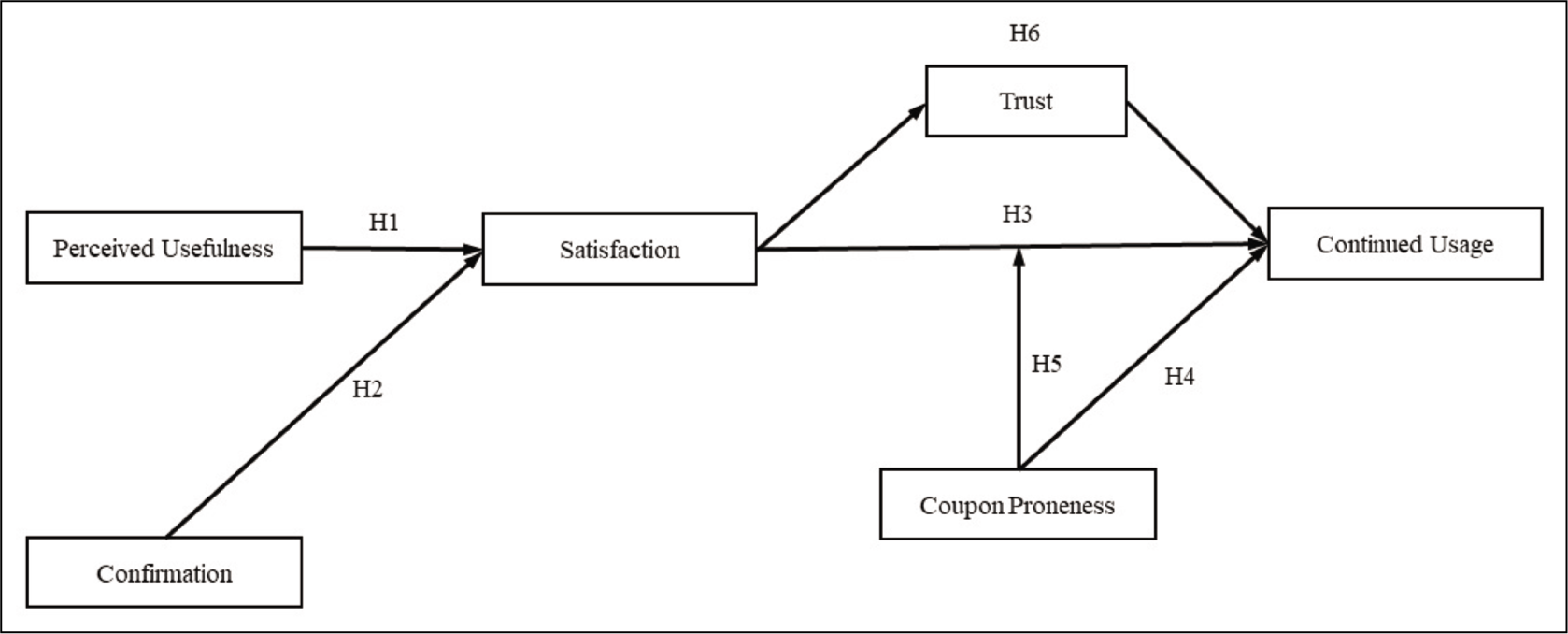
H1: Higher perceived usefulness of mobile shopping apps increases the satisfaction of shopping from m-commerce. H2: Confirmation of expectation from the mobile shopping app increases the satisfaction from m-commerce.
Coupon Proneness
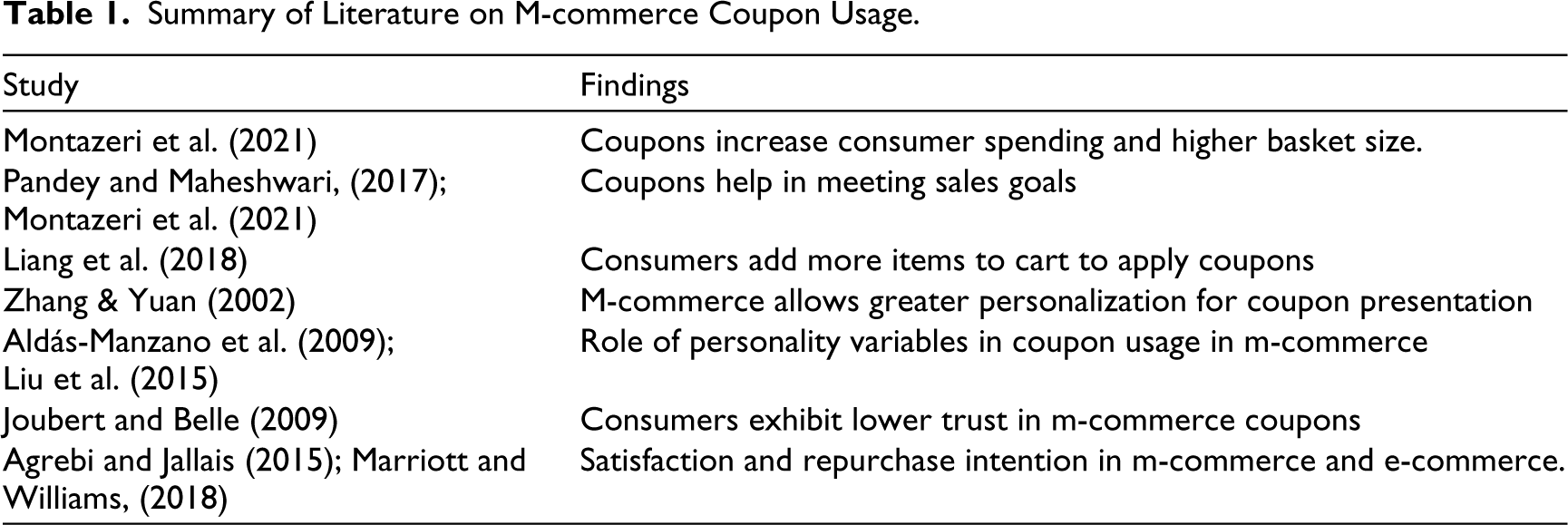
On one hand, the short-term goal of marketers is to increase sales and revenue from mobile shopping apps. On the other hand, the long-term goal is to retain customers to improve the lifetime value of the customer. Customer retention is more important as compared to customer satisfaction (Qi et al. 2012). In the case of mobile shopping apps, higher satisfaction was shown to be effective in enhancing the continuance of usage (Hsiao et al., 2016). We have summarized the literature around Coupon Proneness for mobile usage in the Table 1. Therefore, we propose that satisfaction will have a positive impact on the intention of continued usage of the app.
Consumers would have higher purchase intention when they perceive both trust and economic value (Chai et al., 2015). Coupon promotion enhances the value of transactions. M-commerce offers a unique opportunity to share coupons via messaging and notifications. Consumers favour m-commerce specifically because it offers faster redemptions (Businesswire.com, 2019). Therefore, coupon proneness would increase the continued usage of the apps.
However, consumers who have high coupon proneness may be driven strongly by promotions and disregard the satisfaction from transactions altogether. The disloyal segment of customers may give much higher importance to lower prices (Reichheld & Schefter, 2000) or discounts over service quality (Kånneby et al., 2015). Therefore, we propose that it would negatively moderate the relationship between satisfaction and continued usage intention. The relationship between satisfaction and continued usage would be strengthened by lower coupon proneness.
Therefore, we posit the following two hypotheses based on the discussion:
H3: Higher satisfaction with mobile shopping apps enhances the continued usage intention. H4: Higher coupon proneness enhances the continued usage intention. H5: Higher coupon proneness negatively moderates the relationship between satisfaction and continued usage of mobile shopping apps.
Summary of Literature on M-commerce Coupon Usage.
Trust
Trust has been defined as ‘an expectation or belief that one can rely on another person’s actions and words and that the person has good intentions to carry out their promises’ (Bligh, 2017). Consumers may have apprehensions or insecurities regarding the transactions with a retailer. Therefore, trust plays an important factor in purchase and re-purchase behaviour. Trust is a far more important factor in the case of e-business as it enhances the loyalty and retention of the customers (Reichheld & Schefter, 2000).
The trust in m-commerce would be a function of the trust in the organization as well as the technology (Mohd Suki & Mohd Suki, 2017). We capture the construct through a hybrid questionnaire developed by Gefen et al. (2003) and Hassanein and Head (2007). The set of items captures the institutional, knowledge and technological aspects of trust in the online shopping context. Additionally, we also noted the suggestion by Söllner et. al (2010) and used a formative measure for trust. This helps in understanding the relative role of each component of trust. The mobile platform presents risks due to factors such as network reliability, malware and content quality (Chopdar et al., 2018). Consumers exhibit a higher perceived risk for mobile platforms, especially when they indulge in monetary transactions (Luo et al., 2010). Higher trust reduces the privacy and security risks.
Therefore, higher trust in the mobile app would help in behavioural intention as well as usage behaviour for the individuals (Chopdar et al., 2018). Higher trust in mobile apps has been shown to enhance the repurchase intention (Liang et al., 2018). The stronger behavioural intention reflects higher loyalty in the individuals (Chai et al., 2015). Also, coupons may positively impact the decision to shop on mobile devices (Valassis.com, 2020). Therefore, it would lead to a higher intention of continued usage in the case of m-commerce. Earlier researchers have looked at trust as a mediator between satisfaction and continued usage intention (Lankton et al., 2010; Liang et al., 2018). We have presented the same in our proposed theoretical model in Figure 1.
Proposed Theoretical Model.
Therefore, based on the discussion presented above, we propose the following hypothesis:
H6: Trust mediates the relationship between satisfaction and intention of continued usage of mobile shopping apps.
Methodology
Participants and Procedure
We captured data from a varied demographic who were well versed with mobile commerce. We sent the questionnaire to 300 participants. Furthermore, we ensured that the following criteria were met when we sent out the questionnaire: (a) the respondent is a smartphone user and (b) the respondent uses m-commerce. Further, we ensured diversity by sending it out to geographically dispersed areas like metropolitan cities, towns and villages keeping an age range limit above 18 years. We ensured that we had enough data points for PLS-SEM analysis as prescribed by Hair et al. (2011, 2016). A-priori sample size calculation (Soper, 2021) revealed that we required a minimum of 110 responses for our model at an effect size of 0.1, a significance level of 0.05 and the power of 0.8. Once the data were collected, we applied stringent criteria for completeness and attention check over the collected responses. A total of 205 responses were retained for the final analysis. This sample size also fulfils the criteria of having at least 10 times the largest structural path in the SEM model (Rigdon et al., 2017). The collected sample was represented by 54% women and 46% men. The respondent’s age range was between 19 and 42 years and the median age was 23.57 years (Standard Deviation = 1.86).
Instrument
We employed measurement scales for our survey available from the extant literature. Some of the items were adapted according to the context. Our survey included some demographic variables. Firstly, we used the coupon-proneness scale (5-item scale) developed by Lichtenstein et al. (1990). For the constructs related to expectation and confirmation, we used items adapted from Chung et al. (2016). The items used by Chung et al. (2016) were adopted from Bhattacherjee (2001). We used ‘PU’ (four items); satisfaction (three items); continued intention to use mobile shopping apps (three items) from their study. Further, we also used a trust scale (5-item) that was adapted from Gefen et al. (2003) and Hassanein and Head (2007). When the participants were given the survey, they were informed that mobile shopping apps include applications on smartphones and tablets that can be used for any kind of purchase or transaction. They were presented with demographic questions before presenting the survey items (Appendix A).
The analysis was done with Smart PLS 2.0 software. Recent studies have demonstrated PLS-SEM as a viable alternative to the CB-SEM, especially in studies where the relationship between constructs is exploratory and provides a wider tolerance for normality and parametric estimations (Goodhue et al., 2012; Rigdon et al., 2017).
Results
Measurement Model
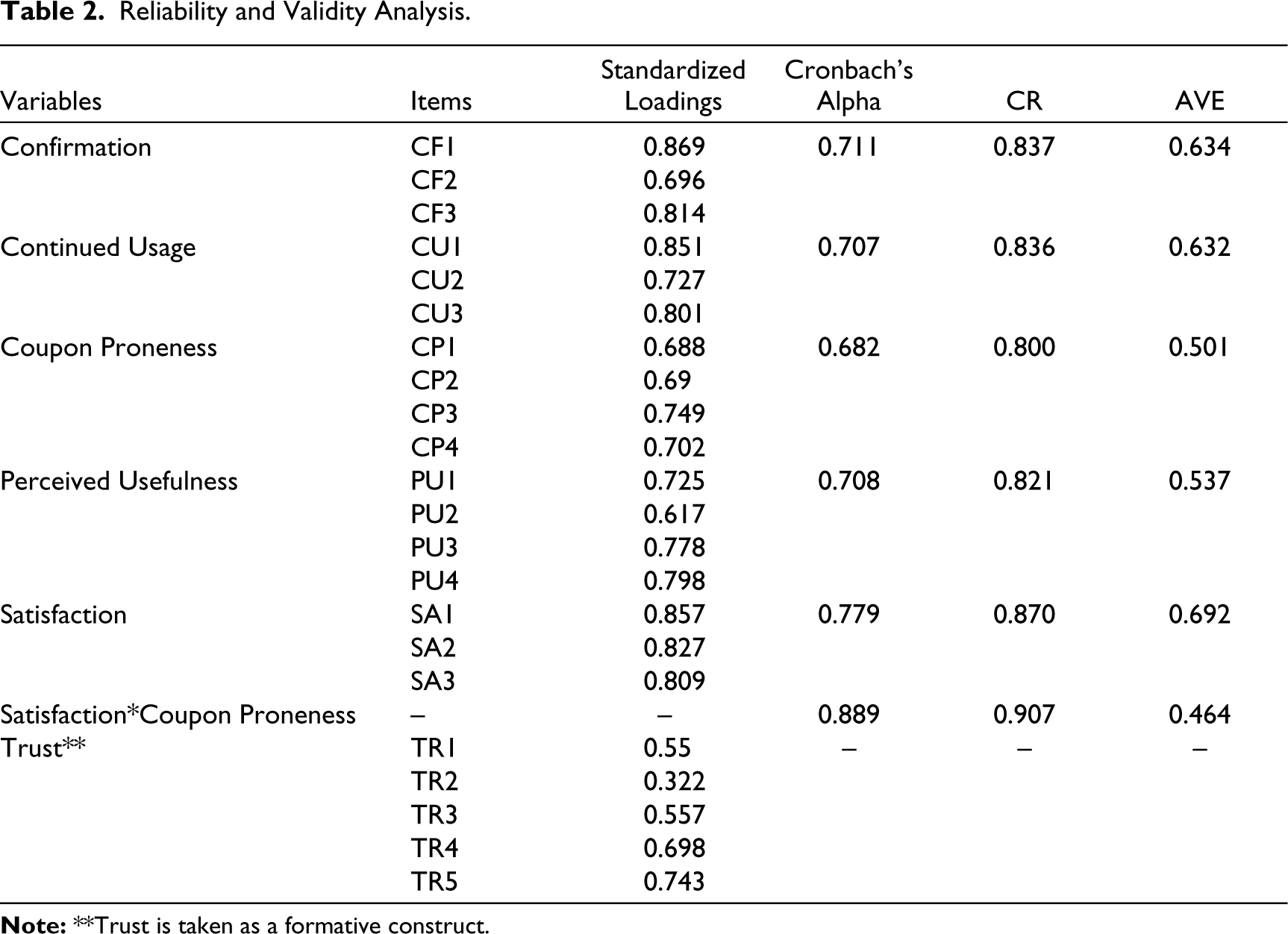
We computed the validity and reliability of the constructs and found them to be within the acceptable range. The results of the measurement model are available in Table 2. The Cronbach alpha was found to be more than 0.75 which is considered a good range (Taber, 2018). We also found that the composite reliability was adequate for all constructs. Composite reliability above 0.7 is considered to be adequate (Hair, 2014; Nunnally, 1994). At this stage, one item in Coupon Proneness (CP5) was removed due to low loading. Finally, we also tested the constructs for average variance extracted or AVE. We found all the constructs to have AVE of more than 0.5 as recommended by Fornell and Larcker (1981). The findings are presented in Table 3.
Reliability and Validity Analysis.
Correlations and Square Roots of AVE.
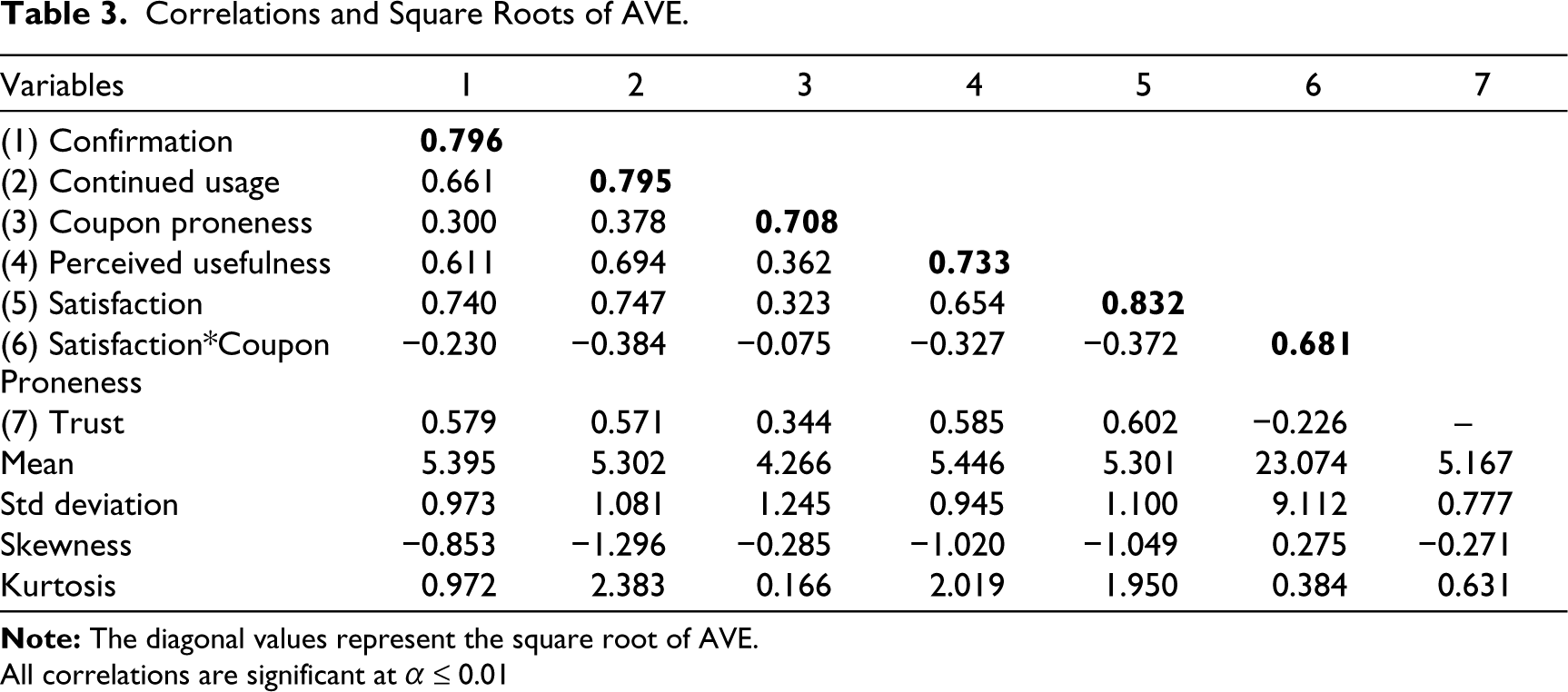
All correlations are significant at α ≤ 0.01
Overall, the model passes the tests for convergent validity. We also found that the factor items did not show any cross-loadings. In this study, we took trust as a formative construct; therefore, the values for the measurement model are not relevant.
Discriminant Validity
The model shows adequate values for the square root of AVE. All the constructs have AVE more than the threshold of 0.5 as per Fornell and Larcker (1981). We also found that the square root of AVE is larger than the correlations. Therefore, the measures that we have used in our study show reliability and validity. Since we have taken trust as a formative construct, we have not considered the measurement model specification for this construct.
The goodness of fit (GoF) for PLS-SEM is not commonly measured. However, we used the method proposed by Tenenhaus et al. (2004). The measurement model resulted in an adequate GoF value of 0.57 as per Tenenhaus et al. (2004) and Henseler and Sarstedt (2013). A value above 0.36 is categorized as a large GoF (Wetzels et al., 2009).
Structural Model
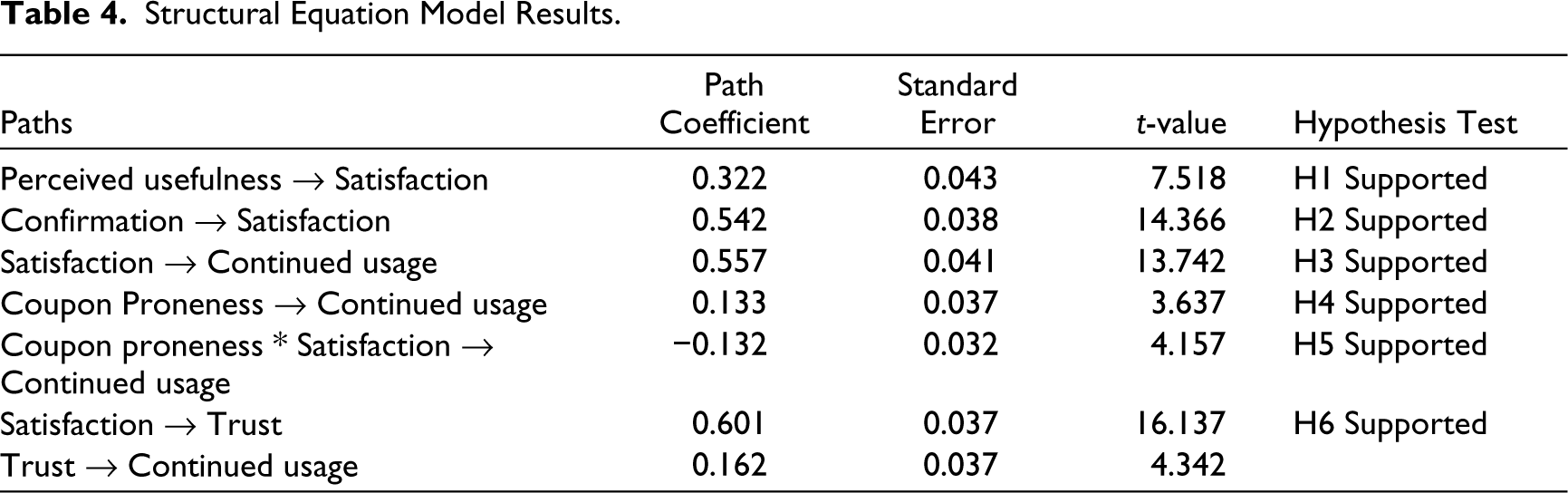
We tested the structural model as per the suggestion of Hair (2014). The bootstrap test was done on SmartPLS with 5,000 resamples. The results of the bootstrap test are available in Table 4. This table provides the specifications for the path coefficient, standard error and t-value from the results of the bootstrap testing procedure. The summary of all the hypothesis tests is provided in Figure 2 and discussed below.
Structural Equation Model Results.
Inter-construct Path Coefficients.
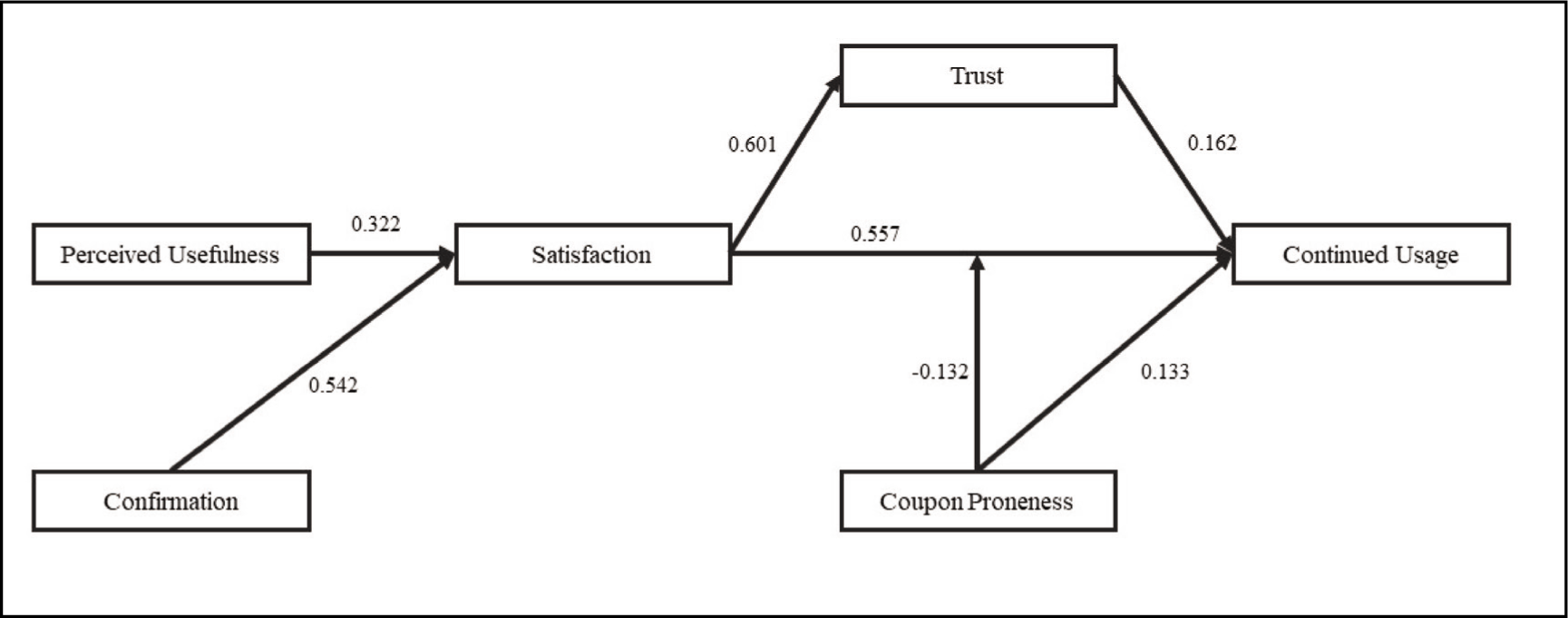
Confirmation and PU were able to explain 61.2% of the variance in satisfaction. Further we found that path coefficients from confirmation (β = 0.542, t-value = 14.366, p < 0.05) and PU (β = 0.322, t-value = 7.518, p < 0.05) to have significant impact on the satisfaction. Therefore, H1 and H2 were supported. Higher satisfaction leads to higher intention of continued usage (β = 0.557, t-value = 13.742, p < 0.05) which shows support for H3.
The direct (β = 0.133, t-value = 5.258, p < 0.05) as well as moderated path (β = –0.132, t-value = 4.157, p < 0.05) of coupon proneness on continued usage was found to be significant. Therefore, H4 and H5 were supported.
The path between satisfaction and trust (β = 0.601, t-value = 16.137, p < 0.05) was found to be significant. Also the path between trust and intention of continued usage was found to be significant (β = 0.162, t-value = 4.342, p < 0.05). This shows that trust mediates the relationship between satisfaction and continued usage. Further we found that trust, satisfaction and coupon proneness were able to explain 59.4% of the variance in continued usage.
A chi-square test was conducted to ascertain any differences due to gender. There were no significant differences in satisfaction, trust, coupon proneness and repurchase intention at a significance level of 0.05.
The model was also checked for predictive relevance by blindfolding (Tenenhaus et al., 2005). We found that required Q2 statistics were more than zero which shows predictive relevance. The Q2 values for latent constructs were more than 0.35 which shows larger predictive relevance (Shanmugapriya & Subramanian, 2015).
Discussion
In this study, we explored the usage continuance of shopping apps in the context of coupon-based discounting and promotions. The results show that shopping app users exhibit behaviour that is similar in some respect to the traditional e-commerce platforms. However, they are somewhat different when it comes to the user’s intention to continue. We found that although usage of coupons leads to continued usage intention, it can negatively moderate the relation between satisfaction and continued usage. We throw light on the relative importance of satisfaction of users over the coupon-based sales promotion. Previous studies have discussed that coupons have been the focus of all promotional activity when it comes to the share of marketing expenses (Leclerc & Little, 1997). A greater emphasis on building satisfaction and trust could pay off in the long run.
Further, we looked at the interplay between some of the important constructs that drive the user’s behaviour towards mobile shopping apps. First, we found that confirmation is an important predictor of satisfaction. In addition, we found that PU is also a predictor of satisfaction. Together these two turn out to be an important antecedent of customer satisfaction. A firm that intends to enhance its user satisfaction must focus on these two aspects of users. Second, certain aspects of mobile shopping that impact PU must be addressed. These aspects include app design and user interface. Further to enhance the confirmation of expectations, apps must also incorporate the features expected by the users.
Third, when we talk about the effect of trust in mobile shopping apps, we see that satisfaction leads to higher trust. Unlike traditional shopping platforms where brand and quality of website were prime drivers of trust in the platform (Lowry et al., 2008). We found that satisfaction was a prime contributor to the continued usage which also supports the findings of Trivedi and Yadav (2018). Here, we also demonstrated that trust formation takes place from satisfaction.
Further, we see that coupon proneness is an important predictor of repurchase intention. This insight has important implications for the management of mobile shopping apps. First, the rampant practice of deep discounting by major e-commerce players is highly effective in retaining the customers till they capture a large part of the market share and drive away from the competitors. However, at the same time, we also see that coupon proneness also acts as a weak moderator between trust and continued usage of mobile apps. Finally, we found that trust is an important antecedent for repurchase intention. Trust is also an important mediator between user’s satisfaction with the shopping app and repurchase intention on the app. This is because, in the case of mobile apps, trust formation happens when the user’s expectations from the app are met.
Implications
Our findings have implications for research as well as practice. We have attempted to provide an integrated model for m-commerce apps. This captures the interplay between user satisfaction, trust and coupon proneness. We have also shown how coupon proneness acts as a moderator between user satisfaction and continued usage. We have shown that although satisfaction leads to higher trust, the role of trust is limited in case of m-commerce apps and discounting through coupons plays is more important.
Major managerial implications may help in informing an appropriate strategy to manage m-commerce apps. One of the major challenges faced by managers is the low level of loyalty and high price sensitivity of the customers. Discount coupons provide short-term solution to increasing sales but can come at the cost of customers getting used to lower prices which can affect profitability. Our findings provide insights to manage these aspects. First, the use of coupons and promotions enhance the appeal of the platform. Our results show that coupons can enhance satisfaction in customers and that has effect on continued usage of the m-commerce apps. Users who have used coupons will come back to the platform to buy again. It may show their gratitude or reciprocity (Steinhoff et al., 2019).
The second set of implications is related to the management of expectations. Our findings show that confirmation of expectations is an early reinforcement of shopping behaviour. It leads to higher levels of satisfaction which would impact not just the trust but also the repurchase intention of the users. This may further increase the app adoption through social media sharing (Ghosh et al., 2014). Therefore, it is important to manage these expectations better. At the same time, another area of managerial attention is trust building for the shopping app. Unlike traditional platforms where branding and quality play an important role, here user satisfaction and discounting is more important. However, our findings also suggest that trust building can provide differentiation in the competitive m-commerce market.
Limitations and Future Research
We have not explored personality variables like compatibility, affinity and innovativeness which may affect the intention to use mobile apps for shopping (Agrebi & Jallais, 2015; Aldás-Manzano et al., 2009). Future researchers may also look at other important factors like ‘value for money’ and the emotional appeal of mobile shopping apps (Hsu & Lin, 2015).
Additional cultural factors may also influence mobile shopping behaviour (Chopdar et al., 2018) and it may be difficult to generalize consumer behaviour (Sharma, 2020). There are two types of shopping apps. The first type is the global app platform. Applications like Amazon and eBay are an example of such platforms. These both started as American companies and then expanded globally. On the other hand, country-specific companies like TaoBao and Rakuten originated from other countries and have a limited presence globally. Future researchers can see how culture may share the mobile shopping behaviour for both local apps as well as global apps.
Future researchers may also look at the longitudinal study of coupon usage and its impact on user loyalty. Also, the role between coupon usage, satisfaction and trust can be explored further. There could be other important drivers such as the technical aspects of the server and mobile platforms that can also be a factor in mobile shopping behaviour.
Footnotes
Declaration of Conflicting Interests
The authors declared no potential conflicts of interest with respect to the research, authorship and/or publication of this article.
Funding
The authors received no financial support for the research, authorship and/or publication of this article.