




Abstract
International mobility is a growing trend among multinational corporations (MNCs), requiring employees to relocate and adapt to work, social interaction and general environments in foreign host countries. This study investigated everyday adjustment by analyzing data from 214 expatriates in India via structured questionnaires. The research focused on how demographic variables impact daily adaptation. The findings confirm that country of origin, age, gender, family status, family presence and the reason for relocation significantly influence adjustment scores. Understanding these relationships provides vital insights into the specific challenges and opportunities that expatriates face during international assignments.
Executive Summary
As international mobility becomes a primary strategy for multinational corporations (MNCs), this research provides a comprehensive examination of the expatriate adjustment process among 214 professionals living and working in India. While traditional studies often focus on professional performance, this specific investigation shifts the lens to the non-work aspects of relocation, evaluating how individuals adapt to the sociocultural and environmental demands of a foreign host country. Utilizing data collected through structured questionnaires, the findings reveal that demographic variables are not merely incidental but are crucial determinants of cross-cultural success. The analysis demonstrates that factors such as country of origin, age and gender significantly dictate an individual’s adjustment trajectory and overall psychological resilience in a foreign setting. Furthermore, the research emphasizes the vital role of family dynamics, noting that both family status and the physical presence of family members in the host country serve as essential support mechanisms that buffer against culture shock and facilitate a smoother transition in the host country. The study also identifies that the initial motivation for relocation—whether driven by personal career development or a company mandate—heavily influences an expatriate’s long-term adaptation to their new surroundings. By illustrating how these personal profiles and relocation motives impact everyday life, the research offers high-value insights for human resource practitioners. These findings suggest that organizations should move beyond traditional technical competency selection and instead implement tailored pre-departure training, robust family support systems and targeted on-site mentoring programmes to effectively mitigate the unique sociocultural and environmental challenges of international assignments.
Keywords
Cross-border movement is essential for companies to gain global leadership and exploit the opportunities of the growing world economies. To achieve this, companies utilize the expatriation process, in which an individual (typically an expatriate employee) relocates from their home country to a host country to bring a strategic advantage to the parent company (Shortland & Perkins, 2020). An expatriate is a person who temporarily or permanently resides or works in a country other than their home country. Scholars typically define business expatriates as individuals who relocate from their home base to an international location for business or work purposes and set up temporary residence in the host country (Baruch et al., 2016; Lee & Donohue, 2012; McNulty & Brewster, 2017). Expatriate employees may relocate with or without their families to host countries for a specified period to achieve both personal and organizational goals. These expatriates contribute to their companies by facilitating knowledge sharing, transferring expertise and fostering relationships between headquarters and their subsidiaries. However, research has shown that 16%–40% of the expatriates do not complete their assignments and return home early due to the challenges such as anxiety, tension, powerlessness and depression in the foreign culture (Tay et al., 2008). Many expatriates encounter both job-related and personal adjustment challenges due to conflicting demands and expectations of the host society. These difficulties often lead to expatriate failure, manifesting in declining performance and intention to leave prematurely. Additional challenges include language barriers, unfamiliar customs and traditions, differences in the organization’s culture and the loss of support networks from their home country.
Over the past few decades, the Indian economy has experienced rapid growth, requiring various MNCs to incorporate India into their global strategies. Today, India is seen as a prime investment destination, attracting investors due to its position as one of the fastest-growing markets for foreign investment. With its diverse cultures, religions, races and languages, understanding India’s business and legal practices as well as appreciating its cultural differences are crucial priorities for investors. The expatriate literature has extensively documented the negative outcomes of the expatriation process (Heikkinen & Lämsä, 2017). Torbiörn’s (1982) study highlights the challenges US expatriates face when adjusting to working and living in countries such as India, Pakistan and Southeast Asia, particularly in areas such as job satisfaction, stress and anxiety and standards of living. Cultural barriers such as differences in communication styles, workplace norms and lifestyle expectations contribute to these challenges. Expatriates’ difficulties often stem from the need to adapt to new cultural practices, work structures, and even basic aspects of daily life, like housing, food and healthcare.
In recent years, the influx of expatriates into India, driven by the country’s growing business opportunities, has increased substantially. However, the success rate of expatriates in India is not uniform. It is influenced by multiple factors such as organizational support, the nature of the assignment, preparation and support provided to the expatriates and their families, and family dynamics. The specific challenges they face in adapting to India’s unique cultural, business and social environment can lead to misunderstandings, miscommunication and ultimately frustration, impacting their professional performance and overall well-being. Much of the existing research on expatriation and cultural adaptation has focused on Western countries, particularly on how expatriates adjust to regions such as Europe and other Western settings. Expatriates from Western countries often find the hierarchical, relationship-based and indirect communication style in India challenging. The Indian context has not been sufficiently explored. Although English is widely spoken in business settings, language barriers still persist, particularly outside urban centres and in more regionally diverse areas. Expatriates who struggle to communicate in local languages may find it harder to integrate into local teams or build effective relationships.
India presents unique cultural dynamics distinct from those of Western nations, calling for a more nuanced understanding of the expatriate experience in this region. Moreover, India is one of the world’s fastest-growing major economies. As its market becomes more integrated into the global economy, the need for skilled expatriates to lead, manage and implement international strategies becomes even more pressing. Studying expatriation helps companies understand how to effectively deploy talent to capitalize on India’s economic opportunities. This research gap highlights the need for studies specifically focused on how expatriates from Western and European countries navigate the complexities of living and adjusting to life in India.
LITERATURE REVIEW
Research on expatriation gains importance due to the challenges expatriate employees face in adjusting to foreign environments, which affect both work and non-work life. Tung (1981) defined expatriate adjustment in terms of expatriate failure, resulting from poor adaptation and early repatriation. Expatriate adjustment refers to an expatriate’s psychological comfort with respect to international environmental demands. Broadly, expatriation is conceptualized as the degree of fit between the expatriate manager and the new work environment (Aycan, 2001). Feldman and Thomas (1991) identified key aspects of expatriate adjustment, including performance at the expected level, endurance until the end of the assignment, ability to develop interpersonal relations, moderate stress levels to function effectively, and a positive attitude towards work. Previous studies on cross-cultural adjustment defined it as a multifaceted construct involving adjustment to work, interacting with host nationals and the general environment. Black et al. (1991) identified three facets of adjustment: work adjustment, interaction adjustment and general adjustment. Work adjustment involves adapting to new work roles, tasks and the host environment, aided by similarities in parent company policies and procedures. Interaction adjustment, the most challenging, refers to the comfort an expatriate experiences while communicating with host country nationals (HCNs) at work and outside of work. General adjustment pertains to domestic issues such as housing and shopping. Although adjustment to these three domains is critical for expatriate success, various country-specific factors influencing an expatriate’s everyday life are also not extensively discussed in the literature. Expatriate adjustment includes adapting to daily life irrespective of country differences. Gregersen and Black (1990) suggested that non-job factors such as transportation, housing, food and healthcare play significant roles in expatriate retention.
Factors supporting expatriate adjustment in a foreign country were explored to understand what facilitates this process. Previous research has examined important antecedents of expatriate adjustment, including individual, job, family and organizational factors. In this study, specific environmental elements causing problems or hardships in expatriates’ everyday lives were identified as follows.
Infrastructural Factors
Comfort with the host country’s practical arrangements and facilities, such as transportation, healthcare services, housing conditions and utilities, is crucial for expatriates. The availability of good-quality physical infrastructure improves the investment climate for foreign direct investment (FDI) (Loree & Guisinger, 1995; Mody & Srinivasan, 1996). This is a key factor for MNCs when deciding to relocate their production firms. Due to the integration of world markets and business economies, MNCs have become a significant form of foreign investment. However, developing countries often face challenges in this regard (Lanier, 1979). Poor transportation infrastructure in smaller cities and towns can hinder expatriates’ mobility and daily commuting. For MNCs operating in India, transportation challenges can affect productivity, supply chains and the movement of goods. Expats moving abroad need to adjust to the country’s infrastructural factors. For instance, differences in healthcare delivery between the home and the host country can impact everyday life. Gregersen and Black (1990) suggested that non-job factors such as transportation, housing, food and healthcare play significant roles in expatriate retention. Environmental factors affecting expatriates in foreign environments include the cost of living, the standard of living, educational and medical facilities, and the quality and availability of goods for sale (Frankenstein, 1985).
Social and Cultural Factors
These factors refer to the comfort with the new culture’s interactive aspects, such as norms, customs and people’s general behaviour. They also encompass adjusting to the host country’s cultural and social environment. Expats face multiple social and cultural challenges while adjusting to a new country (ORC, 2007). This adjustment process includes becoming fully effective in society and handling non-work situations, which involves engaging in positive interpersonal relations with the host society members (Aycan & Beny, 1996; Dawis & Lofquist, 1984). Participation in social life helps to enhance effectiveness and commitment. Social factors that affect newcomers’ stay in a foreign environment include the local people’s friendliness, language, family structures and occupations (Canestrelli & Costa, 1991; Machlis & Burch, 1983). Researchers described this as the difficulty experienced by expatriates in managing everyday situations in the host culture. Social and cultural factors are often associated with variables that promote and facilitate cultural learning and the acquisition of social skills in the host culture (Selmer, 2006). The sociocultural notion includes learning cultural values and highlights the desired social behaviours and practical social skills. Culture shock occurs amongst expatriates due to differences between the parent and the host country’s social and cultural values.
Economic Factors
Economic factors, including adjustment to the country’s cost of living, budgeting and savings patterns, strongly influence expatriates’ everyday lives. Relocation from a high-cost nation to a low-cost nation can benefit expatriates by enhancing their financial goals and living standards. Harrison et al. (2004) argue that a lower standard of living in one’s home country compared to the host country provides fewer resources to manage, making expatriates more sensitive to expatriation stressors. According to Haslberger (2008), living costs, including house rents and other expenses, significantly impact an expatriate’s adjustment in a foreign location. India’s inflation rate has been steadily increasing over the last few decades, directly affecting expatriates’ savings and purchasing power. Rising expenses, such as higher house rents and day-to-day costs, contribute significantly to inflation. Despite India’s current economic boom, the cost of living for Western expatriates has not been significantly impacted. However, the rising cost of housing, transportation, food, clothing, household items and entertainment influences expatriates’ savings and budgeting patterns. India is not considered an expensive country compared to the West and other Asian countries, despite rising costs and expenses. For similar educational qualifications, work experience and job responsibilities, expatriates from advanced Western nations are paid higher salaries in India than those from other Asian countries. The Arabian Business Salary Survey 2009 highlighted that British expatriates working in Gulf Cooperation Council (GCC) countries are paid twice as much as their Indian counterparts (Sambidge, 2009). These salary differences result in varied financial experiences for expatriates.
Daily Activities
Cultural differences confronting expatriates can be categorized into surface or deep-level differences, which both impact their daily lives in a host country (Harrison et al., 1998). Surface-level differences include readily observable characteristics such as food, housing conditions and climate. In contrast, deep-level differences involve beliefs and values that are not immediately visible and must be inferred indirectly. Continuous interactions with locals may reveal these deep-level differences to expatriates. Differences in routine activities between the home and host countries can lead to high uncertainty, increased anxiety levels, heightened personal discomfort and lower adjustment in the host culture (Black et al., 1991). Research has found a positive relationship between cultural similarity and expatriate adjustment, with this association being studied predominantly at a surface level, focusing on factors such as climate and living conditions (Black & Gregersen, 1991).
Expat’s Language Comfort
Language is a central element of interaction that facilitates or limits communication with others within or outside the work context (Klitmøller & Lauring, 2013; Lauring & Selmer, 2012). Proficiency in the host country language allows expatriates to build rewarding interpersonal relationships with HCNs (Naumann, 1993). Conversely, expatriates with insufficient proficiency in the host-country language are more likely to be categorized as outsiders (Peltokorpi, 2007; Toh & DeNisi, 2007). These findings can be attributed to social identity theory, which posits that language plays a central role in defining social groups (Paulus & Muehlfeld, 2017). According to this perspective, language is not only a tool for communication but also a key marker of group identity. It helps distinguish between in-groups and out-groups, fostering a sense of belonging and reinforcing social boundaries. People often interact in their native languages, and those who do not speak their native language may be excluded from the communication network, leading to lower-quality relationships in the workplace. Studies have emphasized the dominance of English-speaking expatriates relocating mostly from more to less developed countries. In most international assignments, expatriates are exposed to a second language different from their native language and must rely on English or the local language of the host country to interact with locals. The English language dominates in both work and non-work settings.
DEMOGRAPHIC INFLUENCES ON EXPATRIATE ADJUSTMENT STRESSORS
The adjustment of expatriates to a new cultural environment is influenced by various demographic factors, including country of origin, age, gender, family status, family presence, organization and reason for moving. These factors shape the experiences and challenges faced by expatriates, impacting their overall adjustment. Each country and culture has its own set of positive and negative stereotypes, as well as the hierarchical perception of races, which may influence the adjustment of expatriates.
The age factor influences the interaction, social and living adjustment of expatriates when they are abroad. The cultural reverence of age commonly found in Asian cultures helps facilitate the adjustment process of older expatriates, as they may receive more support from the host nationals (Olsen & Martins, 2009). Research presents a mixed view on how age impacts expatriate performance (Albrecht et al., 2018; Banai & Reisel, 1993; Black & Gregersen, 1991; Selmer, 2001). While older expatriates may bring valuable experience to the role (Albrecht et al., 2018), they can also be more expensive to deploy (Banai & Reisel, 1993). This can make them less appealing to employers, particularly in cost-conscious environments (Maley et al., 2020) or when younger employees, who may be more eager to use global mobility as a career booster, are available (Crowley-Henry & Collins, 2017). Moreover, younger expatriates may face greater challenges due to poor transportation infrastructure, given their higher mobility needs and reliance on public transport. This demographic group tends to be more active and dependent on public transportation for commuting and daily activities. The lack of efficient transportation systems can lead to increased stress and hinder their overall adjustment (Alhalalmeh & Al-Tarawneh, 2025; Sunil Kumar & Bhat, 2021). Older expatriates might find it more challenging to adapt to differences in daily activities, such as food and housing conditions, due to their established routines and preferences. This can lead to higher levels of discomfort and lower adjustment in the host culture (Black & Gregersen, 1991; Black et al., 1991).
Gender also plays a significant role in adjustment, with female expatriates often encountering unique social integration challenges compared to their male counterparts. These challenges include navigating social norms and customs in the host country (Chanveasna et al., 2024). Much has been written about female expatriation over the years, following Adler’s (1984) pioneering research, which highlighted that women made up only 3% of the expatriate workforce at the time. Subsequent studies by Altman and Shortland (2008), Hutchings and Michailova (2017) and Shortland and Altman (2011) have continued to explore this topic. Interestingly, Selmer (2000) found no difference between male and female expatriates in terms of adjustment. Today, female expatriates are becoming increasingly prominent, and it is crucial to delve deeper into the unique challenges they encounter. Female expatriates often face heightened safety concerns in public spaces, particularly in regions with higher rates of harassment or gender-based violence, which can significantly impact their sense of security and mobility. Additionally, differing gender norms and expectations in the host country can make social integration more challenging for women, leading to feelings of isolation as they navigate social customs and form positive interpersonal relationships (Olsen & Martins, 2009). Balancing professional responsibilities with family obligations can also be particularly challenging, impacting their overall adjustment and well-being (Haslberger, 2010). Moreover, female expatriates may face the psychological burden of being perceived as the ‘trailing spouse’ if they relocate due to their partner’s job, affecting their self-esteem and sense of identity (Cole & McNulty, 2011).
Family presence measures whether respondents are living with family, without family or with HCNs in the destination country. It has been demonstrated to influence the adjustment process of expatriates (Bader & Schuster, 2015; Faeth & Kittler, 2017), with estimates suggesting that at least 70% of expatriates take their spouse and children on assignment (Van der Zee et al., 2007). The reason for moving is measured to understand the motive behind expatriation, whether voluntary or involuntary. Expatriates who choose to relocate voluntarily tend to be better adjusted than those who are compelled to relocate.
Expatriates from higher-income countries may find it easier to adjust to the cost of living in India due to their higher disposable income, which allows them to manage expenses more comfortably and reduces economic stress. Conversely, expatriates from lower-income countries might struggle with budgeting and savings, impacting their financial stability and overall adjustment. The disparity in income levels can significantly influence the economic stressors faced by expatriates (Han et al., 2022).
The ability to build and maintain relationships with locals is crucial for expatriate adjustment. Expatriates who establish strong social networks with HCNs often experience better adjustment outcomes. Demographic factors such as age, gender and family presence can influence the ease with which expatriates form these relationships. For instance, younger expatriates might find it easier to connect with local peers, while those with families might benefit from community support. Expatriates with limited proficiency in the host country language may face difficulties in both work and non-work settings, leading to feelings of isolation and lower-quality relationships. Language barriers can hinder effective communication with local colleagues and neighbours, making social integration and professional success more challenging (Selmer & Lauring, 2011; Zhang et al., 2018).
The consensus in the literature is that stress experienced by expatriates generally has a negative influence on their performance. Black et al. (1991) empirically examined the factors related to cross-cultural differences and their impact on expatriate adjustment. Most studies have focused on highlighting the negative outcomes of stress, such as decreased job satisfaction, productivity and retention rates. Expatriates often face challenges such as acclimating to a new language and culture, isolation and homesickness, which exacerbate these negative outcomes.
However, stress can also have positive outcomes by acting as a catalyst for personal growth and resilience. When individuals face and overcome stressful situations, they often develop stronger coping mechanisms and a greater sense of self-efficacy. This process can lead to increased resilience and the ability to handle future stressors more effectively (Crum et al., 2013). Additionally, stress can increase motivation and drive by pushing individuals out of their comfort zones. The anticipation and excitement associated with challenging tasks can ignite determination and a sense of purpose, leading to higher levels of engagement and achievement (Monk, 2023).
Despite these potential positive outcomes, the majority of cross-cultural research has focused on the negative relationship between stress and expatriation. This leaves a significant gap in understanding how demographic variables influence cross-cultural adjustment stressors. Studying these influences is essential for several reasons: (a) different demographic groups (e.g., age, gender, country of origin, family status) face unique challenges when adjusting to a new cultural environment. By examining these variables, we can gain a deeper understanding of the specific stressors that affect each group and how they cope with them. (b) Insights from demographic studies can help organizations develop targeted interventions to support expatriates. Tailored support can mitigate the negative impact of stress and promote resilience, personal growth and organizational effectiveness. (c) By addressing the unique needs of different demographic groups, organizations can enhance expatriates’ adjustment and performance, leading to improved job satisfaction, productivity and retention rates. (d) Understanding how demographic variables influence stress can help organizations foster a culture that promotes resilience and leverages stress as a catalyst for growth.
To address this gap, our research aims to analyze the relationship between cross-cultural adjustment stressors and demographic variables. We will examine how individual-level factors, including infrastructural, sociocultural, economic and daily activity factors, act as stressors arising from cross-cultural differences. This comprehensive analysis will provide valuable insights into the unique challenges faced by expatriates and inform the development of effective support strategies.
METHOD
Methodology
This is an exploratory study based on primary data to investigate the adjustment patterns of expatriates living and working in India. A total of 214 data points was collected through a structured questionnaire. The samples consist of expatriates assigned by an organization, self-initiated expatriates and entrepreneurs. Responses were gathered through mail surveys, personal contacts and the network of identified expatriates willing to participate. Respondents were contacted through MNCs and start-ups where expats were working, formal and informal online communities for expats (such as Online Working Community (OWC) and international organizations), and social networking sites like Facebook groups, Yahoo groups and LinkedIn groups. The point allocation method was used to capture adjustment scores for factors related to expats’ everyday adjustment, where respondents were asked to allocate 10 points to each item of adjustment factors. Demographic variables were measured using multiple-choice and open-ended questions. A nonparametric test was performed to examine variations in factors related to expatriates’ everyday adjustment across demographic groups.
Demographic variables related to an expatriate’s adjustment, such as country of origin, age, gender, family status, family presence, working organization and reason for moving were incorporated into this study. In the process of internationalization, where people are moving across borders, it is essential to understand the influence of demographic differences on their adjustment patterns. The study sample consists of 214 expatriates, with the majority from European countries (103), followed by Asian (51) and American (44) countries. The sample is dominated by female expatriates, with 127 females and 87 males. The sample is split into two age groups: 35 and below (116) and 36 and above (98). The sample is also categorized into four different groups based on family status: single (n = 96), married (n = 41), married with children (n = 63) and others (n = 14). Expatriates were also grouped based on whether they lived with or without their family members in the host country. In our sample, the majority of the expatriates live with their family (n = 119), followed by without family (n = 68) and those living with HCNs (n = 27). The sample was also grouped by the type of organization. The first category includes expatriates working in MNCs, private organizations and start-ups (n = 76). The second category includes government organizations (n = 17). The third category includes expats working in non-profit organizations such as non-governmental organizations (NGOs), educational institutions and those engaged in philanthropic activities (n = 98). Some expats are not involved in any of these and are therefore not working (n = 23), including trailing spouses. Groups based on reasons for relocation include four groups: the first consists of expats who chose to relocate to another country for work or personal reasons (n = 89). The second group consists of expatriates who were sent on an assignment for a fixed time duration by their employer (n = 61). The third category includes expatriates who accompany their spouses on international assignments (n = 45). The last category consists of expatriates who relocate for other reasons such as parents’ relocation, marriage and death.
MEASURES
The measures of the study were exclusively developed by generating items based on a literature review and feedback from subject-matter experts and by finalizing the scale. The stressors were primarily derived from the existing literature, and supplemented by qualitative interviews with 30 expatriates to capture their experiences, challenges and overall stay in India. Based on these qualitative inputs and a comprehensive literature review, we developed a list of stressors.
To ensure the accuracy of the measuring instrument, a pilot study was conducted with expatriates living and working in Bangalore. The pilot study helped refine the measures of cross-cultural stressors before the main study, ensuring that they accurately captured the study’s concepts. We randomly approached expatriates in information technology (IT) parks in Bangalore to obtain their consent for participation. A total of 30 respondents completed the questionnaire, with the majority being from European countries (22 females and 8 males). Following the pilot study, necessary adjustments were made to the questionnaire (refer to Annexure A) to enhance its clarity and comprehensibility.
To assess the reliability of the measures, Cronbach’s alpha was applied to check their dimensionality. The same questionnaire was used for the main study. The development and evaluation of the content validity of the new instrument followed Lynn’s methodology (1998), which involves two stages: (a) development of the instrument, where a detailed literature review provided the theoretical framework and item formation, and (b) evaluation of the items by an expert panel for relevance, clarity and meaningfulness. The expert panel consisted of individuals with expertise in psychology, international studies and behavioural science, as well as expatriates living in India. Five experts were identified and consulted. Based on their feedback, the instrument was revised to ensure its validity. The questionnaire was structured into multiple sections to capture demographic information and stressors related to cross-cultural adjustment. The survey was administered in English.
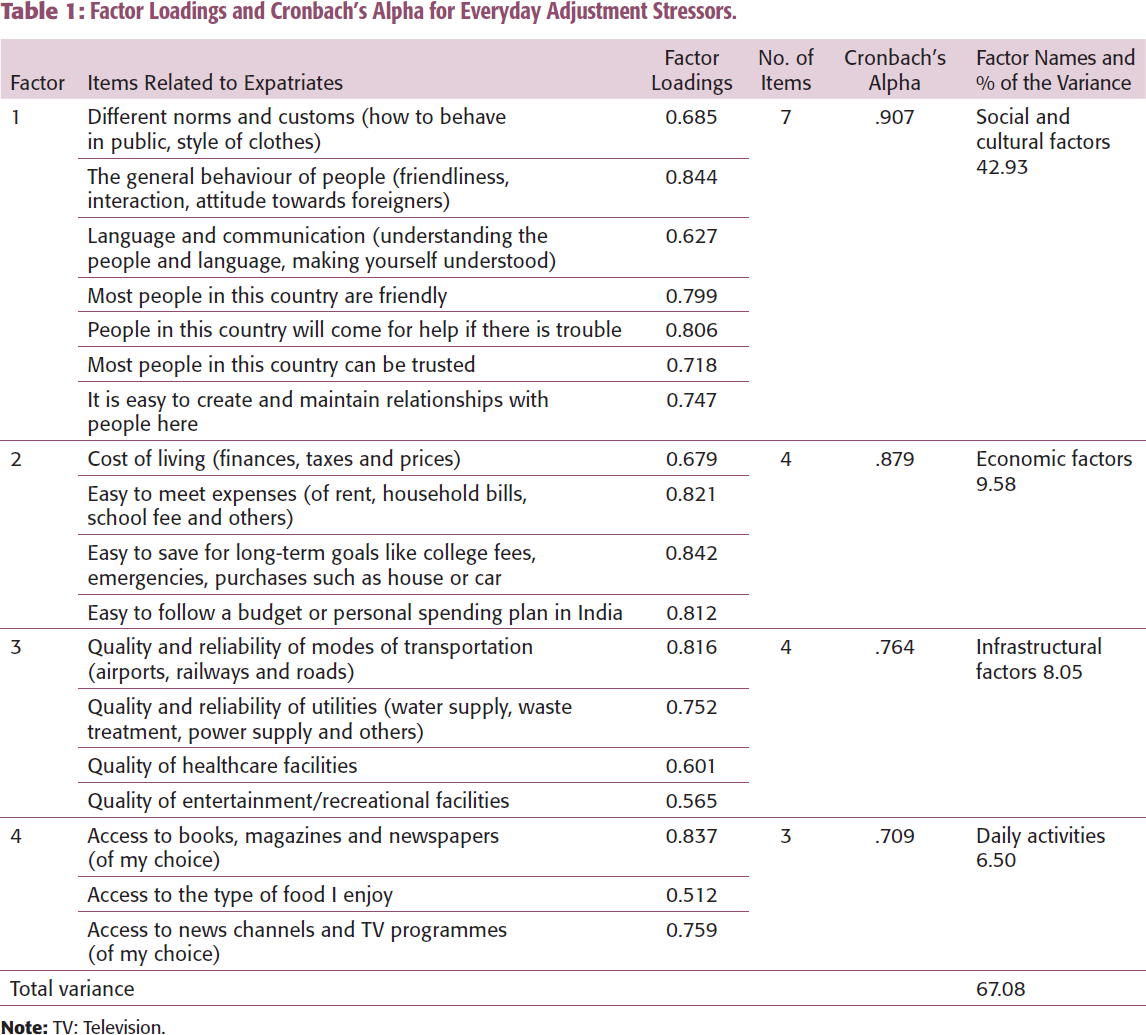
To empirically validate the conceptual framework, we conducted an exploratory factor analysis (EFA) on everyday adjustment factors. This included items on infrastructural factors, social and cultural factors, economic factors, quality of life, daily activities and relationships with locals, English language comfort and local language comfort. These factors pertain to expatriates’ daily non-work activities, which significantly influence their overall adjustment. To investigate the dimensionality of the measure, we employed EFA, a statistical method used to uncover the underlying structure within a large data set (Fabrigar et al., 1999). The EFA identified the underlying factors for 24 items assessing expatriates’ everyday adjustment and 5 items assessing expats’ language comfort. The Kaiser–Meyer–Olkin (KMO) measure of sampling adequacy assesses the proportion of variance in the variables that might be attributed to underlying factors. A satisfactory KMO value is essential for conducting EFA. In this study, the KMO values for the expats’ everyday adjustment scale were 0.894 and 0.692 for language comfort, indicating acceptable levels of sampling adequacy. We conducted a factor analysis by iteratively entering all items into Statistical Package for the Social Sciences (SPSS), adding or removing items based on cross-loadings, and excluding items that did not load onto any factors. Principal component analysis (PCA) with varimax rotation was used to extract the factors. According to the Kaiser criterion, factors were selected based on eigenvalues greater than 1. This process yielded four distinct factors, resulting in an 18-item measure of expatriates’ everyday adjustment.
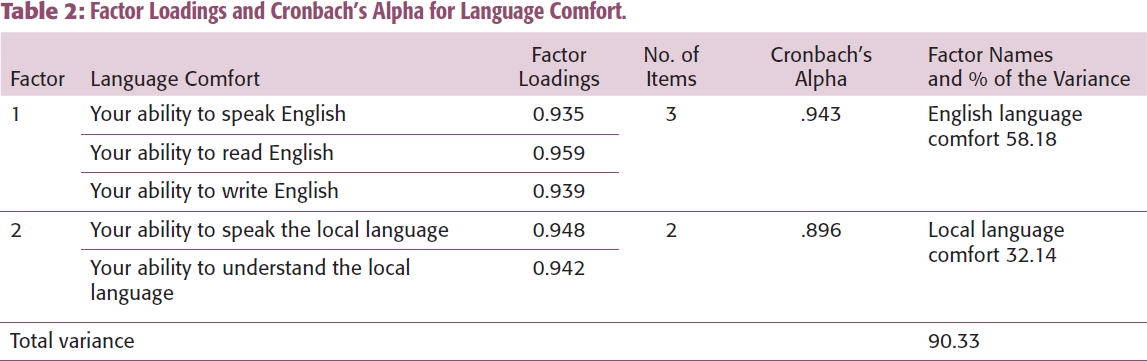
The factor analysis revealed four underlying factors related to expatriates’ everyday adjustment: social and cultural factors, economic factors, infrastructural factors and daily activities. These factors collectively accounted for approximately 67.08% of the total variance. The high item loadings indicate strong correlations with the dimensions they measure. The two factors were loaded separately, measuring the expat’s comfort with English and the host country’s local language. Together, they accounted for 90.33% of the variance. Additionally, Cronbach’s alpha values were calculated to assess the reliability of the factors. Table 1 presents the extracted factors, their factor loadings, and Cronbach’s alpha values for everyday adjustment stressors, and Table 2 presents the extracted factors, their factor loadings, and Cronbach’s alpha values for language comfort.
Factor Loadings and Cronbach’s Alpha for Everyday Adjustment Stressors.
Factor Loadings and Cronbach’s Alpha for Language Comfort.
Expat’s Everyday Adjustment Stressors
The expatriates’ everyday adjustment was measured on a scale of 1–10, where 1 indicates the least support for adjustment, and 10 indicates the most support for adjustment. This measurement includes various factors such as infrastructural elements (e.g., transportation, utilities), social and cultural aspects (e.g., norms, customs), economic factors (e.g., cost of living, savings), quality of life (e.g., entertainment or recreational facilities), daily activities (e.g., sports, food) and relationship with locals (e.g., friendliness, trustworthiness). Each stressor was assessed using four items.
Expat’s Language Comfort
Expatriates’ language comfort was measured on a five-point scale to assess their proficiency in both English and the local language (1 = I do not know this language, to 5 = I am fluent in this language). Participants rated their abilities in the following areas: speaking English, reading English, writing English, speaking the local language and understanding the local language.
ANALYSIS AND RESULT
In this section, we present the analysis and inferences regarding the influence of demographic variables on cross-cultural adjustment stressors in a foreign environment.
Impact of Demographic Variables on Cross-cultural Adjustment Stressors
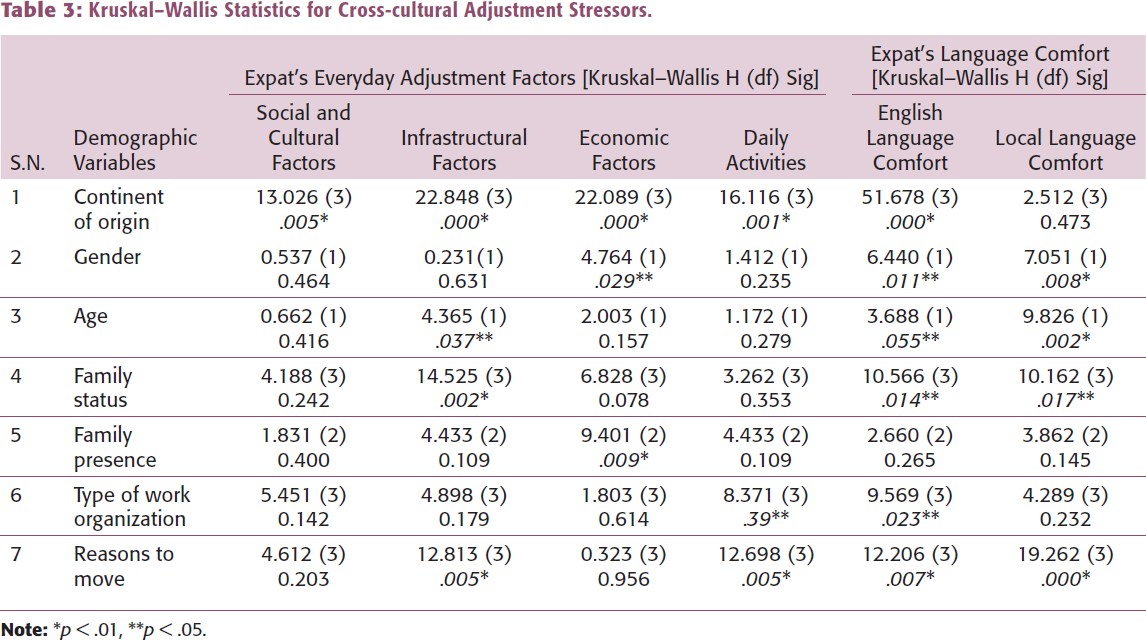
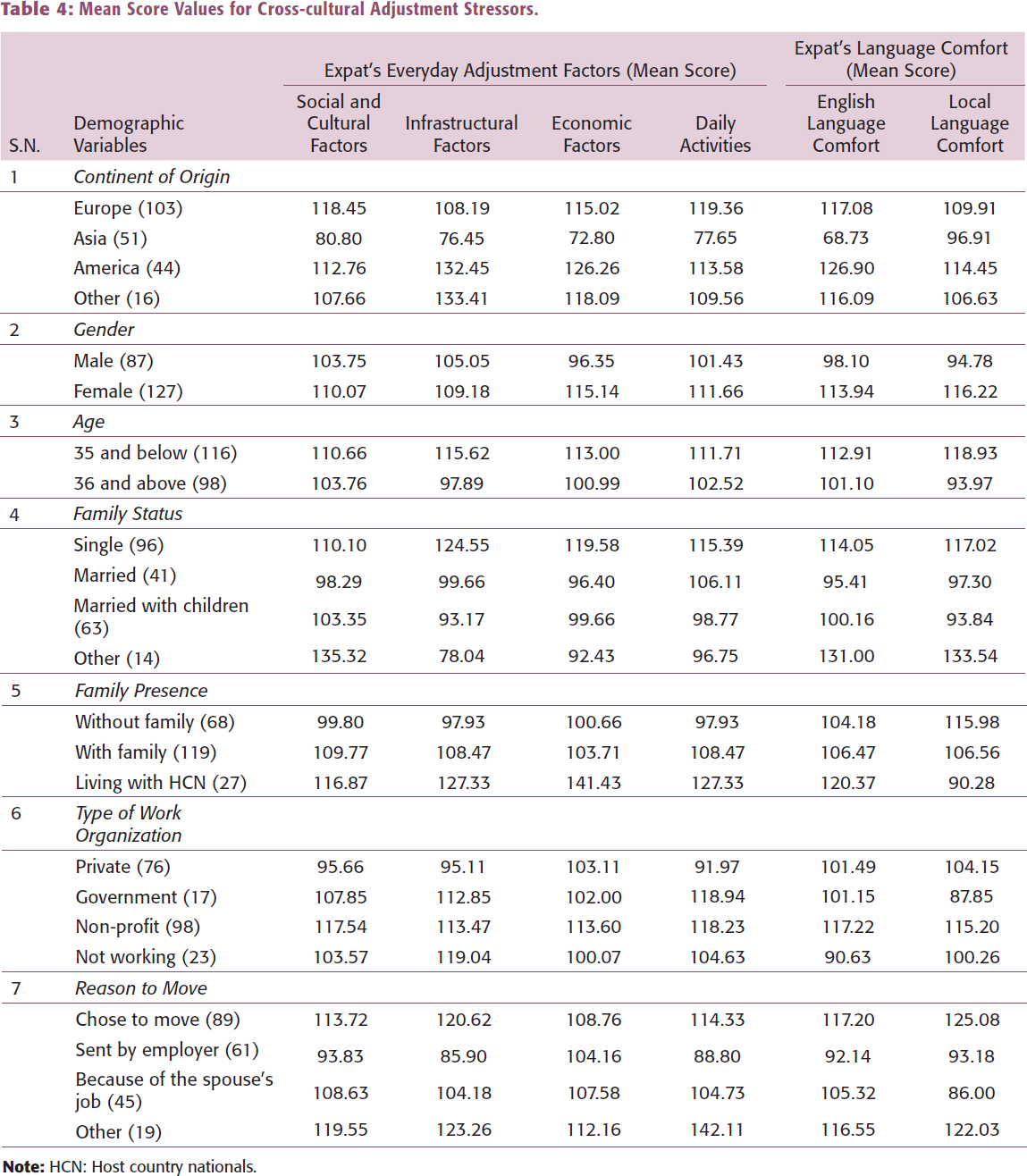
To explore the relationship between expatriates’ cross-cultural adjustment stressors and demographic variables, a nonparametric Kruskal–Wallis analysis of variance (ANOVA) test was conducted. The results of the analysis are shown in Table 3, and the mean score values for each demographic variable are presented in Table 4. The Kruskal–Wallis test calculates the H value after ranking the mean adjustment score of expats and summing the ranks by groups. The statistical significance of the H value is then tested using the chi-square distribution.
Kruskal–Wallis Statistics for Cross-cultural Adjustment Stressors.
Mean Score Values for Cross-cultural Adjustment Stressors.
Expat’s Social and Cultural Factors
From Tables 3 and 4, we observed that the mean rank of the continent of origin was statistically significant, even after adjustment for social and cultural factors. The Kruskal–Wallis H test showed a statistically significant difference in adjustment scores between expats from different continents, χ2(3) = 13.026, p = .005, with a mean rank score of 118.45 for European expats, 80.80 for Asian expats, 112.76 for American expats and 107.66 for other category expats, which include expats from Australia, Oceania and Africa. We observed strong evidence of a difference between the mean ranks of at least one pair of groups. Pairwise comparisons using Dunn’s tests indicated that European country expats scored higher on adjustment to social and cultural factors than Asian expats (p = .002). This difference could be attributed to cultural similarities. India has strong cultural and political ties with European powers, which have left a lasting influence on aspects such as language, education, governance and social norms. European countries generally share greater cultural similarity with Westernized aspects of Indian urban centres, such as language and business practices, making the transition smoother. Moreover, the widespread use of English in India facilitates communication, helping expatriates integrate with locals and obtain the necessary information about norms, customs and other societal prerequisites. On the contrary, Asian expats from countries like Japan and Korea may struggle with India’s more fluid social structures and informal communication styles, which significantly differ from their more formal and hierarchical culture (Damodaran, 1985). The cultural distance between many Asian countries and India can also be greater, making it harder for Asian expatriates to adjust to the local social norms and practices.
Expat’s Infrastructural Factors
From Tables 3 and 4, the Kruskal–Wallis H test showed a significant difference in the adjustment scores between expats from different continents with respect to infrastructural factors, χ2(3) = 22.848, p = .000, with a mean rank score of 108.19 for European expats, 76.45 for Asian expats, 132.45 for American expats and 133.41 for other expats. A pairwise post-hoc Dunn’s test with Bonferroni adjustment indicated that Asian expats were significantly different from European expats (p = .016), American expats (p = .000) and other expats (p = .008). This finding suggests that Asian expats from countries like Japan and Korea have less favourable attitudes towards differences in the host country than expats from American and European countries. Asian expats are accustomed to highly advanced and efficient infrastructure systems, including public transportation, healthcare and utilities. When exposed to different infrastructural conditions, such as traffic congestion, inconsistent public services and varying levels of urban development, they find these differences significantly challenging. This result aligns with Chang (1996). In contrast, European and American expats are more accustomed to fast-developing urban environments, enabling them to handle infrastructural challenges such as congestion, housing shortages and varying levels of public service. However, these issues may feel more foreign for Asian expats as they come from a relatively advanced infrastructure.
Along with the continent of origin, other variables such as age, family status and reasons for moving were also found to have a significant influence on adjustment to infrastructural factors. Expat’s adjustment across age categories χ2(1) = 4.365, p = .037 showed a mean rank score of 115.62 for younger expats and 97.89 for older expats. Older expats may have ingrained habits and preferences developed over many years, making it harder for them to adapt to new infrastructure. They might find it more difficult to adjust to the variability in healthcare, transport and housing conditions common in India. Additionally, younger expatriates tend to be more flexible and open to change, which helps them adapt more quickly to new environments. They are often more tech-savvy, enabling them to navigate and utilize local resources and services more efficiently, such as using apps for transportation, accommodation and other daily needs. Moreover, younger expats might have fewer health-related concerns, making it easier for them to cope with the infrastructural challenges in healthcare and daily living. Older expats, on the other hand, might require more reliable healthcare services and may find navigating differences in medical infrastructure more challenging.
An expat’s adjustment was different across family status categories χ2(3) = 14.525, p = .002, with a mean rank score of 124.55 for single expats, 99.66 for married expats, 93.17 for married expats with children, and 78.04 for other category expats. Dunn’s pairwise comparison was only significant for single expats versus married with children expats (p = .010). The prerequisites for a single individual differ from those for an individual with a family. A single individual can be more accommodating or compromise to a certain extent in areas such as accommodation, transportation and healthcare. On the contrary, an individual with a family has to be more cautious about these aspects, as they face additional responsibilities for managing their children’s well-being, schooling and social integration.
Similarly, the reason to move to India was also significantly different, χ2(3) = 12.813, p = .005, with a mean rank score of 120.62 for expats who chose to move, 85.90 for expats who have been sent by their employer, 104.18 for expats who have relocated because of spouse’s job and 123.26 for expats who have relocated because of other reasons such as career prospects or relationships. Dunn’s pairwise comparison showed strong evidence of a difference between expats who chose to move and expats sent by the employer (p = .004). An individual who willingly decides to relocate to another country would prepare themselves in advance to combat the differences, which helps ensure a smooth stay. They are more likely to actively explore living conditions, housing options, transportation, public utilities and other infrastructural aspects of the host country before making the move. This proactive approach allows them to prepare better and manage expectations about the challenges they will face. However, involuntary decisions made by company-assigned expatriates are not well prepared for unfamiliar environments.
Expat’s Economic Factors
From Tables 3 and 4, the Kruskal–Wallis test showed a statistically significant difference in adjustment scores between expats from different continents, χ2(3) = 22.089, p = .000, with a mean rank score of 115.02 for European expats, 72.80 for Asian expats, 126.26 for American expats and 118.09 for other expats. A pairwise post-hoc Dunn’s test with Bonferroni adjustment indicated that Asian expats were significantly different from European (p = .000) and American expats (p = .000). American and European country expats found India more affordable, as they come from countries with a higher cost of living. In contrast, Asian expats are more mindful about their saving and spending patterns, face a greater disparity between their home country pricing and India’s pricing, leading to a steeper learning curve in adjusting to local cost structures.
The variable family presence, which captures the role of the family in the adjustment of expatriates in host locations, was also found to be statistically different with factors related to economic adjustment χ2(2) = 9.401, p = .009, with a mean rank score of 100.66 for expats who live without their family, 103.71 for expats who live with their family, and 141.43 for expats who live with HCNs in India. A pairwise post-hoc Dunn’s test with Bonferroni adjustment indicated that expats who live with HCNs were significantly different from expats who live with their families (p = .013) and expats who live without their families (p = .011). These results indicate that expats who live with family members or with HCNs tend to be better adjusted to economic factors than single expats, due to the benefits they receive from a structured support system that helps them navigate financial challenges more effectively. Moreover, families can share the burden of financial cost, healthcare expenses and daily living expenses, making it easier to manage the overall cost of living (Filipič Sterle et al., 2018). Additionally, close interactions with HCNs can offer valuable insights into cost-effective living strategies, such as finding affordable housing and understanding local markets for day-to-day needs. This local knowledge helps expatriates make informed financial decisions and adapt more quickly to the economic environment of the host country (Mumtaz & Nadeem, 2020). On the contrary, single expats may face higher individual costs for housing and healthcare, and they often lack the immediate social support that families or HCNs provide. While single expats might have more flexibility in their spending, they also need to navigate financial challenges independently, which can be more stressful and less efficient.
A Kruskal–Wallis H test also showed a statistically significant difference between adjustment to economic factors and gender, χ2(1) = 4.764, p = .029, in which the mean rank of female expats (115.14) is higher than that of male expats (96.35). Female expats tend to be more proactive in seeking and utilizing support networks, both professional and personal, which can provide valuable resources and advice for managing financial challenges. In contrast, male expatriates might rely more on their own resources and less on external support, which can sometimes lead to less effective financial management.
Expat’s Daily Activities
From Tables 3 and 4, the Kruskal–Wallis test showed a statistically significant difference in adjustment scores between expats from different continents, χ2(3) = 16.116, p = .001, with a mean rank score of 119.36 for European expats, 77.65 for Asian expats, 113.58 for American expats and 109.56 for other expats. A pairwise post-hoc Dunn’s test with Bonferroni adjustment indicated that Asian expats were significantly different from European (p = .000) and American expats (p = .028). Many Europeans and Americans have had more exposure to Indian culture or similar developing economies, making it easier for them to adjust to routine activities. In contrast, Asian expatriates from countries that share fewer similarities with India may experience a greater cultural gap, making it more difficult to adapt to their routines quickly.
The type of working organization was also statistically different with factors related to the expat’s daily activities χ2(4) = 8.371, p = .039, with a mean rank score of 91.97 for expats working in private organizations, 118.94 for expats working in government organizations, 118.23 for expats engaged in non-profit organizations, and 104.63 for expats who are not working in the host country. A pairwise post-hoc Dunn’s comparison was significant only for expats working in private organizations versus non-profit organizations (p = .033). These results indicate that expats involved in non-profit organizations could take leisure time to perform their routine or daily activities, compared to expats working in private organizations who are engaged in meeting deadlines and completing assignments.
A Kruskal–Wallis H test was also statistically significant for the variable reason to move and adjustment to daily activities, χ2(3) = 12.698, p = .005, with a mean rank score of 114.33 for expats who chose to move, 88.80 for expats who have sent by their employer, 104.73 for expats who have relocated because of spouse’ job, and 142.11 for other categories of expats. Dunn’s pairwise comparison shows that expats who mentioned other reasons for relocating, such as work, career or relationships, scored higher on adjusting to daily activities than those sent by the employer (p = .006). The reason could be that the likelihood of experiencing culture shock is lower, as they have voluntarily chosen the host country.
Expat’s Language Comfort
From Tables 3 and 4, the Kruskal–Wallis test showed that there was a statistically significant difference between the factor English language comfort and the continent of origin, with χ2(3) = 51.678, p = .000*, with a mean rank score of 117.08 for European expats, 68.73 for Asian expats, 126.90 for American expats, and 116.09 for other expats. A pairwise post-hoc Dunn’s test with Bonferroni adjustment indicated that Asian expats were significantly different from European expats (p = .000), American expats (p = .000) and other expats (p = .001). This indicates that European, American and other country expats scored higher in their comfort with English than Asian country expats, because most non-Asian expats are from English-speaking, developed countries, while Asian expats are from non-English-speaking countries.
The Kruskal–Wallis test showed a significant difference in English language comfort and gender, χ2(1) = 6.440, p = .011, with a mean rank of 113.94 for female expats and 98.10 for male expats. The Kruskal–Wallis statistic, χ2(1) = 7.051, p = .008, was also significant for gender and local language comfort, with mean ranks of 116.22 for female expats and 94.78 for male expats. The results indicate that female expats scored higher in both English and local-language comfort, which may be due to their tendency to build stronger social networks and their interest in building relationships and engaging with local cultures.
The Kruskal–Wallis test showed a significant difference in the variable age, and expats’ English language comfort, χ2(1) = 3.688, p = .055, with a mean rank of 112.91 for expats in the 35 and below age group and a mean rank of 101.10 for expats in the 36 and above age group. The Kruskal–Wallis statistics were also found to be significantly different for age and local language comfort, χ2(1) = 9.826, p = .002. The mean rank for expats in the 35 and below age group is 118.93, and the mean rank for those aged 36 and above is 93.97. The results showed that younger expats scored higher in language comfort than older expats, because younger generations are more comfortable with both English and the local language, as they tend to have more acquaintances from different backgrounds. The majority of the younger expats are single and living with locals. On the contrary, older expats live with family members and mostly use their native language when interacting with each other.
The Kruskal–Wallis test showed a statistically significant difference in English language comfort and family status among expats, χ2(3) = 10.566, p = .014, with a mean rank of 114.05 for single expats, 95.41 for married expats, 100.16 for expats married with children, and 131.00 for the other category expats. Pairwise comparison showed that married expats and those in the other category differed statistically (p = .062), indicating that the latter scored higher in their comfort with English due to their need to connect with their partner’s friends, family and community.
The Kruskal–Wallis statistics showed a significant difference in family status and expats’ local language comfort, χ2(3) = 10.162, p = .017, with a mean rank for single expats of 117.02, 97.30 for married expats, 93.84 for married with children expats, and 133.54 for the other category expats. A pairwise comparison shows that single expats and married expats with children differ significantly (p = .082), indicating that single expats scored higher on local language comfort. Regarding both English and local-language comfort, we observed that the mean rank of family expats (married and married with children) was lower because they were less likely to interact with and develop relationships with host-country people, in contrast to single and other-relationship expats. These expats look for social support from locals, beyond family members, and enter into relationships with locals. In addition, the dominance of English or the local language in their interactions, unlike married people who make more use of their native language in day-to-day interactions, could also be a reason for this difference.
For the variable type of work organization, the Kruskal– Wallis statistics, χ2(3) = 9.569, p = .014, showed a significant difference in the mean ranks of expats with English language comfort. The expats who work in a non-profit organization, such as educational institutions and NGOs, had a high mean rank of 117.22, followed by expatriates working in private organizations (101.49), next with a significantly less difference, with a mean rank of 101.15, were expats working in government organizations. The expats who were not working had the lowest mean rank of 90.63 across all work organization. Pairwise comparison showed that expatriates working in non-profit organizations and those who are not working are statistically different (p = .063), as language proficiency is the criterion used to evaluate candidates for NGO and educational institution positions.
The reason for the move is the other variable, which was significantly different across the groups regarding English and local-language comfort. The Kruskal–Wallis statistics for English language comfort, χ2(3) = 12.206, p = .007, with a mean rank score of 117.20 for expats who chose to move, 105.32 for expats who relocated because of spouse’s job, 92.14 for expats whom the employer has sent, and 116.55 for expats who moved because of other reasons such as their parent’s job or following a relationship. The Kruskal–Wallis statistics showed a significant difference between reason to move and local language comfort, χ2(3) = 19.262, p = .000, with a mean rank score of 125.08 for expats who chose to move, 86.00 for expats who relocated because of spouse’s job, 93.18 for expats whom the employer has sent, and 122.03 for expats who moved because of other reasons. A pairwise comparison for both English and the local language shows that expatriates who chose to relocate scored higher than those sent by their parent company (p = .005), due to the voluntary nature of relocation. This voluntary decision would have been based on their level of comfort with the language for interactions in the host country.
CONCLUSION
Expatriates often experience stress as they try to adjust to a new culture, including adapting to new social norms, behaviours and expectations. Demographics play a critical role in shaping how easy or difficult this process is. For instance, younger expatriates may be more open to embracing new cultures. In comparison, older expatriates, despite their greater experience, might have established routines and preferences that make adapting to a new culture more challenging. Gender significantly influences the experience of expatriates in India, particularly social integration and adaptation. Expatriates from certain cultural backgrounds may find it easier to adjust to similar host cultures because of shared cultural values, work ethics and social norms. Conversely, expatriates from non-Western countries may encounter more challenges in adjusting to Western workplaces and societies, especially if there are significant cultural gaps in communication, decision-making styles and expectations. Expatriates with prior international experience or those who have spent a considerable amount of time in the host country tend to adjust more easily due to their familiarity with cross-cultural interactions and local norms. Longer exposure allows expatriates to develop a deeper understanding of the host culture, build stronger social networks, and become more proficient in the local language, which facilitates smoother adjustment. Conversely, expatriates with limited international experience or shorter stays may struggle more with cultural differences and infrastructural challenges (Jain, 2020). This study highlights several key factors that affect an expatriate’s everyday adjustment in a host country, particularly in a new environment. These factors can significantly influence how well an expatriate adapts to life in the host country and how effectively they cope with cross-cultural challenges. The factors mentioned, such as infrastructural, social and cultural, economic, daily activities and language comfort, represent a comprehensive range of elements that collectively shape the overall expatriate experience. Additionally, individual variability plays a crucial role in expatriate adjustment, encompassing a range of personal characteristics and experiences that significantly influence how well an expatriate adapts to a new culture. Personality traits, such as openness to experience, resilience and emotional stability, are key determinants of how effectively an expatriate can navigate cultural differences and cope with the challenges of living abroad. For instance, individuals who are more open to new experiences are generally more adaptable to cultural differences, making their adjustment process smoother (Zhu et al., 2016). Previous international experience is another critical factor. Expatriates who have lived or worked abroad before tend to adjust more easily because they are familiar with the challenges of cross-cultural adaptation and have developed effective coping strategies. This experience provides them with a better understanding of how to manage cultural differences and integrate into new environments (Bhatti, 2013). Cultural sensitivity, or the ability to understand and respect cultural differences, also plays a significant role in adjustment. Expatriates with high cultural sensitivity are better equipped to navigate social norms and behaviours in the host country, facilitating smoother interactions and integration. Additionally, having a strong support network, including friends, family and colleagues, can provide emotional support and practical assistance, making the adjustment process less stressful and more manageable (Zhu et al., 2016). Self-efficacy, or confidence in one’s ability to handle new situations and challenges, enhances an expatriate’s ability to adapt to a new culture. Those with higher self-efficacy are more likely to take proactive steps to integrate into the host environment and overcome obstacles. Personal motivation, whether voluntary or involuntary, also impacts adjustment. Voluntary expatriates, who choose to move for personal or professional reasons, often have a more positive outlook and are more motivated to adapt, leading to better adjustment outcomes.
The adjustment process for expatriates is not uniform. Individuals with different demographic profiles may face unique challenges and opportunities in adapting to a new culture. Understanding the role of demographic variables such as age, gender, education, cultural background, prior international experience, and the presence and reasons for moving with family is crucial for organizations that want to support expatriates effectively. Tailoring support programmes and offering resources that account for these demographic differences can help expatriates feel more comfortable and improve their chances of a successful adjustment. In short, an expatriate’s demographic background shapes their experiences, challenges and ability to navigate the complexities of living and working abroad.
It was observed that expats from European and American countries have more favourable attitudes towards cultural differences compared to Asian expats. This can be attributed to factors such as cultural values (individualism vs collectivism), exposure to multicultural environments, workplace dynamics, psychological traits and language proficiency. Female expats, single expats and younger expats are more comfortable adjusting to everyday factors due to their social, psychological and situational advantages, which make it easier for them to navigate the challenges of the host environment. Women often exhibit higher emotional intelligence, interaction and adaptability; single expatriates have more flexibility and fewer logistical concerns; and younger expatriates tend to be more open-minded, resilient and technologically savvy. However, it does not imply that expatriates with families face worse adjustment. Rather, their challenges differ and may include managing larger housing needs, providing education for children, and providing healthcare for the family. These family-related responsibilities can complicate their adjustment process, but with adequate support and resources, family-expats can also achieve successful adaptation. Understanding these distinct challenges is crucial for organizations to provide tailored support that addresses the specific needs of both single expatriates and those with families, ensuring a positive adjustment experience for all.
The voluntary or involuntary nature of an expatriate’s decision to move to a foreign country has a profound impact on how well they adjust to the new environment. This distinction influences both their attitude toward the destination country and their coping mechanisms in dealing with the challenges of expatriation. Voluntary expatriates, who choose to move for personal reasons (such as lifestyle changes, career opportunities or adventure) or professional reasons (such as being recruited for a job abroad), tend to have more agency in their decision-making and may experience better adjustment. Involuntary expatriates, who are assigned or forced to relocate due to work, family or political reasons, may face additional challenges due to a lack of personal agency in the decision-making process.
The type of organization in which expatriates work also significantly influences their adjustment. Expatriates in private organizations often face greater demands on their time due to high-performance expectations, long hours and pressure to achieve business goals, leaving them with less time for leisure and personal activities. Conversely, expatriates in non-profit organizations typically experience a more manageable workload and a stronger emphasis on work–life balance, giving them more freedom to engage in daily activities outside of work.
This study identifies various factors that could probably influence expatriates’ adjustment directly or indirectly, enabling decision makers to identify a suitable candidate for expatriation based on the host country characteristics. The right combination of expatriate and host country characteristics can lead to successful expatriation. Future research can further examine factors related to work adjustment. The demographic characteristics of expatriates significantly influence how they adjust to cross-cultural stressors in the host country. The way they experience challenges related to culture shock, work, social integration, and day-to-day life depends on factors such as their age, gender, prior international experience, education and cultural background. Understanding these demographic differences helps organizations tailor their support mechanisms for expatriates, ultimately improving their chances for successful adjustment and enhancing their overall experience abroad.
Footnotes
Declaration of Conflicting Interests
The authors declared no potential conflicts of interest with respect to the research, authorship and/or publication of this article.
FUNDING
The authors received no financial support for the research, authorship and/or publication of this article.

email:
email:
email: