




Abstract
The purpose of this study is to conduct a comprehensive two-level analysis of the literature on employee green behaviour in the hospitality industry. It seeks to map current research trends and identify future directions, thereby offering a holistic understanding of the scholarly landscape. Using a two-tier approach, the study integrates bibliometric analysis with thematic content review to capture the breadth and depth of existing academic work across disciplines. A key finding is the interdisciplinary nature of research on green behaviour, which reveals how multiple fields converge on this topic. This study contributes by synthesizing fragmented insights, enhancing the understanding of green behaviour among hospitality employees and outlining new avenues for future inquiry.
Executive Summary
This study presents a two-level literature review on employee green behaviour, encompassing both a bibliometric analysis and a detailed thematic review of the literature in the hospitality industry. The purpose is to trace the trend of research, distinguish intellectual structures and the future path of this rapidly evolving field. To assess the relevance of the topic to the literature, a bibliometric analysis based on Scopus data from 2004 to 2023 reveals that the number of publications has increased since 2020, indicating a growing academic and professional interest in sustainability-related research. Critical journals, authors and country partnerships are identified, and major clusters of research are found in the areas of green HRM, leadership, and green innovation. The systematic review of 31 related studies reveals an ecosystem of green creative behaviour determinants comprising of organizational practices, leadership style, psychological processes, and employee values. The review demonstrates that green HRM, corporate social responsibility (CSR) programmes and supportive leadership have a considerable effect on green creativity of employees by mediating through green climate, work engagement and emotional exhaustion. These relationships are often based on theoretical frameworks, such as the conservation of resources, ability–motivation–opportunity, resource-based view and social exchange theory. Although there have been significant developments, the discipline remains fragmented, with excessive dependence on quantitative and cross-sectional designs, a geographical focus in select regions and a lack of multi-level or integrative theoretical perspectives. The research suggests the following directions, including longitudinal and mixed-method studies, cross-cultural and sectoral comparisons, multi-level modelling and the inclusion of new themes such as customer influence and digital green technologies. The review will provide a structured, sector-specific synthesis that informs researchers, practitioners and policymakers on how sustainable behaviour can be promoted in hospitality workplaces.
Keywords
The tourism sector is a trillion-dollar industry that contributes approximately 7% of global exports and plays a major role in national economies. However, this scale of economic activity generates a substantial environmental footprint. According to Lenzen et al. (2018), the hospitality and tourism industry is responsible for nearly 8% of global greenhouse gas emissions, making it a significant contributor to climate change. This environmental impact has triggered increasing concern among consumers, policymakers and stakeholders, prompting a call for more sustainable and responsible practices across the sector.
One area receiving growing attention is the role of employees in supporting environmental initiatives. Many hospitality organizations are encouraging pro-environmental behaviours (PEB), such as energy conservation, water saving and waste reduction (Abas, 2024; Farrukh et al., 2025). Despite these efforts, academic research on employee green behaviour remains fragmented across multiple disciplines, making it difficult to consolidate knowledge, trace theoretical progress, or identify consistent methodological patterns. This fragmentation poses a challenge for both researchers and practitioners seeking to understand and enhance employee-driven sustainability in the hospitality context.
To clarify and structure this evolving field, several recent bibliometric studies have attempted to map the research landscape on employee green behaviour. For example, Zhang et al. (2024) conducted a bibliometric content analysis of articles from the Web of Science, focusing on antecedents and outcomes but providing limited theoretical integration. Widyanty et al. (2025) expanded their data sources to include both Scopus and Web of Science, exploring knowledge structures. Yet their study lacked sector-specific insights. Ali and Juan (2024) carried out a large-scale analysis using CiteSpace, but their work remained descriptive and did not engage with conceptual depth or thematic synthesis.
These studies offer valuable overviews but fall short in several areas. Most notably, they do not systematically connect bibliometric findings with theoretical frameworks, do not critically evaluate methodological trends and fail to provide targeted insights for specific sectors, such as hospitality. As a result, there remains a need for a review that not only maps publication trends but also synthesizes core themes, theories and methodological developments within the context of hospitality research.
This study addresses these limitations by employing a two-tier literature review approach that combines bibliometric analysis with a traditional thematic review. This integrated method allows for both quantitative mapping of the intellectual landscape and qualitative interpretation of key conceptual patterns. By focusing specifically on employee green behaviour in the hospitality sector, the study contributes a sector-specific, theory-informed and methodologically reflective synthesis of the literature.
The objectives of this review are threefold. First, it provides a historical overview of the development of research on employee green behaviour, highlighting influential authors, institutions and publication patterns. Second, it identifies major research clusters and intellectual structures through co-citation and keyword analyses. Third, it examines theoretical models, mediating mechanisms and methodological designs that have shaped the literature and suggests directions for future research.
This study consists of two core components: a bibliometric analysis and a thematic content review. The bibliometric component quantitatively evaluates publication trends and scholarly impact, while the thematic review qualitatively interprets dominant concepts, theoretical applications and emerging topics. Together, these approaches provide a comprehensive and structured perspective on the field.
We believe that this review makes significant contributions to fostering connections within the environmental behaviour literature and has the potential to generate novel research questions that can steer the advancement of this nascent field of research. It provides valuable insights to researchers by highlighting current research topics, identifying areas that require further attention and elucidating the theoretical and methodological perspectives currently employed. Furthermore, our analysis holds significant relevance for professionals and decision-makers who are keen to gain further insights and acknowledge the efforts undertaken in employee green behaviour research.
CONTEXT OF EMPLOYEE GREEN BEHAVIOUR
The growing environmental impact of human activities has raised serious concerns about the sustainability of current development trajectories (Khan & Soomro, 2025; Musova et al., 2025). Industrial expansion, rapid urbanization and excessive resource consumption have placed unprecedented pressure on natural ecosystems, contributing to climate change, biodiversity loss and ecological degradation (Rana et al., 2025). In response to these global challenges, there has been increasing attention to how organizations and individuals can contribute to environmental sustainability. Within this broader discourse, the workplace has emerged as a critical arena for fostering pro-environmental behaviour (Ansari et al., 2021). One important dimension of this shift is the concept of employee green behaviours (Yao et al., 2025), which refers to the voluntary actions taken by employees to minimize their environmental footprint and support organizational sustainability goals. These behaviours may include reducing energy consumption, recycling, supporting green initiatives and promoting sustainability within the work environment.
In the academic literature, employee green behaviour has been described using various overlapping terms, such as ‘eco-friendly behaviour’, ‘sustainable behaviour’, ‘climate-friendly behaviour’, ‘low-carbon behaviour’ and ‘environmentally responsible behaviour’. Despite variations in terminology, the central focus remains on the role of employees as agents of environmental change within their organizations. The hospitality sector, in particular, has attracted scholarly interest due to its resource-intensive operations and direct environmental impact (Farrukh et al., 2024). As a service-oriented industry with high levels of employee–customer interaction, hospitality presents unique opportunities and challenges for implementing green practices at the employee level. Understanding how and why hospitality employees engage in environmentally sustainable behaviour has thus become a pressing research agenda. This review contributes to this evolving conversation by systematically analysing how employee green behaviour has been studied in the hospitality context, with the goal of identifying theoretical trends, methodological patterns and future research directions.
The study is structured into two tiers for a comprehensive examination. Tier 1 presents the bibliometric analysis, while Tier 2 offers an in-depth content analysis of the selected literature.
TIER 1
Study Methodology
In Tier 1, we quantitatively analysed the literature on employees’ green behaviour in the hospitality industry. This quantitative analysis of literature is commonly referred to as bibliometric analysis (Abas et al., 2024; Iqbal et al., 2024). Bibliometric analysis is an effective method for systematically analysing and visualizing scientific literature on a specific topic or field. This tool can assist researchers in identifying trends, patterns and gaps in the literature and mapping out the connections between various research areas and disciplines (Shin et al., 2023). Adopting this methodology allows scholars to understand the literature’s current state and identify potential avenues for future research, thereby enhancing the calibre of academic work within the research domain (Steinberg & Boettcher, 2023). Bibliometric analysis can be a valuable tool in the realm of green behaviour research within the hospitality industry, given the scattered nature of research across various fields and disciplines and the rapidly evolving literature. The present investigation provides a comprehensive overview of the current state of research on employee green behaviour in the hospitality sector. Additionally, it has the potential to pinpoint avenues for future research and opportunities for further inquiry while also serving as a means to bridge the gap between various domains and academic fields.
Data
The data for this section were collected from the Scopus database, which is one of the most comprehensive bibliographic databases covering scientific literature. The search string was created using a combination of keywords and Boolean operators to identify relevant articles. The search string was as follows: TITLE-ABS-KEY (‘Green creativity’ OR ‘Creative green behavior’ OR ‘Employee green creativity’ OR ‘Green innovation’ OR ‘Green innovative behavior’ OR ‘Green thinking’ OR ‘Employee Green thinking’ AND ‘Hospitality’ OR ‘Hotel’ OR ‘Travel’ OR ‘Tourism’ OR ‘Recreation’ OR ‘Restaurant’ ). The Scopus search for the keywords mentioned in titles and abstracts yielded 86 articles (excluding conference papers and book chapters) published in English between 2004 and 2023. However, until the emergence of COVID-19, the field had grown at a relatively modest pace since its inception. After 2019, there has been a significant increase in publications, implying a substantial increase in academic interest in green creative behaviours. COVID-19 might be the biggest reason for such a boom in publications, as shown in Figure 1.
Publication Trend.
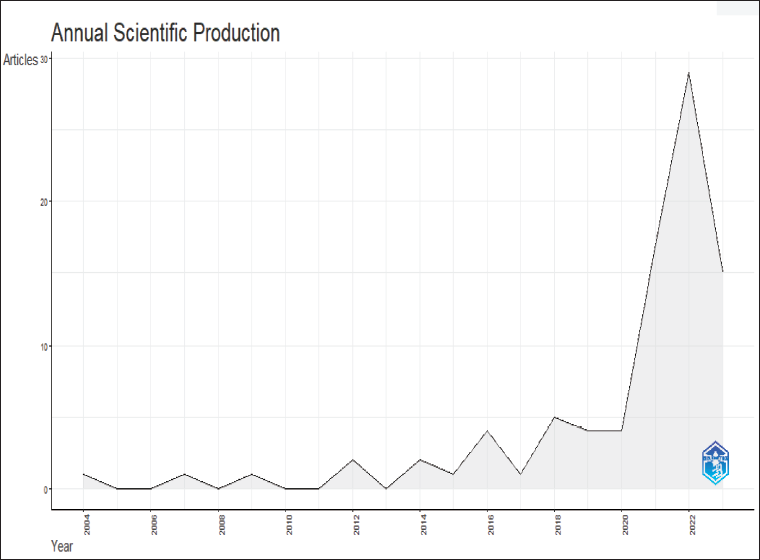
According to the distribution of publications by year of publication, interest in employee green behaviour has grown steadily over the past few years (see Figure 1). Most studies were published after 2020, that is, after the coronavirus outbreak. Before 2020, research was primarily one digit per year; after that, it began to increase to double digits, in 2022, with the highest number of articles.
The Most Productive Journals
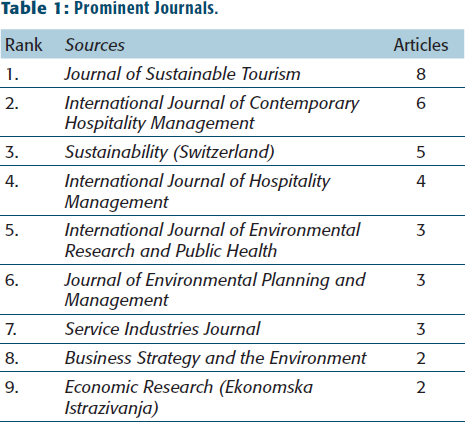
Table 1 illustrates the ten most productive journals, which account for 38 (44%) of all research papers. With 8 publications (9.4%) of research documents, the Journal of Sustainable Tourism has established itself as a leading research platform in the field of green employee behaviour in hospitality. The International Journal of Contemporary Hospitality Management was placed second (6; 6.97%), while Sustainability is placed third (5; 5.8%); the International Journal of Hospitality is ranked fourth (Table 1).
Prominent Journals.
Authorship Analysis
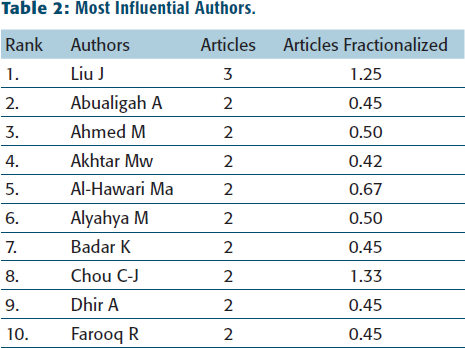
We carried out an authorship analysis, like earlier bibliometric studies (Albort-Morant & Ribeiro-Soriano, 2016), to identify the most prolific authors. The number of publications on the topic by any authors included in the study is considered part of the authorship analysis. According to Albort-Morant and Ribeiro-Soriano (2016), an author is regarded as a notable author when they publish a considerable number of articles on a particular subject. This section summarizes individual research contributions by ranking authors by the number of publications. Statistics show that LIU J. is the most prolific author, with three publications, followed by Abualigah and others with two publications, as shown in Table 2.
Most Influential Authors.
The Most Cited Documents
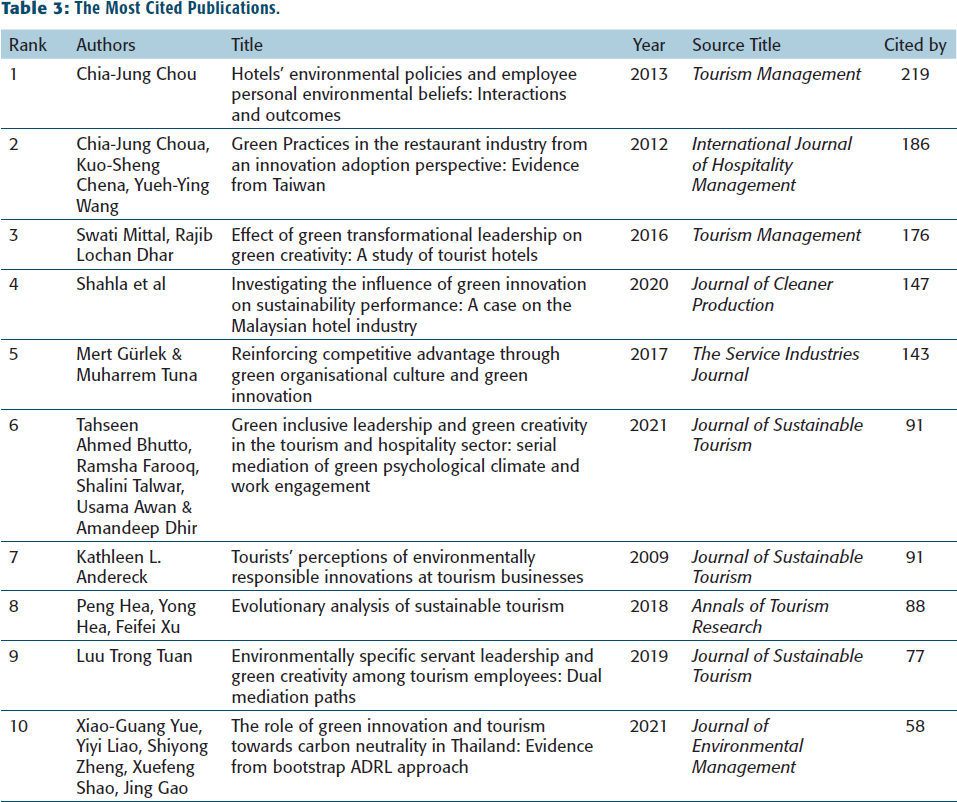
A document’s prominence and prestige can be gauged by counting the number of times other works have cited it. Table 3 provides information about the most cited documents in the field of green creativity, including author, year and publication title. The seminal work of Chou (2014) is ranked first in the most cited publications on environmental policies of hotels, having received 219 citations. The article published by Chou et al. (2012), ‘Green practices in the restaurant industry from an innovation adoption perspective: Evidence from Taiwan’, had the second-highest number of citations (186). This research provides an integrated model that combines theory of planned behaviour and the innovation adoption theory to examine the theoretical and practical considerations that go into the choice to implement environmentally friendly practices in the hospitality industry. Next, ‘Effect of green transformational leadership on green creativity: A study of tourist hotels’ by Mittal and Dhar (2016) is also quality research on green creativity in the context of the hospitality industry. The purpose of this article is to analyse green transformational leadership’s impact on inspiring green creativity by means of a green organizational identity. The 2016 paper has already been referenced by 176 other researchers.
The Most Cited Publications.
Bibliographic Coupling Among Authors
Bibliographic coupling is a measure of similarity between the research sources. The bibliographic coupling method may be used to investigate the similarities between various research players, such as journals, institutes and nations (Gu et al., 2021). Bibliographic coupling is an important tool for determining the study subject’s relevance (Vladutz & Cook, 1984). Similarly, the bibliographic coupling may be used to determine how closely the author’s study fields are connected. We employed bibliographic coupling of authors to examine the relationships between different authors and their respective research fields. The findings shown in Figure 2 are predicated on each author producing at least two documents.
Bibliographic Coupling Among Authors.
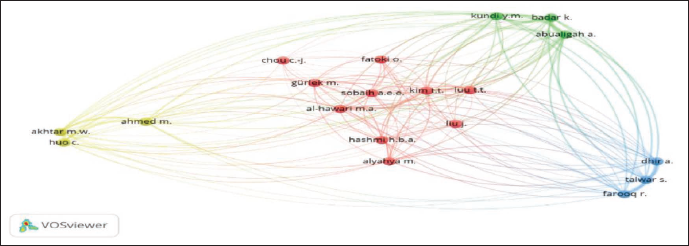
Chou CJ, Fatoki, and Gürlek M are in the red cluster, which suggests they usually conduct related research. These authors’ publications were thoroughly examined to confirm the findings. The authors in the red cluster frequently published their studies on the impact of green practices on the hospitality industry and co-authored several articles, demonstrating their shared interest in this topic. The blue colour cluster authors have worked on green human resource management (GHRM) and share the same research interests.
Regional Collaboration Analysis
Co-authorship analysis is a useful tool for assessing the level of cooperation between different research participants. Research collaboration among authors is essential to bridging different areas of expertise to generate novel concepts and lines of inquiry. In a nutshell, research collaboration is combining different people and perspectives to produce novel information. Indicators of scientific collaboration, such as co-authorship, have been widely recognized since the 1960s. According to Chinchilla-Rodriguez et al. (2012), co-authorship can probe collaboration on both the macro (involving multiple countries) and micro (with a single person).
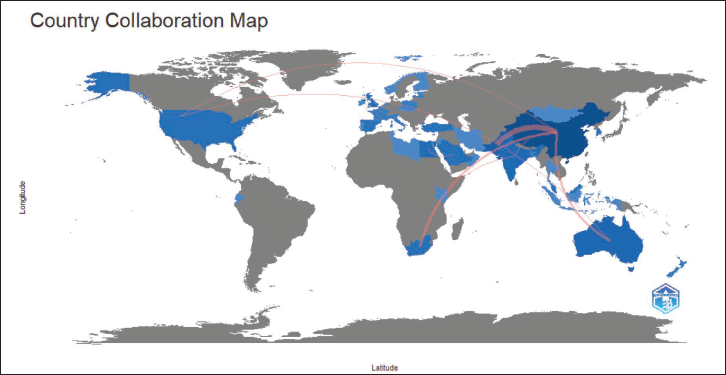
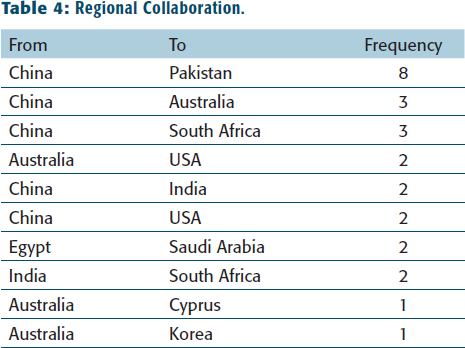
In this section, we used Biblioshiny to conduct a co-authorship study on green creativity research to explore how authors from different countries collaborate. In Figure 3 and Table 4, we can see the distribution of authors for a study on employee green creative activities. We may tally a country’s total number of publications and identify its main relationships to other countries by looking at the number of writers from each country. According to the findings in Table 4 and Figure 3, a strong collaboration exists between Chinese and Pakistani authors. Authors from China and Pakistan co-authored eight documents. In a similar vein, Australian and Chinese authors work closely together. These results point to a significant degree of social cooperation among the authors of these nations. Country collaboration is rapidly expanding due to globalization and the adoption of cutting-edge information and technology tools and infrastructure. These advancements have enabled individuals to participate in two distinct types of international activities: physical mobility and knowledge exchange. Researchers may now interchange a wider variety of information and data than they could just a few decades ago to study complex but related problems. This collaboration generates new information that may inspire innovative solutions to societal challenges.
Regional Collaboration.
Regional Collaboration.
Co-citation Analysis of Sources
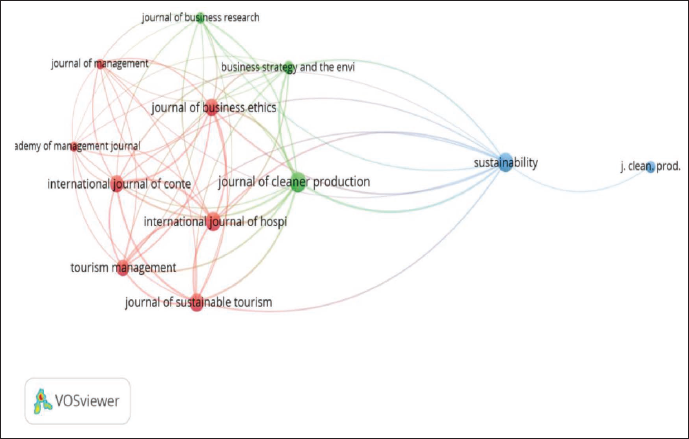
The bibliometric analysis’ co-citation analysis of journals is an intriguing feature. According to Gao et al. (2021), co-citation is a measure of how comparable different papers, authors and journals are. The number of citations is the basis for this similarity. The frequency with which two articles are quoted jointly in a third article is known as co-citation. The more closely the two documents are related to one another, the more co-citations they receive. Various co-citation formats, including journal, author and document co-citations, are reported in the literature. In this section, we looked at the journals’ co-citation analysis. According to how closely related the journals are, there are three main clusters shown in Figure 4. The journals displayed in each colour cluster are closely related through co-citations. The journals in the green colour cluster are more specialized in the field of study related to hospitality and tourism, as can be seen by taking a closer look. In contrast, journals in the red cluster tend to lean more towards the environmental viewpoints associated with green creativity.
Co-citation Analysis.
TIER 2 STUDY
Method
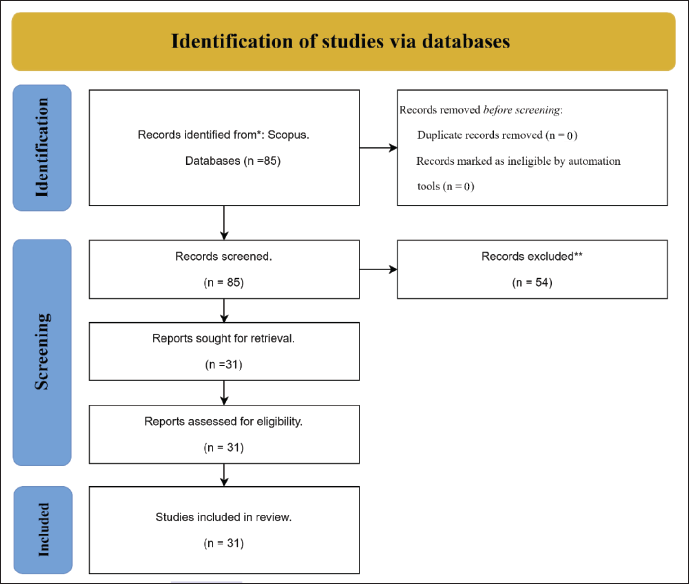
As discussed earlier, conducting a two-tier literature review, combining bibliometric and content analysis, has numerous advantages. The bibliometric analysis provides a quantitative analysis of the literature based on a search query. However, this analysis may not provide the most relevant articles and publications. Therefore, we conducted a manual review of all the bibliographic data extracted from the Scopus database using the PRISMA method to overcome this limitation. The manual review enabled us to identify and remove articles and publications that were irrelevant to our research question. By doing this, we were able to provide more precise and accurate trends and themes in the literature. This section only included studies focusing on employees’ green behaviour in the hospitality industry, particularly innovative and creative green behaviour. Initially, we had a total of 85 documents, which were manually reviewed, and 53 documents were excluded because they were not related to our target behaviour. Hence, we were left with 31 documents for content analysis. Figure 5 exhibits the screening process.
Screening Database.
CONTENT ANALYSIS: AN ECOSYSTEM OF GREEN CREATIVITY
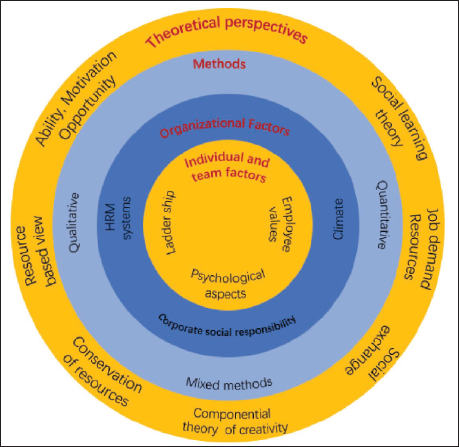
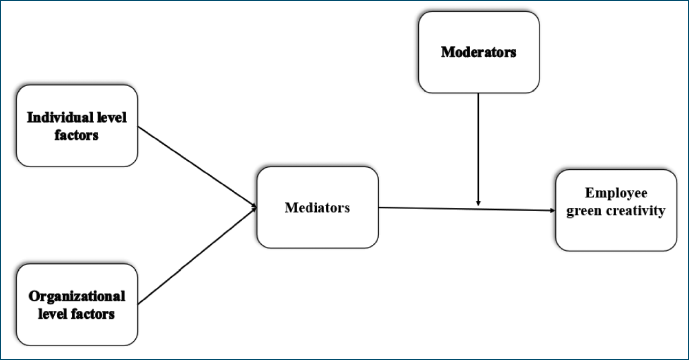
Our comprehensive systematic review has identified and established an ecosystem that encompasses multiple factors crucial for fostering employee green creative behaviour within organizations. This ecosystem comprises a range of elements (refer to Figure 6), each playing a vital role in empowering employees to adopt environmentally friendly practices while promoting creativity and innovation. In the next section, we review and comprehend each element. Drawing on the analysis of the literature, we present a general mechanism of green creative behaviour (see Figure 7).
Employee Green Behaviour Ecosystem.
A Conceptual Framework.
Green Human Resource Management
In sustainable management, researchers have concentrated on the association between green HRM practices and green innovation. In business organizations that adopt sustainability as a fundamental value, identifying the pathways by which green HRM practices can contribute to green innovation has become increasingly important. By advocating PEB, providing green training and utilizing environmentally friendly technologies, organizations can promote a sustainable culture within their organization using green HRM practices. This cluster examines how organizations can nurture a culture of innovation and sustainability by implementing green HRM practices. Green HRM is particularly important, as it can contribute to aligning sustainability objectives with HR practices and promote an organization’s environmental responsibility culture (Muisyo et al., 2022; Srivastava & Dhiman, 2022).
These practices are conceptually rooted in the ability–motivation–opportunity (AMO) theory, which posits that employees require relevant skills, motivation and enabling conditions to exhibit desired behaviours. However, few studies explicitly test AMO as a mediating framework between HRM practices and green behaviour outcomes.
Psychological Mechanism
Psychological aspects play a significant role in human behaviour and actions. Therefore, understanding the psychological mechanisms underlying any behaviour can play a crucial role in comprehending the antecedent outcomes of target behaviours, such as green creative behaviour. Understanding and comprehension of these psychological mechanisms could provide significant insight to organizations that can enhance their environmental initiatives, foster motivation among their employees to achieve a sustainable competitive advantage and help mitigate climate change issues. Our content analysis of the literature shows that various studies have used different psychological factors (Kalyar et al., 2021) to investigate their role in fostering employee green behaviour. One such element is the psychological climate, which pertains to the collective perceptions of the workforce regarding the workplace ambience, encompassing its policies, practices and protocols. The establishment of a favourable psychological climate can exert a significant influence on the attitudes, behaviours and performance of employees (Aboramadan et al., 2021).
Aboramadan et al. (2021) indicated that the psychological climate might significantly impact the realm of green innovation and creativity. Establishing a favourable environment that fosters and incentivizes employees’ eco-friendly activities and behaviour can result in heightened levels of involvement and a drive towards adopting environmentally sustainable practices.
Research has shown that a psychological climate within a workplace can foster the emergence of environmentally conscious, creative and innovative behaviour among employees. This is because workers who perceive a supportive work environment and value sustainability are inclined to participate in activities consistent with environmentally conscious objectives. These activities may include recognizing and executing eco-friendly practices, products and services.
These psychological constructs are strongly aligned with conservation of resources (COR) theory, which emphasizes how resource preservation and stress recovery influence employee engagement and innovation. Mechanisms such as emotional exhaustion and green work engagement are directly explained by COR—resource depletion hinders innovation, while resource enhancement enables it.
CSR and Various Organizational Factors
Organizations use multiple strategies to motivate their employees to engage in sustainable practices. One such strategy is corporate social responsibility (CSR). Studies show that the perception of CSR has a significant impact on employees’ behaviour. Similar to other sectors and organizations, the hospitality industry has also used CSR strategies to motivate its employees. The studies in the hospitality industry delve mainly into the intricate nexus between CSR and key organizational facets, including leadership, management commitment, a green entrepreneurial mindset and the adoption of technology. The studies included in this collection highlight the importance of incorporating environmental factors into organizational structures. They also shed light on the benefits that may be realized in the real world by adopting environmentally friendly innovation strategies. This collection of research work provides insightful information about how integrating CSR into business strategies not only improves environmental sustainability but also has the potential to provide a significant advantage over other businesses.
For instance, a study explores how CSR and ecological innovation influence the link between transformational leadership and organizational success. The findings imply that transformational leadership may boost environmentally sustainable innovation and CSR, improving organizational performance (Sobaih et al., 2022). A recent scholarly investigation (Kalyar et al., 2021) delves into the correlation between environmentally conscious mindfulness and innovative practices in sustainability within the hospitality sector. The study by the authors reveals that the active involvement of hotel employees in green processes and CSR initiatives significantly contributes to the promotion of green creativity within the organization.
Another stream within this cluster is management commitment (Karatepe et al., 2022). One of the papers examines the investigation of management commitment to the ecological environment. The research indicates that the level of dedication exhibited by management has a favourable impact on both the degree of environmental consciousness displayed by employees and the overall effectiveness of hotel operations.
Another study (Luu, 2022) examines the impact of green entrepreneurial orientation and a dual-mediation mechanism on promoting green creative behaviour within the tourism sector. The findings suggest that adopting a green entrepreneurial orientation has the potential to enhance green creative behaviour through the intermediary mechanisms of environmental concern and green innovation.
However, the underlying psychological mechanisms through which CSR or management commitment influence employee behaviour are rarely tested explicitly. Social exchange theory may explain these relationships: employees reciprocate organizational investments in CSR with discretionary pro-environmental efforts. Future research should integrate this theoretical lens to explain how perceived CSR translates into behaviour, particularly through mediators such as organizational identification or perceived support.
Leadership and Green Creativity
Another important theme identified during our analysis is the role of leadership. Leadership plays a significant role in fostering and developing a culture of sustainability in the hospitality sector. Studies under this theme explore the complex interplay of various leadership styles such as responsible leadership, environmentally focused servant leadership and green transformational leadership, examining their influence on fostering green creativity in organizational settings. Consequently, developing effective leadership strategies that enhance innovation and sustainability becomes increasingly feasible with a deep comprehension of how these leadership styles impact green creative processes in organizations. For example, one study (Farrukh et al., 2023) investigated the role of green authentic leadership in promoting employee green creative behaviour. The authors argued that leadership is vital in fostering employee green behaviour. These findings align with the job demands–resources (JD-R) model, which suggests that leadership can serve as a critical job resource, reducing stress and enhancing engagement. Green leadership, by providing autonomy, vision and support, contributes to the psychological conditions necessary for green innovation.
Employees’ Values and Beliefs
Empirical studies have demonstrated that the environmental values (Chou, 2014) of employees serve as significant predictors of their green behaviour within the organizational setting. Environmental values pertain to individuals’ convictions and perspectives regarding the preservation of the natural environment. When employees’ environmental values align with the organization’s goals, they are more likely to engage in green behaviour, such as energy conservation, waste reduction and sustainable purchasing. Research has indicated that factors such as organizational culture, leadership and social norms influence the connection between ecological values and environmentally friendly actions. Hence, it is imperative for organizations to cultivate a milieu that advocates and consolidates eco-friendly principles to stimulate employees’ environmentally conscious behaviour in the hospitality sector.
METHODS USED
The results of our systematic analysis of relevant literature indicate that a majority of studies have utilized quantitative research methodologies to investigate the environmentally responsible behaviour of employees within the hospitality industry. The reviewed studies utilized a range of quantitative methodologies, including surveys, questionnaires, experiments and statistical analysis. Employing surveys and questionnaires was a widespread approach for acquiring information regarding the workforce’s eco-friendly conduct, beliefs and perspectives (Aboramadan & Karatepe, 2021). Using quantitative methods offers researchers numerous benefits, including the ability to collect and analyse data from a large sample size, resulting in increased generalizability of findings. In addition, applying quantitative methods allows scholars to test hypotheses and establish causal relationships between variables, thereby promoting a more rigorous understanding of the factors that impact employees’ environmentally friendly behaviour.
An additional benefit of employing quantitative methodologies is their propensity to generate numerical data that can be subjected to statistical analysis. Quantitative methods enable researchers to discern patterns and correlations within the data that may not be readily discernible through qualitative techniques, such as interviews or focus groups. Quantitative methodologies can furnish precise variable measurements, facilitating outcome comparisons across diverse studies or settings.
Mechanism of Green Behaviour
In comprehending the green creative behaviour of employees in the hospitality sector, it is crucial to acknowledge that conventional factors, such as environmental values or incentives, may not directly indicate the behaviour. These circumstances have prompted scholars to investigate supplementary mediating mechanisms that could potentially influence the correlation between said factors and the eco-friendly behaviour of employees.
Emotional exhaustion is a mechanism that can occur in certain situations. Research has shown that heightened emotional exhaustion among employees can negatively impact their ability and willingness to participate in environmentally conscious and innovative activities (Karatepe et al., 2021; Wang et al., 2021). The phenomenon mentioned above can be attributed to various factors, including but not limited to burnout, stress or fatigue, which may result in a depletion of both physical and mental energy, thereby impeding one’s ability to engage in innovative and imaginative problem-solving approaches.
Employee green work engagement has been recognized as an additional mediating mechanism. The aforementioned pertains to an individual’s eagerness, dedication and engagement in environmentally conscious behaviour within the professional setting (Bhutto et al., 2021). Research suggests a strong correlation exists between employee engagement in environmentally sustainable work practices and their propensity to exhibit creative problem-solving skills, proactively seek innovative solutions and assume responsibility for their ecological footprint.
The psychological green climate is frequently employed as a mediator in research investigating the determinants of environmentally conscious creative behaviour. The term ‘psychological green climate’ pertains to the collective cognitions held by employees regarding the significance of environmental sustainability within their professional setting. When employees have the perception that their organization places a high value on environmental sustainability, they are more inclined to engage in green creative behaviour. This is due to the sense of support and empowerment they experience about such behaviour.
In addition to the mediation mechanism, some studies have also used moderating factors such as spiritual leadership (Abualigah et al., 2022), environmental passion (Farrukh et al., 2023), green perceived organizational support (Elshaer et al., 2022; Wang et al., 2021) and spiritual incentives (Liu & Liu, 2023).
By including moderating factors in their studies, researchers can better understand the complex relationships between variables and identify specific factors that may enhance or inhibit the effects of certain predictors on the outcome variable. This information can be used to inform the development of interventions and policies aimed at promoting environmentally friendly behaviours in the workplace.
The Utilized Theories
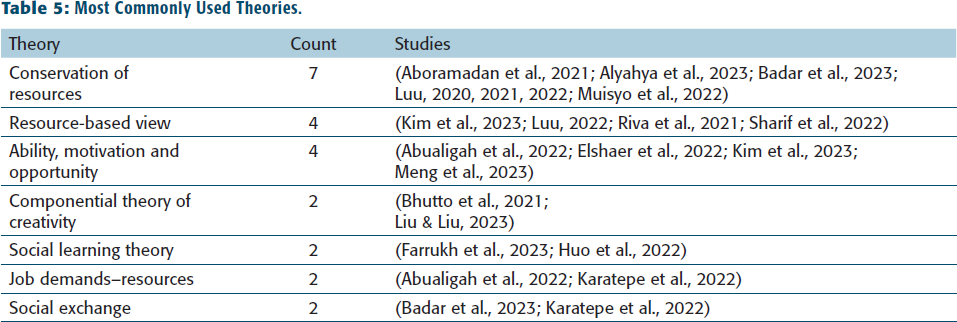
The use of theories and models is an indispensable element of academic research. Theories, especially in behavioural studies, provide an in-depth and rigorous comprehension of the intricate mechanisms. Our content analysis shows that multiple theoretical frameworks have been employed to comprehend the determinants that impact the eco-friendly behaviour of employees (as shown in Table 5). Our analysis showed that conservation of resources, ability motivation, opportunity and resource-based view are the most commonly used theories in predicting employee green behaviour.
Most Commonly Used Theories.
COR theory posits that individuals strive to acquire, retain and protect valuable resources. Within hospitality contexts, this theory explains how supportive environmental practices (e.g., green HRM) serve as resource gains, encouraging employees to engage in discretionary green behaviours. Conversely, environmental demands lacking adequate support can lead to resource depletion and emotional exhaustion, thereby inhibiting creativity and sustainability-related innovation. AMO theory, on the other hand, provides a micro-foundational view of green behaviour by focusing on whether employees have the ability (e.g., knowledge, skills), motivation (e.g., environmental concern, recognition) and opportunity (e.g., autonomy, supportive systems) to act sustainably. Our analysis suggests that AMO factors often function in tandem with psychological mechanisms (e.g., green climate, work engagement), and future research should explore how these theoretical pathways intersect. Instead of treating COR and AMO separately, integrated models could better capture the interplay between resources, capabilities and contextual factors in shaping employee green behaviour. Such integrative theorizing would move the literature beyond siloed explanations and offer more nuanced insights into what drives or constrains green actions in the hospitality sector.
FUTURE RESEARCH DIRECTIONS
Need for Diverse Methodological Approaches
The present review revealed a heavy reliance on quantitative, cross-sectional survey designs, underscoring the need for more diverse methodological approaches in future research. In particular, longitudinal and mixed-method studies are essential to address identified gaps in understanding the dynamics of employee green behaviour over time. Longitudinal designs would allow researchers to observe how green behaviours develop, persist or fade, thus capturing causal relationships and the sustainability of interventions (Al-Romeedy & Alharethi, 2024).
Our findings suggest that without a temporal lens, it is difficult to determine whether observed pro-environmental actions are short-lived responses or enduring changes. Furthermore, incorporating qualitative methods (e.g., in-depth interviews, case studies) can provide rich, contextual insights that are missing in the predominantly survey-based literature (Al-Romeedy & Alharethi, 2024). Such approaches would enable scholars to explore why hospitality employees engage in green practices, uncovering nuanced motivations and barriers (e.g., cultural or organizational norms) that quantitative surveys might overlook. Integrating qualitative evidence with quantitative data (i.e., a mixed-method strategy) directly addresses the methodological imbalance noted in our review, yielding more holistic and credible findings.
In addition, future studies should improve methodological rigour by moving beyond single-source self-reports; combining observational data, employee interviews and objective measures (like energy use or waste reduction records) would mitigate common method bias and strengthen causal inference (Zacher et al., 2023). In sum, by embracing longitudinal, qualitative and mixed-method research designs, scholars can more effectively address the current literature’s overreliance on static survey methods and better capture the complex, evolving nature of green behaviour in hospitality workplaces.
The Need for a Broader Contextual Scope
Another critical direction for future research is to broaden the contextual scope of employee green behaviour studies, reflecting the sectoral and cultural diversity within hospitality. The majority of studies in our review focus on single types of organizations (most often hotels) and specific regions, which limits generalizability. Comparative research across different hospitality segments, for instance, examining hotels, restaurants and tourism attractions side by side, could illuminate whether drivers of green behaviour are consistent or vary by sub-sector (Al-Romeedy & Alharethi, 2024). Likewise, cross-industry comparisons (hospitality vs. other service sectors) would test the robustness of current findings in new settings (Al-Romeedy & Alharethi, 2024). Equally important is addressing the geographical concentration of existing research. Our review found that work on hospitality employee green behaviour is heavily skewed towards a few countries (notably China and the USA), with notable gaps in other cultural contexts. For example, a recent bibliometric analysis highlights a ‘significant dearth of research’ on employee green behaviour in certain regions like Indonesia. This gap is striking given that environmental crises (e.g., pollution and waste) in such locales make sustainable workplace practices especially urgent.
Additionally, cultural values and norms may moderate green behaviours; as our findings suggest, results can ‘differ considerably across cultures and organizational contexts’, meaning theories derived in one country might not fully apply elsewhere. Future studies should therefore incorporate cultural diversity; for instance, by comparing how hospitality employees in different countries or with diverse cultural backgrounds enact green initiatives. By doing so, scholars will address a key gap identified in this review and develop insights that are sensitive to sector-specific and cultural contingencies. Such sectoral and cross-cultural research will not only test the universality of existing models but also uncover context-specific challenges and opportunities (e.g., varying customer expectations or regulatory pressures) that influence green behaviour in the hospitality industry.
Need for Multi-level Modelling and Theoretical Integration
Our review also highlights the need for multi-level modelling and theoretical integration to advance the study of employee green behaviour. Many prior studies have examined individual-level predictors in isolation; however, our findings show that green workplace behaviour is shaped by influences at multiple levels—individual, team, organizational and even societal. Future research should employ multi-level designs to explicitly link these layers. For example, researchers could investigate how a pro-environmental organizational climate or green team leadership cascades down to affect individual employees’ behaviours, as well as how individual actions aggregate to impact unit-level outcomes (Zacher et al., 2023). Modelling nested data (employees within teams, teams within organizations) allows testing cross-level interactions and answers calls in the literature for a more systemic view of green behaviour (Zacher et al., 2023)v. Alongside this, there is a clear opportunity to integrate theoretical frameworks that have been applied separately so far.
Our analysis revealed that frameworks such as COR, ability–motivation–opportunity (AMO) and the resource-based view (RBV) have frequently been employed to explain specific aspects of employee green behaviour; however, studies have rarely combined these perspectives.
Blending such theories can yield richer explanations that bridge micro and macro factors. For instance, combining AMO with RBV could link micro-level employee capabilities and motivations with macro-level competitive advantages from sustainability, a connection recent work is beginning to explore (Kim et al., 2023). One study drawing on RBV and AMO in the hotel sector demonstrated how green HRM practices translate into ‘green competitive advantage’ through engaged employees (Kim et al., 2023), exemplifying the value of multi-theory models.
Similarly, COR theory, which emphasizes how individuals conserve and expend resources, can be integrated with organizational theories to examine the dual effects of green initiatives on employees. Emerging evidence suggests that green policies can have double-edged impacts: they may empower employees with greater efficacy and pride, but if poorly managed, they could also induce stress or role overload (Yin et al., 2025). By using COR as a lens, future research could investigate how supportive practices (e.g., sufficient training and rewards) help employees accrue resources to engage in extra green tasks, while also identifying and mitigating resource drains (such as excessive workload) that hinder sustained green behaviour (Ahmed et al., 2024; Yin et al., 2025).
More broadly, future research should be designed to compare competing theoretical frameworks or test them in conjunction (Zacher et al., 2023). For example, a single project might include both individual-level predictors (like eco-centric values or knowledge) and contextual factors (like leadership style or HRM practices) to determine their relative and interactive effects on green behaviour (Zacher et al., 2023). Such theoretical integration directly addresses gaps identified in our review, notably the fragmentation of perspectives, and would push the field towards a more cohesive understanding of employee green behaviour. By developing and empirically testing multi-level frameworks that incorporate diverse theories, future research can better capture the interplay of personal, organizational and external forces driving green behaviour and identify leverage points for theory expansion (e.g., where micro–macro linkages like individual green behaviour contributing to firm sustainability performance can be rigorously examined) (Mahran et al., 2025).
Need for Broader Stakeholder Engagement
Future research should extend to emerging areas by examining how external stakeholders influence employee green behaviour in the hospitality industry. In particular, customer influence represents a largely underexplored driver in our review. Hospitality employees operate at the frontline of service, directly interacting with guests whose environmental attitudes and expectations can shape employee behaviour. If customers increasingly demand sustainable practices (e.g., requesting reduced plastic use or energy conservation during their stay), employees may feel both motivated and socially pressured to adopt green behaviours. Recent work has begun to acknowledge this, showing that customers’ environmental attitudes act as a contextual factor that can mediate or moderate employees’ own green intentions and actions (Guerra-Lombardi et al., 2025). In other words, pro-environmental norms from customers create an external normative pull, reinforcing the internal motivation of employees to act in eco-friendly ways. Future studies should build on this insight by explicitly examining customer–employee interactions: For instance, how do positive guest feedback on sustainability efforts, or conversely, guest indifference, impact employees’ willingness to go the extra mile for the environment?
Role of Digital Green Technologies
Similarly, digital green technologies are rapidly becoming an integral part of the hospitality landscape and warrant scholarly attention as both tools and contexts for promoting employee green behaviour. Our review found scant discussion of how technological innovations—such as smart energy management systems, AI-driven waste reduction programmes, or mobile apps for sustainability training—intersect with employee actions. These technologies could significantly augment employees’ ability to perform green behaviours, but they might also introduce new skill requirements or stresses.
Initial evidence in the broader management literature suggests that digital transformation can ‘facilitate and enhance’ innovation in green practices (Degirmen et al., 2024), indicating that tech-enabled hotels may empower their staff to achieve higher sustainability performance. Future research could thus explore questions like: How do employees engage with and perceive green technologies in their daily work? Do digital tools (e.g., real-time energy dashboards or automated recycling systems) encourage more proactive environmental behaviours among staff, or do they create challenges (such as technostress or reduced autonomy)?
By incorporating customer-related factors and digital innovations into their research designs, scholars will address two salient gaps highlighted by this review—the neglect of external influences and the lack of consideration for technological change. Embracing these emerging areas will not only enrich the theoretical landscape (for instance, by extending existing frameworks to account for stakeholder pressures or technology acceptance in green behaviour models) but also ensure practical relevance. The hospitality sector is evolving in response to eco-conscious customers and smart, sustainable operations. Future studies that examine employee green behaviour in light of these trends will provide more comprehensive and forward-looking insights for both academia and industry practitioners.
DISCUSSION
Our literature review, which is divided into two tiers related to employee green behaviours, is instrumental in providing a comprehensive understanding of the existing literature on this subject matter. Implementing bibliometric analysis at Level 1 facilitates identifying the most prolific partnerships among journals, authors and nations. The analytical examination provides a quantitative evaluation of the literature, encompassing productivity trends over time, thereby facilitating an understanding of the field’s evolution. The utilization of bibliographic coupling analysis serves as a valuable tool in discerning prevailing research trends within a given field while also affording a deeper understanding of the collaborative patterns that exist between authors and institutions. The findings mentioned above aid scholars and decision-makers in identifying potential partnerships and prospects for future investigations within this domain.
Content analysis facilitates the identification of antecedents, mediators and methodologies employed in the literature pertaining to employee green behaviour. The study has identified antecedents, including leadership, GHRM and other situational factors, offering valuable insights into the determinants of employee green behaviour. Moreover, the mechanisms of mediation and moderation, as well as the methodologies delineated in this investigation, offer insight into how these factors impact the ecological conduct of personnel. The utilization of diverse theoretical frameworks in the literature, including social exchange theory and institutional theory, furnishes a theoretical foundation for the present investigation.
IMPLICATIONS
Theoretical Implications
We believe that our study makes several contributions to the literature and practice. Firstly, our two-tier literature review provides a comprehensive overview of trends and trajectories that promote green behaviour in the hospitality industry. The bibliometric analysis facilitated a quantitative evaluation of the literature, revealing the prominent authors, journals and countries while charting the discipline’s principal themes and patterns. Researchers can use this information to identify gaps in the literature and future research directions. Moreover, the networking analysis based on bibliographic coupling can provide a more detailed understanding of the relationships between different topics and authors in the field.
Soundly, this study conducted a content analysis to examine the literature on employee green behaviour in the hospitality industry. The analysis identified antecedents, mediators and outcomes of such behaviour and the methods and theories employed in this field. This information can guide future research and develop more comprehensive models that can account for the complex relationships between various factors. Based on these findings, the study identified research gaps and future directions for researchers and practitioners. Drawing on the review’s findings, we suggest that future studies utilize a mixed-method approach to comprehensively understand the intricate aspects of employee green behaviour in the hospitality industry.
Practical Implications
Regarding implications for hospitality managers and policymakers, this emphasizes the significance of adopting environmentally sustainable practices and policies that encourage eco-friendly behaviour among employees in the hospitality sector. The study’s results can aid managers in creating training programmes and incentives that encourage environmentally friendly behaviour among employees. This can result in enhanced environmental performance and a more favourable image for the hospitality sector. The study’s results can inform policymakers in creating sustainability-focused regulations and policies for the hospitality industry, leading to a more environmentally friendly and sustainable sector.
Footnotes
ACKNOWLEDGEMENTS
The authors affirm that the manuscript was composed entirely by themselves, without the aid of any machine learning or artificial intelligence tools in the development of the core content. However, AI tools, such as OpenAI, Paperpal and Grammarly, were utilized exclusively to check typographical and grammatical errors, ensure correct punctuation and formatting consistency and enhance sentence flow. Following this automated proofreading, the manuscript underwent a comprehensive manual review by all authors to guarantee the accuracy of the content and prevent any potential misrepresentation.
DECLARATION OF CONFLICTING INTERESTS
The authors declared no potential conflicts of interest with respect to the research, authorship and/or publication of this article.
FUNDING
The authors received no financial support for the research, authorship and/or publication of this article.
INFORMED CONSENT
Informed consent was obtained from all the participants included in the study. The findings, interpretations and conclusions expressed in this study are the sole responsibility of the authors and do not necessarily represent the views of the authors’ universities.

e-mail:
e-mail:
e-mail:
e-mail: