




Abstract
This article outlines the structure of the metaverse and identifies key themes related to consumer behaviour. It provides a comprehensive bibliometric analysis of consumer behaviour research in the metaverse, based on 143 Scopus articles, offering performance analysis and science mapping insights. Bibliographic coupling reveals five prominent research clusters. Employing the theory–context–characteristics–methods review framework, the study unveils 11 key themes in ‘What affects consumers?’, ‘How and why do they process?’ and ‘How do they respond?’ The study also reflects on how artificial intelligence is likely to impact consumer interaction in the metaverse.
Executive Summary
Recent years have seen a rising interest in the metaverse from both the practicing community and academicians, making it difficult to ignore. Studying consumer behaviour in the metaverse becomes crucial because it can provide a valuable and deep understanding of how people interact with each other, brands, and products in this virtual space. To achieve this, our paper aims to synthesize the current state of the literature on consumer behaviour (CB) in the metaverse by providing a comprehensive bibliometric analysis of 143 Scopus-indexed articles, identifying key themes, theories, and future research directions in metaverse CB. Cluster analysis, using bibliographic coupling, revealed the following five clusters linked to foundational perspectives, brand strategies, emerging technologies, immersive experiences, and virtual co-creation. This was followed by the adoption of the Theory–Context–Characteristics–Methods (TCCM) framework to explore ‘what impacts consumers’, ‘how and why they process information’, and ‘how they respond’ within the metaverse. We identified 11 themes, including experiential value, social presence, and virtual ownership, and conceptualised a model linking antecedents, moderators, and outcomes. The findings underscore the criticality of immersive technologies, multi-sensory experiences, and gamification in driving consumer engagement. Social residency, enabled by avatars and virtual influencers, emerges as a pivotal factor in fostering co-creation and personalised experiences. Future research directions were categorised under platform-related and individual-related categories. Platform-related research avenues include areas related to platform and stimuli design, virtual ownership of experiences, and the use of metaverse as a promotion mechanism. Individual-factor-related research opportunities include exploring the role of individual characteristics, their value drivers, and finally safety and wellness mechanisms. The study also reflects on the role that artificial intelligence (AI) plays and how it is likely to impact consumer interactions with avatars, bots, and other entities in the metaverse. Overall, this study contributes to both academia and practice by demystifying the black box of consumer immersion and engagement in the metaverse. It offers actionable insights for marketers to design effective strategies and for policymakers to ensure ethical and secure virtual environments.
An estimated 25% of the world’s population will spend at least 1 hour daily in the metaverse (Johnson, 2022), projecting business value at approximately $507.8b by 2030 (Statista, 2024). Given the potential impact on consumers and firms, the metaverse attracts huge investments from the technological/business and academic fraternity. Large firms such as Meta, Microsoft and Nvidia, and even retail brands and governmental organizations are investing in this virtual, digital and 3D universe (Barrera & Shah, 2023). On the academic front, 2022 marked a pivotal year, with numerous research articles on the metaverse, dedicated conferences and special journal issues on its evolution.
Past research acknowledges metaverse as a platform characterized by interconnected 3D virtual and physical worlds, blending reality with virtual reality (VR)/augmented reality (AR) devices and haptic technologies and offering an immersive, socially interactive environment. Meanwhile, as per Forbes, the metaverse definition continues to be evasive and suggests that it is ‘an ecosystem of technologies, offerings and new customer relationships’ and that the metaverse and artificial intelligence (AI) convergence might revolutionize how business is done (Girod, 2023; Randieri, 2023).
We find academic marketing research on the metaverse to be at a rapidly evolving stage and currently having a broad, fragmented approach, mainly with an emphasis on technology. Given the anticipated significant impact of metaverse on consumer engagement and decision-making, it is useful to investigate human interactions and perspectives. Understanding consumer behaviour (CB) in the virtual world will help marketing managers fully leverage the metaverse to influence consumers at various stages of their journey (Gursoy et al., 2022). Given these opportunities, there are calls to examine the differential impact of the metaverse experience on overall consumer engagement (Gursoy et al., 2022). To that end, through an extensive literature review, our study explores and classifies key aspects of CB in the metaverse to benefit the marketing fraternity. We explore the following three research questions (RQs):
RQ1: Who are the main contributors driving research related to CB in the metaverse?
RQ2: What prominent themes/clusters are emerging in the CB in metaverse research? What theories, research contexts, CB characteristics and methods have been employed in this examination?
RQ3: What research areas need to be explored as metaverse adoption grows?
Our study makes several contributions. First, it provides a common understanding of the metaverse’s conceptualizations and building blocks. Second, we highlight prominent journals, articles, themes and trends through performance analysis and identify five key clusters through science mapping. Third, using the theory–context–characteristics–methods (TCCM) framework, we synthesize existing literature offering insights into research clusters. Finally, we offer a list of future research directions.
We have structured the article as follows: first, we explore the metaverse’s conceptualization and building blocks, followed by a bibliometric analysis of past studies. Then, we examine the TCCM framework and conclude with future research directions.
METAVERSE CONCEPTUALIZATION AND BUILDING BLOCKS
Shaping of Metaverse: Meta and (Uni)verse
Stephenson first connected the term ‘metaverse’ to the notion of immersive VR in his 1992 science fiction novel Snow Crash. Reference to metaverse dates to the 1990s when it appeared in the literature on the development of interactive worlds and virtual-human research (Barrera & Shah, 2023). While early understanding of metaverse included an immersive 3D virtual world in which individuals interacted with each other as avatars, metaverse was still viewed from a single-world perspective. More recent definitions of metaverse suggest four key aspects (Figure 1): (a) inhabitation in virtual worlds (Belk et al., 2022), (b) interconnectedness of multiple virtual worlds (Dionisio et al., 2013), (c) immersive experience (Han et al., 2022) and (d) socially interactive and co-created world (Gursoy et al., 2022).
Metaverse Conceptualization.
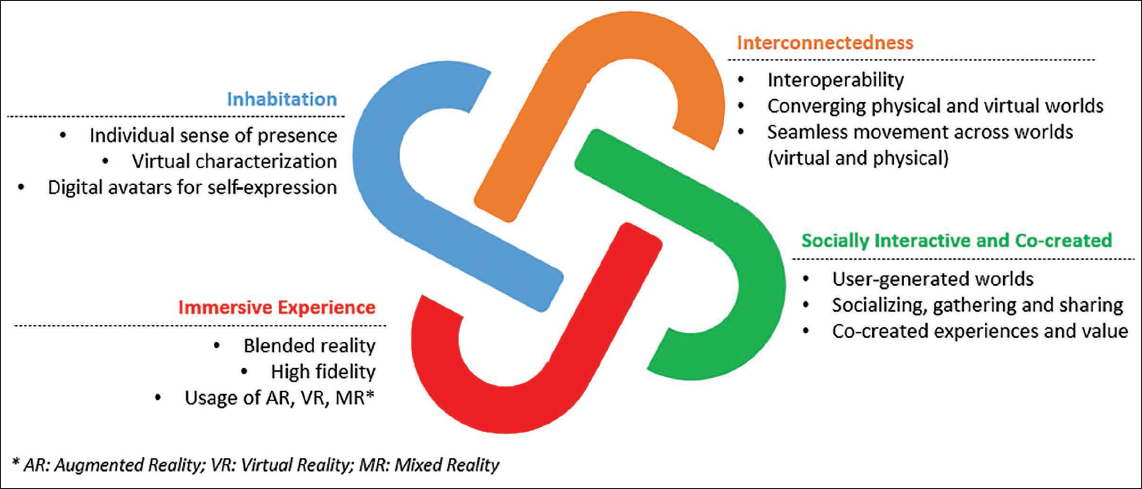
Inhabitation is manifested by representing consumers as digital avatars, letting them express their sense of presence in the virtual world for unrestrained self-expression. The interconnectedness of different virtual worlds allows seamless movement of users from one world to another, carrying their identities, characteristics and belongings with them. Interconnectedness between the virtual and physical worlds transfers user data from one world parallelly to another (Barrera & Shah, 2023). The use of AR, VR and mixed reality (MR) devices facilitates immersiveness with improving fidelity. Finally, metaverse allows users to actively participate in the co-creation of experiences in virtual spaces through social interactions for sharing, collaborating and transacting.
Layers That Build the Metaverse
Second Life, an online multimedia platform, was one of the first attempts to create a metaverse-like platform in 2003. While the platform allowed for creating cartoon avatars and virtual interactions in immersive spaces, it needed to overcome network and processing limitations. These basic limitations have been resolved over time. Our review reveals three layers (each straddling the one before) that incorporate eight components in the metaverse building block, driving its adoption (Figure 2).
Metaverse Layers.
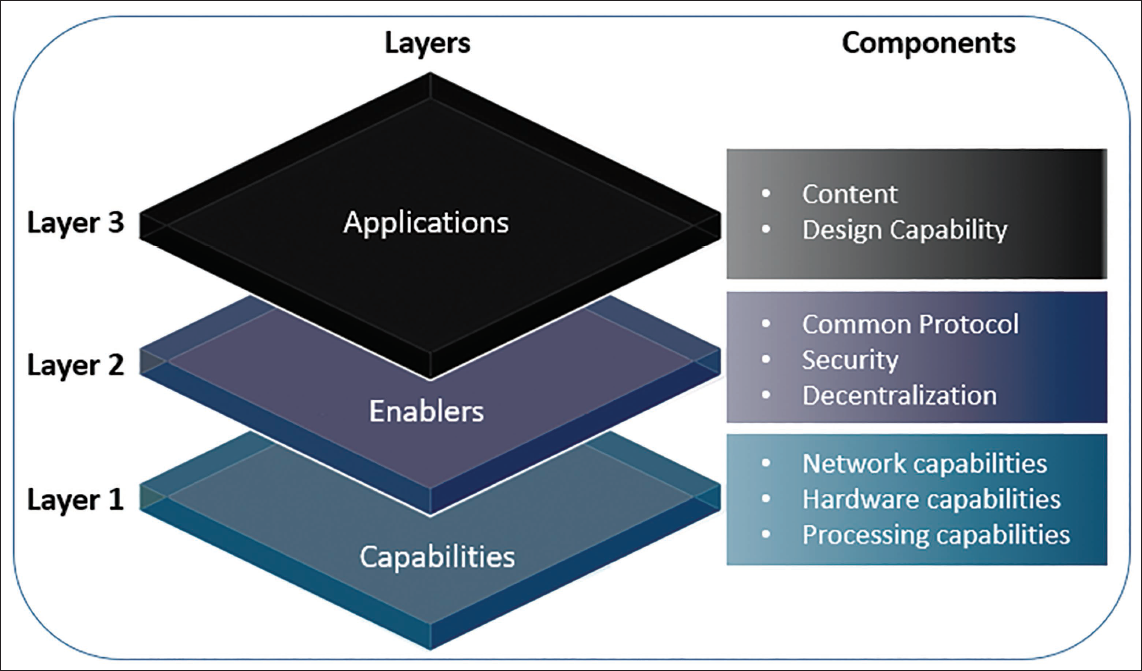
The foundational Layer 1 of capabilities includes robust networks, hardware advancements and increasing processing power, forming the bedrock of metaverse growth (Hollensen et al., 2023). The 5G telecom network enhances the metaverse experience quality by improving bandwidth, latency and reliability (Hollensen et al., 2023). Hardware, with immersive technologies (AR, VR, MR), enhances the metaverse experience through 3D real-time rendering (Kailas & Tiwari, 2021).
Importantly, enhanced processing capability is crucial for data reconciliation, rendering, physics calculations and motion capture, enabling seamless movement, transactions and interoperability (Hollensen et al., 2023).
The central Layer 2 of enablers consists of common protocol, security enhancements and decentralization. Interoperability across platforms is crucial in the metaverse, and common protocols, formats and services ensure seamless experiences across hardware devices. In addition, blockchain-enabled cryptocurrencies serve as a cross-platform exchange currency and enable virtual asset ownership while facilitating decentralization (Barrera & Shah, 2023).
The topmost Layer 3 comprises applications (Apps) with content and designing capabilities required to provide business and services in the metaverse (Hollensen et al., 2023). These apps drive businesses to innovate with user-friendly designs, opening opportunities for new metaverse content and app design ventures.
Having consolidated metaverse conceptualization, we begin addressing our RQs by starting with a bibliometric analysis to assess the current literature through performance and science mapping.
METHODOLOGY
Following Donthu et al. (2021), we conduct a five-stage bibliometric analysis involving database selection, search strategy design, data gathering, analysis of the findings and suggestions for future research directions.
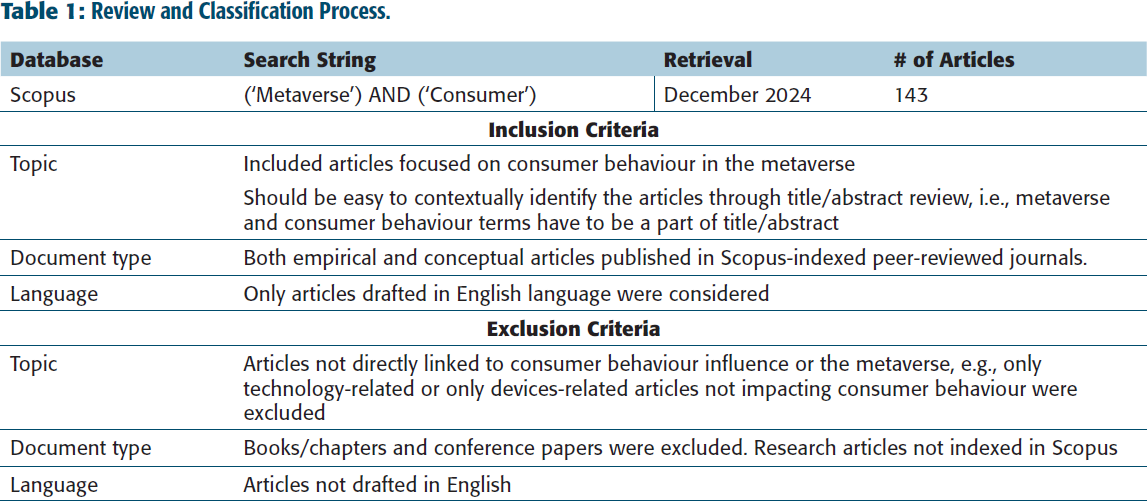
Scientific databases such as Scopus and Web of Science (WoS) are commonly used for bibliometric analysis in business studies. Donthu et al. (2021) recommend using one database to avoid duplicates. Scopus covers 26,591 journals, while WoS includes 22,100 sources (Clarivate, 2024; Elsevier, 2023). Given Scopus’s broader scope, we followed Saini et al. (2022) in selecting it as our primary database. Our search (Table 1) focused on papers with the terms ‘metaverse’ and ‘consumer’ in the title, abstract and keywords, yielding 599 results. We then removed the articles that were not listed under the subject area of ‘business, management, and accounting’ (n = 341 removed). Following Ramos-Rodríguez and Ruíz-Navarro (2004), we excluded documents such as conference proceedings, books and book chapters (n = 115) and retained only articles and reviews. This resulted in a final selection of 143 articles. The Scopus data file will be made available on request.
Review and Classification Process.
We conducted the analyses using Biblioshiny and VOSviewer, with each offering complementary bibliometric functionalities (Donthu et al., 2021). Biblioshiny supports a range of analytical techniques, while VOSviewer provides network visualization capabilities.
RESULTS AND INTERPRETATION
Performance and Citation Analysis
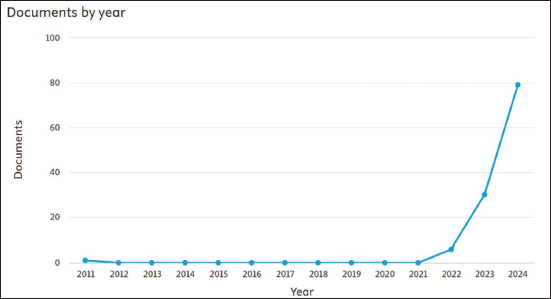
About 143 articles appeared across 69 journals, averaging 25 citations per article and totalling 10,660 references. Of these publications, 92% had multiple authors, with each document averaging 3.6 co-authors. Figure 3 illustrates the annual distribution of the articles from 2011 to 2024 (Note: This figure includes 133 articles, excluding 10 preprints from 2025 for the trend analysis). There is a sharp rise in publications over the last 3 years, reflecting the evolving landscape of consumer interactions in virtual environments.
A document-level VOSviewer analysis identified 55 documents (37 of which were linked) with at least 10 citations. The most-cited articles (Table 2) include seminal works by Dwivedi, Hughes, et al. (2023), Gursoy et al. (2022) and Barrera and Shah (2023), which explore the contours of the metaverse, consumer adoption drivers and barriers. These articles focus on the transformative impact of the metaverse on CB, with implications for marketing, branding and value co-creation.
Top 10 Most-cited Articles.
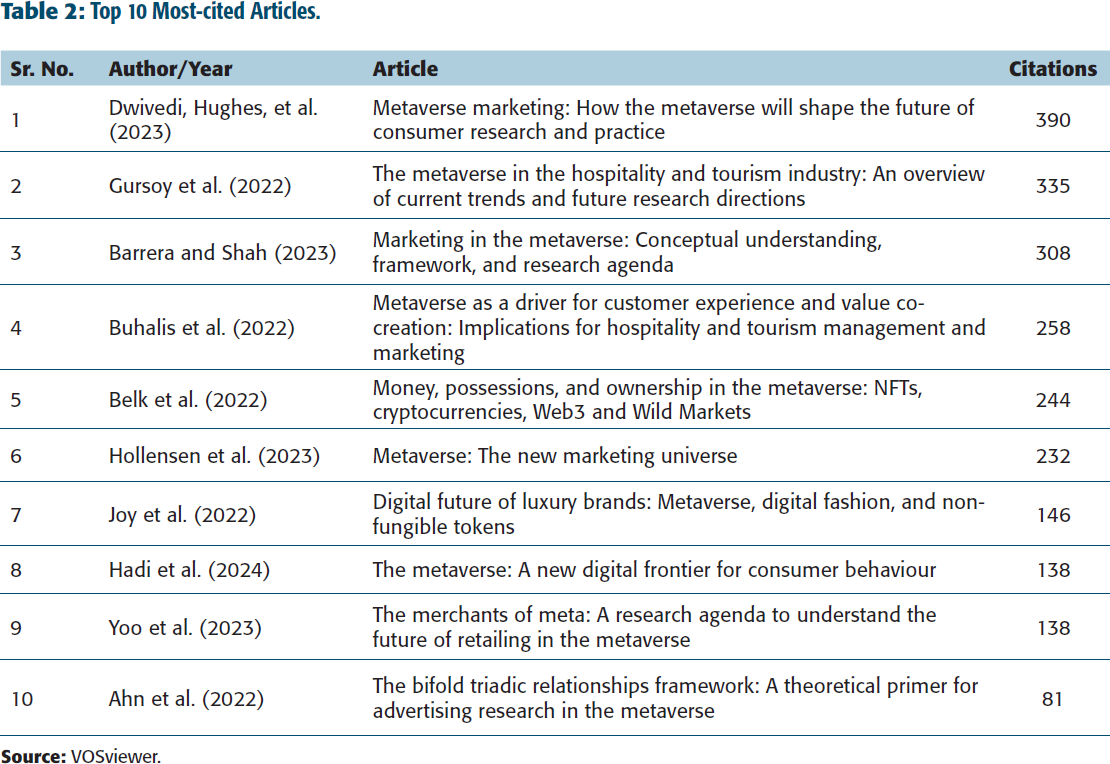
The author analysis revealed 38 authors with at least two articles and five citations. The author-wise analysis of the 10 most influential authors is presented in the Appendix (Table A1). Buhalis emerged as the most influential (648 citations). Buhalis co-authored the most-cited and fourth most-cited articles in Table 2. Rauschnabel, with the highest h-index and g-index of 4, is the most impactful author (Table A2) and also co-authored the most-cited articles.
VOSviewer analysis identified 15 journals with at least two publications and two citations. The most-cited journals are listed in Table A3. The Journal of Business Research leads with 8 publications and 631 citations. Source impact analysis via Biblioshiny (Table A4) reveals the Journal of Retailing and Consumer Services (h-index: 8, g-index: 13) as the most influential, followed by Psychology and Marketing (h-index: 7, g-index: 10).
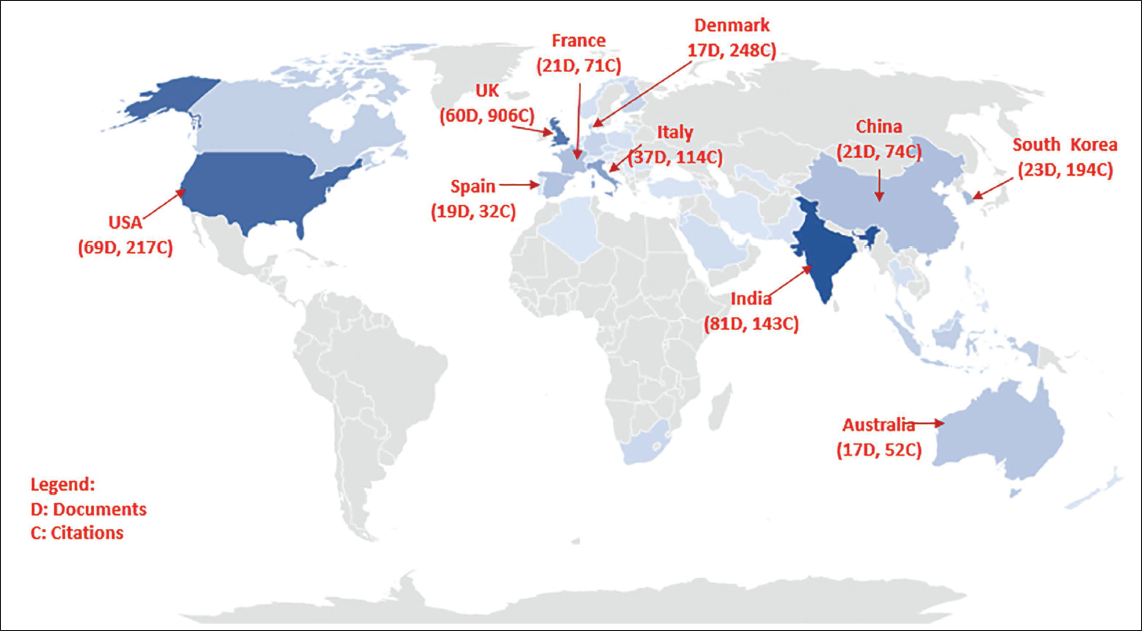
The country analysis identifies 25 nations with authors who have published at least three times and received at least three citations. Figure 4 displays the top 10 countries by document count, with India leading in paper output and the UK in citation count.
Science Mapping and Visualization
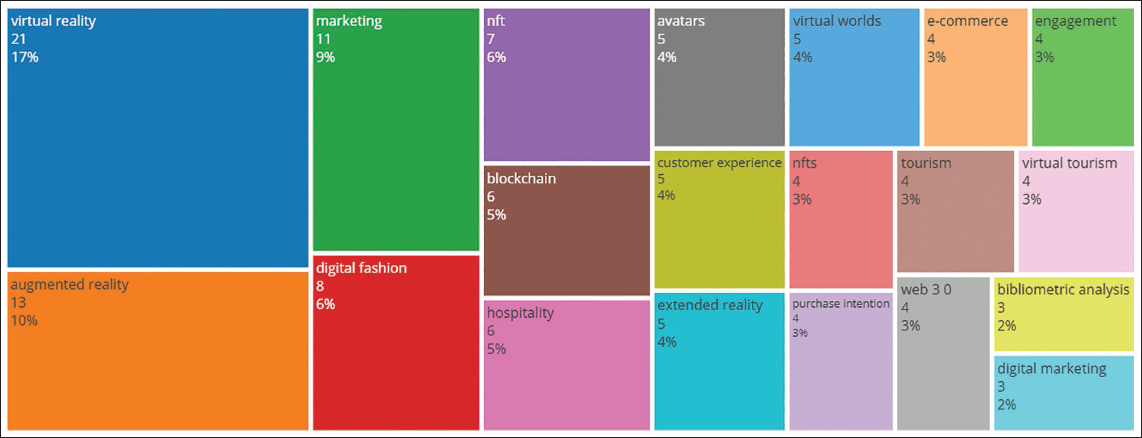
An analysis of author keywords revealed that ‘metaverse’ and ‘consumer behaviour’ were the two most frequently occurring terms in the literature. Due to their relevance to the study’s focus, these terms were excluded from further analysis. ‘Virtual reality’ emerged as the most frequent term, reflecting its central role in metaverse experiences. ‘Augmented reality’ follows as the second most common term, important for metaverse commerce applications, such as virtual try-ons in online retail.
A TreeMap (Figure 5) was generated with a selection of the top 20 terms, excluding the dominant terms ‘metaverse’ and ‘consumer behaviour’. TreeMap shows that VR- and AR-related terms account for 27% of the keywords. Interestingly, terms related to non-fungible token (NFT), blockchain and digital fashion together accounted for 17% of the keywords, signalling a growing commercial interest in the field.
Thematic analysis was used to examine the evolution and maturity of various themes. This analysis (Figure 6) was conducted with 100 author keywords, with a minimum cluster frequency threshold of five per 1,000 documents. The size of each cluster circle represents the number of keywords associated with that cluster (Cobo et al., 2011). The ‘virtual reality’ cluster is the most prominent cluster (keywords: 10, frequency: 81), including terms such as AR, extended reality and avatar-based marketing. Next is digital fashion (keywords: 10, frequency: 43), followed by hospitality (keywords: 10, frequency: 32). Key terms in the hospitality cluster include virtual tourism, social presence, engagement and immersion.
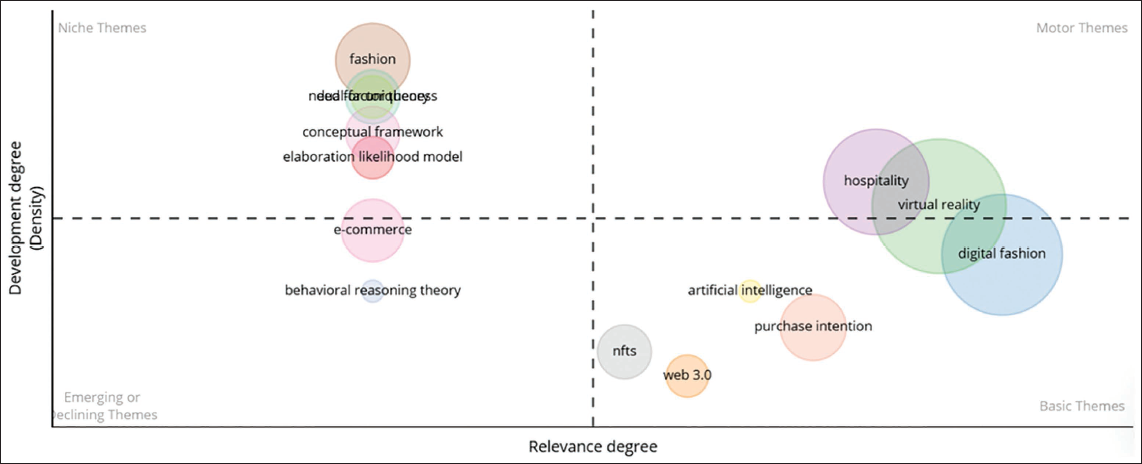
The two dimensions of thematic maps are represented by centrality and density. Centrality, defined as the ‘intensity of its links with other clusters’, reflects a theme’s importance to the field’s growth (Cobo et al., 2011). Density indicates ‘the strength of the links among the words in the cluster’, highlighting the theme’s capacity for sustained development (Cobo et al., 2011). Figure 6 indicates that VR and hospitality are both central to the development of the area and have good density. This highlights the prominence of VR, AR and extended reality as a rendering mechanism and hospitality as the currently most important research context. Digital fashion, on the other hand, is closely connected to the other themes but remains an emerging theme with weaker internal connections.
Cluster Analysis
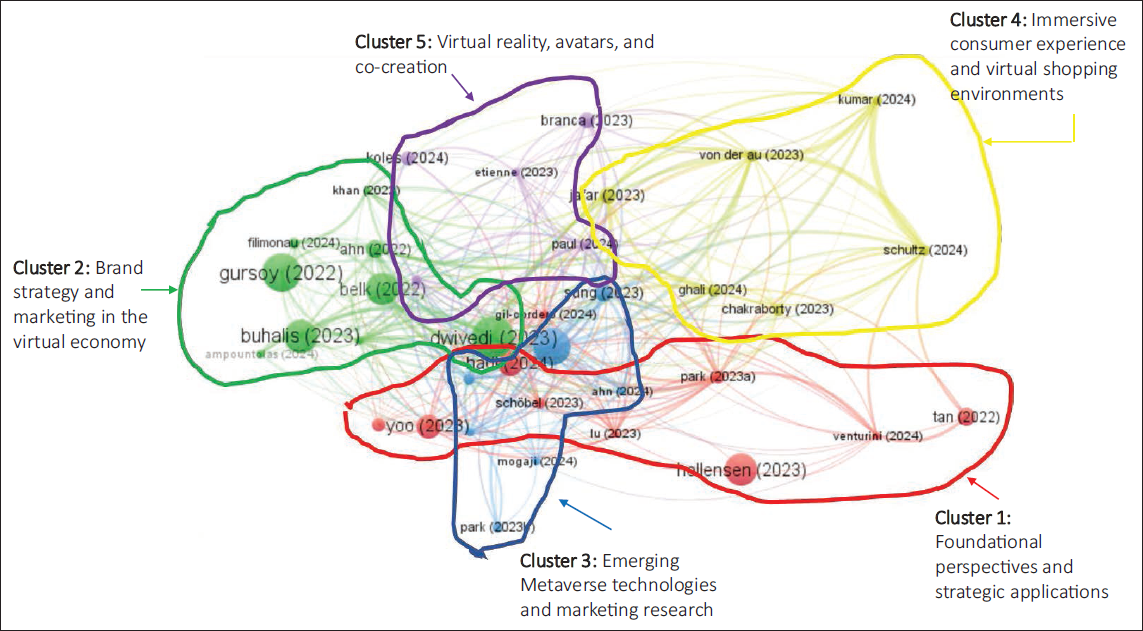
Bibliographic coupling (VOSviewer) was used for cluster analysis, with ‘documents’ as the unit of analysis (Perianes-Rodriguez et al., 2016). A minimum citation threshold of 15 resulted in 38 documents (37 connected, 1 isolated). These documents were grouped into five clusters (Figure 7): foundational perspectives and strategic applications (Cluster 1: Red); brand strategy and marketing in the virtual economy (Cluster 2: Green); emerging metaverse technologies and marketing research (Cluster 3: Blue); immersive consumer experience and virtual shopping environments (Cluster 4: Yellow) and VR, avatars and co-creation (Cluster 5: Purple).
Cluster 1: Foundational Perspectives and Strategic Applications
The first cluster focuses on foundational concepts of CB, firm strategies and marketing implications of the metaverse (Hollensen et al., 2023). It conceptualizes the metaverse while exploring consumer experiences, expectations and its technological, social and economic dimensions. Hadi et al. (2024) offer a multidisciplinary perspective by discussing how metaverse characteristics of being digitally mediated, spatialnature, immersiveness, being shared and operated in real time can alter CB in domains of consumer identity, social influence and ownership. Empirical exploration by Park et al. (2023) highlights telepresence, social interaction and economic flow as key drivers influencing users’ flow experience in metaverse. The concept of transitory metaverse was introduced by Yoo et al. (2023), extending the argument to retailing in metaverse and suggesting that the technologies currently used to offer immersion and digital assets are not fully developed/commercialized.
Cluster 2: Brand Strategy and Marketing in the Virtual Economy
The second cluster examines the metaverse’s transformative impact on industries and CB. It explores value co-creation, NFT growth, online intermediaries, experiential consumption (e.g., tourism), and branding strategies for engaging consumers in the virtual world. Emphasis is on tailoring branding communication based on customer typologies to enhance metaverse marketing (Dwivedi, Hughes, et al., 2023). They provide varied perspectives on how metaverse is likely to impact advertising/branding, services, value creation and consumer well-being. Hospitality has emerged as a key focus of interest from researchers in this cluster (Buhalis et al., 2022; Gursoy et al., 2022). Buhalis et al. (2022) explore the role of metaverse in delivering customer experience and value co-creation. Taking a value-derivation perspective, Belk et al. (2022) discuss newer forms of ownership, including fractional ownership and fractionalized property rights. They also explore consumers’ inclination to pay astronomical prices for digital artworks with limited property rights.
Cluster 3: Emerging Metaverse Technologies and Interoperability
Papers have substantiated the role of interactive technologies and interoperability in Web 3.0 and its impact on CB (Park et al., 2023). They highlight Web3’s transformative yet uncertain impact across digital domains and emphasize that managing technical, organizational and regulatory interoperability is crucial to realizing its value and avoiding economic, consumer or social fallout. Murtas (2023) calls for accelerating the ‘artification’ process with a sense of scarcity. Similarly, Mogaji et al. (2023) present a collaborative framework between fashion brands, tech developers and consumers for deriving benefits within metaverse.
Cluster 4: Immersive Consumer Experience and Virtual Shopping Environments
This cluster brings together consumers’ social presence, attachment and telepresence with specific focus on AR. It also explores the impact of metaverse elements on product knowledge and purchase intention.
Exploring immersive online purchasing, Jafar et al. (2023) found that effectiveness, vividness and interactivity had a significant effect on telepresence, which in turn affected consumers’ product knowledge and purchase intention. Similarly, Schultz and Kumar (2024) demonstrate the role of AR in increasing convenience and informational value to bridge the information gap. Kumar et al. (2023) employ the means–end chain theory for identifying AR features that drive consumers’ goal achievement. Finally, a tourism services marketing and a theoretical model that links the amount of time spent by consumers, use of virtual spaces, number of friends and social presence on metaverse to intention to revisit is proposed by Ghali et al. (2024).
Cluster 5: Virtual Reality and Avatars
The fifth cluster elaborates on the role of VR in digital transformation. Avatars, virtual influencers and product packaging define this cluster. Branca et al. (2023) demonstrate the utility of VR in co-creating product evaluations for testing sensory and intangible attributes. Koles et al. (2024) explore three different manifestations of virtual influencer authenticity: ‘true-to-ideal’, ‘true-to-fact’ and ‘true-to-self’. Intriguingly, avatar non-verbal behaviours impact user perception in a VR context as demonstrated by Etienne et al. (2023). They provide a library of non-verbal behaviours exhibited by audiences at different arousal and valence levels. This has compelling implications for designing realistic and interactive virtual audiences in metaverse.
The five clusters help us infer how research is grouped within the CB in the metaverse literature. Cluster details and associated papers are provided in Table A5.
Next, we employ the TCCM framework to further explore the content and context of these studies.
THEORY–CONTEXT–CHARACTERISTICS–METHODS FRAMEWORK
Theories
Researchers have applied various theoretical frameworks to explore CB in the metaverse. Studies have used 24 theories, which we categorize into eight themes that capture different aspects of virtual consumer experiences and consumption (Figure 8).
Theories Explaining CB in Metaverse.
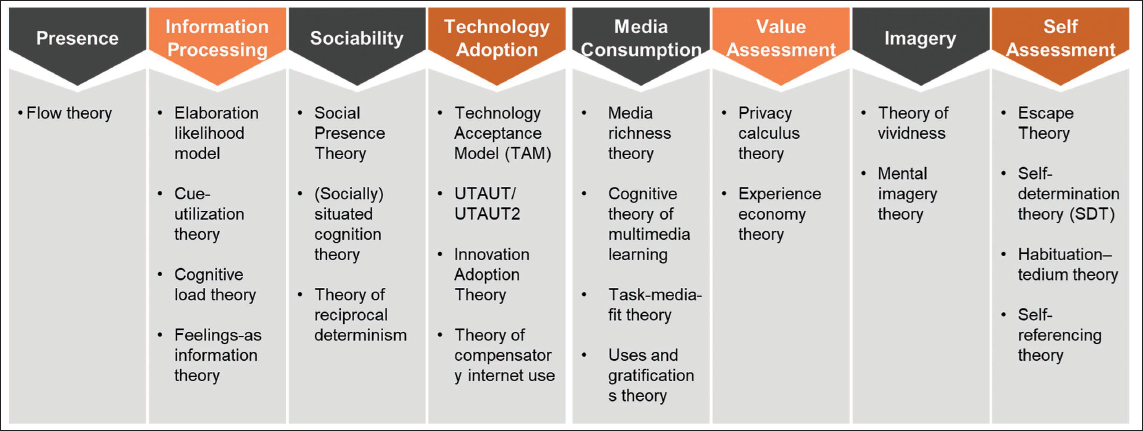
Addressing the theme of presence, the flow theory is employed to discern stimuli enhancing the perceived immersiveness and engagement within the metaverse. Flow refers to the mental state of optimal experience and enjoyment achieved when an individual is completely involved in any activity/experience. The application of the flow theory to metaverse becomes critical in understanding which stimuli enhance the perceived immersiveness and the engaging nature of the metaverse, resulting in desirable affective and cognitive responses from consumers.
The information processing theme involves four key theories: the cue-utilization theory explains how individuals focus on relevant stimuli in their environment, with novel cues heightening arousal and thereby increasing attention. In the metaverse, unfamiliar or immersive elements can trigger this arousal, making cue selection more effective and enhancing information processing. The impact of realistic expectations on cognitive load and attitudes towards brands is explained by the cognitive load theory. The theory posits that individuals have limited cognitive capacity, so a reduction in cognitive exertion may make it easier for individuals to process and retain information. Reasonable expectations from consumers in the metaverse can help ease the cognitive load on their minds. This, in turn, may have an effect on consumer attitudes towards brands and also actions in metaverse. The feelings-as-information theory examines how the metaverse influences mood and emotions, thereby enhancing affinity for products/services. It serves as a useful explanation to understand how individuals use their emotional state as a source of information for making judgements and decisions. The Elaboration Likelihood Model (ELM) examines how varying stimuli affect consumers at different levels of involvement. ELM proposes that individuals can take two distinct routes when processing persuasive messages: the central route (a more deliberate approach) and the peripheral route (a less thoughtful approach), depending on their motivation and ability to process the message. Varying metaverse stimuli could influence consumers at varying involvement levels. These levels are also likely to change for different product/service types, and the virtuality of metaverse would lend itself to persuasion.
Transitioning to the theme of sociability, the social presence theory examines how media allow users to perceive others as physically present. In the metaverse, this sense of real connection depends on media features that convey visual and verbal cues such as gaze, posture, facial expressions and voice tone. The (socially) situated cognition theory suggests that processing of knowledge is not just a function of an individual’s mind but is also influenced by different social, cultural and physical contexts. It emphasizes the role of virtual environments and entities in shaping cognitive processes.
Under the technology theme, the Technology Acceptance Model (TAM) explains the adoption of technology based on its usefulness and perceived ease of use. The unified theory of acceptance and use of technologies elucidates the adoption of technology, based on four key constructs: performance expectancy, effort expectancy, social influence and facilitating conditions. Moreover, five attributes that impact the adoption of a new technology are suggested by the innovation adoption theory: perceived relative advantage, compatibility, complexity, trialability and observability. Incorporation of these five attributes becomes particularly important for the adoption of new experiences such as the metaverse. The theory of compensatory internet use suggests that individuals resort to the internet as an escape mechanism to compensate for deficits in other areas of their lives. Finally, the cognitive fit theory explains how the adoption of technology (e.g., the metaverse) depends on its alignment with the users’ cognitive abilities and the cognitive demands of the task at hand.
Within the theme of media consumption, the media richness theory is employed to assess the effectiveness of a communication channel, depending on its ability to handle multiple cues and provide immediate feedback.
The cognitive theory of multimedia learning posits that individuals better process information when it is presented in both visual and auditory forms, allowing for effective management of cognitive load. The task– media–fit theory is useful for understanding the effectiveness of a communication medium depending on how optimally it fits the specific characteristics and demands of the task being performed. Lastly, the uses and gratifications theory states that people actively choose and use media to fulfil specific needs rather than being passive recipients of media messages. It becomes useful in understanding the differential use of technology for various media purposes in the metaverse, depending on product types, such as utilitarian versus hedonic and experiential versus search.
The value assessment theme encompasses the privacy calculus theory and the experience economy theory. According to the privacy calculus theory, individuals weigh the potential benefits and risks of disclosing personal information online. This highlights the acknowledgement of metaverse consumers’ need to balance the dangers of data privacy and the value of their wellness. The experience economy theory argues that economic value is also created through memorable and engaging experiences rather than just through products or services.
Within the imagery theme, the theory of vividness explains how people are more likely to remember and be persuaded by information presented in a vivid, concrete and emotionally engaging manner. The mental imagery theory states that mental representations of past sensory experiences can facilitate cognitive processes and highlights how multi-sensory cues in the metaverse can activate mental imagery to simulate real-world experiences thereby creating a pleasant memory bank.
The last theme relates to self-assessment, in which the escape theory suggests that the metaverse enables emotionally immersive escapes, which can engage users deeply but may also foster unhealthy detachment if not designed mindfully. Importantly, platforms offering avatar control, skill mastery and social connection can fulfil users’ core psychological needs and drive sustained motivation, as highlighted through the self-determination theory. However, as novelty fades, metaverse engagement may decline, which makes ongoing innovation essential to keep experiences fresh and stimulating (habituation–tedium theory). The self-referencing theory suggests that avatars and digital twins, which reflect users’ identities, can enhance personal relevance and improve memory, engagement and brand impact.
Characteristics
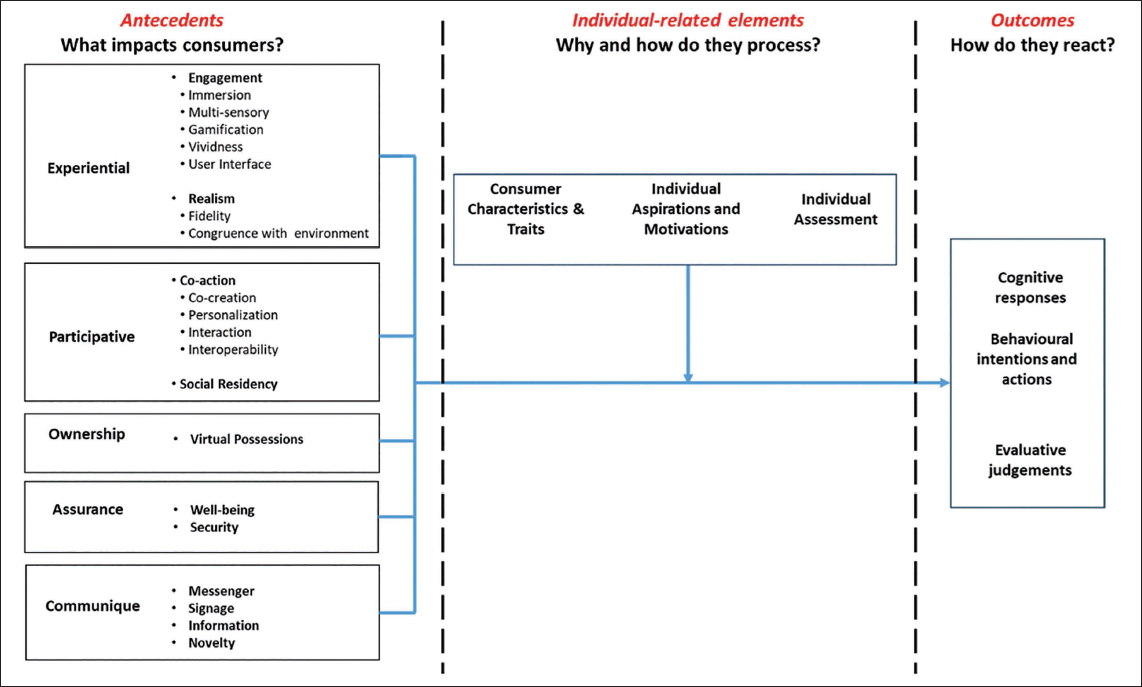
This section discusses the various factors/variables that help understand ‘what impacts consumers?’ (antecedents), ‘why and how do they process?’ (individual-related elements) and ‘how do they react?’ (outcomes) (Figure 9).
Factors Impacting Consumer Behaviour in the Metaverse.
What Impacts Consumers? (Antecedents)
Metaverse stimuli influence consumer value through a balance of perceived benefits and costs. Consumer benefits may stem from enriched experiences (experiential value), increased control and sociability (participative value) and a sense of ownership. Concurrently, consumer costs can be mitigated by assurance of well-being and security (assurance). The overall perception of benefits and costs is influenced by the communication of the message and its source (communique).
Delivering Benefits Through Experiential Value: A Sense of Engagement and Realism
We now discuss each element related to experiential value. Enhancing engagement involves immersion, multi-sensory experiences, gamification, vividness and user-friendly interfaces. The level of immersion depends on system technology (Barrera & Shah, 2023). Design elements blending virtual content with real-world surroundings increase perceived value, while advanced interaction and haptic devices (touch, smell, motor) enhance consumer enjoyment and value (Barrera & Shah, 2023; Han et al., 2022; Wang et al., 2022). Novelty remains pivotal in providing robust stimuli for utilitarian, hedonic and social values within immersive experiences. Also, a user-friendly interface, aligned with consumers’ social and cultural factors, fosters efficiency, learnability and immersiveness (Layer 3) (Dwivedi, Hughes, et al., 2023).
Combining immersiveness with multi-sensory experiences creates a sense of ‘presence’—the feeling of being in a place or an environment, even without physical presence (Han et al., 2022). Matching multi-sensory stimuli with real-world experiences makes virtual products feel more authentic, boosting consumer interest (Petit et al., 2022). Enhanced stimuli vividness contributes to a more immersive, multi-sensorial experience. Vividness, or technology’s ability to create a sensorially rich environment (Steuer et al., 1995), impacts the entire consumer journey, from information search to purchase behaviour (Harz et al., 2022). Rich, vivid information enhances mental visualization, boosting attention and engagement, with higher vividness linked to positive attitudes and intentions (Van Kerrebroeck et al., 2017b).
Gamification fosters platform intimacy, generating heightened experiential value (Hsu & Chen, 2018). Applying gaming concepts in non-game contexts, such as avatar development, content creation and digital badge rewards, can engage users effectively (Wang et al., 2022).
Realism, crucial for consumer experience in the metaverse, involves fidelity and congruence with the physical world. Fidelity, gauging the metaverse’s resemblance to the physical world in both experience and functionality (Barrera & Shah, 2023), comprises display and interaction fidelity (McMahan et al., 2012). High fidelity is linked to enhanced presence and favourable marketing outcomes (Ahn et al., 2022). Marketers using stimulus-enhancing technologies to engage consumer senses create varying congruencies between physical and virtual environments, influencing consumption experiences (Petit et al., 2022).
Delivering Benefit Through Participation: Co-action and Social Residency
Empowering consumers to design their experience and interact in the virtual space yields higher-order customized value. This sense of co-action in the past body of work is operationalized through co-creation, personalization, interaction and interoperability, which provide a fertile ground for consumer participation.
Co-creation, driven by tech progress (Figure 2: Layer 1), goes beyond marketing managers, involving diverse stakeholders (Rihova et al., 2019). Granting consumers control of the virtual space enhances co-creation, enabling personalization. In the metaverse, alongside marketer content, consumers access innovative and personalized experiences, exemplified by platforms like Roblox. However, hyper-personalization also raises concerns about data privacy (Zaki et al., 2023).
Consumer value comes from interacting with a firm’s offerings, with co-creation and personalization (Bousba & Arya, 2022). From passive engagement to active participation in virtual events like concerts (Gursoy et al., 2022), heightened interactivity shapes consumer experiences, influencing purchase behaviour (Kumar et al., 2023). Data generated fuel customized communication through interactive advertising in the entire metaverse consumer journey (Dwivedi, Hughes, et al., 2023).
At the hyper level, interoperability is crucial for consumer control, offering seamless access across platforms (Ahn et al., 2022). This enables unified preferences, allowing for tailored advertising at different stages of the purchase process. Digital twin tech contributes to interoperability, presenting opportunities in retailing and e-commerce (Jeong et al., 2022).
Consumers, social by nature, benefit from enhanced social residency in the metaverse, promoting sharing and collaboration (Oh et al., 2023). The social nature of VR platforms, like VRChat, allows marketers to simulate real-life scenarios, thereby facilitating an understanding of CB in this socially facilitated VR setting (Han et al., 2022).
Delivering Benefit Through Ownership: Virtual Possessions
The metaverse boosts consumer value through decentralized ownership via NFTs and cryptocurrency (Belk et al., 2022), enabling the trade of virtual items and self-expression through ownership of moments like sports clips. Avatars, currently owned by platforms, may become consumer-owned across platforms in the future, aided by interoperability (Belk et al., 2022). Brands can capitalize on the illusion of ownership, offering fractional virtual ownership of brand elements or moments to drive aspirational value. For instance, Nike introduced Nike CryptoKicks, a virtual sneaker with fractional ownership available on the RTFKT Studios platform.
Reducing Perceived Cost Through Assurance: Ensuring Well-being and Security
Metaverse offers experiential, participative and ownership benefits but raises concerns about privacy and safety, with the potential for undesirable data use (Zaki et al., 2023). Assuaging consumers’ feelings of apprehension about their security and well-being can have significant rewards.
Concerns about data manipulation by governments, firms and hackers deter metaverse adoption (Dwivedi, Hughes, et al., 2023). Strong data privacy policies, cybersecurity measures and platform regulations can reassure consumers (Dwivedi, Hughes, et al., 2023). Hackers may use consumer data for ‘catfishing’ (creating fake identities to deceive others), fraud or accessing personal information and virtual assets. Without proper regulation, issues like cyberbullying could also arise. Additionally, metaverse addiction, particularly among young users, may worsen tech overload and detachment from reality (Musamih et al., 2022). Platforms like Oculus have instituted guidelines to protect users’ well-being by preventing bullying and abuse.
Ensuring Proper Communication of Value
By now, it is evident that messaging to consumers by brands/firms in metaverse can be used creatively to influence consumers’ perception of value. The roles of the messenger (who is saying), signage (where it is said), information (what is being said) and the elements of creativity and novelty (what is new) are all integral.
Consumers rely on influencers they admire or relate to (Lou, 2022) to guide their purchase decisions. Similar to social media, the credibility of online influencers in the metaverse fosters positive intentions (Khan et al., 2022). Additionally, avatars or virtual influencers (Dwivedi, Hughes, et al., 2023) can serve as key salespeople or brand advocates.
Further, novelty in communication plays a captivating role in influencing consumers. To elicit consumer engagement, communication should be novel, fresh and individualized (Bousba & Arya, 2022), as demonstrated by Gucci’s virtual exhibition with interactive elements and limited-edition digital items.
Why and How Do They Process? (Individual-related Elements)
Every consumer is unique, each processing a stimulus differently based on their unique attributes of ‘who they are’ (characteristics), ‘what excites them’ (motivations) and ‘what they value’ (individual assessment).
Who They Are? (Individual Characteristics and Traits)
Consumer characteristics, particularly personality traits (extraversion, agreeableness, openness to experience, conscientiousness and neuroticism), significantly influence decision-making in the metaverse (Barlett & Anderson, 2012). Individuals who are innovative and open to experiences are more likely to explore virtual goods, new environments and novel features (Devaraj et al., 2008).
In the metaverse, consumers use avatars to express their identity, reflecting their current, ideal or aspirational selves (Belk, 2013). This digital re-embodiment influences self-perception and decision-making. Marketers face the challenge of understanding ‘avatar marketing’ and the alternate selves consumers project across metaverse platforms.
Consumer segments, such as virtualskeptics, evirtualists and virtualcentrists (Oyedele & Minor, 2011), emerge based on their comfort with blending real-world and virtual activities. Socio-demographic factors also contribute to diverse metaverse participation. Customized design messages that appeal to varied archetypes become significantly important.
Finally, adopting technology as a metaverse stimulus is influenced by consumers’ perception of their own capabilities, including pre-existing Web skills (Lee et al., 2011). The TAM suggests that technology adoption is higher when perceived utility and ease of use are evident (Davis, 1989). Marketers must consider consumers’ skills and capabilities across sociocultural contexts when designing brand activation tech stimuli.
How Do They Process? (Individual Aspirations and Motivations)
Consumers engage with the metaverse differently, driven by internal factors such as feelings, motivations and aspirations. We define this engagement as ‘absorbed interest’, reflecting consumers’ connection, concentration and engagement with stimuli. Marketers’ multi-sensory inputs interact with consumers’ cognition, including attention, perception and planning, fostering a focused mental state that promotes deep engagement (Han et al., 2022; Lee et al., 2011).
Market shifts, evolving needs and awareness shape aspirations in the metaverse. For instance, virtual experiences like meetings, concerts or museum visits can appeal to sustainability-minded consumers by reducing carbon footprints while offering expected benefits (Gursoy et al., 2022). These, alongside hedonic and utilitarian benefits, drive varied engagement with metaverse stimuli. Hedonic pleasure comes from virtual experiences like scuba diving or trekking, while utilitarian benefits include activities such as training or online shopping.
Self-indulgent escapism, a key motivator, drives consumers to the metaverse. It involves detaching from reality cognitively and emotionally to escape stress and anxiety (Han et al., 2022; Henning & Vorderer, 2001). Similarly, consumers also engage with the metaverse for motivations such as relationships, achievement, manipulation and immersion (Yee, 2006).
What Do They Value? (Individual Assessment)
Consumers’ value perceptions differ: some use the metaverse for utilitarian benefits, while others seek hedonic pleasures. Industries like travel enhance hedonic value through virtual experiences (Gursoy et al., 2022). For utilitarian seekers, the metaverse helps evaluate products and simplify purchases (e.g., booking holidays). Perceived control over interactions with marketing stimuli improves evaluation (Lee et al., 2011), though concerns about data harvesting (Dwivedi, Kshetri, et al., 2023; Zaki et al., 2023) and lack of human warmth in chatbot interactions may arise (Joy et al., 2022). Hence, the moderating effect of individual characteristics should be considered in value assessment.
How Do They React? (Outcomes)
Marketers aim for consumer responses to metaverse stimuli, to build awareness and positive attitudes to drive purchase intention. These responses unfold through three phases. First, consumers interpret through cognitive responses, followed by behavioural intentions and actions. Finally, having experienced the offering, consumers form evaluative judgements. While cognitive responses refer to how consumers perceive and make sense of their experiences in the moment, their engagement and adoption are facilitated through their intentions and actions. Evaluative judgements come later and reflect how they feel about the experience overall and whether it lived up to their expectations or created lasting value. Together, these three stages provide a view of how various stimuli influence CB in the metaverse.
Cognitive Responses
Metaverse stimuli impact consumer experiences at every purchase stage, shaping attitudes through sight, sound and touch (Ahn et al., 2022). Studies show greater consistency in information search and purchase intention in virtual environments compared to real-world testing (Branca et al., 2023). Product evaluation is influenced by both knowledge and haptic feedback (Branca et al., 2023). These responses are explained through consumer psychology frameworks like the ELM, which describes how people process information either through deep thinking when involvement is high or through surface-level cues when it is low. Similarly, as discussed earlier, the cognitive load theory is relevant in the metaverse environments where users may encounter multiple stimuli at once. When the sensory load exceeds processing capacity, it can reduce comprehension and disrupt decision-making (Petit et al, 2022). As consumers navigate both worlds, congruent marketing across them becomes crucial for influencing decisions.
Behavioural Intentions and Actions
Once cognitive responses are formed, consumers move towards behavioural intentions and actions through adoption, coping and brand engagement. Adoption follows a positive cost–benefit analysis, leading to sustained loyalty. The theory of planned behaviour explains how intentions emerge from attitudes, perceived control and social influence. In the metaverse, consumers are more likely to act when they feel confident navigating the environment and when they perceive social approval.
Presence and flow also influence behaviour (flow theory). Engagement results from higher presence and immersion. Avatars that align with consumer expectations enhance self-expression and are likely to foster engagement (Barrera & Shah, 2023). Meanwhile, in line with the theory of compensatory internet use, consumers cope with fears and uncertainties in the virtual space by using mechanisms to address issues such as addiction, emotional harm, social anxiety and loneliness (Han et al., 2022). Recognising these coping behaviours helps organizations address barriers to adoption and improve platform usability/trust.
Evaluative Judgements
Metaverse stimuli nudge consumers to form post-experience assessments. Literature classifies post-consumption reflection as advocacy and loyalty (Bousba & Arya, 2022). Unlike cognitive responses, which occur during information processing or behavioural intentions, which drive actions, these evaluations reflect how consumers feel after the experience.
Consumers are more likely to engage again or recommend the experience when the environment meets or exceeds their expectations. AR and VR devices help maintain consumer connection post-purchase, tracking and influencing brand advocacy through narrative and social interactions (de Regt et al., 2021). Exposure to VR during purchase boosts satisfaction and loyalty (Van Kerrebroeck et al., 2017a), while higher virtual presence increases value perception, patronage and word-of-mouth advocacy (Pizzi et al., 2020).
These evaluative outcomes are influenced not only by the quality of the immersive experience but also by how consumers interpret the values and risks associated with it. As we stated earlier, the privacy calculus theory suggests that these post-experience judgements are shaped by how consumers weigh the perceived benefits of engagement against potential privacy concerns. The experience economy theory further explains that lasting value is created when metaverse experiences are immersive, emotionally resonant and personally meaningful. Post-consumption judgements are critical for understanding long-term consumer commitment.
Contexts
Research on CB in the metaverse spans various contexts, examining digital ownership, NFTs, cryptocurrencies and virtual possessions (Belk et al., 2022). Studies have explored immersive VR experiences and industry readiness for metaverse integration (Han et al., 2022). A growing trend is the role of metaverse in reshaping e-commerce across sectors (Jeong et al., 2022). Ethical consumerism in sharing economy platforms highlights sustainable resale and green consumption (Musamih et al., 2022). Metaverse’s impact on healthcare, predictive analytics, sensory data and digital content is also explored. As it transforms industries such as luxury brands, advertising, tourism and hospitality, research has also focused on customer experience, co-creation and future consumption (Buhalis et al., 2022; Joy et al., 2022; Musamih et al., 2022).
Methods
Research in this area has predominantly existed at a conceptual and theoretical level. Future investigations must extend beyond these and incorporate a blend of quantitative and qualitative measures to empirically comprehend CB in the metaverse. Scholars are encouraged to adopt experimental methods to establish causal relationships between marketing stimuli and consumer responses. Furthermore, there is a growing consensus on the utility of advanced neuroscientific and biometric measurements in explaining CB within the metaverse, emphasizing the need for a multidimensional research approach.
Having discussed the current state of evolution of CB in metaverse through TCCM, we now focus on avenues for future research.
DIRECTIONS FOR FUTURE RESEARCH
Although research on metaverse has both academicians and practitioners invested, we find that the extant literature is still in its evolutionary stage. In this section, we proceed to address our third research question by identifying two groups of metaverse-induced research agenda: (a) metaverse sphere– related (platform/design) and (b) consumer-related (individual factors) (Table 3).
Future Research Questions.
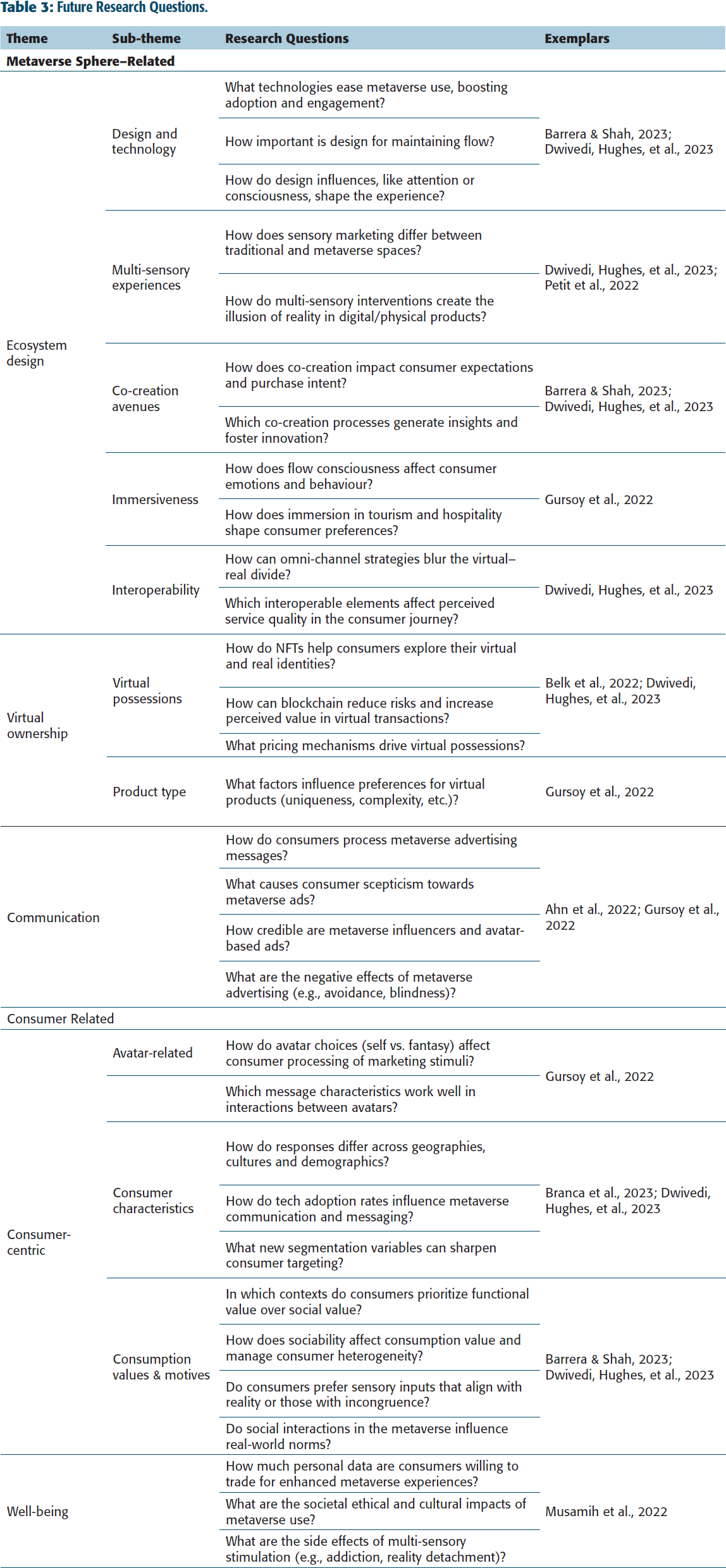
Opportunities for future research related to the rendering of metaverse include: how the metaverse platform and stimuli are designed (ecosystem design), how consumers own the experience (virtual ownership) and, finally, how metaverse may be used as a promotion mechanism (communication). Consumer-related research agenda helps in the understanding of consumer specificities. Their unique processing of stimuli in the metaverse needs exploration, particularly in themes that are consumer-centric and related to consumer well-being.
Besides providing theoretical avenues for academic exploration, our identified questions (Table 3) hold immense potential from a managerial lens. First, future research can examine how firms can design immersive environments that sustain consumer attention and ease navigation. This includes understanding the role of multi-sensory cues, intuitive interfaces and presence-enhancing features that contribute to user flow and engagement. This can directly inform platform development and user experience strategies. Second, studies could explore how firms can co-create models within the metaverse, such as avatar customization or user-generated content, to shape brand attachment. Third, research on how consumers assign value to virtual possessions, particularly those tied to NFTs and blockchain, can inform managerial strategies regarding pricing, exclusivity and signalling in the virtual economy. Fourth, with emerging formats like avatar-based promotions, it is important to examine which advertising strategies foster trust and reduce resistance. Finally, future studies should consider how to classify and personalize metaverse experiences. This includes identifying new segmentation variables like avatar preferences or levels of techno-readiness and designing communications that align with these traits. All of this needs to be done with consideration for consumer well-being, particularly with respect to privacy and the potential psychological effects of prolonged immersion.
Although our focus so far has been on how consumers respond to various aspects of the metaverse, the growing role of AI, including machine learning and deep learning, offers additional research opportunities. Consumer interactions with social AI agents (e.g., consumer service chatbots) are well explored but will gain significance in the metaverse with avatar embodiment, placing AI agents on equal footing (at least visually) as human users (Hadi et al., 2024). The use of auditory methods to distinguish between AI and human voices is likely to be adopted by consumers, especially for speech-based dialogues in what is termed social AI. Much like the previous discourse on consumer well-being, Hadi et al. (2024) also caution us on the possibility of deception by AI agents. They discuss the ‘highly fantastical digitally mediated environments’ where consumers already suspend their disbelief (p. 10). This poses multiple interesting research questions for future consideration. Since users themselves will be in avatar embodiment, would their interaction/perceptions of AI agents be different from that in other settings? With metaverse itself being a rendered world, would an experiential mindset of users make them more open to social interaction with AI agents (Hadi et al., 2024)? While the metaverse already renders pre-defined real-world elements, AI can create and deliver real-time visual and auditory hyper-personalized adaptations (Cheng et al., 2022). For AI to be useful and be exploited to its highest potential, the metaverse data sets have to be reliable to be used to improve user experience and for predictive modeling (Fadhel et al., 2024). They also suggest that AI has practical implications for entrepreneurs and investors and in healthcare, particularly in training for patient care using tailored treatment plans in a metaverse environment. These discussions highlight the critical role of AI in shaping the future of consumer experiences in the metaverse.
CONCLUSION
The metaverse promises a unique environment that has the potential to reshape CB based on its three layers. An increasing number of consumers are spending more time in virtual worlds engaging with virtual goods, services and environments. The clusters that have emerged indicate that the interest has focused on strategic applications, branding, the use of immersive technologies and the creative use of co-created avatars. The emergence of the topic suggests that the future may build upon this or diverge into socially relevant fields, such as consumer wellness and virtual ownership. This study employs bibliometric analysis and the TCCM framework to enhance the understanding of CB in the metaverse. Building on prior research, it explores stimuli that capture the metaverse’s value proposition and emphasizes marketing strategies tailored to consumers’ unique characteristics and behaviours, especially in virtual embodiment.
As the metaverse evolves, it will become more integrated into daily life as a platform for self-expression, requiring innovative marketing strategies to engage consumers and capitalize on new opportunities. This study also highlights the importance for policymakers concerned about consumer well-being. Finally, it highlights how leveraging AI in the metaverse raises important questions holding valuable insights for both researchers and industry professionals on the social influence of entities that are non-human. While there are phenomenal strengths in using AI in the metaverse, the future holds increasing dangers of deception by AI-assisted elements in a world of extremely elaborate digital dreamscapes will have a lasting impact on consumer well-being.
While much has changed since Stephenson said, ‘The people are pieces of software called avatars’, the code for demystifying consumers will remain the biggest challenge. This article provides behavioural and theoretical thematic aggregations of CB for future researchers and marketing practitioners to draw upon.
Footnotes
DECLARATION OF CONFLICTING INTERESTS
The authors declared no potential conflicts of interest with respect to the research, authorship and/or publication of this article.
FUNDING
The authors received no financial support for the research, authorship and/or publication of this article.

e-mail:
e-mail: