




Abstract
The supply chains in automobile manufacturing face numerous risks, impacting organisational performance due to improvised responses and inadequate contingency plans. This study employs the PROMETHEE methodology to identify and rank critical risk factors (CRFs) in the Indian automotive manufacturing supply chain. Thirteen risks were evaluated across five industry criteria using entropy methodology to ensure a robust and objective assessment of each risk factor. Risks related to delays, management, and suppliers emerged as the most severe. A comparison with VIKOR and TOPSIS methods was conducted. Prioritising risk factors through this approach aids organisations in addressing threats effectively.
Executive Summary
Risks can arise at various stages of today’s complex, uncertain and lengthy automobile manufacturing supply chain. Improvised responses and a lack of contingency plans result in organizations underperforming. Despite awareness of numerous supply chain risks, there is no clear understanding of their adverse impacts. This study identifies and ranks the critical risk factors (CRFs) in the Indian automotive manufacturing supply chain. The primary objective is to provide an evident understanding of the severity of CRFs’ adverse impacts on various organizational concerns acknowledging the multifaceted and unpredictable nature of risks. An in-depth review of reputable international journals was conducted to identify the CRFs in the automobile supply chain. The preference ranking organization method for enrichment evaluation (PROMETHEE) was employed to obtain a complete ranking of risks identified via a literature review. The impact severity of 13 identified risks on five separate industry criteria was examined, with the weight of each industry criterion computed by entropy methodology. While various CRFs examined in this study exert a notable impact on the supply chains of the Indian automotive sector, risks linked to delays, management and suppliers emerged as primary risks with the highest adverse impacts. A comparison was made between results from the PROMETHEE method and the VIseKriterijumska Optimizacija I Kompromisno Resenje (VIKOR) and Technique for Order Preference by Similarity to the Ideal Solution (TOPSIS) methods. A pragmatic approach to risk factor prioritization improves organizations’ responses to negative threats. The paper presents a thorough comparative analysis of risk prioritization by using three different methodologies to explore, assess and prioritize CRFs throughout the supply chain of Indian automobile manufacturing. A practical approach to prioritizing risk factors will assist organizational efforts in tackling the threats with the most severe adverse effects. This approach can significantly enhance the resilience and performance of the supply chain, offering valuable guidance for industry stakeholders.
There is often intense competition among various manufacturing supply chains due to globalization and shifting market dynamics. A number of specific factors drive organizations to compete with national rivals and, simultaneously, the most influential companies worldwide. One major factor is the increasing expectations and demands of customers. With recent advances in technology and communication, customers are more aware of their options and have higher expectations for quality, speed and convenience. A second factor is the complexity of the products and services being offered. As industries become more specialized and sophisticated, it becomes increasingly challenging for enterprises to stay abreast of the latest technology and trends. Finally, limited financial, human and material resources add to the challenge of competing in the global marketplace. These factors together create a need for enterprises to continuously improve and innovate to stay competitive (Antony & Desai, 2009; Singh et al., 2018).
The manufacturing industry in India is increasingly becoming one of the country’s most important growth sectors. According to the India Brand Equity Foundation Report (2021), it is anticipated that the industry will continue to expand as a result of growth in market size and demand, as well as increases in local and worldwide investments, support from government authorities and resource potential. The manufacturing industry is considered the backbone of the Indian economy and has played a significant role in the country’s rapid economic growth. As shown in past research (Kaur & Mehta, 2019; Mehta & Rajan, 2017; SME Chamber of India, 2021), the manufacturing sector is the most important contributor to employment in India and is a crucial contributor to India’s gross domestic product (GDP).
The Indian auto industry, which encompasses the production and assembly of components and vehicles, is one of the country’s fastest-growing manufacturing industries (Agrawal et al., 2021; Gautam et al., 2018; Katsaliaki et al., 2021). The growth of India’s auto sector has been an important factor in the success of the country’s overall economic advancement (Press Trust of India, 2021), with approximately 49% of India’s manufacturing GDP and 7.5% of India’s total GDP attributable to automobile manufacturing. It is a major employer in India, with 32 million people working for automakers and their suppliers. India ranks as the world’s seventh-largest producer of commercial vehicles and the fourth-largest producer of passenger cars (Agrawal et al., 2021; Gautam et al., 2023; Kumar et al., 2020).
The negative impact that risks have on a variety of operational activities, whether directly or indirectly, can severely affect business performance (Can Saglam et al., 2020; Huma et al., 2020; Kumar et al., 2018; Thun & Hoenig, 2011). An interruption in one element of the supply chain can have numerous repercussions for the other interconnected parts (Rezaei Vandchali et al., 2020, 2021). Furthermore, because of the dynamic and complicated nature of manufacturing supply chain operations, manufacturing businesses are susceptible to a wide variety of risks (Alora & Barua, 2020; Engemann, 2019; Ghadir et al., 2022; Islam & Tedford, 2012b; Kumar Pradhan & Routroy, 2014; Pfohl et al., 2011; Prakash et al., 2017). Surging globalization increases supply chain length, and the inclusion of multiple players in the supply chain increases its complexity (Shenoi et al., 2018). In this complex environment, risks surface at various stages of the supply chain without warning. Several examples illustrate this phenomenon. In 2000, Ericsson lost $400 million due to a fire (Chopra & Sodhi, 2004). As a result of the 2011 tsunami and earthquake, Toyota lost $72 million in profits, with their share price dropping by up to 9.5% in the first few days and then by more than 17% over the following month, with overall car sales in Japan hitting a 34-year low (Pettit et al., 2013). Additionally, there have been losses of $2 billion for Boeing, $2.25 billion for Cisco, and $2.8 billion for Pfizer in recent years as a result of supply chain issues (de Oliveira et al., 2017). Ghadir et al. (2022) identified the top ten supply chain risks during the recent COVID-19 outbreak as insufficient consumer demand information, supply-market shortages, Bullwhip effect, loss of important providers/suppliers, problems with the transportation system, supplier-timely delivery, restriction by the states, temporary closure of supplier, shifts in consumer demand and single source of supply. These problems unquestionably place an entire supply chain in a fragile and unpredictable state, especially when occurring simultaneously. According to the PTI (2021) report, in addition to the structural slowdown, the COVID-19 epidemic significantly impacted the Indian automotive industry, setting it back by many years. Since the unpredictability of the business climate and the complexity of supply chains increase the likelihood of breakdowns, Ghadge et al. (2012) and Colicchia and Strozzi (2012) argue that risks can originate both within the company (operational) and in the external business environment (rupture). The authors Christopher and Lee (2004) and Rinaldi et al. (2022) state that this is why risk management is becoming an integral part of many supply chain management initiatives. The goals of risk management in this context are to minimize the likelihood of disruptions happening, lessen their effect on performance and get the supply chain back to normal as quickly as possible (Hendricks et al., 2009).
Industries may fail to realize their full potential when dealing with known and unknown risks when they cannot fully comprehend the severity and interdependence of various significant risk factors (Chopra & Sodhi, 2004; Daultani et al., 2019). An inadequate understanding of the importance and implications of critical risk factors (CRFs) can result in gaps in risk mitigation techniques, leading to underperformance and falling short of expectations.
Businesses across industries are responding to these threats by investing heavily in the improvement of operational excellence and strategic management approaches in an effort to maintain their competitive advantage and protect their market dominance (Chiarini & Kumar, 2021; Gólcher-Barguil et al., 2019). Each organization has a unique approach to handling risks, which largely depends on how well-prepared organizations are with proactive and reactive risk mitigation planning (Chopra & Sodhi, 2004). By adopting proactive risk management strategies and leveraging the latest insights on CRFs and their impact severity, the manufacturing sector can enhance its ability to protect its companies and increase their value. An understanding of CRFs can also serve as a vital input in developing proactive risk management approaches that establish robust procedures and ultimately improve the overall situation.
However, despite the evolution of risk management techniques worldwide, only major and financially well-established organizations are capable of effectively adopting them and reaping the benefits of implementing risk management strategies (Ferreira de Araújo Lima et al., 2020). Studies on risk management in the Indian manufacturing industry are currently limited (Babu et al., 2020; Surange & Bokade, 2022). To effectively manage risks in the supply chain, companies must be able to respond to both internal and external disruptions promptly and efficiently. This requires a robust supply chain risk management (SCRM) system that can prevent potential negative impacts. Previous studies have identified a wide range of risks that businesses must consider to minimize the adverse effects on their supply chain. However, due to limited time and resources, it can be challenging for companies to respond to all identified risks. To manage potential disruptions in their supply chain effectively, businesses should prioritize their risk management efforts by focusing on mitigating CRFs that significantly impact various business functions.
The focus of this study is to identify CRFs in the Indian automotive supply chain and rank them according to their severity. The preference ranking organization method for enrichment evaluation (PROMETHEE) is employed to obtain a ranking of identified risks. PROMETHEE–II was selected as it provides a complete ranking. The research study involves qualified industry practitioners with extensive experience. Additionally, the study compares the results obtained by applying the PROMETHEE method with those of the VIseKriterijumska Optimizacija I Kompromisno Resenje method (VIKOR) (Cheraghalipour et al., 2018; Opricovic, 1998) and the technique for order of preference by similarity to ideal solution method (TOPSIS) (Dandage et al., 2018; Hwang et al., 1993). Programming software was used to obtain ranking by VIKOR and TOPSIS. Software is beneficial because it ensures accurate calculations, a streamlined interface and quick, low-cost implementation with rapid data processing (Ahmad & Qahmash, 2021; da Cruz et al., 2022).
The primary objective of this study is to devise a decision-making strategy that prioritizes CRFs in the Indian automotive sector based on their adverse effects while considering the most critical criteria (constructs). The proposed research approach aims to assist managers and decision-makers in their risk mitigation efforts by streamlining the decision-making process through the prioritization of CRFs.
The paper is structured as follows. First, there is an extensive review of the existing research in the literature review. In the subsequent section, the methodology employed in this study is described. Following this, the results and discussion are presented. Finally, the conclusion summarizes the paper and explains practical implications for managers.
Literature review
To enhance decision-making, decision-makers must have a comprehensive understanding of the CRFs in their supply chain. Therefore, an extensive review of the literature related to the supply chain of manufacturing industries in India was conducted to gain insights into this area. Primary research (using the survey method) and secondary research (literature review and expert opinion) were used to accomplish this goal. Many risks contribute to SCRM and are referred to as risk factors in the scientific literature. An effort has been made to locate the risk factors described in the published research using several keywords. For this reason, only peer-reviewed journals were taken into consideration. After reviewing the relevant literature and consulting with industry experts, the CRFs identified as most relevant for this study are as follows.
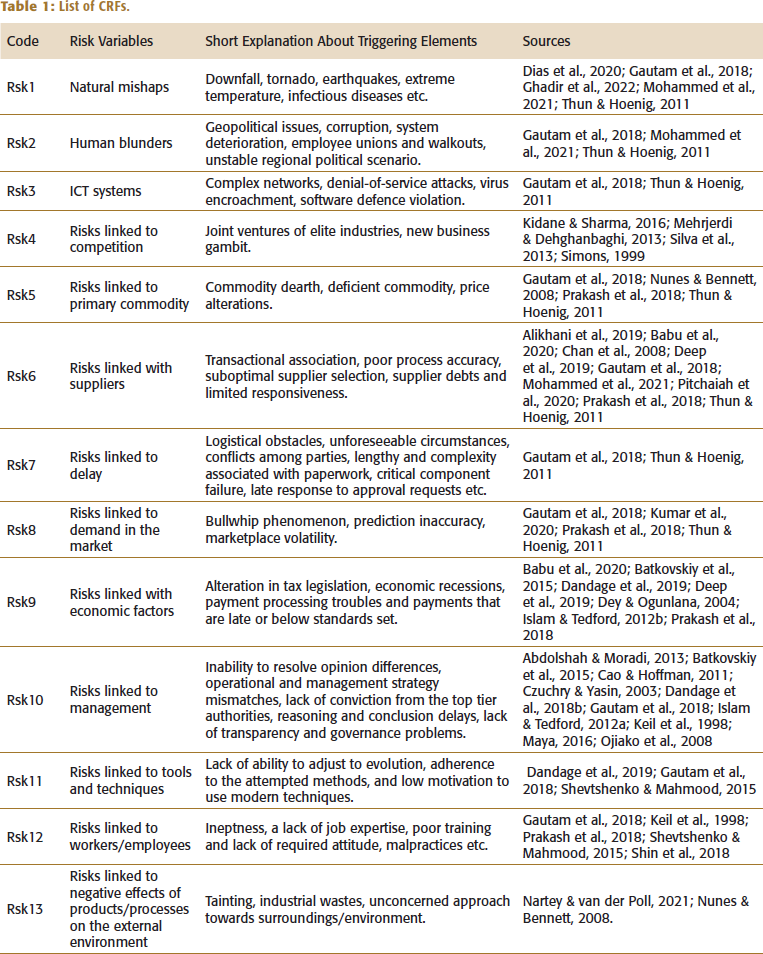
Overall, the preceding breakdown of key risks demonstrates their complexity and breadth, and how it is crucial for organizations to comprehend the CRFs related to the supply chain. Table 1 sums up the risk factors extracted from the literature, complete with source information.
List of CRFs.
According to Dandage et al. (2018), the effective management of risks is crucial to successfully completing any project without compromising the four major constraints of scope, cost, schedule and quality. However, Reiff et al. (2021) point out that in order to stay competitive, it is necessary to strike a delicate balance between manufacturing costs, delivery time and product quality. Previous researchers have revealed the multiple elements to be considered as performance indicators specifically in the context of the manufacturing sector. These include quality, safety, cost, management, financial performance/perspectives, schedule, brand name, lead time, productivity, reliability, supplier issues, manufacturing processes, employee perspectives and the company’s future perspectives (da Cruz et al., 2022; Susilawati, 2021; Tokola et al., 2016). These metrics are all essential for achieving sustainable production.
Any risk that occurs can affect various aspects of manufacturing, so it is important to examine how risk factors impact industrial criteria. To ensure the smooth functioning of the supply chain, it is important for businesses to manage and mitigate potential disruptions that can arise from various CRFs. These factors can severely impact the performance of different business functions such as production, logistics and customer service. Therefore, businesses must prioritize their risk management efforts by focusing on mitigating CRFs that have a significant impact on these functions. By doing so, businesses can effectively allocate their resources and develop robust risk management strategies to minimize the adverse effects of potential disruptions and maintain their competitive edge in the market.
In previous studies on SCRM, authors have explored different approaches to protecting supply chains from disruptions. These include the proactive approach, which involves creating defences ahead of time, and the reactive approach, which consists of adjusting supply chain processes and structures after disruptions occur.
Methodology
A literature review, brainstorming sessions with automobile industry professionals, the nominal group approach and idea engineering, were all used to determine the most influential CRFs (Singh & Gupta, 2020). These factors relate to the organization’s high-level objectives, its day-to-day operations and key functional areas. During the process of selecting essential risk factors, several one-on-one and group discussions with industry professionals were conducted. However, since the criteria for selecting risk factors may vary from one industry to another, the selected experts were asked to validate the risk factors through a pilot survey. The group’s consensus was then documented.
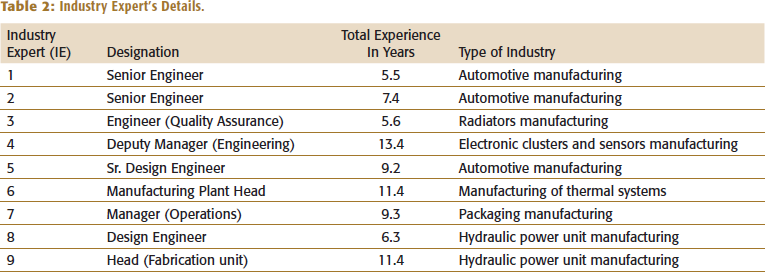
The risks aggregated in Table 1 were verified by consulting nine experts (see Table 2) from India’s top manufacturing companies. During the pilot study, the respondents were given a list of 23 risk factors derived from the literature and asked to identify the risks they felt were critical to the manufacturing industry. A Google form was used to distribute and gather responses to the survey. The responses from nine industry professionals were analysed for the pilot study. Based on the analysis, 13 common CRFs were selected for further investigation in this study. According to the evaluation of specialists, the selected risks are relevant and significant to the current condition of the Indian automobile sector.
Industry Expert’s Details.
Several approaches may be used to determine the relative importance of different risk categories. Researchers and professionals in various fields have shown great interest in Multi-Criteria Decision-Making (MCDM) techniques (Raut et al., 2019, Raut et al., 2021a, b; Singh et al., 2016, 2017, 2020; Singh & Gurtu, 2021). The term MCDM methods refers to examining several competing criteria in a subject while applying quantitative evaluations to alternatives. MCDM enables decision-makers to perform assessments and make decisions regarding various aspects by merging the approaches of several other academic subjects, including mathematics, management, the social sciences and economics. Additionally, MCDM techniques are effective for exploring, rating and ranking various decision-making tasks (Chowdhury & Paul, 2020; da Cruz et al., 2022; Kharat et al., 2016; Singh & Agrawal, 2018). Unlike statistical theory, MCDM does not require a large sample size in order to function properly. Rezaei et al. (2018) observed that the MCDM procedure only requires 4–10 specialists at the most in order to gather credible information. It is essential, of course, to make sure that the individuals being questioned are extremely knowledgeable in their fields and highly professional (Gul et al., 2021). Different MCDM techniques are known to have varying performances and features (Zamani-Sabzi et al., 2016). Therefore, selecting a specific approach from the numerous MCDM methodologies is not simple. According to Ghaleb et al. (2020), to increase selection efficiency and effectiveness, it is necessary to compare several MCDM strategies. Three MCDM techniques, namely PROMETHEE, VIKOR and TOPSIS, were selected for this study based on their extensive use, ease of implementation and excellent performance in previous research (da Cunha et al., 2022; Singh & Gupta, 2019, 2020; Surange & Bokade, 2022; Taghavifard & Majidian, 2022).
After reviewing all the criteria derived from the literature, specialists who were consulted (see Table 2) concluded that it would be beneficial to limit the number of criteria to simplify the decision-making process. As a result, the specialists agreed on five priority criteria (constructs) for evaluating the impact of CRFs. These selected criteria are discussed below. The negative impact intensity of 13 identified CRFs on five separate industry concerns was examined during the decision table formulation, namely, commercial considerations, production activities, business reputation, planning and quality of the process/end item.
Ranking of risk factors using PROMETHEE
To arrange the identified critical risks according to their adverse impact intensity, the Preference Ranking Organization Method for Enrichment Evaluation (PROMETHEE–II), was employed (Potdar & Rane, 2018; Rao & Patel, 2010; Venkatesan & Kumanan, 2012). The step-by-step approach to this method is described below.
Step 1. Industrial Practitioners’ Profile and Creation of Decision Table
Seven highly qualified and experienced industry experts were approached, and their input was obtained to create a decision table. Table 2 (Sr. Nos 1–7) presents the profile of industrial practitioners, and Figure 1 illustrates the overall process adopted for ranking. As can be seen, CRF analysis is comprised of three distinct stages. At the highest level, the goal of the problem is outlined, and the criteria, along with the risk factors, are discussed sequentially.
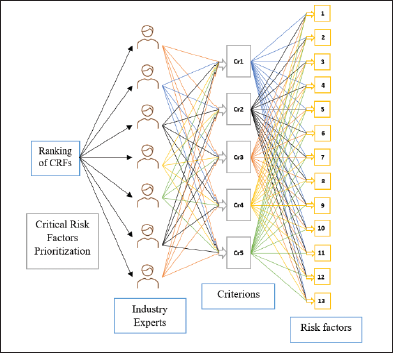
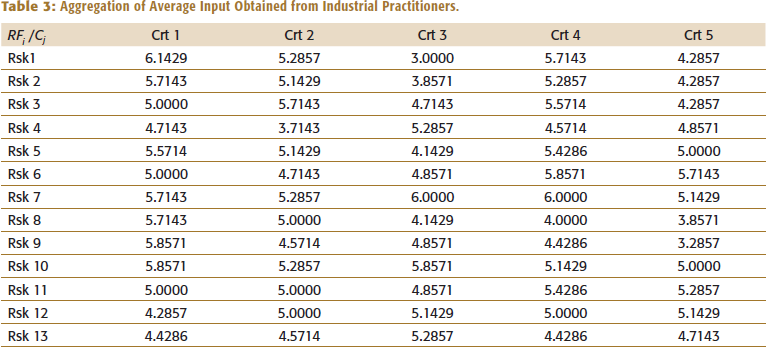
Table 3 aggregates the average input from industrial practitioners for each alternative (i.e. risks concerning each criterion considered, as explained earlier in the Literature Review section). The input was gathered using a Likert scale from 1 (very low adverse impact) to 7 (very high adverse impact).
Aggregation of Average Input Obtained from Industrial Practitioners.
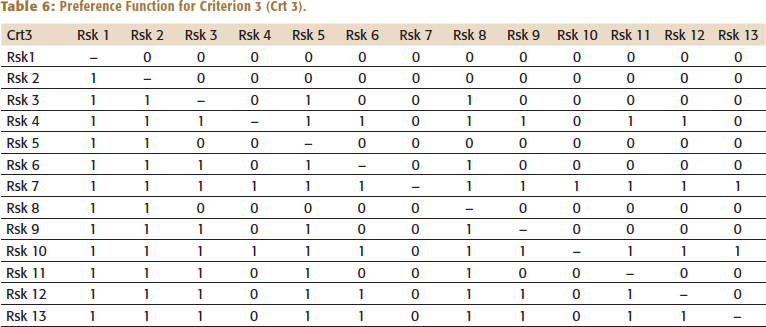
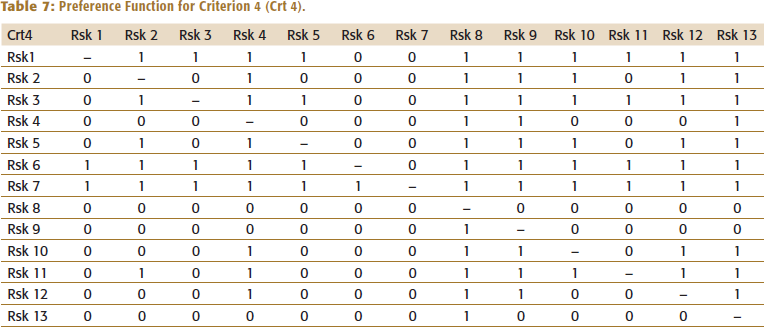
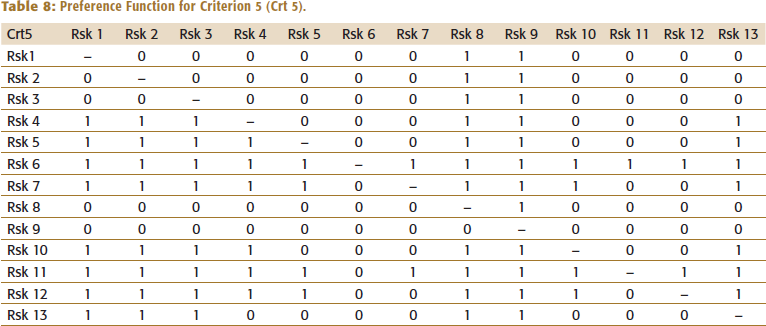
Step 2. Assignment of Preference Function to Each Criterion
The preference for the usual function can be determined by calculating the difference between the values of a specific criterion (
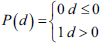
Preference Function Assignment.
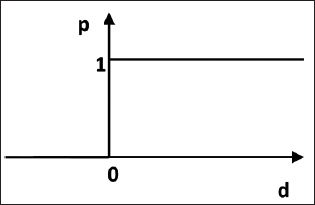
Let
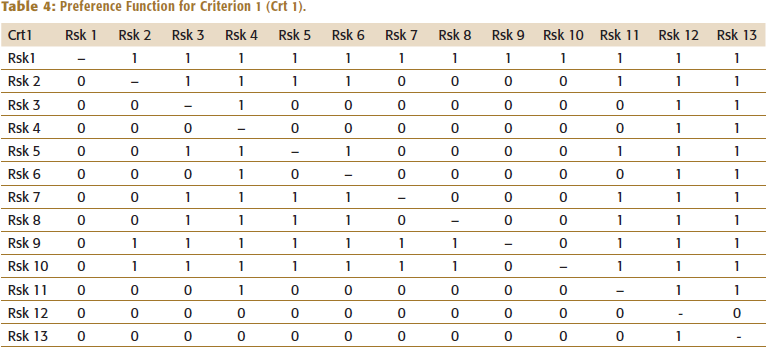
Preference Function for Criterion 1 (Crt 1).
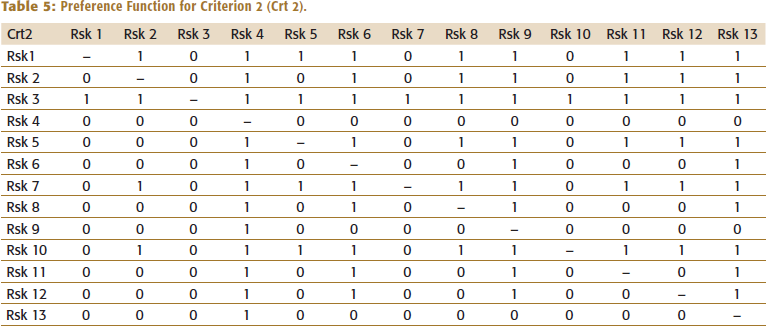
Preference Function for Criterion 2 (Crt 2).
Preference Function for Criterion 3 (Crt 3).
Preference Function for Criterion 4 (Crt 4).
Preference Function for Criterion 5 (Crt 5).
Step 3. Calculation of Weight for Each Criterion Using the Entropy Method
Weight computation of each criterion is performed as follows (Dehdasht et al., 2020; Mavi et al., 2016; Shannon, 2001).
Normalization of Table 3 is performed using the equation
The Normalization of Average Ratings.
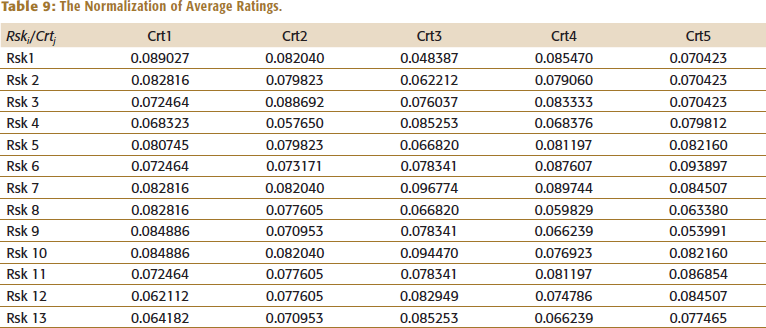
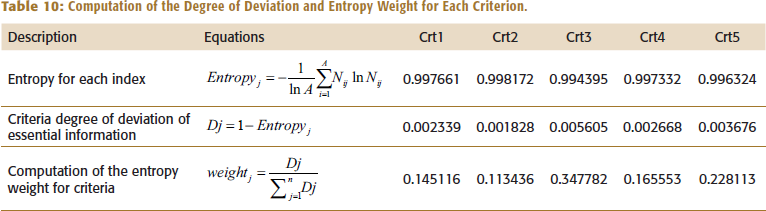
Criteria weight is calculated using equations as presented in Table 10.
Computation of the Degree of Deviation and Entropy Weight for Each Criterion.
Step 4. Calculation of Aggregated Preference Indices
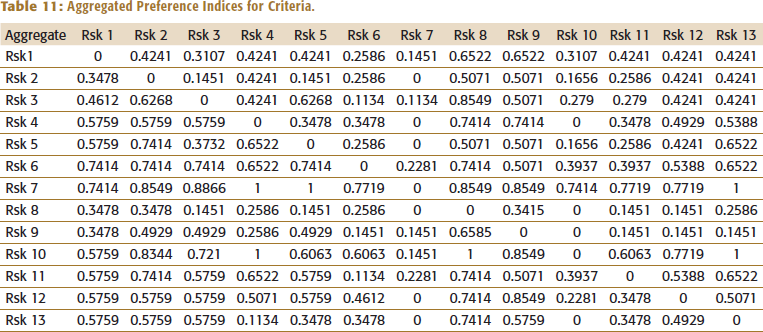
Aggregated preference indices for criteria are calculated using the equation:
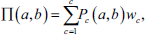
where
Aggregated Preference Indices for Criteria.
Step 5. Calculation of Net Flow and Ranking of Risk Factors.
Leaving flow

Entering flow

Net flow

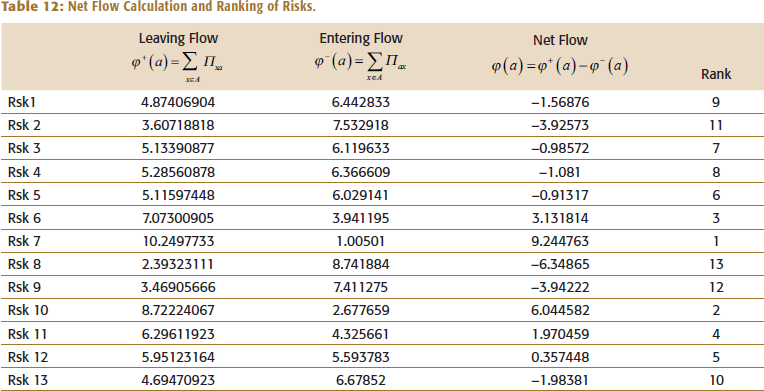
See Table 12 for the results of the net flow calculations.
Net Flow Calculation and Ranking of Risks.
Ranking of Risk Factors Using VIKOR
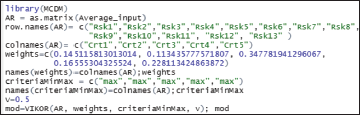
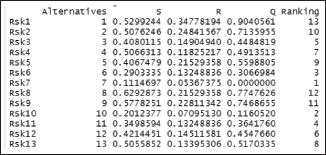
This approach emphasizes prioritizing and selecting from a group of options before examining a solution. In doing so, it seeks to retain the possible benefit for the majority while causing the individual the least regret (Varshney et al., 2021). The ranking was computed using the VIKOR method in programming software based on input from industry experts (see Appendix I).
Ranking of Risk Factors Using TOPSIS
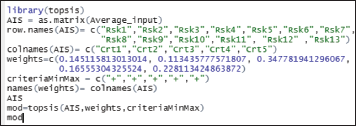
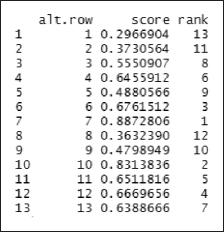
The fundamental tenet of TOPSIS is simple. Its roots lie in the idea of a dispersed ideal point, from which the compromise solution is closest (Shih et al., 2007). In addition, Hwang and Yoon (1981) and Hwang et al. (1993) indicated that options should be ranked according to how close they are to the positive ideal solution (PIS) and how distant they are from the negative ideal solution (NIS). In TOPSIS, the distances to PIS and NIS are considered simultaneously, and a preference order is rated according to the relative proximity of these two distance measures. The input from industry experts was used to compute the ranking using the TOPSIS method in programming software (refer to Appendix II). The higher the relative proximity to the ideal solution, the greater the adverse impact of that risk category on the criteria considered.
Results and discussion
There are a number of risks linked with automobile manufacturing in India’s industrial sector which have an immediate impact on the effectiveness of the supply chain at a national level. The process of SCRM involves three steps, namely identification, assessment and mitigation, and the cooperation and coordination of the supply chain partners are crucial during these stages (da Cunha et al., 2022).
A robust risk management system is crucial for managing day-to-day operations and enhancing overall industrial efficiency, giving organizations a competitive edge. Managers should be knowledgeable about CRFs and the severity of their impact on various industrial key indicators. They should strive to have clear plans to minimize the negative impact of these risks while successfully implementing risk management plans. Therefore, to effectively apply SCRM, supply chain managers must first identify key supply chain risks in their firm’s context (Marcelino-Sádaba et al., 2014) and comprehend the severity of their impact among those risks.
This study consulted a team of decision-makers and specialists to collect input data. The industrial specialists consulted are senior officials from top-ranked businesses in Maharashtra, India, and each has extensive domain expertise. The impact severity of risk factors was assessed using five criteria. Shannon’s entropy was employed to quantify each criterion’s weight as it improves decision-making reliability and accuracy without requiring extensive computation. The weight of the information criterion increases with decreasing entropy of the assessed information criterion (Chen, 2020; Dehdasht et al., 2020). The computed entropy was used to determine the weight of each criterion in the study. For Crt3, the computed entropy was lowest, at 0.994395, resulting in a weight of 0.347782, which is the highest among all other criteria. Conversely, Crt2 had the highest computed entropy value at 0.998172, resulting in the lowest weight of 0.113436 being assigned to it. The comparison of CRF prioritization obtained by using PROMETHEE, VIKOR and TOPSIS methods is presented in Table 13.
Comparison of Ranking Results Obtained.
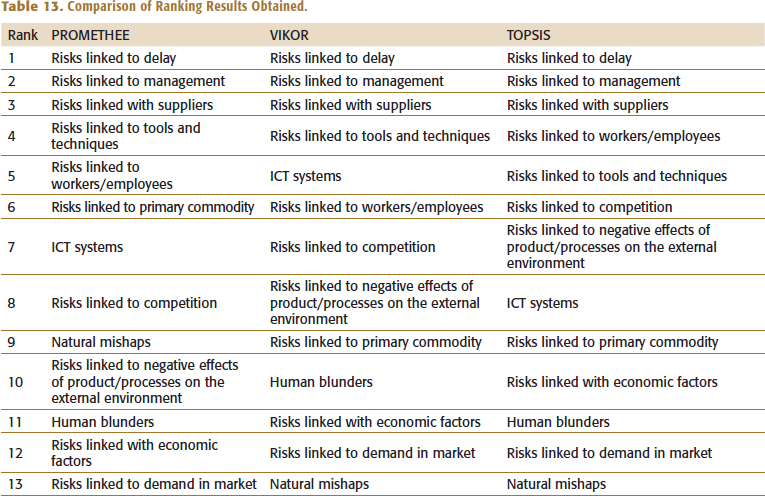
The availability of various MCDM approaches makes it crucial to compare and evaluate their individual performances and characteristics to identify the most appropriate approach for a given situation. Comparing different MCDM procedures can enhance the selection process’s efficiency and efficacy (Ghaleb et al., 2020; Jain et al., 2018). Through a systematic approach and analysis, this study has identified that delay, management and supplier risks are the top three risks faced by the Indian automotive supply chain. These findings can be valuable for automotive industry management to prioritize the CRFs and implement mitigation measures accordingly.
Conclusion
For supply chain managers, controlling risk in a highly volatile business environment is a complex undertaking. Numerous studies have shown that the manufacturing sector needs to be continually enhanced to improve its management of unforeseen events and remain viable in a globally competitive economy. Many manufacturing companies in developing countries do not currently manage various risk factors effectively compared to the proactive and reactive risk mitigation approaches required by international benchmarks. As a result, all manufacturing organizations are endeavouring to include risk management in their long-term business goals. Researchers are developing risk management measures to help supply chains survive disruptions. Many industries are using resilience- and responsiveness-based approaches to create robust supply chains.
This study has systematically compared the prioritization of critical risks that predominantly exist in the Indian automotive supply chain. This systematic approach will provide industry professionals with a better understanding of their complex environment, helping industrial managers prioritize the strategic factors identified in the study. These efforts can serve as input for better decision-making, leading to improved supply chain performance.
The study’s results reveal that risks linked to delay hold up further processing of parts and end up disrupting the supply chain flow. Unsupportive and uninvolved management practices hinder the organization from achieving timely results and success. Risks associated with suppliers are particularly critical in automotive manufacturing, as thousands of parts are assembled before the final vehicle is ready. Any defects from the suppliers can travel through the entire supply chain and affect the final assembly, resulting in various risks to the end-user and the brand itself. Hence, the findings imply that organizations should focus on these risks, assess them and create mitigation plans based on their individual circumstances.
The MCDM approaches discussed in this paper are considered standard but remain relevant and commonly used. However, there may be other MCDM tools that can be explored to validate the results obtained in this study. Moreover, other available methods for identifying and ranking risk factors and understanding the interdependencies and causal linkages among them may lead to additional insights in the future. Possible follow-up research could compare our findings to data collected from other industries or geographical regions with varied manufacturing sectors.
APPENDIX I: RANKING OF RISK FACTORS USING VIKOR IN R
Input
Output
APPENDIX II: RANKING OF RISK FACTORS USING TOPSIS IN R
Input
Output
Footnotes
DECLARATION OF CONFLICTING INTERESTS
The authors declared no potential conflicts of interest with respect to the research, authorship and/or publication of this article.
FUNDING
The authors received no financial support for the research, authorship and/or publication of this article.

e-mail:
e-mail: