Abstract
Executive Summary
Pandemics like COVID-19 result in a disruption in the lifestyle and buying pattern of a consumer and adversely impact the global economy. Consumer purchase of country’s own brand and the products manufactured in their own country plays a vital role in the GDP of that country and help in revival of the country’s economy. This study focuses on understanding the factors that influence consumer’s buying behaviour and model these factors to understand the causal relationship using partial least square-structural equation modelling. An online survey which was carried out between 30 March 2020 and 18 April 2020. A total of 367 responses were collected during this period. Findings of the study indicate that economic nationalism, lockdown sentiments and sustainable approach (LSSA), and product-specific ethnocentric behaviour (PSEB) tendency significantly influence the willingness to buy country’s own brands and products. Present study results reveal that during pandemic consumers have realized the importance of hygiene products, environment-friendly products, regional (local) products, and satisfaction beyond shopping; these factors determine their willingness to buy Indian brands (WBIB)/made-in-India products. Further, post lockdown and post COVID era, consumers feel that buying Indian-made products and encouraging others to buy them would impact and revive the Indian economy constructively. It was also found that the influence of factors such as economic nationalism, LSSA, and PSEB on the WBIB is mediated by attitude towards foreign products. The findings of the study can aid marketing managers in planning appropriate promotion strategies to stimulate ethnocentric tendency, and cues can be provided to invoke a sense of economic nationalism in consumers when they buy products or services.
The world faced a unique challenge due to the COVID-19 pandemic. China was the first country to face the mass spread of novel Coronavirus (Bennett, 2020) and promptly, the virus started spreading across the world. On 11 March 2020, the coronavirus epidemic was declared a ‘pandemic’ by the Director-General of the World Health Organization (WHO, 2020). In the absence of a vaccine to curb the spread of the highly contagious virus COVID-19, countries around the world were forced to take preventive measures in the form of imposing social distancing and declaring country-wide lockdowns (Kaplan et al., 2020). This restricted cross border travel, suspended production, and the global supply chain came to a halt. Social distancing was a very challenging task in India as it is the second most populated country in the world. To protect the population of 1.3 billion from infection, the Prime Minister of India announced 21 days of nationwide lockdown on 24 March 2020. The decision taken after 14 hours of voluntary public curfew on 22 March 2020, known as Janata (people) Curfew (The Economic Times, 2020).
The behavioural responses during epidemic outbreaks such as EBOLA, SARS, MERS, swine flu and dengue have been studied in the past (Balinska & Rizzo, 2009). Such changes were noted during pandemics and outbreaks such as SARS because of motivated individuals and government policies (Wen et al., 2005). The areas affected by pandemics generally witness unemployment, uncertainties, and economic recession. Individuals take safety measures to reduce the perceived risk during pandemic situations due to ambiguity and unpredictability (Brug et al., 2009). An increase in the purchase of food, face masks and sanitizers was reported during the outbreak of swine flu (Goodwin et al., 2009). During the first phase of coronavirus lockdown in India, citizens experienced unprecedented situations, leading to an unparalleled preference shift among consumers. Goods were classified into essential and non-essential goods; only essential goods were available to citizens, and there was no demand for lifestyle products (Enormous, 2020). Another unique behaviour was noticed when people across the world expressed their emotions against China because of their belief that China had not undertaken adequate preventive measures to avert the pandemic from spreading around the globe. In addition, China was reopening its businesses while other regions of the world, including India, were forced to follow lockdown, which adversely affects the economy.
Moreover, Indians became apprehensive of losing their jobs due to the economic slowdown (Ganesh, 2020). A feeling of nationalism was observed across many countries globally. People started talking about the importance of being self-reliant and reducing dependency on China, which is considered the global manufacturing hub. Even before this pandemic, the world seems to have started shifting from globalization to localization (Oba, 2020). Global incidences such as Brexit have seen the rise of populism, accompanied by anti-foreigner sentiments in multiple European countries. Earlier, this was seen more in China when corporate houses such as Amazon had to quit the Chinese market as the Chinese government always believed in China First policy; in the US also, the Trump administration policy of America First resulted in the rest of the world starting to look inward and strengthening their economy, giving rise to nationalism (Oba, 2020).
Changes in the choice of purchase destination, type of goods purchased and adoption of digital payment, especially in developing countries such as India, were observed during the nationwide lockdown (Enormous, 2020). Consequently, there is a need to understand the new consumer behaviour in terms of new theories, marketing strategies in the post-COVID-19 situation and factors influencing consumers while buying goods or services post lockdown. Since there is the uncertainty about when the world would be free from this contagious virus, the current study included both COVID-19 and post COVID-19 periods. The study is an attempt to answer research questions based on three notable changes during the lockdown: first, economic activities came to a complete halt, indicating the adverse effect on the economy. Hence, there is a need to study what citizens feel about the economic situation and who they think should contribute to the revival of the economy. Second, considering the economic impact, would consumers continue their impulse buying or shift towards planned behaviour? Would consumers be more willing to buy country-of-origin products, displaying their ethnocentric behaviour? Third, has the stay-at-home mandate influenced how they think about the environment and sustainable living?
The next section of this research paper focuses on the literature review and observed behaviour during the lockdown period, thus building the conceptual model. The third section focuses on the objective of the study and methodology, followed by results and discussion. The concluding section comprises the managerial implication, limitations of the study, and future scope.
LITERATURE REVIEW
Through various updates from different parts of the world, it was observed that people started expressing their gratitude towards healthcare workers (Lane, 2020) and neighbourhood kirana (grocery) stores for providing them with essential goods for survival. A feeling of nationalism was reflected in the behaviour of citizens. The emphasis was on saving money during the pandemic (Holz, 2020) because of increased fear of unemployment due to a major downfall in the global economy. The following section presents the literature review of consumer ethnocentrism and attitude towards foreign products (ATFP), nationalism, and impulse buying.
Consumer Ethnocentrism
The concept of consumer ethnocentrism is based on three views: first, the consumer’s fear of economically harming his/her own country by buying foreign products; second, the morality in buying imported products; and third, a personal prejudice against imports (Sharma et al., 1995). Thus, ethnocentric consumers believe that purchasing imported products is unpatriotic, causes loss of jobs, and hurts the domestic economy. On the other hand, consumers who are non-ethnocentric judge foreign products based on their merits, without consideration of where those products are made (Shankarmahesh, 2006). To measure consumer ethnocentric tendency, which refers to consumers’ preference for their own country-of-origin products, the 17-item consumer ethnocentrism tendencies scale (CETSCALE) developed by Shimp and Sharma (1987) is widely used and validated from multinational perspectives. A 6-item version of the CETSCALE was developed to measure the construct of consumer ethnocentrism in which domestic products are preferred to foreign products (Klein et al., 2006). The demographic profile of Australian consumers and the threat of losing their jobs have been correlated to ethnocentric sentiments (Josiassen et al., 2011).
Consumer ethnocentrism plays a significant role in the purchase of domestic brands but has a moderate effect on consumer purchase intentions for foreign brands. Product advertisements that display ethnocentrism may not encourage the purchase of domestic brands but can discourage foreign brand purchases (Han & Guo, 2018). Some studies reveal a positive attitude towards domestic products (Bannister & Saunders, 1978; Baughn & Yaprak, 1996; Shimp & Sharma, 1987; Batra et al., 2000) and some towards foreign products (Bartsch et al., 2016; Cleveland et al., 2009). In developing and emerging economies, consumers prefer foreign brands because of their attraction towards foreign countries and self-identification with global consumers; a cosmopolitan consumer who seeks novelty and wishes to be globally connected shows affinity towards foreign products (Bartsch et al., 2016; Cleveland et al., 2009; Strizhakova & Coulter, 2015; Zeugner-Roth et al., 2015). The preference for products of foreign origin has been reported in durable consumer products and luxury products as they are associated with higher perceived quality and symbolic value than domestic brands (Batra et al., 2000; Zhou et al., 2010). While less affinity has been reported for low-involvement products, especially food (Özsomer, 2012). The context plays an important role in behaviour towards the foreign product.
Taking cues from these past studies to measure the influence of ethnocentrism on purchase decisions during the pandemic and post-pandemic situations, in the present study, two questions were asked on the willingness to buy Indian brands (WBIB), two questions on ATFP and six questions on product categories where consumers would prefer to buy Indian brands or made-in-India products. Based on this, the following hypotheses were framed to study the willingness to purchase Indian brands:
H1: Product-specific ethnocentric behaviour (PSEB) influences the WBIB. H2: Attitude towards foreign products influences the WBIB. H3: Attitude towards foreign products mediates between PSEB and WBIB.
Nationalism
Though researchers have widely explored consumer ethnocentrism, consumer nationalism has received relatively very little attention in marketing literature. Wang (2005) refers consumer nationalism to consumers’ invocation of collective identities based on their nationality to accept or reject products or brands from other countries. Consumer nationalism also refers to efforts to define buying and using it as a political statement through the non-consumption of things from an offending country or countries and consuming one’s own nationally produced goods and services (Gerth, 2011). Castelló and Mihelj (2018) classified consumer nationalism into political consumer nationalism and symbolic consumer nationalism.
Political Consumer Nationalism
Symbolic Consumer Nationalism
It involves economic activities that are less political but are associated with culture. This is a practice of consuming, using and wearing products or services that are either produced nationally or otherwise recognized as national (Castelló & Mihelj, 2018). Taking cues from this concept, the present study focuses on both made-in-India products and country-of-origin products.
Economic Nationalism
Researchers have argued over the role of economic nationalism in past studies; it finds more relevance in the current pandemic situation. Economic nationalism is linked with support to the national economist policy, and foreign competition is perceived as an economic threat that can lead to personal job insecurity (Baughn & Yaprak, 1996). This specific subtype of nationalism gives primacy to economic practices such as selling, buying, and consumption as key markers of nationhood (Castelló & Mihelj, 2018). The authors contended that—to boost the national economy—corporate houses and political institutions are forced to adopt the language and practices of the market and use national brands to sell goods and services. Cultural institutions also endeavour to treat their products and services as goods designed to make a profit for the nation. Thus, consumer nationalism becomes an integral part of economic nationalism and gives importance to economic activities representing nationhood.
Ethnocentric behaviour, nationalistic orientation and economic orientation at the individual level drew the attention of Schooler (1971). The author found that if consumers have a feeling of hostility towards a particular country, they tend to show bias against the products of that foreign country. Later, Baughn and Yaprak (1996) reported economic nationalism as adopting an ‘us first’ stand and a common feeling of discrimination against foreign products, influenced by ethnocentrism, national identity and economic nationalism. Blending the concepts of consumer and economic nationalism, the authors argued that commercial players such as manufacturers and retailers opt for marketing strategies in packaging, product design and advertising in such a manner as to help consumers link the products and services to the nation. Castelló and Mihelj (2018) further explained that individuals involved in consumer nationalism start engaging in consuming nationalized goods; they wear fashion products that have national symbols or colours; they choose national television shows, and prefer to buy domestically produced goods. Consumers also pay attention to the country-of-origin cues available on the packaging, such as ‘made in’ and ‘brand origin’ and make purchases based on their economic nationalism tendency and ethnocentric attitude (Cheah & Phau, 2006). Economic and socio-psychological motives play a vital role when consumers display favourable behaviour towards domestic brands (Verlegh, 2007).
Economic nationalism can be measured by the expectations that individuals have from the government, domestic firms, and the general public in restricting the activities of foreign firms (Akhter, 2007). However, the current study focuses on measuring an individual’s thoughts on the display of economic nationalism by asking the questions on ‘who is responsible for the revival of the economy?’ and ‘can individual purchase preference contribute to economic revival?’
Based on this, the following hypotheses were framed:
H4: Economic nationalism influences the WBIB. H5: Attitude towards foreign products mediates between economic nationalism and the WBIB.
Impulse Buying
Stern (1962) termed impulse buying as unplanned buying—purchasing a new product without any prior experience. Impulse buying behaviour is a complex behaviour and is influenced by factors such as consumer’s demographic characteristic (Dittmar et al., 1995) and in-store stimuli in the form of point of purchase posters and other elements of the retail store environment that create a positive emotional response (Abratt & Goodey, 1990; Zhou & Wong, 2004). Emotions at the time of shopping (Youn & Faber, 2000) and product-specific impulse buying are affected by involvement in the product. Peck and Childers (2006) found that at the point of purchase, signs, displays and packaging encourage a touch of the product, which play a crucial role in impulse purchase and the availability of money. Individuals who seek variety show more inclination towards impulse purchase (Sharma et al., 2010). During the pandemic, impulse buying could be seen in panic buying, resulting in stockpiling of goods including food (Wang & Na, 2020), cleaning and hygiene products and medicines in many countries (Islam et al., 2020). In a survey done to study the stockpiling behaviour of Danish and British shoppers during the early stage of the pandemic, it was found that only four out of ten buyers did not do any extra shopping (Dammeyer, 2020)
The initial cases of panic buying were reported in China and Italy, the counties badly affected in the early stage of the pandemic (Bennett, 2020) and also in the United Kingdom (Barr, 2020). Among US citizens also, factors such as fear of a complete lockdown, pressure due to buying behaviour exhibited by peers, scarcity of essential products on shelves, US stimulus checks, limited supply of essential goods, and panic buying were found to have a compelling and affirmative influence on the sharp swings in the impulse buying patterns (Ahmed et al., 2020).
Looking at the emerging behaviour due to the pandemic where ‘touchless or contact less’ shopping is becoming more relevant due to the social distancing norms (Chhabra, 2020) and frequent washing of hands to prevent infection, impulse buying may need to be studied with new dimensions. Based on the study by Ganesh (2020), it can be assumed that consumers may not have high disposable incomes or maybe very cautious in using disposable incomes. Thus, consumers may not opt for impulse buying immediately after the lockdown is lifted. Instead, they may choose need-based planned shopping in the short term. However, in the long run, they may again shift to aspirational buying. With this assumption, the present study delved into three questions related to need-based and planned purchase post lockdown (NBPPL). Also, to measure the impulse purchase behaviour of consumers before lockdown, five questions were asked to check if the lockdown has resulted in any behavioural change. The stay-at-home mandate has given adequate time for people to think about the environment. Thus, through this study, an attempt was made to measure if the lockdown sentiments and sustainable (LSSA) living have influenced the WBIB. This leads to the following hypotheses:
H6: Impulse purchase pre-lockdown influences the WBIB. H7: NBPPL influences the WBIB. H8: Lockdown sentiments and sustainable approach influence the WBIB. H9: Attitude towards foreign products mediates between NBPPL and the WBIB. H10: Attitude towards foreign products mediates between impulse purchase pre-lockdown (IPPL) and the WBIB. H11: Attitude towards foreign products mediates between LSSA, and the WBIB.
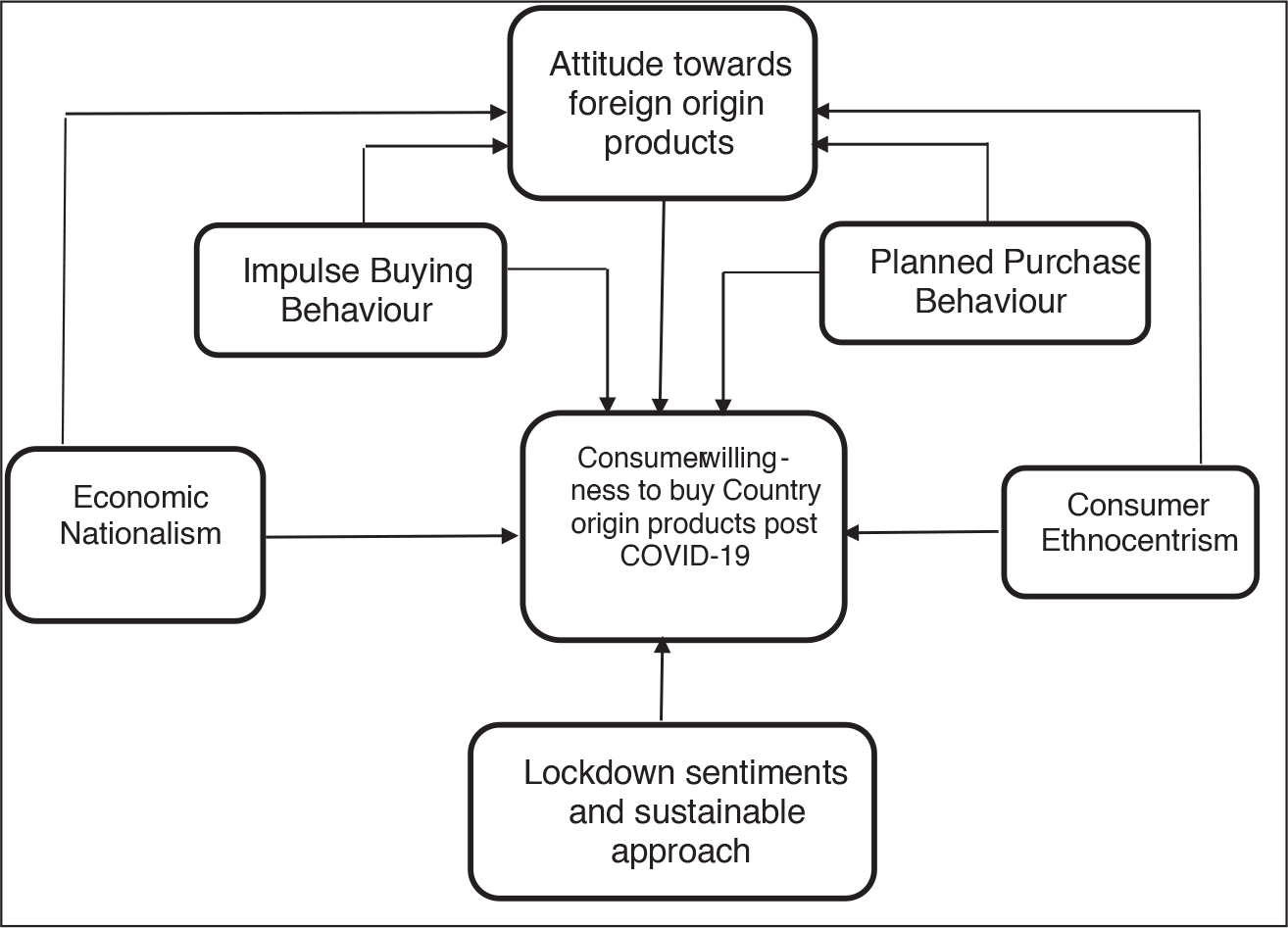
Based on the observations and the literature, it was noticed that due to the pandemic, consumers are more inclined to help the government in reviving the country’s economy and may look for ‘made in India’ or Indian origin brand cues before making purchase decisions. With this understanding, the conceptual framework was developed (Figure 1). The study focuses on measuring the willingness of consumers to buy products of native country origin, which is influenced by ethnocentric behaviour (referring to the preference for domestic products or country-origin products). It also explores the feeling of economic nationalism that their purchase would play a role in boosting the nation’s economy post the COVID-19 pandemic (Figure 1). The framework also includes the influence of the impulse buying tendency of consumers before the pandemic, whether they would be more inclined towards need-based planned purchase and its influence on the willingness to buy country-origin products. Due to globalization, the Indian market offers a wide range of foreign origin products. Hence, the framework also includes the influence of ATFP during the pandemic and its effect on the willingness to buy country-origin products.
Framework of Buying Behaviour Post-COVID-19 Pandemic.
OBJECTIVE OF THE STUDY AND METHODOLOGY
The study aims to understand if the stay-at-home mandate has resulted in any change in consumer buying behaviour due to the COVID-19 crisis and the factors that would influence purchase decisions post lockdown, once economic activities resume.
Data was collected online using a structured questionnaire under a unique environment during the second and third weeks of the lockdown, between 30 March 2020 and 18 April 2020. The respondents had already experienced the lockdown and were also aware of the possible impact of this pandemic on the world’s economy and its consequences on the Indian economy. The questionnaire consisted of five sections: the first section comprised questions related to the demographic profile of the respondents; the second consisted of questions related to economic nationalism; the third section comprised questions related to planned and unplanned purchases before and after the COVID-19 situation, followed by the next section in which questions were related to ethnocentric purchase behaviour in various product categories; the last section consisted of questions related to willingness and advocacy for buying Indian brands and Indian origin products. A 5-point Likert scale was used to get responses for all the questions from second to fifth sections.
Simple random sampling and snowball sampling were used to collect data, and the respondents were contacted by sending survey links through email and social media platforms like WhatsApp and Facebook. A total of 367 responses were collected; however, the response rate was only 50%, which is a limitation in doing an online survey.
DATA ANALYSIS AND MODELLING
Out of the 367 respondents, 56.9% were male, and 43.1% were female. The majority of the respondents, that is, 49.3%, were in the age group of 25 to 35 years; 35.7% were between 18 to 25 years of age; only 6% were between 35 to 40 years, and the remaining 9% were above 40 years. Most of the respondents (43.9%) had a monthly family income above ₹80,000; 13.4% had an income of ₹60,000–80,000; 18.3% had an income between ₹40,000 and 60,000; 16.9% respondents earned ₹20,000–40,000 per month and only 6.6% earned below ₹20,000. Regarding occupation, 52% of the respondents were employees of private organisations while 27% were students, 11.2% were self-employed, 4.4% had government jobs, 4.6% were homemakers, and only 0.8% were retired from their work.
PLS-SEM Model Assessment
The authors opted for partial least squares-structural equation modelling (PLS-SEM) since it is considered appropriate for examining complex cause-effect relationships (Henseler et al., 2009; Lowry & Gaskin, 2014). It is widely accepted in business management research, including marketing (Hair et al., 2016).
Measurement Model
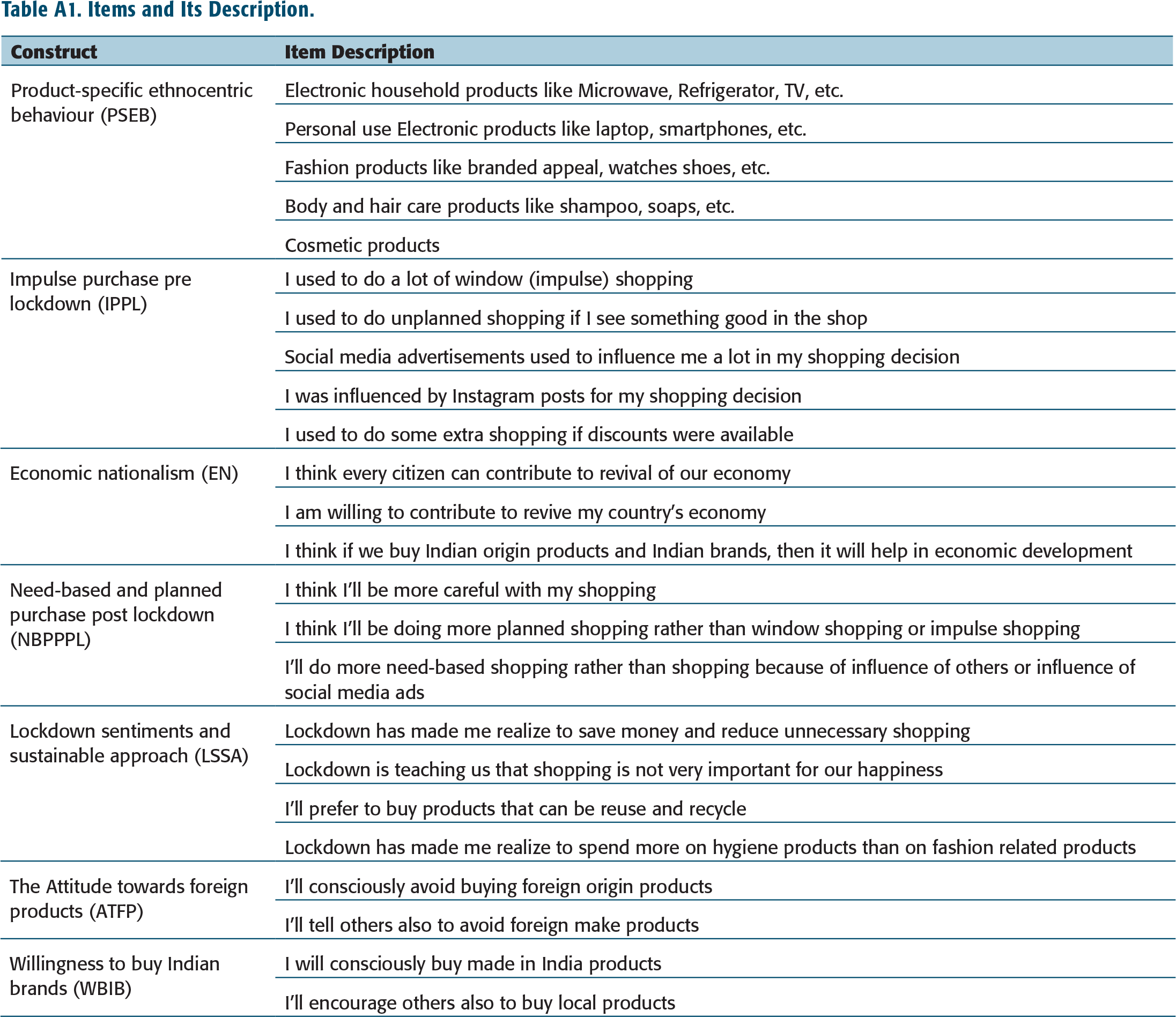
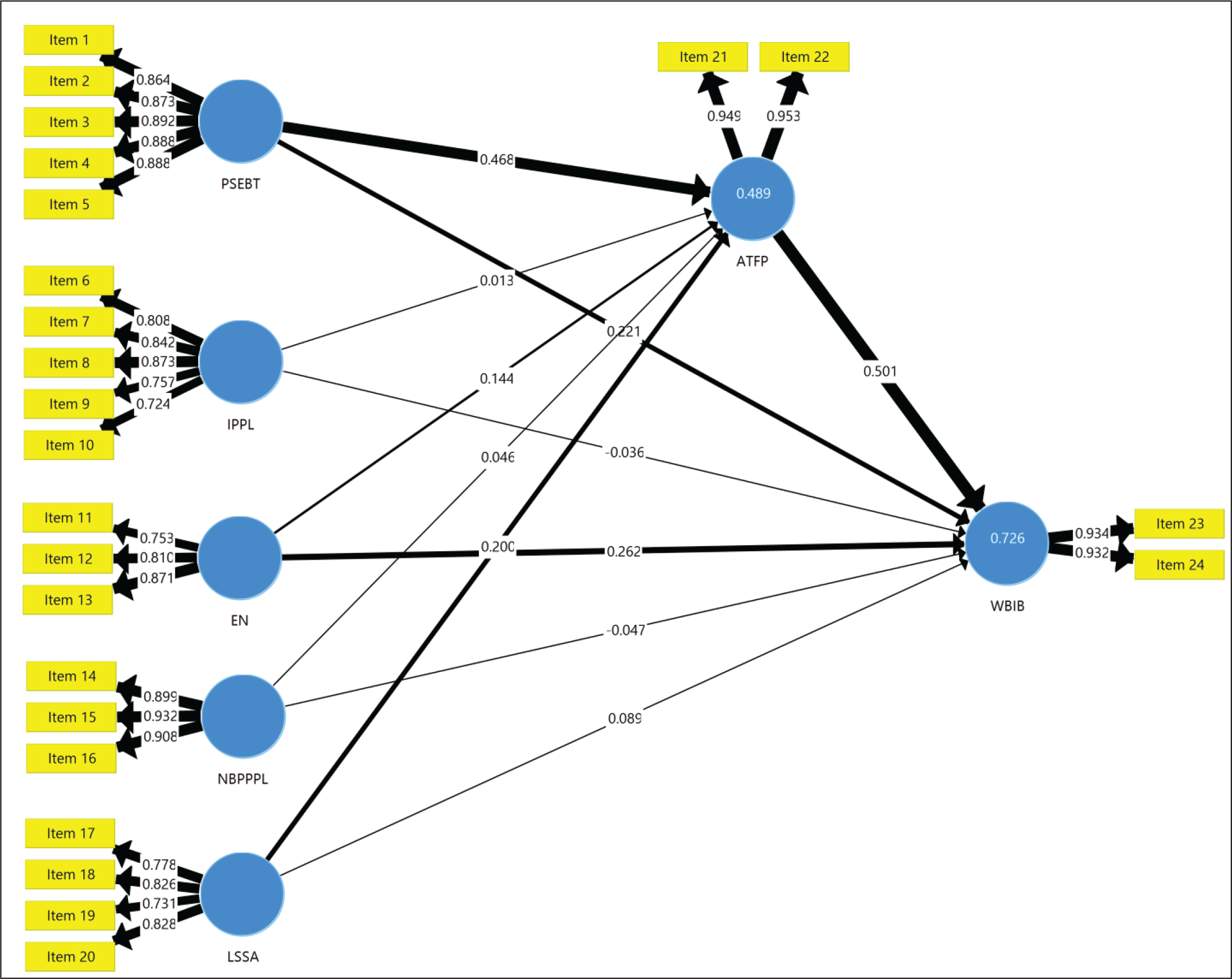
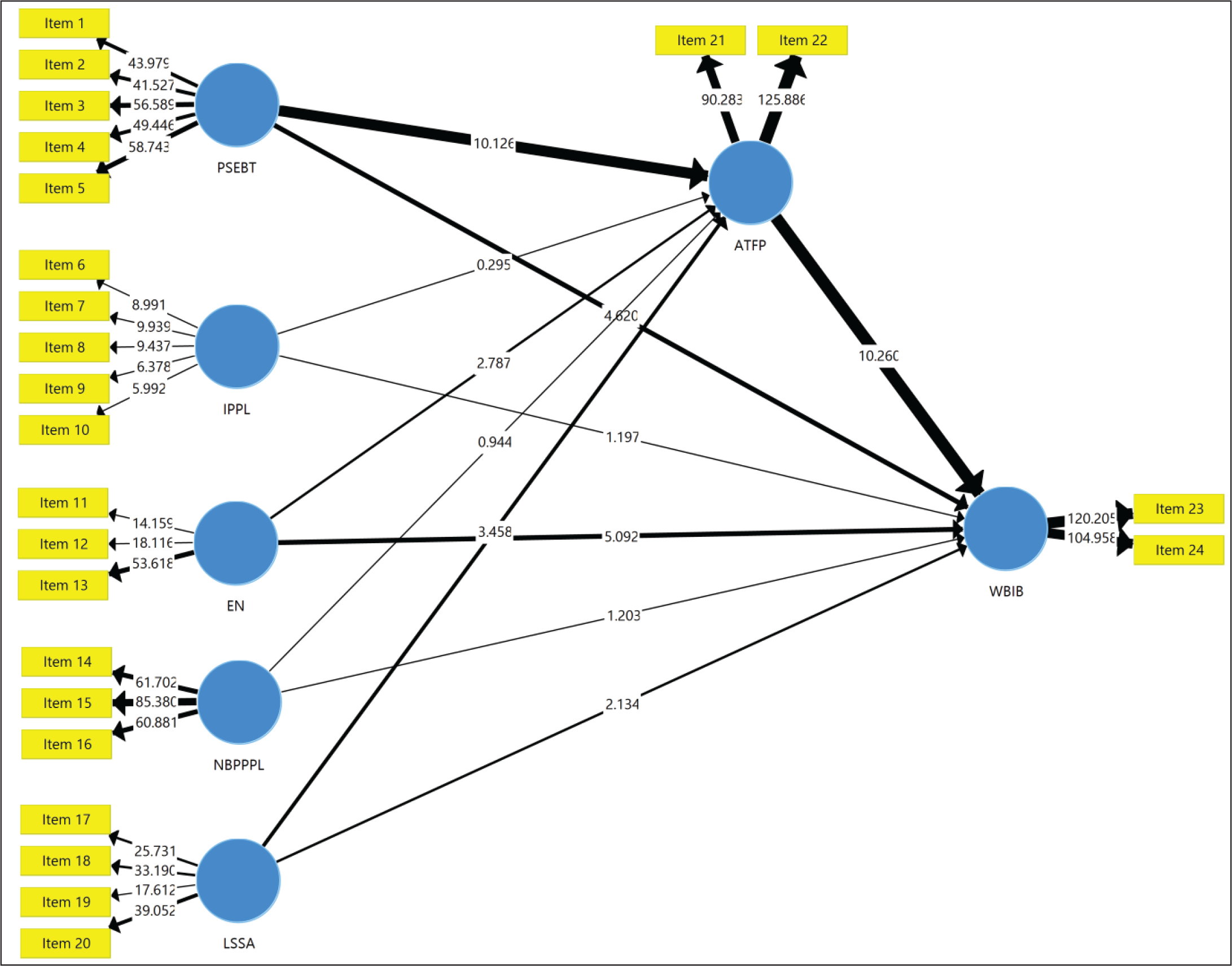
Figure 2 depicts the PLS-SEM measurement model with influencing factors, namely PSEB, IPPL, economic nationalism (EN), NBPPL, LSSA, as exogenous variables. The WBIB was considered as the endogenous variable. The factor related to ATFP was considered as the mediating variable between influencing factors and WBIB. The thickness of the paths between latent variables indicates the strength of significant impact on mediating and exogenous variables by the endogenous variables. The constructs and description of respective items are presented in the Appendix.
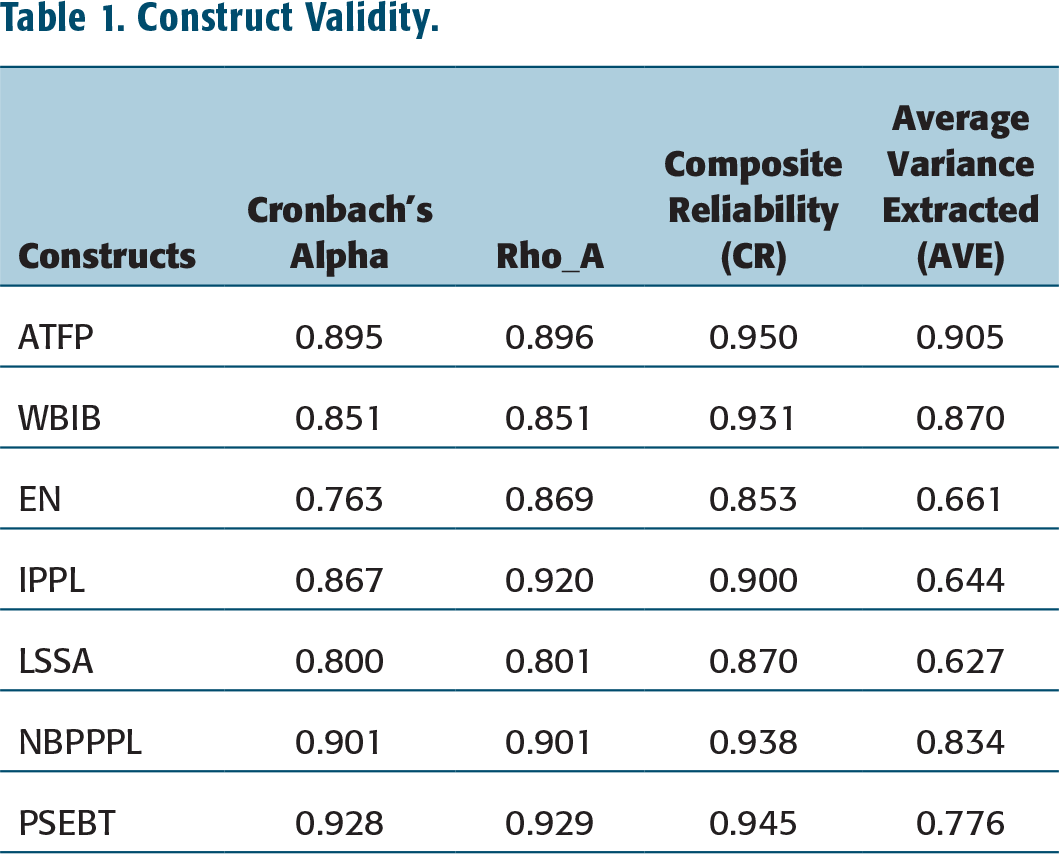
Construct Validity.
Measurement Model.
Discriminant Validity
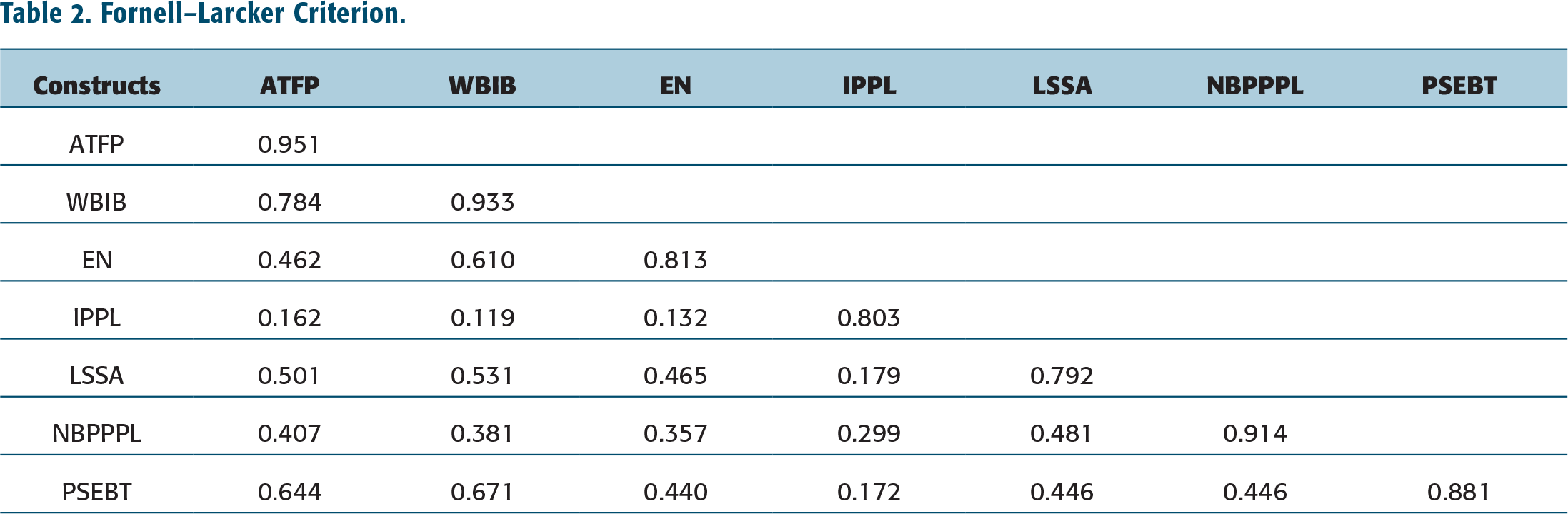
Table 2 shows the discriminant validity using the Fornell and Larcker criterion (1981a, 1981b). The square root of AVE for all latent variables was higher than the inter-construct correlations, thus confirming discriminant validity. Further, the individual loadings of all indicators were higher than their respective cross-loadings (Hair et al., 2013).
Fornell–Larcker Criterion.
Indicator Reliability
Indicator reliability represents the degree to which a variable explains the variation in an item (Hair et al., 2013). In the current study, all the items have loading >0.7, which is within the acceptable value as suggested by the authors, and hence, they are retained as shown in Figure 2.
Structural Model Assessment
In PLS-SEM, the structural model assessment includes path coefficients to evaluate the significance and relevance of structural model relationships (Anderson & Gerbing, 1988; Hair et al., 2013).
Assessing f2 Values
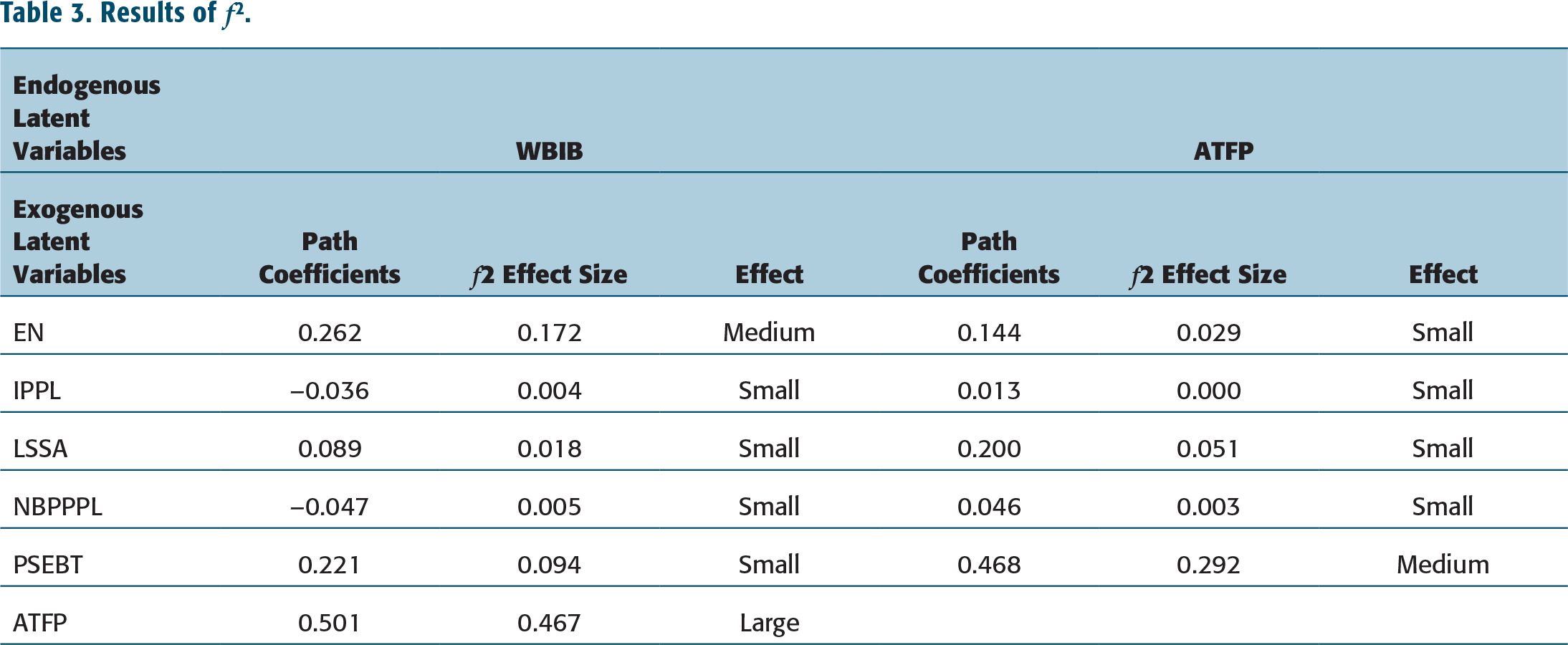
The f2 size effect is a measure to evaluate change in the coefficient of determination (R2) value when a specified exogenous variable is omitted from the model. The size effect is calculated as:

Results of f2.
Assessing R2 Values
The R2 value is used to evaluate the structural model (Hair et al., 2013). The adjusted R2 values for the endogenous variables, namely WBIB and ATFP were found to be 0.721 and 0.482, respectively. This shows that the structural model developed in this study has predictive relevance.
Assessing Q2 Values
Blindfolding was used to cross-validate the model’s predictive relevance for each of the individual endogenous variables represented by the Stone-Geisser Q2 value (Geisser, 1975; Stone, 1974). In this study, WBIB had a Q2 value of 0.621, and ATFP had a value of 0.434. This shows large size effects for both the constructs, which establishes that the PLS structural model has predictive relevance.
Mediation Analysis
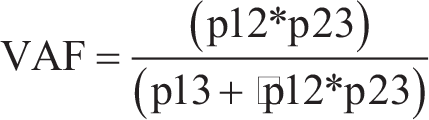
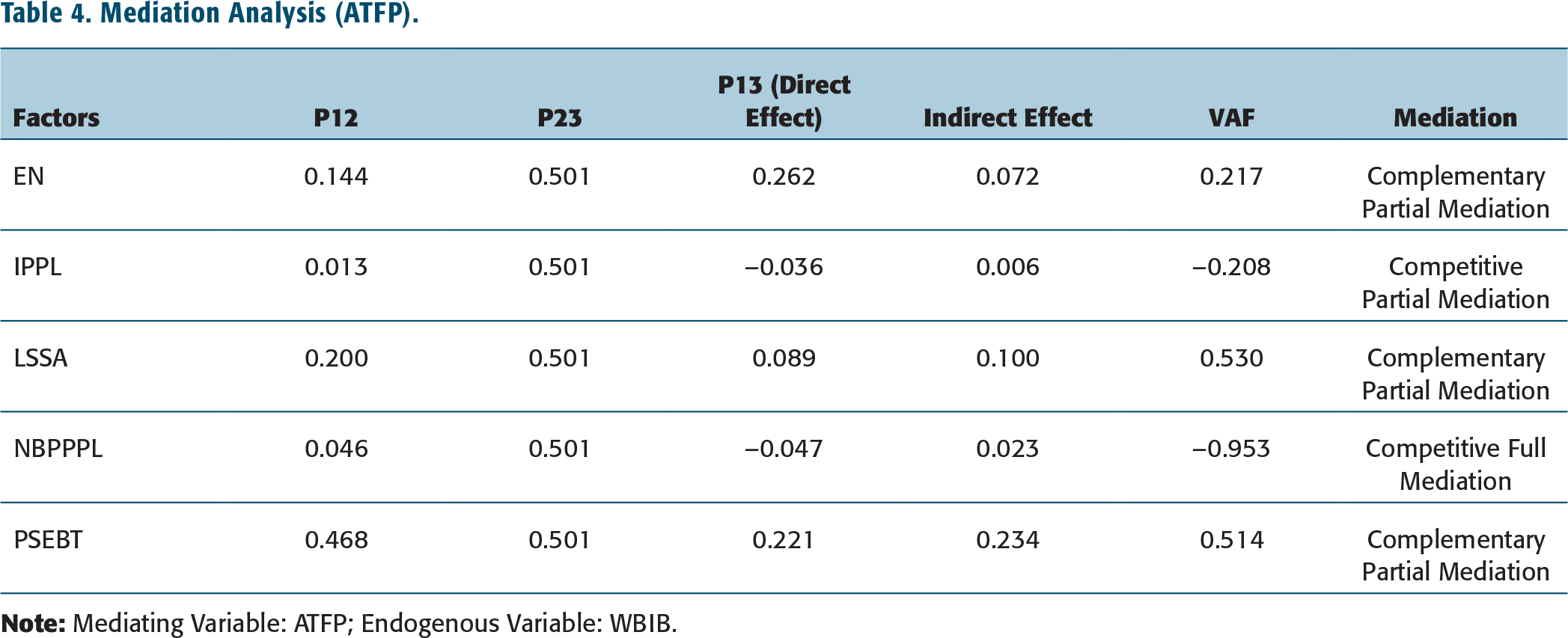
This analysis is carried out to examine the causal relationship between an exogenous variable and an endogenous variable by the inclusion of a third explanatory mediator variable (Hair et al., 2013). To carry out the mediation analysis in PLS-SEM, the first step is to assess the direct effect (i.e., p13) of the exogenous variable on the endogenous variable, which should be significant if the mediator is not included (Zhao et al., 2010). If the direct path is significant, the next step is to include the mediator variable in the PLS path model and assess the significance of the indirect path (i.e., p12 * p23). The significance of path p12 and p23 is a requirement for this condition. The indirect path can be assessed after running the bootstrapping procedure. If the indirect effect is found significant, then the mediator absorbs some of the direct path.
To assess how much of the direct path is absorbed, variation accounted for (VAF) is calculated as
Mediation Analysis (ATFP).
Path Coefficients
Structural Model Assessment.
Structural Model.
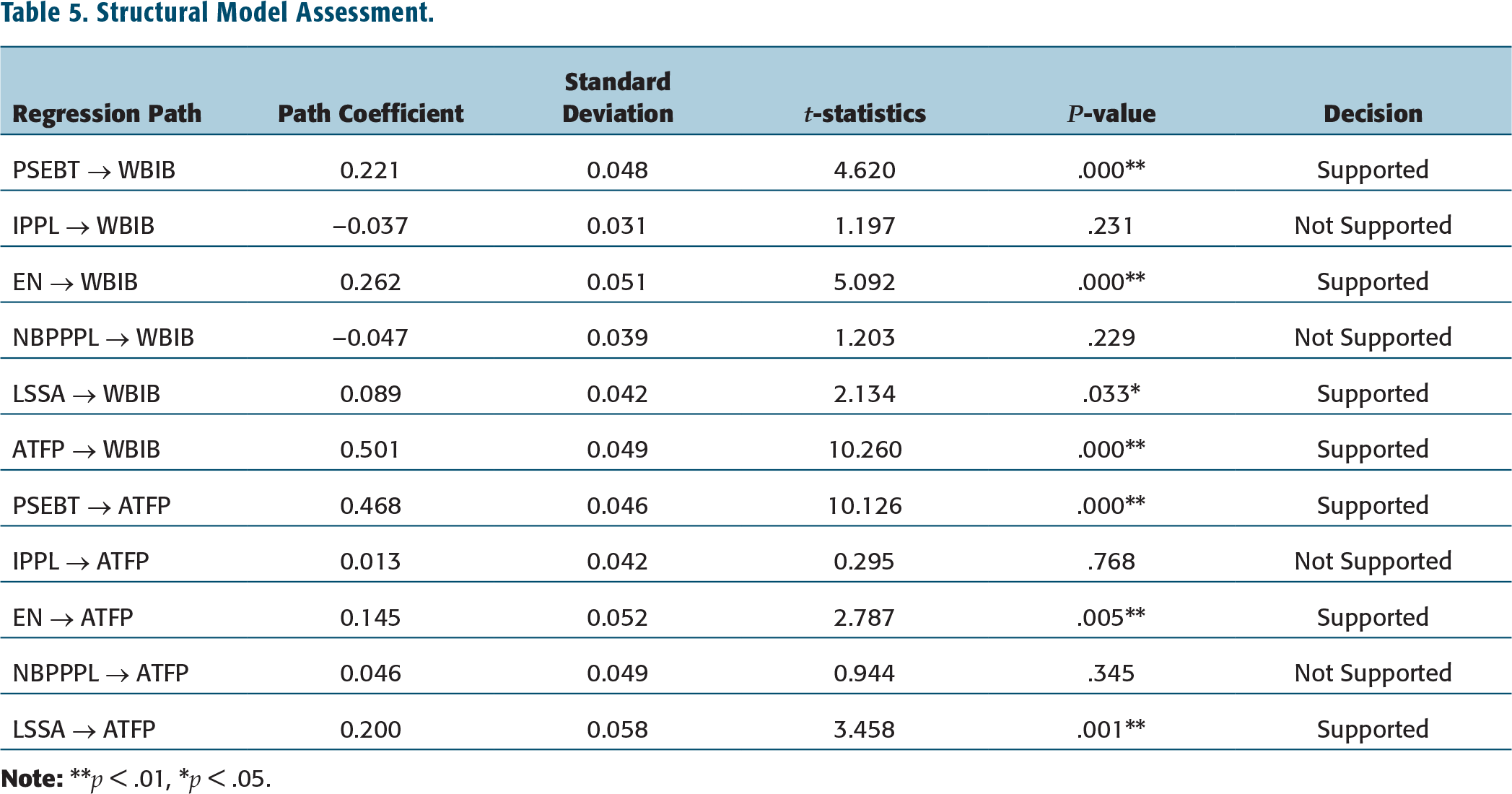
The results from the causal relationship model are presented in Table 5. The results show that seven hypotheses are supported while four are not. The results support H1 (i.e., PSEB influences the WBIB). This concurs with the argument emerging from few studies (Baughn & Yaprak, 1996; Shimp & Sharma, 1987; Batra et al., 2000) that consumer ethnocentrism plays a significant role in the purchase of domestic brands. The study finds that the ATFP influences the WBIB, that is, H 2. This finding is strengthened by previous studies (Bartsch et al., 2016; Cleveland & Laroche, 2007; Cleveland et al., 2009; Strizhakova & Coulter, 2015; Zeugner-Roth et al., 2015) that reveal customer ATFP. The research also highlights that economic nationalism influences the WBIB, that is, H 4. This finding is supported by the argument that economic nationalism is a specific subtype of nationalism that gives primacy to economic practices such as selling, buying and consumption as key markers of nationhood (Castelló & Mihelj, 2018). It reveals that customers are willing to contribute to revival of the economy by buying country-made products. The study also finds that the LSSA influence the WBIB, that is, H8. Existing literature supports that emotions at the time of shopping (Youn & Faber, 2000) and product-specific impulse buying are affected by involvement in the product. Also, this study reveals that customers have become more cautious about the environment and sustainable living. It was found that the IPPL and NBPPL do not influence the WBIB. This is contradictory to the findings of Wang and Na (2020), Islam et al. (2020), Dammeyer (2020) and Ahmed et al. (2020). It may be because of the change in consumer behaviour due to the pandemic.
From the findings, it is evident that ATFP exhibits mediation effect on all the exogenous constructs; however, the mediation effect on IPPL and NBPPL is not significant in the model. This indicates that H3, H5 and H11 are supported, whereas H9 and H10 are not supported.
Model Fit
Goodness of Fit (GoF) is considered as an overall measure of model fit in PLS-SEM. Henseler et al. (2014) introduced a measure called standardized root mean square residual (SRMR) to evaluate GoF of a path model. In this study, the SRMR and normed fit index (NFI) values of the model are 0.061 and 0.789, respectively. Since the SRMR value is less than 0.08, it confirms that the model is a good fit, and the NFI value, being closer to 1, indicates a better fit. By considering the Q2 value, the model has large predictive relevance. This indicates that the cause-effect relationship established in the model, shown in Figure 3, is valid. Also, the influence of factors such as economic nationalism, LSSA, and PSEB on WBIB through the mediating effect of ATFP can be predicted through the given model.
RESULTS AND DISCUSSION
From the findings of the study, it is evident that the COVID-19 outbreak has prompted consumers to exercise economic nationalism by buying Indian brands in electronic household products, electronic products for personal use, fashion products, and cosmetic products. These findings are in accordance with the results of the Castelló and Mihelj (2018) study, which argues that individual consumers start engaging in the consumption of nationalized goods when they have feelings of nationalism. Also, it strengthens the statement that economic and socio-psychological motives play a vital role in a consumer displaying favourable behaviour towards domestic brands (Verlegh, 2007). Adding to this, the present study results reveal that consumers have realized the importance of hygiene products, environment-friendly products, regional (local) products, and satisfaction beyond shopping; these factors determine their WBIB/made-in-India products. Further, they feel that buying Indian-made products and encouraging others to buy them would impact and revive the Indian economy constructively. A similar argument is seen in the study by Castelló and Mihelj (2018) study, which highlights that national products and services are designed to make profit for the nation and impact the country’s economy. The current study reveals that consumer ATFP, such as avoiding foreign-made products and propagating the same, positively influences the buying pattern of Indian-made products, reflects ethnocentric behaviour, and displays economic nationalism among Indians.
Interestingly, factors such as NBPPL and IPPL do not significantly influence the WBIB. It can be interpreted that post-COVID-19, consumers may not necessarily indulge only in planned and need-based shopping. Further, consumers’ shopping behaviour before the COVID-19 outbreak does not influence buying of made-in-India products or Indian brands post COVID-19 era, which indicates that the buying pattern would be different, and consumers may be inclined towards buying products that would help the country revive its economy. To a certain extent, these findings also relate to the results obtained by Gerth (2011) and Castelló and Mihelj (2018).
It was found that the influence of factors such as economic nationalism, LSSA, and PSEB on the WBIB is mediated by ATFP. This indicates that negative feelings towards foreign products cause consumers to buy more Indian-made products and Indian brands. Further, the findings are in line with the concepts of nationalist boycotts and nationalist boycotts as explained by Castelló and Mihelj (2018). Schooler (1971) and Baughn & Yaprak (1996) have also made similar arguments.
CONCLUSION AND MANAGERIAL APPLICATION
The COVID-19 pandemic has brought unprecedented challenges to the world and led to a new normal lifestyle. To contain the spread of the virus, most countries declared a lockdown, resulting in unemployment, uncertainties and economic recession. Countries started thinking about producing goods and services indigenously and reducing excessive dependency on other countries. India is not an exception and started promoting the production and purchase of Indian-made goods and services. This influenced the purchasing behaviour of consumers, to a great extent. The present study concludes that the lockdown due to COVID-19 has triggered economic nationalism among Indian consumers, and there is an increased WBIB. This was primarily influenced by the pandemic-triggered ATFP. The findings of the study can aid marketing managers in planning appropriate promotion strategies to stimulate ethnocentric tendency, and cues can be provided to invoke a sense of economic nationalism in consumers when they buy products or services.
LIMITATIONS AND FUTURE SCOPE
The study was carried out in India during March–April 2020 and revealed the sentiments of Indian consumers. However, due to the relatively small sample size, the results cannot be generalised for the entire nation. Since the lockdown continued until May 2020 in many parts of the country, the sentiments may have changed during the period; this may also be reflected in behaviour changes. In June 2020, the lockdown was removed, and markets started reopening; this may have led to additional behavioural changes. Similar studies can be done in future to measure the actual change in behaviour. These are unprecedented times, and further studies from different countries are required to obtain insight into consumer feelings and understand if the behaviour displayed by consumers in different countries is the same or different. This can aid marketing managers of country-origin products and brands and be a good point of reference for managers of international brands to sustain their market share.
APPENDIX
Items and Its Description.