




Abstract
Executive Summary
Intellectual capital has recently been receiving increased attention from both academic communities and practitioners, and is identified as an important strategic asset which provides sustainability and yields better performance. It also gives rise to the view that the organizations which possess skilled, creative, and distinctive knowledgeable employees along with supportive organizational structures and systems, and maintains cordial customer relations contribute in achieving superior organizational position. Hence, it is important to understand to what extent intellectual capital is efficiently utilized by specific sectors in creating value for organizations (Kamath, 2007). The present study aims to develop, establish, and empirically validate the intellectual capital scale in the banking sector, in the context of emerging economies like India.
Data were collected from three executives each (including one manager and two senior employees) from 144 branches of 21 public and seven private commercial banks operating in Jammu city, India. The three senior most executives were purposively selected because of being more knowledgeable and experienced. The study established the intellectual capital scale as a multidimensional scale comprising human capital, relational capital, and structural capital. All the three dimensions were found to significantly contribute to the intellectual capital, among which relational capital contributed relatively more, followed by human capital and structural capital.
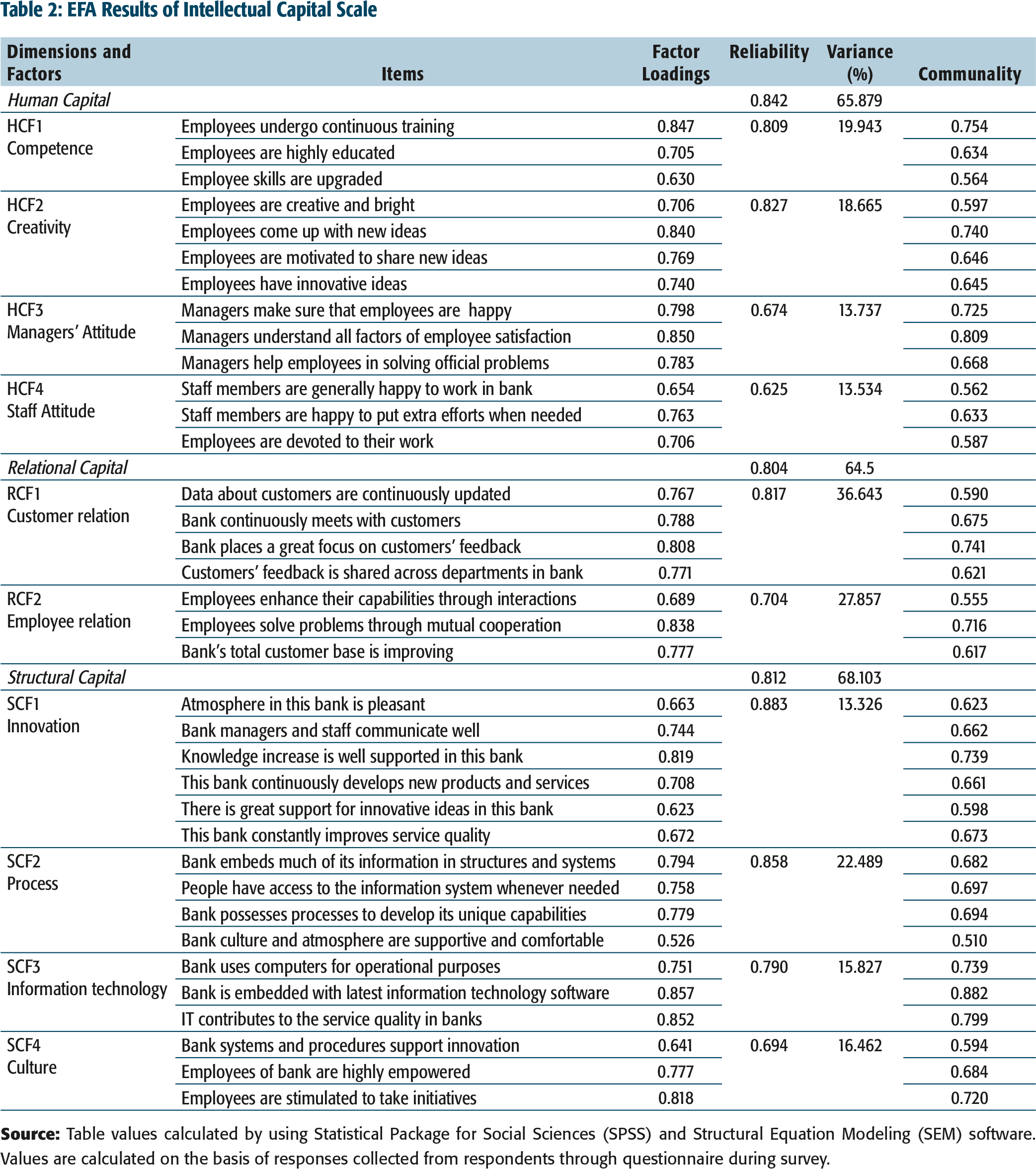
Relational capital consists of important items like meeting with customers, customer feedback, and knowledge and regular customer interaction. Similarly, human capital dimension consists of significant items like employee creativity, devoted staff, training and education, experience, attitude, and innovative employees. Structural capital is a composite of valuable items like structure, systems, information technology, capabilities, culture, empowerment, and service quality which helps in developing intellectual capital.
The research findings can help bank managers in determining how to generate value using human, structural, and relational capital. For instance, the study findings offer valuable insight into how the managers can improve bank’s structural capital by encouraging innovation ability among employees, positive culture, and strengthening information technology in terms of continuously updating software and hardware. The study is limited to public and private commercial banks operating in Jammu city. In future, the scale validation can be undertaken to investigate whether the three-dimensional intellectual capital scale can be generalized for other industries and countries.
Over the past few decades, intangible assets have become a basic source of organizational wealth creation and sustainable competitive advantage (Garcia-Ayuso, 2003). Intellectual capital is one of the essential blocks of intangible assets, which is becoming a critical factor for organizational performance (Hsu & Fang, 2009). Researchers such as Stewart (1997), Sveiby (1997), and Edvinson (1997) remarked that the creation of economic value was largely based on intangible resources and capabilities, as these were the most powerful tools to enhance organizational competitiveness. In simple words, intellectual capital is a value driver of an organization which gives it a competitive edge. Therefore, it is important to understand to what extent intellectual capital is efficiently utilized by specific sectors in creating value for organizations (Kamath, 2007). In this context, Tseng and Goo (2005) signified the need to know how intellectual capital created value in an organization. Similarly, scholars like Ahangar (2011), Ahmad and Musharaf (2011), Andriessen (2003), and Maditinos, Chatzoudes, and Tsairidis (2011) emphasized on the need to explore how intellectual capital could be managed and measured properly. Scholars such as Hormiga, Canino, and Medina (2010), Hsu and Fang (2009), Kamukama, Ahiauzu, and Ntayi (2011), Kong and Prior (2008), Salleh and Selamat (2007), and Wu, Chang, and Chen (2008) have conceptualized intellectual capital but still there is a lack of universally acceptable definition of intellectual capital. Further, Cabrita and Bontis (2008), Choudhary (2010), Jaradat, Samraie, and Jadallah (2012), and Sharabati, Jawad, and Bontis (2010) have measured intellectual capital but from varied aspects and that too in different sectors and in different countries. Kamath (2007) and Rehman, Usman, and Asgar (2012) have measured intellectual capital in the banking sector using VAIC (value added intellectual coefficient), based on secondary data. A few studies, based on primary data, have been conducted on measurement of intellectual capital in sectors such as microfinance, banking, etc. For example, Cabrita and Bontis (2008) study on Portuguese banks. It also measured intellectual capital based on human capital, relational capital, and structural capital but with limited number of items.
Besides, a few studies such as Choudhary (2010), Jaradat et al. (2012), and Sharabati et al. (2010) have measured IC in different services sectors such as IT, pharmaceuticals, and microfinance. However, no study has been found to measure intellectual capital based on the perception of the managers/executives, in the Indian context in general and in the banking sector in particular.
Being a knowledge-intensive, skill-based, and relationship-service industry, banking is an ideal sector to study intellectual capital. Banks exploit intellectual capital for its survival in the competitive market through extensive use of human capital, structural capital, and relational capital (Kamath, 2007). The role and working of employees, at different positions and levels, in the banking service sector are directly linked with the knowledge and intellect of employees (Bontis, 2000). According to Bontis (2000), it is the quality of people, organizational structure, and relationships of people which give banks the competitive edge in a knowledge-based economy.
Hence, the main objective of this study is to establish and empirically validate the intellectual capital scale in the banking sector. The specific objectives include defining the elements of intellectual capital to construct the intellectual capital scale based on measurement models, and to test the reliability and validity of the scale through an empirical study.
CONCEPTUAL FRAMEWORK AND HYPOTHESES DEVELOPMENT
Intellectual Capital
Intellectual capital is conceptualized as intangible resources that generate value for an organization (Hunter, Webster, & Wyatt, 2005). One of the most succinct definitions of intellectual capital as ‘packaged useful knowledge’ is given by Stewart (1997). Edvinson (1997) recognized intellectual capital as a set of intangible assets such as resources, competencies, and capabilities which not only increased organizational performance but also resulted in value creation. Further, Kim, Yoo, and Lee (2011) described intellectual capital as a non-monetary asset that eventually reaped economic benefits. Edvinson (1997) and Sullivan (1999), the major contributors of the concept, on the other hand, related intellectual capital with a composite of human competencies, knowledge, ability, skills, experience, and customer relationships that provided an organization competitive edge in the market. This concept was extended by Ulrich (1998), who equated intellectual capital to commitment and competence of employees. Various typologies are proposed by different researchers in the literature. Among these, the three-dimensional classification of intellectual capital, that is human capital, structural capital, and relational capital has achieved a certain degree of consensus among researchers such as Bontis (2000), Kavida and Sivakumar (2009), Roos and Roos (1997), Stewart (1997), and Svieby (1997).
Human Capital
Human capital is the basic component in the intellectual capital development process (Yang & Lin, 2009). It is inherent in people and hence cannot be directly owned by an organization (Edvinson & Malone, 1997). Human capital denotes what employees bring into the value adding processes, and encompasses professional competence, employee motivation, and leadership ability (Halim, 2010). Kavida and Sivakumar (2009) viewed human capital as a summation of employees’ skill, capabilities, experience, education, and attitude about life and business. Various competencies such as learning and education, experience and expertise, creativity, staff attitude as well as recruitment and training plays a significant role in the development of human capital (Lings & Greenley, 2005; Sharabati et al., 2010; Subramaniam & Youndt, 2005). For instance, educated, experienced, trained, creative, and motivated employees can work more efficiently and thereby result in the creation of organizational capital.
Relational Capital
Relational capital results from organization’s relationship with customers, partners, shareholders, and other stakeholders that are critical to the organizational performance (Bontis, Crossan, & Hulland, 2002). Shih, Chang, and Lin (2010) contended relational capital as the interaction between organizations, customers, suppliers, contractors, and other affiliated partners. Low (2000) explicated relational capital as the flow of knowledge from an organization to external environment. The competencies such as customer relation as well as customer loyalty and trust play significant role in the development of relational capital (Isaac, Herremans, & Kline, 2010; Sharabati et al., 2010). For instance, higher the degree of customer loyalty and trust, better will be the relationship with customers which subsequently enhances organizational value.
Structural Capital
Structural capital refers to the mechanism and structure of an organization that helps to support employees for optimum intellectual performance (Bollen, Vergauwen, & Schnieders, 2005). Edvinson and Malone (1997) highlighted that structural capital consisted of non-human store houses of knowledge in an organization which are embedded in systems, databases, and programmes. Further, Bontis et al. (2002) remarked that an individual in an organization could never reach the fullest potential of its systems if its procedures were poor. The structural capital is the outcome that is extended from systems and programmes, information technology, culture, and renewal and development which significantly contribute to the development of structural capital scale (Choudhary, 2010; Isaac, Herremans, & Kline, 2010; Sharabati et al., 2010). For example, well-defined structures, programmes, systems, and information technology enhance the efficiency of employees and can create better customer relations, thereby enhancing the organizational value.
Majority of the researchers such as Ahmadi, Ahmadi, and Shakeri (2011); Allameh, Abassi, and Shokrani (2010), Cabrita and Bontis (2008), Hsu and Fang (2009), and Shih et al. (2010) considered human capital as the core component that influenced both relational capital and structural capital. However, Cabrita and Bontis (2008) and Allameh et al. (2010) found that human capital influenced relational capital not only directly but also indirectly through structural capital in banks and hospitals respectively. This was also supplemented by Shih et al. (2010), who identified human capital as exhibiting positive and direct effect over relational capital and structural capital in service as well as in banking sectors. Even Allameh et al. (2010) found human capital to impact relational capital in service and manufacturing organizations. Further, Shih et al. (2010) underscored both relational and structural capital having positive and direct impact on each other. Hence, it is concluded that all the dimensions of intellectual capital affect each other.
Based on this backdrop, the following hypotheses are formulated as shown in Figure 1.
H1: Intellectual capital is a composite of human capital, relational capital, and structural capital.
H2a: Human capital significantly affects relational capital.
H2b: Human capital significantly affects structural capital.
H2c: Relational capital significantly affects structural capital.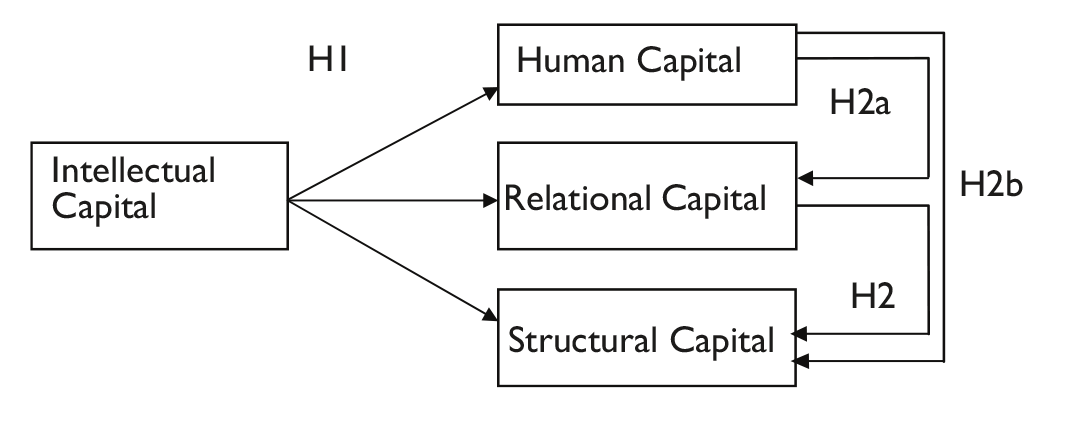
Generation of Scale Items
The main objective of the research article is to develop a scale to measure intellectual capital in the banking sector. As discussed in the previous section, intellectual capital is considered to be a composite of three major dimensions: human capital, relational capital, and structural capital. The items used for the measurement of intellectual capital in the banking sector were generated using the following steps:
First, relevant studies were identified from the scanned literature to draw a pool of scale items for the measurement of the three dimensions. Second, to make the scale comprehension more clear and relevant for the banking sector, a number of self-developed items were designed. Third, all identified, selected, and designed items were discussed with five academicians and five doctoral students to critically evaluate and check for their clarity and unambiguity. At this stage, few suggestions were incorporated on the basis of received feedback. Fourth, all the selected items were finally discussed with five bank managers and accordingly some modifications in the form of alteration and deletion were done. Lastly, all the selected items were pretested on 55 managers to establish the content validity of the scale items. At this stage, few of the items were modified and the rest were kept the same for final data collection. All these steps identified 63 items to measure intellectual capital that included 34 items extracted from literature, and 26 self-developed items.
Human Capital
The five major significant characteristics of human capital, as identified from the scanned literature, include learning and education (Sharabati et al., 2010), experience and expertise (Sharabati et al., 2010; Subramaniam & Youndt, 2005), creativity (Choudhary, 2010; Rudrez & Mihalic, 2007; Sharabati et al., 2010; Subramaniam & Youndt, 2005), staff attitude (Lings & Greenley, 2005), and recruitment and training (Sharabati et al., 2010). To capture the domain of human capital, items related to learning and education were borrowed from the works of Sharabati et al. (2010) and Subramaniam and Youndt (2005), along with some self-developed items such as ‘competence of bank employees matches with their work requirements and responsibilities’ and ‘bank always keeps itself up-to-date for professional skills’. While items of experience and expertise such as ‘experienced and expert employees work more efficiently’ and ‘employees consistently perform at their best in the bank’ were adopted from the study of Sharabati et al. (2010), staff attitude was measured with the help of items like ‘employees are well motivated’ and ‘employees are happy to take more responsibility’ which were extracted from the works of Lings and Greenley (2005). The items pertaining to recruitment and training like ‘bank’s recruitment programmes is comprehensive’ and ‘bank upgrades employees skills through training programme’ were extracted from the studies of Zerenler, Hasiloglu, and Sezgin (2008) along with one self-developed item, namely, ‘bank’s education and training programmes are beneficial’.
Relational Capital
The third component of intellectual capital focuses on relationships of employees with internal and external stakeholders. It embraces items related to trust and loyalty that an organization creates by maintaining good relationship with customers and the rest of the society. Thus, to assess relational capital, items related to customer knowledge like ‘data about customers are continuously updated’ and ‘bank continuously meets with customers to find out what they want from it’ were taken from the studies of Isaac et al. (2010) and Sharabati et al. (2010) along with a few self-developed items such as ‘feedback of customers is shared across departments in bank’. On the other hand, the customer loyalty and trust items (e.g., ‘employees discover and solve problems through mutual cooperation’ and ‘customers trust bank with open communication’) were extracted from the scale items used by Hafeez and Muhammad (2012).
Structural Capital
The supportive infrastructure of an organization consists of important sub-dimensions like systems and programmes, information technology, organizational culture as well as renewal and development that enhance employees’ capabilities to do work. To measure structural capital, items related to system and programmes, and information technology were extracted from the works of Choudhary (2010), Sharabati et al. (2010), and Subramaniam and Youndt (2005), and items related to renewal and development were self-designed which included ‘bank constantly improves service quality’, ‘there is great support for innovative ideas in this bank’, and ‘bank continuously develops new product and services’. Items related to organizational culture were drawn from the works of Amiri et al. (2010), e.g., ‘atmosphere in this bank is pleasant’.
SAMPLING AND DATA COLLECTION
The present study exclusively focused on the Indian scheduled commercial banks, both public and private sector banks, operational across India. Since all the banks are regulated by the Reserve Bank of India (RBI) and work according to its guidelines, their functioning with respect to working culture, management and policy guidelines, in general, is considered at par with each other. Further, all managers and employees working in different bank branches in Jammu have the exposure of working in different representative branches across India, as all banks have transferable job option.
The sampling frame of the study consisted of 144 branches of 21 public and seven new private banks functioning in Jammu city. The data were collected from three executives each (one branch manager and two senior most employees) from 144 branches. These respondents, selected on the basis of purposive sampling, were more knowledgeable, experienced and had clear understanding of the operational functioning of banks at different levels. Finally, a total of 576 questionnaires were distributed to the respondents, out of which 339 questionnaires were returned (response rate of 62.08 %).
Descriptive Statistics
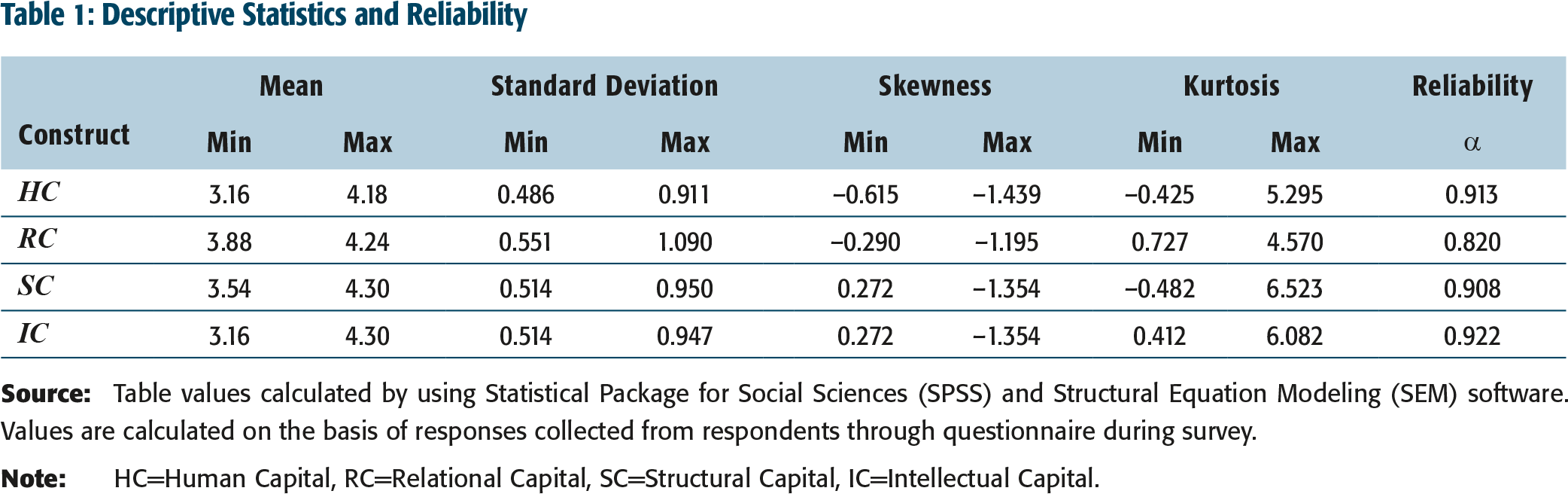
Before proceeding for analysis, negative responses assigned to some items were reversed. Additionally, 10 outlier responses were identified for deletion. The normality of data was investigated, and the items falling within the liberal range of skewness (–1.5 to +1.5) and kurtosis (–0.5 to +6.5) were retained (Kline, 1998). The mean and standard deviation of the constructs are shown in Table 1.
Reliability
The consistency of data was established through Cronbach’s alpha. All the dimensions of intellectual capital reported acceptable alpha values in the range of 0.820 to 0.913 (Hair, Black, Babi, Anderson, & Tatham, 2008). The Cronbach’s alpha value for the main construct intellectual capital is recorded as 0.906 and its dimensions–human capital, structural capital, and relational capital, recorded alpha values of 0.913, 0.820, and 0.908, respectively.
Exploratory Factor Analysis
Descriptive Statistics and Reliability
EFA Results of Intellectual Capital Scale
Confirmatory Factor Analysis
Measurement Models on the basis of Dimensionality
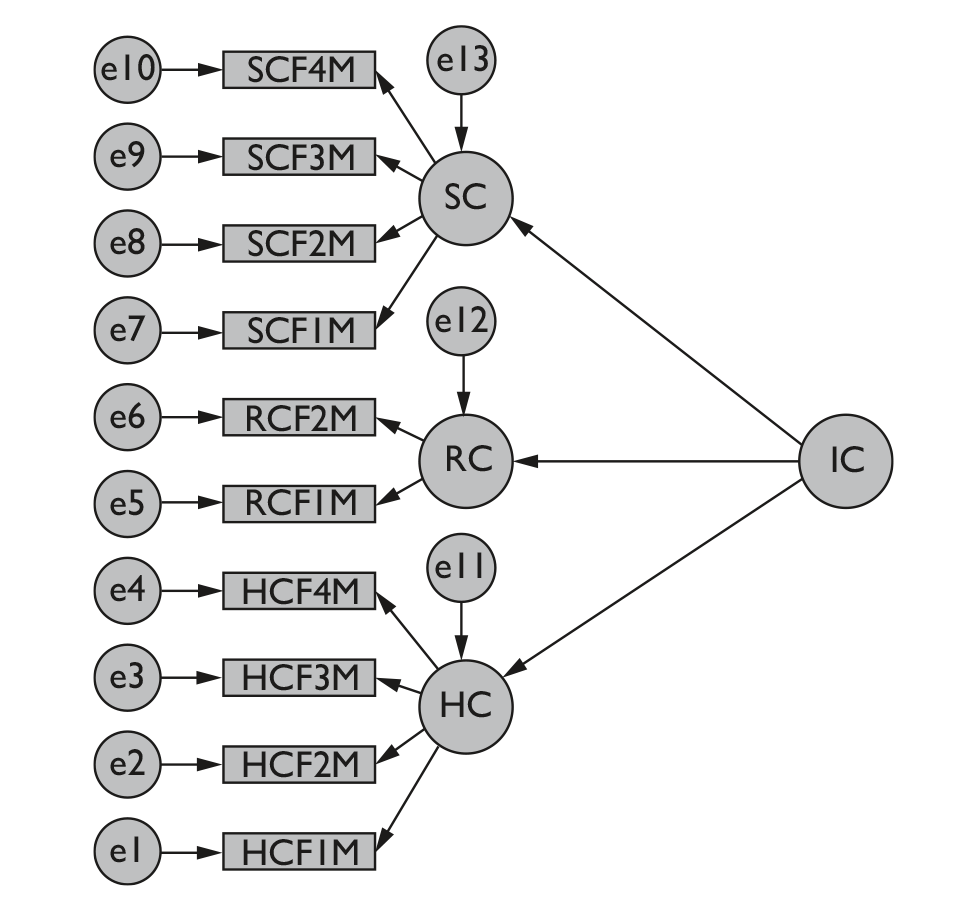
Psychometric Properties
Composite Reliability, Average Variance Extracted, and Correlation Matrix
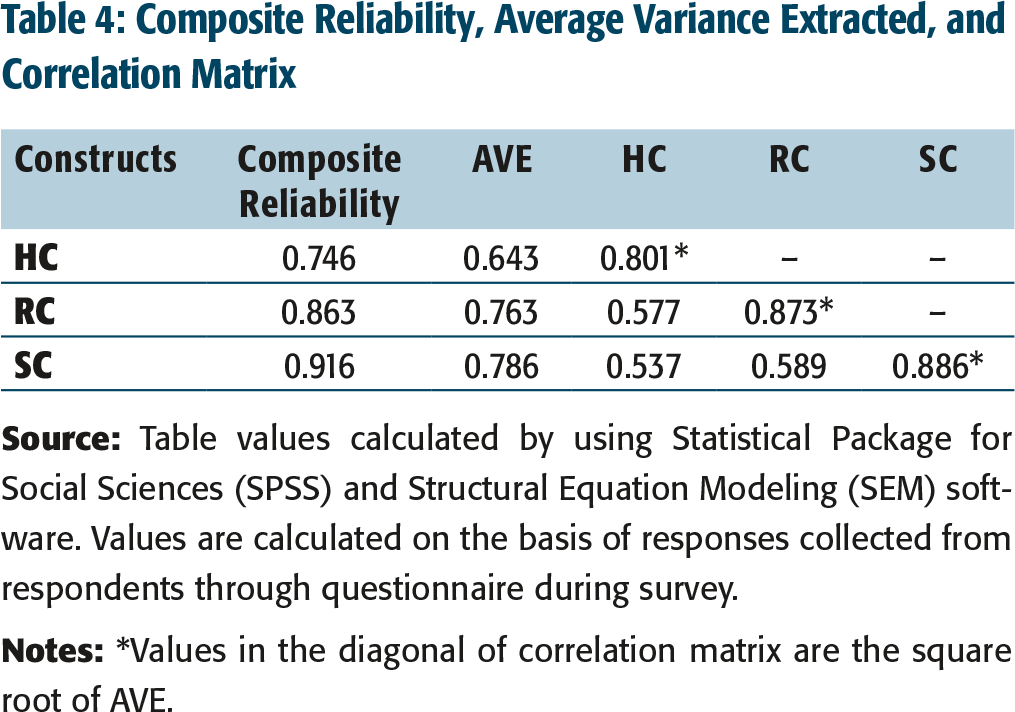
Nomological Validity
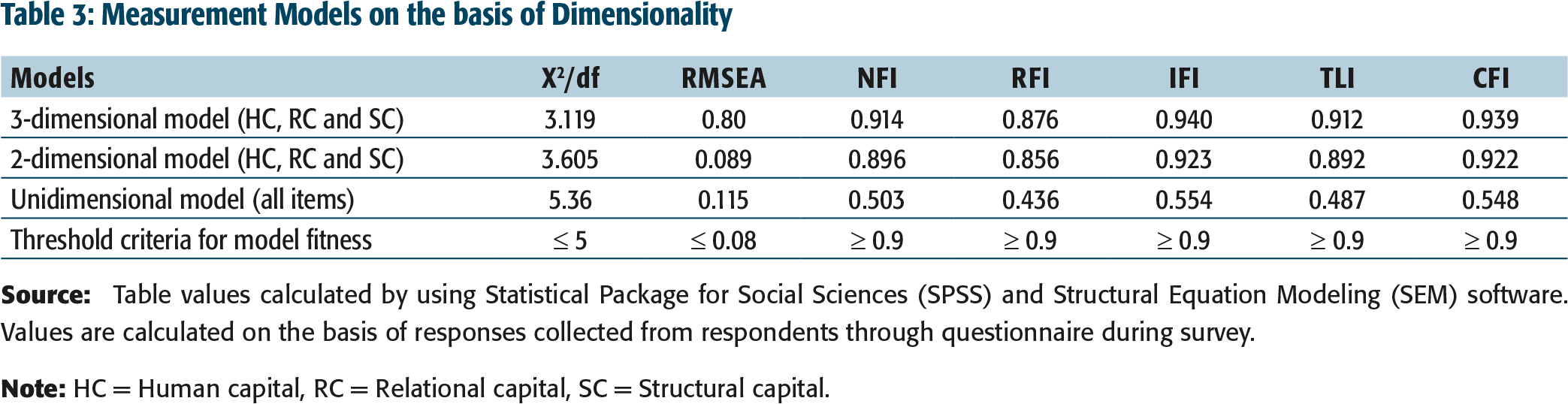
The study further assessed nomological validity which exhibits the relationship of one construct with another construct in accordance with the relevant theory. The nomological validity in the study was established by identifying how well intellectual capital correlated with business performance (Figure 3). There are well grounded theoretical reasons to expect a positive relationship between intellectual capital and business performance, as various researchers like Ahangar (2011), Ahmadi et al. (2011), Goh (2005), and Sharabati et al. (2010) emphasized that intellectual capital played an important role in improving business performance of organizations. The business performance of the banks was assessed through growth, market share, profitability, and Return on Assets (ROA). All these items were used by Latif, Malik, and Aslam (2012) to measure business performance in the banking sector. The structural equation model (SEM) was applied to examine the relationship between intellectual capital and business performance. The intellectual capital and business performance model reflects robust indices for c2/df, Root Mean Square Error of Approximation (RMSEA) and incremental fit indices like Normed Fit Index (NFI), Relative fit Index (RFI), Incremental Fit Index (IFI), Tucker Lewis Index (TLI), and Comparative Fit Index (CFI) which were recorded as 3.119, 0.80, 0.914, 0.876, 0.940, 0.912, and 0.939, respectively. The positive regression weights (beta value = 0.345) and significant critical ratio (CR) values (5.215) of the relationship between intellectual capital and business performance confirmed the nomological validity of the intellectual scale.
Common Method Variance
Besides, assessing reliability and validity of the intellectual capital scale, common method variance was also examined to assess the variance that items had in common with each other. First, Harmon’s one factor method using exploratory factor analysis was applied on all the dimensions of intellectual capital taken together, in which the variance extracted was identified as 29.82 per cent (Podsakoff, Mackenzie, Lee, & Podsakoff, 2003). This value suggests absence of any significant influence of common variance. Second, the latent variable approach was also used by adding a first order factor with all the measures of human capital, relational capital, and structural capital as observed indicators. Again common variance of 9 per cent was recorded which indicates that biasness is not an issue in this study (Podsakoff et al., 2003).
HYPOTHESES TESTING
After assessing the psychometric properties of the intellectual scale and its subscales, the hypotheses formulated were tested using SEM.
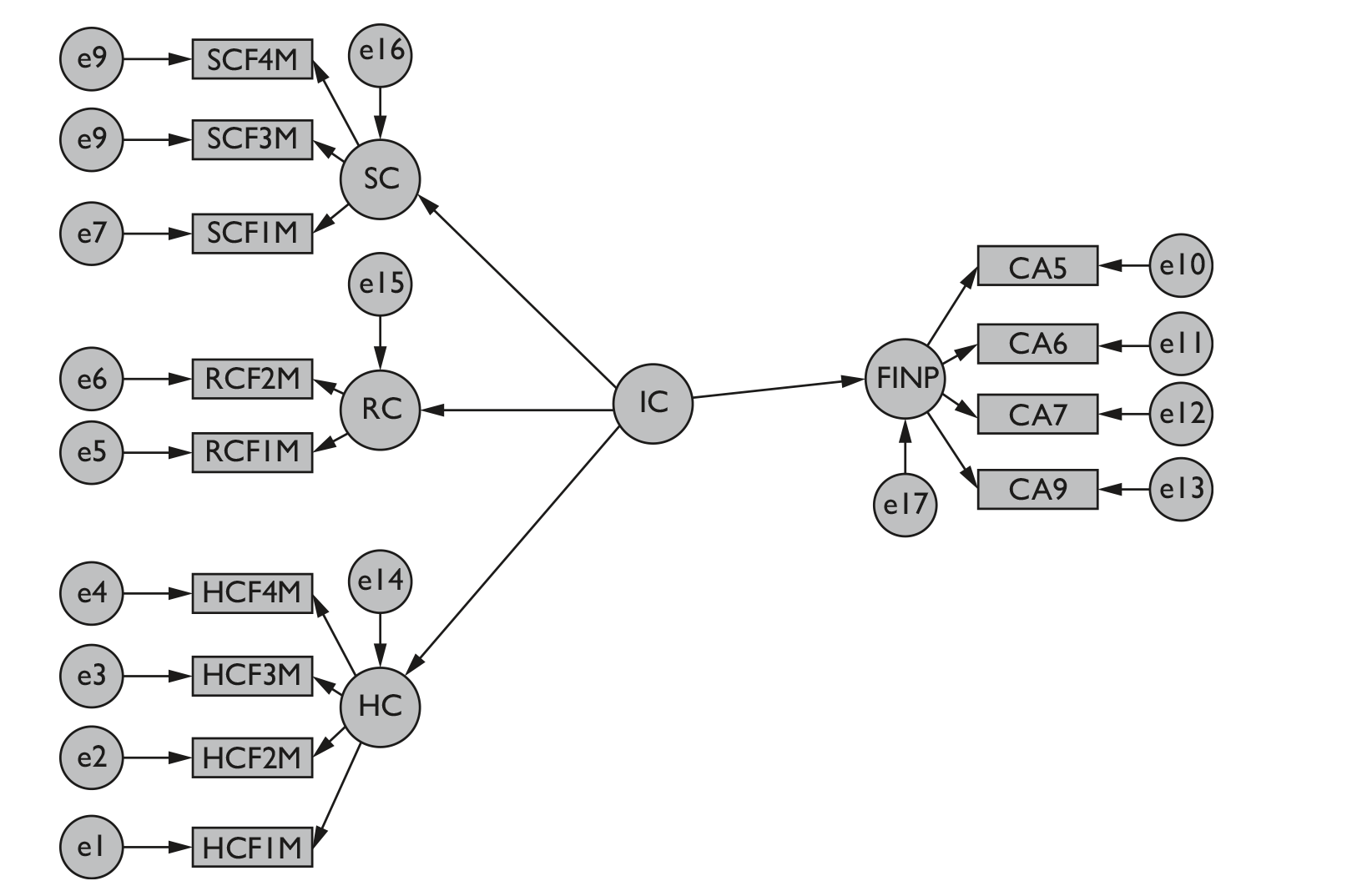
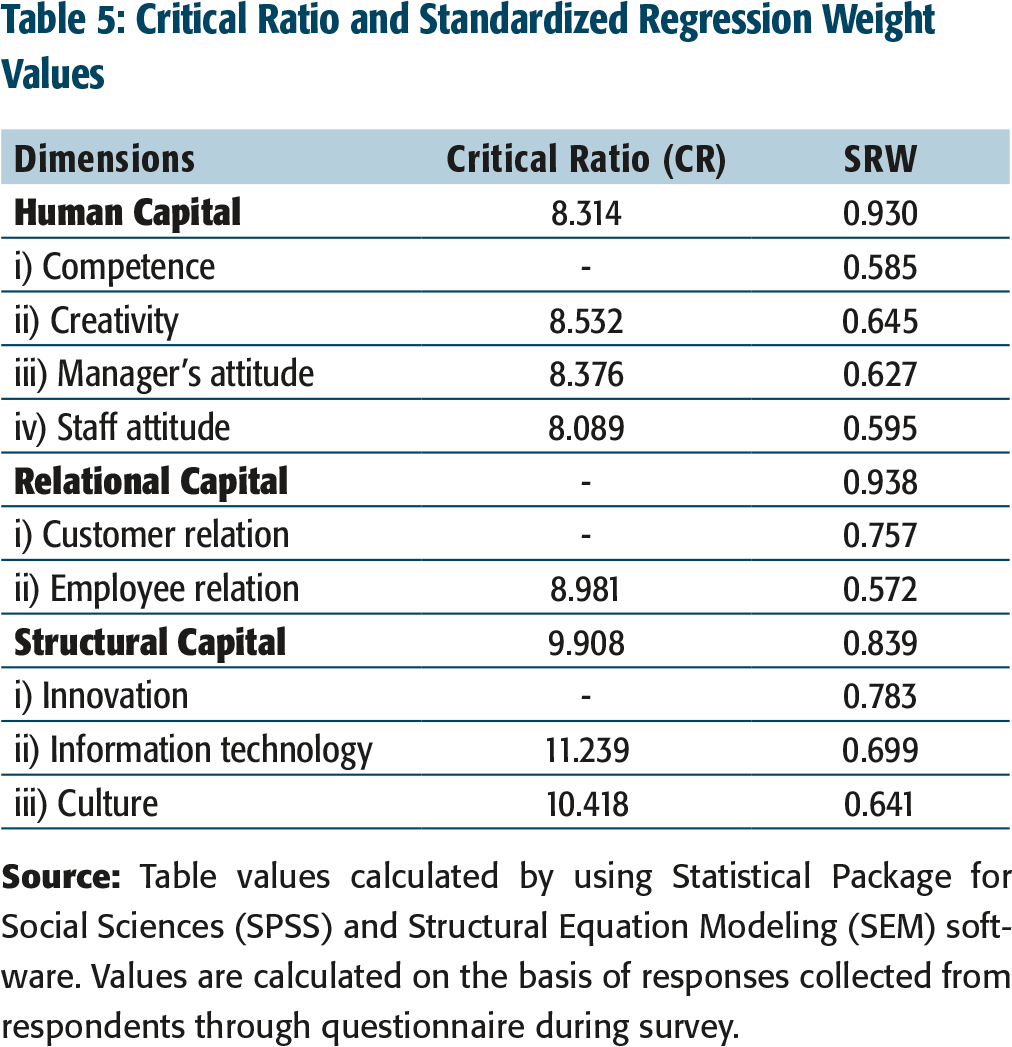
Intellectual capital is positively influenced by human capital, relational capital, and structural capital (Model 1): This model is found to be robust fit with c2/df = 3.119, RMSEA = 0.80, NFI = 0.914, RFI = 0.876, IFI = 0.940, TLI = 0.912, CFI = 0.939. All the three dimensions of intellectual capital—human capital, relational capital, and structural capital—are found to significantly and strongly affect intellectual capital as all critical ratios (CR) are above 1.96 at 5 per cent significant level and standard regression weight (SRW) values are above 0.5 (Table 5). Hence, Hypothesis H1 is accepted. The study results are consistent with the results of Cabrita and Bontis (2008) study which indicated that the three constructs that made up intellectual capital significantly affected one another, and then subsequently affected intellectual capital. Further, Shih et al. (2010) contemplated that human capital was primarily predicted through employees’ capabilities and employees training. In the present study also, both factors including items such as ‘employees undergo continuous training programmes’ and ‘employees are educated enough to do their jobs’ contribute significantly in developing human capital. Akin to the results of Shih et al. (2010), organizational culture and innovation ability are considered to be important for enhancing structural capital. However, information technology, comprising items such as ‘bank is embedded with information technology software’ and ‘information technology contributes to service quality’, is seen as an additional factor to influence structural capital. Further, similar to the results of Halim (2010), the present study also witnesses that customer relationship is a significant factor which capitalizes relational capital along with employee relationship comprising items like ‘employees enhance their capabilities through interactions’ and ‘employees discover and solve problems through interactions’.
Critical Ratio and Standardized Regression Weight Values
Human capital significantly affects structural capital (Model 3): In this model, the effect of human capital on structural capital was examined. The human capital and structural capital model showed robust fit indices (c2/df = 2.869, RMSEA = 0.075, NFI = 0.939, RFI = 0.902, IFI = 0.959, TLI = 0.934, CFI = 0.959) with CR and SRW values as 7.413 and 0.768 respectively. The results indicate that structural capital is significantly and strongly affected by human capital. Hence, Hypothesis H2b is accepted. The results are compatible with the studies of Shih et al. (2010) and Cabrita and Bontis (2008). These scholars argue that human capital exhibits positive and direct influence on structural capital. According to Cabrita and Bontis (2008), employees’ competence, creativity, and staff attitude exhibit positive influence on structural capital as employee abilities affect organizations’ culture, process efficiency, and innovation processes. On the other hand, Shih et al. (2010) demonstrated that banks with rich human capital not only boosted their operational efficiency but also accumulated good structural capital by creating innovative capabilities, and promising organizational culture. In addition, this study identifies other factors such as information technology and culture which affect structural capital but are not considered by the researchers such as Shih et al. (2010) and Cabrita and Bontis (2008).
Structural capital significantly affects relational capital (Model 4): In this hypothesized model, the relationship between relational capital and structural capital was tested. The effect of structural capital on relational capital was determined in which all model fit indices were found to have acceptable values above the threshold criteria (c2/df = 1.818, RMSEA = 0.05, NFI = 0.983, RFI = 0.959, IFI = 0.992, TLI = 0.981, CFI = 0.992). The results show that structural capital significantly affects relational capital (CR = 8.07). Further, the magnitude of SRW (0.886) reflects the relationship between relational capital and structural capital to be robust. Hence, Hypothesis H2c is accepted. The results support the findings of Cabrita and Bontis (2008) that structural capital significantly affects customer relationship. Further, they concluded that organizational culture, processes, and innovation ability attracted or retained more and more customers in the organization, thereby enhancing customer relationship in an organization. Unlike studies such as Shih et al. (2010) and Cabrita and Bontis (2008), this study finds significant role of information technology in creating employee relationship and thereby enhancing relational capital.
CONCLUSION
The article presents the development of reliable and valid intellectual capital scale for the banking sector. Among the three measurement models, unidimensional and two-dimensional models stand rejected due to inadequate fit indices while the three-dimensional model comprising human capital, relational capital, and structural capital as three different dimensions is found to be significant in comprehending intellectual capital, and is hence accepted. The intellectual capital scale was finalized using data purification consisted of 36 items. The study finds that human capital dimension consists of significant items like employee creativity, devoted staff, training and education, experience, attitude and innovative employees, which are also identified as important ingredients of human capital by studies such as Sharabati et al. (2010) and Subramaniam and Youndt (2005). In line with the findings of studies, namely, Isaac et al. (2010), Li and Yang (2009), and Sharabati et al. (2010), relational capital consists of important items like meeting with customers, customer feedback and knowledge, and regular customer interaction. Similarly, structural capital, which is a composite of significant items like structure, systems, information technology, capabilities, culture, empowerment and service quality is also accepted by researchers such as Choudhary (2010), Isaac et al. (2010), and Sharabati et al. (2010). Further, it is also confirmed that human capital, relational capital, and structural capital positively affect intellectual capital. Among the three dimensions, contribution of relational capital with a beta value of 0.938 is found to be slightly higher than human capital (beta value = 0.930) followed by structural capital (beta value = 0.839) to the intellectual capital. The results are consistent with the studies of Cabrita and Bontis (2008) and Allameh et al. (2010) which observed that the three dimensions of intellectual capital significantly affected each other as well as intellectual capital.
IMPLICATIONS
The present study contributes to the measurement stream of intellectual capital research by developing and validating the measurement scale of intellectual capital. The study has a number of implications for researchers and practitioners. This intellectual capital scale development can act as a stimulus for future research for scholars. The study is expected to enable scholars, practitioners, managers, and investors to have more clear understanding of intellectual capital. Similarly, bank managers can have better understanding of how intellectual capital develops and drives performance. The managers can use intellectual capital as a tool to evaluate organizational performance, which can also enable them to know how value can be created with the help of trained, educated, and creative employees (Cabrita & Bontis, 2008). Further, relational capital being a crucial part of intellectual capital can help the managers to know how it can enhance the ability of employees through interaction and collaboration among themselves and customers. By focusing on high value-added products and services and good physical environment, banks can strive for establishing a good long-lasting relationship with the customers (Shih et al., 2010). Furthermore, the study provides insights into how the managers can improve bank’s structural capital by encouraging innovation ability among employees, positive culture, and strengthening information technology in terms of continuously updating software and hardware.
LIMITATIONS AND FUTURE RESEARCH
The present study is confined to scale development of intellectual capital in the banking sector of Jammu city, India. The scale validation needs to be undertaken in future research to investigate whether the three-dimensional intellectual capital scale can also be generalized for other industries and countries. Further, researchers can use this intellectual capital scale for theory development, model testing, and scale refinement with addition of other dimensions like organizational capital, process capital, and customer capital as these are not included in the present study. As suggested by researchers such as Ahangar (2011) and Ahmad and Musharaf (2011), the inter-relationships of intellectual capital with other factors like competitive advantage, innovation, and learning culture can also be taken into consideration in future to comprehend the concept of intellectual capital.