




Abstract
Collective and individual practices are essential for popular music bands and their members when preparing for public performances. This study addresses the interplay of collective and individual practices in a sample of 82 members of semi-professional and professional popular music bands in Austria and Germany. Utilizing a structured questionnaire, practices were assessed within collective and individual practice contexts, and attributes and experiences pertinent to the current band and individual members were examined in terms of their reciprocal interplay, differences between semi-professionals and professionals, and relationships with the experience variables of groups and individuals. The results showed that collective and individual deliberate practices and the use of practice strategies were related in both practice contexts. Members of professional popular music bands invested significantly less time in collective practice for fun and significantly more time in individual deliberate practice. The results provide deeper insights into the interplay of collective and individual practices in music bands, the differences between semi-professional and professional practice designs, and the relevance of practice and professional experience for accomplishing professional music performance in general.
In popular music, individual musicians usually band together to create a broader, multilayered sound by combining the individual sounds of their instruments. Collective and individual practices in their interplay are the typical means for joint music making to achieve a coherent group performance, for example, when preparing for public concerts (Wöllner & Keller, 2017). During collective practice, individual performances transform into a coherent collective performance by standardizing and synchronizing motoric and expressive aspects of each individual musical contribution (Keller, 2014; Keller et al., 2016).
Popular musicians need to develop practices that go beyond the mere reproduction of sound to engage in the writing, arranging, and production of sounds in the form of songs using a variety of technical means (Henson & Zagorski-Thomas, 2019). These practices may lead popular musicians to prioritize learning such practices through autonomous participation and experimentation in the form of collective practice (De Bézenac & Swindells, 2009). Popular music bands predominantly operate as freelancers and entrepreneurs in the music market (Bennett, 2017). To assert oneself in this competitive profession by establishing a professional reliable and stable performance level, popular music bands and their members are constrained to develop and maintain successful high-quality approaches for their collective practice (Davidson & King, 2004). Schmidt and Gruber (2023) investigated collective and individual practices of popular band and classical orchestra musicians on both professional and nonprofessional levels and found that professional musicians accumulated higher amounts of individual practice and practiced more deliberately than nonprofessionals. No differences were found in the quantity of current collective and individual practices. As band performance places emphasis on performance at both collective and individual levels, the quality of both practice contexts is relevant. However, what remains unclear and raises further questions is the ratio and weighing of deliberate practice in both practice contexts. Furthermore, how both practice contexts possibly enrich or obstruct each other is of particular interest.
Collective music practices
Collective practices depend on motor, cognitive, and social skill development (Davidson & King, 2004) in a process of mutual anticipation, attention, and real-time adaptation with respect to the action of others (Keller et al., 2014) to achieve and maintain a shared collective performance goal (King & Ginsborg, 2011). These goals for collective performance typically comprise the alignment of the band members’ idiosyncratic sound production and expressive intentions toward coordinated event-to-event precision in collective performance (Keller et al., 2016) along musical parameters, such as pitch, rhythm, timing, and intensity (Keller, 2014). Shared goals are developed and negotiated through practicing collectively in the group, where every group member becomes acquainted with each other’s parts, the structure, and expressive aspects of the musical piece (Ragert et al., 2013). Errors that can occur while playing music in ensembles typically relate to notes, rhythm, intonation, balance, and articulation (Bailey, 2009). Inconsistency and errors in synchronization, however, greatly decrease with musical practice (Hove et al., 2007).
Davidson and King (2004) summarized effective approaches to the structure and strategies of collective practices in classical music ensembles. They suggested professional standards for ensembles, such as establishing a general rehearsal structure according to shared musical goals and adopting elaborated practice routines for working on songs or parts of them. Fixed elements of practice, such as warming up together or specifying the rehearsal agenda, and advanced practice behavior, such as ad hoc correction of mistakes and continued focus on difficult bars at different speed variations, are parts of experienced band members’ repertoire (Hallam, 2013). Key components of practices should also be balanced wisely, for example, by practicing longer segments or entire songs, to guarantee technical and expressive progress (Davidson & King, 2004). The same or similar practice strategies might also be valuable for improving the quality of the collective practices of popular music bands.
However, for popular music bands to enhance their performance, it is important that they perform collective and individual practices at high level. Band members may only be accepted into a band if they demonstrate a certain level of individual performance and may be dismissed if they fail to do so in the longer term. Individual practice can take place between collective practice sessions and when preparing or postprocessing for collective practices and performances.
Individual music practices
Since a collective performance requires individual band members to coordinate and match their body movements and sound productions with those of their fellow performers, prior mastery of their individual contributions is a basic requirement for collective performances. Individual practices, therefore, are supposed to influence the shape of collective performance. Individual music performance is a product of the accumulation of deliberate practice over many years (Ericsson & Harwell, 2019; Hambrick et al., 2016, 2020; Platz et al., 2014). Deliberate practice describes instructional settings that aim solely at improving an individual’s performance, working distinctly on weaknesses, making instant corrections of mistakes, and continuously attempting to exceed one’s current performance capacity. By contrast, practice for fun represents inverse activities that have no explicit goal (Ericsson et al., 1993) and are referred to as mindless activities (Passarotto et al., 2022). Consequently, deliberate practice stresses the effort required during practice, which can diminish its inherent enjoyment (Hyllegard & Bories, 2008; Lehmann, 2002). Musical learners benefit from developing self-regulation to direct and monitor their own practice processes (McPherson et al., 2018) and adequate effective practice strategies (Ericsson et al., 1993). Professional musicians focus on detecting and correcting errors made while practicing, while less experienced music students are more likely to leave mistakes uncorrected, which may then become habitual in following performances (Hallam, 2013). Both professional musicians (Kegelaers et al., 2022; Vellacott & Ballantyne, 2022) and instrumental beginners to conservatory students (relating to their developing expertise and examination outcomes; Hallam et al., 2012, 2021) adopt specific individual practice strategies. However, the individual use of these specific practice strategies varies widely. An explanation for this variance is the differing receptivity to the use of specific practice strategies, which could be influenced by an individual’s level of expertise (Bangert et al., 2014).
Jørgensen (2004) summarized effective practice strategies by structuring an individual practice process in three phases. In the first phase of planning and preparation, individuals select, structure, and manage specific activities and strategies with respect to their practice goals. During the second phase of practice execution, strategies stressing mental involvement, such as structuring the song beforehand, identifying special bars or difficult parts of the song to focus on, repeating these sections in varying lengths, and reintegrating them gradually into a bigger song context, are considered more effective. Alternating and adjusting tempo decisions depending on encountering demands can foster an expressive rendition of music, in addition to technical, motoric, and cognitive automation (Miksza, 2007). Research implies a variable practice style that avoids monotonous and repetitive elements (Bangert et al., 2014; Carter & Grahn, 2016). Strategies such as playing complete songs repeatedly without taking breaks (e.g. after a mistake) were shown to be ineffective (McPherson & Renwick, 2001). In the third phase of the observation and evaluation of practice, mental representations of a music piece constitute the model that one’s own practice is compared to in a formative and summative process (Jørgensen, 2004).
Although the impact of individual deliberate practice and individual practice strategies on performance has been widely studied in classical music studies, research on the meaning and conditions of deliberate practice and effective practice strategies in the collective popular music context is still lacking. It remains unclear how popular music bands design their practices and deploy collective practice strategies within their band rehearsals. It is also unclear if and how the design of collective practices relates to that of individual practices and how both practice contexts and their interplay are influenced by a band’s professional level. Professional musicians are expected to have established a deliberate practice approach with effective practice strategies in their collective and individual practices during their professionalization. Furthermore, their collective and individual practices might be strongly interrelated. Such a deliberate and interrelated practice process might enable popular music bands to be successful on a professional level. Consequently, this study considers both practice contexts and examines their relationship, design, and the practice strategies used in both contexts according to the professional level. Furthermore, experience as a band and as an individual musician might influence this interplay and the design of both practice contexts.
Research aims
The objective of this study is to examine the collective and individual practices of popular music band members to compare both practice contexts and their relationships at the professional level (semi-professional and professional). We aim to shed light on relationships between band and individual experiences and the collective and individual practices of popular music bands.
Research questions
RQ1: How do collective and individual practices differ between semi-professional and professional band members?
RQ2: How do the collective and individual practices of semi-professional and professional band members relate to each other?
RQ3: How do the experiences of the current band, individual band experiences, and individual instrument experiences relate to the collective and individual practices of semi-professional and professional band members?
Method
Design
Using a cross-sectional approach, we compared the collective and individual practices of semi-professional and professional popular music band members to reveal differences in the collective and individual practices and strategies. We investigated the interrelations of practice contexts and the relationships of practice contexts with band and individual experiences within both groups. Figure 1 outlines all variables and assumed relations.
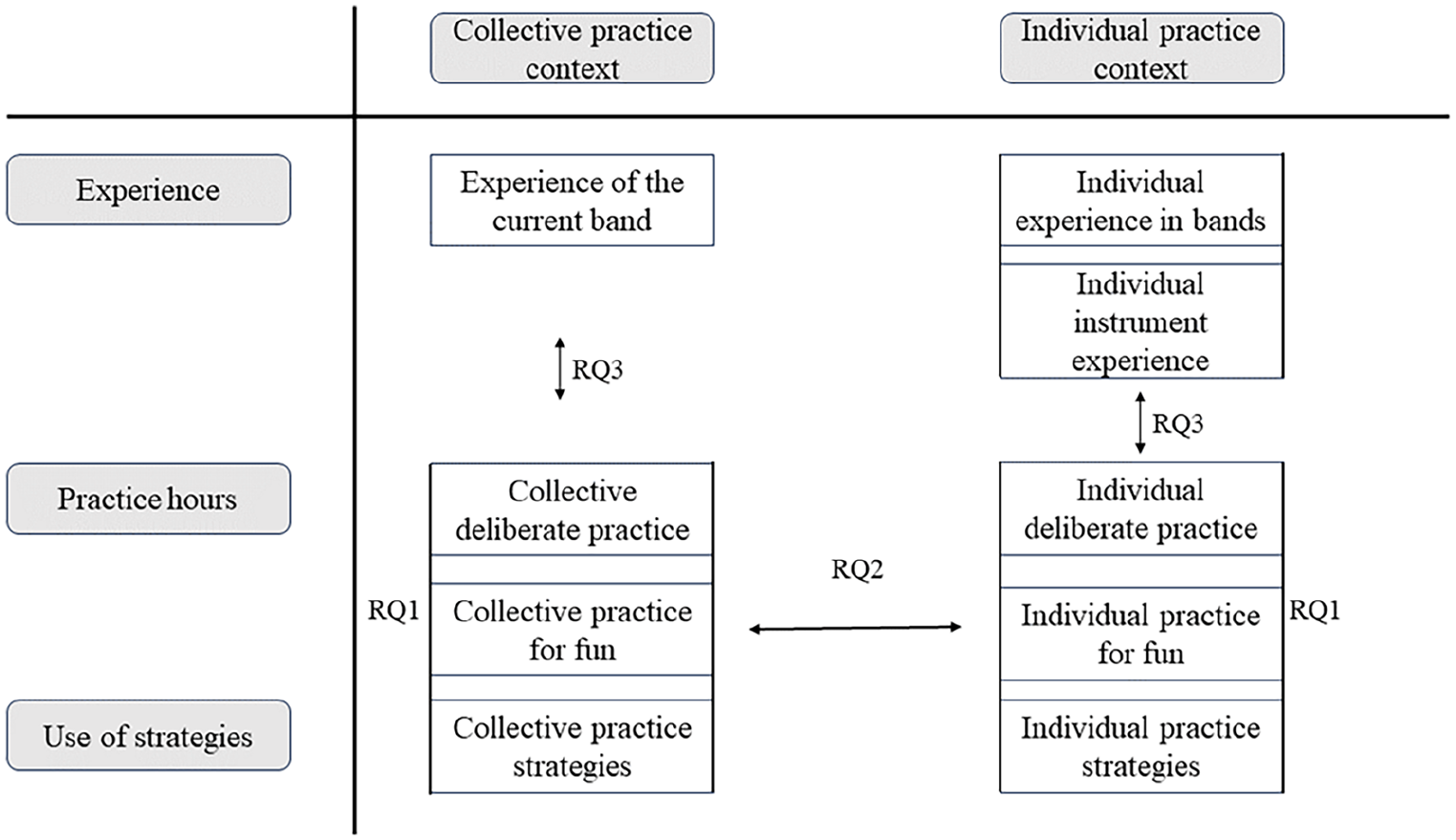
Illustration of the variables and their assumed relations (research questions RQ1, RQ2, and RQ3) regarding professional level.
Sample
The sample consisted of N = 82 popular music band members (11 females and 71 males) from Austria and Germany, with a mean age of M = 35.5, SD = 13.6 years. Participating band members were checked for group allocation and achieved professional group fit if a professional band criterion and an individual experience criterion were met: a majority of subsistence was ensured by their band membership by self-description, and at least 10 years of individual music experience with their instrument played in band (Ericsson et al., 1993). The criteria resulted in a group of n1 = 68 semi-professional members (9 females and 59 males; age: M = 33.9 years, SD = 12.6 years; work in diverse domains) and a group of n2 = 11 professional band members (1 female and 10 males; age: M = 40.6 years, SD = 18.9 years; avocational work in the music domain, e.g. as producer, music teacher). Three participants (one female and two males) with missing data regarding their professionality were excluded from the analyses.
Procedure
A website informed the participants about the general study purposes, data collection method, duration, and access (via link and QR code) to the questionnaire, which was allocated via the online tool “Unipark.” A handout referring to the website was prepared for promotional purposes to give to venues, music schools, and music institutions in Austria and Germany, to post in rehearsal room buildings, and to send to bands directly. The handout was also distributed to labels, concert agencies, band agencies, promoters, and federal and state associations for popular music in Austria and Germany via email. Promotions for this study referring to the website were shared via social media and band-related online panels. All entities were requested for proliferation. Informed consent was obtained beforehand. An ethics commission reviewed and approved this study (reference no. 21-2516-101).
Instruments
Questionnaire
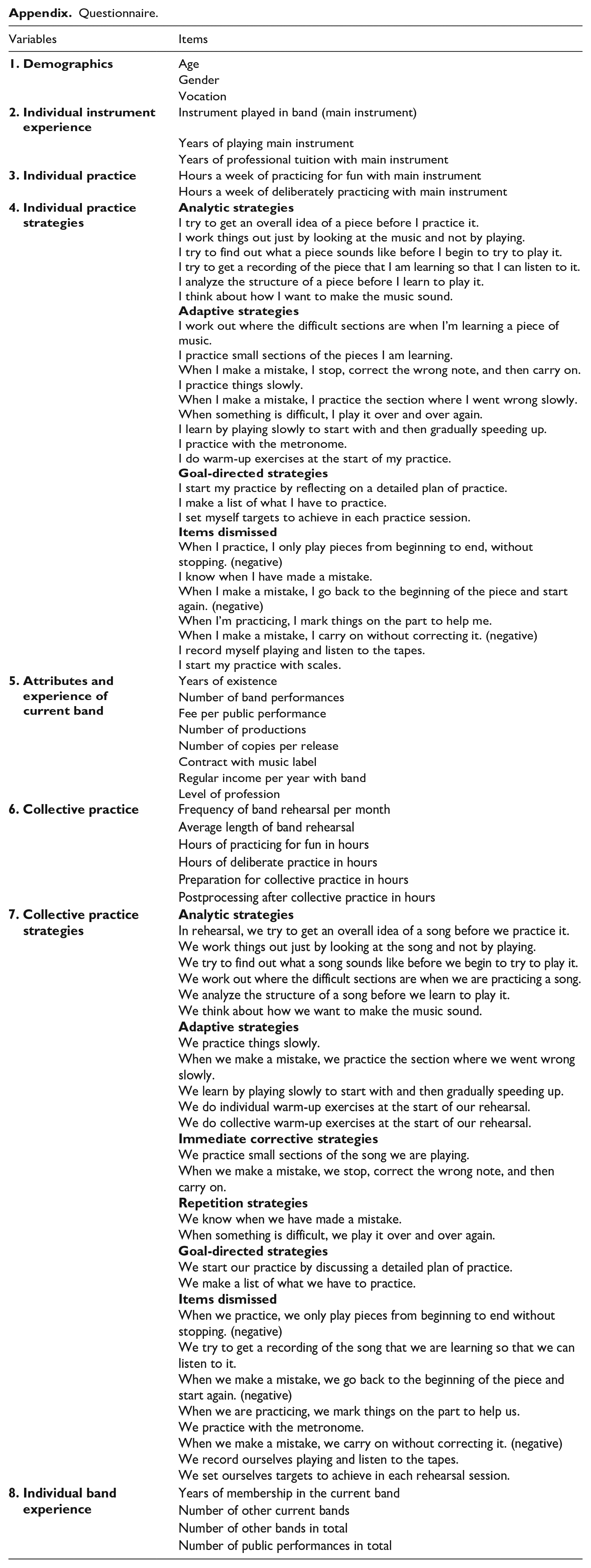
The questionnaire asked members of popular music bands for self-reports on eight topics: demographics, individual instrument experience, individual practice hours, individual practice strategies, attributes and experience of the current band, collective practice hours, collective practice strategies, and individual band experience (see Appendix).
Items to measure practice hours differentiated between practice for fun and deliberate practice in both collective (per rehearsal) and individual (per week) practice contexts. Practice for fun represents an adaptation of already executed practice activities, such as repeated playing of favorite tunes and simple songs, or improvising. Having time with the instrument to deliberately enhance performance by practicing new songs, difficult songs, or song parts that require more attention represents individual deliberate practice. Furthermore, the hours used for preparing and postprocessing for collective rehearsals were assessed.
We adapted Hallam et al.’s (2020) items for assessing practice strategies (25 items) to measure the use of strategies in collective and individual practices. The items were adjusted to collective practice situations and enhanced where necessary. Items on both scales were rated using a Likert-type scale ranging from 1 (“does not apply”) to 5 (“does apply”). An additional option (“I am unable to answer this”) was provided. Pilot testing of the questionnaire was administered to check for replicability and perspicuity with a small convenience sample of band members (N = 8). All variables and items of the questionnaire were translated into German.
Analysis
SPSS 29 and RStudio 2023.06.0 software were used to analyze the data. We performed an explorative factor analysis (EFA) beforehand, using Mplus 8.10 to check for underlying factors relating to collective and individual practice strategies in this sample. We used Bayes estimators because they allow for more robust factor structures for small sample sizes (Zitzmann et al., 2021). For collective practice strategies, the EFA revealed loading for five subscales with 17 total items. Eight items showed no significant factor loading. For individual practice strategies, the EFA revealed loadings for three subscales with 18 total items. Seven items showed no significant factor loadings. Table 1 presents Cronbach’s α scores and the numbers of items for all scales used.
Internal consistency measures (Cronbach’s α) of scales for collective and individual practice strategies.
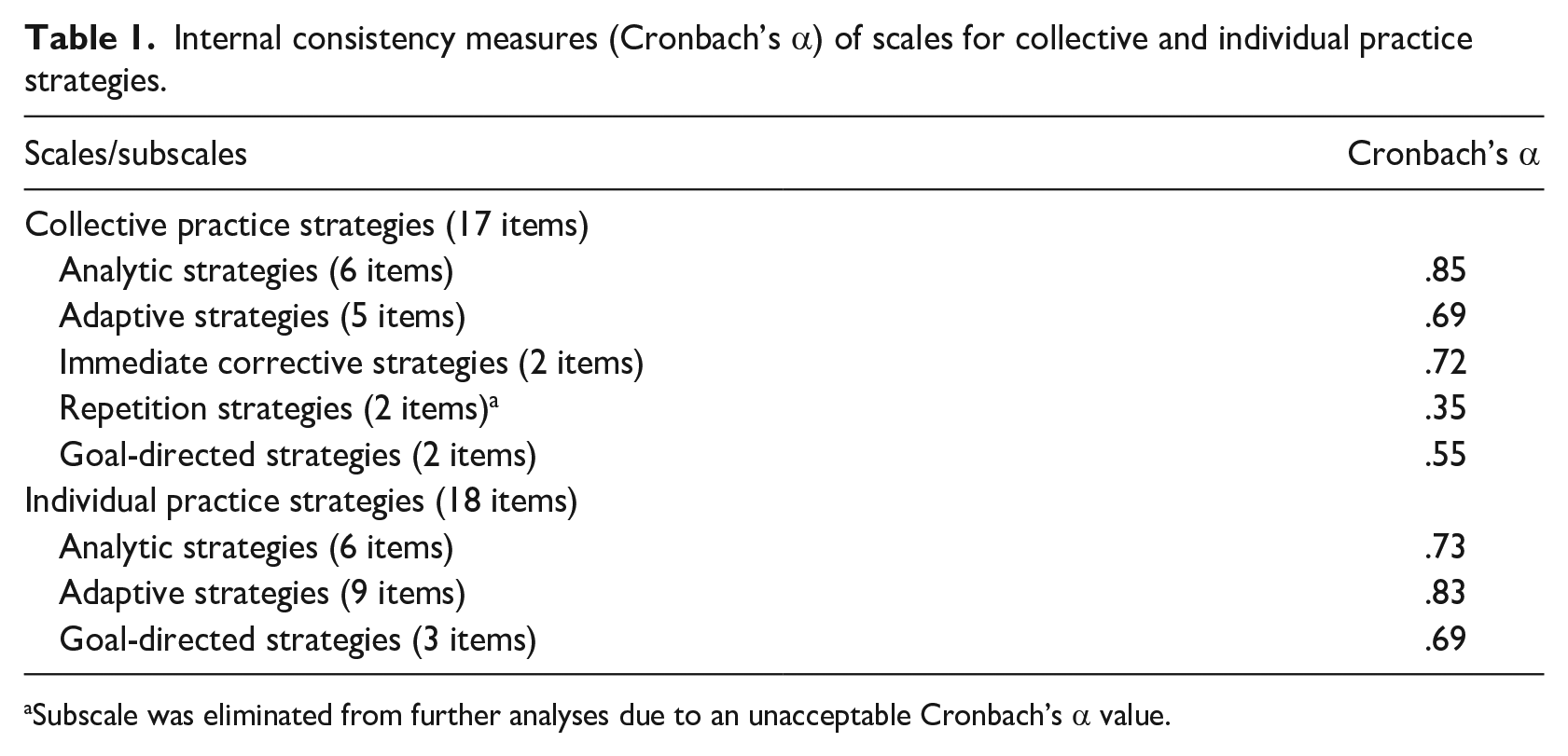
Subscale was eliminated from further analyses due to an unacceptable Cronbach’s α value.
To answer research question 1, we conducted ANOVAs to assess the differences between semi-professional and professional band members regarding their collective and individual practice strategies, as well as hours of deliberate practice and practice for fun in both practice contexts. Welch’s ANOVAs were used where necessary due to violations of homogeneity of variances. Mann–Whitney U tests were also performed, as some variables did not meet the ANOVA requirements and to control for outlier biases.
To answer research question 2, we used Kendall’s tau correlation analyses to assess the relationship between collective and individual practice strategies and practice hours in both practice contexts. We conducted separate analyses for semi-professionals and professionals. Robust correlation measures, including bootstrapped confidence intervals using the R package “WRS2” (Wilcox, 2017), were conducted to double-check correlations, with methods having higher statistical power than conventional nonparametric methods. Robust correlations are reported if they differ from the results of nonparametric correlations.
We performed two multiple regression analyses to examine the influence of collective practice strategy scales on the hours of individual deliberate practice and practice for fun, and two more multiple regression analyses to assess the influence of individual practice strategy scales on hours of collective deliberate practice and practice for fun. An additional 2,000 BCa-bootstrapping samples were used to estimate the 95% confidence intervals and standard errors due to violation of the assumption of residual normality.
To answer research question 3, we used Kendall’s tau correlation analysis to assess the relationship between the experience of the current band and collective practice hours and collective practice strategies. Variables used to indicate experience of the current band included “years of existence,” “number of band performances,” and “number of productions.” We applied two Kendall’s tau correlation analyses to assess the relationships between individual practice hours, individual practice strategies and (1) individual band experience and (2) individual instrument experience . The variables indicating individual band experience included “years of membership in the current band,” “number of other current bands,” “number of other bands in total” (“in total” means all previous experience is included), “number of band performances,” and “number of public performances in total.” Variables used to indicate individual instrument experience included “years of playing the main instrument” and “years of professional tuition with the main instrument.” Separate analyses were conducted for semi-professionals and professionals. We double-checked nonparametric methods using additional robust correlation measures, including bootstrapped confidence intervals.
Results
Table 2 presents descriptive statistics for both groups as well as the results of ANOVAs and Mann–Whitney U tests regarding collective and individual practice variables. For collective practice strategies, immediate error correction (ANOVA: F(1, 70) = 9.56, p = .003, ω2 = .11; U test: z = −2.45, p = .013, r = .29) was significantly higher for semi-professionals (M = 3.39, SD = 0.90) than for professionals (M = 2.33, SD = 1.30). For individual practice strategies, significant group differences in goal-directed strategies (Welch’s ANOVA: F(1, 11.51) = 7.37, p = .019, ω2 = .13; U test: z = −2.69, p = .006, r = .30) showed higher mean values for professionals (M = 3.12, SD = 1.28) than for semi-professionals (M = 2.03, SD = 0.86).
Means, standard deviations (in brackets), and medians for the explorative analysis of collective and individual practice hours, including ANOVAs and Mann–Whitney U tests.
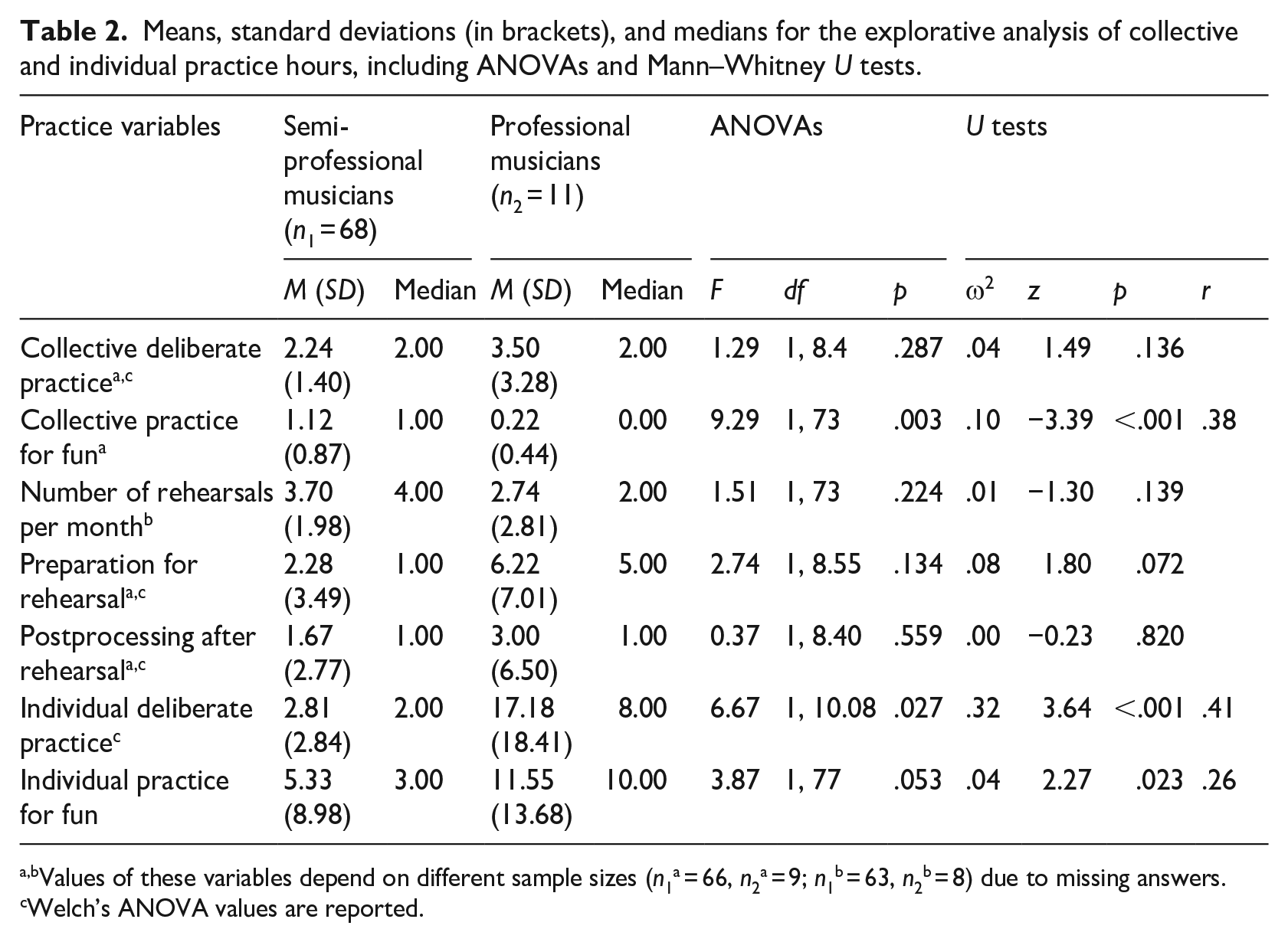
Values of these variables depend on different sample sizes (n1a = 66, n2a = 9; n1b = 63, n2b = 8) due to missing answers.
Welch’s ANOVA values are reported.
Table 3 shows the results of Kendall’s tau correlation analyses for semi-professionals. Robust correlations showed the same picture, except for the correlation between collective deliberate practice and individual goal-directed strategies. An additional significant correlation was found between collective deliberate practice and postprocessing (rrobust = .27, p = .027, 95% CI [0.01, 0.51]). For professionals, Kendall’s tau correlations were significant between collective practice for fun and individual goal-directed strategies (τ = −.63, p = .040, 95% CI [−0.87, −0.17]), between collective and individual adaptive strategies (τ = .75, p = .008, 95% CI [0.38, 0.92]), and between collective goal-directed strategies and individual adaptive strategies (τ = .69, p = .013, 95% CI [0.26, 0.89]). Other correlations were found between individual deliberate practice and individual practice for fun (τ = .53, p = .027, 95% CI [0.11, 0.80]) and between collective adaptive strategies and immediate corrective strategies (τ = .72, p = .013, 95% CI [0.32, 0.90]). The correlation between collective and individual deliberate practices was not significant (τ = .46, p = .184, 95% CI [−0.18, 0.75]). Robust correlations showed the same picture, except for the correlation between collective practice for fun and individual goal-directed strategies.
Kendall’s Tau correlations matrix with 95% confidence intervals for collective and individual practice variables of semi-professionals.
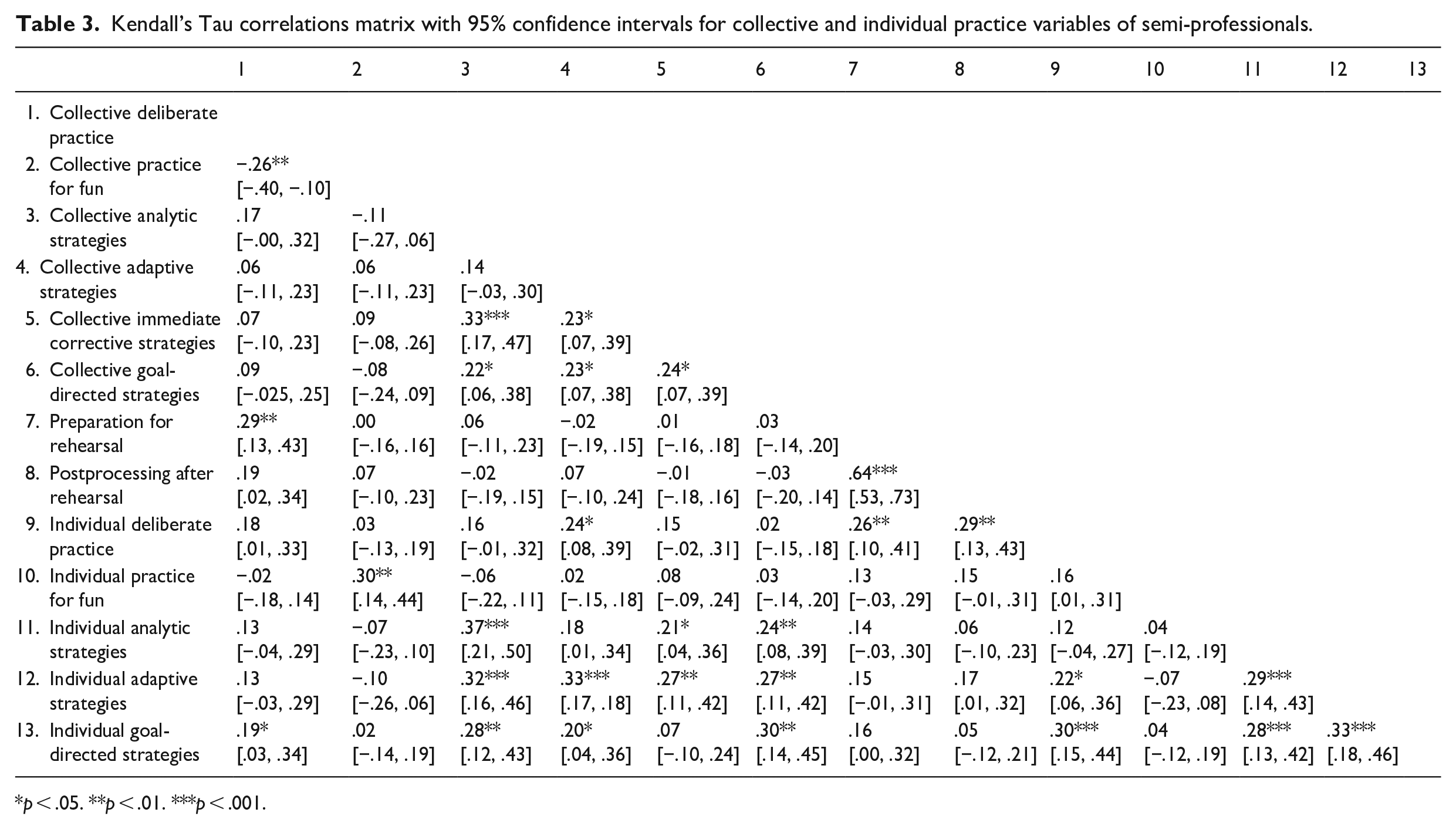
p < .05. **p < .01. ***p < .001.
The multiple regression analysis assessing the influence of collective practice strategy scales on individual deliberate practice was significant, F(4, 67) = 3.75, p = .008, R² = .18, adj. R² = .13. Goal-directed strategies were shown to be a significant predictor, β = .32, b = 2.42, SEb = 1.23, p = .007, 95% CI [0.12, 4.34]. No significant influence was detected on practice for fun. The multiple regression analysis assessing the influence of individual practice strategy scales on collective deliberate practice was significant, F(3, 71) = 3.56, p = .018, R² = .13, adj. R² = .09. Goal-directed strategies were shown to be a significant predictor, β = .36, b = 0.64, SEb = 0.33, p = .006, 95% CI [0.11, 1.35]. There was no significant influence on practice for fun.
Table 4 presents Kendall’s tau correlations for semi-professionals’ experiences of the current band. Robust correlations validate correlations between years of existence and analytic strategies and immediate corrective strategies. For professionals, the Kendall’s tau correlation was significant between the number of productions and adaptive practice strategies (τ = −.57, p = .046, 95% CI [-−0.84, −0.06]) but nonsignificant for robust correlations. An additional robust correlation was found between the number of productions and immediate corrective strategies (rrobust = −.72, p = .030, 95% CI [−0.96, 0.14]).
Kendall’s Tau correlations and 95% confidence intervals for experience of the current band and collective practice variables of semi-professionals.
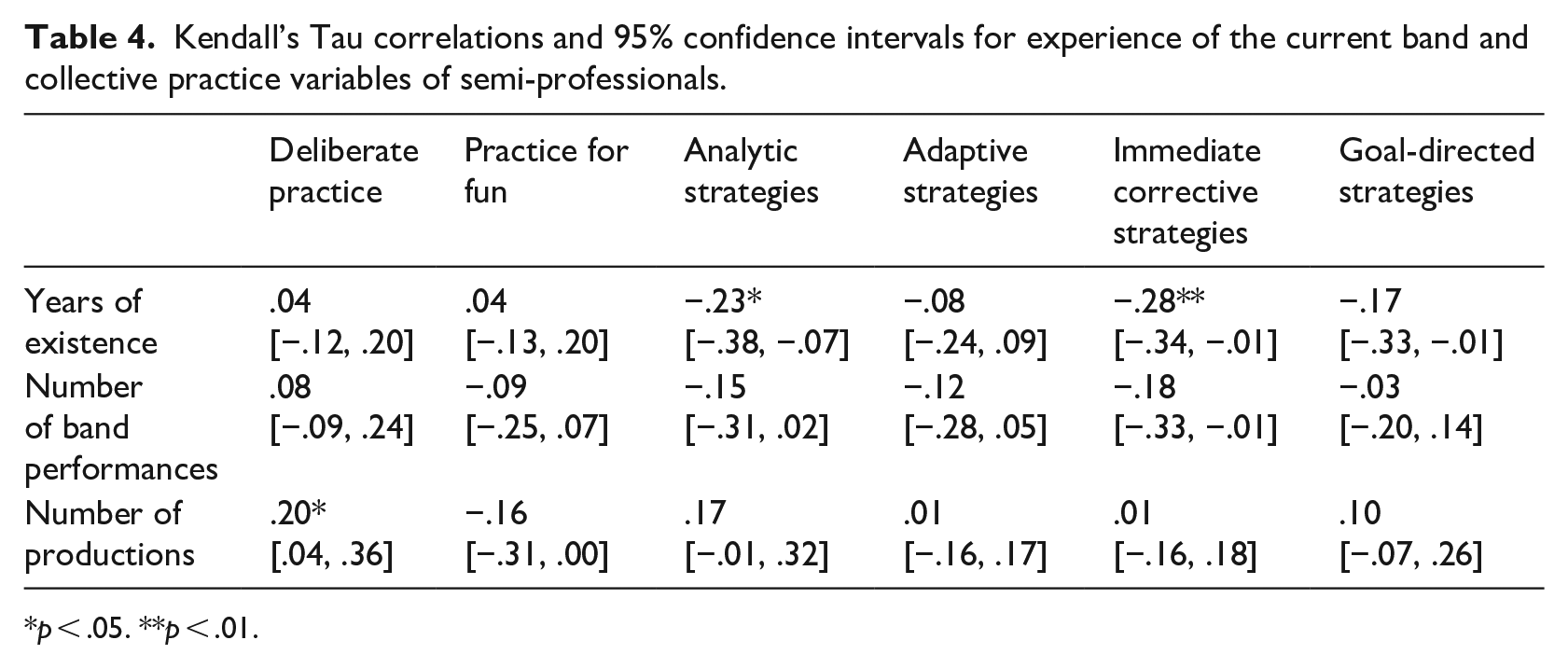
p < .05. **p < .01.
For the individual band experience of semi-professionals, significant correlations were found between years of membership in the current band and analytic strategies (τ = −.23, p = .012, 95% CI [−0.37, −0.06]). Other significant correlations were identified between the number of band performances and practice for fun (τ = −.20, p = .025, 95% CI [−0.35, −0.04]) and analytic strategies (τ = −.21, p = .018, 95% CI [−0.36, −0.05]). For professionals, the correlation between the number of other current bands and goal-directed strategies was close to the significance level (τ = .54, p = .054, 95% CI [0.02, 0.83]) and significant for robust correlation (rrobust = .80, p = .009, 95% CI [0.05, 0.98]).
Table 5 presents the respective correlations for the individual instrument experiences of semi-professionals. Robust correlations were also found for the number of years playing the main instrument and individual (rrobust = −.25, p = .037, 95% CI [−0.49, 0.03]). For professionals, no correlations were found.
Kendall’s Tau correlations and 95% confidence intervals for individual instrument experience and individual practice variables of semi-professionals.
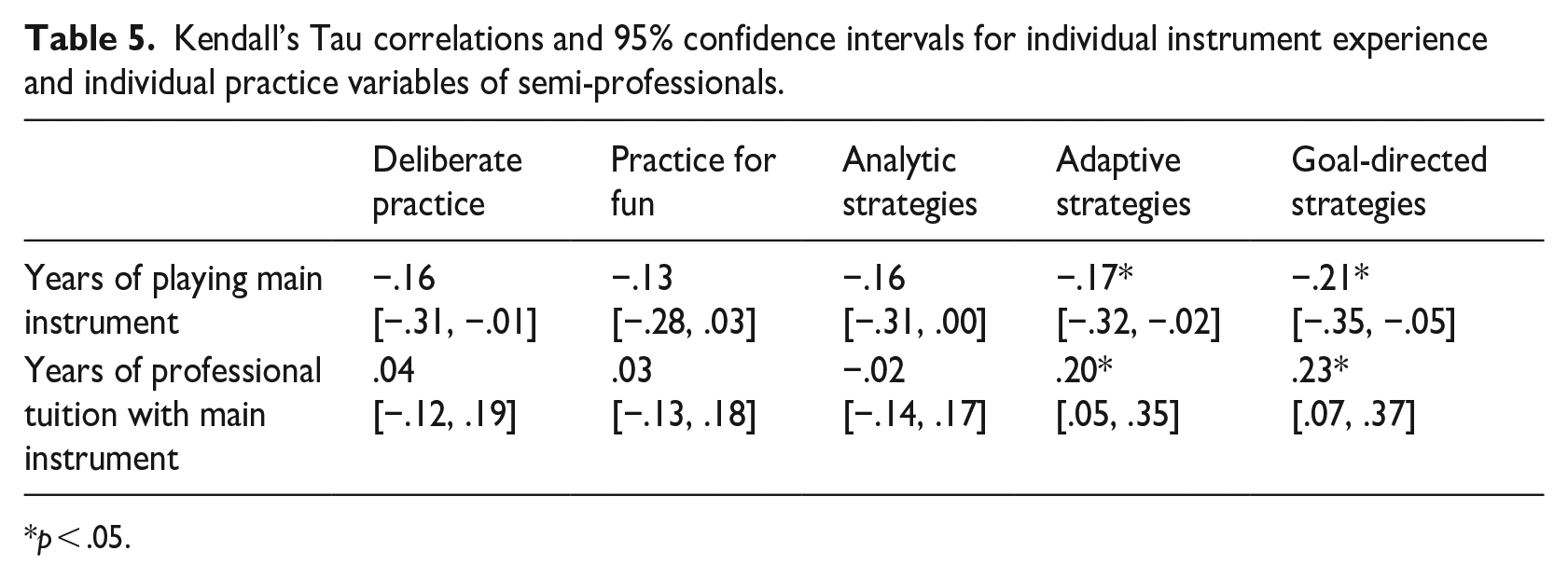
p < .05.
Discussion
Recognizing the established significance of practice in musical endeavors, the collective and individual practices of popular music bands, along with their reciprocal interplay, assume a crucial role in honing performances. The mutual interplay of both practice contexts and the use of specific strategies during practice has hitherto been underexplored in existing research. Therefore, this study examined both practice contexts and their interplay by addressing specific practice variables—deliberate practice and the implementation of practice strategies within the distinctive realms of semi-professional and professional popular music bands and their individual members. The study further explored the reliance of practice on the factors of experience pertaining to both bands and their individual members.
Design of collective and individual practices at different professional levels
Semi-professional and professional bands are alike in designing their collective practices, except for collective practice for fun. For semi-professionals, collective practice might be of great importance (De Bézenac & Swindells, 2009), as collective practice strategies are used to correct errors in collective performance. The individual practice context, however, differentiates semi-professionals from professional band members. Individual deliberate practice is of vital importance for professional band members who use goal-directed practice strategies. This finding corresponds to research by Bonneville-Roussy and Bouffard (2015), who underlined the importance of formal practice (operationalized by deliberate practice and self-regulation) for performance achievement. However, as there were only a few significant correlations, the professionals in this sample might have been highly heterogeneous in terms of the time they devoted to practicing and the practice strategies used. This supposition is further supported by the higher standard deviations in most practice variables compared to semi-professionals.
Notably, the professional level of the musicians does not imply the use of more collective or individual practice strategies, which are generally considered an indicator of practice quality, in both collective and individual contexts. This finding is in line with the results of Allingham and Wöllner (2022), who investigated the slow practice and tempo management strategies of adult classical and non-classical musicians. For non-classical musicians, the factors of slow practice were not or negatively associated with expertise. One could assume that the use of practice strategies aligns with the professional level, as Hallam et al. (2012, 2021) showed that the use of specific practice strategies was positively related to musicians’ advancing skill level and passed examinations. However, these studies investigated the formal learning settings of young classical and popular musicians in conservatoires and music schools, which do not cover the demands and skill levels of professionals. The informal popular music context of freelancing bands, as well as the professional level of popular music bands, might set other environments for the use of practice strategies. The benefits of practice strategies may vary and change with advancing skills, both collectively and individually. A strategy that is useful for an individual musical beginner during practice (e.g. playing through entire [short] songs) might be ineffective for musicians at an advanced level when songs become longer and more complicated. For freelance musicians and bands, however, this strategy might be a useful and, most of all, efficient way to recapitulate motoric and musical knowledge about one song when preparing for a live performance. On the other hand, adaptive practice strategies, like slow instrumental practice, may be useful at any career stage (Allingham & Wöllner, 2023). However, collective immediate corrective strategies may cease to be a viable strategy for professional popular music bands, given that meticulous individual preparation and elevated skill levels might result in a diminished occurrence of mistakes, if any.
Professional commonalities and differences in the interplay of collective and individual practices
The significant positive correlations between the practice contexts of semi-professionals and professionals, especially for practice strategies and deliberate practice, in contrast to practice for fun, support the conclusion of a mutual interplay between both contexts. Those who use specific strategies in one practice context tend to use the same or other strategies in the other practice context. The importance of goal-directed strategies in both collective and individual practices is underlined by their impact on the hours of collective and individual deliberate practice across both practice contexts. Furthermore, the use of specific strategies goes along with more collective or individual deliberate practice (in the case of semi-professionals) and with less collective practice for fun (in the case of professionals). Notably, the interplay of deliberate practice is higher for professionals and lower for semi-professionals; however, they are nonsignificant. More significant correlations were found for semi-professionals and their collective deliberate practice. Their collective and individual deliberate practices were indirectly related via preparation for rehearsal. While the inverse relationship between collective deliberate practice and practice for fun indicates an efficient use of time in collective practice for some semi-professionals, other semi-professionals might be rather inefficient, according to the significant correlation between practice for fun in both contexts. No significant correlations were found for the professionals’ collective deliberate practice. However, their collective practice for fun was inversely related with individual goal-directed strategies. Therefore, professionals might find collective deliberate practice a more efficient use of time, as they spent significantly less time—in fact, almost none—in practice for fun. In contrast to Schmidt and Gruber’s (2023) findings, but in line with Papageorgi et al. (2010) professionals in general attribute a higher importance to individual practice, as they dedicated more time to both deliberate practice and practice for fun than semi-professionals. This finding was supported by a significant correlation between both practice variables. In line with Ericsson et al.’s (1993) perspective, the relevance of individual deliberate practice for professionals might become visible here. This relevance could also reflect the additional vocational demands of the professionals in this sample.
Different experiences and their relationships with practices
Simply aggregating years of experience (with an instrument or in a particular band or as a band) did not positively relate to the use of specific practice strategies or more deliberate practice, either collectively or individually. The negative correlations between experience of the current band and collective practice variables and strategies for both semi-professionals and professionals could indicate a decreased usefulness of collective practice strategies. In contrast to professionals, semi-professionals’ experiences with the main instrument were significantly negatively related to individual deliberate practice. The same applies to the negative relationships between years of band membership and years of existence with the use of collective or individual practice strategies. There is one exception: the number of productions was positively related to deliberate practice for semi-professionals. The mere collective experience, however, did not go along with more collective deliberate practice or a greater use of practice strategies, which aligns with Schmidt and Gruber’s (2023) results for individual deliberate practice.
Experience variables, however, like professional tuition or the number of other bands in which a musician currently plays, might have reverse relations with individual practice variables, as they represent a higher-quality experience with an instrument or a more versatile experience in groups (Schmidt & Gruber, 2023; Längler et al., 2022). On the other hand, profound preparation by means of deliberate practice might be an unavoidable precondition for being able to play in several bands at the same time. This finding is supported by the significant difference between semi-professionals’ and professionals’ individual goal-directed strategies and contrasts with the results of Hallam et al. (2012), who investigated a young scholarly sample. Compared to a scholarly sample, professionals might consider it necessary to organize their individual practice purposefully. In addition, upcoming (professional) demands (e.g. the number of band performances or productions) might be other experience factors that significantly relate to collective and individual practices. In line with Schmidt and Gruber (2023), the number of band performances was in accordance with less practice for fun and fewer practice strategies by collective bands and individual band members. Collective adaptive strategies might be less relevant for professionals when preparing recordings. To prepare for band performances, individual analytic strategies might be less necessary than in the creative songwriting phases. The same may be true for collective adaptive and immediate corrective strategies, especially when individual band members need to be well prepared, which is assumed to be the case for professional bands. The implied question of the greater relevance of individual practice in preparation for collective practice, with respective contextually adjusted and goal-dependent practice strategies in light of specific (professional) demands, represents an interesting desideratum for future research.
Limitations and conclusions
There are some limitations to this study. The sample size was somewhat small, particularly in the group of professionals, and was imbalanced in terms of gender. Although this gender imbalance reflects the still dominant role of men in various music genres (Sergeant & Himonides, 2023), this sample has not sufficiently considered the specific perspective of female musicians on the variables studied. Additionally, too little data were available from different members of a band to run multilevel models. Due to the violation of prerequisites for regressions, and to avoid overestimating the leverage of outliers (all by professional band members) on the impact of the experience of the current band, individual band experience, and individual instrument experience on practice variables, we employed robust correlation methods. Consequently, no assertions about causality or direction were possible. Further research with valid data from professional musicians is needed to investigate these relationships causally and to better model the nature of the relationship between the experience and design of practice and the utility of practice strategies. Future research might extend the current findings and investigate collective and subsequent individual practice processes of popular music bands in more depth by, for example, using instruments such as videography of popular music bands’ collective practices.
Taken together, the results provide insights into the time deployed and the strategies used during the collective and individual practices of popular music band members that help to understand the interference of practice with the professional level and specific experiences of bands and their members. These results could be useful for bands, individual musicians, and music students, as they underline the importance of individual deliberate practice, but also the value of a collective deliberate practice and various musical experiences. These results could also encourage bands and musicians to reflect on an effective design of their collective and individual practices and highlight the usefulness of different strategies in both practice contexts. Musicians should therefore learn how to practice in the face of their current demands as a band or individual musician (López-Íñiguez & Bennett, 2021).
In general, music education institutions could emphasize developing music knowledge that promotes sustainable capabilities for a professional career in music in constantly changing dynamic circumstances (Hillman, 2018) and to consciously choose effective practice strategies. For example, music students should employ reflective monitoring strategies and skill sets for adequate reaction and goal-directed strategies in the case of difficulties when preparing for exams or later professional demands (Philippe et al., 2020). The importance of developing these self-regulative strategies may become salient in the informal learning context (Zachariou et al., 2023), especially after graduation, in the absence of teachers or mentors to help students adapt. Music education could support students with organizational skills for a professional career by including students’ decision-making throughout their education (Després & Dubé, 2020). Music education could also include in its curricula the importance of an ongoing deliberate practice in various forms after graduation and, therefore, highlight the meaning of being and experiencing oneself as a lifelong musical learner (López-Íñiguez & Bennett, 2020). The importance of experience needs to be stressed and deepened because of its significance, its influence on the development of skills and performance, and the essential knowledge gained by each musician, whether semi-professional or professional.
Footnotes
Appendix
Questionnaire.
| Variables | Items |
|---|---|
|
|
Age |
| Gender | |
| Vocation | |
|
|
Instrument played in band (main instrument) |
| Years of playing main instrument | |
| Years of professional tuition with main instrument | |
|
|
Hours a week of practicing for fun with main instrument |
| Hours a week of deliberately practicing with main instrument | |
|
|
|
|
|
Years of existence |
| Number of band performances | |
| Fee per public performance | |
| Number of productions | |
| Number of copies per release | |
| Contract with music label | |
| Regular income per year with band | |
| Level of profession | |
|
|
Frequency of band rehearsal per month |
| Average length of band rehearsal | |
| Hours of practicing for fun in hours | |
| Hours of deliberate practice in hours | |
| Preparation for collective practice in hours | |
| Postprocessing after collective practice in hours | |
|
|
|
|
|
Years of membership in the current band |
| Number of other current bands | |
| Number of other bands in total | |
| Number of public performances in total |
Acknowledgements
The authors would like to thank Professor Dr. Richard Göllner (University of Potsdam) for his advice and help in implementing the exploratory factor analysis. The authors also thank the three reviewers and the editor for their constructive and valuable comments to improve the article.
Author contribution(s)
Funding
The author(s) received no financial support for the research, authorship, and/or publication of this article.
