




Abstract
For professional musicians, all aspects of music play an integrated role in music-making. However, for first year music students, who usually begin their studies identifying as performers, some may question the value of learning these other areas of music. This study investigates the responses of 80 first year undergraduate music students to questions about aspects of the music study they were about to begin, and their identity as a musician. The students were enrolled in two universities located in suburban and regional Australia. Questions were given to students in their first week of the Bachelor of Music course before classes began. In doing so, the study sought to capture what experiences, understandings, expectations and aspirations incoming students bring to, and have for, an undergraduate music course, and how they identify as musicians as they begin the course. As expected, findings noted experience with music performance and the possible influence of the location of the universities in relation to a low level of music theory knowledge. Yet understanding student interest in music technology, musicology and the music of Australian First Nations people reveals presage opinions which can help design authentic curriculum for the education of the 21st century musician.
Introduction
For professional musicians, all aspects of music – theory, musicology/music history, sound technology – play an integrated role in music-making. However, for first year music students, who usually begin their studies identifying as performers or at least players/singers, some may question the value of learning these other areas of music. Understanding student presage experience, expectations of, understandings and aspirations for a tertiary music program is useful as it reveals opinions of which we, as experienced musicians and tertiary music educators, may not be fully aware as we design authentic curriculum for the education of the 21st century musician.
This study investigates the responses of 80 first year undergraduate music students to questions about aspects of the music study they were about to begin, and their identity as a musician. The questions were given to students in their first week of the Bachelor of Music course. In doing so, the study sought to capture what ‘experiences’, ‘understandings’, ‘expectations’ and ‘aspirations’ incoming students bring to, and have for, an undergraduate music course, and how they identify as musicians as they begin the course.
Literature
Studies of university students undertaking a music degree have found three main issues. They can be categorised as presage learning models, presage studies of creative arts undergraduates and perceptions of music identity.
Presage learning models
Presage factors are those which exist ‘prior to learning, and relate to the student, and to the teaching context. Students come to university with certain abilities, expectations, and motivations for learning. . . .’ (Biggs, 1989, p. 12). Biggs highlights two areas of presage information – prior learning, but also expectations, motivations, abilities. Presage forms the first stage of several models, some of which embrace this wider definition and understanding of the presage stage, while others focus on the educational knowledge. Stripling and Roberts (2013), for example, draw on Dunkin and Biddle’s (1974) model for the study of classroom teaching, with its four categories of variables: presage, context, process and product, to explore the relationship between 10 presage variables of agricultural education teachers. These variables included mathematics ability (subject matter knowledge), mathematics teaching efficacy (teacher’s perception of pedagogical content knowledge), personal mathematics efficacy (teacher’s perception of subject matter knowledge), personal teaching efficacy (teacher’s perception of pedagogical knowledge), gender, age, grade received in last mathematics course (p. 79). These are all focused on educational knowledge. In Biggs’ (1989) model of integrated learning – presage, process and product – presage includes ‘student characteristics – prior knowledge, abilities, motivation, conception of learning’ and ‘teaching context – curriculum method assessment climate’ (p. 11). In our study, Biggs’ description of student characteristics is the focus. Undertaking a comparative study between students’ experiences of dance education and training in Greece and the United Kingdom (UK), Tsompanaki and Benn (2011) adopted Tsompanaki’s (2009) presage, process, product framework drawing on several data sources. The first variable, presage, has five components including ‘students’ background in case studies’ (p. 209), with data drawn from questionnaires/interviews. However, the second variable, process, includes ‘students’ response/attitude/aspiration’ (p. 209). Here students commented on career thinking and, for this participant group, ways in which dance could be drawn into a university degree program.
Presage studies
In music, Tolmie’s (2014) study focused on first year university music students, seeking what they love about music, career plans, who inspires them to be a good musician, and the skills needed to achieve these dreams. This combination of questions drew on three levels of motivation – intrinsic, primary and extrinsic – plus career identity and career reality, with the findings discussed in relation to vocational course design. Presage studies have investigated the wellbeing of first year music students at university level (Rose et al., 2021). Lebler et al. (2009) focused their study on prior learning of undergraduate students in a UK tertiary music conservatoire and two Australian Bachelor of Music programs, one with a western classical focus, one with a popular music focus. The study sought information on ‘students’ hopes, fears and expectations’ (p. 233) musically, academically and socially. It looked at the kinds of music students have studied, their engagement with private lessons and other ways of learning music, styles of feedback used in this learning and what music-making activities they currently engage with. Blom and Poole (2015) analysed the responses of students from three Australian higher education institutions in New South Wales in relation to the songwriting skills and knowledge students brought to the classroom. The responses were placed into a five-stage model for previously acquired skills’ levels in presage student songwriters, based on Dreyfus (1982) and adapted by Blom and Poole (2015). The model moves through ‘novice’, ‘advanced beginner’, ‘competence’, ‘proficiency’ to ‘expertise’ with findings noting no student was entirely inexperienced in songwriting and over half had written a considerable body of songs. Half of the students were in the first two of the model’s five stages and half in the second two stages. This highlighted the fact that within presage there may be a range of experiences and understandings.
In these studies, presage is focused on prior learning, and perception of knowledge – that is, what students know and how they learnt it – but also on hopes, fears, expectations and what Biggs (1989) calls expectations, motivations, abilities. Our study focused on aspects of both areas, and we have adopted the terms experiences, understandings, expectations and aspirations.
Music identity
For Hargreaves et al. (2002), ‘one of the primary social functions of music lies in establishing and developing an individual’s sense of identity, and . . . the concept of musical identity enables us to look at the widespread and varied interactions between music and the individual’ (p. 5). In her study of young people’s musical lives, O’Neill (2017) finds three interactions between ‘music and the individual’, calling them ‘portraits of music learning ecologies – segmented, situated, agentive’ (p. 98). She prefers the term ‘musical selves’, rather than musical identities because ‘when young musicians reflect critically on their values and make conscious efforts to plan and implement actions that bring about new ways of viewing themselves, others, and their world in relation to music activities, they are actively constructing their musical selves’ (p. 85). The three ecologies reflect different degrees of connection: segmented reveals ‘little or no sense of connectedness in. . .descriptions of their music activities’ (p. 89); a situated ecology is ‘associated with places or spaces of social cohesion’ (p. 91) and agentive ‘is an intense sense of connectedness’ (p. 94) with people and experiences. Our study did not specifically ask participants to look at these degrees of connection in their musical lives as defined by O’Neill. However, our questionnaire and identity grid captured the presage thinking of these students and provided us with an insight into their sense of connectedness within the different subject areas of an Australian university Bachelor of Music course.
In a study of musical identity formation, Gruhn et al. (2017) focused on psychological and social influences, in particular, the social, personal, musical and educational factors when comparing students at a special music high school, music academy students and older professional musicians. Blom and Brown (2019) found the identities of first year music students to be related to learning ‘specific musical skills, a learning identity including expectations of the university institution itself, and a personal identity often reflecting broader aspirations or uncertainty’ (p. 115). These are musical and social/personal factors. Investigating careers and professional musical identity in higher education and asking the question ‘What is a musician?’, Bennett (2016) noted that ‘performance is traditionally positioned as the most highly valued and ‘successful’ outcome for graduates’ (p. 101). Bennett’s study drew on a visual narratives and captions data collection approach and received responses such as ‘A musician is someone that besides having theoretic knowledge is also worried about the way in which he can touch people [with his music]’ (p. 111). While our study did not use the same data collection method, we sought such personal and insightful responses (soft skills) from our student participants.
Methodology
Eighty first year students in two Bachelor of Music courses in two Australian universities were invited, pre-pandemic lockdown, to complete a questionnaire about their presage knowledge and thinking on starting the degree. All students completed the anonymous written questionnaire in the presence of the researchers, who were also part of the teaching staff at these universities. We used the terms ‘your aspirations, experiences and expectations’. The timing of the questionnaire was crucial – all students completed it before they engaged in any of the formal or informal music activities associated with their course, to gain responses which were not influenced by the music courses’ teaching. Ethics approval was obtained from both institutions and only the responses of students who gave signed permission are discussed in the study.
The student participants were enrolled in music courses in two Australian universities which are not part of the network of Australian capital city conservatoires. One university is located in regional Queensland (10 students) and the other, described by Moodie (2012) as a new generation university, is located in an outer suburban area of a major city (70 students). The two music programs attract a cohort of students with a diverse range of musical backgrounds, some with classical music and private tuition training, and a larger proportion with popular music experience in a wide range of musical styles. The research was not a comparison between the two universities but rather treated the two cohorts as similar in course expectations. Responses were analysed across the combined cohort.
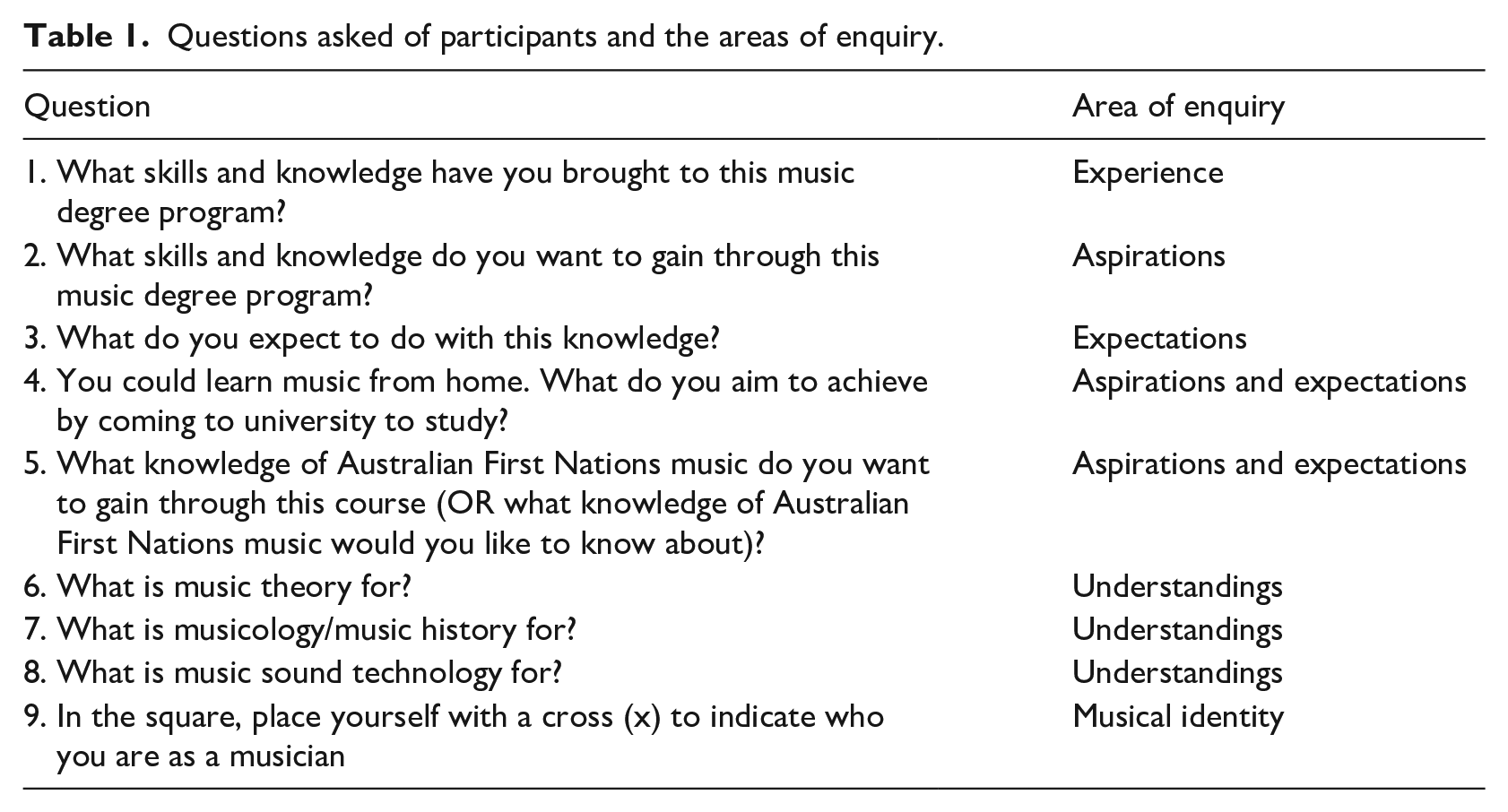
Five questions asked about experience and knowledge being brought to the course and wanting to be gained (aspirations) through the course; what students expected to do with this knowledge; what they aimed to achieve by coming to university to study music and what Australian First Nations music knowledge they would like to know about. Three questions related to how they understood the role of music theory, musicology/music history and sound technology in their music learning. Finally, information on students’ musical identities was sought by asking them to place themselves on a simple square identity grid (see Figure 1). The identity grid is what Umoquit et al. (2013) describe as ‘researcher-led diagrammatic elicitation, where the . . . participant edits a researcher-prepared diagram’ (p. 7). Schubert’s (1999) ‘two-dimensional emotion-space (2DES)’ was designed in 1996 to record responses along two important dimensions of emotion. Our identity grid uses a similar shape and approach for participants to visually represent themselves as musicians with respect to the four areas of composition/songwriting, sound technology, performance and musicology/music history. To draw out an understanding of students’ experiences, understandings, expectations and aspirations, the questions in Table 1 were asked.
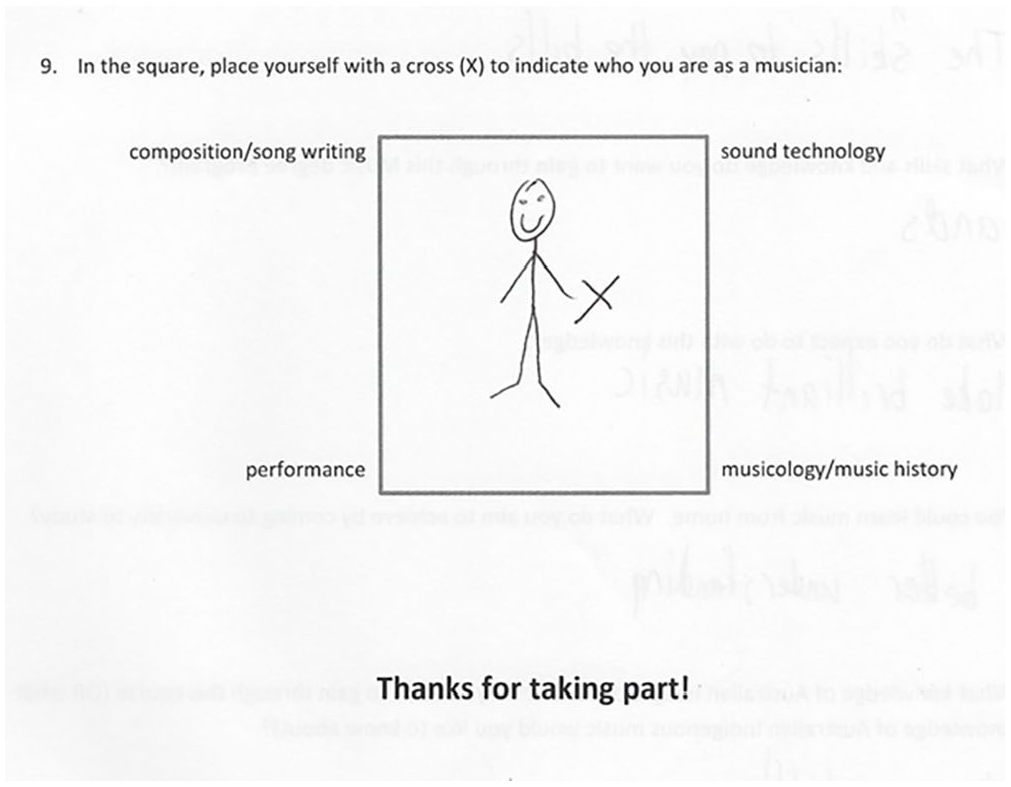
Square grid for researcher-led diagrammatic elicitation to Question 9.
Questions asked of participants and the areas of enquiry.
Responses to the questions were analysed in different ways. Firstly, the numerical data were tallied, with some participants addressing multiple issues in their responses. Each issue was counted and included in tables and text.
Responses to questions 1 to 8 were subjected to a qualitative thematic analysis approach using categories which ‘are repeatedly assessed against [the empirical material] and modified if necessary’ (Flick, 2002, p. 190). Because of the focus of the questions, patterns were identified ‘at the start of the analytic process which guided the data coding process’ (Braun et al., 2019, p. 846). At times, the coding process adopted the concept of hard and soft skills. These terms from Coll and Zegwaard’s (2006) – hard (technical/cognitive) and soft (behavioural) skills, were used by Blom and Encarnacao (2012) in their study on what is important for students when choosing criteria for peer assessment of tertiary rock groups in rehearsal and performance, with ‘hard’ musical skills and ‘soft’ non-musical skills. However, they did find that ‘ultimately, . . .a strict delineation between the two is neither desirable nor possible’ (p. 26). The identity square grid was analysed by dividing it evenly into four, tracing each cross as a dot and counting the placement (see Figure 1).
Findings
Seventy-one of the 80 respondents cited performing as the specific skills and knowledge that they brought to the music degree program (Table 2).
What skills and knowledge have you brought to this music degree program?
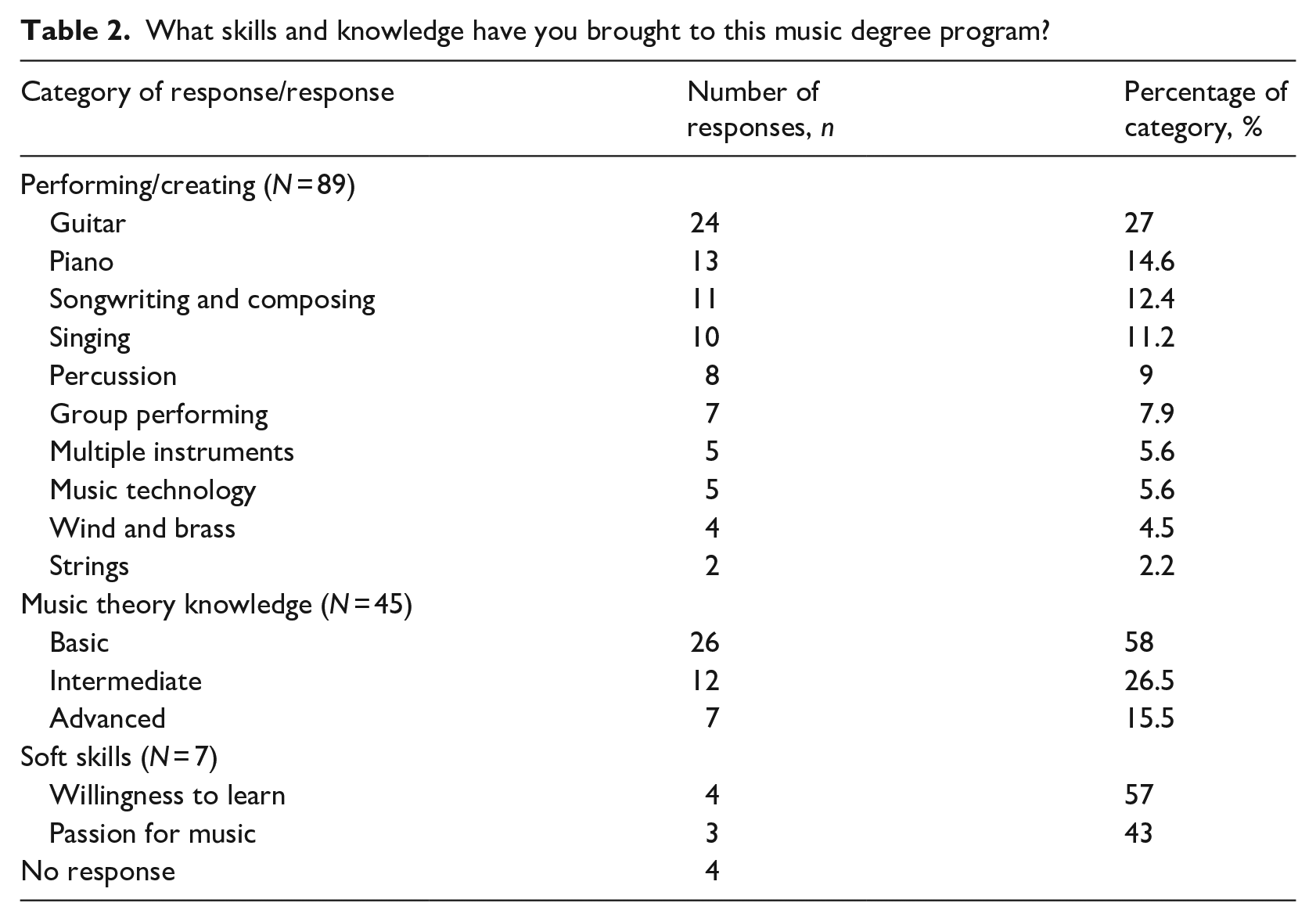
These specific skills and knowledge included performing on guitar (24) piano (13), singing (10), percussion (8), wind and brass (4) and strings (2), with a few respondents playing multiple instruments (5). Group performing was noted by seven students. Music theory knowledge was self-reported at three levels: basic (26), intermediate (12) and advanced (7), with songwriting and composing (11) and music technology skills (5) rounding out the majority of responses. There were only a few students who specifically cited soft skills such as a willingness to learn (4) and having a passion for music (3) and four students did not respond to this question.
Question 2 asked the students: What skills and knowledge do you want to gain through this music degree program? (Table 3).
What skills and knowledge do you want to gain through this music degree program?
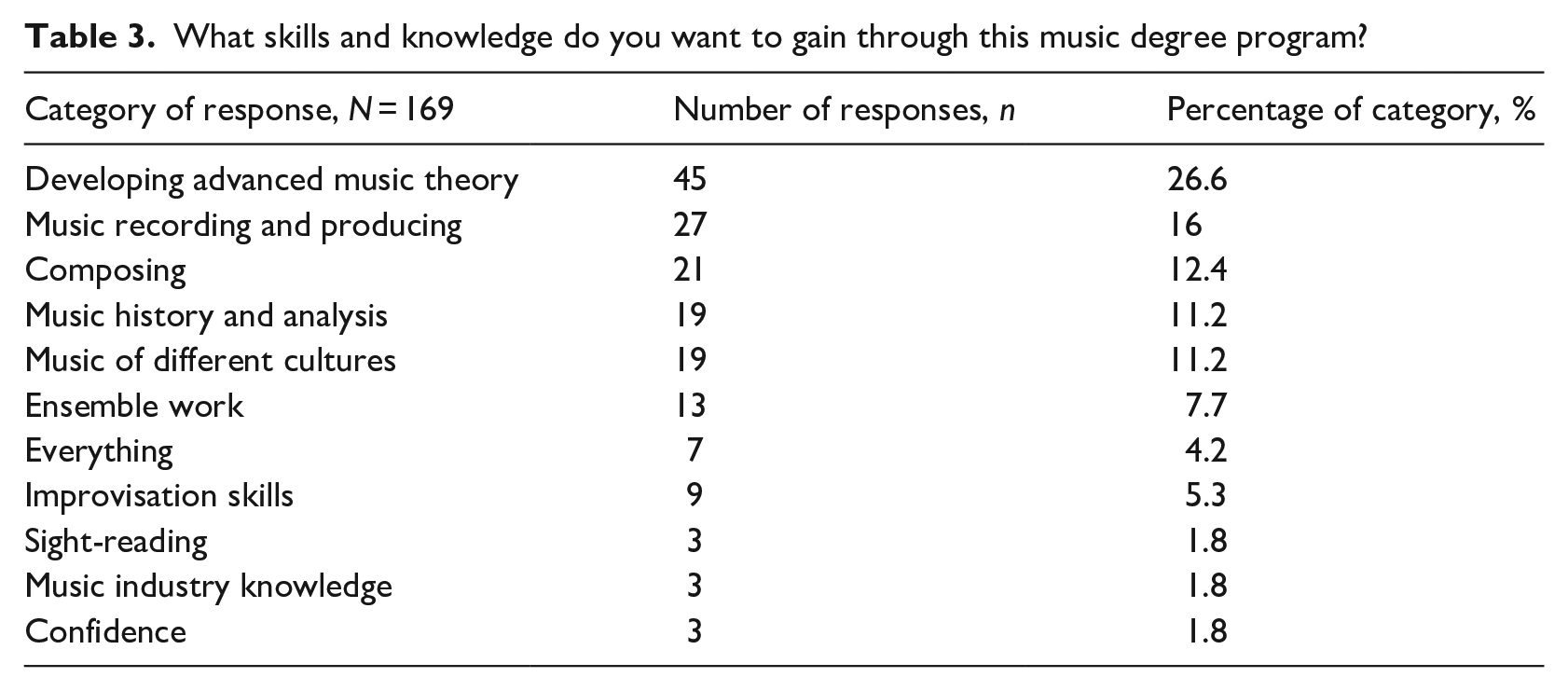
While performance (32) was considered an important skill that students hoped to gain through this music degree course including ensemble work (13) and improvisation skills (9), developing an advanced knowledge of music theory was rated more highly by 45 respondents. The creative aspects of music-making including composing (21) and the technological skills of music recording and producing (27) were of interest while learning about music history and analysis (19) and the music of different styles and cultures (19) were recognised as relevant. Three students focused on sight-reading, three on the music industry and seven wanted to gain everything through the music degree course hoping ‘to change my views about music’ and gain ‘a more thorough understanding of musical aspects’. Three cited the soft skills of building confidence.
What students expect to do with this knowledge (Question 3) was largely career-oriented (Table 4).
What do you expect to do with this knowledge?
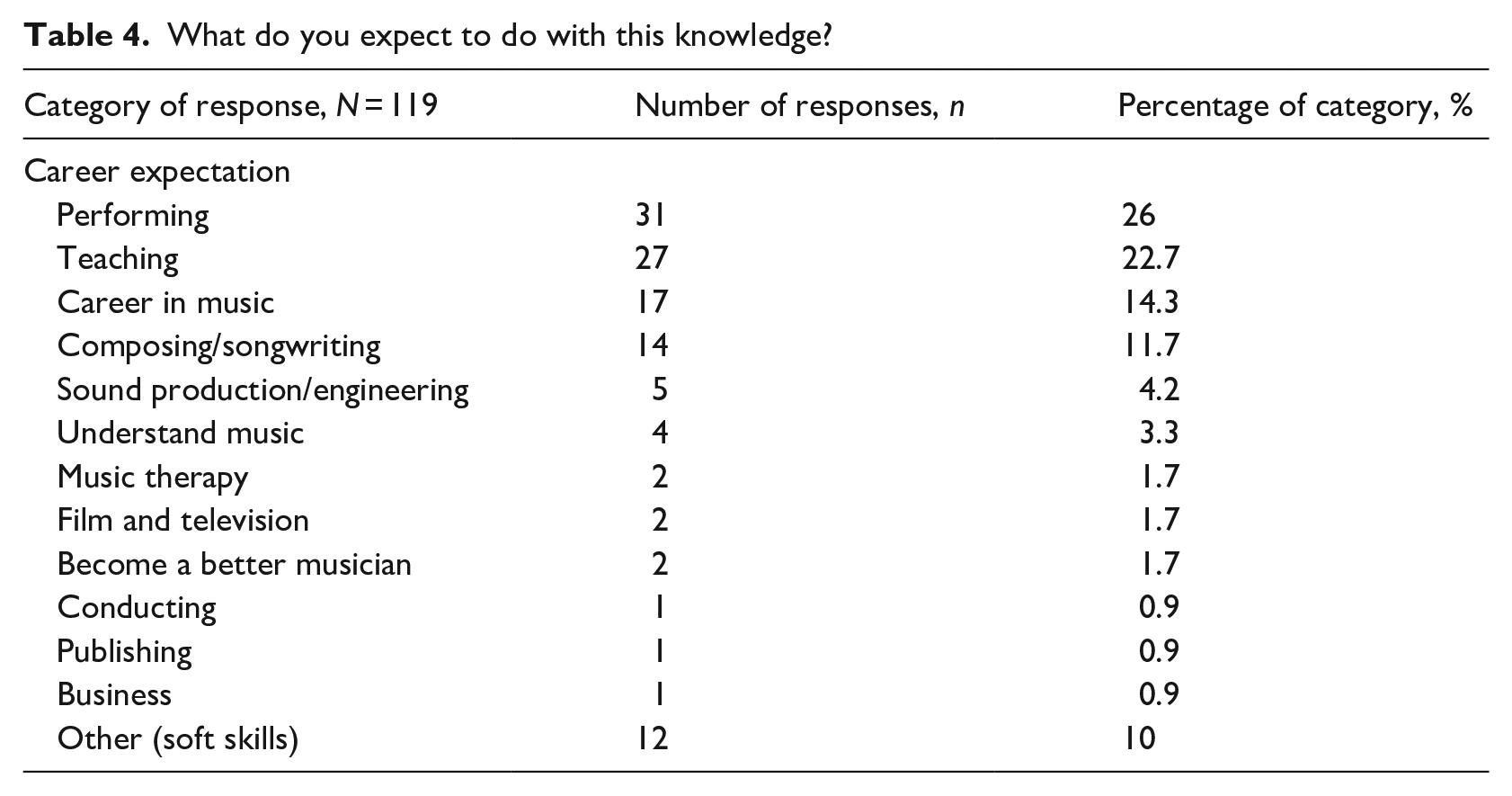
Performing (31) such as ‘play everywhere – pubs, bars, club and many more to mention’, ‘to become a session bassist’, was most highly prioritised; followed by teaching (27); composing/songwriting (14) with one respondent wanting ‘. . . to be able to use this knowledge to build my own home studio as well as compose my own material’; sound production/engineering (5), music therapy (2), film/television (2), conducting (1), publishing (1) and business (1). Seventeen said broadly careers in music, ‘. . .hopefully some kind of career in music’. Students wanted to understand music (4), become a better musician (2) and improve their music theory, aural and communication. Other responses (12) in the area of soft skills included hopes (3), enjoyment for music and ‘to live passionately through music’ (3), as well as confidence, becoming an inspiring and interesting person (2), exploring one’s ability (2), travel (1) and ‘what I please’ (1).
The students could learn music from home yet offered several aims to achieve by coming to university to study (Table 5).
What students aimed to achieve by coming to university to study?
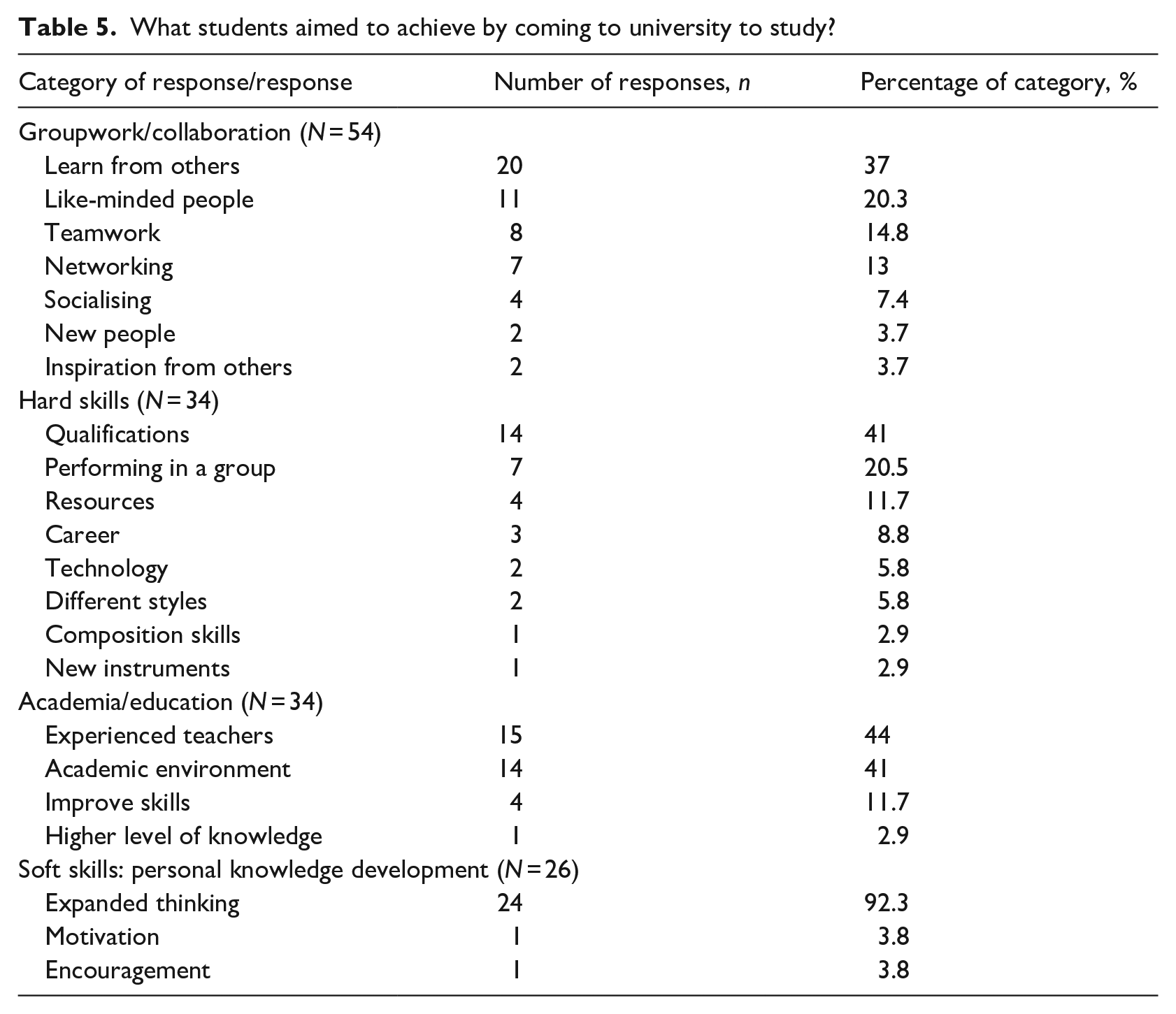
The collaborative learning environment offered at university was important for many students through learning from others (20) – ‘I have spent a long time learning from home – now I’ve got the chance to learn from others’ – with like-minded people (11), gaining inspiration from others (2), engaging with teamwork (8), networking (7), performing in a group (7), socialising (4) and meeting new people (2) through informal and formal learning approaches. Also important was the academic environment (14), including experienced teachers (15), which offered the chance to improve skills (4) and achieve a higher level of knowledge (1). The hard skills of a qualification (14), resources to use (4), a career direction (3) plus technology (2), composition skills (1), new instruments (1), different musical styles (2) and new skills (1) were named. University study was an opportunity to expand one’s thinking (24), to ‘open my mind, goal, action. . . break out of rigid thinking’. The soft skills of challenges (1), motivation (1) and encouragement (1), all related to personal knowledge development.
The knowledge of Australian First Nations music (Table 6) that students wanted to acquire during their course ranged from anything/everything (25), practical knowledge (16), historical/cultural knowledge (13), some things (6), unsure (5) and 14 who gave no response (Table 6). Responses regarding knowledge crossed into both categories – for example, ‘history, musical terms and knowledge, inspirations’ covers historical knowledge, musical terms and inspiration which has a broad base. This response was counted in both categories of practical knowledge and historical/cultural knowledge.
Students’ interest in learning about Australian First Nations music.
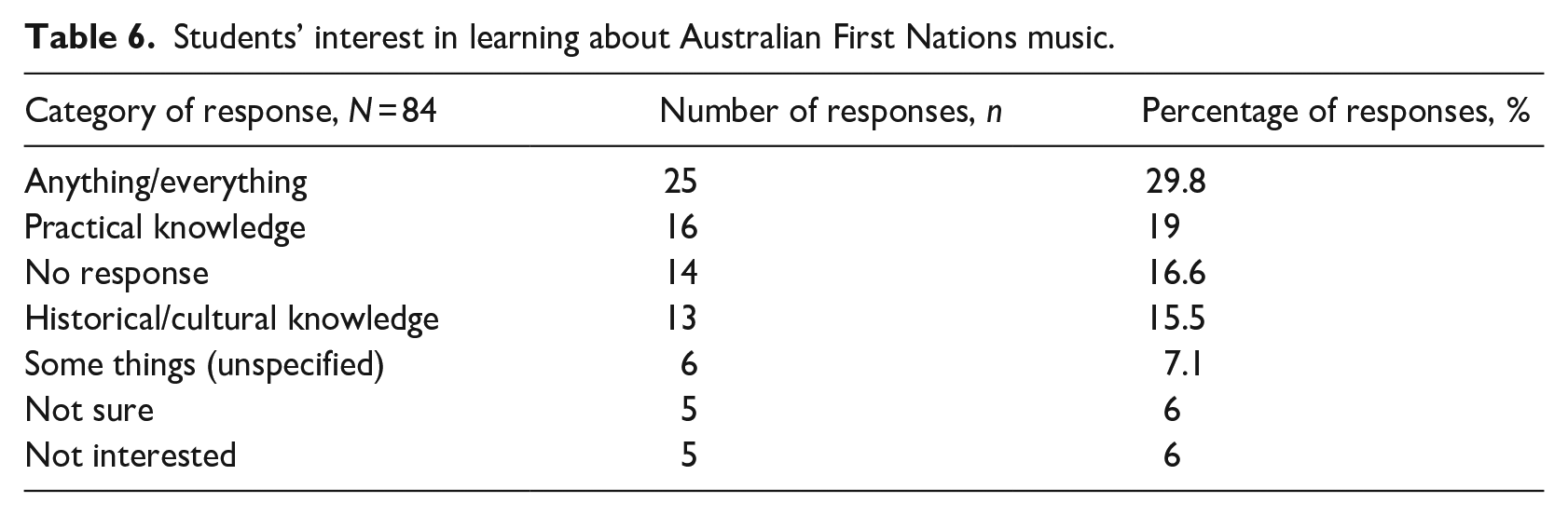
The largest number of students were interested in any, and all, aspects of Australian First Nations music – ‘I currently know nothing about it, so anything’. Those with specific interests identified practical knowledge – ‘I would like to gain knowledge of the drone element of Aboriginal music’; historical/cultural knowledge – ‘history, language of songs from T[orres] S[trait] I[islanders] and First Nations elders’; spiritual inspiration – ‘how they started creating, how they expressed musical ideas to each other’ – and others wanted a broad understanding of the culture. Five were not interested in learning anything about Australian First Nations music.
Responses as to ‘what music theory is for’ were categorised into groups of activities according to the level of music theory knowledge required (Table 7). This placed reading music (26), listening and appreciating music (26) as the highest category. Playing/performing music (22), composing and arranging notated music (21) followed, with teaching career (3) and personal passion for music (3), followed by analysis (2) at the lower end.
What is music theory for?
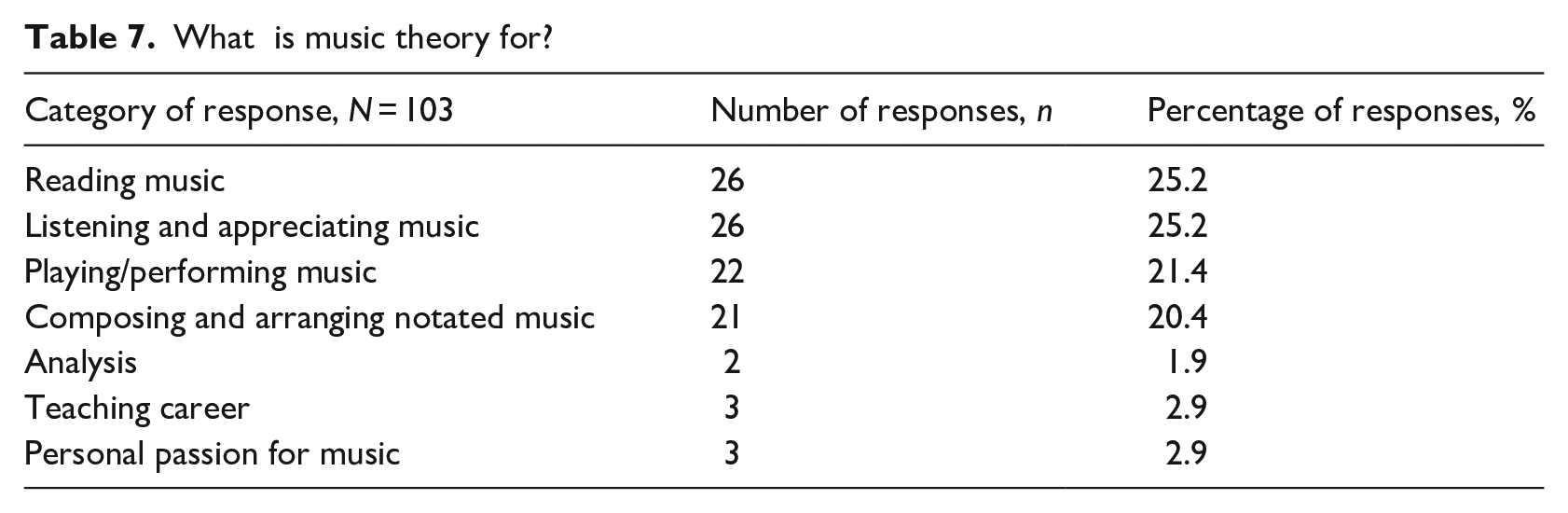
Music theory ‘is a tool. I would use it to hopefully improve the sound of my own music’; for ‘writing good music and understanding why a particular piece sounds good’. For arranging music, theory allows one to ‘actually understand. . . your craft, how to properly use it and what you can actually do with it’. Analysing music and ‘understand[ing] different musical styles. . .[gives an understanding of] the evolution of music over time’. Being able to read music was about ‘communication and composition’, gives an understanding of ‘how music is constructed . . .[and] be able to more easily create music’. For one student, playing and reading music is ‘collaboration’. Music theory offers students ‘a shared method of communicating music and about music – a way of thinking about and understanding music’, and ‘understand[ing] music on a deeper level’. For eight there is a music history interest in ‘learn[ing] how [music] has progressed over time’. For seven students, music theory ‘opens the world of possibilities that are available to a musician’.
The students clearly felt that the study of musicology and music history (Table 8) allowed them to gain knowledge about the origins of music (30) as well as the evolution of music (32) – ‘to understand where music came from in order to know where to go next’. They also believed these studies would help them to understand the influences, social and musical (19), on the music of the present day, such as ‘culture of the political climate, society of the time of music’. Furthermore, they recognised the value of studies in musicology and music history to help them to appreciate a wider variety of music styles (17) and ‘to understand the roots of various genres’.
What is musicology/music history for?
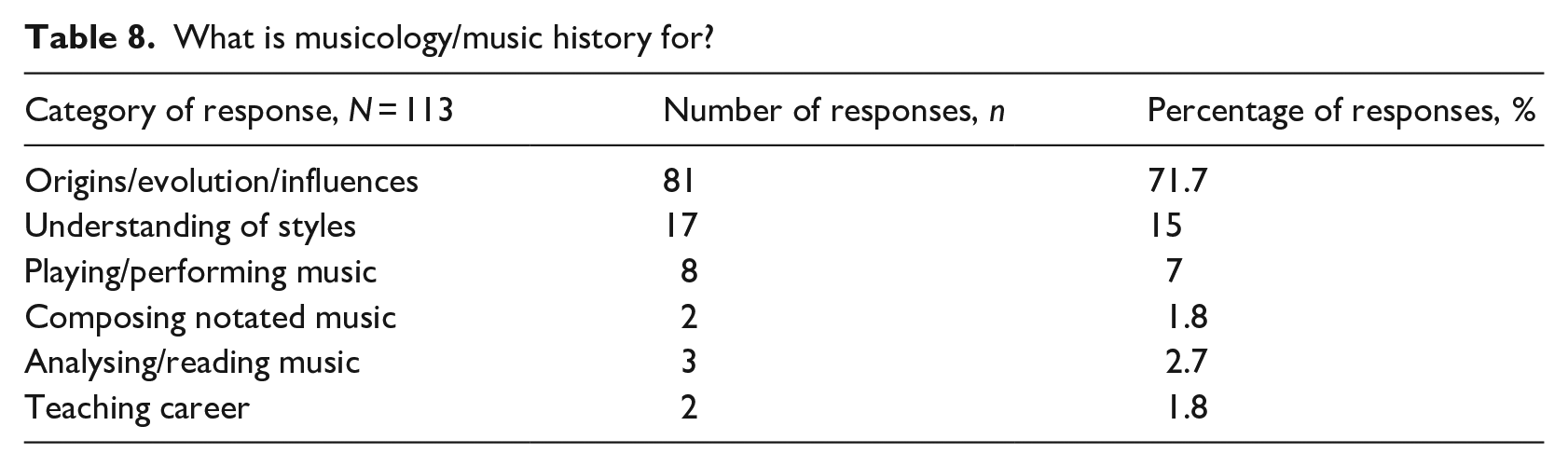
It was not clear from their responses whether their concept of musicology and music history involved the study of all western art music, or just popular music of the 20th and 21st centuries, given that many of the students indicated in their responses to earlier questions, that they brought to the course a strong background in current popular music genres. Musicology and music history also gave an ‘understanding [of] the skills and technological and experimental [aspects] of music performance’ (8). Given that many tertiary courses in musicology include a significant emphasis on music analysis, only one respondent saw this as the reason for studying musicology and music history, while two respondents recognised the value of these courses in their future careers as teachers.
Sound technology responses were grouped into categories of creativity, sound engineering, technical skills and hardware, aural, performing, history of music and personal (Table 9).
What is music technology for?
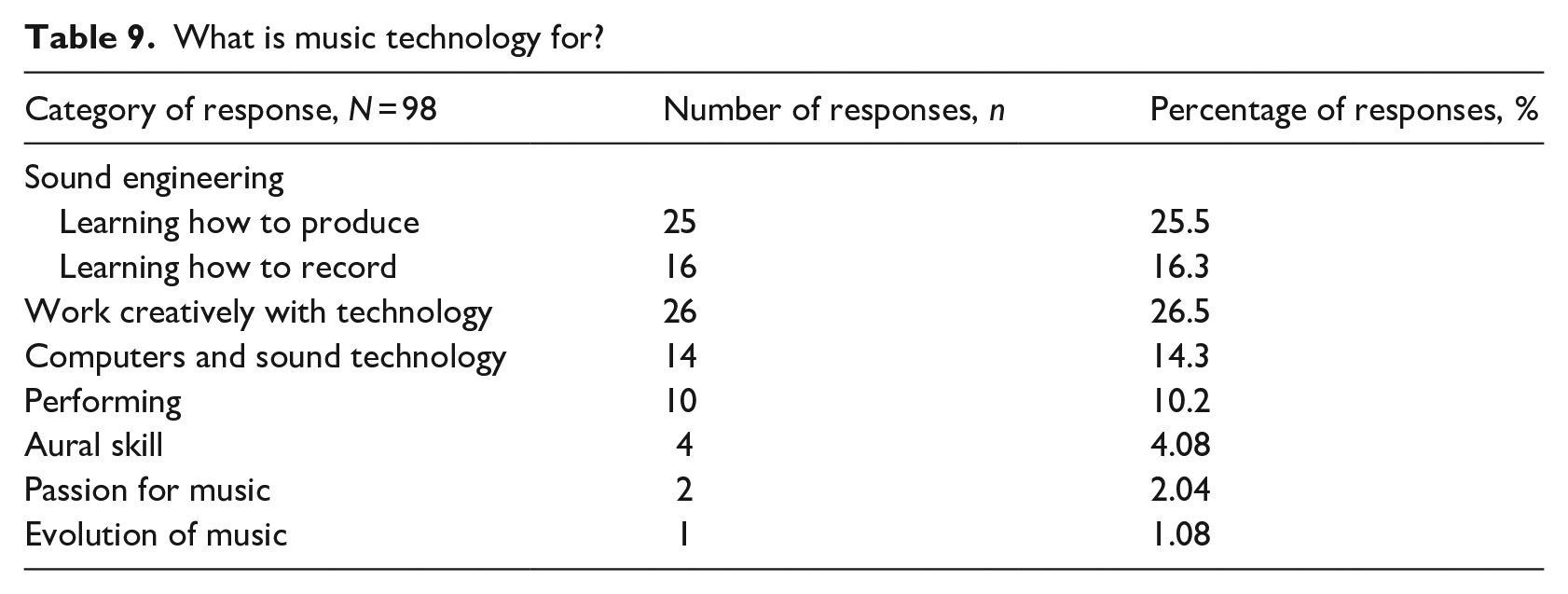
For the majority of students (41) sound technology is about the sound engineering side – learning how to produce (25) and record (16) – ‘to accurately (re)produce and edit music’, ‘to create the greatest sound recording’. The next group of responses were from students who were interested in working creatively with technology (26), learning ‘to hear things differently’, ‘to create new music through digital manipulation’ and through arranging ‘to find better/different ways to create music as a “finished product”’. Ten were interested in performing with sound technology, helping ‘perfect. . .your craft’ and ‘how recording technology [and] amps etc work’. Fourteen students made a connection between computers and sound technology noting a need ‘to be able to enhance particular music sound since most instruments involve technology now’, but also ‘understand how the modern music industry operates and learn how to do it’. Sound technology was an aural skill for four students, two gave personal reasons of passion for music, and one was interested in technology as part of the evolution of music.
Through the completion of the grid square (Figure 2), students were offered an opportunity to consider their musical identity in relation to four areas of music – composition/songwriting, sound technology, musicology/music history and performance.
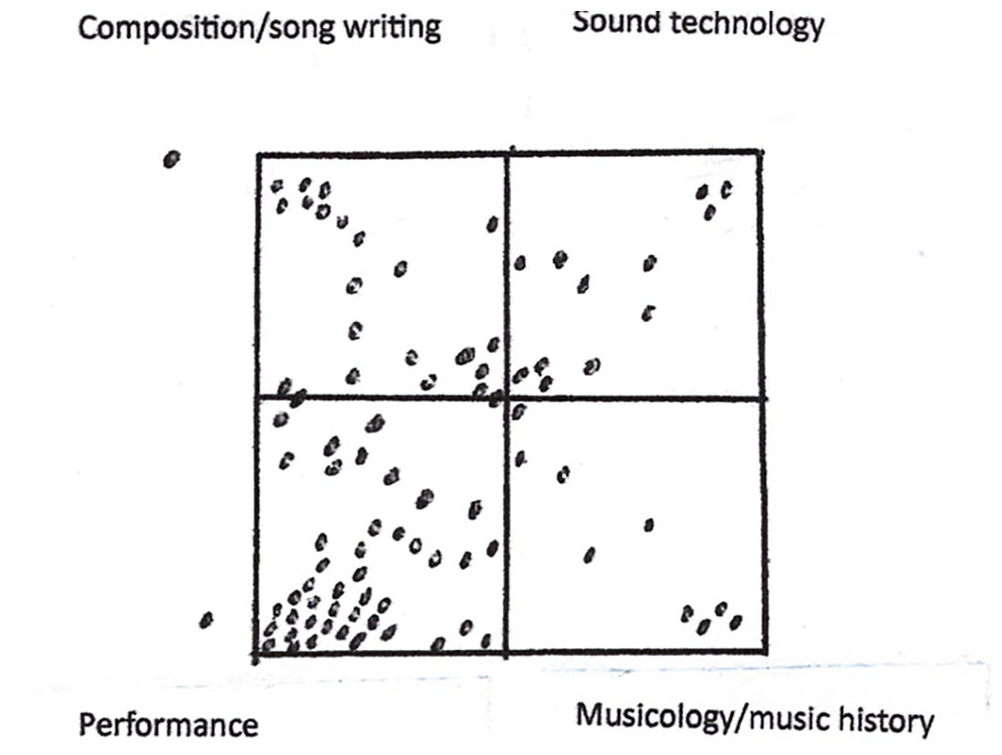
Grid square indicating identity as a musician.
The majority of students identified as a performer, 20 identified as composer/songwriter, 12 as sound technologist and 9 as musicologist. The square did not accommodate students with a range of music skills and interests, so four used a large cross, nine used two to four crosses, seven placed their cross right in the middle to indicate multiple musical identities and one participant placed two crosses outside the square to indicate strong interest in everything.
Discussion and implications
This study investigated the responses of first year undergraduate music students to presage questions about aspects of the music study they were about to begin, and their identity as a musician. The information was gathered in their first week of the Bachelor of Music course before teaching began.
While the music identity diagram represents some diversity, there was a majority of responses strongly centred around the performance identity. This is an outcome to be expected as noted previously by Hunter and Russ (1996) and Bennett (2016). Furthermore, considering the style of music department and music course offered to students in this study, which is predominantly focused on popular music genres, at universities which are not part of the capital city conservatoire network in Australia, as well as the students’ demographics and musical genre preference, it was not surprising to see this emphasis on a performance identity. Responses regarding presage first year student experience and aspiration and expectation also placed performance as the predominant focus and placed performing as the highest-ranking career aspiration.
The diverse pre-tertiary learning experiences and demographic backgrounds of students was reflected in the lower level of self-reported music theory knowledge. Yet theory, composing and songwriting were skills students aspired to, similarly with sound technology. And students had clear ideas of what music theory could offer their musical lives. While nobody reported previous experience with music history/musicology, this was also an aspiration area of the music discipline and there was a wide-ranging curiosity in Australian First Nations music.
It was often difficult to differentiate between student experiences, understandings, expectations and aspirations when determining the main categories arising from the data. However, the analysis suggested there was a strong emphasis on what the academic environment can offer, and it was valued for what it offers for learning (Biggs, 1989). Furthermore, these students come to university, rather than undertaking study online at home, because it offers a collaborative learning environment. Here they meet like-minded people, experience teamwork and network through formal and informal learning approaches. This is analogous to O’Neill’s (2017) ‘agentive music learning ecology’ with students valuing the interface with experienced teachers and wanting to build skills for the future. This same environment was valued by the students for the chance to expand one’s thinking and to gain a qualification with career possibilities. Collaborative learning was an opportunity for a range of possibilities from the hard intrinsic skills of music ensemble teamwork to the soft skills of socialising with like-minded people (Gruhn et al., 2017). And continuing with this line of thought, hard skills ranged from career options – career identity and career reality (Tolmie, 2014) – to music resources and creative possibilities, with soft skills ranging from encouragement to opening up new ways of thinking and hearing.
Most students were from a non-classical background, so were unlikely to have experienced music history and music theory teaching at school. Rather, they had studied music informally and so the experience of performing is the real driver of their passion (Green, 2007; Virkkula, 2016). Nonetheless, the students have come to tertiary study because they have a growing awareness that there is more to music than just the informal learning, as supported by the research of Tolmie (2014). Our research found there is a sense they know there is an underpinning knowledge that is required, but they are not quite sure where this is going to be found. Hence, some of the interest in the other three music activities in the square grid, composition/songwriting, sound technology and musicology/music history, as well as a strong interest in Australian First Nations music knowledge.
We wonder whether this curiosity about Australian First Nations music is stronger because of the location of the universities themselves – outer suburban and regional – where students may have had more interaction with Australian First Nations peers and cultures and in fact more exposure to music of a range of cultures. This may be a long bow to draw, but perhaps the informal music learning that has largely preceded their entry to university has allowed them to be particularly open to other music styles and music understandings. As two students responded, ‘I would like to meet people from different places to increase my knowledge which is already high’ and in relation to Australian First Nations music, find out ‘what makes it tick’. This overall interest in Australian First Nations music, in particular practical music-making, offers an opportunity for universities to engage with Australian First Nations musicians at some time in an undergraduate music course. Bracknell and Barwick (2021) note, ‘trepidation [through teacher unfamiliarity with Australian First Nations content and wary of protocols. . .] is warranted, but inaction will not break the cycle’ (pp. 7–8) of the invisibility of Australian First Nations music being taught in secondary and tertiary institutions. However, we have no answer as to why 14 participants gave no response to this question and five showed no interest but speculate that it may come from lack of access to First Nations’ music knowledge in the classroom. The five who showed no interest may be just that, not interested in what they have heard/seen but the 14 no response participants may not have encountered the music of First Nations people. And this raises the question of who should teach about First Nation’s music? This has been debated in our universities and we have introduced students to First Nations performing groups and given short lectures on some aspect of this music. However, Biernoff and Blom (2002) acknowledge that not all music is created for sharing. When a student is not given the opportunity to engage with First Nations’ music and First Nations’ creators, it could be assumed that this interest has not yet been awakened.
All presage information gives teachers knowledge of what students understand about the subject area they are about to study. While ‘passion for music’, in response to music theory, is valid, seeing music theory knowledge as useful for composing, arranging, performing, analysing and viewing sound technology knowledge as useful for creating, producing and performing indicates intrinsic musical understanding, expectations and aspirations, with or without previous experience, for classical and popular musicians. This is especially important in an outer suburban and regional university music course, rather than a conservatorium model of institution. The first year music student entering the former style of institution has not necessarily been through a formal music education before entering university and yet there is high aspirational value on a career teaching music, a pathway that requires a broad and thorough music education. We feel this is a research area for the future in relation to the democratisation of music learning and music advocacy. At any tertiary music institution presage information is about understanding that this knowledge is a tool for teachers and students to utilise, and through musical creative learning comes communication, collaboration, sharing, self-expression and career paths. Asking students to understand what their experiences, understandings, expectations and aspirations are when entering an undergraduate music degree course gives meaning to the skills and knowledge being taught and tells them what these skills are for.
Footnotes
Author contributions
Funding
The author(s) received no financial support for the research, authorship, and/or publication of this article.
