




Abstract
Applause is ubiquitous in the reception of music performance. Applause magnitude can reveal and sway audience reactions, and it is critical for musicians and educators to understand how audiences and evaluators respond to this extramusical effect in the appraisal of music performance. This study investigated how listeners respond to applause magnitude and prompted discussions about extramusical effects and social influence. Three applause levels (polite, strong and vocal) were added to two identical solo trumpet performances (one Fanfare and one Vocalise). Thirty listeners rated these six performances for overall quality and five performance dimensions (intonation, expression, balance, rhythmic accuracy and dynamic control). Vocal applause significantly impacted ratings of overall quality, expression and dynamic control compared to polite applause. Listeners were aware of varying applause levels and the majority were susceptible to unconscious or conscious bias in their evaluations. Most listeners were unaware of the identical audio and found the experiential learning process ‘enlightening’. Listeners became cognisant of their susceptibility to extramusical effects and reflected on evaluation strategies. Future studies should employ experiential learning to inform emerging music professionals about perceptual vulnerabilities and enhance critical thinking and expert evaluation skills.
Keywords
Introduction
Applause is an integral component of the concert experience, and both performers and audiences share a tacit understanding that applause is an indicator of performance success (Gilbert, 2001; McParland, 2009). The intensity and duration of this response is loaded with meaning and the levels of applause intensity reveal the audience’s appreciation and reception of the performance (Dobson & Sloboda, 2016). Audiences are acutely aware of the responses of those around them (Barsade, 2002), and these sway their impressions of the performance. This study investigates the effect of applause magnitude on the appraisal of music performance. A perceptual test of applause magnitude (after Springer & Schlegel, 2016) prompted discussions about how audiences are susceptible to extramusical bias.
Extramusical effects in evaluating music performance
The reception and evaluation of music performance is complex (Thompson & Williamon, 2003). At any performance, the audience is exposed to a multi-sensory event (O’Reilly et al., 2016) where their focus is not exclusively on the music, but is bombarded with myriad non-musical information. These multi-sensory stimuli inadvertently contribute to their immediate impressions of the performance, and audiences’ perceptions can be overwhelmed by extra-musical information. Audiences prefer musicians who fulfil their expectations of concert etiquette (Waddell & Williamon, 2017). Student musicians who exude confidence through eye contact (Antonietti et al., 2009), beaming smiles (Wapnick et al., 1997) and self-assured stage entrance (Platz & Kopiez, 2013) are perceived as more successful than their less engaging peers. Audiences tend to make gestalt decisions about performers and appropriate marks, rather than respond to a series of marking criteria (Stanley et al., 2002). They determine the quality of a performer according to their expressive body movements (Davidson, 1993), performing posture (Davidson & Coimbra, 2001), physical attractiveness (Griffiths, 2008) or even the clothes they wear (Urbaniak & Mitchell, 2022).
The extramusical effect of applause
In the 17th and 18th centuries, performers and audiences enjoyed a lively relationship, and audiences were free to applaud and cheer, creating dynamic feedback that heightened the emotional intensity of concerts (Brandl-Risi, 2011; Gilbert, 2001; Nicholls et al., 2018). However, for much of the 20th century the classical music audience has been regarded as passive receptors of the skills of musicians’ high art (Pitts, 2005). Music students understand classical concert etiquette, where unwritten rules and rituals underpin every music performance (Wilson et al., 2014). These accepted norms restrict movement, noise and interruption during the classical performance (Ross, 2010; Wagener, 2012) and ensure the audience is focused on the performer (Frisch, 2013) and can experience heightened emotional engagement with the performance (Adams et al., 2023). Even inexperienced concert attendees understand how to conform to expected concert behaviours and when to clap and when not to clap (Baker, 2000; Rajan, 2016). Pop and jazz audiences are not as restricted, and are instead encouraged to applaud and cheer spontaneously during live performances (Brand et al., 2012).
Peer influence and social contagion
Music audiences are susceptible to applause as peer influence, as it is human nature to observe the behaviour of others (Crozier, 1997) to attempt to conform to be part of the in-group (Garrido, 2017). As early as 1820, the Paris Opera employed a group of claquers to enhance and affect the musical experience (Rosselli, 2002). The chef de claque orchestrated the applause, murmurs of approval, laughter and weeping by a cohort of up to 100 paid claquers to steer the audience’s appreciation and reception of the operatic performance (Brandl-Risi, 2011).
Music is inherently social, and even strangers attending a musical event identify as part of the wider community of listeners (Pitts & Burland, 2016). Music audiences tend to mirror the behaviour and mimic the feelings of others (Dearn & Price, 2016; Pitts, 2005), and this heightens their feelings of collective and enhanced emotions (Garrido & MacRitchie, 2020). This emotional contagion (Juslin et al., 2014) helps explain why individuals report empathy when listening to music (Egermann & McAdams, 2013). In fact, it seems that audience reactions to music performances can be manipulated by the intensity of the post-performance applause, or lack of applause (silence), even when the audio of these performances are identical (Springer et al., 2018; Springer & Schlegel, 2016).
Communicating through applause
Applause is a ubiquitous form of non-verbal communication which plays a critical role in every performative setting. On the sports field, soccer umpires are swayed by the cheers of a home crowd and biased to the home team rather than the away team when refereeing (Balmer et al., 2007). Crowd noise interferes with the decisions of judges and in sports, such as gymnastics, which use subjective rather than objective scoring (Unkelbach & Memmert, 2010). In the 2016 US presidential debates, applause duration and intensity significantly increased the speaking candidates’ likability (Stewart et al., 2016). In these debates, applause was more ‘socially contagious’ than laughter or booing and could effectively influence others’ opinions (Stewart et al., 2018 p. 2). Crowds monitor and mimic the behaviour of people around them to coordinate with the group (Bull & Wells, 2002) and applause duration is guided by the overall crowd response (Mann et al., 2013).
Experiential learning to understand extramusical effects
The evidence of extramusical effects on music evaluation/reception is compelling, but the information may be intangible or unrealistic in music training. Critical research findings are not necessarily accessible to those who can use and practise them. Musicians, audiences and assessors are rarely challenged to consider their vulnerability to extramusical effects, such as performers’ appearance or demeanour which may impact their judgment of the music performance. When music students were asked to assess performances, designed deliberately to draw their attention to the visual aspects of performance, they became acutely aware of their perceptual susceptibilities in their evaluations (Mitchell & Benedict, 2017). Experiential learning, rather than traditional passive content delivery, provides an educational opportunity to challenge music students’ appreciation of extramusical effects, such as concert dress (Urbaniak & Mitchell, 2022). Discussing their direct experiences of their assessments generated music students’ explicit understanding of new knowledge. It transforms music students’ capacity to apply critical thinking to established knowledge, and to make it useful and meaningful (Mitchell, 2018).
Aim
The effect of applause is underestimated, and it is now vital to explore applause as an extramusical effect which impacts audiences’ evaluations of music performance. Perceptual studies have confirmed that global audience reactions sway individuals’ responses to music performance (Springer et al., 2018; Springer & Schlegel, 2016), but have not investigated audiences’ awareness, recognition and understanding of this extramusical effect. This study aimed to investigate the effects of applause magnitude (polite, strong or vocal applause) on listeners’ evaluations of solo trumpet performances of a fast Fanfare and a slow Vocalise and explore awareness and influence of applause as extramusical effect. We designed an experiential learning opportunity to elicit listener responses to applause magnitude and prompt discussions about extramusical effects and social influence.
Method
Study design
Three applause levels (polite, strong and vocal) were added to the end of two identical solo trumpet performances (one Fanfare and one Vocalise). Thirty listeners rated these six performances for overall quality and five performance dimensions (intonation, expression, balance, rhythmic accuracy and dynamic control) on a scale of 1 (very poor) to 6 (outstanding; after Springer & Schlegel, 2016). The true intent of measuring the effect of applause magnitude was not shared with participants. Each listener took part in an interview about the assessment experience and the extramusical effect of applause magnitude was revealed.
Listener participants
A purposive sample of 30 listeners, 13 females and 17 males, between 18 and 58 years of age (M = 28.6, SD = 13.5) from a range of musical backgrounds completed the perceptual study. Six listeners had never received formal music training, 15 were musicians who played instruments other than trumpet, and nine were trumpet players. Regardless of formal music experience, all indicated they listened to music regularly and 26 had attended a live concert in the past 12 months. Interested participants responded to an advert about the project.
Materials
Musical stimuli
A university trumpeter and professional pianist played two contrasting trumpet pieces were selected for stimulus material (after Springer & Schlegel, 2016). Vocalise (S. Rachmaninoff Op. 34, No.14, 1915) is a stylistically slow, lyrical piece and was deliberately juxtaposed with Centennial Horizon (K. McKee, 2011), a fast fanfare. In the study these are referred to as the Vocalise and Fanfare respectively.
Recording
Performances were recorded as mp3 files using a Zoom H5 recording device in in a hall (30 m2). The Zoom H5 was placed 10 m away from the performers and set up to record between −12 and −6 dBu to ensure minimal post-recording gain.
Applause
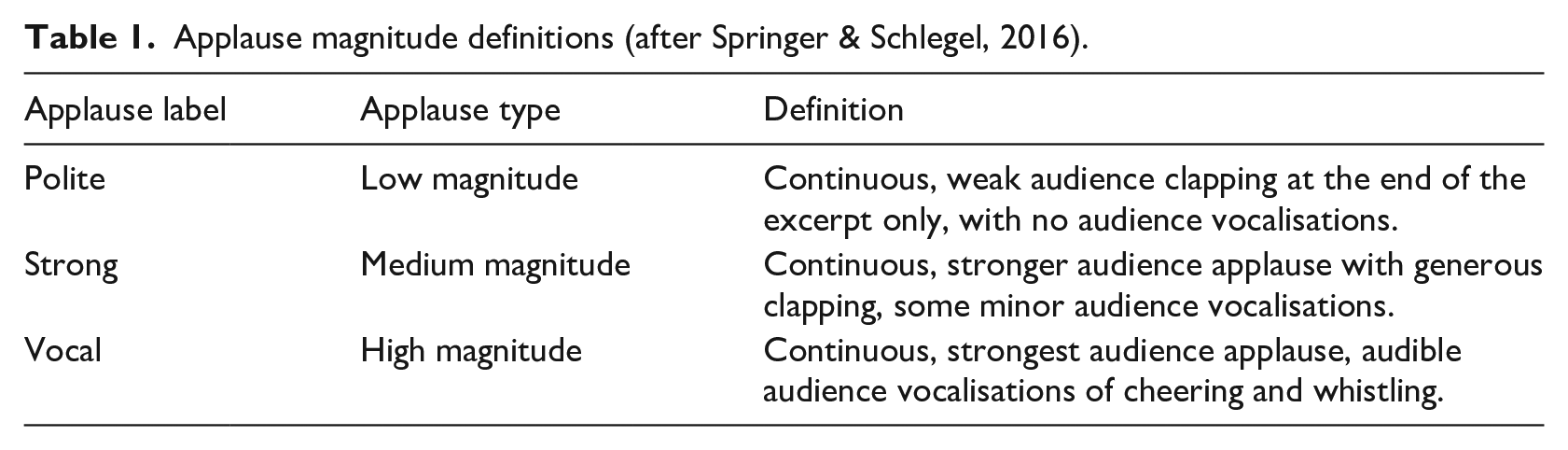
Recordings of three different levels of applause intensity (Table 1) were sampled from live recital performances recorded at the Sydney Conservatorium of Music. All recordings in the hall were captured with identical audio settings and exported as mp3 files.
Applause magnitude definitions (after Springer & Schlegel, 2016).
Excerpt creation
The trumpet excerpts and applause samples were imported as mp3 files into Logic Pro X editing software. Three identical clips of each piece were created and the three types of applause magnitude were cut into the end of each of the excerpts, resulting in six unique audio stimuli. The edited excerpts included the final 45 seconds of the chosen piece and 30 seconds of applied applause, resulting in a total time of 1 minute and 15 seconds per excerpt. The six tracks were uploaded to a private YouTube channel to be embedded into the online test.
Perceptual test
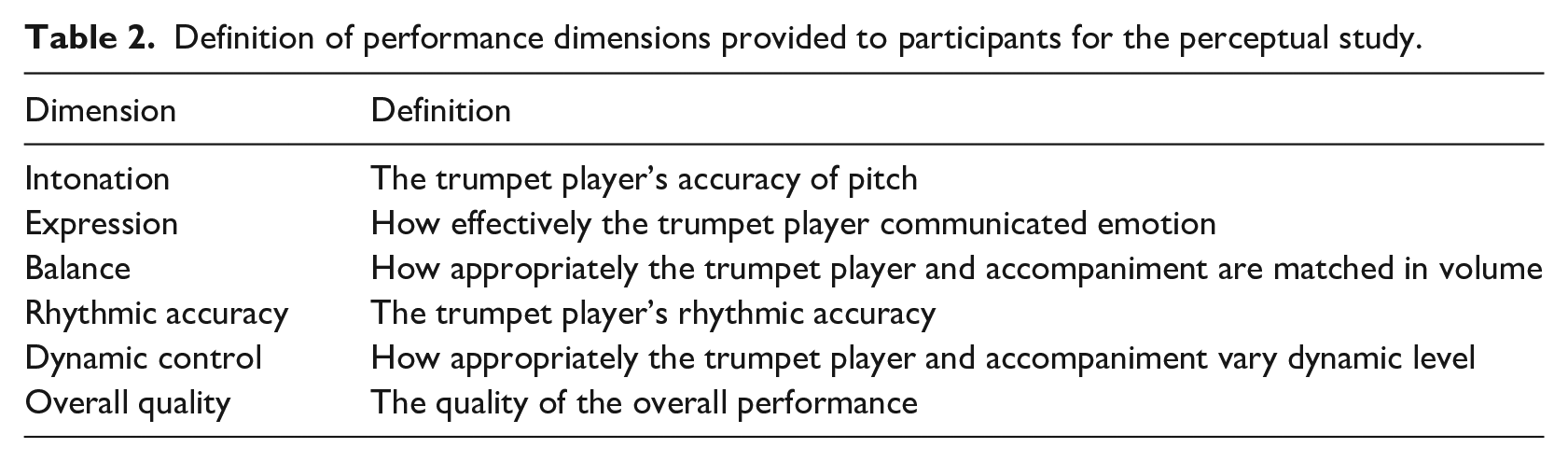
Table 2 shows the definitions of evaluation criteria which were provided to all listeners before the excerpts were played. The perceptual test was hosted in RedCap and excerpts were embedded as YouTube links with a fixed black background. Presentation order was randomised. Excepts were rated on five specific performance dimensions on a scale of 1 (very poor) to 6 (outstanding; after Springer & Schlegel, 2016), and excerpt overall quality rating out of 10 (1 being poor, through to 10 rated as outstanding; after Stanley et al., 2002).
Definition of performance dimensions provided to participants for the perceptual study.
Follow-up interviews
Listeners were asked to discuss their experience of evaluating each piece in the perceptual study, how they approached the criteria and when they arrived at their decisions. Listeners were then asked about their perceptions of the applause in concerts before the true purpose of the study was revealed, and they were invited to comment or ask any questions.
Procedure
The institutional ethics committee approved the project. Listeners were introduced to the study by the researcher through Zoom (to comply with COVID-19 restrictions) and were given the opportunity to ask questions. Listener participants were emailed a unique link to the RedCap perceptual study and guided to use high-quality headphones when listening to the excerpts. Listeners were asked to complete a short demographic questionnaire including age, sex and years of musical training. Listeners were informed they would hear recordings from six different university recitals and listeners assessed each excerpt after the applause had subsided. Once participants had submitted responses, they were not able to alter their evaluations retrospectively. Immediately after finishing the perceptual evaluation, listeners completed a short semi-structured interview which was recorded using Zoom, lasting 10 to 15 minutes.
Analysis
This study employed a two-way repeated measures ANOVA (3 (applause) × 2 (music)). Listeners’ evaluations were tested for the effects of applause and musical piece. Bonferroni post hoc tests were undertaken to perform pairwise comparisons. Interviews following the perceptual study were transcribed and coded thematically (Braun & Clarke, 2006) according to music and performer evaluations, concert etiquette and awareness of others, confidence in assessments, the impact of applause and social contagion and the true nature of the applause intervention.
Results
Perceptual test
Descriptives
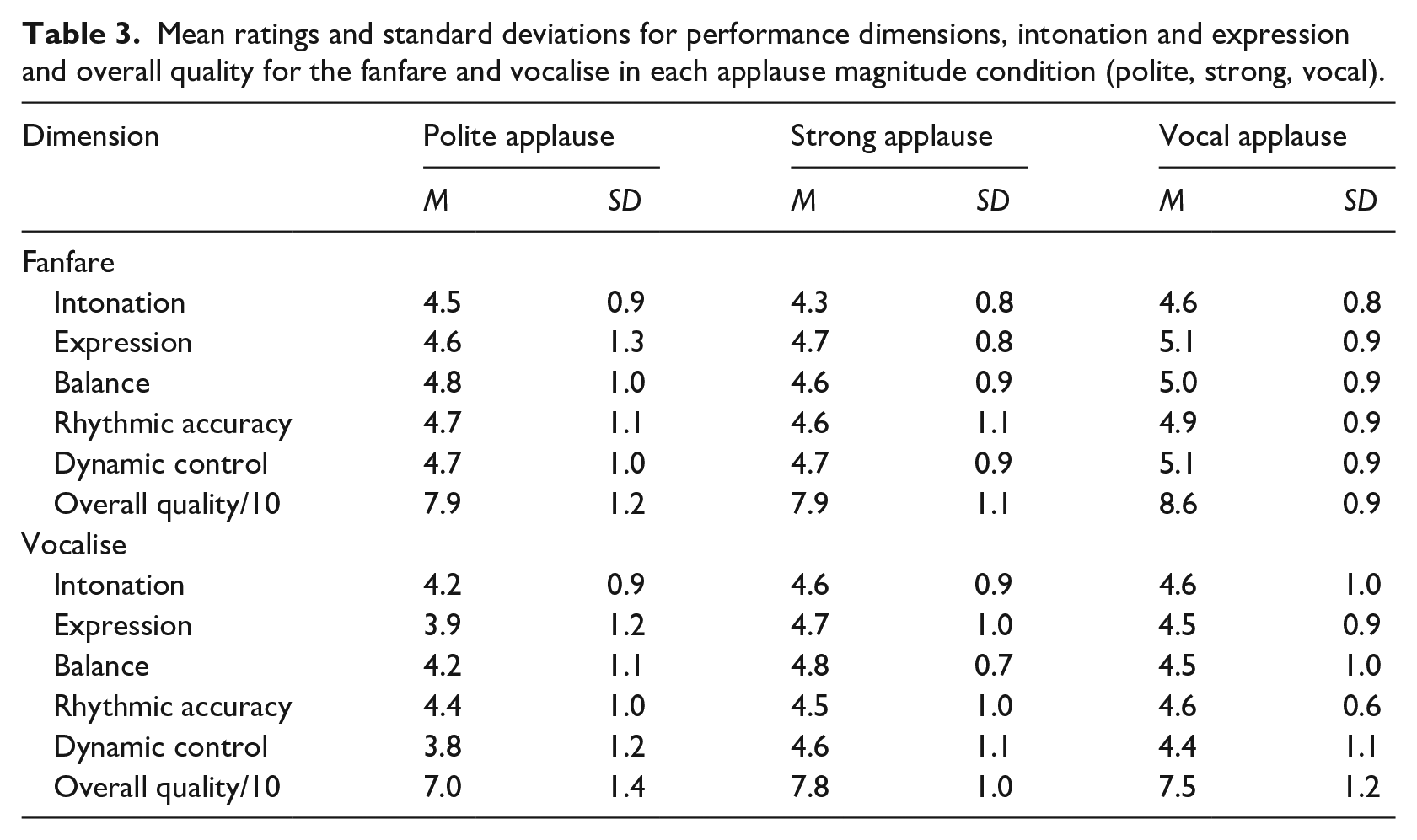
We examined the data to see if the listeners could be treated as one population. As there were no significant differences (p > .05) between non-musicians and musicians’ responses to any of the performance criteria we combined the datasets. Table 3 presents the complete dataset, showing the overall means and standard deviations for ratings of overall quality, intonation, expression, balance, rhythmic accuracy and dynamic control following each applause level for each musical piece. Each rating was considered separately for effects of applause (polite, strong, vocal) and musical task (fanfare, vocalise).
Mean ratings and standard deviations for performance dimensions, intonation and expression and overall quality for the fanfare and vocalise in each applause magnitude condition (polite, strong, vocal).
Overall quality
A two-way repeated measures ANOVA was performed on ratings of overall quality (Figure 1). There was a significant effect of applause on overall quality F(2, 57) = 5.861, p = .005,
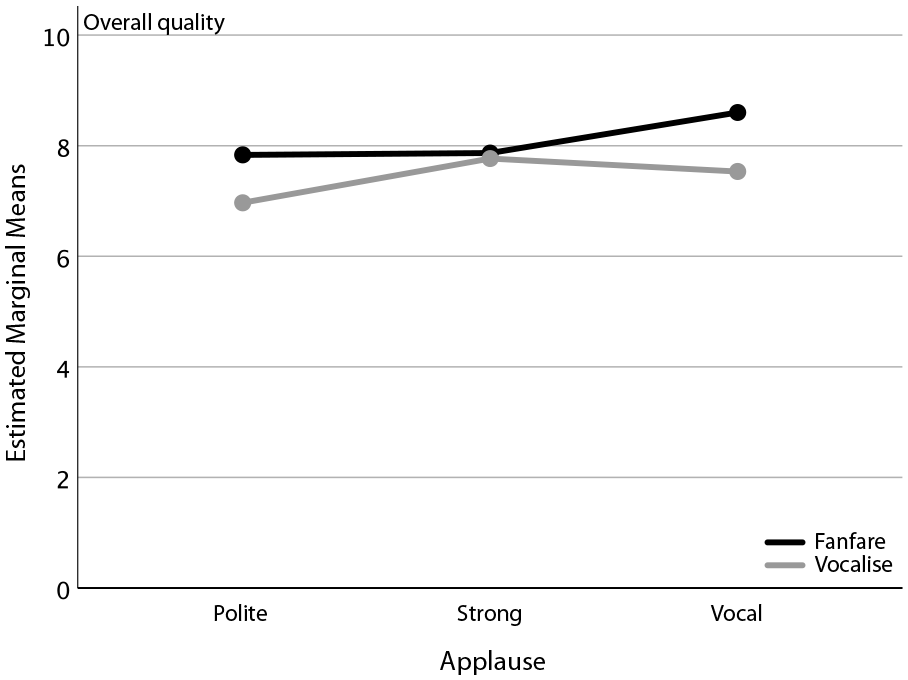
Main effect of applause on ratings of overall quality with interaction between fanfare and vocalise.
Expression
A two-way repeated measures ANOVA was performed on ratings of expression (Figure 2). There was a significant effect of applause on expression F(2, 57) = 4.633, p = .014,
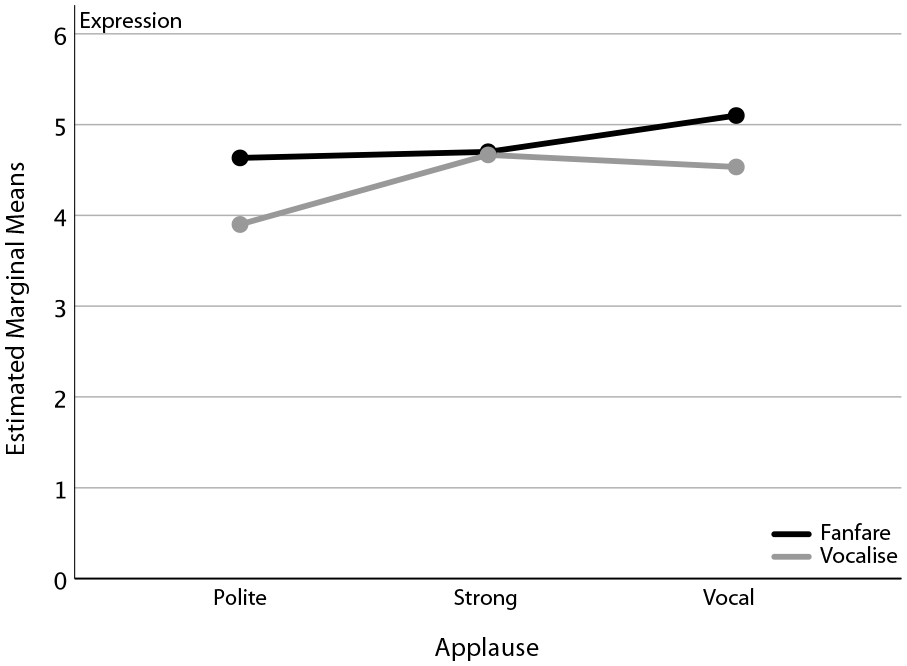
Main effect of applause on ratings of expression for both fanfare and vocalise.
Balance
A two-way repeated measures ANOVA was performed on ratings of balance (Figure 3). There was no effect of applause on balance ratings but there was an interaction between applause and music performed which affected the mean rating for balance F(2, 57) = 4.695, p = .011,
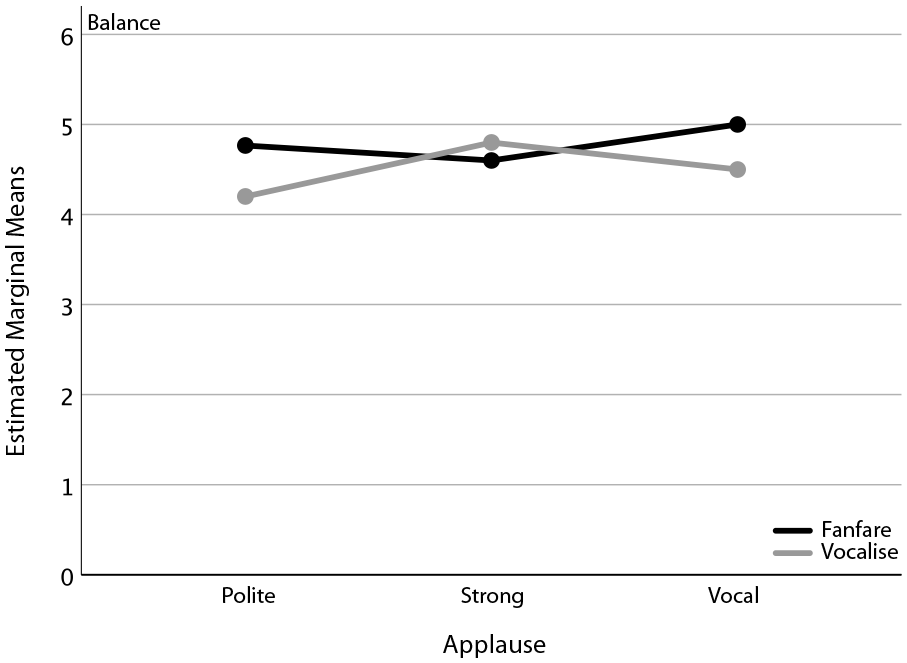
Interaction effect of applause on ratings of balance between fanfare and vocalise.
Dynamic control
A two-way repeated measures ANOVA was performed on ratings of dynamic control (Figure 4). There was a significant effect of applause on dynamic control F(2, 57) = 5.777, p = .005,
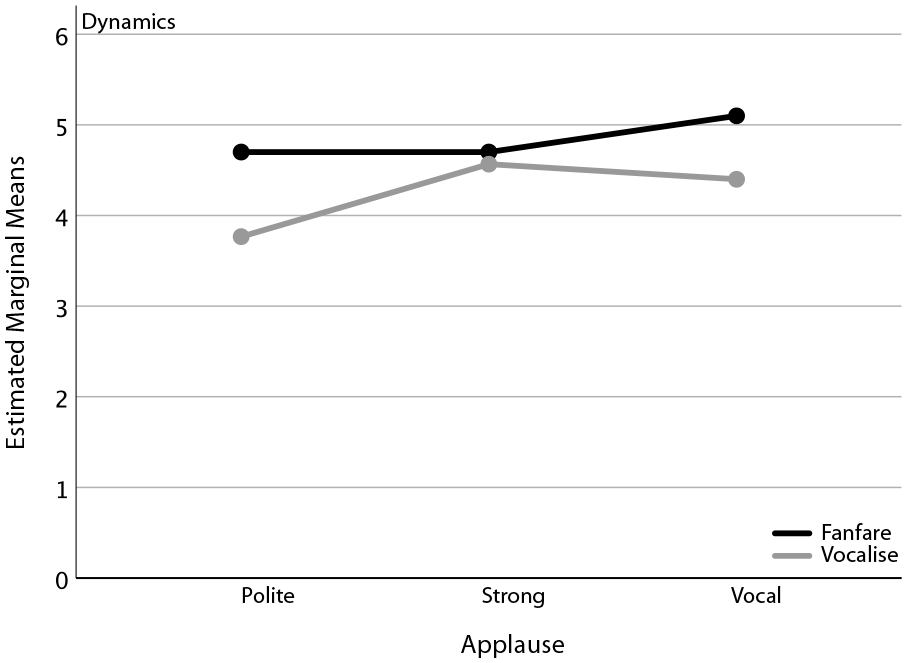
Main effect of applause on ratings of dynamic control with interaction between fanfare and vocalise.
Intonation and rhythmic accuracy
There were no significant differences on intonation or rhythmic accuracy ratings for applause or musical piece.
Interviews
Music and performer evaluations
Listeners believed each of the six performances were unique and had strong preferences for performers and musical piece, as they believed they were responding to individual musicians in each excerpt. Nineteen listeners preferred the fanfare to the vocalise because it was more ‘dynamic in nature’ (P4) and ‘the performer had a lot more room to express themselves’ (P8). Four of those 19 participants specifically reported that the fanfare with vocal applause was their favourite above all others: ‘that person played very accurately. . . it was the best one’ (P9).
Concert etiquette and awareness of others
Listeners were acutely aware of concert etiquette and understood traditional concert conventions. They agreed that applause is a codified practice that ‘is like a collective energy’ (P21) which establishes ‘a sense of dialogue between the audience and the orchestra’ (P7). Fourteen listeners were cognisant of the audience as a collective ‘hive mind’ (P17) or ‘community of people’ (P18). They believed that ‘it’s not just about you and the performers on stage, it’s also about you as part of a bigger audience, and what others in the audience are doing’ (P7). Even non-trained listeners were mindful to conform: ‘imagine being the first person to clap and you mess it up!’ (P2).
The impact of applause and social contagion
All listeners believed that applause is a natural response to the end of a live performance. Before the true purpose of the study was shared, 25 noticed varied levels of applause, 17 were distracted by the varying levels of applause and seven believed it impacted their marking. Listeners revealed they were susceptible to the applause magnitude in their marking and when ‘the piece had a really big applause and some cheering and, in the end, I gave it a higher mark than I’d anticipated. . .’ (P13). Listeners believed ‘the applause really matched the performance [and] it made my judgements more informed’. (P11). It appears that listeners were vulnerable to the reactions of others and were subconsciously agreeing with the audience response, however four were confused by the changing applause magnitude:
‘It was very weird – it almost sounded the exact same [as other excerpts] but just as an overall atmosphere, because of the audience, it just made the performance seem almost better in general’ (P20).
Confidence in assessments
Listeners were unsettled by the varying levels of applause, and this impacted their confidence in completing the assessment tasks, however, the majority of listeners (N = 26) did not notice that the musical audio was identical. Four listeners questioned whether there were any audible differences between the excerpts: ‘I swear all of these just sound the same but then I thought that’s just my lack of musical understanding’ (P4). These listeners felt completely ‘out of [their] depth and couldn’t hear any difference between any of them’ (P2) but marked each excerpt differently. They attributed their inherent insecurity in making judgements to their lack of musical experience and were perplexed that the musical sounded identical, but the applause differed. Only one listener asked, ‘was that six pieces of identical music?’ (P10) and held their nerve to rate the Fanfares and the Vocalises the same.
Revealing applause magnitudes
When the participants were told about the different applause magnitudes they were ‘amazed’ (P3) and ‘completely surprised’ (P1) as ‘the applause definitely does change my view of how the piece was played. I didn’t think it had any influence though before’ (P22). Participants who did not notice the applause realised ‘now I think about it, I remember the ones with the big applause, and I did think that was the best one’ (P5). Others ‘didn’t think that the applause had that much of an impact on my response, but that is insane, wow’ and were intrigued ‘they were identical tracks?’ (P24). It appears that applause ‘colours your whole perspective’ (P1).
Participants were ‘really glad [they] did this study!’ (P20) and found the process ‘very enlightening’ (P17). ‘There’s a lot to think about. You’ve blown my mind!’ (P20). Even when they ‘very expressly did not want to be influenced by the applause . . . it still influenced me’ (P16).
I learnt a lot from it, because as a person who is assessing, if there is a really rousing reception then you know you think woah, it does make a difference to your perception of the piece (P19).
Discussion
Applause is an integral part of music concert culture. This study aimed to investigate the effects of applause magnitude (polite, strong or vocal applause) on listener evaluations of solo trumpet performances of a fast Fanfare and a slow Vocalise and explore awareness and influence of applause as extramusical effect. Listeners’ ratings of overall quality, expression and dynamic control of performances with vocal applause were rated significantly higher than those with polite applause. The experiential learning opportunity enabled listeners to explain and understand their perceptual strategies and consider how they were impacted by applause magnitude. Learning by doing is a powerful mode of learning to facilitate immediate understanding of complex musical concepts (e.g. Mitchell, 2018). Individuals were swayed by the intensity of this perceived audience response, and 26 were surprised to learn that the audio excerpts were identical. The majority of listeners reported they were aware of the applause magnitude and seven deliberately followed the perceived enthusiasm of the crowd to make their evaluations. It appears that applause was a critical extramusical effect which biased listeners’ evaluations of these solo musical performances. The implications of this knowledge are essential to musicians’ understanding of live concerts and the reception of their performances.
Listeners in this study were susceptible to applause magnitude which impacted their assessment of all performances. The use of authentic levels of audience feedback (polite, strong and vocal) were familiar to listeners, who were acutely aware that this concert etiquette was a reflection of the audience experience (Brand et al., 2012; Gilbert, 2001). For overall quality, expression and dynamic control, listeners’ evaluation ratings increased according to the three levels of applause magnitude for the fast Fanfare but peaked at strong applause for the slow Vocalise. This study extends previous gradations of applause from silence to low and high magnitude (Springer & Schlegel, 2016), where their listeners responded favourably to high magnitude applause for fast performances, and silence for slow performances. Springer and Schlegel (2016) speculated that their listeners may have been affected by differing applause magnitudes or silence and suggested that varying levels of applause may better suit different musical excerpts. In this study, the use of three realistic applause levels captivated the listeners, who responded in line with the increasingly positive feedback, just as the audience of the Paris Opera responded to the claquers (Brandl-Risi, 2011; Rosselli, 2002).
Listeners were aware of the applause incongruence but underestimated their compliance with the response of the crowd (Balmer et al., 2007). Here, the use of unanimated polite applause, rather than a control condition of silence (Springer & Schlegel, 2016; Springer et al., 2018), resulted in a poorer performance quality for both the Fanfare and Vocalise when compared to strong and vocal applause. Listeners in this study mentioned the collective emotion of the crowd specifically (Garrido & MacRitchie, 2020), but were oblivious to their impressionability. For example, when these listeners did not enjoy the performance, but heard vocal rather than polite applause, they were motivated to rate the excerpt more favourably (Mann et al., 2013). In interviews, listeners were naïve to the empirical studies on the extramusical effect of applause, but this experiential learning opportunity transformed their appreciation of extramusical effects.
In this study, we invited listeners to rate performances for overall quality, in addition to the five performance dimensions (after Springer & Schlegel, 2016). The overall quality mark was essential to understand listeners’ gestalt responses and was rated out of 10 as is familiar in an examination mark (e.g. Davidson & Coimbra, 2001). Contextualising these marks against institutional performance grades showed Vocalise ratings improved from Credit (6.5–7.5) to Distinction (7.5–8.5) and Fanfare ratings from Distinction (7.5–8.5) to High Distinction (8.5–10) when followed by vocal applause rather than polite applause (Stanley et al., 2002). This is of particular relevance to candidates and panels in music examinations, as it may be that applause magnitude can affect examiners’ responses.
Performance dimensions such as expression and dynamic control were also impacted significantly according to increases in applause magnitude, but ratings of rhythmic accuracy and intonation remained stable. Listeners explained that the objective nature of rhythm and intonation provided more accessible criteria for assessment. It appears that the more subjective terms were more easily influenced by personal experience or opinion (Springer & Schlegel, 2016) and were indeed susceptible to the effects of applause. Seven listeners admitted they specifically considered applause as such a salient evaluation tool, it was critical to their judgments. It appears that these listeners became part of the ‘social performance’ (McParland, 2009, p. 120), and most indicated that they relied on applause levels to assess expressivity in all performances.
Applause is integral to live music performance and affects audiences’ reception and judgment of performances. The majority of listeners were convinced they heard musical differences between the identical audio excerpts but subconsciously responded to varying applause magnitudes. While we might assume that experienced evaluators can discern differences in performance quality more reliably and consistently (Thompson & Williamon, 2003), listeners were impressionable to the extramusical effects of applause. This is not the first study to track extramusical effects in music assessment using identical audio, and these results confirm that applause is an extramusical effect similar to concert dress (Urbaniak & Mitchell, 2022), stage behaviour (Wapnick et al., 2000) and eye contact (Antonietti et al., 2009). Only one participant recognised that excerpts were identical, and was unmoved by the differing applause magnitude. It is critical to utilise perceptual tests as meaningful learning opportunities to translate key music research into real-world applications. This study is timely to equip music performers and evaluators to recognise their susceptibility to potential bias, and develop more robust evaluation strategies. Musicians and music educators need to be aware of their own susceptibility to the responses of those around them and the impact on their evaluations of music performances.
The results of this study may be subject to certain limitations. Recorded audio-only samples were useful to focus attention to the aural aspects of music performance in this study but are not truly representative of a live performance (e.g. Springer & Schlegel, 2016). Additionally, this study used only two musical excerpts, which would be unrealistic in a series of recitals, even on the same instrument. We recognised the rating criteria were unrealistic to music evaluators but necessary to the perceptual test. Most use a gestalt approach, and we added an overall quality rating to reflect audiences’ overall impressions to counter this effect (e.g. Stanley et al., 2002). Interacting with others in a concert involves observation and mimicry of others in the group (e.g. Pitts & Burland, 2016) and may influence responses in a more authentic environment. Playing different styles of music or instruments may elicit discrete responses which need to be considered in future studies (e.g. Brand et al., 2012). We believe the addition of short interviews provided essential insights to these listeners’ impressions of the experience and have presented key directions for future studies.
Conclusion
The results of this study are compelling and confirm that all levels of applause may likely generate pervasive extra-musical effects. Throughout history, applause has been used to manipulate audience responses (McParland, 2009; Rosselli, 2002) and has even been harnessed as a marketing ploy (Brandl-Risi, 2011). These listeners confirmed they were biased, but were naïve to the extent of their fallibility. This type of experiential learning promotes awareness and discussion to encourage critical thinking in music evaluation skills. It is now essential to provide educational tools for musicians and music students to counteract the influence of extramusical effects. Future studies should foster experiential learning to demonstrate the impact of social influence, and safeguard evaluators against the complexities of extramusical effects. Listeners’ impressions of music performance are undeniably influenced by the reactions of others. Today’s musicians need to seize the tacit knowledge of the Parisian claquers about applause magnitude to optimise audiences’ experience of their music performances.
