




Abstract
This study aimed to investigate the effect of mobile technology with music education content that supports basic music theory teaching on secondary school students’ achievement levels and learning. The study was carried out using a mixed-methods sequential explanatory design on sixth-grade secondary school students studying in Turkey (experimental group n = 43 and control group n = 40). The experimental group students attended an 8-week music lesson prepared through mobile technologies called NoteWorks (the names of the tunes, the letter notation, and their positions on the piano), Rhythm Cat (rhythm studies), GarageBand (arrangement studies), and Kids Piano (playing the melody by remembering). Basic music theory subjects were taught to the control group using traditional music teaching methods. Quantitative data showed that the music lesson activities developed and enriched with mobile technologies created a significant difference in the students in the experimental group’s basic music theory subjects’ achievement test scores. Post-intervention assessments (semi-structured interviews) increased students’ motivation levels, willingness to study outside the classroom, communication, musical development, and willingness to participate in the lesson. The research concludes with several recommendations and highlights points that need further attention in mobile technology research.
Introduction
One of the main goals of the global education reform movement is to improve students’ critical thinking, effective communication, and collaborative skills (Kimonen et al., 2017). Mobile learning, a new form of learning (Lindsay, 2016), offers both strong technological and pedagogical features (Park, 2011), enhances students’ critical thinking skills (Alwadai, 2014; Nouwen et al., 2016), and eliminates time and space limitations in the learning process (Crompton & Burke, 2020).
The rapid change and transformation experienced in digitalization and, therefore, teaching in recent years have required the introduction of new perspectives on music pedagogy (Balyer & Öz, 2018; Bauer, 2020; Kalolo, 2019; Revenko, 2021; Shurygin et al., 2022). Various studies have demonstrated that mobile learning positively affects music education. While the traditional model of personalized learning is geographically and financially limited (Shi, 2021), affordable digital and electronic tools such as mobile learning offer novel approaches to music education (Killian, 2019). Mobile learning provides users with an effective learning environment anywhere at any time (Pitteri et al., 2021), and enhances students’ musical creativity (Zhou et al., 2010).
The use of mobile technologies in music education is a steaming subject in the current study. Aras (2020) examined the effects of the mobile game “Guitarist” on high school students and found that students adopted mobile games and improved their musical instrument-playing skills. In another study, Pitteri et al. (2021) enabled participants to learn the fundamental aspects of classical Western music in an interactive virtual orchestra environment through their mobile game “Listen by Looking.” The mobile game “Caklempong” which was developed to increase the Malay young’s interest in the traditional music has proven that it is an effective tool with its attracting design, interface and game content that motivates the player (Azman & Kamaruzaman, 2016). Despite the positive aspects of mobile technologies in music education, there are challenges, such as the high cost and inaccessibility of mobile devices for every student (Cooper et al., 2009). Some problems may arise because of the content of the mobile games. For instance, some advanced exercises in the mobile game “Guitarist” caused a student to have difficulty during the application and, as a result, decreased his motivation (Aras, 2020).
It would be said that the main problems identified in the literature concerning the teacher-centered teaching approaches are the inability to diversify the creativity of students (Vratulis & Morton, 2011); student-teacher communication problems (Bağcı & Can, 2019); lack of motivation of the students (Leung & McPherson, 2010); not getting instant feedback (English et al., 2021); the student’s not paying attention to music lessons (Avcı, 2019; İnci & Burak, 2017; McPherson & O’Neill, 2010); not encouraging students to study outside the class (Bağcı & Can, 2019); inability to increase student participation in classes (C. H. C. Ng & Hartwig, 2011; Pesek et al., 2020). New-gen students are in search of a more up-to-date and interesting music education approach, questioning the relevance and effectiveness of traditional classroom music education approaches (H. H. Ng, 2018). It seems that music lesson teaching activities designed through traditional classroom music education approaches cannot keep up with the learning expectations of today’s students, because such music education approaches restrain both students and teachers from developing new strategies and ways of thinking (Lindsay, 2016; Murillo, 2017). Mobile technology is thought to facilitate music teaching (Della Ventura, 2017). Therefore, both students and teachers should be encouraged to use digital technologies (Burnard, 2007).
This study was prepared to provide empirical evidence on the effect of mobile technologies selected for the experimental procedure on students’ ability to learn basic music theory subjects. Accordingly, the learning experiences of the experimental group students were investigated. For this purpose, the following research questions were answered:
RQ1. How does the use of mobile technologies in teaching basic music theory subjects affect the level of attainment of students in the experimental group?
RQ2. How does the use of mobile technologies in teaching basic music theory subjects affect the learning experiences of the experimental group students?
RQ3. Do mobile technologies negatively affect students’ learning experiences?
RQ4. How does using mobile technology outside the classroom affect students’ learning experiences?
RQ5. Which mobile technology tool will students be most interested in when learning basic music theory subjects?
Developing hypotheses based on theoretical background
The impact of mobile technologies on music learning and student achievement
In some experimental studies on mobile learning content, it was observed that there was a significant increase in students’ success levels. For instance, in their research aimed at improving the learning of different music genres in primary school music lessons using mobile VR called “VR4ED,” Degli Innocenti et al. (2019) concluded that the experimental group students were more successful in reinforcing the connection between instruments and music genres compared to the control group students. Pitteri et al. (2021), on the other hand, reached a similar conclusion in favor of the experimental group students in their study, aiming to improve the learning of the historical and basic structural aspects of classical music in adults (age average of 33.95) with the mobile game “Listen by Looking” Furthermore, as a result of their meta-analysis (general average effect size for learning achievement: 0.523) on 110 academic studies with experimental design, Sung et al. (2016) stated that learning with mobile devices (cooperation, game-based learning, problem-solving, and formative assessment) is significantly more effective than general classroom music education approaches. 1 Furthermore, an experimental study with the Rock Band video game showed that students more easily learned basic music theory subjects (reading, writing, and echoing music written in standard music notation—key forms of literacy in music education) (Kylie et al., 2011).
The effect of mobile technologies on learning behaviors
Mobile technology increases students’ interest (Zhou et al., 2010) and motivation (Cooper et al., 2009; Paule-Ruiz et al., 2017) in music classes. Other notable features of mobile technologies allow students to work collaboratively online at school and home (Della Ventura, 2017) and make the learning process more enjoyable (Zhou et al., 2010). In an experimental study, Paule-Ruiz et al. (2017) suggested a significant increase in the motivation of the experimental group students compared to the control group students, thanks to the mobile app SAMI (Software for Music Learning in Early Childhood Education) they developed. Similarly, according to findings of their research conducted with the mobile app “Melodia,” Nouwen et al. (2016) determined that “participants of the co-design sessions indicated that obtaining high scores is crucial for motivation as these rewards their commitment to learning music” (p.19).
Challenges in mobile learning
In a study by Cooper et al. (2009), students evaluated the small size of the iPad screen as a deficiency in the learning process. In another study that supports this finding, Chen (2020) investigated the possibility of using tablets as a composition tool and concluded that students encountered some limitations on the touchscreen panel while recording their work. Another study stated that the mobile app “Troubadou,” developed by Pesek et al. (2020) to improve ear training, had some limitations. The students noted that the piano keyboard of this app was relatively small, and they experienced a small-screen problem based on the mobile devices they used.
The effect of mobile technologies on students’ willingness to work outside the classroom
Mobile technology moves learning to more authentic environments, triggering the development of interaction and learning outside general classroom settings (Huizenga et al., 2009). At any time and place (Park, 2011), students are allowed to review the subjects they are interested in outside the classroom, maintain learning (Hsieh & Tsai, 2017), and continue learning more often after class hours (Lindsay, 2016).
The effect of GarageBand on learning
GarageBand is an attractive product because of its attractive interface and depth as a compositional tool (English et al., 2021). However, it also enables students to learn music in a fun manner without requiring too much theoretical knowledge (Wise, 2016). Another important feature is that it allows users to use pre-recorded loops of various instruments while composing them (Rickert & Salvo, 2006). In a study conducted in New Zealand to determine the use of digital technology by music teachers, the following results were obtained: GarageBand is a learning tool that teachers use extensively in music lessons, benefit from it in teaching compositions, and find it useful for students with limited talent and musical knowledge (Wise et al., 2011). Additionally, Sabet (2020) examined the experiences of secondary school students using GarageBand in music classes to compose original music and found that students were able to actively share their music performances, were attentive and enthusiastic, and used the application easily.
Method
This study used a mixed-methods sequential explanatory design. This design was used to further explain the quantitative findings using qualitative data (Creswell, 2017). In the quantitative dimension of the study, an experimental design with pre- and post-test control groups was used to determine the effects of games with music education content designed for mobile devices on students. The dependent variable in the study is the “basic music theory achievement” of the students, and the independent variable is “music lesson activities prepared with the mobile technology” the effect of the latter on the students’ basic music theory achievements was examined. Therefore, this study investigates whether the independent variable has a significant impact on the dependent variable. In the qualitative dimension, the meanings attributed by the students to the music lesson activities with mobile technology content were examined.
Sample
Sixth-grade secondary school students with an average age of 11 years, 44 studying in a developing eastern city in Turkey were included in the study. A total of 43 students (23 females and 20 males, SD = 0.482) were included in the experimental group, and 40 students (19 females and 21 males, SD = 0.490) were included in the control group, selected using the Simple Random Sampling method.
Data collection
Basic music theory achievement test
First, the music theory course books were examined, and 15 multiple-choice questions were prepared to ensure that the questions were compatible with the achievements of the secondary school music education curriculum. In the second stage, the opinions of two faculty members with 18 to 21 years of experience in music education and a music teacher with 14 years of experience were taken on the prepared 15 questions. In line with expert feedback, three questions were excluded from the test. The reliability of the resulting 12 item test was tested via a pre-application on 83 middle school students.
The discrimination indexes of the achievement test items ranged from 0.21 to 0.82. When two items with an item discrimination index value less than 0.30 were removed from the test, the remaining 10 multiple-choice questions formed the achievement test. The average coefficient for the difficulty of the 10-item achievement test was 0.61; the average discrimination coefficient was calculated as (0.50). The Kuder-Richardson 20 (KR-20) value was calculated to determine the reliability of the achievement test. The KR-20 value of the test was calculated as (.72).
Figure 1 shows the mobile technology features of the questions in the achievement test. Accordingly, the relationships between the learning objectives determined by each mobile technology and the variables evaluated in the “Achievement Test” can be seen in the figure.
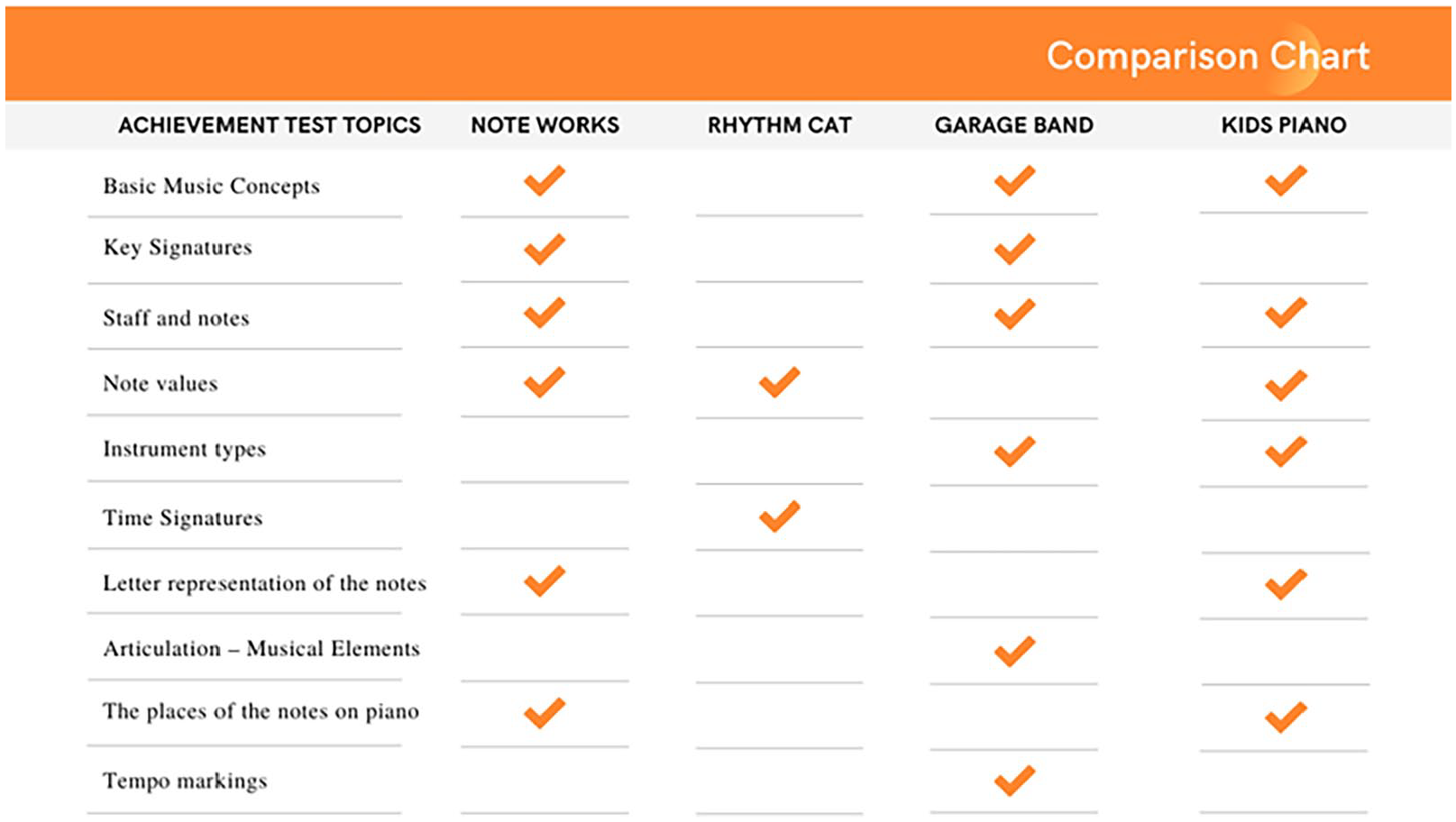
The content of mobile technology and achievement test subjects.
Semi-structured interview protocol (see the Appendix)
Initially, five questions were posed by the researchers. With expert feedback, the number of questions was reduced to three. A pilot application was carried out with this draft. The application was conducted on two students studying in the same grade and school. No changes were made to the three main questions prepared in line with the feedback from these two participants. Explanatory probes were developed to obtain additional data regarding the main questions. The two researchers conducted interviews individually and simultaneously in the music class. The Interviews took—20 to 25 minutes, and only one interview was held with each student.
Data analysis
To compare the mean scores of the two groups, t-tests for independent samples and Single Factor Analysis of Covariance were used to test whether there was a significant difference between the pre-test and post-test mean scores. The eta squared (η2) and Cohen’s d values were calculated to determine the effect sizes. Content analysis was used to analyze the qualitative data. The qualitative data obtained from the interviews with the students were transferred to MAXQDA qualitative data analysis software.
Agreement values between the coders were revealed to increase the reliability of the qualitative dimension (Result: 96.54%). The agreement rate for the code frequency was 99.18%. Miles et al. (2013) suggested reaching a rate of 85% to 90% for intercoder agreement (as cited in Creswell, 2019).
Experimental procedure
In this stage, an 8-week experiment was carried out to evaluate the effectiveness of the mobile technologies NoteWorks, Rhythm Cat, GarageBand, and Kids Piano’ on students’ basic music theory achievement levels (See Figure 2). The mobile technology content used in this stage facilitated the learning of basic music theory subjects. In addition, the researchers had prior knowledge and experience regarding these features and how they were played.
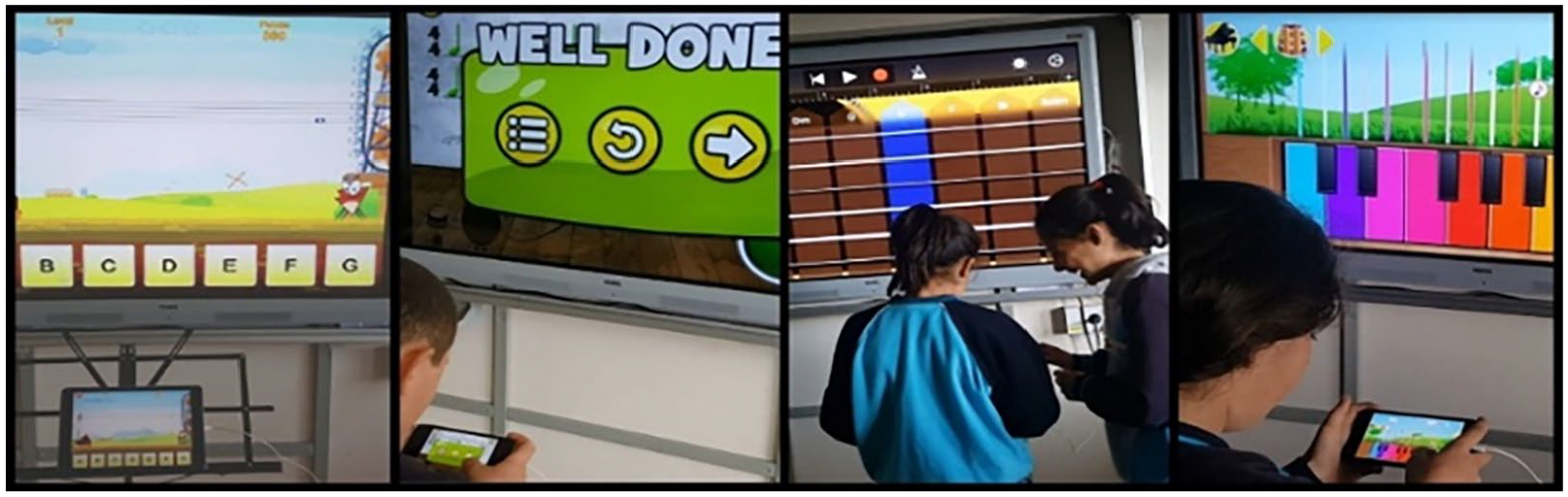
The photographs related to the experimental procedure.
During the application, the smartphone and tablet were projected onto a smart board with an HDMI cable. In this way, it was ensured that all students in the class saw what was on the screen and repeated basic music theory subjects. The students played the games downloaded on these two devices one by one. The teacher was generally a guide and organizer of technological tools.
Workstation keyboard, whiteboard, and textbook were used to teach basic music theory subjects to the control group students. The teacher first wrote the names, symbols, and places of notes on the music staff on the board, and then explained these subjects. On the other hand, the students tried to reinforce the subjects they had learned with the visuals and theoretical information in the textbooks. The teacher wrote different rhythm patterns on the whiteboard. He then performed the rhythms (ta-a, ta, ti-ti, etc.) by vocalizing and clapping. The students repeated these rhythm practices using the same technique. He, then, applied these rhythm patterns by hitting the keys with the drum and percussion on the workstation keyboard.
The experimental and control groups were randomly distributed into four different classrooms. Classrooms 6/A and 6/B (n = 43) were selected as the experimental group, and 6/C and 6/E (n = 40) as the control group. The applications in both groups were carried out during equal class hours and at separate times, according to the timetable.
NoteWorks applications
The game aims to enable students to learn the names of the notes (first week—Do Re Mi), letter notation (second week—ABC), and the place of notes on the piano (third week—Keyboard). In the game, the notes falling from the portrait must be caught as quickly as possible with the main character named “Hungry Munchy.” Furthermore, students needed to quickly know the quarter notes on Treble Clef and quickly play their places on the keyboard to score high.
Rhythm cat application
In the fourth week, a rhythm study consisting of 4/4 and quarter notes was performed with the “How to play” option at the first level (I) of the Rhythm Cat game. Subsequently, 11 different games were played. Games 1, 2, 3, 4, 5, 6, 7, 8, 11, and 12 are in 4/4, and games 9 and 10 are in 3/4.
In addition, games I-1 to I-13 were only played with the right thumb. The notes on the screen of these levels change from black to green when the students play them correctly, and the notes remain black if played wrong.
In the fifth week, game stages I-13 and I-14, which require the use of two different buttons, were implemented. These games were applied by touching the green notes on the screen with the right thumb and the blue notes by touching the buttons of the same colors with the left thumb.
GarageBand apps
In the sixth week, applications were carried out on various virtual instruments using the GarageBand app. For example, students sang different articulations by touching or rubbing their index fingers on shapes representing string instruments, and they learned the names of the bow techniques (Legato, Staccato, and Pizzicato). Finally, the students tried to play the pizzicato technique by plucking their fingers on the vertical columns representing the chords.
In another practice, the students practiced rhythm using acoustic drum kits accompanied by a metronome on GarageBand. In this practice, the students tried to voice the half- and one-beat notes on the touch screen with their fingers. Students generally preferred to use kicks, hi-hat, and snare drum parts.
In the seventh week, a small arrangement was made on the “Silent Night” piece. First, the instruments used in the project were determined (acoustic guitar, bass guitar, drum kit, strings, and keyboard). The students then tried to accompany the melody recorded as monophonic by the teacher, using acoustic drum kits, rhythm recording, and guitar chords. In addition, string accompanying was performed on the block chords created and recorded by the teacher. Some students applied the Legato, Staccato, and Pizzicato techniques while recording the strings.
Kids piano application
In this game, students are expected to play the melody by remembering it as much as possible. The notes lead to piano keys at different intervals depending on the melody line and rhythm of the song. Letters representing the notes led on piano keys are shown. In this part of the application, the students tried to play the song “Happy birthday to you” with the virtual piano.
Findings
When the pre-test mean scores of the experimental and control groups were examined, no significant difference was observed between them in terms of meaning (t (81) = 1.133, p > .05) (See Table 1).
T-test analysis of pretest mean scores for groups.

According to Table 2, the mean post-test score of the experimental group was x̄ = 74.39. The mean post-test score of the control group was x̄ = 60.78. When the corrected mean scores were examined, the mean post-test score of the experimental group was x̄ = 72.99, and the mean post-test score of the control group was x̄ = 62.28.
Winsorized means obtained by considering the control variable.

There was a significant difference between the pre- and post-test scores of the experimental group. Although the mean pre-test score in the experimental group was x̄ = 38.74, the mean post-test score increased to x̄ = 72.99 in the winsorized means. While the mean pre-test score of the control group was x̄ = 35.53, the mean post-test score increased to x̄ = 62.28 in the winsorized means.
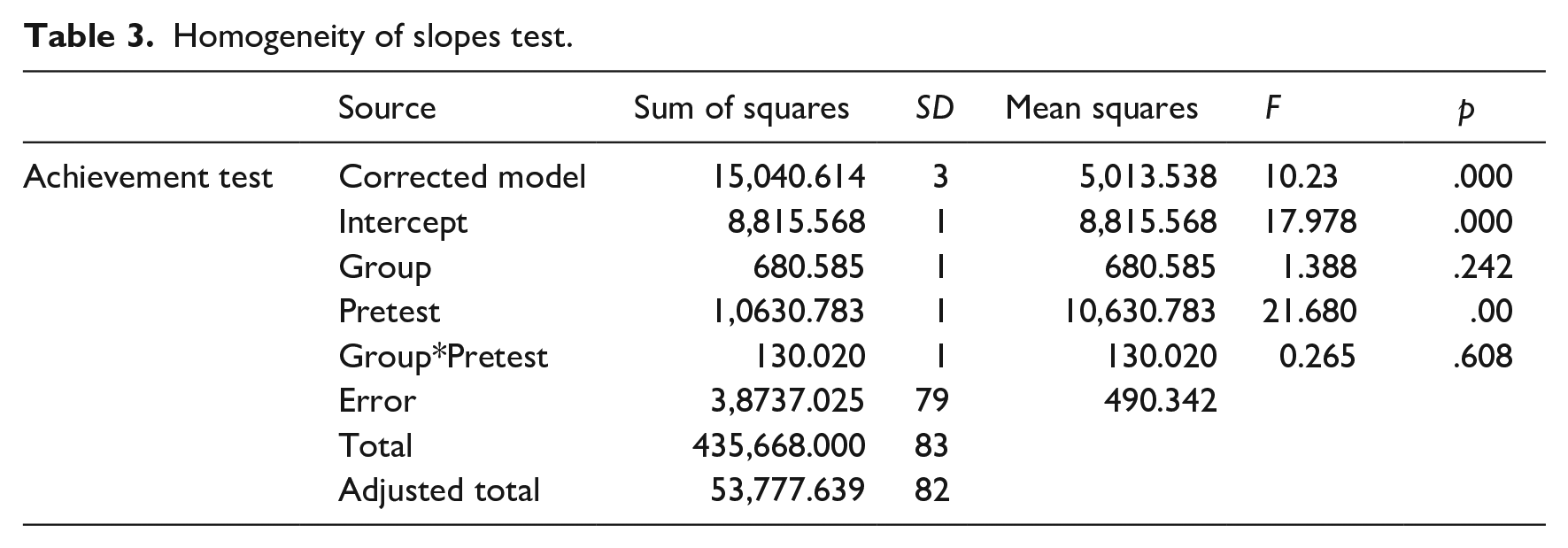
To analyze covariance, the condition that the slopes of the regression line in the groups are homogeneous must be met. The analysis results in Table 3 show that the slopes of the regression lines are homogeneous (F(1,79) = 0.265, p = .608).
Homogeneity of slopes test.
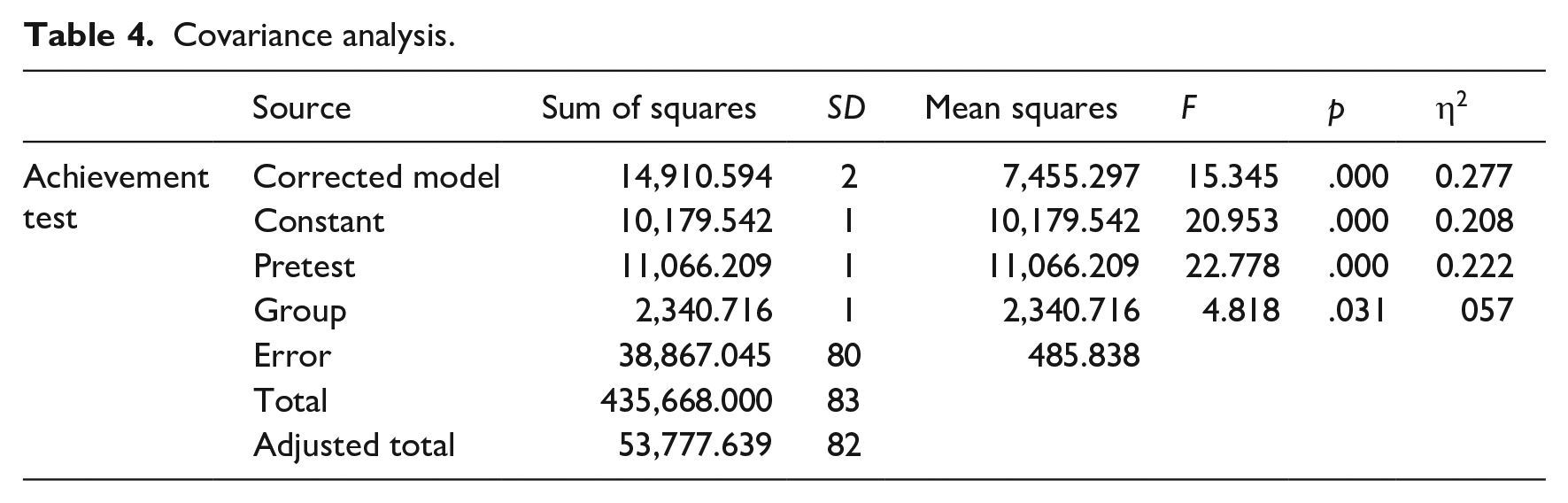
When the results of the covariance analysis are examined according to Table 4, it is seen that there is a significant difference between the post-test scores (F(1,80) = 4.818, p = .031, η2 = .057) adjusted according to the pre-test scores between the groups, and this difference is in favor of the experimental group. (x̄experimental = 72.99; x̄control = 62.28).
Covariance analysis.
Finally, we sought to answer the following research question: In which subject did the experimental group students succeed the most? A paired t-test was used to determine which items the experimental group students were successful in. Cohen’s d values were calculated to determine the effect size. According to Table 5, it was determined that in items 3, 4, 6, 7, and 9, students’ post-test scores were significantly higher than their pre-test scores. When the effect size was examined, it was determined that these significant differences showed distributions close to the medium (items 6, 9, and 7), medium (item 3), and high effect levels (item 4). After the process, it was determined that the field where the students improved the most was the note value.
Pretest-posttest t-test analysis of achievement test items of the experimental group.
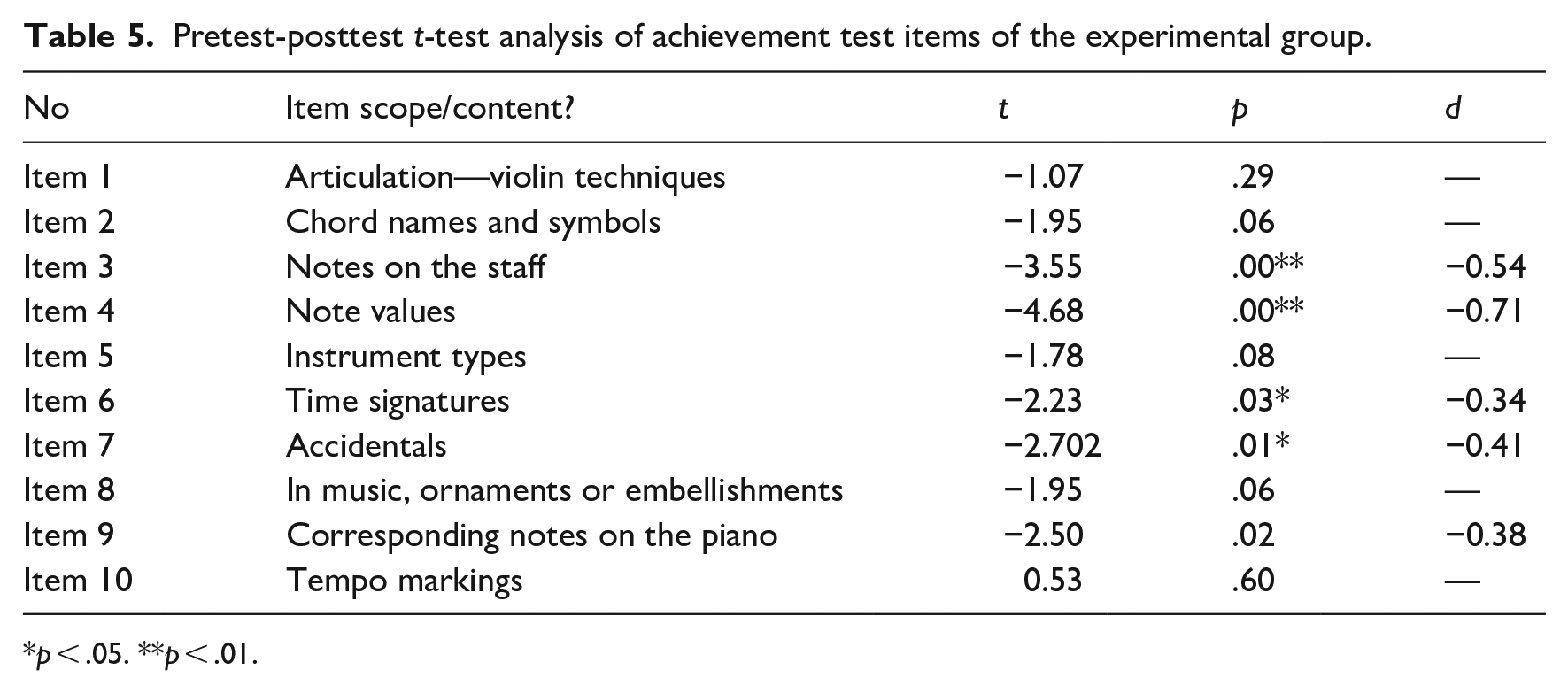
p < .05. **p < .01.
In the first item of the test, two violin techniques were defined. Students tried to determine which techniques these definitions belonged to in the options (e.g. Option A: staccato and pizzicato). Seven chord symbols were written in the second item. Students tried to find the names of these symbols in the options (e.g. Option B: A flat major and B minor). In the third item, a visual was prepared with eight notes on the staff, and students tried to find the names of these notes (e.g. Option D: E♭, C, F, and D♯). The fourth item included a visual related to different note values; the fifth item included a visual related to instrument types; the sixth item included a visual related to different time signatures; the seventh item included a visual related to accidentals; the eighth item included a visual related to music ornaments or embellishments; the ninth item included a piano image with numbers on the keys (students tried to find the correct note in the options by looking at the numbers on the keys); and the tenth item included a table with tempo terms. Students answered all questions by following the steps of the first three items.
Lesson activities from the perspectives of the students
To answer the second-third research questions and to test the second-third hypotheses, the interview question “Can you tell us about your learning experiences in music class? What advantages and disadvantages do you encounter” was answered. Figure 3 shows that students expressed intensely positive opinions. When the remarkable findings are examined, it is understood that the number one student panicked during the application (N2). However, as a result of effective communication with his teacher (P5), he quickly overcame this problem. On the other hand, student number seven focused on all positive codes and negatively drew attention to the course duration’s inadequacy.
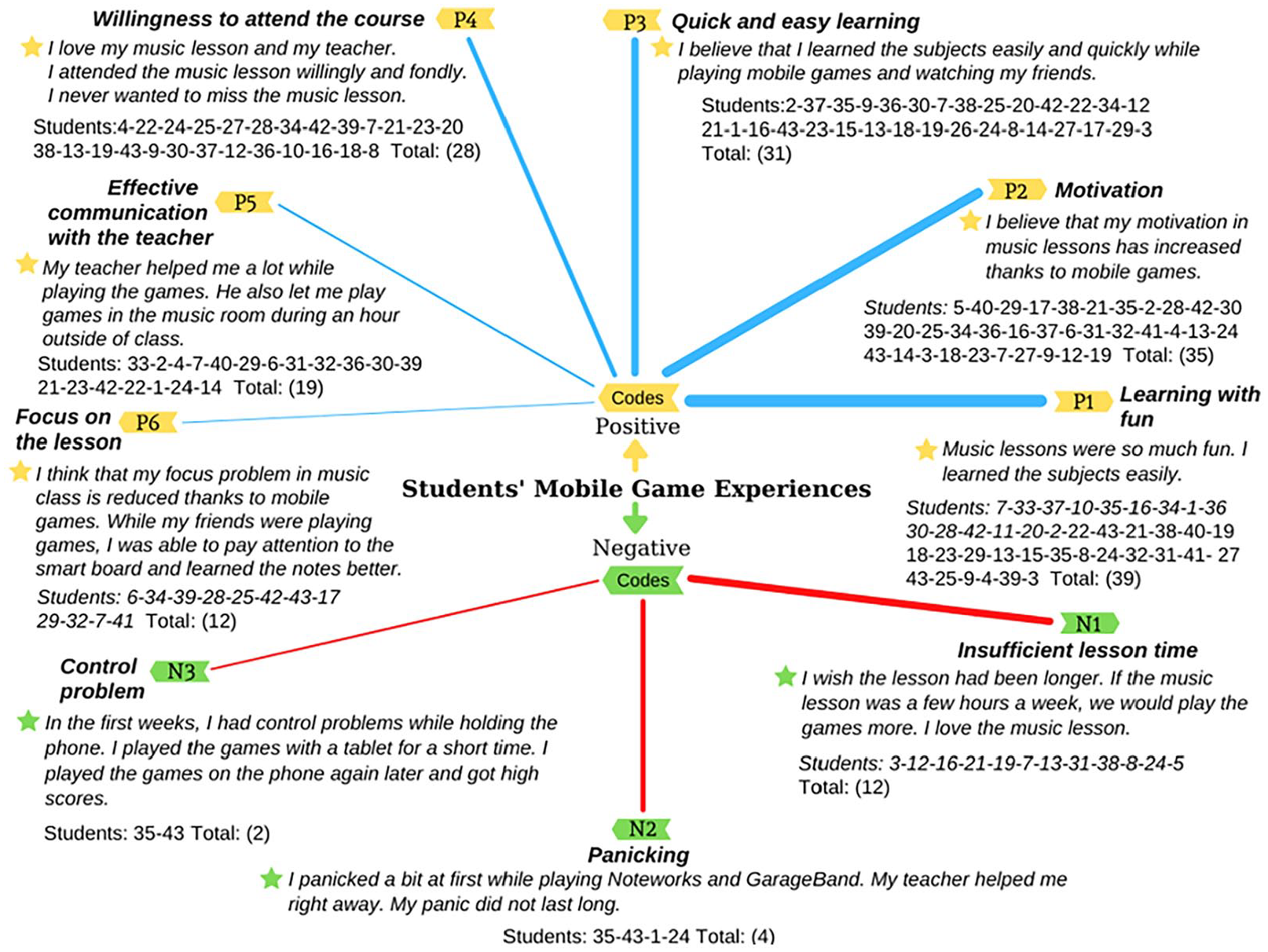
Relationship map of students’ mobile learning experiences.
To answer the fourth research question and to test the fourth hypothesis, the interview question “Have the mobile technologies contributed to your learning if you have used them in extracurricular times and places? If so, what kind of contributions did they make?” was answered. Figure 4 shows that students entirely tended towards the positive codes. Furthermore, collaboration was improved among the students who had found the opportunity to use mobile technologies outside the classroom. This might indicate that some students who had used mobile technologies in out-of-class environments by contacting each other were eager and curious about the current study. These experiences of the students reminded the acquisitions that modern pedagogy aimed at. The students were also asked whether using mobile technologies in out-of-class environments contributed to their learning. A total of 11 students tended towards the “musical development” code related to this question.
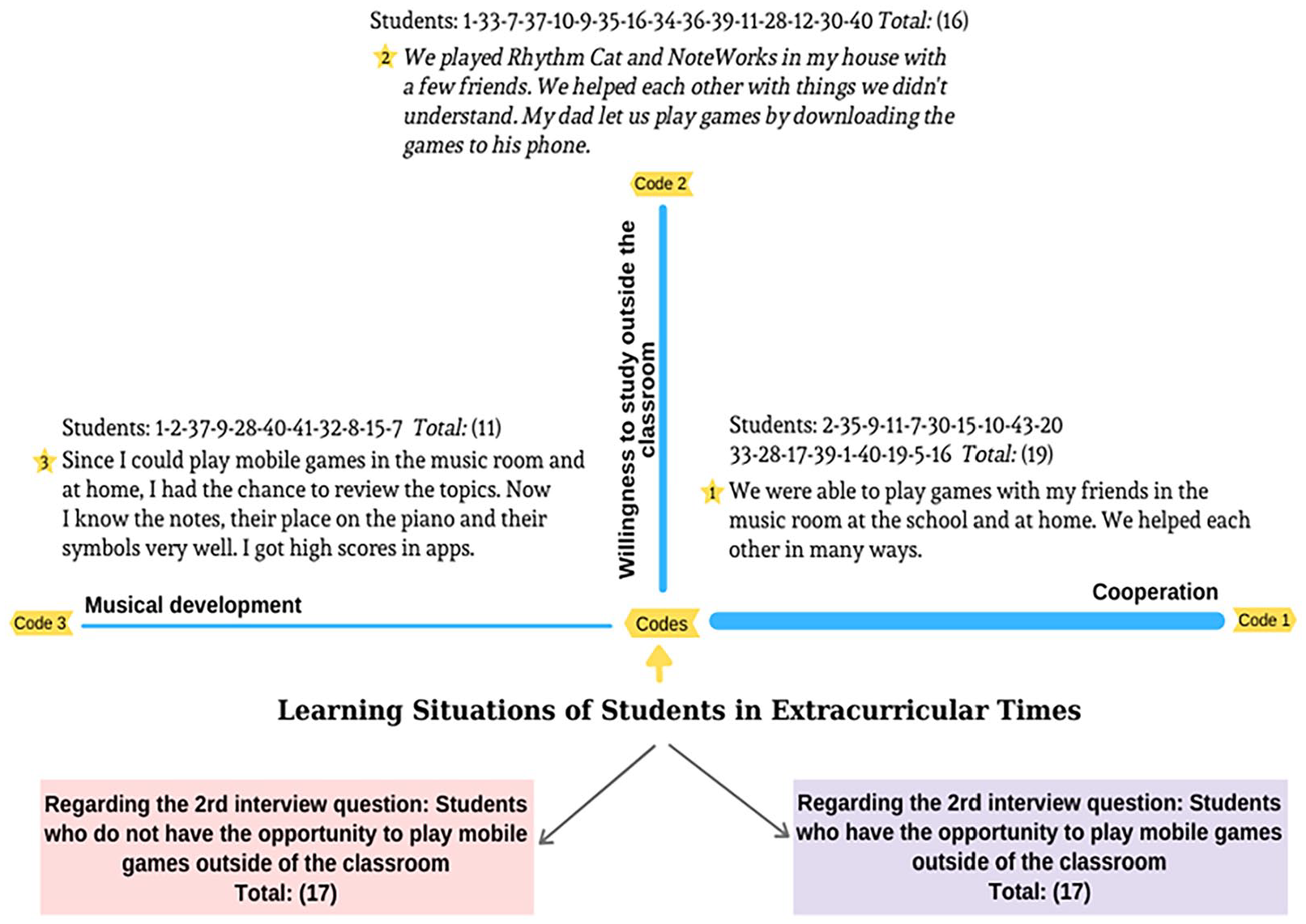
Relationship map of students’ learning in extracurricular times.
To answer the fifth research question and test the fifth hypothesis, an answer was sought for the interview question, “If you had to choose among the mobile technologies you learned in the lesson, which one would you rank first? Why?” If so, what kind of contributions did they make” Figure 5 shows how mobile technologies are ranked according to students’ taste, and student opinions were selected according to the highest weighting score. Rhythm Cat game ranked first with a rate of 32.55%. In addition, students showed an equal distribution between the GarageBand (G2) and NoteWorks (G3) games.
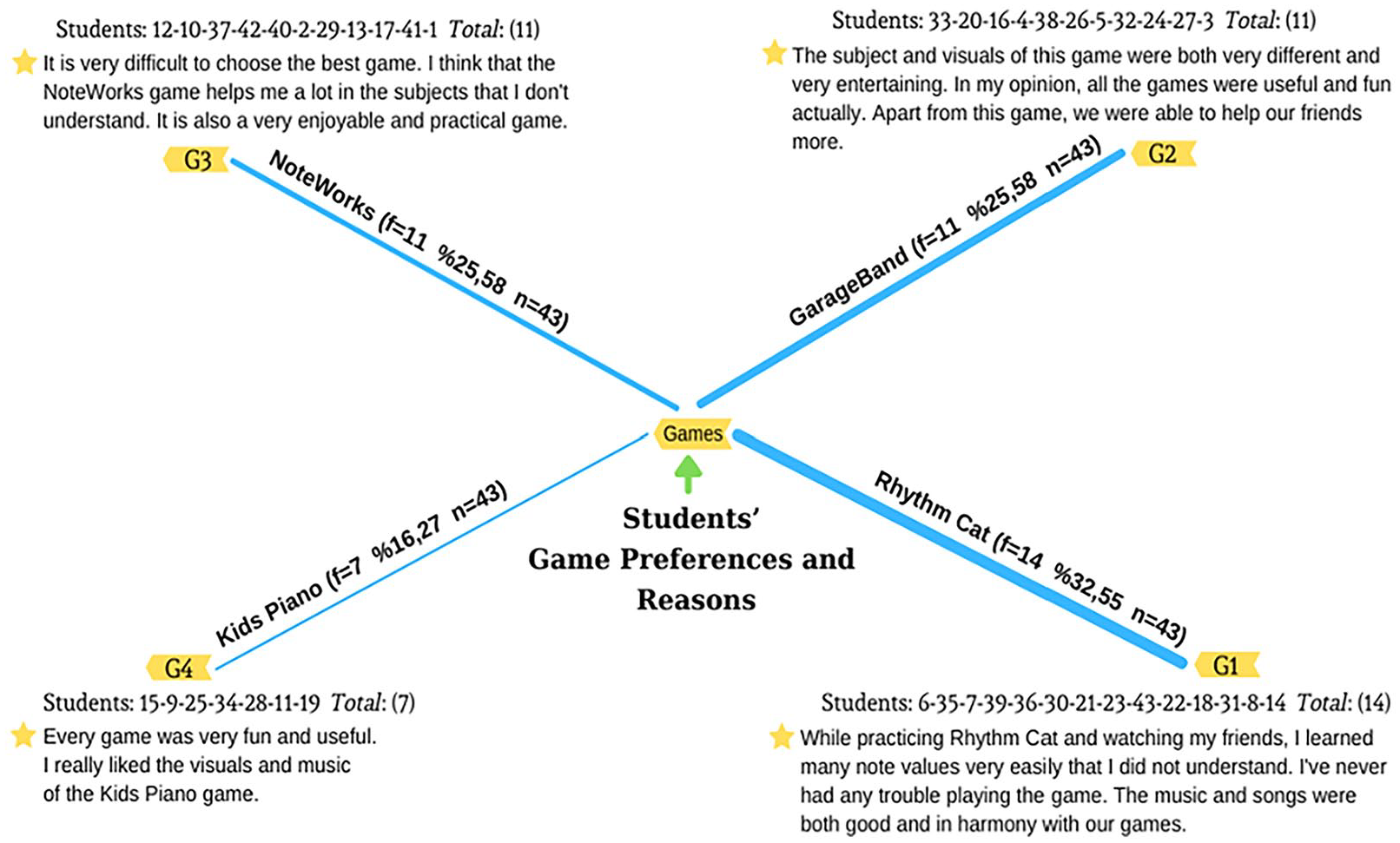
Relationship map of students’ mobile technology preferences and reasons.
Limitations and suggestions
The first delimitation of this study is that the mobile tools chosen for the procedure did not allow for the study of certain theoretical concepts more often than others. For instance, three of the applications allowed to study of the “note values,” while only one of the four applications was used to study “time signature” or “tempo marking.” Second, the applications were carried out with a limited number of students, since this study was quasi-experimental. Although the quantitative findings were positive, this might limit the generalizability of the results. Third, the students in the experimental group had the possibility to learn music theory through composing, as well. Nothing would have prevented the control group students from doing the same in the classroom using traditional instruments. In other words, it is not possible to conclude the extent to which mobile apps affected learning when composing, since only the experimental group had the opportunity to learn music through creative work. Finally, similar technology-based learning tools were not used in the control group compared to those used in the experimental group. As the control group teaching was designed to be teacher-centered, the mobile app’s absolute effect was not determined. It is perhaps inevitable that mobile technologies will increase students’ success.
More studies with experimental procedures prepared using different mobile technologies for music lessons should be conducted in future research. Even if the mobile technologies used in this study focus on students for the time being, as Zhou et al. (2010) stated, adults can be included as participants in such mobile-technology-supported activities. Researchers have considered this option for obtaining more comprehensive data. In fact, it is planned to conduct experimental research at the undergraduate music education level using mobile learning. As a result of the experience gained from the current study, it is recommended to spend more time in such experimental studies for a multifunctional program such as GarageBand. It can also be said that when playing live with virtual drum kits on the GarageBand, the TOUCHBEAT Smart Drum Kit (kick pedal, drumsticks) can be used instead of fingers. Similar teaching technologies can also be used in the practice between the control and experimental groups in future research aimed at examining the effects of mobile technology. It is expected that the findings, limitations, experience, and recommendations of the current study will shed light on future research to be carried out using mobile technologies.
Discussion and conclusion
Parallel to previous research in the literature, it was concluded that the experimental group students who had learned basic music theory subjects with mobile technologies were more successful than the control group students who had studied the same subjects with traditional music education approaches. This finding confirms our first hypothesis. Moorefield-Lang and Evans (2011) reached a similar result that a “Rhythmatica” project for mobile devices in the USA had a profound effect on students. Different results have been obtained in previous studies on mobile learning. For example, no significant difference was found between the conservatory second-year experimental group students (73.4%) and control group students (72.2%) who were educated with the “Troubadou” app, which was prepared as a gamified e-learning platform for ear training (Pesek et al., 2020). The mobile technologies used in the experimental procedure stages showed that students could learn music topics such as rhythm, note value, letter notation, and the place of notes on the piano in a fast, easy, and fun manner.
The positive codes in the students’ answers to the first and second interview questions were as follows: willingness to participate in class, effective communication with the teacher, focus on the lesson, cooperation, willingness to study outside the classroom, and musical development. The students’ opinions also showed that mobile technologies had important advantages such as learning by having fun, learning quickly and easily, willingness to participate in the lesson, effective communication with the teacher, focusing on the lesson, cooperation, willingness to work out of the classroom, and musical development. Negative findings related to the first interview question were short-class hours, panic, and control problems. These results confirm the study’s second, third, and fourth hypotheses.
The findings of the third interview question of our research did not confirm our fifth hypothesis because the students liked the Rhythm Cat game intensely among mobile technologies. In the findings based on our second and fourth research questions, the concepts of fun in learning and studying outside of class emerged. Ernst et al. (2013) stated that mobile learning provides fun, anytime-anywhere active learning experiences, and effective learning opportunities in their research at the University of Queensland, Australia. With these similar results, we would like to draw attention to the contents of two different concepts, such as entertainment and education, seen in mobile technologies. Since the primary purpose is to educate while developing an educational and entertaining game; the entertainment side of the game actually tries to attract the player’s attention (Raziūnaitė et al., 2018). The goal of mobile technologies is no longer limited to entertainment but has reached a new paradigm in which the educator is prioritized (Gomes et al., 2016). While the applications were being developed, we were concerned that the educational aspect of mobile technologies for students might be left in the background, and the entertainment aspect might be dominant. However, student opinions and post-test results eliminated these concerns between education and entertainment.
