




Abstract
Research in higher music education acknowledges a persistent divide between performance studies and the realities of musicians’ work. Alongside this is global pressure for curriculum that is more supportive of students’ metacognitive engagement, experiential learning and career preparation. However, scholars assert that the provision of these curricular elements is insufficient unless students recognise their value and engage in them at a deep level; this is because career-long employability in precarious industries such as music is underpinned by strategic, lifelong and self-regulated learning. The study reported here featured a scaffolded employability intervention located within the existing curriculum and trialled with seven student musicians at a European institution. The study had three aims: to understand the students’ career-related thinking and confidence; to determine whether such an intervention might be scalable; and to gauge the intervention’s potential efficacy in helping students to become conscious of their learner identity. Results indicate that many student musicians are aware of the need to extend their essential professional capabilities but unaware of how to address these deficits. Participants realised that ‘learning how to learn’ would help them achieve personal and professional goals. The findings suggest that similar in-curricular interventions are achievable at scale. Furthermore, they have the potential to foster a more holistic vision of performance education and practice such that aspiring musicians might graduate as both skilled professionals and agentic learners.
Keywords
Introduction
Measurements of graduate employment rates are increasingly used as a proxy for the quality of higher education (Tomlinson, 2017). Within the higher education context, this has led to mounting pressure from students, community, media, policy makers and funding agencies to produce ‘employable’ graduates (Ramberg et al., 2019). Despite this attention, and despite myriad examples of innovative reforms, multiple scholars note the persistent divide between higher music education and the realities of musicians’ work (Bennett & Bridgstock, 2015; Calissendorf & Hanneson, 2017; Creech et al., 2008; Dobson, 2010; López-Íñiguez & Bennett, 2020; Schmidt, 2014).
In precarious industries such as music, the task of remaining employable demands the regular and strategic self-renewal of skills and knowledge (Gill, 2002). It is crucial therefore for musicians to develop a learner identity before entering the profession (López-Íñiguez & Bennett, 2020; López-Íñiguez et al., 2020). Creech et al. (2008) and Slaughter and Springer (2015) are among several scholars to give accounts of music graduates who bemoan their lack of career understanding and preparedness and claim that there were insufficient employability development opportunities during their studies. While some of these cases will reflect inadequate curricula, it is also the case that some graduates will not, as students, have had the learning mind-set required to realise the relevance of opportunities made available to them (Brown, 2009; Ha, 2017; Varvarigou et al., 2014).
One of the prevailing challenges, then, lies in students’ lack of engagement in employability development or career development learning. Although this can be evidenced using the case of music performance students, who prioritise time in the practice studio above all else (Burland & Pitts, 2007; MacNamara et al., 2008), lack of employability engagement is not limited to music. The perceived lack of relevance between employability development and students’ imagined future lives and work features strongly in students’ accounts of under-performance and course attrition. In engineering, for example, attrition is linked with students who enter engineering without understanding the realities of either their programme or the nature of engineering work (Bennett & Male, 2017). Caruana and Ploner (2010) agree that students are ‘at the very least ambivalent about how their learning experience relates to either employability in global labour markets and local culturally diverse workplaces and/or to the development of affective skills in broader cross-cultural contexts’ (p. 97).
Employability development opportunities tend to be located in the co-curricular (extra-curricular) space, and as such, they are easily ignored by students who would prefer not to engage, perhaps therefore bypassing the students who need them most. Bennett (2012) asserts that students ‘are more likely to engage in learning when they perceive it as being relevant to their future lives and careers, and [that] the open-ended, boundaryless thinking’ (p. 28) needed to establish relevance is new to most students. Although Czikszentmihalyi (2007) emphasises the need for students to ‘immerse themselves in the domain of their choice’ (p. xix), many music students need help to define the domain because ‘no-one considers the whole range of possible opportunities in education or the labour market’ (Hodkinson & Sparkes, 1997, p. 35). In music, then, the challenge is to broaden students’ career horizons such that they include previously unimagined future possibilities.
The study reported here featured a four-phase employability intervention designed specifically for the purpose and implemented within the existing curriculum. The study had three aims: to understand the students’ career-related thinking and confidence, to determine whether such an intervention might be scalable and to gauge the intervention’s potential efficacy in helping students to become conscious of their learner identity. We begin with the theoretical framework and an overview of the procedures. We then present the results of each phase before discussing the findings. We end with practical implications for higher music education.
Theoretical framework
Writing from the perspective of educational psychology, for this study, we adopted a social cultural, constructivist conception of learning (i.e., Vygotsky, 1978) which occurs within a learning ecology (e.g., Barron, 2006). This perspective aligns students’ emergent self- and career-awareness with the provision of authentic and scaffolded strategies which support students’ metacognitive engagement, active participation and experiential learning.
A learning ecology considers learning as an active process wherein the subject plays a decisive role in the act of knowing and learning and shares the process of social construction in personal learning environments (following the inter- and intra-psychological processes defined by Vygotsky, 1978). Resulting knowledge and understanding is later internalised, enabling new meaning to be made and influencing self-identity (Wenger, 1998). An identity approach to learning views learning as inherent in the process of identity construction and views learners as historically and socially situated agents who participate in a community of practice (Norton & McKinney, 2011).
The notion of identity as a fluid process was taken up by Norton (2000), who used the term identity ‘to reference how a person understands his or her relationship to the world, how that relationship is constructed across time and space, and how the person understands possibilities for the future’ (p. 5). Norton and McKinney (2011) later proposed three characteristics of identity with relevance here: ‘the multiple, non-unitary nature of identity; identity as a site of struggle; and identity as changing over time’ (p. 74).
Learner identity
The prevailing challenge for higher music education is to develop and enact a multidisciplinary vision of teaching and learning which focusses on motivational and cognitive-psychological processes, the conditions and holistic results of learning, and being responsive to labour market demands. López-Íñiguez et al. (2020) have suggested that one possible solution lies in the development of a learner identity: a central identity of socio-constructivist orientation with which individuals identify and construct themselves as learners in different educational and developmental contexts (Falsafi, 2011).
The learner identity helps individuals to construct knowledge in relation to who we are in a given domain (Coll & Falsafi, 2010). It also builds knowledge in relation to ‘what we are not’ (Reay, 2010, p. 2), which can be thought of as what we want to become and what we need in order to achieve our goals and dreams. From a formative perspective, there is an obvious link with Dweck’s (2006) Growth Mind-set in which ‘what we are not’ becomes ‘what we are not yet’. Fundamentally, this type of identity in education understands that ‘learning how to learn requires learning to be a learner’ (Sinha, 1999, p. 41).
For learner identity to develop, individuals need to confront the multiple and dynamic professional identities (see Monereo & Badía, 2011) they might experience during their careers and during studenthood. Individuals also need to know how to regularly evaluate and interpret their possible selves (Marcus & Nurius, 1986): their projections about what they hope to become, what they expect to become and what they fear becoming. These evaluations inform the planning and implementation of strategies for realising or avoiding actual and possible future identities (Sfard & Prusak, 2005). And yet identity regulation is no mean task, particularly for aspiring musicians who have yet to encounter either professional work or identity revision.
The theoretical model underpinning learner identity understands that, in addition to the intra-psychological (particularly motivational and emotional) processes involved in the construction of the learner identity, there are also inter-psychological processes. These recognise that individuals need the ‘acts of recognition of others’ as a learner (Falsafi & Coll, 2015, p. 18). Given that these processes are situated – they happen at specific times and in specific spaces – the result is three modalities of learner identity construction defined by Falsafi (2011) as in activity, on activity and cross activity.
In addition, the development of learner identity requires that individuals attribute meaning and sense to their self- and career trajectories (Coll, 2014). From the perspective of Leontiev’s (2005) sense-forming motive, individuals with a learning identity move beyond distracting aspects such as the entrepreneurship of knowledge and the purpose of education being to achieve material goals, and instead seek to learn in order to achieve a fulfilment of the self (see also Valdés et al., 2016). This aligns with conceptions of entrepreneurship as posited by Toscher (2020), who is among several scholars to emphasise the importance of establishing perceived value through explicit meaning making. The characteristics of the learner identity model are brought together in Figure 1.
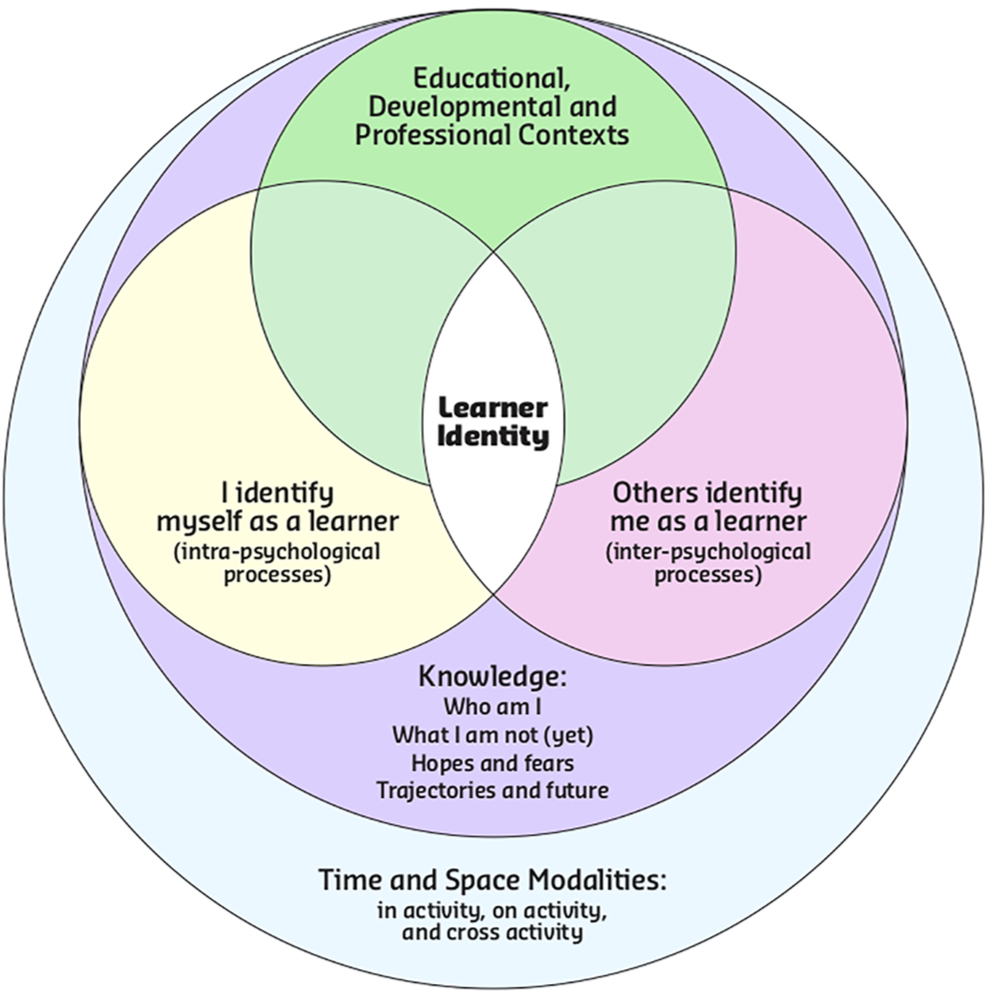
Characteristics of the learner identity model.
Materials and methods
This study explored the impact and potential scalability of a scaffolded employability intervention on higher music education students’ learner identity. The study was a concurrent triangulation mixed methods study (Creswell et al., 2003) which employed phenomenological, lexicometrical and descriptive analyses. Designed in four stages, the study employed multiple resources which are described in the following sub-sections. All events were video recorded and conducted in English. A summary of instruments is included in Supplemental Appendix 1.
Recruitment and sample
Summarised in Table 1, the seven participating students (P1–P7) were classical cellists (female n = 5, male n = 2) enrolled in master’s level or doctoral studies at a European academy of music. Participants were purposefully selected for maximum variety between cases (Stake, 2005), coming from five different nations and diverse socio-economic backgrounds; they were proficient in written and oral English language.
Demographics of the sample.
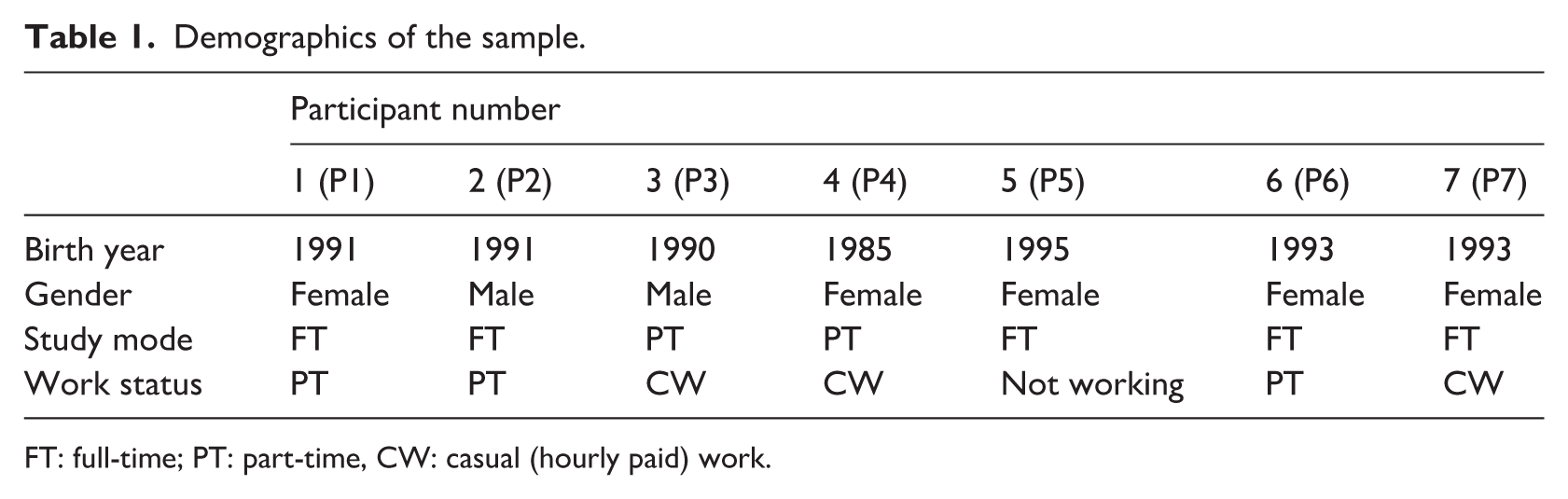
FT: full-time; PT: part-time, CW: casual (hourly paid) work.
The number of participants responds to the tradition in multiple-case studies of having enough variety of participants with diverse characteristics and backgrounds to avoid risk to the study in case of attrition. Invitations to participate were relayed via the head of the music department. The selection criteria were that participants should be fluent in English, studying full-time at an undergraduate or post-graduate level, and committed to participating in the research seminars across the semester. Participants were compensated with study credits following the European Transfer Credit and Accumulation System (ECTS), which in this case was 1 ECTS.
Procedures
Phase 1 featured semi-structured interviews with each participant. Interviews elicited data about participants’ perceived career development needs and their professional (musician) profiles. In Phase 2, participants created personalised employability profiles using Bennett’s social-cognitive employABILITY measure together with six open-ended questions (Bennett, 2019). The tool prompted students to rate their confidence in relation to self-management and decision making, academic self-efficacy, self-esteem, professional identity, conceptualisations of self and employability, emotional intelligence, and career commitment and agility. The findings of Phases 1 and 2 informed the design and content of four 90-min lectures and seminars of increasing difficulty (Phases 3A and 3B), which were delivered by the first author.
Phase 4 featured a discussion panel with eight multi-professional musicians: musicians internationally recognised as being highly proficient in multiple roles. The panel was selected to offer diverse career testimonies for student participants and focussed on the relationship between panellists’ careers and their musical training (see López-Íñiguez & Bennett, 2020). Student participants then provided feedback via email on both the whole intervention and Phase 4 panel session.
Analyses
First, we quantified and displayed the conceptual structure of participants’ narratives for the open interview questions according to professional profile and career development needs (Phase 1). For this, we used content analysis tool Leximancer v4.5 (2018) to identify the main concepts in participants’ discourse as per relative frequency, strength and prominence. Leximancer software uses a combination of techniques such as Bayesian statistics that records segments of text to identify semantic concepts and then associates those concepts to a thesaurus which links words with their definitional properties.
Numerical data from the online tool (Phase 2) were analysed using descriptive statistics. The tool’s six open questions and participants’ personal and group accounts (Phases 3A and 3B) were treated as background narratives with which to create a thick description of participants’ testimonies. For this, participant discussion data were analysed using the reduction system for transcendental phenomenology studies established by Moustakas (1994). This involved collecting and triangulating multiple sources of data to determine whether emerging themes explain the phenomenon under study. This system features bracketing, horizontalization, clustering into themes, textural descriptions, structural descriptions and textural-structural synthesis (i.e., Creswell, 2007). Transcendental phenomenology was selected because it erases the Cartesian dualism between objectivity and subjectivity by aggregating subjective experiences of a number of individuals.
Finally, participant feedback (Phase 4) on the intervention and expert panel was triangulated with the phenomenological, lexicometrical and descriptive analyses of the other data and interpreted by means of the learner identity model described in the theoretical framework. Simple grammatical errors within the quotes were rectified for the article.
Ethics
Ethical approvals were obtained prior to the study from the institution’s research ethics committee. Students signed consent forms following the guidelines of the national advisory board and students were not obliged to participate.
Results
Phase 1: interviews
Participants’ professional profiles and developmental needs were coded by applying lexicometrical analysis to the interview transcripts; we employed a granularity threshold of 100% for visible concepts and 50% for theme size. Figure 2 illustrates the prototypical phrases which support the main concepts selected by Leximancer and the development of our intervention. Following common practice in lexicometrical studies (Bécue-Bertaut, 2010), the concepts and themes are emphasised using bold text in both the figure and participant prototypical quotes.
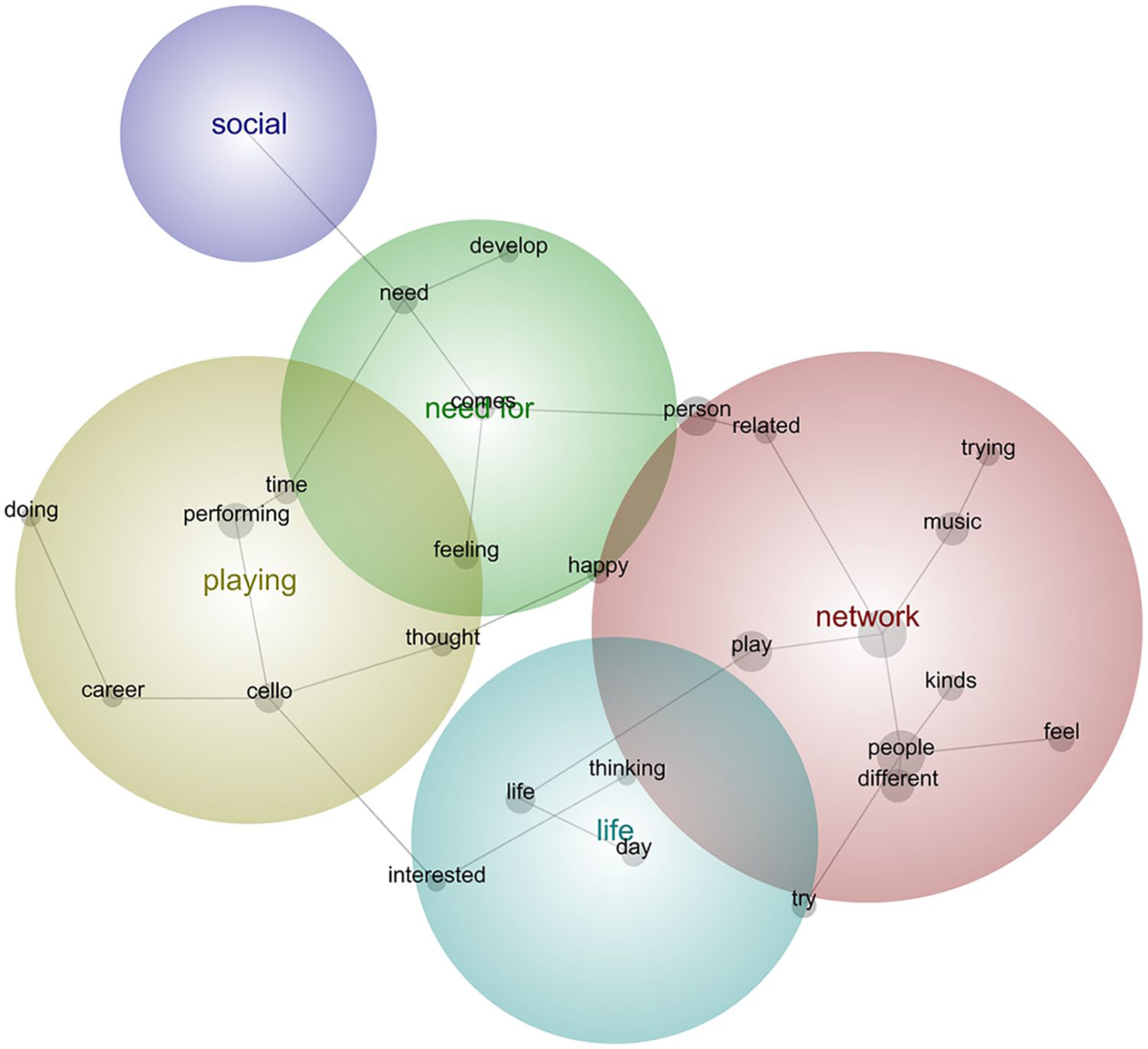
Concept map for participants’ career profiles and developmental needs.
Participants highlighted the importance of performance and the multiple roles in which they would prefer to engage in order to sustain their performing career. Seen in the quotes, participants emphasised the need for variety within and beyond performance roles. To achieve this, they realised the need to develop greater industry awareness alongside personal, artistic and professional autonomy.
I like to Probably [I need] some practical knowledge of
All participants articulated the need to develop their skills and industry experience. Increased autonomy was again a feature, as was the need to develop work–life balance.
I’m alive when I’m
All participants noted that social interaction and communication skills were crucial to establishing and maintaining their careers. Seen below, however, this was a concern for some participants.
I
In a related point, participants recognised the importance of networking. However, the development of such skills was sometimes labelled as something to tackle ‘in the future’, despite being described as urgent.
I
Finally, participants discussed personal commitments, life design and the need to think ahead.
I
Phase 2: employABILITY self-reflection
Shown in Figure 3, students’ responses to Bennett’s (2019) online employABILITY tool were grouped into the six literacies which form the organising structure of students’ personalised profile reports. These are summarised below.
Basic literacy: discipline knowledge, skills and practices; interacting with other people; digital literacy.
Rhetorical literacy: problem solving, decision making and goal-directed behaviour.
Ethical literacy: accepting the responsibility for one’s work, decisions and actions; upholding the ethics and values of the profession, community or workplace.
Occupational literacy incorporates career exploration, awareness and flexibility.
Critical literacy: career identification and commitment; self-efficacy and self-esteem; ability and willingness to learn; perceived programme relevance.
Emotional literacy: interacting with people, how relationships function, managing emotions.
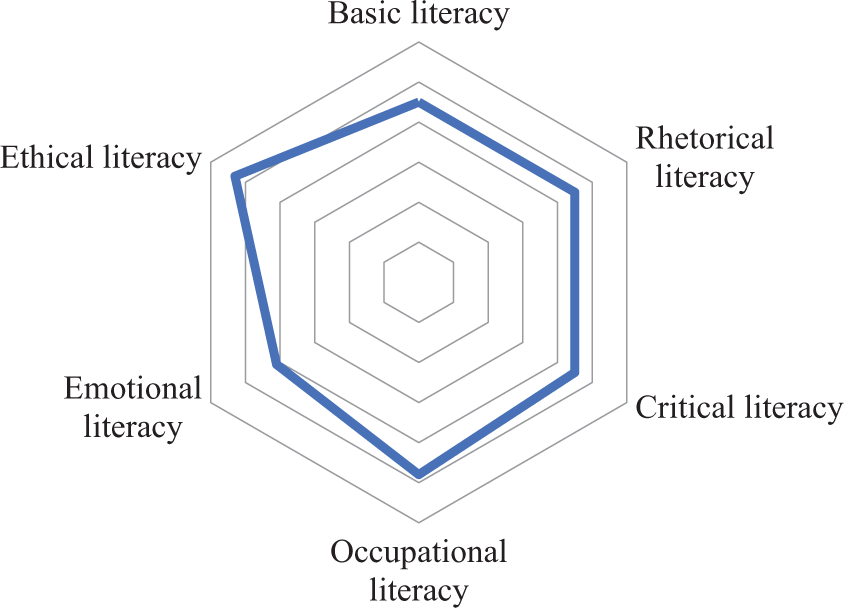
Cohort-wide radar diagram illustrating students’ confidence.
The sample was too small for quantitative analysis in any depth; rather, the data enabled an objective picture of relative confidence for analysis alongside participants’ narratives. Combining these two sources, the relative weakness in students’ self-report of occupational literacy was seen to relate to lack of career exploration, career/industry awareness and occupational flexibility. These concerns were evident in the narratives reported in the previous section. Lack of confidence in emotional literacy related to managing the emotions of others and to managing one’s own emotions, particularly in relation to stressful situations. These themes were explored in Phase 3 and we highlight them when reporting that phase.
Phase 3A: targeted classes to assess areas of strength and weaknesses
Phase 3A featured two 90-min lecture seminars. In previous semesters, these classes focussed on issues of generic importance to musicians’ career development. Instead, the intervention enabled the classes to respond to the findings of Phases 1 and 2, specifically participants’ perceived strengths and weaknesses and perceived career development needs. In this section, we describe the four themes which emerged from the combined Phase 1 and Phase 2 analysis. As a result of these themes, two resources from the employABILITY ‘music toolkit’ were employed within the classes. These were Creating a High Achieving Group and Plotting Your Preferences and Strengths. A link to resources is included at the end of the article.
Theme 1: career capabilities
Participants expressed inadequate training and expertise in crucial career capabilities including (1) public speaking; (2) personal branding and self-promotion; (3) finance, funding and budgeting; (4) royalties and rights; (5) project/event management and scheduling; (6) opportunity awareness and networking; and (7) media including audience generation. Participants largely related these concerns to low self-efficacy and low self-esteem and an inability to manage negative feedback. They emphasised that insufficient occupational literacy was inhibiting their ability to make strategic, informed career decisions.
Theme 2: coping skills
Participants were confident in their abilities to organise short-term tasks such as schedules, bookings and musical scores, but less confident in managing non-routine situations and longer-term planning. In line with Theme 1, many difficulties related to written and oral social interactions. A further concern was resistance from older professionals, who felt threatened by ‘young rising stars’. This was mentioned by several participants and suggests that potentially valuable early career mentorship and peer networks can be thwarted by competition and exclusionary practices.
Theme 3: social skills
Participants struggled to create team cohesion, with some musicians noting a desire to develop teamwork strategies. Some participants grappled with the need to manage ‘difficult’ musicians, peers who had different artistic or proficiency profiles, and peers who were under-prepared or otherwise negligent.
Although the participants recognised that socialising with audiences and peers is a crucial aspect of musicians’ work, they found this aspect of emotional intelligence particularly challenging; especially when the networking involved strangers. Despite their concerns, a common employability development theme was learning to engage with people and events beyond classical music in order to heighten both societal relevance and opportunities for work.
Theme 4: music-related scholarship
Every participant sought to improve the quality of their playing and their ability to learn repertoire quickly. Few participants wanted to undertake reading or research into their repertoire. They were also disinterested in writing programme notes, even if this might enhance a performance.
Phase 3B: targeted classes to improve areas of strength and weaknesses
Phase 3B comprised the final two 90-min lecture seminars. For these classes, we employed two further employABILITY resources: Gibb’s reflective cycle from the Critical Reflection resource and Create a Career Action Plan. These helped participants to explore what they might do to improve perceived areas of need and further develop areas of strength. The themes emerging from these classes are summarised below.
Theme 1: musical proficiency and music scholarship
Participants wanted to improve the quality and duration of their instrumental practice in order to enhance performance proficiency and learn new repertoire. Compositional and improvisatory skills also emerged as employability development needs. In contrast to their earlier comments, participants requested strategies with which to research the music they were performing.
Theme 2: mental and physical well-being
Participants emphasised the importance of physical and mental well-being and they were keen to explore other interests. Stress was now more clearly defined and was attributed to financial insecurity and the impact of extensive work-related travel on both health and relationships.
Theme 3: achieving self-determination
Participants articulated their strong career commitment and they recognised that this commitment demanded resilience, patience, motivation, confidence, courage, industry awareness, stress management strategies, a positive attitude and self-talk, and mental wellness. Participants emphasised the need to take the initiative and to take responsibility for their development. They also mentioned avoiding perfectionism and managing external career drivers such as financial reward or fame.
Theme 4: achieving long-term dreams through a portfolio of work
Participants identified multiple long- and short-term goals, from further studies through to performance skills in other genres, enterprise work with non-government organisations, and international collaborations. Some goals aligned with the need to create a sustainable income rather than the desire for artistic freedom. Of interest, orchestral positions were among the roles described as providing a steady income while affording creative opportunities elsewhere: for example, in chamber music and solo work.
Theme 5: industry awareness
Suggesting a more pro-active approach to industry awareness, participants wanted more exposure to the work of experienced colleagues and the career narratives of successful musicians, and explicit strategies with which to develop their professional networks. Participants wanted to assert ethical and responsible behaviour and they requested information about musicians’ rights and obligations, including what rates to charge for their work. A new topic was the desire to learn how to maintain a calendar of events and other opportunities. This related to social utility motivations including opportunities to have a social impact, develop new audiences and explore innovative ideas for the benefit of the broader arts community.
Theme 6: becoming lifelong learners
Participants acknowledged the need to self-educate across a range of small business skills. Lifelong learning was aligned with concerns about situations where participants lacked autonomy, being detached from music, and working in closed-minded and stagnant environments. Returning to emotional intelligence, participants requested emotional coping strategies in relation to generating autonomy, upholding ethical and responsible behaviour, and coping with set-backs. They also began to describe the adoption of reflexive behaviour: for example, reflecting on their performances to promote new learning and improvements. Participants particularly wanted to further develop their critical thinking, reporting immediate benefits from its use.
Phase 4: Feedback on the seminar and panel
Feedback on the intervention provided a textural description of ‘what’ was experienced by participants and a structural description of ‘how’ it was experienced. The combination of structural textures is essential in describing the phenomenon and was interpreted by means of the learner identity model.
After the intervention, participants revealed a positive attitude to learning and a more realistic view of their professional possibilities (in line with possible identities). Their openness to discussing concerns with colleagues (the inter-psychological dimension) and the acts of recognising everyone as a learner within the situated educational space we created for them was a stark change from their narratives in Phase 1, as expressed in the quote below.
I started to think differently after every seminar about various issues in the musician’s life and about my own future . . . I feel that the seminar helped us to get more mature and to get to know each other. We were not afraid of each other at the end . . . It’s really nice that all of us are working and learning together and figuring out things by ourselves instead of a lecturer just filling our heads with information. (P7)
The development of inquiry (what we are not yet) and autonomy were also evident within the feedback.
I have been impressed by your attitude of forcing us to think of a career as something that is in our own hands to make, something where you actively search for ways to create opportunities and ways to work, finding out what skills are needed and learning these skills during your entire life. I wouldn’t mind a list of other books to read related to the course’s content. (P3)
Participants began to recognise that success as a musician profession demands more than performance excellence and that identifying themselves as learners would support their ongoing professional learning (realising or avoiding actual and possible future identities).
The seminar and panel gave me lots of ideas . . . so that I can direct my career in the desired way, and I learnt things about myself I didn’t expect. The most important thing I learnt is that playing well is not enough, and that made me realise that I have to keep learning forever, which is a good thing. Otherwise this would be a really boring profession. (P5)
Participants acknowledged that many topics had not previously been addressed during their studies. They began to challenge these deficits and to think beyond their formal learning, adopting a Growth Mind-set in relation to career visioning and associated learning needs, and also in relation to self-fulfilment (sense-forming motive). Participants also shared their doubts and concerns, opening the way for further discussion.
I found these questions really challenging and to be honest also quite frustrating, but this is definitely not a bad thing. Quite the opposite actually! Often, I started to feel quite stupid about myself and frustrated about how I hadn’t thought about these questions earlier. But then I realised that this really is one of the biggest deficits in our education. We (or at least me) had been prompted to think in very simply way: ‘You practice – you don’t do other things – you might get work’. (P2) It still feels more and more unrealistic that I could during my lifetime learn to be everything that is needed, especially when I have to work all the time, but I think I could develop my networks and get some support from there. (P6) One side of me is very optimistic and excited and the other part is still saying that I should just give up and get a real job with the skills I have. I think I have given myself a challenge for the next years to forget the idea of giving up, but these questions are still like old ghosts all around. I felt that all my hard work over the years was nothing. I stayed all day and night at school and did nothing but practise – ‘I was just a wrong kind of musician’. Years later, I gave myself the right to be the ‘wrong kind of musician’ and started to make myself ‘my kind of musician’. I find myself a little bit lost still with what to do or if I really believe that ‘my kind of musician’ could become the ‘right kind of musician’. (P4)
Overall, participants were satisfied with the intervention and they wanted to explore further topics relating to employability and careers. Participants indicated that the activities had helped them to become more aware of the realities of careers in music and had inspired them to put into practice some of their ideas, as seen in this final quote.
I already did some parts by myself: for example, writing the grant application, creating my own projects, website etc. . . . It really works! . . . It would be interesting for me to meet, talk and share the experiences with people who are my age and successful in their career – those who are working with non-profit organisations, interesting projects or music education would be very interesting for me! It would be super nice if we could also include or open a discussion of how to take responsibility for your job or the projects you are involved in. . . . Before this seminar I didn’t pay enough attention to those things. (P6)
Discussion
Our first aim was to understand the student musicians’ career-related aspirations, fears and perceived confidence. The Leximancer analysis of interview data revealed participants’ desire for work–life balance, for which they anticipated engaging in multiple professional roles and developing their skill sets. In line with Creech et al. (2008), López-Íñiguez and Bennett (2020), and Slaughter and Springer (2015), participants wanted to learn more about these aspects and they acknowledged their deficiencies. Descriptive statistics derived from the employability tool highlighted the need to support the development of occupational literacy and emotional intelligence, which were mentioned during the interviews and in the later lecture seminars. Through these interactions, students began to construct and make sense of their self- and career trajectories (Coll, 2014).
We next sought to understand how an in-curricular intervention might help student musicians to identify themselves as learners and become conscious of their learner identity. We applied transcendental phenomenology to identify the essence of phenomena such as the connection between student musicians’ career horizons and the importance of being and becoming a learner. This created a thematic framework which expanded and deepened the themes which had emerged from the interviews. Combined, the final themes were the need to learn more about leadership and entrepreneurship, social skills, self-management and coping strategies, and various music-related skills. Following Leontiev’s (2005) sense-forming motive, students began to move towards a focus on self-fulfilment through the exploration of their practice in ways which went beyond the achievement of material goals.
Participants were encouraged to critically reflect on their employability needs and strategies for enhancement. They emphasised work–life balance, specific musical skills, self-determination, long-term career goals achieved through a portfolio of work, developing their musician identity, fostering a Growth Mind-set and identifying themselves as learners. However, many of the students’ education-related comments indicated that their perception of the ‘value of learning’ was limited to short-term gain, consistent with a ‘surface approach’ to learning (Ramsden, 2003, p. 47).
Overall, Phase 3A illuminated the different ways in which participants addressed the aspects they had found challenging. Participants requested research strategies with which to approach their repertoires at a deeper performative and musicological level, identified previously unrecognised reasons for their stress, and articulated their developmental needs. Participants also proposed career plans which were aligned with their passions, abilities and strengths, and they proactively requested the opportunity to discuss these with professionals (Phase 4). The resulting conversations were illuminating and transformative for participants as they enabled previous assumptions about the nature of music careers and definitions of success to be explored and reframed.
Participants became more critical and reflexive towards their career abilities and opportunities over the course of the project, particularly when they experienced the benefits of this mind-set in their current studies. Most important was the collegial environment in which they were able to have discussions which they felt had been lacking during their training and which helped them to tackle their emerging careers in a better light. During these conversations, Falsafi’s (2011) socio-constructivist learner identity was in some cases brought to the surface and in other cases, it was explored for the first time.
Finally, participants’ feedback on the seminar and panel, which one participant described as the ‘first time we were given the opportunity to think about these issues’, revealed the development of musician learner identities across each dimension in the theoretical framework at Figure 1. Feedback and reflection helped students to realise the relevance of the intervention and, more importantly, the relevance of their studies, to their future careers (Bennett, 2012; Brown, 2009; Ha, 2017; Varvarigou et al., 2014). Overall, and as participants made sense of their career trajectories and their career autonomy, the intervention helped students to develop their academic self-efficacy as learners and their self-efficacy as emerging professionals (see Bandura, 1993). Participants’ meaning making and their subsequent interest in competency acquisition as learners (Valdés et al., 2016) started to come into view as they critically identified turning points in other people’s careers and in their own pre-professional experiences. In combination, the project experiences provided students with the means with which to begin making sense of potential career trajectories and career-related decision making.
Conclusions and recommendations
This study describes a scaffolded, in-curricular employability intervention. The intervention had a transformative effect on student musicians’ development of a learning mind-set and of the broader musician identities needed for career exploration. While we do not seek to generalise the findings, the approach was contained within the existing curricular allocation of time and resources, and it is scalable for larger cohorts and diverse student populations.
Given that students’ development of self and knowledge is socially constructed (Wenger, 1998), future research might explore the impact of disadvantage or multiple disadvantage on student musicians’ career-related beliefs and agency (Creech et al., 2008; Slaughter & Springer, 2015). Returning to the issues of relevance and student engagement, we note Caruana and Ploner’s (2010) assertion that many students are uncertain how their studies will help them to be employable or to develop affective skills. Future research might ascertain the impact of the intervention by applying pre- and post-relevance scales. This is also one of the first higher music education studies to use the Leximancer software. Similar lexicometrical analysis might help to avoid common biases found in deductive and inductive coding techniques.
The article has several implications for teaching and learning. New approaches to musicians’ employability development would benefit from defining employability as metacognitive work which is undertaken throughout the career lifespan. Terms such as work-ready, job-ready and career-ready might be replaced with discussions about work, roles and societal relevance. As Sarath et al. (2014) assert, such changes require music instruction to encompass a holistic view of music making through expression, innovation, technical proficiency, and explanatory or declarative knowledge. The importance of a student-centred pedagogy (see Pozo et al., 2020) cannot be overstated. In line with our intervention, this necessitates spaces for reflection and the development of critical thinking through which student musicians might form their self-, musician and learner identities.
Employability development is most effective when it is embedded within the core curriculum, made explicit, discussed and scaffolded with cognitive links. While there are compelling reasons to achieve this through whole-scale curricular and pedagogical renewal, this study illustrates the potential for in-curricular interventions to positively impact employability, learner identity and student engagement. Indeed, the diversity of views to which students are exposed when working collaboratively on problem- and project-based learning unmasks many of the social, economic and environmental factors of career and community with which higher music education would like students to engage. The use of established tools and resources ensures not only that student learning is scaffolded, but that academic staff are able to understand and address these complex issues.
Supplemental Material
sj-pdf-1-ijm-10.1177_0255761421989111 – Supplemental material for Broadening student musicians’ career horizons: The importance of being and becoming a learner in higher education
Supplemental material, sj-pdf-1-ijm-10.1177_0255761421989111 for Broadening student musicians’ career horizons: The importance of being and becoming a learner in higher education by Guadalupe López-Íñiguez and Dawn Bennett in International Journal of Music Education
Supplemental Material
sj-pdf-2-ijm-10.1177_0255761421989111 – Supplemental material for Broadening student musicians’ career horizons: The importance of being and becoming a learner in higher education
Supplemental material, sj-pdf-2-ijm-10.1177_0255761421989111 for Broadening student musicians’ career horizons: The importance of being and becoming a learner in higher education by Guadalupe López-Íñiguez and Dawn Bennett in International Journal of Music Education
Footnotes
Declaration of conflicting interests
The author(s) declared no potential conflicts of interest with respect to the research, authorship and/or publication of this article.
Funding
This research was undertaken as part of the Transforming Musicianship: Developing Musicians’ Learner Identity Through Multidisciplinary Pedagogy project (no. 315378) funded by the Academy of Finland, and supported by the Center for Educational Research and Academic Development in the Arts (CERADA) at the University of the Arts Helsinki.

Supplemental material
Supplemental material for this article is available online.
References
Supplementary Material
Please find the following supplemental material available below.
For Open Access articles published under a Creative Commons License, all supplemental material carries the same license as the article it is associated with.
For non-Open Access articles published, all supplemental material carries a non-exclusive license, and permission requests for re-use of supplemental material or any part of supplemental material shall be sent directly to the copyright owner as specified in the copyright notice associated with the article.
