




Abstract
Background:
Several institutes of national importance (INI) have been established in the last few years to improve the quality of medical education in the country. Most INIs are autonomous and outside the purview of the National Medical Commission (NMC). Little is known about the needs of the psychiatry teachers working in INIs. The current study was planned to obtain feedback from the psychiatry teachers in INIs about the various issues pertaining to training in psychiatry.
Methods:
This was an online survey conducted using Google Forms involving psychiatry teachers working in autonomous INIs outside the purview of NMC. The questionnaire had mandatory items (which provided quantitative data) and optional questions (which were used for thematic analysis).
Results:
Our study’s response rate was estimated at 48.73%. About 92.7% of respondents appreciated the need for training in undergraduate psychiatry. Though fewer residents were trained in medical education, the felt need for training among residents was comparable to that among faculty members. The major themes of targeted training, as reported, were found to be in sync with the current demands of the curriculum.
Conclusion:
There is a substantial need for training among the teachers of psychiatry in the INIs. This study provided with some groundwork regarding the strengths and weaknesses of teaching psychiatry in INIs. Further studies on this topic, using a qualitative design, should be planned to understand the nuances of working in an autonomous institute.
There is a substantial felt need for training among psychiatry teachers in institutes of national importance. The faculty members and residents felt a substantial need, though the residents were less trained.Key Message:
The ubiquitous distribution of mental disorders in India is well documented.1,2 The global burden of diseases study has established that one in seven in India is affected by a psychiatric disorder. 3 However, evidence has pointed out that this can easily be countered by providing quality training in psychiatry in the undergraduate (UG) medical curriculum. Over the last few years, the field of medical education in India has seen a sea of change. The advent of competency-based medical education (CBME) in 2019 was met with much optimism that it will lead to better training of the Indian Medical Graduates (IMG). Though the CBME has increased the hours of training in psychiatry for an IMG, it remains a subject where there are no certifiable core competencies in the curriculum. 4 Psychiatry also remains a subject that is mostly evaluated as a part of the formative assessment and contributes minimally to the summative assessment. 5
It was quickly realized that though the changeover to CBME is backed by evidence from various developing nations, for the system to be beneficial, there is a need to provide appropriate training to the teachers in psychiatry, empowering them with the necessary skills. This should be of paramount importance, considering the magnitude of the challenge at hand. The National Medical Commission (NMC) has taken this seriously, and it has implemented various training programs, such as the Basic Course in Medical Education Technologies and the Curriculum Implementation Support Program. Though these training programs are very well acknowledged by the participants, from a psychiatry teacher’s point of view, these programs are generic and not focused on the teaching of psychiatry as a subject. 6
All stakeholders have documented the need for more structured training in psychiatry well, but surprisingly, this has received far less attention from researchers. In the only study conducted on this topic, Kishor et al. obtained the feedback of psychiatry teachers from the state of Karnataka. The survey, which consisted of responses from 55 teachers, showed an overwhelming demand for further training in most aspects of teaching. The survey also reported that the majority wanted to have a forum to share their experiences and learn from others. 7
Currently, CBME is implemented in all the medical colleges under the purview of NMC. However, in India, there are a few other institutes that have been deemed the status of institutes of national importance (INI), which are outside the purview of NMC and have the liberty of designing their own curriculum. Thus, it can be well assumed that the needs of the teachers in psychiatry in INIs can be different from those of other institutes. Moreover, psychiatry educators in these institutes utilize the liberty of innovating psychiatry teaching and educational research, which can play a pivotal role in improving psychiatry training in the whole country. Thus, in this background, the current study was to obtain feedback from the teachers of psychiatry in INIs about the various issues pertaining to training in psychiatry.
Materials and Methods
The current study was an online cross-sectional survey that was targeted to obtain the opinions of faculty members and residents involved in teaching the subject of psychiatry in the various INIs of the country. The study was conducted after obtaining ethical clearance from the appropriate authority. The sample was recruited using purposive sampling. Since the study population was finite, no sample size calculation was attempted. Reasonable attempts were made to contact all the potential participants of the study population within a specified time frame through electronic means. The inclusion criteria of the respondents in the study were defined as faculty members and senior residents (academic and nonacademic) who are teaching members of the department of psychiatry in INIs, which are autonomous and outside the purview of NMC. The INI was defined as the notification made by the Department of Higher Education, Ministry of Education, Government of India. 8
The departments of psychiatry in the various INIs differ in terms of resources. The number of bed strengths in the various institutes ranges between 10 and 80, with an average number of UG students ranging around 125 per year. The number of hours spent on teaching UG students also varies, with most institutes opting for clinical posting in the second and third professional part I and part II students and theory classes in the third professional part I and part II sessions. In most institutes, the teaching is done by faculty members and senior residents, who were invited to participate in this survey.
The survey was conducted using Google Forms. The data collection was done between Apr 15 and May 23, 2024. The form consisted of both multiple-choice questions and open-ended questions and had no password protection for its access. The questions were spanned across two pages, with the average number of questions per page being 10. The face validity of the form was ascertained using feedback from two experts who were psychiatrists currently holding the position of professor and involved in medical education for more than 10 years. The order of the questions remained the same across all the respondents. The essentials of the semi-structured questionnaire have been presented in Supplementary Table 1.
The invitations were sent using electronic media and personal communication to obtain responses. Those who provided consent to be included were provided with the questions. Certain questions in the proforma were deemed to be mandatory to complete the response. Manual screening was done to assess the suitability of the data according to the selection criteria. The survey required an estimated time of 10–15 minutes to be completed. The responses remained open to the respondents to be modified till the close of the response collection. All the data was stored automatically in a cloud-based portal, with only the authors of this paper having access to it. No incentives were provided to the responders for the responses.
The analysis was done using SPSS version 23. Appropriate descriptive statistics were used to examine the data. Chi-squared tests (or Fisher’s exact test) were used to compare the categorical variables across groups. The responses to the open-ended questions (which were not mandatory) were analyzed using a structured tabular approach to thematic analysis of brief texts as proposed by Robinson. 9 The thematic analysis was done by two of the authors (AP & AP) and was verified by a senior third author (MK). In order to perform the thematic analysis, the responses were tabulated in a spreadsheet on Microsoft Excel. Based on the responses received, deductive themes were generated. All the responses that were received were then accommodated into the framework of generated themes and provided with an initial code. Subsequently, all the data in the tabulated form was re-examined to determine if they fit with any other theme. This exercise was repeated till all the responses were assigned a theme, and the authors were satisfied. The data was finally reported as the most commonly recurring themes and the frequency of the responses.
Results
Table 1 depicts the basic sociodemographic parameters of the respondents. In our survey, overall, we obtained 55 responses, most of whom were less than 40 years old and had less than 5 years of teaching experience. A total of 21 INIs were found as of the current date on the website of the Department of Higher Education, Ministry of Education, Government of India. This includes all All India Institute of Medical Sciences (AIIMS) in different parts of the country, National Institute of Mental Health and Neurosciences (NIMHANS) Bangaluru, Postgraduate Institute of Medical Education and Research (PGIMER) Chandigarh, Jawaharlal Institute of Postgraduate Medical Education and Research (JIPMER) Puducherry, Banaras Hindu University (BHU) Varanasi, Aligarh Muslim University (AMU) Aligarh, and Sree Chitra Tirunal Institute for Medical Sciences and Technology (SCTIMST), Thiruvananthapuram, Kerala. This study exclusively focuses on those INIs that are autonomous and outside the purview of the NMC. Hence, this gives us 17 medical INIs (excluding AMU, BHU, JIPMER, and SCTIMST). Considering an average of 7 psychiatry teachers (faculty and senior residents) in each of the INIs, we expect a total of 119 psychiatry teachers in all these 17 INIs combined. Hence, the response rate of this index study was 48.73%. The flow of patients through each stage is depicted in Supplementary Figure 1.
Basic Sociodemographic Parameters of the Respondents.
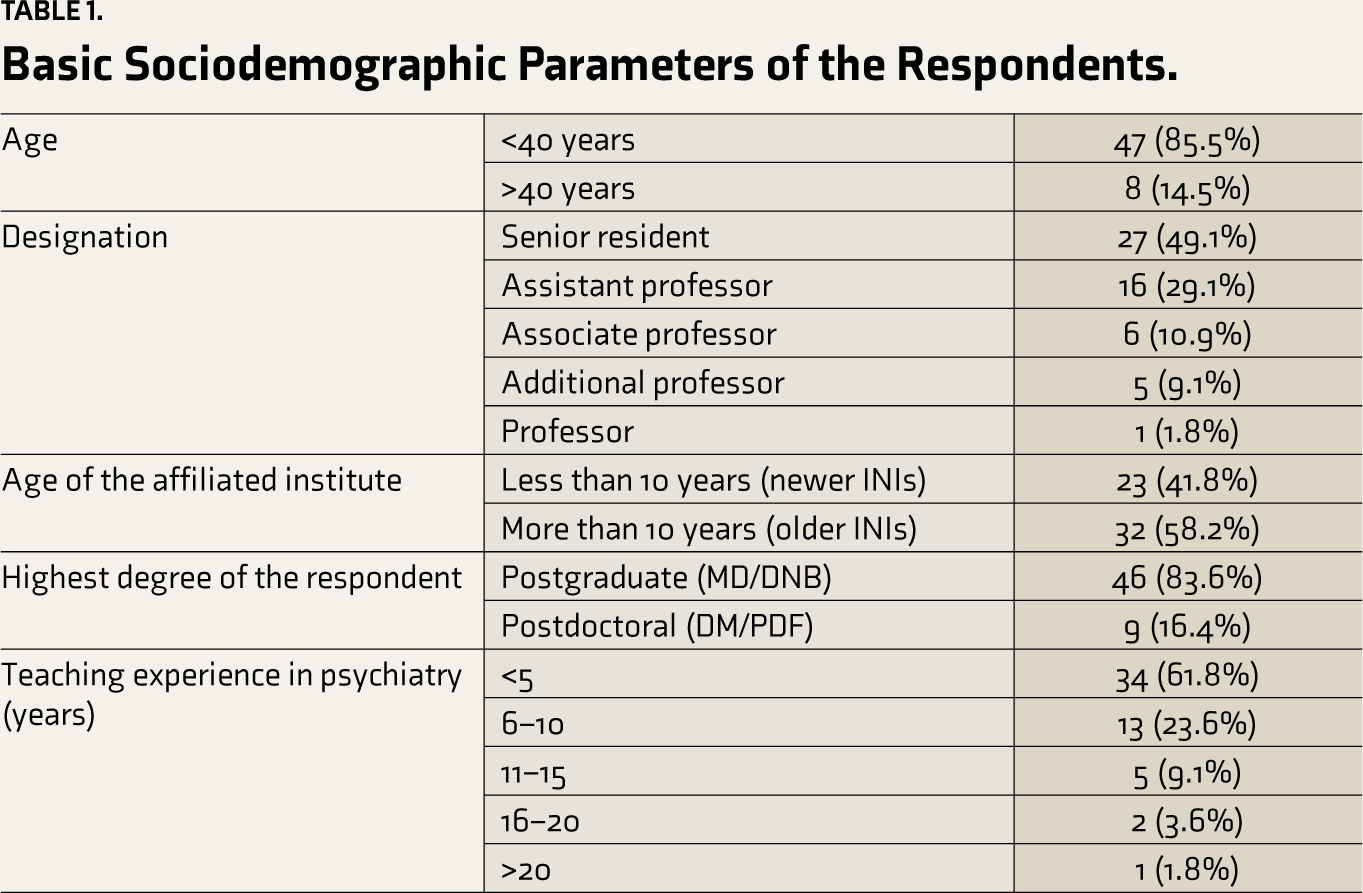
Table 2 shows the frequency of the responses to the mandatory questions of the survey. It was found that 92.7% of the responders felt that there was a need for training in UG teachers of psychiatry. However, only 81.8% of the responders were willing to undertake the training, and 45.5% were willing to pay to undertake the training. Training need was appreciated among 69.1% of postgraduate (PG) teachers of psychiatry. Most of the responders reported that they felt that they required training to teach both theory and clinics in UG psychiatry.
Descriptive Analysis of the Responses.
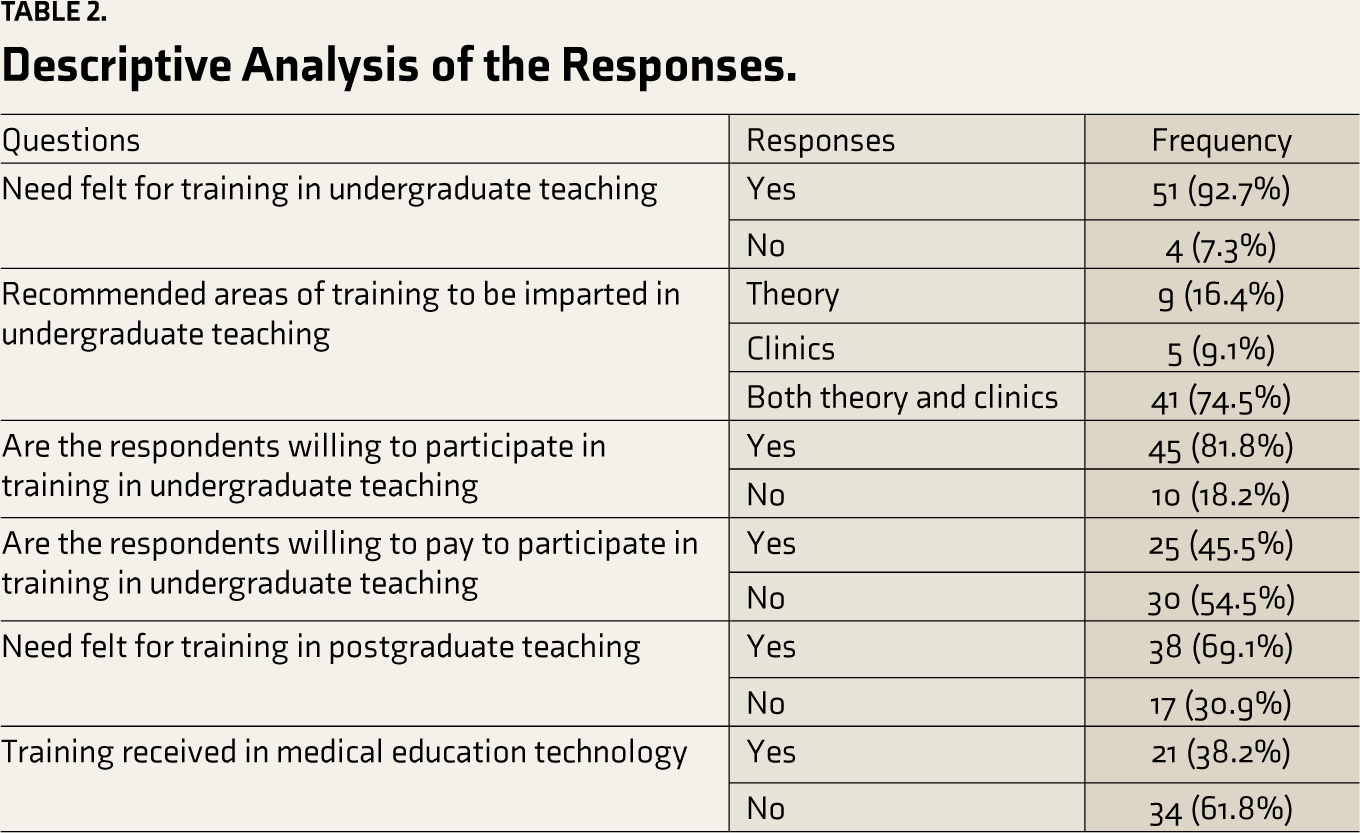
Table 3 compares the responses among residents and faculty members (assistant professors, associate professors, additional professors, and professors). It was found that a significantly higher number of faculty members had received training in medical education technology (p = 0.005) and were willing to pay for the training compared to the residents, though this difference missed the mark of statistical significance (p=0.106).
Analysis of the Responses Based on the Designation of the Respondents.
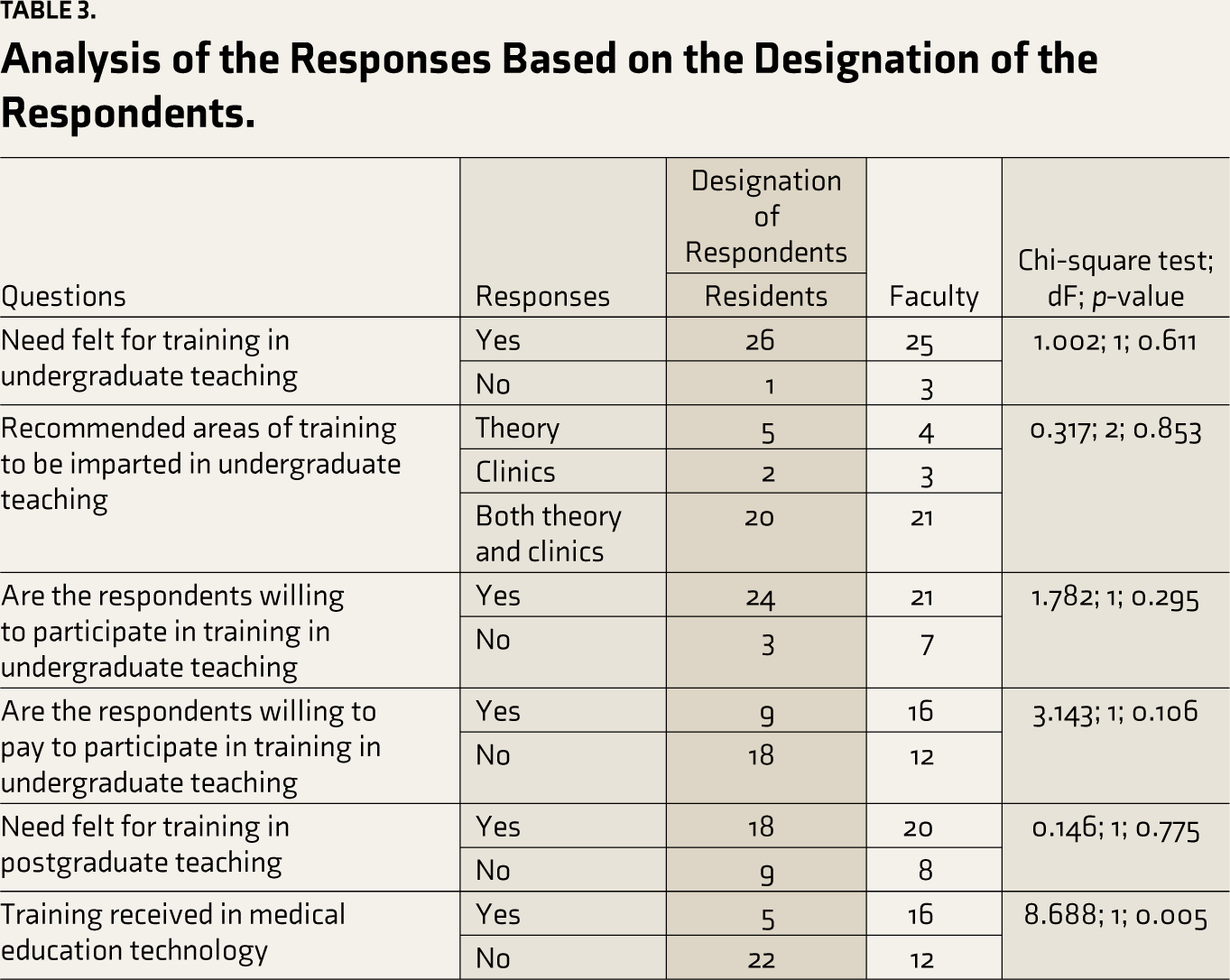
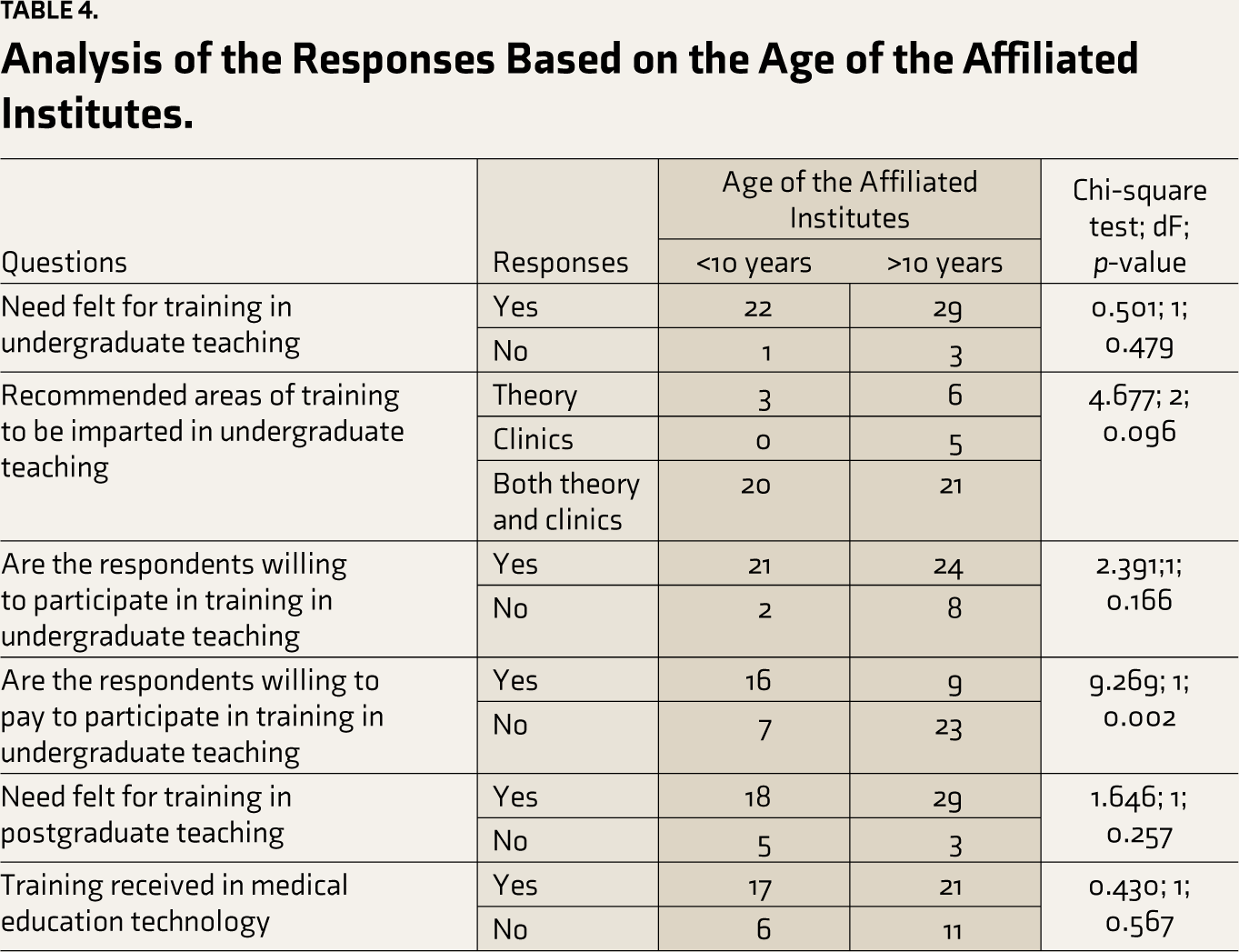
Table 4 shows the comparison of the respondents from newer INIs (age <10 years) versus older INIs (age>10 years). The older INIs comprised AIIMS New Delhi, Bhopal, Raipur, Jodhpur, Patna, Bhubaneswar, and Rishikesh. All other INIs were considered as newer INIs. It was found that a significantly higher number of respondents from the newer INIs were willing to pay to participate in training in UG teaching (p = 0.002). The table also showed that a higher number of respondents from the older INIs felt that they required training in teaching clinics in UG psychiatry (though it was statistically not significant, p = 0.096).
Analysis of the Responses Based on the Age of the Affiliated Institutes.
Overall, responses to the nonmandatory questions from 16 respondents were complete and were used for thematic analysis. Table 5 depicts the common themes reported by the respondents for targeted training of teachers of UG psychiatry, along with the frequency of them being reported. The suggested themes were comprehensive and ranged from topics pertaining to medical education (e.g., curriculum-based medical education), core clinical sub-specialties, and newer advances (e.g., artificial intelligence).
Suggested Theme Generated Using Thematic Analysis for Targeted Training of Teachers of Undergraduate Psychiatry.
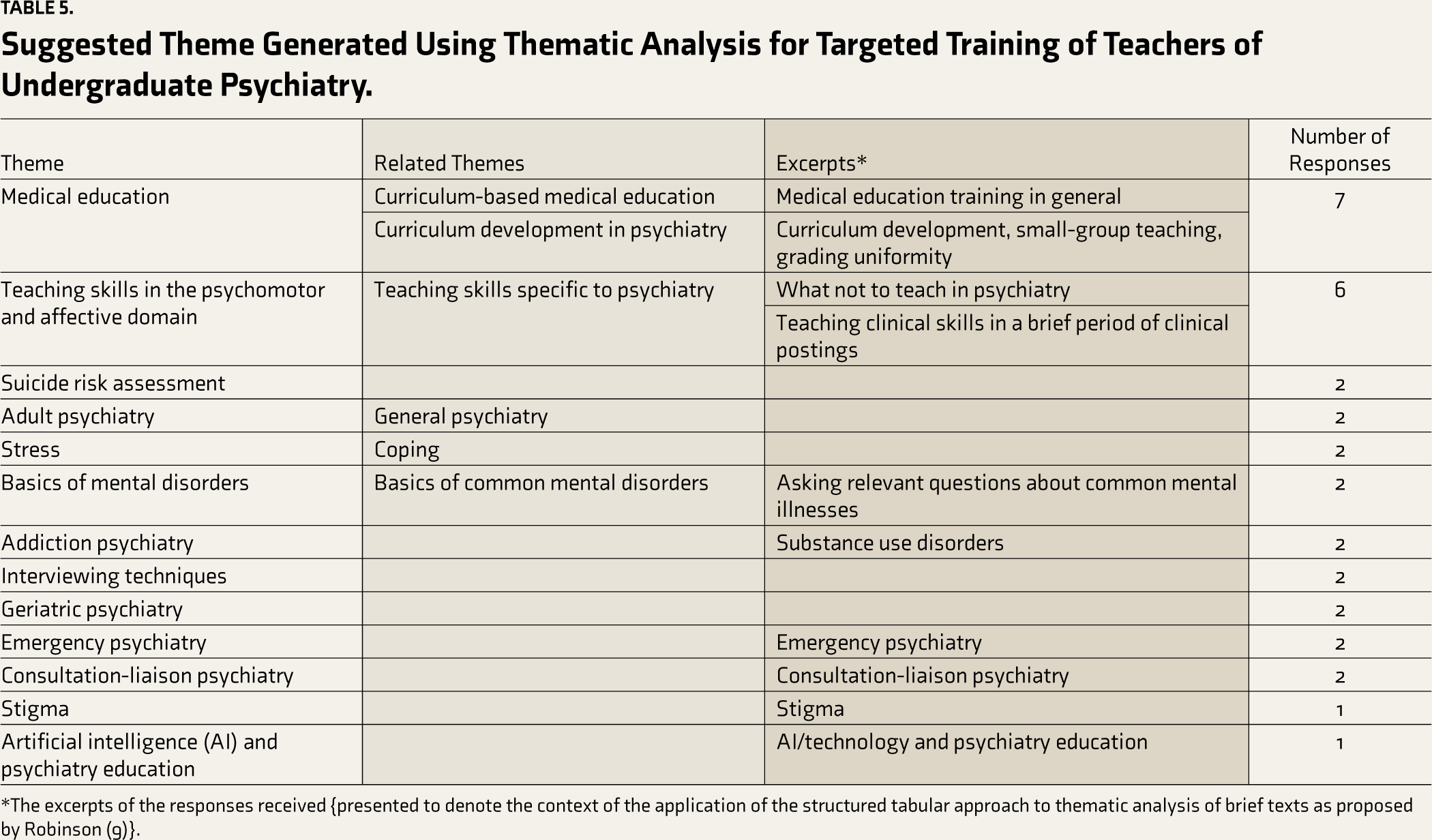
*The excerpts of the responses received {presented to denote the context of the application of the structured tabular approach to thematic analysis of brief texts as proposed by Robinson (9)}.
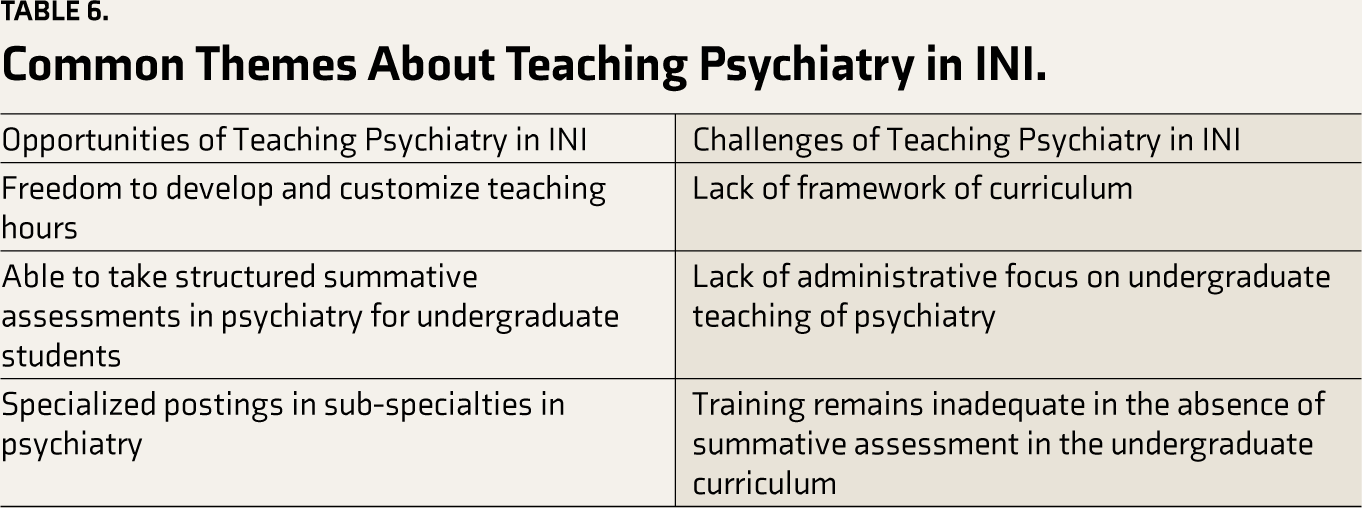
This survey was designed to investigate the viewpoints of teachers working in institutes outside the purview of the CBME implemented by the NMC. Table 6 depicts the commonly reported opportunities and challenges of working outside the framework implemented by the NMC.
Common Themes About Teaching Psychiatry in INI.
The Checklist for Reporting Results of Internet E-Surveys (CHERRIES) report for this study is available as supplementary Table 1.
Discussion
Our study was conducted with the objective of obtaining the opinion of psychiatry teachers working in INIs regarding their training needs for medical education technologies. Overall, from our survey, we found that 92.7 and 69.1% of the respondents reported the need for training in UG and PG teaching. This data is comparable to the study by Kishor et al, where the need for training in UG teachers of psychiatry from Karnataka was 87.2% (7). In our study, 74.5% of the respondents felt that they required training in teaching “both theory and clinics,” whereas the rest of the respondents either chose theory (16.4%) or clinics (9.1%). This was different from the results obtained from the study by Kishor et al, where 97% of the respondents appreciated a felt need for training to teach both theory and clinics. One of the reasons behind this substantial need for training is that only 38.2% of our sample had any past training in medical education technology. Additionally, almost 85% of our sample had a teaching experience of less than 10 years (Tables 1 and 2).
When the data was compared for the respondents working as residents with those as faculty members, it was found that a significantly lower proportion of the residents had any training in medical education technology (Table 3). However, the felt need for training and their willingness to participate in training were the same, at a comparable level with the faculty members. This is an important caveat in the existing system because very few training initiatives exist for psychiatrists doing senior residency. However, they form a very important part of the teaching cadre in any institute in the country. However, expectedly, a higher number of faculty members expressed their willingness to pay for the training, as compared to the residents. This finding could be attributed to the fact that, as compared to residents, faculty members of INIs have access to more resources, including learning resource allowance.
In Table 4, we compared the responses from older INIs (> 10 years) with those of newer INIs (<10 years). It was found that a significantly higher number of residents from the newer INIs were willing to pay for their training in UG teaching. The possible reason behind this could be the fact that in most of the newer INIs, the recruitment process is ongoing, which has led to a lesser number of faculty members guiding the residents. Hence, the residents may have shown a desire to undergo specialized training in medical education, which may involve charges. Recently, with the advent of the CBME, there has been an increased demand for having some experience in teaching-learning methods for faculty interviews. This should further strengthen our resolve to organize training programs for resident psychiatrists. The need for more training for teaching among psychiatry residents has also been reported in another study published in the United States. 10 However, a systematic review of the topic gives a clear verdict that such training led to improvement in the teaching skills of the residents. 11
In our study, we also asked the respondents to suggest various themes for targeted training for UG teachers of psychiatry (Table 5). The commonly suggested theme could be classified into three major domains. The most reported domain dealt with medical education in general. Training needs in CBME and curriculum development were the most popular choice. The second theme was that of core clinical topics (e.g., suicide risk assessment, stress, and coping). The third theme was of newer advances in the field (like artificial intelligence). Overall, though there is no representative data for comparison, the themes of the training needs are in sync with the anticipated needs of contemporary teachers.4,12
Our respondents were also asked to express their opinions about what they appreciated as the strengths and weaknesses of teaching psychiatry in INIs outside the framework of CBME (Table 6). The themes that arose could be useful for planning further studies exploring the nuances of the development of a psychiatry curriculum in an autonomous institute. Many respondents reported from AIIMS Deoghar and AIIMS Rishikesh reported that summative assessments in psychiatry in their institutes have been helpful in driving UG learning of psychiatry. In contrast, respondents from other INIs mentioned that the absence of summative has been a major reason behind inadequate training in psychiatry. Respondents also presented alternating viewpoints to the proposition of being outside the NMC framework of CBME. While some appreciated it to be a freedom and an opportunity to customize their curriculum, others looked at it as a challenge.
The strength of the study was that it was a pioneer work in this area. We also used a systematic way to recruit our participants. The use of an online mode helped us seek the opinions of respondents across the country in a short period. Additionally, we could perform a thematic analysis of the responses, which can provide a groundwork for further studies. We did involve senior residents, which could give a comprehensive picture of what future faculty members or young psychiatry teachers feel about the subject matter. The major limitations of the study included a poor response rate, which limits the generalizability of the results. Additionally, the responses were not anonymous, which hindered honest responses and hence could explain the fewer responses to the nonmandatory questions.
To conclude, our study showed that there is a substantial need for training among the teachers of psychiatry in the INIs. They expressed their need both in UG and PG teaching. This need was also appreciated by the residents for whom the scope of training in the current scenario is limited. The major themes on which the teachers required targeted training were synchronous to the demands of the current curriculum. Finally, this study provided with some groundwork regarding the strengths and weaknesses of teaching psychiatry in INIs. Further studies on this topic, using a qualitative design, should be planned to understand the nuances of working in an autonomous institute.
Supplemental Material
Supplemental material for this article is available online.
Footnotes
Declaration of Conflicting Interests
The authors declared no potential conflicts of interest with respect to the research, authorship and/or publication of this article.
Declaration Regarding the Use of Generative AI
We assume full responsibility for the entire content of the manuscript, and no parts were generated by the AI tool.
Ethical Approval
Ethics approval was obtained from Adichunchanagiri Institute of Medical Sciences (No: AIMS/IEC/101/2024).
Funding
The authors received no financial support for the research, authorship and/or publication of this article.
Informed Consent
Informed consent was obtained from all the study participants.
References
Supplementary Material
Please find the following supplemental material available below.
For Open Access articles published under a Creative Commons License, all supplemental material carries the same license as the article it is associated with.
For non-Open Access articles published, all supplemental material carries a non-exclusive license, and permission requests for re-use of supplemental material or any part of supplemental material shall be sent directly to the copyright owner as specified in the copyright notice associated with the article.
