



Abstract
Background:
Nomophobia is a situational phobia evoked by unavailability of smart phone or the thought of the possibility of not having it, not being able to use it and losing it. Currently used instruments for assessment of severity of nomophobia offers challenges of administration and have limited applicability in the Indian setting. Therefore, this study was aimed to depict and understand the lived experience of college students with nomophobia and making sense of it.
Methods:
This interpretative phenomenological analysis research design study was carried out on 17 undergraduate students belonging to different academic streams including Science, Social science and Commerce from the three study sites situated in different locations of India. An in-depth interview guide was prepared. The students who scored more than 90 on nomophobia questionnaire (NMP-Q Questionnaire) were included in the study. The data was recorded in audio and video format, it was transcribed, and translated from Hindi to English language. Coding was done and the theme were extracted.
Results:
The findings identified six superordinate themes: Digital Obsession, Digital Compulsion, Approval Motivation, Digital Intensement, Digital Well-being and Insight.
Conclusion:
The lived experiences of the students with nomophobia had explicitly shown a strong inclination towards the smartphone. They also focused on some of the significant aids provided by the smartphone. Further the intensive use of the smartphone was posing major challenges to the students when they were away from it.
Keywords
Nomophobia is a situational phobia evoked by unavailability of a smartphone. This study tried to depict and understand the lived experience of college students with nomophobia. This interpretative phenomenological analysis was carried out to extract the themes of nomophobia. Themes: Digital Obsession, Digital Compulsion, Approval Motivation, Digital Intensement, Digital Well-being and Insight. Lived experiences of nomophobes were predominantly difficult posing major challenges to them.Key Messages
Smartphone holds an intrinsic value in a person’s life. Its manifold advantages have made humans more inclined towards it thereby resulting in psychological as well as physical maladies.1, 2 Nomophobia as a construct can be understood as a situational phobia evoked due to the unavailability of smart phone or the thought of not having it, not being able to use it and losing it. It was first coined in 2008 by the United Kingdom Post Office, to study anxiety levels of the mobile phone users. 3 The discrepancy in reporting the prevalence of nomophobia is considerable due to lack of universal acceptance of this construct as a diagnostic entity in current nosological system, as the percentages of ‘at-risk’ individuals range from 13% to 79%, and those suffering from it range from 6% to 73%. 4 Case studies reported indicated nomophobia had close relationship with panic disorder and social anxiety disorder.5, 6 It may be also co-morbid with problematic use of smartphone. 7 However, such self-reporting-based evidences are not very accurate.
Very few studies have been attempted to assess objective validity of Nomophobia construct. The pioneer study in this area was done by Yildrim and Correria 8 in which they have developed Nomophobia Questionnaire (NMP-Q). NMP-Q is a standard instrument to measure the severity of nomophobia. It has four domains which were extracted through thematic analysis. Other studies demonstrated one major additional theme (dependency on social sites for approval motivation).9, 10 Another instrument of nomophobia was developed by Ozkan et al. who extracted the themes with the expert opinion which were interwind identity (seeking validation from virtual world), attachment, conflict in using a smartphone and effective withdrawal. 11 Similarly, a recent study (Firat Nomophobia Scale) extracted a single dimension while assessing nomophobia. 12
Most researchers used NMP-Q to validate a questionnaire on nomophobia worldwide.13–15 Therefore, as it is evident the nomophobic patterns of the subjects analysed through objective techniques like thematic analysis are very few. Thus, more research is warranted to investigate nomophobia as a theoretical construct and diagnostic entity. Understanding the lived experiences of Indian undergraduate students belonging to different streams and regions would support building our indigenous tool for nomophobia. Therefore, this study aimed to understand the insights gained from the students with nomophobia and explore the theme as per their lived experiences.
Material and Methods
Participants and Setting
The present study had an interpretative phenomenological analysis (IPA) research design. It was conducted from November 2021 to October 2022. Institute ethics committee approval was taken before inclusion of the subjects in the study. The sample for the present study consisted of 17 undergraduate students (n1 = 8, n2 = 6 and n3 = 3) where they were interviewed individually. The standards for phenomenological research were taken into consideration for the study. Undergraduate students from different streams across three different locations of India who were willing to participate in the study were included. The students from different locations of India with varied streams (e.g., Science, Social Science and Commerce) scoring more than 90 (moderate to severe) on the severity scale of Nomophobia 8 were selected for in-depth interview.
Instruments
NMP-Q was used to screen the students with Nomophobia (20 items). It has four domains: not being able to communicate (the fear of not reaching out to family or friends instantly), losing connectedness (the apprehension of getting disconnected from the online identity), not being able to access information (the feeling of discomfort of not being able to access information through a smartphone) and giving up convenience (the fear of not able to use in case of battery running low and shortage of data). Each item scored on a 7-point Likert scale. The score range on the NMP-Q is 20 at its lowest and 140 at its highest. Scores of 20 or less are considered absence of nomophobia, 21–59 is a mild level of nomophobia, 61–99 is a moderate level of nomophobia and 100–140 is severe nomophobia. 8
An in-depth interview guide was based on the previous severity instrument. 8 The interview was kept open as well as close-ended if some new theme appeared during the interview for more in-depth exploration. The main points explored during the interview were purpose of using smartphone which included few probe questions. It also included questions related to screen time consumption, insights on smartphone usage, contribution of smartphones to their everyday life, advantages and downsides of having smartphone and to share the overall experience with smartphone.
Procedure
The student’s socio-demographic details along with clinical variables were recorded with semi-structured proforma. The interview was conducted in a hospital located in three different cities of India which consisted of one psychiatrist, clinical psychologist and a project technical officer. The process of interview was followed by transcription of the interview followed by translation from Hindi to English after which themes were identified and extracted accordingly.
The interview was video recorded after taking due permission from the students. Each interview was conducted in the language in which the students (English or Hindi) were comfortable. The interviews took almost 1 hour. The interviews were conducted by one psychiatrist and project technical officer who acted as the note taker. Data were collected until saturation was achieved.
Data Analysis
IPA was used to analyse the data (shown in Figure 1). The video-recorded interview was transcribed by the project technical officer of three different sites after listening again and again. The transcription was then translated from Hindi to English language if required. The transcribed data for each interview were read and re-read to gain conformity with the raw data. During this process of familiarization, the newly developed codes were highlighted by all three researchers (psychiatrists, clinical psychologists, and project technical officers) of individual sites independently. These emerging codes were compared with each other to identify themes. The categories were written on the left side and common themes that came out were written on the right side. This was done many times so that no theme was left out. It was cross-checked again by the other researchers (psychiatrists). Then, similarities between categories were looked for and emerging themes were noted (focused coding). The themes were analysed along with the supporting data (quotes) to fit together in a meaningful way. The analysis of the data was done by the methods of phenomenological psychology, which were used to interpret the important meanings of the students’ lived experiences of advantages and downsides of smartphones. Analytic rigour was ensured via internal reviews by the members of the research team through Zoom meetings at three different locations.
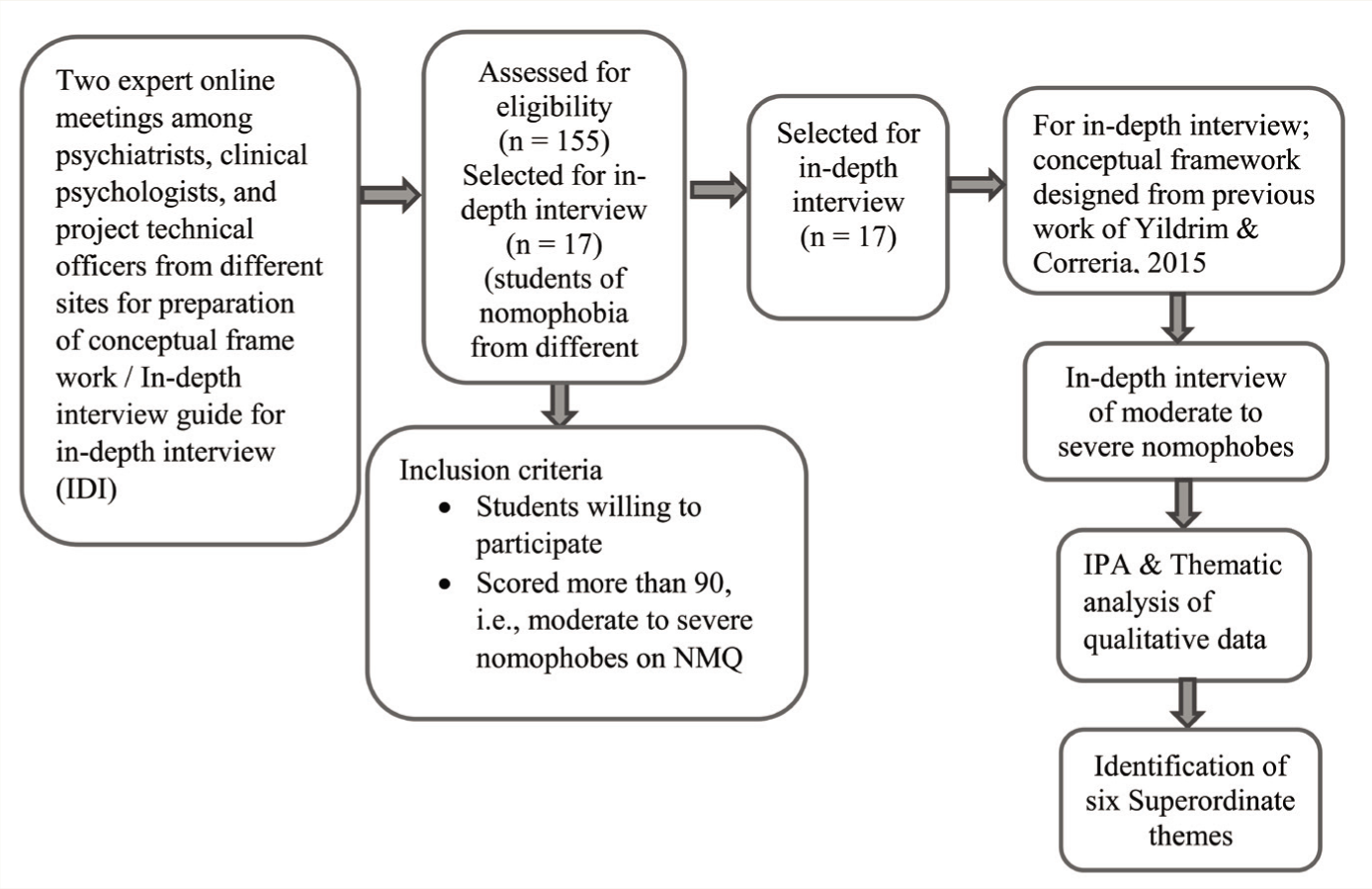
*n = Number of students.
Results
Seventeen students were interviewed in our study. Majority of the participants were males (52.94%) aged between 21 and 22 years. Most of the participants were from urban backgrounds, belonging to middle socio-economic status. They were mostly Hindu (88%) except for two belonging to Sikh & Islamic backgrounds. The socio-demographic details are represented in Table 1.
Socio Demographic Profile of the Sample Population (
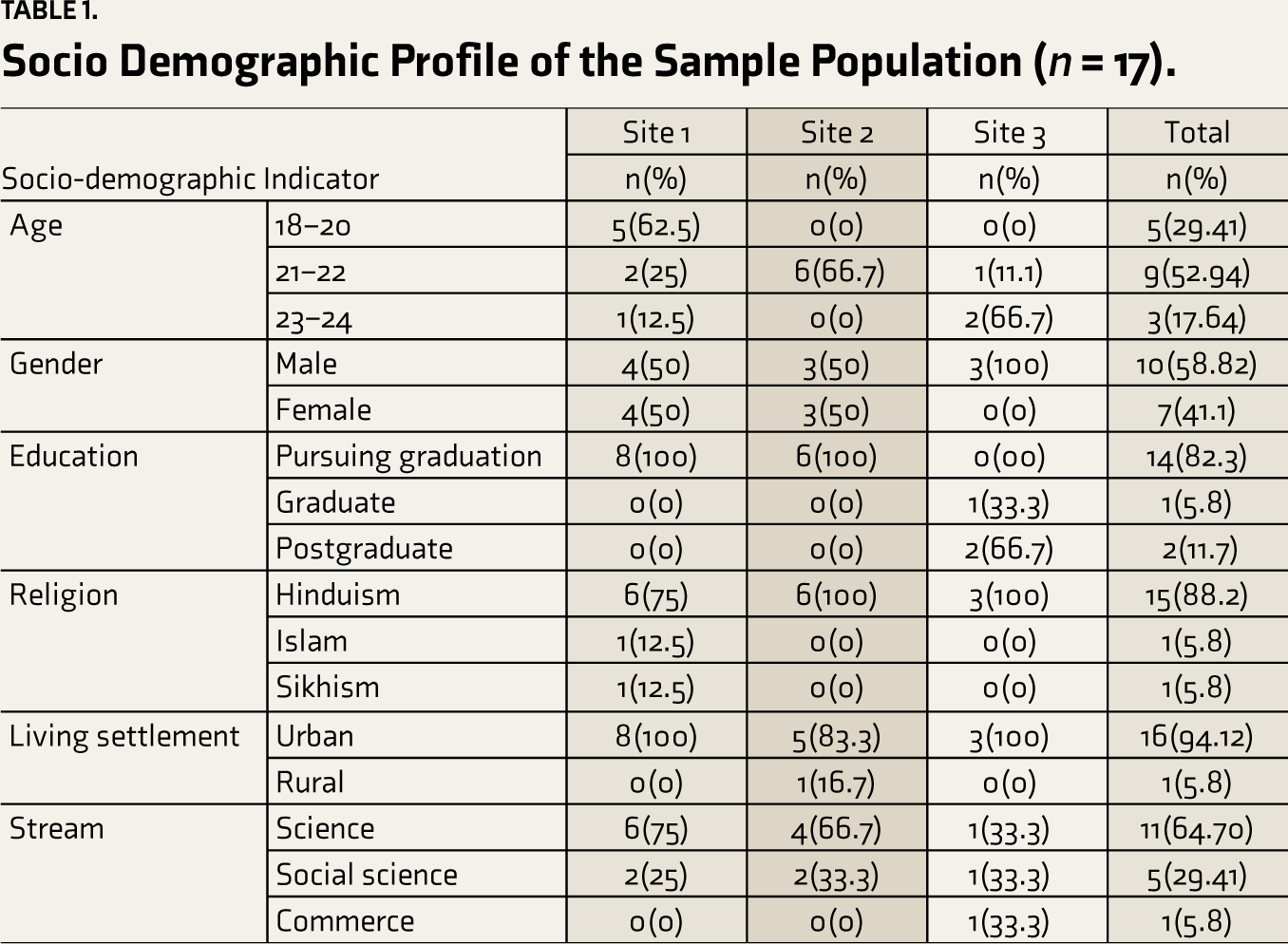
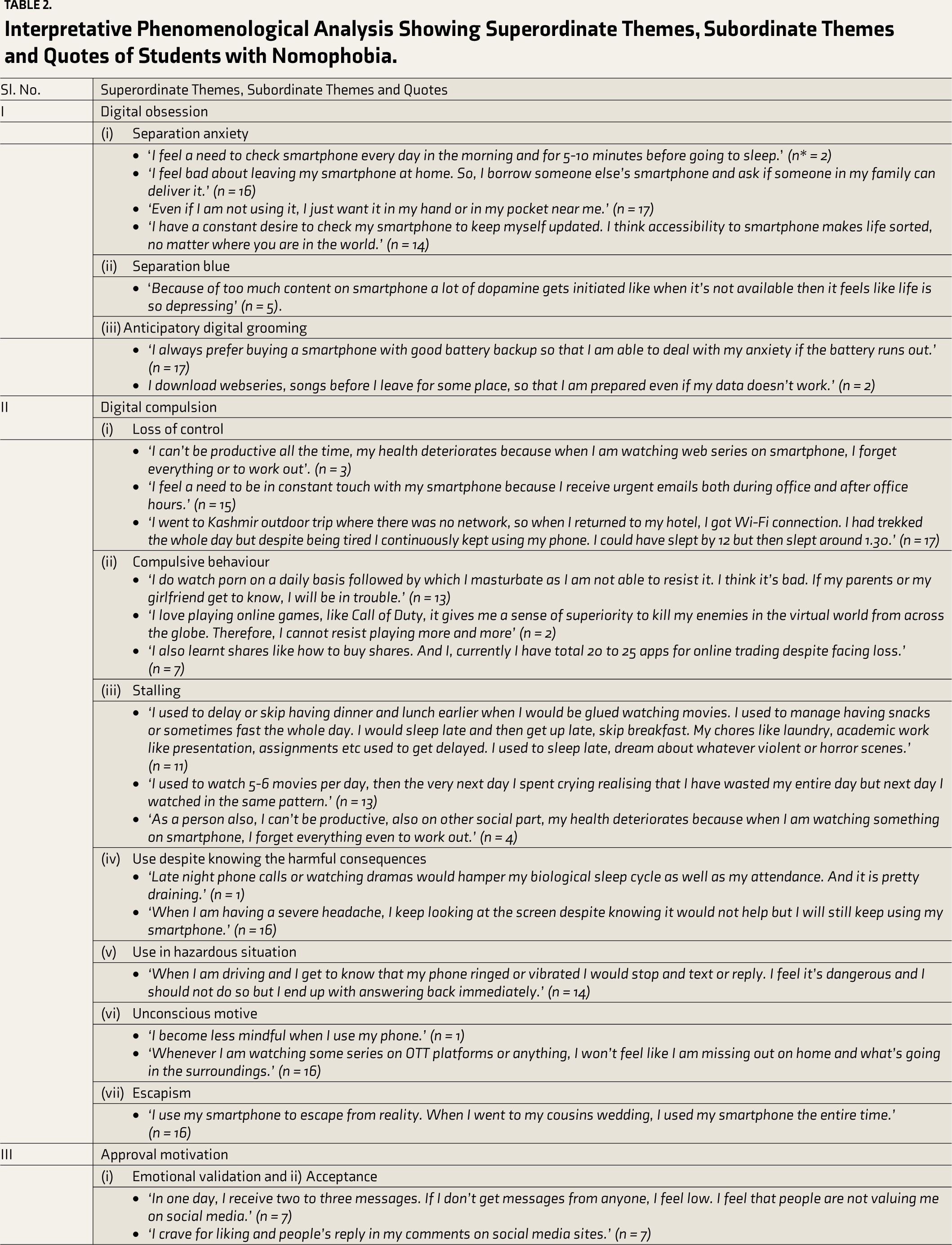
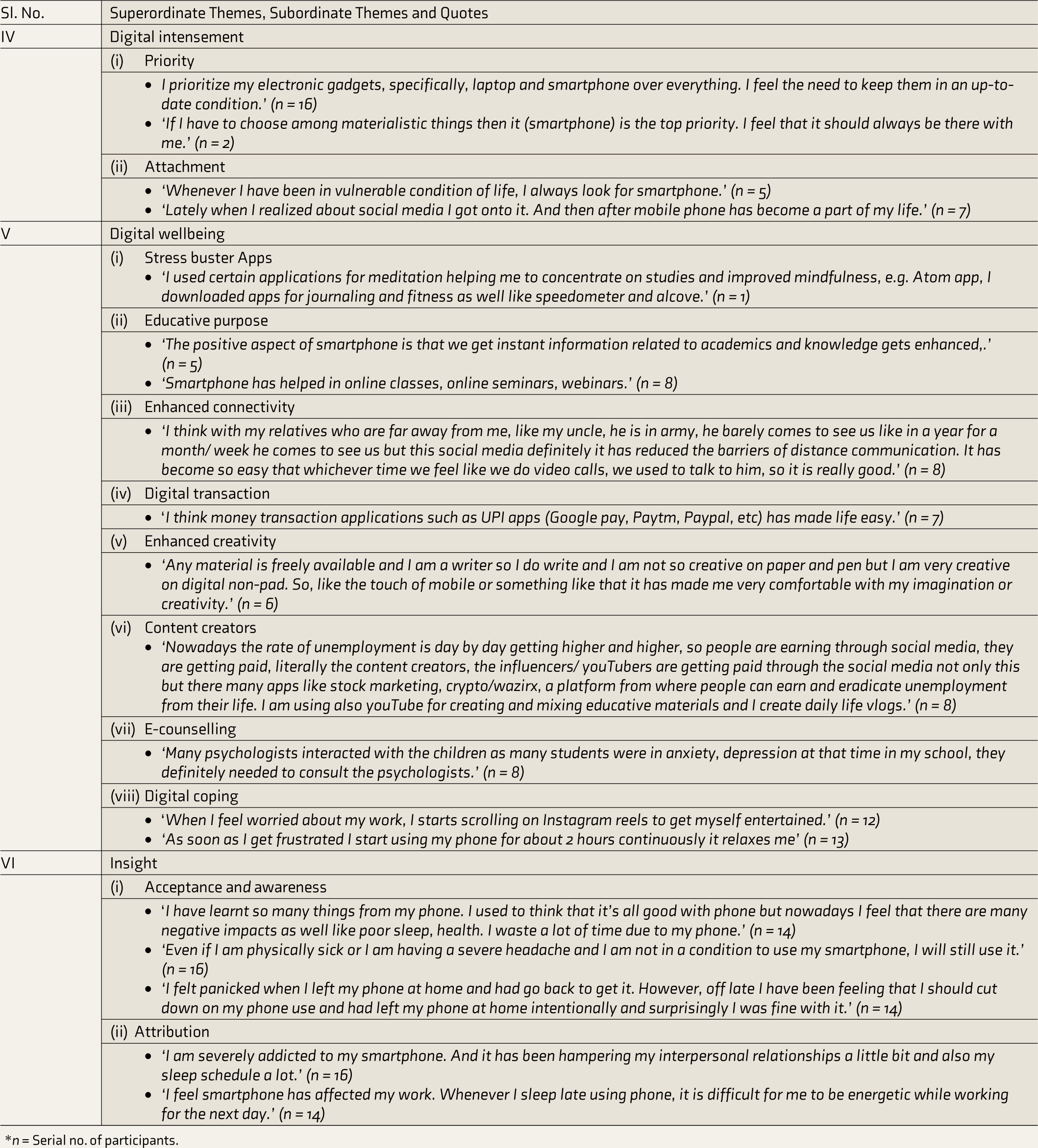
Table 2 describes the superordinate and subordinate themes with the quotes of the students with nomophobia.
Interpretative Phenomenological Analysis Showing Superordinate Themes, Subordinate Themes and Quotes of Students with Nomophobia.
*n = Serial no. of participants.
Superordinate Theme 1: Digital Obsession
This super ordinate theme consisted of the following sub ordinate themes namely: separation anxiety (it described apprehension that may occur due to not using phone or while using it), anticipatory digital grooming (prefer buying smartphone which has good battery backup so that the participants do not miss out on anything) and separation blue (feeling of gloominess when the participants were away from their smartphone).
Superordinate Theme 2: Digital Compulsion
This superordinate included nine subordinate themes. The first one is loss of control following which participants explained that due to loss of control over their smartphone usage, they could not be more productive. Second theme stalling explained that the participants wanted to complete their work quickly so that they could use their mobile phone again. One of the participants reported that being hooked on to mobile phone decreased their appetite or that they skipped their meals. Third subordinate theme, that is, used despite knowing the harmful consequences revealed that it disturbed the sleep cycle and deteriorated the academic performance. Fourth subordinate theme is used in hazardous situations where participants also felt physically/mentally and emotionally drained and continued using mobile phones despite its harmful consequences. Fifth theme is social withdrawal where few participants lost their social connections because of smartphone use and they preferred staying alone than mingling up in any social gathering. Sixth theme is compulsive behaviour which consisted uncontrolled online activities like gaming/ pornography/ shopping/trading and dating. The participants reported that increased use of the smartphone has made them less mindful of their surroundings which justifies the seventh subordinate theme, that is; unconscious motive. For some of the participants, smartphones acted as a tool to escape from reality where our eighth subordinate theme escapism is concerned. Constant touch with the smartphone described our last subordinate theme instant use of smartphones.
Superordinate Theme 3: Approval Motivation
This superordinate theme consists of emotional validation and social acceptance. Participants reported that they crave likes/comments if they tend to post something on social media. According to them, it gives emotional acceptance from the people available on the social media platform and if they do not get desired likes they feel low. They feel attached to their social media accounts.
Superordinate Theme 4: Digital Intensement
This superordinate theme consists of two sub ordinate theme. The first theme, that is, priority where participants discussed elaborately that they have prioritised their smartphone over family. The second theme attachment shows the influence of smartphones in their lives so much so that they consider it to be their strong companion and feel there is something to rely upon.
Superordinate Theme 5: Digital Well-being
This superordinate theme describes the advantages of smartphone which consists of various subthemes. The first, second and third theme shows easy accessibility of smartphone where few students reported that cheap data has made them more attached to their phones as it has enabled them to download stress buster/ educative apps. The ease of access and instant connectivity has made smartphone more attractive to them respectively. The fourth theme namely enhanced creativity has made participants show their creativity such as writing poems on online platform and the fifth sub theme that is content creator which is resulting in employment generation through social media apps. The sixth theme is about e-counselling which has facilitated online counselling provision. The seventh theme, that is, digital transactions describes the benefits of online payments. The eighth theme is about educative purposes where smartphone use has helped in their academic growth. And the last theme is about digital coping where it has helped the participants enhance their coping mechanisms and skills
Superordinate Theme 6: Insight
It consists of three sub-ordinate themes that is acceptance, awareness, and attribution. The first emerging theme acceptance depicts realization and need for help because of excessive use of smartphones. The second theme describes the awareness of negative impact of smartphone use on physical and mental health. In the last theme, the participants attribute that uncontrolled smartphone use has resulted in dysfunction in their interpersonal relationships, work, and privacy of life.
Discussion
The aim of this study was to understand the insights gained from the students with nomophobia and explore the themes as per their lived experiences with their smartphone use. This study helped in coherently understanding the underlying cause of perpetual smartphone use by the students and their fear of losing and being away from it.
Inclusion of nomophobia in the group of situational phobias have been proposed. Therefore, nomophobia may be co-morbid with problematic use of smartphone. Severe nomophobia often occurs along with smartphone dependence or problematic use of smartphone and both interferes with the daily life of the affected person. Previous literature has called for more in-depth, cultural research on persons with nomophobia subjective processes. We decided to conduct our study in three different locations in India to obtain the local descriptions for understanding the cultural contexts of different regions instead of presupposing the experiences from a single cultural perspective. Our study adopted a robust methodology to understand the phenomenology of nomophobia. IPA with thematic analysis was used to attach the objective meaning to lived experiences of the students with nomophobia. In order to determine the ill -effects of smartphones on the younger generation of society the nomophobia construct developed by Yildrim & Correria 8 was our conceptual framework for our in-depth interview guide which was used conducting the in-depth interview with our study participants, which were screened by applying NMP-Q (moderate to severe students with nomophobia of different streams were selected who scores more than 90 in NMP-Q). As per the previous literature, it is still debatable whether nomophobia term deals with fear of not having smartphones only or applies to other gadgets as well. From our study, it was evident that the fear of not having smart phone to be considered separately as it significantly affects the users as it is more handy, easy to use than other gadgets.
From the findings of our study, we came up with the themes of digital obsession, digital compulsion, approval motivation, digital intensement, digital well-being and insight. Some cultural differences from our study using the lived experience paradigm have been highlighted across all the major themes.
Irresistible Fascination with Gadgets
Preoccupation with the thought that smart phone should be always with them and fear of losing it or not able to access it, which make them involve in all necessary preparation activities to keep them accessible always is the core construct of digital obsession of students with nomophobia. In our study participants have said that they always keep their smartphones full charged and buy smartphones with good battery backups, if they forget to take smartphone outside, they try to get it by whatever possible way. One participant said that he bought smart watch to get connected with the smartphone always. These statements of the participants suggests that there is always a fear among smartphone users of how to handle the situation when their smartphone is not with them. Other than this, students with nomophobia tend to have emotional quotients lower than non-nomophobes. 16 They tend to watch too much content from their smartphone, their dependency on smartphones has constricted them to the four walls of the room. They are too uncomfortable talking to people.
The themes ‘not able to access information’ and ‘giving up convenience’ in study by Yildrim & Correria (NMP-Q) 8 are supported by our findings under our theme of ‘digital obsession’ where students with nomophobia find it difficult for themselves if they are not able to access information or not being able to use the smartphone. Similarly, theme ‘attachment’ in another study 11 is similar to our subtheme ‘anticipatory digital grooming’. students with nomophobia are always in anticipatory fear of losing smartphones and to avoid that involved in activities such as always keeping the smartphone charged, spending lot of money in getting smartphones with good battery backups as mentioned above.
Compelled to use Smartphone
Despite knowing the harmful effects of smartphone use, users are facing the compulsive urge to use smart phone which are not in their control. 17 In our study participants realise that their time get wasted and their productive work has been disrupted, and they are facing physical harm like headache, visual disturbances, and using smartphone as an escape mechanism to avoid social gatherings. Constant use of smartphone takes them away from their family and social life because of which they may fail to feel pleasure in the real world. 18 They may seek pleasure from a completely dramatic world and may not able realize this lose while using smartphone. 19 Even if they realise they may be unable to stop using smartphones in many situations. As days pass by smartphone users lose control over their smartphone use and use phone due to compulsive urges despite knowing its adverse use. 20
Digital compulsion theme ‘conflict’ mentioned in recent study 11 is similar to our theme of ‘digital compulsion’ where students with nomophobia realize the harmful effects of using mobile phones but they are still not able to control the use of smart phone. The theme ‘avoidance’ which correlates with our subordinate theme of ‘social withdrawal’ under ‘digital compulsion’ where introvert people use smartphones as they are reluctant to face society and this also support the finding of other studies which described smartphone usage as a maladaptive coping skill of introvert people. 21
Seeking Happiness in the Farce World
In the current world, youngsters want themselves to be recognized by others. Smartphone may acts as a platform to this effect where people find that their ideas are getting traction in others views. In our study participants have explained their inner pleasurable experience when they saw ‘likes’ for their Facebook posts and their craving for getting approval and also the feeling of discomfort when were not getting the response. Some people feel that if they get approval for any of their ideas, they are able to help others which gives them personal satisfaction. This might explain that they could be either an introvert or in much need to seek attention from the virtual world. The theme ‘interwined identity’ in a study 11 is supported by our theme of ‘approval motivation’ where users are waiting for acceptance of their ideas in social media.
Drifting Away from Social Milieu
The smartphone has taken priority over other productive things in life of the people. In our study people reported smartphones are like their companions and they feel it has been integrated and occupied a major part in their life. The unavailability of the smartphone causes feeling of incompleteness within them. This gives us a conclusion that people are giving a major chunk of space in their life for smartphones without which they cannot imagine their life and losing it instils a fear of losing their best companion.
Smartphone as a Social Battery
Smartphones are helping us in many ways and that creates a dependency which has made people think that their life has become very difficult without smartphones. In our study participants believe that smartphones are easy and more acceptable way to acquire any information they search for. It also helps them to connect with other people whom they meet very rarely. They also described that phones are helping them to shop things online which saves their energy, time and expenses for travelling to the market and luxury of getting everything on their doorsteps just by tapping buttons. In the current era online classes and online jobs take the upper hand for which smartphones act as an important tool. Participants feel that they get relaxed, feel more confident and motivated by having online counselling from psychologists and going through videos whenever they get stressed. This suggests that people are not able to cut down the smartphone use as they feel that it gets added to one of their basic needs to access things. 22
Realization of Problematic use of Smartphone
It is difficult for smartphone user to cut down using it, even after being aware of negative impacts on physical health, psychological health and social behavior. 23 People are aware of mental health changes happening within them with excessive use of smartphone. Participants in our study realized that smartphone usage has brought many negative effects like health issues, separating them from the external real world, hindered interpersonal relationship, disturbing their biological functions like sleep which reduced their productivity during working hours and led to changes in their personality. They spontaneously came up with these statements without any leading question from our side and they felt bad about their inability to cut down the smartphone use. This suggests that smart phone users are very much aware about their problem behaviour of excessive smartphone use even no one is making them to realize.
Our study had few limitations. Our study relied on online interviews with few participants which we could not conduct in person due to COVID-19 restrictions at the beginning of our study. Therefore, systematic direct observations of the initial participants were not done. Also, for the homogeneity of the interview, interviewers of collaborative centres were trained by primary centre interviewers who had experience in conducting such in-depth interviews. However, still there might be variability in the conduct of interviews across all three centres. Also, we conducted interviews for moderate and severe students with nomophobia to get enriched nomophobic experiences. Mild levels of students with nomophobia were left out which might not completely reflect the experiences of persons with nomophobia.
To conclude, the lived experiences of students with nomophobia seemed to be variable. While the lived experiences were predominantly difficult for the majority of students with nomophobia, posing major challenges to them when they were away from smartphones, some of them also reported a brighter side of it, if smartphones are used with a purpose. This study finding would further help in developing a valid questionnaire in the Indian context, which would broaden the research for the construct nomophobia. Our study finding will pave way to design valuable tools and criteria to detect nomophobia and help to intervene at the earliest.
Footnotes
Acknowledgements
This multi-centre study was supported by Indian Council of Medical Research (ICMR Grant No. Adhoc/165/2020/SBHSR; Project code- 2020-0641).
Declaration of Conflicting Interests
The author declared no potential conflicts of interest with respect to the research, authorship and/or publication of this article.
Funding
Indian council of medical research (ICMR Grant No. Adhoc/165/2020/SBHSR; ICMR Project code- 2020-0641)
Institute Ethics Committee Approval Number
AIIMS /Pat/IEC/2020/467.