




Abstract
This article presents the results of the implementation of the CDA-Stop programme with 409 adolescents between the ages of 12 and 17 in the Autonomous Community of the Basque Country, Spain, distributed randomly into the intervention group (236 participants) and the control group (173 participants). Before and after the intervention, information on the cyberviolence perpetrated and suffered and conflict-resolution styles was collected. In the post-test phase, following a qualitative methodology and the focus group technique, the impressions of a sample of 10 male and female students from the intervention group about their experience in the programme were collected. The results showed that the adolescents in the intervention group showed higher levels of cybervictimization in the post-test, which could be interpreted as a better ability to identify abusive online behaviours in their partner. Changes were observed in the perception of situations of cyberviolence and strategies to resolve conflicts within the couple, and the participants positively assessed the experiences and lessons learned, which underscores the importance of continuing this type of programme.
Cyberviolence in couples or dating relationships is a type of violence perpetrated among young and adolescent couples using technology. Analysing the term, as Reed et al. (2016) suggest, ‘cyber’ refers to the use of smartphones, computers and the Internet, instead of direct face-to-face communication; the term ‘violence’ implies control, pressure, threats, harassment or other ways of harming the partner; and ‘young or adolescent couples’ or ‘dating relationships’ refers to romantic relationships among adolescents and young adults. Cyberviolence in adolescent couples has been studied bearing in mind both partner control (often checking their social media profiles to find out what they are doing at all times, asking for their passwords to enter their accounts, controlling their contacts, etc.) and direct aggressive behaviours (sending insulting or threatening messages, spreading negative or false information about the partner, threats via technology, etc.) (Borrajo & Gámez-Guadix, 2016; Darvell et al., 2011; Donoso-Vázquez et al., 2016).
This is a relatively frequent phenomenon among adolescents, who are just beginning couple relationships, in which technology (especially smartphones) becomes particularly important as a vehicle of communication. It is know that couple relationships at this age are also characterized by being relatively brief (Cui et al., 2011, 2012), and it is common for couples to break up and get back together again, sometimes going out with or having sexual relations with other partners while they are broken up (Manning et al., 2014).
With regard to cyberviolence, it is worth noting that the review by Stonard et al. (2017) showed victimization rates in adolescents of between 12% and 56% and perpetration rates of between 12% and 54%. A more recent meta-analysis shows estimated global prevalence rates of victimization of 47%, specifically 63% for being the victim of cybercontrol and 24% for having been the recipient of direct cyberaggression. However, this study did not analyse perpetration rates (Martínez-Soto & Ibabe, 2024). Thus, studies concur in showing that cybercontrol in adolescent couples is more frequent than direct cyberaggression (Caridade et al., 2019; Linares et al., 2021). Regarding the cyberviolence perpetrated, in a study with a sample of more than 4,000 adolescents and young students, Zweig et al. (2013) found that one out of every 10 had perpetrated cybernetic abuse against their partner in dating relationships (12%), the most frequent forms being unauthorized use of the victim’s social media (6%), writing unpleasant messages (3%) and posting disrespectful pictures of their partner online (2%). According to Cava et al. (2020), in a study conducted in Spain with a sample of 919 adolescents between the ages of 12 and 18, 44.1% of the adolescents stated that they had occasionally engaged in some cybercontrolling behaviour with their partners, and 11.7% had done so more frequently, while 10.1% stated that they had engaged in cyberaggressive behaviours against their partners, 5% occasionally and 5.1% more frequently.
Furthermore, regarding differences by sex, some studies show similar victimization and perpetration rates between boys and girls (Bennett et al., 2011; Borrajo et al., 2015; Jaureguizar et al., 2024), while Yahner et al. (2014) found higher cybervictimization rates in girls and Hinduja and Patchin (2021) in boys.
Studies have tried to understand the causes and consequences of this type of violence by attempting to identify variables related to cyberviolence in adolescent couples based on the hypothesis that it is a multicausal phenomenon. However, two factors are crucial in understanding the high prevalence rates cited above:
- First, digital technology is changing interaction habits and forms of intercommunication among people (Del Barrio & Ruiz, 2014), especially younger people. The use of digital technology enables this type of violence to be perpetrated quickly, easily and constantly anywhere and anytime, although it is difficult to repair because it is very difficult to delete a trace on the Internet. This means that the aggression may continue even after the relationship is over (Bennett et al., 2011; Stonard et al., 2017; Zweig et al., 2013, which even further accentuates the experience of victimization (Korchmaros et al., 2013; Stonard, 2020; Zweig et al., 2013. Furthermore, given that the aggression happens online, empathy is inhibited because the perpetrator cannot see the suffering they are inflicting on their partner, thus maintaining the cyberviolence (De los Reyes et al., 2021).
- Secondly, the characteristics of adolescents, who are in the throes of the physical, cognitive and personality development process, make them even more vulnerable to this type of violence. Immaturity and the lack of communication and conflict-resolution skills (Orpinas et al., 2013), their difficulties regulating their emotions and perceiving the consequences of their actions (Aguilera-Jiménez et al., 2021), their lack of experience in couple relationships and the insecurities inherent in this stage, as self-esteem is developing, may be risk factors for getting involved in this type of violent relationship. Furthermore, in this life stage they are experimenting with their first couple relationships, which may be associated with subsequent violence in adult relationships (Halpern et al., 2001; O’Leary & Slep, 2003).
As Giordano et al. (2010) explain, couple relationships in which violence occurs are not only characterized by aggressive forms of interaction but also contain signs of love and care, which make it difficult for the victim to break off the relationship. In fact, these authors did not find statistically significant differences in the levels of perception of love, intimate trust and care for the partner between nonviolent and violent relationships, which reveals the complexity of relationships that include problematic forms of conflict-resolution. Similarly, Wekerle and Wolfe (1999) state that when violence occurs within an adolescent couple, it is clear that they lack competent prosocial strategies (like a refusal to participate in coercive exchanges, interactive reparations, planning and flexibility in launching strategies), and neither member of the couple utilizes positive methods to achieve important interpersonal objectives like attention, care and mutual affection. However, very few studies have analysed conflict-resolution styles (meaning interpersonal behaviours that enable disagreements to be controlled) which predict the escalation to aggression. Shulman et al. (2006) found that positive strategies (which imply compromise and negotiation), withdrawal (refusing to address conflict) and involvement in the conflict (loss of control and personal attacks) are often used in early dating relationships. Likewise, Messinger et al. (2012) found that young people in violent relationships use both escalation and temporary avoidance strategies more frequently than those in nonviolent relationships. Specifically, a study conducted in Spain with a sample of adolescents found that those with higher scores on victimization or perpetration of couple violence also scored higher on conflictive conflict resolution and withdrawal by both their partners and themselves compared to those who had lower scores on violence (Bonache et al., 2016). Therefore, improving conflict-resolution skills seems to be a key factor in preventing violence in couple relationships. Programmes like Expect-Respect include them and not only show an increase in the appropriate forms of conflict-resolution among participants, but the participants also underscore the importance of having acquired these communication skills and the ability to handle themselves to diminish this type of violence (Ball et al., 2012). However, no studies have been found which analyse conflict-resolution styles in adolescents in relation to cyberviolence in couples.
Bearing all the above in mind, and given the important implications of this type of violence not only on the well-being of the members of the couple but also on their future partner relationships, it is essential to implement prevention programmes targeted at this group. As stated in the systematic review by Galende et al. (2020), there is empirical evidence of the validity of (offline) violence-prevention programmes in couples. However, there are very few studies that have explored the efficacy of programmes to prevent cyberviolence in couples. Specifically, this review refers to three prevention programmes: DARSI (Carrascosa et al., 2019), Dat-e Adolescence Program (Sánchez-Jiménez et al., 2018) and Brief Incremental Theory of Personality (ITP) Adolescent Dating Violence Prevention Program (Fernández-González et al., 2020). The first is designed to prevent cyberviolence in students aged 12 to 16 by raising their awareness of its consequences, improving their critical thinking on sexist attitudes and love myths and enhancing their personal and social resources. It consists of 12 one-hour sessions and can be administered by trained teachers. The methodology combines games, paper-and-pencil activities, case studies, guided discussions and more. The Dat-e Adolescence Program is composed of seven one-hour sessions targeted at adolescents aged 11 to 19. It is framed within a model which views violence in dating relationships as mutual and reciprocal, and it believes that peers play an important role. It works on issues like awareness of concepts like love and violence, recognition of emotions and emotional regulation, conflict-resolution strategies and the importance of the role of onlookers in these cases, using a similar methodology to the first programme and combining classroom and online activities. The last programme is based on the incremental theory of personality and consists of a single session lasting 50–60 minutes. It asks the participants to read neurological and behavioural studies on people’s potential to change, think about a situation in which they felt left out or rejected and then write one or two paragraphs of arguments that they would tell this person to help them to understand that they can change.
The limitations of their validation processes include small samples, results based solely on self-reporting measures, experimental mortality and results that are not distinguished by sex. On the other hand, the promotion of emotional regulation and communication skills and conflict-resolution strategies should be included with the goal of improving behaviour. Likewise, even though the efficacy of these programmes is clear, none of them seems to address cyberviolence explicitly or with specific activities.
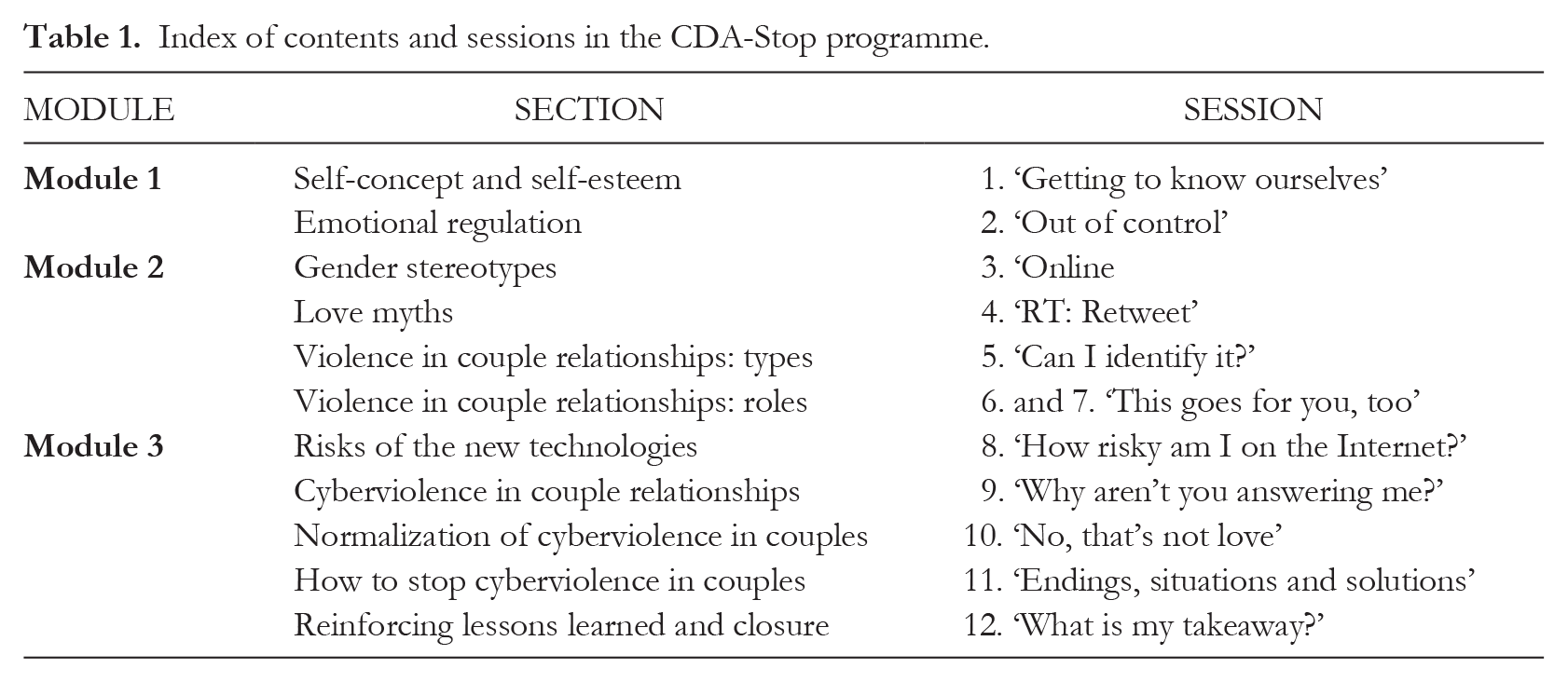
Given this context, the programme CDA-Stop (Cyberdating Abuse Stop; Jaureguizar et al., 2023) has emerged, which is designed to prevent cyberviolence in young and adolescent couples and is targeted specifically at adolescents in compulsory secondary education. Its main goal is to prevent this type of violence by working on the development of social skills, promoting healthy couple relationships over inappropriate ones, boosting knowledge of cyberviolence in couples and teaching ways to protect oneself against it. It is a programme designed originally by the researchers on the team. It is composed of three main areas or modules which include a total of 12 one-hour sessions grounded on previous studies conducted by the team and the results of other universal prevention programmes applied in school settings in other countries. Module 1 works on aspects like self-concept, self-esteem and emotional regulation strategies. Module 2 focuses on dating relationships and couple violence per se by examining gender stereotypes, love myths, types of couple violence and roles of the participants. Module 3 addresses the possible risks of technology, cyberviolence in couple relationships, ways cyberviolence is perpetrated, the normalization of cyberviolence and how to stop or intervene in these situations. Below is a detailed outline of the sections and sessions comprising the programme (see Table 1):
Index of contents and sessions in the CDA-Stop programme.
Given that it was a newly created programme, before it can be widely used with adolescents it was essential to validate it with a population with these features.
Objectives and hypotheses
The first goal of the study was to ascertain the prevalence of cyberviolence (perpetrated and suffered) among the students participating in the pretest phase in order to explore the state of the issue and learn whether the control group and the intervention group had similar characteristics regarding this variable. We also sought to analyse whether there were differences according to sex. Thus, the initial hypothesis was that there were no differences in cyberviolence either between the intervention group and the control group or according to the sex of the participating students.
The second objective was to assess the efficacy of the CDA-Stop programme by collecting quantitative and qualitative data under the hypothesis that participating in the programme would allow for:
(a) a decrease in cyberviolence levels in couples;
(b) an improvement in conflict-resolution strategies (increase in positive strategies and decrease in the involvement in conflict and withdrawal); and
(c) a positive perception of the impact of the programme among the participating students.
Methodology
Participants
A total of 409 participants between the ages of 12 and 17 participated in the quantitative study; 54% were boys, 45% girls and 1% non-binary. Of the total participants, 57.5% (n = 236) were randomly assigned to the intervention group (CDA-Stop Programme) and 42.3% (n = 173) to the control group. We should note that even though the programme was designed for adolescents between the ages of 13 and 15, in this case the age range of students in compulsory secondary education to which it was applied was extended in order to avoid leaving out students who were about to turn 13 or those who were older because they had repeated a year at school.
The participants were enrolled in schools in the Basque Country (northern Spain), 45% in public schools (n = 184) and 55% in publicly subsidized private schools (n = 225), and they were in their second and third year of compulsory secondary education (abbreviated to ESO in Spain). The criteria used to choose the schools were: (1) they had prior experience of participating in research projects and were open to new educational innovation practices; (2) they could accommodate the long timeline of the programme; and (3) both types of schools, public and publicly subsidized private, were represented. The selection of schools was incidental, and the student groups who participated under the different conditions (intervention and control) were natural groups, that is, classes of students in different years, although the assignment of each classroom group to the condition of control or intervention group was random.
For the qualitative study, a subsample of 10 participants from the intervention group at one of the publicly subsidized private schools where the programme was put into practice was chosen. Specifically, five boys and five girls participated. The choice was made randomly with the only criterion being representativity by sex. A random sampling method was used to choose five boys and five girls from among all the students in the intervention group.
Instruments
- Cyberviolence in Adolescent Couples Scale (Cib-VPA; Cava & Buelga, 2018). This scale, which has 20 items, is used to measure violence perpetrated and suffered within a couple relationship via the social media and mobile phones. The first subscale includes items like ‘I have insulted or threatened my boyfriend/girlfriend’ and ‘I am aware of whether my boyfriend/girlfriend is online on their mobile phone or connected on social media’. The second subscale describes these same aggressive and controlling behaviours but assesses to what extent the adolescents have suffered from these behaviours in their couple relationship (e.g., ‘My boyfriend/girlfriend has privately insulted or threatened me’ and ‘My boyfriend/girlfriend is aware of whether I am online on my mobile phone or connected on social media’). The responses to the items are on a four-point Likert scale (1 = ‘never’; 2 = ‘sometimes’; 3 = ‘fairly often’; 4 = ‘always’). Regarding the reliability of the test, the scale has a Cronbach’s alpha of .81.
- Conflict Resolution Styles Inventory (CRSI; Kurdek, 1994, adapted by Bonache et al., 2016). This inventory contains 26 items that assess how the person and their partner solve conflicts through two subscales: an individual one (CRSI-Self), which captures the ways the individual deals with couple conflicts through 13 items, and another subscale (CRSI-Partner), which explores the person’s perception of the ways their partner deals with these conflicts (13 items). It offers five response options ranging from 1 = ‘never’ to 5 = ‘always’, and it allows the conflict-resolution styles of both oneself and one’s partner to be classified into three types: positive strategies (e.g., ‘Sitting down and talking constructively about differences’), getting involved in the conflict (e.g., ‘Getting angry and losing control’) or withdrawal (e.g., ‘Not defending your own opinion’). The participants without a partner were asked to only respond to the questions on the CRSI-Self subscale by thinking about how they deal with disagreements with the people closest to them (peers, family members, etc.). The reliability coefficients (Cronbach’s alphas) with the sample in this study were .77 (CRSI-Self) and .86 (CRSI-Partner).
For the qualitative study, the focus group technique was used, a communicative dialogue process that is ideal for capturing experiences and attitudes towards a given topic, which is discussed following a semi-structured script (Hamui-Sutton & Varela-Ruiz, 2013). In this study, the focus group sought to collect data on students’ knowledge and perception of their experience in the CDA-Stop programme. To do so, a script of questions around three main aspects was developed:
To what extent they identify situations of cyberviolence. Some of the guiding questions were: ‘Were you aware of the term “cyberviolence” before?’ ‘What have you learned about this topic in the programme?’ ‘Were you able to identify victims, witnesses and aggressors before doing the programme?’
Conflict-resolution strategies that they recognize and list to deal with situations of cyberviolence. ‘If faced with a situation of cyberviolence, what do you think is the most important thing to take into account?’ ‘What do you think the role of the witness is?’
Assessment of the programme. ‘How was your experience in the programme?’ ‘What feelings did you have in the different workshops?’ ‘Do you think it helped you?’ ‘May it be useful for boys and girls your age?’
Procedure
After receiving the approval of the Ethics Committee of the University of the Basque Country (CEISH/M10/2021/282) to launch the study and the research, a letter was sent to the directors of the chosen schools explaining the research and inviting them to participate. The members of the team themselves got in touch with the schools, which were chosen based on three features: (a) they showed interest in the topic and have some experience participating in this type of practice; (b) they were able to accommodate the calendar of sessions; (c) they were a balanced representation of the criterion of public-private/publicly subsidized private schools. The directors that agreed to allow their schools to participate were given a detailed explanation of the project and the informed consent forms for the families. All the families at the chosen schools consented for their children to participate in the programme. However, the schools had alternative activities planned for the students if not. Given that the topic can be considered sensitive, students’ right to privacy and more or less active participation during the sessions was respected at all times. Likewise, the students were informed that if needed, both the school psychologist and members of the team were available to talk about any issue that arose in the programme that worried them or that they wanted to discuss. The pretest was administered before starting to implement the prevention programme. To do so, four members of the research team went to the schools to administer the assessment instruments in the classrooms. The groups were randomly assigned to the intervention or control group condition. The intervention groups participated in the 12 sessions of the CDA-Stop programme, while the control groups did not receive training from the programme. These sessions were led by the eight members of the research team who took part in creating it and were familiar with its objectives, its characteristics and the methodology to be applied in each session. After completing the programme, the same instruments as in the pretest were again administered to both groups in the post-test.
Two weeks into implementation of the programme, a subsample of 10 participants (five girls and five boys) from the intervention group at one of the publicly subsidized private schools was chosen to participate in a focus group. The participants were chosen randomly from the classrooms in which the programme had been put into practice. The 10 students and two researchers participated in the focus group, the first researcher as a moderator and the other observing and taking notes. A single 45-minute session was held. At the beginning of the session, the moderator explained that the session would be recorded while respecting the students’ confidentiality, as well as the voluntary nature of their participation in it. The session was audio-recorded and later transcribed and analysed.
Statistical analyses
The quantitative study analysed the frequencies of cyberviolence by calculating what percentage of the participating students had perpetrated or suffered from cyberviolence at least once and what percentage had not. Furthermore, the differences by sex and group (intervention vs. control) were explored by calculating the Chi square. Mixed 2 (intervention-control) × 2 (pretest-post-test) ANOVAs (Wilk’s lambda), introducing the variable of group as an intergroup variable and pretest and post-test variables as intragroup variables, were used to analyse whether there were differences between the intervention and the control groups in the pretest and post-test in cyberviolence perpetrated and suffered. The statistical analyses were performed using the IBM statistical package SPSS Statistics for Windows, version 26 (IBM Corp., Armonk, N.Y., USA).
In the qualitative study, the data were subject to content analysis after the recordings were transcribed. Based on the text corpus in an initial phase of pre-analysis conducted by two researchers independently, possible categories and main elements were identified or clustered. In the second phase of analysis, the two researchers checked their categories and elements, and the categories and the analysis of the main elements in relation to the topic were established.
Results
Results of the quantitative part
Prevalence of cyberviolence in the pretest
Of the participants who had or had had a partner, 67.1% (n = 114) stated that they had perpetrated cyberviolence against their partner at least once. Control was the type of cyberviolence they stated to have engaged in the most (64.4%, n = 113), as opposed to more direct cyberviolence (e-violence) (9.8%, n = 17). Regarding cyber-victimization, 63.3% (n = 112) stated that they had been cyber-victimized at some time; control was the behaviour used the most (61.5%, n = 110), as opposed to more direct cyberviolence (e-victimization) (20.1%, n = 36). No differences were found in the cyberviolence perpetrated and cyber-victimization by group (intervention vs. control) [χ2(1) = 1.69, p = .19] or by sex [χ2(2) = 3.69, p = .16].
Effect of CDA-Stop
Both the pretest and the post-test of the intervention and control groups were compared. Table 2 shows the results of each of the items on the Cib-VPA in the pretest and post-test in both groups, revealing that in the pretest there were scarcely any differences between the two groups (only in item 7, ‘My boyfriend/girlfriend …’), while differences were found on several items on the post-test, with the intervention group showing higher scores in all of them (items 5, 8 and 9 in the section ‘My boyfriend/girlfriend …’; items 4, 5, 6, 8, 9 and 10 in the section ‘I …’).
Results of the Cib-VPA pretest and post-test.
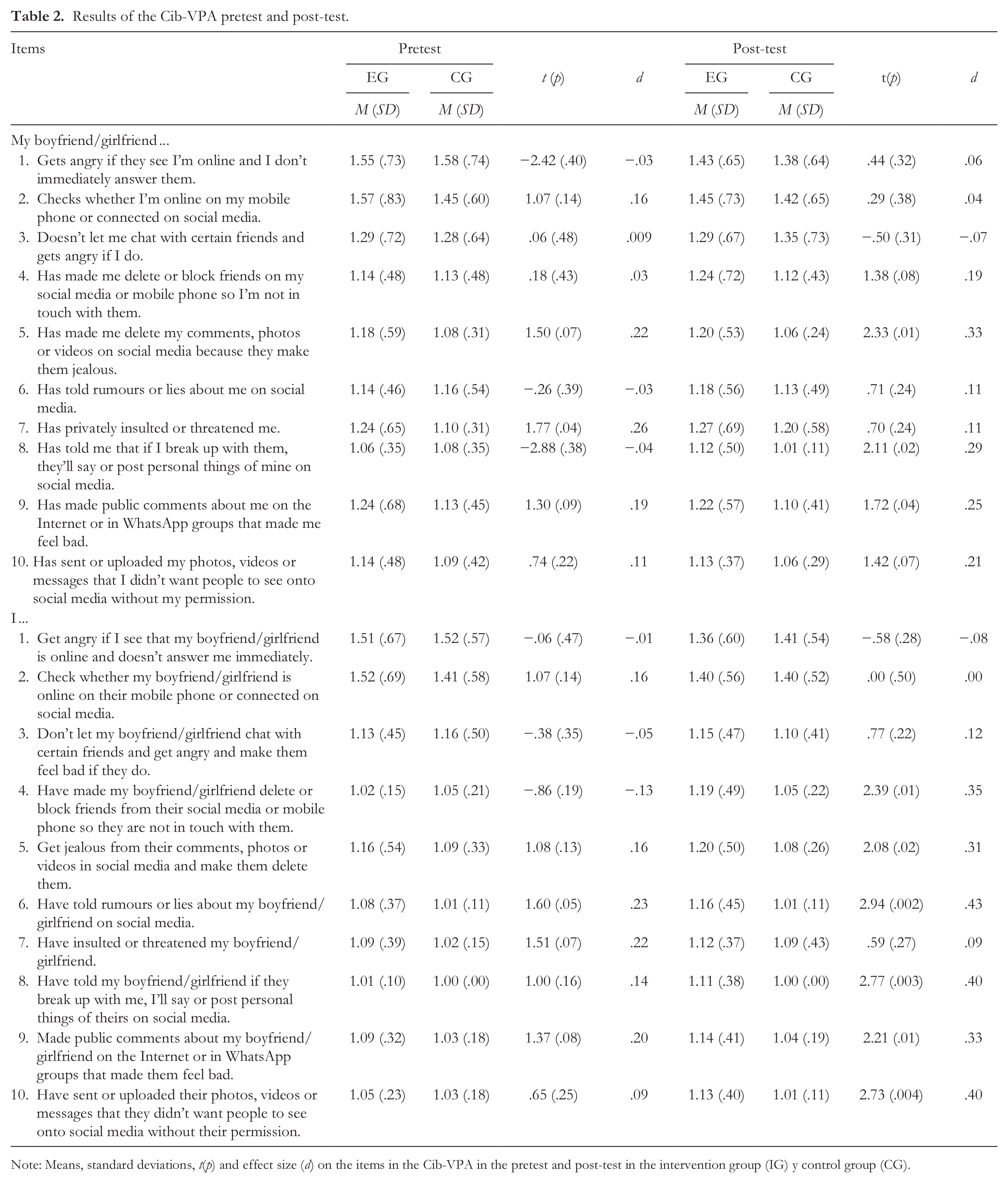
Note: Means, standard deviations, t(p) and effect size (d) on the items in the Cib-VPA in the pretest and post-test in the intervention group (IG) y control group (CG).
We explored whether there were significant differences in couple cyberviolence by comparing the results of the Cib-VPA scale before and after implementation of the CDA-Stop programme and comparing students who had admitted to having perpetrated couple cyberviolence in both the intervention and the control groups. Significant differences were found in cyber-victimization, and these levels were higher in the post-test in the intervention group than in the control group, Wilks’ lambda Λ = .935, F(1, 85) = 5.95, p = .017 (see Figure 1).
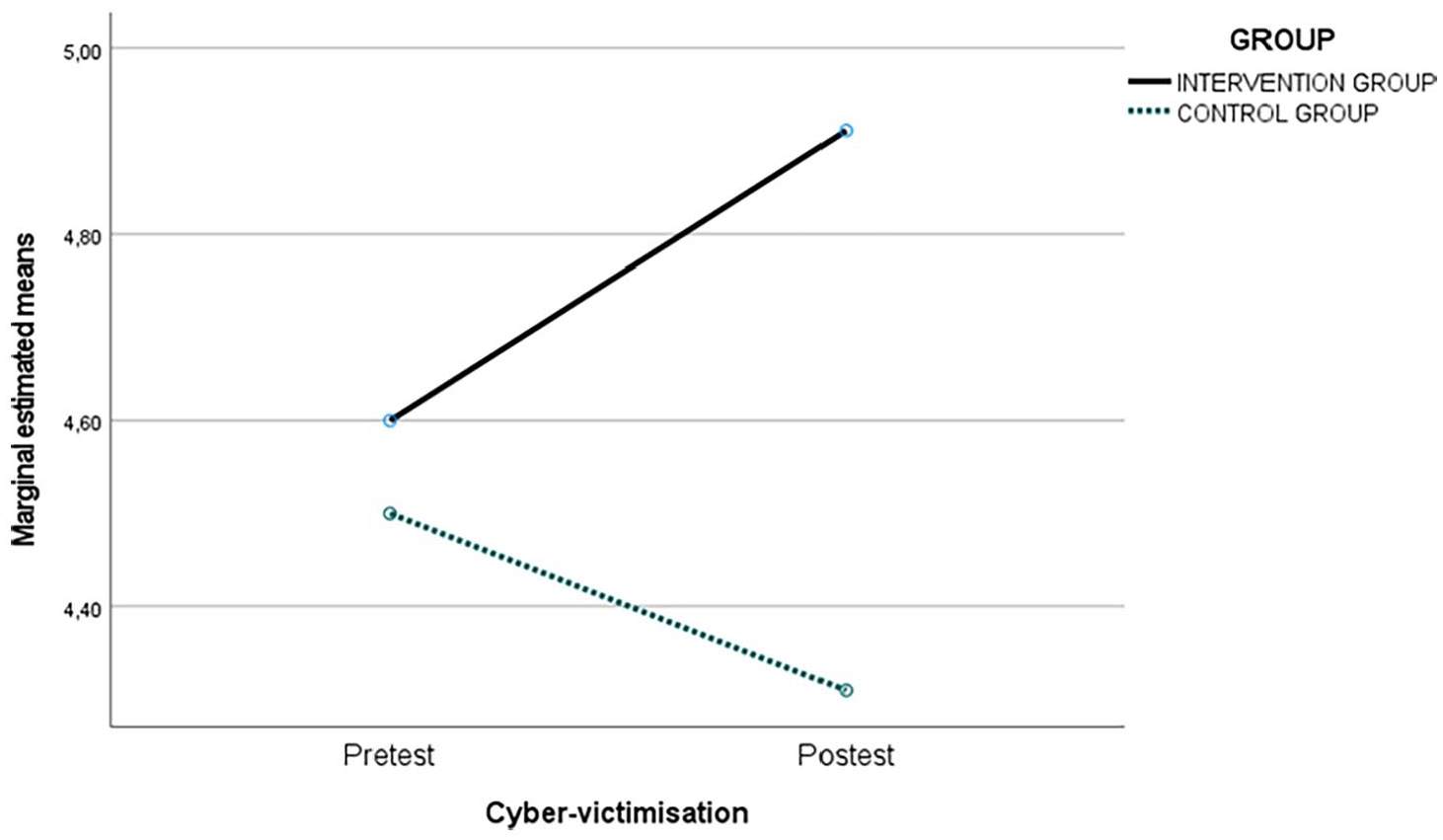
Marginal estimated means of cyber-victimization in the pretest and post-test according to group (intervention and control) among perpetrators of cyberviolence.
Furthermore, differences were found between those who had admitted to being victimized at least once, with higher levels of cyber-victimization on the post-test in the intervention group than in the control group [Wilks’ lambda Λ = .943, F(1, 83) = 5.03, p = .028] (see Figure 2).
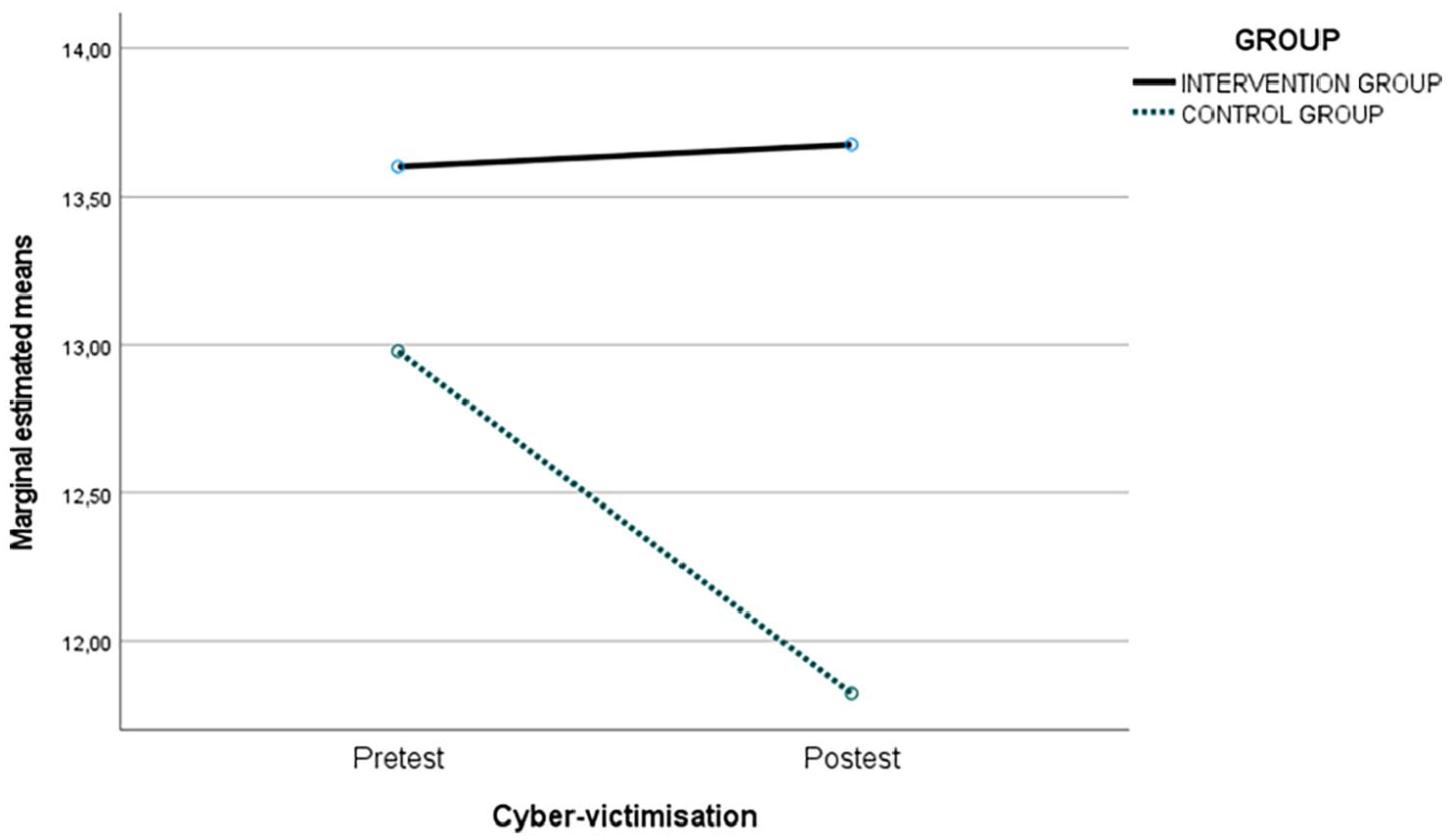
Marginal estimated means of cyber-victimization in the pretest and post-test according to group (intervention and control) among victims of cyberviolence.
With the goal of analysing whether there were significant changes in the perception of conflict-resolution strategies used in the couple after implementing the programme, the results from the CRSI scale on the pretest and post-test were compared in the intervention group and control group among the participants who indicated that they had been victimized or had perpetrated couple cyberviolence. In the case of the cyber-victimized participants, we found a significant interaction between the time factor (CRSI pretest and post-test) and the group factor (intervention group vs. control group), Wilks’ lambda Λ = .919, F(1, 63) = 5.53, p = .022. As seen in Figure 3, the differences between the intervention group (M = 11.93, SD = 4.87) and the control group (M = 9.22, SD = 4.03) in the means of conflict resolution and withdrawal in the post-test were statistically significant. No significant differences were found in the other conflict-resolution strategies. Among the people who had perpetrated cyberviolence against their partner, no significant effects were found in any of the conflict-resolution strategies.
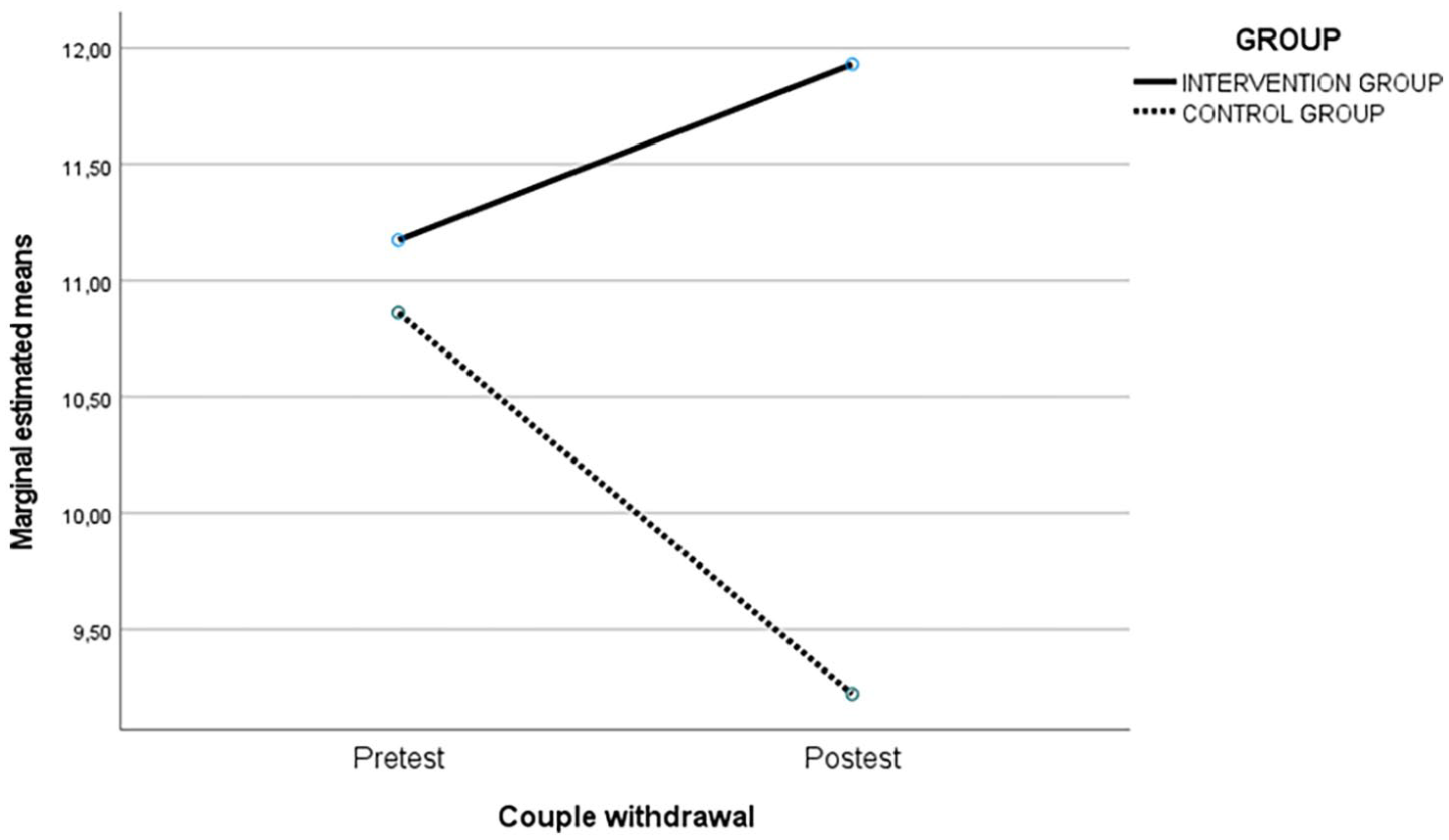
Marginal estimated means of withdrawal-style couple conflict resolution in the pretest and post-test according to group (intervention and control) among victims of cyberviolence.
Results of the qualitative part
This section contains the different categories into which the main ideas provided by the adolescents can be categorized: (a) identification of cyberviolence; (b) strategies/guidelines to prevent and resolve conflicts; (c) the programme’s impact on preventing cyberviolence in adolescent couples.
Identification of cyberviolence
The students recognize different forms of online abuse, such as pressurizing via messages, blocking certain friends or acquaintances, blackmail, the use of information to cause harm, etc.:
Forcing you not to talk to other people.
Blocking friends.
Or sharing your private photos with anyone because they may be angry that day and post your photos.
And blackmailing you with photos.
They also mention the different ways of exerting control in a couple relationship:
They’re always asking you where you are, to tell them where you are, who you’re with, what you’re doing.
They ask you for your passwords.
But because they don’t trust you.
Prevention and conflict-resolution strategies
The adolescents participating in the programme highlighted the importance of having support and asking a trusted person for help, such as a friend or a professional, because it does not have to be a family member:
I think you have to have … you always have to discuss it with someone … with a sensible person because in the end, somehow they’re always going to help you in some way. Also, for example, some things you don’t really talk about with your parents because they’re more teenage things and so in the end it’s not the same.
Or with a professional.
They also acknowledge the importance of talking with their partner to gain awareness and put an end to abusive attitudes and behaviours, and if that does not work to leave the relationship.
First I’d talk to my partner, because you actually don’t know whether it is … you don’t know in the end … if it’s because they’ve gone through something like that or in the end they are just like that … you know? If there’s a way to change the way that person …
And if they don’t want to change, you break up and that’s that.
You make it clear that what they’re doing isn’t acceptable and you leave them so that they also realize that what they’re doing isn’t OK, so they won’t do it again if they have another relationship later on.
Impact of the programme
The adolescents acknowledge that their participation in the programme enabled them to better identify forms of online abuse among couples, helped them to take a stance regarding this abusive behaviour and position themselves as upstanders.
Yes, things that I didn’t really use to think were cyberviolence and now I see they are.
And how to prevent it.
Like ignore it or support the person or victim. And, well, before that may have been harder to identify.
This highlights the importance of training adolescents in this issue, even if it has never happened to them, along with its preventive role:
[…] In the end when we reach that age and begin to do things, going out to party and stuff like that, and most people have Instagram, things like that, now we’ll know how to deal with these things.
I mean, even if it’s not happening to us now, in the future it could, if not to us then to others.
The programme’s structure and methodology, with practical case studies, simulated situations and videos, helped them to identify the forms of abuse and seek strategies to cope with them and say ‘no’ to this type of violence:
I think that [the sessions] were just enough to understand and cover all the points […].
I think that the good thing is that by the end, you gave examples, and in the end you’re told or explained, and you say, ‘OK, got it, I know how to deal with it […].’ In the end, somehow you understand it better and put yourself in that situation, I think.
I […], I felt like the most dynamic ones were on the last day when we played the game, and later, like I said before, the day we identified real cases and cases of cyberviolence, which were pretty similar.
Discussion
Cyberviolence in couples is a deep-seated problem that requires programmes and strategies targeted at preventing it from very young ages (Brown & Hegarty, 2018; Galende et al., 2020). The goal of this study was to determine the efficacy of the CDA-Stop prevention programme by collecting quantitative and qualitative data.
The results show a general prevalence of around 60 to 70%, slightly higher than those found in other studies (Martínez-Soto & Ibabe, 2024; Stonard et al., 2017), and higher in the case of exerting control and being controlled, as found in most studies (Caridade et al., 2019; Linares et al., 2021). This could be due to the fact that adolescents do not usually associate control with violence, and it is even taken as a sign of love, which could influence the fact that it occurs more and/or is easier to admit; as a result, the prevalences are higher than those for direct aggression. In fact, behaviours targeted at controlling a partner or former partner, such as checking their social media profile frequently, checking their activity in online media or improperly using their passwords (Borrajo & Gámez-Guadix, 2016; De los Reyes et al., 2021; Galende et al., 2020), are not always perceived as negative by adolescents, and some researchers even found a normalization effect of these behaviours. For example, the report created by Girlguiding (2013) found that 39% of adolescent girls in the sample believed that it was normal for their partner to tell them where they were at all times, and 22% thought that checking their mobile phone was appropriate. Thus, we are facing a phenomenon in which certain expressions of couple cyberviolence are being normalized and at times may even be expected in adolescent relationships, given that this population views them as signs of trust and mutual professed love (Girlguiding, 2013; Martín-Montilla et al., 2016).
Regarding prevalence by sex, no differences were found in cyber-victimization or cyberviolence between boys and girls in the sample studied, similar to previous studies (Bennett et al., 2011; Borrajo et al., 2015; Jaureguizar et al., 2024). This may be a difference from other types of violence — see the review by Jennings et al. (2017) on violence in young couples between the ages of 15 and 30, in which women tend to be victims more — which justifies studying cyberviolence as a specific type of violence in young couples. The fact that the perpetration and victimization rates are similar in boys and girls may be related to the fact that both partners are perpetrators and victims at the same time, and that this type of violence is used by both as a form of conflict resolution.
Regarding the comparison of the data obtained in the pretest and post-test, we found an increase in the frequency of cyberviolence among the participants, especially on those items that reflected violent actions towards their partners (six items). This may be due to the fact that after going through the intervention, this type of violent response increased. However, an alternative explanation may be that the programme had a positive effect on detecting violent behaviours in general, but especially one’s own violent behaviours, which had gone unnoticed or were not considered violent before the intervention, which would lead to higher scores after the intervention.
However, the comparison between those who had perpetrated or suffered from cyberviolence at some point and those who had not revealed that in both cases those who had perpetrated and suffered from cyberviolence showed higher scores in cyber-victimization on the post-test. One interpretation of these results is that the programme helps the participating students to detect cyberviolence when it is perpetrated against themselves. However, no differences were found in relation to cyberviolence perpetrated.
Regarding conflict-resolution strategies, when comparing those who had perpetrated or suffered from violence at some point and those who had never been involved in this type of situation, we found that those who had suffered from couple cyberviolence had higher scores on the withdrawal strategy on the post-test. No significant differences were found in any other type of strategy in the subgroup or among those who had perpetrated cyberviolence at some point. Even though withdrawal is not considered a positive conflict-resolution strategy (Kurdek, 1994), given that it entails neither negotiation nor compromise, it is less damaging for the members of the couple than getting involved in conflict, given that it does not increase the tension to the same extent. Perhaps as a result of participation in the programme, those who had at some point been victims advocated for it as a less harmful and more conciliatory measure than engaging in open conflict with the other person. In fact, in the results of the qualitative analysis, as we shall discuss below, the participants in the programme mentioned ‘breaking off the relationship’ as a strategy to deal with conflict, which could also be viewed as a form of withdrawal.
The results of the qualitative study contributed to highlighting and completing some of the information obtained from the questionnaires. First, the participants admitted that taking part in the programme helped them to detect behaviours that qualify as cyberviolence more easily, including those associated with control. This is extremely interesting, given that some studies point out that control within the couple (such as the partner constantly checking where the other is or checking the other’s mobile phone) is often normalized by adolescents, making it difficult to detect and consequently increasing the likelihood of being victimized. On the other hand, in relation to prevention and conflict resolution strategies, they stated that some of the strategies they would use when faced with a ‘toxic’ couple relationship are that they would ask adults for help, try to talk to their partner about the topic or, if that was not enough, break off the relationship. These responses show that they learned a broader range of strategies to resolve couple conflicts than those detected through the questionnaires, including some that could be considered adaptive or prosocial (Wekerle & Wolfe, 1999), such as dialogue or leaving the relationship as a measure of self-protection when they do not see change coming. Finally, the adolescents valued the importance of training on this topic for situations that they have not even experienced in order to know how to respond if the situation arises in the future. They also believed that both the number of sessions and the practical and participatory methodology of the programme were appropriate, as advocated by different authors (Genovés & Tello, 2009). Generally speaking, they admitted that they were better able to identify cyberviolence and act when faced with it.
Overall, the programme is a key contribution to the field of preventing cyberviolence in couples by covering certain shortcomings of pre-existing programmes. In this regard, we should highlight the fact that this one specifically addresses couple violence in its ‘cyber’ form, something that is not worked on explicitly in other programmes and that deserves special attention due to its unique features. On the other hand, it has been developed and validated in Spanish in a sample with very low experimental mortality, which provides guarantees of quality in its application. This programme offers the possibility of addressing the issue of cyberviolence among young couples and adolescents from the educational setting in a simple way yet with positive effects both in the results observed in this study and in the future. Thus, through this programme, teachers and students have an opportunity to address this problem, which helps them to identify situations they may be experiencing or know about and to practise strategies to ‘stop’ and ‘prevent’ situations of this type or similar ones.
Even though the results of this programme point in a positive direction, we should note that future studies should expand the sample of participants (especially in the focus group) and apply the programme in different settings and cultures in order to further analyse its effects. Likewise, a larger number of assessment tests should be included in order to collect more information on the efficacy of the programme, and a third follow-up time should be included to assess whether the effect of the intervention lasts over time. However, the data show the positive impact of the CDA-Stop programme in the adolescents who participated in it, in terms of both improving their identification and knowledge of cyberviolence and their use of more constructive conflict-resolution strategies. In conclusion, these results are valuable given that the programme makes an important contribution to a field that is being studied more and more but which is currently lacking interventions to prevent or palliate its consequences.